Downloaded 112 times


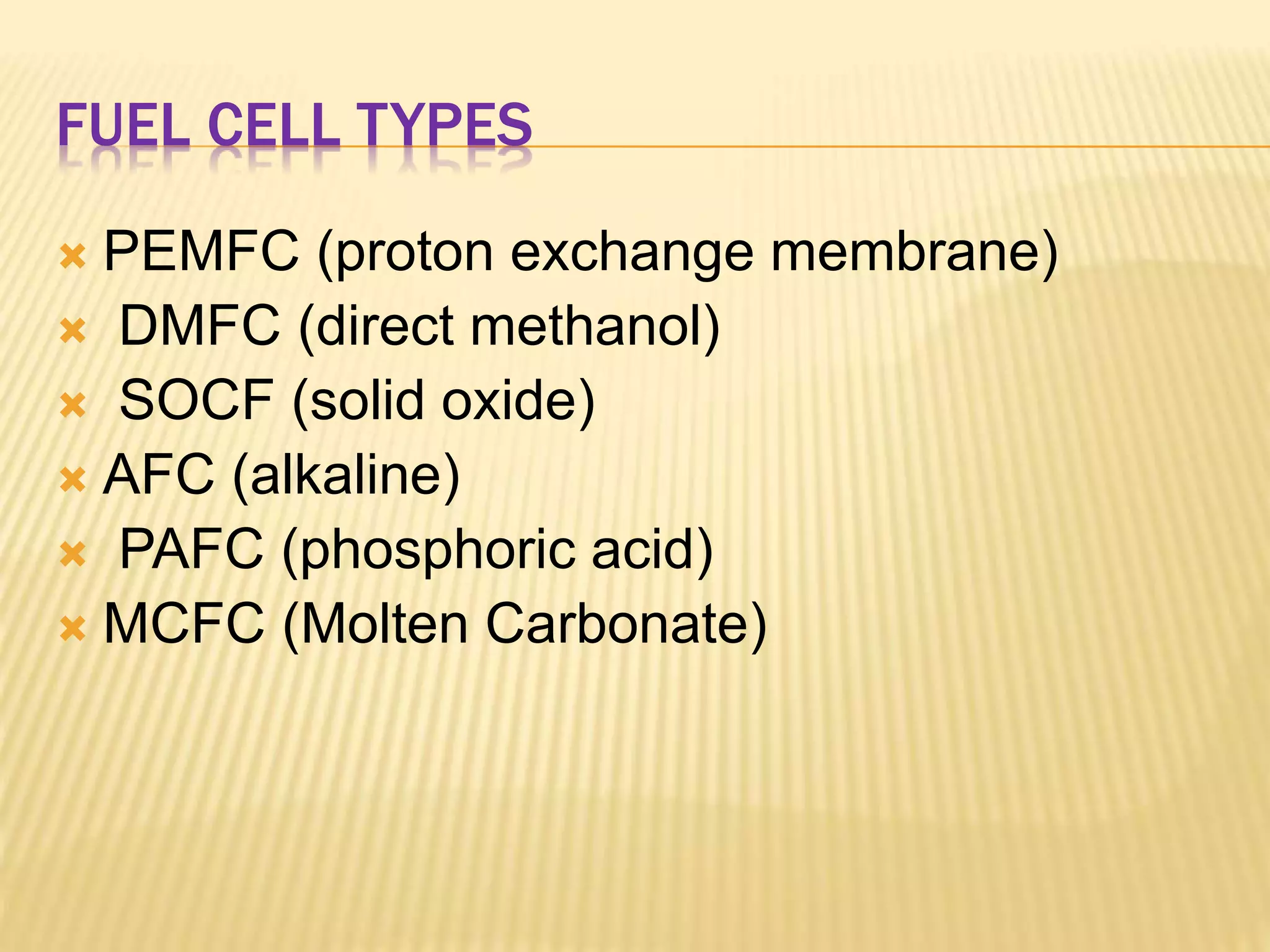


Fuel cells generate electricity through a chemical reaction between hydrogen and oxygen, producing water as the only byproduct, and they differ from storage batteries as they don't require recharging. They consist of two electrodes, an electrolyte, and a catalyst, with various types including proton exchange, solid oxide, and alkaline fuel cells. Despite their high efficiency and potential for cleaner energy, challenges like hydrogen storage and the current high costs hinder widespread commercialization.


