From research to writing:
a sciencey case study
Sarah Keenihan
@sciencesarah
sciencesarah.wordpress.com
scienceforlife365.wordpress.com
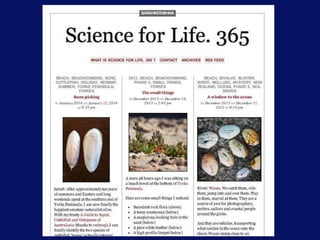
http://scienceforlife365.wordpress.com/?s=beach
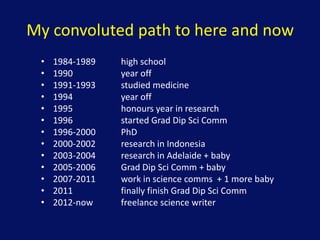
My convoluted path to here and now
• 1984-1989 high school
• 1990 year off
• 1991-1993 studied medicine
• 1994 year off
• 1995 honours year in research
• 1996 started Grad Dip Sci Comm
• 1996-2000 PhD
• 2000-2002 research in Indonesia
• 2003-2004 research in Adelaide + baby
• 2005-2006 Grad Dip Sci Comm + baby
• 2007-2011 work in science comms + 1 more baby
• 2011 finally finish Grad Dip Sci Comm
• 2012-now freelance science writer
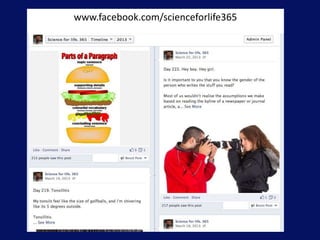
www.facebook.com/scienceforlife365
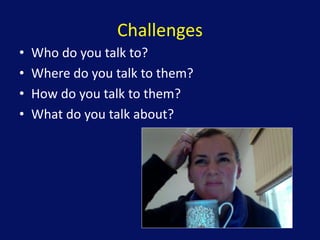
Challenges
• Who do you talk to?
• Where do you talk to them?
• How do you talk to them?
• What do you talk about?
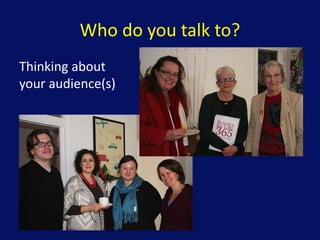
Who do you talk to?
Thinking about
your audience(s)
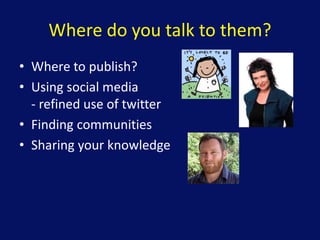
Where do you talk to them?
• Where to publish?
• Using social media
- refined use of twitter
• Finding communities
• Sharing your knowledge
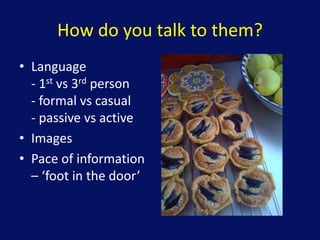
How do you talk to them?
• Language
- 1st vs 3rd person
- formal vs casual
- passive vs active
• Images
• Pace of information
– ‘foot in the door’
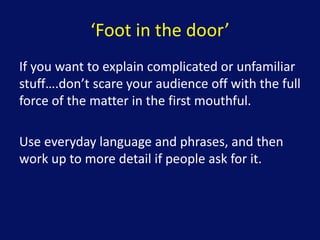
‘Foot in the door’
If you want to explain complicated or unfamiliar
stuff….don’t scare your audience off with the full
force of the matter in the first mouthful.
Use everyday language and phrases, and then
work up to more detail if people ask for it.
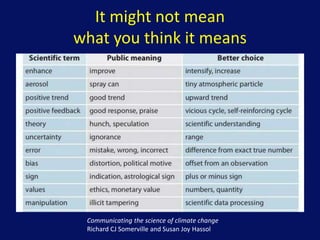
It might not mean
what you think it means
Communicating the science of climate change
Richard CJ Somerville and Susan Joy Hassol
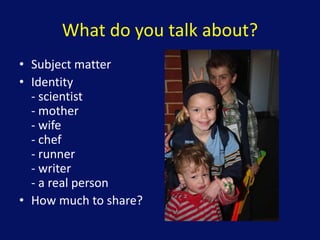
What do you talk about?
• Subject matter
• Identity
- scientist
- mother
- wife
- chef
- runner
- writer
- a real person
• How much to share?
Thank you

From research to writing: a sciencey case study

  • 1.
    From research towriting: a sciencey case study Sarah Keenihan @sciencesarah sciencesarah.wordpress.com scienceforlife365.wordpress.com http://scienceforlife365.wordpress.com/?s=beach
  • 2.
    My convoluted pathto here and now • 1984-1989 high school • 1990 year off • 1991-1993 studied medicine • 1994 year off • 1995 honours year in research • 1996 started Grad Dip Sci Comm • 1996-2000 PhD • 2000-2002 research in Indonesia • 2003-2004 research in Adelaide + baby • 2005-2006 Grad Dip Sci Comm + baby • 2007-2011 work in science comms + 1 more baby • 2011 finally finish Grad Dip Sci Comm • 2012-now freelance science writer
  • 4.
  • 5.
    Challenges • Who doyou talk to? • Where do you talk to them? • How do you talk to them? • What do you talk about?
  • 6.
    Who do youtalk to? Thinking about your audience(s)
  • 7.
    Where do youtalk to them? • Where to publish? • Using social media - refined use of twitter • Finding communities • Sharing your knowledge
  • 8.
    How do youtalk to them? • Language - 1st vs 3rd person - formal vs casual - passive vs active • Images • Pace of information – ‘foot in the door’
  • 9.
    ‘Foot in thedoor’ If you want to explain complicated or unfamiliar stuff….don’t scare your audience off with the full force of the matter in the first mouthful. Use everyday language and phrases, and then work up to more detail if people ask for it.
  • 10.
    It might notmean what you think it means Communicating the science of climate change Richard CJ Somerville and Susan Joy Hassol
  • 11.
    What do youtalk about? • Subject matter • Identity - scientist - mother - wife - chef - runner - writer - a real person • How much to share?
  • 12.