Healthcare, Pharma & Wellbeing | Dec 8 , 2025
th
PANEL
Beyond the Pilot: Scaling XR in
Real-World Clinical Settings
Our Speakers
José Ferrer Costa
Medical Researcher
Project Manager
Badalona Serveis
Assistencials
U. Oberta de Catalunya
Rosemarie De La
Cruz Bernabe
Professor of Research Ethics
and Research Integrity
Faculty of Medicine of
Oslo
Valentino Megale
CEO
Softcare Studios
Gabriel Cerra
CEO
Immersive Oasis
~30 % average annual growth in clinical investigations with
VR/AR terms over the last decade
Europe’s flagship project (VR Health Champions) backing
XR-healthcare SMEs via €7.8 m to accelerate market
readiness
Clinical trials using VR on ClinicalTrials.gov (2023) Publications indexed in Pubmed for VR
Adoption still growing
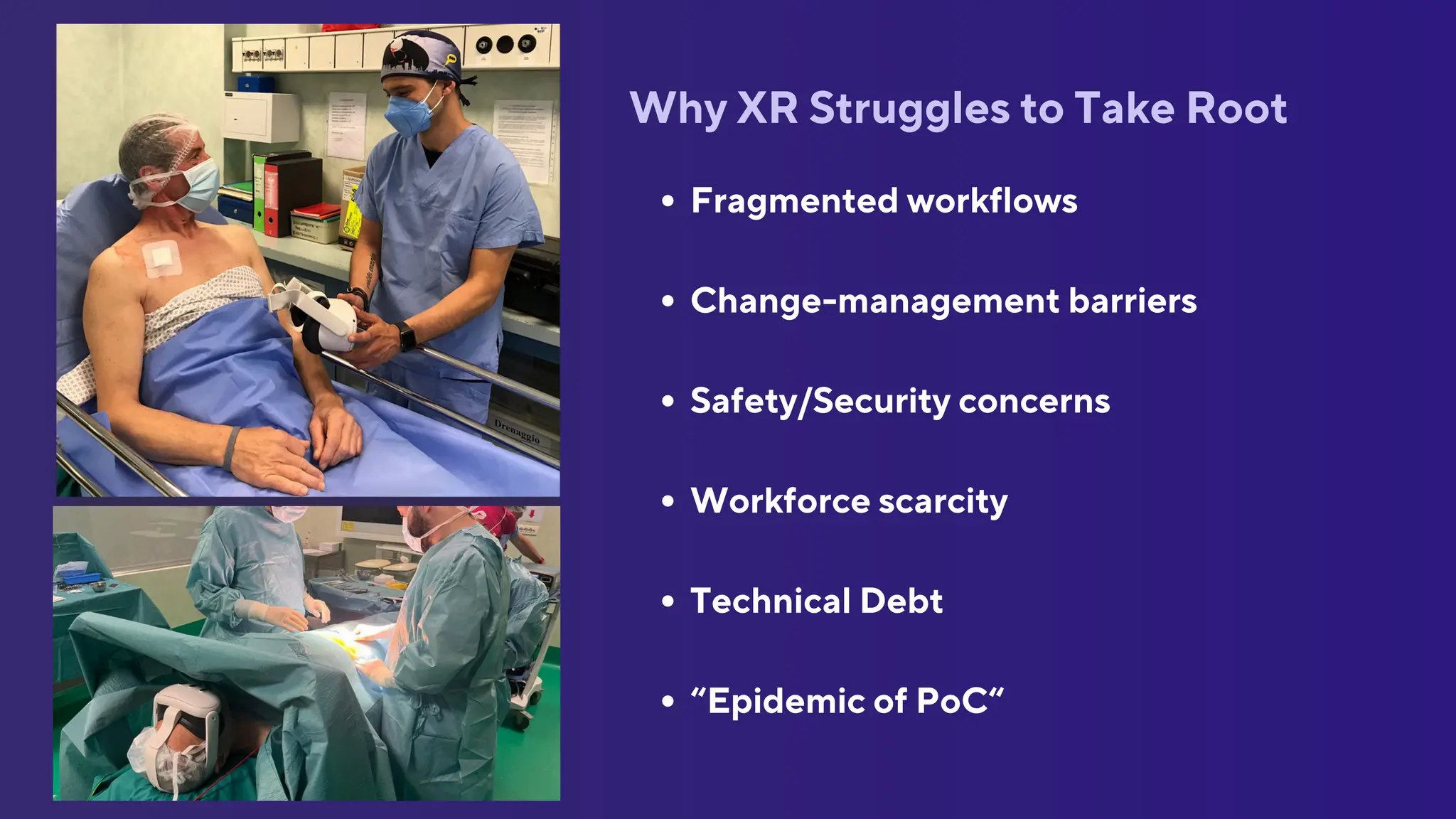
Why XR Struggles to Take Root
Fragmented workflows
Change-management barriers
Safety/Security concerns
Workforce scarcity
Technical Debt
“Epidemic of PoC“
“From PoCs to MVPs”
Sanofi's Chief Digital Officer Emmanuel Frenehard
Ubiquity and Ethics
Health systems can and do
adapt when the technology is:
Mature enough – I’ll come back to this later!
Trustworthy enough
Valuable enough for patient outcomes
Designed with patients’ constraints in mind
Supported by robust governance and accountability
Clear in its regulatory and ethical profile
Maturity matters, but it’s
probably not the biggest
issue.
After all, many medical devices do enter clinical practice while still evolving:
e.g.,laparoscopic tools, surgical robots, early imaging modalities, pulse oximeters, infusion
pumps, etc.
From an ethical perspective...
If we want XR to move beyond pilots and become truly ubiquitous in healthcare,
we must shift the burden of adaptation away from overstretched clinical
systems and back onto the ethical responsibilities of XR developers and
providers.
Ubiquity will not come from more proof-of-concepts, but from technologies that
are ethically grounded, transparent by design, clinically meaningful, inclusive,
and respectful of autonomy, privacy, identity, and dignity.
When XR supports—rather than disrupts—clinical judgment, workflows, and the
rights of patients, adoption will follow.
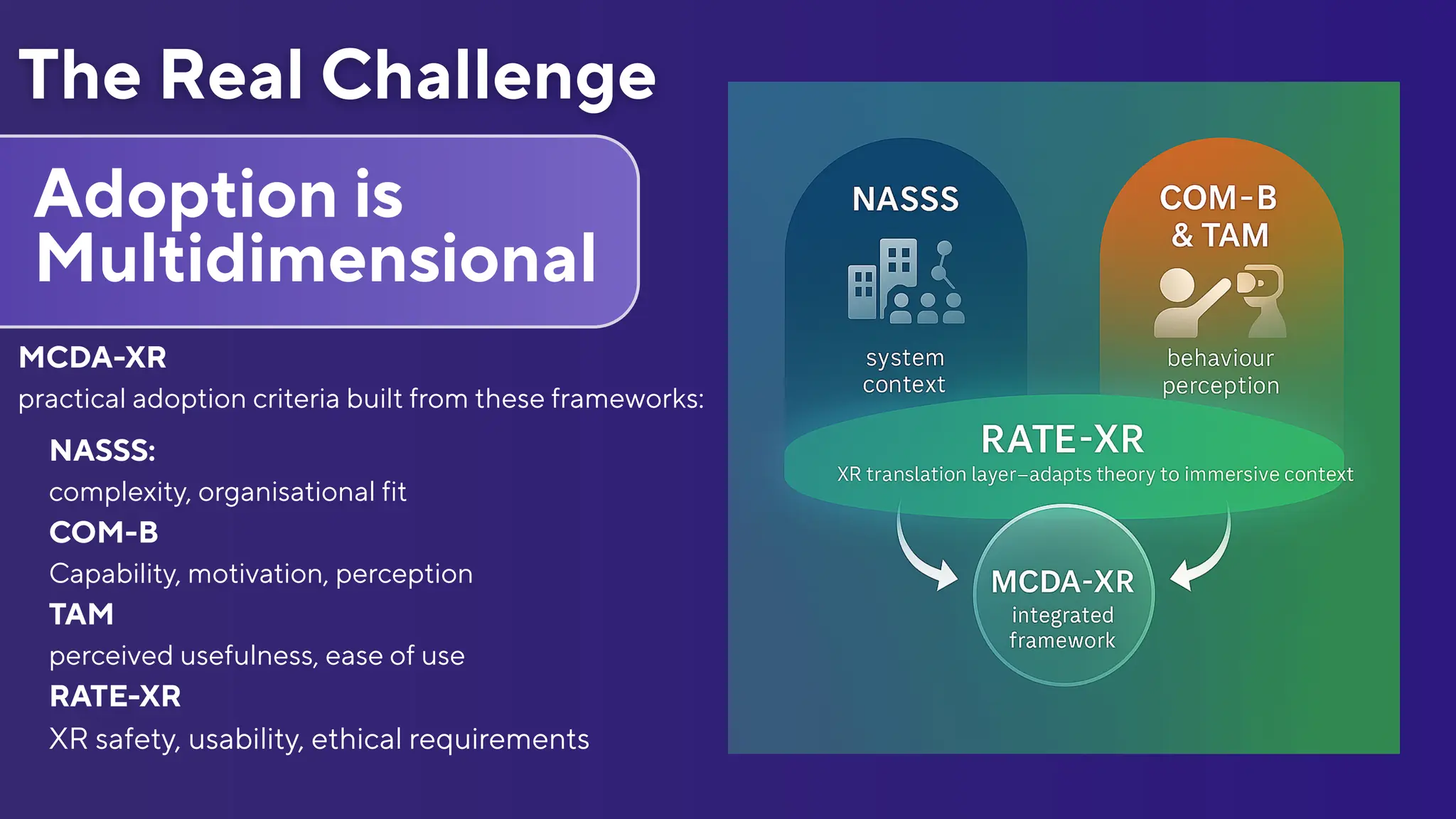
The Real Challenge
Adoption is
Multidimensional
NASSS:
complexity, organisational fit
COM-B
Capability, motivation, perception
TAM
perceived usefulness, ease of use
RATE-XR
XR safety, usability, ethical requirements
MCDA-XR
practical adoption criteria built from these frameworks:
Let’s Prioritize
Together
We’ll explore which criteria
this audience considers most
critical for scaling XR
Part 1:
Human and Experience Factors
Part 2:
Organizational Readiness
Part 3:
Validation & Governance
POLLS
Safety and comfort
Usability and technical reliability
Training requirements
Patient acceptability and trust
Part 1: Human and Experience Factors
Which factor matters most for front-line use?
Workflow integration
Institutional and technical support
Resources and cost
Part 2: Organizational Readiness
Which factor is the biggest organisational barrier?
Clinical relevance
Evidence and credibility
Legal and ethical alignment
Part 3 – Validation & Governance
Which factor is most often underestimated?
Part 1:
Human and Experience Factors
Part 2:
Organizational Readiness
Part 3:
Validation & Governance
Among the three groups, which drives adoption the most?
Thank You!
José Ferrer Costa
Medical Researcher
Project Manager
Badalona Serveis
Assistencials
U. Oberta de Catalunya
Rosemarie De La
Cruz Bernabe
Professor of Research Ethics
and Research Integrity
Faculty of Medicine of
Oslo
Valentino Megale
CEO
Softcare Studios
Gabriel Cerra
CEO
Immersive Oasis

Presentació "Beyond the Pilot: Scaling XR in Real-World Clinical Settings"

  • 1.
    Healthcare, Pharma &Wellbeing | Dec 8 , 2025 th PANEL Beyond the Pilot: Scaling XR in Real-World Clinical Settings
  • 2.
    Our Speakers José FerrerCosta Medical Researcher Project Manager Badalona Serveis Assistencials U. Oberta de Catalunya Rosemarie De La Cruz Bernabe Professor of Research Ethics and Research Integrity Faculty of Medicine of Oslo Valentino Megale CEO Softcare Studios Gabriel Cerra CEO Immersive Oasis
  • 3.
    ~30 % averageannual growth in clinical investigations with VR/AR terms over the last decade Europe’s flagship project (VR Health Champions) backing XR-healthcare SMEs via €7.8 m to accelerate market readiness Clinical trials using VR on ClinicalTrials.gov (2023) Publications indexed in Pubmed for VR
  • 4.
  • 5.
    Why XR Strugglesto Take Root Fragmented workflows Change-management barriers Safety/Security concerns Workforce scarcity Technical Debt “Epidemic of PoC“
  • 6.
    “From PoCs toMVPs” Sanofi's Chief Digital Officer Emmanuel Frenehard
  • 7.
  • 9.
    Health systems canand do adapt when the technology is: Mature enough – I’ll come back to this later! Trustworthy enough Valuable enough for patient outcomes Designed with patients’ constraints in mind Supported by robust governance and accountability Clear in its regulatory and ethical profile
  • 10.
    Maturity matters, butit’s probably not the biggest issue. After all, many medical devices do enter clinical practice while still evolving: e.g.,laparoscopic tools, surgical robots, early imaging modalities, pulse oximeters, infusion pumps, etc.
  • 12.
    From an ethicalperspective... If we want XR to move beyond pilots and become truly ubiquitous in healthcare, we must shift the burden of adaptation away from overstretched clinical systems and back onto the ethical responsibilities of XR developers and providers. Ubiquity will not come from more proof-of-concepts, but from technologies that are ethically grounded, transparent by design, clinically meaningful, inclusive, and respectful of autonomy, privacy, identity, and dignity. When XR supports—rather than disrupts—clinical judgment, workflows, and the rights of patients, adoption will follow.
  • 13.
    The Real Challenge Adoptionis Multidimensional NASSS: complexity, organisational fit COM-B Capability, motivation, perception TAM perceived usefulness, ease of use RATE-XR XR safety, usability, ethical requirements MCDA-XR practical adoption criteria built from these frameworks:
  • 14.
    Let’s Prioritize Together We’ll explorewhich criteria this audience considers most critical for scaling XR Part 1: Human and Experience Factors Part 2: Organizational Readiness Part 3: Validation & Governance
  • 15.
  • 16.
    Safety and comfort Usabilityand technical reliability Training requirements Patient acceptability and trust Part 1: Human and Experience Factors Which factor matters most for front-line use?
  • 17.
    Workflow integration Institutional andtechnical support Resources and cost Part 2: Organizational Readiness Which factor is the biggest organisational barrier?
  • 18.
    Clinical relevance Evidence andcredibility Legal and ethical alignment Part 3 – Validation & Governance Which factor is most often underestimated?
  • 19.
    Part 1: Human andExperience Factors Part 2: Organizational Readiness Part 3: Validation & Governance Among the three groups, which drives adoption the most?
  • 20.
    Thank You! José FerrerCosta Medical Researcher Project Manager Badalona Serveis Assistencials U. Oberta de Catalunya Rosemarie De La Cruz Bernabe Professor of Research Ethics and Research Integrity Faculty of Medicine of Oslo Valentino Megale CEO Softcare Studios Gabriel Cerra CEO Immersive Oasis