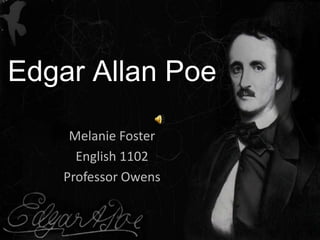
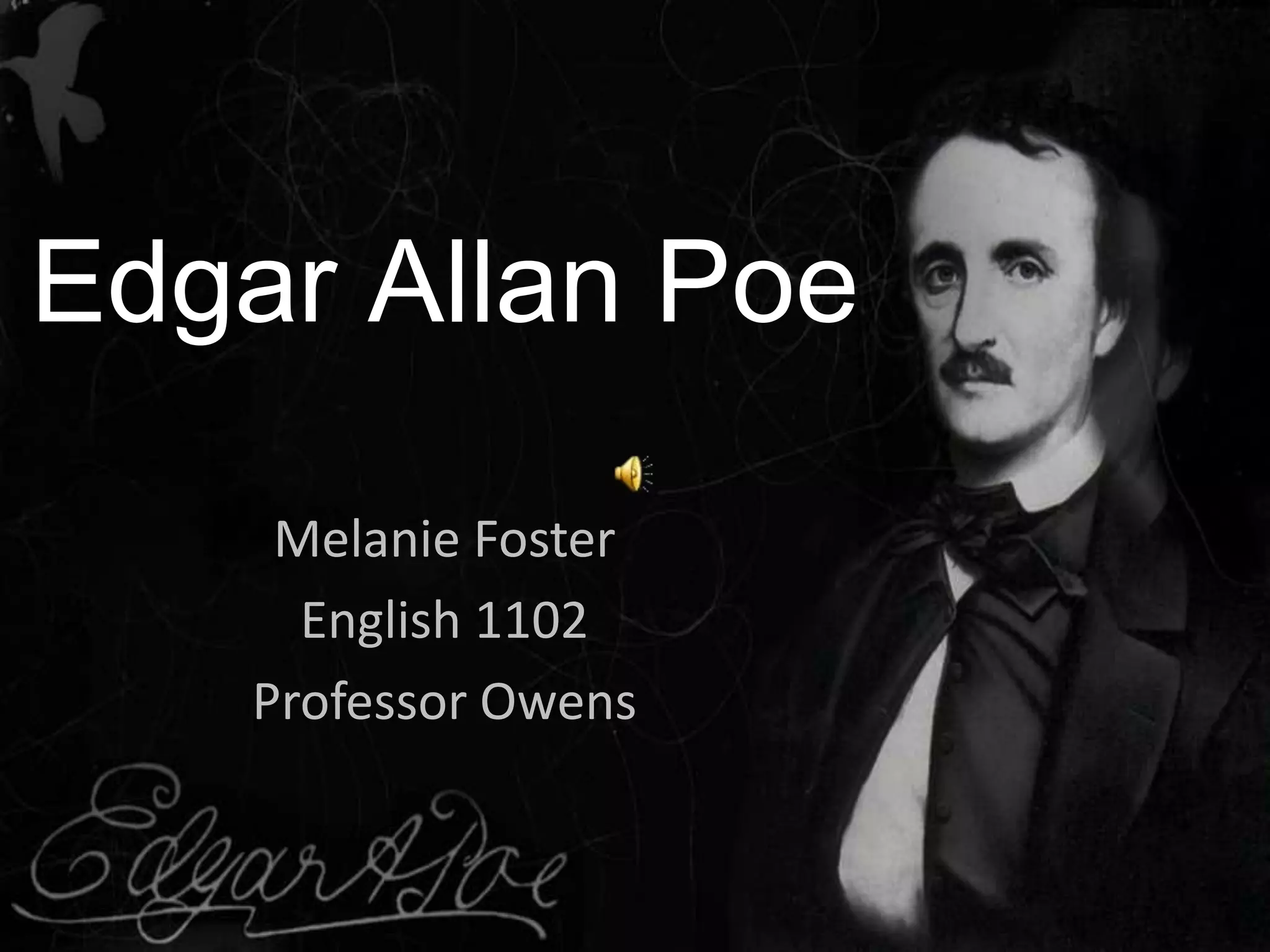
Edgar Allan Poe
Melanie Foster
English 1102
Professor Owens
TABLE OF CONTENTS
•
•
•
•
•
•
•
•

About The Author
Influential Factors
Styles and Themes
Selected Works
“The Tell-Tale Heart”
“The Black Cat”
“The Raven”
Credits
Edgar Allan Poe
• Born in Boston on January 19, 1809
• Classic Literature genre
• Critic, editor, poet, author who wrote
many poems, tales, and short stories
• Mainly known for his dark, depressing,
gothic writings
• Died on October 7, 1849
Influential Factors
• Poe’s father, David Poe, was an alcoholic and
left his mother and siblings
• Poe’s mother, Elizabeth Poe, died in 1811 from
tuberculosis
• Edgar Allan Poe was continuously humiliated
throughout his life
Influential Factors
Continued
• Excluded from society because of being
poor and his debt
• He began gambling and binge drinking in
1826
• Married his cousin, Virginia, in 1836
– She also died from tuberculosis in 1847
Style
and
Themes
Styles:
•Gothic appealing
•Dark romanticism
genre
•Dark
•Dramatic
•Some works
incorporated humor

Themes:
•Untimely death
•Insanity
•Gore, gruesome
violence
•Depression

•It is highly common for readers to view the narrators
in Poe’s works as harsh, hateful, and heartless because of
the cruel, violent acts that take place in some works.
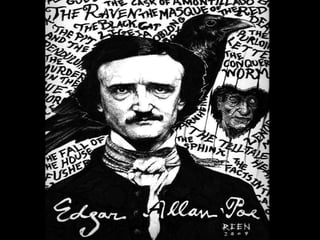
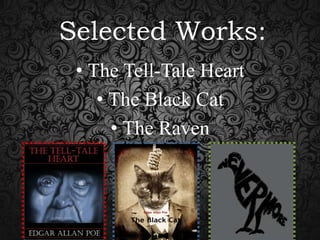
Selected Works:
• The Tell-Tale Heart
• The Black Cat
• The Raven
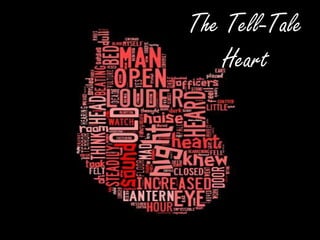
The Tell-Tale
Heart
The Tell-Tale Heart
• Untimely death, insanity, and gore are all
seen throughout this tale
• The narrator is annoyed by an old man’s eye
– This leads the narrator to plan the death of the old
man

• Some critics believe Poe could be referring
to the “evil eye”
– Those with the evil eye are believed to have
the power to harm others
– The only way to destroy the evil eye is to
destroy the person
The Tell-Tale Heart
• The narrator’s obsession with the eye, or fear
of the eye, leads to the horrific murder
• Insanity plays a role because the fear and
obsession with the eye grows so strong
– Leads to the narrator’s dark side being triggered

• Gore, gruesome violence is seen when the
narrator uses rays from the lantern which
results in a slow, painful, agonizing
occurrence
The Tell-Tale Heart
• Gore, insanity, and death are all also seen
when the narrator describes how he continues
to kill the old man
– “In an instant I dragged him to the floor, and
pulled the heavy bed over him. I then smiled
gaily, to find the deed so far done” (Poe 5).
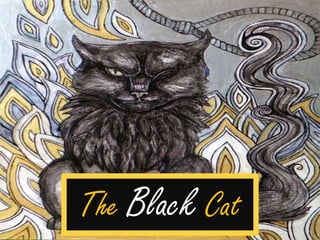
The Black Cat
The Black Cat

• The Black Cat revolves around the narrator’s wife
and two cats
• This short story also involves the themes death,
insanity, and gore
• Insanity is evident in that the narrator used to be
very passionate and kind towards others,
especially animals, in his younger years
– His personality and mood changes are, what many
critics believe, directly related to the narrator’s use of
alcohol
The Black Cat

• The intoxicated narrator is furious when the cat,
named Pluto (who is his favorite pet), does not
approach him when getting home; therefore, cuts
one of the cat’s eyes
– This comes as a shock because the narrator is
supposed to love Pluto more than he does humans
and is a pet that means a lot to the narrator
– Many critics, such as Silverman believe that the
narrator acts in such a manner because he feels
betrayed by the his playmate (qtd. Piacentino 6)
– Critics also link these actions of the narrator’s to
Poe’s actual life where he was excluded from society
and taunted by people, even his closest friends
The Black Cat

• The narrator eventually kills Pluto with no
remorse by hanging him from a limb on a tree
using a noose
• Critics believe the narrator is becoming more
insane and notices another, very similar black
cat and is hallucinating
– This cat also only has one eye and eventually leads
the narrator over the edge

• Enraged with the second cat getting in his way,
the narrator tries murdering the cat
The Black Cat

• The narrator’s wife then blocks the axe from
hitting the cat
– Critics, such as Piacentino, believe that the events
following this is because the narrator is jealous
since his wife shows sensitivity and passion by
interfering with the cat’s death

• The wife is then violently murdered by the
narrator “burying the axe into her brain”
resulting in an immediate death
– This symbolizes a gore, gruesome death due to the
narrator’s own insanity
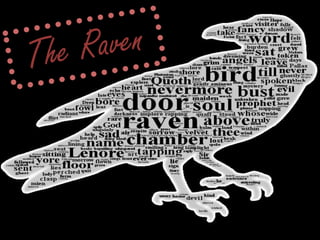
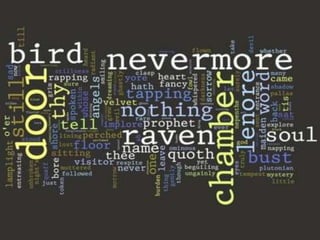
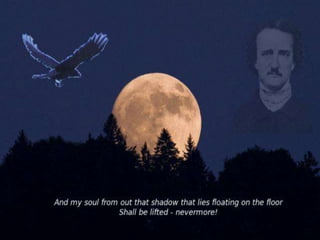
The Raven
• “The Raven” also revolves around death, insanity,
and gore.
• The narrator is experience much grief, sorrow,
and depression due to his lost love, Lenore
• Insanity is highly evident throughout “The
Raven” because the narrator is very much so
depressed
• Depression that the narrator experiences from the
lost of his love leads to an unstable mental state
The Raven
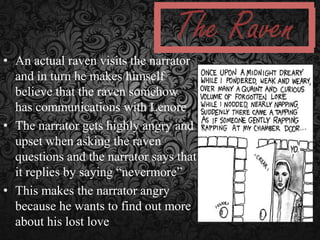
• An actual raven visits the narrator
and in turn he makes himself
believe that the raven somehow
has communications with Lenore
• The narrator gets highly angry and
upset when asking the raven
questions and the narrator says that
it replies by saying “nevermore”
• This makes the narrator angry
because he wants to find out more
about his lost love
The Raven
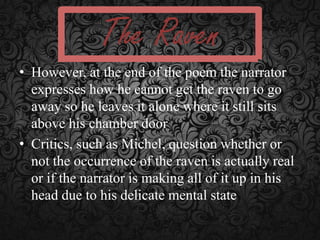
• However, at the end of the poem the narrator
expresses how he cannot get the raven to go
away so he leaves it alone where it still sits
above his chamber door
• Critics, such as Michel, question whether or
not the occurrence of the raven is actually real
or if the narrator is making all of it up in his
head due to his delicate mental state
Credits
Fling, Jake. “The Raven by Edgar Allan Poe Literary Analysis.” Web. 13 Nov. 2013.
<http://personal.psu.edu/jcf5074/literaryanalysis.html>.
Michel, Selma. “A Sadness that Maddens the Soul: A Literary Analysis for The Raven by Edgar Allan Poe.” Web.
13 Nov. 2013. < http://myelectrofolder.weebly.com/literary-analysis.html>.
Miksanek, Tony. “Literature Annotations of Poe, Edgar Allan: The Tell-Tale Heart.” The GoldBug and Other Tales, 1991 ed. Literature, Arts, and Medicine Database. 18 Oct. 2004. Web. 07 Nov. 2013. <
http://litmed.med.nyu.edu/Annotation?action=view&annid=12295>.
Piacentino, Ed. “Poe’s ‘The Black Cat’ as Psychobiography: Some Reflections on the
Narratological Dynamics.” Studies in Short Fiction 35.2 (1998): 153-167. MasterFILE Premier. Web. 09 Nov.
2013. < http://web.ebscohost.com/ehost/detail?sid=302c201d-eacf-45cb-82da77d97721840e%40sessionmgr4001&vid=1&hid=4209&bdata=JnNpdGU9ZWhvc3QtbGl2ZQ%3d%3d#db=f5
h&AN=6297585>.
Poe, Edgar Allan. “The Tell-Tale Heart.” Major Tales and Poems. Michigan: Edward Brothers,
2006. 3-7. Print.
Poe Museum. “Poe’s Life: Who is Edgar Allan Poe?” Richmond, VA: Author. Web. 13 Nov. 2013.
<http://www.poemuseum.org/life.php>.
Womack, Martha. “Edgar Allan Poe’s ‘The Tell-Tale Heart.’” Web. 07 Nov. 2013.
< http://www.poedecoder.com/essays/ttheart/>.

FosterPresentationEdgarAllanPoe

  • 1.
    Edgar Allan Poe MelanieFoster English 1102 Professor Owens
  • 2.
    TABLE OF CONTENTS • • • • • • • • AboutThe Author Influential Factors Styles and Themes Selected Works “The Tell-Tale Heart” “The Black Cat” “The Raven” Credits
  • 4.
    Edgar Allan Poe •Born in Boston on January 19, 1809 • Classic Literature genre • Critic, editor, poet, author who wrote many poems, tales, and short stories • Mainly known for his dark, depressing, gothic writings • Died on October 7, 1849
  • 5.
    Influential Factors • Poe’sfather, David Poe, was an alcoholic and left his mother and siblings • Poe’s mother, Elizabeth Poe, died in 1811 from tuberculosis • Edgar Allan Poe was continuously humiliated throughout his life
  • 6.
    Influential Factors Continued • Excludedfrom society because of being poor and his debt • He began gambling and binge drinking in 1826 • Married his cousin, Virginia, in 1836 – She also died from tuberculosis in 1847
  • 7.
  • 8.
    Styles: •Gothic appealing •Dark romanticism genre •Dark •Dramatic •Someworks incorporated humor Themes: •Untimely death •Insanity •Gore, gruesome violence •Depression •It is highly common for readers to view the narrators in Poe’s works as harsh, hateful, and heartless because of the cruel, violent acts that take place in some works.
  • 9.
    Selected Works: • TheTell-Tale Heart • The Black Cat • The Raven
  • 10.
  • 11.
    The Tell-Tale Heart •Untimely death, insanity, and gore are all seen throughout this tale • The narrator is annoyed by an old man’s eye – This leads the narrator to plan the death of the old man • Some critics believe Poe could be referring to the “evil eye” – Those with the evil eye are believed to have the power to harm others – The only way to destroy the evil eye is to destroy the person
  • 12.
    The Tell-Tale Heart •The narrator’s obsession with the eye, or fear of the eye, leads to the horrific murder • Insanity plays a role because the fear and obsession with the eye grows so strong – Leads to the narrator’s dark side being triggered • Gore, gruesome violence is seen when the narrator uses rays from the lantern which results in a slow, painful, agonizing occurrence
  • 13.
    The Tell-Tale Heart •Gore, insanity, and death are all also seen when the narrator describes how he continues to kill the old man – “In an instant I dragged him to the floor, and pulled the heavy bed over him. I then smiled gaily, to find the deed so far done” (Poe 5).
  • 14.
  • 15.
    The Black Cat •The Black Cat revolves around the narrator’s wife and two cats • This short story also involves the themes death, insanity, and gore • Insanity is evident in that the narrator used to be very passionate and kind towards others, especially animals, in his younger years – His personality and mood changes are, what many critics believe, directly related to the narrator’s use of alcohol
  • 16.
    The Black Cat •The intoxicated narrator is furious when the cat, named Pluto (who is his favorite pet), does not approach him when getting home; therefore, cuts one of the cat’s eyes – This comes as a shock because the narrator is supposed to love Pluto more than he does humans and is a pet that means a lot to the narrator – Many critics, such as Silverman believe that the narrator acts in such a manner because he feels betrayed by the his playmate (qtd. Piacentino 6) – Critics also link these actions of the narrator’s to Poe’s actual life where he was excluded from society and taunted by people, even his closest friends
  • 17.
    The Black Cat •The narrator eventually kills Pluto with no remorse by hanging him from a limb on a tree using a noose • Critics believe the narrator is becoming more insane and notices another, very similar black cat and is hallucinating – This cat also only has one eye and eventually leads the narrator over the edge • Enraged with the second cat getting in his way, the narrator tries murdering the cat
  • 18.
    The Black Cat •The narrator’s wife then blocks the axe from hitting the cat – Critics, such as Piacentino, believe that the events following this is because the narrator is jealous since his wife shows sensitivity and passion by interfering with the cat’s death • The wife is then violently murdered by the narrator “burying the axe into her brain” resulting in an immediate death – This symbolizes a gore, gruesome death due to the narrator’s own insanity
  • 20.
    The Raven • “TheRaven” also revolves around death, insanity, and gore. • The narrator is experience much grief, sorrow, and depression due to his lost love, Lenore • Insanity is highly evident throughout “The Raven” because the narrator is very much so depressed • Depression that the narrator experiences from the lost of his love leads to an unstable mental state
  • 21.
    The Raven • Anactual raven visits the narrator and in turn he makes himself believe that the raven somehow has communications with Lenore • The narrator gets highly angry and upset when asking the raven questions and the narrator says that it replies by saying “nevermore” • This makes the narrator angry because he wants to find out more about his lost love
  • 22.
    The Raven • However,at the end of the poem the narrator expresses how he cannot get the raven to go away so he leaves it alone where it still sits above his chamber door • Critics, such as Michel, question whether or not the occurrence of the raven is actually real or if the narrator is making all of it up in his head due to his delicate mental state
  • 25.
    Credits Fling, Jake. “TheRaven by Edgar Allan Poe Literary Analysis.” Web. 13 Nov. 2013. <http://personal.psu.edu/jcf5074/literaryanalysis.html>. Michel, Selma. “A Sadness that Maddens the Soul: A Literary Analysis for The Raven by Edgar Allan Poe.” Web. 13 Nov. 2013. < http://myelectrofolder.weebly.com/literary-analysis.html>. Miksanek, Tony. “Literature Annotations of Poe, Edgar Allan: The Tell-Tale Heart.” The GoldBug and Other Tales, 1991 ed. Literature, Arts, and Medicine Database. 18 Oct. 2004. Web. 07 Nov. 2013. < http://litmed.med.nyu.edu/Annotation?action=view&annid=12295>. Piacentino, Ed. “Poe’s ‘The Black Cat’ as Psychobiography: Some Reflections on the Narratological Dynamics.” Studies in Short Fiction 35.2 (1998): 153-167. MasterFILE Premier. Web. 09 Nov. 2013. < http://web.ebscohost.com/ehost/detail?sid=302c201d-eacf-45cb-82da77d97721840e%40sessionmgr4001&vid=1&hid=4209&bdata=JnNpdGU9ZWhvc3QtbGl2ZQ%3d%3d#db=f5 h&AN=6297585>. Poe, Edgar Allan. “The Tell-Tale Heart.” Major Tales and Poems. Michigan: Edward Brothers, 2006. 3-7. Print. Poe Museum. “Poe’s Life: Who is Edgar Allan Poe?” Richmond, VA: Author. Web. 13 Nov. 2013. <http://www.poemuseum.org/life.php>. Womack, Martha. “Edgar Allan Poe’s ‘The Tell-Tale Heart.’” Web. 07 Nov. 2013. < http://www.poedecoder.com/essays/ttheart/>.