Forms of Government
Forms of Government
• Every government has three basic structures
• Political Ideology
• How the government is structured
• Authoritarian Ideology
• Who has the power
• Economic Ideology
• How is the economy set up
Political Ideologies
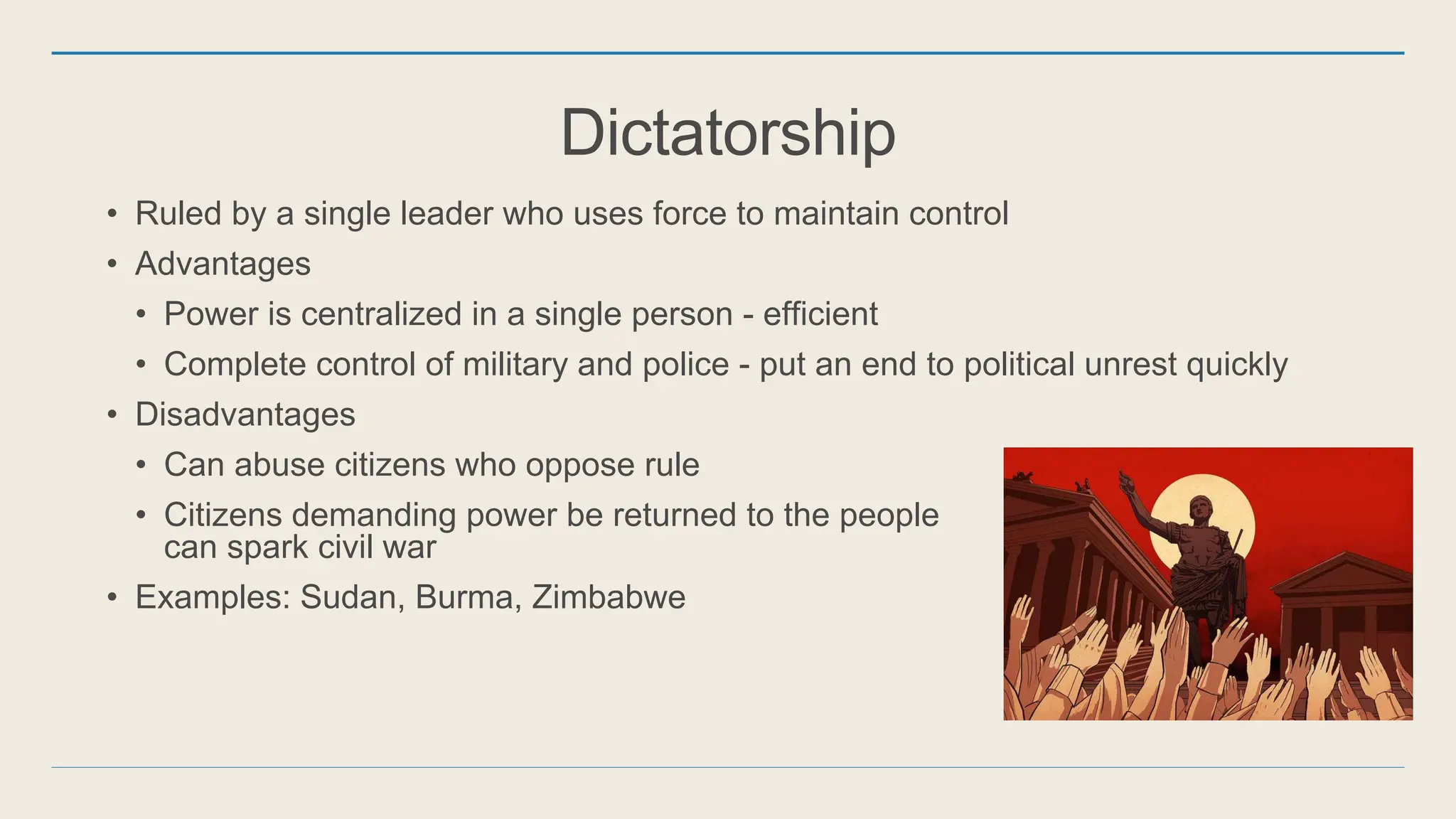
Dictatorship
• Ruled by a single leader who uses force to maintain control
• Advantages
• Power is centralized in a single person - efficient
• Complete control of military and police - put an end to political unrest quickly
• Disadvantages
• Can abuse citizens who oppose rule
• Citizens demanding power be returned to the people
can spark civil war
• Examples: Sudan, Burma, Zimbabwe
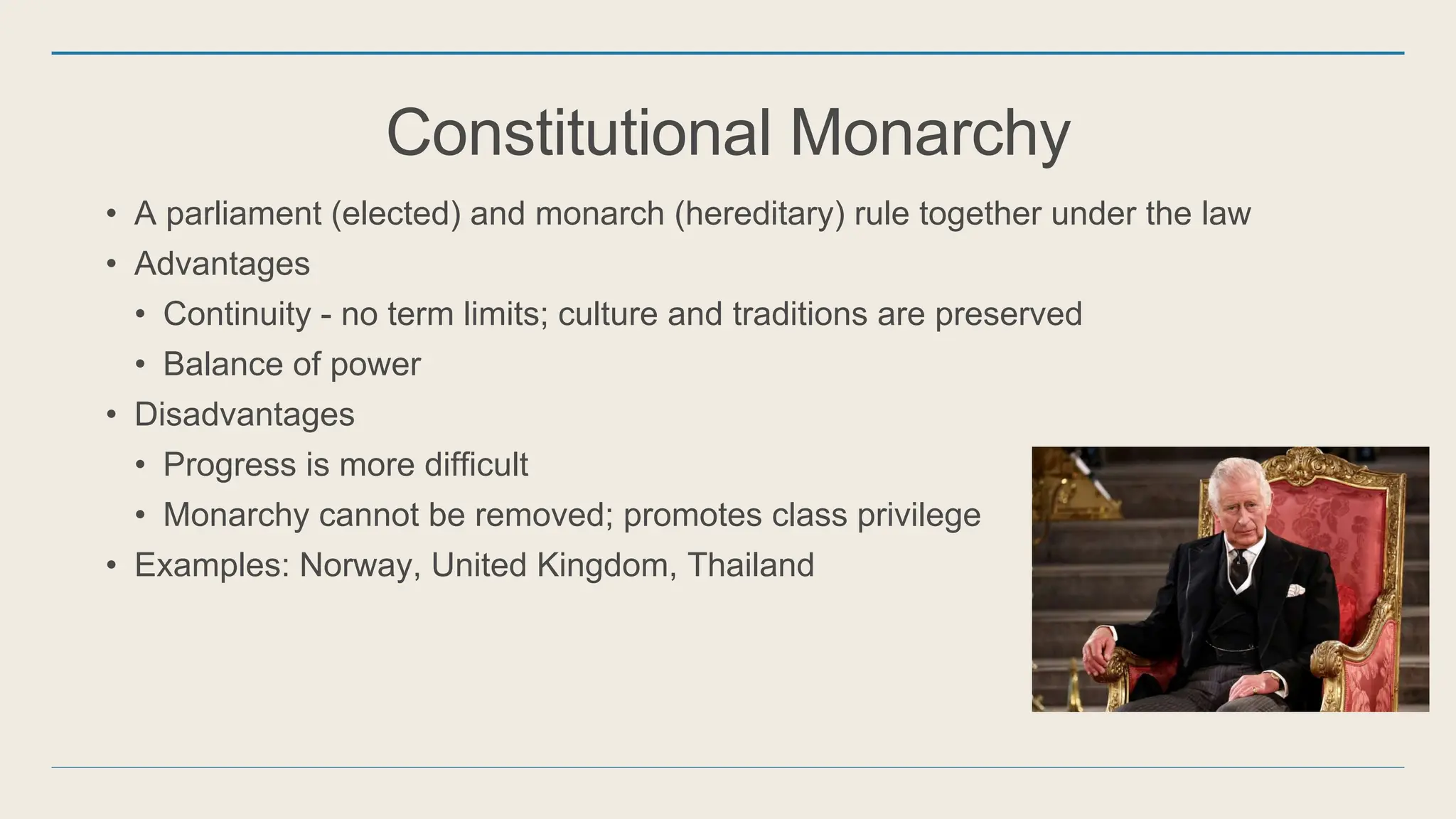
Constitutional Monarchy
• A parliament (elected) and monarch (hereditary) rule together under the law
• Advantages
• Continuity - no term limits; culture and traditions are preserved
• Balance of power
• Disadvantages
• Progress is more difficult
• Monarchy cannot be removed; promotes class privilege
• Examples: Norway, United Kingdom, Thailand
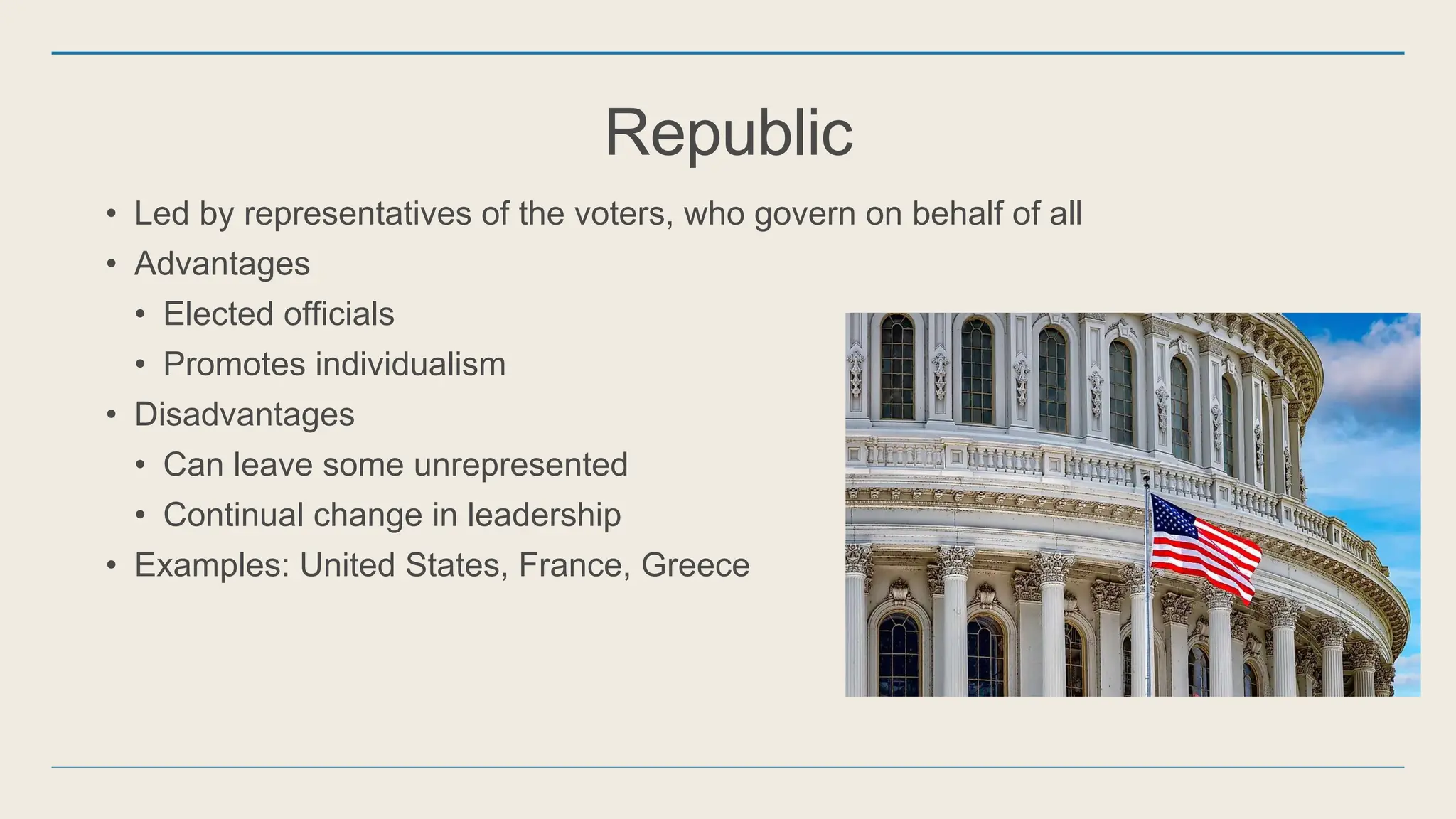
Republic
• Led by representatives of the voters, who govern on behalf of all
• Advantages
• Elected officials
• Promotes individualism
• Disadvantages
• Can leave some unrepresented
• Continual change in leadership
• Examples: United States, France, Greece
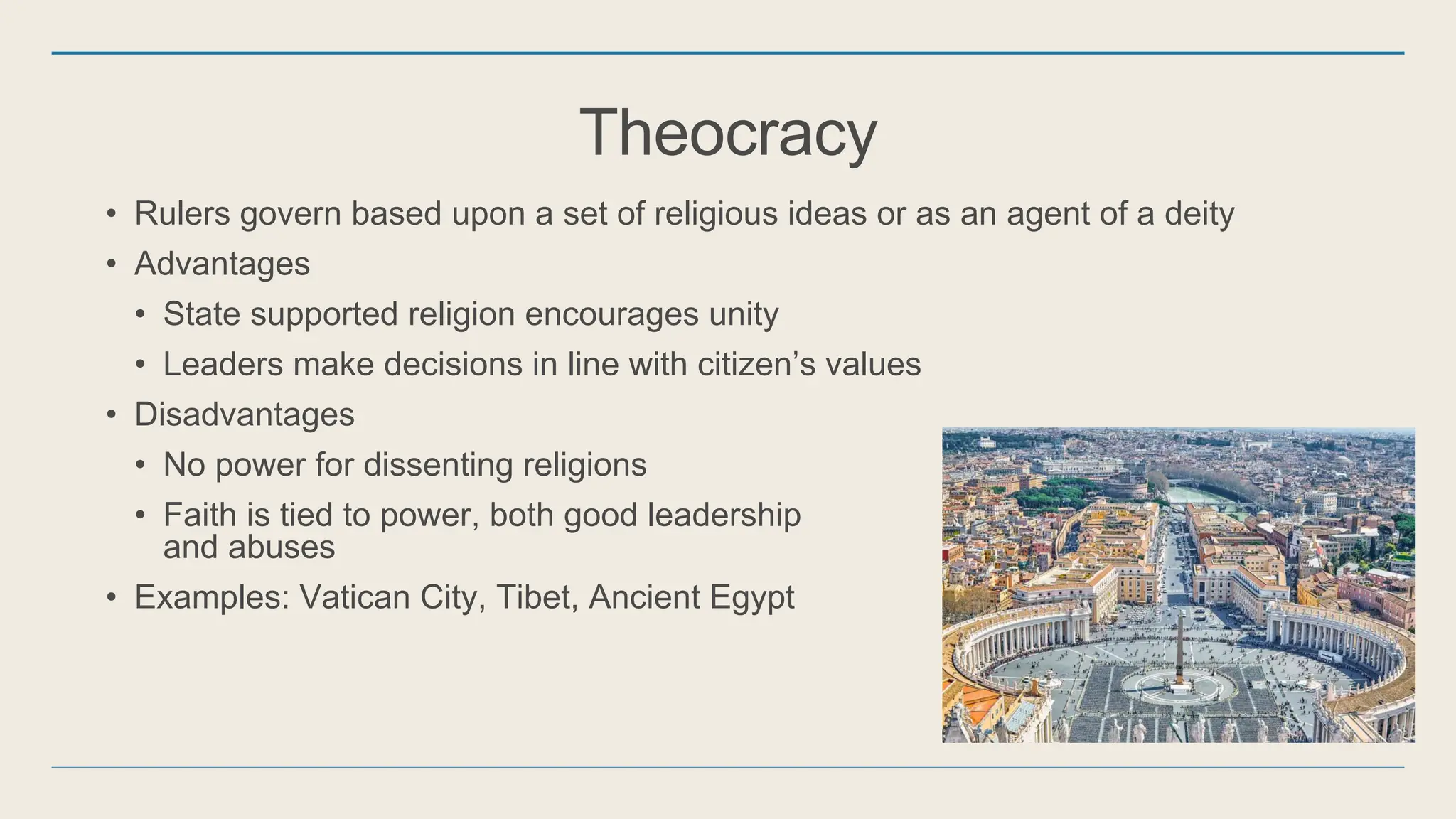
Theocracy
• Rulers govern based upon a set of religious ideas or as an agent of a deity
• Advantages
• State supported religion encourages unity
• Leaders make decisions in line with citizen’s values
• Disadvantages
• No power for dissenting religions
• Faith is tied to power, both good leadership
and abuses
• Examples: Vatican City, Tibet, Ancient Egypt
Authoritarian Ideologies
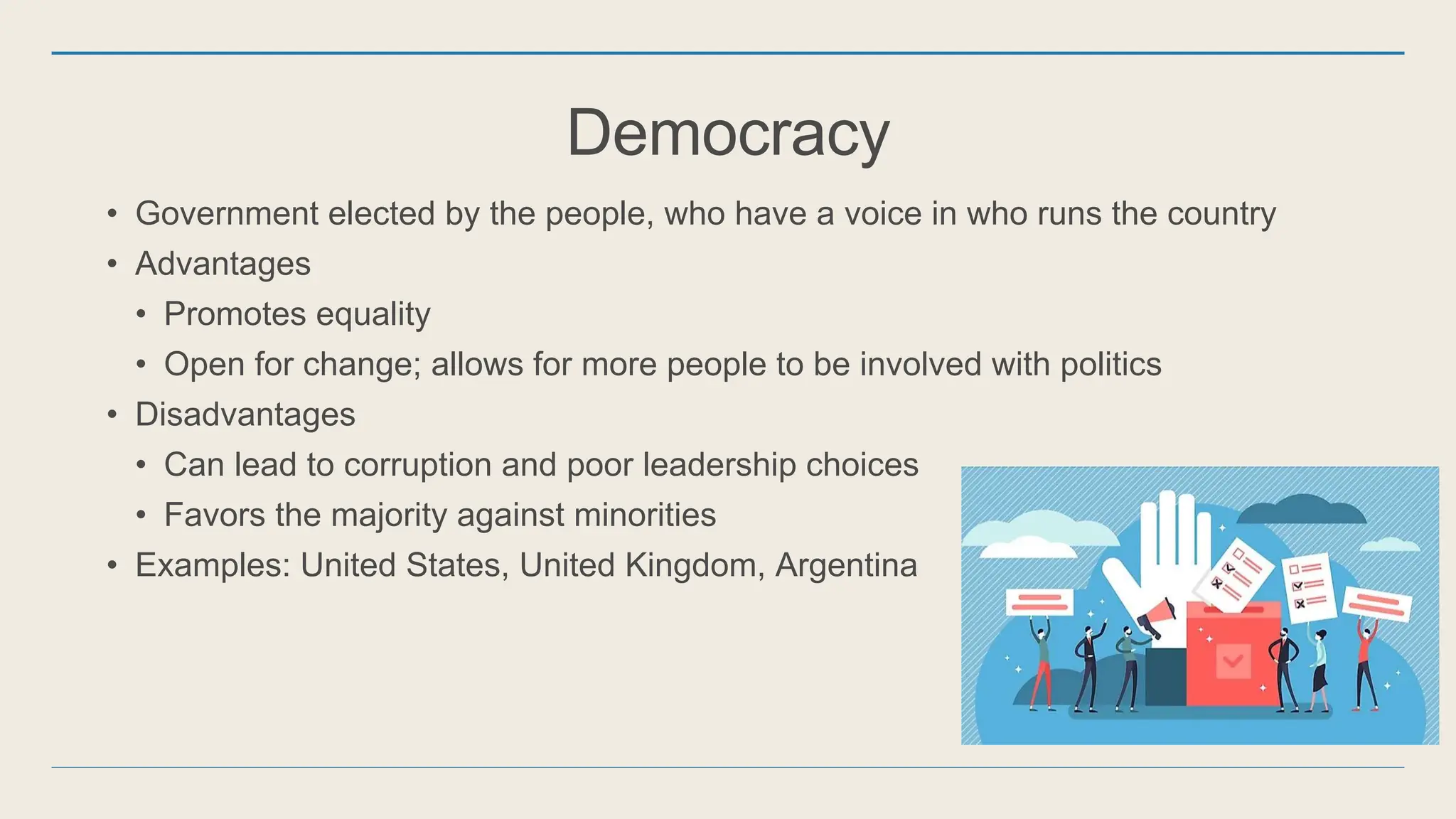
Democracy
• Government elected by the people, who have a voice in who runs the country
• Advantages
• Promotes equality
• Open for change; allows for more people to be involved with politics
• Disadvantages
• Can lead to corruption and poor leadership choices
• Favors the majority against minorities
• Examples: United States, United Kingdom, Argentina
Oligarchy
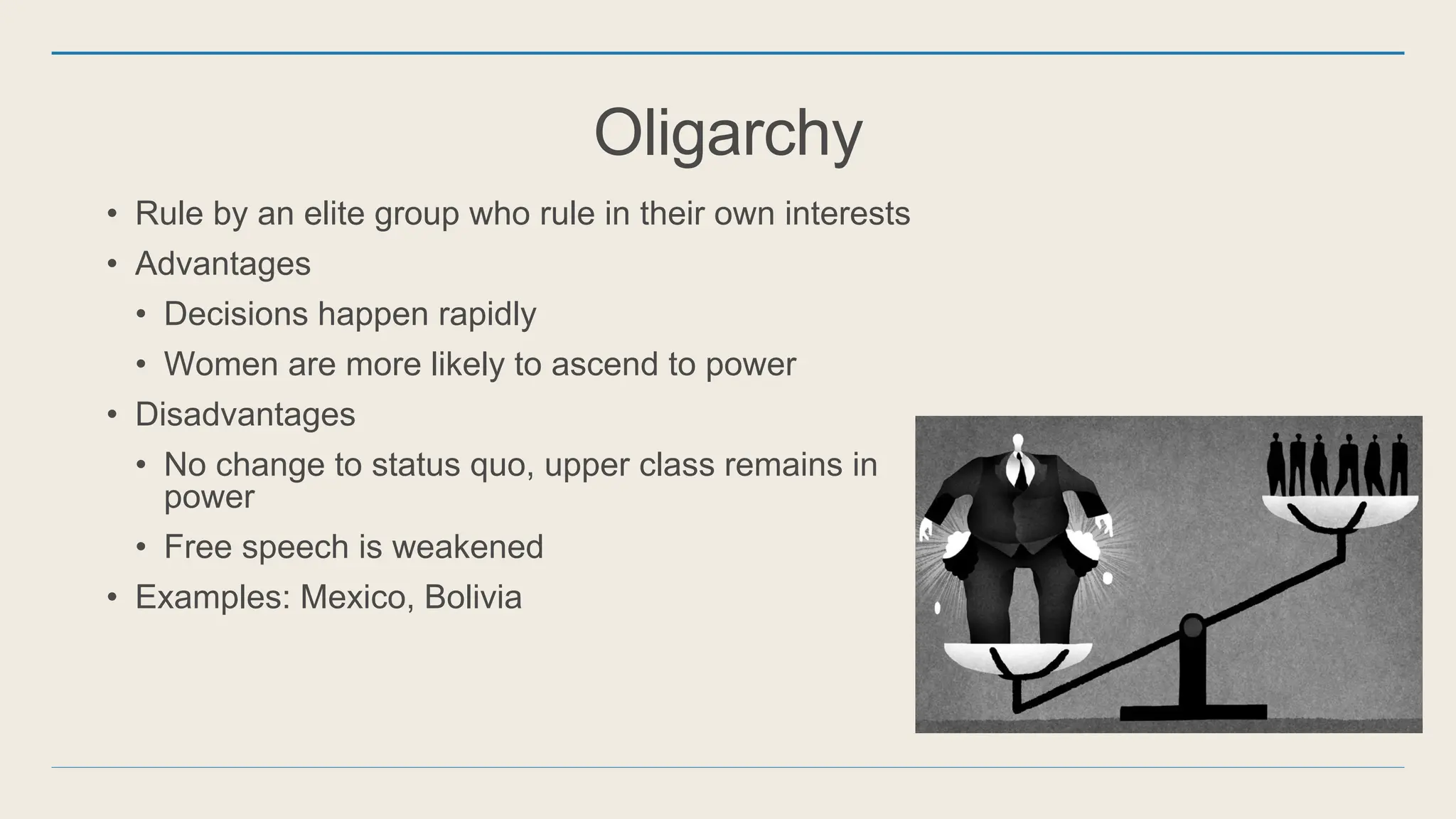
• Rule by an elite group who rule in their own interests
• Advantages
• Decisions happen rapidly
• Women are more likely to ascend to power
• Disadvantages
• No change to status quo, upper class remains in
power
• Free speech is weakened
• Examples: Mexico, Bolivia
Fascism
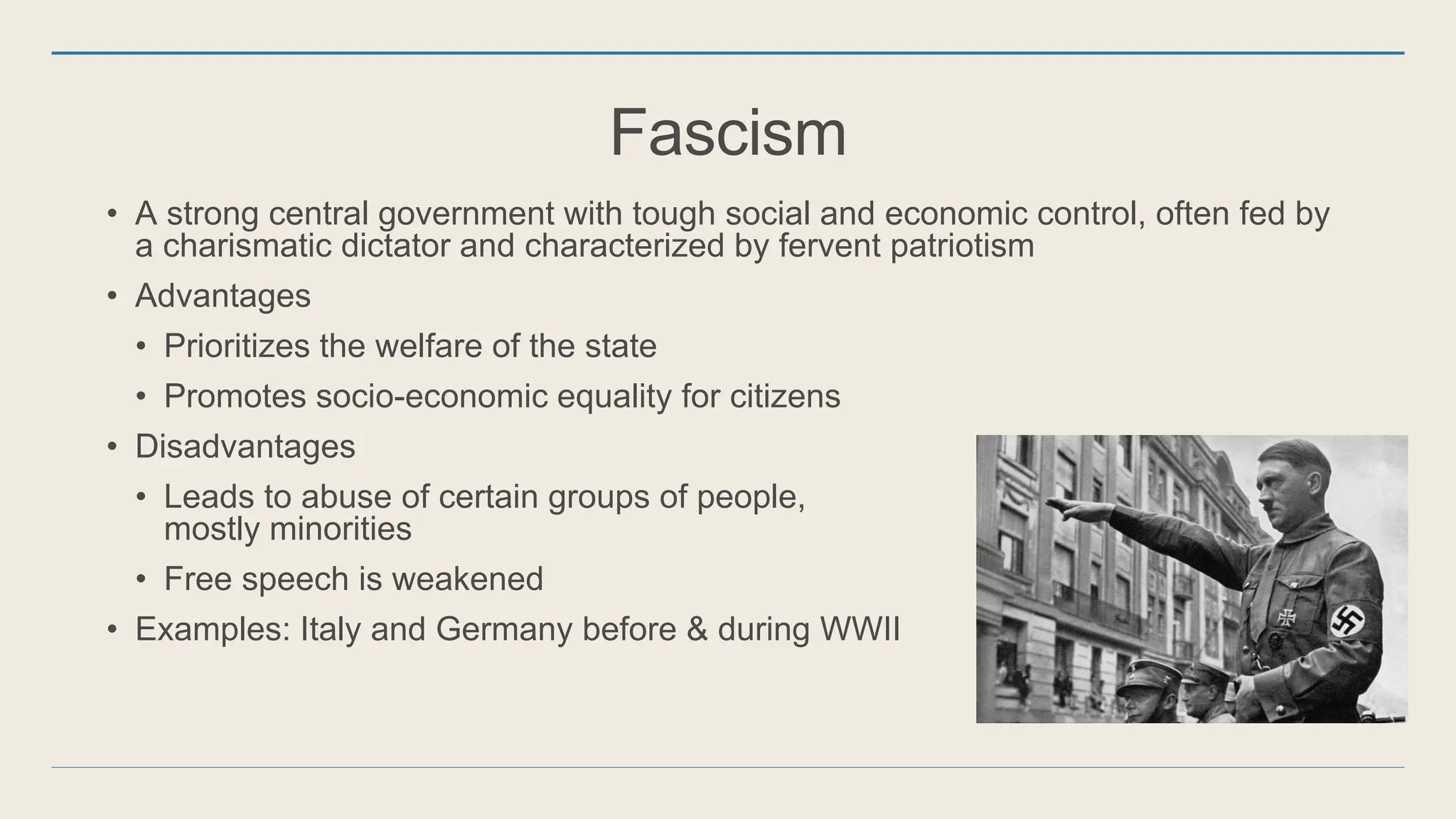
• A strong central government with tough social and economic control, often fed by
a charismatic dictator and characterized by fervent patriotism
• Advantages
• Prioritizes the welfare of the state
• Promotes socio-economic equality for citizens
• Disadvantages
• Leads to abuse of certain groups of people,
mostly minorities
• Free speech is weakened
• Examples: Italy and Germany before & during WWII
Economic Ideologies
Communism
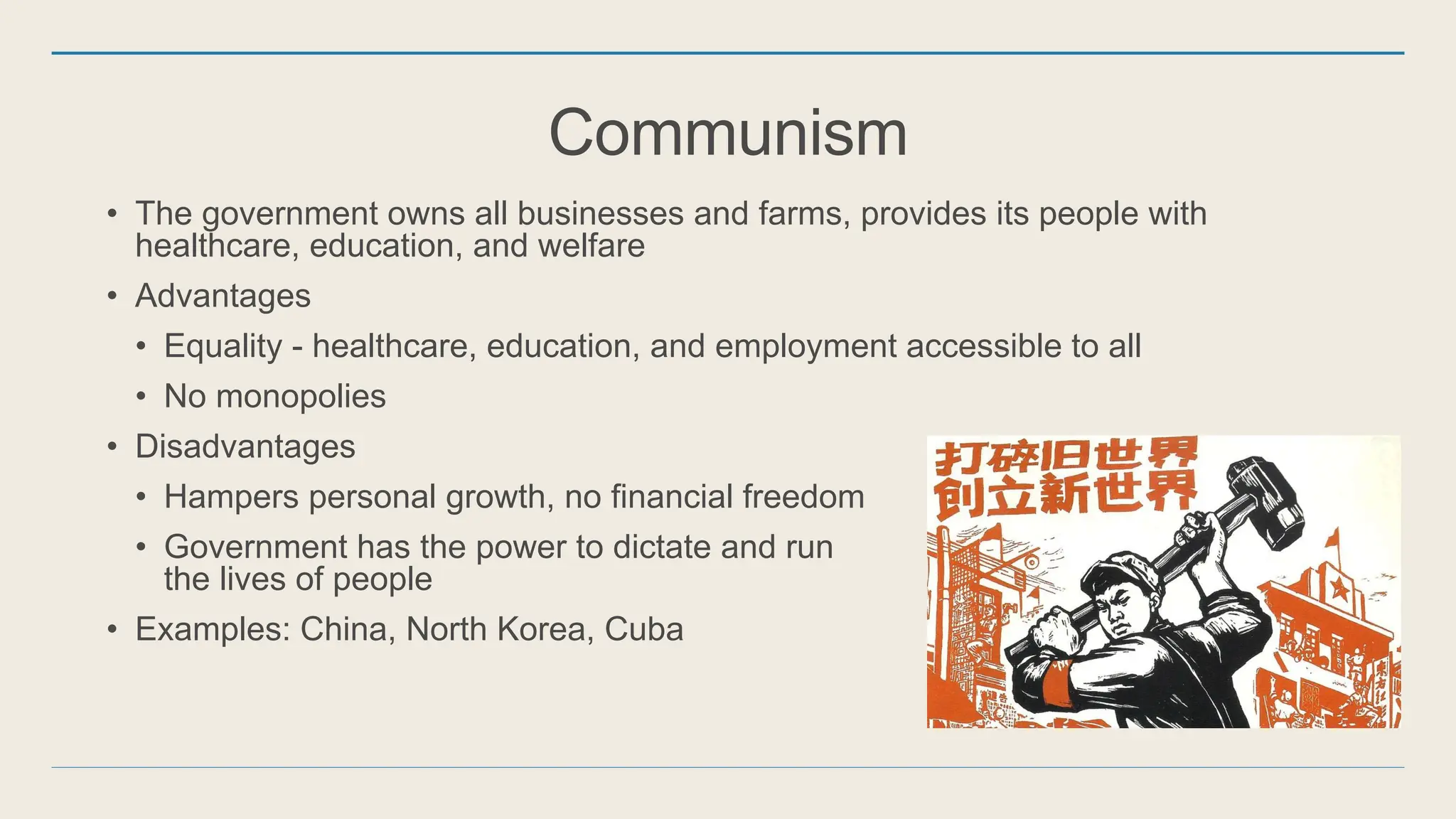
• The government owns all businesses and farms, provides its people with
healthcare, education, and welfare
• Advantages
• Equality - healthcare, education, and employment accessible to all
• No monopolies
• Disadvantages
• Hampers personal growth, no financial freedom
• Government has the power to dictate and run
the lives of people
• Examples: China, North Korea, Cuba
Capitalism
• Free market economy - people own their own businesses and property
• Advantages
• Linked with economic growth
• Cornerstone of representative democracy
• Disadvantages
• Focuses on profit, encourages greed and consumption
• Limits the government in enforcing fair play rules
• Examples: United States, United Kingdom, Japan
Socialism
• Government owns many of the larger industries; provides healthcare and
education; allows citizens some economic freedoms
• Advantages
• Balance between wealth and earnings, breaks down social barriers
• Equal access to education and healthcare
• Disadvantages
• Bureaucracy hampers delivery of services
• People can be unmotivated to develop
entrepreneurial skills
• Examples: Vietnam, Denmark, Finland, Laos
Create Your Own Country!
Create Your Own Country
• Name of the County -What form of government - country motto
• Design a flag
• How do leaders become leaders?
• How are decisions made?
• How does the government raise funds? How do they spend those funds?
• Add 2 more characteristics (Holidays, national foods, etc)
• One benefit of this form of government
• One drawback of this government
• What existing country are you closest to?
• Use ChatGPT to create a constitution for your country

Forms of Government - ppt on ideologies of different government structures

  • 1.
  • 3.
    Forms of Government •Every government has three basic structures • Political Ideology • How the government is structured • Authoritarian Ideology • Who has the power • Economic Ideology • How is the economy set up
  • 4.
  • 5.
    Dictatorship • Ruled bya single leader who uses force to maintain control • Advantages • Power is centralized in a single person - efficient • Complete control of military and police - put an end to political unrest quickly • Disadvantages • Can abuse citizens who oppose rule • Citizens demanding power be returned to the people can spark civil war • Examples: Sudan, Burma, Zimbabwe
  • 6.
    Constitutional Monarchy • Aparliament (elected) and monarch (hereditary) rule together under the law • Advantages • Continuity - no term limits; culture and traditions are preserved • Balance of power • Disadvantages • Progress is more difficult • Monarchy cannot be removed; promotes class privilege • Examples: Norway, United Kingdom, Thailand
  • 7.
    Republic • Led byrepresentatives of the voters, who govern on behalf of all • Advantages • Elected officials • Promotes individualism • Disadvantages • Can leave some unrepresented • Continual change in leadership • Examples: United States, France, Greece
  • 8.
    Theocracy • Rulers governbased upon a set of religious ideas or as an agent of a deity • Advantages • State supported religion encourages unity • Leaders make decisions in line with citizen’s values • Disadvantages • No power for dissenting religions • Faith is tied to power, both good leadership and abuses • Examples: Vatican City, Tibet, Ancient Egypt
  • 9.
  • 10.
    Democracy • Government electedby the people, who have a voice in who runs the country • Advantages • Promotes equality • Open for change; allows for more people to be involved with politics • Disadvantages • Can lead to corruption and poor leadership choices • Favors the majority against minorities • Examples: United States, United Kingdom, Argentina
  • 11.
    Oligarchy • Rule byan elite group who rule in their own interests • Advantages • Decisions happen rapidly • Women are more likely to ascend to power • Disadvantages • No change to status quo, upper class remains in power • Free speech is weakened • Examples: Mexico, Bolivia
  • 12.
    Fascism • A strongcentral government with tough social and economic control, often fed by a charismatic dictator and characterized by fervent patriotism • Advantages • Prioritizes the welfare of the state • Promotes socio-economic equality for citizens • Disadvantages • Leads to abuse of certain groups of people, mostly minorities • Free speech is weakened • Examples: Italy and Germany before & during WWII
  • 13.
  • 14.
    Communism • The governmentowns all businesses and farms, provides its people with healthcare, education, and welfare • Advantages • Equality - healthcare, education, and employment accessible to all • No monopolies • Disadvantages • Hampers personal growth, no financial freedom • Government has the power to dictate and run the lives of people • Examples: China, North Korea, Cuba
  • 15.
    Capitalism • Free marketeconomy - people own their own businesses and property • Advantages • Linked with economic growth • Cornerstone of representative democracy • Disadvantages • Focuses on profit, encourages greed and consumption • Limits the government in enforcing fair play rules • Examples: United States, United Kingdom, Japan
  • 16.
    Socialism • Government ownsmany of the larger industries; provides healthcare and education; allows citizens some economic freedoms • Advantages • Balance between wealth and earnings, breaks down social barriers • Equal access to education and healthcare • Disadvantages • Bureaucracy hampers delivery of services • People can be unmotivated to develop entrepreneurial skills • Examples: Vietnam, Denmark, Finland, Laos
  • 17.
  • 18.
    Create Your OwnCountry • Name of the County -What form of government - country motto • Design a flag • How do leaders become leaders? • How are decisions made? • How does the government raise funds? How do they spend those funds? • Add 2 more characteristics (Holidays, national foods, etc) • One benefit of this form of government • One drawback of this government • What existing country are you closest to? • Use ChatGPT to create a constitution for your country