 Lecture 3
 Forensic science can be
explained as a study and
application of science to
matters of law. This connection
of science and law provides new
ways and methods for
discovering the reality.
 The word “forensic” is derived
from the Latin
word “forensis” which means
forum, a public place where, in
Roman times, senators and
others debated and held judicial
proceedings
 When you combine forensics and science, you get the
practical application of science to matters of debate, which
in modern times translates to the law.
 Forensic science can prove the guilt or innocence of
a defendant in criminal law,
 it can help resolve legal issues in civil actions through the
identification, analysis, and evaluation of physical and
other evidence
 In the scientific sphere, forensics can include DNA
analysis, fingerprinting, autopsies, pathology,
and toxicology, all of which can be used to determine
the cause of death and to link a suspect to a crime
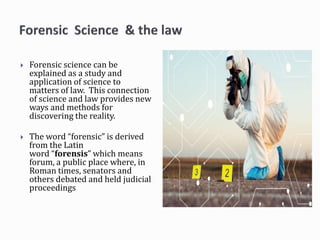
 The evidence gathered from crime scenes may include
fingerprints, blood, hair, bullet fragments, photographs,
and more.
 Forensic scientists and law enforcement officials use
cutting-edge scientific techniques to preserve and examine
evidence in a process known as "chain of evidence.“
 This process ensures that evidence is pure and has not
had an opportunity to become tainted through
mishandling. Keeping meticulous records allows forensic
scientists to show exactly who was in possession of
evidence at any given time and when and how transfers of
the evidence were made.
 Forensic science can also involve an analysis of electronic
or digital media—think wiretaps and recovering "erased"
information from computer hard drives.
 It might mean to track sources of hidden income or
expenses, or psychological profiles and evaluations of
those involved in crimes or a lawsuit.
 A forensic scientist is typically charged with much more
than just digging into the facts of a case and substantiating
or disproving them based on an interpretation of the
evidence. Strong record-keeping skills are crucial because
they will often be called upon to testify to their findings in
court.
 Such scientists are typically required to submit written
reports to the court and opposing counsel as well, detailing
the nature of their findings and testimony before trial.
These reports can be extensive and complex. Forensic
scientists must be able to demonstrate how they arrived at
their conclusions
Blood Spatter Analyst
 A blood-spatter analyst is charged with analyzing blood
samples both at the scene of a crime and in the lab. This
type of analyst can also work with trace evidence.
Document Examiners
 Think issues of handwriting analysis here. Document
examiner positions can also involve detection of altered
images and print copies
Forensic Anthropologists
 Similar to medical examiners, forensic anthropologists deal
with human remains to derive information such as the age
or race of a victim.
Medical Examiner
 The position of medical examiner plays very well but it
also requires a good bit of schooling. This position involves
conducting autopsies and determining a cause of death.
 Forensics Technicians
Forensics technicians are often employed in the field to
collect evidence in such a way as to preserve the chain of
evidence.
 Forensic Artists
They can create composites based on witness
testimony as well as age progression images and
other visual aids for trial.
 Laboratory Analyst
The range of evidence handled by a laboratory
analyst can be more complex, stretching to
collecting DNA evidence and performing analyses of
weapons as well.
 Toxicologists
Toxicologists investigate blood and tissue samples
for substances such as alcohol, drugs, or even
poisoning. Both laboratory analysts and
toxicologists typically operate out of labs, as
do fingerprint analysts and ballistics analysts, who
work with solely with firearm evidence.

Forensic science.pptx

  • 1.
  • 3.
     Forensic sciencecan be explained as a study and application of science to matters of law. This connection of science and law provides new ways and methods for discovering the reality.  The word “forensic” is derived from the Latin word “forensis” which means forum, a public place where, in Roman times, senators and others debated and held judicial proceedings
  • 4.
     When youcombine forensics and science, you get the practical application of science to matters of debate, which in modern times translates to the law.  Forensic science can prove the guilt or innocence of a defendant in criminal law,  it can help resolve legal issues in civil actions through the identification, analysis, and evaluation of physical and other evidence
  • 5.
     In thescientific sphere, forensics can include DNA analysis, fingerprinting, autopsies, pathology, and toxicology, all of which can be used to determine the cause of death and to link a suspect to a crime  The evidence gathered from crime scenes may include fingerprints, blood, hair, bullet fragments, photographs, and more.
  • 6.
     Forensic scientistsand law enforcement officials use cutting-edge scientific techniques to preserve and examine evidence in a process known as "chain of evidence.“  This process ensures that evidence is pure and has not had an opportunity to become tainted through mishandling. Keeping meticulous records allows forensic scientists to show exactly who was in possession of evidence at any given time and when and how transfers of the evidence were made.
  • 7.
     Forensic sciencecan also involve an analysis of electronic or digital media—think wiretaps and recovering "erased" information from computer hard drives.  It might mean to track sources of hidden income or expenses, or psychological profiles and evaluations of those involved in crimes or a lawsuit.
  • 8.
     A forensicscientist is typically charged with much more than just digging into the facts of a case and substantiating or disproving them based on an interpretation of the evidence. Strong record-keeping skills are crucial because they will often be called upon to testify to their findings in court.  Such scientists are typically required to submit written reports to the court and opposing counsel as well, detailing the nature of their findings and testimony before trial. These reports can be extensive and complex. Forensic scientists must be able to demonstrate how they arrived at their conclusions
  • 9.
    Blood Spatter Analyst A blood-spatter analyst is charged with analyzing blood samples both at the scene of a crime and in the lab. This type of analyst can also work with trace evidence. Document Examiners  Think issues of handwriting analysis here. Document examiner positions can also involve detection of altered images and print copies
  • 10.
    Forensic Anthropologists  Similarto medical examiners, forensic anthropologists deal with human remains to derive information such as the age or race of a victim. Medical Examiner  The position of medical examiner plays very well but it also requires a good bit of schooling. This position involves conducting autopsies and determining a cause of death.
  • 11.
     Forensics Technicians Forensicstechnicians are often employed in the field to collect evidence in such a way as to preserve the chain of evidence.
  • 12.
     Forensic Artists Theycan create composites based on witness testimony as well as age progression images and other visual aids for trial.  Laboratory Analyst The range of evidence handled by a laboratory analyst can be more complex, stretching to collecting DNA evidence and performing analyses of weapons as well.
  • 13.
     Toxicologists Toxicologists investigateblood and tissue samples for substances such as alcohol, drugs, or even poisoning. Both laboratory analysts and toxicologists typically operate out of labs, as do fingerprint analysts and ballistics analysts, who work with solely with firearm evidence.