Food safety in the era of COVID-19
ensuring consumers’ trust
Thursday 19 November 2020
Risk based prioritisation of food hazards
Delia Grace Randolph
Professor Food Safety Systems, Natural Resources Institute, University of Greenwich
Contributing scientist, International Livestock Research Institute
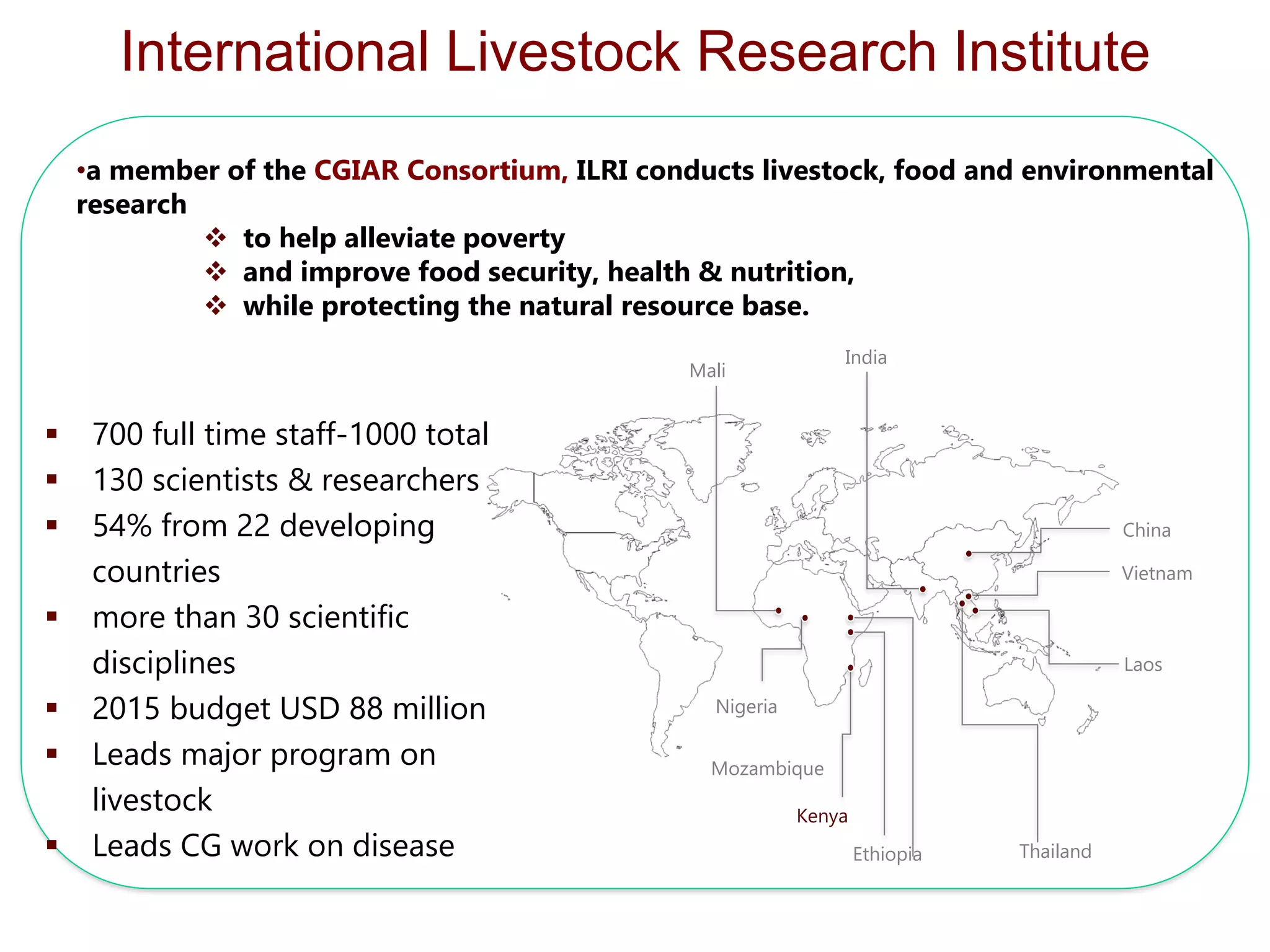
International Livestock Research Institute
 700 full time staff-1000 total
 130 scientists & researchers
 54% from 22 developing
countries
 more than 30 scientific
disciplines
 2015 budget USD 88 million
 Leads major program on
livestock
 Leads CG work on disease
•a member of the CGIAR Consortium, ILRI conducts livestock, food and environmental
research
 to help alleviate poverty
 and improve food security, health & nutrition,
 while protecting the natural resource base.
Mali
Nigeria
Mozambique
Kenya
Ethiopia
India
China
Laos
Vietnam
Thailand
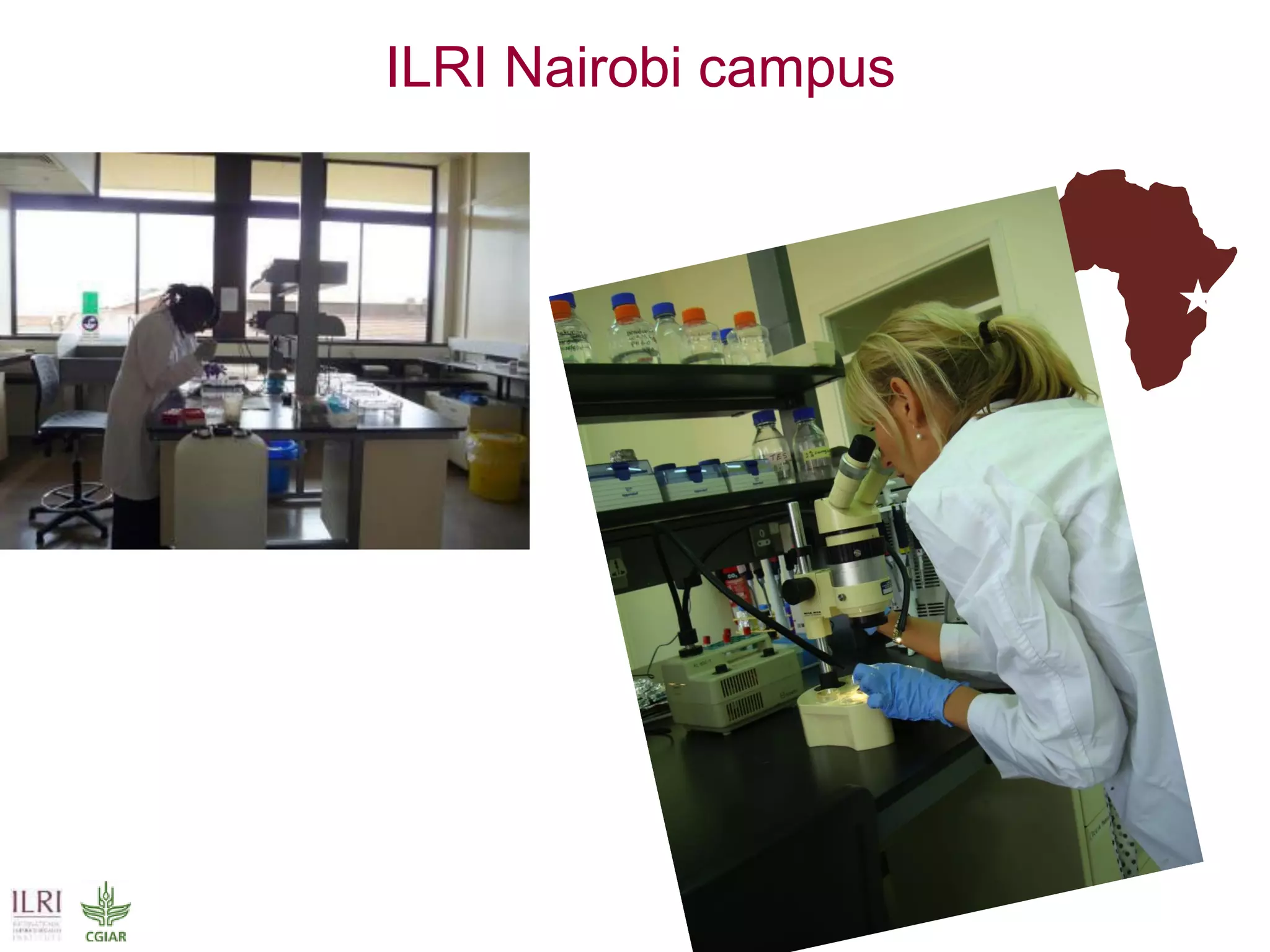
ILRI Nairobi campus
IITA CIP CIMMYT IRRI CIFOR
★
5
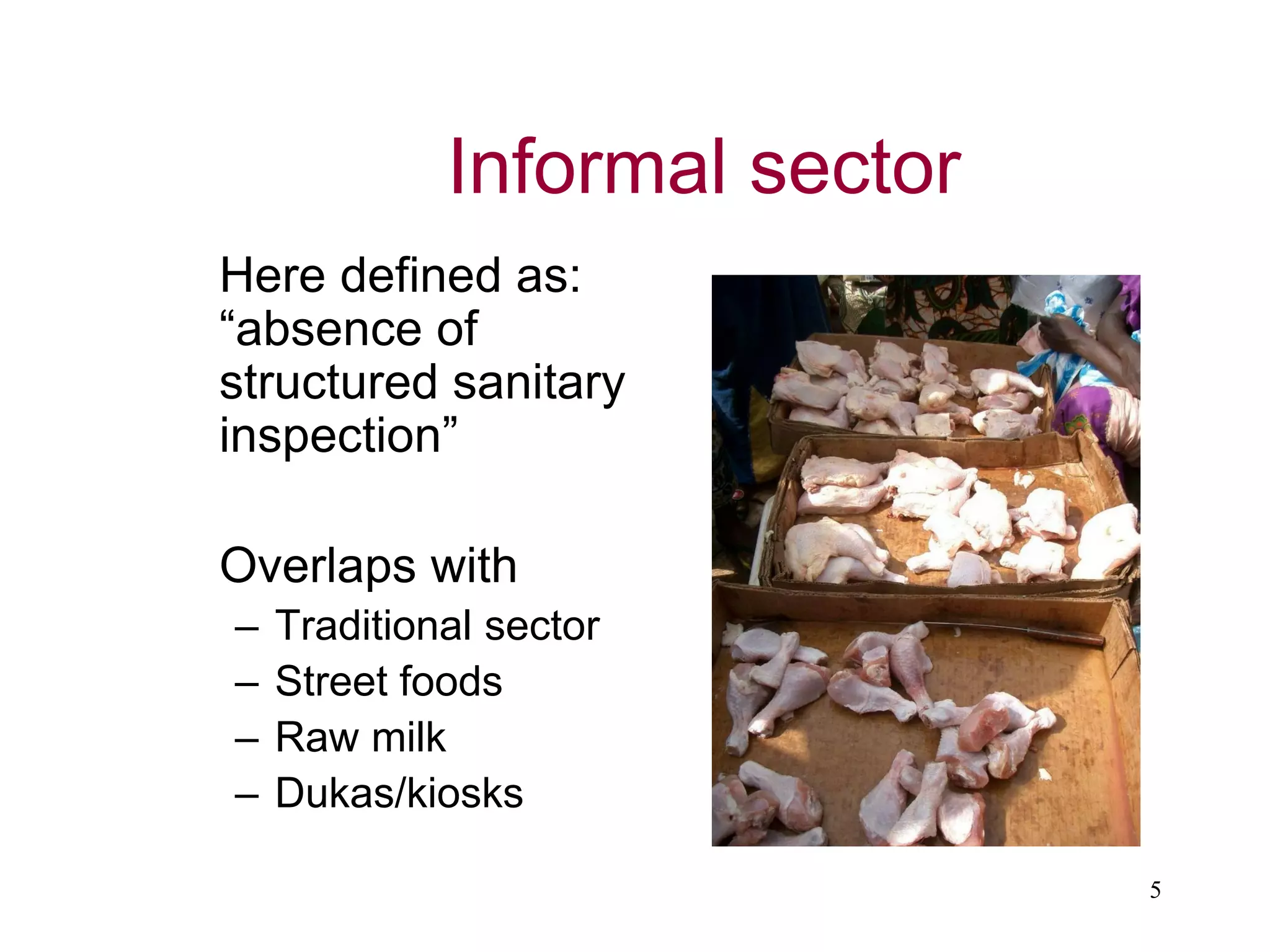
Informal sector
 Here defined as:
“absence of
structured sanitary
inspection”
 Overlaps with
– Traditional sector
– Street foods
– Raw milk
– Dukas/kiosks
6
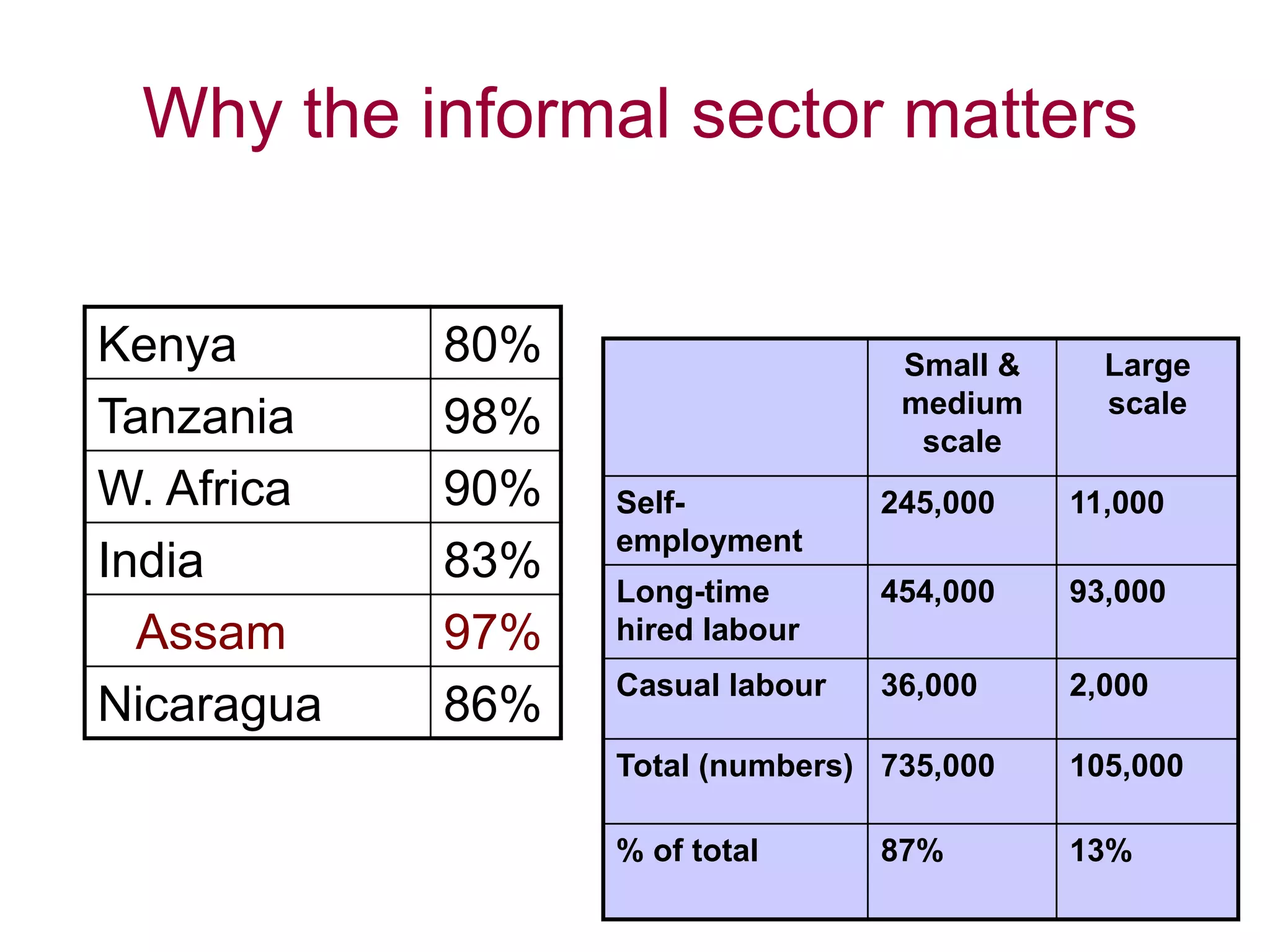
Why the informal sector matters
Small &
medium
scale
Large
scale
Self-
employment
245,000 11,000
Long-time
hired labour
454,000 93,000
Casual labour 36,000 2,000
Total (numbers) 735,000 105,000
% of total 87% 13%
Kenya 80%
Tanzania 98%
W. Africa 90%
India 83%
Assam 97%
Nicaragua 86%
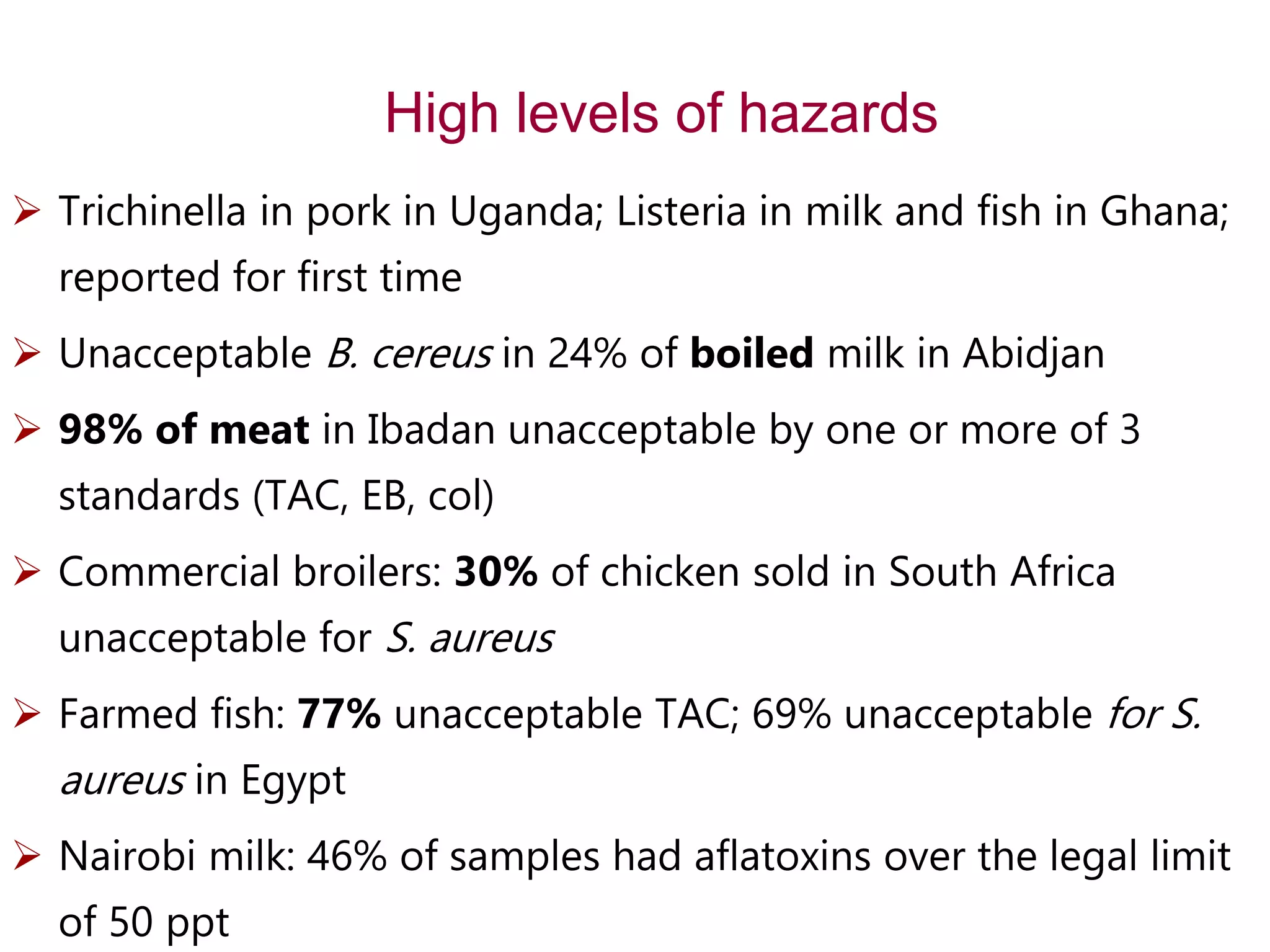
High levels of hazards
 Trichinella in pork in Uganda; Listeria in milk and fish in Ghana;
reported for first time
 Unacceptable B. cereus in 24% of boiled milk in Abidjan
 98% of meat in Ibadan unacceptable by one or more of 3
standards (TAC, EB, col)
 Commercial broilers: 30% of chicken sold in South Africa
unacceptable for S. aureus
 Farmed fish: 77% unacceptable TAC; 69% unacceptable for S.
aureus in Egypt
 Nairobi milk: 46% of samples had aflatoxins over the legal limit
of 50 ppt
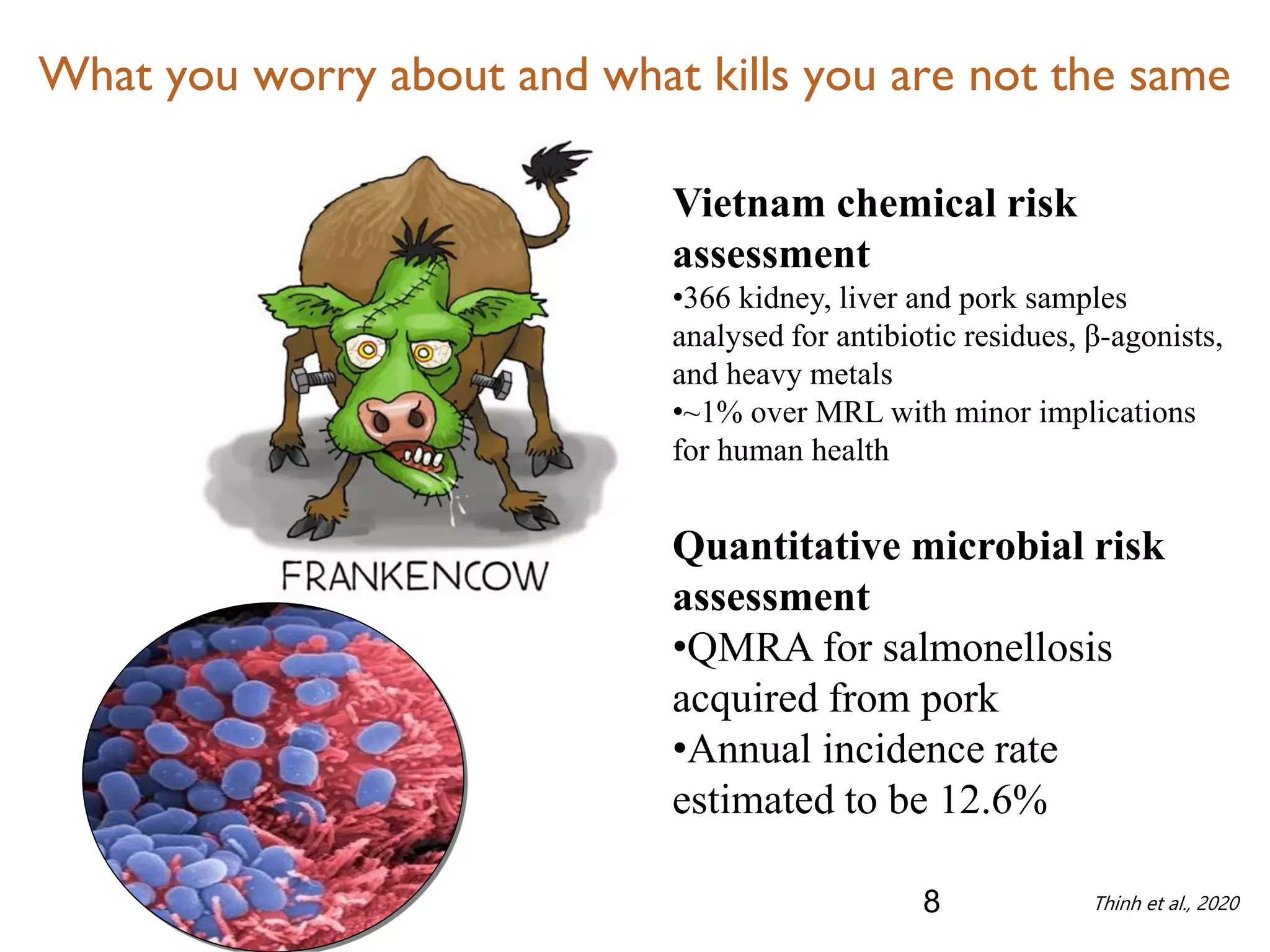
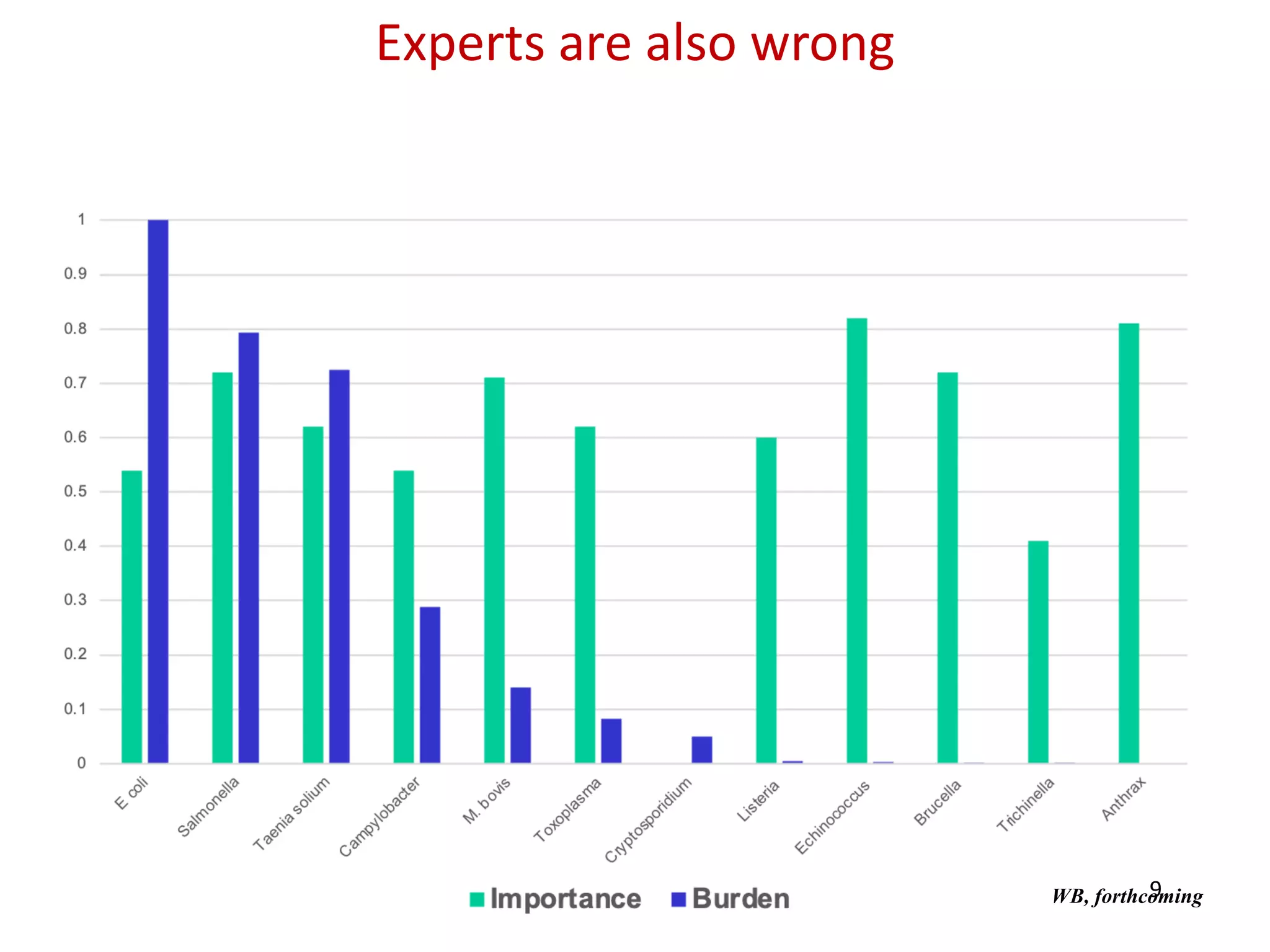
What you worry about and what kills you are not the same
8
Vietnam chemical risk
assessment
•366 kidney, liver and pork samples
analysed for antibiotic residues, β-agonists,
and heavy metals
•~1% over MRL with minor implications
for human health
Quantitative microbial risk
assessment
•QMRA for salmonellosis
acquired from pork
•Annual incidence rate
estimated to be 12.6%
Thinh et al., 2020
9
Experts are also wrong
WB, forthcoming
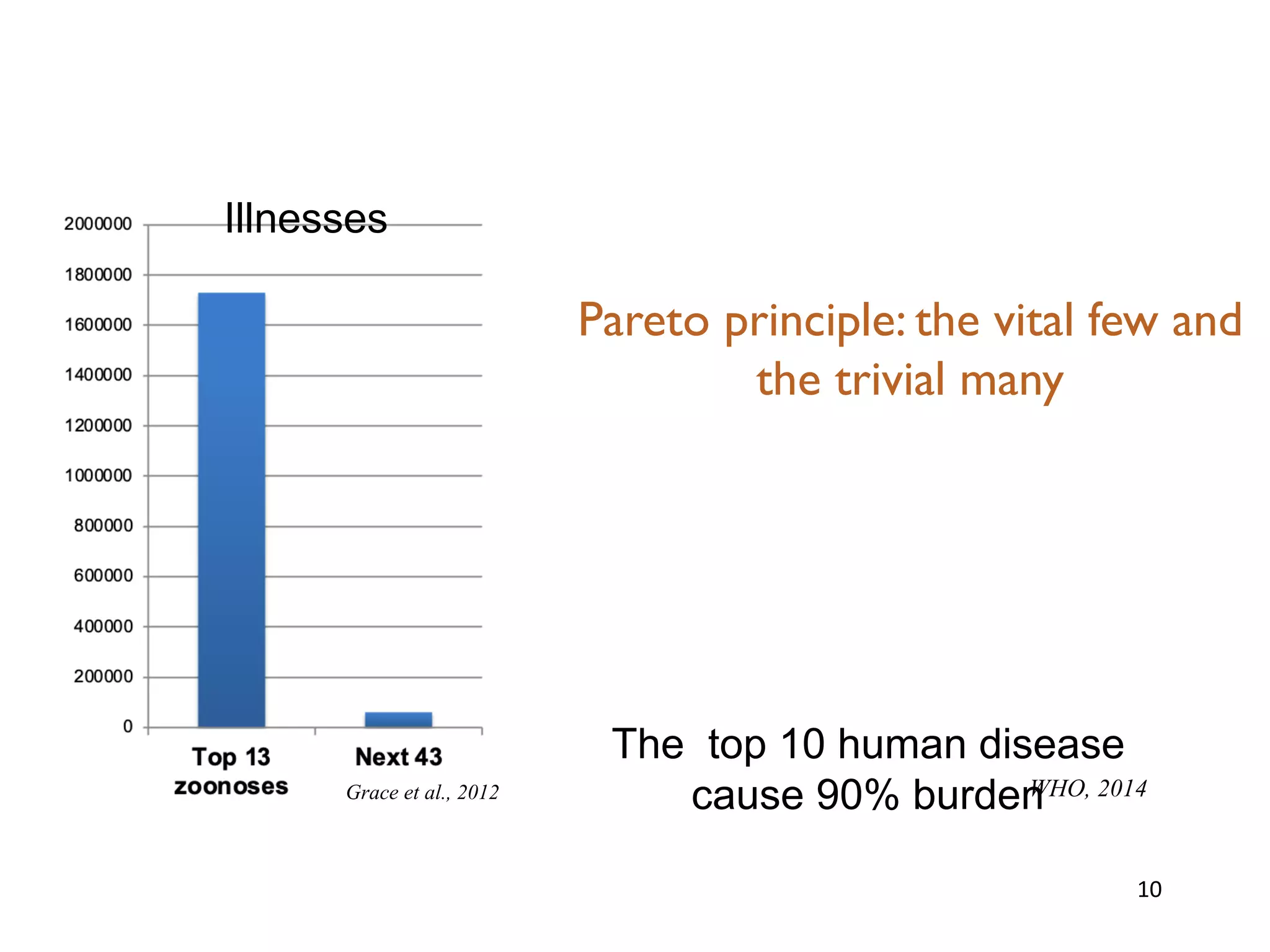
10
The top 10 human disease
cause 90% burden
Illnesses
WHO, 2014Grace et al., 2012
Pareto principle: the vital few and
the trivial many
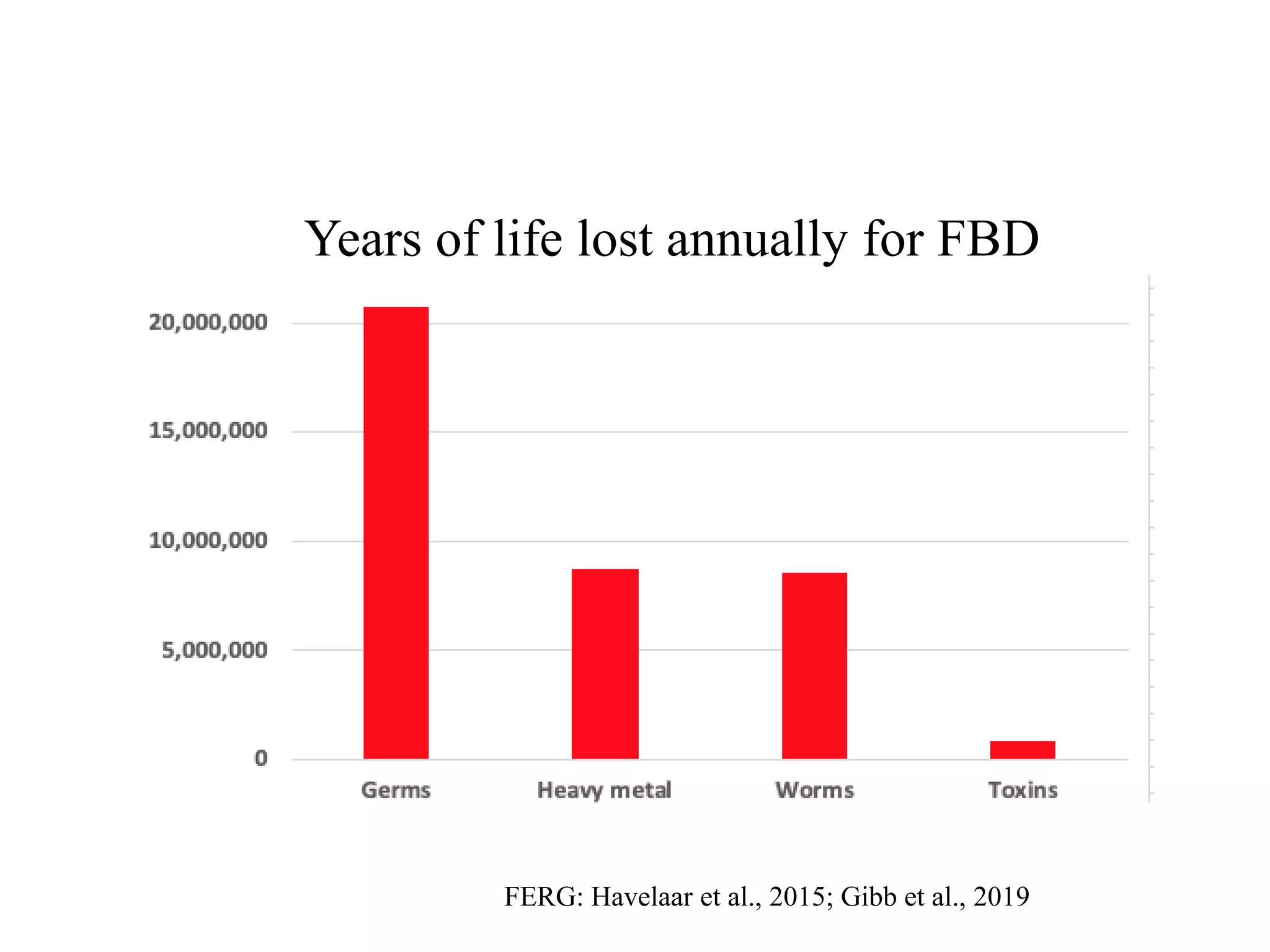
Years of life lost annually for FBD
FERG: Havelaar et al., 2015; Gibb et al., 2019
Health impact of FBD comparable to that
of malaria, HIV/AIDs or TB
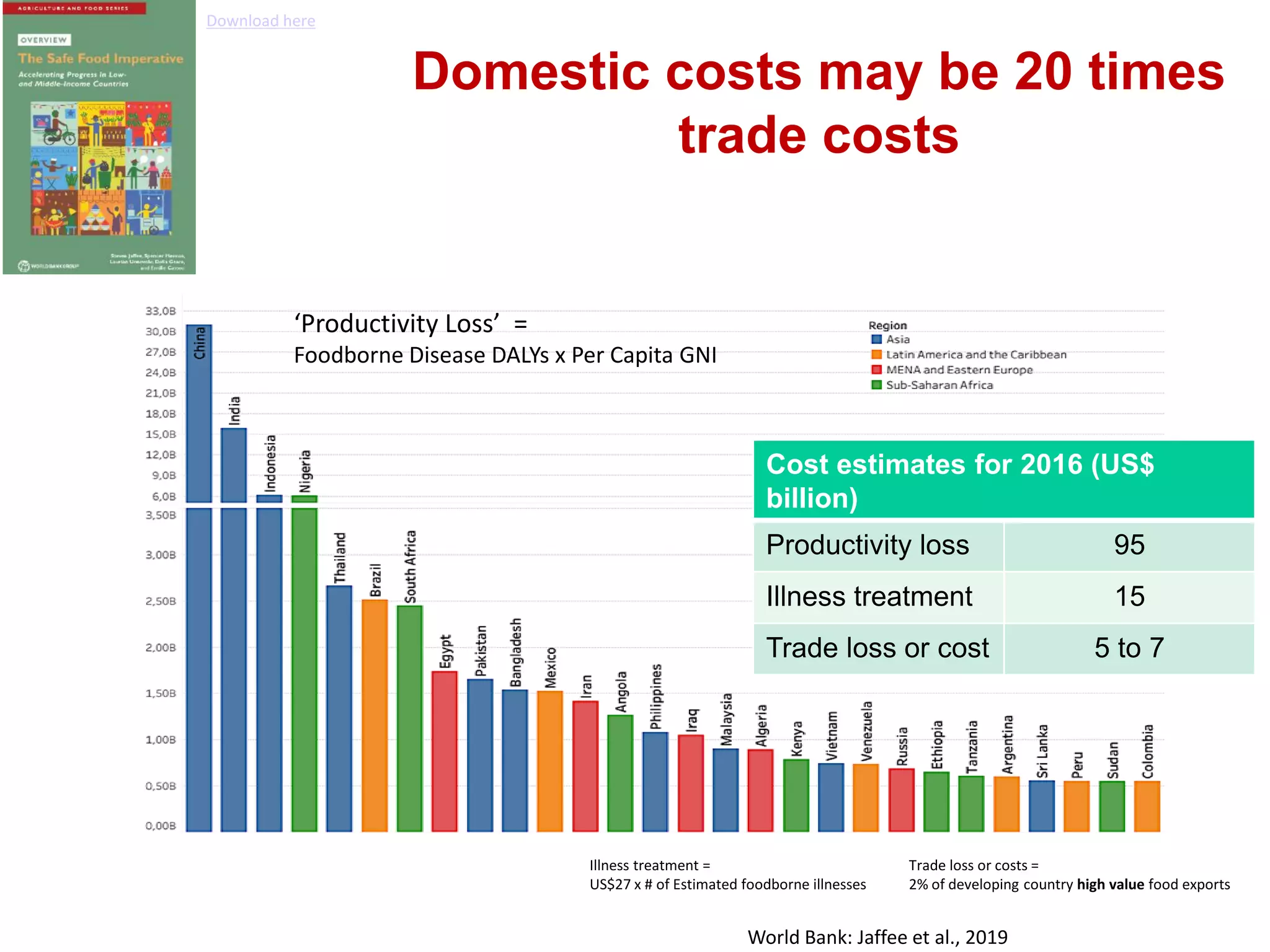
Domestic costs may be 20 times
trade costs
Cost estimates for 2016 (US$
billion)
Productivity loss 95
Illness treatment 15
Trade loss or cost 5 to 7
‘Productivity Loss’ =
Foodborne Disease DALYs x Per Capita GNI
World Bank: Jaffee et al., 2019
Illness treatment =
US$27 x # of Estimated foodborne illnesses
Trade loss or costs =
2% of developing country high value food exports
Download here
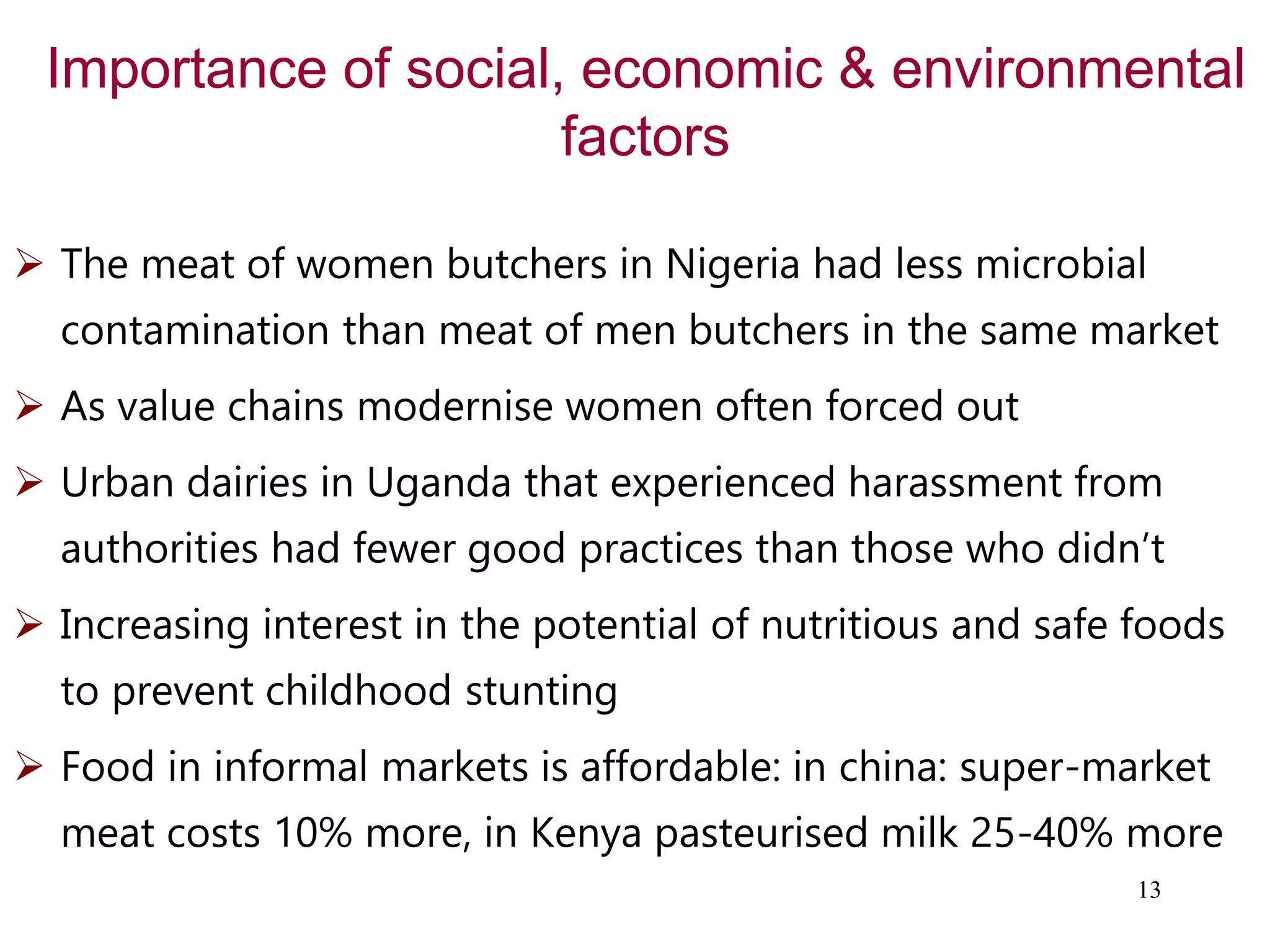
Importance of social, economic & environmental
factors
 The meat of women butchers in Nigeria had less microbial
contamination than meat of men butchers in the same market
 As value chains modernise women often forced out
 Urban dairies in Uganda that experienced harassment from
authorities had fewer good practices than those who didn’t
 Increasing interest in the potential of nutritious and safe foods
to prevent childhood stunting
 Food in informal markets is affordable: in china: super-market
meat costs 10% more, in Kenya pasteurised milk 25-40% more
13
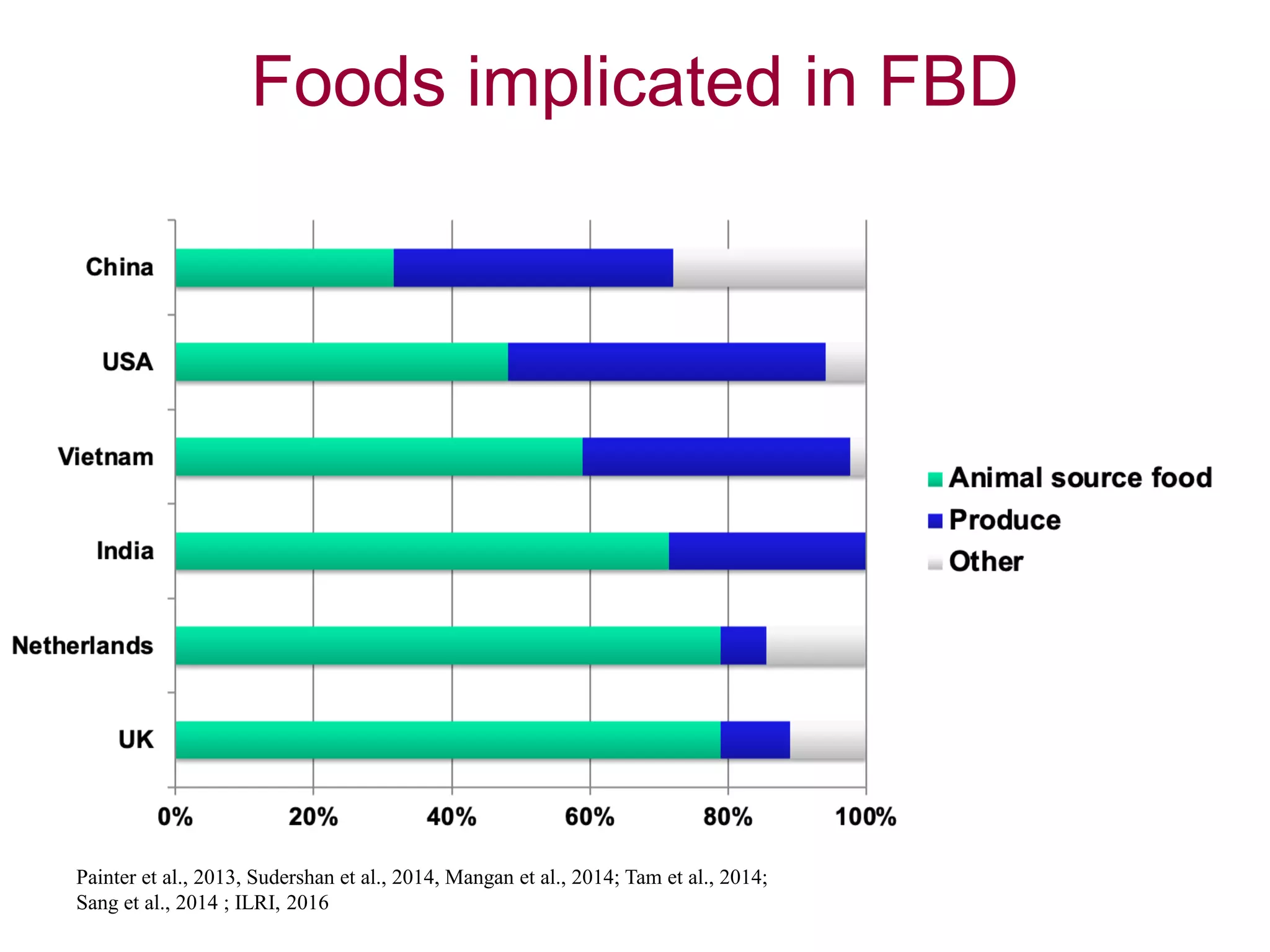
Foods implicated in FBD
Painter et al., 2013, Sudershan et al., 2014, Mangan et al., 2014; Tam et al., 2014;
Sang et al., 2014 ; ILRI, 2016
15
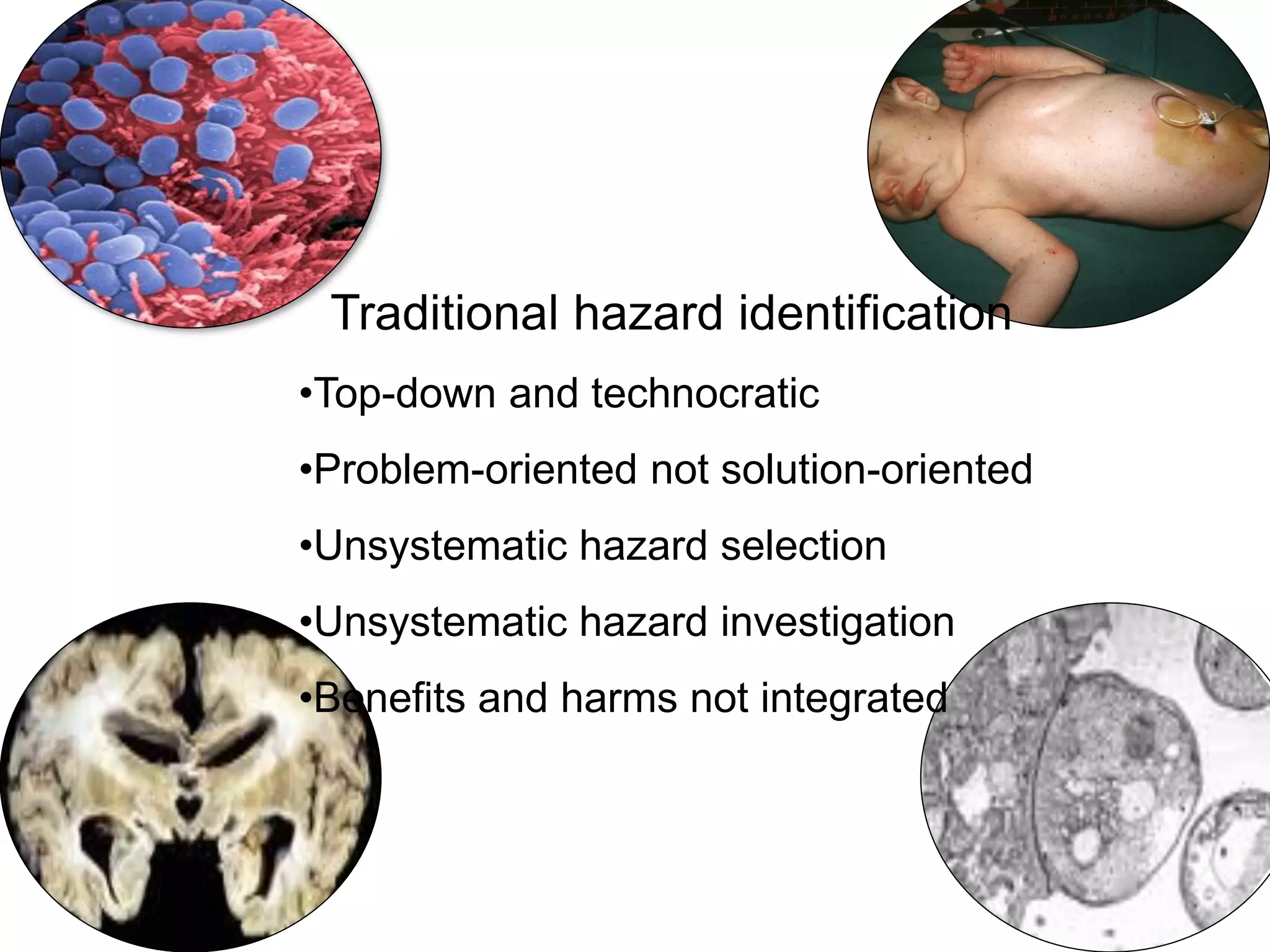
Traditional hazard identification
•Top-down and technocratic
•Problem-oriented not solution-oriented
•Unsystematic hazard selection
•Unsystematic hazard investigation
•Benefits and harms not integrated
16
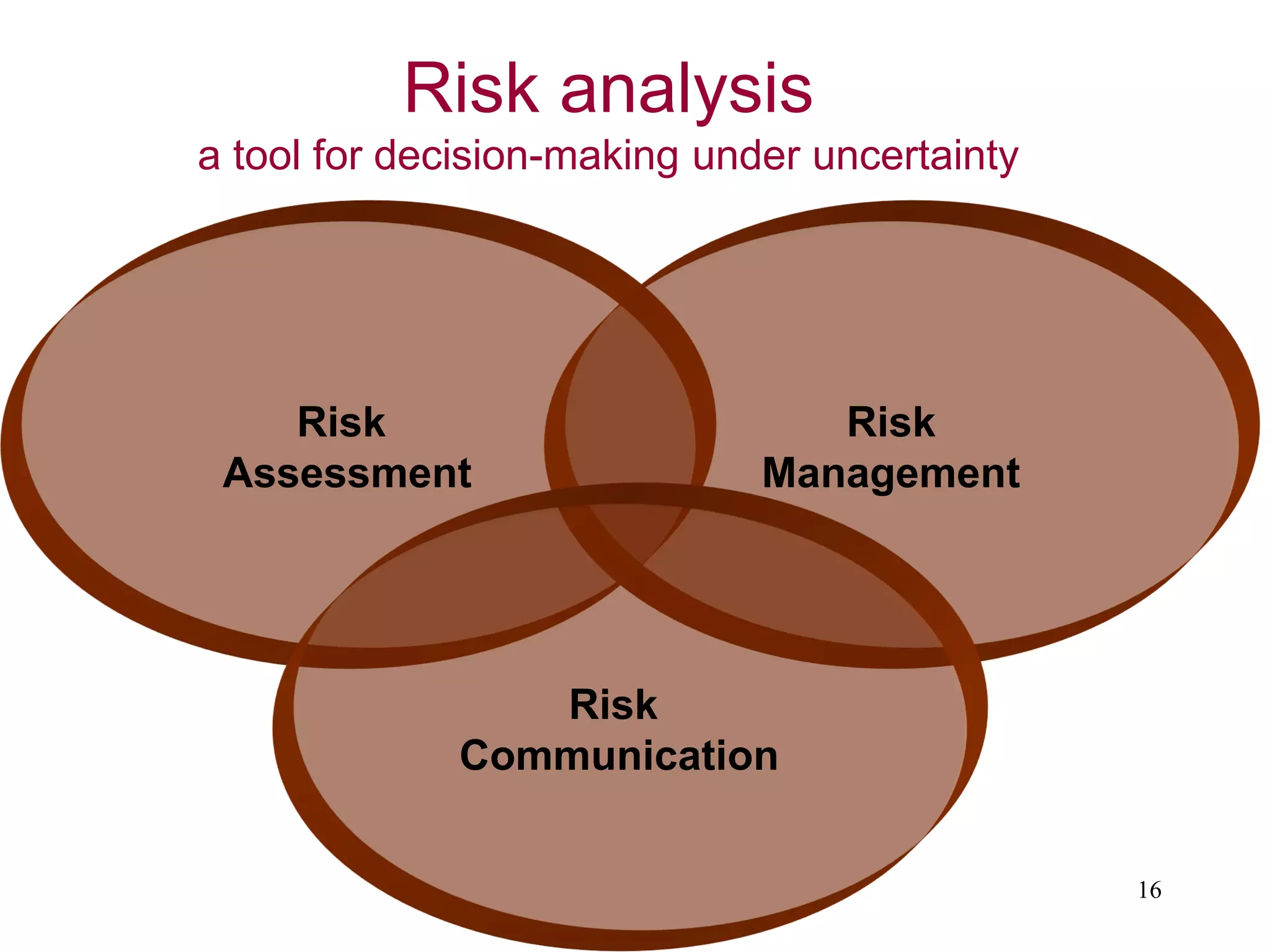
Risk
Assessment
Risk
Management
Risk
Communication
Risk analysis
a tool for decision-making under uncertainty
High levels of hazards
 Trichinella in pork in Uganda; Listeria in milk and fish in Ghana;
reported for first time
 Unacceptable B. cereus in 24% of boiled milk in Abidjan
 98% of meat in Ibadan unacceptable by one or more of 3
standards (TAC, EB, col)
 Commercial broilers: 30% of chicken sold in South Africa
unacceptable for S. aureus
 Farmed fish: 77% unacceptable TAC; 69% unacceptable for S.
aureus in Egypt
 Nairobi milk: 46% of samples had aflatoxins over the legal limit
of 50 ppt
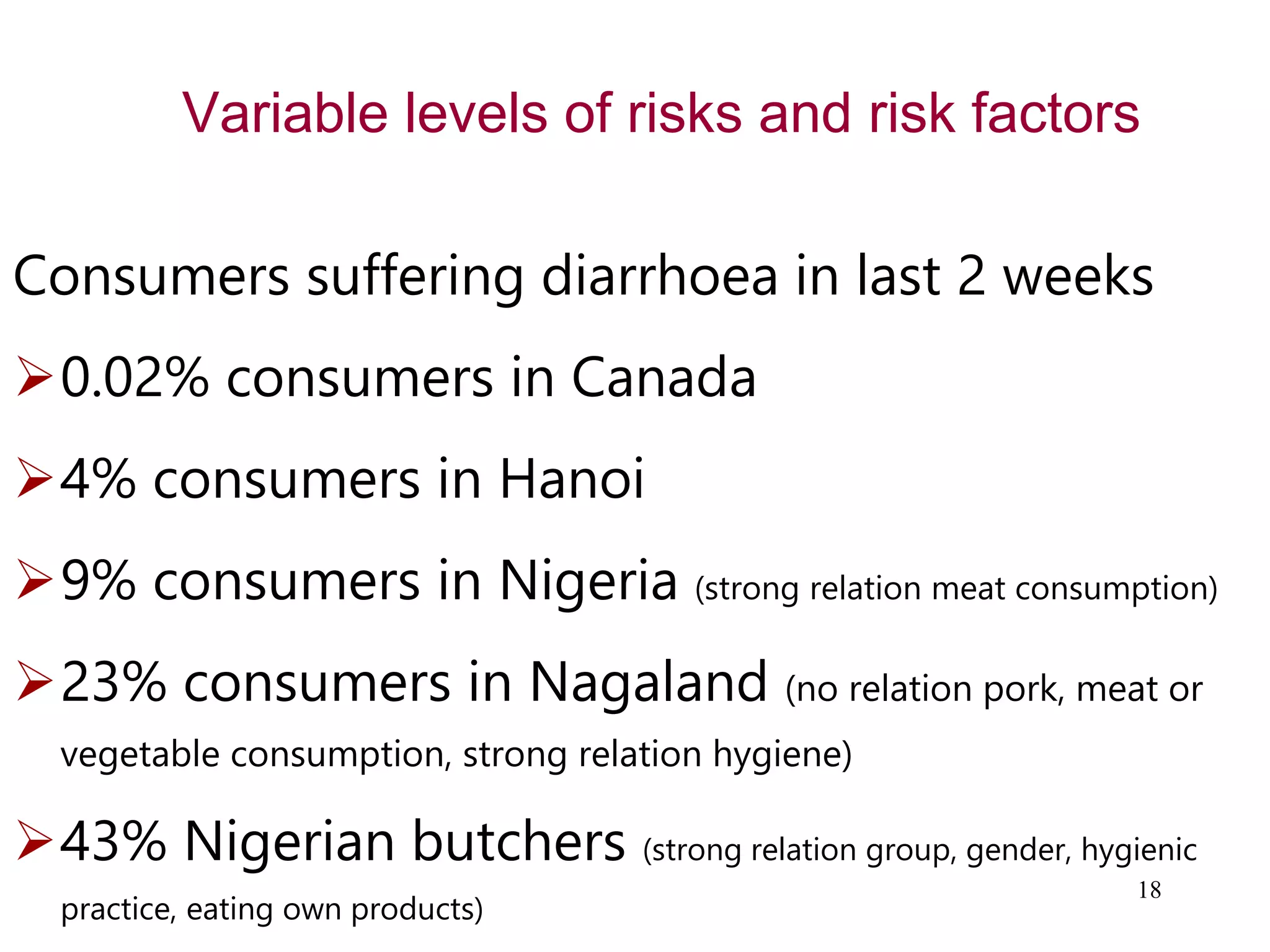
Variable levels of risks and risk factors
Consumers suffering diarrhoea in last 2 weeks
0.02% consumers in Canada
4% consumers in Hanoi
9% consumers in Nigeria (strong relation meat consumption)
23% consumers in Nagaland (no relation pork, meat or
vegetable consumption, strong relation hygiene)
43% Nigerian butchers (strong relation group, gender, hygienic
practice, eating own products)
18
19
20
21
22
23
24
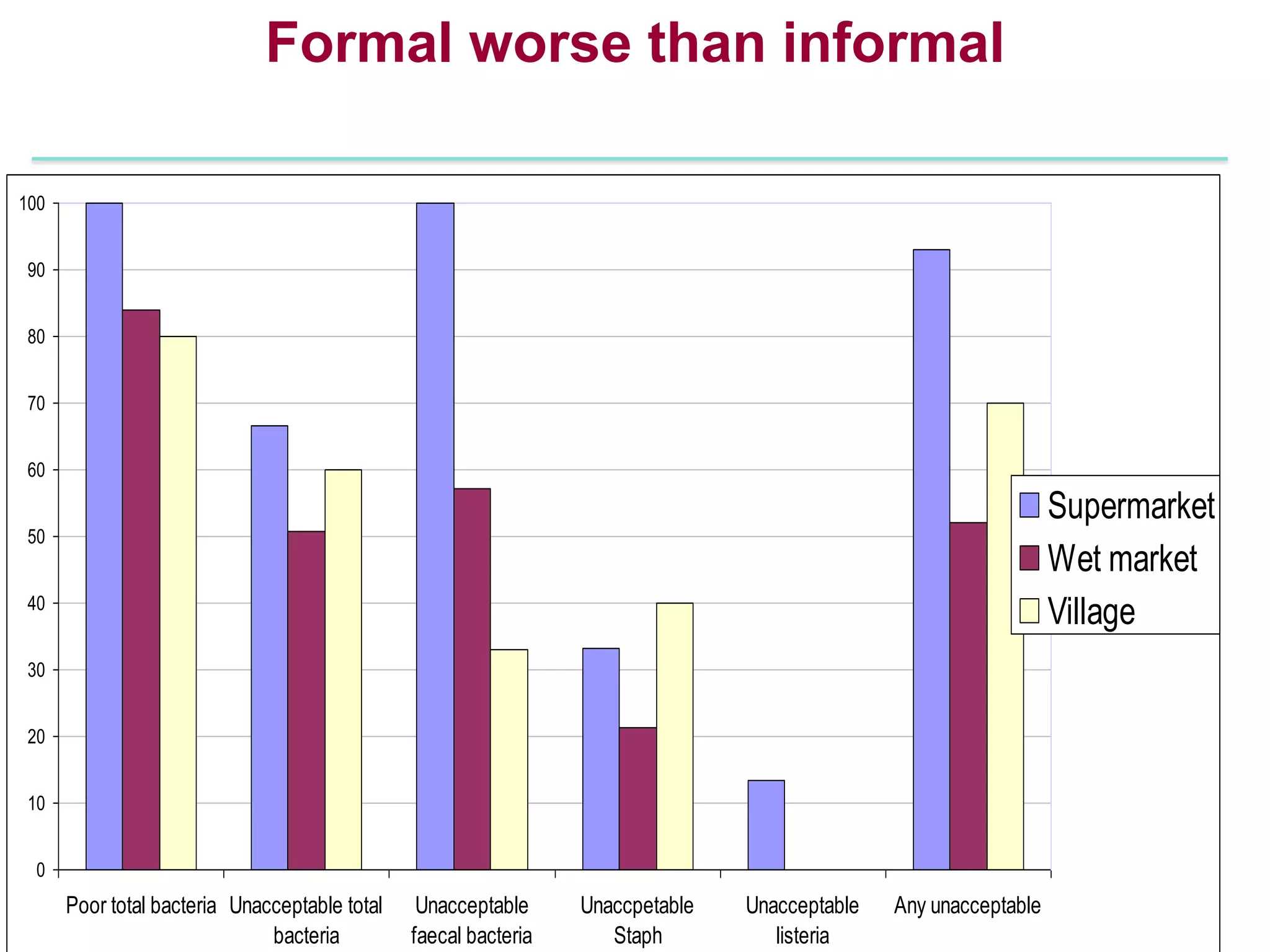
0
10
20
30
40
50
60
70
80
90
100
Poor total bacteria Unacceptable total
bacteria
Unacceptable
faecal bacteria
Unaccpetable
Staph
Unacceptable
listeria
Any unacceptable
Supermarket
Wet market
Village
Formal worse than informal
25
Thank you for your attention
This presentation is licensed for use under the Creative Commons Attribution 4.0 International Licence.
better lives through livestock
ilri.org
ILRI thanks all donors and organizations which globally support its work through their contributions
to the CGIAR Trust Fund

Risk based prioritisation of food hazards

  • 1.
    Food safety inthe era of COVID-19 ensuring consumers’ trust Thursday 19 November 2020 Risk based prioritisation of food hazards Delia Grace Randolph Professor Food Safety Systems, Natural Resources Institute, University of Greenwich Contributing scientist, International Livestock Research Institute
  • 2.
    International Livestock ResearchInstitute  700 full time staff-1000 total  130 scientists & researchers  54% from 22 developing countries  more than 30 scientific disciplines  2015 budget USD 88 million  Leads major program on livestock  Leads CG work on disease •a member of the CGIAR Consortium, ILRI conducts livestock, food and environmental research  to help alleviate poverty  and improve food security, health & nutrition,  while protecting the natural resource base. Mali Nigeria Mozambique Kenya Ethiopia India China Laos Vietnam Thailand
  • 3.
    ILRI Nairobi campus IITACIP CIMMYT IRRI CIFOR ★
  • 5.
    5 Informal sector  Heredefined as: “absence of structured sanitary inspection”  Overlaps with – Traditional sector – Street foods – Raw milk – Dukas/kiosks
  • 6.
    6 Why the informalsector matters Small & medium scale Large scale Self- employment 245,000 11,000 Long-time hired labour 454,000 93,000 Casual labour 36,000 2,000 Total (numbers) 735,000 105,000 % of total 87% 13% Kenya 80% Tanzania 98% W. Africa 90% India 83% Assam 97% Nicaragua 86%
  • 7.
    High levels ofhazards  Trichinella in pork in Uganda; Listeria in milk and fish in Ghana; reported for first time  Unacceptable B. cereus in 24% of boiled milk in Abidjan  98% of meat in Ibadan unacceptable by one or more of 3 standards (TAC, EB, col)  Commercial broilers: 30% of chicken sold in South Africa unacceptable for S. aureus  Farmed fish: 77% unacceptable TAC; 69% unacceptable for S. aureus in Egypt  Nairobi milk: 46% of samples had aflatoxins over the legal limit of 50 ppt
  • 8.
    What you worryabout and what kills you are not the same 8 Vietnam chemical risk assessment •366 kidney, liver and pork samples analysed for antibiotic residues, β-agonists, and heavy metals •~1% over MRL with minor implications for human health Quantitative microbial risk assessment •QMRA for salmonellosis acquired from pork •Annual incidence rate estimated to be 12.6% Thinh et al., 2020
  • 9.
    9 Experts are alsowrong WB, forthcoming
  • 10.
    10 The top 10human disease cause 90% burden Illnesses WHO, 2014Grace et al., 2012 Pareto principle: the vital few and the trivial many
  • 11.
    Years of lifelost annually for FBD FERG: Havelaar et al., 2015; Gibb et al., 2019 Health impact of FBD comparable to that of malaria, HIV/AIDs or TB
  • 12.
    Domestic costs maybe 20 times trade costs Cost estimates for 2016 (US$ billion) Productivity loss 95 Illness treatment 15 Trade loss or cost 5 to 7 ‘Productivity Loss’ = Foodborne Disease DALYs x Per Capita GNI World Bank: Jaffee et al., 2019 Illness treatment = US$27 x # of Estimated foodborne illnesses Trade loss or costs = 2% of developing country high value food exports Download here
  • 13.
    Importance of social,economic & environmental factors  The meat of women butchers in Nigeria had less microbial contamination than meat of men butchers in the same market  As value chains modernise women often forced out  Urban dairies in Uganda that experienced harassment from authorities had fewer good practices than those who didn’t  Increasing interest in the potential of nutritious and safe foods to prevent childhood stunting  Food in informal markets is affordable: in china: super-market meat costs 10% more, in Kenya pasteurised milk 25-40% more 13
  • 14.
    Foods implicated inFBD Painter et al., 2013, Sudershan et al., 2014, Mangan et al., 2014; Tam et al., 2014; Sang et al., 2014 ; ILRI, 2016
  • 15.
    15 Traditional hazard identification •Top-downand technocratic •Problem-oriented not solution-oriented •Unsystematic hazard selection •Unsystematic hazard investigation •Benefits and harms not integrated
  • 16.
  • 17.
    High levels ofhazards  Trichinella in pork in Uganda; Listeria in milk and fish in Ghana; reported for first time  Unacceptable B. cereus in 24% of boiled milk in Abidjan  98% of meat in Ibadan unacceptable by one or more of 3 standards (TAC, EB, col)  Commercial broilers: 30% of chicken sold in South Africa unacceptable for S. aureus  Farmed fish: 77% unacceptable TAC; 69% unacceptable for S. aureus in Egypt  Nairobi milk: 46% of samples had aflatoxins over the legal limit of 50 ppt
  • 18.
    Variable levels ofrisks and risk factors Consumers suffering diarrhoea in last 2 weeks 0.02% consumers in Canada 4% consumers in Hanoi 9% consumers in Nigeria (strong relation meat consumption) 23% consumers in Nagaland (no relation pork, meat or vegetable consumption, strong relation hygiene) 43% Nigerian butchers (strong relation group, gender, hygienic practice, eating own products) 18
  • 19.
  • 20.
  • 21.
  • 22.
  • 23.
  • 24.
    24 0 10 20 30 40 50 60 70 80 90 100 Poor total bacteriaUnacceptable total bacteria Unacceptable faecal bacteria Unaccpetable Staph Unacceptable listeria Any unacceptable Supermarket Wet market Village Formal worse than informal
  • 25.
    25 Thank you foryour attention
  • 26.
    This presentation islicensed for use under the Creative Commons Attribution 4.0 International Licence. better lives through livestock ilri.org ILRI thanks all donors and organizations which globally support its work through their contributions to the CGIAR Trust Fund