Efforts to reduce antimicrobial use in poultry in
low- and middle-income countries
Arshnee Moodley
Webinar for the launch of the ReAct biosecurity toolkit for poultry
18 June 2021
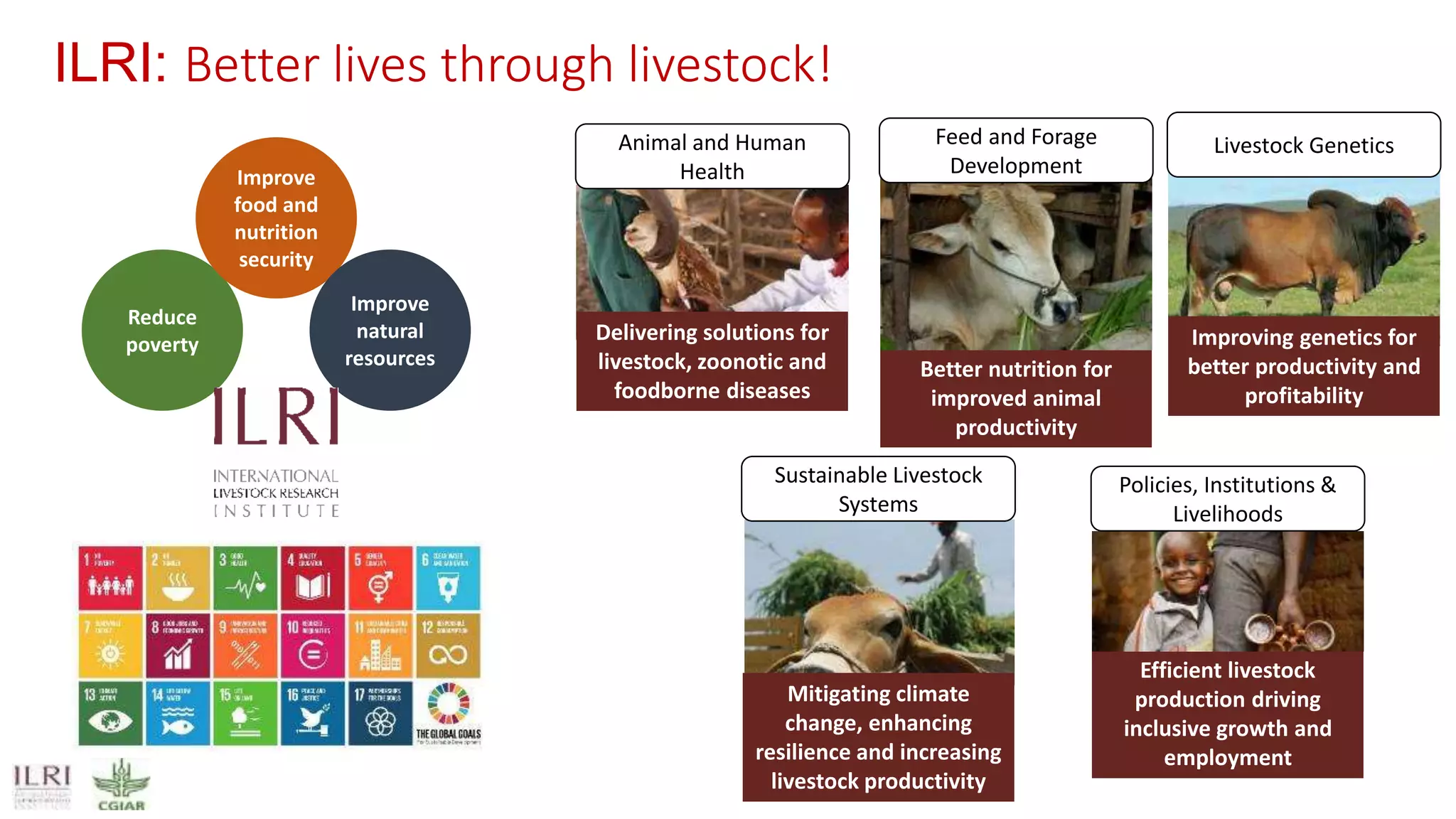
ILRI: Better lives through livestock!
Reduce
poverty
Improve
food and
nutrition
security
Improve
natural
resources
Mitigating climate
change, enhancing
resilience and increasing
livestock productivity
Sustainable Livestock
Systems
Delivering solutions for
livestock, zoonotic and
foodborne diseases
Animal and Human
Health
Efficient livestock
production driving
inclusive growth and
employment
Policies, Institutions &
Livelihoods
Improving genetics for
better productivity and
profitability
Livestock Genetics
Better nutrition for
improved animal
productivity
Feed and Forage
Development
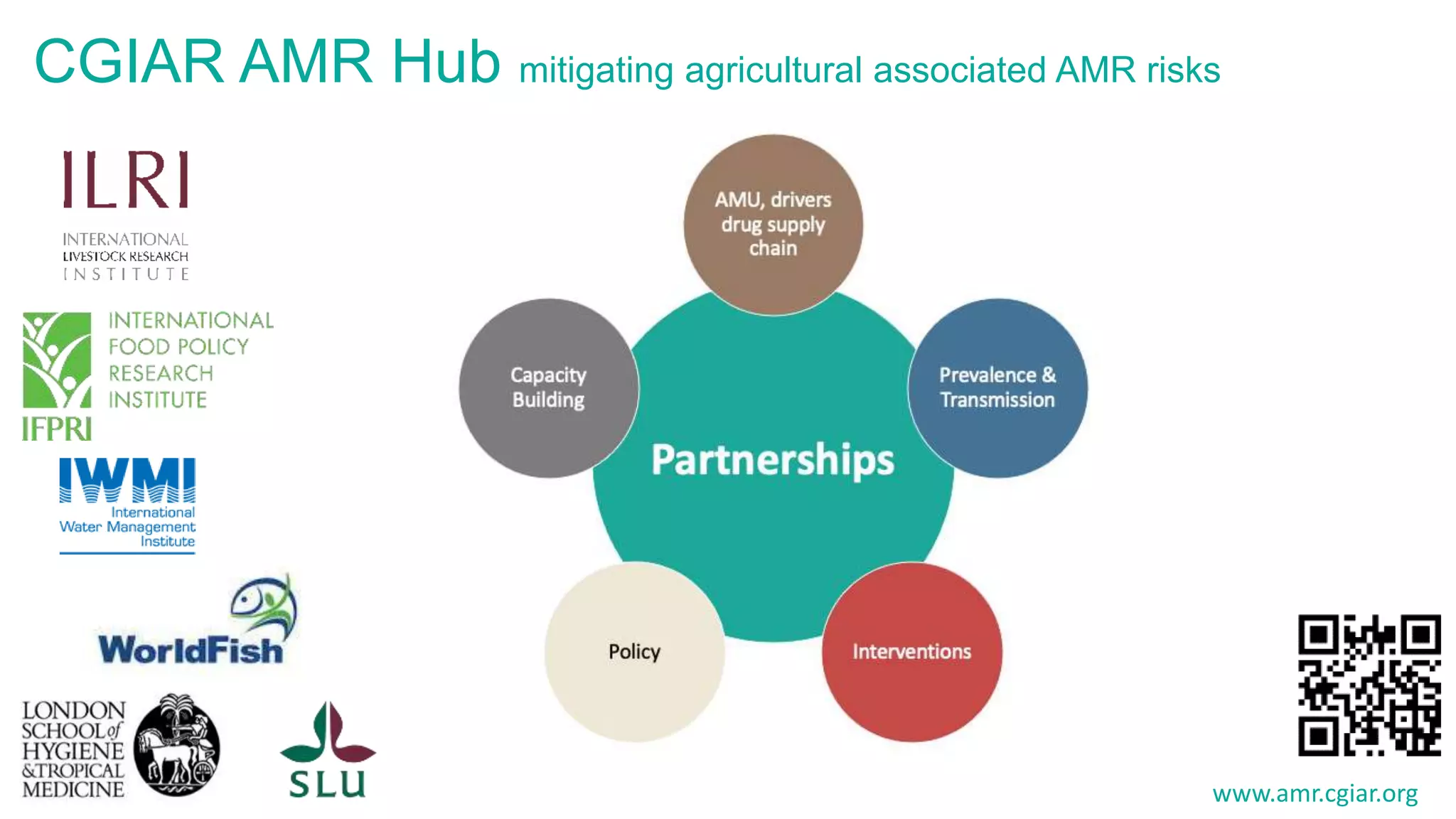
CGIAR AMR Hub mitigating agricultural associated AMR risks
www.amr.cgiar.org
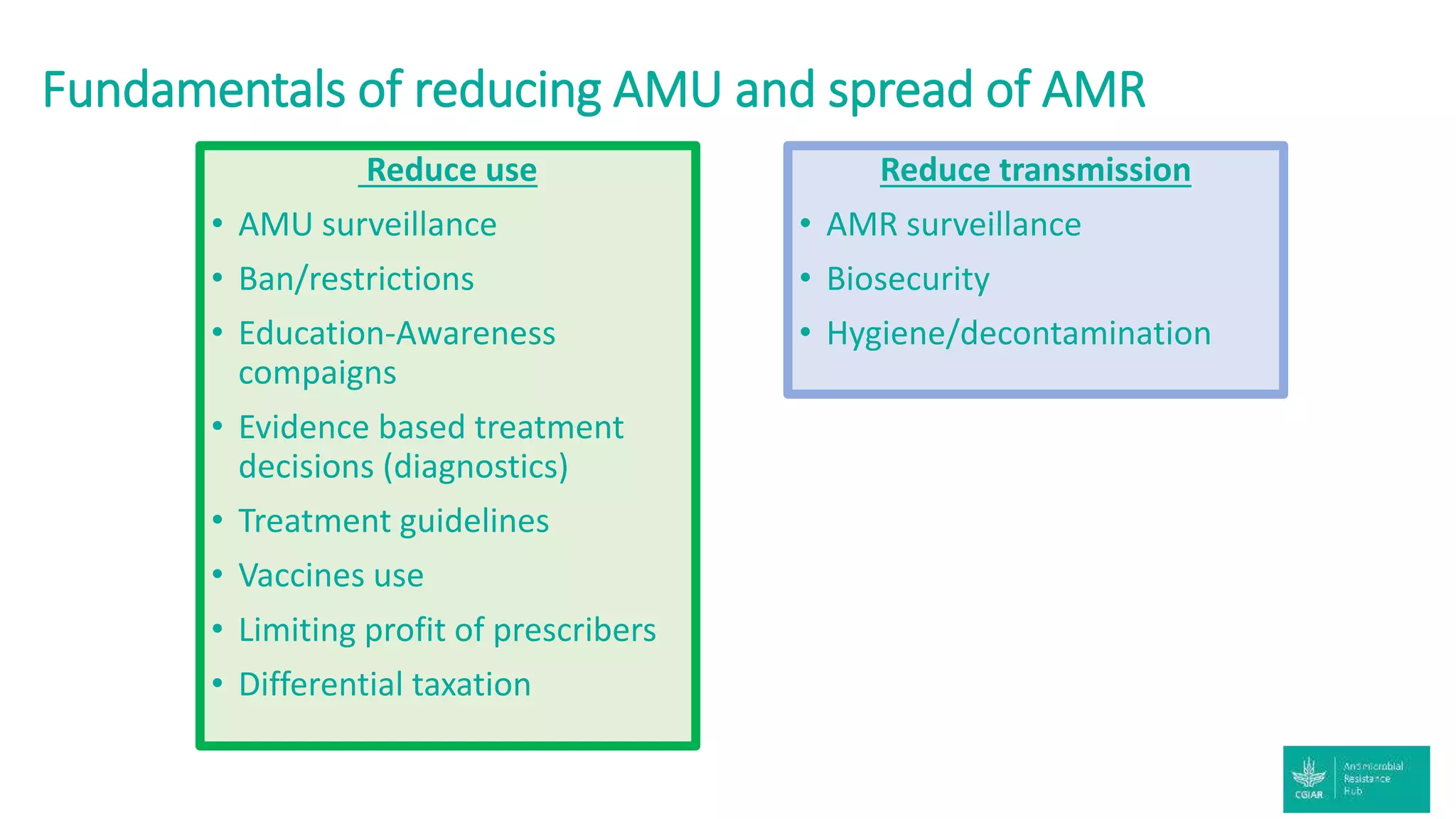
Fundamentals of reducing AMU and spread of AMR
Reduce use
• AMU surveillance
• Ban/restrictions
• Education-Awareness
compaigns
• Evidence based treatment
decisions (diagnostics)
• Treatment guidelines
• Vaccines use
• Limiting profit of prescribers
• Differential taxation
Reduce transmission
• AMR surveillance
• Biosecurity
• Hygiene/decontamination
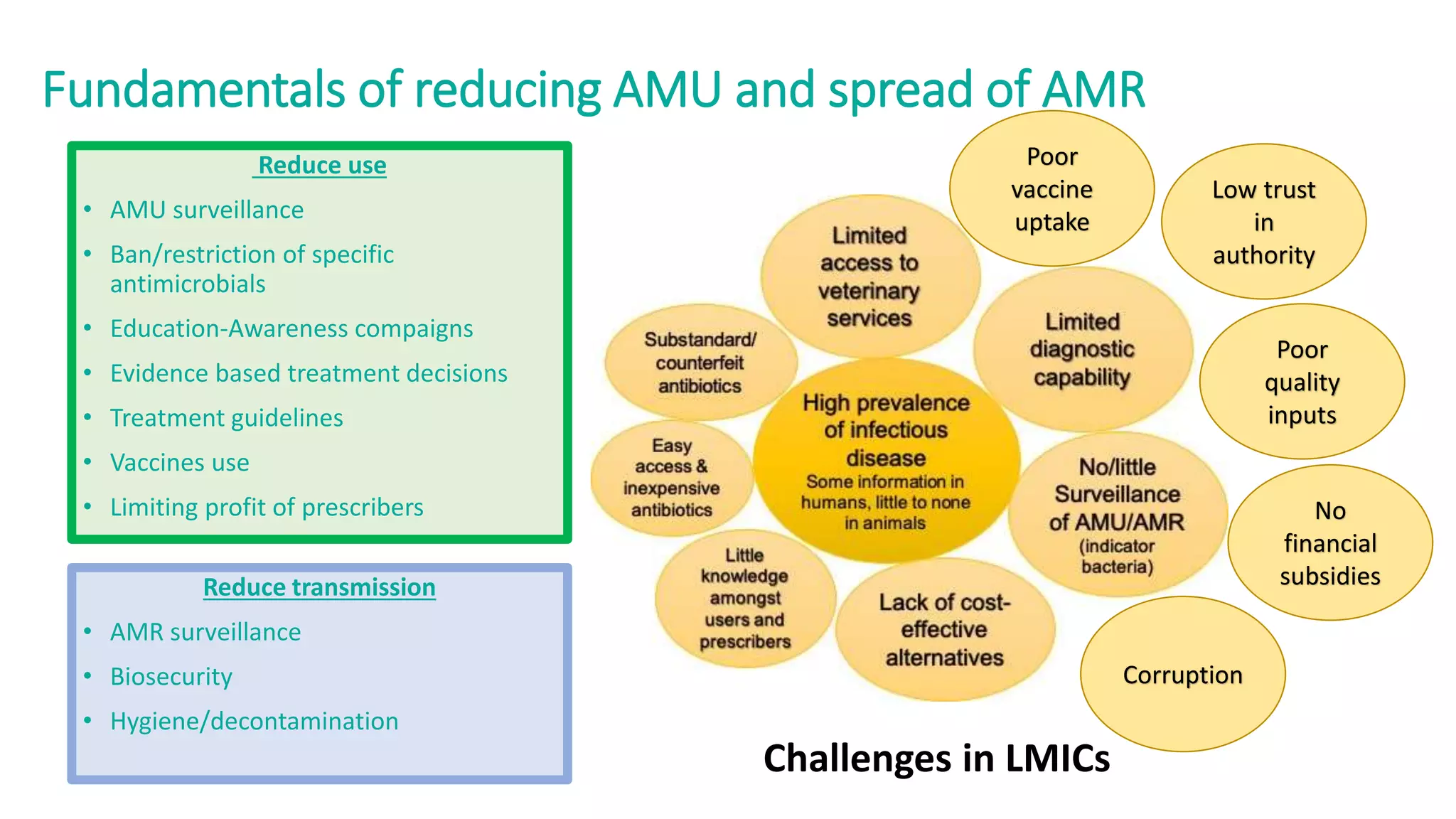
Fundamentals of reducing AMU and spread of AMR
Reduce use
• AMU surveillance
• Ban/restriction of specific
antimicrobials
• Education-Awareness compaigns
• Evidence based treatment decisions
• Treatment guidelines
• Vaccines use
• Limiting profit of prescribers
Reduce transmission
• AMR surveillance
• Biosecurity
• Hygiene/decontamination
Challenges in LMICs
No
financial
subsidies
Poor
quality
inputs
Poor
vaccine
uptake
Corruption
Low trust
in
authority
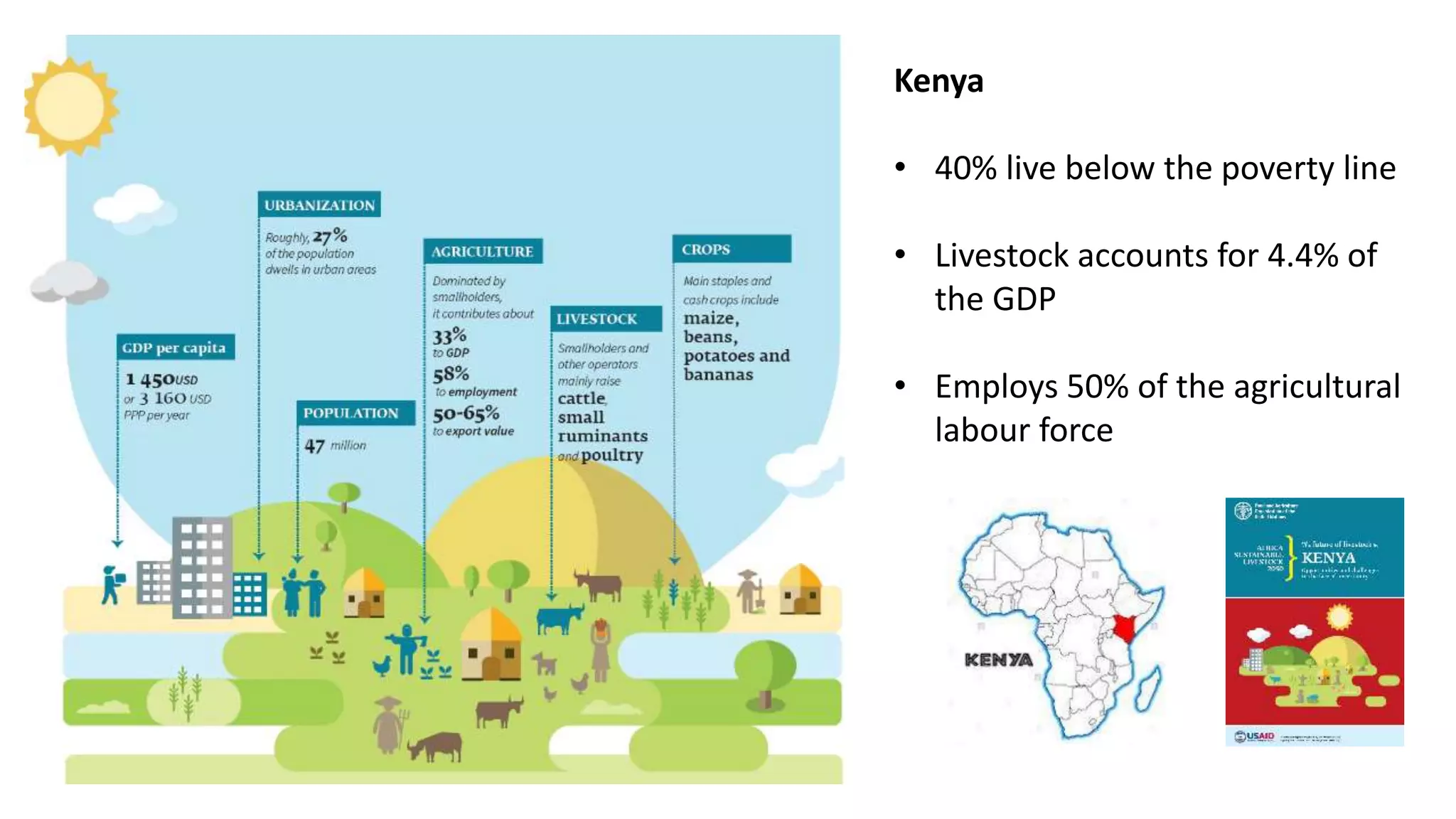
Kenya
• 40% live below the poverty line
• Livestock accounts for 4.4% of
the GDP
• Employs 50% of the agricultural
labour force
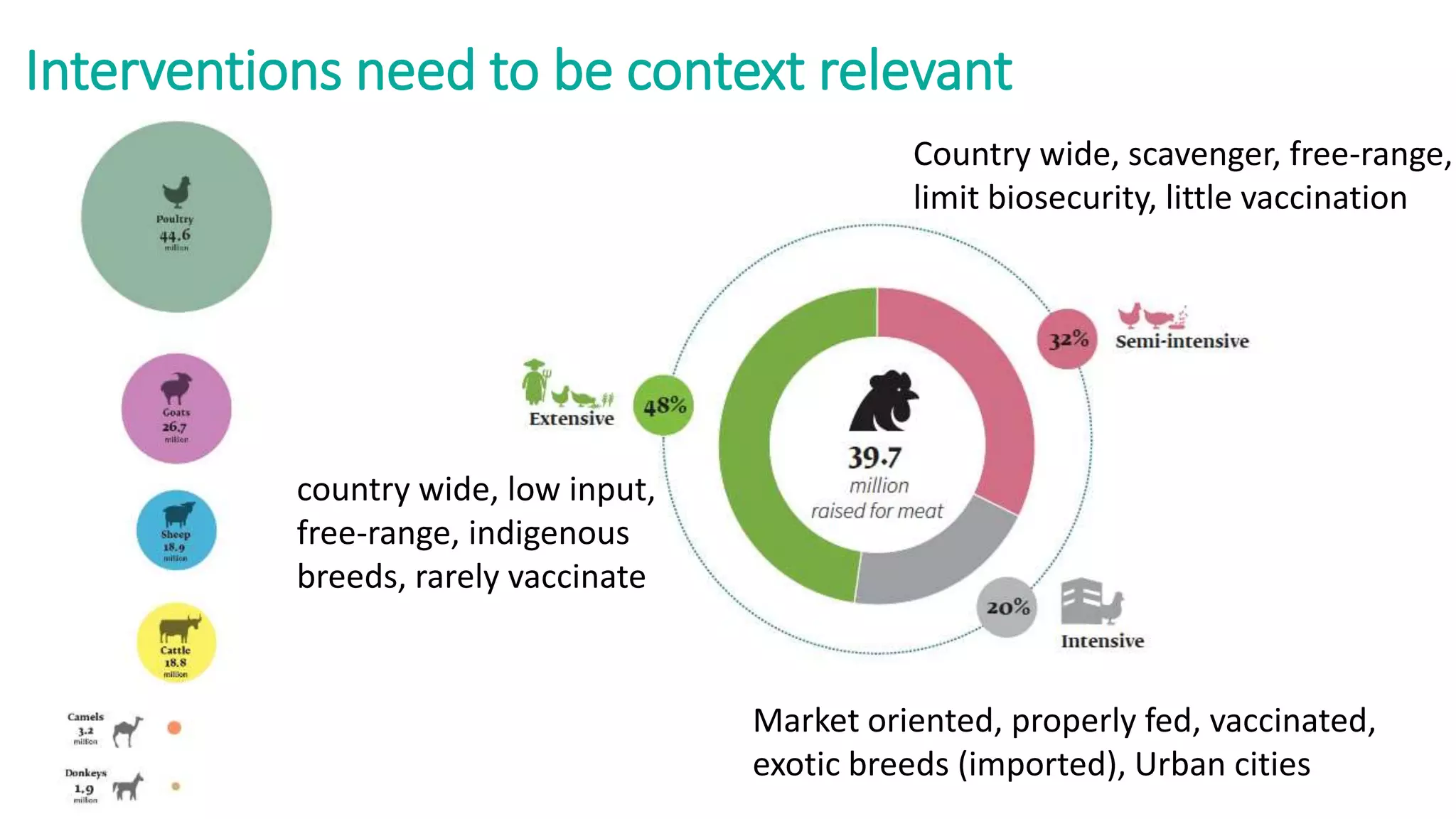
Interventions need to be context relevant
Market oriented, properly fed, vaccinated,
exotic breeds (imported), Urban cities
Country wide, scavenger, free-range,
limit biosecurity, little vaccination
country wide, low input,
free-range, indigenous
breeds, rarely vaccinate
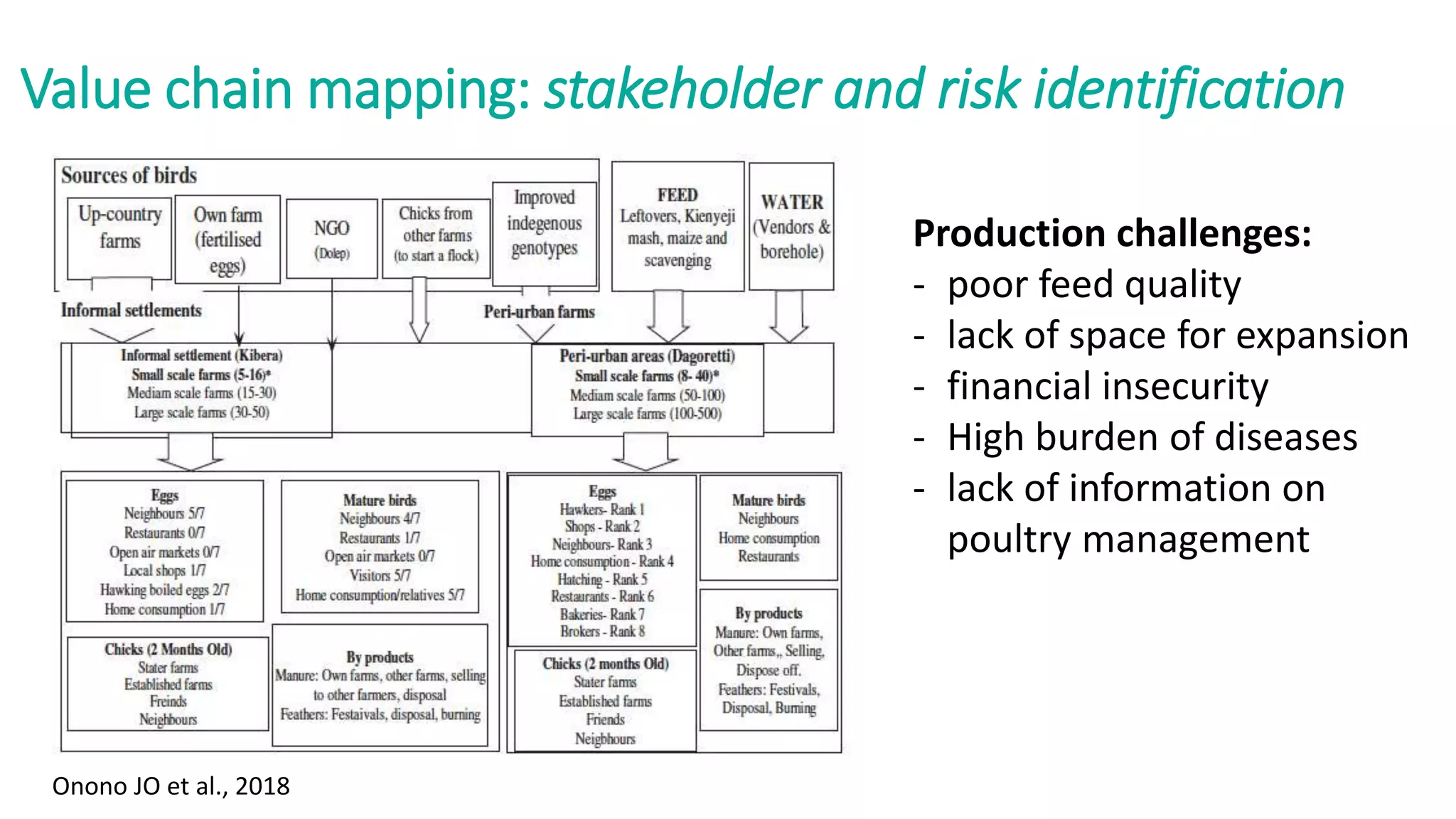
Value chain mapping: stakeholder and risk identification
Onono JO et al., 2018
Production challenges:
- poor feed quality
- lack of space for expansion
- financial insecurity
- High burden of diseases
- lack of information on
poultry management
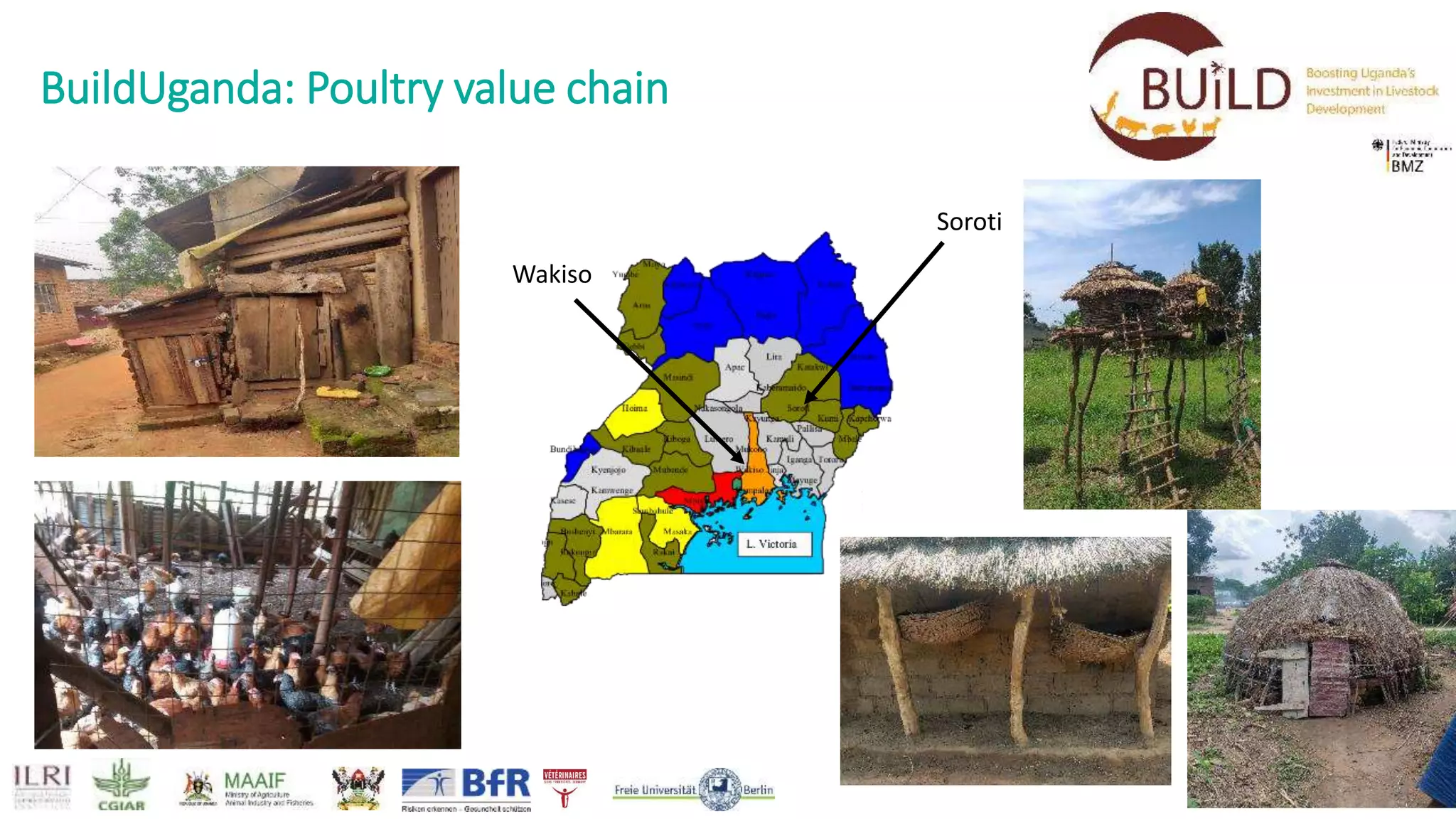
BuildUganda: Poultry value chain
Soroti
Wakiso
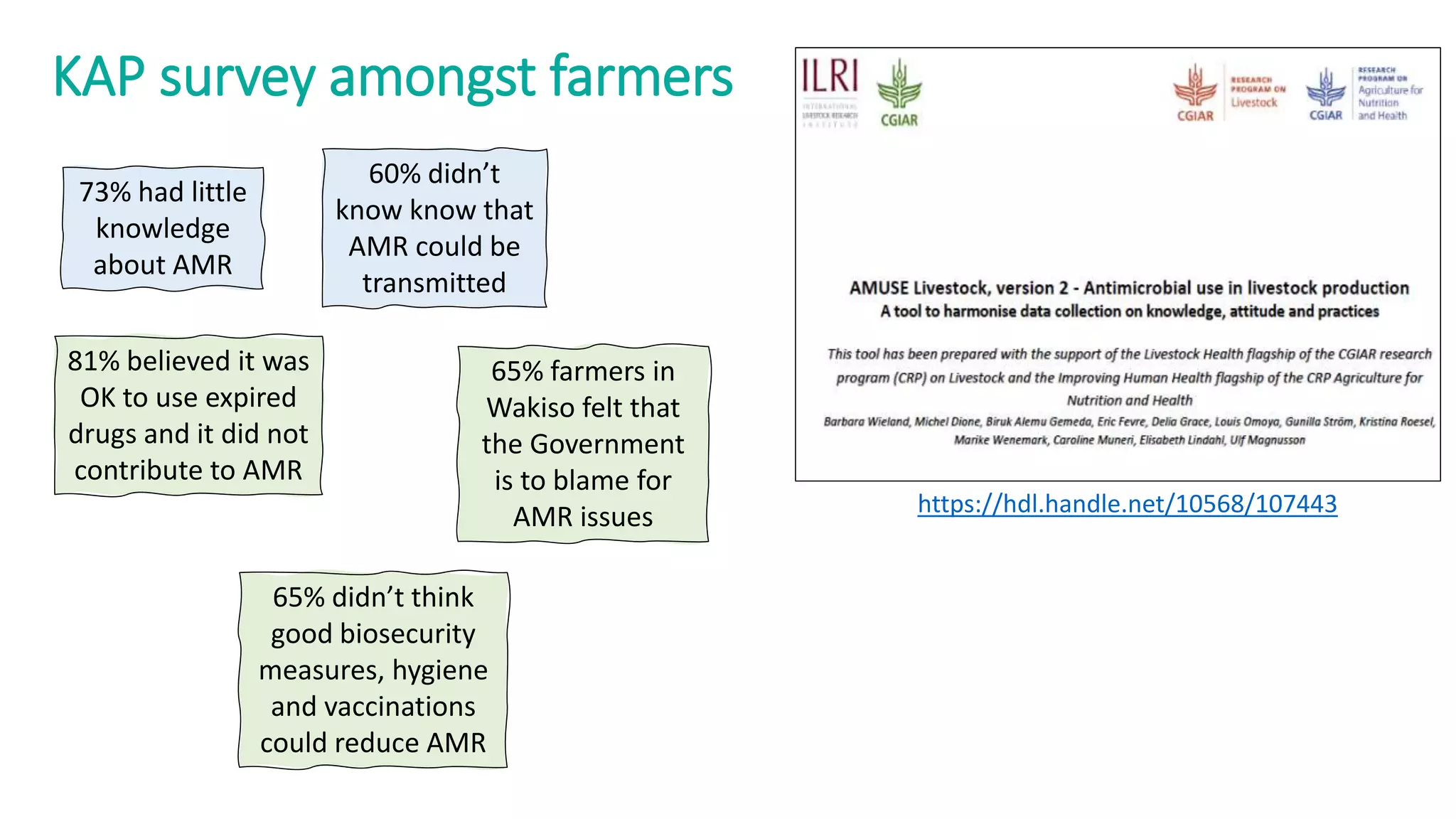
KAP survey amongst farmers
73% had little
knowledge
about AMR
60% didn’t
know know that
AMR could be
transmitted
65% didn’t think
good biosecurity
measures, hygiene
and vaccinations
could reduce AMR
65% farmers in
Wakiso felt that
the Government
is to blame for
AMR issues
81% believed it was
OK to use expired
drugs and it did not
contribute to AMR
https://hdl.handle.net/10568/107443
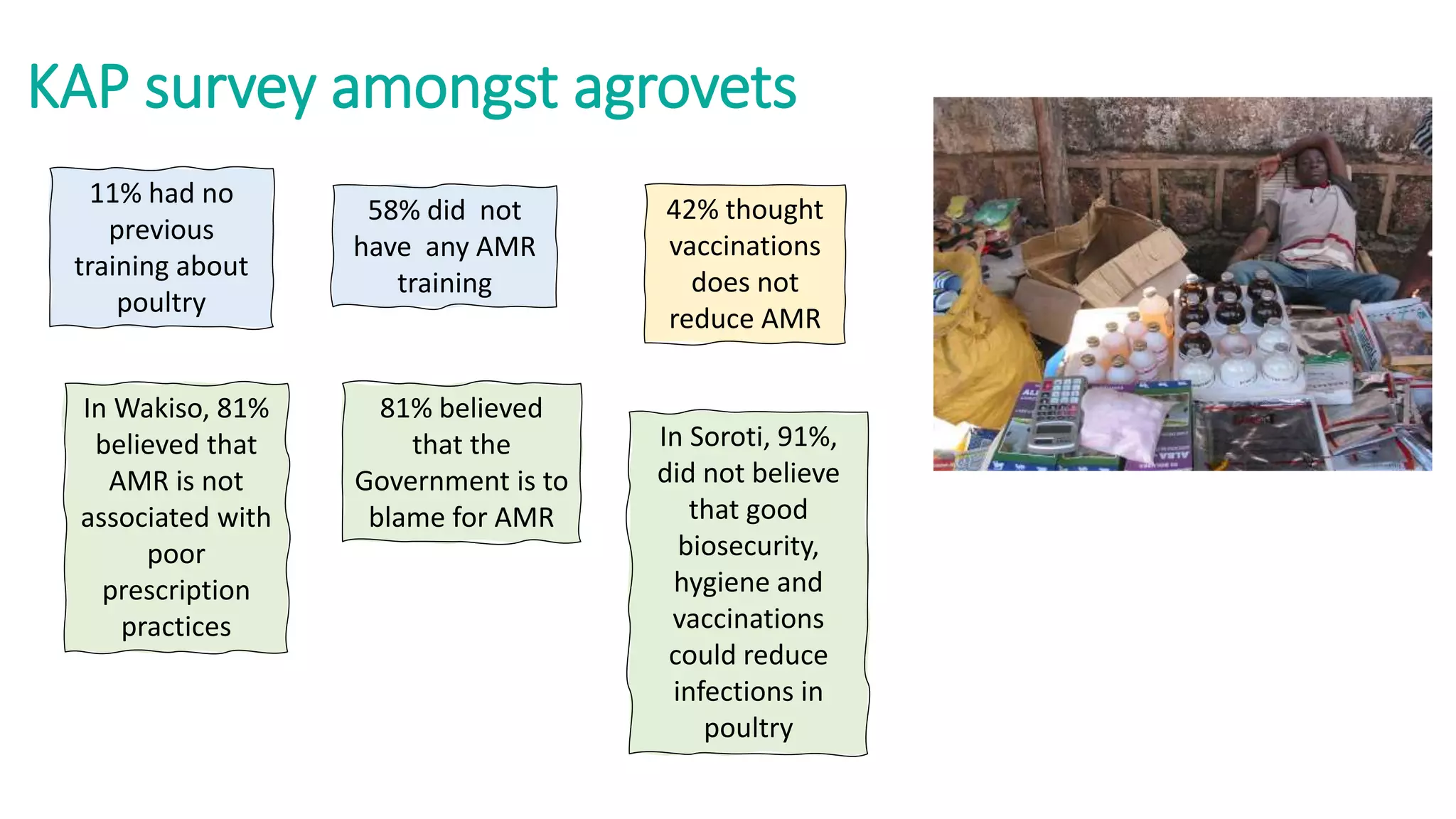
KAP survey amongst agrovets
11% had no
previous
training about
poultry
58% did not
have any AMR
training
In Soroti, 91%,
did not believe
that good
biosecurity,
hygiene and
vaccinations
could reduce
infections in
poultry
81% believed
that the
Government is to
blame for AMR
In Wakiso, 81%
believed that
AMR is not
associated with
poor
prescription
practices
42% thought
vaccinations
does not
reduce AMR
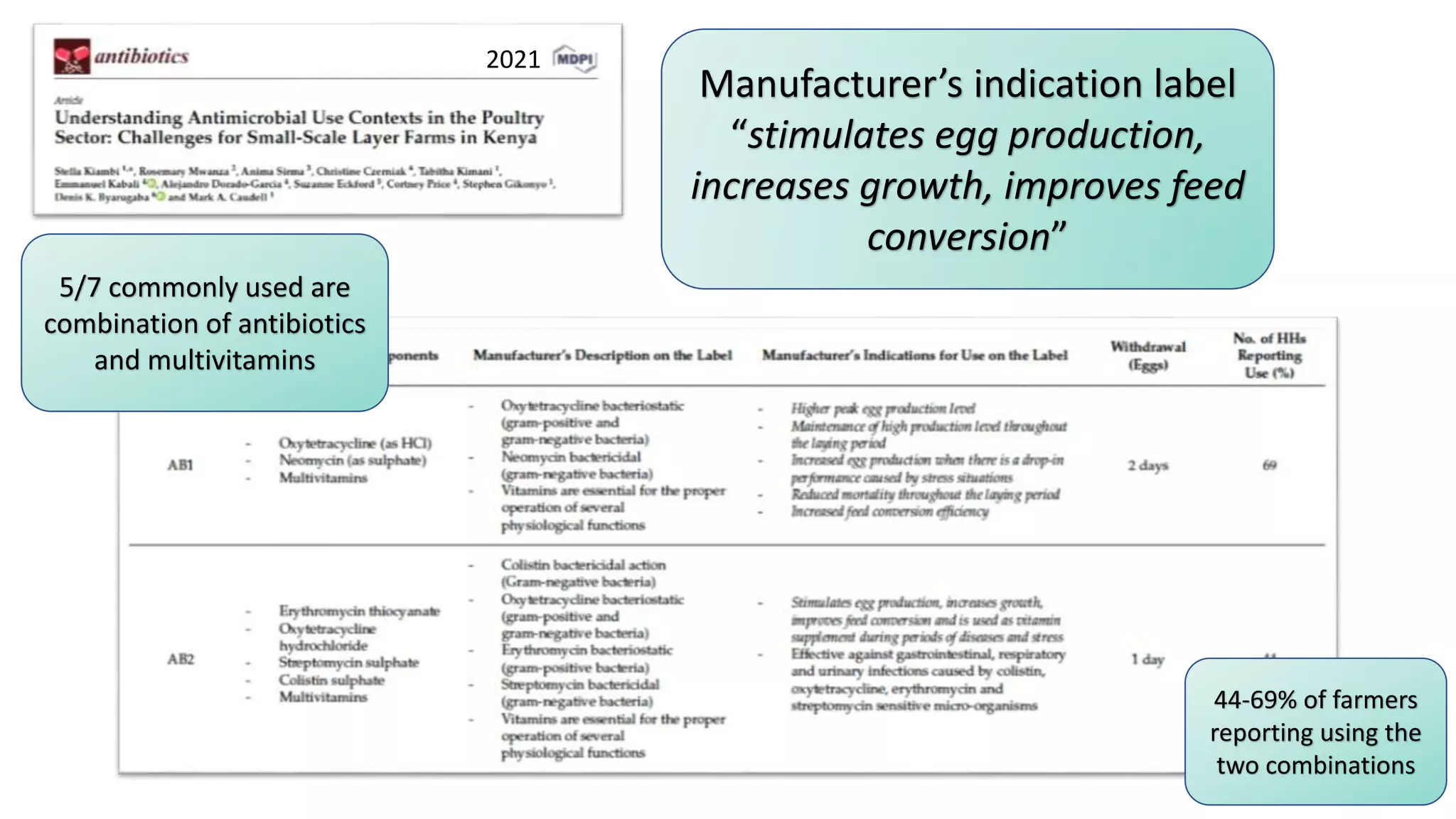
2021
5/7 commonly used are
combination of antibiotics
and multivitamins
44-69% of farmers
reporting using the
two combinations
Manufacturer’s indication label
“stimulates egg production,
increases growth, improves feed
conversion”
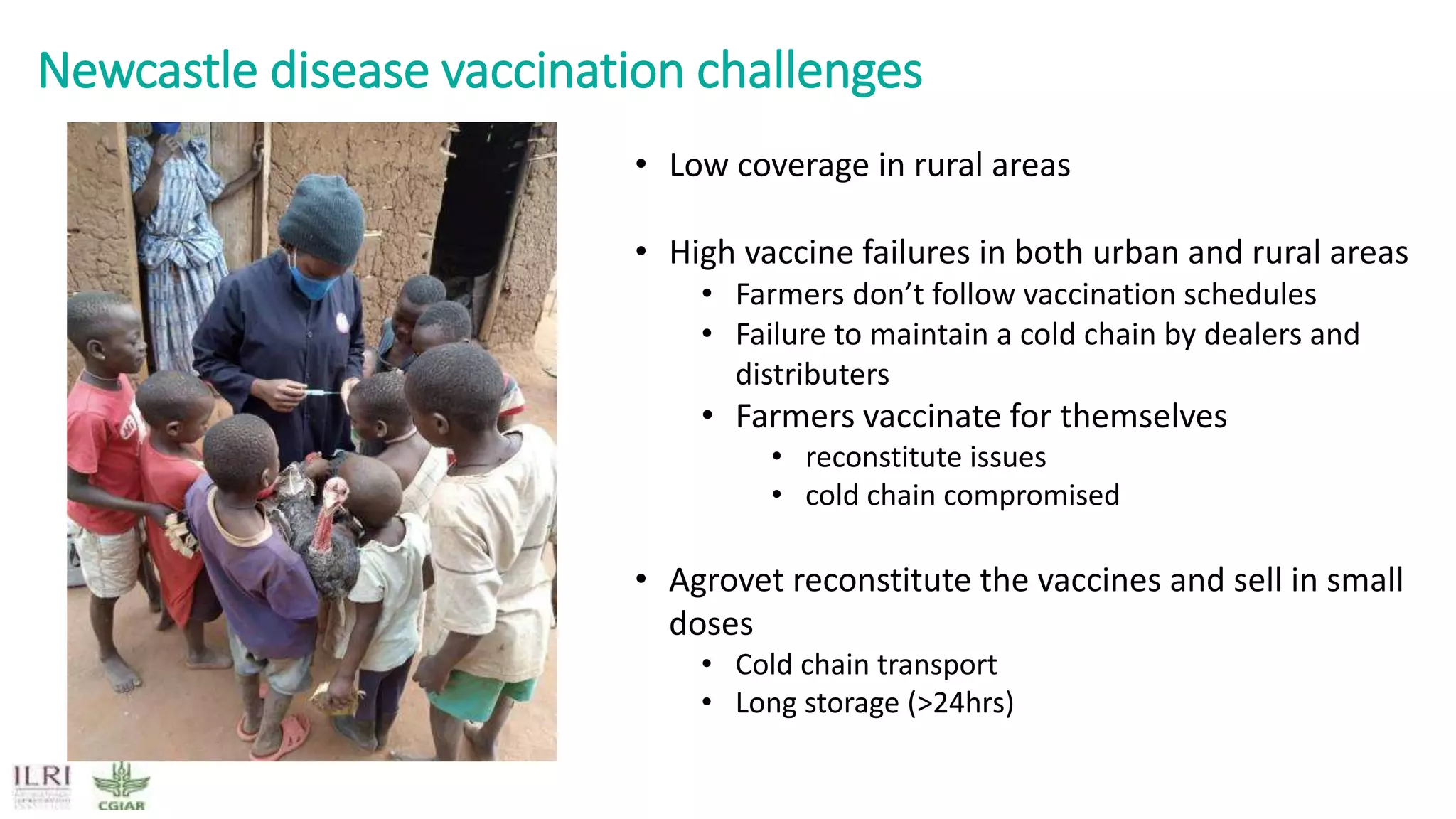
Newcastle disease vaccination challenges
• Low coverage in rural areas
• High vaccine failures in both urban and rural areas
• Farmers don’t follow vaccination schedules
• Failure to maintain a cold chain by dealers and
distributers
• Farmers vaccinate for themselves
• reconstitute issues
• cold chain compromised
• Agrovet reconstitute the vaccines and sell in small
doses
• Cold chain transport
• Long storage (>24hrs)
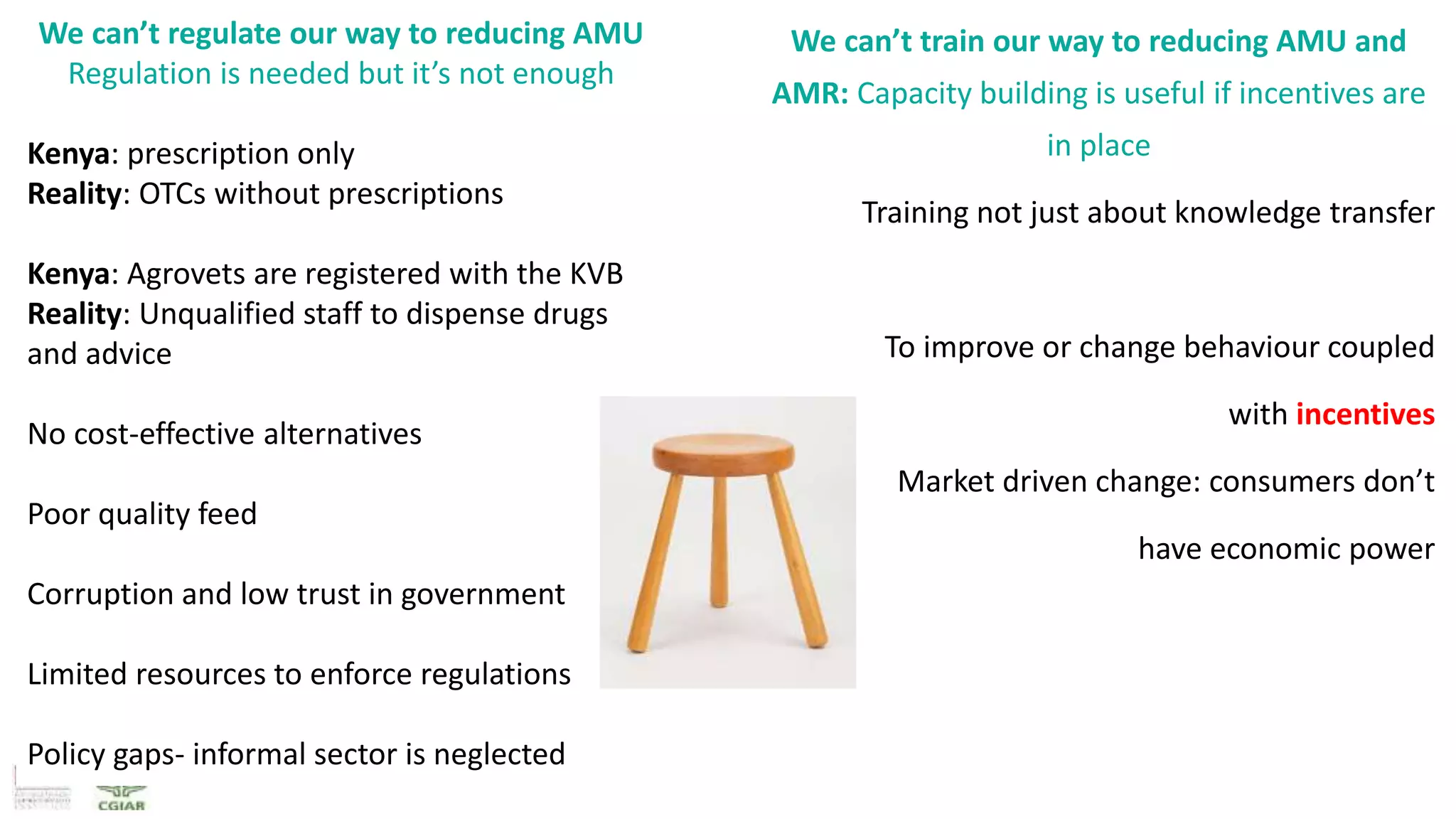
We can’t regulate our way to reducing AMU
Regulation is needed but it’s not enough
Kenya: prescription only
Reality: OTCs without prescriptions
Kenya: Agrovets are registered with the KVB
Reality: Unqualified staff to dispense drugs
and advice
No cost-effective alternatives
Poor quality feed
Corruption and low trust in government
Limited resources to enforce regulations
Policy gaps- informal sector is neglected
We can’t train our way to reducing AMU and
AMR: Capacity building is useful if incentives are
in place
Training not just about knowledge transfer
To improve or change behaviour coupled
with incentives
Market driven change: consumers don’t
have economic power
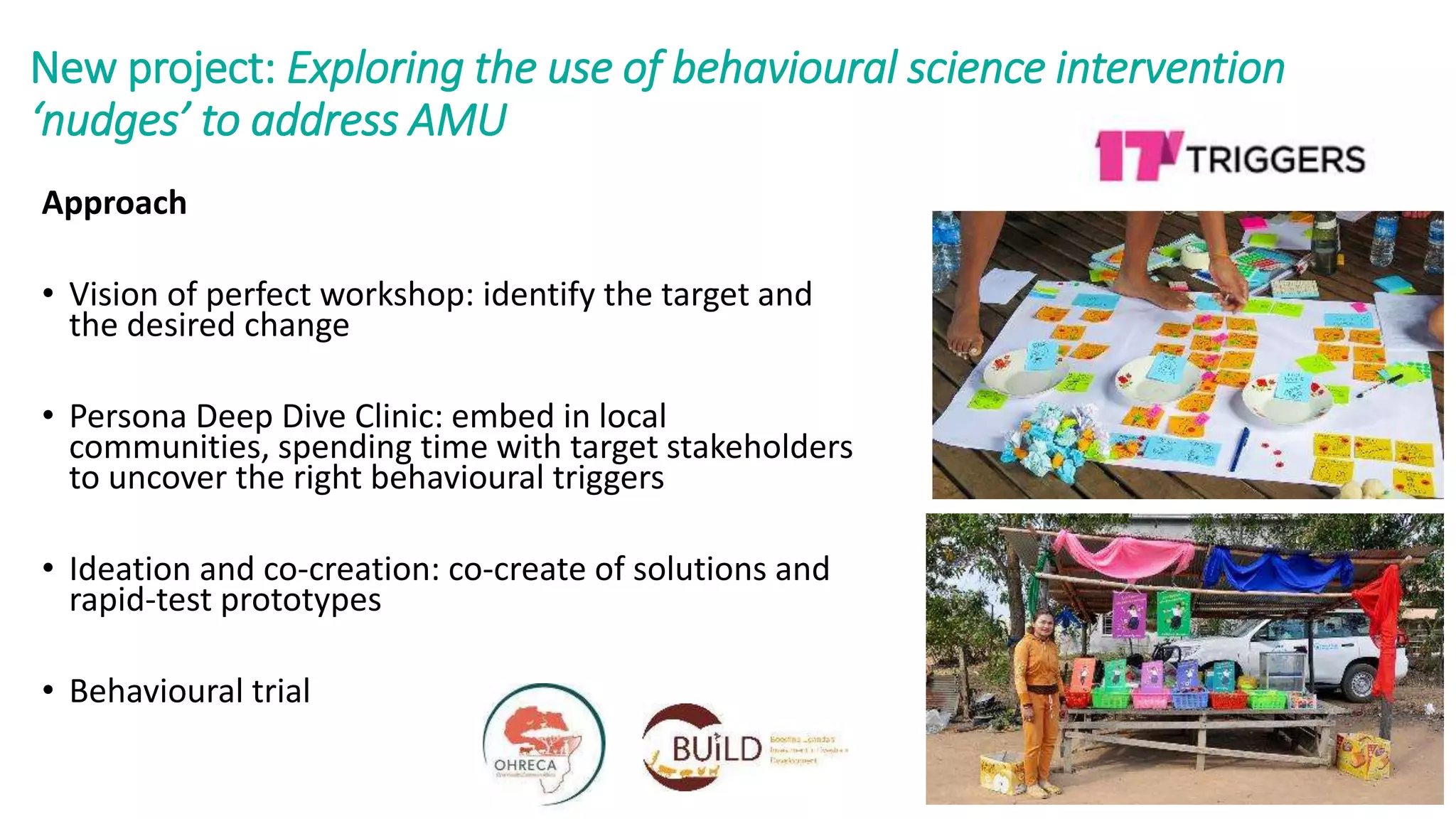
New project: Exploring the use of behavioural science intervention
‘nudges’ to address AMU
Approach
• Vision of perfect workshop: identify the target and
the desired change
• Persona Deep Dive Clinic: embed in local
communities, spending time with target stakeholders
to uncover the right behavioural triggers
• Ideation and co-creation: co-create of solutions and
rapid-test prototypes
• Behavioural trial
Policy challenges in LMICs
• Low political commitment
• Little awareness of the issue
• Weak engagement of all
stakeholders
• Limited capacity and resources to
implement policies
• Absence of national surveillance
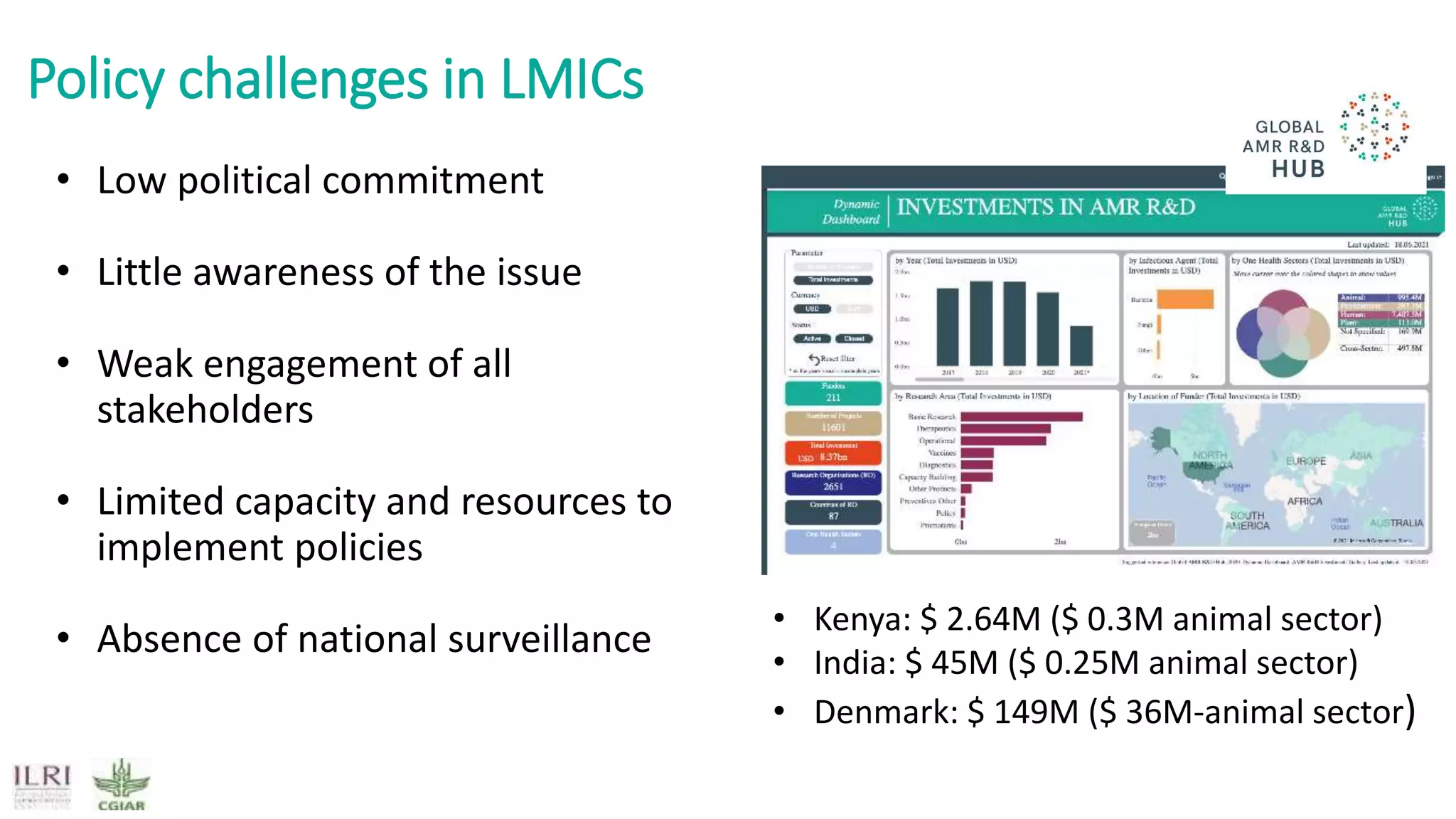
• Kenya: $ 2.64M ($ 0.3M animal sector)
• India: $ 45M ($ 0.25M animal sector)
• Denmark: $ 149M ($ 36M-animal sector)
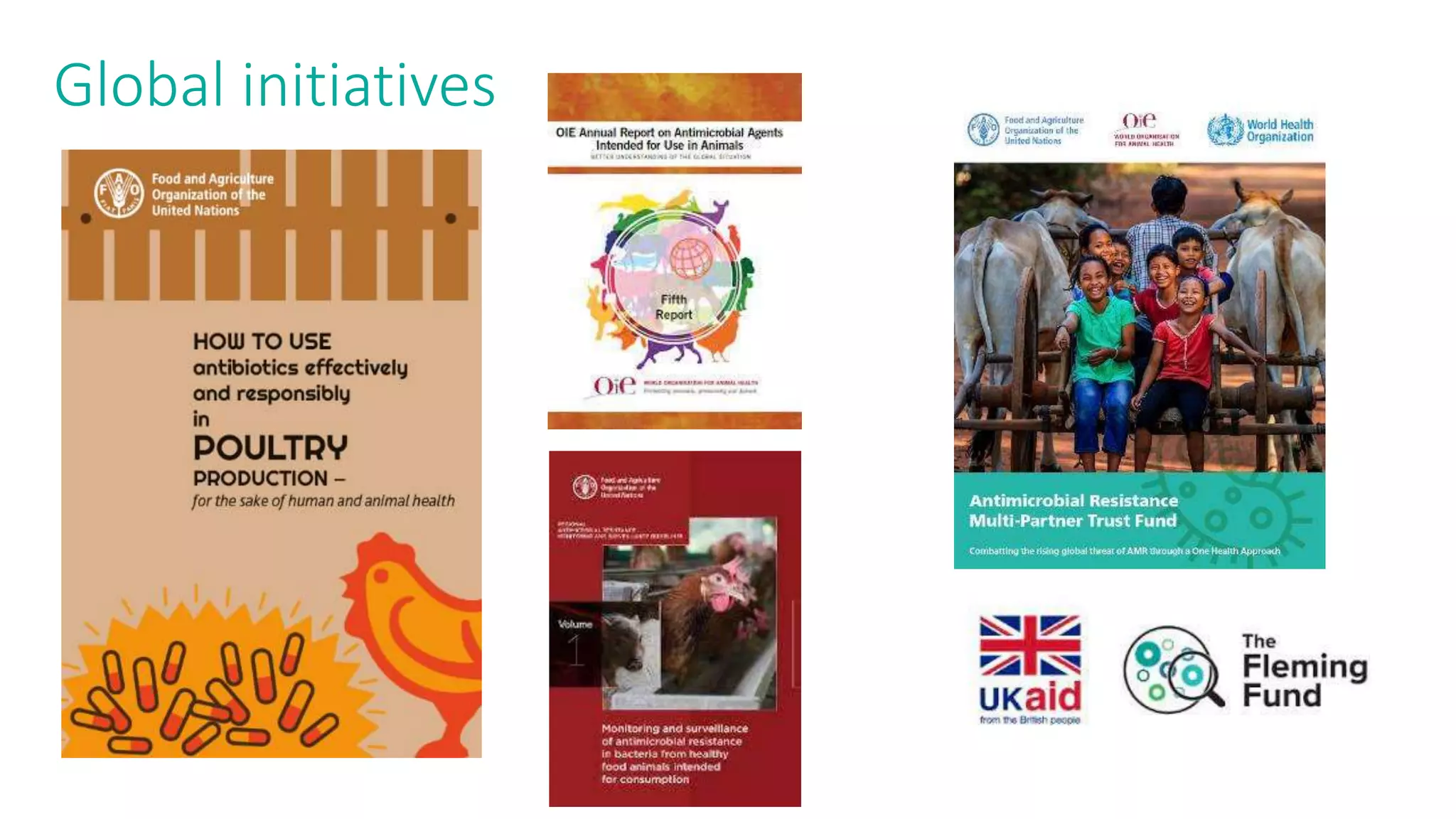
Global initiatives
Mitigating agricultural associated AMR risks together!
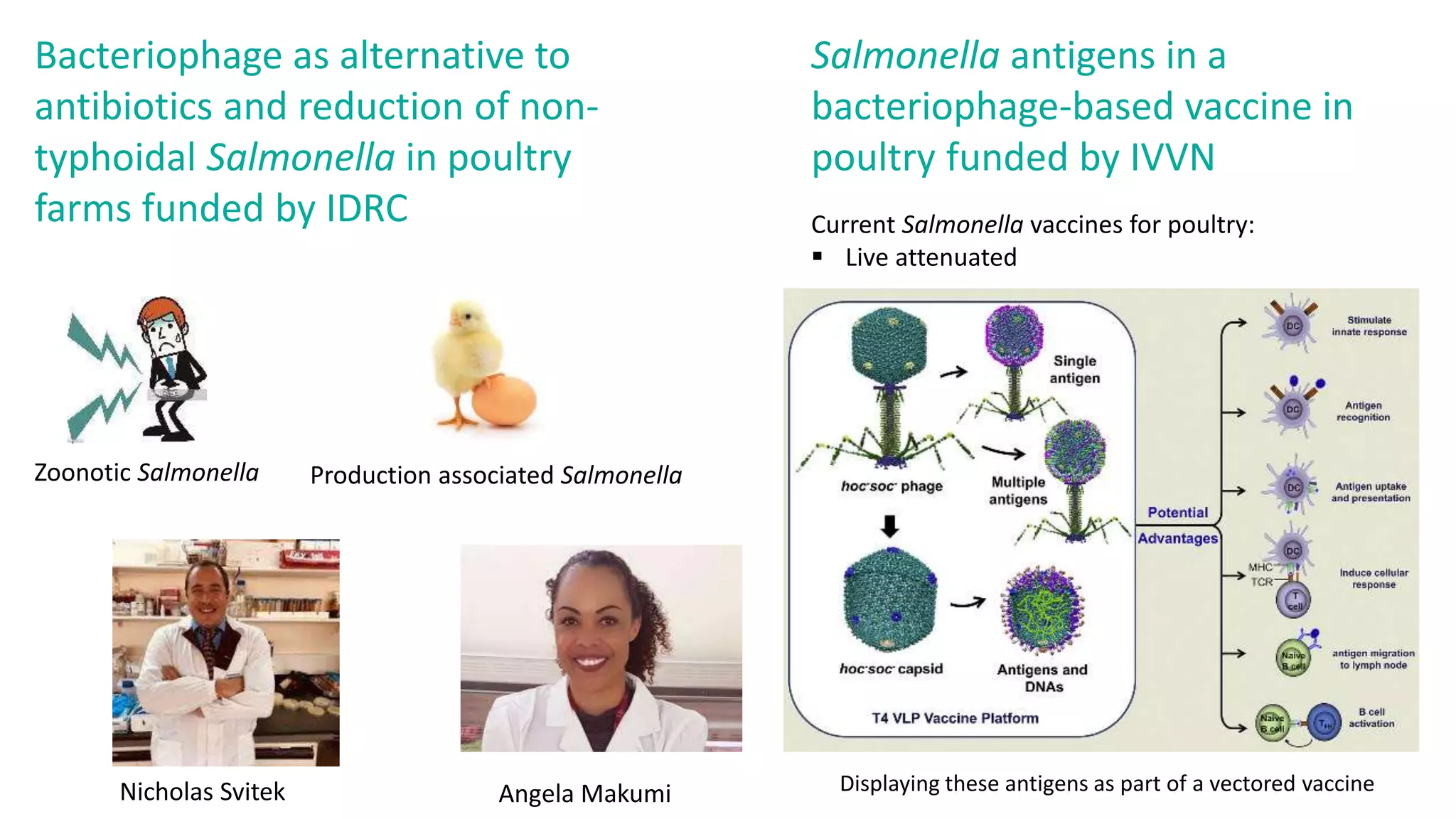
Zoonotic Salmonella Production associated Salmonella
Bacteriophage as alternative to
antibiotics and reduction of non-
typhoidal Salmonella in poultry
farms funded by IDRC
Salmonella antigens in a
bacteriophage-based vaccine in
poultry funded by IVVN
Current Salmonella vaccines for poultry:
 Live attenuated
Displaying these antigens as part of a vectored vaccine
Angela Makumi
Nicholas Svitek
THANK YOU

Efforts to reduce antimicrobial use in poultry in low- and middle-income countries

  • 1.
    Efforts to reduceantimicrobial use in poultry in low- and middle-income countries Arshnee Moodley Webinar for the launch of the ReAct biosecurity toolkit for poultry 18 June 2021
  • 3.
    ILRI: Better livesthrough livestock! Reduce poverty Improve food and nutrition security Improve natural resources Mitigating climate change, enhancing resilience and increasing livestock productivity Sustainable Livestock Systems Delivering solutions for livestock, zoonotic and foodborne diseases Animal and Human Health Efficient livestock production driving inclusive growth and employment Policies, Institutions & Livelihoods Improving genetics for better productivity and profitability Livestock Genetics Better nutrition for improved animal productivity Feed and Forage Development
  • 4.
    CGIAR AMR Hubmitigating agricultural associated AMR risks www.amr.cgiar.org
  • 5.
    Fundamentals of reducingAMU and spread of AMR Reduce use • AMU surveillance • Ban/restrictions • Education-Awareness compaigns • Evidence based treatment decisions (diagnostics) • Treatment guidelines • Vaccines use • Limiting profit of prescribers • Differential taxation Reduce transmission • AMR surveillance • Biosecurity • Hygiene/decontamination
  • 6.
    Fundamentals of reducingAMU and spread of AMR Reduce use • AMU surveillance • Ban/restriction of specific antimicrobials • Education-Awareness compaigns • Evidence based treatment decisions • Treatment guidelines • Vaccines use • Limiting profit of prescribers Reduce transmission • AMR surveillance • Biosecurity • Hygiene/decontamination Challenges in LMICs No financial subsidies Poor quality inputs Poor vaccine uptake Corruption Low trust in authority
  • 7.
    Kenya • 40% livebelow the poverty line • Livestock accounts for 4.4% of the GDP • Employs 50% of the agricultural labour force
  • 8.
    Interventions need tobe context relevant Market oriented, properly fed, vaccinated, exotic breeds (imported), Urban cities Country wide, scavenger, free-range, limit biosecurity, little vaccination country wide, low input, free-range, indigenous breeds, rarely vaccinate
  • 9.
    Value chain mapping:stakeholder and risk identification Onono JO et al., 2018 Production challenges: - poor feed quality - lack of space for expansion - financial insecurity - High burden of diseases - lack of information on poultry management
  • 10.
    BuildUganda: Poultry valuechain Soroti Wakiso
  • 11.
    KAP survey amongstfarmers 73% had little knowledge about AMR 60% didn’t know know that AMR could be transmitted 65% didn’t think good biosecurity measures, hygiene and vaccinations could reduce AMR 65% farmers in Wakiso felt that the Government is to blame for AMR issues 81% believed it was OK to use expired drugs and it did not contribute to AMR https://hdl.handle.net/10568/107443
  • 12.
    KAP survey amongstagrovets 11% had no previous training about poultry 58% did not have any AMR training In Soroti, 91%, did not believe that good biosecurity, hygiene and vaccinations could reduce infections in poultry 81% believed that the Government is to blame for AMR In Wakiso, 81% believed that AMR is not associated with poor prescription practices 42% thought vaccinations does not reduce AMR
  • 13.
    2021 5/7 commonly usedare combination of antibiotics and multivitamins 44-69% of farmers reporting using the two combinations Manufacturer’s indication label “stimulates egg production, increases growth, improves feed conversion”
  • 14.
    Newcastle disease vaccinationchallenges • Low coverage in rural areas • High vaccine failures in both urban and rural areas • Farmers don’t follow vaccination schedules • Failure to maintain a cold chain by dealers and distributers • Farmers vaccinate for themselves • reconstitute issues • cold chain compromised • Agrovet reconstitute the vaccines and sell in small doses • Cold chain transport • Long storage (>24hrs)
  • 15.
    We can’t regulateour way to reducing AMU Regulation is needed but it’s not enough Kenya: prescription only Reality: OTCs without prescriptions Kenya: Agrovets are registered with the KVB Reality: Unqualified staff to dispense drugs and advice No cost-effective alternatives Poor quality feed Corruption and low trust in government Limited resources to enforce regulations Policy gaps- informal sector is neglected We can’t train our way to reducing AMU and AMR: Capacity building is useful if incentives are in place Training not just about knowledge transfer To improve or change behaviour coupled with incentives Market driven change: consumers don’t have economic power
  • 16.
    New project: Exploringthe use of behavioural science intervention ‘nudges’ to address AMU Approach • Vision of perfect workshop: identify the target and the desired change • Persona Deep Dive Clinic: embed in local communities, spending time with target stakeholders to uncover the right behavioural triggers • Ideation and co-creation: co-create of solutions and rapid-test prototypes • Behavioural trial
  • 17.
    Policy challenges inLMICs • Low political commitment • Little awareness of the issue • Weak engagement of all stakeholders • Limited capacity and resources to implement policies • Absence of national surveillance • Kenya: $ 2.64M ($ 0.3M animal sector) • India: $ 45M ($ 0.25M animal sector) • Denmark: $ 149M ($ 36M-animal sector)
  • 18.
  • 19.
  • 20.
    Zoonotic Salmonella Productionassociated Salmonella Bacteriophage as alternative to antibiotics and reduction of non- typhoidal Salmonella in poultry farms funded by IDRC Salmonella antigens in a bacteriophage-based vaccine in poultry funded by IVVN Current Salmonella vaccines for poultry:  Live attenuated Displaying these antigens as part of a vectored vaccine Angela Makumi Nicholas Svitek
  • 21.

Editor's Notes

  • #16 need follow up – to reinforce and have a behaviour change