Better lives through livestock
Assessing meat microbiological safety and associated handling
practices in butcheries in Nairobi, Kenya
Patricia Koech
W Ogutu, L Ochieng, D Grace, G Gitao, L Bebora, M Korir, F Mutua, A Moodley
2
Introduction
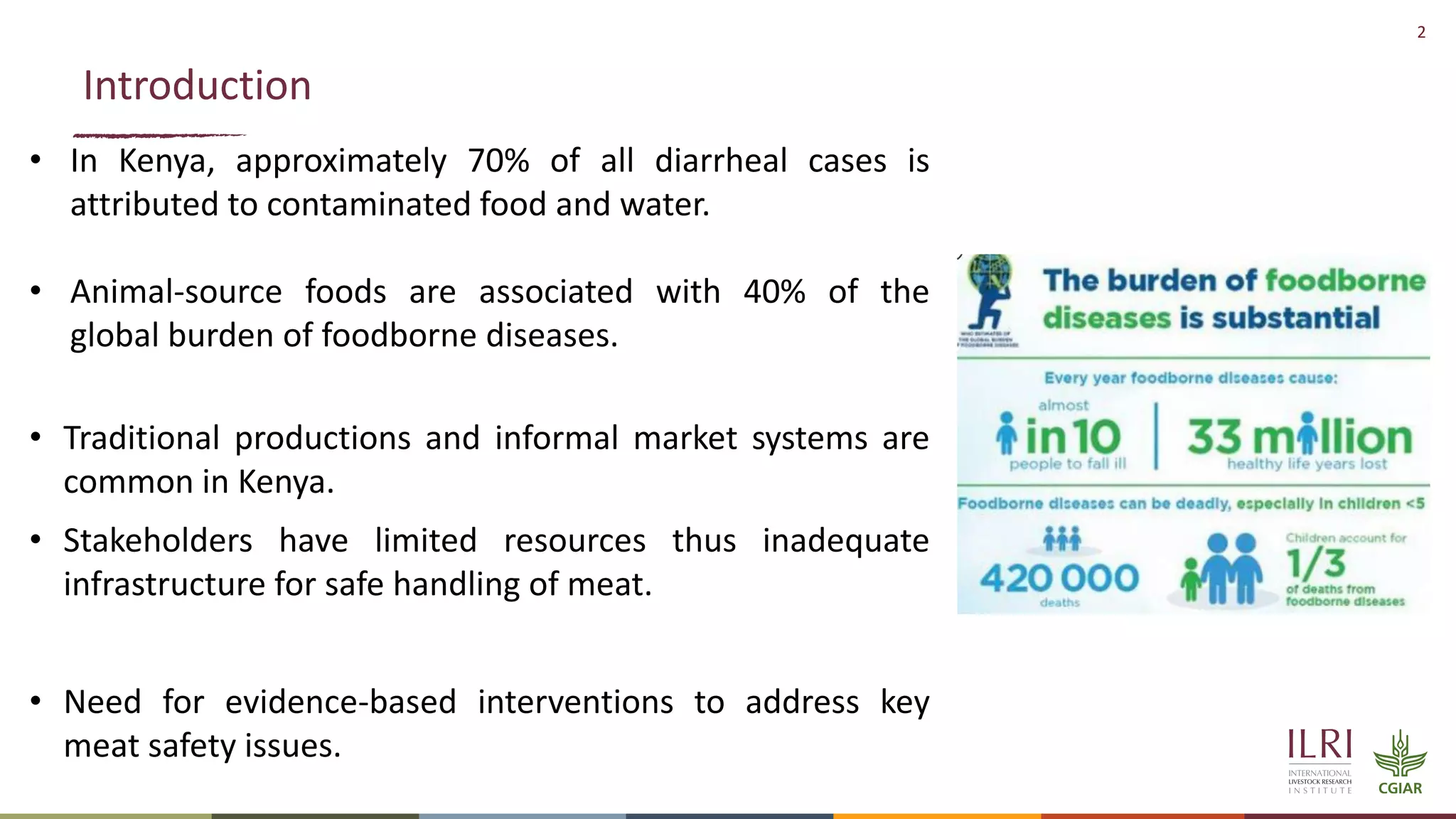
• In Kenya, approximately 70% of all diarrheal cases is
attributed to contaminated food and water.
• Animal-source foods are associated with 40% of the
global burden of foodborne diseases.
• Traditional productions and informal market systems are
common in Kenya.
• Stakeholders have limited resources thus inadequate
infrastructure for safe handling of meat.
• Need for evidence-based interventions to address key
meat safety issues.
3
Methodology
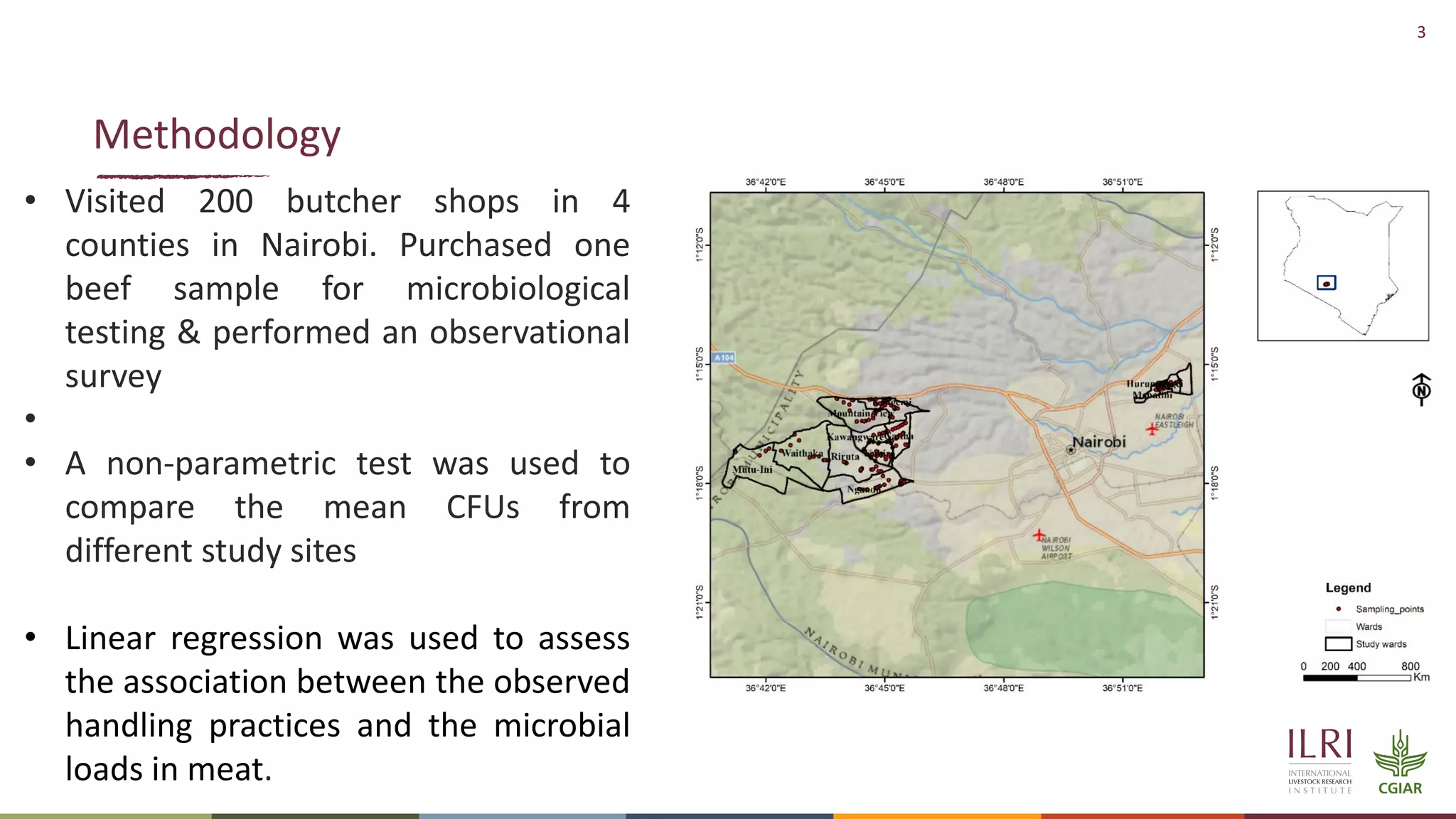
• Visited 200 butcher shops in 4
counties in Nairobi. Purchased one
beef sample for microbiological
testing & performed an observational
survey
•
• A non-parametric test was used to
compare the mean CFUs from
different study sites
• Linear regression was used to assess
the association between the observed
handling practices and the microbial
loads in meat.
4
Results
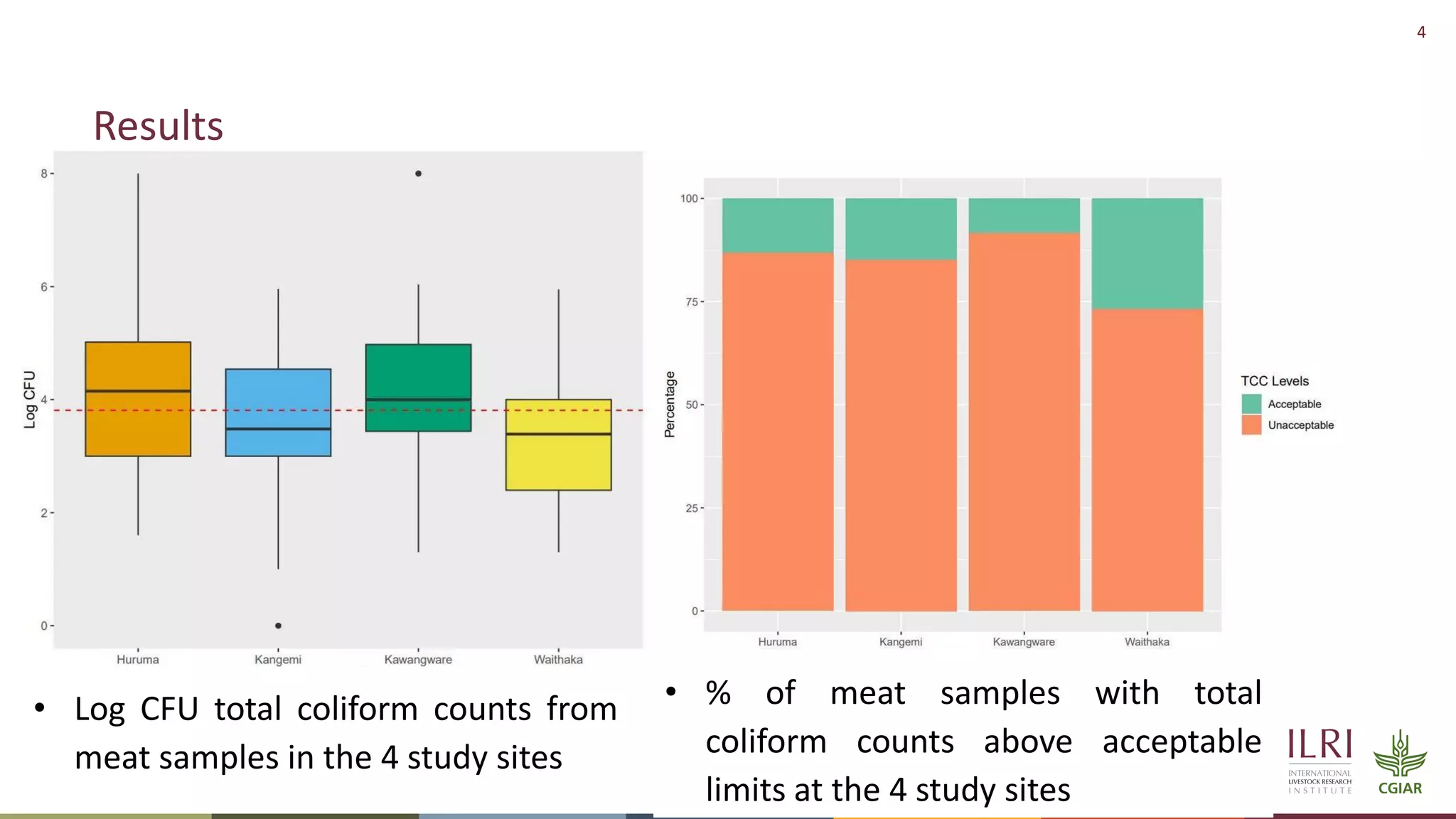
• % of meat samples with total
coliform counts above acceptable
limits at the 4 study sites
• Log CFU total coliform counts from
meat samples in the 4 study sites
5
Results
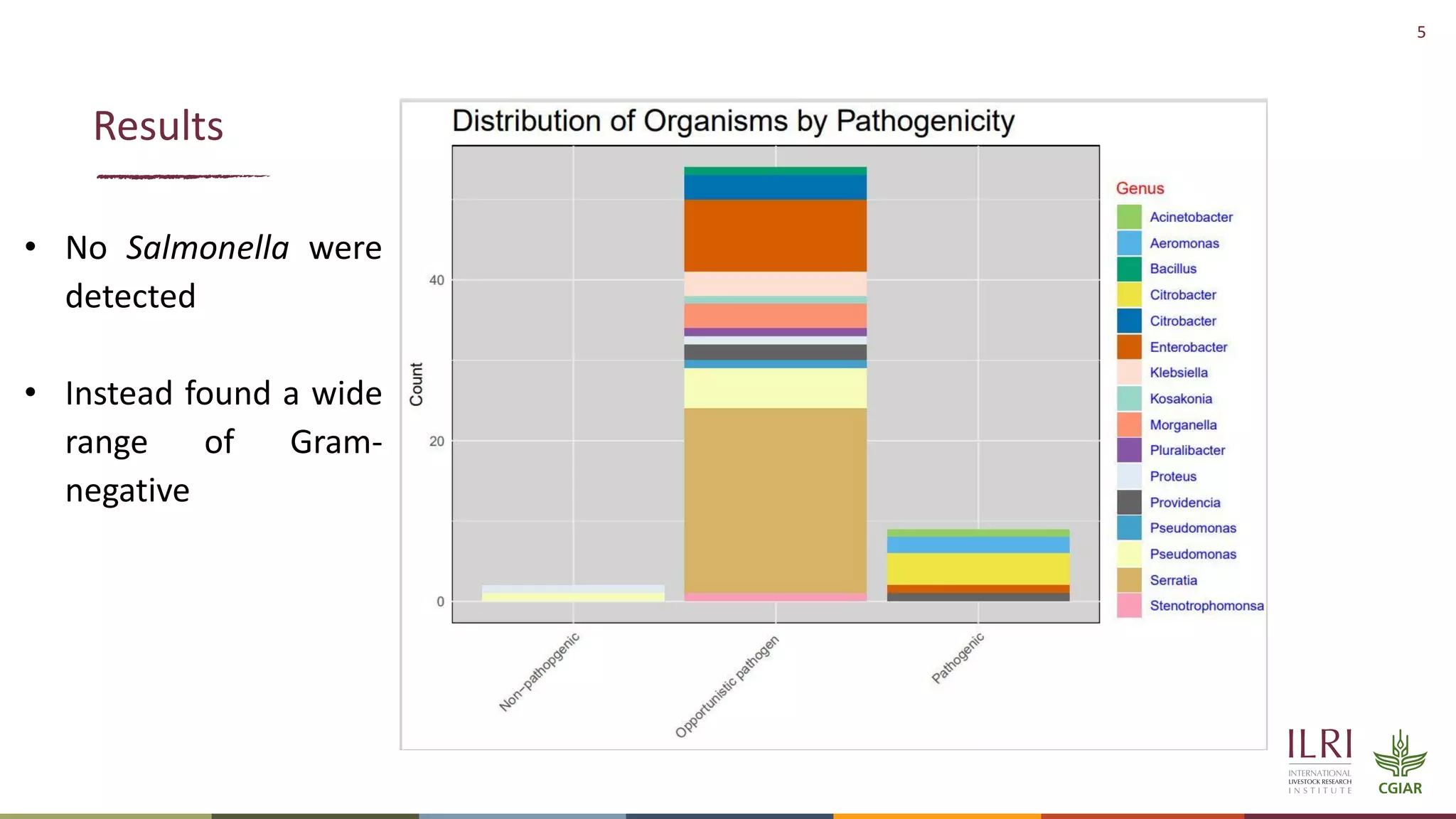
• No Salmonella were
detected
• Instead found a wide
range of Gram-
negative
6
Results
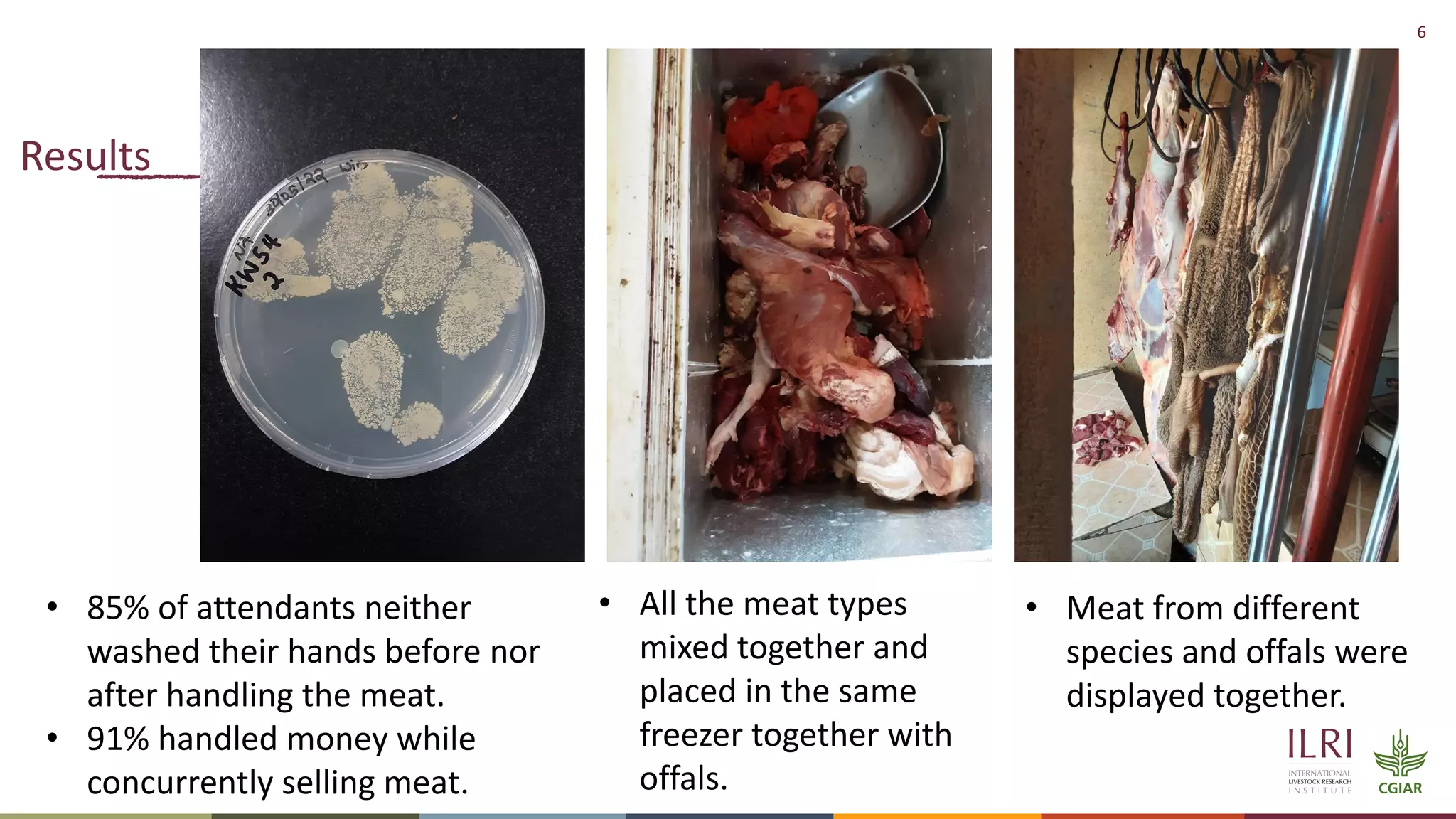
• 85% of attendants neither
washed their hands before nor
after handling the meat.
• 91% handled money while
concurrently selling meat.
• All the meat types
mixed together and
placed in the same
freezer together with
offals.
• Meat from different
species and offals were
displayed together.
7
Conclusion and recommendation
• Most meat sold in peri-urban areas of Nairobi were contaminated with coliforms and E.
coli above the accepted regulatory levels.
• Observed a number of poor meat handling practices.
• Poor hygiene practices coupled with the presence of microbial loads above the
regulatory acceptable limits → increased risk of foodborne illness to consumers.
• Urgent need for education of butcher shop attendants on the appropriate handling of
meat, highlighting the importance of good hygienic practices and improving food safety.
• Results can be used to guide policymakers in identifying critical control points for
designing meat safety interventions.
8
Acknowledgments
• This work is financed by BMZ through OHRECA
• It is implemented in partnership with VSF-Germany, Nairobi County.
Assessing meat microbiological safety and associated handling practices in butcheries in Nairobi, Kenya

Assessing meat microbiological safety and associated handling practices in butcheries in Nairobi, Kenya

  • 1.
    Better lives throughlivestock Assessing meat microbiological safety and associated handling practices in butcheries in Nairobi, Kenya Patricia Koech W Ogutu, L Ochieng, D Grace, G Gitao, L Bebora, M Korir, F Mutua, A Moodley
  • 2.
    2 Introduction • In Kenya,approximately 70% of all diarrheal cases is attributed to contaminated food and water. • Animal-source foods are associated with 40% of the global burden of foodborne diseases. • Traditional productions and informal market systems are common in Kenya. • Stakeholders have limited resources thus inadequate infrastructure for safe handling of meat. • Need for evidence-based interventions to address key meat safety issues.
  • 3.
    3 Methodology • Visited 200butcher shops in 4 counties in Nairobi. Purchased one beef sample for microbiological testing & performed an observational survey • • A non-parametric test was used to compare the mean CFUs from different study sites • Linear regression was used to assess the association between the observed handling practices and the microbial loads in meat.
  • 4.
    4 Results • % ofmeat samples with total coliform counts above acceptable limits at the 4 study sites • Log CFU total coliform counts from meat samples in the 4 study sites
  • 5.
    5 Results • No Salmonellawere detected • Instead found a wide range of Gram- negative
  • 6.
    6 Results • 85% ofattendants neither washed their hands before nor after handling the meat. • 91% handled money while concurrently selling meat. • All the meat types mixed together and placed in the same freezer together with offals. • Meat from different species and offals were displayed together.
  • 7.
    7 Conclusion and recommendation •Most meat sold in peri-urban areas of Nairobi were contaminated with coliforms and E. coli above the accepted regulatory levels. • Observed a number of poor meat handling practices. • Poor hygiene practices coupled with the presence of microbial loads above the regulatory acceptable limits → increased risk of foodborne illness to consumers. • Urgent need for education of butcher shop attendants on the appropriate handling of meat, highlighting the importance of good hygienic practices and improving food safety. • Results can be used to guide policymakers in identifying critical control points for designing meat safety interventions.
  • 8.
    8 Acknowledgments • This workis financed by BMZ through OHRECA • It is implemented in partnership with VSF-Germany, Nairobi County.