Privacy in Our Interconnected World
by Michæl Archer
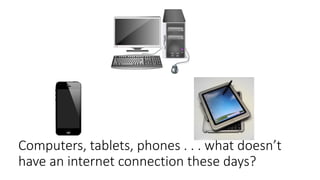
Computers, tablets, phones . . . what doesn’t
have an internet connection these days?
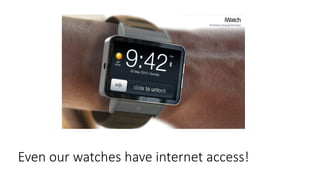
Even our watches have internet access!
Our electronics are all interconnected with one another . . .
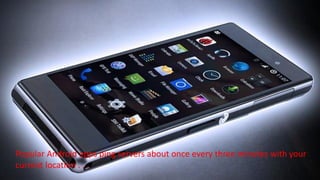
Popular Android apps ping servers about once every three minutes with your
current location . . .
To tell you the weather . . .
To give you traffic details . . .
To give you relevant ads . . .
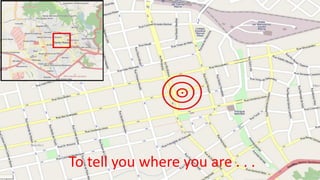
To tell you where you are . . .
They can even help you relocate your lost kids at Disney World . . .
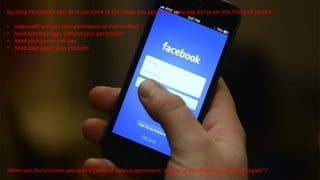
By using Facebook’s app, here are some of the things you agree to let the app do, as per the Terms of Service:
• make calls without your permission or intervention
• Send text messages without your permission
• Read your phone call logs
• Read data about your contacts
When was the last time you read a Terms of Service agreement, instead of mindlessly just hitting “I agree”?
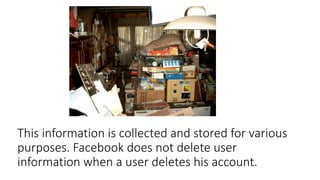
This information is collected and stored for various
purposes. Facebook does not delete user
information when a user deletes his account.
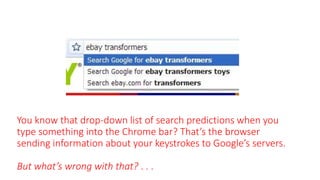
You know that drop-down list of search predictions when you
type something into the Chrome bar? That’s the browser
sending information about your keystrokes to Google’s servers.
But what’s wrong with that? . . .
In 2013, Edward Snowden, an employee for the NSA in the United States, leaked information
detailing the mass surveillance of the American government of its own people.
Among those whose servers the NSA had
direct access to? Yahoo, Google, Facebook,
and Microsoft.
Snowden also spoke out against the use of Dropbox,
criticizing the service’s lack of encryption.
“But I have nothing to hide! Why should I be
worried?”
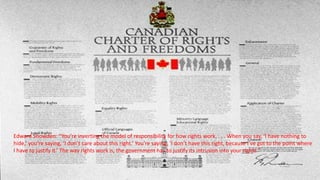
Edward Snowden: “You’re inverting the model of responsibility for how rights work. . . . When you say, ‘I have nothing to
hide,’ you’re saying, ‘I don’t care about this right.’ You’re saying, ‘I don’t have this right, because I’ve got to the point where
I have to justify it.’ The way rights work is, the government has to justify its intrusion into your rights.”
So as you go about your Internet day, just
remember . . .
All pictures are under the Creative Commons
License, published by anonymous authors.
References from course readings:
Constine, Josh. Facebook ‘Nearby Friends’ Will Track Your Location History To Target You With Ads. 18 April 2014. Online.
Dwoskin, Elizabeth. Where Were You 3 Minutes Ago? Your Apps Know. New York, 25 March 2015. Online. 30 May 2015.
Madden, Sean. Tech That Tracks Your Every Move Can Be Convenient, Not Creepy. 10 March 2014. Wired. 30 May 2015. <http://www.wired.com/2014/03/designers-tracking-tradeoffs>.
"Home, hacked home; The internet of things." The Economist 12 July 2014: 14(US). Academic OneFile. Web. 30 May 2015. URL
http://go.galegroup.com/ps/i.do?id=GALE%7CA374524912&v=2.1&u=queensulaw&it=r&p=AONE&sw=w&asid=3f62b19a238f2dbcba05701695a2d62f
Arlen, Gary. "The internet of things: looking ahead to an interconnected world." Multichannel News24 Feb. 2014: 10+. Academic OneFile. Web. 30 May 2015. URL
http://go.galegroup.com/ps/i.do?id=GALE%7CA362850216&v=2.1&u=queensulaw&it=r&p=AONE&sw=w&asid=510ced36c2b4630825e5776e404f2ada
References from non-course readings
BBC. Edward Snowden: Leaks that exposed US spy programme. 17 January 2014. Online.
Bogart, Nicole. What you need to know about concerns over Facebook’s Messenger app. 5
August 2014. Online.
Ha, Anthony. Edward Snowden’s Privacy Tips: “Get Rid Of Dropbox,” Avoid Facebook And
Google. 11 October 2011. Online.
NBC. Edward Snowden Timeline. 26 May 2014. Online.
Purdy, Kevin. What Data of Mine Does Chrome Send to Google? 18 February 2011. Online.
Whittaker, Zack. Facebook does not erase user-deleted content. 28 April 2010. Online.

FILM260 Flipbook submission

  • 1.
    Privacy in OurInterconnected World by Michæl Archer
  • 2.
    Computers, tablets, phones. . . what doesn’t have an internet connection these days?
  • 3.
    Even our watcheshave internet access!
  • 4.
    Our electronics areall interconnected with one another . . .
  • 5.
    Popular Android appsping servers about once every three minutes with your current location . . .
  • 6.
    To tell youthe weather . . .
  • 7.
    To give youtraffic details . . .
  • 8.
    To give yourelevant ads . . .
  • 9.
    To tell youwhere you are . . .
  • 10.
    They can evenhelp you relocate your lost kids at Disney World . . .
  • 11.
    By using Facebook’sapp, here are some of the things you agree to let the app do, as per the Terms of Service: • make calls without your permission or intervention • Send text messages without your permission • Read your phone call logs • Read data about your contacts When was the last time you read a Terms of Service agreement, instead of mindlessly just hitting “I agree”?
  • 12.
    This information iscollected and stored for various purposes. Facebook does not delete user information when a user deletes his account.
  • 13.
    You know thatdrop-down list of search predictions when you type something into the Chrome bar? That’s the browser sending information about your keystrokes to Google’s servers. But what’s wrong with that? . . .
  • 14.
    In 2013, EdwardSnowden, an employee for the NSA in the United States, leaked information detailing the mass surveillance of the American government of its own people.
  • 15.
    Among those whoseservers the NSA had direct access to? Yahoo, Google, Facebook, and Microsoft.
  • 16.
    Snowden also spokeout against the use of Dropbox, criticizing the service’s lack of encryption.
  • 17.
    “But I havenothing to hide! Why should I be worried?”
  • 18.
    Edward Snowden: “You’reinverting the model of responsibility for how rights work. . . . When you say, ‘I have nothing to hide,’ you’re saying, ‘I don’t care about this right.’ You’re saying, ‘I don’t have this right, because I’ve got to the point where I have to justify it.’ The way rights work is, the government has to justify its intrusion into your rights.”
  • 19.
    So as yougo about your Internet day, just remember . . .
  • 21.
    All pictures areunder the Creative Commons License, published by anonymous authors. References from course readings: Constine, Josh. Facebook ‘Nearby Friends’ Will Track Your Location History To Target You With Ads. 18 April 2014. Online. Dwoskin, Elizabeth. Where Were You 3 Minutes Ago? Your Apps Know. New York, 25 March 2015. Online. 30 May 2015. Madden, Sean. Tech That Tracks Your Every Move Can Be Convenient, Not Creepy. 10 March 2014. Wired. 30 May 2015. <http://www.wired.com/2014/03/designers-tracking-tradeoffs>. "Home, hacked home; The internet of things." The Economist 12 July 2014: 14(US). Academic OneFile. Web. 30 May 2015. URL http://go.galegroup.com/ps/i.do?id=GALE%7CA374524912&v=2.1&u=queensulaw&it=r&p=AONE&sw=w&asid=3f62b19a238f2dbcba05701695a2d62f Arlen, Gary. "The internet of things: looking ahead to an interconnected world." Multichannel News24 Feb. 2014: 10+. Academic OneFile. Web. 30 May 2015. URL http://go.galegroup.com/ps/i.do?id=GALE%7CA362850216&v=2.1&u=queensulaw&it=r&p=AONE&sw=w&asid=510ced36c2b4630825e5776e404f2ada
  • 22.
    References from non-coursereadings BBC. Edward Snowden: Leaks that exposed US spy programme. 17 January 2014. Online. Bogart, Nicole. What you need to know about concerns over Facebook’s Messenger app. 5 August 2014. Online. Ha, Anthony. Edward Snowden’s Privacy Tips: “Get Rid Of Dropbox,” Avoid Facebook And Google. 11 October 2011. Online. NBC. Edward Snowden Timeline. 26 May 2014. Online. Purdy, Kevin. What Data of Mine Does Chrome Send to Google? 18 February 2011. Online. Whittaker, Zack. Facebook does not erase user-deleted content. 28 April 2010. Online.