Download to read offline


![20
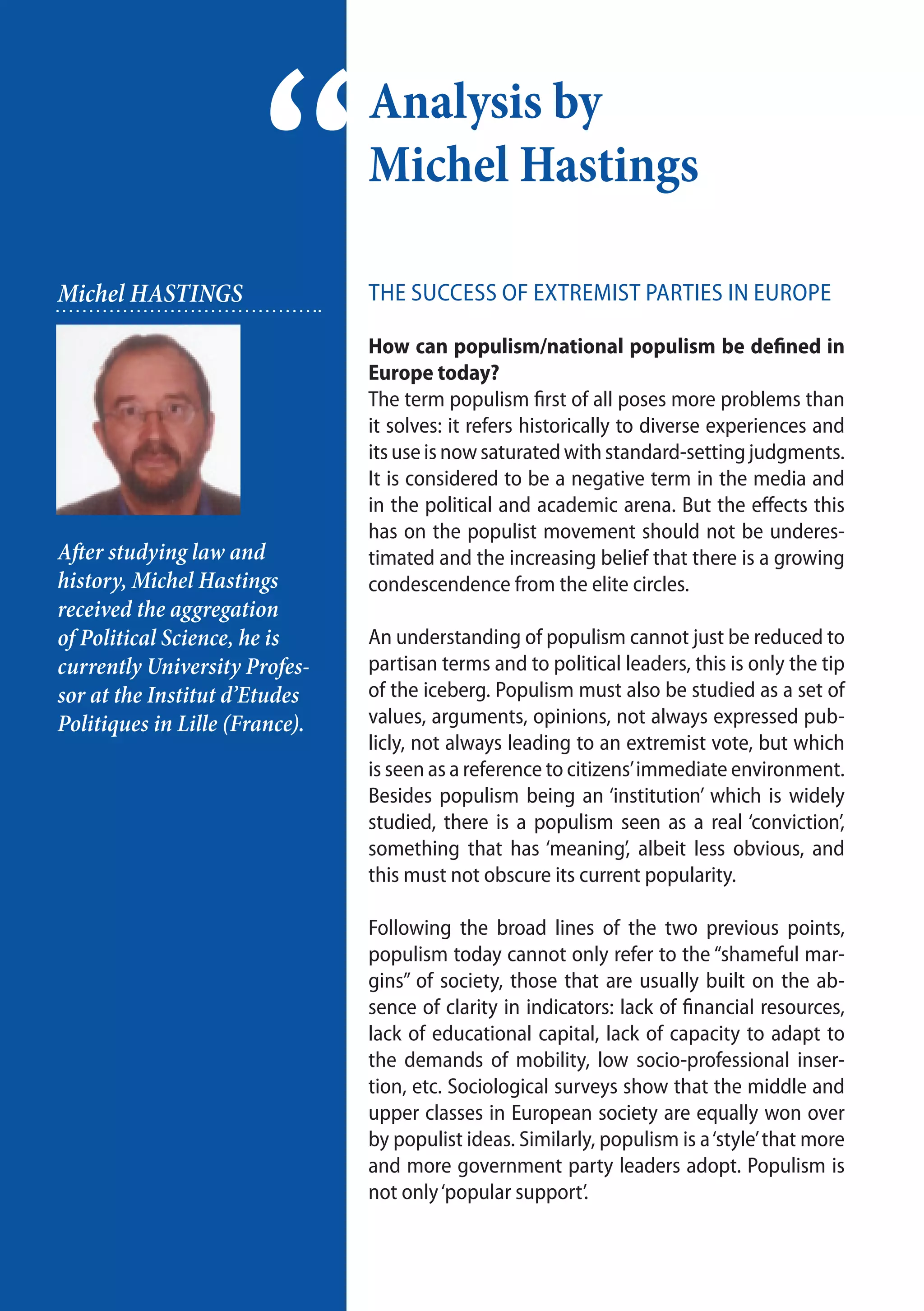
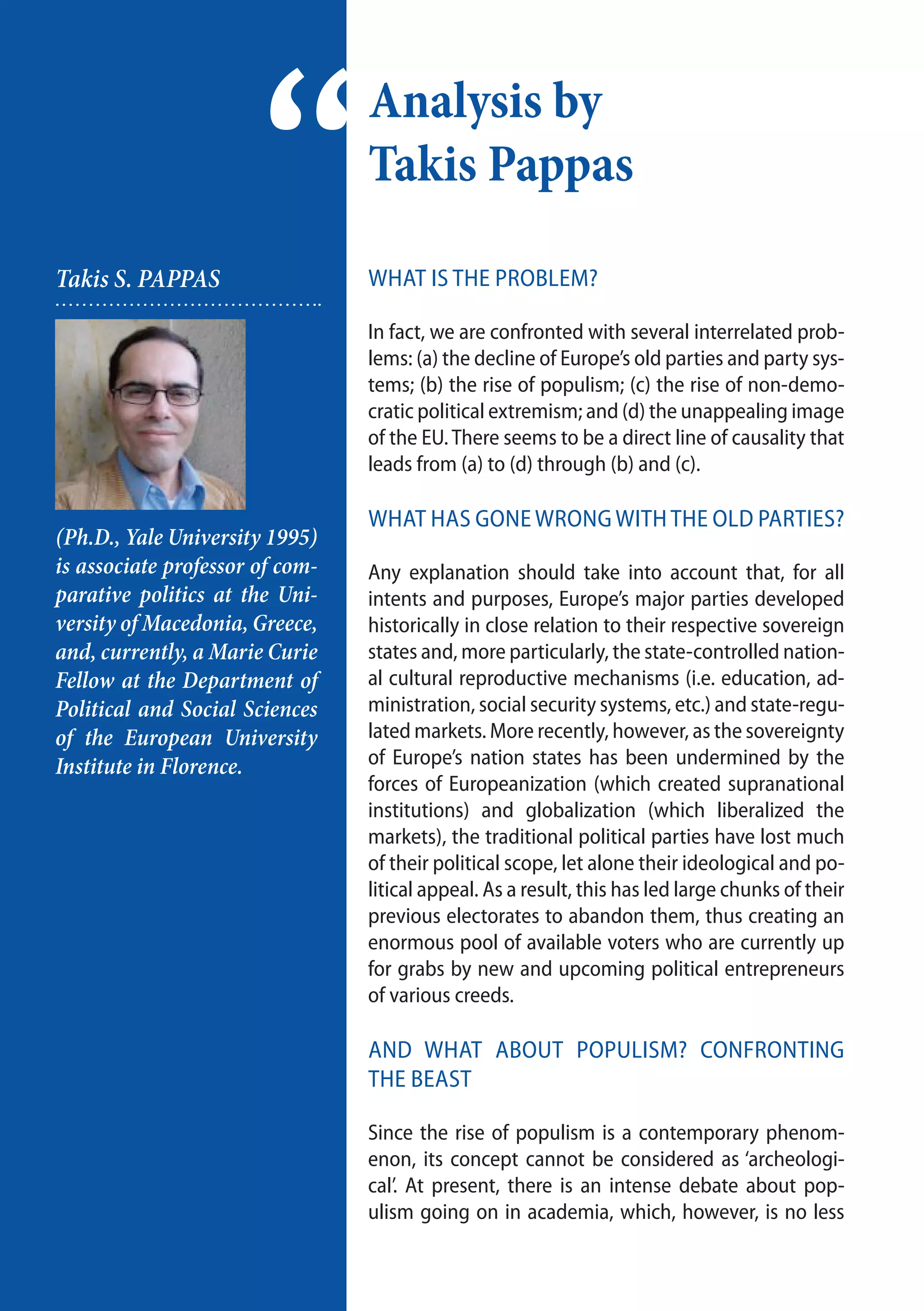
Analysis by
Gerassimos Moschonas
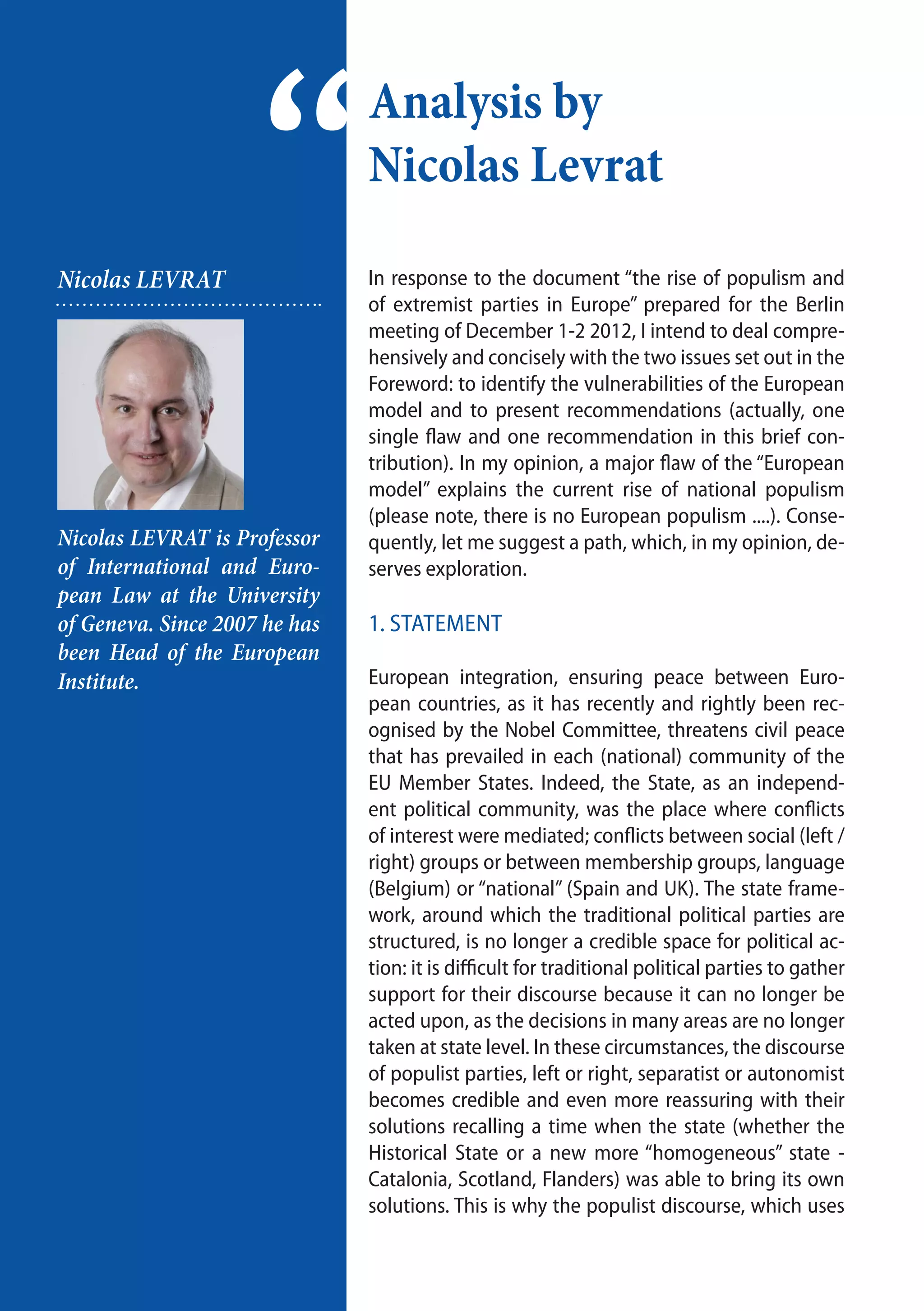
“Gerassimos MOSCHONAS
PhD, University of Paris-2, is
currently an Associate Pro-
fessor in Comparative Poli-
tics at the Department of Po-
litical Science and History of
Panteion University, Athens
(Greece).
The ‘broken equilibrium’ in
European politics:
the Europe factor and the weakening of
mainstream parties
with an emphasis on centre-left and radical Left
parties1
“The succession of extremisms often points to weaknesses and oversights
by the political majority culture. Extremism [......] is in some respect a
mirror image of social development and allows for conclusions about the
condition of the majority society”.
Uwe Backes (Political Extremes, 2010, p. 192)
“Politics in the end is the art of solving substantive problems”.
Arthur Schlesinger (The cycles of American History, 1986, p. 276)
Europe is undergoing a major upheaval and, at the same
time, a gentle, slow and silent institutional revolution.
The European Union is one of the most imaginative crea-
tions of institutional and political engineering. And just
as parties have historically developed in the wake of ma-
jor institutional changes (e.g. the advent of universal suf-
frage or the parliamentarisation of former authoritarian
states), so today the unprecedented character of the EU
has a significant impact on the party phenomenon and
party conflict.
In the framework of the classical nation-state the limited
1 In this document bibliographical references are “minimal”.
The paper is part of the Research Programme ‘Designing &
Operating an Infrastructure for the Empirical Inquiry of Po-
litical & Social Radicalism in Greece’ (co-financed by the Euro-
pean Union (European Social Fund) and Greek national funds).](https://image.slidesharecdn.com/finalpopulismen-130702044540-phpapp02/75/Finalpopulism-en-22-2048.jpg)










The rise of populist and extremist parties in Europe can be explained by their process of normalization and institutionalization over the past 20 years. Previously marginalized parties have modernized their leadership, rhetoric, and policies to become more acceptable. They have also gained popularity by presenting themselves as entrepreneurs bringing new issues neglected by mainstream parties. Meanwhile, traditional parties have lost momentum by failing to offer meaningful programs, policies, and ways to engage and mobilize citizens. The economic crisis further fueled populist criticism of elites and the EU. However, populism is a complex phenomenon not limited to extremist fringes, but also reflecting broader anxieties in society about globalization, national identity, and the changing role of the nation-state


