American, Asian,
Mediterranean,
DASH Diets and
CAM practices
Presented By
Ahmad Ibn-e Yousaf
Mehak Farhat
Fatima Kausar
Nida Anees
Hajra Shahid
Asma Ahsan
Contents
• Introduction to Complementary & Integrative Nutrition Diets
• Standard American Diet
• Asian Diet
• DASH Diet
• Mediterranian Diet
• Role of “AAMD Diets” in Chronic Diseases Management
• CAM therapies used among “AAMD Diets”
• Conclusion
• References
Introduction to Complementary / Integrative Nutrition Diets
• Complementary and Integrative nutrition combines the principles of medical
nutrition therapy with general pharmacological medicines to provide palliative care,
counseling, education and awareness to public as well as to client, and guidance for
precision nutrition, whole-foods based diet and lifestyle recommendations and
modifications
• Originally coined by the Americans, the term 'Complementary Therapy' developed
in the 1970s
• Complementary and Integrative Nutrition is used together with patients / client
mainstream medical care but is not used as standard medical treatment
Basic Principles of Integrative
Therapies
Complementary and Integrative Therapies tend to share a few core beliefs including :
• Illness occurs if the body is out of balance in terms of intake and output
imbalances,
• Body can heal itself and maintain a healthy state if given the right conditions
• Whole person should be treated, not just the disease or the symptoms
• Concept of “Holistic Nutrition” / “Personalized Nutrition” Approach
• Main goal is to facilitate patient / client with Holistic Nutrition approach
Standard American Diet (SAD)
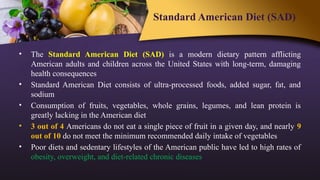
• The Standard American Diet (SAD) is a modern dietary pattern afflicting
American adults and children across the United States with long-term, damaging
health consequences
• Standard American Diet consists of ultra-processed foods, added sugar, fat, and
sodium
• Consumption of fruits, vegetables, whole grains, legumes, and lean protein is
greatly lacking in the American diet
• 3 out of 4 Americans do not eat a single piece of fruit in a given day, and nearly 9
out of 10 do not meet the minimum recommended daily intake of vegetables
• Poor diets and sedentary lifestyles of the American public have led to high rates of
obesity, overweight, and diet-related chronic diseases
Common Foods used in Standard American Diet
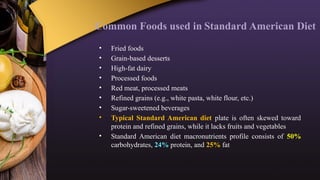
• Fried foods
• Grain-based desserts
• High-fat dairy
• Processed foods
• Red meat, processed meats
• Refined grains (e.g., white pasta, white flour, etc.)
• Sugar-sweetened beverages
• Typical Standard American diet plate is often skewed toward
protein and refined grains, while it lacks fruits and vegetables
• Standard American diet macronutrients profile consists of 50%
carbohydrates, 24% protein, and 25% fat
Health Implications of the Standard
American diet
• Today, nearly 40% of U.S. adults are considered obese,
which contributes to an upward trend of chronic illness
• Cardiovascular diseases (CHD, Atherosclerosis)
• Higher fasting blood glucose
• Hypertension
• Increased LDL cholesterol
• Metabolic syndrome
• Type 2 diabetes
Some ways to Avoid American Diet
• Limit your intake of ultra-processed foods
• Focus on fruits and vegetables
• Eat more plant-based proteins
• Make half your grains whole
• Limit intake of added sugar and salt
• Cook more meals at home
• Make nutritious foods convenient, keep nutrient dense snacks
with you at your workplaces
Asian Diet
• The traditional diet in many Asian countries is often
closely tied to both religious practices and long-
standing customs
• Record of these eating habits is an excellent source
of information and culinary inspiration
• Vegetables and more vegetables, strong spices, rice
and noodles, seafood, and soy products
Potential Health Benefits of Asian Diet
• The Asian diet is relatively low in meat and dairy
foods. Protein and iron are obtained from nuts,
seeds, and legumes
• Iron is also provided through certain vegetables,
such as dark leafy greens
• Calcium is obtained from soy products, nuts, seeds,
and green leafy vegetables
Potential Health Benefits of Asian Diet
• The dietary principles of the Asian diet are meant to
be for the average healthy adult
• Individuals with special nutritional needs, such as
children, pregnant women, or those with certain
medical conditions, should consult a physician or
registered dietitian to determine their appropriate
dietary requirements
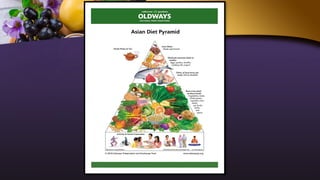
Asian Diet Food Pyramid
• At the base of the Asian diet food pyramid are foods
you are encouraged to eat every day
• Leafy greens, legumes, vegetables, fruits, soy foods,
whole grains, herbs, and spices
• Moving up the pyramid, you have fish or shellfish
twice a week; moderate portions of eggs, poultry,
dairy, and healthy cooking oils; and “sometimes”
foods like red meats and sweets
• Plain water and unsweetened tea are encouraged,
whereas sugary juices and soda are discouraged
Asian Diet Food Pyramid
• A new distinguished scientific committee reviewed
extensive data on Asian diets and provided guidance for
better depicting the foods and the relative proportion of
each food group
• Foods to enjoy every day: leafy greens, legumes,
vegetables, soy foods, whole grains, herbs and spices
• Fish or shellfish servings twice each week.
• Moderate portions of eggs, poultry, and healthy cooking
oils
• Infrequent servings of red meats and sweets
DASH Diet
• The DASH, stands for Dietary Approaches to stop
Hypertension
• It is a healthy-eating plan designed to help prevent
or treat high blood pressure
• DASH is a flexible and balanced eating plan, it
reduced the risk of developing diabetes and slow
progression of kidney disease
• It is also associated with lower risk of several types
of cancer, heart disease, stroke and heart failure
CAUSES OF HYPERTENSION
• Genetic factor
• Being over weight or obese
• High salt intake
• Narrowing or stiffening of arteries
• Stress
• Too much alcohol
• Salted foods intake
Dietary Modifications
• Foods in DASH diet are rich in minerals, potassium,
calcium and magnesium
• It focuses on fruits, vegetables, whole grains, fat free
or low-fat dairy products, fish, poultry, beans and nuts
• The diet limits foods that are high in salt, also called
sodium
• It also limits added sugar and Saturated fat such as in
fatty meats and full fat dairy products
• The diet helps to create a healthy eating style for life,
there is no need for special foods and drinks
Daily Nutrients in DASH Diet
• Total Fat 27% of calories
• Saturated fat 6% of calories
• Potassium 4700mg
• Calcium 1250mg
• Magnesium 500mg
• Protein 18%
• Carbohydrate 55%
• Cholesterol 150mg
• 1500 mg of sodium was a lower goal tested and found
to be even better for lowering blood pressure
Ways to cut Sodium
• Use unsalted canned or frozen vegetables. If use regular, rinse
canned foods to reduce sodium
• Choose more foods with daily value less than 10%
• Choose foods that have lower amount of sodium based on the
label
• Standard DASH diet, you can consume up to 2300mg of
sodium a day
• Lower Sodium DASH diet, you can consume up to 1500 mg
of sodium a day
Physical Activity & Benefits
• Use stairs instead of elevator
• 30 minutes of moderate level activity on most days of week
• Aim for at least 150 minutes/week of moderate aerobic
exercise
• Helps lower blood pressure and lose /maintain weight
• Increased insulin sensitivity
• Improved blood glucose control
Focus On
• Make a ‘’DASH’’ for more –
• Fruits and vegetables
• Whole grains and breads
• Non- fat and low fat dairy foods
• Nuts, Seeds and beans
Mediterranean Diet
• The Mediterranean diet is a set of dietary and lifestyle
choices based on the traditions, diet, and culture of
people living around the Mediterranean Sea, including
Crete, France, Morocco, Cyprus, Croatia, Spain
Portugal, Greece, and Italy
• Components of Mediterranean diet
• Omega-3 Polyunsaturated Fats, Such as Fish
• Unsaturated Fats, Such as Olive Oil
• Fruits and Vegetables
• Whole Grain Foods High in Fiber
• Nuts and Legumes
Why should MD Diet be followed ?
Its importance depends upon the presence of active
ingredients in each of the components of MD diet ;
1.Formulation of functional foods and
nutraceuticals
2. Anti-oxidant Capacity.
3. Health Benefits.
.
Health Benefits
Prevention of cardiovascular diseases:
• The discovery by Ancel Keys
• Phenolic compounds inhibit LDL oxidation
• High intake of fish and seafood in the MD is associated with reduced
systolic blood pressure
• Vegetables, fruit and olive oil is chiefly responsible for the apparent
protection offered by the MD against hypertension.
• Lowers risk of cancer
• Lowers risk of obesity
• Supports brain development
• Reduces risk of metabolic syndrome
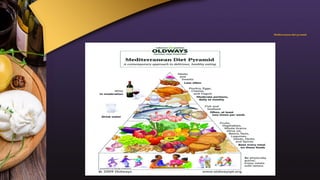
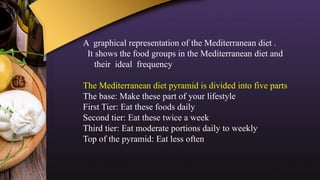
Mediterranean diet pyramid
A graphical representation of the Mediterranean diet .
It shows the food groups in the Mediterranean diet and
their ideal frequency
The Mediterranean diet pyramid is divided into five parts:
The base: Make these part of your lifestyle
First Tier: Eat these foods daily
Second tier: Eat these twice a week
Third tier: Eat moderate portions daily to weekly
Top of the pyramid: Eat less often
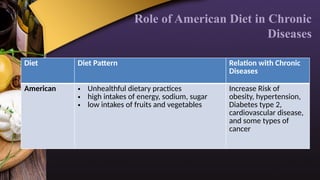
Role of American Diet in Chronic
Diseases
Diet Diet Pattern Relation with Chronic
Diseases
American • Unhealthful dietary practices
• high intakes of energy, sodium, sugar
• low intakes of fruits and vegetables
Increase Risk of
obesity, hypertension,
Diabetes type 2,
cardiovascular disease,
and some types of
cancer
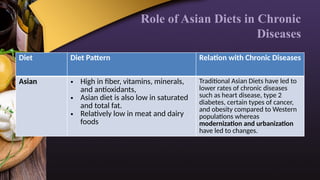
Role of Asian Diets in Chronic
Diseases
Diet Diet Pattern Relation with Chronic Diseases
Asian • High in fiber, vitamins, minerals,
and antioxidants,
• Asian diet is also low in saturated
and total fat.
• Relatively low in meat and dairy
foods
Traditional Asian Diets have led to
lower rates of chronic diseases
such as heart disease, type 2
diabetes, certain types of cancer,
and obesity compared to Western
populations whereas
modernization and urbanization
have led to changes.
Role of Mediterranean Diets in
Chronic Diseases
Diet Diet Pattern Relation with Chronic
Diseases
Mediterranean • primarily plant-based eating plan
• animal proteins are eaten in smaller
quantities ( preferred fish, seafood)
Prevention of CVD, a
lower incidence of type-2
diabetes,
protective effects against
breast cancer,
decreases inflammatory
markers.
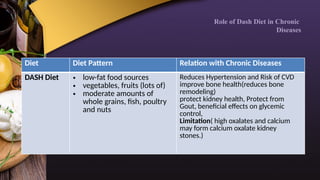
Role of Dash Diet in Chronic
Diseases
Diet Diet Pattern Relation with Chronic Diseases
DASH Diet • low-fat food sources
• vegetables, fruits (lots of)
• moderate amounts of
whole grains, fish, poultry
and nuts
Reduces Hypertension and Risk of CVD
improve bone health(reduces bone
remodeling)
protect kidney health, Protect from
Gout, beneficial effects on glycemic
control,
Limitation( high oxalates and calcium
may form calcium oxalate kidney
stones.)
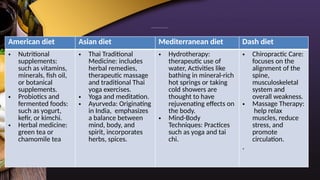
CAM PRACTICES USED AMONG DIETS:
American diet Asian diet Mediterranean diet Dash diet
• Nutritional
supplements:
such as vitamins,
minerals, fish oil,
or botanical
supplements.
• Probiotics and
fermented foods:
such as yogurt,
kefir, or kimchi.
• Herbal medicine:
green tea or
chamomile tea
• Thai Traditional
Medicine: includes
herbal remedies,
therapeutic massage
and traditional Thai
yoga exercises.
• Yoga and meditation.
• Ayurveda: Originating
in India, emphasizes
a balance between
mind, body, and
spirit, incorporates
herbs, spices.
• Hydrotherapy:
therapeutic use of
water, Activities like
bathing in mineral-rich
hot springs or taking
cold showers are
thought to have
rejuvenating effects on
the body.
• Mind-Body
Techniques: Practices
such as yoga and tai
chi.
• Chiropractic Care:
focuses on the
alignment of the
spine,
musculoskeletal
system and
overall weakness.
• Massage Therapy:
help relax
muscles, reduce
stress, and
promote
circulation.
.
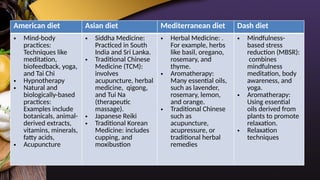
American diet Asian diet Mediterranean diet Dash diet
• Mind-body
practices:
Techniques like
meditation,
biofeedback, yoga,
and Tai Chi
• Hypnotherapy
• Natural and
biologically-based
practices:
Examples include
botanicals, animal-
derived extracts,
vitamins, minerals,
fatty acids,
• Acupuncture
• Siddha Medicine:
Practiced in South
India and Sri Lanka.
• Traditional Chinese
Medicine (TCM):
involves
acupuncture, herbal
medicine, qigong,
and Tui Na
(therapeutic
massage).
• Japanese Reiki
• Traditional Korean
Medicine: includes
cupping, and
moxibustion
• Herbal Medicine: .
For example, herbs
like basil, oregano,
rosemary, and
thyme.
• Aromatherapy:
Many essential oils,
such as lavender,
rosemary, lemon,
and orange.
• Traditional Chinese
such as
acupuncture,
acupressure, or
traditional herbal
remedies
• Mindfulness-
based stress
reduction (MBSR):
combines
mindfulness
meditation, body
awareness, and
yoga.
• Aromatherapy:
Using essential
oils derived from
plants to promote
relaxation.
• Relaxation
techniques
CONCLUSION
• Each of these diets offers unique dietary patterns and health benefits.
• While the American diet is associated with an increased risk of
chronic diseases, the Asian, Mediterranean, and DASH diets
emphasize whole, minimally processed foods, and have been linked
to various health benefits, including a reduced risk of cardiovascular
diseases, certain types of cancer, and improved overall health.
• CAM therapies can be valuable additions to these diets, it is
important to approach them with a critical and evidence-based
mindset.
• By embracing a comprehensive approach that combines dietary
modifications and appropriate CAM therapies, individuals can strive
for optimal health and well-being.
References
• Ndtr, L. D. B. (2022, August 6). What is the Standard American Diet? Fullscript. https://fullscript.com/blog/standard-american-diet
• (“Standard American Diet | Health Topics | NutritionFacts.org”)
• Stephens, H. (n.d.). The effects of an American diet on health - Inquiro - Journal of undergrad research | UAB. The University of Alabama at Birmingham |
UAB.
• www.nhlbi.nih.gov
• http://www.nhlbi.nih.gov/health/public/heart/hbp/dash
• http://emaill.nhlbihin,net/hbpsubLink.asp//?p=2&h=3&g=27&r=1
• https://kidshealth.org/en/parents/myplate.html#:~:text=The%20U.S.%20Department%20of%20Agriculture,%2C%20grains%2C%20and%20protein%20fo
ods
• Institute of Medicine (US) Committee on Examination of Front-of-Package Nutrition Rating Systems and Symbols; Wartella EA, Lichtenstein AH, Boon CS,
editors.
• Washington (DC): National Academies Press (US); 2010.
• Suri, S., Kumar, V., Kumar, S., Goyal, A., Tanwar, B., Kaur, J., & Kaur, J. (2019). DASH dietary pattern: A treatment for non-communicable diseases. Current Hypertension Reviews,
15.
• Aridi, Y. S., Walker, J. L., Roura, E., & Wright, O. R. L. (2020). Adherence to the Mediterranean Diet and Chronic Disease in Australia: National Nutrition
and Physical Activity Survey Analysis. Nutrients, 12(5), 1251. doi:10.3390/nu12051251
• https://www.hsph.harvard.edu/nutritionsource/healthy-weight/diet-reviews/mediterranean-diet/
• https://www.gicare.com/gi-health-resources/asian-diet/
• Tan, Y.B., Lau, J.H., AshaRani, P. et al. Dietary patterns of persons with chronic conditions within a multi-ethnic population: results from the nationwide
Knowledge, Attitudes and Practices survey on diabetes in Singapore. Arch Public Health 80, 62 (2022). https://doi.org/10.1186/s13690-022-00817-2
• Wang, H., Deng, F., Qu, M., Yang, P., & Yang, B. (2014). Association between Dietary Patterns and Chronic Diseases among Chinese Adults in Baoji.
International Journal of Chronic Diseases, 2014, 1–7. doi:10.1155/2014/548269
Final_Therapeutic_and_complemen_Presentation[1][1].pptx

Final_Therapeutic_and_complemen_Presentation[1][1].pptx

  • 2.
    American, Asian, Mediterranean, DASH Dietsand CAM practices Presented By Ahmad Ibn-e Yousaf Mehak Farhat Fatima Kausar Nida Anees Hajra Shahid Asma Ahsan
  • 3.
    Contents • Introduction toComplementary & Integrative Nutrition Diets • Standard American Diet • Asian Diet • DASH Diet • Mediterranian Diet • Role of “AAMD Diets” in Chronic Diseases Management • CAM therapies used among “AAMD Diets” • Conclusion • References
  • 4.
    Introduction to Complementary/ Integrative Nutrition Diets • Complementary and Integrative nutrition combines the principles of medical nutrition therapy with general pharmacological medicines to provide palliative care, counseling, education and awareness to public as well as to client, and guidance for precision nutrition, whole-foods based diet and lifestyle recommendations and modifications • Originally coined by the Americans, the term 'Complementary Therapy' developed in the 1970s • Complementary and Integrative Nutrition is used together with patients / client mainstream medical care but is not used as standard medical treatment
  • 5.
    Basic Principles ofIntegrative Therapies Complementary and Integrative Therapies tend to share a few core beliefs including : • Illness occurs if the body is out of balance in terms of intake and output imbalances, • Body can heal itself and maintain a healthy state if given the right conditions • Whole person should be treated, not just the disease or the symptoms • Concept of “Holistic Nutrition” / “Personalized Nutrition” Approach • Main goal is to facilitate patient / client with Holistic Nutrition approach
  • 6.
    Standard American Diet(SAD) • The Standard American Diet (SAD) is a modern dietary pattern afflicting American adults and children across the United States with long-term, damaging health consequences • Standard American Diet consists of ultra-processed foods, added sugar, fat, and sodium • Consumption of fruits, vegetables, whole grains, legumes, and lean protein is greatly lacking in the American diet • 3 out of 4 Americans do not eat a single piece of fruit in a given day, and nearly 9 out of 10 do not meet the minimum recommended daily intake of vegetables • Poor diets and sedentary lifestyles of the American public have led to high rates of obesity, overweight, and diet-related chronic diseases
  • 7.
    Common Foods usedin Standard American Diet • Fried foods • Grain-based desserts • High-fat dairy • Processed foods • Red meat, processed meats • Refined grains (e.g., white pasta, white flour, etc.) • Sugar-sweetened beverages • Typical Standard American diet plate is often skewed toward protein and refined grains, while it lacks fruits and vegetables • Standard American diet macronutrients profile consists of 50% carbohydrates, 24% protein, and 25% fat
  • 8.
    Health Implications ofthe Standard American diet • Today, nearly 40% of U.S. adults are considered obese, which contributes to an upward trend of chronic illness • Cardiovascular diseases (CHD, Atherosclerosis) • Higher fasting blood glucose • Hypertension • Increased LDL cholesterol • Metabolic syndrome • Type 2 diabetes
  • 9.
    Some ways toAvoid American Diet • Limit your intake of ultra-processed foods • Focus on fruits and vegetables • Eat more plant-based proteins • Make half your grains whole • Limit intake of added sugar and salt • Cook more meals at home • Make nutritious foods convenient, keep nutrient dense snacks with you at your workplaces
  • 10.
    Asian Diet • Thetraditional diet in many Asian countries is often closely tied to both religious practices and long- standing customs • Record of these eating habits is an excellent source of information and culinary inspiration • Vegetables and more vegetables, strong spices, rice and noodles, seafood, and soy products
  • 11.
    Potential Health Benefitsof Asian Diet • The Asian diet is relatively low in meat and dairy foods. Protein and iron are obtained from nuts, seeds, and legumes • Iron is also provided through certain vegetables, such as dark leafy greens • Calcium is obtained from soy products, nuts, seeds, and green leafy vegetables
  • 12.
    Potential Health Benefitsof Asian Diet • The dietary principles of the Asian diet are meant to be for the average healthy adult • Individuals with special nutritional needs, such as children, pregnant women, or those with certain medical conditions, should consult a physician or registered dietitian to determine their appropriate dietary requirements
  • 13.
    Asian Diet FoodPyramid • At the base of the Asian diet food pyramid are foods you are encouraged to eat every day • Leafy greens, legumes, vegetables, fruits, soy foods, whole grains, herbs, and spices • Moving up the pyramid, you have fish or shellfish twice a week; moderate portions of eggs, poultry, dairy, and healthy cooking oils; and “sometimes” foods like red meats and sweets • Plain water and unsweetened tea are encouraged, whereas sugary juices and soda are discouraged
  • 14.
    Asian Diet FoodPyramid • A new distinguished scientific committee reviewed extensive data on Asian diets and provided guidance for better depicting the foods and the relative proportion of each food group • Foods to enjoy every day: leafy greens, legumes, vegetables, soy foods, whole grains, herbs and spices • Fish or shellfish servings twice each week. • Moderate portions of eggs, poultry, and healthy cooking oils • Infrequent servings of red meats and sweets
  • 16.
    DASH Diet • TheDASH, stands for Dietary Approaches to stop Hypertension • It is a healthy-eating plan designed to help prevent or treat high blood pressure • DASH is a flexible and balanced eating plan, it reduced the risk of developing diabetes and slow progression of kidney disease • It is also associated with lower risk of several types of cancer, heart disease, stroke and heart failure
  • 17.
    CAUSES OF HYPERTENSION •Genetic factor • Being over weight or obese • High salt intake • Narrowing or stiffening of arteries • Stress • Too much alcohol • Salted foods intake
  • 18.
    Dietary Modifications • Foodsin DASH diet are rich in minerals, potassium, calcium and magnesium • It focuses on fruits, vegetables, whole grains, fat free or low-fat dairy products, fish, poultry, beans and nuts • The diet limits foods that are high in salt, also called sodium • It also limits added sugar and Saturated fat such as in fatty meats and full fat dairy products • The diet helps to create a healthy eating style for life, there is no need for special foods and drinks
  • 19.
    Daily Nutrients inDASH Diet • Total Fat 27% of calories • Saturated fat 6% of calories • Potassium 4700mg • Calcium 1250mg • Magnesium 500mg • Protein 18% • Carbohydrate 55% • Cholesterol 150mg • 1500 mg of sodium was a lower goal tested and found to be even better for lowering blood pressure
  • 20.
    Ways to cutSodium • Use unsalted canned or frozen vegetables. If use regular, rinse canned foods to reduce sodium • Choose more foods with daily value less than 10% • Choose foods that have lower amount of sodium based on the label • Standard DASH diet, you can consume up to 2300mg of sodium a day • Lower Sodium DASH diet, you can consume up to 1500 mg of sodium a day
  • 21.
    Physical Activity &Benefits • Use stairs instead of elevator • 30 minutes of moderate level activity on most days of week • Aim for at least 150 minutes/week of moderate aerobic exercise • Helps lower blood pressure and lose /maintain weight • Increased insulin sensitivity • Improved blood glucose control
  • 22.
    Focus On • Makea ‘’DASH’’ for more – • Fruits and vegetables • Whole grains and breads • Non- fat and low fat dairy foods • Nuts, Seeds and beans
  • 23.
    Mediterranean Diet • TheMediterranean diet is a set of dietary and lifestyle choices based on the traditions, diet, and culture of people living around the Mediterranean Sea, including Crete, France, Morocco, Cyprus, Croatia, Spain Portugal, Greece, and Italy • Components of Mediterranean diet • Omega-3 Polyunsaturated Fats, Such as Fish • Unsaturated Fats, Such as Olive Oil • Fruits and Vegetables • Whole Grain Foods High in Fiber • Nuts and Legumes
  • 24.
    Why should MDDiet be followed ? Its importance depends upon the presence of active ingredients in each of the components of MD diet ; 1.Formulation of functional foods and nutraceuticals 2. Anti-oxidant Capacity. 3. Health Benefits. .
  • 25.
    Health Benefits Prevention ofcardiovascular diseases: • The discovery by Ancel Keys • Phenolic compounds inhibit LDL oxidation • High intake of fish and seafood in the MD is associated with reduced systolic blood pressure • Vegetables, fruit and olive oil is chiefly responsible for the apparent protection offered by the MD against hypertension. • Lowers risk of cancer • Lowers risk of obesity • Supports brain development • Reduces risk of metabolic syndrome
  • 26.
  • 27.
    A graphical representationof the Mediterranean diet . It shows the food groups in the Mediterranean diet and their ideal frequency The Mediterranean diet pyramid is divided into five parts: The base: Make these part of your lifestyle First Tier: Eat these foods daily Second tier: Eat these twice a week Third tier: Eat moderate portions daily to weekly Top of the pyramid: Eat less often
  • 28.
    Role of AmericanDiet in Chronic Diseases Diet Diet Pattern Relation with Chronic Diseases American • Unhealthful dietary practices • high intakes of energy, sodium, sugar • low intakes of fruits and vegetables Increase Risk of obesity, hypertension, Diabetes type 2, cardiovascular disease, and some types of cancer
  • 29.
    Role of AsianDiets in Chronic Diseases Diet Diet Pattern Relation with Chronic Diseases Asian • High in fiber, vitamins, minerals, and antioxidants, • Asian diet is also low in saturated and total fat. • Relatively low in meat and dairy foods Traditional Asian Diets have led to lower rates of chronic diseases such as heart disease, type 2 diabetes, certain types of cancer, and obesity compared to Western populations whereas modernization and urbanization have led to changes.
  • 30.
    Role of MediterraneanDiets in Chronic Diseases Diet Diet Pattern Relation with Chronic Diseases Mediterranean • primarily plant-based eating plan • animal proteins are eaten in smaller quantities ( preferred fish, seafood) Prevention of CVD, a lower incidence of type-2 diabetes, protective effects against breast cancer, decreases inflammatory markers.
  • 31.
    Role of DashDiet in Chronic Diseases Diet Diet Pattern Relation with Chronic Diseases DASH Diet • low-fat food sources • vegetables, fruits (lots of) • moderate amounts of whole grains, fish, poultry and nuts Reduces Hypertension and Risk of CVD improve bone health(reduces bone remodeling) protect kidney health, Protect from Gout, beneficial effects on glycemic control, Limitation( high oxalates and calcium may form calcium oxalate kidney stones.)
  • 32.
    CAM PRACTICES USEDAMONG DIETS: American diet Asian diet Mediterranean diet Dash diet • Nutritional supplements: such as vitamins, minerals, fish oil, or botanical supplements. • Probiotics and fermented foods: such as yogurt, kefir, or kimchi. • Herbal medicine: green tea or chamomile tea • Thai Traditional Medicine: includes herbal remedies, therapeutic massage and traditional Thai yoga exercises. • Yoga and meditation. • Ayurveda: Originating in India, emphasizes a balance between mind, body, and spirit, incorporates herbs, spices. • Hydrotherapy: therapeutic use of water, Activities like bathing in mineral-rich hot springs or taking cold showers are thought to have rejuvenating effects on the body. • Mind-Body Techniques: Practices such as yoga and tai chi. • Chiropractic Care: focuses on the alignment of the spine, musculoskeletal system and overall weakness. • Massage Therapy: help relax muscles, reduce stress, and promote circulation. .
  • 33.
    American diet Asiandiet Mediterranean diet Dash diet • Mind-body practices: Techniques like meditation, biofeedback, yoga, and Tai Chi • Hypnotherapy • Natural and biologically-based practices: Examples include botanicals, animal- derived extracts, vitamins, minerals, fatty acids, • Acupuncture • Siddha Medicine: Practiced in South India and Sri Lanka. • Traditional Chinese Medicine (TCM): involves acupuncture, herbal medicine, qigong, and Tui Na (therapeutic massage). • Japanese Reiki • Traditional Korean Medicine: includes cupping, and moxibustion • Herbal Medicine: . For example, herbs like basil, oregano, rosemary, and thyme. • Aromatherapy: Many essential oils, such as lavender, rosemary, lemon, and orange. • Traditional Chinese such as acupuncture, acupressure, or traditional herbal remedies • Mindfulness- based stress reduction (MBSR): combines mindfulness meditation, body awareness, and yoga. • Aromatherapy: Using essential oils derived from plants to promote relaxation. • Relaxation techniques
  • 34.
    CONCLUSION • Each ofthese diets offers unique dietary patterns and health benefits. • While the American diet is associated with an increased risk of chronic diseases, the Asian, Mediterranean, and DASH diets emphasize whole, minimally processed foods, and have been linked to various health benefits, including a reduced risk of cardiovascular diseases, certain types of cancer, and improved overall health. • CAM therapies can be valuable additions to these diets, it is important to approach them with a critical and evidence-based mindset. • By embracing a comprehensive approach that combines dietary modifications and appropriate CAM therapies, individuals can strive for optimal health and well-being.
  • 35.
    References • Ndtr, L.D. B. (2022, August 6). What is the Standard American Diet? Fullscript. https://fullscript.com/blog/standard-american-diet • (“Standard American Diet | Health Topics | NutritionFacts.org”) • Stephens, H. (n.d.). The effects of an American diet on health - Inquiro - Journal of undergrad research | UAB. The University of Alabama at Birmingham | UAB. • www.nhlbi.nih.gov • http://www.nhlbi.nih.gov/health/public/heart/hbp/dash • http://emaill.nhlbihin,net/hbpsubLink.asp//?p=2&h=3&g=27&r=1 • https://kidshealth.org/en/parents/myplate.html#:~:text=The%20U.S.%20Department%20of%20Agriculture,%2C%20grains%2C%20and%20protein%20fo ods • Institute of Medicine (US) Committee on Examination of Front-of-Package Nutrition Rating Systems and Symbols; Wartella EA, Lichtenstein AH, Boon CS, editors. • Washington (DC): National Academies Press (US); 2010. • Suri, S., Kumar, V., Kumar, S., Goyal, A., Tanwar, B., Kaur, J., & Kaur, J. (2019). DASH dietary pattern: A treatment for non-communicable diseases. Current Hypertension Reviews, 15. • Aridi, Y. S., Walker, J. L., Roura, E., & Wright, O. R. L. (2020). Adherence to the Mediterranean Diet and Chronic Disease in Australia: National Nutrition and Physical Activity Survey Analysis. Nutrients, 12(5), 1251. doi:10.3390/nu12051251 • https://www.hsph.harvard.edu/nutritionsource/healthy-weight/diet-reviews/mediterranean-diet/ • https://www.gicare.com/gi-health-resources/asian-diet/ • Tan, Y.B., Lau, J.H., AshaRani, P. et al. Dietary patterns of persons with chronic conditions within a multi-ethnic population: results from the nationwide Knowledge, Attitudes and Practices survey on diabetes in Singapore. Arch Public Health 80, 62 (2022). https://doi.org/10.1186/s13690-022-00817-2 • Wang, H., Deng, F., Qu, M., Yang, P., & Yang, B. (2014). Association between Dietary Patterns and Chronic Diseases among Chinese Adults in Baoji. International Journal of Chronic Diseases, 2014, 1–7. doi:10.1155/2014/548269

Editor's Notes

  • #5 78
  • #6 Only 12.2% of Americans eat the recommended amount of fruit and 9.3% eat the recommended servings of vegetables per day Calcium, vitamin D, fiber, and potassium are some of the most lacking components of American diets. Each of these key nutrients and dietary components have a vital role to play in maintaining our body functions
  • #7 Like fries, deep fat fried foods, McDonalds, KFC, burgers, patties fried in oil brownies, cookies, cakes, cupcakes, coffee cakes, sweet rolls, pastries, droughts Whole milk, cheese on pizza, butter Like bread, savoury snacks, such as crisps, sausage rolls, pies and pasties. meat products, such as bacon, sausage, ham, salami and pate 5. sodas, coke, sprite, sting, drinks with sugar added, high sucrose drinks, energy drinks 6. Often low in fat, high in protein and carbs but bad quality macros 7. Macro profile
  • #8 1. CVD’s, are the disease by SAD 2. Hyperglycemia is the state of high blood sugar level over an extended period of time. 3. hypertension, When you eat salt, your body retains more fluids, raising your blood volume and pressure. Sugary foods and foods high in saturated fats can also increase blood pressure. On the other hand, eating a heart-healthy diet can help you reach and maintain a healthy blood pressure Hyperlipidemia Metabolic, more than 3 diseases A large waistline: greater than 40 inches in men and 35 inches in women Elevated triglyceride levels: 150 milligrams per deciliter of blood (mg per dL) or greater Reduced high-density lipoprotein (HDL) cholesterol: less than 40 mg per dL in men or less than 50 mg per dL in women Elevated fasting blood glucose (blood sugar): 100 mg per dL or greater Elevated blood pressure: systolic 130 mmHg or higher and/or diastolic 85 mmHg or higher 6. Type 2 diabetes impaired glucose, refined sugar, processed meats and foods
  • #28 References: Institute of Medicine (US) Committee on Examination of Front-of-Package Nutrition Rating Systems and Symbols; Wartella EA, Lichtenstein AH, Boon CS, editors. Washington (DC): National Academies Press (US); 2010. Chen, X., Cheskin, L. J., Shi, L., & Wang, Y. (2011). Americans with Diet-Related Chronic Diseases Report Higher Diet Quality Than Those without These Diseases. The Journal of Nutrition, 141(8), 1543–1551. doi:10.3945/jn.111.140038 
  • #30 Prevention of CVD,: a significant portion of fat comes from sources like extra virgin olive oil and fish, which contain monounsaturated fatty acids (MUFAs) and omega-3 polyunsaturated fatty acids (PUFAs). These fats have been associated with beneficial effects on heart health. fat intake, both in quantity and type, contributes to the cardiovascular benefits A lower incidence of type-2 diabetes,: on healthy fats provides a more balanced approach to nutrition and can be especially beneficial for individuals with insulin resistance. foods are nutrient-dense and can help prevent or slow down the progression of chronic conditions like type-2 diabetes and cancer as people age. protective effects against breast cancer: decreased levels of circulating estrogens and increased intake of carotenoids, which reduce oxidative stress. protective effects against breast cancer(decreased levels of circulating estrogens and increased intake of carotenoids, which reduce oxidative stress. ) Flavonoids and phytoalexins, inhibit aromatase. flavonoids, such as flavan-3ols and flavones, Resveratrol, a phytoalexin,(reduction in breast cancer risk.) Phenolic compounds in olive oil, such as squalene and hydroxytyrosol, may protect against oxidative stress.   decreases inflammatory markers: n-3 fatty acid supplementation decreases blood levels of inflammatory cytokines and markers while increasing anti-inflammatory adiponectin levels.
  • #31 Reduces Hypertension and Risk of CVD: consuming healthy foods and reducing sodium intake. CVD: reducing oxidative stress improve bone health(reduces bone remodeling): Phytochemicals: influence bone metabolism positively., fnv higher bone mineral density and a lower risk of bone loss. calcium-sparing effect of potassium, protect kidney health, : specifically a decline in glomerular filtration rate (GFR). When we consume too much salt, it can lead to increased resistance in the kidneys' blood vessels, reduced blood flow, and higher pressure within the kidney's filtering units. Protect from Gout, : Dietary advice plays a crucial role in managing gout, and the DASH diet has shown positive effects by reducing the level of uric acid in the blood.