Panama Canal
& Los Angeles
    Colin Evans
Panama Canal

Ferdinand de Lesseps, the hero of the Suez Canal, attempted to build a
sea-level Panama Canal but his workers were hit by waves of disease

Theodore Roosevelt used his “greatest good for the greatest number”
mantra to justify his approval for water projects like the Owens Valley
Aqueduct and the Panama Canal

Phillipe Bunau-Varilla was a french engineer who lobbied the United
States to choose his particular site for the Panama Canal
John Stevens was the Chief Engineer appointed by Theodore Roosevelt to
head the Panama Canal project from 1905 to 1907

Colonel George Washington Goethals was appointed by Theodore
Roosevelt to be the Chief Engineer of the Panama Canal project from
1907 to 1912, finishing the project 2 years ahead of schedule

Dr. William Gorgas was the Chief Sanitary Officer on the Panama
Canal Project and whose job was to protect workers from mosquito-borne
illnesses during the project
Why Was It Necessary?

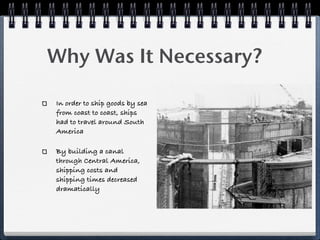
In order to ship goods by sea
from coast to coast, ships
had to travel around South
America

By building a canal
through Central America,
shipping costs and
shipping times decreased
dramatically
Engineering Skills
First had to prevent the
outbreak of disease in the
tropical environment

redeveloped the Panama
railway system to help
move soil from the
excavation sites

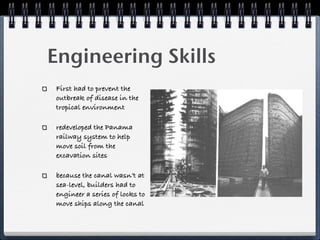
because the canal wasn’t at
sea-level, builders had to
engineer a series of locks to
move ships along the canal
Owens Valley Aqueduct!
 Los Angeles was growing at a rate too fast for the current water supply
 to maintain

 William Mulholland, Superintendent of the Los Angeles water system,
 couldn’t stop the population growth of Los Angeles

     decided that the only way to provide water for the growing
     population was to acquire new sources of water

 discovered the Owens Valley River 200 miles to the North of the city

 secretly bought the majority of the water rights

     meanwhile, wealthy Los Angeles businessman purchased large
     plots of land in the San Fernando Valley
with no formal engineering training, Mulholland began building the
Owens Valley Aqueduct

    dealt with the harsh working conditions of the desert

Aqueduct was an engineering marvel completed in 5 years ahead of
schedule and under budget

He was later made the highest paid public employee in the state of
California

to this day, Los Angeles still uses Mulholland’s aqueduct to get its
water supply
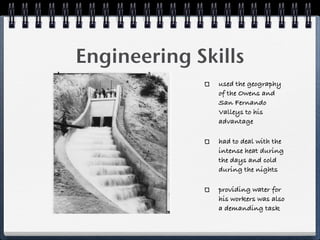
Engineering Skills
               used the geography
               of the Owens and
               San Fernando
               Valleys to his
               advantage

               had to deal with the
               intense heat during
               the days and cold
               during the nights

               providing water for
               his workers was also
               a demanding task
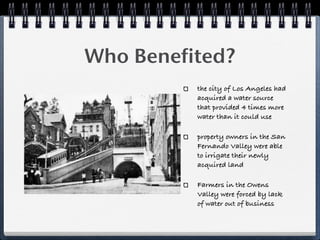
Who Benefited?
          the city of Los Angeles had
          acquired a water source
          that provided 4 times more
          water than it could use

          property owners in the San
          Fernando Valley were able
          to irrigate their newly
          acquired land

          Farmers in the Owens
          Valley were forced by lack
          of water out of business

Final - Water Works

  • 1.
    Panama Canal & LosAngeles Colin Evans
  • 2.
    Panama Canal Ferdinand deLesseps, the hero of the Suez Canal, attempted to build a sea-level Panama Canal but his workers were hit by waves of disease Theodore Roosevelt used his “greatest good for the greatest number” mantra to justify his approval for water projects like the Owens Valley Aqueduct and the Panama Canal Phillipe Bunau-Varilla was a french engineer who lobbied the United States to choose his particular site for the Panama Canal
  • 3.
    John Stevens wasthe Chief Engineer appointed by Theodore Roosevelt to head the Panama Canal project from 1905 to 1907 Colonel George Washington Goethals was appointed by Theodore Roosevelt to be the Chief Engineer of the Panama Canal project from 1907 to 1912, finishing the project 2 years ahead of schedule Dr. William Gorgas was the Chief Sanitary Officer on the Panama Canal Project and whose job was to protect workers from mosquito-borne illnesses during the project
  • 4.
    Why Was ItNecessary? In order to ship goods by sea from coast to coast, ships had to travel around South America By building a canal through Central America, shipping costs and shipping times decreased dramatically
  • 5.
    Engineering Skills First hadto prevent the outbreak of disease in the tropical environment redeveloped the Panama railway system to help move soil from the excavation sites because the canal wasn’t at sea-level, builders had to engineer a series of locks to move ships along the canal
  • 6.
    Owens Valley Aqueduct! Los Angeles was growing at a rate too fast for the current water supply to maintain William Mulholland, Superintendent of the Los Angeles water system, couldn’t stop the population growth of Los Angeles decided that the only way to provide water for the growing population was to acquire new sources of water discovered the Owens Valley River 200 miles to the North of the city secretly bought the majority of the water rights meanwhile, wealthy Los Angeles businessman purchased large plots of land in the San Fernando Valley
  • 7.
    with no formalengineering training, Mulholland began building the Owens Valley Aqueduct dealt with the harsh working conditions of the desert Aqueduct was an engineering marvel completed in 5 years ahead of schedule and under budget He was later made the highest paid public employee in the state of California to this day, Los Angeles still uses Mulholland’s aqueduct to get its water supply
  • 8.
    Engineering Skills used the geography of the Owens and San Fernando Valleys to his advantage had to deal with the intense heat during the days and cold during the nights providing water for his workers was also a demanding task
  • 9.
    Who Benefited? the city of Los Angeles had acquired a water source that provided 4 times more water than it could use property owners in the San Fernando Valley were able to irrigate their newly acquired land Farmers in the Owens Valley were forced by lack of water out of business

Editor's Notes