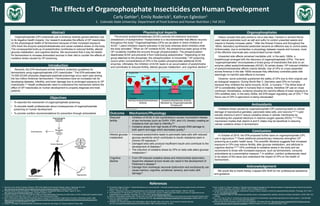
This document discusses the effects of organophosphate (OP) insecticide exposure on human development. It begins by explaining the mechanism of OP poisoning, which is inhibition of the acetylcholinesterase enzyme, leading to acetylcholine accumulation and oxidative stress. Specific physiological outcomes of OP exposure are then outlined, including reduced fertility due to hormone imbalance and egg/sperm damage, altered glucose metabolism and insulin resistance contributing to diabetes, and cognitive decline resulting from neuronal damage. The document recommends increased antioxidant intake through foods like vitamins A and E to reduce oxidative stress in highly exposed groups like farmworkers.