Filmmaking for Beginners
Adore skill acquisition webinar
Story telling
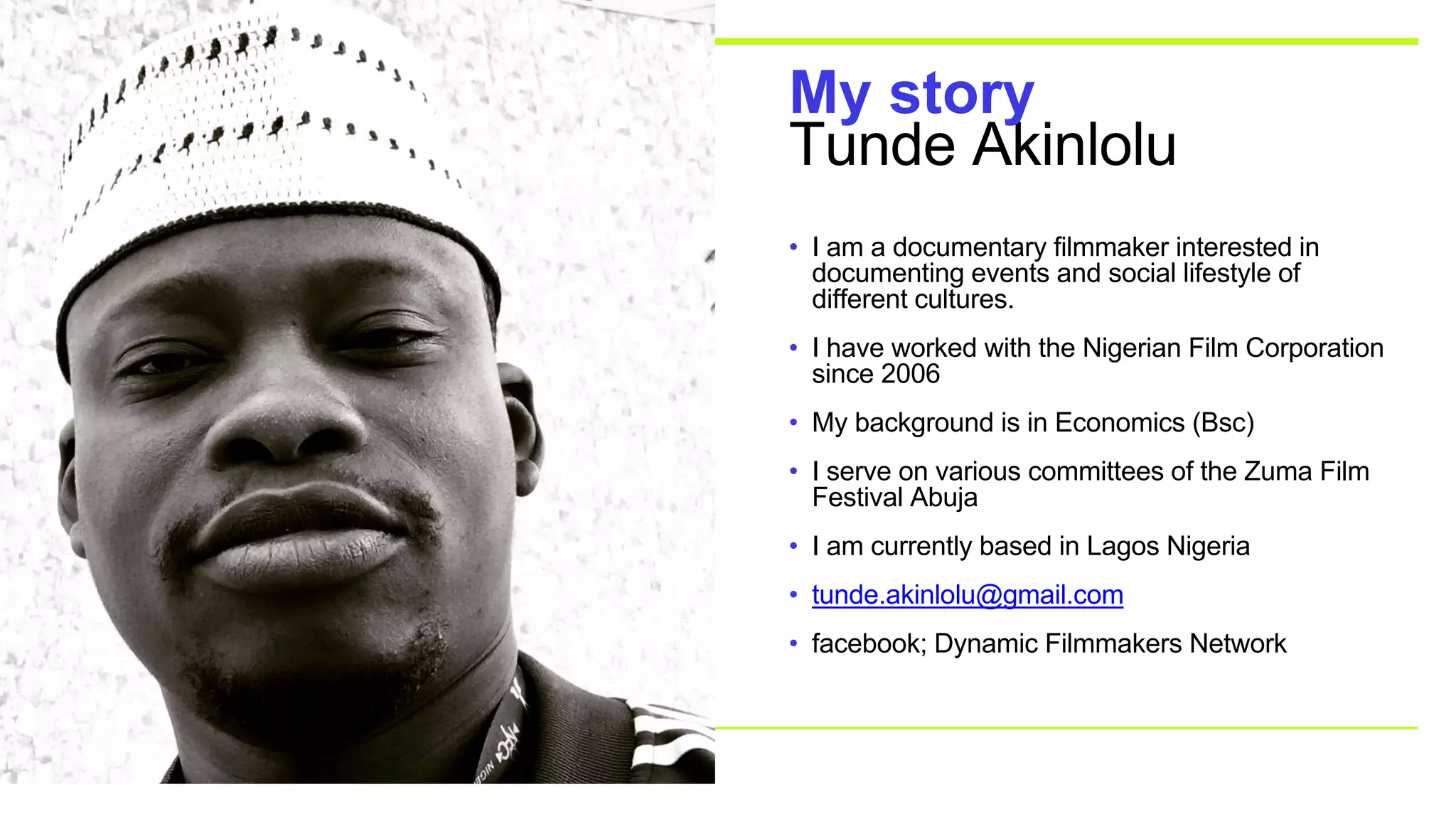
Tunde Akinlolu
My story
• I am a documentary filmmaker interested in
documenting events and social lifestyle of
different cultures.
• I have worked with the Nigerian Film Corporation
since 2006
• My background is in Economics (Bsc)
• I serve on various committees of the Zuma Film
Festival Abuja
• I am currently based in Lagos Nigeria
• tunde.akinlolu@gmail.com
• facebook; Dynamic Filmmakers Network
“A narrative is a story told primarily through the use of
visual media. The story may be told using still
photography, illustration or Video and can be
enhanced with graphics, music, voice and other audio”
Wikipedia
“In Cinema, a story is most visual when ideas and
emotions are expressed through performance and
aesthetics as opposed to dialogue”
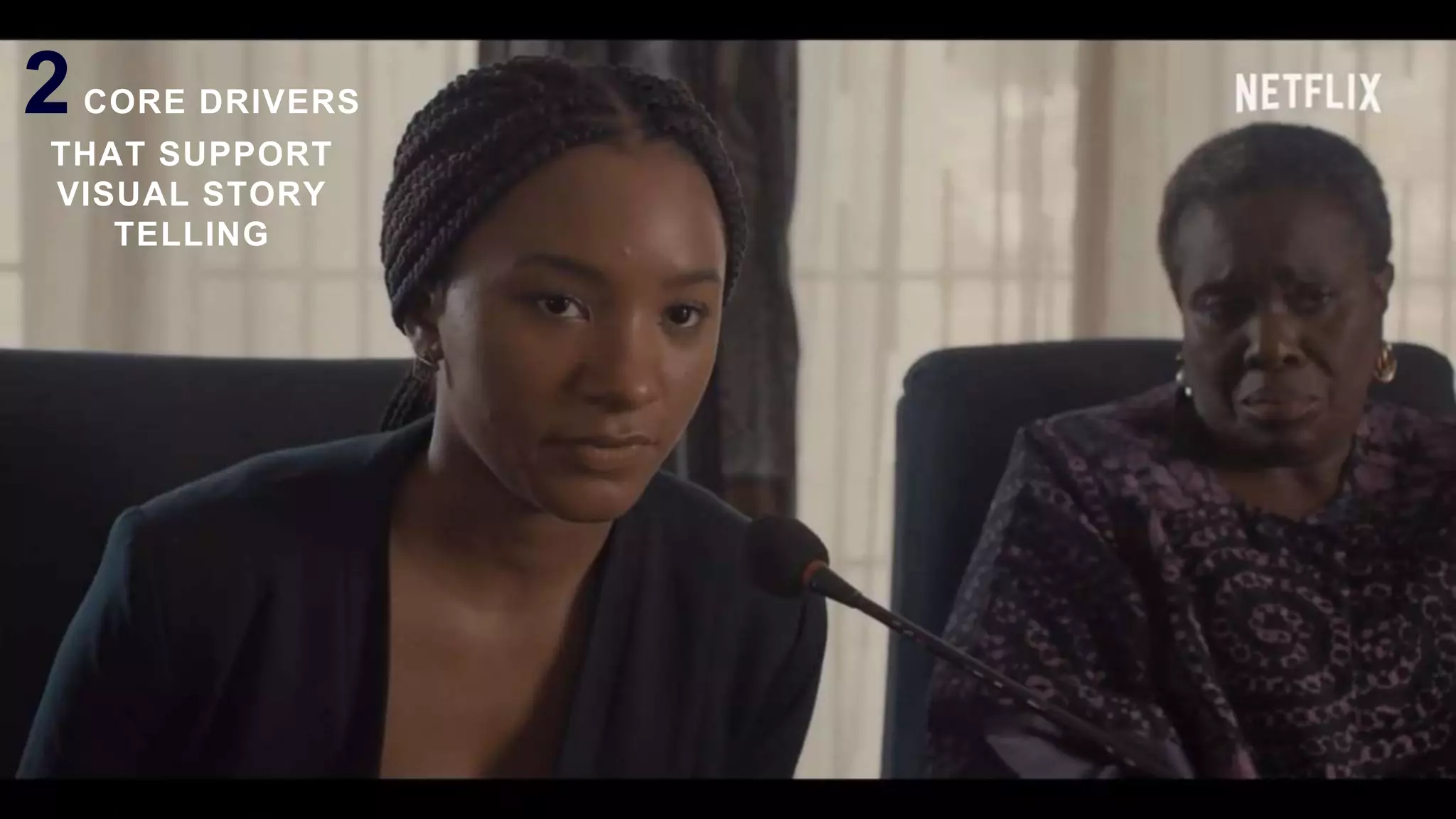
2CORE DRIVERS
THAT SUPPORT
VISUAL STORY
TELLING
• Our human brain processes
visuals much faster than text.
Visuals are processed 60,000
times faster than text by the
Human brain and 90% of
information transmitted to the
brain is visual
• The Human brain prefers
information packaged as stories
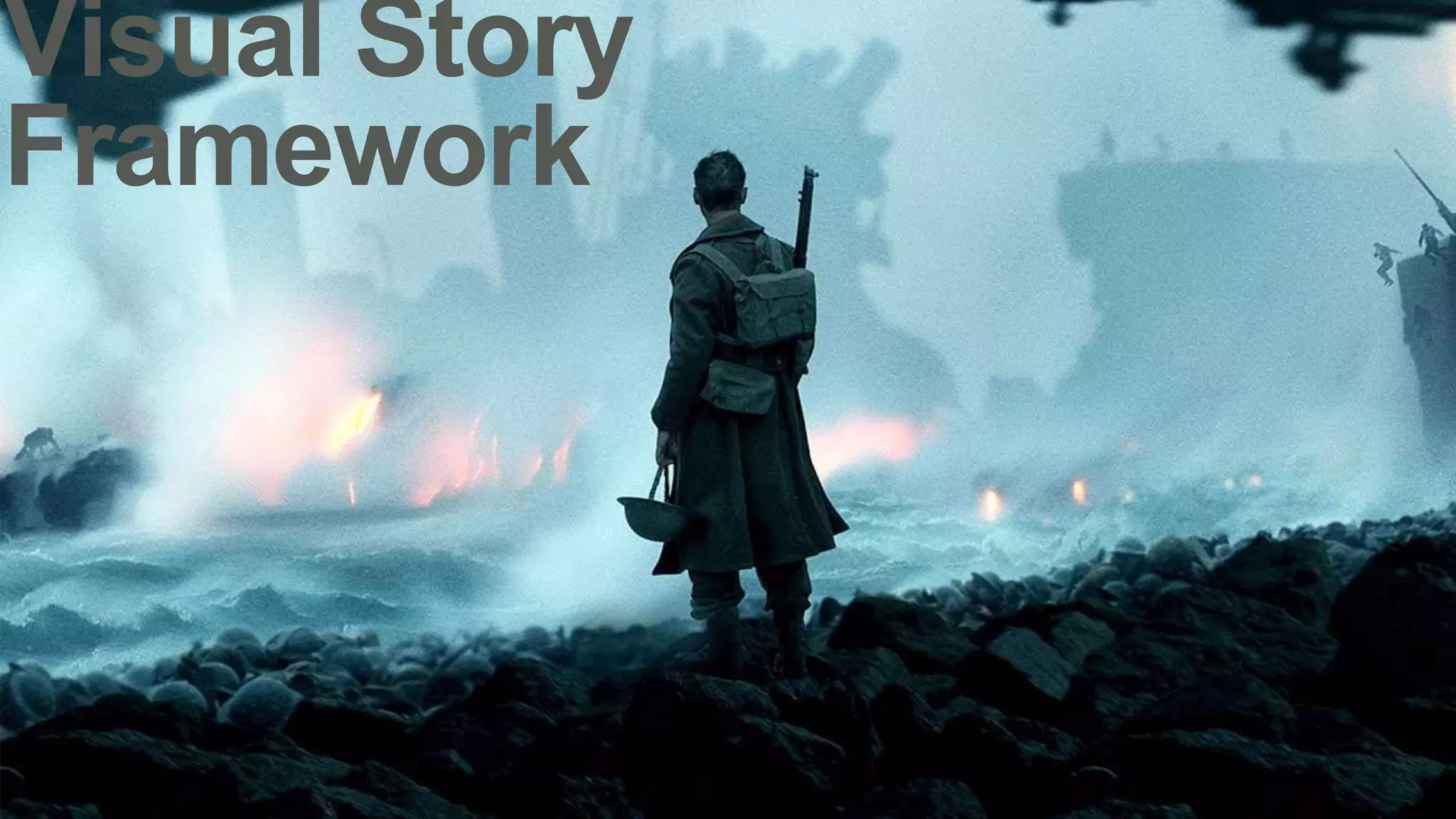
Visual Story
Framework
Visual Story
Framework
Phase 1: Story Making
Setting
Conflict
Resolution
Phase 2: Story Visualizations
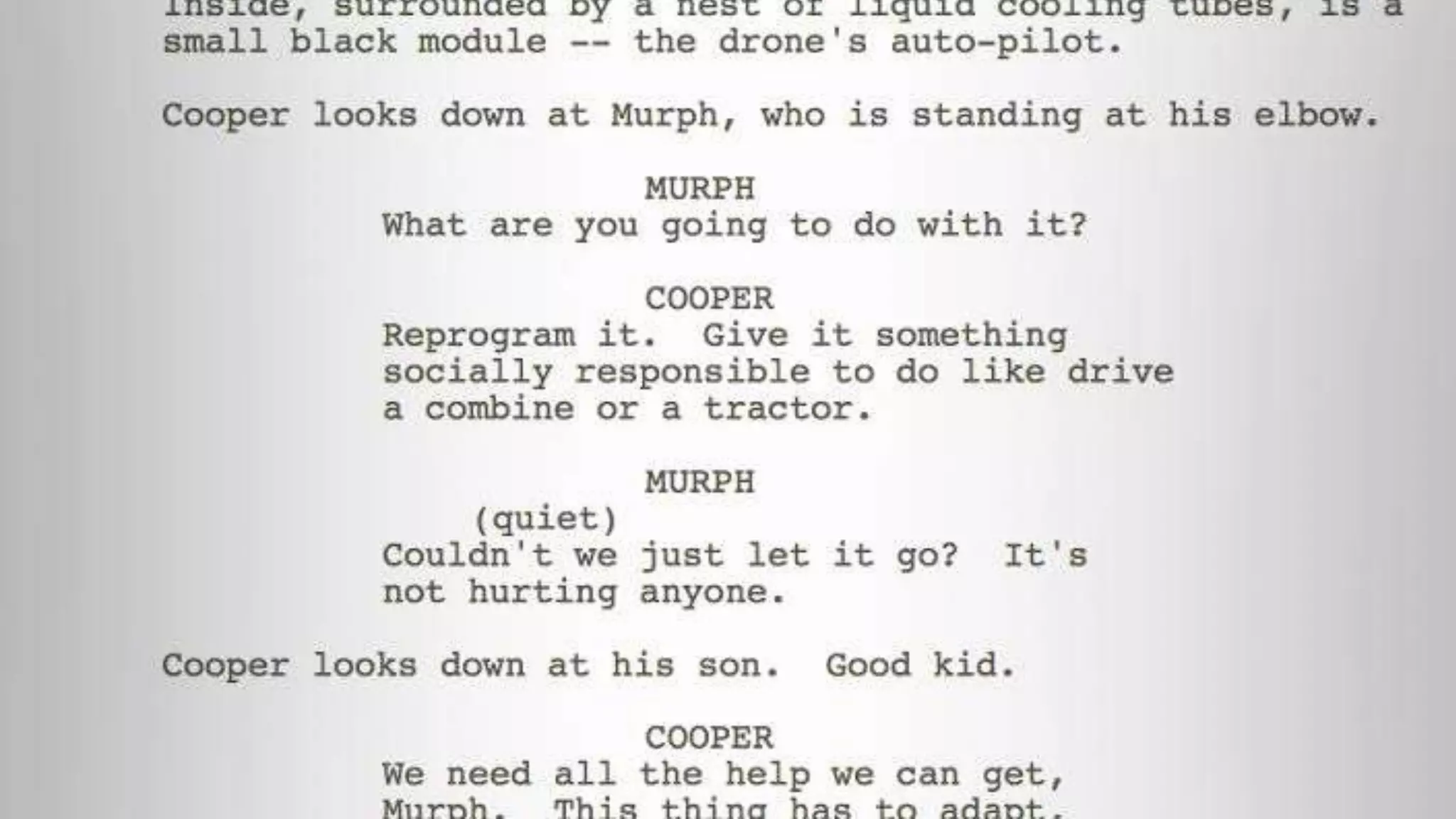
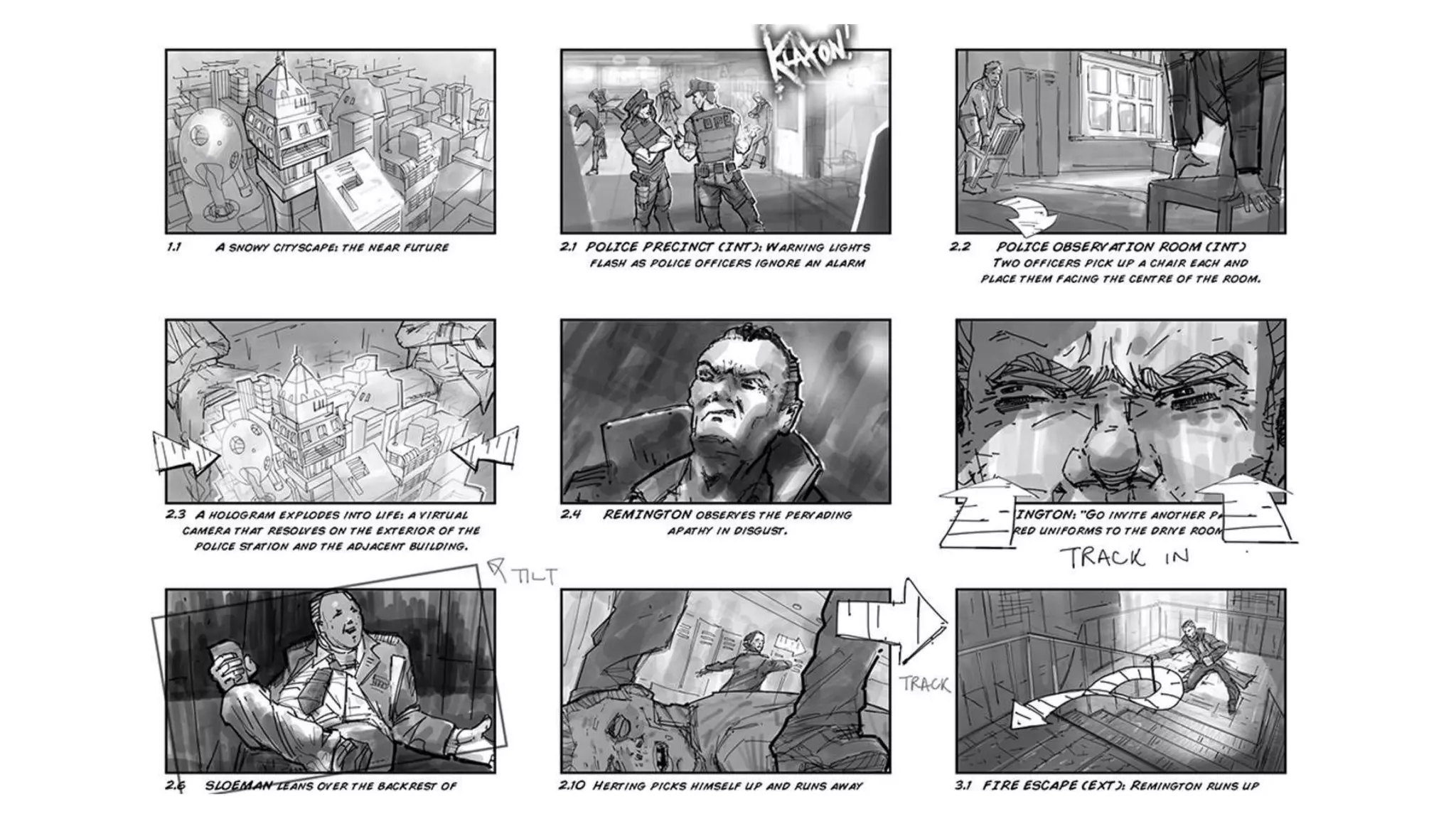
Scripting
Storyboards
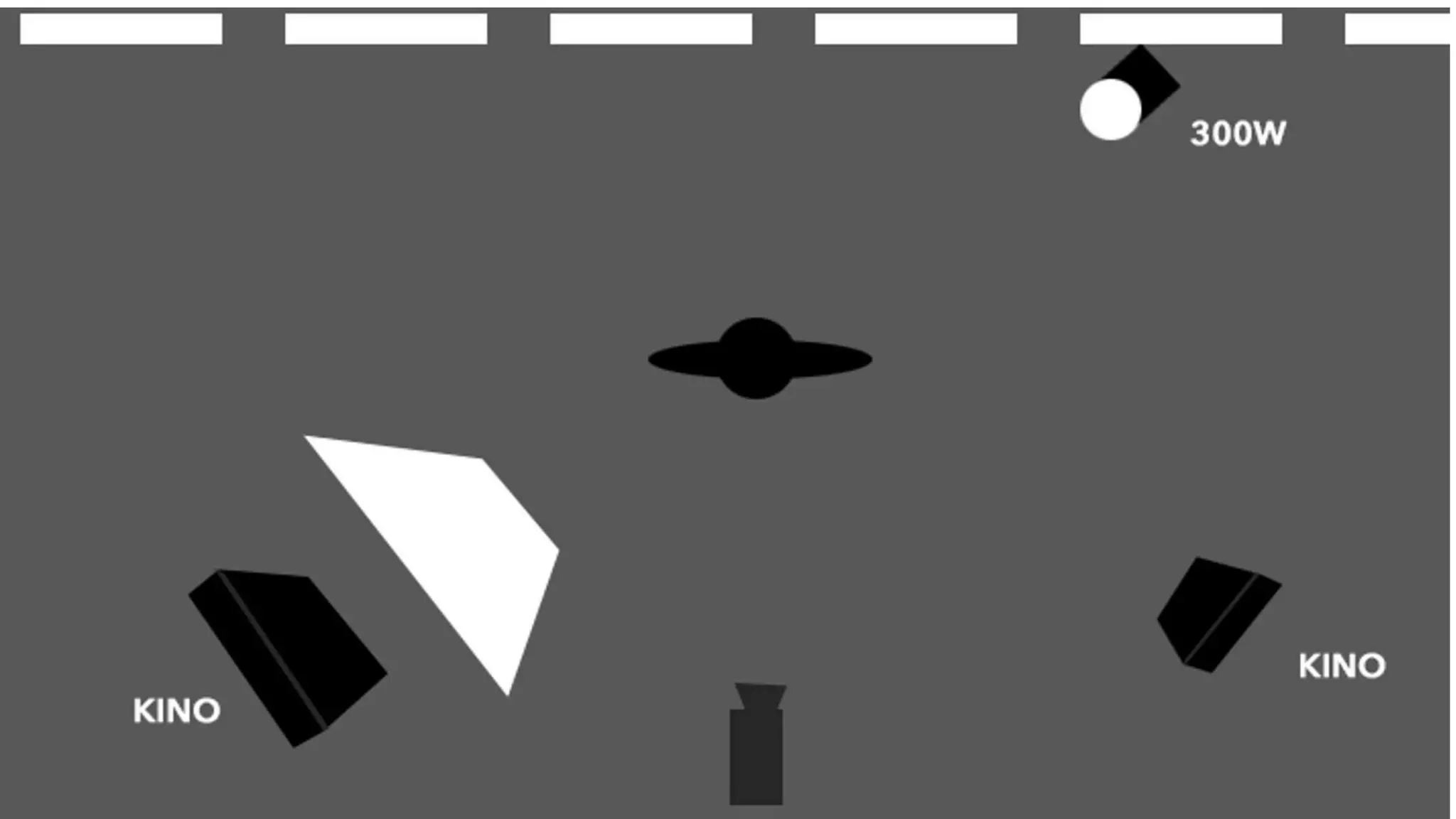
Light Design
Editing
Phase 3: Story Telling
“ENGAGING AND CONNECTING WITH YOUR
AUDIENCE”
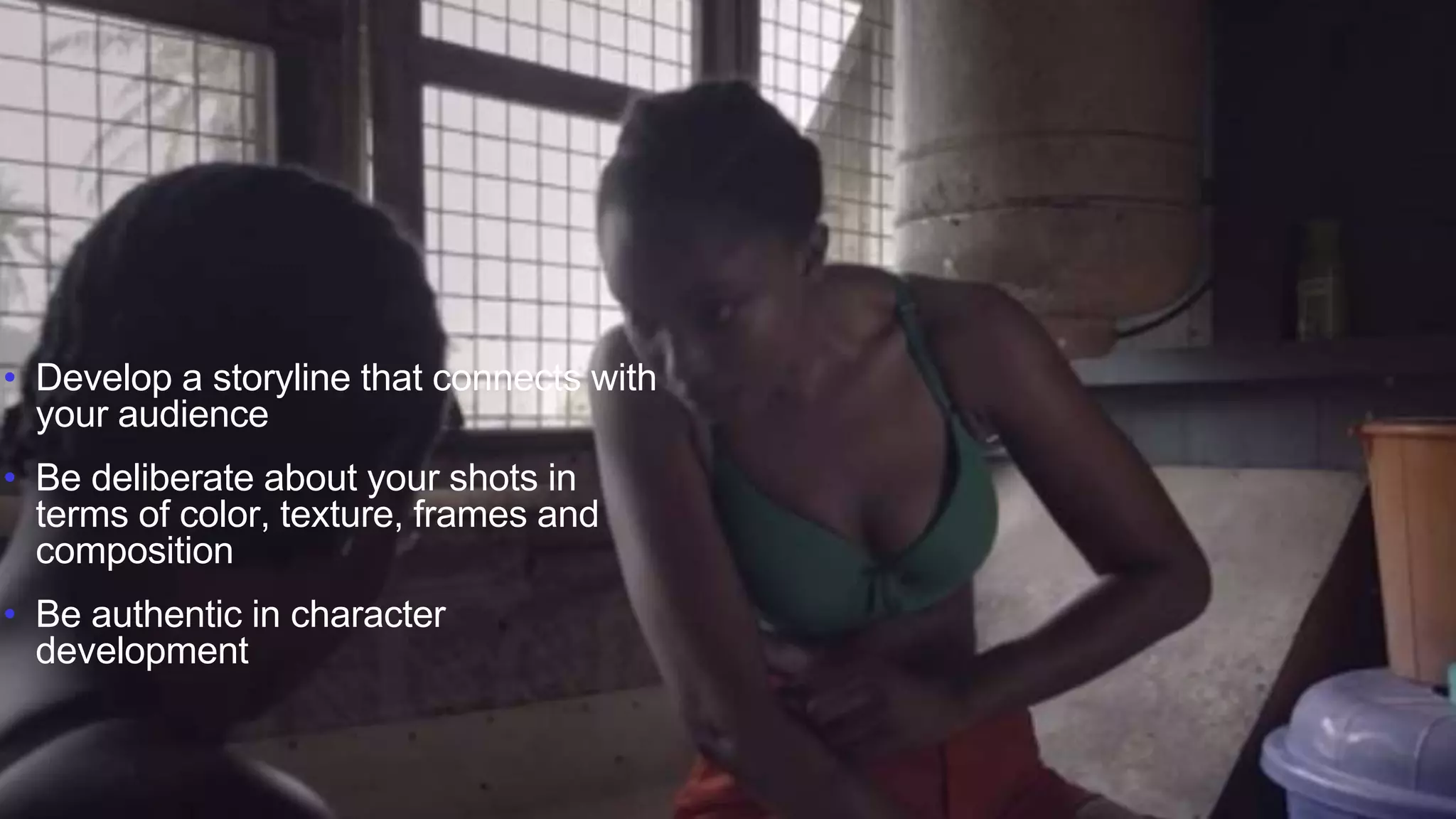
• Develop a storyline that connects with
your audience
• Be deliberate about your shots in
terms of color, texture, frames and
composition
• Be authentic in character
development
The Effective Story
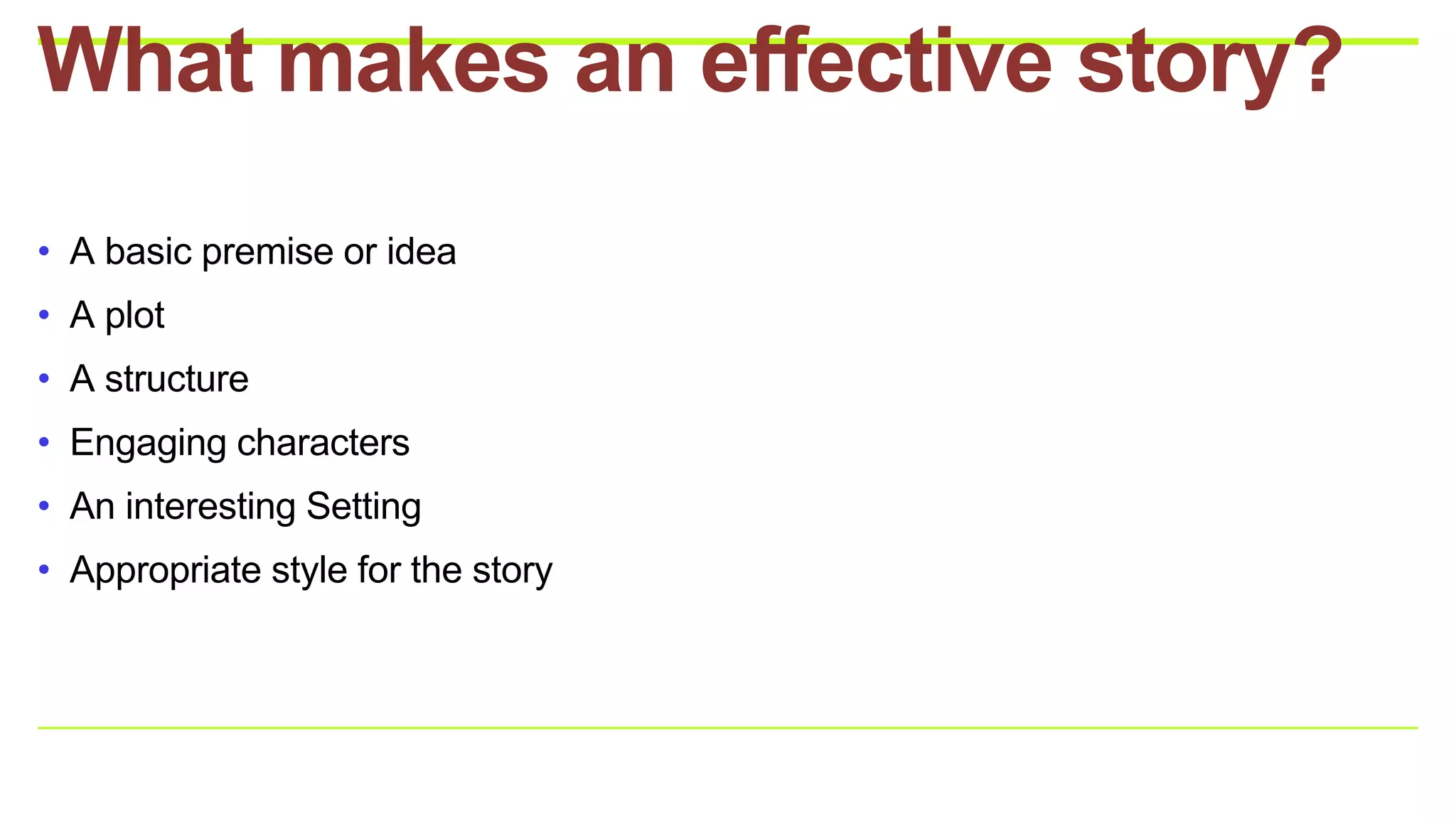
• A basic premise or idea
• A plot
• A structure
• Engaging characters
• An interesting Setting
• Appropriate style for the story
What makes an effective story?
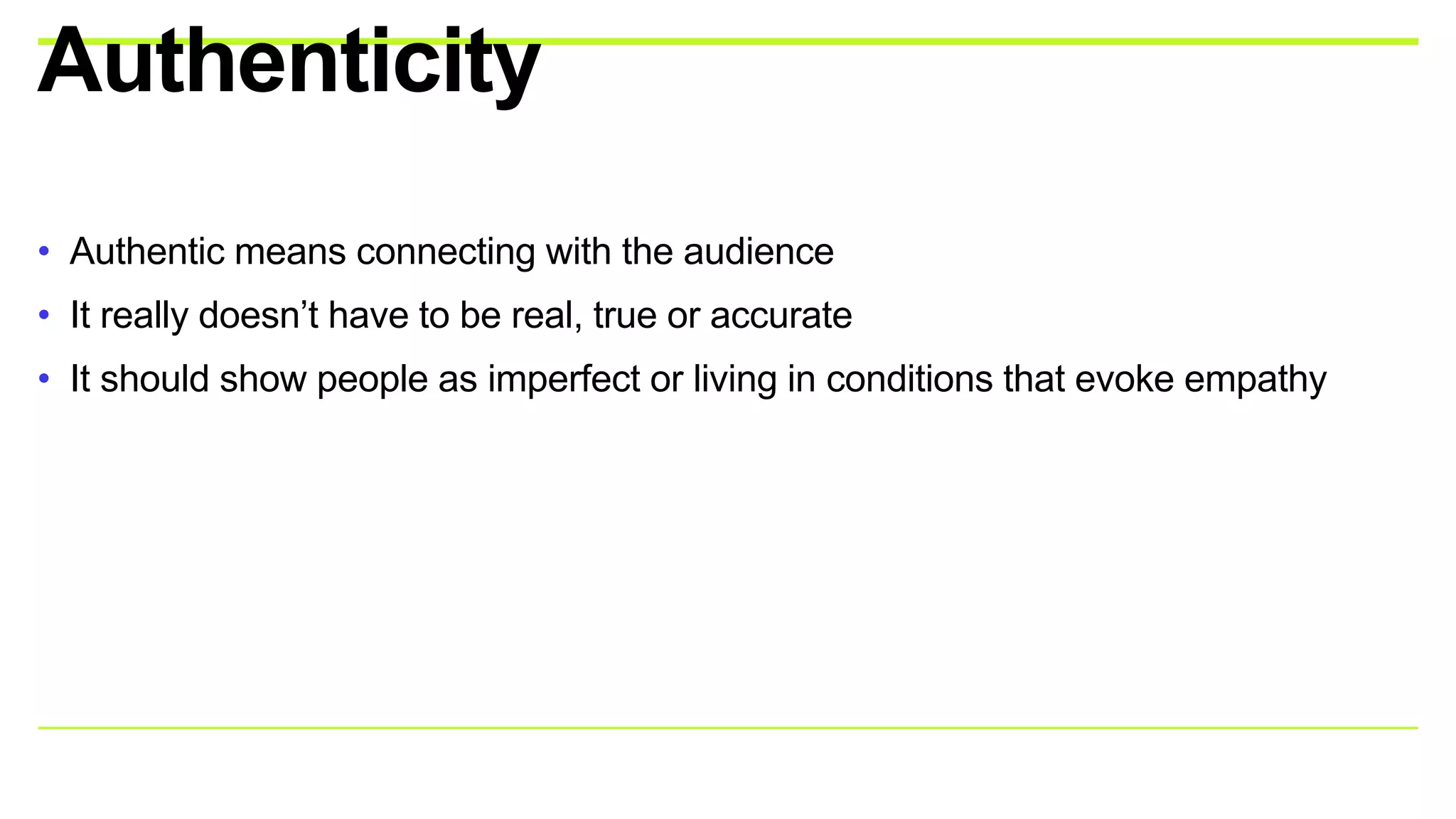
• Authentic means connecting with the audience
• It really doesn’t have to be real, true or accurate
• It should show people as imperfect or living in conditions that evoke empathy
Authenticity
• A great story may fall short with viewers if they cannot
connect with it in some way with their own lives
Relevance
• Visual Storytellers relies primarily on our sense of sight
• Words and sounds can also be part of the equation but if the visual
component does not engage the audience, nothing else will matter
The Sensory Experience
• Show don’t tell
• Context is everything
• Show people
• Be personal, be true
• Show conflict
• Reveal hidden things
• Focus
• Keep moving
• Don’t be obvious
• Teach something
Summarily
• Thank You

Filmmaking for beginners copy

  • 1.
    Filmmaking for Beginners Adoreskill acquisition webinar
  • 2.
  • 3.
    Tunde Akinlolu My story •I am a documentary filmmaker interested in documenting events and social lifestyle of different cultures. • I have worked with the Nigerian Film Corporation since 2006 • My background is in Economics (Bsc) • I serve on various committees of the Zuma Film Festival Abuja • I am currently based in Lagos Nigeria • tunde.akinlolu@gmail.com • facebook; Dynamic Filmmakers Network
  • 4.
    “A narrative isa story told primarily through the use of visual media. The story may be told using still photography, illustration or Video and can be enhanced with graphics, music, voice and other audio” Wikipedia
  • 6.
    “In Cinema, astory is most visual when ideas and emotions are expressed through performance and aesthetics as opposed to dialogue”
  • 7.
  • 8.
    • Our humanbrain processes visuals much faster than text. Visuals are processed 60,000 times faster than text by the Human brain and 90% of information transmitted to the brain is visual • The Human brain prefers information packaged as stories
  • 9.
  • 10.
    Phase 1: StoryMaking Setting Conflict Resolution
  • 12.
    Phase 2: StoryVisualizations Scripting Storyboards Light Design Editing
  • 17.
    Phase 3: StoryTelling “ENGAGING AND CONNECTING WITH YOUR AUDIENCE”
  • 18.
    • Develop astoryline that connects with your audience • Be deliberate about your shots in terms of color, texture, frames and composition • Be authentic in character development
  • 19.
  • 20.
    • A basicpremise or idea • A plot • A structure • Engaging characters • An interesting Setting • Appropriate style for the story What makes an effective story?
  • 21.
    • Authentic meansconnecting with the audience • It really doesn’t have to be real, true or accurate • It should show people as imperfect or living in conditions that evoke empathy Authenticity
  • 22.
    • A greatstory may fall short with viewers if they cannot connect with it in some way with their own lives Relevance
  • 23.
    • Visual Storytellersrelies primarily on our sense of sight • Words and sounds can also be part of the equation but if the visual component does not engage the audience, nothing else will matter The Sensory Experience
  • 24.
    • Show don’ttell • Context is everything • Show people • Be personal, be true • Show conflict • Reveal hidden things • Focus • Keep moving • Don’t be obvious • Teach something Summarily
  • 25.