FIFA World Cup 1930
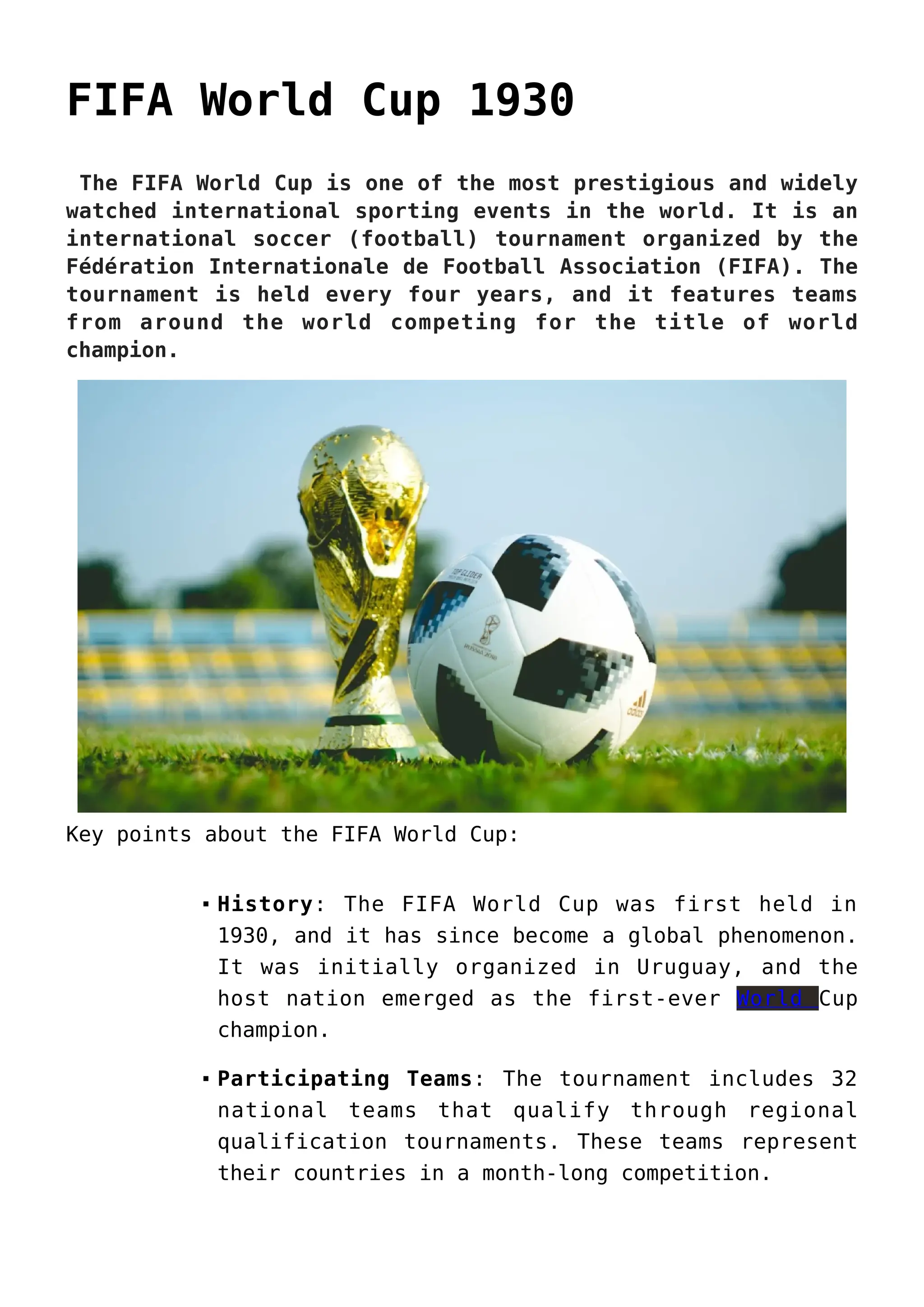
The FIFA World Cup is one of the most prestigious and widely
watched international sporting events in the world. It is an
international soccer (football) tournament organized by the
Fédération Internationale de Football Association (FIFA). The
tournament is held every four years, and it features teams
from around the world competing for the title of world
champion.
Key points about the FIFA World Cup:
History: The FIFA World Cup was first held in
1930, and it has since become a global phenomenon.
It was initially organized in Uruguay, and the
host nation emerged as the first-ever World Cup
champion.
Participating Teams: The tournament includes 32
national teams that qualify through regional
qualification tournaments. These teams represent
their countries in a month-long competition.
Format: The tournament typically follows a format
with a group stage, followed by knockout rounds,
including the Round of 16, quarterfinals,
semifinals, and the final. The winning team is
crowned world champion.
Host Nations: Different countries have hosted the
fifa World Cup over the years. The selection of
host nations is determined by a bidding process,
and the host nation is responsible for organizing
and funding the event.
Famous Moments: The World Cup has produced
numerous memorable moments, from legendary goals
to iconic matches. Some famous moments include
Diego Maradona’s “Hand of God” goal and the “Goal
of the Century” in 1986, Zinedine Zidane’s
headbutt in the 2006 final, and many others.
Famous Players: The World Cup has seen some of the
greatest soccer players in history, including
Pelé, Diego Maradona, Lionel Messi, Cristiano
Ronaldo, and many others, showcasing their talents
on the world stage.
Trophy: The winner of the FIFA World Cup is
awarded the prestigious Jules Rimet Trophy, which
was replaced by the FIFA World Cup Trophy in 1974.
Global Impact: The World Cup is a massive global
event with a significant cultural and economic
impact. It unites people from around the world,
and host countries often invest heavily in
infrastructure and security to accommodate the
influx of visitors.
Women’s World Cup: In addition to the men’s
tournament, FIFA also organizes the FIFA Women’s
World Cup, which follows a similar format and
features women’s national teams competing for the
title.
FIFA WORLDCAP 2010
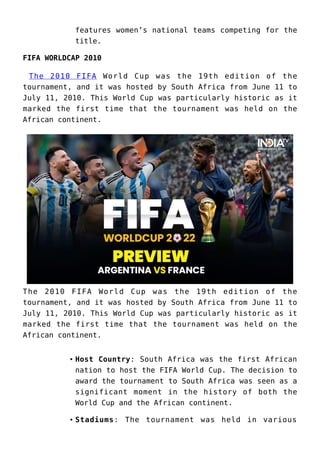
The 2010 FIFA World Cup was the 19th edition of the
tournament, and it was hosted by South Africa from June 11 to
July 11, 2010. This World Cup was particularly historic as it
marked the first time that the tournament was held on the
African continent.
The 2010 FIFA World Cup was the 19th edition of the
tournament, and it was hosted by South Africa from June 11 to
July 11, 2010. This World Cup was particularly historic as it
marked the first time that the tournament was held on the
African continent.
Host Country: South Africa was the first African
nation to host the FIFA World Cup. The decision to
award the tournament to South Africa was seen as a
significant moment in the history of both the
World Cup and the African continent.
Stadiums: The tournament was held in various
cities across South Africa, with matches taking
place in ten different stadiums, including the
iconic Soccer City Stadium in Johannesburg, which
hosted the final.
Champion: The Spanish national team, known as “La
Roja,” emerged as the champions of the 2010 World
Cup. Spain defeated the Netherlands 1-0 in the
final match, with a goal scored by Andrés Iniesta
during extra time.
Golden Boot: Thomas Müller of Germany won the
Golden Boot award for being the tournament’s top
scorer, with five goals.
Golden Ball: The Golden Ball for the tournament’s
best player was awarded to Diego Forlán of
Uruguay.
Golden Glove: Iker Casillas of Spain received the
Golden Glove award for being the best goalkeeper
of the tournament.
The 2010 FIFA World Cup is remembered for being a historic
event, not only for the competition itself but also for the
sense of unity and celebration it brought to the African
continent. It was a landmark moment in the history of the
World Cup, as it expanded the tournament’s reach and showcased
the power of soccer to bring people from all over the world
together.

FIFA World

  • 1.
    FIFA World Cup1930 The FIFA World Cup is one of the most prestigious and widely watched international sporting events in the world. It is an international soccer (football) tournament organized by the Fédération Internationale de Football Association (FIFA). The tournament is held every four years, and it features teams from around the world competing for the title of world champion. Key points about the FIFA World Cup: History: The FIFA World Cup was first held in 1930, and it has since become a global phenomenon. It was initially organized in Uruguay, and the host nation emerged as the first-ever World Cup champion. Participating Teams: The tournament includes 32 national teams that qualify through regional qualification tournaments. These teams represent their countries in a month-long competition.
  • 2.
    Format: The tournamenttypically follows a format with a group stage, followed by knockout rounds, including the Round of 16, quarterfinals, semifinals, and the final. The winning team is crowned world champion. Host Nations: Different countries have hosted the fifa World Cup over the years. The selection of host nations is determined by a bidding process, and the host nation is responsible for organizing and funding the event. Famous Moments: The World Cup has produced numerous memorable moments, from legendary goals to iconic matches. Some famous moments include Diego Maradona’s “Hand of God” goal and the “Goal of the Century” in 1986, Zinedine Zidane’s headbutt in the 2006 final, and many others. Famous Players: The World Cup has seen some of the greatest soccer players in history, including Pelé, Diego Maradona, Lionel Messi, Cristiano Ronaldo, and many others, showcasing their talents on the world stage. Trophy: The winner of the FIFA World Cup is awarded the prestigious Jules Rimet Trophy, which was replaced by the FIFA World Cup Trophy in 1974. Global Impact: The World Cup is a massive global event with a significant cultural and economic impact. It unites people from around the world, and host countries often invest heavily in infrastructure and security to accommodate the influx of visitors. Women’s World Cup: In addition to the men’s tournament, FIFA also organizes the FIFA Women’s World Cup, which follows a similar format and
  • 3.
    features women’s nationalteams competing for the title. FIFA WORLDCAP 2010 The 2010 FIFA World Cup was the 19th edition of the tournament, and it was hosted by South Africa from June 11 to July 11, 2010. This World Cup was particularly historic as it marked the first time that the tournament was held on the African continent. The 2010 FIFA World Cup was the 19th edition of the tournament, and it was hosted by South Africa from June 11 to July 11, 2010. This World Cup was particularly historic as it marked the first time that the tournament was held on the African continent. Host Country: South Africa was the first African nation to host the FIFA World Cup. The decision to award the tournament to South Africa was seen as a significant moment in the history of both the World Cup and the African continent. Stadiums: The tournament was held in various
  • 4.
    cities across SouthAfrica, with matches taking place in ten different stadiums, including the iconic Soccer City Stadium in Johannesburg, which hosted the final. Champion: The Spanish national team, known as “La Roja,” emerged as the champions of the 2010 World Cup. Spain defeated the Netherlands 1-0 in the final match, with a goal scored by Andrés Iniesta during extra time. Golden Boot: Thomas Müller of Germany won the Golden Boot award for being the tournament’s top scorer, with five goals. Golden Ball: The Golden Ball for the tournament’s best player was awarded to Diego Forlán of Uruguay. Golden Glove: Iker Casillas of Spain received the Golden Glove award for being the best goalkeeper of the tournament. The 2010 FIFA World Cup is remembered for being a historic event, not only for the competition itself but also for the sense of unity and celebration it brought to the African continent. It was a landmark moment in the history of the World Cup, as it expanded the tournament’s reach and showcased the power of soccer to bring people from all over the world together.