Journal Club
October 2015
Dr M. Sajid Noor
Resident Pediatric medicine
NICH Karachi
Fever phobia:a comparision survey
between caregivers in inpatient
ward and caregivers at outpatient
dept in childrens hospital in china.
Lili dong, jiahui jin,yili lu,lili
jiang,xiaoou shan
Wenzhouh medical university
• Are you ready for some morning
exercise???or need a cup of tea??
Background
Fever in children is one of the most common
clinical symptoms and chief complaint and
main reason that caregivers took children to
OPD or hospital .
Study found that majority of parents held
unrealistic and unwarranted concerns about
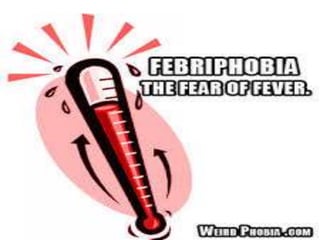
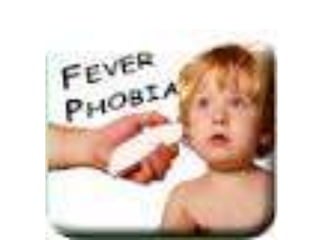
fevers,first termed as FEVER PHOBIA by
schmitt in 1980.
Aim of study
• To explore caregivers attitude towards fever
and compare the attitude between the OPD
group and ward group.
• To highlight whether the caregivers feel
relieved and whether the education works
after admission to hospital.
Study Details
• Cross-sectional study
• From june 2012 to feb 2013.
• Questionnaire was distributed amongst ward
and opd.
• All caregivers amongst ward group have been
educated prior for fever related knowledge.
EXCLUSION CRITERIA
• Children less than 3 months old.
• Caregivers with experience of working in
healthcare instituition.
• Previous history of hospitilisation.
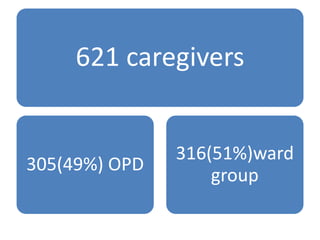
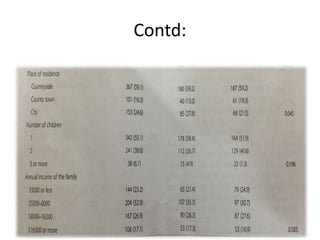
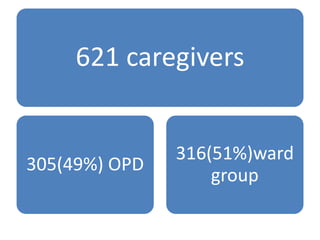
621 caregivers
305(49%) OPD
316(51%)ward
group
Contd:
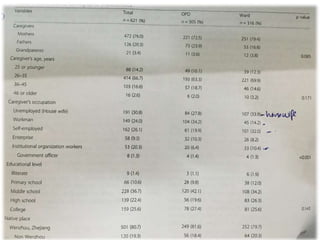
621 caregivers
305(49%) OPD
316(51%)ward
group
Results
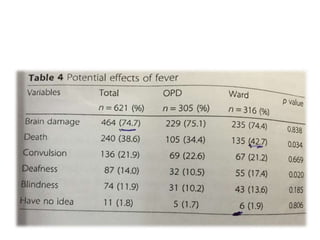
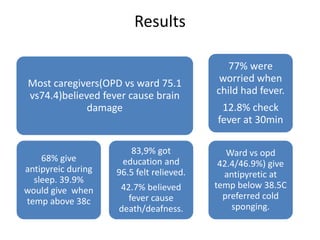
Most caregivers(OPD vs ward 75.1
vs74.4)believed fever cause brain
damage
68% give
antipyreic during
sleep. 39.9%
would give when
temp above 38c
83,9% got
education and
96.5 felt relieved.
42.7% believed
fever cause
death/deafness.
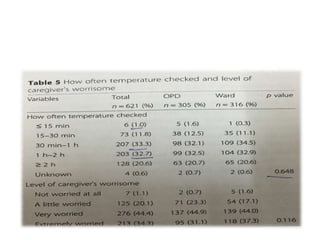
77% were
worried when
child had fever.
12.8% check
fever at 30min
Ward vs opd
42.4/46.9%) give
antipyretic at
temp below 38.5C
preferred cold
sponging.
CONCLUSION
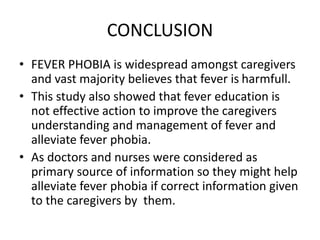
• FEVER PHOBIA is widespread amongst caregivers
and vast majority believes that fever is harmfull.
• This study also showed that fever education is
not effective action to improve the caregivers
understanding and management of fever and
alleviate fever phobia.
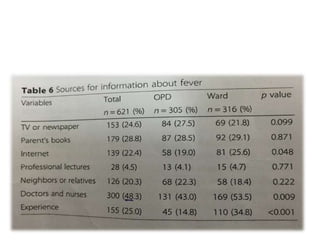
• As doctors and nurses were considered as
primary source of information so they might help
alleviate fever phobia if correct information given
to the caregivers by them.
Critique
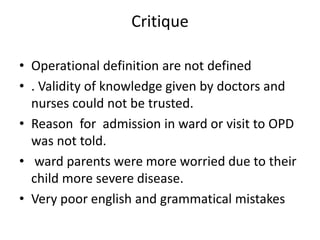
• Operational definition are not defined
• . Validity of knowledge given by doctors and
nurses could not be trusted.
• Reason for admission in ward or visit to OPD
was not told.
• ward parents were more worried due to their
child more severe disease.
• Very poor english and grammatical mistakes
Thank You

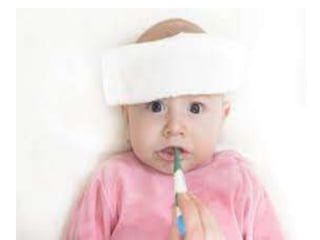
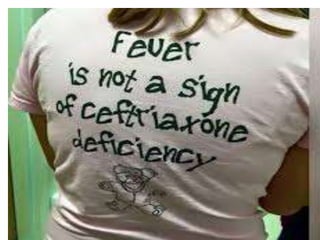
Fever phobia in children . Commonly encountered

  • 1.
    Journal Club October 2015 DrM. Sajid Noor Resident Pediatric medicine NICH Karachi
  • 2.
    Fever phobia:a comparisionsurvey between caregivers in inpatient ward and caregivers at outpatient dept in childrens hospital in china. Lili dong, jiahui jin,yili lu,lili jiang,xiaoou shan Wenzhouh medical university
  • 3.
    • Are youready for some morning exercise???or need a cup of tea??
  • 4.
    Background Fever in childrenis one of the most common clinical symptoms and chief complaint and main reason that caregivers took children to OPD or hospital . Study found that majority of parents held unrealistic and unwarranted concerns about fevers,first termed as FEVER PHOBIA by schmitt in 1980.
  • 6.
    Aim of study •To explore caregivers attitude towards fever and compare the attitude between the OPD group and ward group. • To highlight whether the caregivers feel relieved and whether the education works after admission to hospital.
  • 7.
    Study Details • Cross-sectionalstudy • From june 2012 to feb 2013. • Questionnaire was distributed amongst ward and opd. • All caregivers amongst ward group have been educated prior for fever related knowledge.
  • 8.
    EXCLUSION CRITERIA • Childrenless than 3 months old. • Caregivers with experience of working in healthcare instituition. • Previous history of hospitilisation.
  • 10.
  • 12.
  • 20.
  • 21.
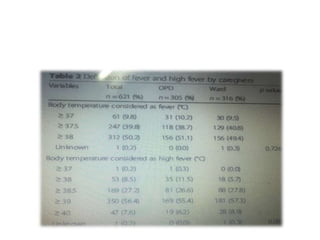
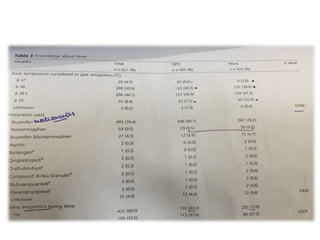
    Results Most caregivers(OPD vsward 75.1 vs74.4)believed fever cause brain damage 68% give antipyreic during sleep. 39.9% would give when temp above 38c 83,9% got education and 96.5 felt relieved. 42.7% believed fever cause death/deafness. 77% were worried when child had fever. 12.8% check fever at 30min Ward vs opd 42.4/46.9%) give antipyretic at temp below 38.5C preferred cold sponging.
  • 22.
    CONCLUSION • FEVER PHOBIAis widespread amongst caregivers and vast majority believes that fever is harmfull. • This study also showed that fever education is not effective action to improve the caregivers understanding and management of fever and alleviate fever phobia. • As doctors and nurses were considered as primary source of information so they might help alleviate fever phobia if correct information given to the caregivers by them.
  • 23.
    Critique • Operational definitionare not defined • . Validity of knowledge given by doctors and nurses could not be trusted. • Reason for admission in ward or visit to OPD was not told. • ward parents were more worried due to their child more severe disease. • Very poor english and grammatical mistakes
  • 25.