Presenter’s Name
U.S. Fish and Wildlife Service
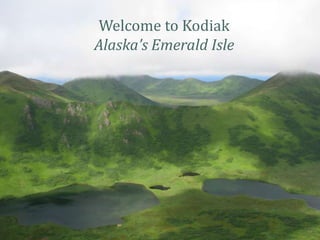
Welcome to Kodiak
Alaska’s Emerald Isle
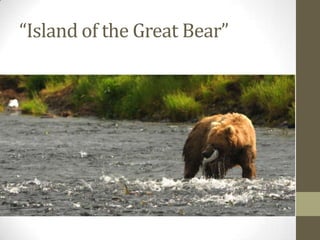
“Island of the Great Bear”
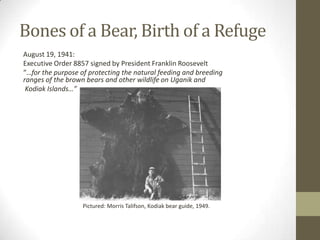
Bones of a Bear, Birth of a Refuge
August 19, 1941:
Executive Order 8857 signed by President Franklin Roosevelt
“…for the purpose of protecting the natural feeding and breeding
ranges of the brown bears and other wildlife on Uganik and
 Kodiak Islands…”


                   Pictured: Morris Talifson, Kodiak bear guide, 1949.
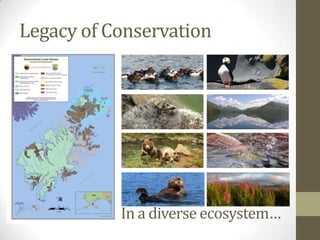
Legacy of Conservation


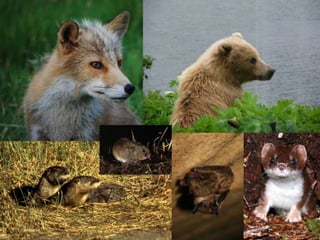
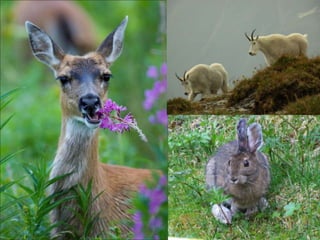
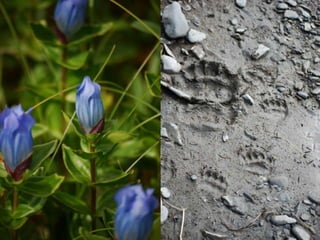
           In a diverse ecosystem…
USFWS 8/2/2009        Barbara Sobota


Gina Palmer/USFWS   Lisa Hupp/USFWS
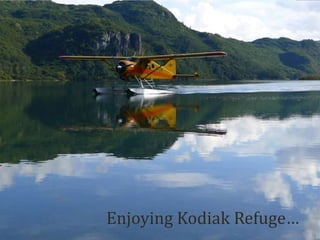
Enjoying Kodiak Refuge…
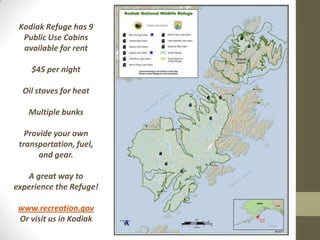
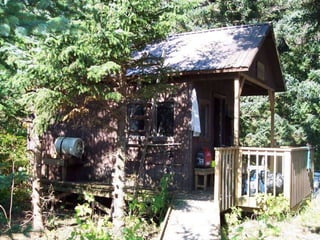
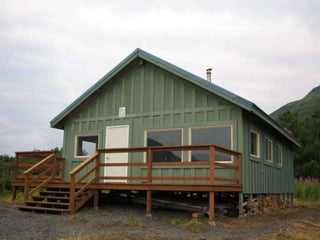
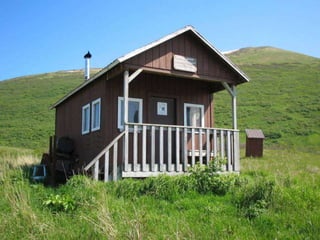
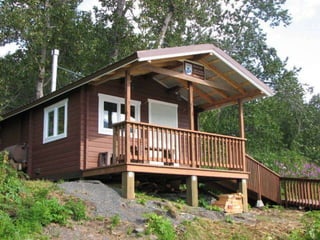
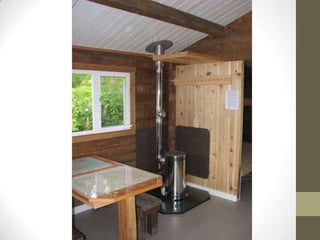
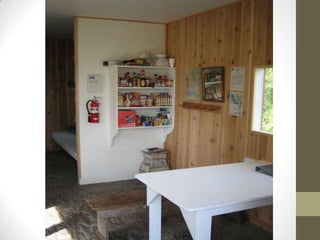
Kodiak Refuge has 9
  Public Use Cabins
  available for rent

    $45 per night

  Oil stoves for heat

   Multiple bunks

   Provide your own
 transportation, fuel,
       and gear.

   A great way to
experience the Refuge!

 www.recreation.gov
 Or visit us in Kodiak
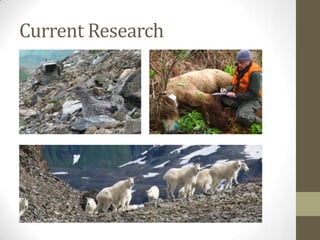
Current Research
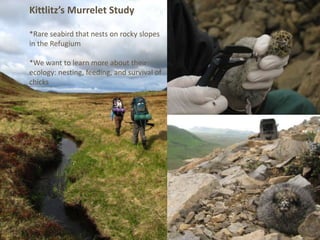
Kittlitz’s Murrelet Study

*Rare seabird that nests on rocky slopes
in the Refugium

*We want to learn more about their
ecology: nesting, feeding, and survival of
chicks
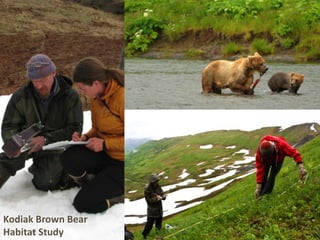
Kodiak Brown Bear
Habitat Study
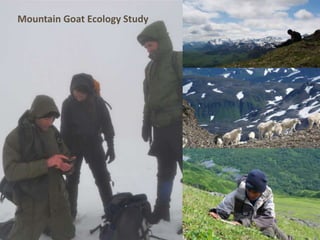
Mountain Goat Ecology Study
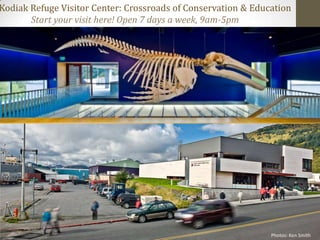
Kodiak Refuge Visitor Center: Crossroads of Conservation & Education
       Start your visit here! Open 7 days a week, 9am-5pm


                                                               Photos: Ken Smith
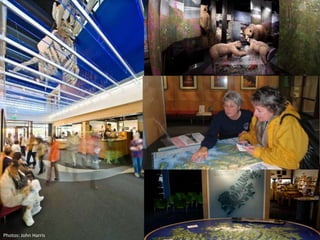
Photos: John Harris
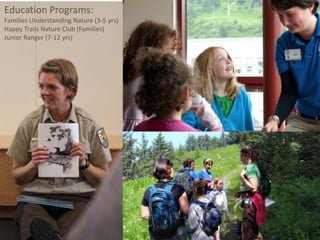
Education Programs:
Families Understanding Nature (3-5 yrs)
Happy Trails Nature Club (Families)
Junior Ranger (7-12 yrs)
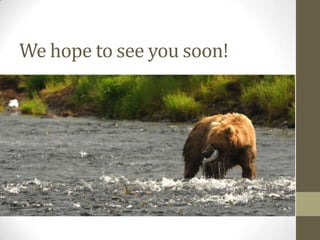
We hope to see you soon!

Ferry presentation

Editor's Notes

  • #4 Currently, there are an estimated 3,500 bears on the Kodiak Archipelago; 3,000 of those are within the Kodiak Refuge. The Refuge and Alaska Department of Fish and Game work to ensure that the population remains healthy… but there was a time when human pressures threatened bears on Kodiak.
  • #5 Increasingpressures on the bear population in the 20s and 30s from the fur trade and ranching interests concerned local bear guides and ethical sport hunters. As a result of their efforts, President Roosevelt created Kodiak Refuge in 1941.
  • #6 (Boundaries have changed over time in response to ANCSA and ANILCA, and further acquisitions since 1994). Today, the Refuge encompasses nearly 1.9 million acres and covers about 2/3 of Kodiak Island, all of Uganik and Ban Islands, and part of Afognak Island (the area in light green on the map). The Purpose of the Refuge has also changed over time, and now provides for subsistence opportunities, ensures water quality, and conserves fish and wildlife habitat, including salmon, bears, marine mammals and migratory birds.
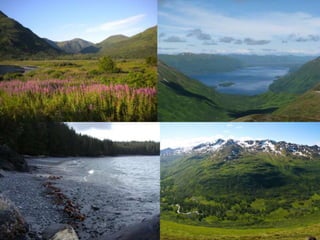
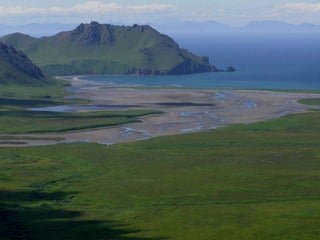
  • #7 What makes Kodiak so special?Habitat diversitySW: wet tundra & rolling mountainsN: rugged mountains, alpine tundra, heavy brushInterior: dense vegetation (fireweed, wild parsnip, willow, alder, elderberry)Afognak: Sitka spruce forest
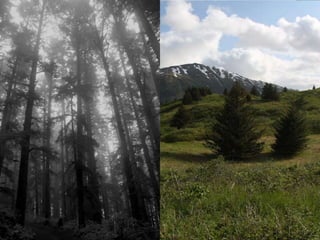
  • #8 The north reaches of the Refuge encompass Ban and a small portion of Afognak Island, which have a thick forest of Sitka Spruce. (Kodiak has a mono-culture of coniferous trees, and they are slowly advancing south from Shuyak and Afognak Islands- the very north end of Kodiak has Sitka Spruce, but the rest of the Refuge does not).
  • #9 You can see the extent of the spruce forest on Kodiak when you visit Fort Abercrombie State Park. Just a few miles away, the limits of the spruce forest are evident (photo to the right).
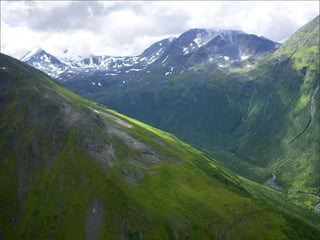
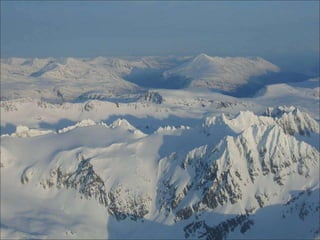
  • #10 Much of Kodiak is mountainous, and a major ridge of craggy mountains with glaciers run north to south down the eastern side of the Island, kind of like a spine.
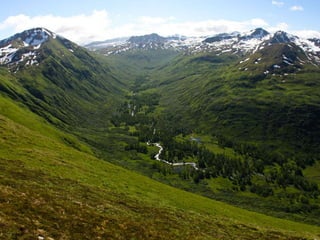
  • #11 During the last ice age, about 12,000 years ago, most of Kodiak was covered by thick sheets of ice; as the climate warmed, retreating glaciers carved classic U shaped valleys and excavated steep slopes radiating away from the main rocky “spine”.
  • #12 (photo taken above Karluk Lake, looking toward the spine of mountains – Canyon Creek)
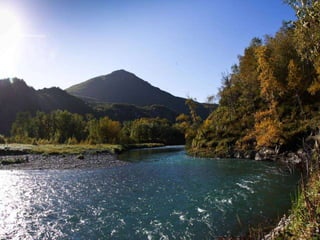
  • #13 Many of the rivers on Kodiak support several species of Pacific Salmon. (pictured here: lower Uganik River – popular for sport fishing for Silvers in September, there is a public use cabin located on the lake above. People fly in to the lake to float this river 6 miles down to the ocean).
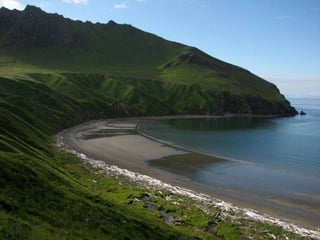
  • #14 Kodiak Refuge has about 850 miles of coastline, with wetlands along the river flats and valley bottoms. (photo at Halibut Cove on the southwest end of the island. You can see the mountains of the Alaska Peninsula in the background across the Shelikof Strait)
  • #15 More coastline. (Opportunity to talk about marine mammals?)
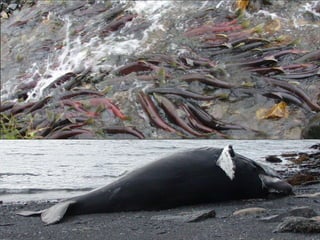
  • #16 Kodiak’s coastal environment is important to the wildlife who live in the Refuge! Whales that wash ashore provide a great food resource for bears and scavengers. Migrating pacific salmon return from their years in the ocean to spawn in the streams, rivers and lakes on Kodiak (more than 100 salmon streams).
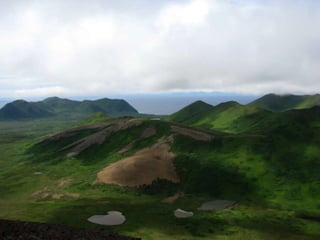
  • #17 A unique landscape in the Refuge is in the southwest region of the Island – only area not covered by ice during last ice age, called a “Refugium.” The hills are more rolling, there are species of rare plants not found elsewhere on the Archipelago, and the geology is very unique (the bare rocky areas on top of the slopes have a rock type called “ultramafic” – it is very high in iron and magnesium, so the plants that grow there have adapted to the inhospitable nutrients).
  • #18 A diversity of environments provide great habitat for a variety of wildlife. Kodiak has only 6 land mammals that are native to the Archipelago: Red Fox, River Otter, Tundra Vole, Little Brown Bat, Short Tailed Weasel (ermine), and of course the Kodiak Brown Bear.
  • #19 People have introduced wildlife to Kodiak for human benefits like food and fur. Species that have thrived include the Sitka Black-tailed Deer, Mt. Goats, Snow Shoe hares, and Roosevelt Elk.
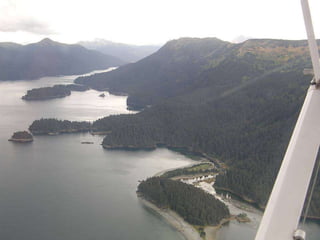
  • #20 Kodiak Refuge welcomes visitors, but can only be accessed by boat or floatplane. You can find several air charter companies in the city of Kodiak that operate day tours or point to point flights into the Refuge. (pictured: Uganik Lake)
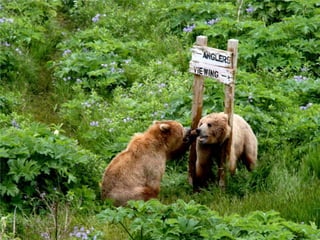
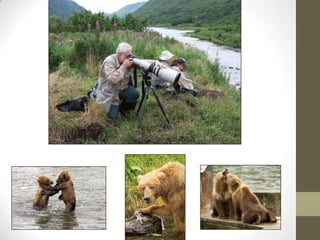
  • #21 Wildlife viewing and photography are very popular activities on Kodiak. Pictured here:Two bears at Frazer Fish Pass, Frazer Lake, the southwest corner of Kodiak Island. Frazer is the most likely place that air charters will operate day tours for bear viewing in the Refuge. The flight is about 45 minutes from town, and the trail to the bear viewing area is about ½ mile from the lake. Remote lodges give visitors a chance to stay for a longer period of time near the Refuge boundary, and many operate bear and wildlife viewing day trips.
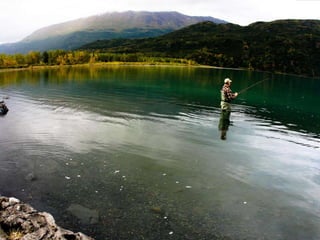
  • #23 There are many opportunities for sport fishing in the Refuge (and on the Kodiak road system). All five species of Pacific Salmon can be found in the Refuge, as well as dolly varden, rainbow trout, and steelhead. Check with the Alaska Department of Fish and Game for license information and regulations. Pictured: Fly fishing for silver salmon in Uganik Lake.
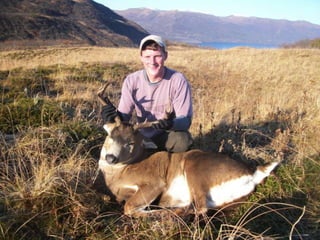
  • #24 Hunting opportunities exist for Sitka Black-tailed deer, Roosevelt elk (subsistence hunt), mountain goat, feral reindeer, and brown bear. Check with the Alaska Department of Fish and Game for hunting information and regulations. There are no established trails within the Refuge, so be prepared to bushwack and carry the proper gear for navigation and safety.
  • #26 Blue Fox Bay Cabin, Afognak
  • #27 Deadman Bay Cabin, South end of Kodiak
  • #28 Little River cabin
  • #29 Uganik Lake cabin – very popular in September, so reserve ahead.
  • #30 Cabin interior
  • #31 Cabin interior
  • #32 Kodiak is a beautiful place to visit. You can help the Refuge with our mission of stewardship and conservation by practicing “leave no trace” ethics during your stay.
  • #33 As part of our mission to conserve wildlife, fish and plants, Refuge biologists continue to monitor andresearch several species on the Refuge. We arecurrently conducting 3 major research studies: Kittlitz’sMurrelet nesting ecology, Kodiak Brown Bear habitat selection, and Mountain Goat feeding and site selection. Other ongoing research mostly consists of monitoring studies such as aerial surveys of feral reindeer, seabird colony and bald eagle surveys, botanical inventory, and intensive aerial surveys of Kodiak brown bears.
  • #34 Background: Kittlitz’sMurrelets were discovered nesting on Kodiak in 2006. They are in the alcid family and are related to marbled murrelets. They fly at high speeds – up to 100 km per hour! In most areas of Alaska, they nest on glaciers, but on Kodiak they choose to nest on rocky slopes (remember the ultramafic rock found in the Refugium?) where they are well camouflaged from predators. We send a field crew of 3-4 people out each summer to search for nests and then take measurements of eggs and chicks, as well as install nest cameras to record feeding behavior and predation.
  • #35 Since 2010, the Refuge has collared several female bears with GPS collars that log information about location and activity. During the summer, field researchers use a floatplane to fly over the area around Karluk Lake and collect information from the collars using radio telemetry. They hike to selected locations where the bears had been at the previous week and collect information about the bears’ sleeping and eating habits. This will help us better understand how female bears choose their ideal habitats throughout the season, and, ultimately, how the availability of food impacts their reproductive rates.
  • #36 In 2011, the Refuge began a pilot study to monitor the population of Mountain Goats and learn more about their habitat use on Kodiak. 2012 is the second year of this study, and a small research crew will visit three main areas within the Refuge throughout the summer, collecting data on the goats’ diet and behavior.
  • #37 The Visitor Center is open 7 days a week during the summer from 9am to 5pm. Refuge staff and volunteers are available to assist with trip planning and orientation, information about Kodiak’s wildlife and natural history, and suggestions for local activities.
  • #38 The Visitor Center has exhibits of local flora and fauna, an award winning short film about the Refuge, activities for kids and families, and an Alaska Geographic bookstore. Ask about our scavenger hunt for elementary school ages and check out the bear cam that has live satellite feed from the Frazer fish pass, a popular bear viewing area. Check at the information desk for a current schedule of interpretive ranger talks (these are usually once a week, called “Coffee with a Ranger”, and are also scheduled during cruise ship days).
  • #39 The Refuge Visitor Center has several education programs during the summer. Wednesdays from 10:30-11:15: Families Understanding Nature (FUN) program for 3-5 year olds and their families. Explore a different Kodiak nature topic each week through stories, puppets, crafts, and activities. Saturdays from 1-3pm: Happy Trails Nature Club for kids and their families. We meet at a different location in Kodiak each Saturday for a hike, outdoor craft, or activity. Check at the information desk for a current schedule. Junior Ranger Program: not yet scheduled at this time, check for upcoming events. Designed for 7-12 year olds as part of the Junior Ranger activity series.Our most popular program is a weekly science education day camp for students kindergarten through 8th grade, called Salmon Camp. Registration for these sessions often fills in April, but people can check for openings.