FERMENTATION AND TYPES
M.Chatiyaa
II –M.Sc Microbiology
Department of Microbiology
Sacred Heart College (Autonomous)
2.
FERMENTATION
Fermentation is ametabolic process through which
microorganisms convert organic compounds
particularly sugars into simpler substances such as
alcohol, acids, and gases under anaerobic or low-
oxygen conditions.
The term fermentation was coined by Louis Pasteur.
The science of fermentation called Zymology.
3.
ALCOHOLIC FERMENTATION
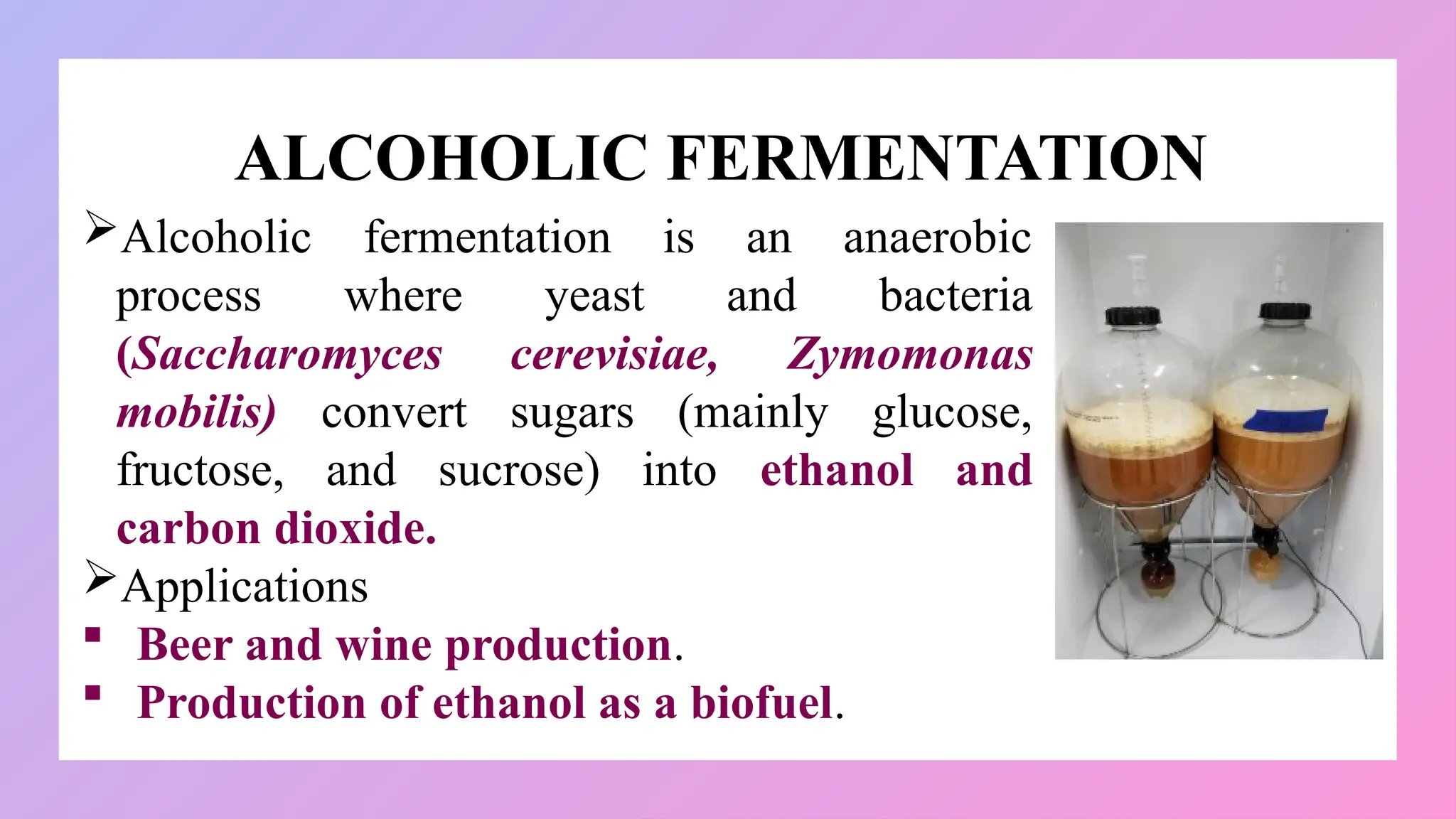
Alcoholic fermentationis an anaerobic
process where yeast and bacteria
(Saccharomyces cerevisiae, Zymomonas
mobilis) convert sugars (mainly glucose,
fructose, and sucrose) into ethanol and
carbon dioxide.
Applications
Beer and wine production.
Production of ethanol as a biofuel.
4.
LACTIC ACID FERMENTATION
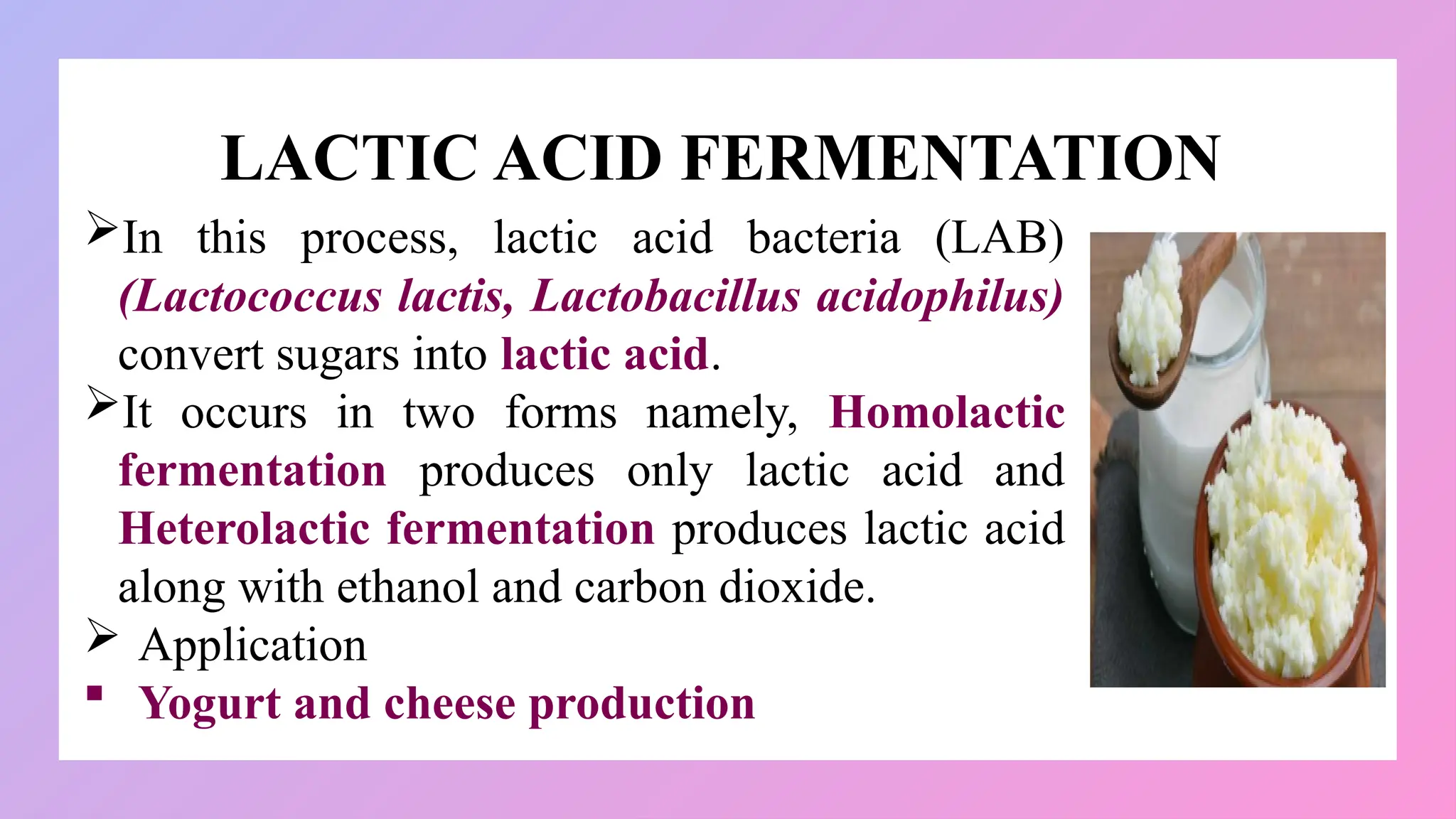
Inthis process, lactic acid bacteria (LAB)
(Lactococcus lactis, Lactobacillus acidophilus)
convert sugars into lactic acid.
It occurs in two forms namely, Homolactic
fermentation produces only lactic acid and
Heterolactic fermentation produces lactic acid
along with ethanol and carbon dioxide.
Application
Yogurt and cheese production
5.
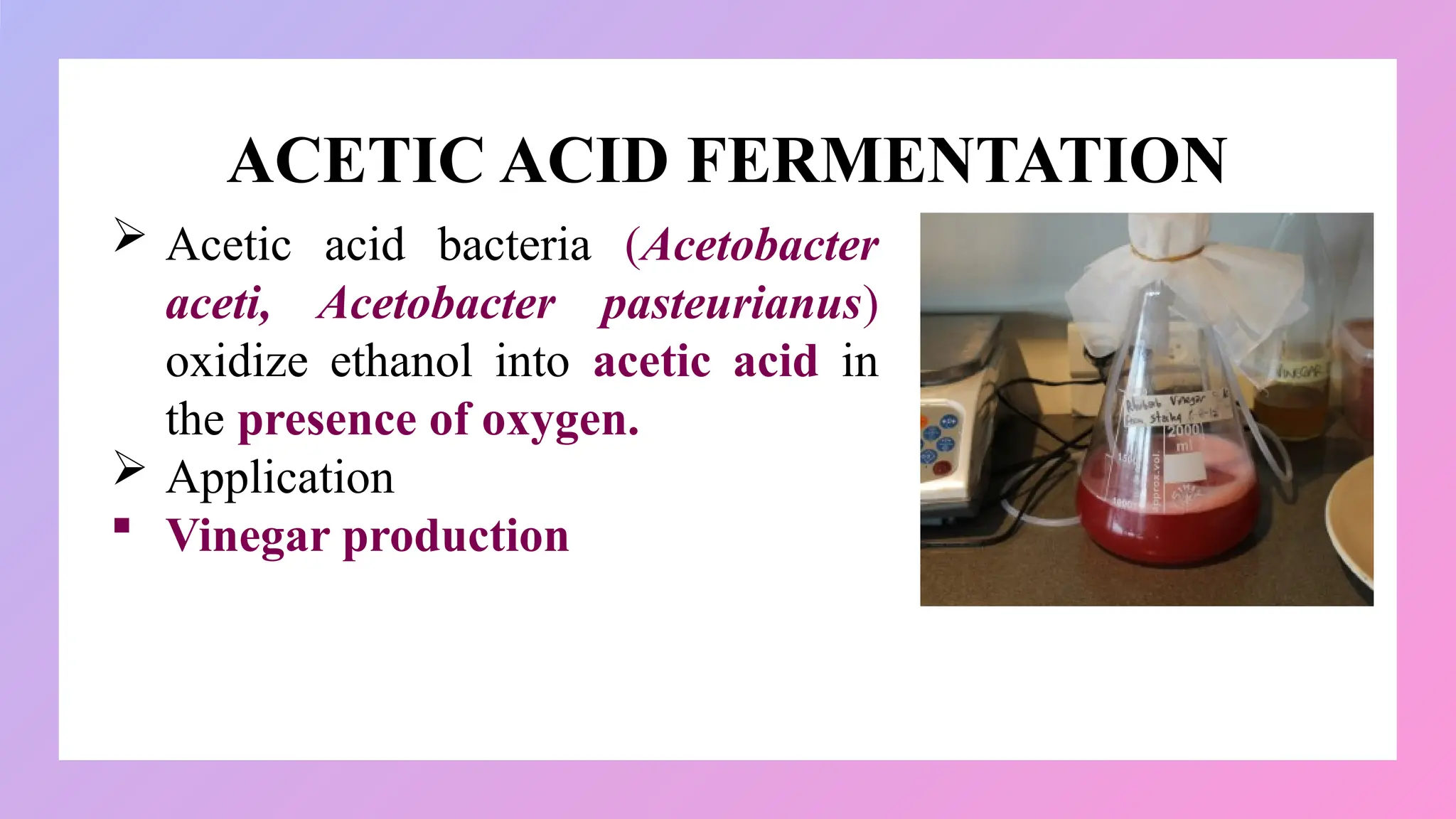
ACETIC ACID FERMENTATION
Acetic acid bacteria (Acetobacter
aceti, Acetobacter pasteurianus)
oxidize ethanol into acetic acid in
the presence of oxygen.
Application
Vinegar production
6.
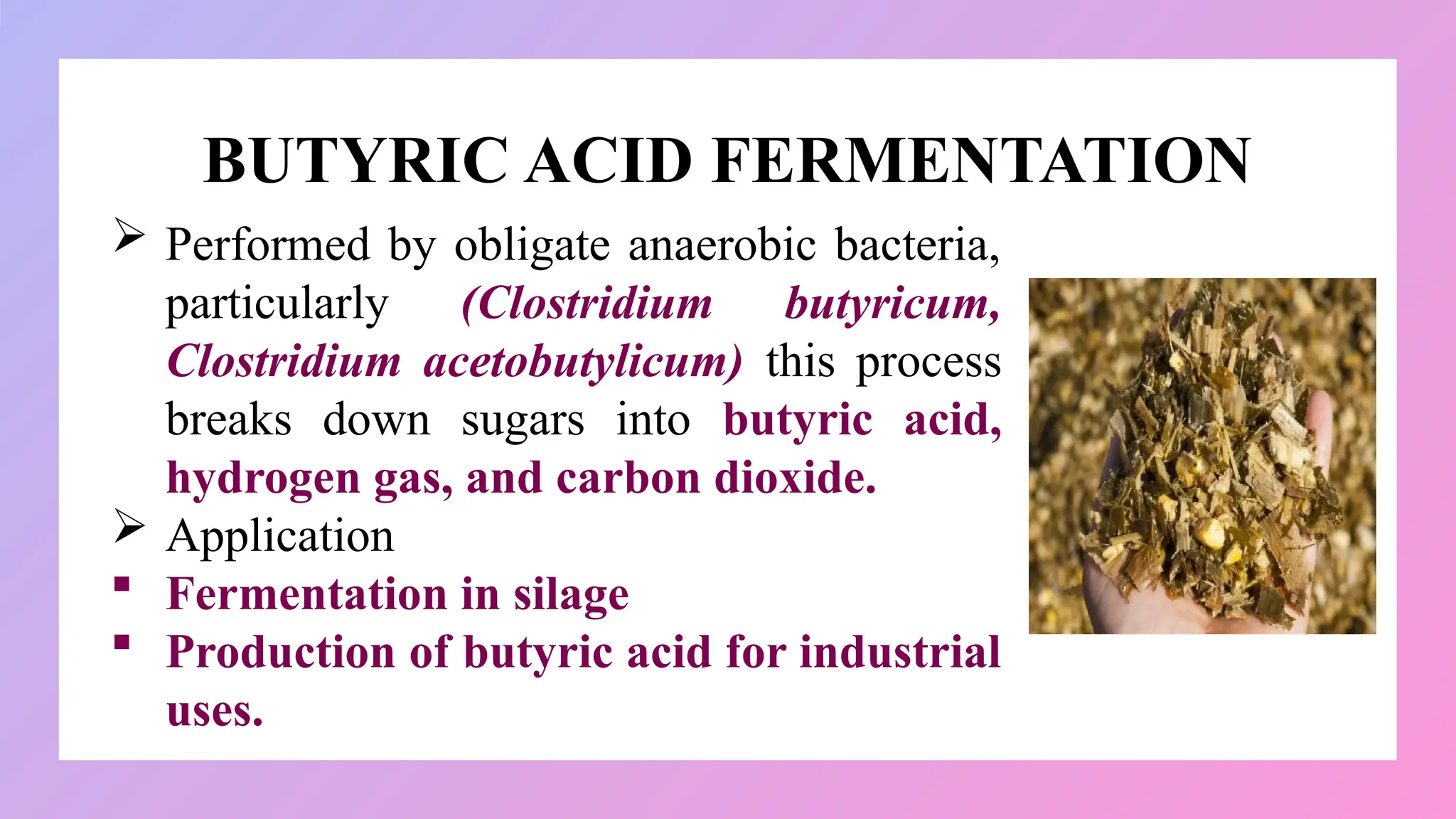
BUTYRIC ACID FERMENTATION
Performed by obligate anaerobic bacteria,
particularly (Clostridium butyricum,
Clostridium acetobutylicum) this process
breaks down sugars into butyric acid,
hydrogen gas, and carbon dioxide.
Application
Fermentation in silage
Production of butyric acid for industrial
uses.
7.
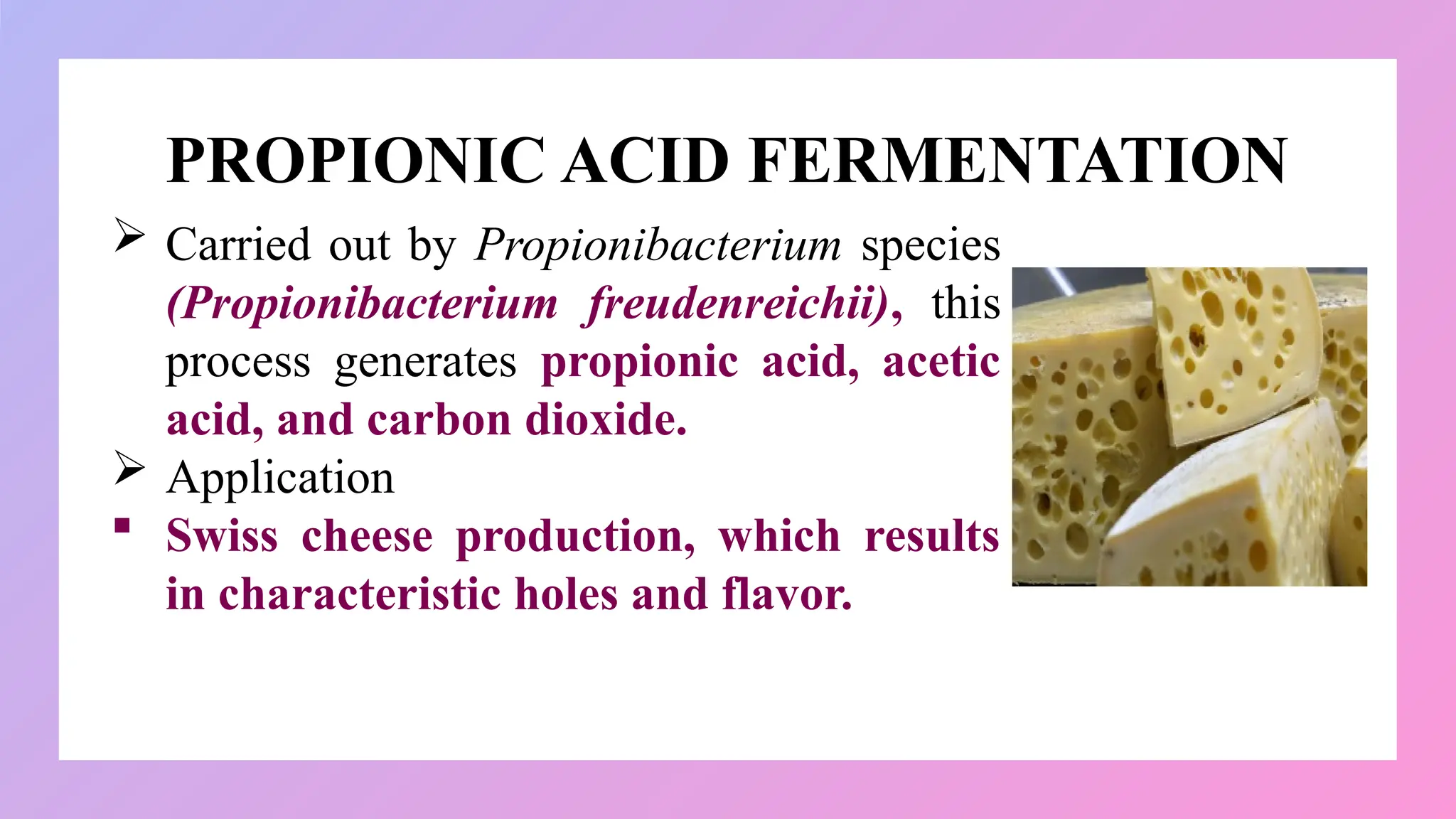
PROPIONIC ACID FERMENTATION
Carried out by Propionibacterium species
(Propionibacterium freudenreichii), this
process generates propionic acid, acetic
acid, and carbon dioxide.
Application
Swiss cheese production, which results
in characteristic holes and flavor.
8.
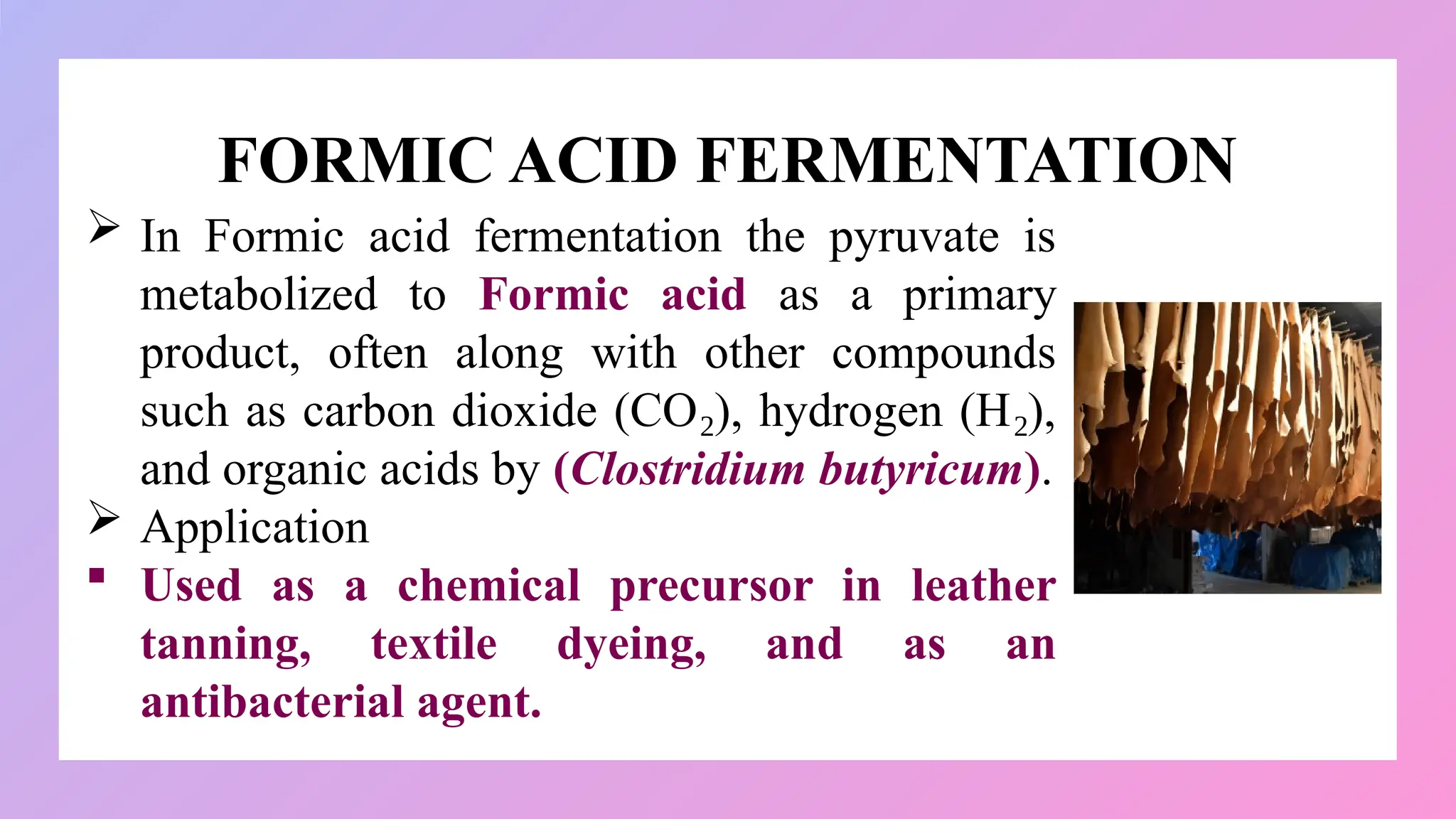
FORMIC ACID FERMENTATION
In Formic acid fermentation the pyruvate is
metabolized to Formic acid as a primary
product, often along with other compounds
such as carbon dioxide (CO ), hydrogen (H ),
₂ ₂
and organic acids by (Clostridium butyricum).
Application
Used as a chemical precursor in leather
tanning, textile dyeing, and as an
antibacterial agent.
9.
GLUCONIC ACID FERMENTATION
(Aspergillus niger and Penicillium
chrysogenum) are capable of oxidizing
the aldehyde groups of glucose to
Gluconic acid.
Application
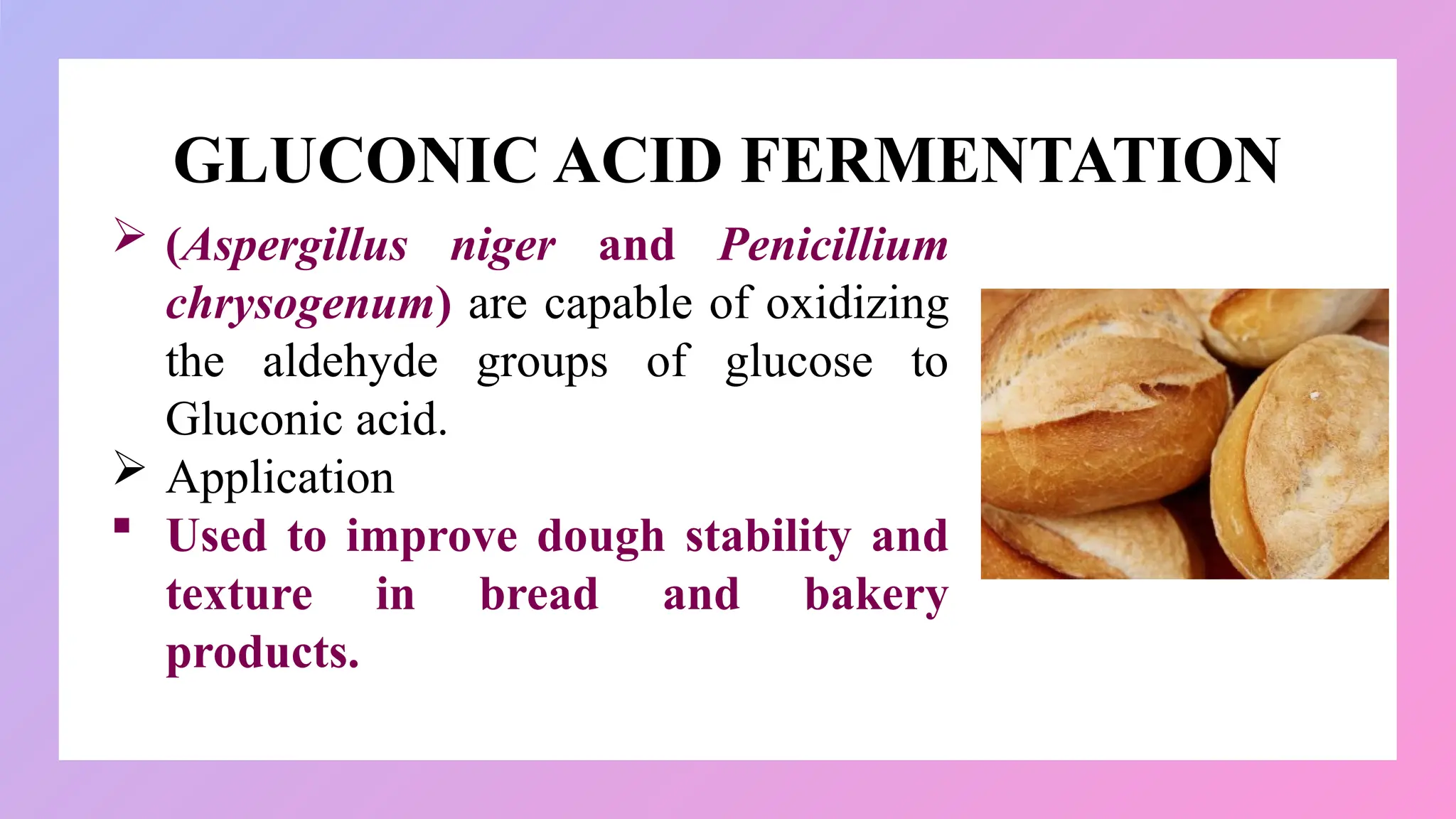
Used to improve dough stability and
texture in bread and bakery
products.
10.
MIXED ACID FERMENTATION
In this process, bacteria like Escherichia coli
produce a variety of organic acids (lactic, acetic,
formic) along with gases like hydrogen and carbon
dioxide.
Application
Initiates acidification by producing lactic and acetic
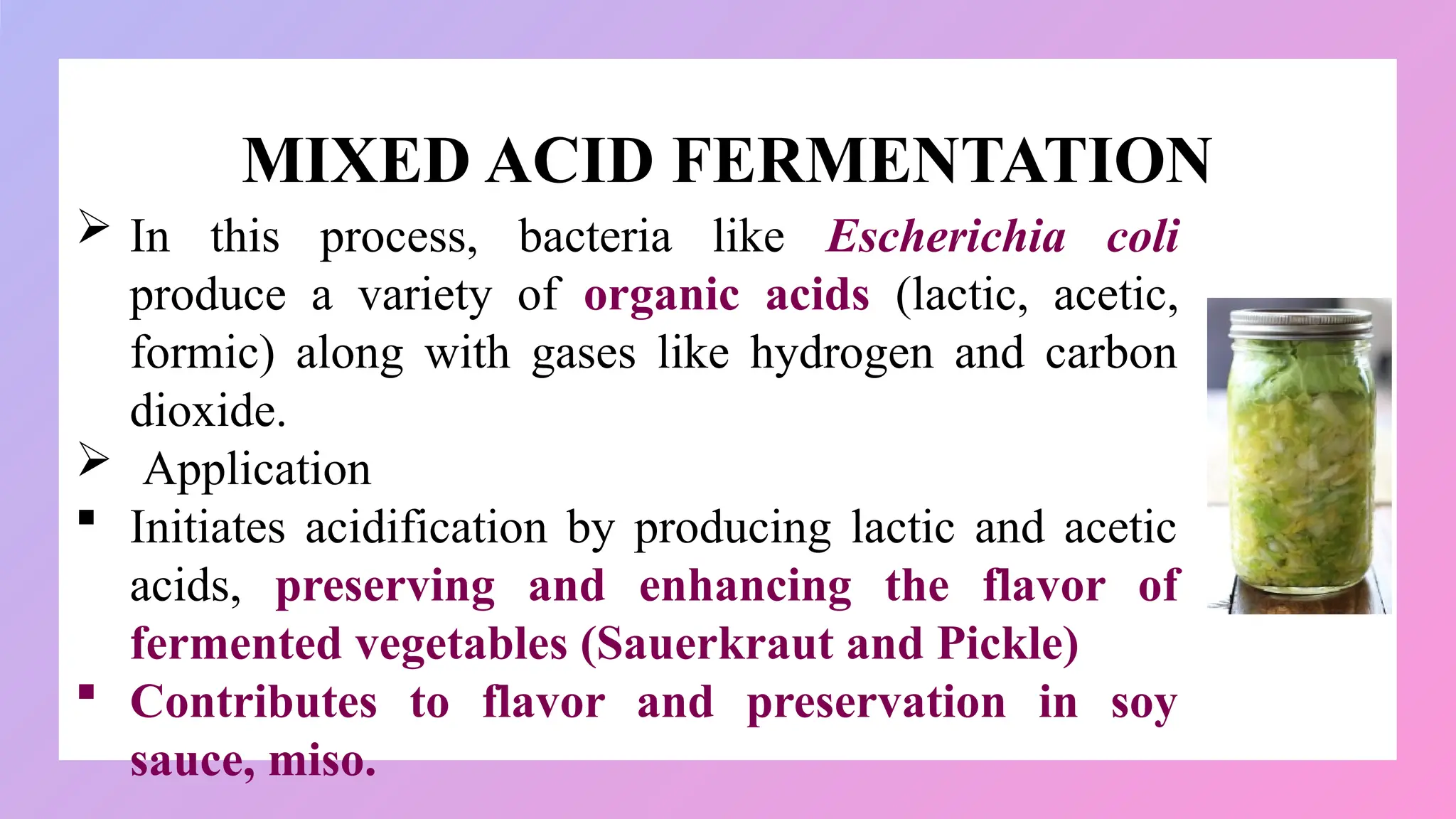
acids, preserving and enhancing the flavor of
fermented vegetables (Sauerkraut and Pickle)
Contributes to flavor and preservation in soy
sauce, miso.
11.
BUTANEDIOL FERMENTATION
Performedby bacteria such as
Enterobacter and Klebsiella, this process
produces 2,3-butanediol along with other
byproducts like ethanol, lactic acid, and
carbon dioxide.
Application
Industrial production of solvents like
butanediol.
12.
HYDROGEN GAS FERMENTATION
Certain anaerobic bacteria (Clostridium
acetobutylicum, Clostridium butyricum)
ferment organic matter to produce
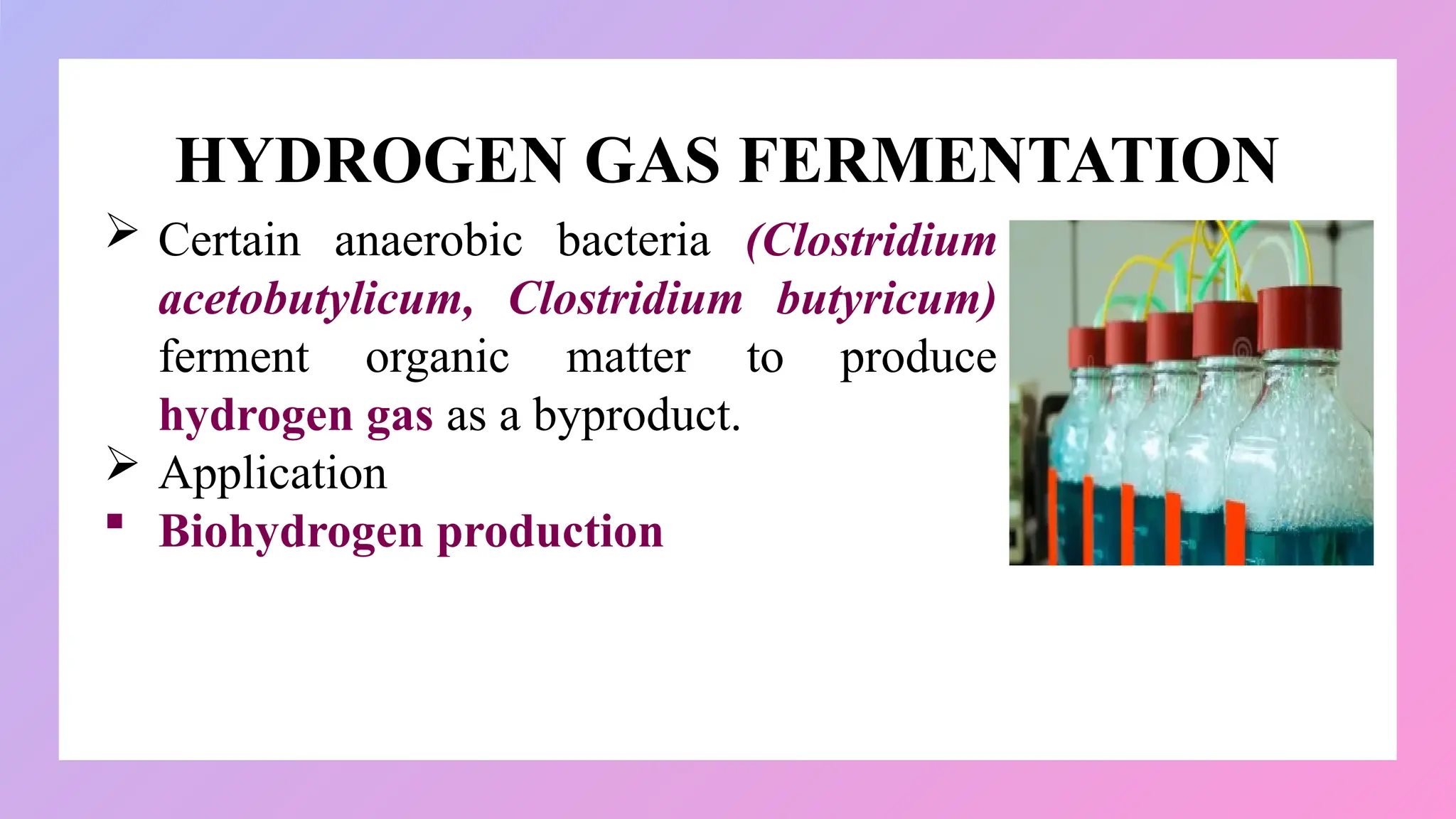
hydrogen gas as a byproduct.
Application
Biohydrogen production
13.
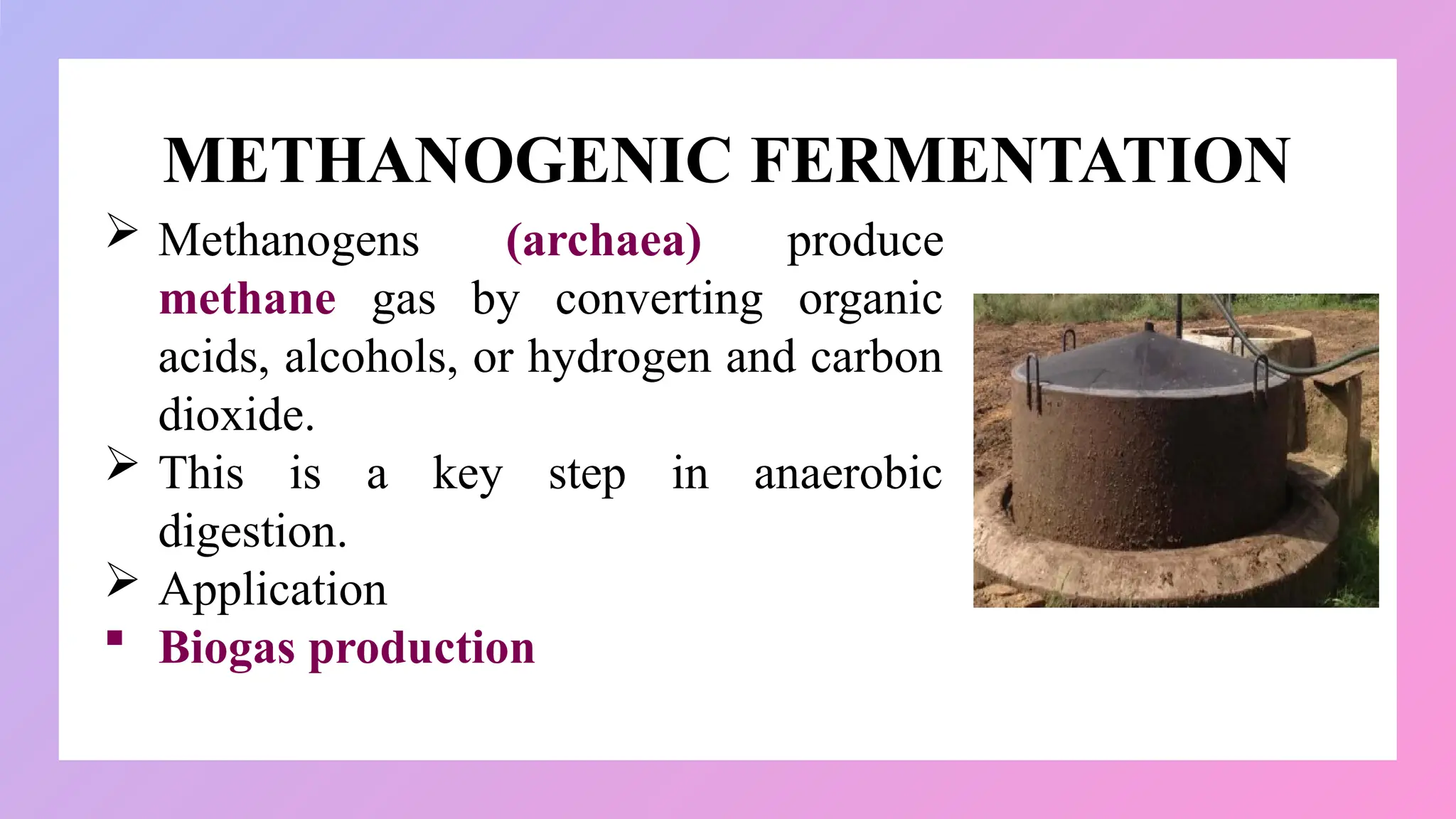
METHANOGENIC FERMENTATION
Methanogens(archaea) produce
methane gas by converting organic
acids, alcohols, or hydrogen and carbon
dioxide.
This is a key step in anaerobic
digestion.
Application
Biogas production
14.
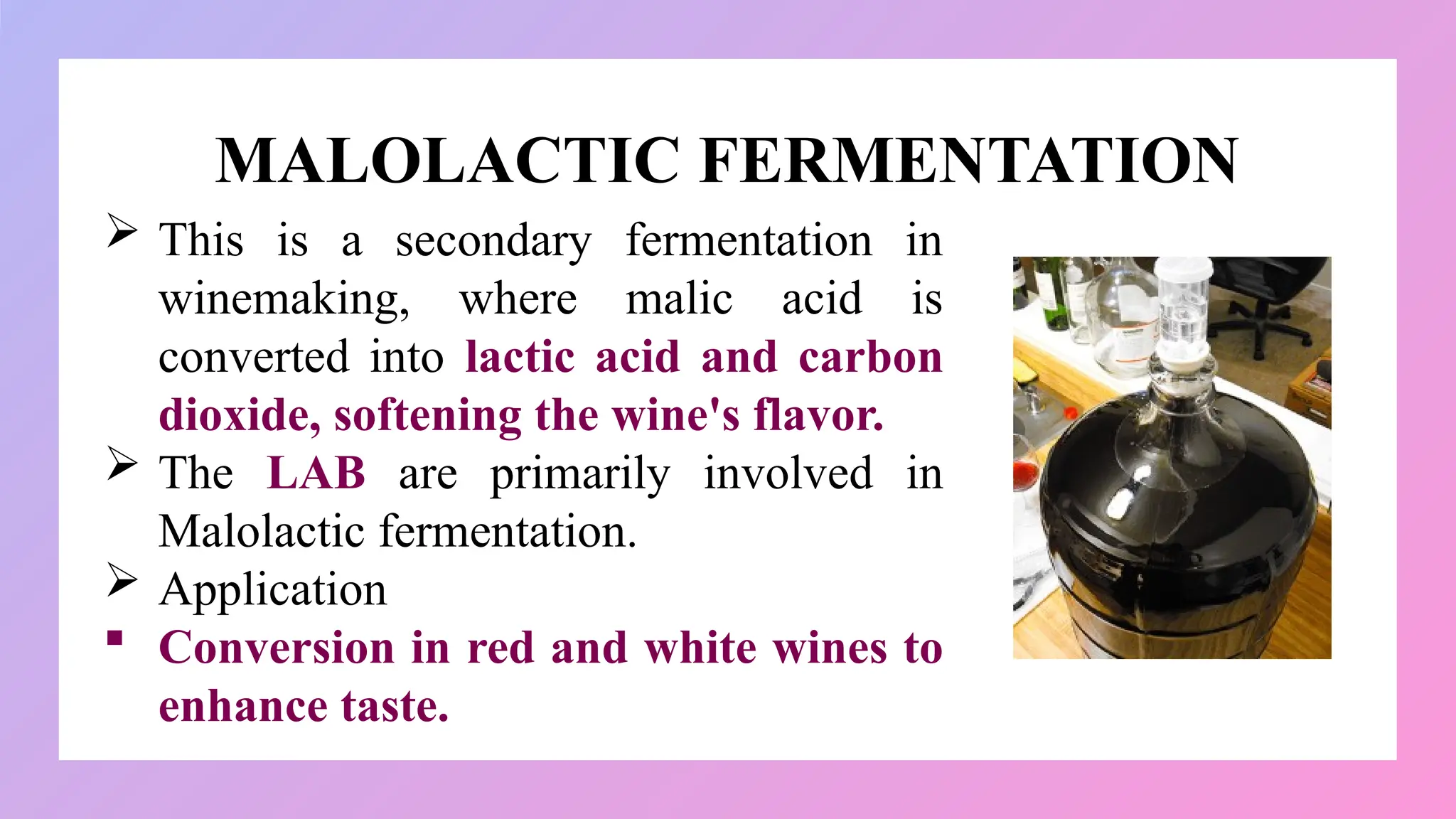
MALOLACTIC FERMENTATION
Thisis a secondary fermentation in
winemaking, where malic acid is
converted into lactic acid and carbon
dioxide, softening the wine's flavor.
The LAB are primarily involved in
Malolactic fermentation.
Application
Conversion in red and white wines to
enhance taste.