Fermentation
PRESENTED TO:
DR. KASHIF RAHEEM
PRESENTED BY:
AYESHA AMEEN
Introduction
• Fermentation is one of the ancient food processing
technologies.
• Fermentation is defined as a process in which chemical
changes occur in an organic substrate through the action of
enzymes produced by microorganisms.
• For example, yeast enzymes convert sugars and starches into
alcohol, while proteins are converted to peptides/amino acids.
• Fermentation takes place in the lack of oxygen that produces
ATP (energy).
Introduction
• It turns NADH and pyruvate produced in the glycolysis step into
NAD+ and various small molecules depending on the type of
fermentation.
• The fermenting microorganisms mainly involve L.A.B.
like Enterococcus, Streptococcus, Leuconostoc, Lactobacillus,
and Pediococcus and yeasts and molds like Debaryomyces,
Kluyveromyces, Saccharomyces, Geotrichium, Mucor, Penicillium,
and Rhizopus species.
Principle
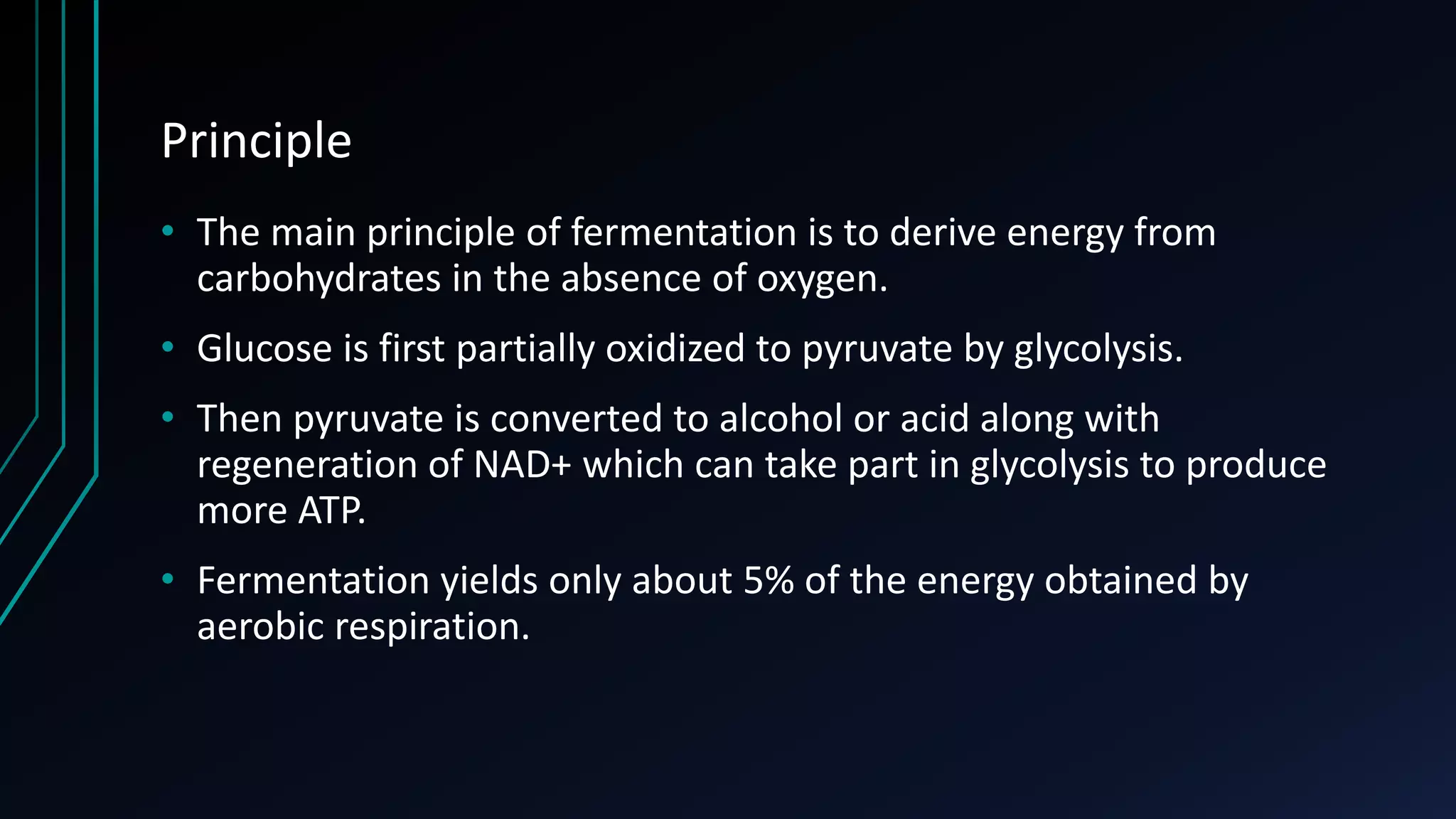
• The main principle of fermentation is to derive energy from
carbohydrates in the absence of oxygen.
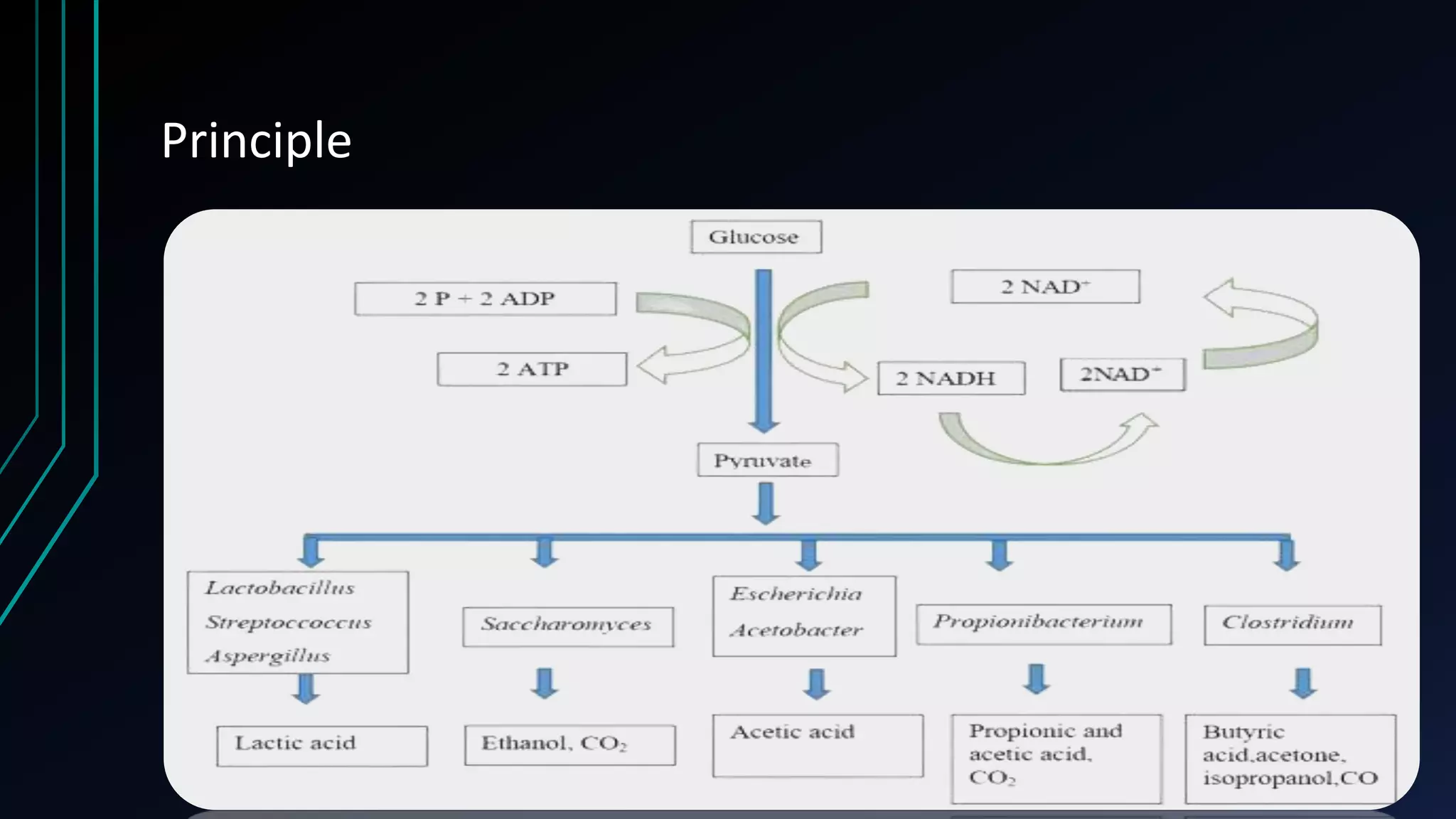
• Glucose is first partially oxidized to pyruvate by glycolysis.
• Then pyruvate is converted to alcohol or acid along with
regeneration of NAD+ which can take part in glycolysis to produce
more ATP.
• Fermentation yields only about 5% of the energy obtained by
aerobic respiration.
Principle
Types of fermentation
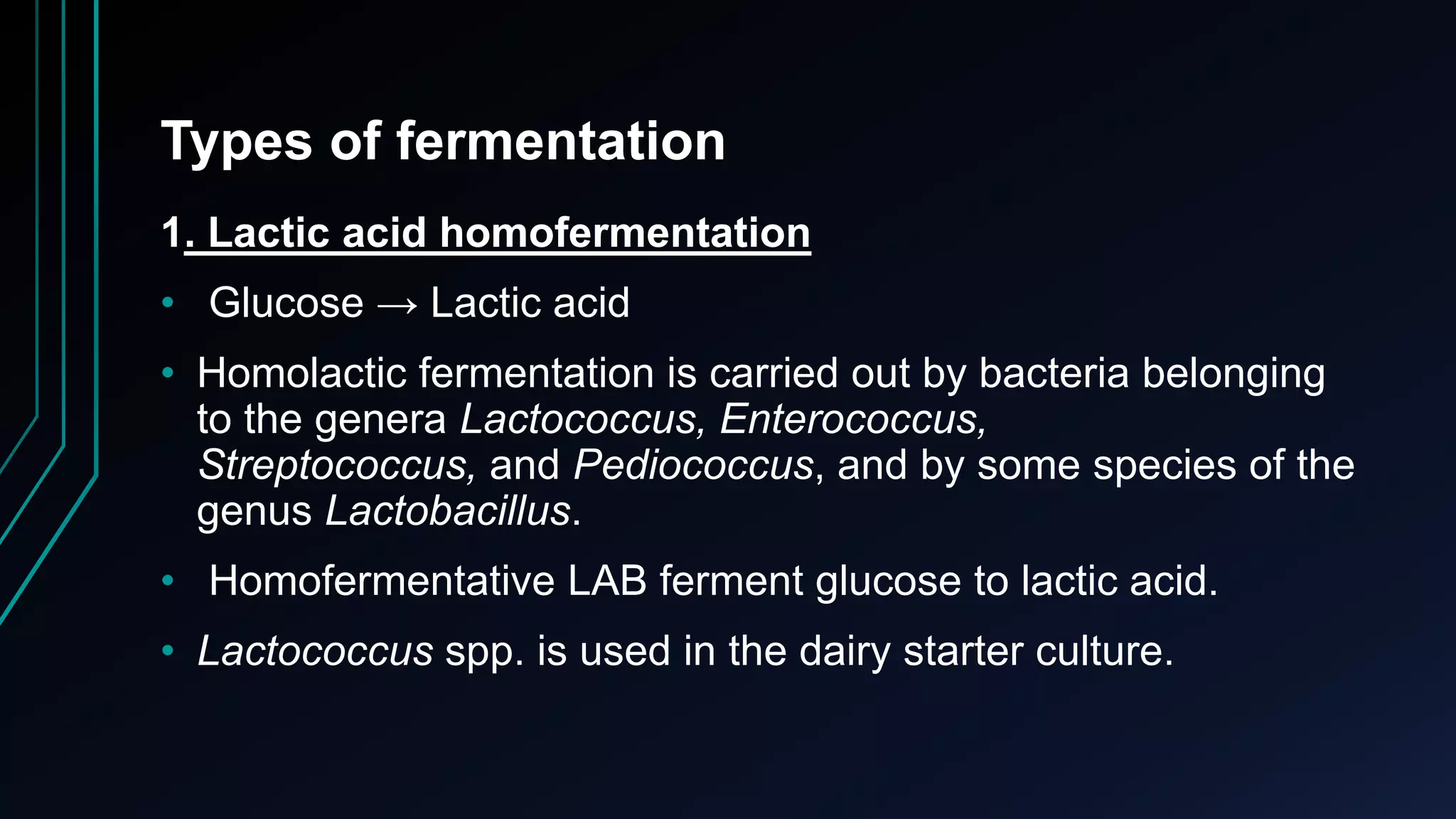
1. Lactic acid homofermentation
• Glucose → Lactic acid
• Homolactic fermentation is carried out by bacteria belonging
to the genera Lactococcus, Enterococcus,
Streptococcus, and Pediococcus, and by some species of the
genus Lactobacillus.
• Homofermentative LAB ferment glucose to lactic acid.
• Lactococcus spp. is used in the dairy starter culture.
Types of fermentation
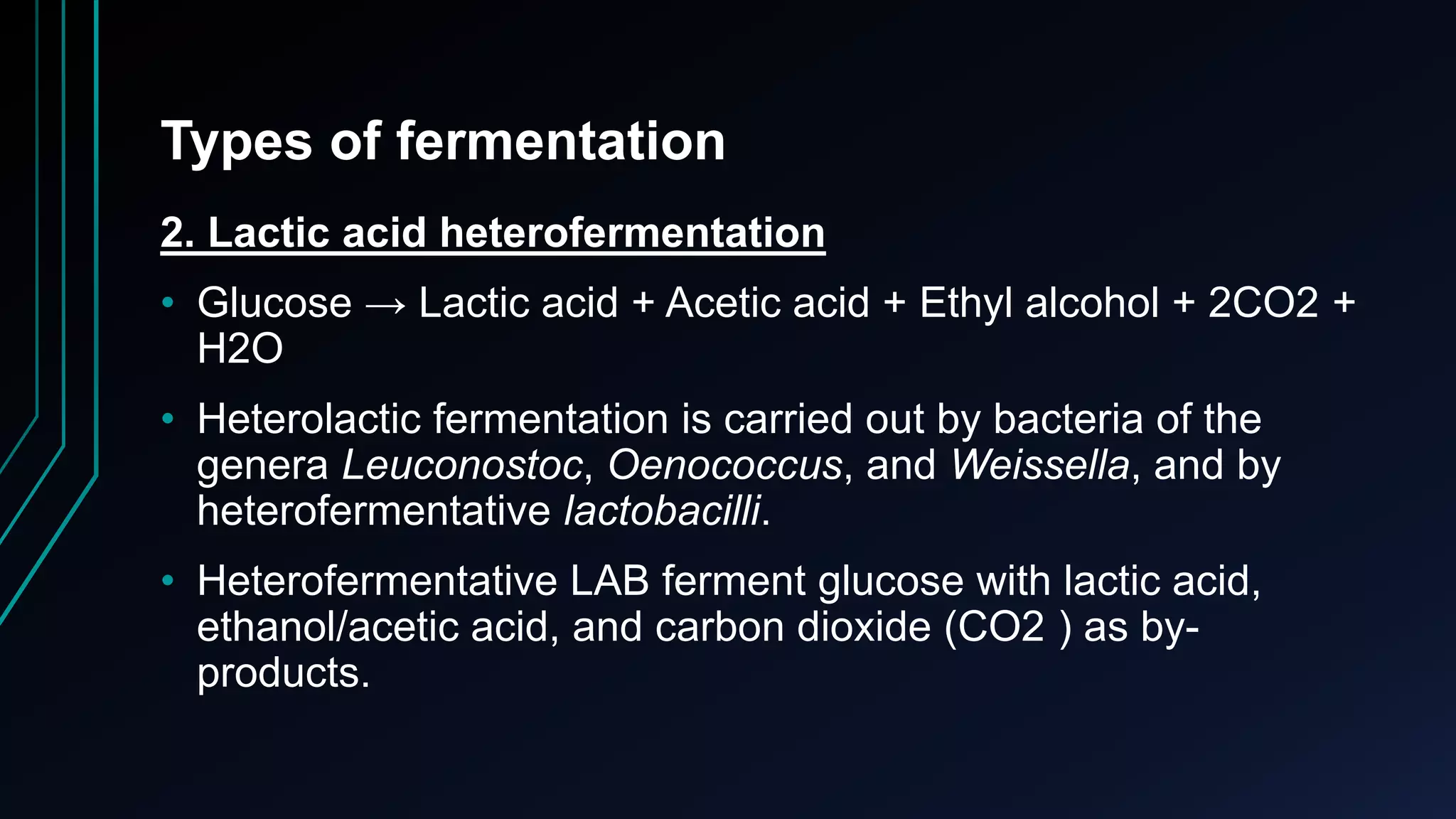
2. Lactic acid heterofermentation
• Glucose → Lactic acid + Acetic acid + Ethyl alcohol + 2CO2 +
H2O
• Heterolactic fermentation is carried out by bacteria of the
genera Leuconostoc, Oenococcus, and Weissella, and by
heterofermentative lactobacilli.
• Heterofermentative LAB ferment glucose with lactic acid,
ethanol/acetic acid, and carbon dioxide (CO2 ) as by-
products.
Types of fermentation
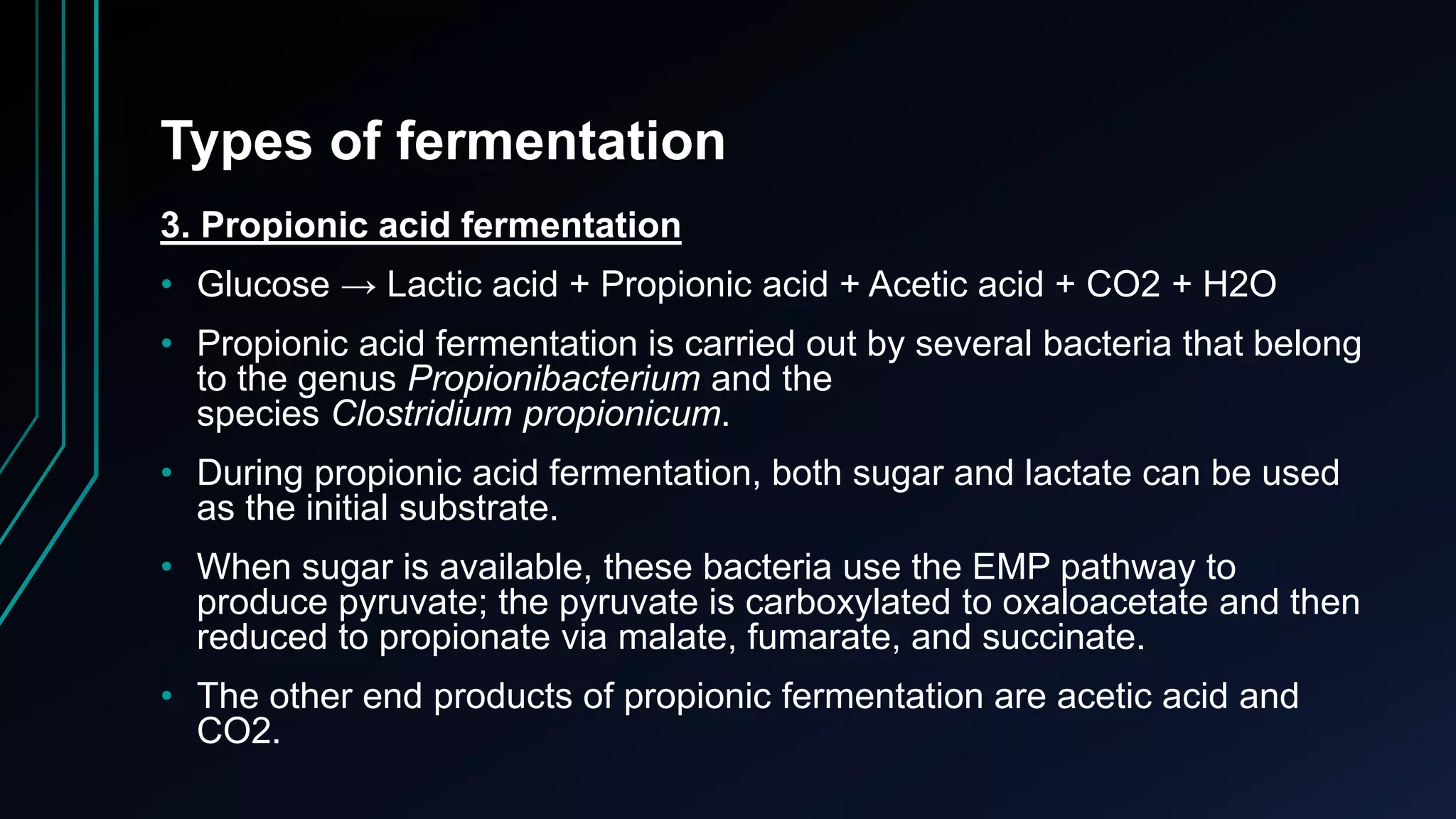
3. Propionic acid fermentation
• Glucose → Lactic acid + Propionic acid + Acetic acid + CO2 + H2O
• Propionic acid fermentation is carried out by several bacteria that belong
to the genus Propionibacterium and the
species Clostridium propionicum.
• During propionic acid fermentation, both sugar and lactate can be used
as the initial substrate.
• When sugar is available, these bacteria use the EMP pathway to
produce pyruvate; the pyruvate is carboxylated to oxaloacetate and then
reduced to propionate via malate, fumarate, and succinate.
• The other end products of propionic fermentation are acetic acid and
CO2.
Types of fermentation
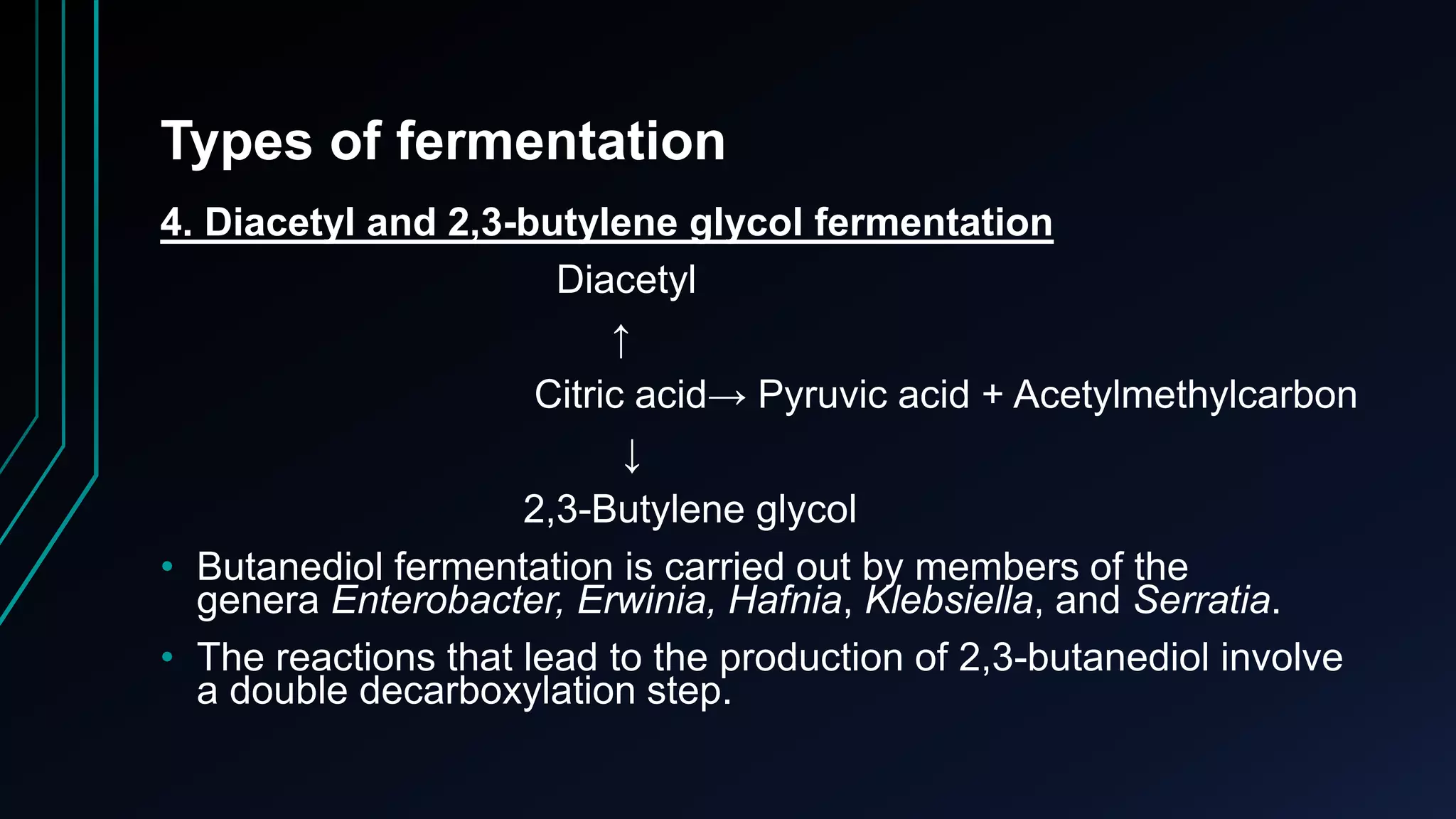
4. Diacetyl and 2,3-butylene glycol fermentation
Diacetyl
↑
Citric acid→ Pyruvic acid + Acetylmethylcarbon
↓
2,3-Butylene glycol
• Butanediol fermentation is carried out by members of the
genera Enterobacter, Erwinia, Hafnia, Klebsiella, and Serratia.
• The reactions that lead to the production of 2,3-butanediol involve
a double decarboxylation step.
Types of fermentation
5.Alcoholic fermentation
Glucose → Ethyl alcohol
• Alcoholic fermentation is the best known of the fermentation
processes.
• It is carried out by yeasts and some other fungi and bacteria.
• The first step of the alcoholic fermentation pathway involves
pyruvate, which is formed by yeast via the EMP pathway, while it is
obtained through the ED pathway in the case of Zymomonas
(bacteria).
• The redox balance of alcoholic fermentation is achieved by the
regeneration of NAD+ during the reduction of acetaldehyde to
Types of fermentation
5.Alcoholic fermentation
Types of fermentation
6. Butyric acid fermentation
Glucose → Acetic acid + Butyric acid
• Butyric acid fermentation is characteristic of several obligate
anaerobic bacteria that mainly belong to the genus Clostridium.
• Pyruvate is in turn oxidized to acetyl-CoA, with the production of
CO2 and H2.
• Part of the acetyl-CoA is converted into acetic acid, with ATP
production.
• Some bacteria, such as Clostridium acetobutylicum, produce fewer
acids and more neutral products, thus carrying out acetone butanol
fermentation.
APPLICATIONS
OF
FERMENTATION
Applications
Application in medicine
• Production of antibiotics
• Production of insulin
• Production of growth hormones
• Production of vaccines
• Production of interferon
Applications
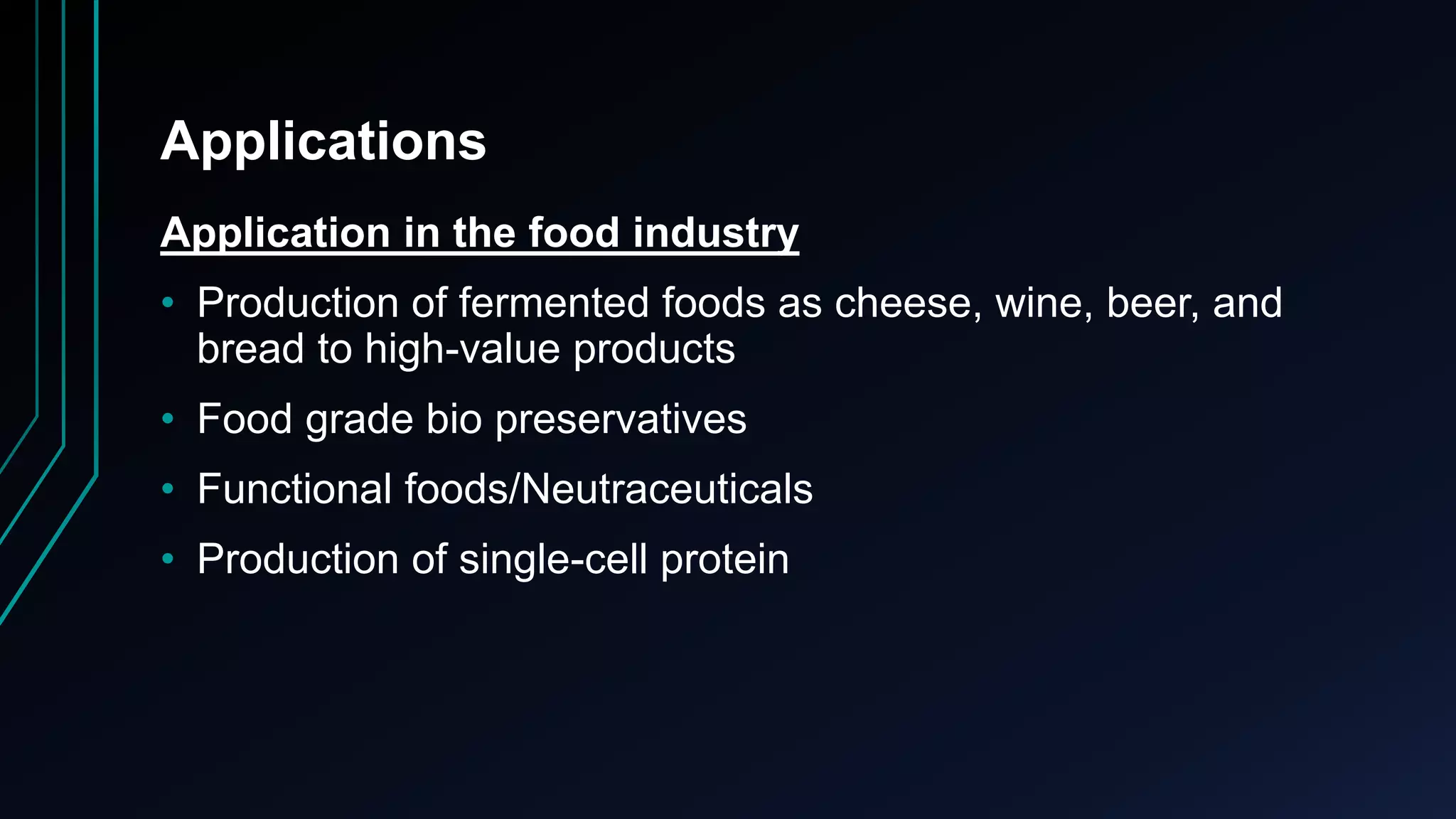
Application in the food industry
• Production of fermented foods as cheese, wine, beer, and
bread to high-value products
• Food grade bio preservatives
• Functional foods/Neutraceuticals
• Production of single-cell protein
Applications
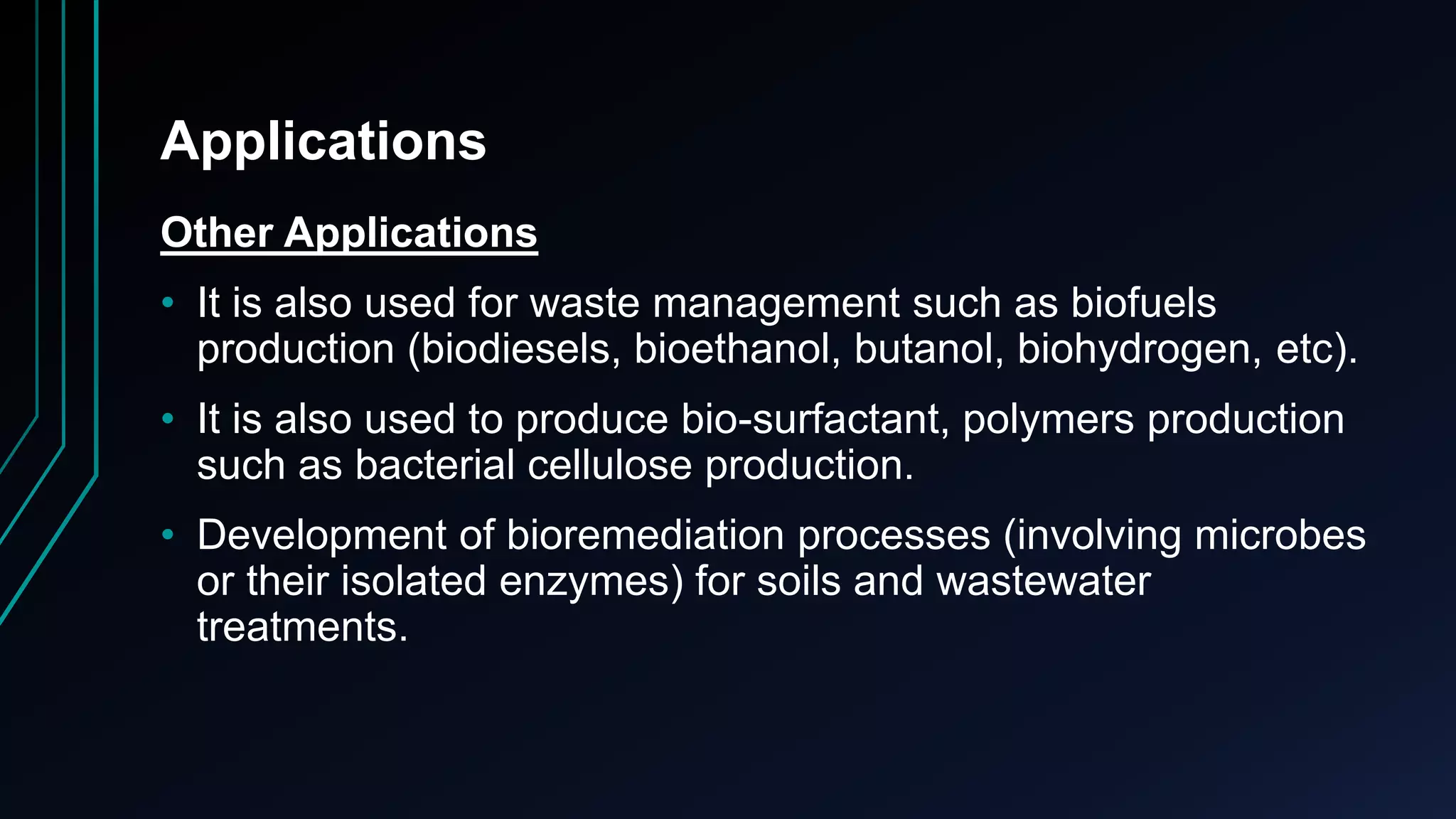
Other Applications
• It is also used for waste management such as biofuels
production (biodiesels, bioethanol, butanol, biohydrogen, etc).
• It is also used to produce bio-surfactant, polymers production
such as bacterial cellulose production.
• Development of bioremediation processes (involving microbes
or their isolated enzymes) for soils and wastewater
treatments.
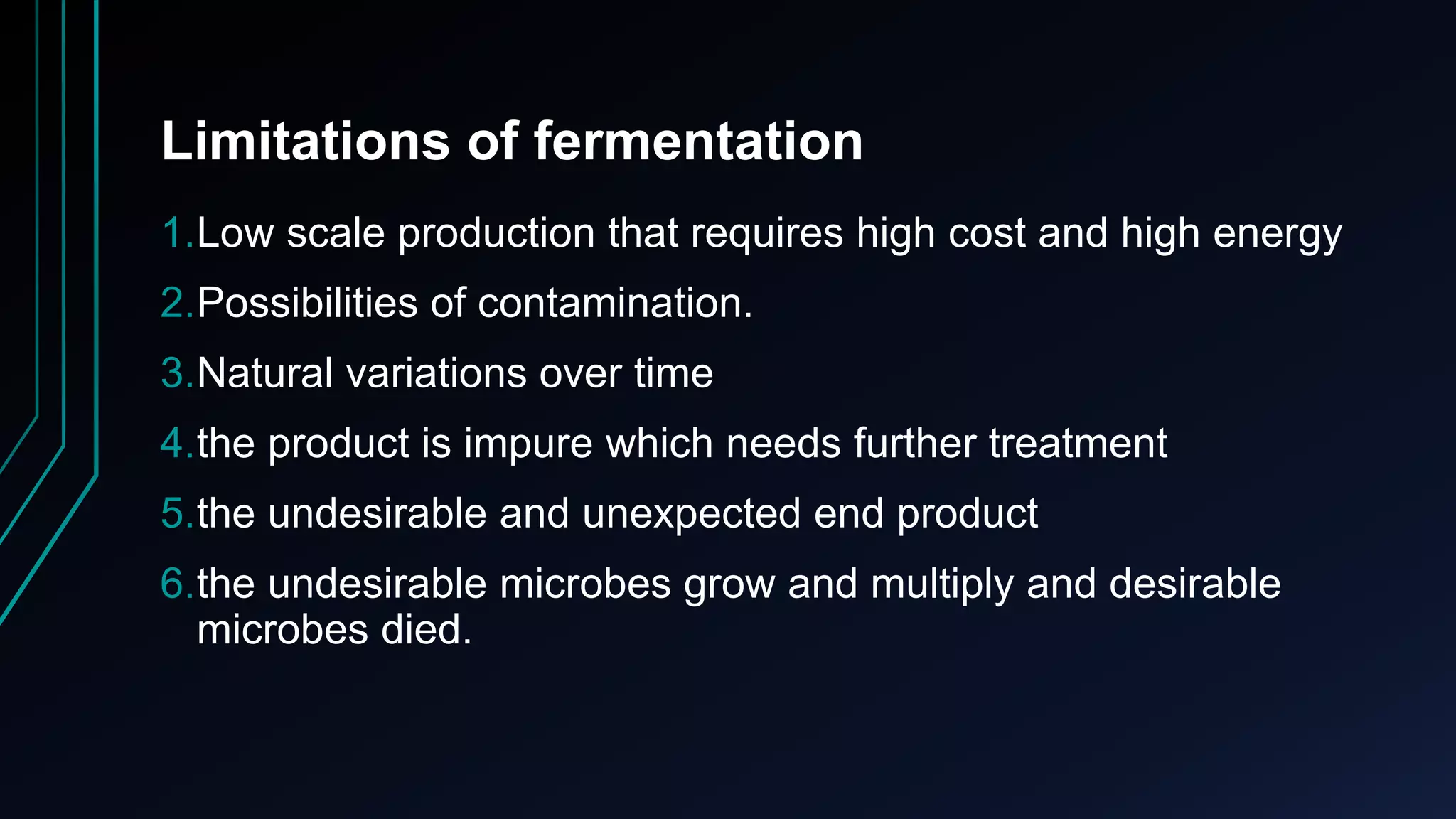
Limitations of fermentation
1.Low scale production that requires high cost and high energy
2.Possibilities of contamination.
3.Natural variations over time
4.the product is impure which needs further treatment
5.the undesirable and unexpected end product
6.the undesirable microbes grow and multiply and desirable
microbes died.

Fermentation.pptx

  • 1.
    Fermentation PRESENTED TO: DR. KASHIFRAHEEM PRESENTED BY: AYESHA AMEEN
  • 2.
    Introduction • Fermentation isone of the ancient food processing technologies. • Fermentation is defined as a process in which chemical changes occur in an organic substrate through the action of enzymes produced by microorganisms. • For example, yeast enzymes convert sugars and starches into alcohol, while proteins are converted to peptides/amino acids. • Fermentation takes place in the lack of oxygen that produces ATP (energy).
  • 3.
    Introduction • It turnsNADH and pyruvate produced in the glycolysis step into NAD+ and various small molecules depending on the type of fermentation. • The fermenting microorganisms mainly involve L.A.B. like Enterococcus, Streptococcus, Leuconostoc, Lactobacillus, and Pediococcus and yeasts and molds like Debaryomyces, Kluyveromyces, Saccharomyces, Geotrichium, Mucor, Penicillium, and Rhizopus species.
  • 4.
    Principle • The mainprinciple of fermentation is to derive energy from carbohydrates in the absence of oxygen. • Glucose is first partially oxidized to pyruvate by glycolysis. • Then pyruvate is converted to alcohol or acid along with regeneration of NAD+ which can take part in glycolysis to produce more ATP. • Fermentation yields only about 5% of the energy obtained by aerobic respiration.
  • 5.
  • 6.
    Types of fermentation 1.Lactic acid homofermentation • Glucose → Lactic acid • Homolactic fermentation is carried out by bacteria belonging to the genera Lactococcus, Enterococcus, Streptococcus, and Pediococcus, and by some species of the genus Lactobacillus. • Homofermentative LAB ferment glucose to lactic acid. • Lactococcus spp. is used in the dairy starter culture.
  • 7.
    Types of fermentation 2.Lactic acid heterofermentation • Glucose → Lactic acid + Acetic acid + Ethyl alcohol + 2CO2 + H2O • Heterolactic fermentation is carried out by bacteria of the genera Leuconostoc, Oenococcus, and Weissella, and by heterofermentative lactobacilli. • Heterofermentative LAB ferment glucose with lactic acid, ethanol/acetic acid, and carbon dioxide (CO2 ) as by- products.
  • 8.
    Types of fermentation 3.Propionic acid fermentation • Glucose → Lactic acid + Propionic acid + Acetic acid + CO2 + H2O • Propionic acid fermentation is carried out by several bacteria that belong to the genus Propionibacterium and the species Clostridium propionicum. • During propionic acid fermentation, both sugar and lactate can be used as the initial substrate. • When sugar is available, these bacteria use the EMP pathway to produce pyruvate; the pyruvate is carboxylated to oxaloacetate and then reduced to propionate via malate, fumarate, and succinate. • The other end products of propionic fermentation are acetic acid and CO2.
  • 9.
    Types of fermentation 4.Diacetyl and 2,3-butylene glycol fermentation Diacetyl ↑ Citric acid→ Pyruvic acid + Acetylmethylcarbon ↓ 2,3-Butylene glycol • Butanediol fermentation is carried out by members of the genera Enterobacter, Erwinia, Hafnia, Klebsiella, and Serratia. • The reactions that lead to the production of 2,3-butanediol involve a double decarboxylation step.
  • 10.
    Types of fermentation 5.Alcoholicfermentation Glucose → Ethyl alcohol • Alcoholic fermentation is the best known of the fermentation processes. • It is carried out by yeasts and some other fungi and bacteria. • The first step of the alcoholic fermentation pathway involves pyruvate, which is formed by yeast via the EMP pathway, while it is obtained through the ED pathway in the case of Zymomonas (bacteria). • The redox balance of alcoholic fermentation is achieved by the regeneration of NAD+ during the reduction of acetaldehyde to
  • 11.
  • 12.
    Types of fermentation 6.Butyric acid fermentation Glucose → Acetic acid + Butyric acid • Butyric acid fermentation is characteristic of several obligate anaerobic bacteria that mainly belong to the genus Clostridium. • Pyruvate is in turn oxidized to acetyl-CoA, with the production of CO2 and H2. • Part of the acetyl-CoA is converted into acetic acid, with ATP production. • Some bacteria, such as Clostridium acetobutylicum, produce fewer acids and more neutral products, thus carrying out acetone butanol fermentation.
  • 13.
  • 14.
    Applications Application in medicine •Production of antibiotics • Production of insulin • Production of growth hormones • Production of vaccines • Production of interferon
  • 15.
    Applications Application in thefood industry • Production of fermented foods as cheese, wine, beer, and bread to high-value products • Food grade bio preservatives • Functional foods/Neutraceuticals • Production of single-cell protein
  • 16.
    Applications Other Applications • Itis also used for waste management such as biofuels production (biodiesels, bioethanol, butanol, biohydrogen, etc). • It is also used to produce bio-surfactant, polymers production such as bacterial cellulose production. • Development of bioremediation processes (involving microbes or their isolated enzymes) for soils and wastewater treatments.
  • 17.
    Limitations of fermentation 1.Lowscale production that requires high cost and high energy 2.Possibilities of contamination. 3.Natural variations over time 4.the product is impure which needs further treatment 5.the undesirable and unexpected end product 6.the undesirable microbes grow and multiply and desirable microbes died.