(All of this means that there are very specific
protocols you need to follow to insure due
process)
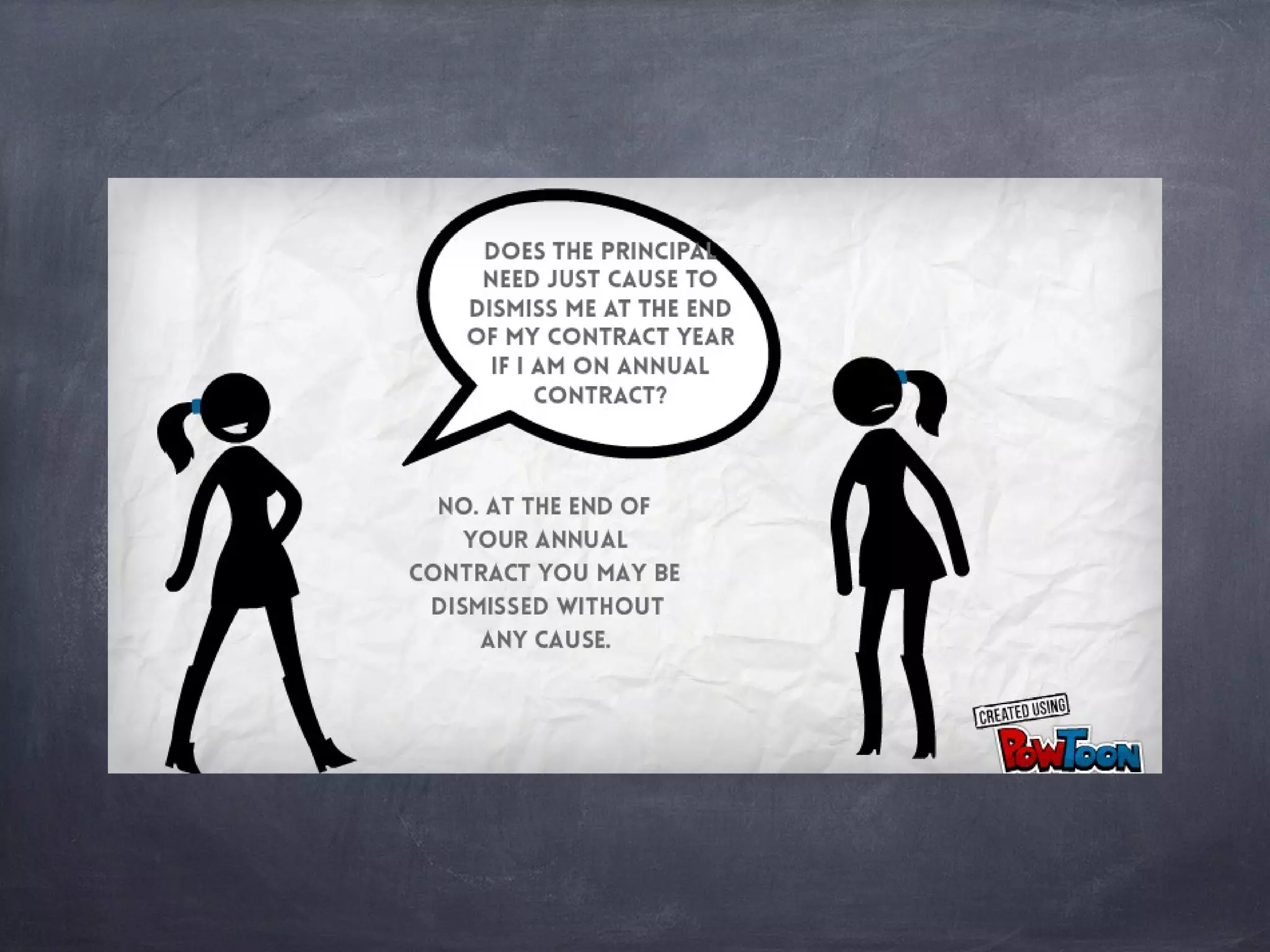
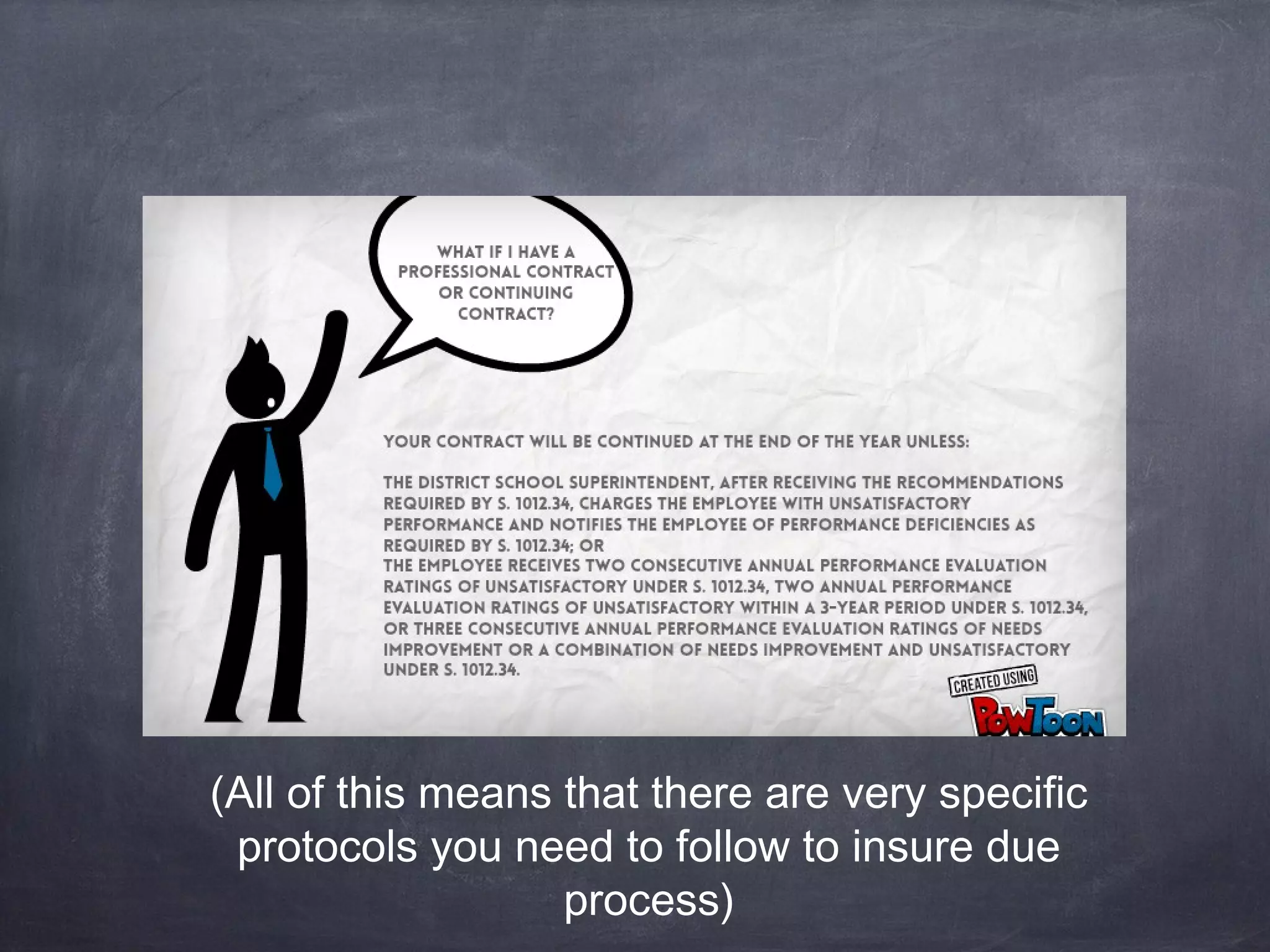
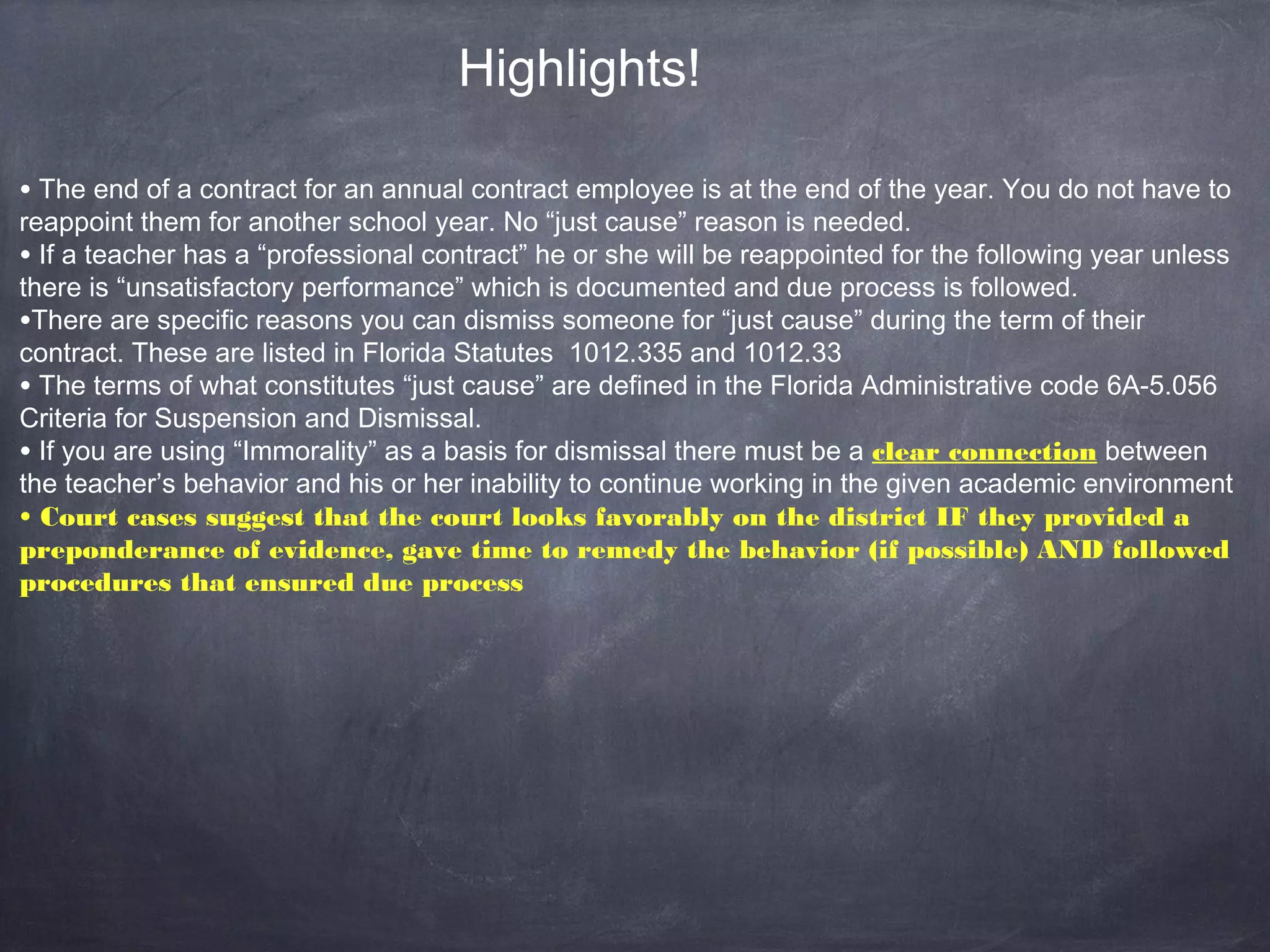
• The end of a contract for an annual contract employee is at the end of the year. You do not have to
reappoint them for another school year. No “just cause” reason is needed.
• If a teacher has a “professional contract” he or she will be reappointed for the following year unless
there is “unsatisfactory performance” which is documented and due process is followed.
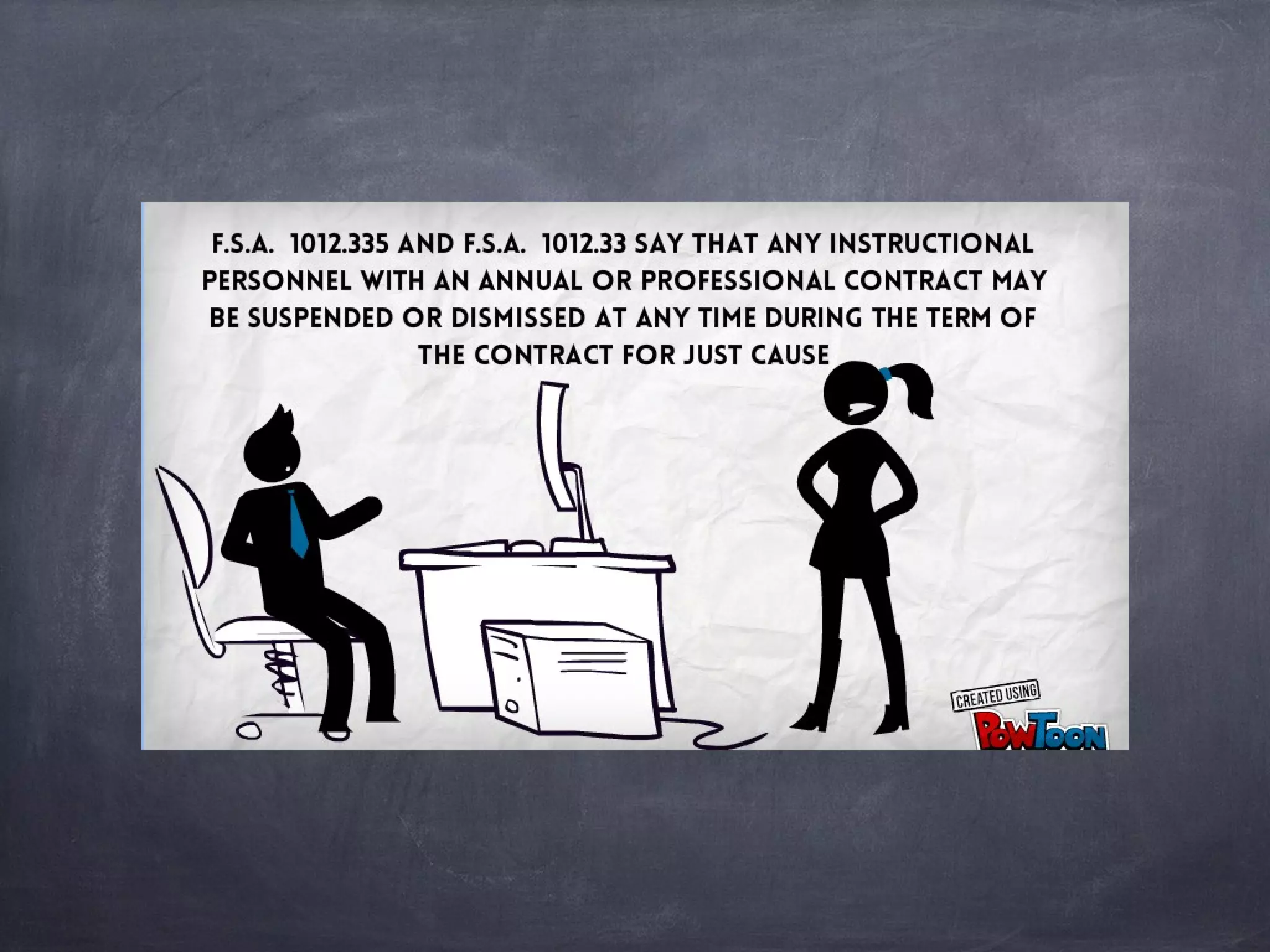
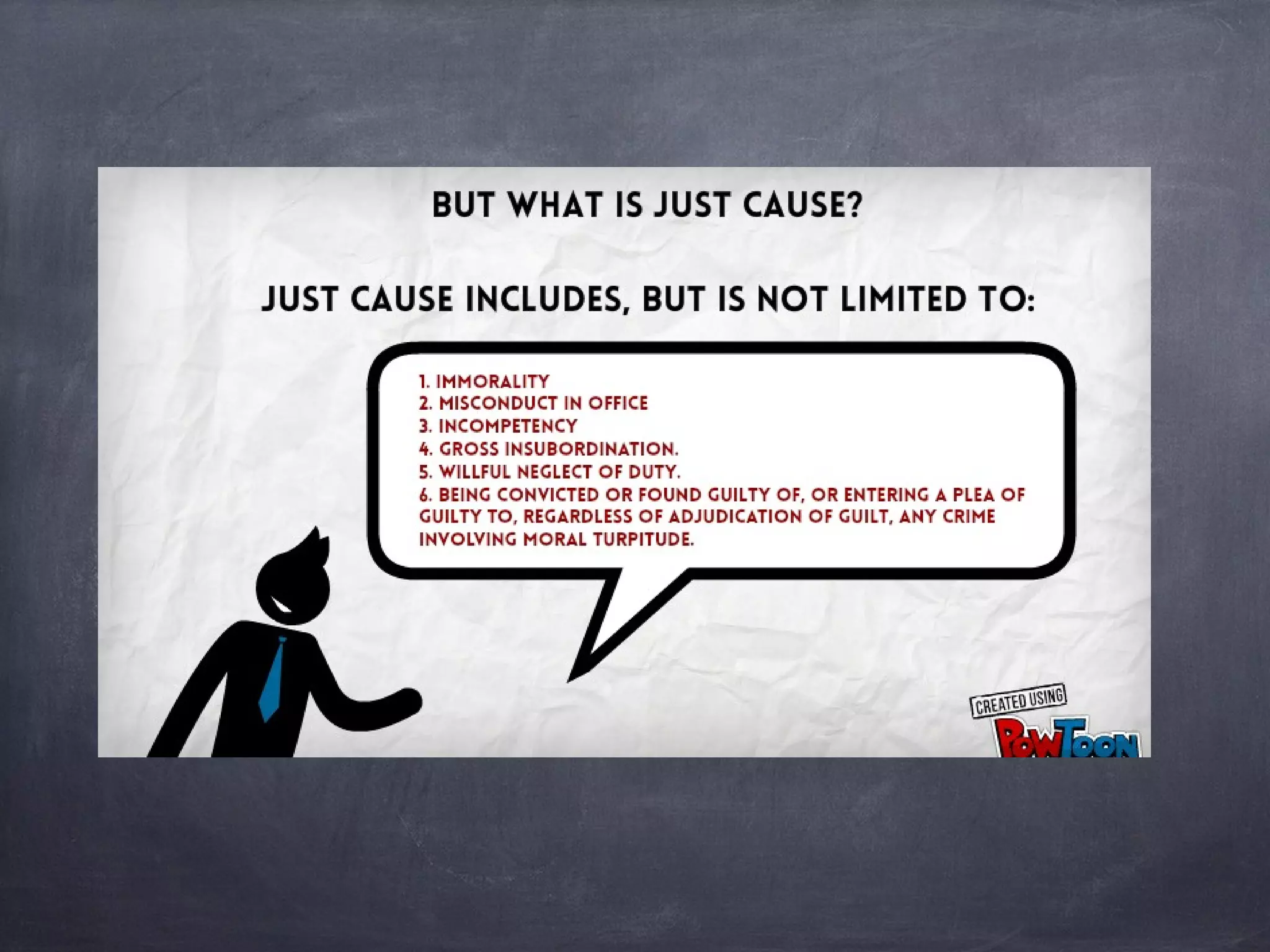
•There are specific reasons you can dismiss someone for “just cause” during the term of their
contract. These are listed in Florida Statutes 1012.335 and 1012.33
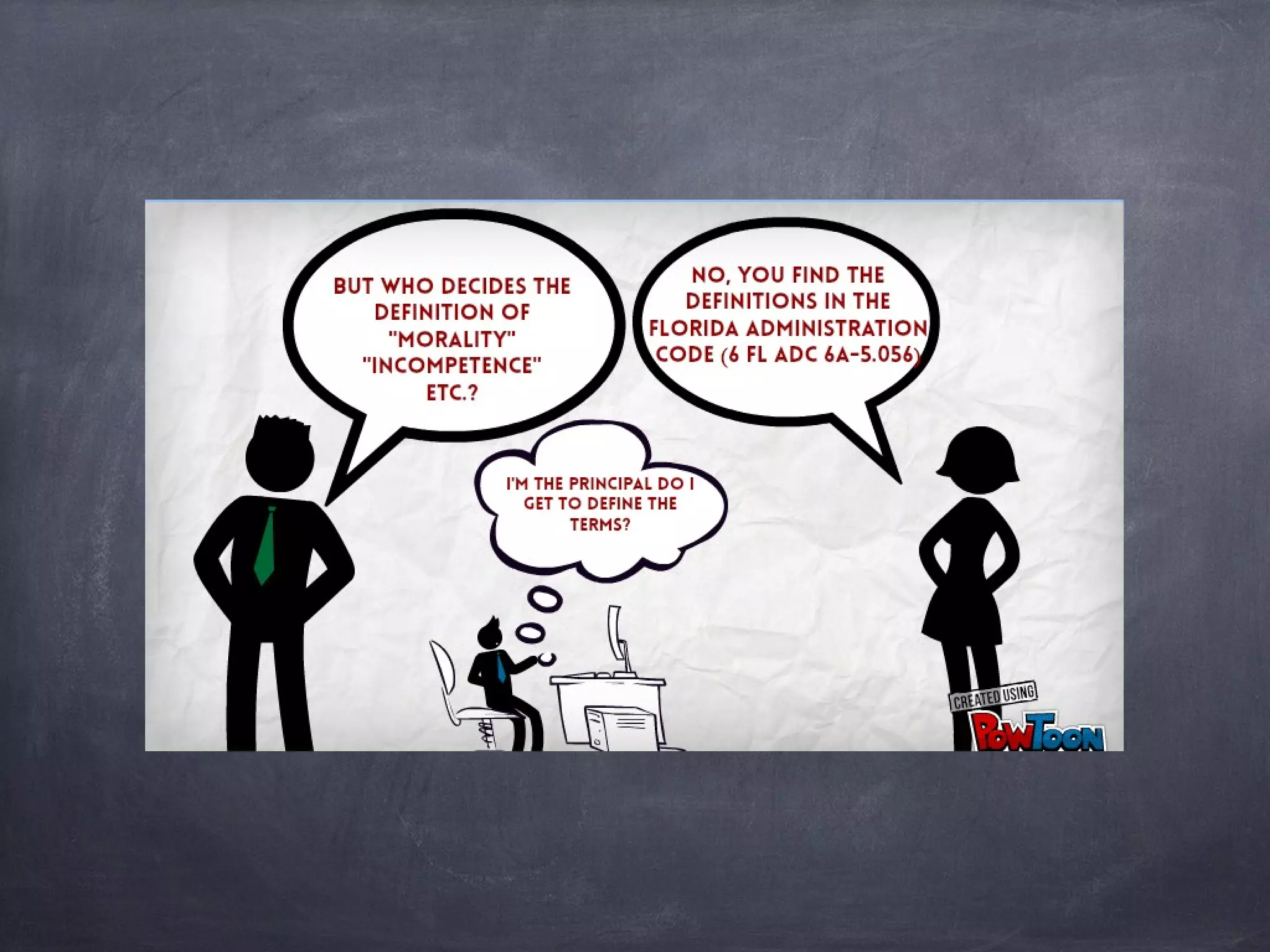
• The terms of what constitutes “just cause” are defined in the Florida Administrative code 6A-5.056
Criteria for Suspension and Dismissal.
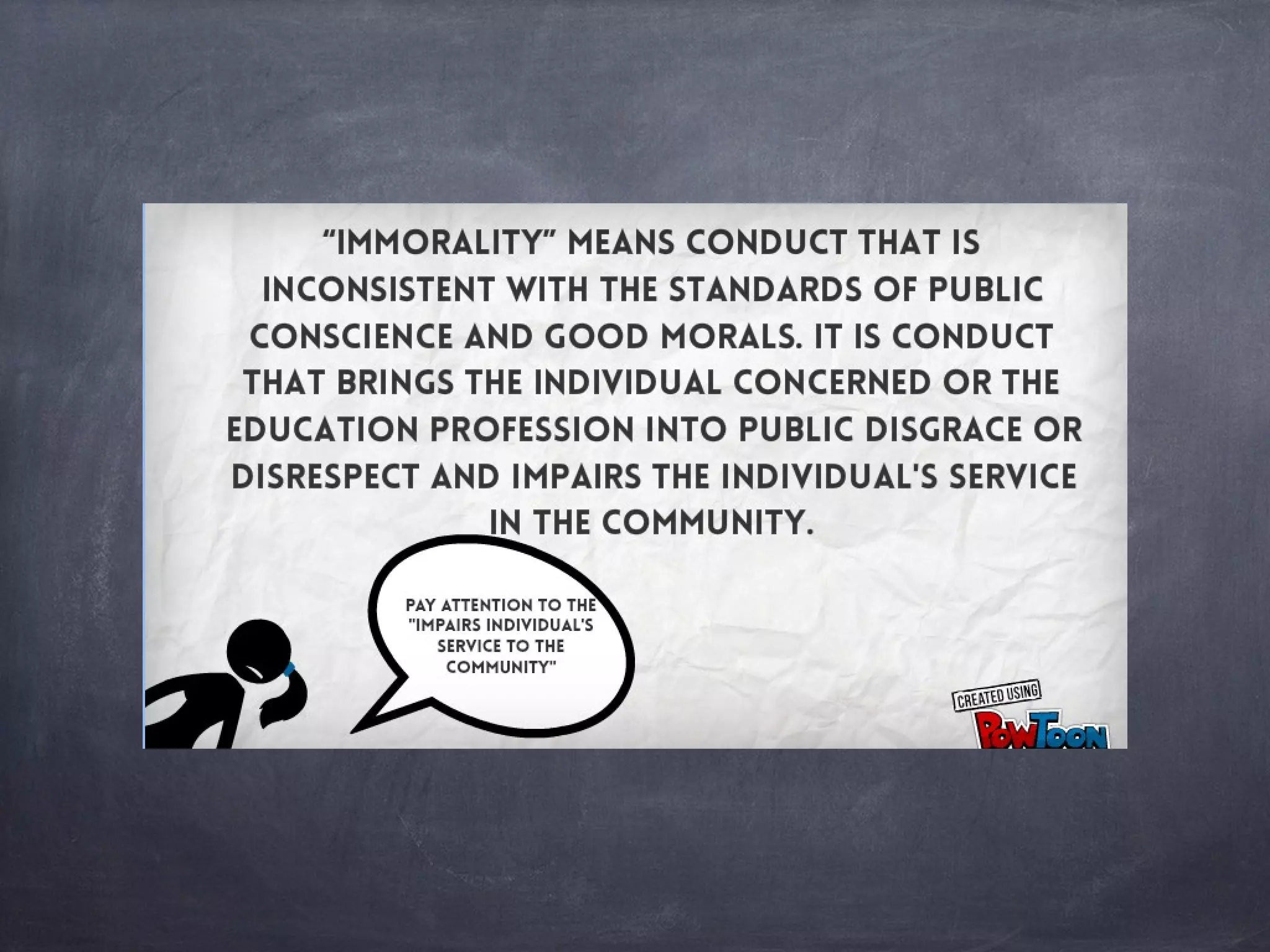
• If you are using “Immorality” as a basis for dismissal there must be a clear connection between
the teacher’s behavior and his or her inability to continue working in the given academic environment
• Court cases suggest that the court looks favorably on the district IF they provided a
preponderance of evidence, gave time to remedy the behavior (if possible) AND followed
procedures that ensured due process
Highlights!
Rosario v. Burke, App. 2 Dist., 605 So.2d 523
Should a head custodian at public school who did not
refuse a direct order of the principal but was
disrespectful and attempted to create friction and
disagreement between Principal and other employees
warrant dismissal?
Forehand v School Board of Gulf Co, App. 1 Dist., 600 So.2d 1187
Does teacher’s statement “Kids, we are not here to
have a Bitch conference” warrant suspension or
dismissal?
Clark v. School Bd. of Lake County, Fla., App. 5 Dist.,
So.2d 735
Does a teacher’s “atypical, alcohol-influenced acts”
that the court called “inappropriate and abnormal” that
occurred during summer vacations mean she was
“incompetent due to incapacity, due to lack of
emotional stability” and therefore should be
dismissed?
Can a teacher who plead “no contest” (which was published in
the newspaper) to undetailed charge that she had abused her
disabled husband be dismissed for “just cause?”
Clark v. School Bd. of Lake County, Fla. App 5 Dist., 596 So.2d 735
Teacher engaged in what she acknowledges was a prolonged,
unprofessional, and inappropriate verbal exchange with one of
her students, J.P., during her third period math class. Another
student recorded twenty-six minutes of this exchange on her
MP3 recorder. The teacher had never had unsatisfactory
evaluations, was a “lead teacher” and is highly thought of by her
colleagues and students. Even J.P said she was sorry it
happened and didn’t want the teacher to lose her job.
Should she be dismissed for ‘misconduct in office?’
Abrams v. Seminole County School Board 73 So.3d 285
Principal alleges that teacher made “suggestive, degrading and
sexual innuendos and remarks to a minor referred to as S.L.,
which conduct was improper, unprofessional and intended to
lead to an improper sexual relationship with said student.”
Further questioning of S.L. and other students say that they
were not degraded or humiliated and that the teacher is “well
liked” by all and “one of our favorite teachers.” Is the principal's
statement that the teacher’s effectiveness is impaired enough
for dismissal?
MacMillan v. Nassau County School Board 629 So.2d 226
A teacher is arrested for criminal battery (later acquitted at trial) for allegedly
touching an undercover law enforcement officer in a sexually suggestive
manner. Instead of public condemnation, at his dismissal hearing there was
an “outpouring of affection and support ... from past and present students,
their parents, [McNeill's] coworkers, friends and associates... who lauded his
performance as a parent, citizen and teacher.” Twenty-five students, parents,
friends, coworkers, and former supervisors testified in support of McNeill.
Another twenty-five citizens submitted letters on his behalf, all expressing
their belief that he can continue to effectively perform his duties.
Can he be dismissed for “immoral conduct?”
McNEILL v. Pinellas County School Board 678 So.2d 476

FELE Presentation "Just Cause"

  • 5.
    (All of thismeans that there are very specific protocols you need to follow to insure due process)
  • 16.
    • The endof a contract for an annual contract employee is at the end of the year. You do not have to reappoint them for another school year. No “just cause” reason is needed. • If a teacher has a “professional contract” he or she will be reappointed for the following year unless there is “unsatisfactory performance” which is documented and due process is followed. •There are specific reasons you can dismiss someone for “just cause” during the term of their contract. These are listed in Florida Statutes 1012.335 and 1012.33 • The terms of what constitutes “just cause” are defined in the Florida Administrative code 6A-5.056 Criteria for Suspension and Dismissal. • If you are using “Immorality” as a basis for dismissal there must be a clear connection between the teacher’s behavior and his or her inability to continue working in the given academic environment • Court cases suggest that the court looks favorably on the district IF they provided a preponderance of evidence, gave time to remedy the behavior (if possible) AND followed procedures that ensured due process Highlights!
  • 18.
    Rosario v. Burke,App. 2 Dist., 605 So.2d 523 Should a head custodian at public school who did not refuse a direct order of the principal but was disrespectful and attempted to create friction and disagreement between Principal and other employees warrant dismissal?
  • 19.
    Forehand v SchoolBoard of Gulf Co, App. 1 Dist., 600 So.2d 1187 Does teacher’s statement “Kids, we are not here to have a Bitch conference” warrant suspension or dismissal?
  • 20.
    Clark v. SchoolBd. of Lake County, Fla., App. 5 Dist., So.2d 735 Does a teacher’s “atypical, alcohol-influenced acts” that the court called “inappropriate and abnormal” that occurred during summer vacations mean she was “incompetent due to incapacity, due to lack of emotional stability” and therefore should be dismissed?
  • 21.
    Can a teacherwho plead “no contest” (which was published in the newspaper) to undetailed charge that she had abused her disabled husband be dismissed for “just cause?” Clark v. School Bd. of Lake County, Fla. App 5 Dist., 596 So.2d 735
  • 22.
    Teacher engaged inwhat she acknowledges was a prolonged, unprofessional, and inappropriate verbal exchange with one of her students, J.P., during her third period math class. Another student recorded twenty-six minutes of this exchange on her MP3 recorder. The teacher had never had unsatisfactory evaluations, was a “lead teacher” and is highly thought of by her colleagues and students. Even J.P said she was sorry it happened and didn’t want the teacher to lose her job. Should she be dismissed for ‘misconduct in office?’ Abrams v. Seminole County School Board 73 So.3d 285
  • 23.
    Principal alleges thatteacher made “suggestive, degrading and sexual innuendos and remarks to a minor referred to as S.L., which conduct was improper, unprofessional and intended to lead to an improper sexual relationship with said student.” Further questioning of S.L. and other students say that they were not degraded or humiliated and that the teacher is “well liked” by all and “one of our favorite teachers.” Is the principal's statement that the teacher’s effectiveness is impaired enough for dismissal? MacMillan v. Nassau County School Board 629 So.2d 226
  • 24.
    A teacher isarrested for criminal battery (later acquitted at trial) for allegedly touching an undercover law enforcement officer in a sexually suggestive manner. Instead of public condemnation, at his dismissal hearing there was an “outpouring of affection and support ... from past and present students, their parents, [McNeill's] coworkers, friends and associates... who lauded his performance as a parent, citizen and teacher.” Twenty-five students, parents, friends, coworkers, and former supervisors testified in support of McNeill. Another twenty-five citizens submitted letters on his behalf, all expressing their belief that he can continue to effectively perform his duties. Can he be dismissed for “immoral conduct?” McNEILL v. Pinellas County School Board 678 So.2d 476

Editor's Notes

  • #19 Not dismissed - gross insubordination (as opposed to simple insubordination) is disobeying a direct order.
  • #20 Not dismissed - Court decided this was not egregious enough to have the teacher has impaired effectiveness
  • #21 Not dismissed - This incident although inappropriate was not in character for the teacher, it happened at a difficult time in her life, she was remorse and sought counseling and it there was no longer any indication this was an issue or there would be problems of this nature again.
  • #22 Not dismissed - pleading “no contest” is not proof of moral turpitude and nothing other than the plea of “no contest” was made public so it did not bring the teaching profession under disgrace
  • #23 teacher's misconduct in arguing with student was not serious enough to impair her effectiveness in the school system, based on supported factual findings that the tone of teacher's argument, though heated, carried an underlying hint of long and friendly relationship between teacher and student and there was no prior incidences lack this nor was there likely to be in the future.
  • #24 No, there must be a preponderance of evidence to support the teacher's impaired effectiveness. There must be evidence to support impaired effectiveness not just the principal's (or someone else’s) opinion
  • #25 No, there is not a preponderance of evidence that his effectiveness has been impaired. In fact, it is the opposite.