DT Driver Training
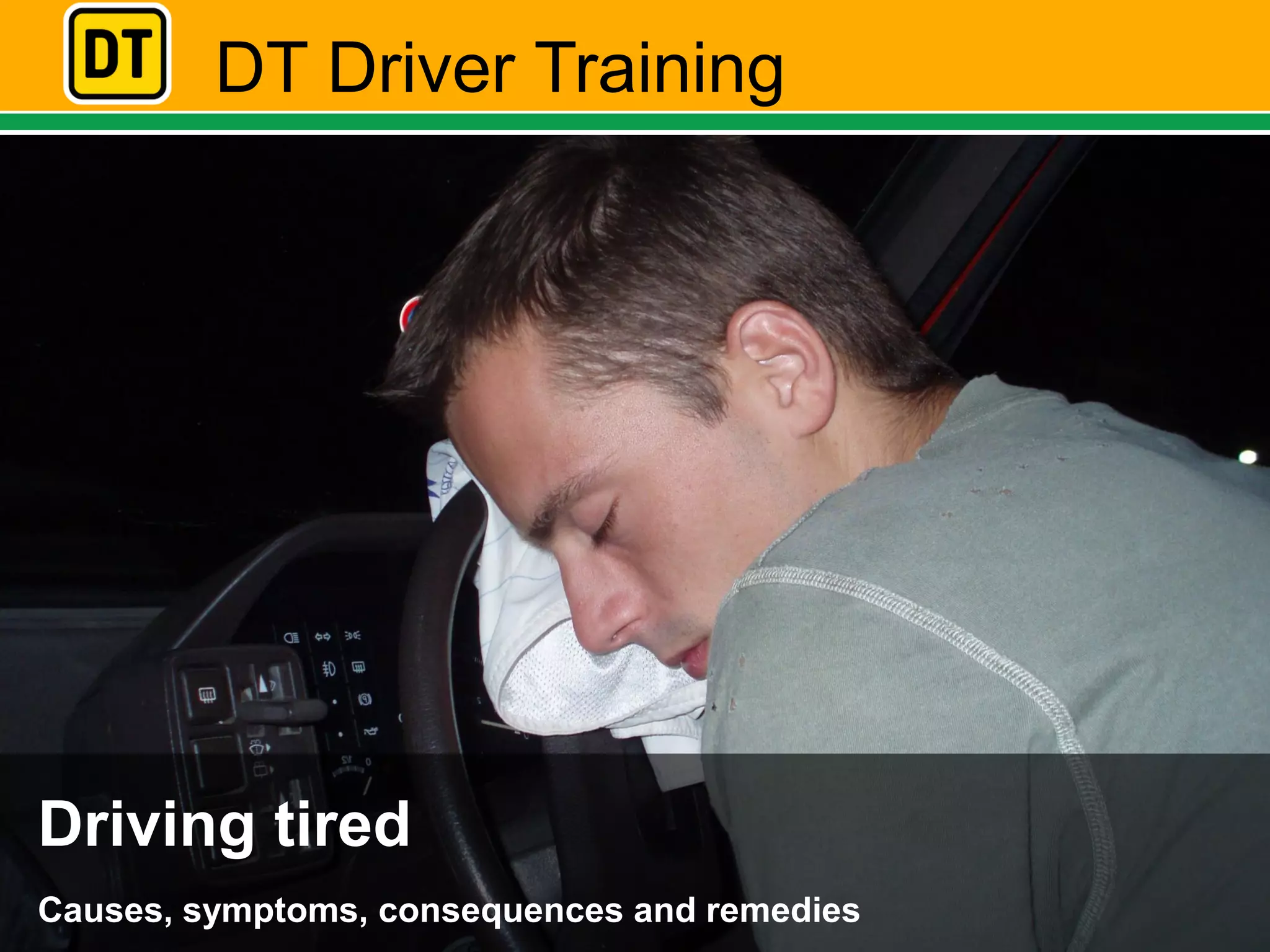
Driving tired
Causes, symptoms, consequences and remedies
What causes fatigue/tiredness?
Many things can cause tiredness: a new baby, medication, your diet, shift
work, stress, long hours, sleep apnoea, depression, grief, alcohol, drugs,
lack of exercise, thyroid disorders, heart disease and sleeping too much
Symptoms and signs of fatigue
There are plenty of signs to
warn you of drowsiness when
driving: frequent blinking,
droopy eyes, microsleeps,
difficulty maintaining a
constant speed, slow reaction
times, yawning, blurred vision,
poor concentration, missing
road signs, feeling irritable,
sore muscles, dizziness,
headache, rubbing your head,
and more
When are you most tired?
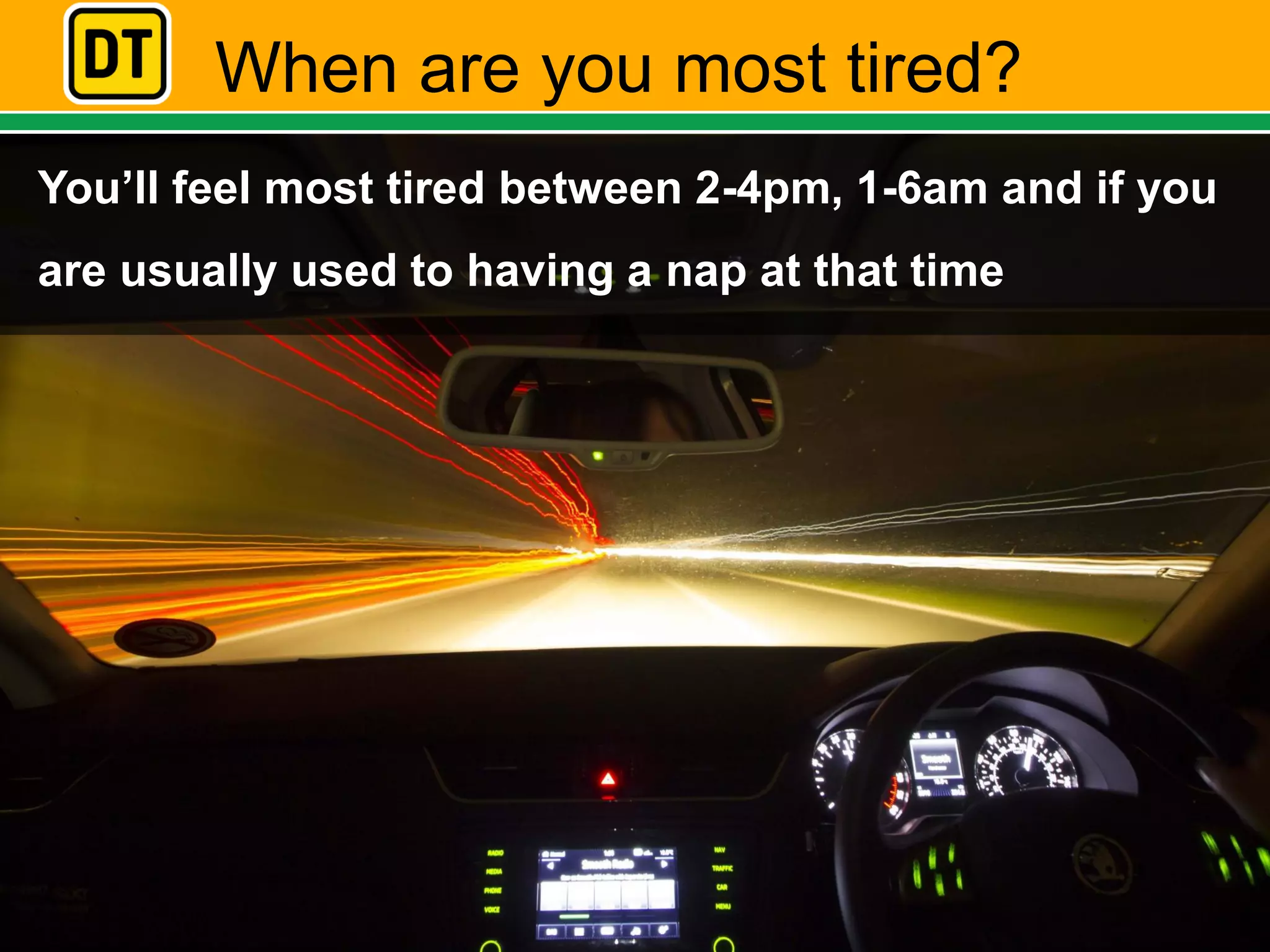
You’ll feel most tired between 2-4pm, 1-6am and if you
are usually used to having a nap at that time
Things that don’t help fatigue
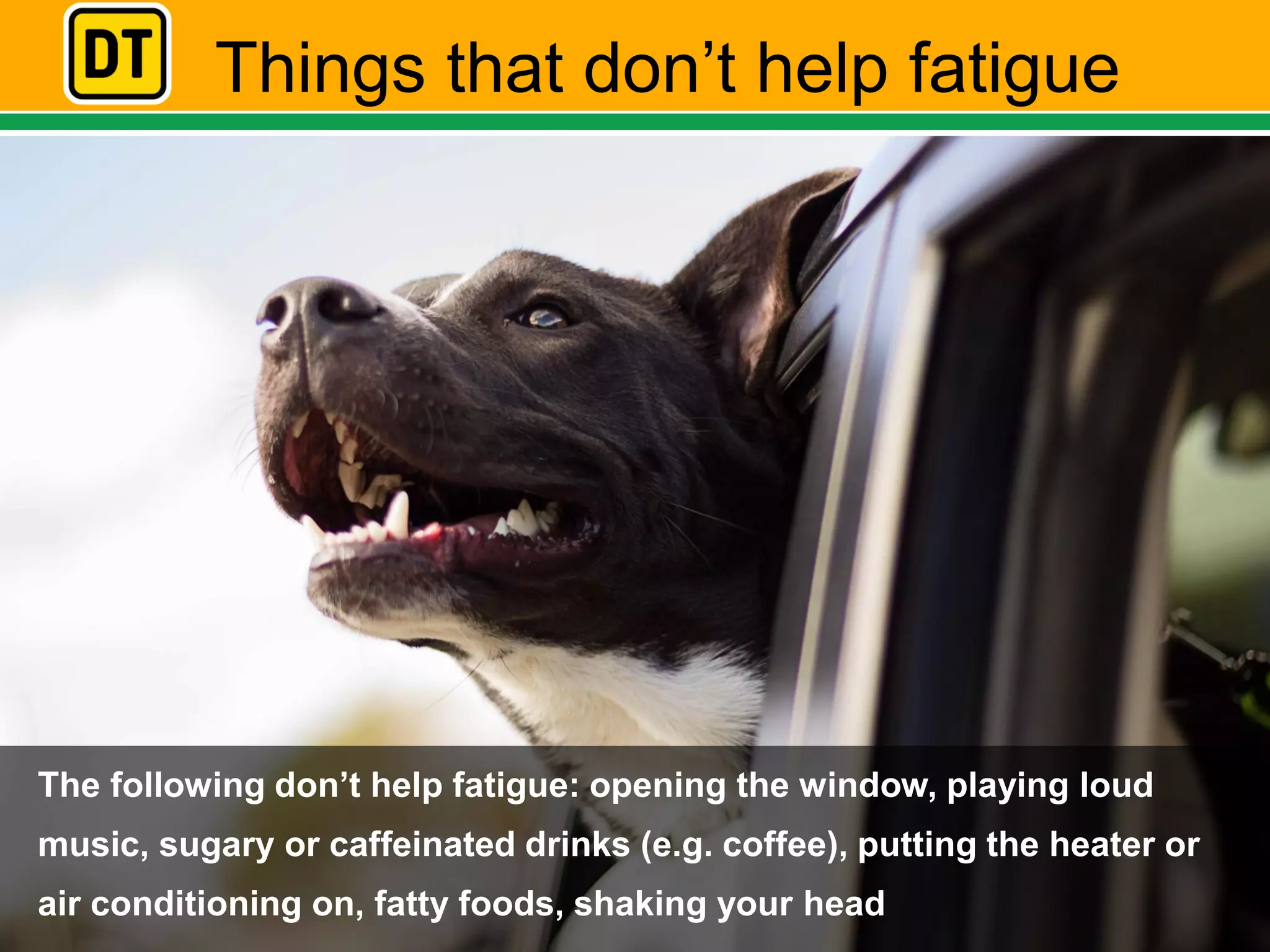
The following don’t help fatigue: opening the window, playing loud
music, sugary or caffeinated drinks (e.g. coffee), putting the heater or
air conditioning on, fatty foods, shaking your head
Microsleeps
Ignore your tiredness and you’ll have microsleeps. If you have
a 4-second microsleep at 100km/h, you’ll travel the length of a
soccer pitch (about 110 metres) blind to what’s on the road
Falling asleep at the wheel
Crashes involving sleeping drivers rarely include
braking, and are often head-on with another vehicle
Accident risk by age
Very old and very young drivers have the largest crash risk
DT Driver Training
This presentation is part of the fatigue
module in DT Driver Training’s Fleet
Driver Training Plan.
To check out the remaining modules, and
other information visit:
https://www.drivingtests.co.nz/
© Copyright 2017 DT Driver Training. All rights reserved

Fatigue and tiredness when driving

  • 1.
    DT Driver Training Drivingtired Causes, symptoms, consequences and remedies
  • 2.
    What causes fatigue/tiredness? Manythings can cause tiredness: a new baby, medication, your diet, shift work, stress, long hours, sleep apnoea, depression, grief, alcohol, drugs, lack of exercise, thyroid disorders, heart disease and sleeping too much
  • 3.
    Symptoms and signsof fatigue There are plenty of signs to warn you of drowsiness when driving: frequent blinking, droopy eyes, microsleeps, difficulty maintaining a constant speed, slow reaction times, yawning, blurred vision, poor concentration, missing road signs, feeling irritable, sore muscles, dizziness, headache, rubbing your head, and more
  • 4.
    When are youmost tired? You’ll feel most tired between 2-4pm, 1-6am and if you are usually used to having a nap at that time
  • 5.
    Things that don’thelp fatigue The following don’t help fatigue: opening the window, playing loud music, sugary or caffeinated drinks (e.g. coffee), putting the heater or air conditioning on, fatty foods, shaking your head
  • 6.
    Microsleeps Ignore your tirednessand you’ll have microsleeps. If you have a 4-second microsleep at 100km/h, you’ll travel the length of a soccer pitch (about 110 metres) blind to what’s on the road
  • 7.
    Falling asleep atthe wheel Crashes involving sleeping drivers rarely include braking, and are often head-on with another vehicle
  • 8.
    Accident risk byage Very old and very young drivers have the largest crash risk
  • 9.
    DT Driver Training Thispresentation is part of the fatigue module in DT Driver Training’s Fleet Driver Training Plan. To check out the remaining modules, and other information visit: https://www.drivingtests.co.nz/ © Copyright 2017 DT Driver Training. All rights reserved