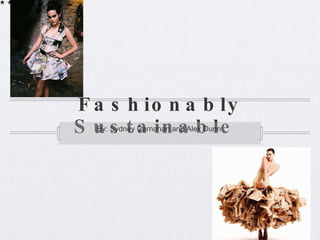
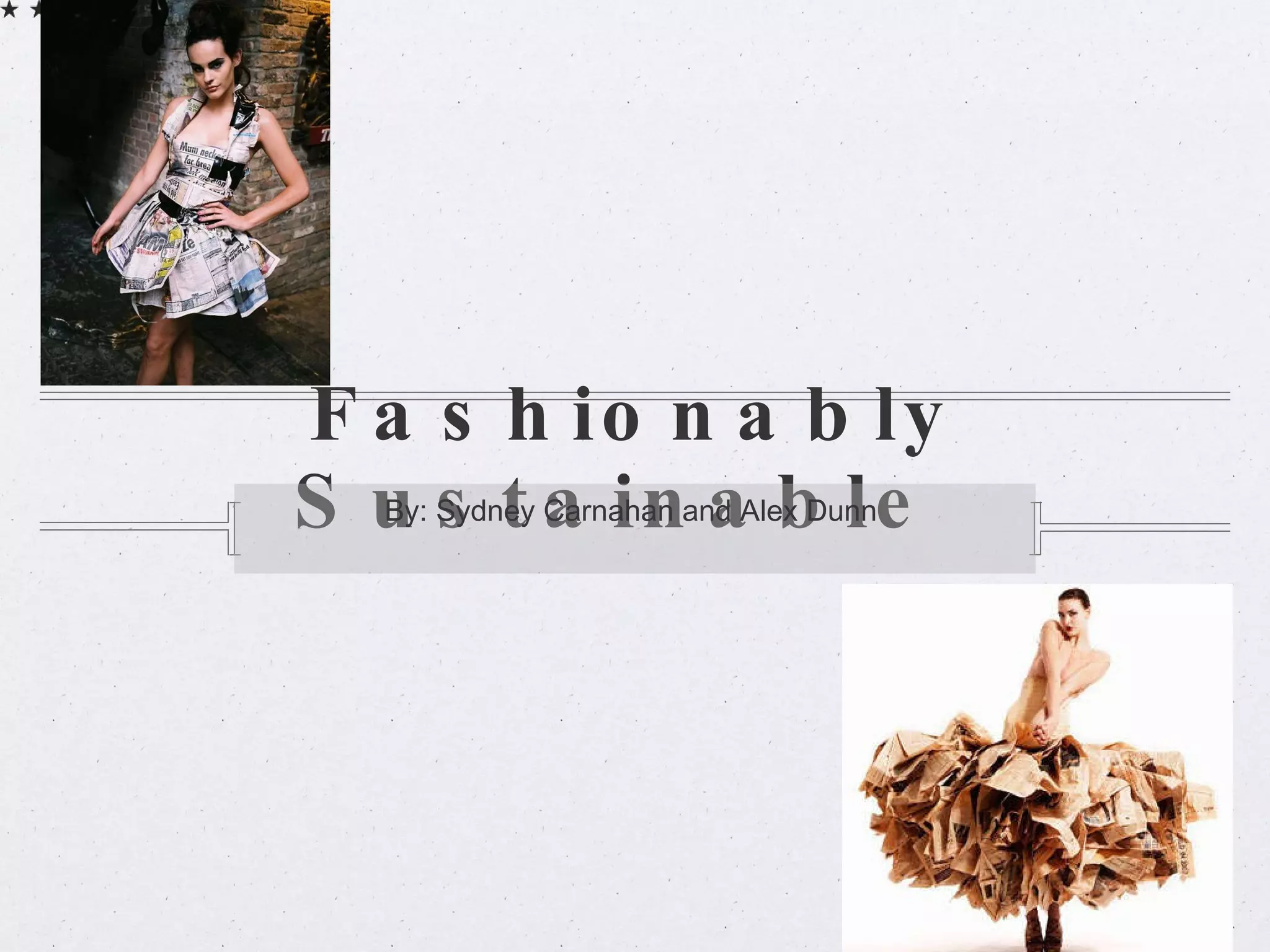
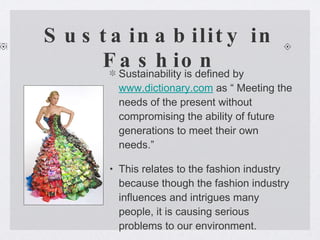
Fashionably Sustainable  By: Sydney Carnahan and Alex Dunn
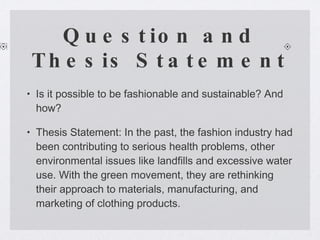
Sustainability in Fashion Sustainability is defined by  www.dictionary.com  as “ Meeting the needs of the present without compromising the ability of future generations to meet their own needs.”  This relates to the fashion industry because though the fashion industry influences and intrigues many people, it is causing serious problems to our environment.
Statistics  There are 150 grams of pesticides used in the process of making one T-Shirt. Just one small drop of pesticides can kill you. 20,000 people die annually from the pesticides used to make clothing.  To dye one T-shirt it takes 16-20 liters of water.  Americans, on average, throw out about 68 pounds of clothing each year per person. This fills up about 4% of landfill solid waste.
Question and Thesis Statement Is it possible to be fashionable and sustainable? And how?  Thesis Statement: In the past, the fashion industry had been contributing to serious health problems, other environmental issues like landfills and excessive water use. With the green movement, they are rethinking their approach to materials, manufacturing, and marketing of clothing products.
Negative Effects of Regular Fashion The industry is the second largest user of water in the world. The fashion industry kills about 50 million animals per year for fashion. Each year Americans purchase approximately 1 billion garments made in China, the equivalent of 4 pieces of clothing for every U.S. citizen.  According to the U.S. National Labor Committee, the Chinese workers that mill the cotton make on average about 12-18 cents per hour.
Fashionably Sustainable Materials Sustainable Clothing can be made of materials such as organic cotton, bamboo fabric, Ingeo fibers (a polyester fiber made from fermented corn), soy fibers, wool, EcoSpun (a polyester fiber made completely out of recycled plastic bottles), and hemp.   Though a small difference in materials may not seem like it would make much of an impact, the results overall are very positive. For example, organic cotton uses no chemical fertilizers or pesticides.
Saint Louis Sustainable Fashion Night
What We Can Do
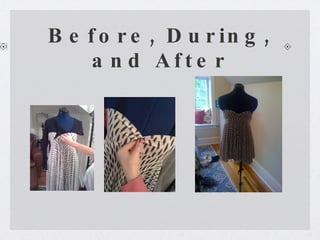
Before, During, and After
Conclusion You can have fashionably sustainable fashion!! It is all about the eco friendly materials, recycling, creativity, and less pesticides and water.  New York Fashion Week has been dedicating segments of the show to sustainable fashion.  This is evidence that the industry is embracing sustainable fashions and making an impact. We saved around 1,000 lbs. of pesticides, 120 liters of water, and countless gallons of fuel for transportation from being used in the production of new clothes
Thank You

Fashionably Sustainable

  • 1.
    Fashionably Sustainable By: Sydney Carnahan and Alex Dunn
  • 2.
    Sustainability in FashionSustainability is defined by www.dictionary.com as “ Meeting the needs of the present without compromising the ability of future generations to meet their own needs.” This relates to the fashion industry because though the fashion industry influences and intrigues many people, it is causing serious problems to our environment.
  • 3.
    Statistics Thereare 150 grams of pesticides used in the process of making one T-Shirt. Just one small drop of pesticides can kill you. 20,000 people die annually from the pesticides used to make clothing. To dye one T-shirt it takes 16-20 liters of water. Americans, on average, throw out about 68 pounds of clothing each year per person. This fills up about 4% of landfill solid waste.
  • 4.
    Question and ThesisStatement Is it possible to be fashionable and sustainable? And how? Thesis Statement: In the past, the fashion industry had been contributing to serious health problems, other environmental issues like landfills and excessive water use. With the green movement, they are rethinking their approach to materials, manufacturing, and marketing of clothing products.
  • 5.
    Negative Effects ofRegular Fashion The industry is the second largest user of water in the world. The fashion industry kills about 50 million animals per year for fashion. Each year Americans purchase approximately 1 billion garments made in China, the equivalent of 4 pieces of clothing for every U.S. citizen. According to the U.S. National Labor Committee, the Chinese workers that mill the cotton make on average about 12-18 cents per hour.
  • 6.
    Fashionably Sustainable MaterialsSustainable Clothing can be made of materials such as organic cotton, bamboo fabric, Ingeo fibers (a polyester fiber made from fermented corn), soy fibers, wool, EcoSpun (a polyester fiber made completely out of recycled plastic bottles), and hemp.   Though a small difference in materials may not seem like it would make much of an impact, the results overall are very positive. For example, organic cotton uses no chemical fertilizers or pesticides.
  • 7.
  • 8.
  • 9.
  • 10.
    Conclusion You canhave fashionably sustainable fashion!! It is all about the eco friendly materials, recycling, creativity, and less pesticides and water. New York Fashion Week has been dedicating segments of the show to sustainable fashion. This is evidence that the industry is embracing sustainable fashions and making an impact. We saved around 1,000 lbs. of pesticides, 120 liters of water, and countless gallons of fuel for transportation from being used in the production of new clothes
  • 11.