FAO in action
Working with farmers to
identify and implement
climate-smart agriculture
Event: Climate-smart agriculture advantage –
better returns for smallholders
UNFCCC, SBSTA 9 June 2015
Kaisa Karttunen
Outline
1.Climate-smart agriculture: What it is?
2.Case studies and evidence from the field
3.Conclusions and key messages
Global concept, local actions
• CSA is an approach, not an agricultural practice or
system per se.
• CSA is location-specific: Identifies and combines the most
suitable and sustainable practices and solutions for the
local economic, environmental and social circumstances.
• CSA applies across scales: From national to local level, and
from farmers to policy makers.
• CSA is cross-sectoral: Including all agricultural sub-sectors
(crop and livestock production, fisheries and aquaculture,
and forestry).
• CSA implementation and upscaling need a suitable
enabling environment, including policies and support structures.
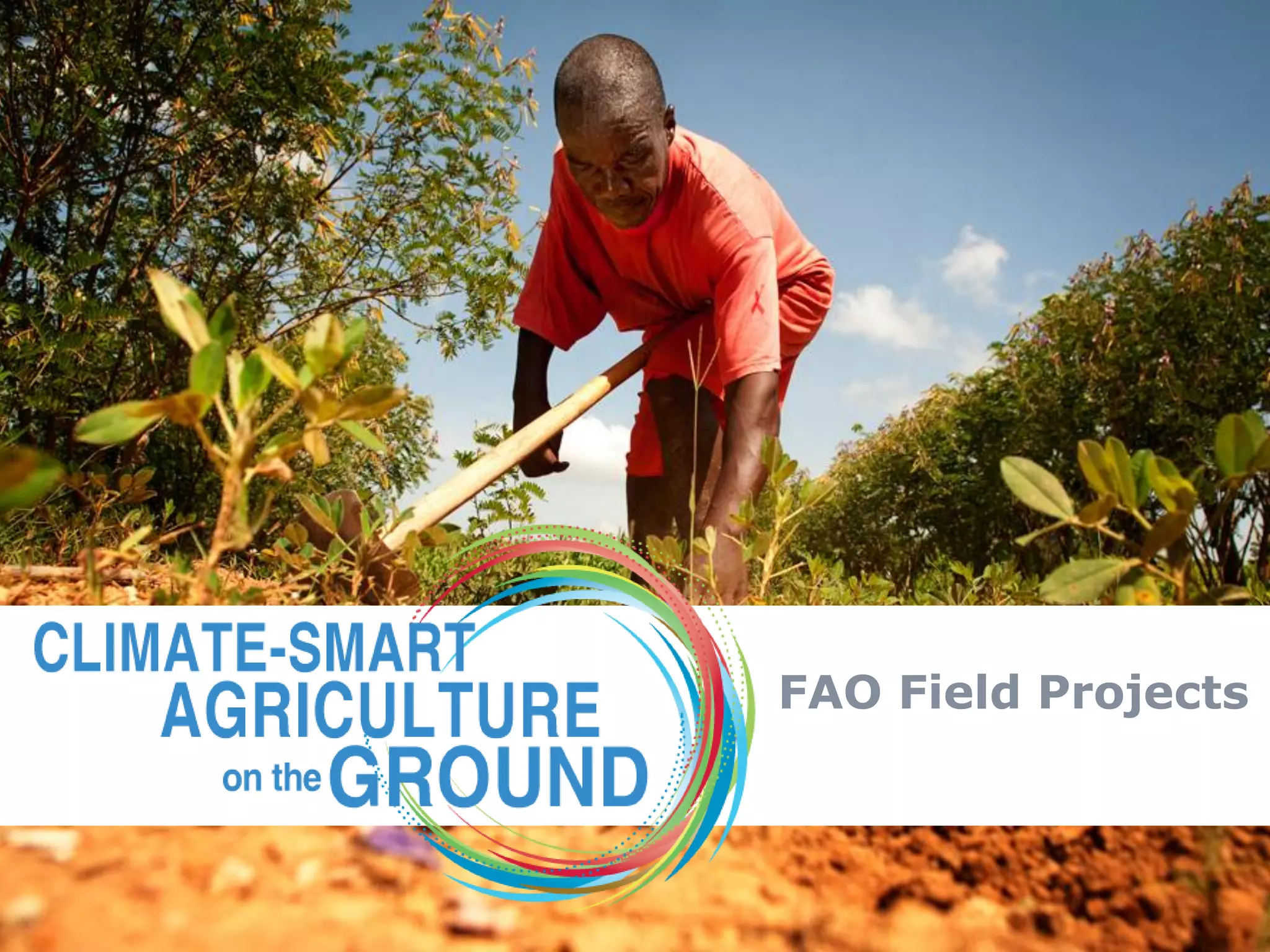
FAO Field Projects
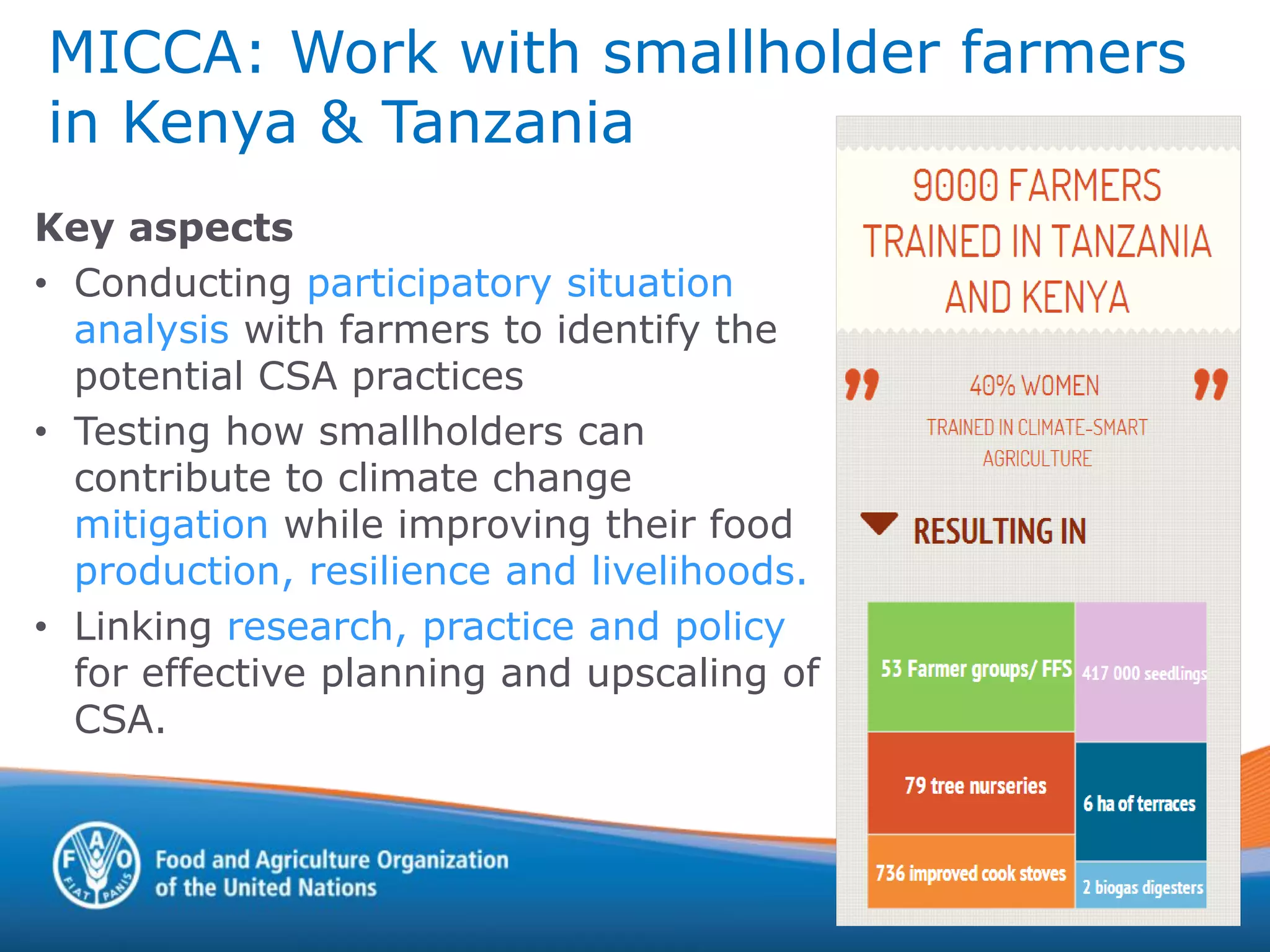
MICCA: Work with smallholder farmers
in Kenya & Tanzania
Key aspects
• Conducting participatory situation
analysis with farmers to identify the
potential CSA practices
• Testing how smallholders can
contribute to climate change
mitigation while improving their food
production, resilience and livelihoods.
• Linking research, practice and policy
for effective planning and upscaling of
CSA.
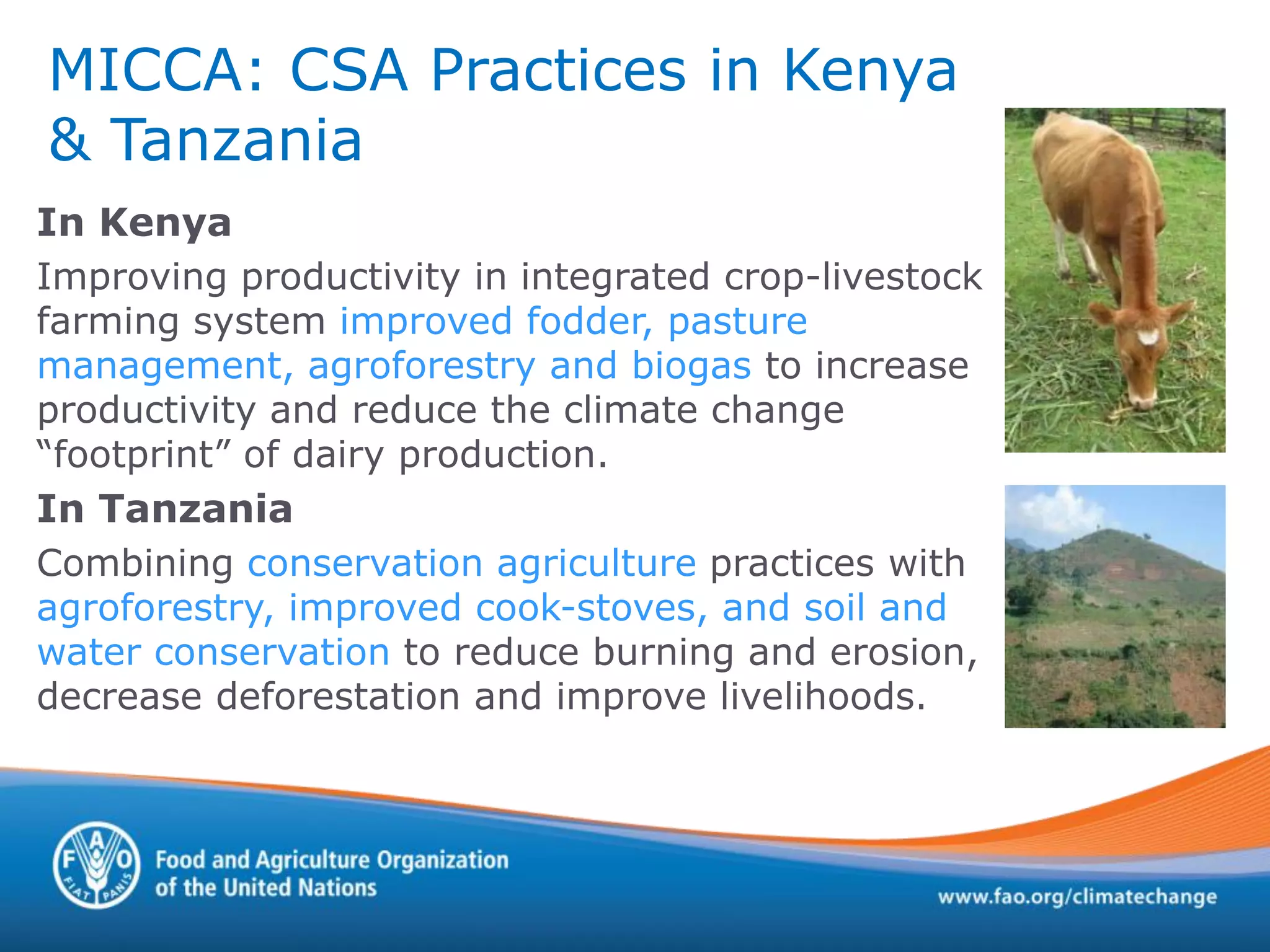
In Kenya
Improving productivity in integrated crop-livestock
farming system improved fodder, pasture
management, agroforestry and biogas to increase
productivity and reduce the climate change
“footprint” of dairy production.
In Tanzania
Combining conservation agriculture practices with
agroforestry, improved cook-stoves, and soil and
water conservation to reduce burning and erosion,
decrease deforestation and improve livelihoods.
MICCA: CSA Practices in Kenya
& Tanzania
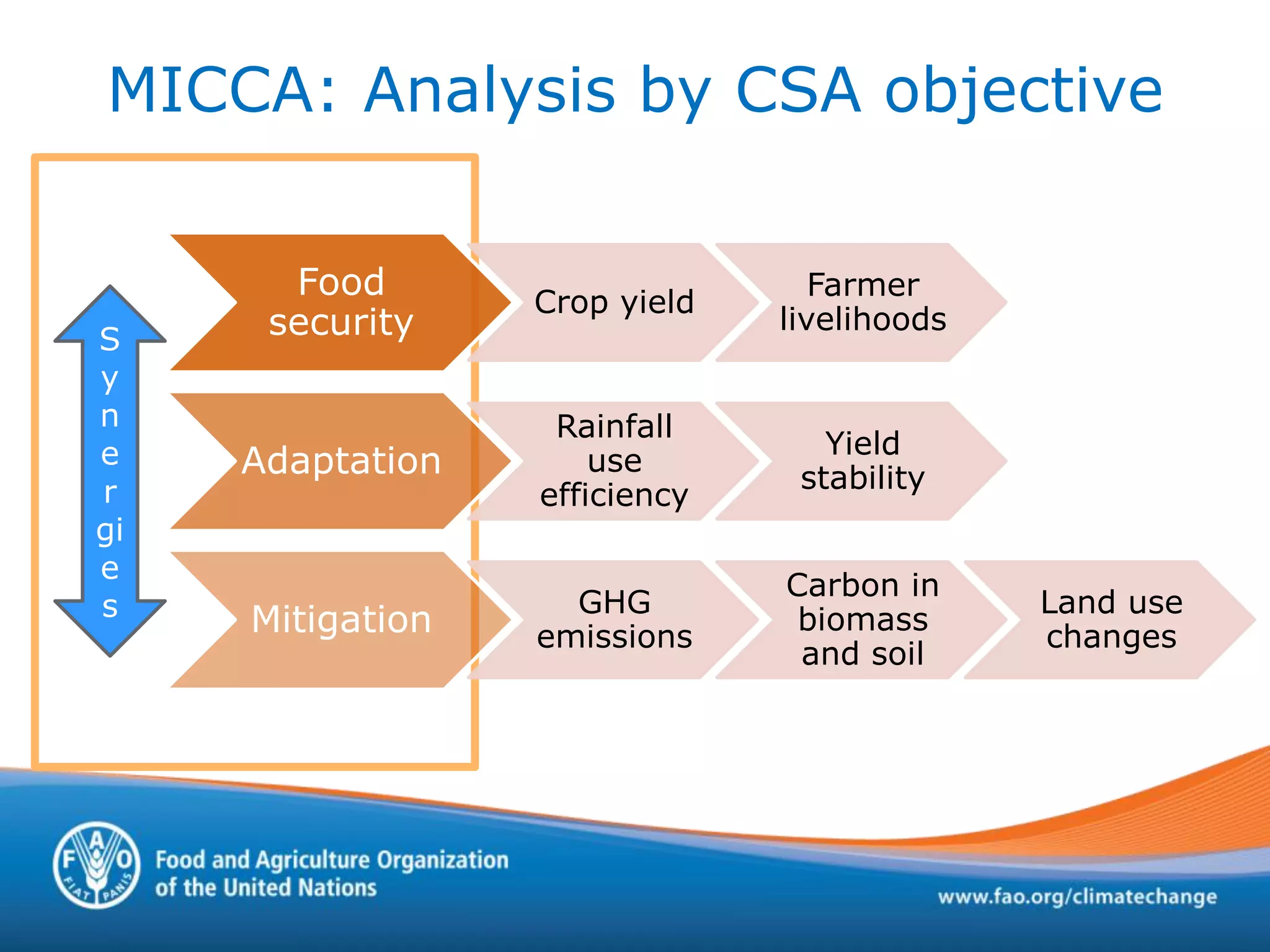
MICCA: Analysis by CSA objective
Food
security
Crop yield
Farmer
livelihoods
Adaptation
Rainfall
use
efficiency
Yield
stability
Mitigation
GHG
emissions
Carbon in
biomass
and soil
Land use
changes
S
y
n
e
r
gi
e
s
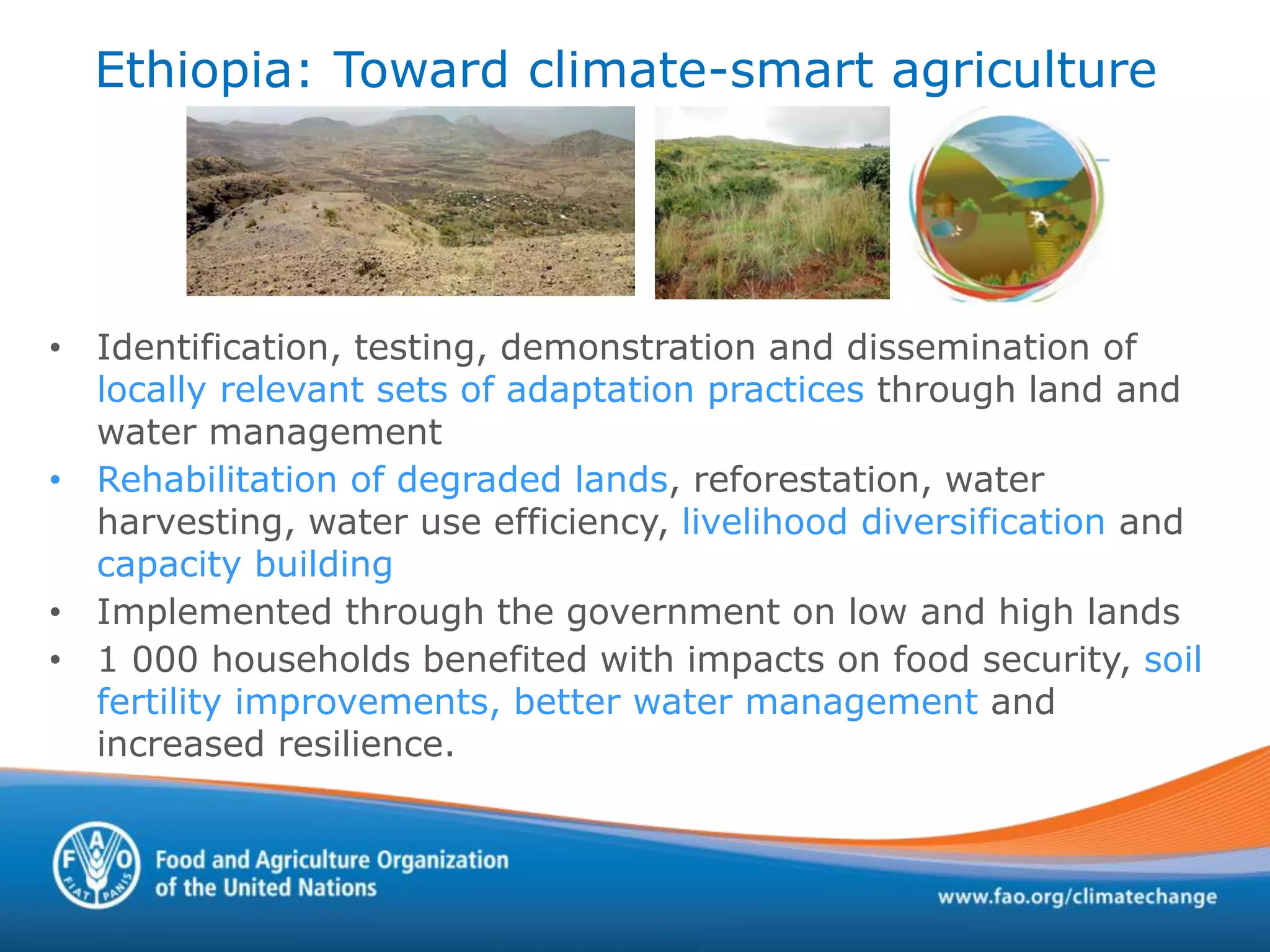
Ethiopia: Toward climate-smart agriculture
• Identification, testing, demonstration and dissemination of
locally relevant sets of adaptation practices through land and
water management
• Rehabilitation of degraded lands, reforestation, water
harvesting, water use efficiency, livelihood diversification and
capacity building
• Implemented through the government on low and high lands
• 1 000 households benefited with impacts on food security, soil
fertility improvements, better water management and
increased resilience.
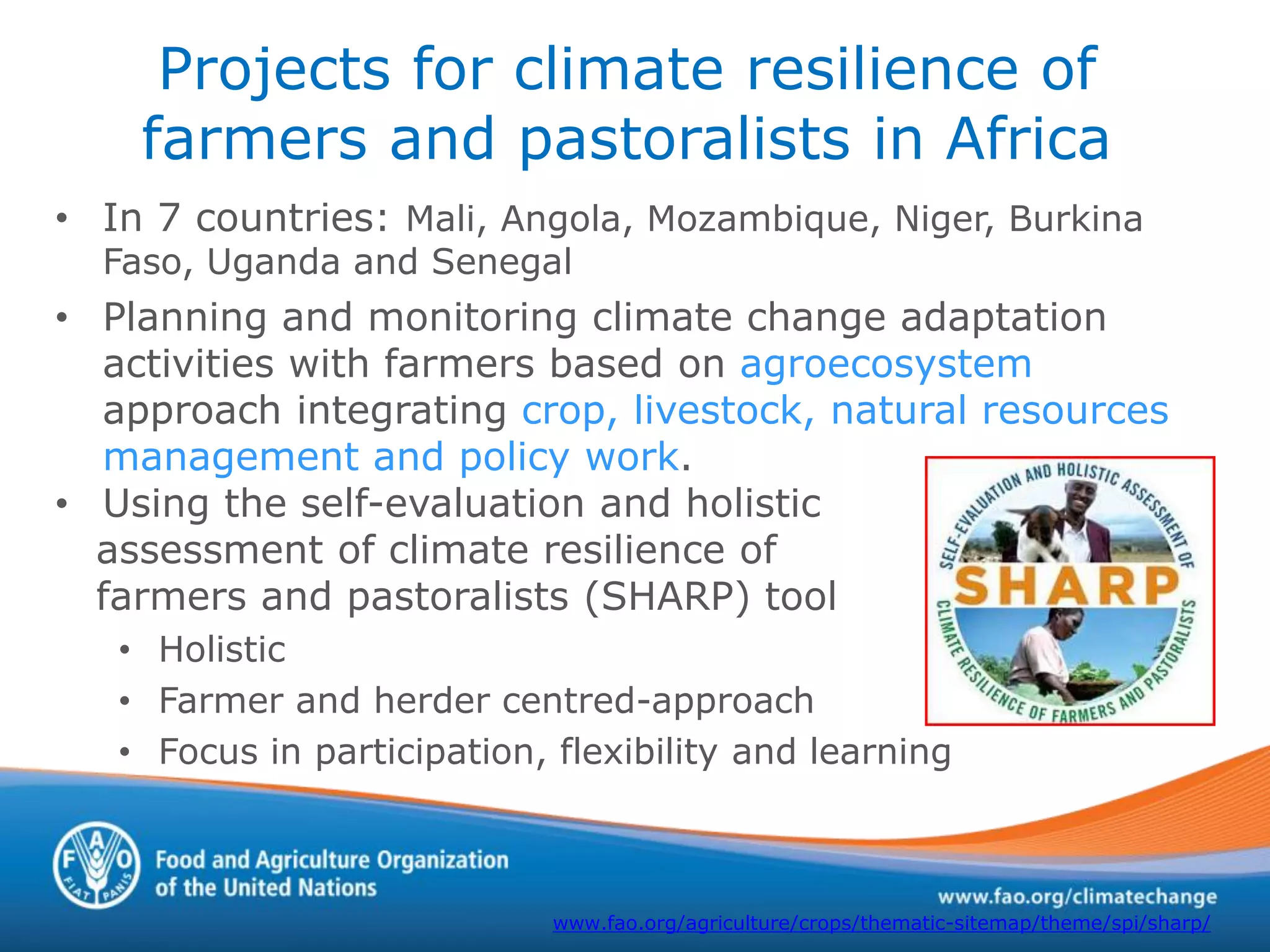
Projects for climate resilience of
farmers and pastoralists in Africa
• In 7 countries: Mali, Angola, Mozambique, Niger, Burkina
Faso, Uganda and Senegal
• Planning and monitoring climate change adaptation
activities with farmers based on agroecosystem
approach integrating crop, livestock, natural resources
management and policy work.
• Using the self-evaluation and holistic
assessment of climate resilience of
farmers and pastoralists (SHARP) tool
• Holistic
• Farmer and herder centred-approach
• Focus in participation, flexibility and learning
www.fao.org/agriculture/crops/thematic-sitemap/theme/spi/sharp/
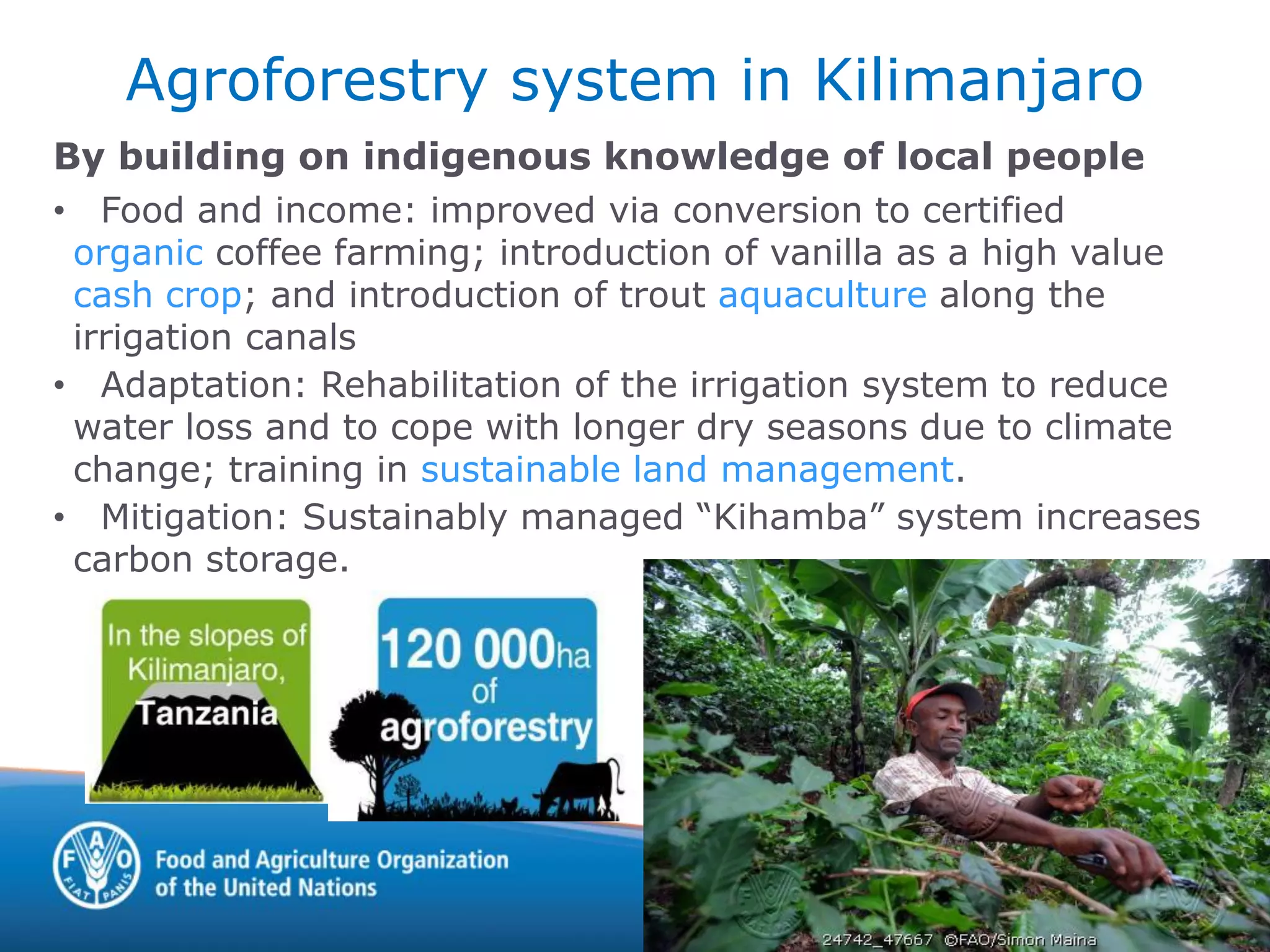
Agroforestry system in Kilimanjaro
By building on indigenous knowledge of local people
• Food and income: improved via conversion to certified
organic coffee farming; introduction of vanilla as a high value
cash crop; and introduction of trout aquaculture along the
irrigation canals
• Adaptation: Rehabilitation of the irrigation system to reduce
water loss and to cope with longer dry seasons due to climate
change; training in sustainable land management.
• Mitigation: Sustainably managed “Kihamba” system increases
carbon storage.
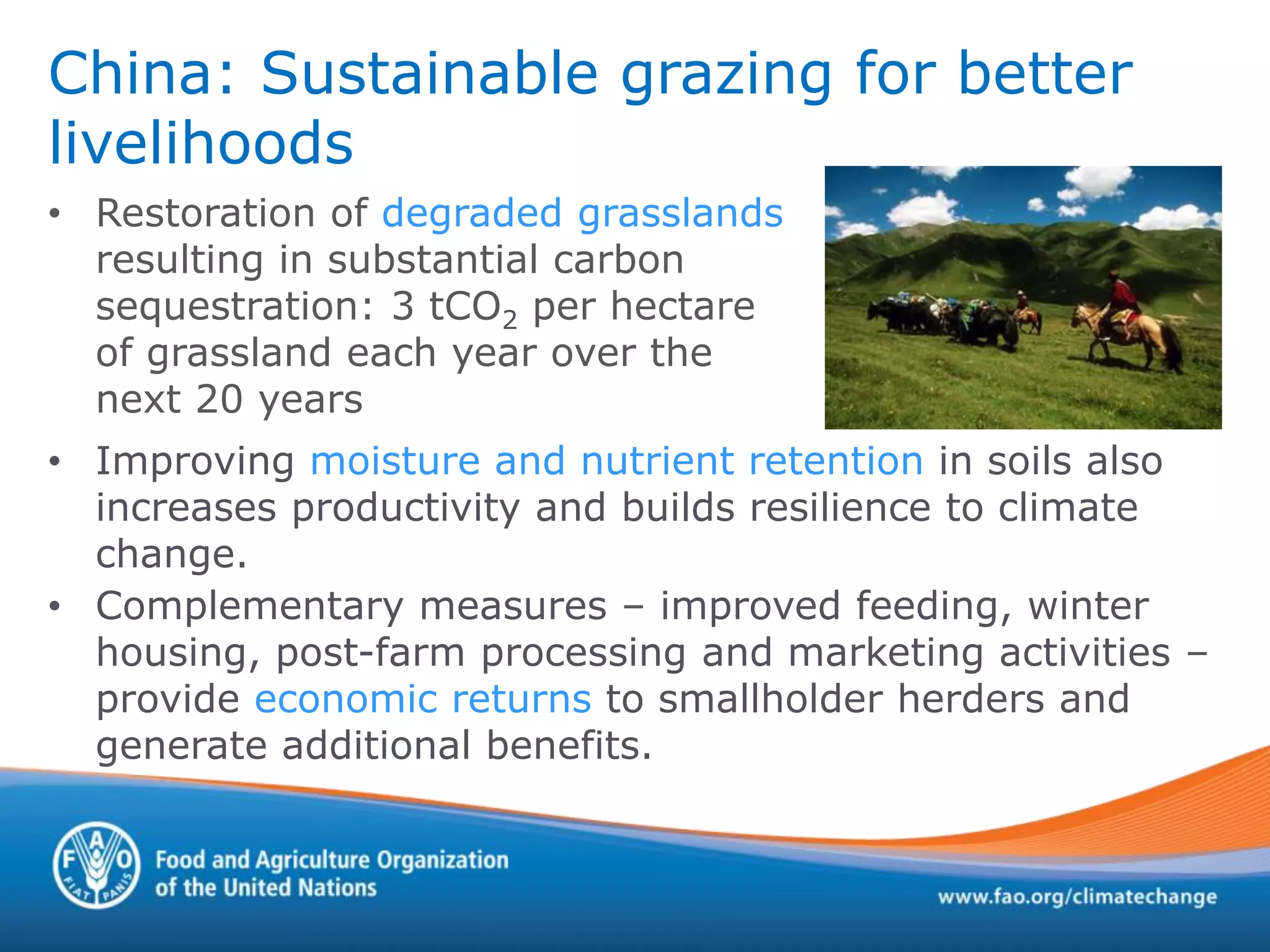
China: Sustainable grazing for better
livelihoods
• Improving moisture and nutrient retention in soils also
increases productivity and builds resilience to climate
change.
• Complementary measures – improved feeding, winter
housing, post-farm processing and marketing activities –
provide economic returns to smallholder herders and
generate additional benefits.
• Restoration of degraded grasslands
resulting in substantial carbon
sequestration: 3 tCO2 per hectare
of grassland each year over the
next 20 years
Conclusions and
key messages
Conclusions from the field
1. Selecting CSA practices based on
• Agroecological and socio-economic situation analysis
• Farmers’ participation in the identification process
• Site-specific assessments of the productivity, adaptation &
mitigation benefits, adoption barriers & incentives, and effects on
food security, income and livelihoods.
2. CSA works in practice
• Often more synergies than trade-offs between food security,
adaptation and emission reductions and removals.
3. Implementation and up-scaling of CSA practices considering
• Biophysical and socio-economic factors
• Farming systems and climate impact and risks
• Availability of and access to labour, land and water
• Institutional and policy environment
• Incentives and support for up-front investment costs.
Key messages
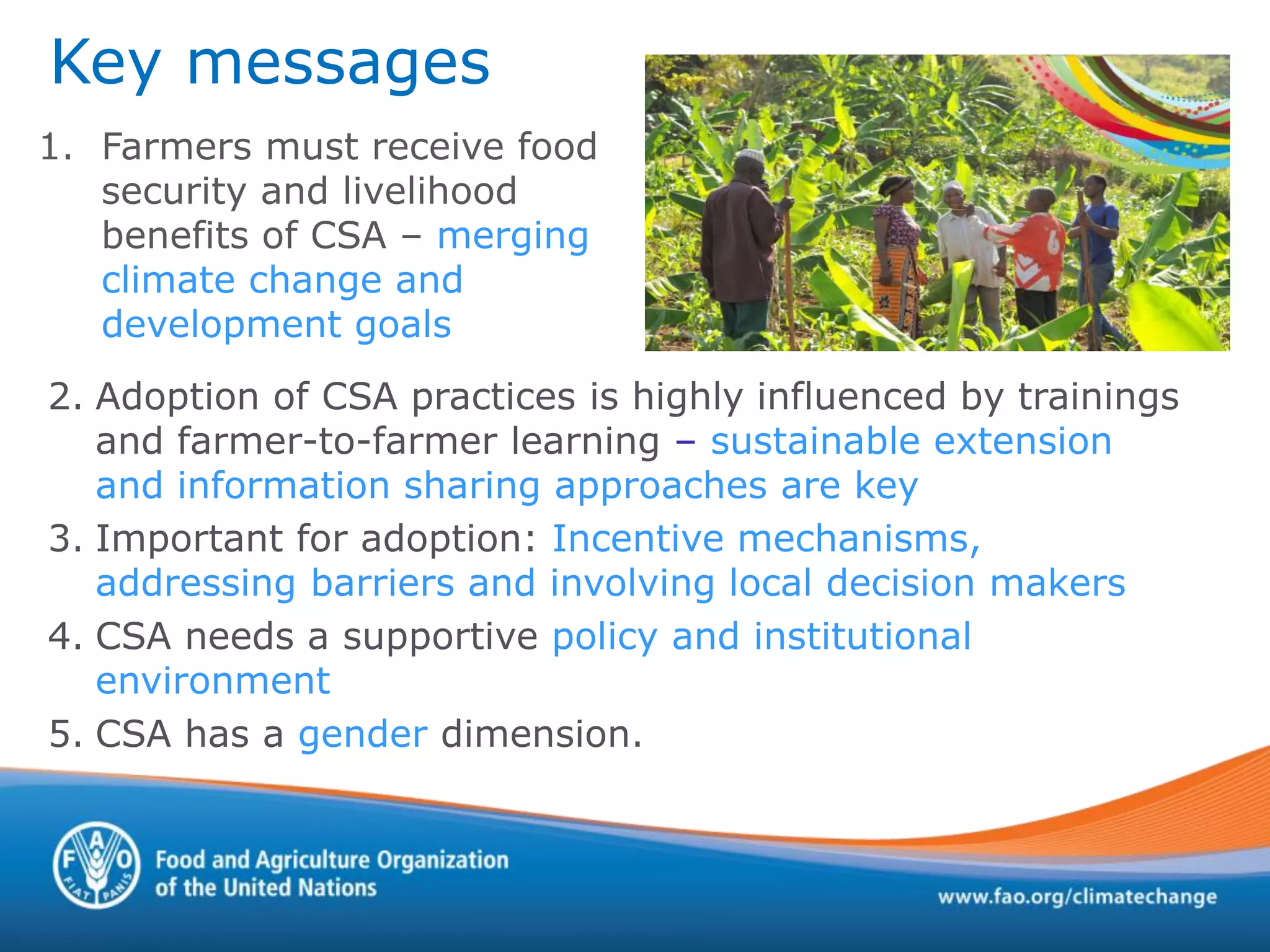
1. Farmers must receive food
security and livelihood
benefits of CSA – merging
climate change and
development goals
2. Adoption of CSA practices is highly influenced by trainings
and farmer-to-farmer learning – sustainable extension
and information sharing approaches are key
3. Important for adoption: Incentive mechanisms,
addressing barriers and involving local decision makers
4. CSA needs a supportive policy and institutional
environment
5. CSA has a gender dimension.
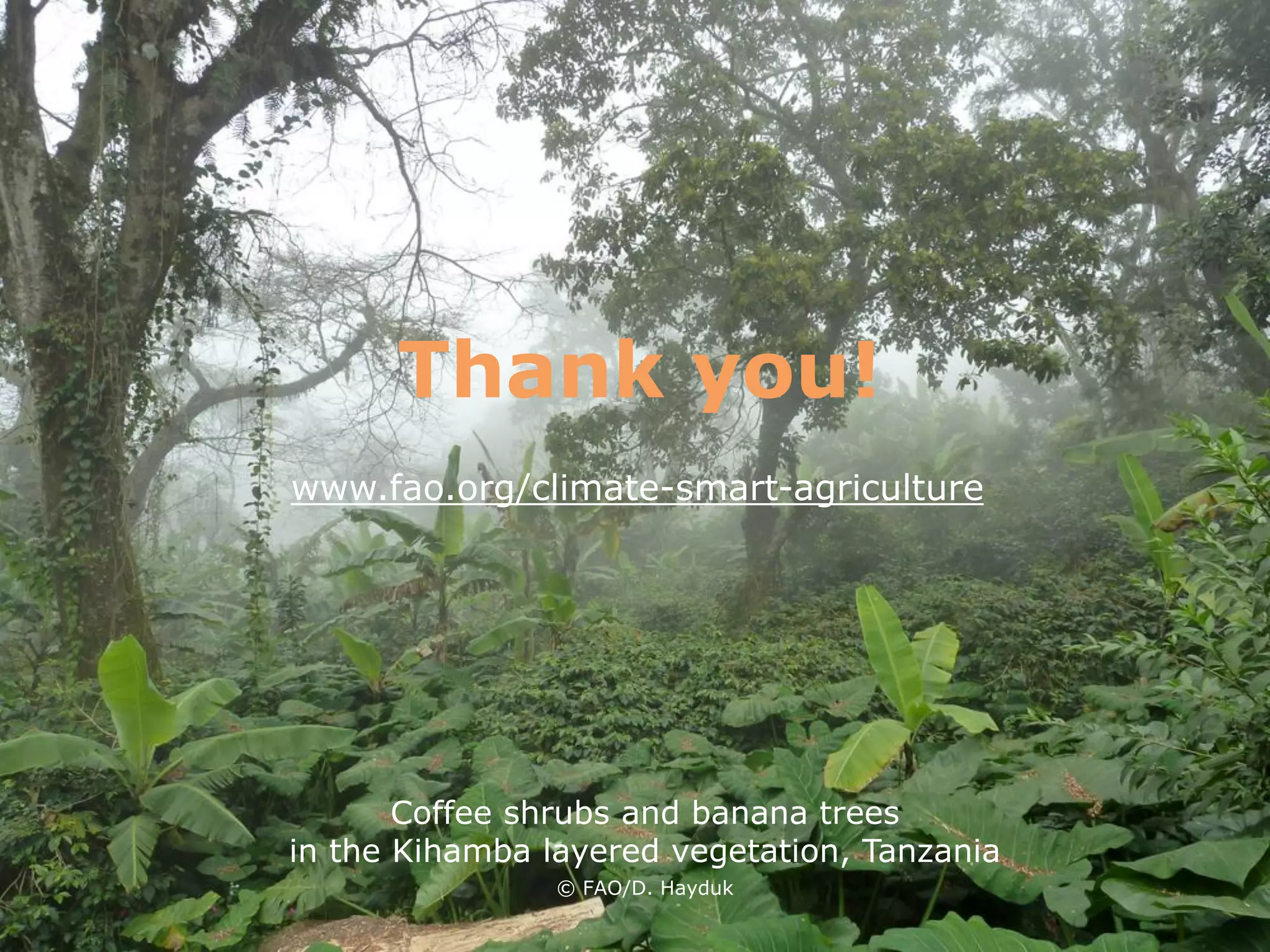
Coffee shrubs and banana trees
in the Kihamba layered vegetation, Tanzania
© FAO/D. Hayduk
Thank you!
www.fao.org/climate-smart-agriculture

FAO in action: Working with farmers to identify and implement climate-smart agriculture

  • 1.
    FAO in action Workingwith farmers to identify and implement climate-smart agriculture Event: Climate-smart agriculture advantage – better returns for smallholders UNFCCC, SBSTA 9 June 2015 Kaisa Karttunen
  • 2.
    Outline 1.Climate-smart agriculture: Whatit is? 2.Case studies and evidence from the field 3.Conclusions and key messages
  • 3.
    Global concept, localactions • CSA is an approach, not an agricultural practice or system per se. • CSA is location-specific: Identifies and combines the most suitable and sustainable practices and solutions for the local economic, environmental and social circumstances. • CSA applies across scales: From national to local level, and from farmers to policy makers. • CSA is cross-sectoral: Including all agricultural sub-sectors (crop and livestock production, fisheries and aquaculture, and forestry). • CSA implementation and upscaling need a suitable enabling environment, including policies and support structures.
  • 4.
  • 5.
    MICCA: Work withsmallholder farmers in Kenya & Tanzania Key aspects • Conducting participatory situation analysis with farmers to identify the potential CSA practices • Testing how smallholders can contribute to climate change mitigation while improving their food production, resilience and livelihoods. • Linking research, practice and policy for effective planning and upscaling of CSA.
  • 6.
    In Kenya Improving productivityin integrated crop-livestock farming system improved fodder, pasture management, agroforestry and biogas to increase productivity and reduce the climate change “footprint” of dairy production. In Tanzania Combining conservation agriculture practices with agroforestry, improved cook-stoves, and soil and water conservation to reduce burning and erosion, decrease deforestation and improve livelihoods. MICCA: CSA Practices in Kenya & Tanzania
  • 7.
    MICCA: Analysis byCSA objective Food security Crop yield Farmer livelihoods Adaptation Rainfall use efficiency Yield stability Mitigation GHG emissions Carbon in biomass and soil Land use changes S y n e r gi e s
  • 8.
    Ethiopia: Toward climate-smartagriculture • Identification, testing, demonstration and dissemination of locally relevant sets of adaptation practices through land and water management • Rehabilitation of degraded lands, reforestation, water harvesting, water use efficiency, livelihood diversification and capacity building • Implemented through the government on low and high lands • 1 000 households benefited with impacts on food security, soil fertility improvements, better water management and increased resilience.
  • 9.
    Projects for climateresilience of farmers and pastoralists in Africa • In 7 countries: Mali, Angola, Mozambique, Niger, Burkina Faso, Uganda and Senegal • Planning and monitoring climate change adaptation activities with farmers based on agroecosystem approach integrating crop, livestock, natural resources management and policy work. • Using the self-evaluation and holistic assessment of climate resilience of farmers and pastoralists (SHARP) tool • Holistic • Farmer and herder centred-approach • Focus in participation, flexibility and learning www.fao.org/agriculture/crops/thematic-sitemap/theme/spi/sharp/
  • 10.
    Agroforestry system inKilimanjaro By building on indigenous knowledge of local people • Food and income: improved via conversion to certified organic coffee farming; introduction of vanilla as a high value cash crop; and introduction of trout aquaculture along the irrigation canals • Adaptation: Rehabilitation of the irrigation system to reduce water loss and to cope with longer dry seasons due to climate change; training in sustainable land management. • Mitigation: Sustainably managed “Kihamba” system increases carbon storage.
  • 11.
    China: Sustainable grazingfor better livelihoods • Improving moisture and nutrient retention in soils also increases productivity and builds resilience to climate change. • Complementary measures – improved feeding, winter housing, post-farm processing and marketing activities – provide economic returns to smallholder herders and generate additional benefits. • Restoration of degraded grasslands resulting in substantial carbon sequestration: 3 tCO2 per hectare of grassland each year over the next 20 years
  • 12.
  • 13.
    Conclusions from thefield 1. Selecting CSA practices based on • Agroecological and socio-economic situation analysis • Farmers’ participation in the identification process • Site-specific assessments of the productivity, adaptation & mitigation benefits, adoption barriers & incentives, and effects on food security, income and livelihoods. 2. CSA works in practice • Often more synergies than trade-offs between food security, adaptation and emission reductions and removals. 3. Implementation and up-scaling of CSA practices considering • Biophysical and socio-economic factors • Farming systems and climate impact and risks • Availability of and access to labour, land and water • Institutional and policy environment • Incentives and support for up-front investment costs.
  • 14.
    Key messages 1. Farmersmust receive food security and livelihood benefits of CSA – merging climate change and development goals 2. Adoption of CSA practices is highly influenced by trainings and farmer-to-farmer learning – sustainable extension and information sharing approaches are key 3. Important for adoption: Incentive mechanisms, addressing barriers and involving local decision makers 4. CSA needs a supportive policy and institutional environment 5. CSA has a gender dimension.
  • 15.
    Coffee shrubs andbanana trees in the Kihamba layered vegetation, Tanzania © FAO/D. Hayduk Thank you! www.fao.org/climate-smart-agriculture