Credit Seminar
on
Climate Smart Agriculture Practices
Presented By:
Anil Kumar Rohila
2014A21D
Deptt. of Extension Education
CCS HAU, Hisar
Introduction
Food production needs to increase by 70 per cent
through yield increase to feed the world in 2050
(Bogdanski, 2012).
To ensure available food supply to meet the food
requirements of the world’s growing population can be
fulfill only climate smart agriculture practices (Yang, 2012).
 CSA is composed of three main pillars: sustainably
increasing agricultural productivity and incomes; adapting
and building resilience to climate change and reducing or
removing greenhouse gases emissions relative to
conventional practices (FAO, 2013).
Climate
The weather conditions prevailing in area in general
or over a long period.
Climate is the average weather in a place over many
years.
Climate Smart?
Agriculture is considered to be “climate smart” when
it contributes to increasing food security, adaptation
and mitigation in a sustainable way. This new
concept now dominates current discussion in
agricultural development because of its capacity to
unite the agendas of the agriculture, development
and climate change communities under one brand.
Source: Neufeldt, 2013
Climate Smart Agriculture?
CSA is a newly evolved production system for agriculture that to
ensure food security and sustainable use of natural resources and
production profits under a changing climate scenario, as well as lead
to a ‘triple win’ agricultural development. CSA requires a complete
package of practices to achieve the desired objectives but adoption
is largely dependent on farmers’ preference and their capacity and
WTP.
Source: Chwen Ming (2012) and Garima (2014)
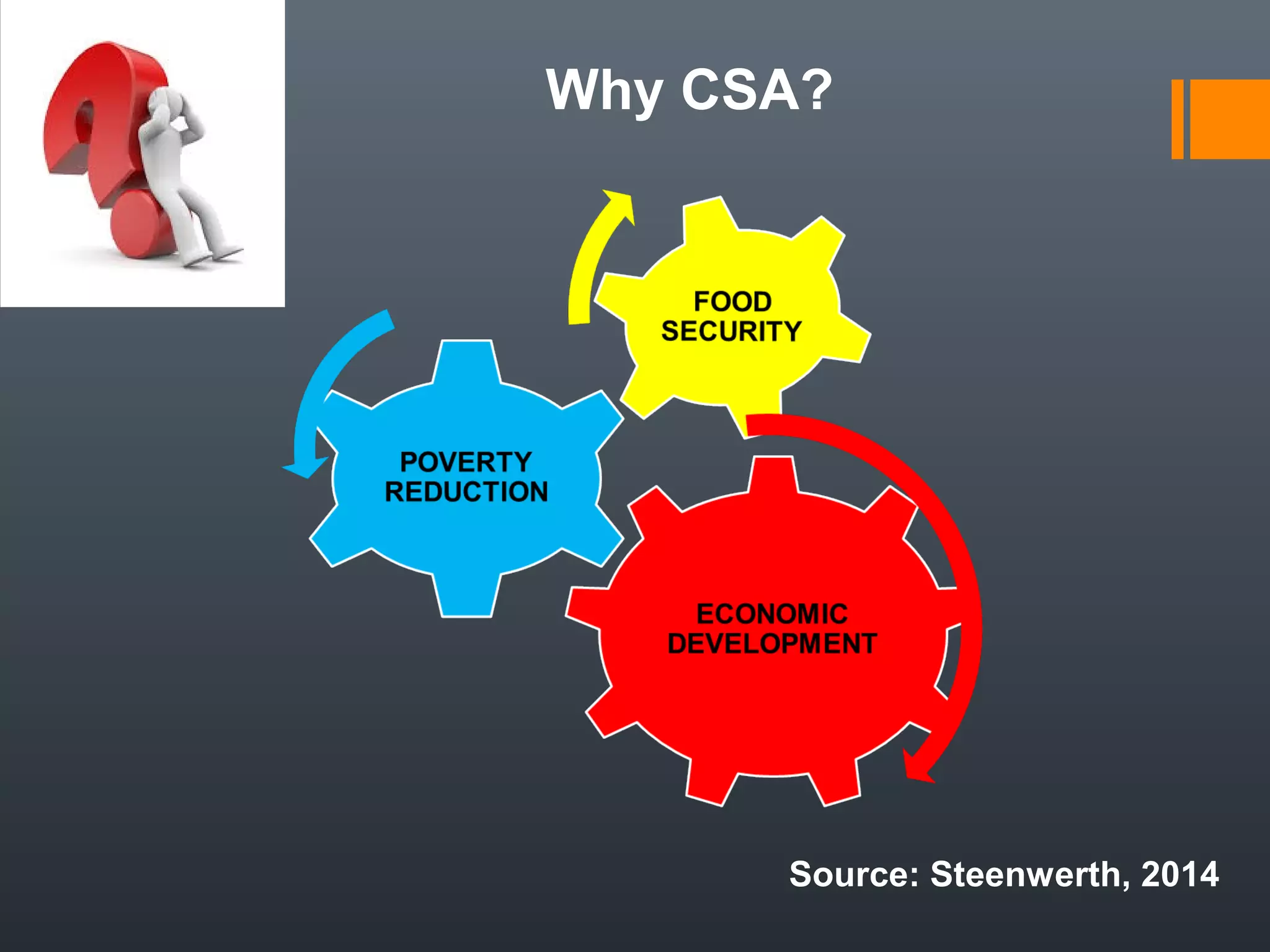
Source: Steenwerth, 2014
Why CSA?
Concept of Climate-smart agriculture (CSA):
It is defined and presented by FAO at the Hague Conference on
Agriculture, Food Security and Climate Change in 2010. It integrates the
three dimensions of sustainable development (economic, social and
environmental) by jointly addressing food security and climate
challenges. It is composed of three main pillars:
Sustainably increasing agricultural productivity and incomes
Adapting and building resilience to climate change
Reducing or removing greenhouse gases emissions, where possible
Source: www.fao.org
Climate Smart Agricultural Practices?
Climate smart agricultural practices are those that
sustainably increase productivity and resilience,
reduce or remove greenhouse gases and enhance
achievement of national food security and
development goals for different groups.
Source: Frederiksberg, 2012
CSA is not a single specific agricultural technology or practice that can be
universally applied. It is an approach that requires site-specific
assessments to identify suitable agricultural production technologies and
practices. This approach:
Addresses the complex interrelated challenges of food security, development and
climate change
Recognizes that these options will be shaped by specific country contexts and
capacities and by the particular social, economic and environmental situation where
it will be applied
Assess the interactions between sectors and the needs of different stakeholders
involved
Identifies barriers to adoption, especially among farmers and provides appropriate
solutions in terms of policies, strategies, actions and incentives
Cont……
 Seeks to create enabling environments through a greater alignment of
policies, financial investments and institutional arrangements
 Strives to achieve multiple objectives with the understanding that priorities
need to be set and collective decisions made on different benefits
 Should prioritize the strengthening of livelihoods, especially those of
smallholders, by improving access to services, knowledge, resources,
financial products and markets
 Addresses adaptation and builds resilience to shocks, especially those related
to climate change, as the magnitude of the impacts of climate change has
major implications for agricultural and rural development
 Considers climate change mitigation as a potential secondary co-benefit,
especially in low-income, agricultural based populations
 Seeks to identify opportunities to access climate-related financing and
integrate it with traditional sources of agricultural investment finance
Source: CLIMATE SMART AGRICULTURE SOURCEBOOK, 2013
Approaches
Integrated planning of land, agriculture, forests, fisheries and water at local,
watershed and regional scales, to ensure synergies are properly captured
Promoting activities that increase carbon storage, combine animal husbandry
and trees with food production, and are geared towards improving soil fertility
Reducing a variety of emissions from agriculture such as nitrous oxygen from
fertilizer application etc.
To promote sustainable agricultural practices that have many other direct
benefits for smallholder farmers and the environment
Diversifying income sources and genetic traits of crops to help farmers hedge
against an uncertain climate
Developing sound risk insurance and risk management strategies
Adaptive management that disseminates timely climate information to farmers
and monitors the local outcomes of different actions, builds on the traditional
knowledge of farmers
Source: CSA-A call to action, The World Bank
Agriculture Global Alliance for Climate-Smart
Agriculture
Geographical coverage:
20+ countries in Africa, Asia, Europe and Latin America,
Focus on three initial action areas:
Knowledge
Investment
Environment
Target:
500 million farmers enabled to practice CSA by 2030, including:
(i)Improved agricultural productivity and incomes
(ii)Strengthened resilience of farmers
(iii)Reduced greenhouse gas emissions from agriculture
Source: Climate Summit, 2014
APPROACH, PRIMARY IMPACTS AND MULTIPLE BENEFITS
Source: www.ifad.org
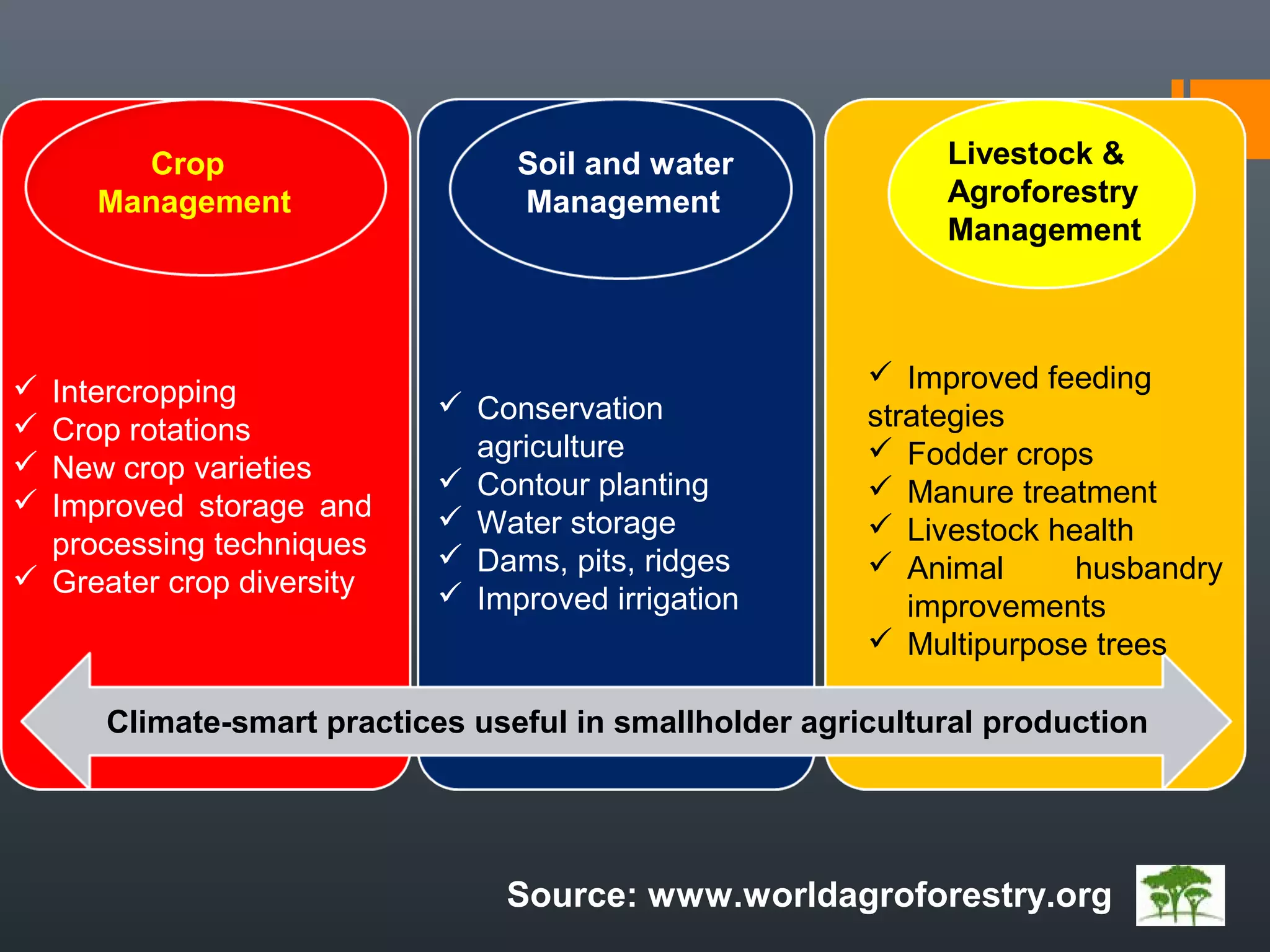
Crop
Management
 Intercropping
 Crop rotations
 New crop varieties
 Improved storage and
processing techniques
 Greater crop diversity
Soil and water
Management
 Conservation
agriculture
 Contour planting
 Water storage
 Dams, pits, ridges
 Improved irrigation
Livestock &
Agroforestry
Management
 Improved feeding
strategies
 Fodder crops
 Manure treatment
 Livestock health
 Animal husbandry
improvements
 Multipurpose trees
Climate-smart practices useful in smallholder agricultural production
Source: www.worldagroforestry.org
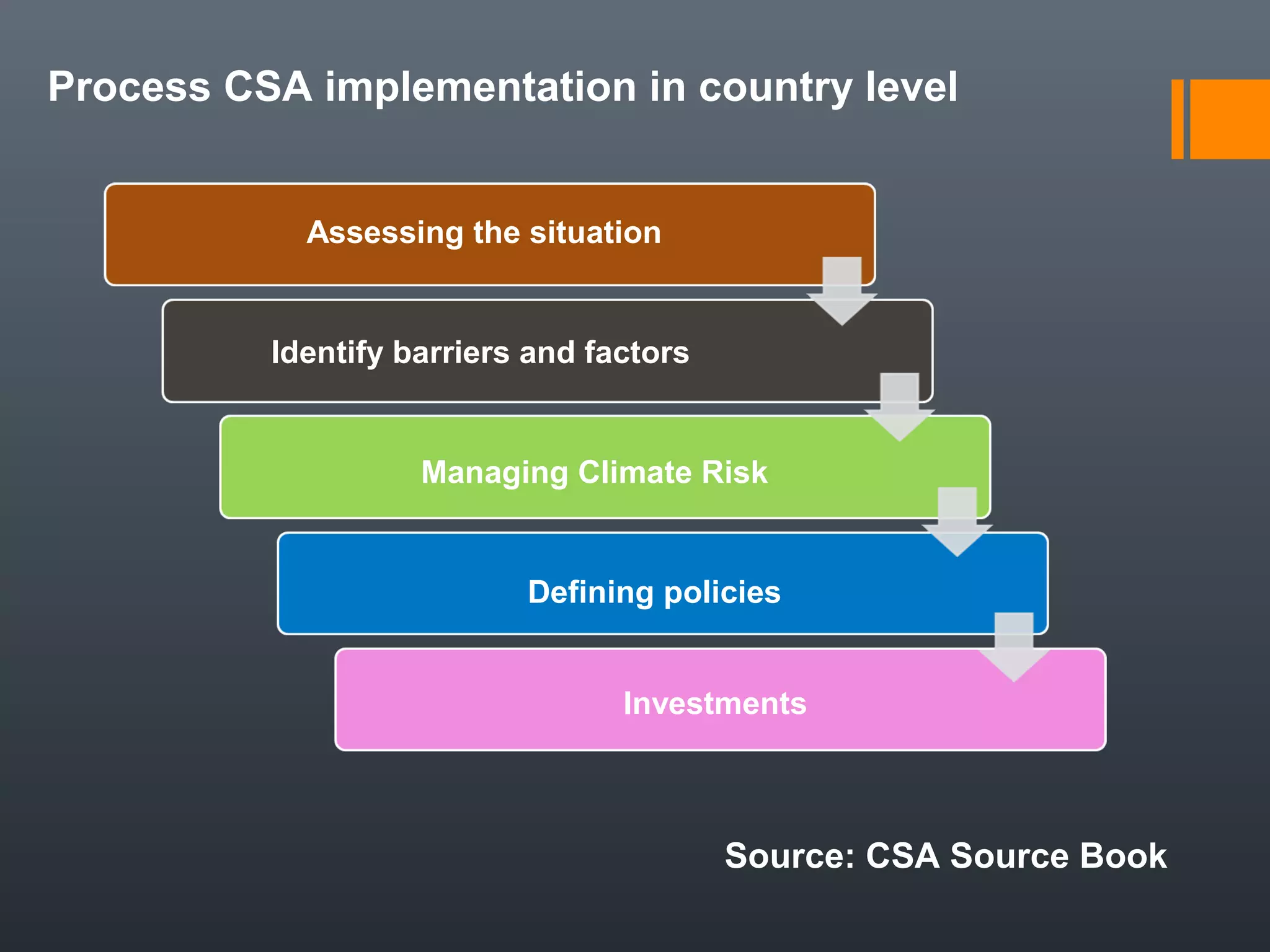
Assessing the situation
Identify barriers and factors
Managing Climate Risk
Defining policies
Investments
Process CSA implementation in country level
Source: CSA Source Book
Variety Training
Agri. information
Recommendation
Credit Facilities
Marketing Facilities
CSA in India
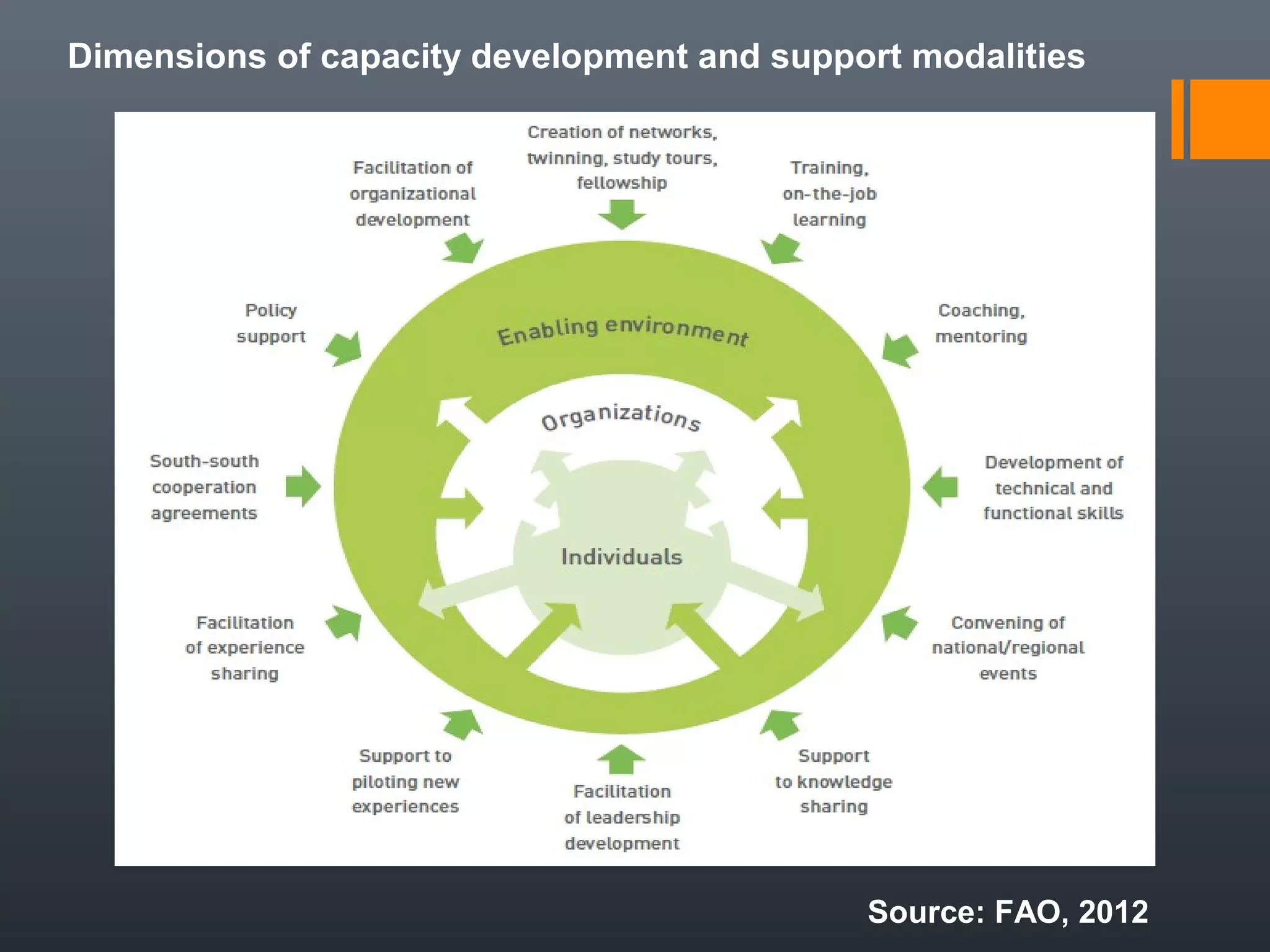
Dimensions of capacity development and support modalities
Source: FAO, 2012
The sustainable food value chain framework
Source: FAO, 2013
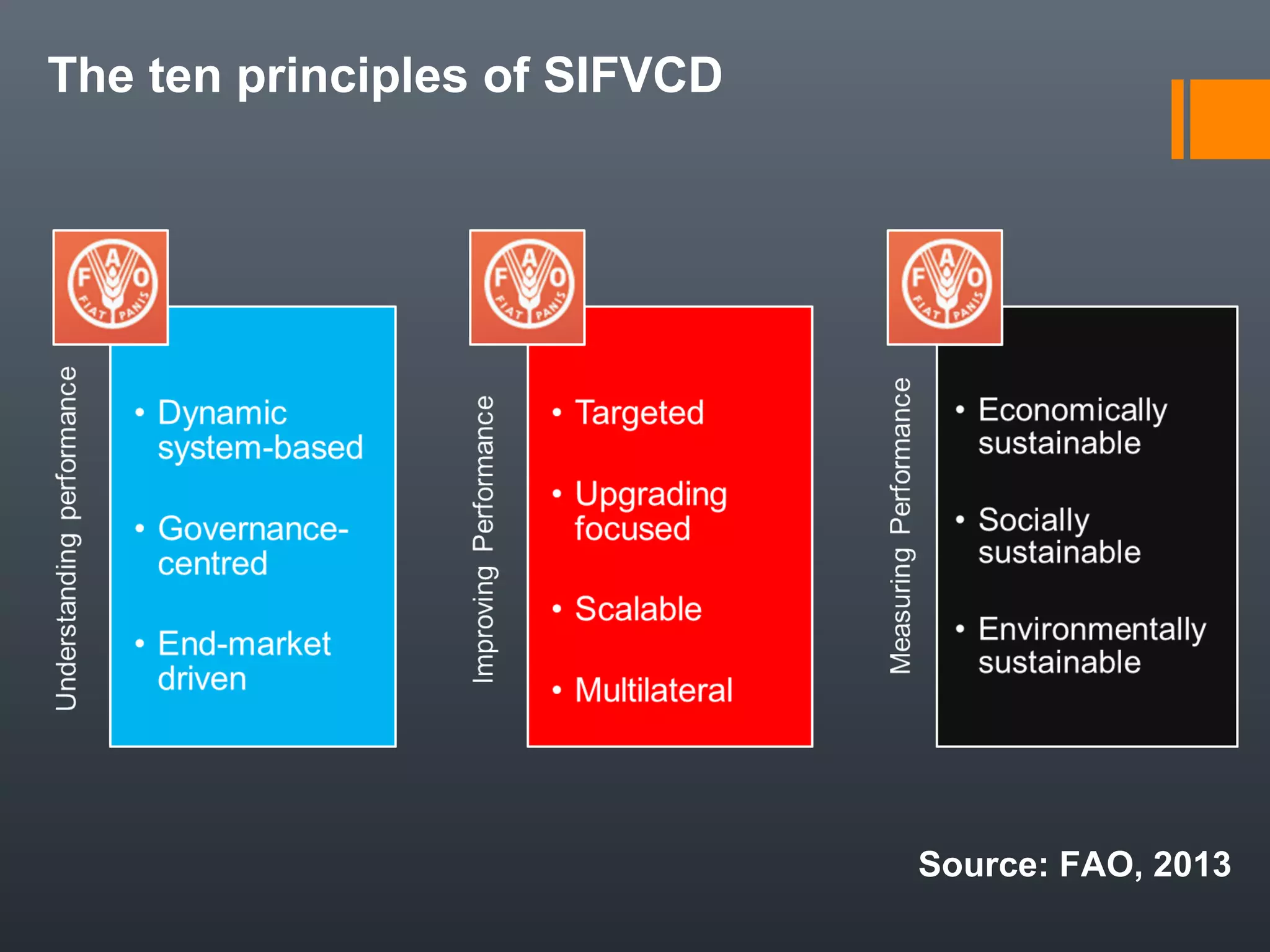
The ten principles of SIFVCD
Source: FAO, 2013
How can institutions support CSA?
Producing and sharing technical knowledge
Providing financial services, credit and access to markets
Supporting the coordination of collaborative action
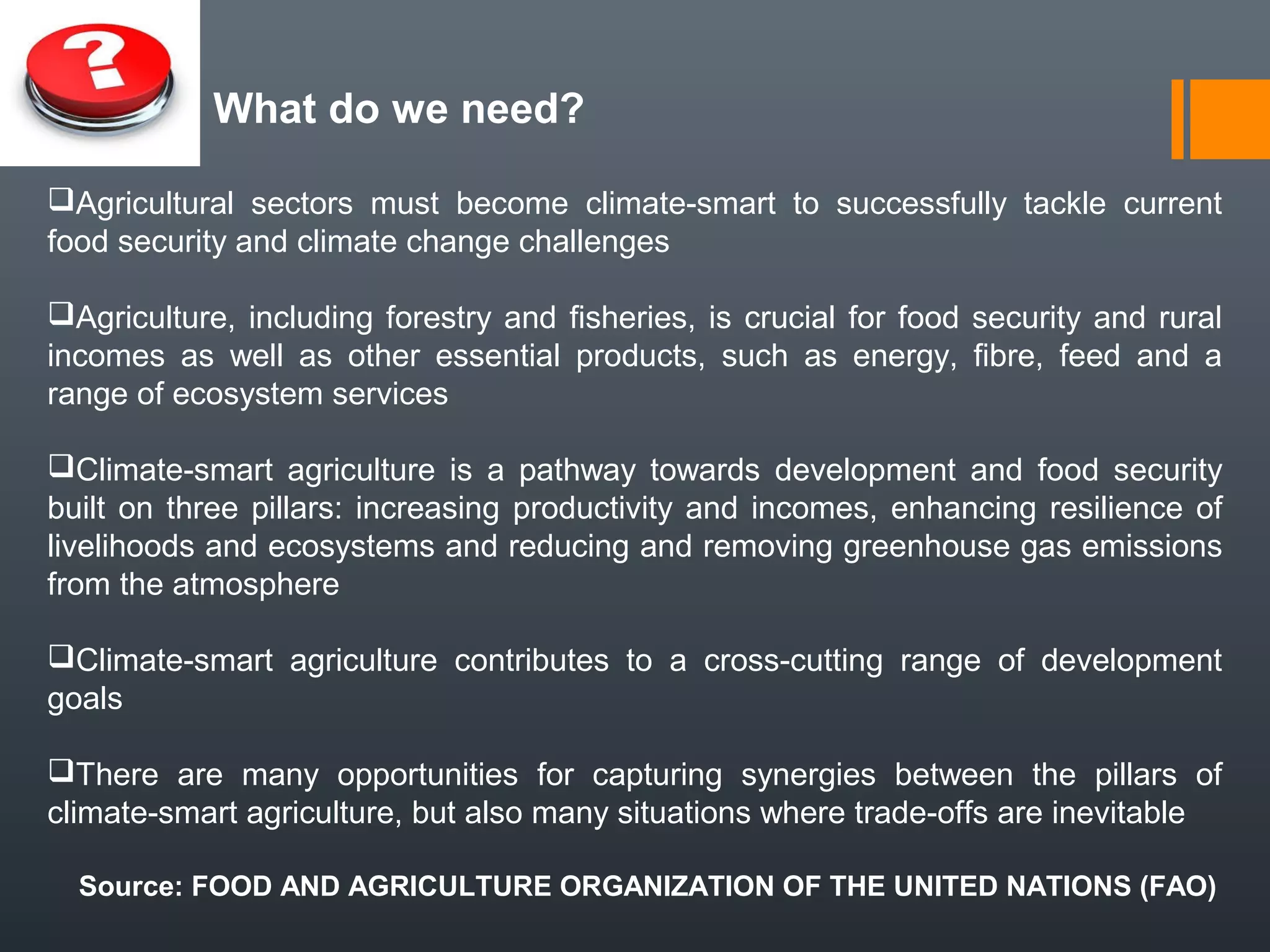
What do we need?
Agricultural sectors must become climate-smart to successfully tackle current
food security and climate change challenges
Agriculture, including forestry and fisheries, is crucial for food security and rural
incomes as well as other essential products, such as energy, fibre, feed and a
range of ecosystem services
Climate-smart agriculture is a pathway towards development and food security
built on three pillars: increasing productivity and incomes, enhancing resilience of
livelihoods and ecosystems and reducing and removing greenhouse gas emissions
from the atmosphere
Climate-smart agriculture contributes to a cross-cutting range of development
goals
There are many opportunities for capturing synergies between the pillars of
climate-smart agriculture, but also many situations where trade-offs are inevitable
Source: FOOD AND AGRICULTURE ORGANIZATION OF THE UNITED NATIONS (FAO)
How do we achieve it?
Working at the landscape level with an ecosystems approach, combining
forestry, fisheries, crops and livestock systems is crucial for responding to the
impacts of climate change and contributing to its mitigation
Inter-sectoral approaches and consistent policies across the agricultural, food
security and climate change are necessary at all levels
Institutional and financial support is needed for farmers, fishers and forest
dependant peoples to make the transition to climate-smart agriculture
Some effective climate-smart practices already exist and could be scaled-up,
but this can only be done with serious investments in building the knowledge
base and developing technology
Investments in climate-smart agriculture must link finance opportunities from
public and private sectors and also integrate climate finance into sustainable
development agendas
Source:
www.fao.org/climatechange/climatesmart
What next?
Early action is needed to identify, pilot and scale-up best practices,
strengthen institutional capacities, and build experiences that can help
stakeholders make informed choices to make the transformation to
climate-smart agriculture
Tools and knowledge on climate-smart agriculture must be further
developed and shared. We must invest in education, capacity development
and communication as well as training
Financial mechanisms that link climate finance to agriculture investment
must be established
Source: FAO, THE UNITED NATIONS
What should be cover during training?
Facilitating farmer exchange visits and other approaches for sharing
adaptation strategies in ‘climate analogue’ areas - places where farmers
today can learn about the climatic conditions they can expect to be
dealing with in the future
Assessing how to facilitate the use of daily and seasonal weather
forecasts for farmers and how to make access to forecasts more
equitable
Understanding and catalysing gender-sensitive, climate-smart-
agricultural-practices
Source:
www.fao.org/climatechange/micca/gender
Economics & Policy Innovations for Climate-Smart Agriculture (EPIC).
The Economic and Policy Support for Climate-Smart Agriculture Programme
provides technical and policy assistance to countries to establish climate-smart
agricultural systems. Working with national policy and research partners, the
Programme:
• Provides technical support in identifying the synergies and trade offs between food
security, adaptation and mitigation that may arise in transforming smallholder
agricultural systems
• Identifies the local institutions needed to support the transition to climate-smart
agricultural systems
• Provides assistance for strategic planning that integrates climate change,
agricultural development and food security policy objectives and investments
• Builds mechanisms and investment plans to combine climate finance with
agricultural investment finance to support the transition to climate-smart agriculture
FAO
Literacy rate
Establishment and maintenance costs
Markets
Capital
Training & risk ability
Constraints
Challenges
Provide political environment
Improve market accessibility
Involve farmers in the project-planning process
Improve access to knowledge and training
Introduce more secure tenure
Overcome the barriers of high opportunity costs to land
Improve access to farm implements and capital
Suggestion
Project and policy preparation need to reflect higher risks, where vulnerability
assessments and greater use of climate scenario modelling are combined with a
better understanding of interconnections between smallholder farming.
‘Multiple-benefit’ approaches to sustainable agricultural intensification by
smallholder farmers. These approaches can build climate resilience through
managing competing land-use systems at the landscape level, while at the same
time reducing poverty, enhancing biodiversity, increasing yields and lowering
greenhouse gas emissions
New efforts to enable smallholder farmers to become significant beneficiaries of
climate finance in order to reward multiple-benefit activities and help offset the
transition costs and risks of changing agricultural practices
 Better ways to achieve and then measure a wider range of multiple benefits
beyond traditional poverty and yield impacts
Recommendation
Financial help and market facilities
Development and climate finance programs must focus on improving
livelihoods and income so that there is incentive for smallholder farmers to
invest in climate-smart agriculture
Combining practices that deliver short-term benefits with those that give
longer-term benefits can help reduce opportunity costs and provide greater
incentives to invest in better management practices
National agriculture development plans with appropriate institutions at
national to local levels, provision of infrastructure, access to information and
training and stakeholder participation and, last but not least, improvement of
tenure arrangements are necessary for long-term transformation towards
sustainable intensification and management of resources.
Climte smart agricultural practices

Climte smart agricultural practices

  • 1.
    Credit Seminar on Climate SmartAgriculture Practices Presented By: Anil Kumar Rohila 2014A21D Deptt. of Extension Education CCS HAU, Hisar
  • 2.
    Introduction Food production needsto increase by 70 per cent through yield increase to feed the world in 2050 (Bogdanski, 2012). To ensure available food supply to meet the food requirements of the world’s growing population can be fulfill only climate smart agriculture practices (Yang, 2012).  CSA is composed of three main pillars: sustainably increasing agricultural productivity and incomes; adapting and building resilience to climate change and reducing or removing greenhouse gases emissions relative to conventional practices (FAO, 2013).
  • 3.
    Climate The weather conditionsprevailing in area in general or over a long period. Climate is the average weather in a place over many years.
  • 4.
    Climate Smart? Agriculture isconsidered to be “climate smart” when it contributes to increasing food security, adaptation and mitigation in a sustainable way. This new concept now dominates current discussion in agricultural development because of its capacity to unite the agendas of the agriculture, development and climate change communities under one brand. Source: Neufeldt, 2013
  • 5.
    Climate Smart Agriculture? CSAis a newly evolved production system for agriculture that to ensure food security and sustainable use of natural resources and production profits under a changing climate scenario, as well as lead to a ‘triple win’ agricultural development. CSA requires a complete package of practices to achieve the desired objectives but adoption is largely dependent on farmers’ preference and their capacity and WTP. Source: Chwen Ming (2012) and Garima (2014)
  • 6.
  • 7.
    Concept of Climate-smartagriculture (CSA): It is defined and presented by FAO at the Hague Conference on Agriculture, Food Security and Climate Change in 2010. It integrates the three dimensions of sustainable development (economic, social and environmental) by jointly addressing food security and climate challenges. It is composed of three main pillars: Sustainably increasing agricultural productivity and incomes Adapting and building resilience to climate change Reducing or removing greenhouse gases emissions, where possible Source: www.fao.org
  • 8.
    Climate Smart AgriculturalPractices? Climate smart agricultural practices are those that sustainably increase productivity and resilience, reduce or remove greenhouse gases and enhance achievement of national food security and development goals for different groups. Source: Frederiksberg, 2012
  • 9.
    CSA is nota single specific agricultural technology or practice that can be universally applied. It is an approach that requires site-specific assessments to identify suitable agricultural production technologies and practices. This approach: Addresses the complex interrelated challenges of food security, development and climate change Recognizes that these options will be shaped by specific country contexts and capacities and by the particular social, economic and environmental situation where it will be applied Assess the interactions between sectors and the needs of different stakeholders involved Identifies barriers to adoption, especially among farmers and provides appropriate solutions in terms of policies, strategies, actions and incentives Cont……
  • 10.
     Seeks tocreate enabling environments through a greater alignment of policies, financial investments and institutional arrangements  Strives to achieve multiple objectives with the understanding that priorities need to be set and collective decisions made on different benefits  Should prioritize the strengthening of livelihoods, especially those of smallholders, by improving access to services, knowledge, resources, financial products and markets  Addresses adaptation and builds resilience to shocks, especially those related to climate change, as the magnitude of the impacts of climate change has major implications for agricultural and rural development  Considers climate change mitigation as a potential secondary co-benefit, especially in low-income, agricultural based populations  Seeks to identify opportunities to access climate-related financing and integrate it with traditional sources of agricultural investment finance Source: CLIMATE SMART AGRICULTURE SOURCEBOOK, 2013
  • 11.
    Approaches Integrated planning ofland, agriculture, forests, fisheries and water at local, watershed and regional scales, to ensure synergies are properly captured Promoting activities that increase carbon storage, combine animal husbandry and trees with food production, and are geared towards improving soil fertility Reducing a variety of emissions from agriculture such as nitrous oxygen from fertilizer application etc. To promote sustainable agricultural practices that have many other direct benefits for smallholder farmers and the environment Diversifying income sources and genetic traits of crops to help farmers hedge against an uncertain climate Developing sound risk insurance and risk management strategies Adaptive management that disseminates timely climate information to farmers and monitors the local outcomes of different actions, builds on the traditional knowledge of farmers Source: CSA-A call to action, The World Bank
  • 12.
    Agriculture Global Alliancefor Climate-Smart Agriculture Geographical coverage: 20+ countries in Africa, Asia, Europe and Latin America, Focus on three initial action areas: Knowledge Investment Environment Target: 500 million farmers enabled to practice CSA by 2030, including: (i)Improved agricultural productivity and incomes (ii)Strengthened resilience of farmers (iii)Reduced greenhouse gas emissions from agriculture Source: Climate Summit, 2014
  • 13.
    APPROACH, PRIMARY IMPACTSAND MULTIPLE BENEFITS Source: www.ifad.org
  • 14.
    Crop Management  Intercropping  Croprotations  New crop varieties  Improved storage and processing techniques  Greater crop diversity Soil and water Management  Conservation agriculture  Contour planting  Water storage  Dams, pits, ridges  Improved irrigation Livestock & Agroforestry Management  Improved feeding strategies  Fodder crops  Manure treatment  Livestock health  Animal husbandry improvements  Multipurpose trees Climate-smart practices useful in smallholder agricultural production Source: www.worldagroforestry.org
  • 15.
    Assessing the situation Identifybarriers and factors Managing Climate Risk Defining policies Investments Process CSA implementation in country level Source: CSA Source Book
  • 16.
    Variety Training Agri. information Recommendation CreditFacilities Marketing Facilities CSA in India
  • 17.
    Dimensions of capacitydevelopment and support modalities Source: FAO, 2012
  • 18.
    The sustainable foodvalue chain framework Source: FAO, 2013
  • 19.
    The ten principlesof SIFVCD Source: FAO, 2013
  • 20.
    How can institutionssupport CSA? Producing and sharing technical knowledge Providing financial services, credit and access to markets Supporting the coordination of collaborative action
  • 21.
    What do weneed? Agricultural sectors must become climate-smart to successfully tackle current food security and climate change challenges Agriculture, including forestry and fisheries, is crucial for food security and rural incomes as well as other essential products, such as energy, fibre, feed and a range of ecosystem services Climate-smart agriculture is a pathway towards development and food security built on three pillars: increasing productivity and incomes, enhancing resilience of livelihoods and ecosystems and reducing and removing greenhouse gas emissions from the atmosphere Climate-smart agriculture contributes to a cross-cutting range of development goals There are many opportunities for capturing synergies between the pillars of climate-smart agriculture, but also many situations where trade-offs are inevitable Source: FOOD AND AGRICULTURE ORGANIZATION OF THE UNITED NATIONS (FAO)
  • 22.
    How do weachieve it? Working at the landscape level with an ecosystems approach, combining forestry, fisheries, crops and livestock systems is crucial for responding to the impacts of climate change and contributing to its mitigation Inter-sectoral approaches and consistent policies across the agricultural, food security and climate change are necessary at all levels Institutional and financial support is needed for farmers, fishers and forest dependant peoples to make the transition to climate-smart agriculture Some effective climate-smart practices already exist and could be scaled-up, but this can only be done with serious investments in building the knowledge base and developing technology Investments in climate-smart agriculture must link finance opportunities from public and private sectors and also integrate climate finance into sustainable development agendas Source: www.fao.org/climatechange/climatesmart
  • 23.
    What next? Early actionis needed to identify, pilot and scale-up best practices, strengthen institutional capacities, and build experiences that can help stakeholders make informed choices to make the transformation to climate-smart agriculture Tools and knowledge on climate-smart agriculture must be further developed and shared. We must invest in education, capacity development and communication as well as training Financial mechanisms that link climate finance to agriculture investment must be established Source: FAO, THE UNITED NATIONS
  • 24.
    What should becover during training? Facilitating farmer exchange visits and other approaches for sharing adaptation strategies in ‘climate analogue’ areas - places where farmers today can learn about the climatic conditions they can expect to be dealing with in the future Assessing how to facilitate the use of daily and seasonal weather forecasts for farmers and how to make access to forecasts more equitable Understanding and catalysing gender-sensitive, climate-smart- agricultural-practices Source: www.fao.org/climatechange/micca/gender
  • 25.
    Economics & PolicyInnovations for Climate-Smart Agriculture (EPIC). The Economic and Policy Support for Climate-Smart Agriculture Programme provides technical and policy assistance to countries to establish climate-smart agricultural systems. Working with national policy and research partners, the Programme: • Provides technical support in identifying the synergies and trade offs between food security, adaptation and mitigation that may arise in transforming smallholder agricultural systems • Identifies the local institutions needed to support the transition to climate-smart agricultural systems • Provides assistance for strategic planning that integrates climate change, agricultural development and food security policy objectives and investments • Builds mechanisms and investment plans to combine climate finance with agricultural investment finance to support the transition to climate-smart agriculture FAO
  • 26.
    Literacy rate Establishment andmaintenance costs Markets Capital Training & risk ability Constraints
  • 27.
    Challenges Provide political environment Improvemarket accessibility Involve farmers in the project-planning process Improve access to knowledge and training Introduce more secure tenure Overcome the barriers of high opportunity costs to land Improve access to farm implements and capital
  • 28.
    Suggestion Project and policypreparation need to reflect higher risks, where vulnerability assessments and greater use of climate scenario modelling are combined with a better understanding of interconnections between smallholder farming. ‘Multiple-benefit’ approaches to sustainable agricultural intensification by smallholder farmers. These approaches can build climate resilience through managing competing land-use systems at the landscape level, while at the same time reducing poverty, enhancing biodiversity, increasing yields and lowering greenhouse gas emissions New efforts to enable smallholder farmers to become significant beneficiaries of climate finance in order to reward multiple-benefit activities and help offset the transition costs and risks of changing agricultural practices  Better ways to achieve and then measure a wider range of multiple benefits beyond traditional poverty and yield impacts
  • 29.
    Recommendation Financial help andmarket facilities Development and climate finance programs must focus on improving livelihoods and income so that there is incentive for smallholder farmers to invest in climate-smart agriculture Combining practices that deliver short-term benefits with those that give longer-term benefits can help reduce opportunity costs and provide greater incentives to invest in better management practices National agriculture development plans with appropriate institutions at national to local levels, provision of infrastructure, access to information and training and stakeholder participation and, last but not least, improvement of tenure arrangements are necessary for long-term transformation towards sustainable intensification and management of resources.