+
“They are only guidelines after all…”


Frances Tout


                              Investigating how school librarians
                              interpret guidelines to deliver
                              information literacy: a case study of
                              North Somerset secondary school
                              libraries.
+
    What is Information Literacy (IL)?

     Thedefinition used for this study is provided by
     CILIP (2004)


     Information literacy is knowing when and why you
     need information, where to find it, and how to
     evaluate, use and communicate it in an ethical
     manner.
+
    Background

       School libraries are not statutory in the UK so there are no
        official regulations in place as to the role of the school library or
        the librarian.

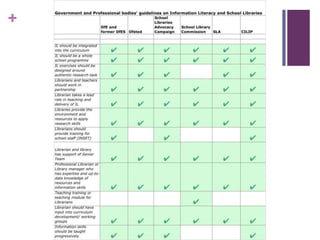
       In place of regulations there are guidelines from Government
        agencies and professional bodies – DfE, Ofsted, SLA, CILIP.
        The delivery of information literacy plays a key role in these
        organisations’ guidance.

       This case study intended to give a comprehensive
        representation of information literacy delivery through school
        libraries in one geographical area but its findings may be
        indicative of a wider trend.
+
    Research Questions

     1.
       How do school librarians interpret guidelines
     concerning information literacy?


     2.What are the key factors affecting the delivery of
     information literacy in secondary school libraries?
+
    Research Methods - 1
    Questionnaire

       Initial research collected data from an in depth online
        questionnaire to all school librarians in North Somerset.

    Data collected included:
     information   about the school;
     the library;
     the librarian;
     knowledge of guidelines on information literacy;
     the library’s role in the delivery of information literacy;
     any perceived barriers to its delivery.

    All nine secondary schools responded to the questionnaire.
+
    Research Methods 2
    Focus Group

     A mini-focus group was set up with three of the nine
     librarians being able to attend.

     This gave the librarians a chance to discuss the
     delivery of information literacy in an interactive
     setting, amongst peers and share experiences.

     Themes  from the questionnaire responses were
     extracted and used as the stimulus for discussion.
+
+
    Findings
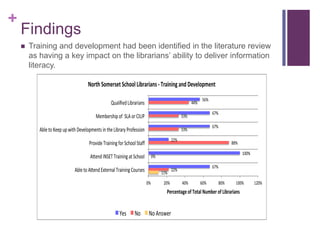
       Training and development had been identified in the literature review
        as having a key impact on the librarians’ ability to deliver information
        literacy.

                                      North Somerset School Librarians - Training and Development

                                                                                                             56%
                                                   Qualified Librarians                                44%

                                                                                                                   67%
                                          Membership of SLA or CILIP                             33%

                                                                                                                   67%
           Able to Keep up with Developments in the Library Profession                           33%

                                                                                           22%
                                      Provide Training for School Staff                                                        88%

                                                                                                                                     100%
                                       A end INSET Training at School          0%

                                                                                                                   67%
                              Able to A end External Training Courses               11%
                                                                                           22%

                                                                          0%         20%         40%         60%         80%     100%       120%
                                                                                      Percentage of Total Number of Librarians


                                                        Yes      No        No Answer
+
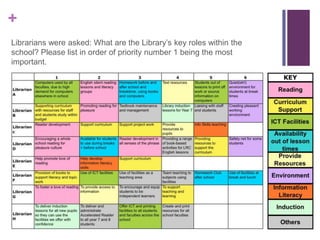
Librarians were asked: What are the Library’s key roles within the
school? Please list in order of priority number 1 being the most
important.
+
                                                                               Information Literacy Data
                                                                                                            1
                                            Does your school have a policy on information literacy?                             4
                                                                                                                                4

                                Are you aware of any Government guidelines on information literacy                              4
                                                                                                                                    5
Questions asked to Librarians


                                                  for schools or school libraries?

                                       Are you aware of any other available guidelines which cover                              4
                                                                                                                                    5
                                            information literacy for schools or school libraries?

                                                                                                                        3
                                       Do you use any available guidelines on information literacy?                                 5
                                                                                                            1

                                  Does the library or school follow any information literacy models?                                        7
                                                                                                                    2
                                                                                                            1
                                  Do you deliver information skills or information literacy sessions?                                                8

                                                                                                                                                     8
                                              Do you teach information skills on an informal basis?         1


                                  Are you satisfied with the amount of information literacy provision               2
                                                                                                                                            7
                                                           within the school?

                                                                                                        0       2           4           6        8       10

                                                                                                                    Total Number of Librarians
                                                             Yes     No      Don't Know         No Answer

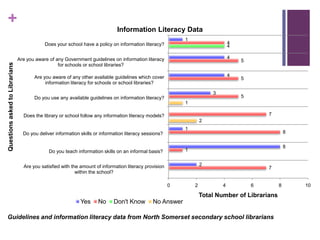
Guidelines and information literacy data from North Somerset secondary school librarians
+
+
    Key Factors Affecting the Delivery of
    IL - 1
       Senior Management – Findings suggest that senior managers
        do not fully understand the role of the librarian and are not
        aware of the potential of the librarian’s role in the delivery of IL.

       Schools did not seem actively engaged with IL.

       Librarians perceived that teachers had limited knowledge of
        research skills.

       Librarian’s status – only two were on management teams.
        Librarians were generally not thought of as being equal to
        teachers, the focus group reported that they found it hard to get
        teachers to work with them.
+ Key Factors Affecting the Delivery of
 IL - 2
    Librarians’ views of their roles
      IL not seen as a high in their lists of key roles.
      Librarians keep to their comfort zones focusing on reader
       development and promoting a love of reading.
      Focus group agreed that there was a lack of confidence in their
       abilities to deliver IL or INSET training.
      Librarians were not challenged in their roles by senior management
       leading to a tendency to concentrate on what they did best.
      Librarians lack of engagement with ICT resources, did not always
       feel confident with new technologies, prefer text-based resources –
       importance of continual professional development.
      Unqualified librarians viewed their role and position in school quite
       differently to qualified librarians, concentrating on provision of
       resources and facilities, providing a supporting role.
      Qualified librarians saw their role as central to teaching and
       learning, aware of their potential in information literacy but struggling
       to deliver in practice.
+
    Recommendations - 1
       Statutory provision of school libraries:
        As the job differs between schools it is difficult to ensure that teaching
        staff have a clear understanding of the librarian’s role. Statutory
        provision would give clear statutory guidance regarding the role and
        responsibilities of the school librarian.

       Librarians need to be more proactive:
           use available guidelines as advocacy tools
           engage more with ICT
           attend training
           deliver INSET
           collaborate more with teachers
           join a professional body.
+
    Recommendations - 2
       Senior Managers should:
           Greater understanding of librarian’s role, skills and potential.
           Involve librarian in middle management meetings.
           Promote library as central to teaching and learning across the
            curriculum.
           Engage with IL and work with librarian to implement a whole school
            approach.
           Enable librarians to attend training so they have expertise and up to
            date knowledge of resources and information skills.

       Professional Bodies should:
           Actively promote membership to all schools.
           Aim to increase awareness of available guidelines.
+
    Thankyou


               Any questions?

F Tout AULIC dissertation presentation 2012

  • 1.
    + “They are onlyguidelines after all…” Frances Tout Investigating how school librarians interpret guidelines to deliver information literacy: a case study of North Somerset secondary school libraries.
  • 2.
    + What is Information Literacy (IL)?  Thedefinition used for this study is provided by CILIP (2004) Information literacy is knowing when and why you need information, where to find it, and how to evaluate, use and communicate it in an ethical manner.
  • 3.
    + Background  School libraries are not statutory in the UK so there are no official regulations in place as to the role of the school library or the librarian.  In place of regulations there are guidelines from Government agencies and professional bodies – DfE, Ofsted, SLA, CILIP. The delivery of information literacy plays a key role in these organisations’ guidance.  This case study intended to give a comprehensive representation of information literacy delivery through school libraries in one geographical area but its findings may be indicative of a wider trend.
  • 4.
    + Research Questions  1. How do school librarians interpret guidelines concerning information literacy?  2.What are the key factors affecting the delivery of information literacy in secondary school libraries?
  • 5.
    + Research Methods - 1 Questionnaire  Initial research collected data from an in depth online questionnaire to all school librarians in North Somerset. Data collected included:  information about the school;  the library;  the librarian;  knowledge of guidelines on information literacy;  the library’s role in the delivery of information literacy;  any perceived barriers to its delivery. All nine secondary schools responded to the questionnaire.
  • 6.
    + Research Methods 2 Focus Group  A mini-focus group was set up with three of the nine librarians being able to attend.  This gave the librarians a chance to discuss the delivery of information literacy in an interactive setting, amongst peers and share experiences.  Themes from the questionnaire responses were extracted and used as the stimulus for discussion.
  • 7.
  • 8.
    + Findings  Training and development had been identified in the literature review as having a key impact on the librarians’ ability to deliver information literacy. North Somerset School Librarians - Training and Development 56% Qualified Librarians 44% 67% Membership of SLA or CILIP 33% 67% Able to Keep up with Developments in the Library Profession 33% 22% Provide Training for School Staff 88% 100% A end INSET Training at School 0% 67% Able to A end External Training Courses 11% 22% 0% 20% 40% 60% 80% 100% 120% Percentage of Total Number of Librarians Yes No No Answer
  • 9.
    + Librarians were asked:What are the Library’s key roles within the school? Please list in order of priority number 1 being the most important.
  • 10.
    + Information Literacy Data 1 Does your school have a policy on information literacy? 4 4 Are you aware of any Government guidelines on information literacy 4 5 Questions asked to Librarians for schools or school libraries? Are you aware of any other available guidelines which cover 4 5 information literacy for schools or school libraries? 3 Do you use any available guidelines on information literacy? 5 1 Does the library or school follow any information literacy models? 7 2 1 Do you deliver information skills or information literacy sessions? 8 8 Do you teach information skills on an informal basis? 1 Are you satisfied with the amount of information literacy provision 2 7 within the school? 0 2 4 6 8 10 Total Number of Librarians Yes No Don't Know No Answer Guidelines and information literacy data from North Somerset secondary school librarians
  • 11.
  • 12.
    + Key Factors Affecting the Delivery of IL - 1  Senior Management – Findings suggest that senior managers do not fully understand the role of the librarian and are not aware of the potential of the librarian’s role in the delivery of IL.  Schools did not seem actively engaged with IL.  Librarians perceived that teachers had limited knowledge of research skills.  Librarian’s status – only two were on management teams. Librarians were generally not thought of as being equal to teachers, the focus group reported that they found it hard to get teachers to work with them.
  • 13.
    + Key FactorsAffecting the Delivery of IL - 2  Librarians’ views of their roles  IL not seen as a high in their lists of key roles.  Librarians keep to their comfort zones focusing on reader development and promoting a love of reading.  Focus group agreed that there was a lack of confidence in their abilities to deliver IL or INSET training.  Librarians were not challenged in their roles by senior management leading to a tendency to concentrate on what they did best.  Librarians lack of engagement with ICT resources, did not always feel confident with new technologies, prefer text-based resources – importance of continual professional development.  Unqualified librarians viewed their role and position in school quite differently to qualified librarians, concentrating on provision of resources and facilities, providing a supporting role.  Qualified librarians saw their role as central to teaching and learning, aware of their potential in information literacy but struggling to deliver in practice.
  • 14.
    + Recommendations - 1  Statutory provision of school libraries: As the job differs between schools it is difficult to ensure that teaching staff have a clear understanding of the librarian’s role. Statutory provision would give clear statutory guidance regarding the role and responsibilities of the school librarian.  Librarians need to be more proactive:  use available guidelines as advocacy tools  engage more with ICT  attend training  deliver INSET  collaborate more with teachers  join a professional body.
  • 15.
    + Recommendations - 2  Senior Managers should:  Greater understanding of librarian’s role, skills and potential.  Involve librarian in middle management meetings.  Promote library as central to teaching and learning across the curriculum.  Engage with IL and work with librarian to implement a whole school approach.  Enable librarians to attend training so they have expertise and up to date knowledge of resources and information skills.  Professional Bodies should:  Actively promote membership to all schools.  Aim to increase awareness of available guidelines.
  • 16.
    + Thankyou Any questions?