EXTREME
PROGRAMMING
Presented By
Md. Shafi Mahmud
IT-21001
Presented To
Ziaur Rahman
Associate Professor
DEPARTMENT OF INFORMATION AND COMMUNICATION
TECHNOLOGY
COURSE: SOFTWARE ENGINEERING
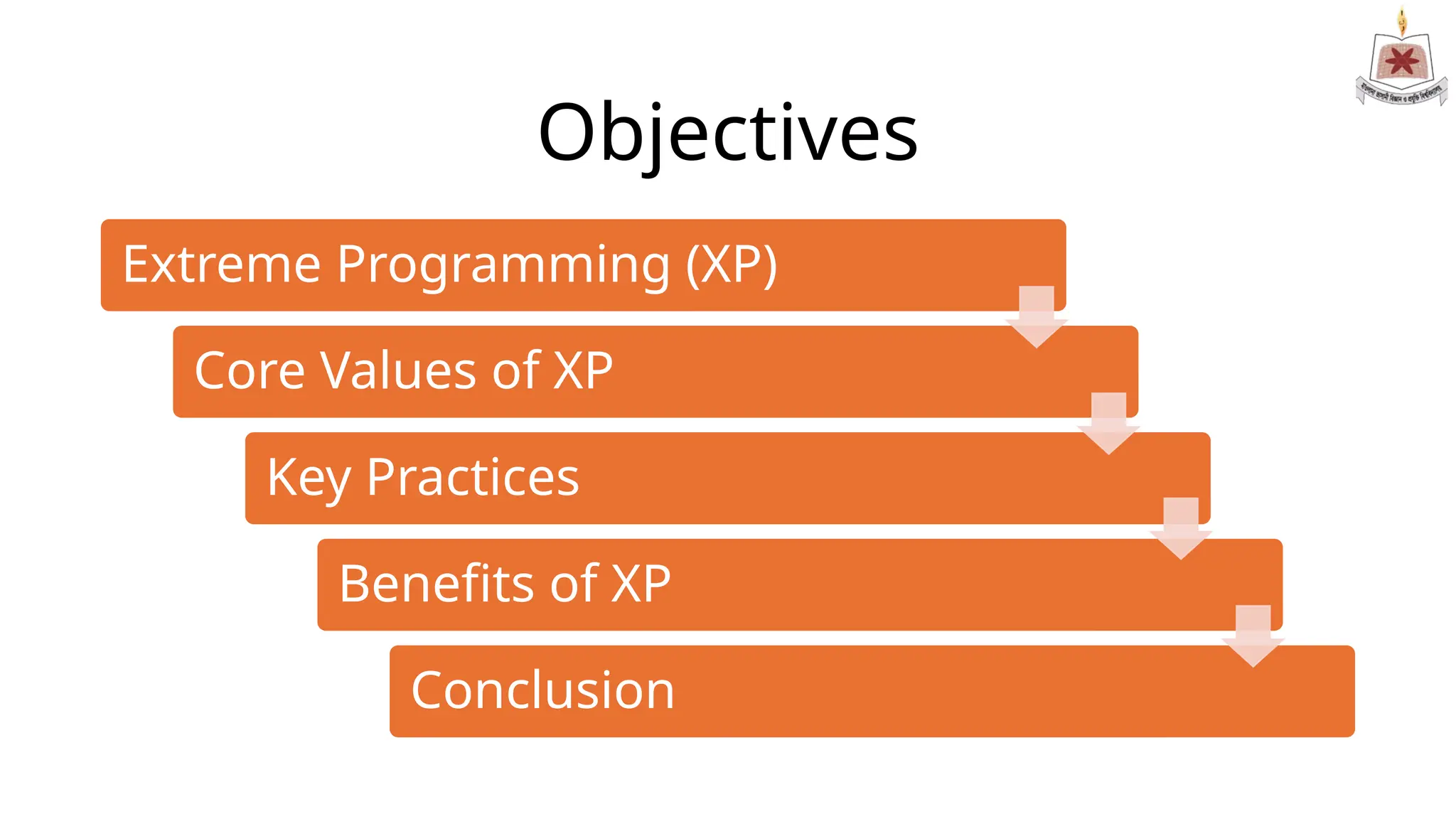
Objectives
Extreme Programming (XP)
Core Values of XP
Key Practices
Benefits of XP
Conclusion
Introduction
What is Extreme Programming?
•Extreme Programming (XP) is
an agile software development
methodology.
•It was created by Kent Beck in
1998.
•XP emphasizes customer
satisfaction, teamwork, and
continuous improvement.
Core Values
of XP
Communication: Effective
communication among team members
and stakeholders.
Simplicity: Keeping the design and
code as simple as possible.
Feedback: Regular feedback from
customers and team members.
Courage: Courage to make changes
and take risks.
Respect: Mutual respect among team
members.
Key Practices
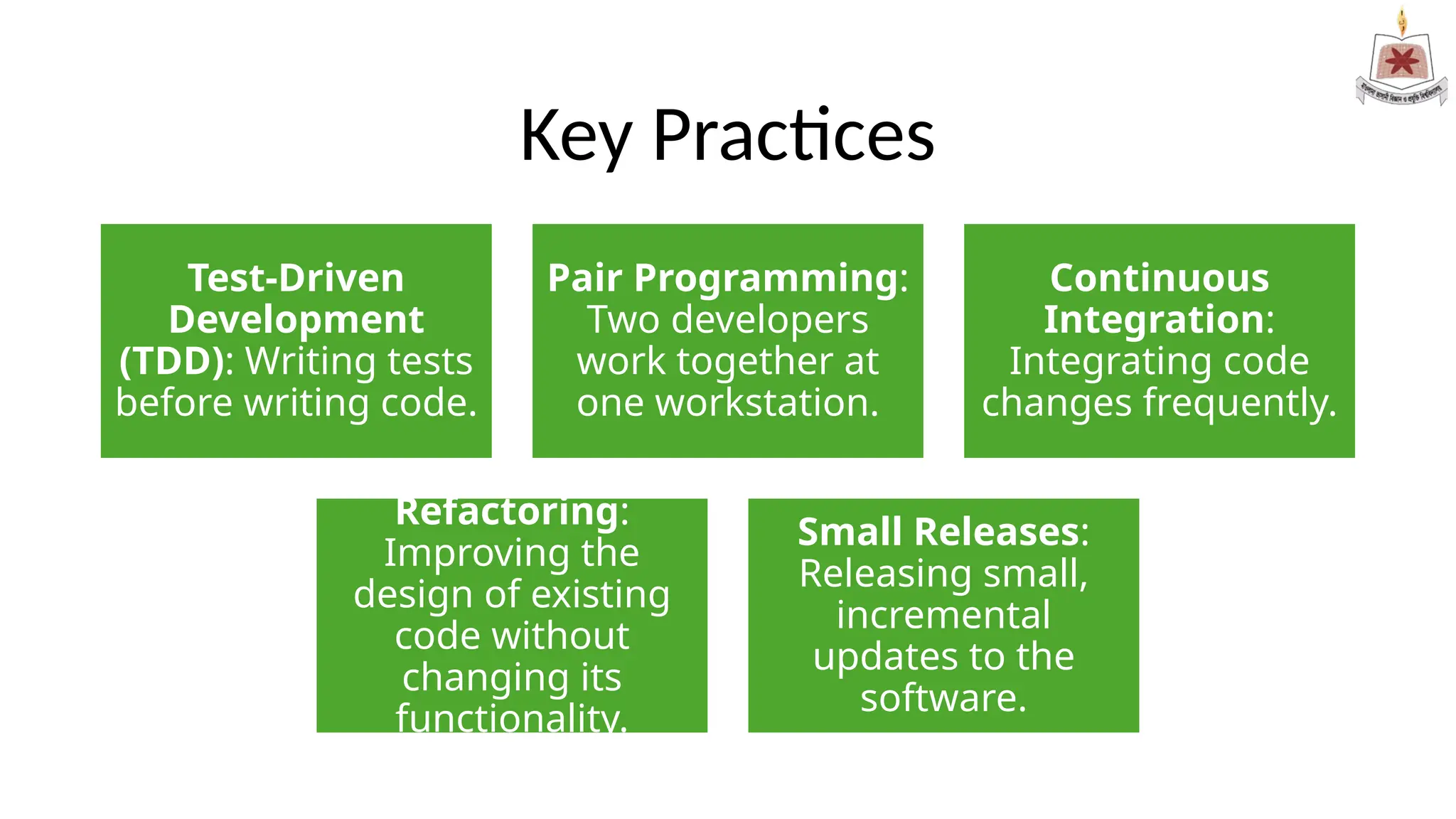
Test-Driven
Development
(TDD): Writing tests
before writing code.
Pair Programming:
Two developers
work together at
one workstation.
Continuous
Integration:
Integrating code
changes frequently.
Refactoring:
Improving the
design of existing
code without
changing its
functionality.
Small Releases:
Releasing small,
incremental
updates to the
software.
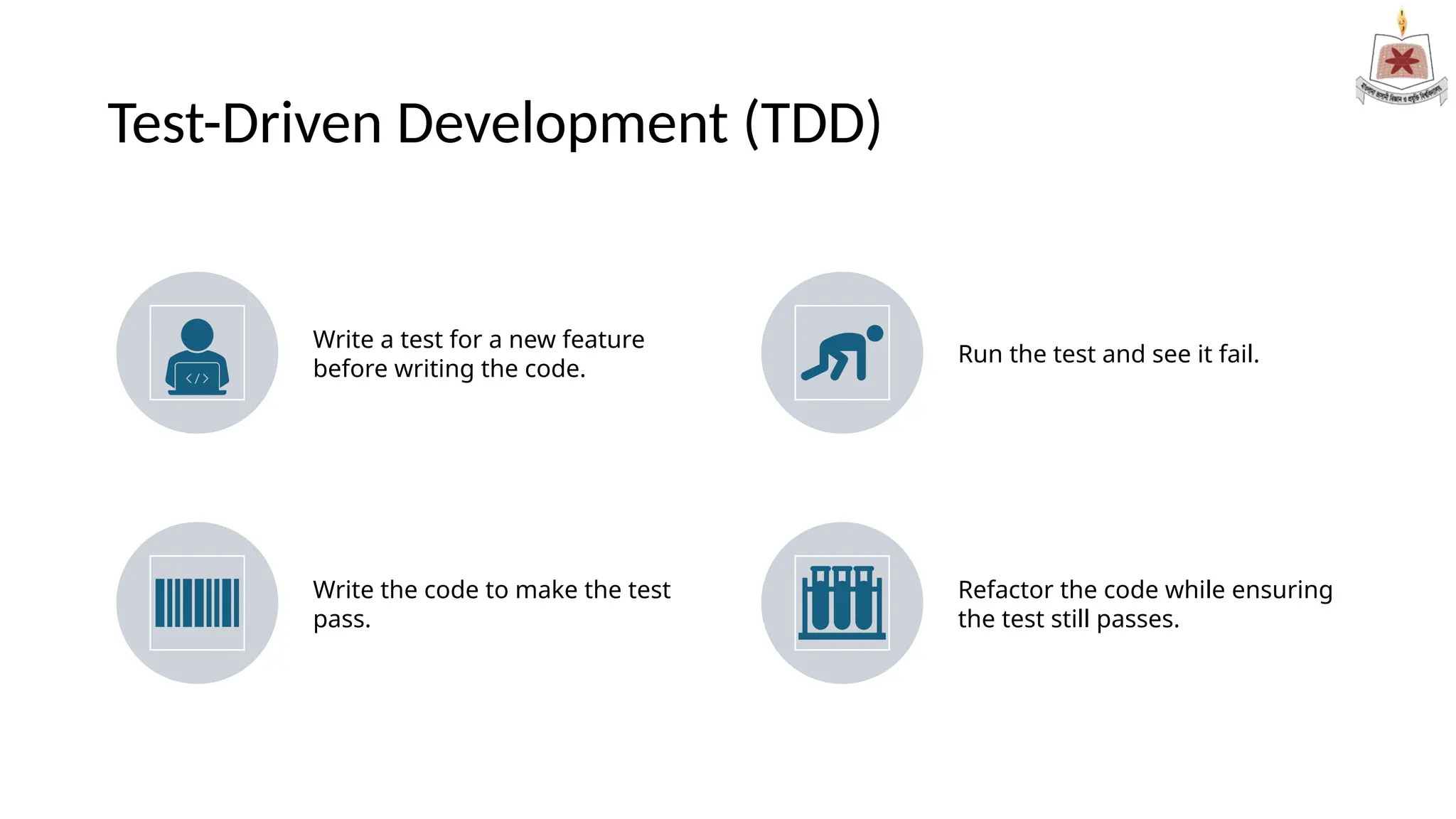
Test-Driven Development (TDD)
Write a test for a new feature
before writing the code.
Run the test and see it fail.
Write the code to make the test
pass.
Refactor the code while ensuring
the test still passes.
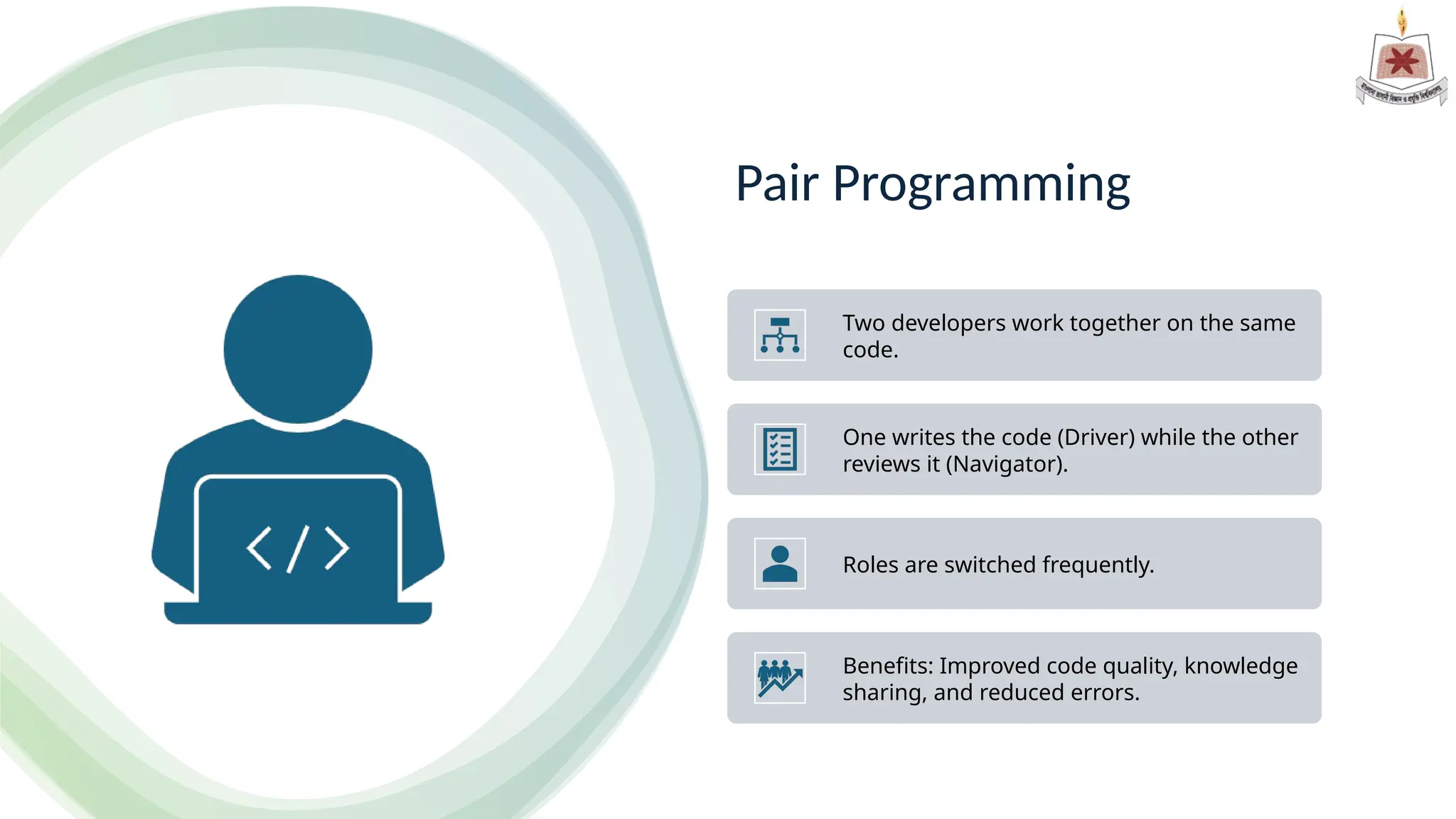
Pair Programming
Two developers work together on the same
code.
One writes the code (Driver) while the other
reviews it (Navigator).
Roles are switched frequently.
Benefits: Improved code quality, knowledge
sharing, and reduced errors.
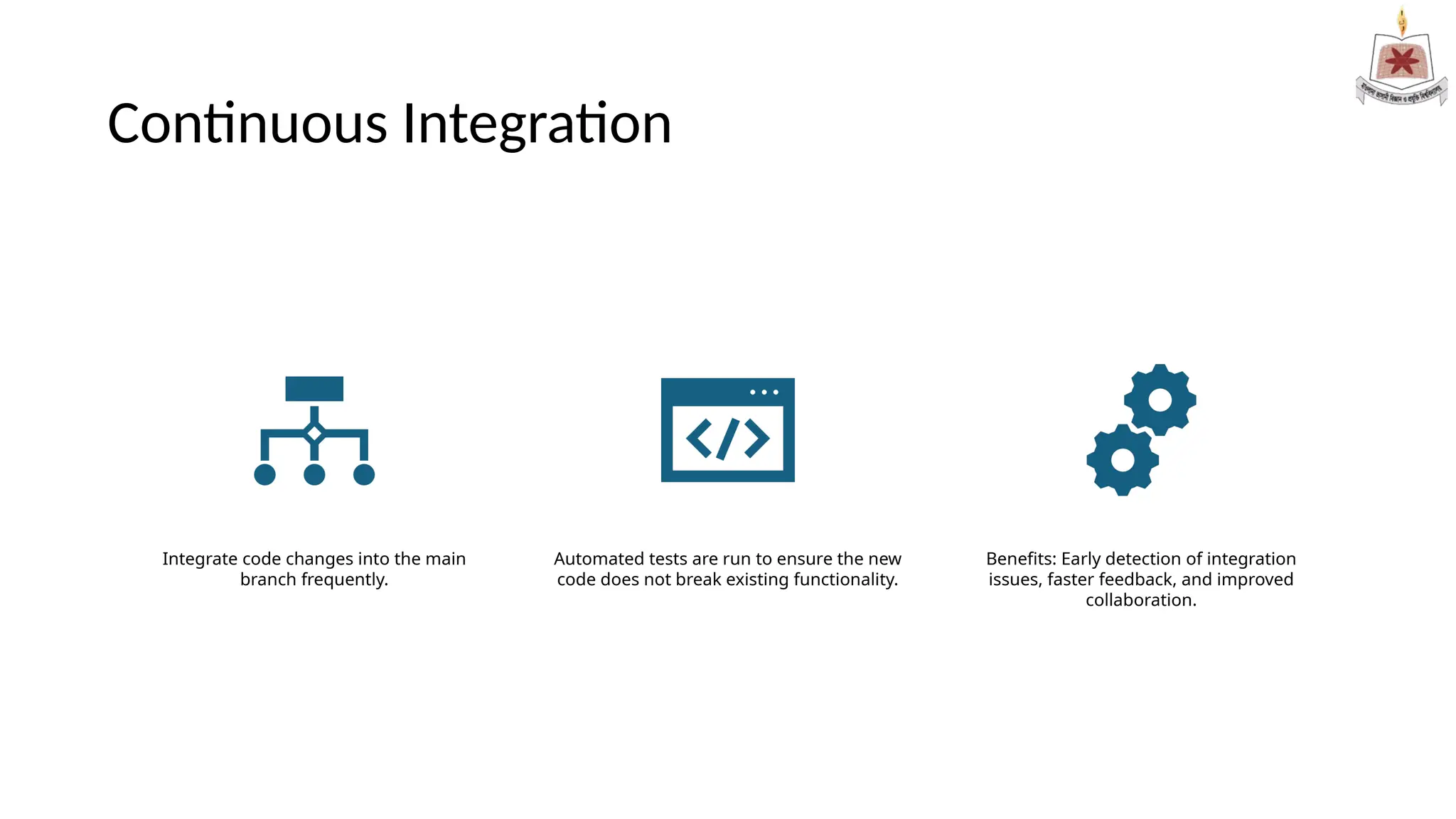
Continuous Integration
Integrate code changes into the main
branch frequently.
Automated tests are run to ensure the new
code does not break existing functionality.
Benefits: Early detection of integration
issues, faster feedback, and improved
collaboration.
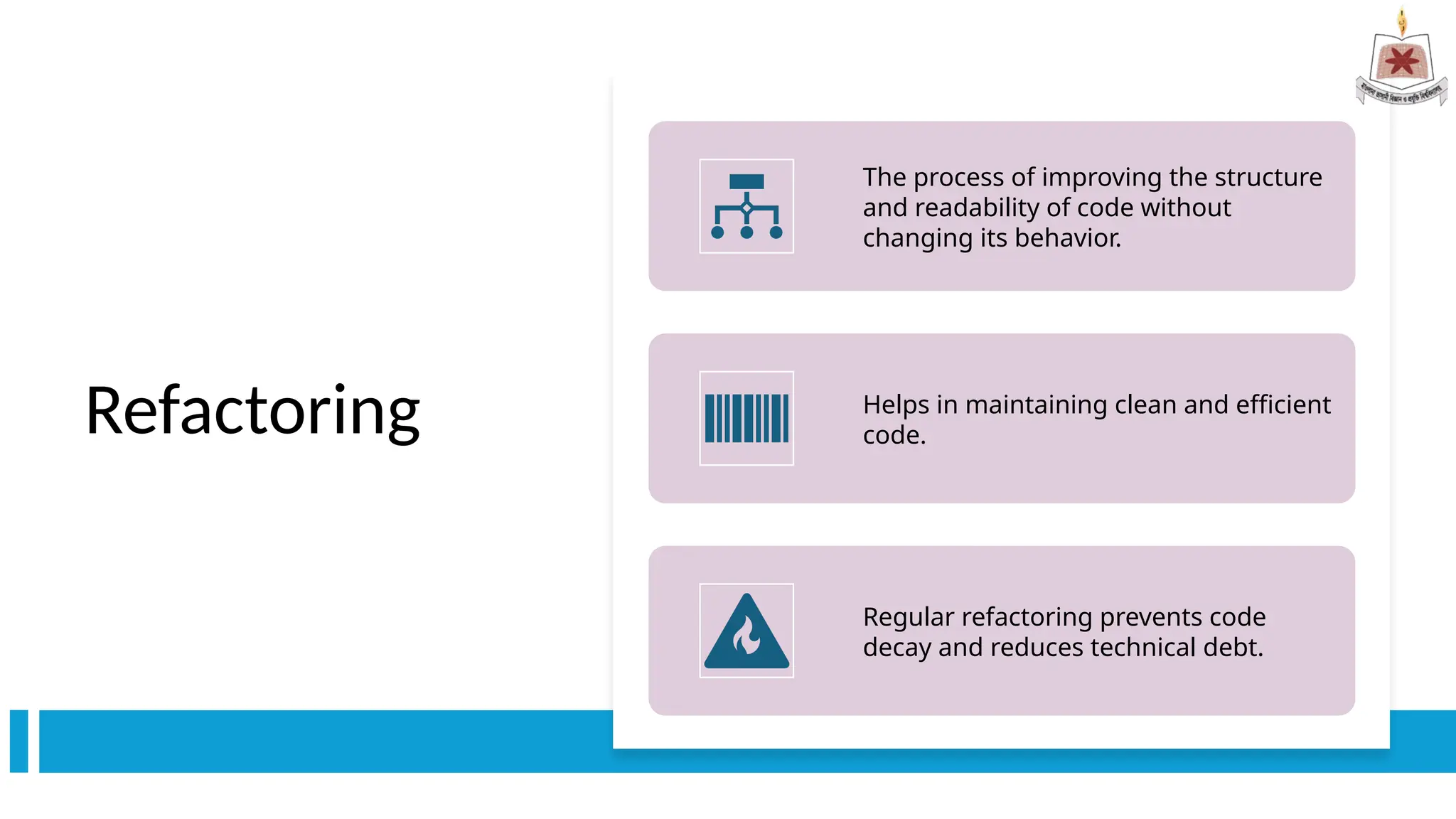
Refactoring
The process of improving the structure
and readability of code without
changing its behavior.
Helps in maintaining clean and efficient
code.
Regular refactoring prevents code
decay and reduces technical debt.
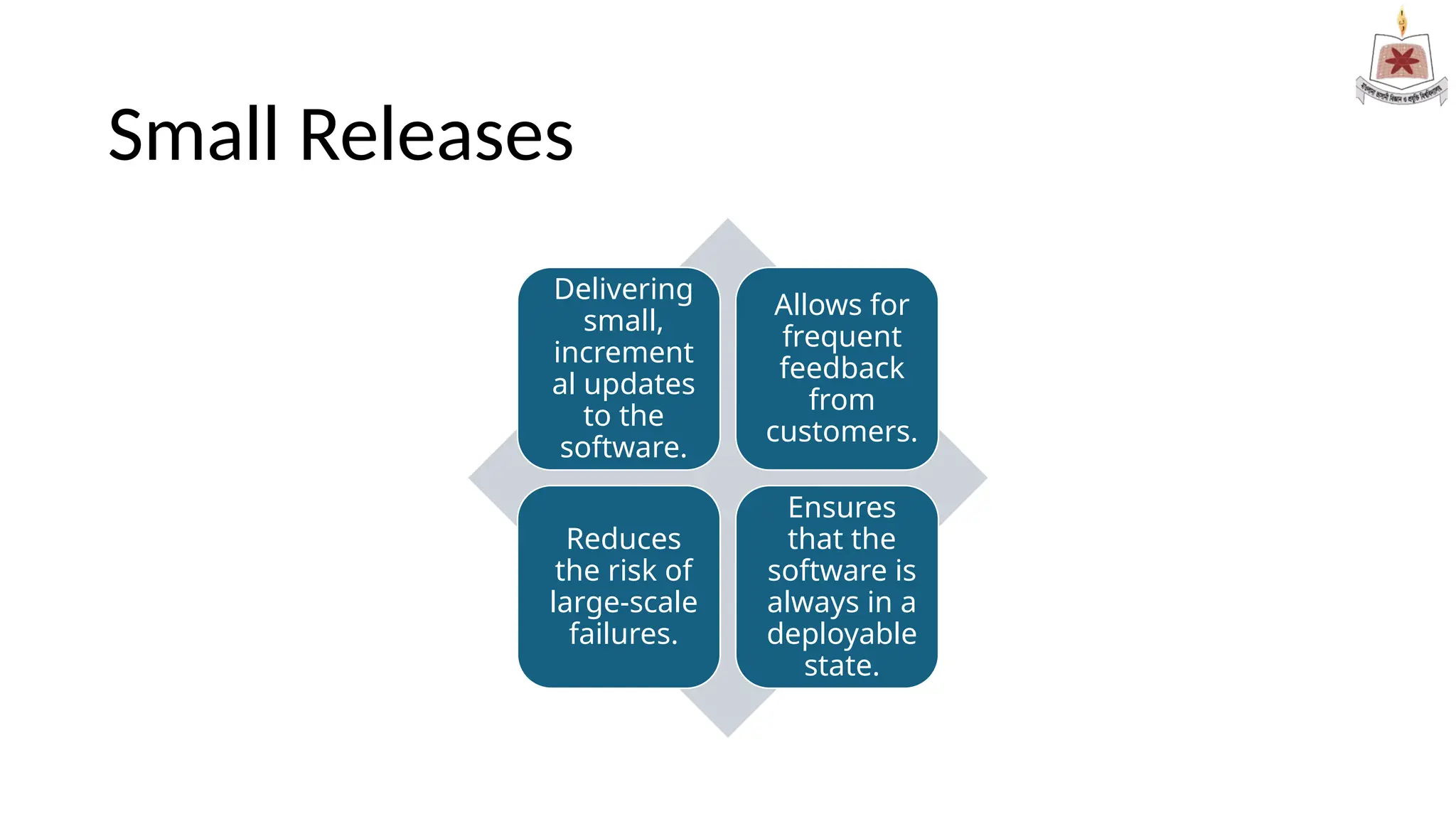
Small Releases
Delivering
small,
increment
al updates
to the
software.
Allows for
frequent
feedback
from
customers.
Reduces
the risk of
large-scale
failures.
Ensures
that the
software is
always in a
deployable
state.
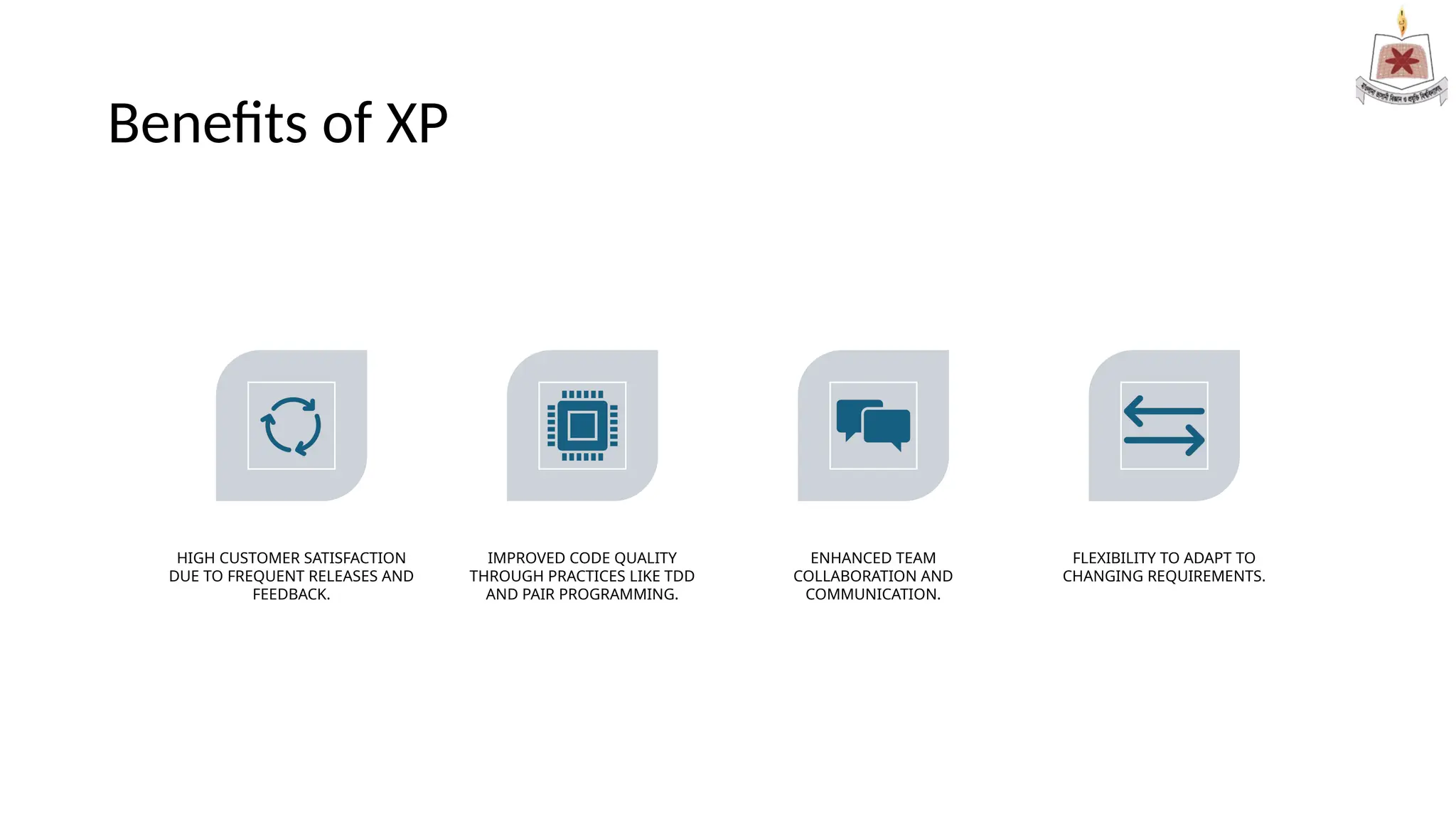
Benefits of XP
HIGH CUSTOMER SATISFACTION
DUE TO FREQUENT RELEASES AND
FEEDBACK.
IMPROVED CODE QUALITY
THROUGH PRACTICES LIKE TDD
AND PAIR PROGRAMMING.
ENHANCED TEAM
COLLABORATION AND
COMMUNICATION.
FLEXIBILITY TO ADAPT TO
CHANGING REQUIREMENTS.
Conclusion
Extreme Programming
(XP) is a powerful agile
methodology that
focuses on customer
satisfaction, teamwork,
and continuous
improvement.
By following XP
practices, teams can
deliver high-quality
software quickly and
efficiently.
Thank You

extreme programming in software engineering.pptx

  • 1.
    EXTREME PROGRAMMING Presented By Md. ShafiMahmud IT-21001 Presented To Ziaur Rahman Associate Professor DEPARTMENT OF INFORMATION AND COMMUNICATION TECHNOLOGY COURSE: SOFTWARE ENGINEERING
  • 2.
    Objectives Extreme Programming (XP) CoreValues of XP Key Practices Benefits of XP Conclusion
  • 3.
    Introduction What is ExtremeProgramming? •Extreme Programming (XP) is an agile software development methodology. •It was created by Kent Beck in 1998. •XP emphasizes customer satisfaction, teamwork, and continuous improvement.
  • 4.
    Core Values of XP Communication:Effective communication among team members and stakeholders. Simplicity: Keeping the design and code as simple as possible. Feedback: Regular feedback from customers and team members. Courage: Courage to make changes and take risks. Respect: Mutual respect among team members.
  • 5.
    Key Practices Test-Driven Development (TDD): Writingtests before writing code. Pair Programming: Two developers work together at one workstation. Continuous Integration: Integrating code changes frequently. Refactoring: Improving the design of existing code without changing its functionality. Small Releases: Releasing small, incremental updates to the software.
  • 6.
    Test-Driven Development (TDD) Writea test for a new feature before writing the code. Run the test and see it fail. Write the code to make the test pass. Refactor the code while ensuring the test still passes.
  • 7.
    Pair Programming Two developerswork together on the same code. One writes the code (Driver) while the other reviews it (Navigator). Roles are switched frequently. Benefits: Improved code quality, knowledge sharing, and reduced errors.
  • 8.
    Continuous Integration Integrate codechanges into the main branch frequently. Automated tests are run to ensure the new code does not break existing functionality. Benefits: Early detection of integration issues, faster feedback, and improved collaboration.
  • 9.
    Refactoring The process ofimproving the structure and readability of code without changing its behavior. Helps in maintaining clean and efficient code. Regular refactoring prevents code decay and reduces technical debt.
  • 10.
    Small Releases Delivering small, increment al updates tothe software. Allows for frequent feedback from customers. Reduces the risk of large-scale failures. Ensures that the software is always in a deployable state.
  • 11.
    Benefits of XP HIGHCUSTOMER SATISFACTION DUE TO FREQUENT RELEASES AND FEEDBACK. IMPROVED CODE QUALITY THROUGH PRACTICES LIKE TDD AND PAIR PROGRAMMING. ENHANCED TEAM COLLABORATION AND COMMUNICATION. FLEXIBILITY TO ADAPT TO CHANGING REQUIREMENTS.
  • 12.
    Conclusion Extreme Programming (XP) isa powerful agile methodology that focuses on customer satisfaction, teamwork, and continuous improvement. By following XP practices, teams can deliver high-quality software quickly and efficiently.
  • 13.