Expressions 2014 - Krupanidhi College of Pharmacy | 1
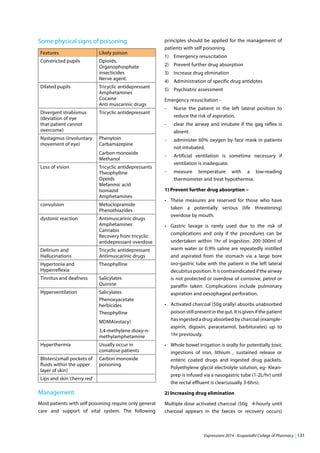
Perfect Pharmacist
Perfection is a state of being complete, impeccable and being at pinnacle of our
chosen profession. We at KCP are passionate about creating Perfect Pharmacists to
serve humanity.
It takes a lot to be perfect - unceasing practise, mastery, elan, zeitgeist and ethics.
KCP is committed to carve and to deliver the Gen Z pharmacists who will embody
all these virtues and retain their relentless pursuit for perfection across the
pharmaceutical spectrum.
“We carve stones, we just don’t polish them.
We make monuments out of them.”
Prof. Dr. Suresh Nagpal
Founder Chairman - Krupanidhi Educational Trust
2 | Expressions 2014 - Krupanidhi College of Pharmacy
Table of Content
03	Commendations
33	 Team KCP
37	Life@KCP
41	Cognise
99	Happenings@KCP
115	 Outside KCP
121	 Creative Canvas
Expressions 2014 - Krupanidhi College of Pharmacy | 3
Commendations
4 | Expressions 2014 - Krupanidhi College of Pharmacy
22. 05. 2014
I am happy to learn that ‘KRUPANIDHI COLLEGE OF PHARMACY’ Bengaluru, a constituent of
“KRUPANIDHI GROUP OF INSTITUTIONS”, established in 1985 has been imparting quality
Education in Pharmacy and providing opportunity to the students to groom to excel, is
bringing out its College Magazine‘EXPRESSIONS-2014’in June 2014 showcasing the academic
and cultural talents of the Students, Faculty and Staff.
I send my felicitations & best wishes to the Management, Teaching and Non-Teaching Staff,
Editorial Team and also the Students of the College on this happy Occasion.
SHRI H. R. BHARDWAJ
Governor of Karnataka
Message
Shri H. R. Bhardwaj
His Excellency Governor of Karnataka
Expressions 2014 - Krupanidhi College of Pharmacy | 5
Message
Shri U. T. Khader
Minister of Health and Family Welfare, Government of Karnataka
27. 05. 2014
I am happy to know that, the Krupanidhi College of Pharmacy is coming up with a magazine -
Expressions 2014. I wish them all the success in all their activities. I also pray that Almighty God
gives them more strength to carry on their good work.
I wish the celebrations a“Great Success”.
SHRI U. T. KHADER
Minister of Health and Family Welfare, Government of Karnataka
6 | Expressions 2014 - Krupanidhi College of Pharmacy
Message
Dr. B. Suresh
President - Pharmacy Council of India (PCI)
17. 05. 2014
It is indeed a matter of pleasure that Krupanidhi College of Pharmacy, Bangalore, is bringing
out a college magazine‘EXPRESSIONS 2014’.
I am happy to understand that the college is contributing to the needs of Healthcare System,
Pharmaceutical Industries, Research and Development and Pharma Education of the country,
through its students who come out successfully. I am also sure that this college magazine will
represent the spirit, technical and literary talent hidden of the students and staff of the college
to share their views.
As the President of Pharmacy Council of India, I would like to convey my heartiest wishes on
the occasion of the release of the said magazine.
With best wishes,
Dr. B. SURESH
President - PCI
Expressions 2014 - Krupanidhi College of Pharmacy | 7
Message
Dr. Sriprakash MD (Opth)
Vice Chancellor, Rajiv Gandhi University of Health Sciences, Karnataka
17. 05. 2014
I am very happy to note that Krupanidhi College of Pharmacy, Bangalore is bringing out the
Annual College Magazine“EXPRESSIONS 2014”.
IhopethattheMagazinebeingbroughtoutwillbeinterestingandwillstimulateandencourage
the hidden talents of the students.
My best wishes to the faculty members and student of the college.
Dr. SRIPRAKASH K. S.
Vice Chancellor, Rajiv Gandhi University of Health Sciences
8 | Expressions 2014 - Krupanidhi College of Pharmacy
Message
Dr. D. Prem Kumar
Resistrar, Rajiv Gandhi University of Health Sciences, Karnataka
08. 05. 2014
Its is a pleasure to learn that the Krupanidhi College of Pharmacy, Bangalore is releasing the
college magazine - Expressions - 2014.
College Magazines are sources of inspiration for students and faculty to express their creativity.
These act as springs for nurturing of talents and future growth. Krupanidhi College of Pharmacy
has a long and commendable tradition of nurturing talents and supporting creativity.
I hope that the college magazine Expressions - 2014 will live upto its meaning of letting the
students and faculty expressing their inherent capacity to excel.
I wish the best for your endeavours.
Dr. D. PREMKUMAR
Registrar, Rajiv Gandhi University of Health Sciences
Expressions 2014 - Krupanidhi College of Pharmacy | 9
Message
Dr. S. Sacchidanand
Registrar (Evaluation), Rajiv Gandhi University of Health Sciences, Karnataka
08. 05. 2014
I am happy to know that your Institution is bringing out a magazine“Expressions-2014”during
a glittering function in June 2014. This is the occasion for your staff/students to showcase
their talent and contribute their might to make your college magazine more meaningful. A
coordinated effort by your esteemed institution and your staff/students will enhance the
image of your Institution to grow to newer height.
I take this opportunity to wish you all success in your endeavor, and wish to see your college as
a center of Excellence in the near future.
Regards
Dr. S. SACCHIDANAND
Registrar (Evaluation), Rajiv Gandhi University of Health Sciences
10 | Expressions 2014 - Krupanidhi College of Pharmacy
Message
Dr. G. V. Niranjan
Director - CDC, Rajiv Gandhi University of Health Sciences, Karnataka
It is indeed a pleasure to note that Krupanidhi College of Pharmacy, Bangalore is bringing out
the annual college Souvenir,“Expressions”.
The magazine provides an excellent opportunity through various genres of writing.
I appreciate the efforts and hard work and enthused endeavours of the staff and students in
bringing out this magazine.
I wish the magazine “Expressions” is widely read and cherished and hope it will continue to
inspire all the students, staff of Krupanidhi College of Pharmacy and other Pharmacy faculty.
Dr. G. V. NIRANJAN
Director - CDC, Rajiv Gandhi University of Health Sciences, Karnataka
Expressions 2014 - Krupanidhi College of Pharmacy | 11
Message
Prof. Dr. Nazim SEKEROGLU
President of AMAPMED
Manager of Vocational School of Kilis 7 Aralik University
May 20, 2014
Kilis, Turkey
It is great pleasure for me to write this message for congratulation both distinguished scientific
person Prof. Dr. Raman DANG and his new position at the Krupanidhi College of Pharmacy. In
changing and developing research and education systems throughout the World, farsighted
persons with scientific vision are crucial important for their societies and foundations. In this
concept, I believe with my entire heart that Prof. Dr. Raman DANG will take the college to the
top in educational and scientific level in pharmaceutical sectors.
I wish you continued success in your career and good expressions in your life.
Yours sincerely.
Prof. Dr. Nazim SEKEROGLU
President of AMAPMED
12 | Expressions 2014 - Krupanidhi College of Pharmacy
Message
Shri S. V. Veerramani
President - Indian Drug Manufacturers’ Assosciation (IDMA)
Educational institutions are“temples of Learning”in parlance of great thinkers. It is institutions
which create Individual Values as contributing citizens of India.
Profession of Pharmacy though is old as human life is yet to be synchronized globally thereby
giving deserved respectability to the pharmacist. It is in this direction much work needs to
be done through continuous productive interactions between institutions, manufacturing
associations and global regulatory bodies.
It is heartening to learn about your institutions and the service it has rendered in shaping lives
of youngsters who arrive as raw individuals at the portals of your institution.
Deep rooted conviction of management combined with dedicated faculty has made KCP stand
out as an institution of reckoning for the past 25 years. My best wishes to every member of
KCP staff and team of Expressions for making Expressions become the much awaited house
magazine of Indian Pharmaceutical fraternity.
SHRI S. V. VEERRAMANI
President - IDMA
Expressions 2014 - Krupanidhi College of Pharmacy | 13
Message
Shri Jatish Sheth
President - Karnataka Drugs & Pharmaceuticals Manufacturers’ Association (KDPMA)
05. 04. 2014
The last two decades has seen tremendous changes and these changes have been fuelled
by a few individuals which has had a lot of impact on lives of human beings across the globe.
Changes in the communication technology impacted our social life, the way we think, the way
we interact and the way we behave in a major way.
Changes in expression have lead to changes in governments and rulers across the globe.
President Obama leading a nation of predominantly white immigrants was unthinkable till a
decade ago.
Pharmaceutical plants which were virtually a few rooms operation has changed into sprawling
areas with attention to the smallest detail. Emphasis is on Safety & Efficacy of the Drug
Products. The products should meet the specifications of Impurity Profile as well as In Vitro
Bioequivalence. Dissolution test has become the norm instead of Disintegration time. Similarly
on the analysis front, testing by way sophisticated instruments like HPLC, GC, FTIR is the norm
instead of Titrimetry or UV of earlier days. Validation for any and all operation, proof of concept,
standard operating procedures, change control, the change from quality control to quality
assurance has brought about tremendous changes in the way we pharmacists make medicines
for the mankind with a singular purpose in mind to alleviate their sufferings.
Dosage forms are no longer confined to tablets, capsules, liquids. Change has been necessary
in Pharmaceuticals because of need - the need for every human to have a healthy life. Insulin
dependent patients need an injection daily and the need to change the dosage from injections
to auto-injectable occurred to someone.
Institutes like Krupanidhi College of Pharmacy are no longer confined to only teaching. They
are focussing on helping students realize their potential and play a major role in changing the
mind-sets. The students are at the doorstep of a world they can change because it’s truly said
that what is within you is more powerful than what is outside.
The potential is tremendous. Make dreams come to reality. A dream coming to reality is the
pursuit of every single human in earth and that is the pursuit of happiness.
Change is the only permanence in life. A look into the world of pharmacy gives an insight the
unlimited possibilities of change and the potential to make a giant stride.
On behalf of Karnataka Drugs and Pharmaceuticals Manufacturer’s Association, I wish all the
students a happy journey of discovery…discovery of yourself and realize your great potential,
talent, and the effect it can have on your world.
SHRI JATISH SHETH
President, KDPMA
14 | Expressions 2014 - Krupanidhi College of Pharmacy
Message
Shri D. A. Gundu Rao
President - Karnataka State Pharmacy Council (KSPC)
Bangalore
With the change in disease pattern and the increase in number of patients with Diabetes
and Hypertension and other diseases requiring long term therapy, there is growing need for
medicines and newer molecules. In this back drop the needs and adopting new technologies
in the Pharmaceutical Industry is ever changing. Both the Society and Industry are looking for
a technically qualified Pharmacist from a reputed college.
I have been closely watching the progress of Krupanidhi College of Pharmacy, Bangalore
from its inception and am happy to note that the college has made a steady progress without
compromising to provide quality education.
I am happy to note that the College has well qualified and student friendly Teachers who have
made all the difference.
I am sure your College magazine “Expressions”, will provide a platform for both Teachers and
Students to ventilate their novel ideas in their ultimate desire to serve the ailing community at
large which is the essence of KARMA YOGA in Bhagavad-Gita.
Good wishes to all.
SHRI D. A. GUNDU RAO
President, KSPC
Expressions 2014 - Krupanidhi College of Pharmacy | 15
It gives me immense pleasure to know that Krupanidhi College of Pharmacy is bringing out the
college magazine“Expressions”
I appreciate the students community for taking the yeoman responsibility in bringing
up this magazine, while expressing their talents and skill, not only in students but also in
extracurricular activities. It speaks rich in culture and highest standard of education imbibed
by these students of this institution.
I appreciate the efforts contributed and hard work of all the faculties and students concerned
in bringing out the magazine.
Wishing “Expressions 2014” in wide circulation not only among professionals but also among
student community.
Dr. M J MOHAN
Chairman, MVJ Medical College & Research Hospital
Message
Dr. M. J. Mohan
Chairman - MVJ Medical College & Research Hospital, Bangalore
16 | Expressions 2014 - Krupanidhi College of Pharmacy
Pharmacognosy: Past & Present
Prof. Dr. Ilkay ERDOGAN ORHAN
Department of Pharmacognosy, Faculty of Pharmacy, Gazi University, 06330 Ankara, Turkey
Dean – Faculty of Pharmacy, Eastern Mediterranean University, Gazimagusa (Famagusta), The Northern Cyprus.
Dear scientists and students of Krupanidhi College of Pharmacy,
I congratulate you on initiative of such a good magazine“Expressions-2014”. I think, this is very
important to start this kind of activity during your college life, which will contribute a lot to
your future life after you graduate.
Pharmacognosy, as well-known, the science of drugs of natural origins including plants,
animals, marine organisms as well as microorganisms. Its history dates back thousands of
years since the records revealed that many antique civilizations used medicines of herbal
and animal origins for the treatment of diseases. Diseases are born with man and drugs came
into existence since a very early period to remove the pain of diseases and to cure them.
Plants as food and medicine since the early history. For example; Archeological findings from
30.000 years ago in Shanidar (Iraq) show polen and plants that are still in use. The records
of King Hammurabi of Babylon (c. 1800 B.C.) include instructions for using medicinal plants.
The entire Middle East has a rich history of herbal healing. There are texts surviving from the
ancient cultures of Mesopotamia, Egypt, and India that describe and illustrate the use of many
medicinal plant products, including castor oil, linseed oil, and white poppies. Fundamentals
of Ayurvedic medicine rooted in ancient Indian Civilization. Traditional Chinese Medicine has
been existing at least since last 3000 years.Thus, the story of drugs is as old as mankind. Many
drugs commonly used today are of herbal origin.
Indeed, about 25% of the prescription drugs dispensed in the United States contain at least
one active ingredient derived from plant material. Some are made from plant extracts; others
are synthesized to mimic a natural plant compound. Many drugs listed as conventional
medications were originally derived from plants. Pharmacognosy is still a popular field in
the pharmaceutical sciences, and due to development in chemistry and medicine, it has
become more sophisticated and changed a face turning to“omics”such as metabolomics. The
Pharmacognosic research is moving in more molecular level. However, we should still keep
the classical approach to Pharmacognosy for our research in which the modern scientific
techniques should be embedded and enriched.
I wish you a successful and fruitful publication life with your newly launched magazine.
Expressions 2014 - Krupanidhi College of Pharmacy | 17
Setting up of Modern Gurukulam
Prof. Dr. Suresh Nagpal
Founder Chairman, Krupanidhi Educational Trust, Bangalore
A Gurukulam is the family or lineage of a Guru. The family of a Sannyasin (renunciate monastic) is made up
of the lineage of the Guru and Shishyas (students). Gurukulam also means abode of the guru. A Gurukulam
is also an Ashram. An Ashram is a place where religious-minded people live together and practise the tenets
set out in the Sastras (scriptures).
In the tradition, there are three kinds of graduates (snatakas) ;
Vidya-snataka : those who have graduated with honours in an area of knowledge;
Vrata-snataka : those who may not be brilliant in intellect but may have excelled in disciplines;
Vidya-vrata-snataka : those who have excelled both in learning and in disciplines.
The main goal of the Guru-kulam is to prepare,
(a)	citizens who hold a personal spiritual philosophy of life based on meditative experience and traditions,
and will translate it into all areas of life in the world,
(b)	teachers and guides (whether swamis or householders) who will give their lives to creating the next
generation of such citizens,
(c)	 a select few of whom may establish or manage and advance the work of pre-established centres for the
next several generations, and
(d)	who in turn, will train again the teachers and guides for the generations that follow them.
Areas of Learning
1. 	 Meditation, its philosophy, practice and application for daily life in contemporary context, as taught by
the Himalayan Tradition and interpreted by Swami Rama of the Himalayas.
2.	 An understanding of the vast expanse of the meditation methods, their interconnectivity and sequential
procedures. This can by no means be completed in one life time, but a general understanding, including
the personal experience imparted to the student to the extent of his/her capacity (adhikara) can be
given.
3.	 The ancient texts, such as the Vedas and the Upanishads, that were revealed in the meditative states
of the rishis, serve also as guides to meditation. (a) How they depict he meditation methods and the
meditative states will be taught in an experiential context. (b) The keys to the interpretation of these
texts will be imparted to those with a sufficient background in the language.
4.	 Sanskrit and related languages such as Pali, at different levels according to demand, for example
Sanskrit (a) for international yoga teachers and (b) for advanced students who wish to learn the ways of
interpreting the texts.
5.	 An introduction to a limited number of sciences and arts that have developed out of the meditative
traditions, for example ayurveda, phonetic astrology, vastu, Vedic recitation, fundamentals of Indian
18 | Expressions 2014 - Krupanidhi College of Pharmacy
music and dance, and so forth. Those who desire to specialize in any area of their choice will be given the
necessary advice and any available opportunity--after the fundamental courses have been completed.
6.	 Brief history of the meditative and spiritual traditions of different cultures in all parts of the world,
together with selective readings from their texts.
7.	 How meditation, its practices, philosophy and psychology may be applied to such contemporary
concerns as (a) personal and interpersonal emotional problems, (b) psychosomatic illness (c) questions
of war and peace (d) social justice (e) spirituality in business, management and administration, and so
forth.
(a)	Contemporary scientific investigations into meditation and related disciplines (b) the areas of scientific
and medical concern where further research may be undertaken.
8.	 How to teach in different cultures and for that purpose acquiring skills in intercultural communication,
establish centres, train teachers, and so forth,
9.	 Training the minds to bear that in an ever changing world the methods, languages and terminologies of
the teaching will need to be resilient enough to alter these according to the needs of the times, but never
changing the underlying principles and the purity of the spiritual experience.
The age-old gurukulam concepts that created a holistic student seem to be back with the modern schools
realising the importance of those practices and implementing it in their new-age curriculum.
Giving importance to co-curricular activities, attention on physical exercises through specified time for
games and sports and a hostel far away from the hustle and bustle of the city life is the in-thing now and
bait for parents who can afford such education. After all, education is not just books and classrooms, and it
involves a lot more activities that strengthen the relationship between the school, teacher and the students.
Parents who were completely in the awe of convent education giving a go-by to the holistic development
of the wards are changing now going by the response such schools are getting. “Perhaps realised by what
they missed in school most of the young parents now want holistic development of kids,” says Yarlagadda
Rajasekhara Babu, Managing Director, Oakridge International School that has adopted the old-age
gurukulam concept with a modern approach. While stress is laid on extra-curricular activities and sports,
children get to indulge in the modern gadgets that help in making learning attractive and easy. A few years
back parents used to laugh if a school sold the concept of teaching other activities like pottery, dance, music
or drawing. But now things have changed and parents want kids to dabble with these as they promote
creativity at different levels and in different forms. In fact, majority of the new-age schools are now vying
with each other to attract parents with these academic qualities. Some academics say our State was pioneer
in promoting gurukulam concept.
In modern age, gurukulam professionalise the management of development efforts in general and the
efforts for enhancing the livelihoods of the poor in particular, by various individuals and agencies.
Specifically it aims to:
1.	 Provide fresh professionals for the development efforts in general and for enhancing livelihoods of the
poor in particular.
2.	 Build the competencies in terms of knowledge, skills and motivation of the existing human resources
including the poor themselves, the professionals and support functionaries in governmental and civil
society development organisations engaged in the development efforts; and
3.	 Offer a variety of platforms and opportunities for improving their professional competencies and
fostering requisite value orientation.
Expressions 2014 - Krupanidhi College of Pharmacy | 19
Inparticular,Gurukulamaimsatsourcing,creating,nurturinganddevelopingthedevelopmentmanagement
professionals with clear bias towards the poor to improve their livelihoods and livelihoods options. Their
specific foci of intervention in the economic field include the processes that lead to increased income,
decreased expenditure, increased employment and opportunities and decreased/ diversified risk.
The 21st Century Gurukulam ( 21CG) is a new educational program designed to provide enhanced
opportunities for gifted rural youth of Andhra Pradesh. A 21CG is envisioned as a self-sustaining, self-
governing, and self-supporting community, modeled after the ancient Gurukulam and the modern-day
kibbutz. Its primary purpose is to provide remedial education and IT training leading to a postgraduate
degree in IT for the current top 1% of the rural youth. The gifted rural graduates defined as the top 1%
based on merit and another 1% based on social criteria are expected to be selected from each mandal.
The entrance test is state wide but the selection is based among the best in each mandal. The rural mandal
residency will be determined based on the location of the high school graduation of the candidate.
It is our hypothesis that, intelligence is not concentrated in the cities but is, in all probability, uniformly
distributed throughout the entire population. If this hypothesis is correct, even partially, then we are leaving
behind 80% of the gifted youth just because they happen to be born in rural environments to semi-literate
parents. Given this serious and genuinely unfair disparity, the State of Andhra Pradesh is considering various
alternatives to enable the gifted rural youth to achieve their full potential. 21CG is the first initiative.
Of course, most of the time, the preceptors would be respected Sages who had renounced worldly pleasures
to dedicate themselves to imparting knowledge of every kind to the seekers. Cut to today’s environment,
the word Gurukul to one of today’s ultra-smart kids would only mean a Guru who is “Cool” - today’s slang
for something that is good! How in Heaven’s name are we going to get Gurukula in the current scheme of
things? In the first place, where is space for a sprawling Ashram? Where are the erudite scholars who have
the capability of handling today’s super brats, leave aside teaching them? Where are the patrons who are
needed to support such worthy schemes? Most importantly, where are the dedicated students who would
have to undergo the rigors of roughing it out at the Gurukula, forgetting their social standing? All that one
can now think of is how to apply standards and principles of the Gurukula system in today’s environment.
If any one may be pardoned for saying so, we rarely find an Ustad, Pandit or Vidwan who would dedicate
his life to teaching without expecting too much in return. And, neither can one blame him for this. He has
to fend for himself, look to the welfare of his family, manage to obtain adequate accommodation in highly
congested cities and to top it all, be able to churn out good students - who again, are fickle-minded in
their pursuit of real “Vidya”. Today, the teachers have to depend on monthly fees from students. If they
go on vacations or during examination times no classes - so, no fees! What is the Guru expected to do?
Unfortunately, commercialization is the order of the day and the narrow-minded attitude of students or
their parents leads to avarice on the part of the Guru. In such a none-too-happy scenario, how does one
go about inculcating the best of the Gurukula system? As per the title of this discussion, let us devote our
attention to Music in general and percussions in particular.
1. Musical Institutions should be established with extensive Government support and the backing of
munificent donors who have, today, taken the place of kings. These Institutions should have residential
or hostel facilities for aspiring students to stay during the course of their instructions, for a minimum
period of five years.
2.	 The students have to be in constant touch with their Gurus / Ustads, not only imbibing knowledge, but,
try to witness their “Riyaaz” or practice sessions and live recordings. These being performing arts, the
student should also learn how to react to situation arising on the stage.
3.	 Total dedication of students and of course, the co-operation of their parents is absolutely necessary.
20 | Expressions 2014 - Krupanidhi College of Pharmacy
4. Handsome salaries should be paid to the teaching staff, to ensure their unswerving attention to the
job they are expected to do, and that is to produce top-notch performers. They have to be provided
with the best of’ facilities so that they cannot be lured by others. Care should be taken to research their
backgrounds to find their sincerity.
5. 	 A minimum standard of proficiency should be made a criterion for admissions to such Institutions as also
age, whereby a student also gets the time to obtain a basic qualification such as B.A. / B.Com. / B.Sc. etc.,
and also attain the required level of proficiency in his chosen field.
6.	 Every family must try to impart some sort of musical training to every child.
7.	 Each student must be allowed to reside with the Guru and his family, on a rotational basis, for a period of
a week or fortnight, so as to enable him to establish a personal rapport with the Guru and get to know
him better.
8. 	 Each student must, in addition to his own field, be made to undergo basic training in other branches. In
these days of specialization one often finds percussionists who know very little about vocal music and
vice- versa.
9.	 There should be close interaction between all the faculties, especially between Hindustani and Carnatic
music students.
10.	Instructions should be so designed that the student imbibes the lessons in spirit rather than by rote. This
will be the basis on which he will learn to improvise.
11.	Periodical performances of all students should be held and attendance of all students, junior and senior
must be made mandatory. It may surprise many of the seniors how much they can learn by listening to
their juniors
12.	For percussion students in particular, every student should be made to recite each and every composition
before he masters it on his instrument. This will enable him to play the composition in the same spirit as
the composer intended it to be.
13.	Every day should begin and end with soulful prayers to the Almighty. Every musical activity must be
treated as an offering to God.Without sounding over-critical of today’s standards and means of spreading
cultural awareness, this has been an attempt to highlight the virtues of the Gurukula system.
Create Gurukula is based on altruistic principles. Make your contribution and get involved now. When
create is running full steam and educating our brightest children, knowing your contribution made all this
possible is guaranteed to be fulfilling. It is an ambitious project that aims to bring unprecedented levels of
learning and opportunity to qualified students from around the world. The success of this unique and noble
project requires steadfast commitment from people like you, who care enough to get involved. Your energy
and enthusiasm drives our action, and with your continued support our schools can achieve ever greater
success. Please donate and get involved - together we will create a better tomorrow. Your monetary support
will go to construct buildings to house classrooms, laboratories, dormitories, a library, a computer facility,
an auditorium, a kitchen and dining hall, as well as build a playground and athletic facility. Furthermore
your contribution will aid in bringing the associated research wing of the school intended to carryout world
class research thereby provide a model creative atmosphere for the students of all ages to participate in
research projects, as part of their curricula. The entire construction and operation is strictly monitored by
the directors and independent auditors, and are open to scrutiny by large donors. Rest assured that all your
contributions will go to support the schools and research facilities; our administrative costs are negligible,
since all our staff and directors are volunteers. Let us come together and create a proud tomorrow for us all
to cherish.
Expressions 2014 - Krupanidhi College of Pharmacy | 21
Mrs. Geetha Nagpal
Vice Chairperson, Krupanidhi Educational Trust, Bangalore
Education in the largest sense is any act or experience that has a formative effect on the mind,
character or physical ability of an individual. In its technical sense, education is the process by which
society deliberately transmits its accumulated knowledge, skills and values from one generation to
another. Hence an education is the means for bringing socio- economic transformation in a society,
various measures are being taken to enhance the access of education to the marginalized sections
of the society. The word education is derived from Latin term i.e. educare means“bring up”, which is
related to educere“bring out”,“bring forth what is within”,“bring out potential”and ducere,“to lead”.
It is the history of teaching and learning. Hence Education is the process by which people learn:
Instruction refers to the facilitating of learning, usually by a teacher, Teaching refers to the actions
of a real live instructor to impart learning to the student and finally Learning refers to learning with
a view toward preparing learners with specific knowledge, skills, or abilities that can be applied
immediately upon completion.
Each generation, since the beginning of human existence, has sought to pass on cultural and social
values, traditions, morality, religion and skills to the next generation. The passing on of culture is
also known as enculturation and the learning of social values and behaviours is socialization. In
pre-literate societies, education was achieved orally and through observation and imitation. The
young learned informally from their parents, family members and grand parents. At later stages of
their lives, they received instruction of a more structured and formal nature, imparted by people not
necessarily related, in the context of initiation, religion or ritual. The history of the curricula of such
education reflects the history of knowledge, beliefs, skills and cultures of humanity. Settlement,
agriculture and metalwork brought new knowledge and skills to be learned and taught by each
generation.
Today the system of education is very broad based. The student needs to be treated like a friend
and teacher should be more of a counselor. The world changes and the trends are different but the
relation of a teacher and the student remains the same. Teachers are role models and need to do
their best for grooming the future of a student.
“A child cannot be taught by anyone who despises him, and a child cannot afford to be fooled”.
- James Baldwin
22 | Expressions 2014 - Krupanidhi College of Pharmacy
India as Educational Hub by 2020
Prof. Sunil Dhamanigi
Secretary, Krupanidhi Educational Trust, Bangalore
The intellect in India is immense. Many talents go untapped. India needs a true modern
gurukulam to nurture and groom these bright minds. There is a need to ignite the spirit of
education. If we see the past statistics it is very evident and clean that there is decline in
result percentage from 10th to 12th standard. The results are plenty it may be many attention
diverters, distraction from studies, addiction to social networking and most important
hormonal changes. A child needs to be studied not made to study. The interest of education
should naturally inculcate in him/her. Counseling plays a very essential role in understanding
the perceptions and ideas a child has. Value based education is the need for the day. We hear
about enormous number of suicides the day the results are announced, why? Parents play a
very important role in child’s future. There is need to create an atmosphere of cheer, happiness
and efforts rather than pressurizing them with undue competition and comparison. Parent is
a comfort zone. Let us not forget the first step a child takes in life is by holding the finger of
his parent. When there is need to extend a hand we get busy with our professional routine.
Tuitions and outside guidance is sort. Can you believe it that more than defense money there
is money spent on tuitions which only makes the child more lost and confused. The personal
touch is lacking among a teacher and a student. There is need for centre of excellence. Please
remember a strong foundation is needed for any building to stand tall. 12th is the base for
shaping the career of a child. Modern technology should be used for temperamental analysis
of a child. Soft wares should be developed to tap the true talent in an individual. The child
needs focus. Today’s children are very smart, aware and confident. There energy needs to be
channelized. Not all may excel in studies alone. There are number of options available. The
child’s interest is very important. No ideas should be imposed on them. However their own
ideas should be refined and made to work. 	
Integrated programmes should be part of our education system. Cultural activities and holistic
approach to things is what we require today. There is no rationale and standards maintained
in colleges/Universities today. Corruption is playing the central part in education. Uniform
education policy is required.
We can create 1000 Oxford Universities in India itself provided we work with our conscious. We
need to polish ourselves and not create anything new. It is the awakening of the awareness
that is required and not any new creation.
Krupanidhi Educational Trust is committed to complete overall development of a child.
Expressions 2014 - Krupanidhi College of Pharmacy | 23
Dr. M D Karvekar
Director - Academics, Krupanidhi College of Pharmacy (KCP)
The profession of pharmacy is undergoing a rapid change. Pharma industry has shown a
spectacular progress and ranks 4th in the volume worldwide.Today pharmacist is no longer a
mere dispenser of drugs but has assumed a more crucial role in medicine management and
as an overall healthcare programmer. To meet the growing requirements of their practice
side and to overcome the problems faced by pharmacy graduates in practicing the pharmacy
profession in other countries, Pharmacy Council of India has introduced Pharm D and Pharm.D
(Post Baccalaureate) courses which has greater emphasis on clinical pharmacy. Overall
development of the individual is the goal of education and Krupanidhi College of Pharmacy is
one of the colleges which is working hard for the challenges of life and has not left any stone
unturned. We not only carve the stones into statues but we polish them so that they attract the
public. I wish to congratulate the entire faculty and other staff for encouraging and guiding the
students in all facets for their well rounded development.
24 | Expressions 2014 - Krupanidhi College of Pharmacy
Prof. Prakash V Mallya
Director, Center for Pharmaceutical Professional Advancement, KCP
In the years following 2014, the pharmaceutical industry will continue to witness major changes and
challenges. New technologies that help researchers better understand the biology of disease could be
the catalyst for an R&D overhaul in the pharma world, which could see companies using virtual R&D to
increase innovation. The in-depth knowledge about the human body and the pathophysiology of disease
will be generated through a collaborative research network of pharmaceutical companies, CROs, IT verticals,
industry regulators and academia.
The evolution of ‘Virtual man’ will enable researchers to predict the effects of new drug candidates before
they enter human beings. Models of the heart, organ, cells systems and musculoskeletal architecture are
already being developed by academics around the world. Such technologies can be used to simulate the
physiological effects of interacting with specific drugs and identify which drugs have a bearing on the course
of a disease. Some companies using virtual technology have reduced clinical trial times by 40 percent and
reduced the number of patients required by two thirds. Thus the ‘Virtual man’could ultimately evolve from
the deployment of existing technologies that are connected in a new ways.
Considering global economic uncertainties, emergence of new-disease patterns, shrinking of newer pipeline
products, huge fundings for new drug discoveries - upward of $ One Billion or six thousand Crores and on
an average a ten years wait for marketing approvals - increasing healthcare costs and expiring patents, the
pharmaceutical industry appears to be in a state of turmoil. At the same time, markets are diversifying and
new fields of growth are opening up. Rapid development of the emerging markets, progress in drug research,
the rise in generics production, the availability of high-potency drugs and innovations in manufacturing
processes will sustainably modify the global pharmaceutical landscape.
As population growth and rising incomes contribute to the dramatically higher use of medicines.The industry
is re-inventing its Strategic Business models Due to increasing cost pressure and increased local demand, the
production is being relocated and outsourced to the emerging markets. In many cases, this also applies to the
production of generics. While the share of the industrialized nations in global pharmaceutical expenditure
will continue to decline, spending on generics will increase due to expiring patents accompanied by higher
generic use for off-patent molecules. Advantage China and India.
Pharmaceutical manufacturers are outsourcing more critical functions to contract manufacturing
organizations. Biologics will also contribute to higher spending, as research brings clinical advances for
the treatment of patients all over the world. Cutting-edge developments in personalized medicine have
led to sophisticated solutions tailored to stratified groups. We observe a global trend towards combining
pharmaceuticals with medical technology applications. The development of new drug delivery devices
increasingly focuses on patients’ individual needs. Some of the devices such as inhalers are necessary
applications to transport the active substance to where it is needed. Tools such as insulin pens have been
optimized, in particular with respect to convenience and ease of use, while the equipment generally tends
to be smaller and much safer to handle. In this sense, medical technology applications improve the quality
of patients’ lives. At the same time, drug delivery devices are used as a targeted measure for product
differentiation. The availability of high-potency treatments has also exploded in the past decade. High-
A Brave New World of Pharma emergence
Be future ready
Expressions 2014 - Krupanidhi College of Pharmacy | 25
potency active pharmaceutical ingredients (HPAPIs), for example, is a fast growing segment, and is projected
to grow at a compound annual growth rate (CAGR) of 9.9% through 2018 .
To keep pace with these advances, engineering expertise is required to design equipment that can handle,
package and secure such substances. Pharmaceuticals, biopharmaceuticals, vaccines and anti-virals must be
manufactured and packaged with the utmost caution and attention to detail. It is with these requirements
in mind that we see five particular trends emerging in the field of pharmaceutical processing and packaging
equipment, namely: a rising demand for pharmaceutical quality and safety through inspection technology;
the ability to handle potent substances; adapting lines for small batch sizes and research purposes; an
increasinguseofsingle-usecomponents;andtheneedtoimproveproductivitybyoptimizingmanufacturing
processes with respect to Overall Equipment Effectiveness (OEE).
Strict pharmaceutical quality and safety standards such as Process Analytical Technology (PAT), Quality by
Design ( QbD) as well as Current Good Manufacturing Practice (GMP) set the framework for pharmaceutical
manufacturing processes. They aim at reducing the risk of product recalls and, most importantly, are
designed to safeguard consumers’health.
Quality control is essential for liquid and solid pharmaceuticals such as syringes, ampoules, vials, as well as
tablets and capsules. One of the most common and reliable methods for particle inspection is the “static
division”(SD) technology. It derives its name from the ability to differentiate static from moving objects, using
light transmission to detect moving particles by measuring dynamic light fluctuation. The SD technology
is also suited for inspecting filling levels. In turn, sophisticated high-speed cameras allow for the reliable
detection of particles and cosmetic container defects. The combination of these two inspection methods
provide for best inspection results.
Machines based on x-ray technology provide the means for comprehensive quality and weight control
of capsules. These technologies are advancing rapidly due to software development and new imaging
capabilities. More recently developed inspection platforms are able to check simultaneously all quality
features like weight, foreign particles, deformation of capsule top and bottom, as well as length in real-time
and at high throughput rates. The exact process control adopts several functions of visual systems for error
identification and provides significant benefits such as reduced reject rates and the prevention of packaging
errors.
With pharma’s futuristics and exponential changes outlined above in all areas of its operations. Our Pharmacy
academic programs should be strategically positioned and gear up full throttle to keep pace in the dynamic
and revolutionary era in student education to prepare our graduates for successful careers in the next
few decades in this Brave new world. The literature on graduate education in the biomedical sciences has
long been advocating educating students to hone soft skills like communication and teamwork, in addition
to maintaining excellent basic skills in research. Our graduate programs should bring to education the
innovation and collaboration that our industry also requires to be successful and relevant in this century.
The Pharmacy faculty should be developed and supported to lead and contribute significantly to fields such
as cell and systems biology, genomics, proteomics and nanotechnology besides other emerging sciences.
A Brave new World of Pharma emergence awaits us - Are we ready?
26 | Expressions 2014 - Krupanidhi College of Pharmacy
Annual Report
Dr. Raman Dang
Principal, Krupanidhi College of Pharmacy (KCP)
The session commenced from 1st August, 2014. It was thought wise to have an orientation
programme for the new comers. The students were apprised about the norms and principles
of Krupanidhi. Each teacher spoke to students for a period extending upto 10 days. The entire
process of grooming and embedding the students into the culture of krupanidhi helped
them to be more presentable, smart. They approach teachers with their problems without
any hesitation. The personal bond established made the teaching learning process more
interesting.
September 5th saw the celebration of teachers day. Our beloved chairman graced the function
with his esteemed presence. The teacher of teachers was honoured and applauded for
nurturing the institute with utmost care for 29 years. The institute has grown from a two room
wonder to a massive 11 acres college campus. The basic principles of modern gurukula remain
the same. Students are still taught with immense dedication and care.
Prof. Uday Arur of Biz Mantra Management, Mumbai held a workshop on‘Leader in Me’on 28th
September. To commemorate the Gandhi Jayanti the Ethnic day was celebrated on 1st Oct. The
Staff and students came dressed up in their ethnic wear. The atmosphere had lot of warmth
and prizes were given for the best dressed lot.
Prof. Anila, Director CLHRD, Mangalore held an interactive session for the teachers on 8th
November. Her well conducted workshop on “Understanding Effectiveness for Teachers”
made teachers learn a lot. She had a seminar on “Building Competence” for students on the
subsequent day.
The students were fortunate to have a talk from Mr. Krishna Kumar, Head QA- Biocon on 16th
November.The Pharmacy week saw galaxy of Industry personnel conducting many interactive
sessions for the teachers and the students.
A massive rally was held during the world AIDS day. The villagers were told how to protect
themselves and play safe.
14th December saw the students at their best during the Freshers Day Celebration. It is a
tradition at Krupanidhi to welcome the freshers into the family with love and affection.
Christmas Day and New Year Celebrations saw the students enacting the scene of Christ’s Birth
and singing Carols, distributing sweets. There was spirit of festivity all around.
Saraswati Puja too was celebrated in a grand way and so was the valentine’s day. Talents and
sports week saw all the students taking part in various events and winning prizes. Our Vice-
Chairperson was present all through, encouraging students and being part of all the events.
Her presence and active participation showed the care the management always shower on the
students.
Dr. G. Jagadeesh of US FDA and many other luminaries visit to the Pharmacy Block kept the
atmosphere at Krupanidhi all charged up. Prof. Mallya’s Finishing school session made students
Expressions 2014 - Krupanidhi College of Pharmacy | 27
learn a lot in a very friendly atmosphere. He also took lot of interest in taking the staff and
students for various industrial visits.
The Placement was tremendous this year. Many Students got placed in jobs of their preference.
Companies like Indegene, Religare and many more came for the campus drive.
The institute saw the reconstruction of the Ladies and the Boys Common Room. The medicinal
garden and the animal house were revamped in an ultra modern way. The drug information
centre at MVJ Hospital Research Centre got a new look near to the out patient department.
Students got many acclaims by participating and winning prizes at the events held on National
Level. The Teaching staff was very active all through the year. Apart from the regular academic
and research wonders they took part in many national and international seminars and
workshops. There were many invited talks delivered by our staff.
We also signed a MoU with the Teleradiology and Green Chem for advancement of Research
and Collaborative work. The staff was given the much awaited sixth pay consession salary scale
with revision.
Synergia our Pharm D News letter is being praised from all corners. Dr. Syed Rabbani is actively
involved as an editorial board member of Indian Journal of Pharmacy Practice. Dr. R.S. Thakur
the pearl of Krupanidhi was made the Chief Editor of University Journal of Pharmaceutical
Sciences. Dr. Sonal Dubey to joined the team as Associate Editor. The Journal of Pharmaceuticals
Research published by KCP has increased readership.
The Students excelled in academics with many University and College Ranks.
To conclude we can say that there was active participation by all. The National events like
Indian Pharmaceutical Conference, National Level Pharm D meet at Sheraton Bangalore and
other important programmes were well attended. The NAAC work is in full swing. All the Staff
members are working day and night to bring national quality certification to the institute.
Graduation Day, Alumni meet too will have great fanfare and participation.
28 | Expressions 2014 - Krupanidhi College of Pharmacy
Dr. R. S. Thakur
Professor and Head of Department of Pharmaceutics, Krupanidhi College of Pharmacy, Bangalore
Pharmaceutical research:
concepts and complexities
“The challenge of finding a new drug is an incredible thing. You are trying to solve a complex disease with a single
molecule. We employ technologies that are just unbelievable in their depth and complexity. At the end of the day, we do
this to bring some comfort to people who are suffering and dealing with the anguish and despair of a chronic disease.
It’s to bring some hope to them”
- Thomas E. Hughens, Novartis
Preamble
Concepts in Pharmaceutical Research, develops clinical solutions for the therapeutic areas.
The need to discover new drugs for the treatment of existing or emerging diseases will never cease. Diseases keep
on evolving treatments available do fail to give desired results. Moreover, resistance/tolerance to the existing
drugs do develop in case of anti bacterial therapy, anti viral and anti parasitic therapy. The changing life style,
expanded life span also increase burden of disease. Progress in molecular biology has created new avenues for
precisely understanding mechanism of drug action and hence changed direction of pharmaceutical research.
Recombinant technologies enable production of proteins and monoclonal antibodies as important therapeutic
agents. Combinatorial chemistry and high throughput screening facilitate more rapid drug discovey.
Historical
History of pharmaceutical research reveal that this field was ladden with mysteries and superstitions of alchemy.
When Paracelsus declared “Chemistry is not designed to make gold but medicines” the concept changed. This
was foundation for a renaissance in pharmacy and medicine. Paracelsus’s assertion that man is a chemical
compound; his ailments are due to some alteration in his composition and can only be cured by the influence of
other compounds, tranformed the prevailing knowledge of diseases and medicines. This led to establishment of
iatrochemical school and eventually overthrew the older galenical school of thought. Iatrochemists introduced
use of mercury, lead, iron, antimony, arsenic and other salts. This was overtaken after emergence of Boyle in the
experimental chemistry scene in the middle of 17th century. Now chemistry became a science and iatrochemistry
a division of chemistry.
The emergence of pharmaceutical chemistry may be attributed to Serturner, who while working in his apothecary
shop isolated morphine in 1817. Till then organic bases were not known. Serturner’s discovery was important for
several reasons.
•	 It was isolation of first pure alkaloid from crude drug. Hence marked the way for isolation of other alkaloids and
other chemical constituents of crude drugs.
•	 The isolation replaced use of crude drug and promoted use of pure chemical as medicine.
•	 When use of pure chemicals became popular, dose related response could be measured and dose accuracy
could be ensured.
•	 The pure chemicals could be administered hypodermically, hence taste related problems associated with oral
administration of crude drug products, extracts etc. could be overcome.
•	 The exponential increase in knowledge of chemistry led to development of analytical techniques by Lavoisier
and Liebig.
•	 Understanding of the chemical structure, synthesis of ammonia by Wohler, concept of the structure of organic
molecules led to understanding the natural compounds/phytochemicals.
•	 Isolation, purification, characterization and attempts for synthesis completely changed the scene and use of
pharmaceuticals became order of the day.
Expressions 2014 - Krupanidhi College of Pharmacy | 29
•	 This helped progress of synthetic organic chemistry.
•	 By the beginning of 20th century it became common that if structure of an organic compound is known its
synthesis could be possible.
The Renaisance
On the other front in medical research,between 1880 and 1890 the works of Pasteur, Koch and other scientists
discovered causal relationship of infectious diseases and developed science of bacteriology. This paved way for
development of science of immunology during 1890 and 1900. The new era of multidisciplinary developments
related to disease and medicines prospered due to dedicated works of scientists from various fields and thus
developed endocrinilogy, pathology, X- rays, virology and so on. The developments in allied sciences boosted
pharmaceutical research and it took full advantage of all the progrecess in the contemporary scientific arena. The
trend in pharmacy changed from use of crude drugs and their preparations to preferred use of pure synthetic
compounds as also the use of serums, vaccines, antitoxins, antiseptics and diagnostic agents.
This change of trend expanded research base in pharmacy and superspeciality disciplines could be established
and expanded for fullest utilization of knowledge in scientific domain and give mankind safe and effective
medicines of modern times.
Research no more remained a subordinate activity. It occupied prime place both in academic and industries.
Devastations of the first world war not only ruined economy but health also. Demand for antibacterials, stress-
relievers, increasedby many folds, for physical and economic recovery of war ravaged nations. The governments
gave free hand to let pharmaceutical companies flourish unfettered. On this policy break was applied only
when sulphanilamide and thalidomide disaster demanded stringent regulations to ensure safety and efficacy of
medicines in the market place.
In the chemistry centric Pharmaceutical era the important concept in pharmaceutical research was translational
chemistry. How to convert a small molecule into a marketable drug product for medical benefits became the
theme. The task was formidable but could not discourage researchers and emergence of new drug continued.
Drug discovery starting point
Approaches to drug discovery
•	 Historical; cinchona (quinine) & willow barks (aspirin); chinese medicine currently.
•	 Study disease process; breast cancer (tamoxifen); Parkinson’s disease (L-dopa)
•	 Study biochem/physiological pathway; renin/angiotensin
•	 Develop SAR to natural compound; beta-adrenoceptors (propranolol), H2-receptors (cimetidine)
•	 Design to fit known structurally identified biological site; angiotensin-converting enzyme inhibitors
•	 By chance (serendipity); random screening (HTS); penicillin; dimenhydramate; pethidine
•	 Genomics; identification of receptors; gene therapy; recombinant materials;
Concepts
Translational chemistry
The history of natural products, chemical related observations that a particular substance exhibited specific
biological activities that can be therapeutically exploited, served a great stride in drug discovery. The drug
d-tubocurarine was the first example of translational chemistry. The observation that a natural product from
the hot water extract of a south Americal plant was used by native Americans for hunting by way of paralysing
the prey by the arrow dipped in the extract, was translated into muscle relaxant effect that could be utilized to
paralyse diaphragm during open chest surgery. Thus emerged the cholinergic neuromuscular blocker. This was no
mean research finding. It served great needs of medical sciences.
30 | Expressions 2014 - Krupanidhi College of Pharmacy
Translational research
Similarly,anotherconceptinpharmaceuticalresearchemergedfromthehypothesisofJamesWhyteBlackaScottish
doctor and pharmacologist, while woring at ICI Pharmaceuticals from 1958 to 1964. He observed that activation of
the β-adrenergic system increases sympathetic drive and oxygen consumption within cardiac muscle. Therefore,
he postulated that it might be possible to protect ischemic heart and alleviate angina pectoris by administering
β-adrenergic blockers. Investigations of the compounds for β-adrenergic blocking effect led to the introduction
of propranolol for treatment of hypertension. This orally active drugs is the best example of translational research.
However propranolol having half life of 4-5 hrs proved useful during chronic dosing. For emergency treatment
it hads limitations. Because of the long half life it was not suitable during critical care situations. Thus Black
pioneered a new concept in pharmaceutical research where drug molecules were purposefully built instead of
being synthesised first and then investigated for their potential medical uses. The discovery of propranolol is the
greatest breakthrough in the treatment of heart disease since the discovery of digitalis.
Subsequently, Black continued his research with same concept for treatment of stomach ulcers, but ICI did not
show interest, hence he resigned in 1964 and joined Smith, Kline and French where he worked for nine years until
1973 and during this period developed his second major drug, cimetidine, which was launched under the brand
name Tagamet in 1975 and soon outsold propranolol to become the world’s largest-selling prescription drug.
He was awarded the Nobel Prize for Medicine in 1988 for work leading to the development of propranolol and
cimetidine.
Translational medicine
To overcome the limitations of propranolol the third concept in drug discovery was explored. This is translational
medicine. The background was that propranolol having long half life of -4-5 hrs was not desirable during critical
care. Hence, the search for compounds having β-adrenergic blocking effect but ultra-short duration of action for
i.v. use during emergency led to introduction of esmolol as an antiarrythmic drug having half life of 9 minutes.
Combination of all three concepts
The most significant revolutionary concept in pharmaceutical research can be exemplified by sildenafil, which
combines all the three concepts illustrated above. Sildenafil discovery was a combination of collaborative chemical
and pharmacological findings. The drug proved effective inhibitor of the enzyme phosphodiesterase V(PDE
V) which is known to catabolize cyclic guanosine monophosphate (cGMP), an intracellular second messenger
associated with calcium homoeostasis causing relaxation of vascular beds. The result of inhibition of PDE V is
higher level of intracellular cGMP, useful in treatment of hypertension or angina pectoris. The clinical trail records
reveal that sildenafil was subjected to clinical trials twice. The first trial to examine its anihypertensive effect and
when it failed it was tried for therapy of angina pectoris. Unfortunately the second trial also failed. However during
these clinical trials it was observed that another vascular bedwas significantly dialated. As a translational medicine
sildenafil emerged as a good candidate for erectile disfunction. A multimillion market was born. This was possible
because of the beauty of clinical research. Thus accuracy of observations in the research are very important. The
original target may be missed but one should never overlook the unexpected effects. The chemically driven
or biologically driven fundamentals must be extended and extrapolated to clinical situation and if minutely
understood and logically interpreted,huge benefits may be harnessed from research. If this principle was not
utilized the mankind must have missed sildenafil once for all.
The Synthetic era
This is best explained as“Adam goes into the test tube and Eve comes out.”- Dr. George Rosenkranz
Numerous analogues were synthesized in laboratories and attrition factor was very high. The concept of receptor
and ligand promoted research in a great way. QSAR studies served as useful tool in visualizing possible biological
activities.
The lead likeness concept
What makes a good lead recognised the concept of lead likeness. There may be hundreds of thousands of
molecules who are suitable ligand for receptor. However, no matter how good they fit the receptor, if they are not
Expressions 2014 - Krupanidhi College of Pharmacy | 31
absorbed adequately or they are excreted too slowly from the body its likeliness as a successful drug candidate
is highly doubtful. In light of this renewed knowledge, in 1997 Christopher A Lipinski, re-focussed drug discovery
back to the principles of medicinal chemistry in the high-throughput era as key to reducing attrition. After data
analyses of 2,245 molecules a set of rules called Lipinski rule of five as cut-off values in the physico-chemical
profile of chemical libraries were arrived. It is a rule of thumb to determine if a chemical compound with a certain
biological activity has properties that would make it a likely orally active drug in humans. A candidate molecule is
more likely to have poor absorption or permeability if
•	 The Molecular weight is more than 500
•	 Partition coefficient (Octanol/Water) is more than 5
•	 There are more than 5 H-bond donors expressed as the sum of -OH and NH groups
•	 There are more than 10 H-bond acceptors expressed as the sum of N and O atoms
Changed concept
•	 synthetic chemistry offered the promise that if a drug could be envisioned, it could be made.
•	 the ability to prepare analogs (with the natural β-lactam core but carrying a non-natural side chain) proved to
have activity against resistant strains.
Pregenomic era
During pregenomic era many highly successful drugs were launched. Such discoveries may be classified as
•	 Receptor agonists
•	 Reeptor antagonists
•	 Enzyme inhibitors
•	 Signal transduction inhibitors
•	 Inhibitors of protein-protein interactions
The examples of the above class include:
•	 COX inhibitors – celecoxib, rofecoxib
•	 ACE inhibitors – captopril, lisinopril
•	 Histamine H1receptor antagonist – fexofenadine
•	 Histamine H2receptor antagonists – cimetidine, ranitidine
•	 Proton pump inhibitors –omeprazole, esomeprazole
•	 PPAR-γ activators – pioglitazone, troglitazone
•	 Lipid lowering agents – atorvastatin, cerivastatin
•	 Acetylcholinesterase inhibitor – donipezil
•	 Anti influenza – zanamivir
•	 Antiobesity – orlistat
•	 Antipsychotic – quetiapine, olanzapine
Impact of Pharmacogenomics
It is well established that different patients with the same disease sysmptoms respond differently to same drug
both in terms of efficacy and toxicity because of varied ganetic make up. This demands tailormade therapy
for specific genetic population. Pharmacogenomics attempts to address the issues of efficacy and toxicity in
individuals.
Conclusion
Glimpses of research trend as depicted above demonstrate that drug discovey has been a continuously changing
and evolving field. Attempts have continued to discover more and more safer and effective drugs over the existing
one.This is a gigantic task which attract multidisciplinary approach and team spirit to proceed.
32 | Expressions 2014 - Krupanidhi College of Pharmacy
Company was started in the year 1992. We would
like to take this opportunity of briefly introducing
M/s THORNS & ROSES OUTDOORS which is a well
established advertising agency for the past 22 years,
with business being carried out in all over Karnataka
as well as in India. The company deals with a varied
range of medias, namely - such as Hoarding, Bus
shelters, Poll kiosks, Road medians & Mobile displays.
The name and the business strength that has
been earned by our agency today, is due to the
good knowledge of serving the customer to their
satisfaction.
Thorns & Roses Outdoors
#303, 3rd Floor, Akshaya Kuteera, MMI Road, Jaynagar 7th Block West, Bangalore 560082.
Proprietor: Purshotham
Expressions 2014 - Krupanidhi College of Pharmacy | 33
Team KCP
34 | Expressions 2014 - Krupanidhi College of Pharmacy
KCPFaculty
Expressions 2014 - Krupanidhi College of Pharmacy | 35
KCPNonTeachingStaff
36 | Expressions 2014 - Krupanidhi College of Pharmacy
Editorial Team of Expressions 2014
Seated from Left to Right
Ms. Litha Thomas, Ms. Preethi Sudheer, Mr. Arshad Bashir Khan, Mr. M. K. Ranganath, Prof. R. S. Thakur,
Mr. Chandramouli, Prof. Suresh Nagpal, Prof. Raman Dang, Prof. Sonal Dubey, Dr. Kuntal Das,
Dr. Syed Imam Rabbani, Ms. Ruchi Agrawal.
Expressions 2014 - Krupanidhi College of Pharmacy | 37
Life@KCP
38 | Expressions 2014 - Krupanidhi College of Pharmacy
Life @ KCP
Expressions 2014 - Krupanidhi College of Pharmacy | 39
Life @ KCP
40 | Expressions 2014 - Krupanidhi College of Pharmacy
Expressions 2014 - Krupanidhi College of Pharmacy | 41
Cognise
Disclaimer: The views and opinions expressed in the invited feature articles are those of the authors made on a personal capacity and do not necessarily
reflect the official policy or position of the organization they are affiliated with, or of any agency of the Indian Government. Krupanidhi College of Pharmacy
has no binding on it.
42 | Expressions 2014 - Krupanidhi College of Pharmacy
Expressing my Expressions!
Shri. Ajit Kaikini
Director, Growth & Corporate Training, Buoyancee
Life after college!!! How many times would you not
have discussed this with your friends, what you will
be doing after your college, what kind of job will
you land in, what would your friends be doing at the
same time, what will happen to your cricket / dance
practice.
I had similar thoughts too. As a student at Manipal
from 1974 to 1978, I always wondered if I would ever
learn the secret to success. However, certain events
around me prompted me to look at things differently.
As I noticed more and more people around me, (as
you will too), the questions that had begun to intrigue
me were:
•	 How come my uncle with lesser education & lesser
marks is more successful as a professional than
another uncle who has a professional degree?
•	 A prize winner in school/ college, yet struggling as
a professional…
•	 A gold medallist at academics yet is not able
to control the labour effectively - whereas the
so called mediocre found on the playground &
participating in various activities, is at the helm of
affairs of a company…
And many such ‘real life’ situations which seemed to
be against the‘norms’and‘rules’
The realisation came to me just like it does to a
talentless hero in the middle of the movie, who then
spurts talent in the rest of the movie and claims his
title of being the‘hero’.
Being just a book worm, or being the encyclopaedia
wasn’t enough. Knowledge put together with
personality was the success mantra in an ever evolving
world of progress. Being an all-rounder is important,
communication, attitude, persona, everything
matters in success.
After over three decades of working experience in
different jobs, I learnt that to be a success, one needs
to be grounded, to be strong like the tall building. And
like every building stands on its pillars, the 4 pillars of
success to be a great professional are the right mix of:
Capability + Capacity + Compatibility + Credibility
What are these you ask me???
Capability: The ability to do the TASK.
T – Do I have the right tools to work with?
A – Do I have the right attitude and approach to work?
S – Do I have the right skills as needed for my work?
K – Do I have the right knowledge as required for the
job at hand?
Post my graduation, not being very good at studies; I
decided to go in for a job. When I joined as a medical
representative, I realised that most did not have the
right tools & skills needed to be a professional. To
develop them, I realised that attitude was of utmost
importance and very few institutes help to acquire
the same.
Luckily for me, while balancing my studies to acquire
knowledge in Manipal, I saw some illiterate mess
helpers and cleaners talking quite good English and it
motivated me to develop further the English tool and
the Communication skill.
Not all the experiences were the best ones. I had to
struggle through many. But all these experiences truly
taught me how failure could be used as a stepping
stone to go up the ladder. These attributes helped me
to face any client and reach my targets in sales with
ease, and I could still see my friends who were brilliant
in academics but unwilling to pay attention to these
skill sets were still struggling to make the cut in the
market.
Capacity: The stamina needed to go on with one’s
Capabilities.
If you notice in every sport, the coach would first
train you on your stamina rather than your technique.
While watching & playing football, I realised that the
crux of winning this game was stamina. The best of
dribbling without stamina had no value.
Expressions 2014 - Krupanidhi College of Pharmacy | 43
I made a list of stamina required to shift from being a
good professional to a great professional. I realised
that resilience, patience, tolerance and many such
attributes give an impetus to one’s capability.
Managing change was very vital, which people with
only great capability found it to be of importance!
Treks, participating in social functions and doing
things out of routine helped me befriend risks. It
helped me improve my emotional quotient and help
take pressure as pleasure towards gain!
People with capacity face situations with confidence
and get promoted faster, and those who rise only with
capability may land up with stress.
Compatibility: The chemistry to blend with people
& situations.
Friends, companions, company are the key to our
lives. There is a huge difference in doing things alone
and while in a team.
While playing football, I realised that I had to manage
not only the ball but people also. We all in the team
had to find a common objective to work together
amicably and that was the goal post.
If I had resisted all the changes which happened on
the field during the game, I would have been found
complaining forever, and consecutively become an
average player. However, I decided to invest my Time,
Energy, Attention & Resources contemplating, how
to manage them amicably. I learnt the importance
of doing things with help. “Mile sur mera tumhara…”
became my slogan. I realised the importance of
working towards making things compLete rather
than compete!
The missing letter L is the love for the self, the work
and people involved. I realised one’s formidable
significance in teams rather than working alone.
Conflicts, I realised, was the way to bring out the
best in one and understand people better. Not just
being independent but being interdependent is the
way to go was the learning I got. Rising up the ladder
became easy as I got pushed up. Respecting people
for what they have and motivating them to be inspired
& contribute more, helped improve profitability too.
Credibility: Ones ability to anchor to the values.
Once a team player, people start trusting your
judgements. An ability to retain this trust is the most
important factor to retain people in your life. I realised
how people caught cheating were dropped like hot
potatoes. Recently, even the best like Tiger Woods
and Lance Armstrong were not spared.
“Able VALUE able”: I realised that to prefix able before
value was more important than to suffix it. I also
realised that values cannot be taught and that it
has to be caught for peace & happiness in one’s life.
The single gift of credibility is authority! I started
anchoring to the vital things in life like truth, trust,
help, service and many more. Valuables just followed!
Using these on myself and seeing the impact, I started
experiments on people who wanted to be successful
in life. When at Buoyancee an illiterate became a
consultant to Times of India and a security guard
became a sales manager in Qatar, we started uplifting
professionals in companies. Just developing these
soft skills in the professionals within the company,
we could help Sutures India & Ghataprabha Fertilisers
almost double their turnover to nearly 100 crores.
In collaboration with UNIDO, we could help KAPL
& KTC bring down rejection rates to zero parts per
million and even support Bank of India to improve
profitability.
The importance of life skills starts from a nascent
stage of your life but go on until the very end. The
emphasis is not just about what you do but how you
do it as well. If you want to be recognized as a leader in
whatever venture, then these four qualities are what
you need to achieve. Your each step up the ladder of
success is a resultant of successfully accomplishing
these qualities. Having said that, these aren’t exactly
difficult to attain. You just have to have the interest
and the openness to the experiences which you have
through your life, and with the right effort, you can
easily possess them.
Now I realise, that success is not a wonder, it is
something that is waiting for us all along. It depends
on us how we find it and what we do to get to it.
After due consideration, even after three decades of
working experience, I still see my future bright and
strong as I am venturing into new things. Now it’s your
turn. Do you see it too???
Shri. Ajit Kaikini is Director, Growth & Corporate Training,
Buoyancee. A motivational international trainer who inspires
individuals and teams to Be their Best & Better their Best towards
improved profits (Quality in Quantity with higher Velocity)
Ajit trains all over India in 6 languages and has conducted
training in Denmark and UK. His clients range from bluechip
Pharma, Fertilisers, IT, Engineering, Banks & many other
companies. www.buoyancee.in
44 | Expressions 2014 - Krupanidhi College of Pharmacy
How intelligent are you?
Prof. Anila
Principal, College for Leadership and HRD
Someone said in a discussion, “Wonderful things in
the world cannot be seen or even touched. They can
only be felt with the heart”
Anybody would agree with the statement.
But do feelings really stem from the heart?
Acute anger, love, jealousy, grief or such other feelings
do result in the harder pounding of the heart which
probably would have led to the general belief that
feelings stem from the heart. But, do they really?
Daniel Goleman, a psychologist, decided to venture
out on this issue of feelings especially in view of some
people with high IQ floundering in life while those
with modest IQ doing surprisingly well.
He says in his book, ‘Emotional Intelligence’, that it
is the EQ (Emotional quotient) of an individual that
works out to be the decisive factor in the success
and effectiveness of an individual rather than the
IQ (Intelligence quotient). The argument given by
him is that emotional intelligence hinges on the link
between sentiment, character and moral moorings.
There is growing evidence that fundamental ethical
stances in life stem from underlying emotional
capacities. Impulse is the medium of emotion: the
seed of all impulses is a feeling bursting to express
itself in action. Those who are at the mercy of impulse
suffer a moral deficiency. The competence to regulate
impulse is the base for character and its will power,
they say.
In ‘The Nicomachean Ethics’, Aristotle’s philosophical
enquiry into virtue, character and the good life, his
challenge is on issues connected with management
of human’s emotional life with intelligence. Passions
when exercised well have wisdom: they guide human
thinking, values and thus, the survival. But they can
easily go awry.
He said, “Anyone can become angry – that is easy. But
to be angry with the right person, to the right degree,
at the right time, for the right purpose, and in the
right way – this is not easy.”
In his work where there were far reaching implications
for understanding mental life, Dr. Antonio Damasio,
a neurologist , made careful studies of just what
impaired patients whose decision making was terribly
flawed. He saw that there was no deterioration at
all in their IQ or any cognitive ability. Despite their
intact intelligence, they had made disastrous choices
in business and their personal lives. Dr. Damasio’s
argument was that they had lost access to their
emotional equilibrium that ought to have offered the
much needed support.
This led Dr. Damasio to believe that feelings are
typically indispensible for rational decisions. He
arguedthatemotionalbrainisasinvolvedinreasoning
as is the thinking brain.
This way, we have two brains, two minds and two
different kinds of intelligence; rational and emotional.
How we do in life is determined by both. Indeed
intellect cannot work at its best without emotional
intelligence. It is necessary to harmonise both head
and heart in their own equations in different functions.
There is also much more to the complexities of
intelligence itself.
The ‘Theory of multiple intelligences’was propagated
by Howard Gardner in an article which he exemplified
further in his 1983 book Frames of Mind: The Theory
of Multiple Intelligences as a model of intelligence
that differentiates it into specific (primarily sensory)
“modalities”, rather than seeing it as dominated by
a single general ability. Gardner articulated seven
criteria for a behaviour to be considered intelligent.
These were that the intelligences showed: potential
for brain isolation by brain damage, place in
evolutionary history, presence of core operations,
susceptibility to encoding (symbolic expression), a
distinct developmental progression, the existence
of savants, prodigies and other exceptional people,
and support from experimental psychology and
psychometric findings.
Gardner chose eight abilities that he held to meet
these criteria: musical – rhythmic; visual – spatial;
Expressions 2014 - Krupanidhi College of Pharmacy | 45
verbal – linguistic; logical – mathematical; bodily
– kinesthetic; interpersonal; intrapersonal; and
naturalistic. He later suggested that existential and
moral intelligence may also be worthy of inclusion.
He refuted the IQ view. Intelligence, according to
him, was not just one monolithic kind but rather
had a wider spectrum. Gardner acknowledges that
seven or eight or nine are arbitrary numbers for the
variety of intelligences; there is no magic number
to the multiplicity of human intelligences. In fact,
at one point, Gardner as well as his colleagues in
research had stretched the number of intelligences to
a list of twenty different varieties. His thinking about
multiplicity of intelligence continues to evolve.
Asforemotionalintelligencenothavingbeenincluded
in his list, Gardner says, in intrapersonal intelligence,
the key to self knowledge, there is access to one’s own
feelings and the ability to discriminate among them
and draw upon them to guide a personal behaviour.
And the core of interpersonal intelligence includes
the capacities to discern and respond appropriately
to the moods, temperaments, motivation and desires
of other people.
Gardner agrees to the fact that he has focused more
on feelings as part of cognition rather than the role of
feelings in these intelligences.
Albert Camus in his book ‘The Outsider’ brings in
poignantly the tragedy of the protagonist where he
is sent to the gallows not for killing while defending
himself but for having not shown any emotion at
the time of his mother’s death. The jury holds him
incapable of having emotions which would have
driven him to the murder.
There’s a point to ponder here. Whose and which are
the views to be considered here? Aristotle’s, Gardner’s,
Goleman’s, or even Dr Antonio Damasio’s? Or is there
still more to be considered that are yet to be born?
The degree of intelligence, as understood commonly,
varies from individual to individual. Aristotle and
Gardner and Goleman and Dr. Antonio are but a
few who tried to give an explanation to the term by
looking at it from different dimensions, in the process,
making it a subject much more to be studied and
researched into.
One thing that can be surmised from all the studies
that have been made so far about intelligence is that
the best of it is yet to be learnt. This is apart from the
fact that enhancement of intelligence can happen
provided intellectual revolutions keep happening.
Prof. Anila, Principal, College for Leadership and HRD (CLHRD - www.http://clhrd.ac.in), is a leading leadership coach and can be
contacted at clhrd@sancharnet.in
With Best Compliments
Pink Petrol Park - HP
No 215/4, Whitefield Sarjapura Main Road,
Gunjur, Bangalore - 560087
46 | Expressions 2014 - Krupanidhi College of Pharmacy
Concepts on Quality Compliance and Quality
Assurance
Shri. A. R. Hegde
Principal Consultant, Innova Pharma Consultants, Bangalore - 560080
Hedge_ar@yahoo.com
No sane management would like to remain complacent
& thereby becoming obsolete by simply standing still.
The famous Chinese philosopher, Lao Tse said a few
hundred years ago that a “journey of a thousand miles
begins with the first step”.
For a reputed Pharmaceutical manufacturing Plant,
one needs to plan for minimal resources that provide
a strong base for a Quality Enterprise. Experts on
Pharmaceutical operations have been guiding us
on the journey of Quality Excellence. Technical
experts with hands on experience of several years of
exposure & relevance can & will take us through critical
milestones.
Healthy discussions on guidelines & concepts are
imparted for improvements. Scientific training needs
are identified & focused during the training provided.
There are several milestones to be gone through for
achieving Quality Excellence.
Milestone 1- Quality Unit
One can have one’s own QC laboratories with
Chemical, Instrumentation & Microbiological testing
facilities. With these facilities, a unit qualifies for basic
operations.
For Quality Excellence, we need well qualified & well
trained personnel, properly calibrated & maintained
instruments & equipment, safety system, reference
standards, good laboratory practices (GLP) standard
operating procedures (SOPs) validated methods of
analysis, cleaning & disposal of rejected/redundant
materials & documentation of all activities.
Mile stone 2- Documents & Records.
By maintaining relevant documents & records at the
required stages, a good Pharmaceutical unit would
qualify for basic operations. For Excellence, one needs
to have documents for stages/activities, legible correct
records maintained concurrently, reviewed & approved
by designated personnel (authorized) securely stored
with easy retrievability.
Mile stone 3- Good House Keeping
If the Plant is clean, it qualifies for basic operations.
For Excellence, you need safe, well maintained, clean
& aesthetic, free from pests, well lit & ventilated Plant;
personnel wearing correct & clean working garments-
different in different Class areas.
Mile stone 4- In Process Quality Control
(IPQC)
Adequate control on in Process Quality ensures
compliance norms. However, for excellence, you need
suitable specifications, trained & assertive personnel &
adequate equipment.
Mile stone 5- Stability
If Stability studies support shelf life for one’s products,
compliance norms are met. For Excellence, need
ongoing real time stability studies, determination
“extrusions”beyond prescribed storage conditions.
Quality for Excellence:
Increased self confidence & morale would improve
sales through better medical acceptance, reduced
manpower turnover, greater visibility & increased
productivity.
Points for adherence In QA Labs /QC Cells
1	 Respect seniors
•	 Follow hierarchical discipline
•	 Tone, tenor & language
•	 Communication: simple, true, straight to the point;
no double meaning
•	 Movement of hands
•	 Discuss, debate but follow the final decision
without dilution.
•	 Self & timely feed back.
2	 Personal disciplines
•	 	Avoid discussing people- openly or in private
•	 	Focus on issues & solutions to problems
•	 	Discuss on continuous improvements
Expressions 2014 - Krupanidhi College of Pharmacy | 47
Shri. AR Hegde is the founder and Principal Consultant of Innova Pharma Consultants. Hegde has held several top executive poistions of
Leading MNC Pharmacos in the past. He can be contacted at Hedge_ar@yahoo.com
•	 	Honesty is the best policy
•	 	Accept mistakes if any, rather than offer excuses
•	 	Get rid of mental clutters
•	 	Observe manners & etiquettes
3	Functional
•	 First check is the best check. All subsequent checks
are no substitutes for the first check
•	 Be alert, observant & sensitive as you are the
Guardian of Quality
•	 Ensure that SOPs are followed across the
organization
•	 Ensure on -line status of Operations &
Documentation
•	 Observe your own operational & general areas
clean & orderly:
•	 Table & chairs & filing rack
•	 Stacking of files
•	 Storage of files
•	 Security of information
•	 Ease of retrieval of documents
•	 Avoid assumptions as accidents; mishaps do not
take place everyday
•	 Verify & re-verify security & adequacy of safety
aspects of quality
•	 Innovate for continuous improvement
•	 Involve people concerned to make decisions
effective, precise & sustainable
•	 Develop presentation skills
•	 Know that you have the ONUS of Quality with You
4	 Do your own Job:
•	 There is a lot you could still achieve in your own
work
•	 You will enjoy if you are sincere, innovative & work
by heart.
•	 Avoid sharp criticism; instead, support others.
•	 Positive criticism if any, should be direct with the
concerned person
5	 GLP Commitment
•	 Online Documentation
•	 No manipulation of any kind
•	 Approach/ consult superiors in case of doubts
In conclusion, by thorough understanding of all
aspects on Quality Compliance & Assurance & strict
adherence to discipline in QA & QC laboratories &
personal commitment to cooperation & integrity, an
organization of Quality Excellence can be established
& improved upon by continuous application of mind
& updating with on going developments across the
Globe.
48 | Expressions 2014 - Krupanidhi College of Pharmacy
Prof. Dr. B. P. Nagori & Vipin Mathur
Lachoo Memorial College of Science and Technology (Autonomous). Jodhpur, RJ
Regulation of Indian pharmaceutical market:
A historical perspective
Abstract
Context
The Indian pharmaceutical industry has come a long
way, being almost non-existing before independence
to a vital supplier of healthcare products worldwide,
serving almost 70% of the country’s pharmaceuticals
needs. The pharmaceutical industry in India is
regulated by a number of laws and regulations.
Objective
This paper presents an overview of the main
regulations governing Indian pharmaceutical market
along with its historical perspective.
Methods
A prior art search was conducted to find literature on
rules and regulation governing Indian pharmaceutical
market and its historical perspective. The literature
was searched using the following key words: Indian
pharmaceutical industry, market, history, Act,
legislation and regulation. Apart from this, text books
and Bare Acts on the subject were also referred.
Findings
The search results were filtered to find out the literature
describing rules and regulation governing Indian
pharmaceutical market and its historical perspective.
After the screening, total 19 applicable literature
remained.
Results and Conclusion
Indian pharmaceutical market has developed mainly
after its independence. A large number of regulations
govern the Indian pharmaceutical market today.
Although these regulations are continuously evolving,
still they have to be further strengthened so that the
Indian pharmaceutical industry can face the growing
demand and competition at international level in a
better way.
Introduction
The current pharmaceutical industry in India is well
organized and regulatory compliant sector. There are
approximately 250 large and about 8000 small scale
pharmaceutical units in India. The Pharmaceutical
industry in India meets around 70% of the country’s
demand for medicines including human and veterinary
chemical/ biological drugs, medical devices, herbal
products and cosmetics. The Indian pharmaceutical
industry grew at a CAGR of 12.5% during the last five
years and it is expected to grow at a CAGR of 15.1%
during 2012-17.
India has the highest number of USFDA approved
plants outside USA. Indian Pharma companies are
filing highest Abbreviated New Drugs Approval
(ANDA) applications in USA.The Indian pharmaceutical
industry is 3rd largest in the world by volume. It is
ranked very high amongst all the third world countries,
in terms of technology, quality and the vast range of
medicines manufactured here.
Almost all the activities pertaining to pharmaceutical
industry like import, manufacture, distribution
and sale of drug substances and drug products are
controlled under various regulations of the country.
This paper presents an overview of the main laws and
regulations governing Indian pharmaceutical market
along with its historical perspective.
The information presented in this paper was collected
via online searching on internet, text books and Bare
Acts. For internet searching the search terms used were
Indian pharmaceutical industry, market, history, Act,
legislation and regulation. The downloaded literature
was screened and the most relevant articles i.e.,
those describing the historical aspects of regulations
governing the Indian pharmaceutical market were
selected for the study.
Expressions 2014 - Krupanidhi College of Pharmacy | 49
Historical Perspective
India’s tradition in health science goes back to the
days of Susruta, Vagudatta and Charka. The Ayurvedic
system of medicine of India is the most ancient system
of medicine in the world. Ayurveda is considered to
be of vedic origin and is a part of Hindu culture. This
system suffered a great blow by the Arabic or Unani
Tibb system brought into India by the muslim rulers.
Allopathic system of medicine was introduced into
India by the British rulers. Under the British Rule in
India majority of the drugs were imported from abroad.
There was no control on the quality of drugs imported
in the country and the Indian market was flooded
with adulterated and spurious drugs. In response to
widespread “Great Quinine Fraud”, the Government,
then, formed the Drug Enquiry Committee (Chopra
Committee) under the chairmanship of Col. Ram Nath
Chopra in 1927. The report of Chopra Committee was
published in 1931 and presented a picture of the state
of affairs then prevalent. Unfortunately, no immediate
action on this report was taken by the government.
However, five years after the publication of this
report the Biochemical Standardization Laboratory
was established in Calcutta to implement one of the
recommendations made by the Chopra Committee. In
1940, the Drugs Bill was introduced by the Government
of India to regulate the import, manufacture,
distribution and sale of drugs in India. On 10th April,
1940 the bill was passed and it became the Drugs Act,
1940. Later on, in 1962 the Act was amended as Drugs
and Cosmetics Act, 1940. This Act established the
Central Drugs Standard Control Organization (CDSCO),
and the office of its controller, the Drugs Controller
General (India) [DCG (I)].
TheBritish Governmentappointedanothercommittee,
the Health Survey and Development Committee in
1943 to make a survey of the existing position in
respect of health organization in the country and to
make recommendations for future development.
As a result of the recommendations made by this
committee, the Pharmacy bill was introduced in 1945
to regulate the profession and practice of pharmacy in
India. This bill was passed in the shape of Pharmacy
Act, 1948.
Pharmaceutical Regulations in India
The current India pharmaceutical market is fully
regulated with the help of a number of legislations
and regulations. A brief overview of some of the major
legislations and regulations is provided here.
•	 Drugs and Cosmetics Act, 1940 and Rules, 1945:
This is the central legislation which regulates
import, manufacture, distribution and sale of
drugs in India. The Act consists of 38 sections
under 5 chapters and 2 schedules. The Rules
consists of 168 rules under more than 19 parts,
18 schedules and 11 appendices. All medicines
including ayurvedic, siddha, and unani, for internal
or external use of human being or animals and
cosmetics are covered under the Act. The Act and
rules have been amended several times. Schedule
M of the Drugs and Cosmetics Rules specifies the
general and specific requirements for factory
premises and materials, plant and equipment and
minimum recommended areas for basic installation
for certain categories of drugs. Schedule T of the
rules prescribes Good Manufacturing Practices
(GMP) specifications for manufacture of Ayurvedic,
Siddha and Unani medicines. Schedule H of the
rules provides the list of the prescription drugs.
Schedule Y of the rules prescribes the requirements
and guidelines for permission to import and/ or
manufacture of new drugs for sale or to undertake
clinical trials.The Drugs and Cosmetics Rules have
been amended recently in 2013 to introduce Rule
122 DAB, Rule 122 DAC, Rule 122 DD and Appendix
XII of Schedule Y. These amendments are aimed
to strengthen the clinical trial regulations in India.
These amendments will remove the loopholes
during clinical trials like trials being conducted in
an unethical manner; the free medical treatment
and inadequate compensation given to subjects;
and trial related deaths and injuries being ignored
by the sponsor and its representatives.
•	 Pharmacy Act, 1948: The Act was passed with
the broad objective to regulate the profession
and practice of pharmacy in India. To achieve
this objective Pharmacy Council of India (PCI)
and various State Pharmacy Councils have been
constituted.The Pharmacy Council of India makes
regulations called as Education Regulations with
the approval of Central Government and prescribes
the minimum qualification required for registration
as a pharmacist.Education Regulations-1991 are
currently into force which makes a two years
Diploma in Pharmacy as the minimum qualification
for registration as a pharmacist in India.
50 | Expressions 2014 - Krupanidhi College of Pharmacy
•	 Drugs and Magic Remedies (Objectionable
Advertisements) Act, 1954 and Rules, 1955:
This Act controls the advertisement of drugs and
prohibits the advertising of remedies alleged
to possess magical qualities. In particular the
Act prohibits - advertisement of certain drugs
for treatment of certain diseases and disorders;
misleading advertisements relating to drugs;
advertisement of magic remedies for treatment of
certain diseases and disorders; and import into, and
export from, India of certain advertisements.
•	 National Pharmaceuticals Pricing Policy, 2012
(NPPP-2012): The policy puts in place a regulatory
framework for pricing of drugs so as to ensure
availability of required essential medicines at
reasonable prices. The key principles for regulation
of prices in the NPPP-2012 are: essentiality of drugs,
control of formulations prices only and market
based pricing.
•	 Drugs (Prices Control) Order (DPCO), 2013:
Recently in May, 2013, DPCO-2013 has been
implemented replacing the existing DPCO-
1995. The new DPCO authorizes the National
Pharmaceutical Pricing Authority (NPPA) to regulate
prices of drugs on India’s National List of Essential
Medicines (NLEM) 2011 using new market-based
rules. DPCO-1995 regulated prices of only 74 bulk
drugs whereas the current DPCO will regulate
prices of 384 essential drugs covering over 600
formulations. The DPCO, 2013 aims to provide
incentives to the companies that develop new drug/
new formulation/ new process through indigenous
Research & Development and get it patented in
India. Such patented drugs or formulations shall
be exempted from price control over a period of 5
years. As per the new DPCO, price of a formulation
would be calculated based on the moving annual
turnover of the existing selling brands of the same
drug. This shifts the ceiling price calculation from a
cost based to a market based method.
•	 Narcotic Drugs and Psychotropic Substances
Act and Rules, 1985: This is an Act concerned
with control and regulation of operations relating
to Narcotic Drugs and Psychotropic Substances.
As per this Act - a) The cultivation, production,
manufacture, possession, sale, purchase,
transportation, warehousing, consumption, inter-
State movement, transshipment and import
and export of narcotic drugs and psychotropic
substances is prohibited, except for medical or
scientific purposes and in accordance with the
terms and conditions of any license, permit or
authorization given by the Government. b) The
Central Government is empowered to regulate
the cultivation production, manufacture, import,
export, sale, consumption, use etc of narcotic drugs
and psychotropic substances. c) State Governments
are empowered to permit and regulate possession
and inter-State movement of opium, poppy straw,
the manufacture of medicinal opium and the
cultivation of cannabis excluding hashish.
•	 Poisons Act, 1919: This Act regulates possession of
substance or sale of substances specified as poison.
It also specifies the safe custody of the poisons,
labeling and packaging of poisons, maximum
quantity to be sold and inspection as well as
examination of the poison sold by vendor during
the year.
•	 The Medicinal and Toilet Preparations (Excise
Duties) Act, 1955 and Rules, 1956: This Act
provides for the levy and collection of duties
of excise on medicinal and toilet preparations
containing alcohol, opium, Indian hemp or other
narcotic drug or narcotic substance.
Indian Business Laws
All of the above laws and regulations specifically
relates to the pharmaceutical industry in one way or
other. Apart from these, there are many business laws
and regulations which also affect the pharmaceutical
industry and market in significant way. Following is a
brief overview of some of these major business laws
in India.
•	 Indian Contract Act, 1872: The Act was passed by
British India and is based on the principles of English
Common Law. This legislation governs contracts.
It lays down the general principles relating to
formation, performance and enforceability of
contracts and the rules relating to certain special
types of contracts like Indemnity and Guarantee;
Bailment and Pledge; and Agency.
•	 Patents Act, 1970 and Rules 2003: The Patents
Act, 1970 came into force in the year 1972 which
allowed only process patenting and no product
patenting. After the implementation of Agreement
on Trade-Related Aspects of Intellectual Property
Rights (TRIPS), India amended its Patent Act in
Expressions 2014 - Krupanidhi College of Pharmacy | 51
a major way through Patents (Amendment) Act,
1999, 2002 and 2005. The current Patent Act allows
product as well as process patenting in all fields of
technology with 20 years term. Pre- and post-grant
opposition, compulsory licensing and section 3 (d)
are some salient features of the Act.
•	 Trade Marks Act, 1999 and Rules 2002: This Act
allows registration of a mark capable of being
represented graphically and which is capable of
distinguishing the goods or services of one person
from those of others. A trade mark includes words,
logos, colours, slogans, three-dimensional shapes
and sometimes sounds and gestures.
•	 Consumer Protection Act, 1986: It is implemented
to protect consumer rights and provides a simple
quasi-judicial dispute resolution system for
resolving complaints with respect to unfair trade
practices. The Act was amended in 1993 and 2002.
•	 Company Act, 1956: To regulate setting up and
operation of companies in India. It regulates the
formation, financing, functioning and winding up
of companies.
•	 Factories Act, 1948: Umbrella legislation to
regulate the working conditions in factories.
•	 Foreign Exchange Management Act (FEMA),
1999: It is implemented to facilitate external
trade and payments and to promote the orderly
development and maintenance of the foreign
exchange market.
Conclusion
Today, India has acquired a distinct place in the
world’s pharmaceutical market due to producing and
exporting low cost, high quality medicines. Further,
India is poised to be one of the fastest growing
pharmaceutical markets in the world. Due to expected
high growth rate in the pharmaceutical market,
government needs to strengthen further the existing
legislative framework and to provide measures for
speedy dispute resolution, so that the industry can face
in a better way the growing demand and competition
on international level.
Prof. Dr. B. P. Nagori, Director, Pharmacy Wing, Lachoo Memorial College of Science and Technology (Autonomous), Jodhpur, India
Vipin Mathur, Assistant Professor, Lachoo Memorial College of Science and Technology (Autonomous), Pharmacy Wing, Jodhpur, India
52 | Expressions 2014 - Krupanidhi College of Pharmacy
Indian pharmaceutical research – New vistas
Dr. Dinesh Shenoy
Sr. GM – Formulation Development Services, MYLAN Labs Ltd., Hyderabad
It all started with the Indian Patent Act of 1970 –
which set the milestone for the growth trajectory of
Indian pharmaceutical industry. It was the enactment
of this act that was a crucial initiative to facilitate a
domestically-owned pharmaceutical industry as an
alternative to the very expensive pharmaceuticals
imported from Britain and European countries.
Coming into force in 1972, this act was designed
to offer process patents for only five years, and no
product patents, on pharmaceuticals. There has been
no looking back since then.
First, the Indian pharmaceutical industry observed an
explosive growth in active pharmaceutical ingredients
(API) business. This was followed by the finished drug
product (or the formulations) business – which was
a logical forward integration and progression of the
field of pharmaceutical research. The supporting fields
like analytical, bio-analytical, pre-clinical and clinical
research had no choice but to grow simultaneously
to keep-up with the pace of overall growth of the
industry.With the PharmaY2K closing-in and aftermath
the implementation of GATT in January 2005, the
understanding of the global pharma market demands
and the natural state of desire to expand beyond
geographicalboundariesfurtherforcedenhancements
in the fields of regulatory, quality, compliance and
intellectual property. Several of the Indian companies
like Sun Pharma, Zydus-Cadila, Ranbaxy, Dr. Reddy’s,
Lupin etc. emerged as global players by expanding the
foot-print into USA and European Union. Conversely,
the global pharmaceutical giants also acknowledged
the strength of the Indian pharma companies – which
eventually led to several acquisitions namely, Daiichi-
Ranbaxy later acquired by Sun Pharmaceuticals ,
Abbott-Piramal, Mylan-Matrix/Agila, Sanofi-Shanta
Biotech etc..
One must understand the continuing trend of
technological complexity. First it was simple APIs
,through process modification, this was followed by
APIs requiring multi-step processes requiring more
complex non-infringing routes of synthesis; next came
the formulations – in terms of simple non-infringing
process changes and routes of administration. Soon,
the reverse engineering of complex formulation
technologies followed. Today, the Indian pharma
companies or the R&D shops that are set-up in India
by global companies are involved in the development
of extremely complex APIs like proteins, peptides,
hormones, polysaccharides etc. as well as complex
formulation technologies. Indian pharma companies
challenging the Discovery, Innovators and Brand
MNC’s via Paragraph IV filing has become a routine.
What’s next?
Considering the past trend and accomplishments, the
strength of Indian scientific community and the future
need from global perspective, Indian pharma industry
would fuel the process of continuous incremental
improvement rather than sudden large jumps in
technology through breakthrough discoveries.
This would be particularly true for formulation
technologies – for varied routes of administration
viz;oral, injectable, nasal, ophthalmic, transdermal
etc. In-line with the global trends, as demonstrated by
leading generic players like Teva, Sandoz, Sun Pharma,
Mylan, Actavis etc., there would be focus of bridging
the gap between branded formulations and the
generic formulations through generic-plus or branded
generic drug products – which are created through
incremental innovations – mostly in order to meet the
unmet medical needs. While the last decade could be
dedicated to novel drug delivery systems (NDDS), the
next decade can be dedicated to nanotechnology-
derived products – both in pharma and biopharma
sectors.
While the global biotech bubble has been burst, the
Indian biopharma industry is poised to take a leap into
unlocking the value of multi-billion dollar biogenerics
market. Over last decade, the technological and
knowledge-based in this field has expanded
exponentially. With the rise of Indian biotech firms
like Biocon, Bharat Biotech, Serum Institute, Shantha
Biotech etc., there is much hype and hope to witness
the biotech boom in Indian subcontinent. Again – this
Expressions 2014 - Krupanidhi College of Pharmacy | 53
would be restricted to creation of biogeneric drug
product rather than innovative biotechnology-derived
drugs or even biobetter versions.
The key challenge in this path of brilliant growth has
been related to quality and compliance. The Indian
pharma industry has been under scrutiny of global
regulatory agencies for deficiencies in quality and
ethics-related aspects and multiple cases are being
discovered off-late – resulting in warning letters and
import bans. All the accomplishments of the past and
the future growth prospects will be shunted unless
the Indian pharma industry, the Regulatory and
Compliance systems wake-up to the current quality
requirements.
Dr. Dinesh Shenoy is the Senior General Manager - Formulation Development Services, Mylan Labs Ltd, and a highly accomplished
pharmaceutical researcher.
54 | Expressions 2014 - Krupanidhi College of Pharmacy
Dr. G. N. Singh
Drugs Controller General of India
Dr. V. Kalaiselvan
Senior Scientific Officer, Indian Pharmacopoeia Commission
Ms. Archana Saurabh
Pharmacovigilance Technical Associate at Indian Pharmacopoeia
Commission
Role of Indian
Pharmacopoeia commission
(IPC) in ensuring quality &
safety of medicine
Indian Pharmacopoeia Commission (IPC) is an
Autonomous Institution of the Ministry of Health and
Family Welfare, Govt. of India. The Commission has
become fully operational from 1st January, 2009. IPC
is created to set standards of drugs in the country. It’s
basic function is to update regularly the standards of
drugs commonly required for treatment of diseases
prevailing in this region. It publishes official documents
for improving Quality of Medicines by way of adding
new and updating existing monographs in the form of
Indian Pharmacopoeia (IP). It further promotes rational
use of generic medicines by publishing National
Formulary of India.
Mission:
To protect and promote public health by bringing
out authoritative and officially accepted standards
for quality of drugs including active pharmaceutical
ingredients, excipients, dosage forms and medical
devices for use by health professionals, patients and
consumers.
Vision:
To promote the highest standards for drugs for use
in humans and animals within practical limits of the
technologies available for manufacture and analysis.
Objectives:
To develop comprehensive monographs for drugs to
be included in the Indian Pharmacopoeia, including
active pharmaceutical ingredients, excipients and
dosage forms as well as medical devices, and to keep
them updated by reviews and revisions on a regular
basis.
IPC Play vital roles in ensuring the quality
and safety of medicines:
IP prescribes standards for identity, purity and
strength of drugs essentially required from health care
perspective of human beings and animals.
IPC provides IP Reference Substances (IPRS) which act
as a finger print for identification of an article under
test and its purity as prescribed in IP. IP is an official
document meant for overall Quality Control and
Assurance of Pharmaceutical products marketed in
India by way of contributing on their safety, efficacy
and affordability.
The work of the IPC is performed in collaboration with
members of the Scientific Body, subject experts as well
as with representatives from Central Drugs Standard
Control Organization (CDSCO), State Regulatory
authorities, specialist from Industries, Associations,
Councils and from other Scientific and Academic
Institutions.
IPC also acts as a National Coordination Centre (NCC)
for Pharmacovigilance Programme of India (PvPI),
thereby coordinating all the activities related to
pharmacovigilance in India.
The Central Drugs Standard Control Organisation
(CDSCO), New Delhi, under the aegis of Ministry
of Health & Family Welfare, Government of India
has initiated a nation-wide Pharmacovigilance
programme in July, 2010, with the All India Institute
of Medical Sciences (AIIMS), New Delhi as the National
Coordinating Centre (NCC) for monitoring Adverse
Drug Reactions (ADR) in the country to safe-guard
Public Health.The PvPI started with the enrolment of 22
ADR monitoring centres across the country in the year
2010.To ensure implementation of this programme
in a more effective way, the National Coordinating
Centre was then shifted from the All India Institute
of Medical Sciences (AIIMS), New Delhi to the Indian
Pharmacopoeia Commission (IPC), Ghaziabad, (U.P.)
in April, 2011. After that AMCs increased to 90 by the
end of 2012, 60 of which are phase I AMCs and 30 are
phase II AMCs. All the 90 AMCs are categorised into
Expressions 2014 - Krupanidhi College of Pharmacy | 55
four zones i.e. North, South, East and West as per zonal
offices of CDSCO in India and are functioning under
NCC. Now NCC-PvPI added 60 more AMCs by the end
of 2013 and now total 150 AMCs for ADR reporting.
The Pharmacovigilance Program of India (PvPI) was
launched with a broad objective to safe guard the
health of 1.27 billion population of India. Adverse
drug Reactions (ADRs) are reported from all over the
country to NCC-PvPI, which also work in collaboration
with the global ADR monitoring centre, World Health
Organization-Uppsala Monitoring Centre (WHO-UMC),
Sweden to contribute in the global ADRs data base.
NCC-PvPI monitors the ADRs among Indian population
and helps the regulatory authority of India (CDSCO) in
taking decision for safe use of medicines.
The mission of PvPI is to safeguard the health of the
Indian population by ensuring that the benefit of
use of medicine outweighs the risks associated with
its use. Since there exist considerable social and
economic consequences of adverse drug reactions
and the positive benefit/cost ratio of implementing
appropriate risk management - there is a need to
engage healthcare professionals and the public
at large, in a well-structured programme to build
synergies for monitoring adverse drug reactions in the
country.
In an effort to indicate its efforts to monitor the
adverse drug reactions, the Indian Pharmacopoeia
Commission (IPC), Ministry of Health and Family
Welfare created a Toll Free Number-1800-180-3024
facility under Pharmacovigilance Programme of India,
to collect the adverse drug reactions with the use of
medicines and to ensure patient safety.
Dr. G. N. Singh is the Drugs Controller General of India
Dr. V. Kalaiselvan is Sr. Scientific Officer
Ms. Archana Saurabh is Pharmacovigilance Technical Associate at Indian Pharmacopoeia Commission, Ministry of Health and Family
Welfare, Govt of India
“Don’t read success stories,
you will only get a message.
Read failure stories,
you will get some ideas
to get success”.
- Dr. A P J Abdul Kalam
56 | Expressions 2014 - Krupanidhi College of Pharmacy
Dr. Guru Prasad Mohanta
Professor, Department of Pharmacy, Annamalai University, Annamalai Nagar, TN
Rational use of medicines – Opportunities and
challenges for Indian Pharmacists !
Undoubtedly the medicines are a major component
of healthcare and have helped significantly reducing
the morbidity and mortality burden. In spite of having
tremendous development in the field of science and
technology including the area of drug discovery and
development, there have been continued challenges
in ensuring uninterrupted availability of essential or
priority medicines to the ailing communities. Though
India’s pharmaceutical sector is very robust and
immune to the recession, the access (availability and
affordability) of medicines to the people of India is
a cause of concern! It has been often estimated the
access to medicines in India is just one third against
the world average of two-third population’s access to
essential medicines. India is known as the pharmacy
of third world and it exports medicines to more than
200 countries including USA, UK, and Canada etc. But
millions of Indian households do not have access to
essential medicines, a really unfortunate situation!
Economic constraint is one of the main reasons of poor
access to medicines in our country. The availability of
quality essential medicines in public health facilities is
always a matter of debate. Largely the people depend
on private healthcare where they spend out of pocket
to meet the expenditure. About 70% of Indians are
spending their out of pocket expenditure on medicines
and healthcare services compared to 30-40% in other
Asian countries. Out pocket payments are considered
catastrophic as this drives the people to reduce the
expenditure on other basic necessities. 3.2% of Indians
are vulnerable to fall below the poverty line just
because of out of pocket medicine expenditure.
In one side the medicines are becoming increasingly
unaffordable and the other side there is increased
reports of adverse drug reactions harming the patients.
Medicines are double edged weapons and if not used
properly they harm the users. In short the medicines
are not only valuable scarce commodities but are
dangerous goods too! This warrants their rational use.
The World Health Organization (WHO) defines Rational
Use of Medicines (RUM) as “the patients receive
medications appropriate to their clinical needs, in
doses that meet their individual requirements, for
an adequate period of time, and the lowest cost to
the patients and their community”. This ensures five
rights: Right patient, Right medicine, Right dose,
Right duration and Right price. There are many issues
associated with irrational use of medicines. Irrational
medicine use may lead to increased cost to the patient
and the health system, poor quality of services,
increased exposure to adverse effects of medicine,
contribute to the development of antimicrobial
resistance and increased patients myth on there is a
pill for every ill.
Realizing the importance of rational use of medicines
and the consequences of irrational use, several
strategies are advocated to promote rational use of
medicines. The core strategies include: establishing
a mandatory multidisciplinary national body to
coordinate medicine use policies, developing,
revising and implementing standard treatment
guidelines, developing and implementing essential
medicines list or hospital formulary, establishing
pharmacy and therapeutic committee (drugs and
therapeutic committee) at least in district level,
introducing problem based pharmacotherapy in
medical curriculum, ensuring in service educational
programme (continuing professional development
programme) for all categories of health professionals
dealing with medicines and developing approaches
to improve prescribing practices in private sectors
in collaboration with professional associations.
Though not significant, the Government of India and
many state Governments have introduced several
steps to promote rational use of medicines. These
efforts include: development of standard treatment
guidelines at national and state levels, developing and
revising the essential medicines list at different level
including part of public health standards, training
programme on rational use and pharmacoeconomics
etc.
The pharmacists are uniquely positioned both in
community and hospital sector that they are the final
link between the medications and the patients. The
Expressions 2014 - Krupanidhi College of Pharmacy | 57
community pharmacists are often the first contact
health professionals where they are consulted for
health advice on problems of all kinds, and remedies
are dispensed with almost every transaction. They
have ample opportunities and can promote rational
use of medicines both at community level and the
health set up.
“Worldwide more than 50% of all medicines are
prescribed, dispensed, or sold inappropriately,
while 50% of patients fail to take them correctly”, a
World Health Organization (WHO) survey reports.
The situation though alarming provides good
opportunities to educate patients on medicine use,
health promotion and other aspects of healthcare.
The patients counseling on medicine use is proved
to be an effective method promoting adherence to
medication for both acute and chronic conditions.
They have been participating in the development of
standard treatment guidelines, essential medicine
list and National Formulary of India. Besides patient
education, the hospital or clinical pharmacists are
providing medicine information services to healthcare
professionals at least in some hospitals. The hospitals
undergoing accreditation process, have introduced
the clinical pharmacy services. In public health
facilities, it has been reported that on an average
the physicians spend just less than five minutes with
each patient in out-patients’ clinic. During this short
period, it is impossible for the doctors to explain
about the medicines to the patients. That provides the
pharmacists an opportunity to impress patients on
medicine use and adherence. During dispensing the
pharmacists must ensure the right drug to the right
patient in right quantity and dose in right package
to preserve integrity. If it does not happen, the whole
process of health system fails.
However the road is not very smooth. There are
many challenges to the pharmacists’ role or activities.
One of the biggest issues is the pharmacists’ role in
health system. It is not on par with that of physicians.
Perhaps main reason for this is lower educational
status of the pharmacists compared to that of doctor.
The employment of PharmD qualified pharmacists
may solve this issue. The educational and training
background of diploma pharmacists is grossly
inadequate to cope up with development. Even due
to lack of adequate number of pharmacists in health
facilities, the pharmacists too find difficult to spare
time for patients counseling or education during
dispensing. In the private sector at community
pharmacy level, it is necessary to ensure the presence
of pharmacists. Though some state Governments like
Maharashtra have initiated procedures ensuring the
presence of pharmacists and dispensing under their
supervision, it requires a complete change in mind
set not only of drugs control authorities but that of
owners of community pharmacies.
The country’s health policy, national drugs policy
and planning commission’s high level expert
group on universal health coverage recommend
the promotion of rational use of medicines. While
these recommendations are the driving force, the
pharmacists and their professional associations should
come out proactively participating in this noble cause
which would not only improve the professional image
of pharmacists but also serves the society at a large.
Dr. Guru Prasad Mohanta is Professor of Pharmacy in Annamalai University, Tamil Nadu and until recently a WHO consultant on
pharmaceutical policies. Dr. Mohanta is an votary for rational drug use and has written several columns for educating the general
public.
GRACE HOME HOSTEL FOR GIRLS
(Recognised by Jyoti Nivas College)
No 78, 17th Main, 13th Cross, KHB Colony, 5th Block, Koramangala
Opposite Peas Park, Bangalore- 560095.
Twin sharing, Wify, Christian Fellowship
Opportunity
Two minutes walk from the Jyotinivas College.
“First come first serve”
Contact Warden : 8884133067/9448136598
58 | Expressions 2014 - Krupanidhi College of Pharmacy
Dr. Harsha Doddihal, MD
Associate Medical Director, Quintiles
harsha.doddihal@quintiles.com
Personalized medicine – Emerging field in
targeted therapeutics
Everyday numerous individuals take one or the other
medicine. Medicines either save lives, give relief, cause
harm or do not make any difference. Will it not be
better if we knew upfront how the medicine would
act on a particular individual? Tailoring medicines or
therapy to an individual can be called “Personalized
Medicine”. Personalized Medicine is also defined as
right drug at the right dose at the right time to the
right patient.
People do argue that medicine has always been
personalized in terms of doctors factoring in
individual’s social, financial, medical and personal
history. What has changed is the understanding of
the genetic underpinnings an individual harbours in
health and disease. This genetic understanding has
been due to Human Genome Project and subsequent
research based on it. The knowledge of genetic basis is
impacting all aspects of human health but the greatest
impact so far has been in the treatment of cancer.
Herceptin (Trastuzumab) and Gleevec (Imatinib) were
the earliest targeted drugs to be approved for breast
cancer and chronic myeloid leukemia respectively.
Herceptin was approved by FDA in 1998 while as
Gleevec got approved in 2001. Herceptin targets
HER2 receptor expressed by 20-30% of breast cancer
patients. Gleevec (Imatinib) is a tyrosine kinase
inhibitor which specifically blocks the action of BCR-
ABL translocation which is also called as Philadelphia
chromosome. With the success of Gleevec and the
ability to effect cure in a subset of patients ushered
in the era of personalized medicine. For most cancer
patients“cure”is still a distant dream and there are side
effects with targeted therapies also but the way an
individual patient is viewed along with the cancer she/
he has, has changed. The below table captures few of
the targeted agents.
Disease Mutation /Amplification Therapy
Breast Cancer Her-2 amplification Trastuzumab, Lapatinib, Pertuzumab, Trastuzumab-DM1
Gastric Cancer Her-2 amplification Trastuzumab
GI Stromal Tumor KIT, PDGFR mutation Imatinib
NSCLC EGFR mutations Erlotinib, Gefitinib
NSCLC EML-4/ALK translocation Crizotinib
Melanoma BRAF Vemurafenib
Acral Melanoma CKIT Imatinib
Colorectal Cancer KRAS Cetuximab, Panitumumab
CML BCR-ABL translocation Imatinib, Nilotinib, Dasatinib, Bosutinib
CML T315I mutation Ponatinib
NHL CD-20 Rituximab
Abbreviations: GI-gastrointestinal, NSCLC-Non small cell lung cancer, CML-chronic myeloid leukemia, NHL-Non-Hodgkin’s Lymphoma.
Pharmacogenomics is another emerging field which is personalizing medicine. It promises improvements in
efficacy and fewer side effects of drug. Few drugs require enzymatic transformation inside the body, increased or
decreased enzymatic activity can be potentially harmful. We are today in better position to understand this for
few drugs.
Expressions 2014 - Krupanidhi College of Pharmacy | 59
Drug Gene/test Disease Condition
Clopidogrel (Plavix) CYP2C19 Cardiovascular-blood thinner
Abacavir (Ziagen) HLA-B*5701 HIV
Coumadin CYP2C19 Cardiovascular-blood thinner
Azathioprine (Imuran) TPMT Rheumatoid Arthritis
Carbamazepine (Tegretol) HLA-B*1502 Epilepsy
Opiod drugs(codeine, morphine) CYP2D6 Pain relief
We do need to thank the advancements in computational ability-faster computers, better drug modelling
software, which has accelerated the development process. New genome sequencing (NGS) and Whole genome
sequencing (WGS) are set to make a difference to understanding of health and diseases in revolutionary manner.
This needs to be aided by implementation of Electronic Health Records (EHR) which will correlate the genomics
to phenotypic expression.
Conclusion:
Personalized medicine presents opportunities and
challenges in plenty. We are just scratching the surface
of the emerging field and there is lot of personalization
which still needs to happen. From discovering
potential new targets in disease conditions, mapping
them to specific diseases, developing molecules
which have high specificity to the intended target,
doing appropriate pre-clinical studies, adapting the
clinical research from phase 1 to phase 3, developing
companion diagnostics and marketing the drug to
the right population, each area offers tremendous
learning, research and employment opportunities. We
need to prepare ourselves and be ahead of the curve
to reap the benefits.
Further reading:
1.	 Longo D L. Personalized Cancer Care Is Not New.
The Oncologist 2013, 18:644-645
2.	 Chabner, B.A., Iafrate, A.J. Personalized Medicine:
Hype or Reality. The Oncologist 2013, 18:640-643
3.	Overby, C.L., Tarcyz-Hornoch. Personalized
medicine: challenges and opportunities for
translational bioinformatics. Personalized
Medicine 2013, 10(5): 453-462
4.	 Wang, L., McLeod, H.L., Weinshilboum, R.M.
Genomics and Drug Response. New England
Journal of Medicine 2011, 364:1144-1153
Dr. Harsha Doddihal, MD, is a Clinical Oncologist and Associate Medical Director, Quintiles, a leading organization in the CRO space. He
is based in Bangalore.
60 | Expressions 2014 - Krupanidhi College of Pharmacy
Shri. Kiran Shankar
Vice President, Marketing - Wintac
The significance of branding in the
Pharma industry
Traditionally, and for last many decades, consumer
goods companies (FMCG ) have relied heavily on
branding to successfully market their products.
Off late, pharmaceutical companies have started
recognizing the need and importance of branding of
pharmaceutical products. Most of the pharmaceutical
companies in India have strengthened their marketing
department by inducting experienced brand manager/
product manager for their products.
What is a brand?
A brand is a collection of perceptions in the mind of
the consumer, who has the power to begin, sustain or
terminate relationships with it; in fact, a brand is the
most valuable real estate in the world - A corner of the
consumer’s mind. A brand also is a seller’s promise to
consistently deliver a specific standard or service. The
mega brands always convey quality image and as such
the hope is to be able to command a higher profit.
History of Brand:
The word ‘Brand’ comes from the old word ‘Brandr’,
meaning to burn and is of Anglo-Saxon origin. The
Etruscans, Romans and Greeks used to claim their
ownership by stamping their pottery with the visuals
of fish, star or cross etc. Also farmers used to brand
the cattle to claim their ownership over a specific herd
of cattle. The word brand was first introduced in the
world of advertising in the late 1950’s, by David Ogilvy,
who created brand usage advertising.
Over 100 years ago Thomas Beecham recognised
the importance of branding his safe and effective
laxatives‘Beecham pills’. This started a new trend in the
marketingofmedicinesattachingapersonalguarantee
of products’efficiency, quality and consistency.
Brand definition: The American marketing association
defines the term brand as a name, term, symbol or
design or combination of them which is intended
to signify the goods or service of the seller or group
of sellers and to differentiate them from those of
competitors.
Brand Image:
When a person buys certain brand he believes that he
or she is buying quality at acceptable (certainly not
cheapest available) price, when the buyer gets the
taste, style, accomplishment, and the perception of
status. However, in pharmaceutical brands, the focus is
more on efficacy, safety, quality, consistency etc. When
it comes to life saving drugs nobody would like to take
any chance.
In the world of consumer goods & services, companies
have used branding techniques to achieve competitive
advantage for many decades. In the Fast Moving
Consumers Goods industry (FMCG) brands are viewed
as the key asset* of the company and all resources
are utilised to create and develop brands. While
core principle and strategies for branding a medical
product is somewhat same as that of any other
consumer products but there are some differences
in the pharmaceutical industry due to difference in
regulations (which is required to safeguard the interest
of ultimate consumers) of promoting of drugs. Many of
the strategies used (exaggeration of claims) to market
consumer products are unacceptable practices in
healthcare industry.
“Our biggest asset is four letters”
Nori Ohga, Chairman Of The Board, Sony Corporation
*John Stuart, co founder of Quaker oats said “If this
business were to split up, I would give you land and
bricks and motor, and I would take the brands and
trademarks and I would fare better than you”.
As compared to the FMCG industry, the pharmaceutical
industry has not been as efficient in leveraging the
power of their brands. This is primarily because
pharmaceutical products have always competed
against each other brands based on functional
attributes & features. However, with patent expiry
or compulsory licensing this has become a difficult
situation as generics create severe price competition
in the market adversely affecting the sales of the
original brand.
Expressions 2014 - Krupanidhi College of Pharmacy | 61
As drugs switch from ‘prescription – only medicines’
( ) to “Over The Counter” (OTC) products, consumer
power in the drug industry is increasing substantially.
Many pharma companies are slowly accepting that
the medicine (at least in certain categories) are also
becoming like FMCG goods. Higher healthcare costs,
the rise in consumer knowledge about medicines
and various electronic media providing information
on medicines in a simple and interesting form to the
consumers, have encouraged the self medication by
them. These facts have compelled the companies to
rethink their conventional way of marketing operations
and strongly focus on the brand building process.
Top 10 Brands in the World-wide
Note: Not a single Pharmaceutical company/products
are featuring among top 100 brands world-wide
Top 10 brands of Pharmaceuticals in the
World-wide
Note: Only American companies & their brands are
dominating in the top 10 list.
Top 10 Pharmaceutical brands in India
JUL’13 Ranking
Mat Val Crs.
TOTAL
MARKET
75,542.49
1 Phensedyl
Cough
Aventis Pharma 298.36
2 Corex Pfizer Inc 298.01
3 Augmentin GlaxoSmithKline 291.90
4 Voveran Novartis 263.64
5 Human
Mixtard30/70
Novo Nordisk 263.02
6 Monocef Artisto
Pharmaceuticals
246.92
7 LIV-52 Himalaya 218.24
8 Betadine Purdue Products
L.P.
200.40
9 Dexorange Franco Indian
Pharmaceutical
195.46
10 Volini Ranbaxy 191.57
Source: IMS Health TSA, July 2013
http://pharma.financialexpress.com/latest-updates/2544-indian
pharmamarket-posts-growth-of-13-5-per-cent-ims-health	
Note: The adage that‘Old is Gold’is fully applicable for top
brands of pharmaceuticals in India.
Brand Debate:
In the earlier days pharmaceutical companies used to
concentrate on managing patents and not the brands.
On the other hand pharma companies should focus on
branding right from the onset and develop a plan early
to leverage it beyond patent expiration. It goes without
saying that the lasting success of a pharma product
is enhanced by the ability of a company to build a
global brand rather than to the protective strength of
a patent alone. Well designed brands unlike patents do
not have an expiry date and gain their strength from a
successful name.
Pharmaceutical companies tend to focus primarily
on healthcare professionals as their only (or the most
important) customers. Majority of pharmaceutical
companies sell ‘pills’, whereas patients want ‘therapy
solution’. Pharma brand managers must consider
developing ‘therapy solution’ as opposed to ‘product
only solution’, to enhance patients wellbeing while
differentiating the offerings of the product to the
customer. For the physician the corporate brand
name stands for certain reputation, commitment,
R&D, quality control & availability, while for patient
the product name plays more important role in terms
of quality of life, improved condition, freedom from
disability, longer life etc. (intangible or emotional
attributes).
Your brand should aim for following
qualities:
1.	 Attributes - A brand brings certain attributes for
example, faster dissolution, prolonged action,
dual mechanism of action, bioavailability, no
adverse effects etc.
2.	 Benefits - A brand is more than a set of attributes,
customer do not buy attributes, they buy benefits
such as, relief (efficacy) safety, convenience,
compliance, etc.
3.	 Values - A brand also says something about the
product values. It is up to the brand manager/
product manager to target specific buyer group.
Your product/services needs to say strongly
62 | Expressions 2014 - Krupanidhi College of Pharmacy
what your values are for your patients (consumer
group) Eg: To what extent your company will go
extra miles to give a product quality, consistency
or dependability irrespective of cost involved.
4. Culture - A brand may represent a certain culture.
Eg. A company may like to create a perception of
their R&D culture by spending of huge amount in
bring out new research molecules or formulations.
5.	 Personality- A brand can also project a certain
person as A brand Ambassador Eg- Well know film
star Amitabh Bachchan modelling for Glaxo Smith
Klein for their range of aerosols for asthma, he
being an asthmatic patient.
6.	 User - A brand suggests the kind of consumer
who buys or uses the product. As a matter of fact,
the users will be those who respect the valve of
the product. Companies seek the support of
regular users for giving feedback on their personal
experience of the products. In pharma industry
companies use the renowned doctors as ‘Key
Opinion Leaders’. (KOL)
Shri. Kiran Shankar is Vice President - Marketing of Wintac/BPRL Group of Companies , a leading USFDA approved pharmaco and a
leader in parenteral segment.
7.	 Brand depth - If a company treats a brand only as
a name, it will miss the point of branding. The real
challenge in branding is to develop a deep set of
meanings for your brand. When your audience can
visualize all the above six dimensions of a brand
we call this a‘Deep Brand’.
Conclusion:
Pharma industry in India is in the nascent stage, as for
as building their brands are concerned. Our brands
are often termed as ‘Branded generics’. If Indian
companies have to emerge as global companies and
build global brands they have to learn the process of
brand building and focus their time, energy & money
on this meticulous process with right earnest. Let us
hope & wish that some of you will sincerely pursue this
professional task and emerge as a successful brand
manager/product manager in coming years in the
Indian pharma industry…..
Wish you all the Best!
Expressions 2014 - Krupanidhi College of Pharmacy | 63
Dr. Mahesh D Burande
Principal, Siddanth College of Pharmacy, Pune
President of Association of Pharmaceutical Teachers of India
Challenges and Opportunities in
Pharmacy Profession
Since independence Indian Pharma profession has
grown tremendously and has become self-sufficient
industry known for producing Quality Medicine
at economic price worldwide. There are 26,000
pharmaceutical companies in India and out of them
300 are organized sector. Domestic sale of Medicine is
Rs. 42,000 crores and will reach to Rs.1, 00, 000 crores
around 2012. First 50 companies produce 75% of total
sales.
Export of Drugs and Medicine is around Rs. 15000
crores and around 2012 it will go to 50,000 crores.
70% of Export is bulk drug (active ingredients) and
companies like orchid (Chennai based) and Dr. Reddy’s
Laboratories (Hyderabad based) are the leading giants
in this category. There are 85 therapeutic segments
and 80,000 brands (Ex. Crocin is a brand which contains
Paracetamol). Therapeutic segment means drugs
useful in specific category for ex. Diabetes, Cancer etc.
Duetoproductpatentacceptanceandimplementation
from Jan 2005 many Indian pharmaceutical companies
like Ranbaxy, Dr. Reddys Laboratories, Lupin Ltd, Sun
Pharma, Glenmark, Wockhardt, Zydus Cadila, Torrent,
started investment in tune of 10% of sales in Research
and Development. R and D investment will reach to
Rs.40,000 crores around 2012.
Today 40% of the world’s bulk drugs requirement is
met by India. 15% Scientists working in drug discovery
laboratories in USA are Indians. Clinical Research
Industry will be around Rs. 40, 000 crores around 2012,
opening many job opportunities. India is emerging as
a global source of vaccines (SERUM, BIOCON, SHANTA,
BHARAT). Biotech product market will be around Rs.
23,000 crores in 2010. Herbal Drugs Market around
2012 will be around Rs. 6,000 crores. Companies like
Dabur, Zandu, Himalaya, Sami Chemicals are leading
exporters. Global players are looking at India for
tremendous outsourcing opportunities and various
other activities.
Indian Pharmaceutical Industries’ Global ranking
in volume terms is 4th and in terms of value it is
13th. Quality of Indian pharmaceutical products is
appreciated world wide and more than 70 plants are
approved by U.S. Food and Drugs Administration
and we export bulk drugs to around 100 countries.
Advantage of India is world-class quality Pharma
products manufactured at 8 to 10% of international
prices. Average life expectancy of 37 years is now
shifted to 61 years within 50 years of independence.
This suggests that Indian Pharma profession has
contributed substantially for life of the people and
happiness. Today India has world-class recognition in
Information Technology, Pharmaceutical Technology
and Biotechnology. We have recognized international
base for process chemistry. Around Rs. 6,40,000 crores
of medicines are sold world wide and Pfizer is a no.1
company and Lipitor (Lipid lowering agent) is no.1
brand with a sale of Rs. 40,000 crores. In India Ranbaxy
is a no. one company with the turnover of Rs. 3600
crores and Corex is a leading brand with a sale of Rs.
88 crores.
Looking at this foundation and growth rate of 10%
and strong R & D base, quality and economy of
medicines, India will emerge out as a super power in
pharmaceuticals around 2020 and will lead the world
to serve humanity.
In line with current scenario, pharmacy profession
has provided ample job opportunities and business
opportunities for making a successful career.
Job Opportunities in Pharmacy Profession
1.	 Production and Manufacturing: After passing B.
Pharm you can start your career in manufacturing
bulk drug, dosage form, Cosmetics, Biotech,
Ayurvedic products, veterinary products, and
Nutraceuticals. You have to implement Good
Manufacturing Practices and be constantly aware
of various regulatory standards of different
countries while manufacturing dosage forms.
Starting salary is in the range of Rs.5,000/- to
Rs.10,000/- per month and you can reach to the
level of a President Manufacturing, payment
may be Rs. 1 crore per annum. Pharmaceutical
64 | Expressions 2014 - Krupanidhi College of Pharmacy
companies are mainly situated in Mumbai, Pune,
Nashik, Aurangabad, Wapi, Ankleshwar, Baroda,
Ahmedabad, Jaipur, Delhi, Chandigarh, Baddi,
Goa, Hyderabad, Bangalore, Chennai and Kolkota.
2.	 Quality Assurance and Control: After passing
B.Pharm you can take the career in Quality
Assurance dept. Job involves In Process Quality
Control, Analytical method development Training
on GMP, and audits to improve systems. Starting
salary is in the range of Rs. 5000/- to Rs. 10,000/-
per month and as a Vice president Q.A you can
earn Rs. 5,00,000/- per month in a leading pharma
company.
3.	 Pharmaceutical Sales and Marketing: B. Pharm
graduate can start his career as a Medical
Representative with a start of Rs. 7000/- to
Rs.15000/- per month and can become Marketing
Director in leading pharma company with a
salary of Rs. 1 crore per annum. Job involves Sales
promotion, Product Management, Distribution
Management, Market Research, Strategies, & Sales
analysis. B.Pharm with Management Qualification
is a synergistic qualification to lead in this career.
4.	 Hospital and Clinical Pharmacist: This branch has
started developing in India but in developed
countries like U.S., EUROPE, JAPAN, AUSTRALIA,
pharmacists are more trusted professionals
having respect and reward. In India B.Pharm can
get a salary of Rs. 10,000 and he can become
Chief Pharmacist of Hospital in a span of 10
years with a salary of Rs. 50,000/- per month. In
developed countries, he may earn Rs. 60,000/- to
Rs. 2,00,000/- per month. Job includes dispensing
and compounding, Medical Records and History,
Inventory Management, Drug information system.
Nowadays 5 years Pharm D. program is compulsory
to become pharmacist in U.S.A. Pharmacy Council
of India is thinking to implement this programme
from 2007-2008.
5.	 Community or Retail Pharmacist: D.Pharm is a
minimum qualification to become Registered
Pharmacist although B.Pharm and M.Pharm can
take this career. Main job responsibility includes
inventory management, patient record system,
patient counseling. Salary varies from Rs. 3000/-
per month to Rs. 15000/- for per month, depending
on business. Looking at big giants entering in
retail business like Reliance, Apollo, Medicine
Shoppe, Merc, Zydus Cadila, this is going to be
remunerating career. There are almost 6,00,000
community pharmacist in India.
6.	 Regulatory Affairs: B.Pharm with 2 years of
experience can start his career as Drug Inspector
and can reach to position of Drug Controller of
India.This is the govt. job having many advantages.
Job involves approvals, Issuing licenses, sampling,
audits to maintain the quality. Salary Range from
Rs.17000/- to Rs. 40,000/- per month.
	 In pharma Industry due to product patent, and
laws and regulations related to medicinal product
and various processes to register product in other
countries regulatory knowledge has become
a rewarding career. B.Pharm student with a
Regulatory course qualification can take a career
as Regulatory Manager in Pharma Industry.
7.	 Clinical Research: B. Pharm with a Clinical Research
Diploma can join as a Clinical Research Associate
or Quality Assurance Manager or Data Manager
or Business Development Manager in Contract
Research Organization. Starting salary is Rs.20,000
per month and person can become President
with emoluments to the tune of Rs. 5, 00,000 per
month. Person should be accustomed with Pre
Clinical Research, and various phases of Clinical
Research, Schedule Y, Bio-equivalence and Bio –
Availability studies.
8.	Research and Development: After M.Pharm
or Ph.D. Pharmacy Student can take this as
a career starting from Research Assistant to
become President (Research). He is involved in
New drug development, Process development,
Formulation development, Natural Product
Research, Biotechnology Research, Clinical trials,
Bioequivalence studies, Toxicology etc. Starting
salary is Rs.15000/- per month while President
earns up to Rs. 1 crore per annum.
9.	Pharma Education and Research: B.Pharm.
Graduate can become a teacher in D.Pharm
college while M.Pharm, Post graduate in degree
college. To become professor and principal Ph.D
is essential. There are more than 500 colleges
in India for D.Pharm and more than 700 Degree
colleges and around 200 Post Graduate colleges.
There is a huge scarcity of teachers and demand is
more than availability. After B.Pharm, student can
go abroad for M.S., Ph.D. Programme by giving
Expressions 2014 - Krupanidhi College of Pharmacy | 65
G.R.E. and TOEFL examination. Lecturer salary is Rs
17000/- per month while Professor and Principal
earns around Rs. 50,000/- per month.
Pharma Associations Contribution: Indian Pharmacy
Congress Association (IPCA) is a body representing
following association and conducts congress every
year. 59th Indian Pharmaceutical Congress will be held
at Varanasi in Dec. 2007.
1.	 Indian Pharmaceutical Association (IPA)
2.	 Association of Pharmaceutical Teachers of India
(APTI)
3.	 Indian Pharmacy Graduate Association (IPGA)
4.	 Indian Hospital Pharmacist Association (I.H.P.A.)
5.	All India Drug Controller Organization
Confederation (AIDCOC)
Besides these, we have Indian Drug Manufacture
Association (IDMA), Organization of Pharmaceutical
Producers of India (OPPI) and All India Organization of
Chemist and Druggist (AIOCD).
These all associations are continuously contributing
for the growth of pharma profession.
Business or Entrepreneurship Opportunities
in Pharmacy
1.	 Retail (Community) Drug store
2.	 Wholesale Drug store
Dr. Mahesh D Burande is the Principal of Siddanth College of Pharmacy, Pune and is the Honorary Director and Chairman of Indian
Institute of Pharmaceutical Education and Research. Dr. Burande is the President of Association of Pharmaceutical Teachers of India and
serves as a consultant for the Pharmaceutical education and Industry.
3.	 Repackaging Unit
4.	 Drug Distribution
5.	 Manufacturing dosage forms
6.	 Marketing formulations (Loan/Contract)
7.	 Manufacturing Bulk Drugs and Excipients
8.	 Cultivation of Medicinal Plants
9.	 Public Testing Laboratory
10.	 Pharmaceutical consultancy
11.	 Starting Pharmacy college
12.	 Pharma Journalism and publications
13.	 Pharma Trading.
14.	 Pharma Allied Business.
15.	 Clinical Research Organization
Qualifications to do:
D. Pharm 12th Science with Physics,
Chemistry, and Mathematics or
Biology
B. Pharm 12th Science with Physics,
Chemistry and Mathematics
or Biology with minimum 50%
Marks.
Central Examination Test
20% seats for Management Quota
For current clinical reviews and insightful inputs...
http://pharmacy.krupanidhi.edu.in/synergia.php
66 | Expressions 2014 - Krupanidhi College of Pharmacy
Ms. Maya George
Clinical research fellow in the cardiology department at NUHS, Singapore
Advances in nose to brain delivery of
therapeutics
The worldwide market for therapies for CNS (central
nervous system) disorders is estimated at greater
than $50 billion, yet CNS therapeutic research
and development is associated with considerable
challenges. It takes a significantly longer time to get
a CNS drug to the market (12–16 years) compared to
a non-CNS drug (10–12 years), in addition to higher
attrition rates for CNS drug candidates during clinical
trials. Reasons for this include the complexity of
brain and CNS side effects which are undetectable in
preclinical and early clinical development. One of the
biggest challenges in neurotherapeutic development
lies in the limited ability of many compounds intended
for CNS action to cross the BBB (blood brain barrier).
The BBB serves to protect the brain and spinal cord
from a variety of pathogens and toxic substances, but
also limits the entry of many molecules for treating
neurodegenerative disorders such as Alzheimer’s
disease, Parkinson’s disease, stroke and brain tumor.
Although some small molecules administered by
traditional routes reach the brain by crossing the BBB,
usually high systemic doses are required to achieve
therapeutic levels, which can lead to adverse effects
throughout the body. It has been estimated that less
than 2% of all small molecule drugs and virtually no
large molecules can get past the BBB in appreciable
amounts. Drugs can be introduced directly into the
CNS by intracerebroventricular or intraparenchymal
injections, yet these techniques are invasive, risky, and
expensive requiring surgical expertise for accurate
placement. Therefore, it is of great importance to
identify drug delivery strategies that can bypass the
BBB and directly deliver drugs to the brain. In this
context, the use of the intranasal route to deliver drugs
to the CNS provides a promising alternative that has
attracted considerable interest amongst the scientific
community . Recreational drugs such as nicotine
(from tobacco smoke), cocaine, or amphetamines are
commonly “sniffed” through the nose to achieve CNS
effects. Additionally, the cumulative evidence suggests
that drugs are able to enter the brain directly from the
nose through an olfactory or a trigeminal pathway.
The olfactory or trigeminal nerve systems originate in
the brain, innervate the nasal cavity and are exposed
directly to the external environment outside of the
BBB . Therefore, the nasal route forms the most direct
and non-invasive method of entry into the brain.
The introduction of the nasal route as a promising
alternative to other conventional routes for systemic
delivery of drugs is associated with a number of
advantages such as convenience, easy access, rapid
absorption, avoidance of intestinal and hepatic first-
pass metabolism and high potential for drug transfer to
the brain. However, this delivery route faces challenges
with respect to dose reproducibility due to two major
drawbacks: (1) mucociliary clearance, which reduces
the residence time of the drug in the nasal cavity and
(2) nasal metabolism, where many compounds (e.g.
peptides, nitrosamines, cocaine) undergo some degree
of nasal metabolism, decreasing their bioavailability
following this route of administration.
Recent developments in nasal drug delivery have
suggested the potential of this route as a means to
target the brain, especially for neurotherapeutics with
limited blood– brain permeability. To understand
the feasibility of the nasal route in the direct CNS
delivery of a compound, it is important to take into
consideration the potential barriers between the
nose and the brain. The nasal cavity can be divided
into three anatomical regions, namely the vestibular,
respiratory and olfactory regions of the nasal cavity.
The vestibular region is the least important of the
three regions with regard to drug absorption. The
respiratory region is the major site for systemic drug
absorption owing to its high degree of vascularity
and significant absorptive surface area. The olfactory
region appears to be the most important site for direct
CNS delivery, since the presence of a direct connection
between the olfactory and respiratory submucosa
and the brain via the olfactory and trigeminal neural
pathway is well established.
Knowledge regarding the existence of an intranasal
pathwaytothebraininvolvingtheolfactoryepithelium
and olfactory bulb dates to back to the middle of
last century. Faber et al. identified the localization of
Expressions 2014 - Krupanidhi College of Pharmacy | 67
poliomyelitis virus in the central nervous system after
intranasal inoculation in monkeys. The transport of
a number of agents such as horseradish peroxidase,
wheat germ agglutinin–horseradish peroxidase
conjugate and colloidal gold across the olfactory
epithelium into the CNS in animals has also been
reported by numerous investigators. Similarly, a large
number of studies have been performed where drugs
such as estradiol, cephalexin, lidocaine and cocaine
have been shown to reach the CSF, the olfactory bulb
and in some cases distant parts of the brain after
nasal administration . Studies have also been directed
to investigate the mechanism of transport of drugs
across the olfactory epithelial membrane to identify
the important physicochemical characteristics that
contribute to the CNS disposition of the drug following
nasal administration where the bioavailability or
permeability of compounds >1 kDa, was directly
correlated to the molecular weight of the compounds.
Although a significant number of small molecules
have been studied for potential nose to brain delivery
in animal models, such as the rat and the monkey, only
a handful of them have shown promise. Increasing the
drug hydrophilicity, molecular weight and the degree
of ionization can reduce drug transport into the
CNS after intranasal administration. In addition, low
molecular weight drugs can be affected by the active
efflux transporters at the apical membrane surface (P-
gp, MDR, MRP) in the olfactory epithelium.
Various formulation approaches have also been
studied, such as microemulsions and nanoemulsions
to improve drug solubility and mucoadhesive
formulations to decrease mucociliary clearance.
Emulsion formulations of clonazepam, sumatriptan,
risperidone, zolmitriptan, or nimodipine demonstrated
an increased brain uptake. For clonazepam,
sumatriptan, and risperidone, the increased brain
uptake was accompanied by an increased uptake into
the blood.
Successful nose to brain delivery has also been
reported for neuropeptides and proteins. An olfactory
mediated transfer of hexarelin has been reported in
rabbits.Vasoactive intestinal peptide, known to rapidly
degrade in blood, was found in significant amounts
in the trigeminal nerve pathways when administered
nasally, and a glucagon-like peptide-1 antagonist
was detected in high levels in the olfactory bulb,
hippocampus, cerebellum and brainstem following
intranasal administration,. Intranasally administered
desferoxmine was found to have increased targeting
(200-fold) to the cortex compared with intravenous
delivery, and has been proposed for use in the
treatment for stroke.
Although most of the studies were performed in
rodent models, a handful of studies have also been
conducted in humans. No difference in CSF levels was
observed for melatonin, irrespective of the route, nasal
versus intravenous, indicating that the drug may be
entering the CSF via the bloodstream in both cases.
Nasal administration of insulin in human volunteers
were observed to give increased levels in the CSF with
no associated increase in serum levels. Phase II clinical
trials of intranasal insulin, showed promising results in
improving cognitive function in adults with amnestic
mild cognitive impairment in Alzheimer disease 50.
The exact pathways underlying the direct nose-to-
brain delivery of drugs are not completely understood,
but the olfactory neurons connecting the nasal
passages to the brain have been postulated to play
a role. In addition, pathways involving blood vessels,
cerebrospinal fluid, and the lymphatic system may
also play a part in the transport of molecules from the
nasal cavity to the CNS. It is likely that a combination
of these pathways operate, with one outweighing
the other, depending on the properties of the drug,
formulation and/or delivery device.
The nasal mucosa is highly vascular, with the olfactory
mucosa receiving blood from small branches of
the ophthalmic artery and the respiratory mucosa
supplied by the capillaries of a branch of the maxillary
artery. The relative density of blood vessels is greater
in the respiratory mucosa compared to the olfactory
mucosa making the former region an ideal site for
systemic absorption of drugs. Delivery to the CNS
following absorption into the systemic circulation
and subsequent transport across the BBB is possible,
especially for small lipophilic drugs, which enter the
bloodstream more easily and cross the BBB more
readily compared to large, hydrophilic therapeutics
such as peptides and proteins.
The neuronal connection for the mammalian olfactory
system commences as the olfactory receptor neurons
(ORNs) in the olfactory epithelium. The axons from
the ORNs form the olfactory nerve which projects on
to the olfactory bulb and forms synapses with the
apical dendrites of mitral/tufted cells, giving rise to the
olfactory bulb glomeruli . The axons of the mitral and
tufted cells project directly into the primary olfactory
68 | Expressions 2014 - Krupanidhi College of Pharmacy
Ms.MayaGeorgeisaclinicalresearchfellowinthecardiologydepartmentatNUHS,Singapore.Hercurrentresearchfocusesonidentifying
pharmacokinetic variability in statin induced muscular adverse events. Maya has a PhD in Pharmaceutics from the University of Iowa
(USA) and her areas of expertise include drug delivery and pharmacokinetics (DMPK), analytical techniques and product development,
with a keen interest in the regulatory aspects of clinical trials.
cortex and the primary olfactory cortex projects to
the hypothalamus, thalamus, hippocampus, septal
region, substantia innominata and the orbitofrontal
cortex. It has been observed that large proteins and
nanoparticles were transported via axons through the
olfactory bulb into the olfactory cortex and from there
to the cerebrum and the cerebellum. Hence, all these
regions form potential delivery sites for the nose-to-
brain transport drugs via the olfactory epithelium.
Additionally, the ophthalmic and maxillary branches
of the trigeminal nerve innervate the respiratory and
olfactory epithelium of the nasal passages. It has been
shown that these neurons can deliver the neurotrophic
factor, IGF-1 (MW 7.65 kDa), to the brainstem and
spinal cord areas of rats. Hence, in contrast to rostral
entry of drug via the olfactory pathway, the trigeminal
nerve was shown to enhance nose-to-brain delivery
to caudal brain areas. Since a portion of the trigeminal
neural pathway, the ophthalmic nerve enters the
brain through the cribriform plate alongside the
olfactory neurons, it is difficult to distinguish whether
intranasally administered drugs reach the olfactory
bulb and other rostral brain areas via the olfactory or
trigeminal pathways or both.
The presence of anatomical connections between
the nose and the brain makes the nasal route a
promising alternative for the targeted delivery of
small hydrophilic drug molecules that are unable to
cross the BBB through commonly used routes of drug
administration to reach the CNS. Many small molecules
have been shown to have preferential uptake into the
brain following nasal administration. Consequently,
a tremendous potential exists in exploring the
mechanisms controlling the brain disposition of
drugs following intransal administration. In general,
nasal delivery represents a promising route of drug
administration offers a tremendous opportunity to
bypass the blood brain barrier to efficiently deliver
therapeutic treatments for CNS based diseases.
Expressions 2014 - Krupanidhi College of Pharmacy | 69
Dr. Mukesh C. Gohel
Research Director, Anand Pharmacy College, Anand, GJ
In Depth Insight on Analytical Quality by
Design in Dissolution Testing
Quality by design (QbD) can be critically defined as:
Predefined Quality (QC)/accuracy, Safety (avoidance
of dose dumping) and Clinical efficacy (biorelevancy
for floating DDS, IVIVC) of the product or method by
Design. The principles of QbD are generally applied
in the manufacturing environment but it can also be
extended to analysis (i.e. in QC and QA departments).
The term “AQbD” is used when the principles of
classical QbD are extended to QC/QA departments.
For example, the concept of QbD can be extended to
dissolution test as well as to the HPLC analysis.
Dissolution test is considered as a potential
performancetestsinceitislinkedwiththeperformance
of the product in human body. The classical uses of
dissolution test are: in formulation and development
department for screening of formulations, for
establishing IVIVC, to simulate food effects (e.g.
dissolution test in milk), to study integrity of matrix
in presence of alcohol (up to 40%), in vitro surrogate
for BE studies and as a QC tool in the analytical
department. The future roles of the dissolution test
are: sensitive to changes in the formulation/processing
conditions, mimick the conditions prevailing in human
body (e.g. for floating DDS). The test should be predict
in vivo performance of the product and thus reduce
unnecessary human trials. QbD facilitates the adoption
of Process Analytical Technology (PAT).
The outcome of the dissolution test is dependent
on many variables and hence precise control of
the test conditions is required to get reproducible
results. Physicochemical properties of API, product
formulation/processing conditions, factors associated
with dissolution apparatus and storage conditions
influences the dissolution pattern of API.The important
independent variables are: temperature, shaft wobble,
rotation speed, vessel centering, vessel tilt, paddle
height, base plate levelness, vessel types, and level of
deaeration.
The experimental conditions, except the temperature
of the dissolution medium (37o
C), are product
dependent in the dissolution test. Each solid oral
dosage form is evaluated in a unique way (e.g.
Pharmacopoeial specifications- e.g. paddle, basket,
flow through cell, etc.). High reproducibility and low
variability is desirable in the dissolution from the
analytical view point. From the view point of clinical
response, clinical relevance is desirable.
Formation of an efficient QbD team is the first
step to monitor the dissolution test. The QbD
team should include thinkers (contributors) from
various departments such as QC/QA representatives
,statistician, regulatory representatives, R & D
scientists, clinician, marketing, management and
others The changes in formulation and processing
conditions should be reflected by the dissolution test
(manufacturing view point).
The key elements of QbD are quality target product
profile (QTPP), critical quality attributes (CQA), risk
assessment, analytical design space, control strategy
and life cycle management. QTPP should include
the patient and labeling specific requirements.
CQA includes critical material attributes, critical
process attributes. Variations in the dissolution
test can be considered as an important point in
CQA. It is worthwhile to note that analytical design
space is optional but necessary. Risk assessment
requires consideration of every point related with
the performance of dissolution test. Control strategy
is planned to keep the important variables within
control. One of the best resource materials to learn
QbD is to study the material put on the website of US
FDA (e.g. acetripatan IR and SR tablets). Beside many
points, dissolution sapecifications are included under
QTPP (see FDA website).
The first duty of the QbD team is to draw the cause and
effect diagram (fish bone diagram) after getting input
from every team members. Based on the experience
and available literature, the team should select critical
factors (from the fish bone diagram) affecting the
dissolution test. The next step is to apply the design
of experiments. Generally the Placket and Burman
design and/or fractional factorial design is used for
screening of independent variables (IV) . Three or four
most vital factors (IV) are identified screening exercise.
The next step is the use of a suitable design (full
factorial or central composite design) with suitable
70 | Expressions 2014 - Krupanidhi College of Pharmacy
number of levels (two or three or more). Contour plot
and response surface plot are drawn using suitable
software.
The overlaid contour plot can be used for eliminating
failures before they occur. The components of Failure
Mode and Effect Analysis (FMEA) are: Severity ( ranking
1 (NS) to 25 (disastrous) ), probability (ranking 1 (high
degree) to 9 (no detectability)), detectability (ranking 1
(unlikely) to 9 (high probability )).The RPN is calculated
using the following equation.
Risk Priority Number = S * P * D
The factors with high RPN number shall be critically
monitored to minimize the variations in the dissolution
test.
The contemporary area in the pharmacy is the use of
advanced chemometric tools to get full insight in the
matter (dissolution test, refinement of PK parameters
– Ka, Kel, etc.,).
Monte Carlo simulation and principal component
analysis (PCA – multivariate data analysis tool) are
the most popular chemometric tools. The use of
Monte Carlo simulation (MCS) is preferred when: the
mathematical model is complex, the mathematical
model is non-linear, and the mathematical model
involves many terms. MCS is also useful in six sigma.
The essential elements of six sigma are Define,
Measure, Analysis, Improve, and Control - DMAIC. PCA
can be simply defined as a data reduction technique. In
the dissolution test, the sampling time can be selected
using the science of PCA to cut down the cost of
analysis. FDA will raise minimum query if science (QbD,
chemometric tool) is adopted in the dissolution test.
PCA can be used for justifying the use of a particular
dissolution medium (pH 1.2, 4.5 or 6.8) or a particular
speed of agitation (50, 75 rpm).
The chief goals of QbD are Safety and Efficacy. Many
drugs are taken after ingestion of food and alcohol
is an integral part of food in the developed cold
countries. Alcohol consumption by patients along with
MR dosage forms is a concern for safety. The officers
at US FDA learnt that dosage forms containing strong
opioids resulted in dose dumping from generic dosage
form when alcohol was consumed (as a part of food)
along with the dosage form. Hydromorphone resulted
in toxic effects when alcohol was consumed with the
drug. The FDA currently demands the dissolution
data in zero to 40% alcohol for the modified release
formulation. More than 50 % of the poorly soluble
API’s displays three fold or higher apparent solubility
in FaSSIF containing 20 % ethanol. The use of aqueous
alcohol as a dissolution medium is recommended
for MR products and for the dosage form containing
BCS class 2 and 4 compounds. The most important
application of dissolution test is the prediction of in
vivo performance and selection of bio-batch. On an
average 50% of the BE study shows bio-inequivalence.
By combing the outcome of the dissolution test and
known PK parameters (Ka, Kel, Vd, etc.) of the drug, one
can intelligently select a bio-batch and save a lot of
money and time of the company. Incorporating IVIVC
into QbD allows developers to rely on the dissolution
method to move within the Design Space while
maintaining relevance in vivo
The next step after full implementation of QbD is
the adoption of Process Analytical Technology (PAT).
There are ample opportunities of PAT. Some of them
are use of NIR, in-situ de-aeration, autosampler, X-ray,
etc. Dissolution test can be replaced with a calibrated
NIR instrument (RTRT: Real Time Release Test). Slower
analytical technique is replaced with a faster and
accurate in-situ analytical tool (Saving of time and PAT
compliant). If the particle size of API correlates with
dissolution during development, then particle size
measurement could be used in lieu of the dissolution
(RTRT) . This is very much feasible for BCS I drugs.
Disintegration can be used as a surrogate test for a few
products on a case to case basis, provided mechanisms
are well understood (e.g. mouth dissolve tablets of BCS
class I drugs).
It is concluded that systematic scientific approach is
required in required in Analysis. The Food and drug
control authority will evaluate the ANDA or other
dossiers without raising many queries. The findings
of AQbD in dissolution testing can be useful if the
company has multiple plants. The variations between
laboratories can be minimized if AQbD is adopted.
QbD brings in economy due to identification of CQA
, adoption of sound control strategy, and reduced
re-analysis and reduced batch rejection rate. QbD
is directly proportional to delta SOP and Delta GMP.
Dissolution test is beyond the QC test in the present
scenario. Quality should be built in the dissolution test
to minimize variations in the results.
The extension of this article can be discussion of AQbD in
HPLC. The references to the text included in this article are
available on request from the author.
Prof. Dr. Mukesh C. Gohel is Research Director, Anand Pharmacy
College and Consultant to Pharmaceutical Industry, Formerly
Principal and Professor, L. M. College of Pharmacy, Ahmedabad,
Gujarat. He holds several formulation patents and is an expert in
QbD & PAT.
Expressions 2014 - Krupanidhi College of Pharmacy | 71
Shri. Mike Sreshta RPh
Director of Pharmacy of NorthEast Ohio Neighborhood Health Services, Inc. (NEON)
Good Samaritan – Pharmacist 24 x 7
NorthEast Ohio Neighborhood Health Services, Inc.
(NEON), was organized in 1967, exceeding a hallmark
of over 45 years as a network of community health
centers. NEON is a not-for-profit Federally Qualified
Health Center, is the oldest and the largest one of its
kind in the USA.
Expanding the availability of primary care services, its
seven centers treat thousands of greater Cleveland
area residents. The health centers offer the entire
family accessible, comprehensive services including
Adult Medicine, Pediatrics, Family Medicine, OB/Gyn,
Behavioral Health, Dental, Optometry, and Podiatry
services. Ancillary services such as laboratory, X-ray,
nutrition and Pharmacy are also available at our
centralized neighborhood locations, meeting a wide
arrayofourpatients’needs.Itsmissionistoenhancethe
quality of life to Northeast Ohio residents by providing
comprehensive and excellent health care services in a
culturally sensitive and caring environment . It provides
healthcare to everyone regardless their ability to pay.
Our providers are committed to a service delivery
model that emphasizes accessible, personalized care.
Each patient has access to a primary care provider
who coordinates all of their health care needs. NEON
provider staff currently includes 14 Physicians, 10
Dentists, 6 Nurse Practitioners, and 4 Certified Nurse-
Midwives. In addition to clinical services, patients
have access to social work, health education, family
planning, and nutrition counseling to provide a multi-
disciplinary approach to care and improved health
outcomes.
NEON maintains a history of collaboration with our
community partners since its inception to assure the
provision of comprehensive health care services of the
highest quality to the residents of Northeast Ohio.
Pharmacy
NEON is considered a “safety net” provider since it
provides care to everyone regardless their ablity to
pay. The U.S. government mandates a lower price to
all these safety net providers so that our clinic could
purchase drug at a lower price and use the savings
to reach more eligible patients and provide more
comprehensive services.
Neon pharmacy department comprises of four
pharmacies servicing all the 7 clinics. Pharmacy located
at Hough is open for extended hours on Monday,
Wednesday and Saturday and all the other pharmacies
are open 8.45 am -5.45pm from Monday to Friday. The
patient profiles are integrated into one server, enabling
the pharmacists to check patient profiles of patients
going to any site instantly. This prevents duplication
of therapy, sharing of all pertinent information and
prevents drug abuse.
Pharmacy does participate in institutional drug
replenishment patient assistance programs. These
programs facilitate prompt procurement of needed
pharmaceutical products to deserving patients.
Patients pay nominal amount for their medications
and for those in a higher income bracket a sliding
scale payment is used. However all patients regardless
of their income can obtain their medications at NEON.
All pharmacies are staffed with registered pharmacists
and registered pharmacy technicians.
Patients, from all the NEON clinics can also go to any
of the six contracted walgreens pharmacies in the
neighbourhood after hours. This is a tremendous
help for our patients to get 24 hour service for their
pharmaceutical needs. There is currently discussion
for adding more contract pharmacies to improve our
service even further. Please visit our website at http://
www.neonhealth.org for more information.
Shri. Mike Sreshta, B.S. Pharmacy, MBA, RPh is a graduate of Manipal College of Pharmacy Class of 1973, and currently the Director of
Pharmacy of NorthEast Ohio Neighborhood Health Services, Inc. (NEON), a leading healthcare provider in Ohio, USA. http://www.
neonhealth.org
72 | Expressions 2014 - Krupanidhi College of Pharmacy
Shri. K. Subashchander
Shri. Akash Imayam Sahar
Shri. Sumit Kumar Pramanik
Pharmacovigilance Associates, Oviya MedSafe Pvt. Ltd.
Role of Pharmacist
beyond dispensing:
A pharmacovigilance
perspective
Pharmacyasaprofessionhasmadesignificantprogress
in the recent years. It has seen a shift from product
orientation to patient focus. Pharmacist should realize
it’s no more a task carried out behind the curtains.
This article introduces aspiring pharmacists to one
such profession where they can extend their roles as
providers of service than mere handling medicines.
The past and present
Pharmacy is not mere preparing or dispensing of
drugs. The professional practice reaches far beyond
serving community. Since the inception of the concept
“pharmaceutical care,” coined by C. D. Hepler and L.
M. Strand, the profession has seen itself extending
far beyond dispensing. It emphasizes and recognizes
the role of pharmacist as an integral part of the
healthcare system. WHO explains pharmaceutical
care as “a philosophy of practice in which the patient
is the primary beneficiary of the pharmacist’s actions.
Pharmaceutical care focuses on the attitudes,
behaviors, commitments, concerns, ethics, functions,
knowledge, responsibilities and skills of the pharmacist
on the provision of drug therapy with the goal of
achieving definite therapeutic outcomes toward
patient health and quality of life.”
Speaking globally, the role of pharmacist has changed
or grown, perhaps now it has become more patient-
centric. Pharmacists have an important responsibility
in monitoring the ongoing safety of medicines as part
of their professional practice. The agreed common
aspect known about pharmacists is counseling
patients on potential side effects. This one-on-one
two-way interaction can be utilized further by asking
them to report back any undesirable occurrence which
can serve as an effective feedback system. Adding to
this, pharmacist’s expertise can play a vital role in early
detection of unintended side effects. But does that
indicate drugs are unsafe – definitely not. A drug needs
to be considered as a concept, with benefit-risk profile,
applied to treat patients through proven or commonly
agreed measures where benefits outweigh risks.
Unless otherwise proven, mere existence of negative
data can never be conclusive or deemed irrelevant for
further use. Numbers speak volumes about ubiquity
and are never actual. A drug’s benefit-risk profile is
better derived from clinical judgment. Here comes
the role of pharmacists on a global perspective called
Pharmacovigilance.
Drug safety and Pharmacist
History of drug goes way back to 5000 B.C with
suggested use of opium. But not until 1960s after the
thalidomide tragedy that it was deemed necessary
to closely control the quality, efficacy and safety of
medicines. This ultimately led to the discipline called
pharmacovigilance.
WHO defines pharmacovigilance as science and
activities relating to the detection, assessment,
understanding and prevention of adverse effects or
any other medicine-related problem. It’s an activity
contributing to the protection of patients’ and public
health. It would be prudent to say pharmacovigilance
deals with the collection of adverse drug reaction
(ADR) reports from various stakeholders responsible
for monitoring the safety profile of the drug. Adverse
drug reaction is a noxious and unintended response
to medicinal product. It may arise from use of the
product within or outside the terms of the marketing
authorization, and a pharmacist knows it better why
drugs are non-inclusive of safety profile in entirety
before it enters market. Pharmacists have an important
contribution to make with regards to post-marketing
surveillance. Whether it is a non-prescription drugs
or a prescribed therapy, most drugs accessible to the
patients are made available through the pharmacists.
India still has traditional pharmacy practice where it
sees more floating prescription and over-the-counter
(OTC), which remains a challenge.
A step beyond
So, how can pharmacists be proactively involved?
Well, the answer is simple. The whole purpose of
Expressions 2014 - Krupanidhi College of Pharmacy | 73
pharmacovigilance is to minimize the potential for
harm that is associated with the drug. Pharmacists
form the core of interdisciplinary healthcare system
where safety monitoring is the integral part of clinical
practice. It would be a myth to consider a drug entirely
safeandamisperceptiontoconsideritentirelyharmful.
From pharmacovigilance perspective, healthcare
professionals need both good clinical judgment of
the adverse drug reaction and sound insight into
effectiveness of the drug to arrive upon the metacenter
creating a relationship between benefit and risk.
Safety as a concept
Safety when defined can be “relative absence of
harm.”But that doesn’t mean safety is never doing
anything and hoping nothing has happened. In
pharmacovigilance, safety means collection of reports
of adverse effects of drug. Safety can mean generating
data and arriving upon a solution to decide further
usage of drug. Apart from the routine ADRs being
reported, a pharmacist must also be involved in the
collection of data that might be useful in longitudinal
pharmacoepidemiological studies. There is a trendy
rule where manufacturers deem their drugs as safe
until proven harmful, and the regulatory authorities
consider every drug might be harmful until proven
safe. As a matter of fact, the pharmacists should
consider both. Their roles are not just confined
to reporting adverse events but there has to be a
proactive approach in preventing the drug related
adverse events.
Staying vigilant
One of the safety concerns is timely identification
of the early warnings of side effects. The process is
usually dependent on doctors suspecting something
and trying to find an association between the drug and
disease. This gives an opportunity for the pharmacists
to step in and make a difference by identifying the
initial users of new drugs through prescriptions
and to monitor systematically rather than waiting
for someone to recognize a possible adverse effect.
This concept is better known as prescription event
monitoring.
In addition to the pharmacist’s responsibilities relating
tothereportingofadverseevents,theycanalsoinvolve
themselves in areas such as record keeping, education
and monitoring the over-the-counter drugs. A major
step in empowering the pharmacists is by providing
access to the medication records of the patient,
thereby maximizing the benefit and minimizing the
risks of medication use. As a result, assessments of
potential drug interactions and any adverse event are
possible. In case of changes in the labeling or when a
drug has been withdrawn from the market, it becomes
absolutely necessary for the pharmacist to ensure that
patients get a change in therapy but continue to take
medications for chronic conditions.
In-clinical practice
Pharmacists are one of the major stakeholders along
with the physicians, patients and other healthcare
professionals. Pharmacists play a key role in
management and prevention of the adverse events
associated with the drug. Safety concerns are often
considered to be implied when drugs are approved or
authorised. The scope has widened now. It includes all
safety-related activity right from the moment humans
are first exposed to the new drug. It should be noted
that the pharmacists has an added advantage of
getting in direct contact with the patients who may
not be involved in the clinical trials for ethical reasons.
To be more precise, hospital pharmacists can play a
significant role in ADR reporting because the most
serious adverse drug events occur in hospitals. In
addition, a number of publications reiterate the
fact that adverse events account for a considerable
percentage of all hospital admissions. Pharmacists
can actually help in substantially reducing the
incidence of the adverse events by recording as well
as timely communication of adverse events occurring
in hospitals to further control the harmful effects of
these events. This can be achieved through direct
involvement in patient care and a proper reporting
system in place. The adverse event information
obtained from hospitals can be quite advantageous
because of their high-quality documentation. In fact,
hospital pharmacists have access to sophisticated
computer systems and databases which augers well
for effective retrieval of information.
Indian framework
The Central Drugs Standard Control Organization
(CDSCO), Directorate General of Health Services
under the aegis of the Ministry of Health and Family
Welfare, Government of India in collaboration with
Indian Pharmacopeia Commission (IPC), Ghaziabad
has initiated a nation-wide pharmacovigilance
programme as Pharmacovigilance Programme of India
(PvPI) in 2010. The programme is being coordinated
by IPC as a National Coordinating Centre (NCC). The
centre operates under the supervision of a Steering
74 | Expressions 2014 - Krupanidhi College of Pharmacy
Committee which has the Drug Controller General
of India (DCGI) as its ex-officio chairman and the
Officer-in-Charge (New Drugs), CDSCO, New Delhi as
its ex-officio Member Secretary. PvPI currently has 150
functional ADR monitoring centres (AMCs) across the
country. With increased nutritive interest shown by
Government, regulators, and industry, the numbers
are expected to soon increase involving both private
and government medical colleges.
Accessibility
It can be observed that underreporting can
be significantly reduced by actively involving
pharmacists in the surveillance of drug safety. It is
highly recommended to increase the participation of
pharmacists especially in a country like ours, where the
unawareness is accounted for the decline in reporting.
Negligence of reporting is also considered to be a
factor for the steady dearth in reporting and seen as a
major setback among Indian HCPs.The challenge now
remains in creating awareness.
Back in the old days, information about possible
adverse effects of drugs was spread through medical
literature which was then the available effective
way. Accessibility is far more accessible now and the
needed information just a swipe away. Information
technology can be used constructively to improve
communication. Pharmacists have quick access to a
pool of information on medication safety. PvPI now
has a dedicated website with a PvPI toolkit for the
stakeholders. PvPI recently launched toll free helpline
(1800-180-3024) to facilitate reporting of adverse
reactions. There are various national level workshops
held to provide training to the stakeholders and
generating awareness. Moreover, it has become almost
imperative for pharmacists to use the Suspected
Adverse Drug Reaction Reporting (SADRR) Forms to
report suspected adverse drug events. The interaction
of much of the stakeholders with the AMCs is primarily
through the SADRR forms. This will be helpful for
the AMCs to maintain a database of all the adverse
events associate with the drug. Suggestions are being
proposed at various levels to consider incorporation of
PV concepts in education curriculum.
Take a leap
Aspirants who wish to take up pharmacovigilance
as their career; this might be the right time as future
can see a demand in qualified pharmacovigilance
specialists. Recently drug safety has earned concerns
by regulatory authorities worldwide. Stringent laws
are being adopted. Global pharmaceutical companies
are looking at India for their pharmacovigilance
activities. This can be an added benefit to the
existing outsourcing hub. There are various opening
among leading PV service providers, clinical research
organizations, and IT companies. India is one of the
largest pharmaceutical industries with many major
global players. Pharmaceutical companies are now
setting up in-house units and they are in need of
experts. With more AMCs being added, medical
colleges and hospitals may see an ardent need for
trained professionals. Besides, there are also chances
to work for regulatory authorities like DCGI/CDSCO.
The industry is all set to see much growth both in
private as well as Government sector.
Observation
A lifesaving drug today can be banned tomorrow. It
is very unlikely that harm of medicines can always be
predicted and prevented but limiting the numbers is
surely approachable. A pharmacist can perhaps be
entrustedasaneffectivetoolincollectionandreporting
of ADRs for they are present at all levels of medical
care, right from community pharmacy to primary
healthcare centers, government hospitals to corporate
hospitals. Most importantly, pharmacies work as a
department at affordable and approachable locations.
This can serve as best takeaway point as pharmacists
are actively involved in the final stages of patient
care. Pharmacists can create a trusted environment
by counseling patients to reduce medication errors,
improve safety and quality of care; above all, it gets all
the attention a pharmacist deserves.
Epilogue
Gettingthepharmacistsrecognizedasproviderswould
help overcome the barrier to incorporate their role on
the healthcare team. At the same time, pharmacists
should step out; challenge themselves to take up the
responsibilities while working in complex healthcare
setting. Stay tuned, re-invent yourselves and be
prepared. A budding pharmacist should realize clinical
pharmacy is not just drug-drug, drug-food interaction,
but it is also tracking adverse drug effects, reducing
medication errors, monitoring patients’ compliance,
counseling patients. Healthcare is all about collective
accomplishment and pharmacist do deserve a little
credit. A bit of us lie in contributing back to society
and if that giving involves our profession, what better
a service can it be!
Shri. K. Subashchander, Shri. Akash Imayam Sahar, Shri. Sumit Kumar Pramanik, Pharmacovigilance Associates, Oviya MedSafe Pvt. Ltd.,
Coimbatore, TN. www.oviyamedsafe.com
Expressions 2014 - Krupanidhi College of Pharmacy | 75
Dr. Krishnamurthy Padebettu
President, Damien Foundation India Trust, Chennai
Patient counseling in health care setting:
where are we?
The concept of patient management is undergoing a
sea change. It has broadened its scope from medical
to social: it sees the medical problem in a social
context. This becomes more relevant in dealing with
chronic diseases, both infectious and lifestyle related.
The patient-centered, not disease-centered, approach
demands active engagement of patient in dealing
with the medical problem. This is easier said than
done. While medical professionals are trained to deal
with medical issues in the most dispassionate manner,
it does not help in any way in engaging patient’s
participation in the therapeutic agenda. It needs
different skill sets which are hardly there to see.
Several years back an interesting experiment was
conducted by a social psychologist at a major hospital
in Cairo, the capital of Egypt. He placed his associates
at each of the strategic points where patients came
in contact with the hospital staff-at the reception,
doctor’s consultation, laboratory and pharmacy. At
each location the associate meticulously noted down
the interaction between the patient and the medical
professional. Finally, when the patients came out the
associate who waited outside asked each patient
one question, “What did the doctor, lab technician
and pharmacist tell you?” About 90% of the time the
answer was,”Nothing”! This came as a surprise because
the records indicated that at each location there was
lot of talking and garrulous advice.
When a patient goes to a hospital he carries with
him several questions in his mind. While interacting
with the professionals in the hospital he rarely gets
an opportunity to ask these questions. Most of the
time there is very little interaction or the talk is one
way down. There is the position of dominance that
is usually assumed by the professional. A sick person
quickly finds out whether the Medical professional
is interested in him or in his disease. The patient
is not treated as intelligent being. The social and
educational distance, if any, between the patient and
the professional is further widened by the unnecessary
use of jargons. “I know what is best for you”. “You don’t
understand”. “Do as you are told”. These comments fly
thick and fast in consultation rooms and corridors of
hospitals. A sick person’s needs span a full range of
issues from the physical, the emotional, the intellectual
and the spiritual. He desires to be treated like a human
being, with respect. He wants to be informed; he
wishes to be empowered; he is willing to take part in
decisions in his treatment.
In today’s patient care scenario there is less space
for communication and least for understanding.
Communication means one should be able to convey
the right information to the person across in the right
way and to make sure that the person understands the
message and is able to make the right choice. Good
communication is important for good counseling
and good counseling is important for patient
empowerment and engagement in the medical care.
Counseling involves efforts to empower the patient
to ably participate in disease management. It should
be supportive, facilitatory, not confrontational and
judgmental. Counseling is not advice.There are several
issues in counseling which should be kept in mind. A
sick person lacks confidence in the ability to cope with
the illness. The Medical professional has to provide
the necessary knowledge, skills and tools to equip the
patient in dealing with the situation. The patient needs
to be explained about the disease, the prognosis,
against the background of his beliefs, his education
and expectations and delivered in a language that is
not open to misinterpretation. This is not easy. It needs
efforts to coax relevant information out of the patient
to know the knowledge and skill deficiencies and to
determine the exact mechanism of transferring them
to the patient. Often, one may have to encourage
behavior shift in the patient which may demand
immense skill. Understand, inform, encourage, support
and advise- these are some of the key steps involved
in counseling. Good communication, which means
openness, willingness to listen and offer empathetic
response, leads to better counseling which improves
outcome by helping the patient understand his
disease, enhancing his participation, and providing
him with knowledge and skills needed to overcome
76 | Expressions 2014 - Krupanidhi College of Pharmacy
sickness, sustain and promote health. There is
growing evidence that patient centered approach
involving good communication and counseling
improves satisfaction with quality of medical care,
reduces the need for repeat visits and, most of all,
delivers increased enjoyment and job satisfaction
to the health care provider. This is not easy at a time
when investigation and instruction have replaced
history taking and counseling, and polypharmacy
has replaced restraint in the use of drugs, and patient
becomes anonymous disease entity. Before things
become worse and the situation becomes irretrievable,
appropriate intervention is required. Health care
needs to be transformed from a medical endeavour
to a social enterprise with a patient-centered learning.
One should remember that social tools and skills are as
important as medical tools and skills. There is a strong
and immediate need to build the capacity of health
care professionals in helping patients overcoming
barriers to accessing quality care in healthcare settings.
Dr. Krishnamurthy is the President of Damien Foundation India Trust, a charitable Non-Governmental Organisation which aims to reach
the underserved and underprivileged people, afflicted with Leprosy and Tuberculosis.
Annual Subscription for 2014 within India
Colleges/Institutions/Libraries	 Rs 2000/-
Individuals (other than Students)	 Rs 1800/-
Students (must submit original letter from Principal)	 Rs 1000/-
Annual subscription Aboard	 US $ 100
An official publication of
Krupanidhi College of Pharmacy, Bangalore
Expressions 2014 - Krupanidhi College of Pharmacy | 77
Dr. Sarang Athavale
Director – Akshay Pharma Consultants, Bangalore
Auditing & Self Inspections : Effective tools in
pharmaceutical industry
Before going into brief details about Auditing we
will have to understand the basic definition of the
term Audit. Historically, the word ‘auditing’ has been
derived from Latin word “ audire ” which means “ to
hear ”. Auditor word has been derived from the word
Audit. If you see in this case the meaning of Auditor
would be : a person who hears others and that other
person is nothing but the Auditee. In initial days the
auditing was carried out for accounts only to see that
there are no mismatches in the entries made in the
books. If there are any mismatches then those should
be highlighted and problems should be resolved.
But later Management Gurus introduced this system
for almost each and every category of business and
globally the standards were developed to follow the
systems.
The general definition of an audit is a planned
and documented activity performed by qualified
personnel to determine by investigation, examination,
or evaluation of objective evidence, the adequacy and
compliance with established procedures, or applicable
documents, and the effectiveness of implementation.
The term may refer to audits in accounting, internal
controls, quality management, project management,
water management, and energy conservation etc.
When we are dealing more with pharmaceuticals
auditing becomes extremely important. The main
reason is that we are into the business of life saving
drugs. Saving lives of patients is our topmost priority.
There are various kinds of audits and one of them
is Quality audits which is most important for
pharmaceutical industry. The basic GMP according to
allguidelinestalksaboutqualityaudits.Safety,security,
information systems performance, and environmental
concerns are increasingly the subject of audits.
There are now audit professionals who specialize in
security audits and information systems audits. With
nonprofit organizations and government agencies,
there has been an increasing need for performance
audits, examining their success in satisfying mission
objectives.
Quality audits are performed to verify conformance
to standards through review of objective evidence. A
system of quality audits may verify the effectiveness
of a quality management system. This is part of
certifications such as ISO 9001. Quality audits are
essential to verify the existence of objective evidence
showing conformance to required processes, to assess
how successfully processes have been implemented,
and to judge the effectiveness of achieving any defined
targetlevels.Qualityauditsarealsonecessarytoprovide
evidence concerning reduction and elimination of
problem areas, and they are a hands-on management
tool for achieving continual improvement in an
organization. Recent developments in pharmaceutical
shows the introduction of ICH Guidelines which are
more related to Management’s role. The new guideline
of ICH Q10 reflects the philosophy of FDA regarding
role of Higher Management in Quality Management
through the effective tool of Audits. These audits are
also called Internal Audits in pharmaceuticals.
To benefit the organization, quality auditing should
not only report non-conformance and corrective
actions but also highlight areas of good practice and
provide evidence of conformance. In this way, other
departments may share information and amend their
working practices as a result, also enhancing continual
improvement. This principle should be applied in each
and every aspect of various organizations.
Why audits are important for pharmaceutical industry
needs to be understood first. There are several
benefits of audits e.g. Benchmarking of your current
performance ,better deployment or redeployment
of your resources , standardization of systems
and processes , minimizing the problems , better
communication and awareness of facts , training
to employees due to nonconformance and most
important is the compliance to the systems as per GMP
norms.
Audits are always viewed as fault finding missions by
the auditees. It should not be viewed as a fault finding
mission but fact finding mission. Once this philosophy
78 | Expressions 2014 - Krupanidhi College of Pharmacy
is spread all over the organizational structure , things
become more easy and the growth takes place.
Personal hindrance is one of the biggest drawback
for audits. Probably this is one of the most important
reason why Indian companies are not able to compete
with US & EU pharmaceutical companies. Today Indian
pharmaceutical industry is completely in shattered
state. In last 66 years of our independence we could
not launch even a single molecule as our own. Having
business , earning good margins and creating wealth
and fame are all different issues which needs to be
understood by all of us.
We would like to understand first what should be the
main objective of the Audits. It should be stressed that
the quality system aims to bring transparency to all
operationsbearingonquality.Itshouldbeplannedand
documented activity with well defined objectives and
a methodology communicated to all concerned. It is
particularly important for top management to remove
apprehensions at all personnel levels that internal
quality audits are fault finding exercises. It should be
made clear that audits are a tool for improving the
system and personnel should be encouraged to bring
their difficulties and problems into open, as well as to
make suggestions about their areas of operations.
Let us see now what are the different steps involved
in Audit process . The steps involved in the audits are
as follows : Planning Quality Audits > Selection of
auditors > Preparing for quality audits > Conducting
quality audits > Preparation of audit reports > Follow
up audits > Records of quality audits. Quality Head
or Management Representative is responsible for the
total activity and Higher Management is ultimate
responsible for the activity and outcome of the activity
(ICH Q10 – Pharmaceutical Quality Systems)
Who should conduct the Quality Audits? This is one
of the biggest dilemma in Indian pharmaceutical
industry. We think that any person having experience
of more than two to three years can conduct the
audits. But this is very delicate activity and needs to
be handled very carefully. There are some personal
qualities which the auditor needs to have in him/
her. The qualities are as follows : Auditor should have
good communication skills , should be professional
, should have good interpersonal relations , should
have analytical approach , should be assertive in
nature , should be objective , should be tactful and
diplomatic , should be firm and tenacious , should be
logical and finally should be unbiased in nature. With
all these personal qualities justifying audits becomes
meaningful. It is not easy to get people with all these
qualities but Organization should make an efforts to
train people and make them strong to carry out the
activity of audits.
What are the different types of Audits? There are
different types of audits and they are as follows :
a) 	 First Party Audits : When the sponsor,auditor and
auditee are from the same organization it is called
as internal or first party audits
b)	 Second Party Audits : When the sponsor and
the auditor are from the same organization. e.g.
Regulatory audits
c)	 Third Party Audits : The sponsor and the auditor
will be examining the auditee on behalf of the
sponsor.
d)	 External Audits : When the sponsor and auditor
are part of one organization and the auditee is
part of an another organization.
DifferentTechniquesbywhichtheauditsareperformed
- There are three different techniques by which the
audits are generally performed. The techniques are as
follows :
Horizontal Audit : Selecting a department and carrying
out audit in logical sequence
Vertical Audit : Selecting a product to see the work
flow is smooth and efficient
Random Auditing : Need to examine closely a particular
activity
Some important aspects which an auditor should
keep in mind are as follows : It is fact finding mission
and not Fault finding mission. There should be an
opening meeting before conducting the audit with
auditee department. There should be a statement
of confidentiality. Scopes and objectives should
be explained to the auditee. Lead auditor or team
leader should prepare the program and it needs to
be circulated to auditee department in advance. The
audit can be trace forward or trace backward ( input
to output or vice versa ). One should ask open ended
questions and invite auditee to open himself/herself
before auditor. One should not ask closed questions
which ends in Yes or No. There should be 5 W ( What
, Why , When ,Where & Who ) and 1 H ( How ) always
available with auditors and they should be used
logically to reach the conclusions. Listening to auditee
is of utmost important to become really good auditor.
Expressions 2014 - Krupanidhi College of Pharmacy | 79
Many times we lack in listening to others. One should
always verify the information, always take notes while
auditingitwillhelpyouwhenyoumakeyourfinalreport
and finally the body language with auditee needs to be
positive so that you get the correct information from
him/her. Flow charts and checklist can be prepared by
understanding the systems of the auditee department
before auditing them. The observations you make as
an auditor should be categorized viz. Critical , Major ,
Minor and Suggestions. But while doing this one you
need to understand the consequences and categorize
them accordingly. You should be reasonable with
scientific rationale always.
Approach needs to be adopted by auditor for any
investigation - If one wants to become successful
auditor then he/she should have the following
approach. There are five important factors which one
should always keep in mind.The five factors are Science
behind each and every activity , if it is a process which
involves instrument/equipment then it’s Engineering
aspect , cGMP to be followed as per guidelines ,
Regulatory aspects involved for the process and
finally the Risk factor involved. If these five factors are
understood properly every audit can be more as a fact
finding audit and less fault finding audit.
Lets us understand the difference between Quality
Audit and Self Inspections now. A quality audit is
an examination of all or part of quality system with
specific aim of improving it. It is usually conducted by
outside experts or team appointed by management.
It is useful to supplement self-inspection programme
with quality audits. It may be extended to suppliers and
contractors. Where as self-inspection is a rehearsal of
one’s areas by either oneself or by someone belonging
to the department so as to find out the existing unsafe
conditions. The inspection should encompass every
area that is occupied or used by members of such
department on a regular basis. If we see the regulatory
guidelines for following GMP , we will find that there
is no mention of Audits but self inspections. As per
chapter 9 of EU guidelines or TGA guidelines or MCC
guidelines or PICS guidelines and various guidelines
including USFDA & WHO, it talks about self inspection.
What the EU guidelines says is as follows :
Principle : Self inspections should be conducted in
order to monitor the implementation and compliance
with Good Manufacturing Practice principles and to
propose necessary corrective measures.
9.1	Personnel matters, premises, equipment,
documentation, production, quality
control,distribution of the medicinal products,
arrangements for dealing with complaints and
recalls, and self inspection, should be examined at
intervals following a pre-arranged programme in
order to verify their conformity with the principles
of Quality Assurance.
9.2	Self inspections should be conducted in an
independent and detailed way by designated
competent person(s) from the company.
Independent audits by external experts may also
be useful.
9.3	All self inspections should be recorded. Reports
should contain all the observations made during
the inspections and, where applicable, proposals
for corrective measures. Statements on the actions
subsequently taken should also be recorded.
Recently MHRA has released a news under it’s official
website which is as follows :
MHRA expectation regarding self inspection and data
integrity - 16 December 2013
TheMHRAissettinganexpectationthatpharmaceutical
manufacturers, importers and contract laboratories, as
part of their self-inspection programme must review
the effectiveness of their governance systems to
ensure data integrity and traceability.
This aspect will be covered during inspections from
the start of 2014, when reviewing the adequacy of self
inspection programmes in accordance with Chapter 9
of EU GMP.
It is also expected that in addition to having their own
governance systems, companies outsourcing activities
should verify the adequacy of comparable systems at
the contract acceptor.
This shows that Regulatory agencies are becoming
more serious about the self inspections now a days.
How we can interpret the self inspection activity ? If we
want to understand this we will have to see the official
ppt by WHO. It has shown self inspection as follows :
Self-inspection -
informal (daily)
> Immediate correction
Self-inspection -
formal (quarterly)
> Improve systems
QC - Internal
(half-yearly)
> Confirm compliance
80 | Expressions 2014 - Krupanidhi College of Pharmacy
The above details of self inspection tells about
the philosophy needs to be adopted by the
pharmaceutical organizations. But it is not to be limited
to pharmaceuticals only. Each and every industry can
gain if this approach is adopted. This also speaks about
the cultural difference between Western countries and
Asian countries.
Where do we stand as pharmaceutical industry as on
today ? - This is really a very interesting question. We
have very good manpower with us which is young
and enthusiastic. But unfortunately after having
all positives with us and extremely good cultural
background since ages on our side , somehow we
are not withstanding the challenges of today’s
pharmaceutical competitions. When I am writing this
article Sun Pharma has already bought Ranbaxy for
around $3.0 billions. Ranbaxy is suppose to be the
most valued company once upon a time and today
they are totally in soup. It is not only Ranbaxy but
Shri. Sarang Athavale has more than 25 Years experience Pharma Industry in various leadership roles in India and abroad. Presently he
is the founder Director of Akshay Pharma Consultants Bangalore
more and more Indian pharmaceutical companies are
under scrutiny by Regulatory agencies. One needs to
really think - what is happening with us as a country ?
According to me we lack in self inspections at all levels.
I would go ahead and say that even our personal life
also we lack in self inspections or self introspections.
We do not believe in accepting mistakes made by
us and that is what is going to make a difference for
our survival in near future. I was reading a newspaper
and found that BPO industry is shifted its base to
Philippines. It is not strange because we do not accept
what wrong we are doing. The same can happen with
pharmaceutical industry also. My sincere request to
all my young Indian brothers and sisters to be more
serious about their studies and ethical practices to be
followed when we are trying to get into healthcare
industry. If this happens I am very that India is going to
have a great future ahead and we will definitely be one
of the biggest Superpower in the world.
Expressions 2014 - Krupanidhi College of Pharmacy | 81
Shri. Biligiri S. G.
Director – Technical & Operations Juggat Pharma, Bangalore
Entrepreneurship
1.	 Entrepreneurship is a process of identifying
and starting a business venture, sourcing and
organizing the required resources and taking both
the risks and rewards associated with the venture.
2.	 An entrepreneurial approach is vital for successful
society, because entrepreneurship creates
competitiveness, disruptiveness, improvement in
living standards, market penetration, jobs, value
for society and goods and services with value
addition at competitive pricing
3.	 Enhances knowledge oriented attitude in society
4.	 Successful entrepreneurship begins by identifying
target market and process for delivering value to
the target market
5.	 For eg., in the case of pharmaceutical and
healthcare products, communication through
medical representatives is addressed to potential
prescribers and pharmacies
6.	 In case of prescription based products (which
may be manufactured under drug license or
food license), value should be delivered to the
prescribers who will create demand for the
promoted product through their prescriptions
7.	 All in all, it means roping opinion builders
is essential for successful marketing of the
entrepreneurial venture/products (in case of
intangible products, ensure there are tangible
components)
8.	 Opinion builders in case of nonprescription
oriented products can include housewives, chefs,
sport stars and other influential people
9.	 Blue ocean strategy is ideal in today’s context
for entrepreneurial ventures: it essentially means
you market unique products or you are a part of
uncrowded and unique market segments. For eg.,
electrolyte energy fruit drinks (caffeine free) in
ready-to-drink, Tetra Pak packaging, for prescriber
markets: is a blue ocean strategy
10.	In case of me-too product markets, price
and service delivery becomes all important
competitive aspect
11.	 Providing a compelling unique selling proposition
(USP) is vital for a successful business venture
12.	Success of Indian pharmaceutical industry is
through arbitrage opportunity: low cost high
quality generic drugs for global markets, this was
the compelling USP
13.	Successful entrepreneurship requires an open
mind and humility for adaptation and learning,
particularly by listening to vendors, intermediaries
and customers. Also learn to read with attention
business books to soak in business wisdom that
will help your entrepreneurial working
14.	Entrepreneurship involves constant improvement
to engage prospects and customers successfully
15.	 Entrepreneurs should follow the basic rule:
	 Income or profit = Revenues – Expenses
	 Try to improve revenues and keep expenses at
minimum comfort level
16.	 So keep accurate records of financial transactions
(on real time basis, with proper formats) and
prepare the financial statements like balance
sheets, cash flow and profit and loss statement
17.	Learn to make presentations and improve
communication (body language, written and oral)
18.	Make regular presentations to stake holders on
present status of enterprise and future plans/
prospects, so that you can obtain inputs from
them for improving business results (Stakeholders
include important customers, financial entities,
associates, vendors, intermediaries etc), this is a
constant confidence building process: everything
is ultimately about confidence or absence of fear.
When you give confidence to customer, he will
buy the product, when you give confidence to
lender, he will give finance at a low level of interest
82 | Expressions 2014 - Krupanidhi College of Pharmacy
19.	Learn to negotiate and establish win-win
relationships, so that you get a good deal when
transacting
20.	 Entrepreneurship is not a rocket science, it is more
a matter of discipline, meticulousness and focus
on outputs (such as customer satisfaction, sales
etc)
21.	Get 360 degree feedback on yourself, employees
and the firm so that areas for improvement can be
identified
22.	Use the KRA (Key Result Area) approach on a
routine basis for focused and progressive working
23.	Essence of entrepreneurship is creating assets
through resource mobilization
24.	 Successful business ventures follow a simple rule:
	 Buy cheap, add value, improve perceived value
and sell dear!
	 Value addition can come from keeping stock for
selling at right time, modification to ingredients,
packing, communication etc
25.	 Never burn bridges, you never know who will be
of help! Give respect and recognition to people,
take respect & recognition in an assertive way
26.	 Focus on financial aspects and do not get carried
away by emotion, in judging or negotiating or
decision making process, consider all alternatives
and implications, remember when the chips are
down, you are alone!
27.	 Always remember entrepreneurship is calculated
risk – Not a gamble. Take informed decisions,
knowledge is vital: bring facts to the table
28.	 Analyze each issue with Edward De Bono multi-
hat method: black for negative thinking, yellow for
positive thinking, white for information oriented
thinking, green for creative thinking, red for
intuitive thinking and finally blue for organizing
the thinking process (either individually or
through the team): try to picture both the best
case scenario and worst case scenario for taking
appropriate decisions
29.	Always have team approach, not a single man
show! Teams give synergistic results. Build a
network of relationships of people who can help:
associates, mentors, academic faculty etc
30.	 Believe in give and take: this ensures longevity of
relationships
31.	Business ventures need not run totally on your
money: banks/lenders (such as venture capitalists,
private equity investors, trusts etc…) provide
finance depending on your credibility, persuasive
sophisticated communication, tautness of
business plan and pleasing behavior
32.	 Business plan should be comprehensive, covering
target markets, the process for value delivery,
invoicing details, payment collection system etc…
Plan your business work and work your business
plan, constantly fine tuning and improving the
same (Nothing is carved on stone!)
33.	Never let your or team’s morale down: ups
and downs in business are common, focus on
being responsible, honest and devoted to your
entrepreneurial work, never let your enthusiasm
whittle down, everything will pass on! Learn to
expect the unexpected!!
34.	Use quantitative planning – analyze each rupee
and paisa flow, understand market size and
behavior in both quantitative and qualitative
paradigms
35.	 Learn to build brands and positive imagery
36.	PQRST (Sushil of Mantri developers said)
Punctuality, Quality, Reliability, Speed &
Transparency are vital to be a good entrepreneur.
Reference definitions:
A chronological List of the Definition of‘Entrepreneur”
•	 1734: Richard Cantillion: Entrepreneurs are non-
fixed income earners who pay known costs of
production but earn uncertain incomes
•	 1803: Jean-Baptiste Say: An entrepreneur is an
economic agent who unites all means of production
land of one, the labour of another and the capital
of yet another and thus produces a product. By
selling the product in the market he pays rent of
land, wages to labour, interest on capital and what
remains in his profit. He shifts economic resources
out of an area of lower and an area of higher
productivity and greater yield.
•	 1934: Schumpeter: Entrepreneurs are innovators
who use a process of shattering the status quo o
the existing products and services, to set up new
products, new services
Expressions 2014 - Krupanidhi College of Pharmacy | 83
Shri. Biligiri SG has over 3 decades of industrial experience in the field of pharmaceutical formulations, in India and abroad. Presently he
is the Director – Technical & Operations Juggat Pharma, a division of Jagdale Industries Limited and was the immediate past president
of Karnataka Drugs & Pharmaceuticals Manufacturers’Association.
•	 1961: David Mc Clelland: An entrepreneur is a
person with a high need for achievement (N-Ach).
He is energetic and a moderate risk taker.
•	 1964: Peter Drucker: An entrepreneur searches for
change, responds to it and exploits opportunities.
Innovation is a specific tool of an entrepreneur
hence an effective entrepreneur converts a source
into a resource.
•	 1971: Kilby: Emphasizes the role of an imitator
entrepreneur who does not innovate but imitates
technologies innovated by others. Are very
important in developing economies.
•	 1975: Albert Shapero: Entrepreneurs take initiative,
accept risk of failure and have an internal locus of
control (Citation needed)
•	 2013: Ronald May: An Entrepreneur is someone
who commercializes his or her innovation.
With Best Compliments
Pride Office Solutions
Bangalore
With Best Compliments
Brundha Provisional Store
#1, Sy No: 22, K.T Nagappa Reddy layout,
Camerlaram Post, Sarjapura, Bangalore-35
84 | Expressions 2014 - Krupanidhi College of Pharmacy
Dr. Shobha Rani R. Hiremath
Professor and Principal, Al-Ameen College of Pharmacy, Bangalore
Pharmacogenomics – an overview
Pharmacogenomics is the technology that analyses
how genetic makeup affects an individual’s response
to drugs.
This relatively new field combines pharmacology (the
science of drugs) and genomics (the study of genes and
their functions) to develop effective, safe medications
and doses that will be tailored to a person’s genetic
makeup.
Foundation for Pharmacogenomics was laid in1865
with Gregor Mendel proposing the Laws of Genetics.
In1909,Garrodpublished“Inborn errorsofMetabolism
“ explaining the individual abnormalities of drug
metabolism due to mutations in genes controlling
enzyme synthesis.
Isoniazid therapy for tuberculosis caused peripheral
neuropathies in few patients who were sensitive to the
neurotoxic effects of the drug. This toxicity was due to
high concentrations of drug due to impaired activity
of the enzyme N-Acetyl transferase.
Ground breaking genetic and biochemical studies by
Werner Kalow and others showed that polymorphisms
in genes encoding the drug metabolising enzymes
serum cholinesterase,cytochrome P-450, and N-
acetyltransferase lead to adverse drug reactions.
These observations laid the foundation for
pharmacogenetics and pharmacogenomics.
Now it is well established that adverse drug reactions
are a significant cause of hospitalization and can even
cause deaths in patients. The genetic differences
among human beings will be used to predict whether
a medication will be effective for a particular patient
and to help prevent adverse drug reactions.
Researchers need to identify the markers that can
correlate drug response and genetic make up. These
markers are Single-Nucleotide Polymorphisms ( SNPs).
SNPs are the variations in DNA at a single base which
are found in at least 1% of the population.
Regions of chromosomes that are likely to contain a risk
gene can be identified by a method called Linkage. In
linkage studies, researchers are searching for markers
that are consistently present in those patients with
given disease conditions but are not present in those
without the condition/s. When a marker is identified
in the presence of a condition, the marker and the
disease causing gene are said to be linked.
Possible genetic markers for diseases such as
cancers, heart diseases, diabetes, bipolar disorders ,
schizoprenia etc. have been identified.
Individualized antibiotic treatment can been initiated
overcoming resistance by considering variations in
drug-metabolizing enzyme, haplotypes, SNPs and
modeling of individual immune response.
Pharmacogenomics aims to develop rational means
to optimize drug therapy, with respect to the patients’
genotype, to ensure maximum efficacy with minimal
adverse effects.
The field of pharmacogenomics is still in its infancy. Its
use is currently quite limited, but new approaches are
under study in clinical trials.
In near future, it is possible that pharmacogenetic
tests may be in the form of a kit comprising of drug
and diagnostic agents. These kits will provide genetic
information that will be useful for taking the decision
regarding personalized therapy.
Pharmacogenomics will allow the development of
tailored drugs to treat a wide range of health problems,
including cardiovascular disease, anti coagulant
therapy, Alzheimer disease, cancer, HIV/AIDS, and
asthma.
The goal of personalized medicine is to provide
the Right Dose of the Right Drug for the Right
Indication for the Right Patient at The Right Time and
pharmacogenomics is the answer for this.
Dr. Shoba Rani Hiremath is the Principal Al-Ameen College of Pharmacy, Bangalore and is a leading researcher in clinical pharmacy
domain in India.
Expressions 2014 - Krupanidhi College of Pharmacy | 85
Shri. Uday Arur
Business and lifestyle coach
Hobbies – A Gift to Your Present
I recently read of a young man, the son of an illustrious
lawyer father, and a partner at a law firm. People around
him admire him for his ability to be patient; his eye for
detail; and the ability to stay cool in critical situations.
During client transactions, he is able to patiently wait
for others to put their point on the table and at the
same time quickly grasp the matter and come out with
solutions. These are invaluable skills and abilities and
how where did he learn them? From his passion for wild
life photography – a passion that takes him to various
tiger habitats, to spend time clicking the wildcats. All
the long hours spent waiting for just the right moment
to take the right picture, keeping his cool in difficult
situations, and responding with the right actions at
the right time have proved to be time well spent. They
have ingrained in him the right attributes to assist him
in his professional life.
In another instance, a well known figure in the US, left
school at 12, as he didn’t fit the traditional academic
environment.However,hebredandsolddogs,collected
and swapped stamps, made model aeroplanes and
joined a club where he flew his planes each Sunday.
While these hobbies were hardly mainstream, the
skills he learned through these interests set him up
for life. His breeding venture taught him valuable
business skills, including the basics of profit and loss,
marketing and bookkeeping. His stamp collecting
taught him the value of marketing and networking.
Through his interest in model aeroplanes he learned
the value of sticking to a task until it was finished. He
was shy, but his model aeroplane club brought him
into contact with like-minded souls and he learned to
make friends for the first time. His hobbies had made
him feel as though he was in control and learn a range
of organisational skills.
My own hobbies - reading, writing, music, and
attending learning events have contributed a lot to
my personal life invaluable for me. They have enriched
me in innumerable ways and most importantly, taught
me resilience, and provided me peace of mind. In
difficult times, my hobbies have been of immense
help in coping with stress – and fuelled my hopes of
good times returning soon. In good times they have
elevated my mind and given me much happiness and
fulfilment.
Student Alert
For students, hobbies provide not only pleasure and
learning; they can also serve you well in your efforts
to land a job. Putting hobbies in your CV can prompt
the interviewer to ask you about your hobbies and
give you an opening to make a favourable impression.
Before that, be sure to think thorough carefully about
how the hobby has shaped your personality, or helped
you become a better person. You can then explain to
the interviewer the benefits which you had already
thought through. If the interviewer fails to ask you
this question, be proactive and steer the conversation
towards it in some way.
Hobbies help us not only to become better persons,
but also increase our chances of getting a good job, and
becoming good at it. Besides, they also help in dealing
with bad times by serving as fulfilling distractions.
A fascinating testament to the value of hobbies and
interests!
References:
The Economic Times - Hobbies can teach kids valuable
skills, Body and Soul
Shri. Uday Arur is a leading Business and lifestyle coach, and blogs at http://managementnotes.blogspot.in/ and
http://www.arurbizcoach.com/
86 | Expressions 2014 - Krupanidhi College of Pharmacy
Dr. T. V. Venkatadri
Professor & HOD, Department of Clinical Pharmacology, MVJ Medical College and Research Hospital, Hoskote, Bangalore
Role of Pharmacist in Geriatric Pharmacy Practice
In our society, the percentage of elderly people in the
population has increased dramatically during recent
decades and is likely to increase further in the coming
decades. However, a large proportion of older people
are confronted with one or more disabilities or disease
condition. The older population consumes more
number of drugs when compare to younger adults.
Pharmacotherapy for older people
The Hippocratic Oath tells us, “First, do no harm”. In
the older population, the susceptibility to the Adverse
Drug Reactions (ADRs) is higher than younger adults.
The principle of Geropharmacology is based on the
appropriate use of drugs to give most benefit to older
person while avoiding or decreasing ADR and drug
interactions.
Use of medication by seniors
Nineteen percent of hospital admission are over the
age of 60 years, mainly due to medication. In India
the elderly constitute about 6% of the population
and in some states the percentage is even higher.
(For eg, Kerala, it is as high as 10%). Figures relating
to drug consumption in India are not available, but
with increasing access to modern medical care it
can be surmised that this is likely to be substantial.
Geriatrics is more susceptible to the ADR due to risk
factors. The risk factors for adverse drug effect include
altered pharmacokinetics and pharmacodynamics,
multiple disease and drugs, problems with medication
adherence and inappropriately ordered drug dosages.
1. Pharmacokinetic Alteration
Absorption
Absorption is a process that is most affected by
age. Absorption is usually slower than in younger
individuals, but complete. It results in the lower peak
concentration of the drug and increase the time to
onset of action. This can be important in symptom
relieving drugs. An important example is a drug used
for pain relief.
With age there occurs, an increase in the gastric pH.
This can lead to a decrease in absorption of acidic
drugs like aspirin. The same change can also cause a
decrease in absorption on some solid formulation.
Absorption may be significantly affected by disease. An
example is congestive heart failure, where decreased
gastric motility can lead to slower drug delivery to
the site of absorption and mucosal edema can lead to
decreased absorption. Apart from this, the edematous
mucosa is also more prone to damage from prolonged
contact with the drug.
Distribution:
There are significant differences at the level of
distribution.Withagingthereoccursadecreaseinbody
weight. This necessitates a decrease in the loading
dose of a drug and also requires dosing adjustments.
Examples are Non-Steroidal Anti-Inflammatory Drugs
(NSAIDs), narcotics and low molecular weight heparin.
Body water decreases with aging; this necessitates a
decreased loading dose of water soluble drug like
lithium, and amino glycosides. Lean mass decreases
and necessitate lower loading dose of muscle binding
drugs like Digoxin. The relative proportion of fat
increases as the age increases. Example of a commonly
used drug is diazepam.
PROTEIN BINDING:
The two principal proteins that bind drugs are albumin
(binds to acidic drugs) and alpha-1 acid glycoprotein
(binds to basic drugs). Alterations in the level of these
proteins occur in the presence of diseases. It is free
drug concentration that determines the drug action.
Prescribers and clinical pharmacists must take this
factor in to account while prescribing and monitoring
the drugs, especially in hypo-albuminergic states.
Important drugs in this regard are warfarin, digoxin,
phenytoin and diazepam.
METABOLISM:
Metabolism occurs mainly in Liver. There are many
extraneous factors affecting liver metabolism. Drug
interactions are a very important consideration in
selecting drugs, as they can cause very significant
Expressions 2014 - Krupanidhi College of Pharmacy | 87
differences in the rate of metabolism, especially in
elders who are more likely to be taking multiple drugs.
EXCRETION:
Another important area which influences drug action
is excretion. With age there occurs a decrease in renal
mass and blood flow. It is important to adjust dosage
based on creatinine-clearance, as serum creatinine
values may not always estimate the degree of renal
impairment in older adults due to their low lean mass.
2. Pharmacodynamic Alteration
Pharmacodynamic changes in the elderly occur mainly
due to the decrease in neurotransmission activity
related to acetylcholine, DOPA, serotonin. Receptor
site also altered and CNS receptors are decreased in
the elderly. CNS stimulants show decreased activity
and CNS depressants shows increased activity. All
these lead to various types of ADRS.
POLYPHARMACY:
Polypharmacy (i.e., the use of multiple medications
and/or the administration of more medications than
are clinically indicated, resulting in unnecessary drug
use) is common among the elderly, because they are
likely to have multiple medical problems. It is therefore
crucial to bear in mind, when adding new medication
for an older patient, how the medication may interact
with the medications the patient is already taking.
UNDERTREATMENT:
Sometimes under-treatment can be a problem in
older adults. Misunderstanding of Geropharmacology
principles may lead the clinicians to prescribe
inappropriate doses of medications.
DOSING OF DRUGS IN ELDERLY:
Drug dose should be reduced in elderly patients
because of a general decline in body function with
age. A general equation that allows calculation of
maintenance dose for a patient of any age is follows:
Patient’s Dose =	 x Adult dose
PRINCIPLES OF PRESCRIBING IN THE ELDERLY:
•	 Review -patient’s medical record
•	 Avoid prescribing prior to diagnosis.
•	 Follow Beers Criteria Start with a low dose and
titrate slowly.
•	 Avoid starting 2 agents at the same time.
•	 Reach therapeutic dose before switching or adding
agents.
•	 Consider non-pharmacologic management
•	 ‘Old drugs for old people’ – It is safer to use drugs
that have been time tested
•	 Keep in mind possible drug interactions including
Over The Counter preparations
•	 Use less frequent dosing intervals (OD or BID dosing
is preferable)
•	 Use formulations that are easy to administer
•	 Drugs should be dispensed in easy-to-open
containers
•	 Clear instruction about how to administer the drug
should be given
•	 Treat adequately; do not discontinue a drug without
achieving adequate therapeutic concentration
unless ADR intervene.
•	 Always continuously evaluate the need for each of
the drugs that the patient is taking
•	 Be sensitive to the patient’s concerns and reports of
ADRs
•	 Foster a good Physician-Pharmacist-Patient
relationship
Summary:
Successful pharmacotherapy means using the correct
drug with the correct dose for the correct indication
and for correct duration in an individual patient. Age
alters Pharmacokinetics and Pharmacodynamics. Dose
adjustment for renal & hepatic impairment must be
strictly followed. Polypharmacy & drug-drug, drug-
food interaction should be avoided; ADRs are common
& preventable among the elderly.
Conclusion:
The clinical pharmacists’ consultations can improve
geriatric patients’drug regimens and compliance. One
important aspect of quality care for older adults is
managing their medications to assure the maximum
beneficial results from medication therapy while
avoiding adverse complications. The main guidelines
to prescribing medication for the older patient are
“to start with a low dose of medication and step up
the dose as one goes along to achieve an optimum
therapeutic end point”. The prescriber must keep
the principles in Geropharmacology in mind if their
prescriptions are to have intended effect and not to
create iatrogenic problems.
Dr. Venkatadri, Professor & HOD, Department of Clinical Pharmacology, MVJ Medical College and Research Hospital, Bangalore. He is a
leading researcher in the area of geriatric pharmacology
(Weight t in KG) 0.7 x (140-age in years)
1660
88 | Expressions 2014 - Krupanidhi College of Pharmacy
Prof. Rahul Sharma
Dean, Krupanidhi School of Management, Bangalore
Humble Leadership: The New Mantra
Prof. Rahul Sharma is the Dean of Krupanidhi School of Management, Bangalore
With a historic general election just behind us and a
new PM taking oath of office next week, leadership
has been the flavour of the year thus far in India. And
it is an issue that touches every aspect of our lives
including work.
As results from the general election came in, we saw
how the Indian electorate voted in someone who
seemed decisive and courageous and voted out
what they perceived as weak leadership. But political
considerations aside, being a leader at the workplace
also requires similar qualities.
A recent study conducted by the research company
Catalyst that asked 1500 respondents about what are
the traits they want in a leader found that two of the
most important ones were humility and courage.
A leader is someone who is not afraid to take bold
and tough decisions but at the same time needs to
be open to dialogue and be humble because there
is no learning without humility. For example if he
makes a mistake, a good leader is not afraid to accept
the mistake and be willing to learn from it. More
importantly, a good leader admits mistakes and shares
the learning with his or her subordinates.
Mistakes are not a sign of incompetence or weakness;
they are part of what makes us human. And sometimes
the leader needs to be seen as someone who is only
human so that subordinates can connect to him or her.
In any workplace you walk in, at some point in time you
will have to walk this tight line between courage and
humility as a superior or a boss. You may sometimes
not want to show your weaker side thinking the
subordinates will have an inferior opinion of you and
that a leader has to infallible. But therein lies the most
important lesson. A leader cannot always be perfect
and that is ok.
The easiest way to navigate this dilemma of whether
you as a leader should take a bold decision whose
outcome is not entirely certain is to put the larger
interest first. Leaders, by definition, look at the big
picture - ‘How does this affect us?’ Not ‘How does this
affect me?’ - and they walk that talk. That is how they
earn respect of their colleagues and subordinates. We
see the lessons right in front of us whether it was a
Narayana Murthy at Infosys or a Ratan Tata or a Barack
Obama or of course most recently, Narendra Modi.
India is entering an era of change and if there is one
thing that will define you as a leader it will be how
you handle change. The trick is to be able to handle it
with humility by accepting uncertainty (you cannot be
100% right in your decision making) but at the same
time being courageous enough to accept mistakes
and make others believe that the change is worth
embracing.
Expressions 2014 - Krupanidhi College of Pharmacy | 89
Dr. Sonal Dubey
Professor & Vice Principal - Krupanidhi College of Pharmacy, Bangalore
Pharma Inc. India: It’s growth potential
The global pharmaceutical market is undergoing rapid
transformation. As many blockbuster drugs come off
patent, there are fewer new products in the pipeline
to replace them. New drugs are facing regulatory
challenges and pricing pressures. This has led to a
paradigm shift towards the emerging markets of Asia,
Australia, Africa and Latin America, which are growing
three times faster than the current growth rates
experienced in the industry’s leading markets of North
America, Japan and Europe. It is expected that these
emerging markets over the next decade to come shall
contribute over 40% of the global Pharma industry’s
incremental growth. The Indian Pharma industry is on
the threshold of becoming a major global market by
2020. Many experts believe that the Industry has the
potential to grow at an accelerated 15 to 20% CAGR
(Compound Annual Growth Rate) for the next 6 years
to reach between US$52 billion to US$74 billion in
2020.
The Indian pharmaceuticals market is witnessing
dynamic changing trends such as large acquisitions
by multinational companies in India, increasing
investment by domestic and international players in
India, big mergers, deeper penetration into the rural
markets, growth and availability of healthcare and
incentivesforsettingupspecialeconomiczones(SEZ’s).
These trends combined with increased purchasing
power and access to good quality medical care will
continue to propel the domestic pharmaceutical
industry to new heights.
Indian Pharma companies are already major
outsourcing partners of global Pharma companies.
Research & Development in India is getting more
innovative. Domestic companies have strengthened
their position in the world for supplying solutions
across the pharmaceutical value chain. They are likely
to become a competitor of global Pharma in the areas
of manufacturing and R&D, and a potential partner in
others.
India’s Advantages:
•	 India’s domestic pharmaceutical market has
recorded a CAGR of 13.5% over the past five years.
With considerable expertise in manufacturing of
generics and vaccines, Indian companies have now
also started significant research and development
(R&D) with major players like Dr. Reddy’s, Cadilla
and Sun Pharma as front runners.
•	 India has the world’s second biggest pool of English
speakers and a strong system of higher education,
all this has well-positioned India to become an
outsourcing partner in manufacturing and R&D,
and as a location for clinical trials.
•	 Significant cost arbitrage: Basic production cost in
India is 50% less than that in US, which includes
30-50%lower depreciation in term of construction
cost and equipments; and 85-90% manpower cost
saving.
•	 Upswing in revenues due to increase in export and
outsourcing business in form of contract research
and manufacturing services (CRMS).
•	 Foreign direct investment (FDI) into the Indian
pharmaceutical sector has more than doubled
during the April-December 2013 period at US$
1.26 billion, which stood at US$ 589 million in 2012,
according to the data from the Department of
Industrial Policy and Promotion (DIPP).
•	 The pharma sector in India is expected to clock total
sales of US$ 27 billion by 2016, according a recent
report by Deloitte. The study also reports that India
stood at US$ 22.6 billion in 2012 and has risen to
23.6 billion in 2013.
•	 The pharma exports from India will be more than
the size of the domestic sales by FY15, according a
recent report by India Ratings & Research.
•	 Indian drug firm Sun Pharma is acquiring Ranbaxy
Laboratories from Daiichi Sankyo for US$ 3.2 billion.
90 | Expressions 2014 - Krupanidhi College of Pharmacy
This deal will make the new entity India’s largest
and world’s fifth largest drug maker. The combined
entity will have operations in 65 countries with 47
manufacturing plants spread across five continents
along with a strong base in generics and specialty
products including 629 abbreviated new drug
applications (ANDAs).
•	 The World Health Organization has strongly
endorsed India’s patent laws and no country
including the United States has challenged it at the
WTO claiming that the laws infringe trade related
intellectual property rights, which proves that
Indian patent laws are sound.
Challenges:
•	 India is one of the most price-controlled markets in
the world, as under the DPCO (Drug Prices Control
Order), prices and margins are monitored carefully
by National Pharmaceutical Pricing Authority
(NPPA). There were originally 347 price controlled
drugs included in 1979, which were then reduced
to 143 in 1987 and currently, there are 65 bulk drugs
under the DPCO. Price controlled drugs are essential
medicines, such as antibiotics and painkillers, and
drugs used for the treatment of diseases such as
cancer and asthma. However, 90% of drugs are
currently outside of any price controls in India.
Consumer organizations maintain their stance of
urging the government to continue to expand the
umbrella of the DPCO, but the industry believes that
price caps would inhibit the development of R&D in
the country as companies would be less inclined to
invest in R&D without the possibility of high returns.
•	 Infrastructure has always been mentioned as a
barrier to growth of the Pharma industry in India.
Poor energy and transport infrastructure has
traditionally posed a problem for companies.
•	 Counterfeiting of drugs has been a major issue in
the Indian Pharma space. In a study conducted by
the International Pharmaceutical Federation and
financed by the WHO that said 3.1% of all drugs sold
in India were spurious.
•	 There is an increasing concern in the domestic
industry regarding a shortage of skilled labour
in critical areas. This causes a demand-supply
imbalance.
Overcoming the challenges is imperative for
future growth.
India holds over 10 per cent share in the global
pharma production with over 60,000 generic brands
across 60 therapeutic categories and manufacturing
over 400 different active pharmaceutical ingredients
(APIs). There is no doubt on the growth potential of the
Indian pharma industry. In fact, the Indian companies
can be expected to garner US$ 40 billion in sales as
close to 46 US drug patents will expire by 2015.
With so much opportunity lying ahead of us the
success factor depends on Innovation, reframing
and constantly evolving policies, increasing use of
technology and out of box thinking. Let’s garner our
potentials and move towards a brighter and better
future.
Dr. Sonal Dubey is the Professor & Vice Principal of Krupanidhi College of Pharmacy, Bangalore. She is a leading researcher in Medicinal
Chemistry and has received research grants. She is an Associate Editor for RGUHS Journal of Pharmaceutical Sciences.
Expressions 2014 - Krupanidhi College of Pharmacy | 91
Shri. Arshad Bashir Khan
Associate Professor, Department of Pharmaceutics, Krupanidhi College of Pharmacy, Bangalore.
Aspirations of an Indian Pharmacist
The “Perfect Pharmacist” is the theme of “Expressions
2014”. It is a theme, a challenge, a goal, a target,
a dream and an aspiration towards which every
pharmacist strives or needs to strive! Perfection in
any field is an elusive and ever-changing target,
always coveted but seldom achieved. The paradigm of
perfection yesterday may not hold true today and may
become obsolete tomorrow. Yet, it is laudable that we
dare to dream and achieve that which is apparently
unachievable.
Pharmacists have been rendering untiring services in
the field of health sector, industrial sector, academic
sector and research sector.We started out as dispensers
of medicines and have evolved to become designers
of drugs and drug delivery systems, providers of
quality-assured medicines, drug regulators, patient
counsellors and care givers, educators, and myriad
other roles.
The opportunities are there, more need to be created
and the existing ones need to be expanded. The
budding pharmacists studying in the colleges have
to be particularly made aware of those opportunities.
Their aspirations, ideas, suggestions and opinions have
to be respected and accommodated. Their confusions,
complaints and frustrations need to be addressed. In
this regard, systematic and periodic surveys need to
be undertaken by institutional authorities. The surveys
need to be ideated, planned, organised and executed
in such a manner that the student pharmacists can
conveytheirvariedopinions,feedbackandsuggestions
effectively. The students, especially in their final year of
graduation can be given a questionnaire where some
fact-finding questions can be asked. Some model
questions can be framed such as below:
1.	 Are you satisfied with the course?
2.	 Are you satisfied with your course content?
3.	 Do you want more clinical/practical sessions?
4.	 Do you want to continue higher education in the
field of pharmacy?
5.	 If yes, which branches are you interested and why?
6.	 If no, what field of work will you choose?
7.	 What motivates you to achieve success?
8.	 Are you interested in research?
9.	 If yes, what particular area of research?
10.	 Are you planning to go abroad further studies?
11.	Which countries attract you for further research
and why?
12.	 What kind of facilities do you expect in a research
institution?
The above questions are just examples which can be
always rephrased or rewritten according to the need.
The answers can guide our policy makers into making
informed decisions and they in turn can press on
the government to make favourable changes for the
promotion of the field of pharmacy.
India is a resource-rich land, and our greatest resource
is our people. This has been proven time and again, as
Indians have contributed immensely to the world with
regards to scientific achievements. We have with us
our own pool of young aspiring pharmacists, and if we
want India to experience their full potential, then their
aspirations cannot be neglected.
Shri. Arshad Bashir Khan is an Associate Professor, Dept. of Pharmaceutics at Krupanidhi College of Pharmacy, Bangalore.
92 | Expressions 2014 - Krupanidhi College of Pharmacy
Prof. P. M. Shyjan
Principal, Krupanidhi Residential P U College, Bangalore
The Verdict
(This poem is dedicated to the recent rape victims of our country)
“My Lord, Do you really want me to answer his question?”
“You should if you anticipate justice”. The Judge affirmed.
“What did you notice when you felt you were raped?
I mean what did he do to you before you realized you were
sexually abused?”the prosecutor savored
the question and the thoughts beyond…
People held their breaths as they breathlessly waited.
She looked at the Courtiers and at the floor then at the Judge ,
finally at a point in the vacuum. Sank desperately,
yet mustered all her courage to answer.“My Lord…”
“Had it all he my master. Fine defined me a maid- no rights but
Fed to serve and satisfy, Like a daughter in the house unaware
of his intents, strolled in the house to become prey to his lustful eyes.
Had it he my master in his thoughts, looks to spot and corner me
In the house to find me alone. I cleaned his cloths, plates after his meal,
Stealthily he intruded in the kitchen side storeroom as I knelt there to
Collect grain for cooking the evening meal. Held he in his six pack
strong arms, still unaware what’s going on, thought he played a prank.
Pushed me on the ground, all attempts futile as his arms tightened,
All attempts futile .
Betrayed my innocent trust.
Feelings terrible, inexplicable. He walked over me
thirsting a bunch of notes in to my quivering hand and with a guilty
plea and order not to disclose this wicked act to anybody. He had it all,
he had it all. 	 That’s all my Lord……” crying inconsolably she collapsed
inside the witness box. People nursed her not!
The judge sat up, wrote the verdict with a hurrying pen and a vague guilt,
Read it aloud“the accused has been found guilty of raping the girl,
even the forensic department reports support this fact. Hence
he shall be hanged till death before tomorrow morning”the court heard it all.
The court adjourned. Early next morning, Hangman greased
the lift of the hanging device then tightened the noose with a new rope...
The jailer waited for the Judge for the execution,
a messenger came running and with an explosive sad news,
the judge committed suicide by hanging on to the fan
of his bed room in the wee hours of the morning
……..and his family found a death note in his pocket,
“ I----------------, the Judge of the court should have been
hanged till death and he the accused should have been let free,
For he did rape the girl once, but I witness a few hundred rapes
every year. But did little to stop them!!! I QUIT, I QUIT”
Prof. P. M. Shyjan is the Principal of Krupanidhi Residential P U College, Bangalore
Expressions 2014 - Krupanidhi College of Pharmacy | 93
Krupanidhi College of Pharmacy invests Rs. 5 lakh to set up
pharmacovigilance centre at MVJ MC & RH
Our Bureau, Bengaluru
Tuesday, March 11, 2014, 13:15 Hrs [IST]
The Krupanidhi College of Pharmacy has established Pharmacovigilance and Drug Information Centre (DIC) at
MVJ Medical College and Research Hospital (MVJ MC & RH), Hoskote in Bengaluru at an investment of Rs. 5 lakh.
The college is also attached to MVJ MC & RH for conducting its Doctor of Pharmacy (Pharm D) course.
The 900-bed multi specialty facility is equipped with advanced diagnostics to offer the required therapeutics and
act as a major medical centre for the patients of this area.
The preference for MVJ MC & RH was because it was a teaching medical college hospital, according to officials
from the Krupanidhi College of Pharmacy.
The establishment of a pharmacovigilance and drug information centre will improve the therapeutic management
of diseases and enhance the patient care, said Prof Syed Imam Rabbani, head department of pharmacovigilance
and Pharm D programme, Krupanidhi College of Pharmacy.
Pharmacovigilance and drug information centre will be monitored by senior physicians and well-trained clinical
pharmacists. The centre provide information regarding drug interactions, side effects and other drug enquiries to
pharmacists, physicians, nurses, and other allied health care professionals. The DIC routinely responds to requests
regarding appropriate therapy for specific patients, adverse reactions to drugs, efficacy of drugs, intravenous
additive incompatibilities, biopharmaceutical and pharmacokinetic parameters of drugs, information on new
drugs, etc. The services of the centre are also open for the general public and patients, he added.
There are totally 60 students in Pharm D and 6 will be trained per batch. The activities of Pharm D students from
fourth-year onwards are trained on rotation basis at the centre to get real-world experience on literature survey
and critical analysis that goes to answer centre enquires. The internship students will be stationed at the center
and under the supervision of experience faculty they are trained to carry-out the professional activities on daily
basis from Monday to Friday, said Prof Rabbani.
The centre was inaugurated by Dharani Mohan, chief administrator, MVJ MC & RH in the presence of Geetha
Nagpal, vice chairperson, Krupanidhi Group of Institutions along with the directors, principals, heads of various
departments, faculty and students of both Krupanidhi College of Pharmacy and MVJ Medical College and Research
Hospital.
[Print] [Close]
Krupanidhi College of Pharmacy invests Rs.5 lakh to set up pharmacovigilance centre at MVJ MC &
RH
Our Bureau, Bengaluru, Tuesday, March 11, 2014, 13:15 Hrs [IST]
The Krupanidhi College of Pharmacy has established Pharmacovigilance and Drug Information Centre (DIC) at MVJ Medical College and Research Hospital (MVJ MC & RH),
Hoskote in Bengaluru at an investment of Rs.5 lakh.
The college is also attached to MVJ MC & RH for conducting its Doctor of Pharmacy (Pharm D) course.
The 900-bed multi specialty facility is equipped with advanced diagnostics to offer the required therapeutics and act as a major medical centre for the patients of this area.
The preference for MVJ MC & RH was because it was a teaching medical college hospital, according to officials from the Krupanidhi College of Pharmacy.
The establishment of a pharmacovigilance and drug information centre will improve the therapeutic management of diseases and enhance the patient care, said Prof Syed
Imam Rabbani, head department of pharmacovigilance and Pharm D programme, Krupanidhi College of Pharmacy.
Pharmacovigilance and drug information centre will be monitored by senior physicians and well-trained clinical pharmacists. The centre provide information regarding drug
interactions, side effects and other drug enquiries to pharmacists, physicians, nurses, and other allied health care professionals. The DIC routinely responds to requests
regarding appropriate therapy for specific patients, adverse reactions to drugs, efficacy of drugs, intravenous additive incompatibilities, biopharmaceutical and
pharmacokinetic parameters of drugs, information on new drugs, etc. The services of the centre are also open for the general public and patients, he added.
There are totally 60 students in Pharm D and 6 will be trained per batch. The activities of Pharm D students from fourth-year onwards are trained on rotation basis at the centre
to get real-world experience on literature survey and critical analysis that goes to answer centre enquires. The internship students will be stationed at the center and under the
supervision of experience faculty they are trained to carry-out the professional activities on daily basis from Monday to Friday, said Prof Rabbani.
The centre was inaugurated by Dharani Mohan, chief administrator, MVJ MC & RH in the presence of Geetha Nagpal, vice chairperson, Krupanidhi Group of Institutions along
with the directors, principals, heads of various departments, faculty and students of both Krupanidhi College of Pharmacy and MVJ Medical College and Research Hospital.
[Close]
94 | Expressions 2014 - Krupanidhi College of Pharmacy
Pharmacy & Life…
Shri. Kashyap
Alumnus from the M Pharm class of 2013
•	 Telling the bitter truth with sugar coating is called
effective communication.
•	 Blending of oil & water can happen only with
a surfactant. Effective communication is the
surfactant, which helps us blend with people.
•	 Opportunities lie in problems like medicament in a
capsule. Acceptance of the realities helps dissolve
the outer shell and exposes us to opportunities.
•	 Problems, like vaccination, helps to increase our
resilience
•	 W.B.C Willingness, Belief & Courage help us to
take action and face the challenges of life with
confidence. Balancing a healthy growth becomes
easy.
•	 Problems, like the Antigens, stimulate our thinking
and release ideas called Antibodies which help one
to circumvent through life.
•	 ECG: Life is a flux and will never remain the same.
Ones ECG – Enthusiasm, Confidence & Good
feelings will keep fluctuating.
•	 Think big: Narrowing of blood vessels lead to
hypertension. Narrow thinking creates tension in
life.
•	 Adulteration: in drugs happens due to adulterated
thoughts & thinking
•	 The dosage of a medicament is very vital. While
lower dose won’t have effect, higher dose becomes
lethal. Similarly, with lower ego, people will trample
over you and the opposite is true with higher ego…
you will trample over many. Having an appropriate
ego helps ‘live and let live’ yet contribute to the
societal good.
Rx for Life:
P	 Purpose oriented living gives meaning to life
H	 Hone relevant skills to complete tasks
A	 Accept the realities in life which helps face life
confidently
R	 Respect one and all to work in and as a team
M	 Motivation which is intrinsic and in my control
helps better
A	 Attitude of Gratitude helps one feel good for
better productivity
C	 Courage to face life as it is in spite of not having
experience
Y	 YOU – be your own CEO and manage your life
rather than handing it over to the others
Our very human bodies are pharmacy manufacturing
units as it produces all the necessary medicines in our
body. And the quality is of high standards and are
produced just as per the needs. As I was doing my post-
graduation in pharmacy, I realised how our thoughts &
thinking, and our way of life impacts our life. Instead
of helping people cure their dis-ease post taking the
drugs manufactured by us pharmacists, I decided to
become a preventive pharmacist and got into helping
my participants release the right chemicals through
my classes.
Discussing the right pathway and making them feel
good has helped many prevent the various illnesses
that they go through. I am very happy that I am able
to work with not only children but the youth, women
and executives too. Helping them to anchor to
wellness rather than illness has been a very rewarding
experience.
Expressions 2014 - Krupanidhi College of Pharmacy | 95
An overview on Intellectual Property Rights and how
these useful for Pharma students and researchers
Shri. Kedarinath
Alumnus of the M Pharm Class of 2013, is an Intern - Clinical Data Management with Quintiles.
Intellectual Property Rights (IPRs) are becoming an
essential knowledge for the all types of subject’s
especially for the Pharma students and researchers.
If want to run with the competition in the world one
should get the knowledge and utilise these IPRs, if you
want to get benefit from these IPRS, you not need to
be an IPR expert, at least having a basic knowledge
is sufficient to enjoy the benefits of IPRs, especially
PATENTS for Pharma students.
Introduction to IPRs:
Intellectual Property Rights (IPRs) are LEGAL rights
which are granted to a person for CREATIONS of the
mind or intellect which have commercial value.
Why the word Property?
•	 IPRs also have commercial value & can be BOUGHT
and SOLD
•	 It Is Intangible
Essential features which define Property:
•	 Documentation
•	 Legally authorized gov. issuing agency
•	 Description
•	 Ownership
•	 Time duration
•	 Fee
•	 Commercial value
Why IPRs are important?
•	 “The person who has put in ORIGINAL EFFORT must
be REWARDED.”
•	 To Encourage INNOVATION and CREATIVITY.
•	 If IPRs Not There Who Is The Looser???
•	 Your invention was copied by others & they get
credit, will you be motivated for another NEW
INVENTION???
•	 So PROTECTION is required for the creations of
mind.
Mechanisms for IPP (intellectual property
protection)
Is it possible to have only one mechanism? To protect
all creations of mind?
1. Patents
2. Copyright
3. Trademark
4. Industrial designs
5. Layout designs of integrated circuits
6. Geographical indications
7. Registration of plant varieties
8. Trade secrets.
PATENTS:
“A patent is an exclusive right granted by the gov.
to the original inventor/developer/researcher of an
invention, which prohibits others from making, using
or selling that invention.“
What is patentable?
As per Indian patent act 1970, MUST satisfy 3 basic
criteria:
1. Novelty
2. Inventive step
3. Industrial application
Benefits:
•	 Grant of exclusive rights, encourages new invention.
•	 Apart from profitability, respect and recognition
Precautions:
•	 Patents granted for specified period, must be kept
alive by payment on regular basis.
Term: 20 years
Registration:
•	 Patent application in India consist of 4 forms
(form 1, 3, 5, 18)
•	 At 4 places in India Kolkata, Mumbai, Chennai and
Delhi.
How long does it take to get a patent?
•	 Normal route: approx. 30 months
•	 By fast route: approx. 12-15 months.
Is it possible to Protect your invention in a
number of countries?
•	 By‘patent co-operation treaty (PCT) ’- 140 countries.
What is‘convention patent application’?
176 countries designated by India as convention
countries.
96 | Expressions 2014 - Krupanidhi College of Pharmacy
Copyrights:
“Copyrights are a set of exclusive rights granted
by law to the creators and procedures of forms of
creative expressions such as literary, musical and
cinematographic works.”
Best forms:
•	 Authored & edited books.
•	 Can’t be reproduce without the permission of
person.
•	 It got only limited protection.
Benefits:
•	 Protection from copying
•	 Commercial value
•	 Recognition
Precautions:
•	 Copyright rules….update yourself.
•	 Aware of loopholes.
e.g.: In biotechnology, wobble sequence.
Term: life time of author and 50 years after his death.
Registration at Delhi.
Trademarks:
“ A trade mark is a word or a symbol adopted and used
by a manufacturer or a merchant to identify his goods
and distinguish them from those manufactured or
sold by others.”
All pharmaceutical products should bear distinctive
trademarks.
Benefits:
•	 Quickly recognized symbol
•	 Enhances market value
•	 Maintain particular level of excellence So that they
have significant commercial value and must be
protected.
Precautions:
•	 Must be proper i.e., used as an adjective followed by
noun describing product.
•	 Duration may vary from country to country.
Term: 10 years & renewed.
Registration at Mumbai.
IPRs Vs Regulatory Issues:
“The emergence of WTO & signing on agreement on
TRIPS made industry realize that without adequate
knowledge on these areas, becoming a global player
is not possible.”
IPRs :
•	 These are rights associated with property which is
intangible, but it has commercial value.
•	 This will expire after time period.
•	 Thesearenotcompulsoryforpersonororganization.
•	 Giving protection to invention and encourage
person.
Regulatory Issues:
•	 These are laws which have to be followed and
complied with.
•	 But these never expire as long as mfg. is going on.
•	 These are compulsory for manufacturing products.
•	 Ensures safety and quality of products.
Significance of IPRs for research:
1.	 Prevent duplication of work.
	 - Searching patent data bases.
	 - Save precious time and money.
2.	 Help researchers to focus on commercial relevant
research.
	 - What is‘HOT’& what is‘NOT’.
	 - Patent work not present in journals.
3.	 Prevent exploitation of work.
	 - By enabling‘legal rights’to inventor.
4.	 Help in revenue generation.
5.	 Important source of technical information.
	 - Unlikely to be available anywhere else.
6.	 Stimulate creativity.
	 - Impose challenges for researchers.
7.	 Prevent infringements & help to avoid litigation.
8.	 Help in identification of career for opportunities.
	 - Knowledge of IPRs can help to locate industries
working in specific area.
Conclusion:
Lack of IPRs knowledge causes the duplication of work
there by causes time and money waste, and lose of
various opportunities.
“ The Pharma students and researchers must know
about these IPRs, which can help to improve their
research, better innovation and better career
opportunities.”
Reference:
IPR hand book for Pharma students and researchers by Parikshit Bansal.
Expressions 2014 - Krupanidhi College of Pharmacy | 97
98 | Expressions 2014 - Krupanidhi College of Pharmacy
Expressions 2014 - Krupanidhi College of Pharmacy | 99
Happenings
@ KCP
100 | Expressions 2014 - Krupanidhi College of Pharmacy
Happenings@KCP
TEACHERS DAY
PHARMACY
WORKSHOP
July 17, 2013
September 5, 2013
September 28, 2013
17th July Founders Day of
Krupanidhi Group of Institution
The Principal speaks…
“Thank you, Prof. Uday Arur for
bringing out the“leaders in us”
Sir, please
cut a bigger
piece for me
Yes! Dr. Naira you
deserve it!
Felicitating the teacher of teachers,
our beloved Chairman Sir
“Greeting from staff to
our beloved chairman”
“ Tum jiyo
hazzaro saal,
saal ke din ho
pachas hazzar”
“Waiting for food”
“Happy birthday
to you!”
FOUNDERS DAY
This is a better seating
arrangement! I hope they
have the same for the
examinations.
Expressions 2014 - Krupanidhi College of Pharmacy | 101
Happenings@KCP
ETHNIC DAY
October 01, 2013
“Unity in diversity” demonstrated on Ethnic Day
“Hey! Watchout I
am a Milkha Singh
localite”
“As-salamu alaykum”
from Iran
“Nigeria’s greeting to all”
“Enthusiastic audience”
“Yes, I am keeping an account”
“Pretty ladies”
Only flowers for me? I spent
so much on the costume!
Shake hands for a better tomorrow
The Charming Three
102 | Expressions 2014 - Krupanidhi College of Pharmacy
Happenings@KCP
NATIONAL
PHARMACY
WEEK
CELEBRATION
November 11, 2013
A spellbound audience.Mallya Sir in his full glory and style.
Okay, so this is the concept.
Great.
Dr Dinesh Shenoy @ KCP during National Pharmacy Week
Yes. This is a true
leadership style,
Dr. Shenoy.
November 11, 2013
Prof Anila explaining“Understanding
Effectiveness” for teacher at Pharmacy
College.
Dr. Prem Kumar. I never knew you are even
good at making butterflies on the wall. Wow!
SEMINAR
FOR
TEACHERS AT
PHARMACY
Expressions 2014 - Krupanidhi College of Pharmacy | 103
Happenings@KCP
December 02, 2013
“Taking oath to stay
safe”
The enthusiastic lot. Always.
Wear it with pride. Help save lives.
Stand up. Make a difference
Thank you. We promise to be careful
Full participation and strength.
Show it to your Papa. Let him play safe.
“Let’s join hands… to fight.. To protect..
To give… our loved ones healthy tomorrow”
AIDS
AWARENESS
DRIVE
“ Take the lead and pledge
your support for World
AIDS day.
104 | Expressions 2014 - Krupanidhi College of Pharmacy
Happenings@KCP
FRESHERS DAY
December 14, 2013
Dignitaries gracing the freshers day
Our chairman, THE great orator
BLESSING THE FRESHERS.
Koel boli duniya doli......
marvellous Nikitha
Aaj kal paun zameen
par nahi padte mere
Rhythm and Synchro.
“the star singer
“One two three four,
get on the dance floor”
Talent unlimited. Keep it up.
The Blue brigade.....Pride of Krupanidhi
Chaand mera dil chandni ho tum......
Artistic acrobats Nigeria rocksWelcoming Freshers is a tradition here.
Who is next
Expressions 2014 - Krupanidhi College of Pharmacy | 105
Happenings@KCP
Waiting for the
Santa to bless us
Snowman
at KCP
Hey children! who took my Santa dress.
INDEGENE
PLACEMENTS
January 17, 2013
Ms Surabhi
delivering the
pre-placement talk
on the occasion
of Indegene
recruitment drive.
Mr Rikshikesh
explaining
global
presence of
Indegene
Attending THE DRIVE.... Seriously.
SARASWATHI
POOJA @ KCP
February 04, 2013
Saraswati
pooja on
occasion
of Basanth
panchmi
Oh God! Where is Puja ki Samagiri
Abhishekum to the Goddess Saraswati
Seeking blessings from Goddess
Oh! Saraswati Ma fill our life with eternal
light of knowledge
Panditji! Please tell
who has to sit first.
Will the fire in the tray also grow.
The organizers
CHRISTMAS
@ KCP
January 04, 2013
Singing Carols
106 | Expressions 2014 - Krupanidhi College of Pharmacy
Happenings@KCP
VALENTINES
DAY
February 14, 2013
Happy Valentine’s Day. We celebrate all events.
Somebody
took my
scooter
instead of
the heart.
Mr sudheer. Conducting one to one interview
RELGARE
CAMPUS DRIVE
February 17, 2013
Students attending pre-placement talk.
Mrs. Dharani Mohan, inaugurating Drug
Information Center (DIC) set up by KCP
at mvj hospital
Students answering queries at DIC
DIC Library
DRUG
INFORMATION
CENTER
March 5, 2013
Expressions 2014 - Krupanidhi College of Pharmacy | 107
Happenings@KCP
INUAGURATION
OF GENTS & LADIES
ROOM AT
PHARMACY
March 15, 2013
Inauguration of the
renovated ladies room.
Yes. Boys too
have a room
TALENT DAY
April, 2013
Nursing Principal Mrs Prabha
and Mrs Geetha our admin
officier ponder what is
this?................
Superb
“RELATIONSHIPS ARE ABOUT LOVE,
NOT ABOUT GENDER”
Wow. Lovely
peacocok indeed
Sad but true. Please do not abort
Who put the drums on me
Mehandi
competition.
The dress too
is matching.
Great
108 | Expressions 2014 - Krupanidhi College of Pharmacy
Happenings@KCP
Dumb And dumber
In the heat of the Debate
Prof Maruthi along with Prof Prakesh Mallya and Prof Sonal
judging an event
Sir, you have to believe us sometime
“The winners all the way superb performance”
“Rolling trophy for second Pharm.D” Congratulations “HIP HIP Hurray”
TALENT DAY
April, 2013
Expressions 2014 - Krupanidhi College of Pharmacy | 109
Happenings@KCP
Sports rolling trophy goes to…… goes to…..
2nd BPharm
SPORTS DAY
April 04, 2013
Only after you run I will blow the whistle! Lemon and spoon race, The balancing Act Tendulkars of Krupanidhi
Awesome Duo, Dr Dang and Dr Karvekar
From Mauritius,
With Love!
Wow! What A Jump
Mrs Geeta Nagpal.
The vice chairperson
Speaks
Congrats Dr Sonal, True inspiration for young faculty
Good Job Muniaapa, !
Uma ,Satyamma, Savita ,have it all
for your rangoli competition
The virtuous office staff, relaxing for the day!
Its not about
how high you
can jump, its
landing on
level ground
that matters
110 | Expressions 2014 - Krupanidhi College of Pharmacy
Happenings@KCP
FINISHING
SCHOOL
2013
Finishing School by Prof Prakash Mallya , the Director of
Center for Pharmaceutical Professional Advancement Zealous participation in finishing school
On the spot artistic creation during finishing school
Ms Teena Seeking Blessings From
Dr Thakur On Her Birthday
“Happy Birthday Ranganath sir”
“Aare hold the gift first Dr. Rabbani
LIGHTER
MOMENTS
Expressions 2014 - Krupanidhi College of Pharmacy | 111
As it Happened!!
KCP’s unique advantage CPPA - Center for Pharmaceutical
Professional Advancement
The Indian Pharmaceutical Industry has become
global with operations in India and almost all the
Regions of the world, and is growing exponentially.
Companies are looking for candidates who are smart
and can present themselves well. Students are not
able to catch up with the pace of growth opportunity
as they lack employability skills or soft skills. Soft Skills
training has become a must for the students who want
to go for job or higher studies. Most employers these
days want to hire, retain and promote persons who are
dependable, resourceful, ethical, self-directed having
effective communication, willing to work and learn
and having positive attitude.
With this in mind the Krupanidhi College of Pharmacy
has commenced a new and a positive initiative based
on finishing and polishing concepts for Student centric,
Student focused and Student development activities
called CPPA- Center for Pharmaceutical Professional
Advancement. CPPA lays emphasis on Hard Skills as
well as soft skills.
Soft skills or Emotional Intelligence Skills strengthen
the students from within. Soft skills are about enabling
and empowering. These skills empower them to
understand their own SWOT - Strengths, Weakness,
Opportunities, Threats- and how best they can
come across as competent individuals in any given
situation. At CPPA, coaching is imparted to fine-tune
the students’ attitudes, values, beliefs, motivation,
desires, feelings, eagerness to learn, willingness
to share and embrace new ideas, goal orientation,
flexibility, persuasion, futuristic thinking, compassion,
diplomacy, and various skill sets of communication,
manners, and etiquette so that they will be able to deal
with different situations diligently and responsibly.
Soft skill is not a visible skill like the domain subject
content the student learns in his Academic career, but
it helps in improving the personality of the person.
It gives finishing touch to the personality. Soft skills
will help the students increase their employability
potential and face the challenges of the present time.
Hard skills are technical skills whereas soft skills are
at the surface providing finishing touches for success.
The blend of both skills is essential for personal,
professional and social success. The significance
and relevance of soft skills equip the students with
adequate ammunition to face corporate battles and
challenges.
CPPA Curriculum and Objectives
The Curricullum and Modules have been developed.
In consultation with the Institutes Governing Council,
Corporate Panel, Subject Experts, the Industry
-Institutes Partnership Centers and with support and
co-operation from distinguished people from the
industry.
Industry Modules :
1.	Value added short professional courses designed
as per the requirement of the industry
2.	 Regular Guest-lectures, Seminars, Workshops, the
faculty selected from Pharmaceutical Industry,
Hospitals and Subject experts in respective
branches to sharpen the skills of students.
3.	 On Job Training programs at Hospitals, Industry .
4.	Participating in Conferences, Symposiums,
Exhibitions etc
5.	 Training based on learning-by-doing philosophy.
Personality Development Modules :
1.	Exclusive faculty resource to impart soft skill
training.
2.	 Become self-confident individuals by mastering
interpersonal skills, team management skills, and
leadership skills
3.	 Stress, Strain and Conflict management through
simple techniques.
4.	Develop broad career plans, evaluate the
employment market, identify the organizations to
get good placement, match the job requirements
and skill sets
5.	Develop effective communication skills ,
presentation skills, business correspondence .
6.	 Develop all-round personalities with a mature
outlook to function effectively in different
circumstances
7.	 Take part effectively in various Interview and
selection procedures adopted by the Pharma
Companies, Campus Interviews etc
ThePeriodictrainingprogrammeswhichisunobtrusive
to their Regular Academic Time-Table is conducted in
a very informal, interesting, and interactive manner,
which gives ample scope for the students to interact
with each other and face a wide variety of issues,
topics, and situations that they are likely to come
across as entry-level Officers, Executives, Associates.
Etc. in the Working and Corporate environment.
Since its inception in 2009, CPPA is envisioned,
mentored and coached by Prof. Prakash V Mallya; with
over 40 years of Pharmaceutical Industry experience
in India and over 60 Countries around the world, ably
assisted by industrial luminaries and team motivators
from the Krupanidhi College of Pharmacy College and
Krupanidhi Business School.
112 | Expressions 2014 - Krupanidhi College of Pharmacy
Milestone events @ CPPA
Expressions 2014 - Krupanidhi College of Pharmacy | 113
Topic Speaker
JUNE 2013
WHO – Rational Drug Use Dr. Guru Prasad Mahanta – Annamalai University.
Clinical Pharmacy – Pharm D Dr. Wafa Y Dahdal – Director of International Programs, Asst
Director of Professional Development, American College of
Clinical Pharmacy- USA.
Nanotechnology Application in Medicine & Pharmaceutical
Sciences
Dr. Anupama Rangan – Vivekananda College of Pharmacy –
Bangalore.
Opportunities in Nutraceuticals Dr. Shrinivasan S, Sr. VP- Medreich Labs, Bangalore
JULY 2013
Drug Discovery Studio Dr. Anand Krishnamurthy & Mr. Shrikant – Accelrys
Preparing for NAAC Acredition Presentation Prof. K R Maruthi, Principal Krupanidhi Degree College
Plant Visit – Medreich Labs- Bangalore KCP Staff & Students
SEPTEMBER 2013
Leader In me Workshop Prof. Uday Arur – Biz Mantra Management Consultant, Mumbai
NOVEMBER 2013
Understanding Effectiveness for Teachers Prof. Anila, Director CLHRD/Mangalore.
Building Competence Prof. Anila, Director CLHRD/Mangalore.
Overview of the Pharmaceutical Industry Mr. Krishna Kumar, Head QA- Biocon- Bangalore.
National Pharmacy Week Celebrations SEMINAR SERIES –
Biogenerics, QbD, Process Engineering, Product Development,
Advanced Analytical Techniques,, Enhancement of Drug
Delivery, Writing Research & Review Articles
Dr. Dinesh Shenoy, Sr. GM- Mylan Labs.
DECEMBER 2013
KCP Staff Visit to Green-Chem , Bangalore Dr. MD. Karvekar, Dr. Prem Kumar, Dr. Sonal Dubey, Prof. Prakash
V Mallya
65th IPC New-Delhi, Amity University Noida Directors, Principal, Dean, M Pharm & B Pharm Students were
Registered Delegates. The KCP contingent was jointly lead by
Prof. Mallya & Dr. Raman Dang.
Seminar Presented By Prof. Prakash V Mallya, Lead Mentor, CPPA
KCP – ENHANCING LEARNING THROUGH MOTIVATION
JANUARY 2014
Visit to GROUP PHARMACEUTICALS - Malur/Bangalore All MPharm Students & Prof. Mallya
Advances in Diagnosis and Imaging of Cancer Impacting
Treatment.
Dr. Harsha Doddihial, VP Quintiles, Consulting Oncologist ,
Bangalore.
Finishing School & Skill Development All MPharm, Final BPharm,
IPR Lecture Series 1 Mr. Ravi Syam Madhira, Deputy General Manager & Head – IPR,
Jubiliant Organosys, Bangalore.
FEBRUARY 2014
IPR Lecture Series 2 Mr. Ravi Syam Madhira, Deputy General Manager & Head – IPR,
Jubiliant Organosys Bangalore
QC, IPQC, GLP, Ranbaxy Issues Mr. Sarang Athavale, Pharma Industry Consultant.
Teleradiology,Image Radiology in Clinical Trials and New Drug
Development
Dr. Arjun Kalyanpur, CEO, Teleradiology Solutions, Image Core
Labs, Bangalore.
From Research Topic to Publication Dr. G Jagadeesh, USFDA, Maryland-USA.
Industrial Visit Tejkamal Pharma, Bangalore D.Pharm, B.Pharm, Pharm.D
Campus Drive- Religare Wellness D.Pharm, Final B.Pharm
Finishing School Training, Defining Decade, Case Study Final B.Pharm, M.Pharm
Life Skills, Motivation, Communication, Personality
Development Training
Mr Kasyap, Buoyancee, Bangalore
Introduction to Marketing and Marketing Prof. Vinay Rao, Krupanidhi College of Management
MARCH 2014
Visit to Karnataka Antibiotics & Pharmaceutical Ltd. Plant,
Bangalore
Staffs and Students
Visit to Medopharm Plant, Bangalore M.Pharm Students
CPPA Activities - June 2013 - March 2014
114 | Expressions 2014 - Krupanidhi College of Pharmacy
Expressions 2014 - Krupanidhi College of Pharmacy | 115
Outside KCP
116 | Expressions 2014 - Krupanidhi College of Pharmacy
Student participation in Intercollegiate competition
Expressions 2014 - Krupanidhi College of Pharmacy | 117
Seminars and Workshops
PVPI Workshop organised By PSM India
Dr. Thakur presiding National Pharmaceutical Scientific Seminar at Kozhikode, Kerala.
KCP team at 65th Indian
Pharmaceutical Congress,
New Delhi
One week course organized by St. John’s Research Institute,
in Collaboration with Mc.Master University, Canada
118 | Expressions 2014 - Krupanidhi College of Pharmacy
Seminars and Workshops
CME program by MVJ Med Coll and Res Hosp, Bangalore
Indian Congress of Pharmacy Practice 2014
at Hotel Sheraton, Bangalore
Expressions 2014 - Krupanidhi College of Pharmacy | 119
Seminars and Workshops
3 days symposium on NDDS at Al Ameen College of Pharmacy.
“Phyto Zoo
medicine and
AYUSH Therapy”
in Oriental
College of
Pharmacy, Navi
Mumbai
Two day training on“Advanced Good
Manufacturing Practice” Jointly
organized by WHO & Central Drug
Standard Control Organization
Short Course on“Educational Methodology” at RGUHS
At‘Recent advances
in Pharmacy Practice’.
organised by Oxford
College of Pharmacy
Nigerian Dignitaries at“Kwankwasonians In
Diaspora” SRM University, Indian Chapter,
at Taj West-End, Bangalore
120 | Expressions 2014 - Krupanidhi College of Pharmacy
INTERIOR
We take care of complete designing
of residential, commercial
,educational institutes.
ACCOUSTIC WORK
We take care of complete acoustic
work for home theaters, conference
hall, corporate etc
SOUND
We take care of audio & video
presentations for educational
institutes and home theaters.
Channel music for commercial
complex and residential projects.
RUFI CONSULTANT
1859/4, 5th Main, RPC layout, Vijayanagar, Bangalore
Email id : Ruficonsultant@gmail.com / Ulla786@gmail.com
Mob: 9945397550,9960355855
Expressions 2014 - Krupanidhi College of Pharmacy | 121
Creative
Canvas
122 | Expressions 2014 - Krupanidhi College of Pharmacy
Creative Canvas
Student bulletin board at KCP from I Pharm D
Madhushree, I B Pharm
Sr Sushila, II BPH
Akhila, IV PHARMD
Student bulletin board at
KCP from I Pharm D
Expressions 2014 - Krupanidhi College of Pharmacy | 123
Dreams and You
Shri. Rajdwip Ghosh
III B.Pharm
If dream were given to a lonely man
and a lonely man’s dreams came true
I would force myself to sleep all the time
just so i could dream of u
If wishes were given to lonely man
and I was given just two,
I would wish for you to always love me
and the other I would give to you
If my tears could write a love song
I would write a love song for you
It would explain just how i feel inside
and how much i love you too
But, dreams are only dreams
and wishes seldom come true
my tears can’t write a love song,
but when they fall, they fall for you!
124 | Expressions 2014 - Krupanidhi College of Pharmacy
Around the World in 22 Pics
Shri. Vijay Yadav III B Pharm
Hobbies: Traveling,Photography,Adventure
Countries Traveled: Denmark, Norway, Germany, Holland, Belgium, Sweden, Finland, Iceland, France, United
Kingdom, Austria, Greece and Thailand.
Inspiring Personalities: Sir Edmund Hillary and Ansel Adams
“Ihavearealpassioninphotographyandtravelingsincemychildhood.Tome,photographyisanartofobservation.
It’s about finding something interesting in an ordinary place… I’ve found it has little to do with the things you see
and everything to do with the way you see them. As the ace photographer Berenice Abbot says, “photography can
only represent the present. Once photographed, the subject becomes part of the past”.
Expressions 2014 - Krupanidhi College of Pharmacy | 125
Around the World in 22 Pics
126 | Expressions 2014 - Krupanidhi College of Pharmacy
Antibiotic Resistance and Policies in the
Control of Antibiotic Resistance
Shri. Arun Roy
III Pharm D
Abstract
Antibiotic resistance occurs when an antibiotic has lost
its ability to effectively control or kill bacterial growth,
in other words, the bacteria are ‘RESISTANT’ and
continue to multiply in the presence of therapeutic
levels of an antibiotic.
Only through certain level of awareness, antibiotic
policies and judicial use of antibiotic can overcome
this deadly problem.
Introduction
It is difficult to imagine undertaking today’s surgical
procedures, transplantation, cancer chemotherapy
or care of critically ill or HIV infected patients without
effective antimicrobial agents. Bacteria are champions
of evolution and a few microbes have adapted to a
point where they pose serious clinical challenges for
human. Antibiotic resistance is a direct consequence
of antibiotic use. Both continue to escalate despite
many calls for moderation of antibiotic use, in the
hospital and in the community.
Now we need antibiotic policies and other control
measures to overcome this deadly problem. Despite
the lack of properly controlled studies, which would be
very difficult to perform, there is no doubt that policies
can be efficacious in reducing cost and levels of use
without being detrimental to patient care.
How do Bacteria Become Resistant?
Natural Resistancesome bacteria are naturally
resistant to certain types of antibiotics. They lack the
metabolic process or target site which is affected by
the particular drug.
Example 1: Gram negative bacilli are normally
unaffected by penicillin.
Example 2. M. tuberculosis is insensitive to tetracycline.
This type of resistance does not pose a significant
clinical problem.
However, bacteria may also become resistant by two
other mechanisms:
1.	 By a genetic mutation.
2.	 By acquiring resistance from another bacterium.
1.	 Genetic Mutation: It is a stable and inheritable
spontaneous change of the bacteria’s genetic
material, thought to occur in about 1 in 1 million
to 1 in 10 million cells. Different genetic mutations
yield different types of resistance. Some mutations
enable the bacteria to produce potent chemical
(enzymes) that inactivate antibiotics, while other
mutations eliminate the cell target that the
antibiotic attacks. Still others close up the entry
ports that allow antibiotics into the cell, and others
manufacture pumping mechanisms that export
the antibiotic back outside so it never reaches its
target.
2.	 Acquiring resistance from another bacterium:
Bacteria can acquire antibiotic resistant genes
from other bacteria by following ways:
Conjugation > Sexual contact through the formation of
a bridge or sex pilus is common among Gram-negative
bacilli of the same or another species. Even non-
pathogenic organism may transfer the ‘resistance’ or
‘R’factor to pathogenic organisms, which may become
widespread by contamination of food or water.
Example: Chloramphenicol resistance to typhoid
bacilli, Streptomycin resistance of E. coli and many
others have been traced to this mechanism.
Transduction > It is the transfer of gene carrying
resistance through the agency of a bacteriophage. The
‘R’ factor is taken up by the phage and delivered to
another bacterium which it infects.
Example: many staphylococcus aurous strains have
acquired resistance by transduction.
Transformation > A resistant bacterium may release
the resistance carrying DNA into the medium and
this may be imbibed by another sensitive organism
becoming unresponsive to the drug.
Example: pneumococcal resistance to penicillin.
Expressions 2014 - Krupanidhi College of Pharmacy | 127
Various factors responsible for antibiotic
resistance
The patient: Factors likely to the development of
resistance in individual patients include a large
inoculum infection which increases the potential
for pre-existing resistant mutants. Any process that
lowers the drug concentration at the site of infection is
also likely to cause resistance as will slower eradication
of infection due to a foreign body or a compromised
immune system. While the normal flora is usually
forgotten about, or ignored, when treating specific
infection, its exposure to the antibiotic is inevitable.
Development of resistance in normal flora is probably
of great significance clinically, as this resistance may
spread to more pathogenic organism.
The organism: Whether resistant survivor organisms
revert to full sensitivity on removal of antibiotic
selective pressure depends on the several factors.
On rapid removal of selective pressure, reversion to
sensitivity will probably occur, although taking longer
than the initial process of development to resistance.
We know, however, that, genetic compensation for the
cost of resistance can occur, i.e. the resistant survivors
can undergo separate mutation over several hundred
generation that favor maintenance of the resistant
gene.
The drug: The antibiotic itself is likely to be important
regarding development of resistance. Narrow
spectrum agents should be beneficial as they have less
effect on normal flora than broad spectrum agents.
Dose regimen is also likely to be important. Higher
doses, which will achieve higher drug concentrations
at the site of infection, are less likely to select for
resistance, although the effects of this strategy on the
normal flora are unknown.
Your favorite meat: A report published by the food
and drug administration of USA in February 2011,
tested 480 samples each of ground turkey, pork chops,
ground beef and chicken wings, breast and thighs and
all contained antibiotic resistant strains of salmonella
and campylobacter. It may be due to antibiotics are
used by the meat industry to promote faster growth
and keep their animals free from disease.
(The dynamics of resistance > the patient, the drugs,
the microorganism and the environment interact. It is
difficult to identify any one factor as crucial on its own)
PREVENTION: So what is fueling antibiotic resistance,
you may ask? We are finding that the wide spread
overuse as well as in appropriate use of antibiotic
fueling antibiotic resistance. These complications of
antibiotic therapy can have serious outcomes even
death.
So what can we do to prevent antibiotic
resistance?
Patients, healthcare provider, hospital administrators,
and policy makers must work together to employ
effective strategies for improving antibiotic use
ultimately improving medical care and saving lives.
PATIENTS
Take antibiotics exactly as the doctor prescribes. Do
not skip doses. Complete the prescribed course of
treatment, even you start feeling better.
Only take antibiotics prescribed for you, do not share or
use leftover antibiotics. Antibiotic treat specific types
of infections. Taking the wrong medicine may delay
the correct treatment and allow bacteria to multiply.
Do not save antibiotics for the next illness; discard
any leftover medication once the prescribed course of
treatment is completed.
Do not ask for antibiotics when your prescriber thinks
you do not need them.
PATIENT ENVIRONMENT
Inoculum Quality of generics
Foreign body cycling
Immune system – De novo or
clonal
Normal flora resistance
Missed doses Total use/ threshold
Eradication regimes
DRUG ORGANISM
Dose regimen Compensation
Combination Cost of resistance
Course length on antibiotic withdrawal
Spectrum
Revision
(The dynamics of resistance > the patient, the drugs, the
microorganism and the environment interact. It is difficult to
identify any one factor as crucial on its own)
128 | Expressions 2014 - Krupanidhi College of Pharmacy
Prevent infection by practicing good hand hygiene
and getting recommended vaccines.
HEALTHCARE PROVIDER S
Do not treat viral infections with antibiotics even if the
patients ask for them.
Prescribe antibiotics only when they are absolutely
necessary and giving them at the right dose and only
for as long as they are needed.
Avoid unnecessary overlaps in antibiotics. It is not
usually necessary to give two antibiotics to treat the
same bacteria.
Become familiar with resistance trends in your region.
Discuss and work with pharmacist regarding
appropriate antibiotic use, antibiotics resistance and
about adverse effects.
Utilize patient and provider resources offered by
professional pharmaceutical organization.
When you prescribe an antibiotic take an antibiotic
time out after 24 to 48 hours.This is the time to stop and
assess the patient’s treatment and use of antibiotics.
Are the culture results available?
How has the patient responded?
Are antibiotic still needed?
Is this the right drug and right dose?
Conclusion
Antibiotics are losing their effectiveness of a rate
that is both alarming and irreversible. While it is true
to say that there is no absolute proof of a causative
association between antibiotic use and resistance,
most authorities believe the association to be‘Virtually
certain’. Given this and the impossibility of controlling
for all compounding factors in prospective trials,
a programmatic approach to control of antibiotic
resistance is essential. Given the recent worldwide
escalation in resistance and the overwhelming
evidence of much over-use of antibiotics ( and
thus unnecessary resistance), the programmatic
and essential approach to the control of antibiotic
resistance is to control antibiotic use. The important
question is: how much research is still needed in this
area?
Reference
www.who.int/bulletin/archives
www.who.int/mediacentre/factsheets
www.sciencedaily.com/antibioticresistance
www.cdc.gov/drugresistance/threat-report2013
www.tufts.edu/med
Oxford journal of medicine
Textbookofbacteriology.net/resantimicrobial.html
Expressions 2014 - Krupanidhi College of Pharmacy | 129
How to make someone tell the truth
Shri. Ssozi Kenneth
III B.Pharm
“Cross your heart and hope to die.” It sounds childish,
but asking someone to place a hand on their heart
while answering your questions could result in more
truthful answers.
Because your mind associates the gesture with
morality and forthrightness, touching your ticker
primes your brain for truth-telling. However this tactic
wouldn’t work if you try it on someone motivated to lie
_ like a lover who you suspect may be fooling around.
It’s more useful in situations when someone might be
tempted to lie, but isn’t motivated to bluff you. (for
example, you ask your roommate if they took your dog
to the park or just around the block.)
Here are more ways to coax the truth out of someone.
Ask In a Text
People tend to respond more honestly in texts than in
verbal phone conversations: since you don’t have to
hear the emotional consequences of your honesty _
like your friend’s disappointment when you tell them
you can’t make it to his bachelor party.
Take Money off The Table
When people are exposed to cash or finance-related
words, there’s a 46% chance they’d lie than if they were
primed with language unrelated to money. [shift his
mind away from financial considerations.]
Spritz a Little Cleaner
You behave more honestly in clean-smelling
environments.
Shine a Light
You are less inclined to lie or act unethically in bright
spaces, as opposed to a dark room. Your brain equates
light with openness and honesty. And when a room is
brightly lit, you feel like your thoughts and actions are
exposed.
Make Him Go the Distance
When soldiers were told they’d earn an extra 30
minutes of leave on a Thursday evening for every point
they scored in game of dice, they were much likely to
cheat on a Wednesday or a Thursday _ as opposed to
a Monday, reveals an Israel study. whatever motivates
someone to cheat _ whether it’s money, power or
reputation _ putting “temporal distance” (a.k.a more
time) between the lie and the payoff decreases the
likelihood of dishonest behaviour. [widen the time
gap between when you ask your questions and the
possible payoff of a dishonest answer.]
130 | Expressions 2014 - Krupanidhi College of Pharmacy
Drug Poisoning
Shri. Binay Gupta
III Pharm D
Abstract
Drug poisoning mainly refers to the condition of
exposure of life to an overdose of either prescribed
drugs or drugs that are brought over the counter. It can
also be due to drug abuse or drug interaction. Some
people may be more sensitive to certain medications
so that the high end of therapeutics range of a drug
may be toxic for them. Illicit drugs, used to get a high,
may be taken in overdose amounts when a person’s
metabolism cannot detoxify the drug fast enough to
avoid unintended side effect.
Introduction
Drug poisoning describes the toxic effect due to the
ingestion or application of a drug or other substance
in quantities greaterthan recommended or generally
practised. Reaction to a drug caused by an allergic
sensitivity is not considered as drug poisoning.
Worldwide, among more than 9 million natural and
synthetic chemicals have been identified, fewer than
3000 cause more than 95% accidental and deliberate
poisoning. Virtually, all drugs, especially in larger doses
or when taken over long periods of time, can initiate a
toxic condition.
Drug poisoning causes
In many hospitals in the developed world, acute
poisoning is one of the most common reasons for
acute admission to a medical world , poisoning may
be :
A) Deliberate- It can be :
1)	 Self harm or suicide
2)	 Child abuse or Munchausen syndrome by proxy( a
behaviourpatterninwhichacaregiverdeliberately
exaggerates or induces physical, psychological,
behavioural or mental health problem in those
who are in their care)
3)	 Third party, example- homicide or illicit use of
drug.
B) Accidental-
1)	 In children
2)	 Dosage error by patient or doctor
3)	 Recreational use, example: heroin, methadone
and cocaine.
C) Occupationalexposure
D) Environmental exposure
Example- plants, food, stings and bites.
Clinical features
Drugs have effects on the entire body, generally
in an over dose, the effects of the drugs may be a
heightened. Eighty percent of adults are conscious on
arrival at hospital and the diagnosis of self poisoning
is usually made from the history. In the unconscious
patient a history from friends or relatives is helpful,
and the diagnosis can often be inferred from tablets,
bottles or a suicide notes brought by the ambulance
attendants. Tablets identification may be helped by
the use of TICTAC, a visual drug identification database
with information and high-quality images on thousand
of tablets, capsules and related products. The physical
symptoms may also aid in the identification of the
agent responsible for poisoning.
Investigation
A blood sample should be taken at an appropriate time
post the drug overdose. If the following drugs are likely
to have been taken such as aspirin, digoxin, ethylene,
glycol, iron, lithium, methanol, paracetamol or
theophylline, the determination of the concentration
of these drugs will be valuable in management. Drug
screens of blood and urine are also occasionally helpful
in the seriously ill unconscious patient in whom the
cause of coma is unknown. Further investigation
depends on the drugs ingested and knowledge of
their likely impact on metabolic and cardiorespiratory
function and the clinical assessment of the patient,
example: arterial blood gases in the comatose patient.
Expressions 2014 - Krupanidhi College of Pharmacy | 131
Some physical signs of poisoning
Features Likely poison
Constricted pupils Opioids,
Organophosphate
insecticides
Nerve agent.
Dilated pupils Tricyclic antidepressant
Amphetamines
Cocaine
Anti muscarinic drugs
Divergent strabismus
(deviation of eye
that patient cannot
overcome)
Tricyclic antidepressant
Nystagmus (involuntary
movement of eye)
Phenytoin
Carbamazepine
Carbon monoxide
Methanol
Loss of vision Tricyclic antidepressants
Theophylline
Opoids
Mefanmic acid
Isoniazid
Amphetamines
convulsion Metoclopramide
Phenothiazides
dystonic reaction Antimuscarinic drugs
Amphetamines
Cannabis
Recovery from tricyclic
antidepressant overdose
Delirium and
Hallucinations
Tricyclic antidepressant
Antimuscarinic drugs
Hypertonia and
Hyperreflexia
Theophylline
Tinnitus and deafness Salicylates
Quinine
Hyperventilation Salicylates
Phenoxyacetate
herbicides
Theophylline
MDMA(estacy)
3,4-methylene dioxy-n-
methylamphetamine
Hyperthermia Usually occur in
comatose patients
Blisters(small pockets of
fluids within the upper
layer of skin)
Carbon monoxide
poisoning.
Lips and skin‘cherry red’
Management
Most patients with self poisoning require only general
care and support of vital system. The following
principles should be applied for the management of
patients with self poisoning.
1)	 Emergency resuscitation
2)	 Prevent further drug absorption
3)	 Increase drug elimination
4)	 Administration of specific drug antidotes
5)	 Psychiatric assessment
Emergency resuscitation -
-	 Nurse the patient in the left lateral position to
reduce the risk of aspiration.
-	 clear the airway and intubate if the gag reflex is
absent.
-	 administer 60% oxygen by face mask in patients
not intubated.
-	 Artificial ventilation is sometime necessary if
ventilation is inadequate.
-	 measure temperature with a low-reading
thermometer and treat hypothermia.
1) Prevent further drug absorption –
•	 These measures are reserved for those who have
taken a potentially serious (life threatening)
overdose by mouth.
•	 Gastric lavage is rarely used due to the risk of
complications and only if the procedures can be
undertaken within 1hr of ingestion. 200-300ml of
warm water or 0.9% saline are repeatedly instilled
and aspirated from the stomach via a large bore
oro-gastric tube with the patient in the left lateral
decubitus position. It is contraindicated if the airway
is not protected or overdose of corrosive, petrol or
paraffin taken. Complications include pulmonary
aspiration and oesophageal perforation.
•	 Activated charcoal (50g orally) absorbs unabsorbed
poison still present in the gut. It is given if the patient
has ingested a drug absorbed by charcoal (example-
aspirin, digoxin, paracetamol, barbiturates) up to
1hr previously.
•	 Whole bowel irrigation is orally for potentially toxic
ingestions of iron, lithium , sustained release or
enteric coated drugs and ingested drug packets.
Polyethylene glycol electrolyte solution, eg- Klean-
prep is infused via a nasogastric tube (1-2L/hr) until
the rectal effluent is clear(usually 3-6hrs).
2) Increasing drug elimination
Multiple dose activated charcoal (50g 4-hourly until
charcoal appears in the faeces or recovery occurs)
132 | Expressions 2014 - Krupanidhi College of Pharmacy
interrupts the entero-hepatic or entero-enteric
recirculation. It is only used in patients w ho have
ingested a life-threatening amount of carbamazepine
phenobarbital, dapsone, quinine or theophylline.
•	 Urinary alkalinisation increases the urine ph and
enhances the elimination of salicylates. It is rarely
used now.
•	 Haemodialysis is used with severe lithium, ethanol,
methanol, ethylene glycol and salicylate poisoning.
3) Antagonizing the effect of poison -
•	 Specific antidotes are available for a small number
of drugs:
Antidotes Likely poison
100% oxygen or
hyperbaric oxygen
therapy (HBOT)
carbon monoxide
poisoning and cyanide
poisoning
Activated charcoal with
sorbitol
used for many oral
toxins
Adenosine Theophylline antidote
for adenosine poisoning
Atropine organophosphate and
carbamate insecticides,
nerve agents, some
mushrooms
Beta blocker theophylline
Calcium chloride calcium channel
blockers, black widow
spider bites
Calcium gluconate hydrofluoric acid
Chelators such as EDTA,
dimercaprol
heavy metal poisoning
(BAL), penicillamine, and
2,3-dimercaptosuccinic
acid (DMSA, succimer)
Cyanide antidote (amyl
nitrite, sodium nitrite, or
thiosulfate)
cyanide poisoning
Cyproheptadine serotonin syndrome
Deferoxamine mesylate Iron poisoning
Digoxin Immune Fab
antibody (Digibind and
Digifab)
digoxin poisoning
Diphenhydramine
hydrochloride and
benztropinemesylate
Extrapyramidal reactions
associated with
antipsychotic
Ethanol or fomepizole ethylene glycol
poisoning and methanol
poisoning
Flumazenil benzodiazepine
poisoning
Glucagon beta blocker poisoning
and calcium channel
blocker poisoning
Insulin with Glucagon beta blocker poisoning
and calcium channel
blocker poisoning
Leucovorin methotrexate and
trimethoprim
Methylene blue treatment of
conditions that cause
methemoglobinemia
N-acetylcysteine Paracetamol
(acetaminophen)
poisoning
Naloxone hydrochloride opioid overdose
Octreotide oral hypoglycemic
agents
Physostigmine sulfate anticholinergic
poisoning
Phytomenadione
(vitamin K) and fresh
frozen plasma
warfarin poisoning and
indanedione
Pralidoxime chloride
(2-PAM)
organophosphate
insecticides, followed
after atropine
Protamine sulfate Heparin poisoning
Prussian blue Thallium poisoning
Pyridoxine Isoniazid poisoning,
ethylene glycol
Sodium bicarbonate ASA, TCAs with a wide
QRS6
4) Psychiatric assessment
All patients with Deliberate self harm must be taken
seriously and an assessment made of suicidal intent.
In some patients, often young females, the act was not
premeditated, they have no wish to die and the tablets
were taken in response to an acute situation, example:
an argument with the girl friend/boy friend. The risk
of suicide is low and formal psychiatric assessment
is not always necessary. In the absence of potential
medical problems these patients may not necessarily
need to be admitted to hospital, provided there is the
necessary social and emotional back up at home. In
other patients there is clear suicidal note was written
and effort was made not to be discouraged. These
patients must be assessed by a psychiatrist before they
leave hospital.
Reference –
1)	 Essential of Kumar and Clark clinical medicine
2)	 Wikipedia drug poisoning
3)	www.toxbase.org
4)	www.mhra.gov.uk
5)	www.toxnet.nlm.nih.gov

"Expressions 2014"- Magazine of Krupanidhi College of Pharmacy

  • 1.
    Expressions 2014 -Krupanidhi College of Pharmacy | 1 Perfect Pharmacist Perfection is a state of being complete, impeccable and being at pinnacle of our chosen profession. We at KCP are passionate about creating Perfect Pharmacists to serve humanity. It takes a lot to be perfect - unceasing practise, mastery, elan, zeitgeist and ethics. KCP is committed to carve and to deliver the Gen Z pharmacists who will embody all these virtues and retain their relentless pursuit for perfection across the pharmaceutical spectrum. “We carve stones, we just don’t polish them. We make monuments out of them.” Prof. Dr. Suresh Nagpal Founder Chairman - Krupanidhi Educational Trust
  • 2.
    2 | Expressions2014 - Krupanidhi College of Pharmacy Table of Content 03 Commendations 33 Team KCP 37 Life@KCP 41 Cognise 99 Happenings@KCP 115 Outside KCP 121 Creative Canvas
  • 3.
    Expressions 2014 -Krupanidhi College of Pharmacy | 3 Commendations
  • 4.
    4 | Expressions2014 - Krupanidhi College of Pharmacy 22. 05. 2014 I am happy to learn that ‘KRUPANIDHI COLLEGE OF PHARMACY’ Bengaluru, a constituent of “KRUPANIDHI GROUP OF INSTITUTIONS”, established in 1985 has been imparting quality Education in Pharmacy and providing opportunity to the students to groom to excel, is bringing out its College Magazine‘EXPRESSIONS-2014’in June 2014 showcasing the academic and cultural talents of the Students, Faculty and Staff. I send my felicitations & best wishes to the Management, Teaching and Non-Teaching Staff, Editorial Team and also the Students of the College on this happy Occasion. SHRI H. R. BHARDWAJ Governor of Karnataka Message Shri H. R. Bhardwaj His Excellency Governor of Karnataka
  • 5.
    Expressions 2014 -Krupanidhi College of Pharmacy | 5 Message Shri U. T. Khader Minister of Health and Family Welfare, Government of Karnataka 27. 05. 2014 I am happy to know that, the Krupanidhi College of Pharmacy is coming up with a magazine - Expressions 2014. I wish them all the success in all their activities. I also pray that Almighty God gives them more strength to carry on their good work. I wish the celebrations a“Great Success”. SHRI U. T. KHADER Minister of Health and Family Welfare, Government of Karnataka
  • 6.
    6 | Expressions2014 - Krupanidhi College of Pharmacy Message Dr. B. Suresh President - Pharmacy Council of India (PCI) 17. 05. 2014 It is indeed a matter of pleasure that Krupanidhi College of Pharmacy, Bangalore, is bringing out a college magazine‘EXPRESSIONS 2014’. I am happy to understand that the college is contributing to the needs of Healthcare System, Pharmaceutical Industries, Research and Development and Pharma Education of the country, through its students who come out successfully. I am also sure that this college magazine will represent the spirit, technical and literary talent hidden of the students and staff of the college to share their views. As the President of Pharmacy Council of India, I would like to convey my heartiest wishes on the occasion of the release of the said magazine. With best wishes, Dr. B. SURESH President - PCI
  • 7.
    Expressions 2014 -Krupanidhi College of Pharmacy | 7 Message Dr. Sriprakash MD (Opth) Vice Chancellor, Rajiv Gandhi University of Health Sciences, Karnataka 17. 05. 2014 I am very happy to note that Krupanidhi College of Pharmacy, Bangalore is bringing out the Annual College Magazine“EXPRESSIONS 2014”. IhopethattheMagazinebeingbroughtoutwillbeinterestingandwillstimulateandencourage the hidden talents of the students. My best wishes to the faculty members and student of the college. Dr. SRIPRAKASH K. S. Vice Chancellor, Rajiv Gandhi University of Health Sciences
  • 8.
    8 | Expressions2014 - Krupanidhi College of Pharmacy Message Dr. D. Prem Kumar Resistrar, Rajiv Gandhi University of Health Sciences, Karnataka 08. 05. 2014 Its is a pleasure to learn that the Krupanidhi College of Pharmacy, Bangalore is releasing the college magazine - Expressions - 2014. College Magazines are sources of inspiration for students and faculty to express their creativity. These act as springs for nurturing of talents and future growth. Krupanidhi College of Pharmacy has a long and commendable tradition of nurturing talents and supporting creativity. I hope that the college magazine Expressions - 2014 will live upto its meaning of letting the students and faculty expressing their inherent capacity to excel. I wish the best for your endeavours. Dr. D. PREMKUMAR Registrar, Rajiv Gandhi University of Health Sciences
  • 9.
    Expressions 2014 -Krupanidhi College of Pharmacy | 9 Message Dr. S. Sacchidanand Registrar (Evaluation), Rajiv Gandhi University of Health Sciences, Karnataka 08. 05. 2014 I am happy to know that your Institution is bringing out a magazine“Expressions-2014”during a glittering function in June 2014. This is the occasion for your staff/students to showcase their talent and contribute their might to make your college magazine more meaningful. A coordinated effort by your esteemed institution and your staff/students will enhance the image of your Institution to grow to newer height. I take this opportunity to wish you all success in your endeavor, and wish to see your college as a center of Excellence in the near future. Regards Dr. S. SACCHIDANAND Registrar (Evaluation), Rajiv Gandhi University of Health Sciences
  • 10.
    10 | Expressions2014 - Krupanidhi College of Pharmacy Message Dr. G. V. Niranjan Director - CDC, Rajiv Gandhi University of Health Sciences, Karnataka It is indeed a pleasure to note that Krupanidhi College of Pharmacy, Bangalore is bringing out the annual college Souvenir,“Expressions”. The magazine provides an excellent opportunity through various genres of writing. I appreciate the efforts and hard work and enthused endeavours of the staff and students in bringing out this magazine. I wish the magazine “Expressions” is widely read and cherished and hope it will continue to inspire all the students, staff of Krupanidhi College of Pharmacy and other Pharmacy faculty. Dr. G. V. NIRANJAN Director - CDC, Rajiv Gandhi University of Health Sciences, Karnataka
  • 11.
    Expressions 2014 -Krupanidhi College of Pharmacy | 11 Message Prof. Dr. Nazim SEKEROGLU President of AMAPMED Manager of Vocational School of Kilis 7 Aralik University May 20, 2014 Kilis, Turkey It is great pleasure for me to write this message for congratulation both distinguished scientific person Prof. Dr. Raman DANG and his new position at the Krupanidhi College of Pharmacy. In changing and developing research and education systems throughout the World, farsighted persons with scientific vision are crucial important for their societies and foundations. In this concept, I believe with my entire heart that Prof. Dr. Raman DANG will take the college to the top in educational and scientific level in pharmaceutical sectors. I wish you continued success in your career and good expressions in your life. Yours sincerely. Prof. Dr. Nazim SEKEROGLU President of AMAPMED
  • 12.
    12 | Expressions2014 - Krupanidhi College of Pharmacy Message Shri S. V. Veerramani President - Indian Drug Manufacturers’ Assosciation (IDMA) Educational institutions are“temples of Learning”in parlance of great thinkers. It is institutions which create Individual Values as contributing citizens of India. Profession of Pharmacy though is old as human life is yet to be synchronized globally thereby giving deserved respectability to the pharmacist. It is in this direction much work needs to be done through continuous productive interactions between institutions, manufacturing associations and global regulatory bodies. It is heartening to learn about your institutions and the service it has rendered in shaping lives of youngsters who arrive as raw individuals at the portals of your institution. Deep rooted conviction of management combined with dedicated faculty has made KCP stand out as an institution of reckoning for the past 25 years. My best wishes to every member of KCP staff and team of Expressions for making Expressions become the much awaited house magazine of Indian Pharmaceutical fraternity. SHRI S. V. VEERRAMANI President - IDMA
  • 13.
    Expressions 2014 -Krupanidhi College of Pharmacy | 13 Message Shri Jatish Sheth President - Karnataka Drugs & Pharmaceuticals Manufacturers’ Association (KDPMA) 05. 04. 2014 The last two decades has seen tremendous changes and these changes have been fuelled by a few individuals which has had a lot of impact on lives of human beings across the globe. Changes in the communication technology impacted our social life, the way we think, the way we interact and the way we behave in a major way. Changes in expression have lead to changes in governments and rulers across the globe. President Obama leading a nation of predominantly white immigrants was unthinkable till a decade ago. Pharmaceutical plants which were virtually a few rooms operation has changed into sprawling areas with attention to the smallest detail. Emphasis is on Safety & Efficacy of the Drug Products. The products should meet the specifications of Impurity Profile as well as In Vitro Bioequivalence. Dissolution test has become the norm instead of Disintegration time. Similarly on the analysis front, testing by way sophisticated instruments like HPLC, GC, FTIR is the norm instead of Titrimetry or UV of earlier days. Validation for any and all operation, proof of concept, standard operating procedures, change control, the change from quality control to quality assurance has brought about tremendous changes in the way we pharmacists make medicines for the mankind with a singular purpose in mind to alleviate their sufferings. Dosage forms are no longer confined to tablets, capsules, liquids. Change has been necessary in Pharmaceuticals because of need - the need for every human to have a healthy life. Insulin dependent patients need an injection daily and the need to change the dosage from injections to auto-injectable occurred to someone. Institutes like Krupanidhi College of Pharmacy are no longer confined to only teaching. They are focussing on helping students realize their potential and play a major role in changing the mind-sets. The students are at the doorstep of a world they can change because it’s truly said that what is within you is more powerful than what is outside. The potential is tremendous. Make dreams come to reality. A dream coming to reality is the pursuit of every single human in earth and that is the pursuit of happiness. Change is the only permanence in life. A look into the world of pharmacy gives an insight the unlimited possibilities of change and the potential to make a giant stride. On behalf of Karnataka Drugs and Pharmaceuticals Manufacturer’s Association, I wish all the students a happy journey of discovery…discovery of yourself and realize your great potential, talent, and the effect it can have on your world. SHRI JATISH SHETH President, KDPMA
  • 14.
    14 | Expressions2014 - Krupanidhi College of Pharmacy Message Shri D. A. Gundu Rao President - Karnataka State Pharmacy Council (KSPC) Bangalore With the change in disease pattern and the increase in number of patients with Diabetes and Hypertension and other diseases requiring long term therapy, there is growing need for medicines and newer molecules. In this back drop the needs and adopting new technologies in the Pharmaceutical Industry is ever changing. Both the Society and Industry are looking for a technically qualified Pharmacist from a reputed college. I have been closely watching the progress of Krupanidhi College of Pharmacy, Bangalore from its inception and am happy to note that the college has made a steady progress without compromising to provide quality education. I am happy to note that the College has well qualified and student friendly Teachers who have made all the difference. I am sure your College magazine “Expressions”, will provide a platform for both Teachers and Students to ventilate their novel ideas in their ultimate desire to serve the ailing community at large which is the essence of KARMA YOGA in Bhagavad-Gita. Good wishes to all. SHRI D. A. GUNDU RAO President, KSPC
  • 15.
    Expressions 2014 -Krupanidhi College of Pharmacy | 15 It gives me immense pleasure to know that Krupanidhi College of Pharmacy is bringing out the college magazine“Expressions” I appreciate the students community for taking the yeoman responsibility in bringing up this magazine, while expressing their talents and skill, not only in students but also in extracurricular activities. It speaks rich in culture and highest standard of education imbibed by these students of this institution. I appreciate the efforts contributed and hard work of all the faculties and students concerned in bringing out the magazine. Wishing “Expressions 2014” in wide circulation not only among professionals but also among student community. Dr. M J MOHAN Chairman, MVJ Medical College & Research Hospital Message Dr. M. J. Mohan Chairman - MVJ Medical College & Research Hospital, Bangalore
  • 16.
    16 | Expressions2014 - Krupanidhi College of Pharmacy Pharmacognosy: Past & Present Prof. Dr. Ilkay ERDOGAN ORHAN Department of Pharmacognosy, Faculty of Pharmacy, Gazi University, 06330 Ankara, Turkey Dean – Faculty of Pharmacy, Eastern Mediterranean University, Gazimagusa (Famagusta), The Northern Cyprus. Dear scientists and students of Krupanidhi College of Pharmacy, I congratulate you on initiative of such a good magazine“Expressions-2014”. I think, this is very important to start this kind of activity during your college life, which will contribute a lot to your future life after you graduate. Pharmacognosy, as well-known, the science of drugs of natural origins including plants, animals, marine organisms as well as microorganisms. Its history dates back thousands of years since the records revealed that many antique civilizations used medicines of herbal and animal origins for the treatment of diseases. Diseases are born with man and drugs came into existence since a very early period to remove the pain of diseases and to cure them. Plants as food and medicine since the early history. For example; Archeological findings from 30.000 years ago in Shanidar (Iraq) show polen and plants that are still in use. The records of King Hammurabi of Babylon (c. 1800 B.C.) include instructions for using medicinal plants. The entire Middle East has a rich history of herbal healing. There are texts surviving from the ancient cultures of Mesopotamia, Egypt, and India that describe and illustrate the use of many medicinal plant products, including castor oil, linseed oil, and white poppies. Fundamentals of Ayurvedic medicine rooted in ancient Indian Civilization. Traditional Chinese Medicine has been existing at least since last 3000 years.Thus, the story of drugs is as old as mankind. Many drugs commonly used today are of herbal origin. Indeed, about 25% of the prescription drugs dispensed in the United States contain at least one active ingredient derived from plant material. Some are made from plant extracts; others are synthesized to mimic a natural plant compound. Many drugs listed as conventional medications were originally derived from plants. Pharmacognosy is still a popular field in the pharmaceutical sciences, and due to development in chemistry and medicine, it has become more sophisticated and changed a face turning to“omics”such as metabolomics. The Pharmacognosic research is moving in more molecular level. However, we should still keep the classical approach to Pharmacognosy for our research in which the modern scientific techniques should be embedded and enriched. I wish you a successful and fruitful publication life with your newly launched magazine.
  • 17.
    Expressions 2014 -Krupanidhi College of Pharmacy | 17 Setting up of Modern Gurukulam Prof. Dr. Suresh Nagpal Founder Chairman, Krupanidhi Educational Trust, Bangalore A Gurukulam is the family or lineage of a Guru. The family of a Sannyasin (renunciate monastic) is made up of the lineage of the Guru and Shishyas (students). Gurukulam also means abode of the guru. A Gurukulam is also an Ashram. An Ashram is a place where religious-minded people live together and practise the tenets set out in the Sastras (scriptures). In the tradition, there are three kinds of graduates (snatakas) ; Vidya-snataka : those who have graduated with honours in an area of knowledge; Vrata-snataka : those who may not be brilliant in intellect but may have excelled in disciplines; Vidya-vrata-snataka : those who have excelled both in learning and in disciplines. The main goal of the Guru-kulam is to prepare, (a) citizens who hold a personal spiritual philosophy of life based on meditative experience and traditions, and will translate it into all areas of life in the world, (b) teachers and guides (whether swamis or householders) who will give their lives to creating the next generation of such citizens, (c) a select few of whom may establish or manage and advance the work of pre-established centres for the next several generations, and (d) who in turn, will train again the teachers and guides for the generations that follow them. Areas of Learning 1. Meditation, its philosophy, practice and application for daily life in contemporary context, as taught by the Himalayan Tradition and interpreted by Swami Rama of the Himalayas. 2. An understanding of the vast expanse of the meditation methods, their interconnectivity and sequential procedures. This can by no means be completed in one life time, but a general understanding, including the personal experience imparted to the student to the extent of his/her capacity (adhikara) can be given. 3. The ancient texts, such as the Vedas and the Upanishads, that were revealed in the meditative states of the rishis, serve also as guides to meditation. (a) How they depict he meditation methods and the meditative states will be taught in an experiential context. (b) The keys to the interpretation of these texts will be imparted to those with a sufficient background in the language. 4. Sanskrit and related languages such as Pali, at different levels according to demand, for example Sanskrit (a) for international yoga teachers and (b) for advanced students who wish to learn the ways of interpreting the texts. 5. An introduction to a limited number of sciences and arts that have developed out of the meditative traditions, for example ayurveda, phonetic astrology, vastu, Vedic recitation, fundamentals of Indian
  • 18.
    18 | Expressions2014 - Krupanidhi College of Pharmacy music and dance, and so forth. Those who desire to specialize in any area of their choice will be given the necessary advice and any available opportunity--after the fundamental courses have been completed. 6. Brief history of the meditative and spiritual traditions of different cultures in all parts of the world, together with selective readings from their texts. 7. How meditation, its practices, philosophy and psychology may be applied to such contemporary concerns as (a) personal and interpersonal emotional problems, (b) psychosomatic illness (c) questions of war and peace (d) social justice (e) spirituality in business, management and administration, and so forth. (a) Contemporary scientific investigations into meditation and related disciplines (b) the areas of scientific and medical concern where further research may be undertaken. 8. How to teach in different cultures and for that purpose acquiring skills in intercultural communication, establish centres, train teachers, and so forth, 9. Training the minds to bear that in an ever changing world the methods, languages and terminologies of the teaching will need to be resilient enough to alter these according to the needs of the times, but never changing the underlying principles and the purity of the spiritual experience. The age-old gurukulam concepts that created a holistic student seem to be back with the modern schools realising the importance of those practices and implementing it in their new-age curriculum. Giving importance to co-curricular activities, attention on physical exercises through specified time for games and sports and a hostel far away from the hustle and bustle of the city life is the in-thing now and bait for parents who can afford such education. After all, education is not just books and classrooms, and it involves a lot more activities that strengthen the relationship between the school, teacher and the students. Parents who were completely in the awe of convent education giving a go-by to the holistic development of the wards are changing now going by the response such schools are getting. “Perhaps realised by what they missed in school most of the young parents now want holistic development of kids,” says Yarlagadda Rajasekhara Babu, Managing Director, Oakridge International School that has adopted the old-age gurukulam concept with a modern approach. While stress is laid on extra-curricular activities and sports, children get to indulge in the modern gadgets that help in making learning attractive and easy. A few years back parents used to laugh if a school sold the concept of teaching other activities like pottery, dance, music or drawing. But now things have changed and parents want kids to dabble with these as they promote creativity at different levels and in different forms. In fact, majority of the new-age schools are now vying with each other to attract parents with these academic qualities. Some academics say our State was pioneer in promoting gurukulam concept. In modern age, gurukulam professionalise the management of development efforts in general and the efforts for enhancing the livelihoods of the poor in particular, by various individuals and agencies. Specifically it aims to: 1. Provide fresh professionals for the development efforts in general and for enhancing livelihoods of the poor in particular. 2. Build the competencies in terms of knowledge, skills and motivation of the existing human resources including the poor themselves, the professionals and support functionaries in governmental and civil society development organisations engaged in the development efforts; and 3. Offer a variety of platforms and opportunities for improving their professional competencies and fostering requisite value orientation.
  • 19.
    Expressions 2014 -Krupanidhi College of Pharmacy | 19 Inparticular,Gurukulamaimsatsourcing,creating,nurturinganddevelopingthedevelopmentmanagement professionals with clear bias towards the poor to improve their livelihoods and livelihoods options. Their specific foci of intervention in the economic field include the processes that lead to increased income, decreased expenditure, increased employment and opportunities and decreased/ diversified risk. The 21st Century Gurukulam ( 21CG) is a new educational program designed to provide enhanced opportunities for gifted rural youth of Andhra Pradesh. A 21CG is envisioned as a self-sustaining, self- governing, and self-supporting community, modeled after the ancient Gurukulam and the modern-day kibbutz. Its primary purpose is to provide remedial education and IT training leading to a postgraduate degree in IT for the current top 1% of the rural youth. The gifted rural graduates defined as the top 1% based on merit and another 1% based on social criteria are expected to be selected from each mandal. The entrance test is state wide but the selection is based among the best in each mandal. The rural mandal residency will be determined based on the location of the high school graduation of the candidate. It is our hypothesis that, intelligence is not concentrated in the cities but is, in all probability, uniformly distributed throughout the entire population. If this hypothesis is correct, even partially, then we are leaving behind 80% of the gifted youth just because they happen to be born in rural environments to semi-literate parents. Given this serious and genuinely unfair disparity, the State of Andhra Pradesh is considering various alternatives to enable the gifted rural youth to achieve their full potential. 21CG is the first initiative. Of course, most of the time, the preceptors would be respected Sages who had renounced worldly pleasures to dedicate themselves to imparting knowledge of every kind to the seekers. Cut to today’s environment, the word Gurukul to one of today’s ultra-smart kids would only mean a Guru who is “Cool” - today’s slang for something that is good! How in Heaven’s name are we going to get Gurukula in the current scheme of things? In the first place, where is space for a sprawling Ashram? Where are the erudite scholars who have the capability of handling today’s super brats, leave aside teaching them? Where are the patrons who are needed to support such worthy schemes? Most importantly, where are the dedicated students who would have to undergo the rigors of roughing it out at the Gurukula, forgetting their social standing? All that one can now think of is how to apply standards and principles of the Gurukula system in today’s environment. If any one may be pardoned for saying so, we rarely find an Ustad, Pandit or Vidwan who would dedicate his life to teaching without expecting too much in return. And, neither can one blame him for this. He has to fend for himself, look to the welfare of his family, manage to obtain adequate accommodation in highly congested cities and to top it all, be able to churn out good students - who again, are fickle-minded in their pursuit of real “Vidya”. Today, the teachers have to depend on monthly fees from students. If they go on vacations or during examination times no classes - so, no fees! What is the Guru expected to do? Unfortunately, commercialization is the order of the day and the narrow-minded attitude of students or their parents leads to avarice on the part of the Guru. In such a none-too-happy scenario, how does one go about inculcating the best of the Gurukula system? As per the title of this discussion, let us devote our attention to Music in general and percussions in particular. 1. Musical Institutions should be established with extensive Government support and the backing of munificent donors who have, today, taken the place of kings. These Institutions should have residential or hostel facilities for aspiring students to stay during the course of their instructions, for a minimum period of five years. 2. The students have to be in constant touch with their Gurus / Ustads, not only imbibing knowledge, but, try to witness their “Riyaaz” or practice sessions and live recordings. These being performing arts, the student should also learn how to react to situation arising on the stage. 3. Total dedication of students and of course, the co-operation of their parents is absolutely necessary.
  • 20.
    20 | Expressions2014 - Krupanidhi College of Pharmacy 4. Handsome salaries should be paid to the teaching staff, to ensure their unswerving attention to the job they are expected to do, and that is to produce top-notch performers. They have to be provided with the best of’ facilities so that they cannot be lured by others. Care should be taken to research their backgrounds to find their sincerity. 5. A minimum standard of proficiency should be made a criterion for admissions to such Institutions as also age, whereby a student also gets the time to obtain a basic qualification such as B.A. / B.Com. / B.Sc. etc., and also attain the required level of proficiency in his chosen field. 6. Every family must try to impart some sort of musical training to every child. 7. Each student must be allowed to reside with the Guru and his family, on a rotational basis, for a period of a week or fortnight, so as to enable him to establish a personal rapport with the Guru and get to know him better. 8. Each student must, in addition to his own field, be made to undergo basic training in other branches. In these days of specialization one often finds percussionists who know very little about vocal music and vice- versa. 9. There should be close interaction between all the faculties, especially between Hindustani and Carnatic music students. 10. Instructions should be so designed that the student imbibes the lessons in spirit rather than by rote. This will be the basis on which he will learn to improvise. 11. Periodical performances of all students should be held and attendance of all students, junior and senior must be made mandatory. It may surprise many of the seniors how much they can learn by listening to their juniors 12. For percussion students in particular, every student should be made to recite each and every composition before he masters it on his instrument. This will enable him to play the composition in the same spirit as the composer intended it to be. 13. Every day should begin and end with soulful prayers to the Almighty. Every musical activity must be treated as an offering to God.Without sounding over-critical of today’s standards and means of spreading cultural awareness, this has been an attempt to highlight the virtues of the Gurukula system. Create Gurukula is based on altruistic principles. Make your contribution and get involved now. When create is running full steam and educating our brightest children, knowing your contribution made all this possible is guaranteed to be fulfilling. It is an ambitious project that aims to bring unprecedented levels of learning and opportunity to qualified students from around the world. The success of this unique and noble project requires steadfast commitment from people like you, who care enough to get involved. Your energy and enthusiasm drives our action, and with your continued support our schools can achieve ever greater success. Please donate and get involved - together we will create a better tomorrow. Your monetary support will go to construct buildings to house classrooms, laboratories, dormitories, a library, a computer facility, an auditorium, a kitchen and dining hall, as well as build a playground and athletic facility. Furthermore your contribution will aid in bringing the associated research wing of the school intended to carryout world class research thereby provide a model creative atmosphere for the students of all ages to participate in research projects, as part of their curricula. The entire construction and operation is strictly monitored by the directors and independent auditors, and are open to scrutiny by large donors. Rest assured that all your contributions will go to support the schools and research facilities; our administrative costs are negligible, since all our staff and directors are volunteers. Let us come together and create a proud tomorrow for us all to cherish.
  • 21.
    Expressions 2014 -Krupanidhi College of Pharmacy | 21 Mrs. Geetha Nagpal Vice Chairperson, Krupanidhi Educational Trust, Bangalore Education in the largest sense is any act or experience that has a formative effect on the mind, character or physical ability of an individual. In its technical sense, education is the process by which society deliberately transmits its accumulated knowledge, skills and values from one generation to another. Hence an education is the means for bringing socio- economic transformation in a society, various measures are being taken to enhance the access of education to the marginalized sections of the society. The word education is derived from Latin term i.e. educare means“bring up”, which is related to educere“bring out”,“bring forth what is within”,“bring out potential”and ducere,“to lead”. It is the history of teaching and learning. Hence Education is the process by which people learn: Instruction refers to the facilitating of learning, usually by a teacher, Teaching refers to the actions of a real live instructor to impart learning to the student and finally Learning refers to learning with a view toward preparing learners with specific knowledge, skills, or abilities that can be applied immediately upon completion. Each generation, since the beginning of human existence, has sought to pass on cultural and social values, traditions, morality, religion and skills to the next generation. The passing on of culture is also known as enculturation and the learning of social values and behaviours is socialization. In pre-literate societies, education was achieved orally and through observation and imitation. The young learned informally from their parents, family members and grand parents. At later stages of their lives, they received instruction of a more structured and formal nature, imparted by people not necessarily related, in the context of initiation, religion or ritual. The history of the curricula of such education reflects the history of knowledge, beliefs, skills and cultures of humanity. Settlement, agriculture and metalwork brought new knowledge and skills to be learned and taught by each generation. Today the system of education is very broad based. The student needs to be treated like a friend and teacher should be more of a counselor. The world changes and the trends are different but the relation of a teacher and the student remains the same. Teachers are role models and need to do their best for grooming the future of a student. “A child cannot be taught by anyone who despises him, and a child cannot afford to be fooled”. - James Baldwin
  • 22.
    22 | Expressions2014 - Krupanidhi College of Pharmacy India as Educational Hub by 2020 Prof. Sunil Dhamanigi Secretary, Krupanidhi Educational Trust, Bangalore The intellect in India is immense. Many talents go untapped. India needs a true modern gurukulam to nurture and groom these bright minds. There is a need to ignite the spirit of education. If we see the past statistics it is very evident and clean that there is decline in result percentage from 10th to 12th standard. The results are plenty it may be many attention diverters, distraction from studies, addiction to social networking and most important hormonal changes. A child needs to be studied not made to study. The interest of education should naturally inculcate in him/her. Counseling plays a very essential role in understanding the perceptions and ideas a child has. Value based education is the need for the day. We hear about enormous number of suicides the day the results are announced, why? Parents play a very important role in child’s future. There is need to create an atmosphere of cheer, happiness and efforts rather than pressurizing them with undue competition and comparison. Parent is a comfort zone. Let us not forget the first step a child takes in life is by holding the finger of his parent. When there is need to extend a hand we get busy with our professional routine. Tuitions and outside guidance is sort. Can you believe it that more than defense money there is money spent on tuitions which only makes the child more lost and confused. The personal touch is lacking among a teacher and a student. There is need for centre of excellence. Please remember a strong foundation is needed for any building to stand tall. 12th is the base for shaping the career of a child. Modern technology should be used for temperamental analysis of a child. Soft wares should be developed to tap the true talent in an individual. The child needs focus. Today’s children are very smart, aware and confident. There energy needs to be channelized. Not all may excel in studies alone. There are number of options available. The child’s interest is very important. No ideas should be imposed on them. However their own ideas should be refined and made to work. Integrated programmes should be part of our education system. Cultural activities and holistic approach to things is what we require today. There is no rationale and standards maintained in colleges/Universities today. Corruption is playing the central part in education. Uniform education policy is required. We can create 1000 Oxford Universities in India itself provided we work with our conscious. We need to polish ourselves and not create anything new. It is the awakening of the awareness that is required and not any new creation. Krupanidhi Educational Trust is committed to complete overall development of a child.
  • 23.
    Expressions 2014 -Krupanidhi College of Pharmacy | 23 Dr. M D Karvekar Director - Academics, Krupanidhi College of Pharmacy (KCP) The profession of pharmacy is undergoing a rapid change. Pharma industry has shown a spectacular progress and ranks 4th in the volume worldwide.Today pharmacist is no longer a mere dispenser of drugs but has assumed a more crucial role in medicine management and as an overall healthcare programmer. To meet the growing requirements of their practice side and to overcome the problems faced by pharmacy graduates in practicing the pharmacy profession in other countries, Pharmacy Council of India has introduced Pharm D and Pharm.D (Post Baccalaureate) courses which has greater emphasis on clinical pharmacy. Overall development of the individual is the goal of education and Krupanidhi College of Pharmacy is one of the colleges which is working hard for the challenges of life and has not left any stone unturned. We not only carve the stones into statues but we polish them so that they attract the public. I wish to congratulate the entire faculty and other staff for encouraging and guiding the students in all facets for their well rounded development.
  • 24.
    24 | Expressions2014 - Krupanidhi College of Pharmacy Prof. Prakash V Mallya Director, Center for Pharmaceutical Professional Advancement, KCP In the years following 2014, the pharmaceutical industry will continue to witness major changes and challenges. New technologies that help researchers better understand the biology of disease could be the catalyst for an R&D overhaul in the pharma world, which could see companies using virtual R&D to increase innovation. The in-depth knowledge about the human body and the pathophysiology of disease will be generated through a collaborative research network of pharmaceutical companies, CROs, IT verticals, industry regulators and academia. The evolution of ‘Virtual man’ will enable researchers to predict the effects of new drug candidates before they enter human beings. Models of the heart, organ, cells systems and musculoskeletal architecture are already being developed by academics around the world. Such technologies can be used to simulate the physiological effects of interacting with specific drugs and identify which drugs have a bearing on the course of a disease. Some companies using virtual technology have reduced clinical trial times by 40 percent and reduced the number of patients required by two thirds. Thus the ‘Virtual man’could ultimately evolve from the deployment of existing technologies that are connected in a new ways. Considering global economic uncertainties, emergence of new-disease patterns, shrinking of newer pipeline products, huge fundings for new drug discoveries - upward of $ One Billion or six thousand Crores and on an average a ten years wait for marketing approvals - increasing healthcare costs and expiring patents, the pharmaceutical industry appears to be in a state of turmoil. At the same time, markets are diversifying and new fields of growth are opening up. Rapid development of the emerging markets, progress in drug research, the rise in generics production, the availability of high-potency drugs and innovations in manufacturing processes will sustainably modify the global pharmaceutical landscape. As population growth and rising incomes contribute to the dramatically higher use of medicines.The industry is re-inventing its Strategic Business models Due to increasing cost pressure and increased local demand, the production is being relocated and outsourced to the emerging markets. In many cases, this also applies to the production of generics. While the share of the industrialized nations in global pharmaceutical expenditure will continue to decline, spending on generics will increase due to expiring patents accompanied by higher generic use for off-patent molecules. Advantage China and India. Pharmaceutical manufacturers are outsourcing more critical functions to contract manufacturing organizations. Biologics will also contribute to higher spending, as research brings clinical advances for the treatment of patients all over the world. Cutting-edge developments in personalized medicine have led to sophisticated solutions tailored to stratified groups. We observe a global trend towards combining pharmaceuticals with medical technology applications. The development of new drug delivery devices increasingly focuses on patients’ individual needs. Some of the devices such as inhalers are necessary applications to transport the active substance to where it is needed. Tools such as insulin pens have been optimized, in particular with respect to convenience and ease of use, while the equipment generally tends to be smaller and much safer to handle. In this sense, medical technology applications improve the quality of patients’ lives. At the same time, drug delivery devices are used as a targeted measure for product differentiation. The availability of high-potency treatments has also exploded in the past decade. High- A Brave New World of Pharma emergence Be future ready
  • 25.
    Expressions 2014 -Krupanidhi College of Pharmacy | 25 potency active pharmaceutical ingredients (HPAPIs), for example, is a fast growing segment, and is projected to grow at a compound annual growth rate (CAGR) of 9.9% through 2018 . To keep pace with these advances, engineering expertise is required to design equipment that can handle, package and secure such substances. Pharmaceuticals, biopharmaceuticals, vaccines and anti-virals must be manufactured and packaged with the utmost caution and attention to detail. It is with these requirements in mind that we see five particular trends emerging in the field of pharmaceutical processing and packaging equipment, namely: a rising demand for pharmaceutical quality and safety through inspection technology; the ability to handle potent substances; adapting lines for small batch sizes and research purposes; an increasinguseofsingle-usecomponents;andtheneedtoimproveproductivitybyoptimizingmanufacturing processes with respect to Overall Equipment Effectiveness (OEE). Strict pharmaceutical quality and safety standards such as Process Analytical Technology (PAT), Quality by Design ( QbD) as well as Current Good Manufacturing Practice (GMP) set the framework for pharmaceutical manufacturing processes. They aim at reducing the risk of product recalls and, most importantly, are designed to safeguard consumers’health. Quality control is essential for liquid and solid pharmaceuticals such as syringes, ampoules, vials, as well as tablets and capsules. One of the most common and reliable methods for particle inspection is the “static division”(SD) technology. It derives its name from the ability to differentiate static from moving objects, using light transmission to detect moving particles by measuring dynamic light fluctuation. The SD technology is also suited for inspecting filling levels. In turn, sophisticated high-speed cameras allow for the reliable detection of particles and cosmetic container defects. The combination of these two inspection methods provide for best inspection results. Machines based on x-ray technology provide the means for comprehensive quality and weight control of capsules. These technologies are advancing rapidly due to software development and new imaging capabilities. More recently developed inspection platforms are able to check simultaneously all quality features like weight, foreign particles, deformation of capsule top and bottom, as well as length in real-time and at high throughput rates. The exact process control adopts several functions of visual systems for error identification and provides significant benefits such as reduced reject rates and the prevention of packaging errors. With pharma’s futuristics and exponential changes outlined above in all areas of its operations. Our Pharmacy academic programs should be strategically positioned and gear up full throttle to keep pace in the dynamic and revolutionary era in student education to prepare our graduates for successful careers in the next few decades in this Brave new world. The literature on graduate education in the biomedical sciences has long been advocating educating students to hone soft skills like communication and teamwork, in addition to maintaining excellent basic skills in research. Our graduate programs should bring to education the innovation and collaboration that our industry also requires to be successful and relevant in this century. The Pharmacy faculty should be developed and supported to lead and contribute significantly to fields such as cell and systems biology, genomics, proteomics and nanotechnology besides other emerging sciences. A Brave new World of Pharma emergence awaits us - Are we ready?
  • 26.
    26 | Expressions2014 - Krupanidhi College of Pharmacy Annual Report Dr. Raman Dang Principal, Krupanidhi College of Pharmacy (KCP) The session commenced from 1st August, 2014. It was thought wise to have an orientation programme for the new comers. The students were apprised about the norms and principles of Krupanidhi. Each teacher spoke to students for a period extending upto 10 days. The entire process of grooming and embedding the students into the culture of krupanidhi helped them to be more presentable, smart. They approach teachers with their problems without any hesitation. The personal bond established made the teaching learning process more interesting. September 5th saw the celebration of teachers day. Our beloved chairman graced the function with his esteemed presence. The teacher of teachers was honoured and applauded for nurturing the institute with utmost care for 29 years. The institute has grown from a two room wonder to a massive 11 acres college campus. The basic principles of modern gurukula remain the same. Students are still taught with immense dedication and care. Prof. Uday Arur of Biz Mantra Management, Mumbai held a workshop on‘Leader in Me’on 28th September. To commemorate the Gandhi Jayanti the Ethnic day was celebrated on 1st Oct. The Staff and students came dressed up in their ethnic wear. The atmosphere had lot of warmth and prizes were given for the best dressed lot. Prof. Anila, Director CLHRD, Mangalore held an interactive session for the teachers on 8th November. Her well conducted workshop on “Understanding Effectiveness for Teachers” made teachers learn a lot. She had a seminar on “Building Competence” for students on the subsequent day. The students were fortunate to have a talk from Mr. Krishna Kumar, Head QA- Biocon on 16th November.The Pharmacy week saw galaxy of Industry personnel conducting many interactive sessions for the teachers and the students. A massive rally was held during the world AIDS day. The villagers were told how to protect themselves and play safe. 14th December saw the students at their best during the Freshers Day Celebration. It is a tradition at Krupanidhi to welcome the freshers into the family with love and affection. Christmas Day and New Year Celebrations saw the students enacting the scene of Christ’s Birth and singing Carols, distributing sweets. There was spirit of festivity all around. Saraswati Puja too was celebrated in a grand way and so was the valentine’s day. Talents and sports week saw all the students taking part in various events and winning prizes. Our Vice- Chairperson was present all through, encouraging students and being part of all the events. Her presence and active participation showed the care the management always shower on the students. Dr. G. Jagadeesh of US FDA and many other luminaries visit to the Pharmacy Block kept the atmosphere at Krupanidhi all charged up. Prof. Mallya’s Finishing school session made students
  • 27.
    Expressions 2014 -Krupanidhi College of Pharmacy | 27 learn a lot in a very friendly atmosphere. He also took lot of interest in taking the staff and students for various industrial visits. The Placement was tremendous this year. Many Students got placed in jobs of their preference. Companies like Indegene, Religare and many more came for the campus drive. The institute saw the reconstruction of the Ladies and the Boys Common Room. The medicinal garden and the animal house were revamped in an ultra modern way. The drug information centre at MVJ Hospital Research Centre got a new look near to the out patient department. Students got many acclaims by participating and winning prizes at the events held on National Level. The Teaching staff was very active all through the year. Apart from the regular academic and research wonders they took part in many national and international seminars and workshops. There were many invited talks delivered by our staff. We also signed a MoU with the Teleradiology and Green Chem for advancement of Research and Collaborative work. The staff was given the much awaited sixth pay consession salary scale with revision. Synergia our Pharm D News letter is being praised from all corners. Dr. Syed Rabbani is actively involved as an editorial board member of Indian Journal of Pharmacy Practice. Dr. R.S. Thakur the pearl of Krupanidhi was made the Chief Editor of University Journal of Pharmaceutical Sciences. Dr. Sonal Dubey to joined the team as Associate Editor. The Journal of Pharmaceuticals Research published by KCP has increased readership. The Students excelled in academics with many University and College Ranks. To conclude we can say that there was active participation by all. The National events like Indian Pharmaceutical Conference, National Level Pharm D meet at Sheraton Bangalore and other important programmes were well attended. The NAAC work is in full swing. All the Staff members are working day and night to bring national quality certification to the institute. Graduation Day, Alumni meet too will have great fanfare and participation.
  • 28.
    28 | Expressions2014 - Krupanidhi College of Pharmacy Dr. R. S. Thakur Professor and Head of Department of Pharmaceutics, Krupanidhi College of Pharmacy, Bangalore Pharmaceutical research: concepts and complexities “The challenge of finding a new drug is an incredible thing. You are trying to solve a complex disease with a single molecule. We employ technologies that are just unbelievable in their depth and complexity. At the end of the day, we do this to bring some comfort to people who are suffering and dealing with the anguish and despair of a chronic disease. It’s to bring some hope to them” - Thomas E. Hughens, Novartis Preamble Concepts in Pharmaceutical Research, develops clinical solutions for the therapeutic areas. The need to discover new drugs for the treatment of existing or emerging diseases will never cease. Diseases keep on evolving treatments available do fail to give desired results. Moreover, resistance/tolerance to the existing drugs do develop in case of anti bacterial therapy, anti viral and anti parasitic therapy. The changing life style, expanded life span also increase burden of disease. Progress in molecular biology has created new avenues for precisely understanding mechanism of drug action and hence changed direction of pharmaceutical research. Recombinant technologies enable production of proteins and monoclonal antibodies as important therapeutic agents. Combinatorial chemistry and high throughput screening facilitate more rapid drug discovey. Historical History of pharmaceutical research reveal that this field was ladden with mysteries and superstitions of alchemy. When Paracelsus declared “Chemistry is not designed to make gold but medicines” the concept changed. This was foundation for a renaissance in pharmacy and medicine. Paracelsus’s assertion that man is a chemical compound; his ailments are due to some alteration in his composition and can only be cured by the influence of other compounds, tranformed the prevailing knowledge of diseases and medicines. This led to establishment of iatrochemical school and eventually overthrew the older galenical school of thought. Iatrochemists introduced use of mercury, lead, iron, antimony, arsenic and other salts. This was overtaken after emergence of Boyle in the experimental chemistry scene in the middle of 17th century. Now chemistry became a science and iatrochemistry a division of chemistry. The emergence of pharmaceutical chemistry may be attributed to Serturner, who while working in his apothecary shop isolated morphine in 1817. Till then organic bases were not known. Serturner’s discovery was important for several reasons. • It was isolation of first pure alkaloid from crude drug. Hence marked the way for isolation of other alkaloids and other chemical constituents of crude drugs. • The isolation replaced use of crude drug and promoted use of pure chemical as medicine. • When use of pure chemicals became popular, dose related response could be measured and dose accuracy could be ensured. • The pure chemicals could be administered hypodermically, hence taste related problems associated with oral administration of crude drug products, extracts etc. could be overcome. • The exponential increase in knowledge of chemistry led to development of analytical techniques by Lavoisier and Liebig. • Understanding of the chemical structure, synthesis of ammonia by Wohler, concept of the structure of organic molecules led to understanding the natural compounds/phytochemicals. • Isolation, purification, characterization and attempts for synthesis completely changed the scene and use of pharmaceuticals became order of the day.
  • 29.
    Expressions 2014 -Krupanidhi College of Pharmacy | 29 • This helped progress of synthetic organic chemistry. • By the beginning of 20th century it became common that if structure of an organic compound is known its synthesis could be possible. The Renaisance On the other front in medical research,between 1880 and 1890 the works of Pasteur, Koch and other scientists discovered causal relationship of infectious diseases and developed science of bacteriology. This paved way for development of science of immunology during 1890 and 1900. The new era of multidisciplinary developments related to disease and medicines prospered due to dedicated works of scientists from various fields and thus developed endocrinilogy, pathology, X- rays, virology and so on. The developments in allied sciences boosted pharmaceutical research and it took full advantage of all the progrecess in the contemporary scientific arena. The trend in pharmacy changed from use of crude drugs and their preparations to preferred use of pure synthetic compounds as also the use of serums, vaccines, antitoxins, antiseptics and diagnostic agents. This change of trend expanded research base in pharmacy and superspeciality disciplines could be established and expanded for fullest utilization of knowledge in scientific domain and give mankind safe and effective medicines of modern times. Research no more remained a subordinate activity. It occupied prime place both in academic and industries. Devastations of the first world war not only ruined economy but health also. Demand for antibacterials, stress- relievers, increasedby many folds, for physical and economic recovery of war ravaged nations. The governments gave free hand to let pharmaceutical companies flourish unfettered. On this policy break was applied only when sulphanilamide and thalidomide disaster demanded stringent regulations to ensure safety and efficacy of medicines in the market place. In the chemistry centric Pharmaceutical era the important concept in pharmaceutical research was translational chemistry. How to convert a small molecule into a marketable drug product for medical benefits became the theme. The task was formidable but could not discourage researchers and emergence of new drug continued. Drug discovery starting point Approaches to drug discovery • Historical; cinchona (quinine) & willow barks (aspirin); chinese medicine currently. • Study disease process; breast cancer (tamoxifen); Parkinson’s disease (L-dopa) • Study biochem/physiological pathway; renin/angiotensin • Develop SAR to natural compound; beta-adrenoceptors (propranolol), H2-receptors (cimetidine) • Design to fit known structurally identified biological site; angiotensin-converting enzyme inhibitors • By chance (serendipity); random screening (HTS); penicillin; dimenhydramate; pethidine • Genomics; identification of receptors; gene therapy; recombinant materials; Concepts Translational chemistry The history of natural products, chemical related observations that a particular substance exhibited specific biological activities that can be therapeutically exploited, served a great stride in drug discovery. The drug d-tubocurarine was the first example of translational chemistry. The observation that a natural product from the hot water extract of a south Americal plant was used by native Americans for hunting by way of paralysing the prey by the arrow dipped in the extract, was translated into muscle relaxant effect that could be utilized to paralyse diaphragm during open chest surgery. Thus emerged the cholinergic neuromuscular blocker. This was no mean research finding. It served great needs of medical sciences.
  • 30.
    30 | Expressions2014 - Krupanidhi College of Pharmacy Translational research Similarly,anotherconceptinpharmaceuticalresearchemergedfromthehypothesisofJamesWhyteBlackaScottish doctor and pharmacologist, while woring at ICI Pharmaceuticals from 1958 to 1964. He observed that activation of the β-adrenergic system increases sympathetic drive and oxygen consumption within cardiac muscle. Therefore, he postulated that it might be possible to protect ischemic heart and alleviate angina pectoris by administering β-adrenergic blockers. Investigations of the compounds for β-adrenergic blocking effect led to the introduction of propranolol for treatment of hypertension. This orally active drugs is the best example of translational research. However propranolol having half life of 4-5 hrs proved useful during chronic dosing. For emergency treatment it hads limitations. Because of the long half life it was not suitable during critical care situations. Thus Black pioneered a new concept in pharmaceutical research where drug molecules were purposefully built instead of being synthesised first and then investigated for their potential medical uses. The discovery of propranolol is the greatest breakthrough in the treatment of heart disease since the discovery of digitalis. Subsequently, Black continued his research with same concept for treatment of stomach ulcers, but ICI did not show interest, hence he resigned in 1964 and joined Smith, Kline and French where he worked for nine years until 1973 and during this period developed his second major drug, cimetidine, which was launched under the brand name Tagamet in 1975 and soon outsold propranolol to become the world’s largest-selling prescription drug. He was awarded the Nobel Prize for Medicine in 1988 for work leading to the development of propranolol and cimetidine. Translational medicine To overcome the limitations of propranolol the third concept in drug discovery was explored. This is translational medicine. The background was that propranolol having long half life of -4-5 hrs was not desirable during critical care. Hence, the search for compounds having β-adrenergic blocking effect but ultra-short duration of action for i.v. use during emergency led to introduction of esmolol as an antiarrythmic drug having half life of 9 minutes. Combination of all three concepts The most significant revolutionary concept in pharmaceutical research can be exemplified by sildenafil, which combines all the three concepts illustrated above. Sildenafil discovery was a combination of collaborative chemical and pharmacological findings. The drug proved effective inhibitor of the enzyme phosphodiesterase V(PDE V) which is known to catabolize cyclic guanosine monophosphate (cGMP), an intracellular second messenger associated with calcium homoeostasis causing relaxation of vascular beds. The result of inhibition of PDE V is higher level of intracellular cGMP, useful in treatment of hypertension or angina pectoris. The clinical trail records reveal that sildenafil was subjected to clinical trials twice. The first trial to examine its anihypertensive effect and when it failed it was tried for therapy of angina pectoris. Unfortunately the second trial also failed. However during these clinical trials it was observed that another vascular bedwas significantly dialated. As a translational medicine sildenafil emerged as a good candidate for erectile disfunction. A multimillion market was born. This was possible because of the beauty of clinical research. Thus accuracy of observations in the research are very important. The original target may be missed but one should never overlook the unexpected effects. The chemically driven or biologically driven fundamentals must be extended and extrapolated to clinical situation and if minutely understood and logically interpreted,huge benefits may be harnessed from research. If this principle was not utilized the mankind must have missed sildenafil once for all. The Synthetic era This is best explained as“Adam goes into the test tube and Eve comes out.”- Dr. George Rosenkranz Numerous analogues were synthesized in laboratories and attrition factor was very high. The concept of receptor and ligand promoted research in a great way. QSAR studies served as useful tool in visualizing possible biological activities. The lead likeness concept What makes a good lead recognised the concept of lead likeness. There may be hundreds of thousands of molecules who are suitable ligand for receptor. However, no matter how good they fit the receptor, if they are not
  • 31.
    Expressions 2014 -Krupanidhi College of Pharmacy | 31 absorbed adequately or they are excreted too slowly from the body its likeliness as a successful drug candidate is highly doubtful. In light of this renewed knowledge, in 1997 Christopher A Lipinski, re-focussed drug discovery back to the principles of medicinal chemistry in the high-throughput era as key to reducing attrition. After data analyses of 2,245 molecules a set of rules called Lipinski rule of five as cut-off values in the physico-chemical profile of chemical libraries were arrived. It is a rule of thumb to determine if a chemical compound with a certain biological activity has properties that would make it a likely orally active drug in humans. A candidate molecule is more likely to have poor absorption or permeability if • The Molecular weight is more than 500 • Partition coefficient (Octanol/Water) is more than 5 • There are more than 5 H-bond donors expressed as the sum of -OH and NH groups • There are more than 10 H-bond acceptors expressed as the sum of N and O atoms Changed concept • synthetic chemistry offered the promise that if a drug could be envisioned, it could be made. • the ability to prepare analogs (with the natural β-lactam core but carrying a non-natural side chain) proved to have activity against resistant strains. Pregenomic era During pregenomic era many highly successful drugs were launched. Such discoveries may be classified as • Receptor agonists • Reeptor antagonists • Enzyme inhibitors • Signal transduction inhibitors • Inhibitors of protein-protein interactions The examples of the above class include: • COX inhibitors – celecoxib, rofecoxib • ACE inhibitors – captopril, lisinopril • Histamine H1receptor antagonist – fexofenadine • Histamine H2receptor antagonists – cimetidine, ranitidine • Proton pump inhibitors –omeprazole, esomeprazole • PPAR-γ activators – pioglitazone, troglitazone • Lipid lowering agents – atorvastatin, cerivastatin • Acetylcholinesterase inhibitor – donipezil • Anti influenza – zanamivir • Antiobesity – orlistat • Antipsychotic – quetiapine, olanzapine Impact of Pharmacogenomics It is well established that different patients with the same disease sysmptoms respond differently to same drug both in terms of efficacy and toxicity because of varied ganetic make up. This demands tailormade therapy for specific genetic population. Pharmacogenomics attempts to address the issues of efficacy and toxicity in individuals. Conclusion Glimpses of research trend as depicted above demonstrate that drug discovey has been a continuously changing and evolving field. Attempts have continued to discover more and more safer and effective drugs over the existing one.This is a gigantic task which attract multidisciplinary approach and team spirit to proceed.
  • 32.
    32 | Expressions2014 - Krupanidhi College of Pharmacy Company was started in the year 1992. We would like to take this opportunity of briefly introducing M/s THORNS & ROSES OUTDOORS which is a well established advertising agency for the past 22 years, with business being carried out in all over Karnataka as well as in India. The company deals with a varied range of medias, namely - such as Hoarding, Bus shelters, Poll kiosks, Road medians & Mobile displays. The name and the business strength that has been earned by our agency today, is due to the good knowledge of serving the customer to their satisfaction. Thorns & Roses Outdoors #303, 3rd Floor, Akshaya Kuteera, MMI Road, Jaynagar 7th Block West, Bangalore 560082. Proprietor: Purshotham
  • 33.
    Expressions 2014 -Krupanidhi College of Pharmacy | 33 Team KCP
  • 34.
    34 | Expressions2014 - Krupanidhi College of Pharmacy KCPFaculty
  • 35.
    Expressions 2014 -Krupanidhi College of Pharmacy | 35 KCPNonTeachingStaff
  • 36.
    36 | Expressions2014 - Krupanidhi College of Pharmacy Editorial Team of Expressions 2014 Seated from Left to Right Ms. Litha Thomas, Ms. Preethi Sudheer, Mr. Arshad Bashir Khan, Mr. M. K. Ranganath, Prof. R. S. Thakur, Mr. Chandramouli, Prof. Suresh Nagpal, Prof. Raman Dang, Prof. Sonal Dubey, Dr. Kuntal Das, Dr. Syed Imam Rabbani, Ms. Ruchi Agrawal.
  • 37.
    Expressions 2014 -Krupanidhi College of Pharmacy | 37 Life@KCP
  • 38.
    38 | Expressions2014 - Krupanidhi College of Pharmacy Life @ KCP
  • 39.
    Expressions 2014 -Krupanidhi College of Pharmacy | 39 Life @ KCP
  • 40.
    40 | Expressions2014 - Krupanidhi College of Pharmacy
  • 41.
    Expressions 2014 -Krupanidhi College of Pharmacy | 41 Cognise Disclaimer: The views and opinions expressed in the invited feature articles are those of the authors made on a personal capacity and do not necessarily reflect the official policy or position of the organization they are affiliated with, or of any agency of the Indian Government. Krupanidhi College of Pharmacy has no binding on it.
  • 42.
    42 | Expressions2014 - Krupanidhi College of Pharmacy Expressing my Expressions! Shri. Ajit Kaikini Director, Growth & Corporate Training, Buoyancee Life after college!!! How many times would you not have discussed this with your friends, what you will be doing after your college, what kind of job will you land in, what would your friends be doing at the same time, what will happen to your cricket / dance practice. I had similar thoughts too. As a student at Manipal from 1974 to 1978, I always wondered if I would ever learn the secret to success. However, certain events around me prompted me to look at things differently. As I noticed more and more people around me, (as you will too), the questions that had begun to intrigue me were: • How come my uncle with lesser education & lesser marks is more successful as a professional than another uncle who has a professional degree? • A prize winner in school/ college, yet struggling as a professional… • A gold medallist at academics yet is not able to control the labour effectively - whereas the so called mediocre found on the playground & participating in various activities, is at the helm of affairs of a company… And many such ‘real life’ situations which seemed to be against the‘norms’and‘rules’ The realisation came to me just like it does to a talentless hero in the middle of the movie, who then spurts talent in the rest of the movie and claims his title of being the‘hero’. Being just a book worm, or being the encyclopaedia wasn’t enough. Knowledge put together with personality was the success mantra in an ever evolving world of progress. Being an all-rounder is important, communication, attitude, persona, everything matters in success. After over three decades of working experience in different jobs, I learnt that to be a success, one needs to be grounded, to be strong like the tall building. And like every building stands on its pillars, the 4 pillars of success to be a great professional are the right mix of: Capability + Capacity + Compatibility + Credibility What are these you ask me??? Capability: The ability to do the TASK. T – Do I have the right tools to work with? A – Do I have the right attitude and approach to work? S – Do I have the right skills as needed for my work? K – Do I have the right knowledge as required for the job at hand? Post my graduation, not being very good at studies; I decided to go in for a job. When I joined as a medical representative, I realised that most did not have the right tools & skills needed to be a professional. To develop them, I realised that attitude was of utmost importance and very few institutes help to acquire the same. Luckily for me, while balancing my studies to acquire knowledge in Manipal, I saw some illiterate mess helpers and cleaners talking quite good English and it motivated me to develop further the English tool and the Communication skill. Not all the experiences were the best ones. I had to struggle through many. But all these experiences truly taught me how failure could be used as a stepping stone to go up the ladder. These attributes helped me to face any client and reach my targets in sales with ease, and I could still see my friends who were brilliant in academics but unwilling to pay attention to these skill sets were still struggling to make the cut in the market. Capacity: The stamina needed to go on with one’s Capabilities. If you notice in every sport, the coach would first train you on your stamina rather than your technique. While watching & playing football, I realised that the crux of winning this game was stamina. The best of dribbling without stamina had no value.
  • 43.
    Expressions 2014 -Krupanidhi College of Pharmacy | 43 I made a list of stamina required to shift from being a good professional to a great professional. I realised that resilience, patience, tolerance and many such attributes give an impetus to one’s capability. Managing change was very vital, which people with only great capability found it to be of importance! Treks, participating in social functions and doing things out of routine helped me befriend risks. It helped me improve my emotional quotient and help take pressure as pleasure towards gain! People with capacity face situations with confidence and get promoted faster, and those who rise only with capability may land up with stress. Compatibility: The chemistry to blend with people & situations. Friends, companions, company are the key to our lives. There is a huge difference in doing things alone and while in a team. While playing football, I realised that I had to manage not only the ball but people also. We all in the team had to find a common objective to work together amicably and that was the goal post. If I had resisted all the changes which happened on the field during the game, I would have been found complaining forever, and consecutively become an average player. However, I decided to invest my Time, Energy, Attention & Resources contemplating, how to manage them amicably. I learnt the importance of doing things with help. “Mile sur mera tumhara…” became my slogan. I realised the importance of working towards making things compLete rather than compete! The missing letter L is the love for the self, the work and people involved. I realised one’s formidable significance in teams rather than working alone. Conflicts, I realised, was the way to bring out the best in one and understand people better. Not just being independent but being interdependent is the way to go was the learning I got. Rising up the ladder became easy as I got pushed up. Respecting people for what they have and motivating them to be inspired & contribute more, helped improve profitability too. Credibility: Ones ability to anchor to the values. Once a team player, people start trusting your judgements. An ability to retain this trust is the most important factor to retain people in your life. I realised how people caught cheating were dropped like hot potatoes. Recently, even the best like Tiger Woods and Lance Armstrong were not spared. “Able VALUE able”: I realised that to prefix able before value was more important than to suffix it. I also realised that values cannot be taught and that it has to be caught for peace & happiness in one’s life. The single gift of credibility is authority! I started anchoring to the vital things in life like truth, trust, help, service and many more. Valuables just followed! Using these on myself and seeing the impact, I started experiments on people who wanted to be successful in life. When at Buoyancee an illiterate became a consultant to Times of India and a security guard became a sales manager in Qatar, we started uplifting professionals in companies. Just developing these soft skills in the professionals within the company, we could help Sutures India & Ghataprabha Fertilisers almost double their turnover to nearly 100 crores. In collaboration with UNIDO, we could help KAPL & KTC bring down rejection rates to zero parts per million and even support Bank of India to improve profitability. The importance of life skills starts from a nascent stage of your life but go on until the very end. The emphasis is not just about what you do but how you do it as well. If you want to be recognized as a leader in whatever venture, then these four qualities are what you need to achieve. Your each step up the ladder of success is a resultant of successfully accomplishing these qualities. Having said that, these aren’t exactly difficult to attain. You just have to have the interest and the openness to the experiences which you have through your life, and with the right effort, you can easily possess them. Now I realise, that success is not a wonder, it is something that is waiting for us all along. It depends on us how we find it and what we do to get to it. After due consideration, even after three decades of working experience, I still see my future bright and strong as I am venturing into new things. Now it’s your turn. Do you see it too??? Shri. Ajit Kaikini is Director, Growth & Corporate Training, Buoyancee. A motivational international trainer who inspires individuals and teams to Be their Best & Better their Best towards improved profits (Quality in Quantity with higher Velocity) Ajit trains all over India in 6 languages and has conducted training in Denmark and UK. His clients range from bluechip Pharma, Fertilisers, IT, Engineering, Banks & many other companies. www.buoyancee.in
  • 44.
    44 | Expressions2014 - Krupanidhi College of Pharmacy How intelligent are you? Prof. Anila Principal, College for Leadership and HRD Someone said in a discussion, “Wonderful things in the world cannot be seen or even touched. They can only be felt with the heart” Anybody would agree with the statement. But do feelings really stem from the heart? Acute anger, love, jealousy, grief or such other feelings do result in the harder pounding of the heart which probably would have led to the general belief that feelings stem from the heart. But, do they really? Daniel Goleman, a psychologist, decided to venture out on this issue of feelings especially in view of some people with high IQ floundering in life while those with modest IQ doing surprisingly well. He says in his book, ‘Emotional Intelligence’, that it is the EQ (Emotional quotient) of an individual that works out to be the decisive factor in the success and effectiveness of an individual rather than the IQ (Intelligence quotient). The argument given by him is that emotional intelligence hinges on the link between sentiment, character and moral moorings. There is growing evidence that fundamental ethical stances in life stem from underlying emotional capacities. Impulse is the medium of emotion: the seed of all impulses is a feeling bursting to express itself in action. Those who are at the mercy of impulse suffer a moral deficiency. The competence to regulate impulse is the base for character and its will power, they say. In ‘The Nicomachean Ethics’, Aristotle’s philosophical enquiry into virtue, character and the good life, his challenge is on issues connected with management of human’s emotional life with intelligence. Passions when exercised well have wisdom: they guide human thinking, values and thus, the survival. But they can easily go awry. He said, “Anyone can become angry – that is easy. But to be angry with the right person, to the right degree, at the right time, for the right purpose, and in the right way – this is not easy.” In his work where there were far reaching implications for understanding mental life, Dr. Antonio Damasio, a neurologist , made careful studies of just what impaired patients whose decision making was terribly flawed. He saw that there was no deterioration at all in their IQ or any cognitive ability. Despite their intact intelligence, they had made disastrous choices in business and their personal lives. Dr. Damasio’s argument was that they had lost access to their emotional equilibrium that ought to have offered the much needed support. This led Dr. Damasio to believe that feelings are typically indispensible for rational decisions. He arguedthatemotionalbrainisasinvolvedinreasoning as is the thinking brain. This way, we have two brains, two minds and two different kinds of intelligence; rational and emotional. How we do in life is determined by both. Indeed intellect cannot work at its best without emotional intelligence. It is necessary to harmonise both head and heart in their own equations in different functions. There is also much more to the complexities of intelligence itself. The ‘Theory of multiple intelligences’was propagated by Howard Gardner in an article which he exemplified further in his 1983 book Frames of Mind: The Theory of Multiple Intelligences as a model of intelligence that differentiates it into specific (primarily sensory) “modalities”, rather than seeing it as dominated by a single general ability. Gardner articulated seven criteria for a behaviour to be considered intelligent. These were that the intelligences showed: potential for brain isolation by brain damage, place in evolutionary history, presence of core operations, susceptibility to encoding (symbolic expression), a distinct developmental progression, the existence of savants, prodigies and other exceptional people, and support from experimental psychology and psychometric findings. Gardner chose eight abilities that he held to meet these criteria: musical – rhythmic; visual – spatial;
  • 45.
    Expressions 2014 -Krupanidhi College of Pharmacy | 45 verbal – linguistic; logical – mathematical; bodily – kinesthetic; interpersonal; intrapersonal; and naturalistic. He later suggested that existential and moral intelligence may also be worthy of inclusion. He refuted the IQ view. Intelligence, according to him, was not just one monolithic kind but rather had a wider spectrum. Gardner acknowledges that seven or eight or nine are arbitrary numbers for the variety of intelligences; there is no magic number to the multiplicity of human intelligences. In fact, at one point, Gardner as well as his colleagues in research had stretched the number of intelligences to a list of twenty different varieties. His thinking about multiplicity of intelligence continues to evolve. Asforemotionalintelligencenothavingbeenincluded in his list, Gardner says, in intrapersonal intelligence, the key to self knowledge, there is access to one’s own feelings and the ability to discriminate among them and draw upon them to guide a personal behaviour. And the core of interpersonal intelligence includes the capacities to discern and respond appropriately to the moods, temperaments, motivation and desires of other people. Gardner agrees to the fact that he has focused more on feelings as part of cognition rather than the role of feelings in these intelligences. Albert Camus in his book ‘The Outsider’ brings in poignantly the tragedy of the protagonist where he is sent to the gallows not for killing while defending himself but for having not shown any emotion at the time of his mother’s death. The jury holds him incapable of having emotions which would have driven him to the murder. There’s a point to ponder here. Whose and which are the views to be considered here? Aristotle’s, Gardner’s, Goleman’s, or even Dr Antonio Damasio’s? Or is there still more to be considered that are yet to be born? The degree of intelligence, as understood commonly, varies from individual to individual. Aristotle and Gardner and Goleman and Dr. Antonio are but a few who tried to give an explanation to the term by looking at it from different dimensions, in the process, making it a subject much more to be studied and researched into. One thing that can be surmised from all the studies that have been made so far about intelligence is that the best of it is yet to be learnt. This is apart from the fact that enhancement of intelligence can happen provided intellectual revolutions keep happening. Prof. Anila, Principal, College for Leadership and HRD (CLHRD - www.http://clhrd.ac.in), is a leading leadership coach and can be contacted at clhrd@sancharnet.in With Best Compliments Pink Petrol Park - HP No 215/4, Whitefield Sarjapura Main Road, Gunjur, Bangalore - 560087
  • 46.
    46 | Expressions2014 - Krupanidhi College of Pharmacy Concepts on Quality Compliance and Quality Assurance Shri. A. R. Hegde Principal Consultant, Innova Pharma Consultants, Bangalore - 560080 Hedge_ar@yahoo.com No sane management would like to remain complacent & thereby becoming obsolete by simply standing still. The famous Chinese philosopher, Lao Tse said a few hundred years ago that a “journey of a thousand miles begins with the first step”. For a reputed Pharmaceutical manufacturing Plant, one needs to plan for minimal resources that provide a strong base for a Quality Enterprise. Experts on Pharmaceutical operations have been guiding us on the journey of Quality Excellence. Technical experts with hands on experience of several years of exposure & relevance can & will take us through critical milestones. Healthy discussions on guidelines & concepts are imparted for improvements. Scientific training needs are identified & focused during the training provided. There are several milestones to be gone through for achieving Quality Excellence. Milestone 1- Quality Unit One can have one’s own QC laboratories with Chemical, Instrumentation & Microbiological testing facilities. With these facilities, a unit qualifies for basic operations. For Quality Excellence, we need well qualified & well trained personnel, properly calibrated & maintained instruments & equipment, safety system, reference standards, good laboratory practices (GLP) standard operating procedures (SOPs) validated methods of analysis, cleaning & disposal of rejected/redundant materials & documentation of all activities. Mile stone 2- Documents & Records. By maintaining relevant documents & records at the required stages, a good Pharmaceutical unit would qualify for basic operations. For Excellence, one needs to have documents for stages/activities, legible correct records maintained concurrently, reviewed & approved by designated personnel (authorized) securely stored with easy retrievability. Mile stone 3- Good House Keeping If the Plant is clean, it qualifies for basic operations. For Excellence, you need safe, well maintained, clean & aesthetic, free from pests, well lit & ventilated Plant; personnel wearing correct & clean working garments- different in different Class areas. Mile stone 4- In Process Quality Control (IPQC) Adequate control on in Process Quality ensures compliance norms. However, for excellence, you need suitable specifications, trained & assertive personnel & adequate equipment. Mile stone 5- Stability If Stability studies support shelf life for one’s products, compliance norms are met. For Excellence, need ongoing real time stability studies, determination “extrusions”beyond prescribed storage conditions. Quality for Excellence: Increased self confidence & morale would improve sales through better medical acceptance, reduced manpower turnover, greater visibility & increased productivity. Points for adherence In QA Labs /QC Cells 1 Respect seniors • Follow hierarchical discipline • Tone, tenor & language • Communication: simple, true, straight to the point; no double meaning • Movement of hands • Discuss, debate but follow the final decision without dilution. • Self & timely feed back. 2 Personal disciplines • Avoid discussing people- openly or in private • Focus on issues & solutions to problems • Discuss on continuous improvements
  • 47.
    Expressions 2014 -Krupanidhi College of Pharmacy | 47 Shri. AR Hegde is the founder and Principal Consultant of Innova Pharma Consultants. Hegde has held several top executive poistions of Leading MNC Pharmacos in the past. He can be contacted at Hedge_ar@yahoo.com • Honesty is the best policy • Accept mistakes if any, rather than offer excuses • Get rid of mental clutters • Observe manners & etiquettes 3 Functional • First check is the best check. All subsequent checks are no substitutes for the first check • Be alert, observant & sensitive as you are the Guardian of Quality • Ensure that SOPs are followed across the organization • Ensure on -line status of Operations & Documentation • Observe your own operational & general areas clean & orderly: • Table & chairs & filing rack • Stacking of files • Storage of files • Security of information • Ease of retrieval of documents • Avoid assumptions as accidents; mishaps do not take place everyday • Verify & re-verify security & adequacy of safety aspects of quality • Innovate for continuous improvement • Involve people concerned to make decisions effective, precise & sustainable • Develop presentation skills • Know that you have the ONUS of Quality with You 4 Do your own Job: • There is a lot you could still achieve in your own work • You will enjoy if you are sincere, innovative & work by heart. • Avoid sharp criticism; instead, support others. • Positive criticism if any, should be direct with the concerned person 5 GLP Commitment • Online Documentation • No manipulation of any kind • Approach/ consult superiors in case of doubts In conclusion, by thorough understanding of all aspects on Quality Compliance & Assurance & strict adherence to discipline in QA & QC laboratories & personal commitment to cooperation & integrity, an organization of Quality Excellence can be established & improved upon by continuous application of mind & updating with on going developments across the Globe.
  • 48.
    48 | Expressions2014 - Krupanidhi College of Pharmacy Prof. Dr. B. P. Nagori & Vipin Mathur Lachoo Memorial College of Science and Technology (Autonomous). Jodhpur, RJ Regulation of Indian pharmaceutical market: A historical perspective Abstract Context The Indian pharmaceutical industry has come a long way, being almost non-existing before independence to a vital supplier of healthcare products worldwide, serving almost 70% of the country’s pharmaceuticals needs. The pharmaceutical industry in India is regulated by a number of laws and regulations. Objective This paper presents an overview of the main regulations governing Indian pharmaceutical market along with its historical perspective. Methods A prior art search was conducted to find literature on rules and regulation governing Indian pharmaceutical market and its historical perspective. The literature was searched using the following key words: Indian pharmaceutical industry, market, history, Act, legislation and regulation. Apart from this, text books and Bare Acts on the subject were also referred. Findings The search results were filtered to find out the literature describing rules and regulation governing Indian pharmaceutical market and its historical perspective. After the screening, total 19 applicable literature remained. Results and Conclusion Indian pharmaceutical market has developed mainly after its independence. A large number of regulations govern the Indian pharmaceutical market today. Although these regulations are continuously evolving, still they have to be further strengthened so that the Indian pharmaceutical industry can face the growing demand and competition at international level in a better way. Introduction The current pharmaceutical industry in India is well organized and regulatory compliant sector. There are approximately 250 large and about 8000 small scale pharmaceutical units in India. The Pharmaceutical industry in India meets around 70% of the country’s demand for medicines including human and veterinary chemical/ biological drugs, medical devices, herbal products and cosmetics. The Indian pharmaceutical industry grew at a CAGR of 12.5% during the last five years and it is expected to grow at a CAGR of 15.1% during 2012-17. India has the highest number of USFDA approved plants outside USA. Indian Pharma companies are filing highest Abbreviated New Drugs Approval (ANDA) applications in USA.The Indian pharmaceutical industry is 3rd largest in the world by volume. It is ranked very high amongst all the third world countries, in terms of technology, quality and the vast range of medicines manufactured here. Almost all the activities pertaining to pharmaceutical industry like import, manufacture, distribution and sale of drug substances and drug products are controlled under various regulations of the country. This paper presents an overview of the main laws and regulations governing Indian pharmaceutical market along with its historical perspective. The information presented in this paper was collected via online searching on internet, text books and Bare Acts. For internet searching the search terms used were Indian pharmaceutical industry, market, history, Act, legislation and regulation. The downloaded literature was screened and the most relevant articles i.e., those describing the historical aspects of regulations governing the Indian pharmaceutical market were selected for the study.
  • 49.
    Expressions 2014 -Krupanidhi College of Pharmacy | 49 Historical Perspective India’s tradition in health science goes back to the days of Susruta, Vagudatta and Charka. The Ayurvedic system of medicine of India is the most ancient system of medicine in the world. Ayurveda is considered to be of vedic origin and is a part of Hindu culture. This system suffered a great blow by the Arabic or Unani Tibb system brought into India by the muslim rulers. Allopathic system of medicine was introduced into India by the British rulers. Under the British Rule in India majority of the drugs were imported from abroad. There was no control on the quality of drugs imported in the country and the Indian market was flooded with adulterated and spurious drugs. In response to widespread “Great Quinine Fraud”, the Government, then, formed the Drug Enquiry Committee (Chopra Committee) under the chairmanship of Col. Ram Nath Chopra in 1927. The report of Chopra Committee was published in 1931 and presented a picture of the state of affairs then prevalent. Unfortunately, no immediate action on this report was taken by the government. However, five years after the publication of this report the Biochemical Standardization Laboratory was established in Calcutta to implement one of the recommendations made by the Chopra Committee. In 1940, the Drugs Bill was introduced by the Government of India to regulate the import, manufacture, distribution and sale of drugs in India. On 10th April, 1940 the bill was passed and it became the Drugs Act, 1940. Later on, in 1962 the Act was amended as Drugs and Cosmetics Act, 1940. This Act established the Central Drugs Standard Control Organization (CDSCO), and the office of its controller, the Drugs Controller General (India) [DCG (I)]. TheBritish Governmentappointedanothercommittee, the Health Survey and Development Committee in 1943 to make a survey of the existing position in respect of health organization in the country and to make recommendations for future development. As a result of the recommendations made by this committee, the Pharmacy bill was introduced in 1945 to regulate the profession and practice of pharmacy in India. This bill was passed in the shape of Pharmacy Act, 1948. Pharmaceutical Regulations in India The current India pharmaceutical market is fully regulated with the help of a number of legislations and regulations. A brief overview of some of the major legislations and regulations is provided here. • Drugs and Cosmetics Act, 1940 and Rules, 1945: This is the central legislation which regulates import, manufacture, distribution and sale of drugs in India. The Act consists of 38 sections under 5 chapters and 2 schedules. The Rules consists of 168 rules under more than 19 parts, 18 schedules and 11 appendices. All medicines including ayurvedic, siddha, and unani, for internal or external use of human being or animals and cosmetics are covered under the Act. The Act and rules have been amended several times. Schedule M of the Drugs and Cosmetics Rules specifies the general and specific requirements for factory premises and materials, plant and equipment and minimum recommended areas for basic installation for certain categories of drugs. Schedule T of the rules prescribes Good Manufacturing Practices (GMP) specifications for manufacture of Ayurvedic, Siddha and Unani medicines. Schedule H of the rules provides the list of the prescription drugs. Schedule Y of the rules prescribes the requirements and guidelines for permission to import and/ or manufacture of new drugs for sale or to undertake clinical trials.The Drugs and Cosmetics Rules have been amended recently in 2013 to introduce Rule 122 DAB, Rule 122 DAC, Rule 122 DD and Appendix XII of Schedule Y. These amendments are aimed to strengthen the clinical trial regulations in India. These amendments will remove the loopholes during clinical trials like trials being conducted in an unethical manner; the free medical treatment and inadequate compensation given to subjects; and trial related deaths and injuries being ignored by the sponsor and its representatives. • Pharmacy Act, 1948: The Act was passed with the broad objective to regulate the profession and practice of pharmacy in India. To achieve this objective Pharmacy Council of India (PCI) and various State Pharmacy Councils have been constituted.The Pharmacy Council of India makes regulations called as Education Regulations with the approval of Central Government and prescribes the minimum qualification required for registration as a pharmacist.Education Regulations-1991 are currently into force which makes a two years Diploma in Pharmacy as the minimum qualification for registration as a pharmacist in India.
  • 50.
    50 | Expressions2014 - Krupanidhi College of Pharmacy • Drugs and Magic Remedies (Objectionable Advertisements) Act, 1954 and Rules, 1955: This Act controls the advertisement of drugs and prohibits the advertising of remedies alleged to possess magical qualities. In particular the Act prohibits - advertisement of certain drugs for treatment of certain diseases and disorders; misleading advertisements relating to drugs; advertisement of magic remedies for treatment of certain diseases and disorders; and import into, and export from, India of certain advertisements. • National Pharmaceuticals Pricing Policy, 2012 (NPPP-2012): The policy puts in place a regulatory framework for pricing of drugs so as to ensure availability of required essential medicines at reasonable prices. The key principles for regulation of prices in the NPPP-2012 are: essentiality of drugs, control of formulations prices only and market based pricing. • Drugs (Prices Control) Order (DPCO), 2013: Recently in May, 2013, DPCO-2013 has been implemented replacing the existing DPCO- 1995. The new DPCO authorizes the National Pharmaceutical Pricing Authority (NPPA) to regulate prices of drugs on India’s National List of Essential Medicines (NLEM) 2011 using new market-based rules. DPCO-1995 regulated prices of only 74 bulk drugs whereas the current DPCO will regulate prices of 384 essential drugs covering over 600 formulations. The DPCO, 2013 aims to provide incentives to the companies that develop new drug/ new formulation/ new process through indigenous Research & Development and get it patented in India. Such patented drugs or formulations shall be exempted from price control over a period of 5 years. As per the new DPCO, price of a formulation would be calculated based on the moving annual turnover of the existing selling brands of the same drug. This shifts the ceiling price calculation from a cost based to a market based method. • Narcotic Drugs and Psychotropic Substances Act and Rules, 1985: This is an Act concerned with control and regulation of operations relating to Narcotic Drugs and Psychotropic Substances. As per this Act - a) The cultivation, production, manufacture, possession, sale, purchase, transportation, warehousing, consumption, inter- State movement, transshipment and import and export of narcotic drugs and psychotropic substances is prohibited, except for medical or scientific purposes and in accordance with the terms and conditions of any license, permit or authorization given by the Government. b) The Central Government is empowered to regulate the cultivation production, manufacture, import, export, sale, consumption, use etc of narcotic drugs and psychotropic substances. c) State Governments are empowered to permit and regulate possession and inter-State movement of opium, poppy straw, the manufacture of medicinal opium and the cultivation of cannabis excluding hashish. • Poisons Act, 1919: This Act regulates possession of substance or sale of substances specified as poison. It also specifies the safe custody of the poisons, labeling and packaging of poisons, maximum quantity to be sold and inspection as well as examination of the poison sold by vendor during the year. • The Medicinal and Toilet Preparations (Excise Duties) Act, 1955 and Rules, 1956: This Act provides for the levy and collection of duties of excise on medicinal and toilet preparations containing alcohol, opium, Indian hemp or other narcotic drug or narcotic substance. Indian Business Laws All of the above laws and regulations specifically relates to the pharmaceutical industry in one way or other. Apart from these, there are many business laws and regulations which also affect the pharmaceutical industry and market in significant way. Following is a brief overview of some of these major business laws in India. • Indian Contract Act, 1872: The Act was passed by British India and is based on the principles of English Common Law. This legislation governs contracts. It lays down the general principles relating to formation, performance and enforceability of contracts and the rules relating to certain special types of contracts like Indemnity and Guarantee; Bailment and Pledge; and Agency. • Patents Act, 1970 and Rules 2003: The Patents Act, 1970 came into force in the year 1972 which allowed only process patenting and no product patenting. After the implementation of Agreement on Trade-Related Aspects of Intellectual Property Rights (TRIPS), India amended its Patent Act in
  • 51.
    Expressions 2014 -Krupanidhi College of Pharmacy | 51 a major way through Patents (Amendment) Act, 1999, 2002 and 2005. The current Patent Act allows product as well as process patenting in all fields of technology with 20 years term. Pre- and post-grant opposition, compulsory licensing and section 3 (d) are some salient features of the Act. • Trade Marks Act, 1999 and Rules 2002: This Act allows registration of a mark capable of being represented graphically and which is capable of distinguishing the goods or services of one person from those of others. A trade mark includes words, logos, colours, slogans, three-dimensional shapes and sometimes sounds and gestures. • Consumer Protection Act, 1986: It is implemented to protect consumer rights and provides a simple quasi-judicial dispute resolution system for resolving complaints with respect to unfair trade practices. The Act was amended in 1993 and 2002. • Company Act, 1956: To regulate setting up and operation of companies in India. It regulates the formation, financing, functioning and winding up of companies. • Factories Act, 1948: Umbrella legislation to regulate the working conditions in factories. • Foreign Exchange Management Act (FEMA), 1999: It is implemented to facilitate external trade and payments and to promote the orderly development and maintenance of the foreign exchange market. Conclusion Today, India has acquired a distinct place in the world’s pharmaceutical market due to producing and exporting low cost, high quality medicines. Further, India is poised to be one of the fastest growing pharmaceutical markets in the world. Due to expected high growth rate in the pharmaceutical market, government needs to strengthen further the existing legislative framework and to provide measures for speedy dispute resolution, so that the industry can face in a better way the growing demand and competition on international level. Prof. Dr. B. P. Nagori, Director, Pharmacy Wing, Lachoo Memorial College of Science and Technology (Autonomous), Jodhpur, India Vipin Mathur, Assistant Professor, Lachoo Memorial College of Science and Technology (Autonomous), Pharmacy Wing, Jodhpur, India
  • 52.
    52 | Expressions2014 - Krupanidhi College of Pharmacy Indian pharmaceutical research – New vistas Dr. Dinesh Shenoy Sr. GM – Formulation Development Services, MYLAN Labs Ltd., Hyderabad It all started with the Indian Patent Act of 1970 – which set the milestone for the growth trajectory of Indian pharmaceutical industry. It was the enactment of this act that was a crucial initiative to facilitate a domestically-owned pharmaceutical industry as an alternative to the very expensive pharmaceuticals imported from Britain and European countries. Coming into force in 1972, this act was designed to offer process patents for only five years, and no product patents, on pharmaceuticals. There has been no looking back since then. First, the Indian pharmaceutical industry observed an explosive growth in active pharmaceutical ingredients (API) business. This was followed by the finished drug product (or the formulations) business – which was a logical forward integration and progression of the field of pharmaceutical research. The supporting fields like analytical, bio-analytical, pre-clinical and clinical research had no choice but to grow simultaneously to keep-up with the pace of overall growth of the industry.With the PharmaY2K closing-in and aftermath the implementation of GATT in January 2005, the understanding of the global pharma market demands and the natural state of desire to expand beyond geographicalboundariesfurtherforcedenhancements in the fields of regulatory, quality, compliance and intellectual property. Several of the Indian companies like Sun Pharma, Zydus-Cadila, Ranbaxy, Dr. Reddy’s, Lupin etc. emerged as global players by expanding the foot-print into USA and European Union. Conversely, the global pharmaceutical giants also acknowledged the strength of the Indian pharma companies – which eventually led to several acquisitions namely, Daiichi- Ranbaxy later acquired by Sun Pharmaceuticals , Abbott-Piramal, Mylan-Matrix/Agila, Sanofi-Shanta Biotech etc.. One must understand the continuing trend of technological complexity. First it was simple APIs ,through process modification, this was followed by APIs requiring multi-step processes requiring more complex non-infringing routes of synthesis; next came the formulations – in terms of simple non-infringing process changes and routes of administration. Soon, the reverse engineering of complex formulation technologies followed. Today, the Indian pharma companies or the R&D shops that are set-up in India by global companies are involved in the development of extremely complex APIs like proteins, peptides, hormones, polysaccharides etc. as well as complex formulation technologies. Indian pharma companies challenging the Discovery, Innovators and Brand MNC’s via Paragraph IV filing has become a routine. What’s next? Considering the past trend and accomplishments, the strength of Indian scientific community and the future need from global perspective, Indian pharma industry would fuel the process of continuous incremental improvement rather than sudden large jumps in technology through breakthrough discoveries. This would be particularly true for formulation technologies – for varied routes of administration viz;oral, injectable, nasal, ophthalmic, transdermal etc. In-line with the global trends, as demonstrated by leading generic players like Teva, Sandoz, Sun Pharma, Mylan, Actavis etc., there would be focus of bridging the gap between branded formulations and the generic formulations through generic-plus or branded generic drug products – which are created through incremental innovations – mostly in order to meet the unmet medical needs. While the last decade could be dedicated to novel drug delivery systems (NDDS), the next decade can be dedicated to nanotechnology- derived products – both in pharma and biopharma sectors. While the global biotech bubble has been burst, the Indian biopharma industry is poised to take a leap into unlocking the value of multi-billion dollar biogenerics market. Over last decade, the technological and knowledge-based in this field has expanded exponentially. With the rise of Indian biotech firms like Biocon, Bharat Biotech, Serum Institute, Shantha Biotech etc., there is much hype and hope to witness the biotech boom in Indian subcontinent. Again – this
  • 53.
    Expressions 2014 -Krupanidhi College of Pharmacy | 53 would be restricted to creation of biogeneric drug product rather than innovative biotechnology-derived drugs or even biobetter versions. The key challenge in this path of brilliant growth has been related to quality and compliance. The Indian pharma industry has been under scrutiny of global regulatory agencies for deficiencies in quality and ethics-related aspects and multiple cases are being discovered off-late – resulting in warning letters and import bans. All the accomplishments of the past and the future growth prospects will be shunted unless the Indian pharma industry, the Regulatory and Compliance systems wake-up to the current quality requirements. Dr. Dinesh Shenoy is the Senior General Manager - Formulation Development Services, Mylan Labs Ltd, and a highly accomplished pharmaceutical researcher.
  • 54.
    54 | Expressions2014 - Krupanidhi College of Pharmacy Dr. G. N. Singh Drugs Controller General of India Dr. V. Kalaiselvan Senior Scientific Officer, Indian Pharmacopoeia Commission Ms. Archana Saurabh Pharmacovigilance Technical Associate at Indian Pharmacopoeia Commission Role of Indian Pharmacopoeia commission (IPC) in ensuring quality & safety of medicine Indian Pharmacopoeia Commission (IPC) is an Autonomous Institution of the Ministry of Health and Family Welfare, Govt. of India. The Commission has become fully operational from 1st January, 2009. IPC is created to set standards of drugs in the country. It’s basic function is to update regularly the standards of drugs commonly required for treatment of diseases prevailing in this region. It publishes official documents for improving Quality of Medicines by way of adding new and updating existing monographs in the form of Indian Pharmacopoeia (IP). It further promotes rational use of generic medicines by publishing National Formulary of India. Mission: To protect and promote public health by bringing out authoritative and officially accepted standards for quality of drugs including active pharmaceutical ingredients, excipients, dosage forms and medical devices for use by health professionals, patients and consumers. Vision: To promote the highest standards for drugs for use in humans and animals within practical limits of the technologies available for manufacture and analysis. Objectives: To develop comprehensive monographs for drugs to be included in the Indian Pharmacopoeia, including active pharmaceutical ingredients, excipients and dosage forms as well as medical devices, and to keep them updated by reviews and revisions on a regular basis. IPC Play vital roles in ensuring the quality and safety of medicines: IP prescribes standards for identity, purity and strength of drugs essentially required from health care perspective of human beings and animals. IPC provides IP Reference Substances (IPRS) which act as a finger print for identification of an article under test and its purity as prescribed in IP. IP is an official document meant for overall Quality Control and Assurance of Pharmaceutical products marketed in India by way of contributing on their safety, efficacy and affordability. The work of the IPC is performed in collaboration with members of the Scientific Body, subject experts as well as with representatives from Central Drugs Standard Control Organization (CDSCO), State Regulatory authorities, specialist from Industries, Associations, Councils and from other Scientific and Academic Institutions. IPC also acts as a National Coordination Centre (NCC) for Pharmacovigilance Programme of India (PvPI), thereby coordinating all the activities related to pharmacovigilance in India. The Central Drugs Standard Control Organisation (CDSCO), New Delhi, under the aegis of Ministry of Health & Family Welfare, Government of India has initiated a nation-wide Pharmacovigilance programme in July, 2010, with the All India Institute of Medical Sciences (AIIMS), New Delhi as the National Coordinating Centre (NCC) for monitoring Adverse Drug Reactions (ADR) in the country to safe-guard Public Health.The PvPI started with the enrolment of 22 ADR monitoring centres across the country in the year 2010.To ensure implementation of this programme in a more effective way, the National Coordinating Centre was then shifted from the All India Institute of Medical Sciences (AIIMS), New Delhi to the Indian Pharmacopoeia Commission (IPC), Ghaziabad, (U.P.) in April, 2011. After that AMCs increased to 90 by the end of 2012, 60 of which are phase I AMCs and 30 are phase II AMCs. All the 90 AMCs are categorised into
  • 55.
    Expressions 2014 -Krupanidhi College of Pharmacy | 55 four zones i.e. North, South, East and West as per zonal offices of CDSCO in India and are functioning under NCC. Now NCC-PvPI added 60 more AMCs by the end of 2013 and now total 150 AMCs for ADR reporting. The Pharmacovigilance Program of India (PvPI) was launched with a broad objective to safe guard the health of 1.27 billion population of India. Adverse drug Reactions (ADRs) are reported from all over the country to NCC-PvPI, which also work in collaboration with the global ADR monitoring centre, World Health Organization-Uppsala Monitoring Centre (WHO-UMC), Sweden to contribute in the global ADRs data base. NCC-PvPI monitors the ADRs among Indian population and helps the regulatory authority of India (CDSCO) in taking decision for safe use of medicines. The mission of PvPI is to safeguard the health of the Indian population by ensuring that the benefit of use of medicine outweighs the risks associated with its use. Since there exist considerable social and economic consequences of adverse drug reactions and the positive benefit/cost ratio of implementing appropriate risk management - there is a need to engage healthcare professionals and the public at large, in a well-structured programme to build synergies for monitoring adverse drug reactions in the country. In an effort to indicate its efforts to monitor the adverse drug reactions, the Indian Pharmacopoeia Commission (IPC), Ministry of Health and Family Welfare created a Toll Free Number-1800-180-3024 facility under Pharmacovigilance Programme of India, to collect the adverse drug reactions with the use of medicines and to ensure patient safety. Dr. G. N. Singh is the Drugs Controller General of India Dr. V. Kalaiselvan is Sr. Scientific Officer Ms. Archana Saurabh is Pharmacovigilance Technical Associate at Indian Pharmacopoeia Commission, Ministry of Health and Family Welfare, Govt of India “Don’t read success stories, you will only get a message. Read failure stories, you will get some ideas to get success”. - Dr. A P J Abdul Kalam
  • 56.
    56 | Expressions2014 - Krupanidhi College of Pharmacy Dr. Guru Prasad Mohanta Professor, Department of Pharmacy, Annamalai University, Annamalai Nagar, TN Rational use of medicines – Opportunities and challenges for Indian Pharmacists ! Undoubtedly the medicines are a major component of healthcare and have helped significantly reducing the morbidity and mortality burden. In spite of having tremendous development in the field of science and technology including the area of drug discovery and development, there have been continued challenges in ensuring uninterrupted availability of essential or priority medicines to the ailing communities. Though India’s pharmaceutical sector is very robust and immune to the recession, the access (availability and affordability) of medicines to the people of India is a cause of concern! It has been often estimated the access to medicines in India is just one third against the world average of two-third population’s access to essential medicines. India is known as the pharmacy of third world and it exports medicines to more than 200 countries including USA, UK, and Canada etc. But millions of Indian households do not have access to essential medicines, a really unfortunate situation! Economic constraint is one of the main reasons of poor access to medicines in our country. The availability of quality essential medicines in public health facilities is always a matter of debate. Largely the people depend on private healthcare where they spend out of pocket to meet the expenditure. About 70% of Indians are spending their out of pocket expenditure on medicines and healthcare services compared to 30-40% in other Asian countries. Out pocket payments are considered catastrophic as this drives the people to reduce the expenditure on other basic necessities. 3.2% of Indians are vulnerable to fall below the poverty line just because of out of pocket medicine expenditure. In one side the medicines are becoming increasingly unaffordable and the other side there is increased reports of adverse drug reactions harming the patients. Medicines are double edged weapons and if not used properly they harm the users. In short the medicines are not only valuable scarce commodities but are dangerous goods too! This warrants their rational use. The World Health Organization (WHO) defines Rational Use of Medicines (RUM) as “the patients receive medications appropriate to their clinical needs, in doses that meet their individual requirements, for an adequate period of time, and the lowest cost to the patients and their community”. This ensures five rights: Right patient, Right medicine, Right dose, Right duration and Right price. There are many issues associated with irrational use of medicines. Irrational medicine use may lead to increased cost to the patient and the health system, poor quality of services, increased exposure to adverse effects of medicine, contribute to the development of antimicrobial resistance and increased patients myth on there is a pill for every ill. Realizing the importance of rational use of medicines and the consequences of irrational use, several strategies are advocated to promote rational use of medicines. The core strategies include: establishing a mandatory multidisciplinary national body to coordinate medicine use policies, developing, revising and implementing standard treatment guidelines, developing and implementing essential medicines list or hospital formulary, establishing pharmacy and therapeutic committee (drugs and therapeutic committee) at least in district level, introducing problem based pharmacotherapy in medical curriculum, ensuring in service educational programme (continuing professional development programme) for all categories of health professionals dealing with medicines and developing approaches to improve prescribing practices in private sectors in collaboration with professional associations. Though not significant, the Government of India and many state Governments have introduced several steps to promote rational use of medicines. These efforts include: development of standard treatment guidelines at national and state levels, developing and revising the essential medicines list at different level including part of public health standards, training programme on rational use and pharmacoeconomics etc. The pharmacists are uniquely positioned both in community and hospital sector that they are the final link between the medications and the patients. The
  • 57.
    Expressions 2014 -Krupanidhi College of Pharmacy | 57 community pharmacists are often the first contact health professionals where they are consulted for health advice on problems of all kinds, and remedies are dispensed with almost every transaction. They have ample opportunities and can promote rational use of medicines both at community level and the health set up. “Worldwide more than 50% of all medicines are prescribed, dispensed, or sold inappropriately, while 50% of patients fail to take them correctly”, a World Health Organization (WHO) survey reports. The situation though alarming provides good opportunities to educate patients on medicine use, health promotion and other aspects of healthcare. The patients counseling on medicine use is proved to be an effective method promoting adherence to medication for both acute and chronic conditions. They have been participating in the development of standard treatment guidelines, essential medicine list and National Formulary of India. Besides patient education, the hospital or clinical pharmacists are providing medicine information services to healthcare professionals at least in some hospitals. The hospitals undergoing accreditation process, have introduced the clinical pharmacy services. In public health facilities, it has been reported that on an average the physicians spend just less than five minutes with each patient in out-patients’ clinic. During this short period, it is impossible for the doctors to explain about the medicines to the patients. That provides the pharmacists an opportunity to impress patients on medicine use and adherence. During dispensing the pharmacists must ensure the right drug to the right patient in right quantity and dose in right package to preserve integrity. If it does not happen, the whole process of health system fails. However the road is not very smooth. There are many challenges to the pharmacists’ role or activities. One of the biggest issues is the pharmacists’ role in health system. It is not on par with that of physicians. Perhaps main reason for this is lower educational status of the pharmacists compared to that of doctor. The employment of PharmD qualified pharmacists may solve this issue. The educational and training background of diploma pharmacists is grossly inadequate to cope up with development. Even due to lack of adequate number of pharmacists in health facilities, the pharmacists too find difficult to spare time for patients counseling or education during dispensing. In the private sector at community pharmacy level, it is necessary to ensure the presence of pharmacists. Though some state Governments like Maharashtra have initiated procedures ensuring the presence of pharmacists and dispensing under their supervision, it requires a complete change in mind set not only of drugs control authorities but that of owners of community pharmacies. The country’s health policy, national drugs policy and planning commission’s high level expert group on universal health coverage recommend the promotion of rational use of medicines. While these recommendations are the driving force, the pharmacists and their professional associations should come out proactively participating in this noble cause which would not only improve the professional image of pharmacists but also serves the society at a large. Dr. Guru Prasad Mohanta is Professor of Pharmacy in Annamalai University, Tamil Nadu and until recently a WHO consultant on pharmaceutical policies. Dr. Mohanta is an votary for rational drug use and has written several columns for educating the general public. GRACE HOME HOSTEL FOR GIRLS (Recognised by Jyoti Nivas College) No 78, 17th Main, 13th Cross, KHB Colony, 5th Block, Koramangala Opposite Peas Park, Bangalore- 560095. Twin sharing, Wify, Christian Fellowship Opportunity Two minutes walk from the Jyotinivas College. “First come first serve” Contact Warden : 8884133067/9448136598
  • 58.
    58 | Expressions2014 - Krupanidhi College of Pharmacy Dr. Harsha Doddihal, MD Associate Medical Director, Quintiles harsha.doddihal@quintiles.com Personalized medicine – Emerging field in targeted therapeutics Everyday numerous individuals take one or the other medicine. Medicines either save lives, give relief, cause harm or do not make any difference. Will it not be better if we knew upfront how the medicine would act on a particular individual? Tailoring medicines or therapy to an individual can be called “Personalized Medicine”. Personalized Medicine is also defined as right drug at the right dose at the right time to the right patient. People do argue that medicine has always been personalized in terms of doctors factoring in individual’s social, financial, medical and personal history. What has changed is the understanding of the genetic underpinnings an individual harbours in health and disease. This genetic understanding has been due to Human Genome Project and subsequent research based on it. The knowledge of genetic basis is impacting all aspects of human health but the greatest impact so far has been in the treatment of cancer. Herceptin (Trastuzumab) and Gleevec (Imatinib) were the earliest targeted drugs to be approved for breast cancer and chronic myeloid leukemia respectively. Herceptin was approved by FDA in 1998 while as Gleevec got approved in 2001. Herceptin targets HER2 receptor expressed by 20-30% of breast cancer patients. Gleevec (Imatinib) is a tyrosine kinase inhibitor which specifically blocks the action of BCR- ABL translocation which is also called as Philadelphia chromosome. With the success of Gleevec and the ability to effect cure in a subset of patients ushered in the era of personalized medicine. For most cancer patients“cure”is still a distant dream and there are side effects with targeted therapies also but the way an individual patient is viewed along with the cancer she/ he has, has changed. The below table captures few of the targeted agents. Disease Mutation /Amplification Therapy Breast Cancer Her-2 amplification Trastuzumab, Lapatinib, Pertuzumab, Trastuzumab-DM1 Gastric Cancer Her-2 amplification Trastuzumab GI Stromal Tumor KIT, PDGFR mutation Imatinib NSCLC EGFR mutations Erlotinib, Gefitinib NSCLC EML-4/ALK translocation Crizotinib Melanoma BRAF Vemurafenib Acral Melanoma CKIT Imatinib Colorectal Cancer KRAS Cetuximab, Panitumumab CML BCR-ABL translocation Imatinib, Nilotinib, Dasatinib, Bosutinib CML T315I mutation Ponatinib NHL CD-20 Rituximab Abbreviations: GI-gastrointestinal, NSCLC-Non small cell lung cancer, CML-chronic myeloid leukemia, NHL-Non-Hodgkin’s Lymphoma. Pharmacogenomics is another emerging field which is personalizing medicine. It promises improvements in efficacy and fewer side effects of drug. Few drugs require enzymatic transformation inside the body, increased or decreased enzymatic activity can be potentially harmful. We are today in better position to understand this for few drugs.
  • 59.
    Expressions 2014 -Krupanidhi College of Pharmacy | 59 Drug Gene/test Disease Condition Clopidogrel (Plavix) CYP2C19 Cardiovascular-blood thinner Abacavir (Ziagen) HLA-B*5701 HIV Coumadin CYP2C19 Cardiovascular-blood thinner Azathioprine (Imuran) TPMT Rheumatoid Arthritis Carbamazepine (Tegretol) HLA-B*1502 Epilepsy Opiod drugs(codeine, morphine) CYP2D6 Pain relief We do need to thank the advancements in computational ability-faster computers, better drug modelling software, which has accelerated the development process. New genome sequencing (NGS) and Whole genome sequencing (WGS) are set to make a difference to understanding of health and diseases in revolutionary manner. This needs to be aided by implementation of Electronic Health Records (EHR) which will correlate the genomics to phenotypic expression. Conclusion: Personalized medicine presents opportunities and challenges in plenty. We are just scratching the surface of the emerging field and there is lot of personalization which still needs to happen. From discovering potential new targets in disease conditions, mapping them to specific diseases, developing molecules which have high specificity to the intended target, doing appropriate pre-clinical studies, adapting the clinical research from phase 1 to phase 3, developing companion diagnostics and marketing the drug to the right population, each area offers tremendous learning, research and employment opportunities. We need to prepare ourselves and be ahead of the curve to reap the benefits. Further reading: 1. Longo D L. Personalized Cancer Care Is Not New. The Oncologist 2013, 18:644-645 2. Chabner, B.A., Iafrate, A.J. Personalized Medicine: Hype or Reality. The Oncologist 2013, 18:640-643 3. Overby, C.L., Tarcyz-Hornoch. Personalized medicine: challenges and opportunities for translational bioinformatics. Personalized Medicine 2013, 10(5): 453-462 4. Wang, L., McLeod, H.L., Weinshilboum, R.M. Genomics and Drug Response. New England Journal of Medicine 2011, 364:1144-1153 Dr. Harsha Doddihal, MD, is a Clinical Oncologist and Associate Medical Director, Quintiles, a leading organization in the CRO space. He is based in Bangalore.
  • 60.
    60 | Expressions2014 - Krupanidhi College of Pharmacy Shri. Kiran Shankar Vice President, Marketing - Wintac The significance of branding in the Pharma industry Traditionally, and for last many decades, consumer goods companies (FMCG ) have relied heavily on branding to successfully market their products. Off late, pharmaceutical companies have started recognizing the need and importance of branding of pharmaceutical products. Most of the pharmaceutical companies in India have strengthened their marketing department by inducting experienced brand manager/ product manager for their products. What is a brand? A brand is a collection of perceptions in the mind of the consumer, who has the power to begin, sustain or terminate relationships with it; in fact, a brand is the most valuable real estate in the world - A corner of the consumer’s mind. A brand also is a seller’s promise to consistently deliver a specific standard or service. The mega brands always convey quality image and as such the hope is to be able to command a higher profit. History of Brand: The word ‘Brand’ comes from the old word ‘Brandr’, meaning to burn and is of Anglo-Saxon origin. The Etruscans, Romans and Greeks used to claim their ownership by stamping their pottery with the visuals of fish, star or cross etc. Also farmers used to brand the cattle to claim their ownership over a specific herd of cattle. The word brand was first introduced in the world of advertising in the late 1950’s, by David Ogilvy, who created brand usage advertising. Over 100 years ago Thomas Beecham recognised the importance of branding his safe and effective laxatives‘Beecham pills’. This started a new trend in the marketingofmedicinesattachingapersonalguarantee of products’efficiency, quality and consistency. Brand definition: The American marketing association defines the term brand as a name, term, symbol or design or combination of them which is intended to signify the goods or service of the seller or group of sellers and to differentiate them from those of competitors. Brand Image: When a person buys certain brand he believes that he or she is buying quality at acceptable (certainly not cheapest available) price, when the buyer gets the taste, style, accomplishment, and the perception of status. However, in pharmaceutical brands, the focus is more on efficacy, safety, quality, consistency etc. When it comes to life saving drugs nobody would like to take any chance. In the world of consumer goods & services, companies have used branding techniques to achieve competitive advantage for many decades. In the Fast Moving Consumers Goods industry (FMCG) brands are viewed as the key asset* of the company and all resources are utilised to create and develop brands. While core principle and strategies for branding a medical product is somewhat same as that of any other consumer products but there are some differences in the pharmaceutical industry due to difference in regulations (which is required to safeguard the interest of ultimate consumers) of promoting of drugs. Many of the strategies used (exaggeration of claims) to market consumer products are unacceptable practices in healthcare industry. “Our biggest asset is four letters” Nori Ohga, Chairman Of The Board, Sony Corporation *John Stuart, co founder of Quaker oats said “If this business were to split up, I would give you land and bricks and motor, and I would take the brands and trademarks and I would fare better than you”. As compared to the FMCG industry, the pharmaceutical industry has not been as efficient in leveraging the power of their brands. This is primarily because pharmaceutical products have always competed against each other brands based on functional attributes & features. However, with patent expiry or compulsory licensing this has become a difficult situation as generics create severe price competition in the market adversely affecting the sales of the original brand.
  • 61.
    Expressions 2014 -Krupanidhi College of Pharmacy | 61 As drugs switch from ‘prescription – only medicines’ ( ) to “Over The Counter” (OTC) products, consumer power in the drug industry is increasing substantially. Many pharma companies are slowly accepting that the medicine (at least in certain categories) are also becoming like FMCG goods. Higher healthcare costs, the rise in consumer knowledge about medicines and various electronic media providing information on medicines in a simple and interesting form to the consumers, have encouraged the self medication by them. These facts have compelled the companies to rethink their conventional way of marketing operations and strongly focus on the brand building process. Top 10 Brands in the World-wide Note: Not a single Pharmaceutical company/products are featuring among top 100 brands world-wide Top 10 brands of Pharmaceuticals in the World-wide Note: Only American companies & their brands are dominating in the top 10 list. Top 10 Pharmaceutical brands in India JUL’13 Ranking Mat Val Crs. TOTAL MARKET 75,542.49 1 Phensedyl Cough Aventis Pharma 298.36 2 Corex Pfizer Inc 298.01 3 Augmentin GlaxoSmithKline 291.90 4 Voveran Novartis 263.64 5 Human Mixtard30/70 Novo Nordisk 263.02 6 Monocef Artisto Pharmaceuticals 246.92 7 LIV-52 Himalaya 218.24 8 Betadine Purdue Products L.P. 200.40 9 Dexorange Franco Indian Pharmaceutical 195.46 10 Volini Ranbaxy 191.57 Source: IMS Health TSA, July 2013 http://pharma.financialexpress.com/latest-updates/2544-indian pharmamarket-posts-growth-of-13-5-per-cent-ims-health Note: The adage that‘Old is Gold’is fully applicable for top brands of pharmaceuticals in India. Brand Debate: In the earlier days pharmaceutical companies used to concentrate on managing patents and not the brands. On the other hand pharma companies should focus on branding right from the onset and develop a plan early to leverage it beyond patent expiration. It goes without saying that the lasting success of a pharma product is enhanced by the ability of a company to build a global brand rather than to the protective strength of a patent alone. Well designed brands unlike patents do not have an expiry date and gain their strength from a successful name. Pharmaceutical companies tend to focus primarily on healthcare professionals as their only (or the most important) customers. Majority of pharmaceutical companies sell ‘pills’, whereas patients want ‘therapy solution’. Pharma brand managers must consider developing ‘therapy solution’ as opposed to ‘product only solution’, to enhance patients wellbeing while differentiating the offerings of the product to the customer. For the physician the corporate brand name stands for certain reputation, commitment, R&D, quality control & availability, while for patient the product name plays more important role in terms of quality of life, improved condition, freedom from disability, longer life etc. (intangible or emotional attributes). Your brand should aim for following qualities: 1. Attributes - A brand brings certain attributes for example, faster dissolution, prolonged action, dual mechanism of action, bioavailability, no adverse effects etc. 2. Benefits - A brand is more than a set of attributes, customer do not buy attributes, they buy benefits such as, relief (efficacy) safety, convenience, compliance, etc. 3. Values - A brand also says something about the product values. It is up to the brand manager/ product manager to target specific buyer group. Your product/services needs to say strongly
  • 62.
    62 | Expressions2014 - Krupanidhi College of Pharmacy what your values are for your patients (consumer group) Eg: To what extent your company will go extra miles to give a product quality, consistency or dependability irrespective of cost involved. 4. Culture - A brand may represent a certain culture. Eg. A company may like to create a perception of their R&D culture by spending of huge amount in bring out new research molecules or formulations. 5. Personality- A brand can also project a certain person as A brand Ambassador Eg- Well know film star Amitabh Bachchan modelling for Glaxo Smith Klein for their range of aerosols for asthma, he being an asthmatic patient. 6. User - A brand suggests the kind of consumer who buys or uses the product. As a matter of fact, the users will be those who respect the valve of the product. Companies seek the support of regular users for giving feedback on their personal experience of the products. In pharma industry companies use the renowned doctors as ‘Key Opinion Leaders’. (KOL) Shri. Kiran Shankar is Vice President - Marketing of Wintac/BPRL Group of Companies , a leading USFDA approved pharmaco and a leader in parenteral segment. 7. Brand depth - If a company treats a brand only as a name, it will miss the point of branding. The real challenge in branding is to develop a deep set of meanings for your brand. When your audience can visualize all the above six dimensions of a brand we call this a‘Deep Brand’. Conclusion: Pharma industry in India is in the nascent stage, as for as building their brands are concerned. Our brands are often termed as ‘Branded generics’. If Indian companies have to emerge as global companies and build global brands they have to learn the process of brand building and focus their time, energy & money on this meticulous process with right earnest. Let us hope & wish that some of you will sincerely pursue this professional task and emerge as a successful brand manager/product manager in coming years in the Indian pharma industry….. Wish you all the Best!
  • 63.
    Expressions 2014 -Krupanidhi College of Pharmacy | 63 Dr. Mahesh D Burande Principal, Siddanth College of Pharmacy, Pune President of Association of Pharmaceutical Teachers of India Challenges and Opportunities in Pharmacy Profession Since independence Indian Pharma profession has grown tremendously and has become self-sufficient industry known for producing Quality Medicine at economic price worldwide. There are 26,000 pharmaceutical companies in India and out of them 300 are organized sector. Domestic sale of Medicine is Rs. 42,000 crores and will reach to Rs.1, 00, 000 crores around 2012. First 50 companies produce 75% of total sales. Export of Drugs and Medicine is around Rs. 15000 crores and around 2012 it will go to 50,000 crores. 70% of Export is bulk drug (active ingredients) and companies like orchid (Chennai based) and Dr. Reddy’s Laboratories (Hyderabad based) are the leading giants in this category. There are 85 therapeutic segments and 80,000 brands (Ex. Crocin is a brand which contains Paracetamol). Therapeutic segment means drugs useful in specific category for ex. Diabetes, Cancer etc. Duetoproductpatentacceptanceandimplementation from Jan 2005 many Indian pharmaceutical companies like Ranbaxy, Dr. Reddys Laboratories, Lupin Ltd, Sun Pharma, Glenmark, Wockhardt, Zydus Cadila, Torrent, started investment in tune of 10% of sales in Research and Development. R and D investment will reach to Rs.40,000 crores around 2012. Today 40% of the world’s bulk drugs requirement is met by India. 15% Scientists working in drug discovery laboratories in USA are Indians. Clinical Research Industry will be around Rs. 40, 000 crores around 2012, opening many job opportunities. India is emerging as a global source of vaccines (SERUM, BIOCON, SHANTA, BHARAT). Biotech product market will be around Rs. 23,000 crores in 2010. Herbal Drugs Market around 2012 will be around Rs. 6,000 crores. Companies like Dabur, Zandu, Himalaya, Sami Chemicals are leading exporters. Global players are looking at India for tremendous outsourcing opportunities and various other activities. Indian Pharmaceutical Industries’ Global ranking in volume terms is 4th and in terms of value it is 13th. Quality of Indian pharmaceutical products is appreciated world wide and more than 70 plants are approved by U.S. Food and Drugs Administration and we export bulk drugs to around 100 countries. Advantage of India is world-class quality Pharma products manufactured at 8 to 10% of international prices. Average life expectancy of 37 years is now shifted to 61 years within 50 years of independence. This suggests that Indian Pharma profession has contributed substantially for life of the people and happiness. Today India has world-class recognition in Information Technology, Pharmaceutical Technology and Biotechnology. We have recognized international base for process chemistry. Around Rs. 6,40,000 crores of medicines are sold world wide and Pfizer is a no.1 company and Lipitor (Lipid lowering agent) is no.1 brand with a sale of Rs. 40,000 crores. In India Ranbaxy is a no. one company with the turnover of Rs. 3600 crores and Corex is a leading brand with a sale of Rs. 88 crores. Looking at this foundation and growth rate of 10% and strong R & D base, quality and economy of medicines, India will emerge out as a super power in pharmaceuticals around 2020 and will lead the world to serve humanity. In line with current scenario, pharmacy profession has provided ample job opportunities and business opportunities for making a successful career. Job Opportunities in Pharmacy Profession 1. Production and Manufacturing: After passing B. Pharm you can start your career in manufacturing bulk drug, dosage form, Cosmetics, Biotech, Ayurvedic products, veterinary products, and Nutraceuticals. You have to implement Good Manufacturing Practices and be constantly aware of various regulatory standards of different countries while manufacturing dosage forms. Starting salary is in the range of Rs.5,000/- to Rs.10,000/- per month and you can reach to the level of a President Manufacturing, payment may be Rs. 1 crore per annum. Pharmaceutical
  • 64.
    64 | Expressions2014 - Krupanidhi College of Pharmacy companies are mainly situated in Mumbai, Pune, Nashik, Aurangabad, Wapi, Ankleshwar, Baroda, Ahmedabad, Jaipur, Delhi, Chandigarh, Baddi, Goa, Hyderabad, Bangalore, Chennai and Kolkota. 2. Quality Assurance and Control: After passing B.Pharm you can take the career in Quality Assurance dept. Job involves In Process Quality Control, Analytical method development Training on GMP, and audits to improve systems. Starting salary is in the range of Rs. 5000/- to Rs. 10,000/- per month and as a Vice president Q.A you can earn Rs. 5,00,000/- per month in a leading pharma company. 3. Pharmaceutical Sales and Marketing: B. Pharm graduate can start his career as a Medical Representative with a start of Rs. 7000/- to Rs.15000/- per month and can become Marketing Director in leading pharma company with a salary of Rs. 1 crore per annum. Job involves Sales promotion, Product Management, Distribution Management, Market Research, Strategies, & Sales analysis. B.Pharm with Management Qualification is a synergistic qualification to lead in this career. 4. Hospital and Clinical Pharmacist: This branch has started developing in India but in developed countries like U.S., EUROPE, JAPAN, AUSTRALIA, pharmacists are more trusted professionals having respect and reward. In India B.Pharm can get a salary of Rs. 10,000 and he can become Chief Pharmacist of Hospital in a span of 10 years with a salary of Rs. 50,000/- per month. In developed countries, he may earn Rs. 60,000/- to Rs. 2,00,000/- per month. Job includes dispensing and compounding, Medical Records and History, Inventory Management, Drug information system. Nowadays 5 years Pharm D. program is compulsory to become pharmacist in U.S.A. Pharmacy Council of India is thinking to implement this programme from 2007-2008. 5. Community or Retail Pharmacist: D.Pharm is a minimum qualification to become Registered Pharmacist although B.Pharm and M.Pharm can take this career. Main job responsibility includes inventory management, patient record system, patient counseling. Salary varies from Rs. 3000/- per month to Rs. 15000/- for per month, depending on business. Looking at big giants entering in retail business like Reliance, Apollo, Medicine Shoppe, Merc, Zydus Cadila, this is going to be remunerating career. There are almost 6,00,000 community pharmacist in India. 6. Regulatory Affairs: B.Pharm with 2 years of experience can start his career as Drug Inspector and can reach to position of Drug Controller of India.This is the govt. job having many advantages. Job involves approvals, Issuing licenses, sampling, audits to maintain the quality. Salary Range from Rs.17000/- to Rs. 40,000/- per month. In pharma Industry due to product patent, and laws and regulations related to medicinal product and various processes to register product in other countries regulatory knowledge has become a rewarding career. B.Pharm student with a Regulatory course qualification can take a career as Regulatory Manager in Pharma Industry. 7. Clinical Research: B. Pharm with a Clinical Research Diploma can join as a Clinical Research Associate or Quality Assurance Manager or Data Manager or Business Development Manager in Contract Research Organization. Starting salary is Rs.20,000 per month and person can become President with emoluments to the tune of Rs. 5, 00,000 per month. Person should be accustomed with Pre Clinical Research, and various phases of Clinical Research, Schedule Y, Bio-equivalence and Bio – Availability studies. 8. Research and Development: After M.Pharm or Ph.D. Pharmacy Student can take this as a career starting from Research Assistant to become President (Research). He is involved in New drug development, Process development, Formulation development, Natural Product Research, Biotechnology Research, Clinical trials, Bioequivalence studies, Toxicology etc. Starting salary is Rs.15000/- per month while President earns up to Rs. 1 crore per annum. 9. Pharma Education and Research: B.Pharm. Graduate can become a teacher in D.Pharm college while M.Pharm, Post graduate in degree college. To become professor and principal Ph.D is essential. There are more than 500 colleges in India for D.Pharm and more than 700 Degree colleges and around 200 Post Graduate colleges. There is a huge scarcity of teachers and demand is more than availability. After B.Pharm, student can go abroad for M.S., Ph.D. Programme by giving
  • 65.
    Expressions 2014 -Krupanidhi College of Pharmacy | 65 G.R.E. and TOEFL examination. Lecturer salary is Rs 17000/- per month while Professor and Principal earns around Rs. 50,000/- per month. Pharma Associations Contribution: Indian Pharmacy Congress Association (IPCA) is a body representing following association and conducts congress every year. 59th Indian Pharmaceutical Congress will be held at Varanasi in Dec. 2007. 1. Indian Pharmaceutical Association (IPA) 2. Association of Pharmaceutical Teachers of India (APTI) 3. Indian Pharmacy Graduate Association (IPGA) 4. Indian Hospital Pharmacist Association (I.H.P.A.) 5. All India Drug Controller Organization Confederation (AIDCOC) Besides these, we have Indian Drug Manufacture Association (IDMA), Organization of Pharmaceutical Producers of India (OPPI) and All India Organization of Chemist and Druggist (AIOCD). These all associations are continuously contributing for the growth of pharma profession. Business or Entrepreneurship Opportunities in Pharmacy 1. Retail (Community) Drug store 2. Wholesale Drug store Dr. Mahesh D Burande is the Principal of Siddanth College of Pharmacy, Pune and is the Honorary Director and Chairman of Indian Institute of Pharmaceutical Education and Research. Dr. Burande is the President of Association of Pharmaceutical Teachers of India and serves as a consultant for the Pharmaceutical education and Industry. 3. Repackaging Unit 4. Drug Distribution 5. Manufacturing dosage forms 6. Marketing formulations (Loan/Contract) 7. Manufacturing Bulk Drugs and Excipients 8. Cultivation of Medicinal Plants 9. Public Testing Laboratory 10. Pharmaceutical consultancy 11. Starting Pharmacy college 12. Pharma Journalism and publications 13. Pharma Trading. 14. Pharma Allied Business. 15. Clinical Research Organization Qualifications to do: D. Pharm 12th Science with Physics, Chemistry, and Mathematics or Biology B. Pharm 12th Science with Physics, Chemistry and Mathematics or Biology with minimum 50% Marks. Central Examination Test 20% seats for Management Quota For current clinical reviews and insightful inputs... http://pharmacy.krupanidhi.edu.in/synergia.php
  • 66.
    66 | Expressions2014 - Krupanidhi College of Pharmacy Ms. Maya George Clinical research fellow in the cardiology department at NUHS, Singapore Advances in nose to brain delivery of therapeutics The worldwide market for therapies for CNS (central nervous system) disorders is estimated at greater than $50 billion, yet CNS therapeutic research and development is associated with considerable challenges. It takes a significantly longer time to get a CNS drug to the market (12–16 years) compared to a non-CNS drug (10–12 years), in addition to higher attrition rates for CNS drug candidates during clinical trials. Reasons for this include the complexity of brain and CNS side effects which are undetectable in preclinical and early clinical development. One of the biggest challenges in neurotherapeutic development lies in the limited ability of many compounds intended for CNS action to cross the BBB (blood brain barrier). The BBB serves to protect the brain and spinal cord from a variety of pathogens and toxic substances, but also limits the entry of many molecules for treating neurodegenerative disorders such as Alzheimer’s disease, Parkinson’s disease, stroke and brain tumor. Although some small molecules administered by traditional routes reach the brain by crossing the BBB, usually high systemic doses are required to achieve therapeutic levels, which can lead to adverse effects throughout the body. It has been estimated that less than 2% of all small molecule drugs and virtually no large molecules can get past the BBB in appreciable amounts. Drugs can be introduced directly into the CNS by intracerebroventricular or intraparenchymal injections, yet these techniques are invasive, risky, and expensive requiring surgical expertise for accurate placement. Therefore, it is of great importance to identify drug delivery strategies that can bypass the BBB and directly deliver drugs to the brain. In this context, the use of the intranasal route to deliver drugs to the CNS provides a promising alternative that has attracted considerable interest amongst the scientific community . Recreational drugs such as nicotine (from tobacco smoke), cocaine, or amphetamines are commonly “sniffed” through the nose to achieve CNS effects. Additionally, the cumulative evidence suggests that drugs are able to enter the brain directly from the nose through an olfactory or a trigeminal pathway. The olfactory or trigeminal nerve systems originate in the brain, innervate the nasal cavity and are exposed directly to the external environment outside of the BBB . Therefore, the nasal route forms the most direct and non-invasive method of entry into the brain. The introduction of the nasal route as a promising alternative to other conventional routes for systemic delivery of drugs is associated with a number of advantages such as convenience, easy access, rapid absorption, avoidance of intestinal and hepatic first- pass metabolism and high potential for drug transfer to the brain. However, this delivery route faces challenges with respect to dose reproducibility due to two major drawbacks: (1) mucociliary clearance, which reduces the residence time of the drug in the nasal cavity and (2) nasal metabolism, where many compounds (e.g. peptides, nitrosamines, cocaine) undergo some degree of nasal metabolism, decreasing their bioavailability following this route of administration. Recent developments in nasal drug delivery have suggested the potential of this route as a means to target the brain, especially for neurotherapeutics with limited blood– brain permeability. To understand the feasibility of the nasal route in the direct CNS delivery of a compound, it is important to take into consideration the potential barriers between the nose and the brain. The nasal cavity can be divided into three anatomical regions, namely the vestibular, respiratory and olfactory regions of the nasal cavity. The vestibular region is the least important of the three regions with regard to drug absorption. The respiratory region is the major site for systemic drug absorption owing to its high degree of vascularity and significant absorptive surface area. The olfactory region appears to be the most important site for direct CNS delivery, since the presence of a direct connection between the olfactory and respiratory submucosa and the brain via the olfactory and trigeminal neural pathway is well established. Knowledge regarding the existence of an intranasal pathwaytothebraininvolvingtheolfactoryepithelium and olfactory bulb dates to back to the middle of last century. Faber et al. identified the localization of
  • 67.
    Expressions 2014 -Krupanidhi College of Pharmacy | 67 poliomyelitis virus in the central nervous system after intranasal inoculation in monkeys. The transport of a number of agents such as horseradish peroxidase, wheat germ agglutinin–horseradish peroxidase conjugate and colloidal gold across the olfactory epithelium into the CNS in animals has also been reported by numerous investigators. Similarly, a large number of studies have been performed where drugs such as estradiol, cephalexin, lidocaine and cocaine have been shown to reach the CSF, the olfactory bulb and in some cases distant parts of the brain after nasal administration . Studies have also been directed to investigate the mechanism of transport of drugs across the olfactory epithelial membrane to identify the important physicochemical characteristics that contribute to the CNS disposition of the drug following nasal administration where the bioavailability or permeability of compounds >1 kDa, was directly correlated to the molecular weight of the compounds. Although a significant number of small molecules have been studied for potential nose to brain delivery in animal models, such as the rat and the monkey, only a handful of them have shown promise. Increasing the drug hydrophilicity, molecular weight and the degree of ionization can reduce drug transport into the CNS after intranasal administration. In addition, low molecular weight drugs can be affected by the active efflux transporters at the apical membrane surface (P- gp, MDR, MRP) in the olfactory epithelium. Various formulation approaches have also been studied, such as microemulsions and nanoemulsions to improve drug solubility and mucoadhesive formulations to decrease mucociliary clearance. Emulsion formulations of clonazepam, sumatriptan, risperidone, zolmitriptan, or nimodipine demonstrated an increased brain uptake. For clonazepam, sumatriptan, and risperidone, the increased brain uptake was accompanied by an increased uptake into the blood. Successful nose to brain delivery has also been reported for neuropeptides and proteins. An olfactory mediated transfer of hexarelin has been reported in rabbits.Vasoactive intestinal peptide, known to rapidly degrade in blood, was found in significant amounts in the trigeminal nerve pathways when administered nasally, and a glucagon-like peptide-1 antagonist was detected in high levels in the olfactory bulb, hippocampus, cerebellum and brainstem following intranasal administration,. Intranasally administered desferoxmine was found to have increased targeting (200-fold) to the cortex compared with intravenous delivery, and has been proposed for use in the treatment for stroke. Although most of the studies were performed in rodent models, a handful of studies have also been conducted in humans. No difference in CSF levels was observed for melatonin, irrespective of the route, nasal versus intravenous, indicating that the drug may be entering the CSF via the bloodstream in both cases. Nasal administration of insulin in human volunteers were observed to give increased levels in the CSF with no associated increase in serum levels. Phase II clinical trials of intranasal insulin, showed promising results in improving cognitive function in adults with amnestic mild cognitive impairment in Alzheimer disease 50. The exact pathways underlying the direct nose-to- brain delivery of drugs are not completely understood, but the olfactory neurons connecting the nasal passages to the brain have been postulated to play a role. In addition, pathways involving blood vessels, cerebrospinal fluid, and the lymphatic system may also play a part in the transport of molecules from the nasal cavity to the CNS. It is likely that a combination of these pathways operate, with one outweighing the other, depending on the properties of the drug, formulation and/or delivery device. The nasal mucosa is highly vascular, with the olfactory mucosa receiving blood from small branches of the ophthalmic artery and the respiratory mucosa supplied by the capillaries of a branch of the maxillary artery. The relative density of blood vessels is greater in the respiratory mucosa compared to the olfactory mucosa making the former region an ideal site for systemic absorption of drugs. Delivery to the CNS following absorption into the systemic circulation and subsequent transport across the BBB is possible, especially for small lipophilic drugs, which enter the bloodstream more easily and cross the BBB more readily compared to large, hydrophilic therapeutics such as peptides and proteins. The neuronal connection for the mammalian olfactory system commences as the olfactory receptor neurons (ORNs) in the olfactory epithelium. The axons from the ORNs form the olfactory nerve which projects on to the olfactory bulb and forms synapses with the apical dendrites of mitral/tufted cells, giving rise to the olfactory bulb glomeruli . The axons of the mitral and tufted cells project directly into the primary olfactory
  • 68.
    68 | Expressions2014 - Krupanidhi College of Pharmacy Ms.MayaGeorgeisaclinicalresearchfellowinthecardiologydepartmentatNUHS,Singapore.Hercurrentresearchfocusesonidentifying pharmacokinetic variability in statin induced muscular adverse events. Maya has a PhD in Pharmaceutics from the University of Iowa (USA) and her areas of expertise include drug delivery and pharmacokinetics (DMPK), analytical techniques and product development, with a keen interest in the regulatory aspects of clinical trials. cortex and the primary olfactory cortex projects to the hypothalamus, thalamus, hippocampus, septal region, substantia innominata and the orbitofrontal cortex. It has been observed that large proteins and nanoparticles were transported via axons through the olfactory bulb into the olfactory cortex and from there to the cerebrum and the cerebellum. Hence, all these regions form potential delivery sites for the nose-to- brain transport drugs via the olfactory epithelium. Additionally, the ophthalmic and maxillary branches of the trigeminal nerve innervate the respiratory and olfactory epithelium of the nasal passages. It has been shown that these neurons can deliver the neurotrophic factor, IGF-1 (MW 7.65 kDa), to the brainstem and spinal cord areas of rats. Hence, in contrast to rostral entry of drug via the olfactory pathway, the trigeminal nerve was shown to enhance nose-to-brain delivery to caudal brain areas. Since a portion of the trigeminal neural pathway, the ophthalmic nerve enters the brain through the cribriform plate alongside the olfactory neurons, it is difficult to distinguish whether intranasally administered drugs reach the olfactory bulb and other rostral brain areas via the olfactory or trigeminal pathways or both. The presence of anatomical connections between the nose and the brain makes the nasal route a promising alternative for the targeted delivery of small hydrophilic drug molecules that are unable to cross the BBB through commonly used routes of drug administration to reach the CNS. Many small molecules have been shown to have preferential uptake into the brain following nasal administration. Consequently, a tremendous potential exists in exploring the mechanisms controlling the brain disposition of drugs following intransal administration. In general, nasal delivery represents a promising route of drug administration offers a tremendous opportunity to bypass the blood brain barrier to efficiently deliver therapeutic treatments for CNS based diseases.
  • 69.
    Expressions 2014 -Krupanidhi College of Pharmacy | 69 Dr. Mukesh C. Gohel Research Director, Anand Pharmacy College, Anand, GJ In Depth Insight on Analytical Quality by Design in Dissolution Testing Quality by design (QbD) can be critically defined as: Predefined Quality (QC)/accuracy, Safety (avoidance of dose dumping) and Clinical efficacy (biorelevancy for floating DDS, IVIVC) of the product or method by Design. The principles of QbD are generally applied in the manufacturing environment but it can also be extended to analysis (i.e. in QC and QA departments). The term “AQbD” is used when the principles of classical QbD are extended to QC/QA departments. For example, the concept of QbD can be extended to dissolution test as well as to the HPLC analysis. Dissolution test is considered as a potential performancetestsinceitislinkedwiththeperformance of the product in human body. The classical uses of dissolution test are: in formulation and development department for screening of formulations, for establishing IVIVC, to simulate food effects (e.g. dissolution test in milk), to study integrity of matrix in presence of alcohol (up to 40%), in vitro surrogate for BE studies and as a QC tool in the analytical department. The future roles of the dissolution test are: sensitive to changes in the formulation/processing conditions, mimick the conditions prevailing in human body (e.g. for floating DDS). The test should be predict in vivo performance of the product and thus reduce unnecessary human trials. QbD facilitates the adoption of Process Analytical Technology (PAT). The outcome of the dissolution test is dependent on many variables and hence precise control of the test conditions is required to get reproducible results. Physicochemical properties of API, product formulation/processing conditions, factors associated with dissolution apparatus and storage conditions influences the dissolution pattern of API.The important independent variables are: temperature, shaft wobble, rotation speed, vessel centering, vessel tilt, paddle height, base plate levelness, vessel types, and level of deaeration. The experimental conditions, except the temperature of the dissolution medium (37o C), are product dependent in the dissolution test. Each solid oral dosage form is evaluated in a unique way (e.g. Pharmacopoeial specifications- e.g. paddle, basket, flow through cell, etc.). High reproducibility and low variability is desirable in the dissolution from the analytical view point. From the view point of clinical response, clinical relevance is desirable. Formation of an efficient QbD team is the first step to monitor the dissolution test. The QbD team should include thinkers (contributors) from various departments such as QC/QA representatives ,statistician, regulatory representatives, R & D scientists, clinician, marketing, management and others The changes in formulation and processing conditions should be reflected by the dissolution test (manufacturing view point). The key elements of QbD are quality target product profile (QTPP), critical quality attributes (CQA), risk assessment, analytical design space, control strategy and life cycle management. QTPP should include the patient and labeling specific requirements. CQA includes critical material attributes, critical process attributes. Variations in the dissolution test can be considered as an important point in CQA. It is worthwhile to note that analytical design space is optional but necessary. Risk assessment requires consideration of every point related with the performance of dissolution test. Control strategy is planned to keep the important variables within control. One of the best resource materials to learn QbD is to study the material put on the website of US FDA (e.g. acetripatan IR and SR tablets). Beside many points, dissolution sapecifications are included under QTPP (see FDA website). The first duty of the QbD team is to draw the cause and effect diagram (fish bone diagram) after getting input from every team members. Based on the experience and available literature, the team should select critical factors (from the fish bone diagram) affecting the dissolution test. The next step is to apply the design of experiments. Generally the Placket and Burman design and/or fractional factorial design is used for screening of independent variables (IV) . Three or four most vital factors (IV) are identified screening exercise. The next step is the use of a suitable design (full factorial or central composite design) with suitable
  • 70.
    70 | Expressions2014 - Krupanidhi College of Pharmacy number of levels (two or three or more). Contour plot and response surface plot are drawn using suitable software. The overlaid contour plot can be used for eliminating failures before they occur. The components of Failure Mode and Effect Analysis (FMEA) are: Severity ( ranking 1 (NS) to 25 (disastrous) ), probability (ranking 1 (high degree) to 9 (no detectability)), detectability (ranking 1 (unlikely) to 9 (high probability )).The RPN is calculated using the following equation. Risk Priority Number = S * P * D The factors with high RPN number shall be critically monitored to minimize the variations in the dissolution test. The contemporary area in the pharmacy is the use of advanced chemometric tools to get full insight in the matter (dissolution test, refinement of PK parameters – Ka, Kel, etc.,). Monte Carlo simulation and principal component analysis (PCA – multivariate data analysis tool) are the most popular chemometric tools. The use of Monte Carlo simulation (MCS) is preferred when: the mathematical model is complex, the mathematical model is non-linear, and the mathematical model involves many terms. MCS is also useful in six sigma. The essential elements of six sigma are Define, Measure, Analysis, Improve, and Control - DMAIC. PCA can be simply defined as a data reduction technique. In the dissolution test, the sampling time can be selected using the science of PCA to cut down the cost of analysis. FDA will raise minimum query if science (QbD, chemometric tool) is adopted in the dissolution test. PCA can be used for justifying the use of a particular dissolution medium (pH 1.2, 4.5 or 6.8) or a particular speed of agitation (50, 75 rpm). The chief goals of QbD are Safety and Efficacy. Many drugs are taken after ingestion of food and alcohol is an integral part of food in the developed cold countries. Alcohol consumption by patients along with MR dosage forms is a concern for safety. The officers at US FDA learnt that dosage forms containing strong opioids resulted in dose dumping from generic dosage form when alcohol was consumed (as a part of food) along with the dosage form. Hydromorphone resulted in toxic effects when alcohol was consumed with the drug. The FDA currently demands the dissolution data in zero to 40% alcohol for the modified release formulation. More than 50 % of the poorly soluble API’s displays three fold or higher apparent solubility in FaSSIF containing 20 % ethanol. The use of aqueous alcohol as a dissolution medium is recommended for MR products and for the dosage form containing BCS class 2 and 4 compounds. The most important application of dissolution test is the prediction of in vivo performance and selection of bio-batch. On an average 50% of the BE study shows bio-inequivalence. By combing the outcome of the dissolution test and known PK parameters (Ka, Kel, Vd, etc.) of the drug, one can intelligently select a bio-batch and save a lot of money and time of the company. Incorporating IVIVC into QbD allows developers to rely on the dissolution method to move within the Design Space while maintaining relevance in vivo The next step after full implementation of QbD is the adoption of Process Analytical Technology (PAT). There are ample opportunities of PAT. Some of them are use of NIR, in-situ de-aeration, autosampler, X-ray, etc. Dissolution test can be replaced with a calibrated NIR instrument (RTRT: Real Time Release Test). Slower analytical technique is replaced with a faster and accurate in-situ analytical tool (Saving of time and PAT compliant). If the particle size of API correlates with dissolution during development, then particle size measurement could be used in lieu of the dissolution (RTRT) . This is very much feasible for BCS I drugs. Disintegration can be used as a surrogate test for a few products on a case to case basis, provided mechanisms are well understood (e.g. mouth dissolve tablets of BCS class I drugs). It is concluded that systematic scientific approach is required in required in Analysis. The Food and drug control authority will evaluate the ANDA or other dossiers without raising many queries. The findings of AQbD in dissolution testing can be useful if the company has multiple plants. The variations between laboratories can be minimized if AQbD is adopted. QbD brings in economy due to identification of CQA , adoption of sound control strategy, and reduced re-analysis and reduced batch rejection rate. QbD is directly proportional to delta SOP and Delta GMP. Dissolution test is beyond the QC test in the present scenario. Quality should be built in the dissolution test to minimize variations in the results. The extension of this article can be discussion of AQbD in HPLC. The references to the text included in this article are available on request from the author. Prof. Dr. Mukesh C. Gohel is Research Director, Anand Pharmacy College and Consultant to Pharmaceutical Industry, Formerly Principal and Professor, L. M. College of Pharmacy, Ahmedabad, Gujarat. He holds several formulation patents and is an expert in QbD & PAT.
  • 71.
    Expressions 2014 -Krupanidhi College of Pharmacy | 71 Shri. Mike Sreshta RPh Director of Pharmacy of NorthEast Ohio Neighborhood Health Services, Inc. (NEON) Good Samaritan – Pharmacist 24 x 7 NorthEast Ohio Neighborhood Health Services, Inc. (NEON), was organized in 1967, exceeding a hallmark of over 45 years as a network of community health centers. NEON is a not-for-profit Federally Qualified Health Center, is the oldest and the largest one of its kind in the USA. Expanding the availability of primary care services, its seven centers treat thousands of greater Cleveland area residents. The health centers offer the entire family accessible, comprehensive services including Adult Medicine, Pediatrics, Family Medicine, OB/Gyn, Behavioral Health, Dental, Optometry, and Podiatry services. Ancillary services such as laboratory, X-ray, nutrition and Pharmacy are also available at our centralized neighborhood locations, meeting a wide arrayofourpatients’needs.Itsmissionistoenhancethe quality of life to Northeast Ohio residents by providing comprehensive and excellent health care services in a culturally sensitive and caring environment . It provides healthcare to everyone regardless their ability to pay. Our providers are committed to a service delivery model that emphasizes accessible, personalized care. Each patient has access to a primary care provider who coordinates all of their health care needs. NEON provider staff currently includes 14 Physicians, 10 Dentists, 6 Nurse Practitioners, and 4 Certified Nurse- Midwives. In addition to clinical services, patients have access to social work, health education, family planning, and nutrition counseling to provide a multi- disciplinary approach to care and improved health outcomes. NEON maintains a history of collaboration with our community partners since its inception to assure the provision of comprehensive health care services of the highest quality to the residents of Northeast Ohio. Pharmacy NEON is considered a “safety net” provider since it provides care to everyone regardless their ablity to pay. The U.S. government mandates a lower price to all these safety net providers so that our clinic could purchase drug at a lower price and use the savings to reach more eligible patients and provide more comprehensive services. Neon pharmacy department comprises of four pharmacies servicing all the 7 clinics. Pharmacy located at Hough is open for extended hours on Monday, Wednesday and Saturday and all the other pharmacies are open 8.45 am -5.45pm from Monday to Friday. The patient profiles are integrated into one server, enabling the pharmacists to check patient profiles of patients going to any site instantly. This prevents duplication of therapy, sharing of all pertinent information and prevents drug abuse. Pharmacy does participate in institutional drug replenishment patient assistance programs. These programs facilitate prompt procurement of needed pharmaceutical products to deserving patients. Patients pay nominal amount for their medications and for those in a higher income bracket a sliding scale payment is used. However all patients regardless of their income can obtain their medications at NEON. All pharmacies are staffed with registered pharmacists and registered pharmacy technicians. Patients, from all the NEON clinics can also go to any of the six contracted walgreens pharmacies in the neighbourhood after hours. This is a tremendous help for our patients to get 24 hour service for their pharmaceutical needs. There is currently discussion for adding more contract pharmacies to improve our service even further. Please visit our website at http:// www.neonhealth.org for more information. Shri. Mike Sreshta, B.S. Pharmacy, MBA, RPh is a graduate of Manipal College of Pharmacy Class of 1973, and currently the Director of Pharmacy of NorthEast Ohio Neighborhood Health Services, Inc. (NEON), a leading healthcare provider in Ohio, USA. http://www. neonhealth.org
  • 72.
    72 | Expressions2014 - Krupanidhi College of Pharmacy Shri. K. Subashchander Shri. Akash Imayam Sahar Shri. Sumit Kumar Pramanik Pharmacovigilance Associates, Oviya MedSafe Pvt. Ltd. Role of Pharmacist beyond dispensing: A pharmacovigilance perspective Pharmacyasaprofessionhasmadesignificantprogress in the recent years. It has seen a shift from product orientation to patient focus. Pharmacist should realize it’s no more a task carried out behind the curtains. This article introduces aspiring pharmacists to one such profession where they can extend their roles as providers of service than mere handling medicines. The past and present Pharmacy is not mere preparing or dispensing of drugs. The professional practice reaches far beyond serving community. Since the inception of the concept “pharmaceutical care,” coined by C. D. Hepler and L. M. Strand, the profession has seen itself extending far beyond dispensing. It emphasizes and recognizes the role of pharmacist as an integral part of the healthcare system. WHO explains pharmaceutical care as “a philosophy of practice in which the patient is the primary beneficiary of the pharmacist’s actions. Pharmaceutical care focuses on the attitudes, behaviors, commitments, concerns, ethics, functions, knowledge, responsibilities and skills of the pharmacist on the provision of drug therapy with the goal of achieving definite therapeutic outcomes toward patient health and quality of life.” Speaking globally, the role of pharmacist has changed or grown, perhaps now it has become more patient- centric. Pharmacists have an important responsibility in monitoring the ongoing safety of medicines as part of their professional practice. The agreed common aspect known about pharmacists is counseling patients on potential side effects. This one-on-one two-way interaction can be utilized further by asking them to report back any undesirable occurrence which can serve as an effective feedback system. Adding to this, pharmacist’s expertise can play a vital role in early detection of unintended side effects. But does that indicate drugs are unsafe – definitely not. A drug needs to be considered as a concept, with benefit-risk profile, applied to treat patients through proven or commonly agreed measures where benefits outweigh risks. Unless otherwise proven, mere existence of negative data can never be conclusive or deemed irrelevant for further use. Numbers speak volumes about ubiquity and are never actual. A drug’s benefit-risk profile is better derived from clinical judgment. Here comes the role of pharmacists on a global perspective called Pharmacovigilance. Drug safety and Pharmacist History of drug goes way back to 5000 B.C with suggested use of opium. But not until 1960s after the thalidomide tragedy that it was deemed necessary to closely control the quality, efficacy and safety of medicines. This ultimately led to the discipline called pharmacovigilance. WHO defines pharmacovigilance as science and activities relating to the detection, assessment, understanding and prevention of adverse effects or any other medicine-related problem. It’s an activity contributing to the protection of patients’ and public health. It would be prudent to say pharmacovigilance deals with the collection of adverse drug reaction (ADR) reports from various stakeholders responsible for monitoring the safety profile of the drug. Adverse drug reaction is a noxious and unintended response to medicinal product. It may arise from use of the product within or outside the terms of the marketing authorization, and a pharmacist knows it better why drugs are non-inclusive of safety profile in entirety before it enters market. Pharmacists have an important contribution to make with regards to post-marketing surveillance. Whether it is a non-prescription drugs or a prescribed therapy, most drugs accessible to the patients are made available through the pharmacists. India still has traditional pharmacy practice where it sees more floating prescription and over-the-counter (OTC), which remains a challenge. A step beyond So, how can pharmacists be proactively involved? Well, the answer is simple. The whole purpose of
  • 73.
    Expressions 2014 -Krupanidhi College of Pharmacy | 73 pharmacovigilance is to minimize the potential for harm that is associated with the drug. Pharmacists form the core of interdisciplinary healthcare system where safety monitoring is the integral part of clinical practice. It would be a myth to consider a drug entirely safeandamisperceptiontoconsideritentirelyharmful. From pharmacovigilance perspective, healthcare professionals need both good clinical judgment of the adverse drug reaction and sound insight into effectiveness of the drug to arrive upon the metacenter creating a relationship between benefit and risk. Safety as a concept Safety when defined can be “relative absence of harm.”But that doesn’t mean safety is never doing anything and hoping nothing has happened. In pharmacovigilance, safety means collection of reports of adverse effects of drug. Safety can mean generating data and arriving upon a solution to decide further usage of drug. Apart from the routine ADRs being reported, a pharmacist must also be involved in the collection of data that might be useful in longitudinal pharmacoepidemiological studies. There is a trendy rule where manufacturers deem their drugs as safe until proven harmful, and the regulatory authorities consider every drug might be harmful until proven safe. As a matter of fact, the pharmacists should consider both. Their roles are not just confined to reporting adverse events but there has to be a proactive approach in preventing the drug related adverse events. Staying vigilant One of the safety concerns is timely identification of the early warnings of side effects. The process is usually dependent on doctors suspecting something and trying to find an association between the drug and disease. This gives an opportunity for the pharmacists to step in and make a difference by identifying the initial users of new drugs through prescriptions and to monitor systematically rather than waiting for someone to recognize a possible adverse effect. This concept is better known as prescription event monitoring. In addition to the pharmacist’s responsibilities relating tothereportingofadverseevents,theycanalsoinvolve themselves in areas such as record keeping, education and monitoring the over-the-counter drugs. A major step in empowering the pharmacists is by providing access to the medication records of the patient, thereby maximizing the benefit and minimizing the risks of medication use. As a result, assessments of potential drug interactions and any adverse event are possible. In case of changes in the labeling or when a drug has been withdrawn from the market, it becomes absolutely necessary for the pharmacist to ensure that patients get a change in therapy but continue to take medications for chronic conditions. In-clinical practice Pharmacists are one of the major stakeholders along with the physicians, patients and other healthcare professionals. Pharmacists play a key role in management and prevention of the adverse events associated with the drug. Safety concerns are often considered to be implied when drugs are approved or authorised. The scope has widened now. It includes all safety-related activity right from the moment humans are first exposed to the new drug. It should be noted that the pharmacists has an added advantage of getting in direct contact with the patients who may not be involved in the clinical trials for ethical reasons. To be more precise, hospital pharmacists can play a significant role in ADR reporting because the most serious adverse drug events occur in hospitals. In addition, a number of publications reiterate the fact that adverse events account for a considerable percentage of all hospital admissions. Pharmacists can actually help in substantially reducing the incidence of the adverse events by recording as well as timely communication of adverse events occurring in hospitals to further control the harmful effects of these events. This can be achieved through direct involvement in patient care and a proper reporting system in place. The adverse event information obtained from hospitals can be quite advantageous because of their high-quality documentation. In fact, hospital pharmacists have access to sophisticated computer systems and databases which augers well for effective retrieval of information. Indian framework The Central Drugs Standard Control Organization (CDSCO), Directorate General of Health Services under the aegis of the Ministry of Health and Family Welfare, Government of India in collaboration with Indian Pharmacopeia Commission (IPC), Ghaziabad has initiated a nation-wide pharmacovigilance programme as Pharmacovigilance Programme of India (PvPI) in 2010. The programme is being coordinated by IPC as a National Coordinating Centre (NCC). The centre operates under the supervision of a Steering
  • 74.
    74 | Expressions2014 - Krupanidhi College of Pharmacy Committee which has the Drug Controller General of India (DCGI) as its ex-officio chairman and the Officer-in-Charge (New Drugs), CDSCO, New Delhi as its ex-officio Member Secretary. PvPI currently has 150 functional ADR monitoring centres (AMCs) across the country. With increased nutritive interest shown by Government, regulators, and industry, the numbers are expected to soon increase involving both private and government medical colleges. Accessibility It can be observed that underreporting can be significantly reduced by actively involving pharmacists in the surveillance of drug safety. It is highly recommended to increase the participation of pharmacists especially in a country like ours, where the unawareness is accounted for the decline in reporting. Negligence of reporting is also considered to be a factor for the steady dearth in reporting and seen as a major setback among Indian HCPs.The challenge now remains in creating awareness. Back in the old days, information about possible adverse effects of drugs was spread through medical literature which was then the available effective way. Accessibility is far more accessible now and the needed information just a swipe away. Information technology can be used constructively to improve communication. Pharmacists have quick access to a pool of information on medication safety. PvPI now has a dedicated website with a PvPI toolkit for the stakeholders. PvPI recently launched toll free helpline (1800-180-3024) to facilitate reporting of adverse reactions. There are various national level workshops held to provide training to the stakeholders and generating awareness. Moreover, it has become almost imperative for pharmacists to use the Suspected Adverse Drug Reaction Reporting (SADRR) Forms to report suspected adverse drug events. The interaction of much of the stakeholders with the AMCs is primarily through the SADRR forms. This will be helpful for the AMCs to maintain a database of all the adverse events associate with the drug. Suggestions are being proposed at various levels to consider incorporation of PV concepts in education curriculum. Take a leap Aspirants who wish to take up pharmacovigilance as their career; this might be the right time as future can see a demand in qualified pharmacovigilance specialists. Recently drug safety has earned concerns by regulatory authorities worldwide. Stringent laws are being adopted. Global pharmaceutical companies are looking at India for their pharmacovigilance activities. This can be an added benefit to the existing outsourcing hub. There are various opening among leading PV service providers, clinical research organizations, and IT companies. India is one of the largest pharmaceutical industries with many major global players. Pharmaceutical companies are now setting up in-house units and they are in need of experts. With more AMCs being added, medical colleges and hospitals may see an ardent need for trained professionals. Besides, there are also chances to work for regulatory authorities like DCGI/CDSCO. The industry is all set to see much growth both in private as well as Government sector. Observation A lifesaving drug today can be banned tomorrow. It is very unlikely that harm of medicines can always be predicted and prevented but limiting the numbers is surely approachable. A pharmacist can perhaps be entrustedasaneffectivetoolincollectionandreporting of ADRs for they are present at all levels of medical care, right from community pharmacy to primary healthcare centers, government hospitals to corporate hospitals. Most importantly, pharmacies work as a department at affordable and approachable locations. This can serve as best takeaway point as pharmacists are actively involved in the final stages of patient care. Pharmacists can create a trusted environment by counseling patients to reduce medication errors, improve safety and quality of care; above all, it gets all the attention a pharmacist deserves. Epilogue Gettingthepharmacistsrecognizedasproviderswould help overcome the barrier to incorporate their role on the healthcare team. At the same time, pharmacists should step out; challenge themselves to take up the responsibilities while working in complex healthcare setting. Stay tuned, re-invent yourselves and be prepared. A budding pharmacist should realize clinical pharmacy is not just drug-drug, drug-food interaction, but it is also tracking adverse drug effects, reducing medication errors, monitoring patients’ compliance, counseling patients. Healthcare is all about collective accomplishment and pharmacist do deserve a little credit. A bit of us lie in contributing back to society and if that giving involves our profession, what better a service can it be! Shri. K. Subashchander, Shri. Akash Imayam Sahar, Shri. Sumit Kumar Pramanik, Pharmacovigilance Associates, Oviya MedSafe Pvt. Ltd., Coimbatore, TN. www.oviyamedsafe.com
  • 75.
    Expressions 2014 -Krupanidhi College of Pharmacy | 75 Dr. Krishnamurthy Padebettu President, Damien Foundation India Trust, Chennai Patient counseling in health care setting: where are we? The concept of patient management is undergoing a sea change. It has broadened its scope from medical to social: it sees the medical problem in a social context. This becomes more relevant in dealing with chronic diseases, both infectious and lifestyle related. The patient-centered, not disease-centered, approach demands active engagement of patient in dealing with the medical problem. This is easier said than done. While medical professionals are trained to deal with medical issues in the most dispassionate manner, it does not help in any way in engaging patient’s participation in the therapeutic agenda. It needs different skill sets which are hardly there to see. Several years back an interesting experiment was conducted by a social psychologist at a major hospital in Cairo, the capital of Egypt. He placed his associates at each of the strategic points where patients came in contact with the hospital staff-at the reception, doctor’s consultation, laboratory and pharmacy. At each location the associate meticulously noted down the interaction between the patient and the medical professional. Finally, when the patients came out the associate who waited outside asked each patient one question, “What did the doctor, lab technician and pharmacist tell you?” About 90% of the time the answer was,”Nothing”! This came as a surprise because the records indicated that at each location there was lot of talking and garrulous advice. When a patient goes to a hospital he carries with him several questions in his mind. While interacting with the professionals in the hospital he rarely gets an opportunity to ask these questions. Most of the time there is very little interaction or the talk is one way down. There is the position of dominance that is usually assumed by the professional. A sick person quickly finds out whether the Medical professional is interested in him or in his disease. The patient is not treated as intelligent being. The social and educational distance, if any, between the patient and the professional is further widened by the unnecessary use of jargons. “I know what is best for you”. “You don’t understand”. “Do as you are told”. These comments fly thick and fast in consultation rooms and corridors of hospitals. A sick person’s needs span a full range of issues from the physical, the emotional, the intellectual and the spiritual. He desires to be treated like a human being, with respect. He wants to be informed; he wishes to be empowered; he is willing to take part in decisions in his treatment. In today’s patient care scenario there is less space for communication and least for understanding. Communication means one should be able to convey the right information to the person across in the right way and to make sure that the person understands the message and is able to make the right choice. Good communication is important for good counseling and good counseling is important for patient empowerment and engagement in the medical care. Counseling involves efforts to empower the patient to ably participate in disease management. It should be supportive, facilitatory, not confrontational and judgmental. Counseling is not advice.There are several issues in counseling which should be kept in mind. A sick person lacks confidence in the ability to cope with the illness. The Medical professional has to provide the necessary knowledge, skills and tools to equip the patient in dealing with the situation. The patient needs to be explained about the disease, the prognosis, against the background of his beliefs, his education and expectations and delivered in a language that is not open to misinterpretation. This is not easy. It needs efforts to coax relevant information out of the patient to know the knowledge and skill deficiencies and to determine the exact mechanism of transferring them to the patient. Often, one may have to encourage behavior shift in the patient which may demand immense skill. Understand, inform, encourage, support and advise- these are some of the key steps involved in counseling. Good communication, which means openness, willingness to listen and offer empathetic response, leads to better counseling which improves outcome by helping the patient understand his disease, enhancing his participation, and providing him with knowledge and skills needed to overcome
  • 76.
    76 | Expressions2014 - Krupanidhi College of Pharmacy sickness, sustain and promote health. There is growing evidence that patient centered approach involving good communication and counseling improves satisfaction with quality of medical care, reduces the need for repeat visits and, most of all, delivers increased enjoyment and job satisfaction to the health care provider. This is not easy at a time when investigation and instruction have replaced history taking and counseling, and polypharmacy has replaced restraint in the use of drugs, and patient becomes anonymous disease entity. Before things become worse and the situation becomes irretrievable, appropriate intervention is required. Health care needs to be transformed from a medical endeavour to a social enterprise with a patient-centered learning. One should remember that social tools and skills are as important as medical tools and skills. There is a strong and immediate need to build the capacity of health care professionals in helping patients overcoming barriers to accessing quality care in healthcare settings. Dr. Krishnamurthy is the President of Damien Foundation India Trust, a charitable Non-Governmental Organisation which aims to reach the underserved and underprivileged people, afflicted with Leprosy and Tuberculosis. Annual Subscription for 2014 within India Colleges/Institutions/Libraries Rs 2000/- Individuals (other than Students) Rs 1800/- Students (must submit original letter from Principal) Rs 1000/- Annual subscription Aboard US $ 100 An official publication of Krupanidhi College of Pharmacy, Bangalore
  • 77.
    Expressions 2014 -Krupanidhi College of Pharmacy | 77 Dr. Sarang Athavale Director – Akshay Pharma Consultants, Bangalore Auditing & Self Inspections : Effective tools in pharmaceutical industry Before going into brief details about Auditing we will have to understand the basic definition of the term Audit. Historically, the word ‘auditing’ has been derived from Latin word “ audire ” which means “ to hear ”. Auditor word has been derived from the word Audit. If you see in this case the meaning of Auditor would be : a person who hears others and that other person is nothing but the Auditee. In initial days the auditing was carried out for accounts only to see that there are no mismatches in the entries made in the books. If there are any mismatches then those should be highlighted and problems should be resolved. But later Management Gurus introduced this system for almost each and every category of business and globally the standards were developed to follow the systems. The general definition of an audit is a planned and documented activity performed by qualified personnel to determine by investigation, examination, or evaluation of objective evidence, the adequacy and compliance with established procedures, or applicable documents, and the effectiveness of implementation. The term may refer to audits in accounting, internal controls, quality management, project management, water management, and energy conservation etc. When we are dealing more with pharmaceuticals auditing becomes extremely important. The main reason is that we are into the business of life saving drugs. Saving lives of patients is our topmost priority. There are various kinds of audits and one of them is Quality audits which is most important for pharmaceutical industry. The basic GMP according to allguidelinestalksaboutqualityaudits.Safety,security, information systems performance, and environmental concerns are increasingly the subject of audits. There are now audit professionals who specialize in security audits and information systems audits. With nonprofit organizations and government agencies, there has been an increasing need for performance audits, examining their success in satisfying mission objectives. Quality audits are performed to verify conformance to standards through review of objective evidence. A system of quality audits may verify the effectiveness of a quality management system. This is part of certifications such as ISO 9001. Quality audits are essential to verify the existence of objective evidence showing conformance to required processes, to assess how successfully processes have been implemented, and to judge the effectiveness of achieving any defined targetlevels.Qualityauditsarealsonecessarytoprovide evidence concerning reduction and elimination of problem areas, and they are a hands-on management tool for achieving continual improvement in an organization. Recent developments in pharmaceutical shows the introduction of ICH Guidelines which are more related to Management’s role. The new guideline of ICH Q10 reflects the philosophy of FDA regarding role of Higher Management in Quality Management through the effective tool of Audits. These audits are also called Internal Audits in pharmaceuticals. To benefit the organization, quality auditing should not only report non-conformance and corrective actions but also highlight areas of good practice and provide evidence of conformance. In this way, other departments may share information and amend their working practices as a result, also enhancing continual improvement. This principle should be applied in each and every aspect of various organizations. Why audits are important for pharmaceutical industry needs to be understood first. There are several benefits of audits e.g. Benchmarking of your current performance ,better deployment or redeployment of your resources , standardization of systems and processes , minimizing the problems , better communication and awareness of facts , training to employees due to nonconformance and most important is the compliance to the systems as per GMP norms. Audits are always viewed as fault finding missions by the auditees. It should not be viewed as a fault finding mission but fact finding mission. Once this philosophy
  • 78.
    78 | Expressions2014 - Krupanidhi College of Pharmacy is spread all over the organizational structure , things become more easy and the growth takes place. Personal hindrance is one of the biggest drawback for audits. Probably this is one of the most important reason why Indian companies are not able to compete with US & EU pharmaceutical companies. Today Indian pharmaceutical industry is completely in shattered state. In last 66 years of our independence we could not launch even a single molecule as our own. Having business , earning good margins and creating wealth and fame are all different issues which needs to be understood by all of us. We would like to understand first what should be the main objective of the Audits. It should be stressed that the quality system aims to bring transparency to all operationsbearingonquality.Itshouldbeplannedand documented activity with well defined objectives and a methodology communicated to all concerned. It is particularly important for top management to remove apprehensions at all personnel levels that internal quality audits are fault finding exercises. It should be made clear that audits are a tool for improving the system and personnel should be encouraged to bring their difficulties and problems into open, as well as to make suggestions about their areas of operations. Let us see now what are the different steps involved in Audit process . The steps involved in the audits are as follows : Planning Quality Audits > Selection of auditors > Preparing for quality audits > Conducting quality audits > Preparation of audit reports > Follow up audits > Records of quality audits. Quality Head or Management Representative is responsible for the total activity and Higher Management is ultimate responsible for the activity and outcome of the activity (ICH Q10 – Pharmaceutical Quality Systems) Who should conduct the Quality Audits? This is one of the biggest dilemma in Indian pharmaceutical industry. We think that any person having experience of more than two to three years can conduct the audits. But this is very delicate activity and needs to be handled very carefully. There are some personal qualities which the auditor needs to have in him/ her. The qualities are as follows : Auditor should have good communication skills , should be professional , should have good interpersonal relations , should have analytical approach , should be assertive in nature , should be objective , should be tactful and diplomatic , should be firm and tenacious , should be logical and finally should be unbiased in nature. With all these personal qualities justifying audits becomes meaningful. It is not easy to get people with all these qualities but Organization should make an efforts to train people and make them strong to carry out the activity of audits. What are the different types of Audits? There are different types of audits and they are as follows : a) First Party Audits : When the sponsor,auditor and auditee are from the same organization it is called as internal or first party audits b) Second Party Audits : When the sponsor and the auditor are from the same organization. e.g. Regulatory audits c) Third Party Audits : The sponsor and the auditor will be examining the auditee on behalf of the sponsor. d) External Audits : When the sponsor and auditor are part of one organization and the auditee is part of an another organization. DifferentTechniquesbywhichtheauditsareperformed - There are three different techniques by which the audits are generally performed. The techniques are as follows : Horizontal Audit : Selecting a department and carrying out audit in logical sequence Vertical Audit : Selecting a product to see the work flow is smooth and efficient Random Auditing : Need to examine closely a particular activity Some important aspects which an auditor should keep in mind are as follows : It is fact finding mission and not Fault finding mission. There should be an opening meeting before conducting the audit with auditee department. There should be a statement of confidentiality. Scopes and objectives should be explained to the auditee. Lead auditor or team leader should prepare the program and it needs to be circulated to auditee department in advance. The audit can be trace forward or trace backward ( input to output or vice versa ). One should ask open ended questions and invite auditee to open himself/herself before auditor. One should not ask closed questions which ends in Yes or No. There should be 5 W ( What , Why , When ,Where & Who ) and 1 H ( How ) always available with auditors and they should be used logically to reach the conclusions. Listening to auditee is of utmost important to become really good auditor.
  • 79.
    Expressions 2014 -Krupanidhi College of Pharmacy | 79 Many times we lack in listening to others. One should always verify the information, always take notes while auditingitwillhelpyouwhenyoumakeyourfinalreport and finally the body language with auditee needs to be positive so that you get the correct information from him/her. Flow charts and checklist can be prepared by understanding the systems of the auditee department before auditing them. The observations you make as an auditor should be categorized viz. Critical , Major , Minor and Suggestions. But while doing this one you need to understand the consequences and categorize them accordingly. You should be reasonable with scientific rationale always. Approach needs to be adopted by auditor for any investigation - If one wants to become successful auditor then he/she should have the following approach. There are five important factors which one should always keep in mind.The five factors are Science behind each and every activity , if it is a process which involves instrument/equipment then it’s Engineering aspect , cGMP to be followed as per guidelines , Regulatory aspects involved for the process and finally the Risk factor involved. If these five factors are understood properly every audit can be more as a fact finding audit and less fault finding audit. Lets us understand the difference between Quality Audit and Self Inspections now. A quality audit is an examination of all or part of quality system with specific aim of improving it. It is usually conducted by outside experts or team appointed by management. It is useful to supplement self-inspection programme with quality audits. It may be extended to suppliers and contractors. Where as self-inspection is a rehearsal of one’s areas by either oneself or by someone belonging to the department so as to find out the existing unsafe conditions. The inspection should encompass every area that is occupied or used by members of such department on a regular basis. If we see the regulatory guidelines for following GMP , we will find that there is no mention of Audits but self inspections. As per chapter 9 of EU guidelines or TGA guidelines or MCC guidelines or PICS guidelines and various guidelines including USFDA & WHO, it talks about self inspection. What the EU guidelines says is as follows : Principle : Self inspections should be conducted in order to monitor the implementation and compliance with Good Manufacturing Practice principles and to propose necessary corrective measures. 9.1 Personnel matters, premises, equipment, documentation, production, quality control,distribution of the medicinal products, arrangements for dealing with complaints and recalls, and self inspection, should be examined at intervals following a pre-arranged programme in order to verify their conformity with the principles of Quality Assurance. 9.2 Self inspections should be conducted in an independent and detailed way by designated competent person(s) from the company. Independent audits by external experts may also be useful. 9.3 All self inspections should be recorded. Reports should contain all the observations made during the inspections and, where applicable, proposals for corrective measures. Statements on the actions subsequently taken should also be recorded. Recently MHRA has released a news under it’s official website which is as follows : MHRA expectation regarding self inspection and data integrity - 16 December 2013 TheMHRAissettinganexpectationthatpharmaceutical manufacturers, importers and contract laboratories, as part of their self-inspection programme must review the effectiveness of their governance systems to ensure data integrity and traceability. This aspect will be covered during inspections from the start of 2014, when reviewing the adequacy of self inspection programmes in accordance with Chapter 9 of EU GMP. It is also expected that in addition to having their own governance systems, companies outsourcing activities should verify the adequacy of comparable systems at the contract acceptor. This shows that Regulatory agencies are becoming more serious about the self inspections now a days. How we can interpret the self inspection activity ? If we want to understand this we will have to see the official ppt by WHO. It has shown self inspection as follows : Self-inspection - informal (daily) > Immediate correction Self-inspection - formal (quarterly) > Improve systems QC - Internal (half-yearly) > Confirm compliance
  • 80.
    80 | Expressions2014 - Krupanidhi College of Pharmacy The above details of self inspection tells about the philosophy needs to be adopted by the pharmaceutical organizations. But it is not to be limited to pharmaceuticals only. Each and every industry can gain if this approach is adopted. This also speaks about the cultural difference between Western countries and Asian countries. Where do we stand as pharmaceutical industry as on today ? - This is really a very interesting question. We have very good manpower with us which is young and enthusiastic. But unfortunately after having all positives with us and extremely good cultural background since ages on our side , somehow we are not withstanding the challenges of today’s pharmaceutical competitions. When I am writing this article Sun Pharma has already bought Ranbaxy for around $3.0 billions. Ranbaxy is suppose to be the most valued company once upon a time and today they are totally in soup. It is not only Ranbaxy but Shri. Sarang Athavale has more than 25 Years experience Pharma Industry in various leadership roles in India and abroad. Presently he is the founder Director of Akshay Pharma Consultants Bangalore more and more Indian pharmaceutical companies are under scrutiny by Regulatory agencies. One needs to really think - what is happening with us as a country ? According to me we lack in self inspections at all levels. I would go ahead and say that even our personal life also we lack in self inspections or self introspections. We do not believe in accepting mistakes made by us and that is what is going to make a difference for our survival in near future. I was reading a newspaper and found that BPO industry is shifted its base to Philippines. It is not strange because we do not accept what wrong we are doing. The same can happen with pharmaceutical industry also. My sincere request to all my young Indian brothers and sisters to be more serious about their studies and ethical practices to be followed when we are trying to get into healthcare industry. If this happens I am very that India is going to have a great future ahead and we will definitely be one of the biggest Superpower in the world.
  • 81.
    Expressions 2014 -Krupanidhi College of Pharmacy | 81 Shri. Biligiri S. G. Director – Technical & Operations Juggat Pharma, Bangalore Entrepreneurship 1. Entrepreneurship is a process of identifying and starting a business venture, sourcing and organizing the required resources and taking both the risks and rewards associated with the venture. 2. An entrepreneurial approach is vital for successful society, because entrepreneurship creates competitiveness, disruptiveness, improvement in living standards, market penetration, jobs, value for society and goods and services with value addition at competitive pricing 3. Enhances knowledge oriented attitude in society 4. Successful entrepreneurship begins by identifying target market and process for delivering value to the target market 5. For eg., in the case of pharmaceutical and healthcare products, communication through medical representatives is addressed to potential prescribers and pharmacies 6. In case of prescription based products (which may be manufactured under drug license or food license), value should be delivered to the prescribers who will create demand for the promoted product through their prescriptions 7. All in all, it means roping opinion builders is essential for successful marketing of the entrepreneurial venture/products (in case of intangible products, ensure there are tangible components) 8. Opinion builders in case of nonprescription oriented products can include housewives, chefs, sport stars and other influential people 9. Blue ocean strategy is ideal in today’s context for entrepreneurial ventures: it essentially means you market unique products or you are a part of uncrowded and unique market segments. For eg., electrolyte energy fruit drinks (caffeine free) in ready-to-drink, Tetra Pak packaging, for prescriber markets: is a blue ocean strategy 10. In case of me-too product markets, price and service delivery becomes all important competitive aspect 11. Providing a compelling unique selling proposition (USP) is vital for a successful business venture 12. Success of Indian pharmaceutical industry is through arbitrage opportunity: low cost high quality generic drugs for global markets, this was the compelling USP 13. Successful entrepreneurship requires an open mind and humility for adaptation and learning, particularly by listening to vendors, intermediaries and customers. Also learn to read with attention business books to soak in business wisdom that will help your entrepreneurial working 14. Entrepreneurship involves constant improvement to engage prospects and customers successfully 15. Entrepreneurs should follow the basic rule: Income or profit = Revenues – Expenses Try to improve revenues and keep expenses at minimum comfort level 16. So keep accurate records of financial transactions (on real time basis, with proper formats) and prepare the financial statements like balance sheets, cash flow and profit and loss statement 17. Learn to make presentations and improve communication (body language, written and oral) 18. Make regular presentations to stake holders on present status of enterprise and future plans/ prospects, so that you can obtain inputs from them for improving business results (Stakeholders include important customers, financial entities, associates, vendors, intermediaries etc), this is a constant confidence building process: everything is ultimately about confidence or absence of fear. When you give confidence to customer, he will buy the product, when you give confidence to lender, he will give finance at a low level of interest
  • 82.
    82 | Expressions2014 - Krupanidhi College of Pharmacy 19. Learn to negotiate and establish win-win relationships, so that you get a good deal when transacting 20. Entrepreneurship is not a rocket science, it is more a matter of discipline, meticulousness and focus on outputs (such as customer satisfaction, sales etc) 21. Get 360 degree feedback on yourself, employees and the firm so that areas for improvement can be identified 22. Use the KRA (Key Result Area) approach on a routine basis for focused and progressive working 23. Essence of entrepreneurship is creating assets through resource mobilization 24. Successful business ventures follow a simple rule: Buy cheap, add value, improve perceived value and sell dear! Value addition can come from keeping stock for selling at right time, modification to ingredients, packing, communication etc 25. Never burn bridges, you never know who will be of help! Give respect and recognition to people, take respect & recognition in an assertive way 26. Focus on financial aspects and do not get carried away by emotion, in judging or negotiating or decision making process, consider all alternatives and implications, remember when the chips are down, you are alone! 27. Always remember entrepreneurship is calculated risk – Not a gamble. Take informed decisions, knowledge is vital: bring facts to the table 28. Analyze each issue with Edward De Bono multi- hat method: black for negative thinking, yellow for positive thinking, white for information oriented thinking, green for creative thinking, red for intuitive thinking and finally blue for organizing the thinking process (either individually or through the team): try to picture both the best case scenario and worst case scenario for taking appropriate decisions 29. Always have team approach, not a single man show! Teams give synergistic results. Build a network of relationships of people who can help: associates, mentors, academic faculty etc 30. Believe in give and take: this ensures longevity of relationships 31. Business ventures need not run totally on your money: banks/lenders (such as venture capitalists, private equity investors, trusts etc…) provide finance depending on your credibility, persuasive sophisticated communication, tautness of business plan and pleasing behavior 32. Business plan should be comprehensive, covering target markets, the process for value delivery, invoicing details, payment collection system etc… Plan your business work and work your business plan, constantly fine tuning and improving the same (Nothing is carved on stone!) 33. Never let your or team’s morale down: ups and downs in business are common, focus on being responsible, honest and devoted to your entrepreneurial work, never let your enthusiasm whittle down, everything will pass on! Learn to expect the unexpected!! 34. Use quantitative planning – analyze each rupee and paisa flow, understand market size and behavior in both quantitative and qualitative paradigms 35. Learn to build brands and positive imagery 36. PQRST (Sushil of Mantri developers said) Punctuality, Quality, Reliability, Speed & Transparency are vital to be a good entrepreneur. Reference definitions: A chronological List of the Definition of‘Entrepreneur” • 1734: Richard Cantillion: Entrepreneurs are non- fixed income earners who pay known costs of production but earn uncertain incomes • 1803: Jean-Baptiste Say: An entrepreneur is an economic agent who unites all means of production land of one, the labour of another and the capital of yet another and thus produces a product. By selling the product in the market he pays rent of land, wages to labour, interest on capital and what remains in his profit. He shifts economic resources out of an area of lower and an area of higher productivity and greater yield. • 1934: Schumpeter: Entrepreneurs are innovators who use a process of shattering the status quo o the existing products and services, to set up new products, new services
  • 83.
    Expressions 2014 -Krupanidhi College of Pharmacy | 83 Shri. Biligiri SG has over 3 decades of industrial experience in the field of pharmaceutical formulations, in India and abroad. Presently he is the Director – Technical & Operations Juggat Pharma, a division of Jagdale Industries Limited and was the immediate past president of Karnataka Drugs & Pharmaceuticals Manufacturers’Association. • 1961: David Mc Clelland: An entrepreneur is a person with a high need for achievement (N-Ach). He is energetic and a moderate risk taker. • 1964: Peter Drucker: An entrepreneur searches for change, responds to it and exploits opportunities. Innovation is a specific tool of an entrepreneur hence an effective entrepreneur converts a source into a resource. • 1971: Kilby: Emphasizes the role of an imitator entrepreneur who does not innovate but imitates technologies innovated by others. Are very important in developing economies. • 1975: Albert Shapero: Entrepreneurs take initiative, accept risk of failure and have an internal locus of control (Citation needed) • 2013: Ronald May: An Entrepreneur is someone who commercializes his or her innovation. With Best Compliments Pride Office Solutions Bangalore With Best Compliments Brundha Provisional Store #1, Sy No: 22, K.T Nagappa Reddy layout, Camerlaram Post, Sarjapura, Bangalore-35
  • 84.
    84 | Expressions2014 - Krupanidhi College of Pharmacy Dr. Shobha Rani R. Hiremath Professor and Principal, Al-Ameen College of Pharmacy, Bangalore Pharmacogenomics – an overview Pharmacogenomics is the technology that analyses how genetic makeup affects an individual’s response to drugs. This relatively new field combines pharmacology (the science of drugs) and genomics (the study of genes and their functions) to develop effective, safe medications and doses that will be tailored to a person’s genetic makeup. Foundation for Pharmacogenomics was laid in1865 with Gregor Mendel proposing the Laws of Genetics. In1909,Garrodpublished“Inborn errorsofMetabolism “ explaining the individual abnormalities of drug metabolism due to mutations in genes controlling enzyme synthesis. Isoniazid therapy for tuberculosis caused peripheral neuropathies in few patients who were sensitive to the neurotoxic effects of the drug. This toxicity was due to high concentrations of drug due to impaired activity of the enzyme N-Acetyl transferase. Ground breaking genetic and biochemical studies by Werner Kalow and others showed that polymorphisms in genes encoding the drug metabolising enzymes serum cholinesterase,cytochrome P-450, and N- acetyltransferase lead to adverse drug reactions. These observations laid the foundation for pharmacogenetics and pharmacogenomics. Now it is well established that adverse drug reactions are a significant cause of hospitalization and can even cause deaths in patients. The genetic differences among human beings will be used to predict whether a medication will be effective for a particular patient and to help prevent adverse drug reactions. Researchers need to identify the markers that can correlate drug response and genetic make up. These markers are Single-Nucleotide Polymorphisms ( SNPs). SNPs are the variations in DNA at a single base which are found in at least 1% of the population. Regions of chromosomes that are likely to contain a risk gene can be identified by a method called Linkage. In linkage studies, researchers are searching for markers that are consistently present in those patients with given disease conditions but are not present in those without the condition/s. When a marker is identified in the presence of a condition, the marker and the disease causing gene are said to be linked. Possible genetic markers for diseases such as cancers, heart diseases, diabetes, bipolar disorders , schizoprenia etc. have been identified. Individualized antibiotic treatment can been initiated overcoming resistance by considering variations in drug-metabolizing enzyme, haplotypes, SNPs and modeling of individual immune response. Pharmacogenomics aims to develop rational means to optimize drug therapy, with respect to the patients’ genotype, to ensure maximum efficacy with minimal adverse effects. The field of pharmacogenomics is still in its infancy. Its use is currently quite limited, but new approaches are under study in clinical trials. In near future, it is possible that pharmacogenetic tests may be in the form of a kit comprising of drug and diagnostic agents. These kits will provide genetic information that will be useful for taking the decision regarding personalized therapy. Pharmacogenomics will allow the development of tailored drugs to treat a wide range of health problems, including cardiovascular disease, anti coagulant therapy, Alzheimer disease, cancer, HIV/AIDS, and asthma. The goal of personalized medicine is to provide the Right Dose of the Right Drug for the Right Indication for the Right Patient at The Right Time and pharmacogenomics is the answer for this. Dr. Shoba Rani Hiremath is the Principal Al-Ameen College of Pharmacy, Bangalore and is a leading researcher in clinical pharmacy domain in India.
  • 85.
    Expressions 2014 -Krupanidhi College of Pharmacy | 85 Shri. Uday Arur Business and lifestyle coach Hobbies – A Gift to Your Present I recently read of a young man, the son of an illustrious lawyer father, and a partner at a law firm. People around him admire him for his ability to be patient; his eye for detail; and the ability to stay cool in critical situations. During client transactions, he is able to patiently wait for others to put their point on the table and at the same time quickly grasp the matter and come out with solutions. These are invaluable skills and abilities and how where did he learn them? From his passion for wild life photography – a passion that takes him to various tiger habitats, to spend time clicking the wildcats. All the long hours spent waiting for just the right moment to take the right picture, keeping his cool in difficult situations, and responding with the right actions at the right time have proved to be time well spent. They have ingrained in him the right attributes to assist him in his professional life. In another instance, a well known figure in the US, left school at 12, as he didn’t fit the traditional academic environment.However,hebredandsolddogs,collected and swapped stamps, made model aeroplanes and joined a club where he flew his planes each Sunday. While these hobbies were hardly mainstream, the skills he learned through these interests set him up for life. His breeding venture taught him valuable business skills, including the basics of profit and loss, marketing and bookkeeping. His stamp collecting taught him the value of marketing and networking. Through his interest in model aeroplanes he learned the value of sticking to a task until it was finished. He was shy, but his model aeroplane club brought him into contact with like-minded souls and he learned to make friends for the first time. His hobbies had made him feel as though he was in control and learn a range of organisational skills. My own hobbies - reading, writing, music, and attending learning events have contributed a lot to my personal life invaluable for me. They have enriched me in innumerable ways and most importantly, taught me resilience, and provided me peace of mind. In difficult times, my hobbies have been of immense help in coping with stress – and fuelled my hopes of good times returning soon. In good times they have elevated my mind and given me much happiness and fulfilment. Student Alert For students, hobbies provide not only pleasure and learning; they can also serve you well in your efforts to land a job. Putting hobbies in your CV can prompt the interviewer to ask you about your hobbies and give you an opening to make a favourable impression. Before that, be sure to think thorough carefully about how the hobby has shaped your personality, or helped you become a better person. You can then explain to the interviewer the benefits which you had already thought through. If the interviewer fails to ask you this question, be proactive and steer the conversation towards it in some way. Hobbies help us not only to become better persons, but also increase our chances of getting a good job, and becoming good at it. Besides, they also help in dealing with bad times by serving as fulfilling distractions. A fascinating testament to the value of hobbies and interests! References: The Economic Times - Hobbies can teach kids valuable skills, Body and Soul Shri. Uday Arur is a leading Business and lifestyle coach, and blogs at http://managementnotes.blogspot.in/ and http://www.arurbizcoach.com/
  • 86.
    86 | Expressions2014 - Krupanidhi College of Pharmacy Dr. T. V. Venkatadri Professor & HOD, Department of Clinical Pharmacology, MVJ Medical College and Research Hospital, Hoskote, Bangalore Role of Pharmacist in Geriatric Pharmacy Practice In our society, the percentage of elderly people in the population has increased dramatically during recent decades and is likely to increase further in the coming decades. However, a large proportion of older people are confronted with one or more disabilities or disease condition. The older population consumes more number of drugs when compare to younger adults. Pharmacotherapy for older people The Hippocratic Oath tells us, “First, do no harm”. In the older population, the susceptibility to the Adverse Drug Reactions (ADRs) is higher than younger adults. The principle of Geropharmacology is based on the appropriate use of drugs to give most benefit to older person while avoiding or decreasing ADR and drug interactions. Use of medication by seniors Nineteen percent of hospital admission are over the age of 60 years, mainly due to medication. In India the elderly constitute about 6% of the population and in some states the percentage is even higher. (For eg, Kerala, it is as high as 10%). Figures relating to drug consumption in India are not available, but with increasing access to modern medical care it can be surmised that this is likely to be substantial. Geriatrics is more susceptible to the ADR due to risk factors. The risk factors for adverse drug effect include altered pharmacokinetics and pharmacodynamics, multiple disease and drugs, problems with medication adherence and inappropriately ordered drug dosages. 1. Pharmacokinetic Alteration Absorption Absorption is a process that is most affected by age. Absorption is usually slower than in younger individuals, but complete. It results in the lower peak concentration of the drug and increase the time to onset of action. This can be important in symptom relieving drugs. An important example is a drug used for pain relief. With age there occurs, an increase in the gastric pH. This can lead to a decrease in absorption of acidic drugs like aspirin. The same change can also cause a decrease in absorption on some solid formulation. Absorption may be significantly affected by disease. An example is congestive heart failure, where decreased gastric motility can lead to slower drug delivery to the site of absorption and mucosal edema can lead to decreased absorption. Apart from this, the edematous mucosa is also more prone to damage from prolonged contact with the drug. Distribution: There are significant differences at the level of distribution.Withagingthereoccursadecreaseinbody weight. This necessitates a decrease in the loading dose of a drug and also requires dosing adjustments. Examples are Non-Steroidal Anti-Inflammatory Drugs (NSAIDs), narcotics and low molecular weight heparin. Body water decreases with aging; this necessitates a decreased loading dose of water soluble drug like lithium, and amino glycosides. Lean mass decreases and necessitate lower loading dose of muscle binding drugs like Digoxin. The relative proportion of fat increases as the age increases. Example of a commonly used drug is diazepam. PROTEIN BINDING: The two principal proteins that bind drugs are albumin (binds to acidic drugs) and alpha-1 acid glycoprotein (binds to basic drugs). Alterations in the level of these proteins occur in the presence of diseases. It is free drug concentration that determines the drug action. Prescribers and clinical pharmacists must take this factor in to account while prescribing and monitoring the drugs, especially in hypo-albuminergic states. Important drugs in this regard are warfarin, digoxin, phenytoin and diazepam. METABOLISM: Metabolism occurs mainly in Liver. There are many extraneous factors affecting liver metabolism. Drug interactions are a very important consideration in selecting drugs, as they can cause very significant
  • 87.
    Expressions 2014 -Krupanidhi College of Pharmacy | 87 differences in the rate of metabolism, especially in elders who are more likely to be taking multiple drugs. EXCRETION: Another important area which influences drug action is excretion. With age there occurs a decrease in renal mass and blood flow. It is important to adjust dosage based on creatinine-clearance, as serum creatinine values may not always estimate the degree of renal impairment in older adults due to their low lean mass. 2. Pharmacodynamic Alteration Pharmacodynamic changes in the elderly occur mainly due to the decrease in neurotransmission activity related to acetylcholine, DOPA, serotonin. Receptor site also altered and CNS receptors are decreased in the elderly. CNS stimulants show decreased activity and CNS depressants shows increased activity. All these lead to various types of ADRS. POLYPHARMACY: Polypharmacy (i.e., the use of multiple medications and/or the administration of more medications than are clinically indicated, resulting in unnecessary drug use) is common among the elderly, because they are likely to have multiple medical problems. It is therefore crucial to bear in mind, when adding new medication for an older patient, how the medication may interact with the medications the patient is already taking. UNDERTREATMENT: Sometimes under-treatment can be a problem in older adults. Misunderstanding of Geropharmacology principles may lead the clinicians to prescribe inappropriate doses of medications. DOSING OF DRUGS IN ELDERLY: Drug dose should be reduced in elderly patients because of a general decline in body function with age. A general equation that allows calculation of maintenance dose for a patient of any age is follows: Patient’s Dose = x Adult dose PRINCIPLES OF PRESCRIBING IN THE ELDERLY: • Review -patient’s medical record • Avoid prescribing prior to diagnosis. • Follow Beers Criteria Start with a low dose and titrate slowly. • Avoid starting 2 agents at the same time. • Reach therapeutic dose before switching or adding agents. • Consider non-pharmacologic management • ‘Old drugs for old people’ – It is safer to use drugs that have been time tested • Keep in mind possible drug interactions including Over The Counter preparations • Use less frequent dosing intervals (OD or BID dosing is preferable) • Use formulations that are easy to administer • Drugs should be dispensed in easy-to-open containers • Clear instruction about how to administer the drug should be given • Treat adequately; do not discontinue a drug without achieving adequate therapeutic concentration unless ADR intervene. • Always continuously evaluate the need for each of the drugs that the patient is taking • Be sensitive to the patient’s concerns and reports of ADRs • Foster a good Physician-Pharmacist-Patient relationship Summary: Successful pharmacotherapy means using the correct drug with the correct dose for the correct indication and for correct duration in an individual patient. Age alters Pharmacokinetics and Pharmacodynamics. Dose adjustment for renal & hepatic impairment must be strictly followed. Polypharmacy & drug-drug, drug- food interaction should be avoided; ADRs are common & preventable among the elderly. Conclusion: The clinical pharmacists’ consultations can improve geriatric patients’drug regimens and compliance. One important aspect of quality care for older adults is managing their medications to assure the maximum beneficial results from medication therapy while avoiding adverse complications. The main guidelines to prescribing medication for the older patient are “to start with a low dose of medication and step up the dose as one goes along to achieve an optimum therapeutic end point”. The prescriber must keep the principles in Geropharmacology in mind if their prescriptions are to have intended effect and not to create iatrogenic problems. Dr. Venkatadri, Professor & HOD, Department of Clinical Pharmacology, MVJ Medical College and Research Hospital, Bangalore. He is a leading researcher in the area of geriatric pharmacology (Weight t in KG) 0.7 x (140-age in years) 1660
  • 88.
    88 | Expressions2014 - Krupanidhi College of Pharmacy Prof. Rahul Sharma Dean, Krupanidhi School of Management, Bangalore Humble Leadership: The New Mantra Prof. Rahul Sharma is the Dean of Krupanidhi School of Management, Bangalore With a historic general election just behind us and a new PM taking oath of office next week, leadership has been the flavour of the year thus far in India. And it is an issue that touches every aspect of our lives including work. As results from the general election came in, we saw how the Indian electorate voted in someone who seemed decisive and courageous and voted out what they perceived as weak leadership. But political considerations aside, being a leader at the workplace also requires similar qualities. A recent study conducted by the research company Catalyst that asked 1500 respondents about what are the traits they want in a leader found that two of the most important ones were humility and courage. A leader is someone who is not afraid to take bold and tough decisions but at the same time needs to be open to dialogue and be humble because there is no learning without humility. For example if he makes a mistake, a good leader is not afraid to accept the mistake and be willing to learn from it. More importantly, a good leader admits mistakes and shares the learning with his or her subordinates. Mistakes are not a sign of incompetence or weakness; they are part of what makes us human. And sometimes the leader needs to be seen as someone who is only human so that subordinates can connect to him or her. In any workplace you walk in, at some point in time you will have to walk this tight line between courage and humility as a superior or a boss. You may sometimes not want to show your weaker side thinking the subordinates will have an inferior opinion of you and that a leader has to infallible. But therein lies the most important lesson. A leader cannot always be perfect and that is ok. The easiest way to navigate this dilemma of whether you as a leader should take a bold decision whose outcome is not entirely certain is to put the larger interest first. Leaders, by definition, look at the big picture - ‘How does this affect us?’ Not ‘How does this affect me?’ - and they walk that talk. That is how they earn respect of their colleagues and subordinates. We see the lessons right in front of us whether it was a Narayana Murthy at Infosys or a Ratan Tata or a Barack Obama or of course most recently, Narendra Modi. India is entering an era of change and if there is one thing that will define you as a leader it will be how you handle change. The trick is to be able to handle it with humility by accepting uncertainty (you cannot be 100% right in your decision making) but at the same time being courageous enough to accept mistakes and make others believe that the change is worth embracing.
  • 89.
    Expressions 2014 -Krupanidhi College of Pharmacy | 89 Dr. Sonal Dubey Professor & Vice Principal - Krupanidhi College of Pharmacy, Bangalore Pharma Inc. India: It’s growth potential The global pharmaceutical market is undergoing rapid transformation. As many blockbuster drugs come off patent, there are fewer new products in the pipeline to replace them. New drugs are facing regulatory challenges and pricing pressures. This has led to a paradigm shift towards the emerging markets of Asia, Australia, Africa and Latin America, which are growing three times faster than the current growth rates experienced in the industry’s leading markets of North America, Japan and Europe. It is expected that these emerging markets over the next decade to come shall contribute over 40% of the global Pharma industry’s incremental growth. The Indian Pharma industry is on the threshold of becoming a major global market by 2020. Many experts believe that the Industry has the potential to grow at an accelerated 15 to 20% CAGR (Compound Annual Growth Rate) for the next 6 years to reach between US$52 billion to US$74 billion in 2020. The Indian pharmaceuticals market is witnessing dynamic changing trends such as large acquisitions by multinational companies in India, increasing investment by domestic and international players in India, big mergers, deeper penetration into the rural markets, growth and availability of healthcare and incentivesforsettingupspecialeconomiczones(SEZ’s). These trends combined with increased purchasing power and access to good quality medical care will continue to propel the domestic pharmaceutical industry to new heights. Indian Pharma companies are already major outsourcing partners of global Pharma companies. Research & Development in India is getting more innovative. Domestic companies have strengthened their position in the world for supplying solutions across the pharmaceutical value chain. They are likely to become a competitor of global Pharma in the areas of manufacturing and R&D, and a potential partner in others. India’s Advantages: • India’s domestic pharmaceutical market has recorded a CAGR of 13.5% over the past five years. With considerable expertise in manufacturing of generics and vaccines, Indian companies have now also started significant research and development (R&D) with major players like Dr. Reddy’s, Cadilla and Sun Pharma as front runners. • India has the world’s second biggest pool of English speakers and a strong system of higher education, all this has well-positioned India to become an outsourcing partner in manufacturing and R&D, and as a location for clinical trials. • Significant cost arbitrage: Basic production cost in India is 50% less than that in US, which includes 30-50%lower depreciation in term of construction cost and equipments; and 85-90% manpower cost saving. • Upswing in revenues due to increase in export and outsourcing business in form of contract research and manufacturing services (CRMS). • Foreign direct investment (FDI) into the Indian pharmaceutical sector has more than doubled during the April-December 2013 period at US$ 1.26 billion, which stood at US$ 589 million in 2012, according to the data from the Department of Industrial Policy and Promotion (DIPP). • The pharma sector in India is expected to clock total sales of US$ 27 billion by 2016, according a recent report by Deloitte. The study also reports that India stood at US$ 22.6 billion in 2012 and has risen to 23.6 billion in 2013. • The pharma exports from India will be more than the size of the domestic sales by FY15, according a recent report by India Ratings & Research. • Indian drug firm Sun Pharma is acquiring Ranbaxy Laboratories from Daiichi Sankyo for US$ 3.2 billion.
  • 90.
    90 | Expressions2014 - Krupanidhi College of Pharmacy This deal will make the new entity India’s largest and world’s fifth largest drug maker. The combined entity will have operations in 65 countries with 47 manufacturing plants spread across five continents along with a strong base in generics and specialty products including 629 abbreviated new drug applications (ANDAs). • The World Health Organization has strongly endorsed India’s patent laws and no country including the United States has challenged it at the WTO claiming that the laws infringe trade related intellectual property rights, which proves that Indian patent laws are sound. Challenges: • India is one of the most price-controlled markets in the world, as under the DPCO (Drug Prices Control Order), prices and margins are monitored carefully by National Pharmaceutical Pricing Authority (NPPA). There were originally 347 price controlled drugs included in 1979, which were then reduced to 143 in 1987 and currently, there are 65 bulk drugs under the DPCO. Price controlled drugs are essential medicines, such as antibiotics and painkillers, and drugs used for the treatment of diseases such as cancer and asthma. However, 90% of drugs are currently outside of any price controls in India. Consumer organizations maintain their stance of urging the government to continue to expand the umbrella of the DPCO, but the industry believes that price caps would inhibit the development of R&D in the country as companies would be less inclined to invest in R&D without the possibility of high returns. • Infrastructure has always been mentioned as a barrier to growth of the Pharma industry in India. Poor energy and transport infrastructure has traditionally posed a problem for companies. • Counterfeiting of drugs has been a major issue in the Indian Pharma space. In a study conducted by the International Pharmaceutical Federation and financed by the WHO that said 3.1% of all drugs sold in India were spurious. • There is an increasing concern in the domestic industry regarding a shortage of skilled labour in critical areas. This causes a demand-supply imbalance. Overcoming the challenges is imperative for future growth. India holds over 10 per cent share in the global pharma production with over 60,000 generic brands across 60 therapeutic categories and manufacturing over 400 different active pharmaceutical ingredients (APIs). There is no doubt on the growth potential of the Indian pharma industry. In fact, the Indian companies can be expected to garner US$ 40 billion in sales as close to 46 US drug patents will expire by 2015. With so much opportunity lying ahead of us the success factor depends on Innovation, reframing and constantly evolving policies, increasing use of technology and out of box thinking. Let’s garner our potentials and move towards a brighter and better future. Dr. Sonal Dubey is the Professor & Vice Principal of Krupanidhi College of Pharmacy, Bangalore. She is a leading researcher in Medicinal Chemistry and has received research grants. She is an Associate Editor for RGUHS Journal of Pharmaceutical Sciences.
  • 91.
    Expressions 2014 -Krupanidhi College of Pharmacy | 91 Shri. Arshad Bashir Khan Associate Professor, Department of Pharmaceutics, Krupanidhi College of Pharmacy, Bangalore. Aspirations of an Indian Pharmacist The “Perfect Pharmacist” is the theme of “Expressions 2014”. It is a theme, a challenge, a goal, a target, a dream and an aspiration towards which every pharmacist strives or needs to strive! Perfection in any field is an elusive and ever-changing target, always coveted but seldom achieved. The paradigm of perfection yesterday may not hold true today and may become obsolete tomorrow. Yet, it is laudable that we dare to dream and achieve that which is apparently unachievable. Pharmacists have been rendering untiring services in the field of health sector, industrial sector, academic sector and research sector.We started out as dispensers of medicines and have evolved to become designers of drugs and drug delivery systems, providers of quality-assured medicines, drug regulators, patient counsellors and care givers, educators, and myriad other roles. The opportunities are there, more need to be created and the existing ones need to be expanded. The budding pharmacists studying in the colleges have to be particularly made aware of those opportunities. Their aspirations, ideas, suggestions and opinions have to be respected and accommodated. Their confusions, complaints and frustrations need to be addressed. In this regard, systematic and periodic surveys need to be undertaken by institutional authorities. The surveys need to be ideated, planned, organised and executed in such a manner that the student pharmacists can conveytheirvariedopinions,feedbackandsuggestions effectively. The students, especially in their final year of graduation can be given a questionnaire where some fact-finding questions can be asked. Some model questions can be framed such as below: 1. Are you satisfied with the course? 2. Are you satisfied with your course content? 3. Do you want more clinical/practical sessions? 4. Do you want to continue higher education in the field of pharmacy? 5. If yes, which branches are you interested and why? 6. If no, what field of work will you choose? 7. What motivates you to achieve success? 8. Are you interested in research? 9. If yes, what particular area of research? 10. Are you planning to go abroad further studies? 11. Which countries attract you for further research and why? 12. What kind of facilities do you expect in a research institution? The above questions are just examples which can be always rephrased or rewritten according to the need. The answers can guide our policy makers into making informed decisions and they in turn can press on the government to make favourable changes for the promotion of the field of pharmacy. India is a resource-rich land, and our greatest resource is our people. This has been proven time and again, as Indians have contributed immensely to the world with regards to scientific achievements. We have with us our own pool of young aspiring pharmacists, and if we want India to experience their full potential, then their aspirations cannot be neglected. Shri. Arshad Bashir Khan is an Associate Professor, Dept. of Pharmaceutics at Krupanidhi College of Pharmacy, Bangalore.
  • 92.
    92 | Expressions2014 - Krupanidhi College of Pharmacy Prof. P. M. Shyjan Principal, Krupanidhi Residential P U College, Bangalore The Verdict (This poem is dedicated to the recent rape victims of our country) “My Lord, Do you really want me to answer his question?” “You should if you anticipate justice”. The Judge affirmed. “What did you notice when you felt you were raped? I mean what did he do to you before you realized you were sexually abused?”the prosecutor savored the question and the thoughts beyond… People held their breaths as they breathlessly waited. She looked at the Courtiers and at the floor then at the Judge , finally at a point in the vacuum. Sank desperately, yet mustered all her courage to answer.“My Lord…” “Had it all he my master. Fine defined me a maid- no rights but Fed to serve and satisfy, Like a daughter in the house unaware of his intents, strolled in the house to become prey to his lustful eyes. Had it he my master in his thoughts, looks to spot and corner me In the house to find me alone. I cleaned his cloths, plates after his meal, Stealthily he intruded in the kitchen side storeroom as I knelt there to Collect grain for cooking the evening meal. Held he in his six pack strong arms, still unaware what’s going on, thought he played a prank. Pushed me on the ground, all attempts futile as his arms tightened, All attempts futile . Betrayed my innocent trust. Feelings terrible, inexplicable. He walked over me thirsting a bunch of notes in to my quivering hand and with a guilty plea and order not to disclose this wicked act to anybody. He had it all, he had it all. That’s all my Lord……” crying inconsolably she collapsed inside the witness box. People nursed her not! The judge sat up, wrote the verdict with a hurrying pen and a vague guilt, Read it aloud“the accused has been found guilty of raping the girl, even the forensic department reports support this fact. Hence he shall be hanged till death before tomorrow morning”the court heard it all. The court adjourned. Early next morning, Hangman greased the lift of the hanging device then tightened the noose with a new rope... The jailer waited for the Judge for the execution, a messenger came running and with an explosive sad news, the judge committed suicide by hanging on to the fan of his bed room in the wee hours of the morning ……..and his family found a death note in his pocket, “ I----------------, the Judge of the court should have been hanged till death and he the accused should have been let free, For he did rape the girl once, but I witness a few hundred rapes every year. But did little to stop them!!! I QUIT, I QUIT” Prof. P. M. Shyjan is the Principal of Krupanidhi Residential P U College, Bangalore
  • 93.
    Expressions 2014 -Krupanidhi College of Pharmacy | 93 Krupanidhi College of Pharmacy invests Rs. 5 lakh to set up pharmacovigilance centre at MVJ MC & RH Our Bureau, Bengaluru Tuesday, March 11, 2014, 13:15 Hrs [IST] The Krupanidhi College of Pharmacy has established Pharmacovigilance and Drug Information Centre (DIC) at MVJ Medical College and Research Hospital (MVJ MC & RH), Hoskote in Bengaluru at an investment of Rs. 5 lakh. The college is also attached to MVJ MC & RH for conducting its Doctor of Pharmacy (Pharm D) course. The 900-bed multi specialty facility is equipped with advanced diagnostics to offer the required therapeutics and act as a major medical centre for the patients of this area. The preference for MVJ MC & RH was because it was a teaching medical college hospital, according to officials from the Krupanidhi College of Pharmacy. The establishment of a pharmacovigilance and drug information centre will improve the therapeutic management of diseases and enhance the patient care, said Prof Syed Imam Rabbani, head department of pharmacovigilance and Pharm D programme, Krupanidhi College of Pharmacy. Pharmacovigilance and drug information centre will be monitored by senior physicians and well-trained clinical pharmacists. The centre provide information regarding drug interactions, side effects and other drug enquiries to pharmacists, physicians, nurses, and other allied health care professionals. The DIC routinely responds to requests regarding appropriate therapy for specific patients, adverse reactions to drugs, efficacy of drugs, intravenous additive incompatibilities, biopharmaceutical and pharmacokinetic parameters of drugs, information on new drugs, etc. The services of the centre are also open for the general public and patients, he added. There are totally 60 students in Pharm D and 6 will be trained per batch. The activities of Pharm D students from fourth-year onwards are trained on rotation basis at the centre to get real-world experience on literature survey and critical analysis that goes to answer centre enquires. The internship students will be stationed at the center and under the supervision of experience faculty they are trained to carry-out the professional activities on daily basis from Monday to Friday, said Prof Rabbani. The centre was inaugurated by Dharani Mohan, chief administrator, MVJ MC & RH in the presence of Geetha Nagpal, vice chairperson, Krupanidhi Group of Institutions along with the directors, principals, heads of various departments, faculty and students of both Krupanidhi College of Pharmacy and MVJ Medical College and Research Hospital. [Print] [Close] Krupanidhi College of Pharmacy invests Rs.5 lakh to set up pharmacovigilance centre at MVJ MC & RH Our Bureau, Bengaluru, Tuesday, March 11, 2014, 13:15 Hrs [IST] The Krupanidhi College of Pharmacy has established Pharmacovigilance and Drug Information Centre (DIC) at MVJ Medical College and Research Hospital (MVJ MC & RH), Hoskote in Bengaluru at an investment of Rs.5 lakh. The college is also attached to MVJ MC & RH for conducting its Doctor of Pharmacy (Pharm D) course. The 900-bed multi specialty facility is equipped with advanced diagnostics to offer the required therapeutics and act as a major medical centre for the patients of this area. The preference for MVJ MC & RH was because it was a teaching medical college hospital, according to officials from the Krupanidhi College of Pharmacy. The establishment of a pharmacovigilance and drug information centre will improve the therapeutic management of diseases and enhance the patient care, said Prof Syed Imam Rabbani, head department of pharmacovigilance and Pharm D programme, Krupanidhi College of Pharmacy. Pharmacovigilance and drug information centre will be monitored by senior physicians and well-trained clinical pharmacists. The centre provide information regarding drug interactions, side effects and other drug enquiries to pharmacists, physicians, nurses, and other allied health care professionals. The DIC routinely responds to requests regarding appropriate therapy for specific patients, adverse reactions to drugs, efficacy of drugs, intravenous additive incompatibilities, biopharmaceutical and pharmacokinetic parameters of drugs, information on new drugs, etc. The services of the centre are also open for the general public and patients, he added. There are totally 60 students in Pharm D and 6 will be trained per batch. The activities of Pharm D students from fourth-year onwards are trained on rotation basis at the centre to get real-world experience on literature survey and critical analysis that goes to answer centre enquires. The internship students will be stationed at the center and under the supervision of experience faculty they are trained to carry-out the professional activities on daily basis from Monday to Friday, said Prof Rabbani. The centre was inaugurated by Dharani Mohan, chief administrator, MVJ MC & RH in the presence of Geetha Nagpal, vice chairperson, Krupanidhi Group of Institutions along with the directors, principals, heads of various departments, faculty and students of both Krupanidhi College of Pharmacy and MVJ Medical College and Research Hospital. [Close]
  • 94.
    94 | Expressions2014 - Krupanidhi College of Pharmacy Pharmacy & Life… Shri. Kashyap Alumnus from the M Pharm class of 2013 • Telling the bitter truth with sugar coating is called effective communication. • Blending of oil & water can happen only with a surfactant. Effective communication is the surfactant, which helps us blend with people. • Opportunities lie in problems like medicament in a capsule. Acceptance of the realities helps dissolve the outer shell and exposes us to opportunities. • Problems, like vaccination, helps to increase our resilience • W.B.C Willingness, Belief & Courage help us to take action and face the challenges of life with confidence. Balancing a healthy growth becomes easy. • Problems, like the Antigens, stimulate our thinking and release ideas called Antibodies which help one to circumvent through life. • ECG: Life is a flux and will never remain the same. Ones ECG – Enthusiasm, Confidence & Good feelings will keep fluctuating. • Think big: Narrowing of blood vessels lead to hypertension. Narrow thinking creates tension in life. • Adulteration: in drugs happens due to adulterated thoughts & thinking • The dosage of a medicament is very vital. While lower dose won’t have effect, higher dose becomes lethal. Similarly, with lower ego, people will trample over you and the opposite is true with higher ego… you will trample over many. Having an appropriate ego helps ‘live and let live’ yet contribute to the societal good. Rx for Life: P Purpose oriented living gives meaning to life H Hone relevant skills to complete tasks A Accept the realities in life which helps face life confidently R Respect one and all to work in and as a team M Motivation which is intrinsic and in my control helps better A Attitude of Gratitude helps one feel good for better productivity C Courage to face life as it is in spite of not having experience Y YOU – be your own CEO and manage your life rather than handing it over to the others Our very human bodies are pharmacy manufacturing units as it produces all the necessary medicines in our body. And the quality is of high standards and are produced just as per the needs. As I was doing my post- graduation in pharmacy, I realised how our thoughts & thinking, and our way of life impacts our life. Instead of helping people cure their dis-ease post taking the drugs manufactured by us pharmacists, I decided to become a preventive pharmacist and got into helping my participants release the right chemicals through my classes. Discussing the right pathway and making them feel good has helped many prevent the various illnesses that they go through. I am very happy that I am able to work with not only children but the youth, women and executives too. Helping them to anchor to wellness rather than illness has been a very rewarding experience.
  • 95.
    Expressions 2014 -Krupanidhi College of Pharmacy | 95 An overview on Intellectual Property Rights and how these useful for Pharma students and researchers Shri. Kedarinath Alumnus of the M Pharm Class of 2013, is an Intern - Clinical Data Management with Quintiles. Intellectual Property Rights (IPRs) are becoming an essential knowledge for the all types of subject’s especially for the Pharma students and researchers. If want to run with the competition in the world one should get the knowledge and utilise these IPRs, if you want to get benefit from these IPRS, you not need to be an IPR expert, at least having a basic knowledge is sufficient to enjoy the benefits of IPRs, especially PATENTS for Pharma students. Introduction to IPRs: Intellectual Property Rights (IPRs) are LEGAL rights which are granted to a person for CREATIONS of the mind or intellect which have commercial value. Why the word Property? • IPRs also have commercial value & can be BOUGHT and SOLD • It Is Intangible Essential features which define Property: • Documentation • Legally authorized gov. issuing agency • Description • Ownership • Time duration • Fee • Commercial value Why IPRs are important? • “The person who has put in ORIGINAL EFFORT must be REWARDED.” • To Encourage INNOVATION and CREATIVITY. • If IPRs Not There Who Is The Looser??? • Your invention was copied by others & they get credit, will you be motivated for another NEW INVENTION??? • So PROTECTION is required for the creations of mind. Mechanisms for IPP (intellectual property protection) Is it possible to have only one mechanism? To protect all creations of mind? 1. Patents 2. Copyright 3. Trademark 4. Industrial designs 5. Layout designs of integrated circuits 6. Geographical indications 7. Registration of plant varieties 8. Trade secrets. PATENTS: “A patent is an exclusive right granted by the gov. to the original inventor/developer/researcher of an invention, which prohibits others from making, using or selling that invention.“ What is patentable? As per Indian patent act 1970, MUST satisfy 3 basic criteria: 1. Novelty 2. Inventive step 3. Industrial application Benefits: • Grant of exclusive rights, encourages new invention. • Apart from profitability, respect and recognition Precautions: • Patents granted for specified period, must be kept alive by payment on regular basis. Term: 20 years Registration: • Patent application in India consist of 4 forms (form 1, 3, 5, 18) • At 4 places in India Kolkata, Mumbai, Chennai and Delhi. How long does it take to get a patent? • Normal route: approx. 30 months • By fast route: approx. 12-15 months. Is it possible to Protect your invention in a number of countries? • By‘patent co-operation treaty (PCT) ’- 140 countries. What is‘convention patent application’? 176 countries designated by India as convention countries.
  • 96.
    96 | Expressions2014 - Krupanidhi College of Pharmacy Copyrights: “Copyrights are a set of exclusive rights granted by law to the creators and procedures of forms of creative expressions such as literary, musical and cinematographic works.” Best forms: • Authored & edited books. • Can’t be reproduce without the permission of person. • It got only limited protection. Benefits: • Protection from copying • Commercial value • Recognition Precautions: • Copyright rules….update yourself. • Aware of loopholes. e.g.: In biotechnology, wobble sequence. Term: life time of author and 50 years after his death. Registration at Delhi. Trademarks: “ A trade mark is a word or a symbol adopted and used by a manufacturer or a merchant to identify his goods and distinguish them from those manufactured or sold by others.” All pharmaceutical products should bear distinctive trademarks. Benefits: • Quickly recognized symbol • Enhances market value • Maintain particular level of excellence So that they have significant commercial value and must be protected. Precautions: • Must be proper i.e., used as an adjective followed by noun describing product. • Duration may vary from country to country. Term: 10 years & renewed. Registration at Mumbai. IPRs Vs Regulatory Issues: “The emergence of WTO & signing on agreement on TRIPS made industry realize that without adequate knowledge on these areas, becoming a global player is not possible.” IPRs : • These are rights associated with property which is intangible, but it has commercial value. • This will expire after time period. • Thesearenotcompulsoryforpersonororganization. • Giving protection to invention and encourage person. Regulatory Issues: • These are laws which have to be followed and complied with. • But these never expire as long as mfg. is going on. • These are compulsory for manufacturing products. • Ensures safety and quality of products. Significance of IPRs for research: 1. Prevent duplication of work. - Searching patent data bases. - Save precious time and money. 2. Help researchers to focus on commercial relevant research. - What is‘HOT’& what is‘NOT’. - Patent work not present in journals. 3. Prevent exploitation of work. - By enabling‘legal rights’to inventor. 4. Help in revenue generation. 5. Important source of technical information. - Unlikely to be available anywhere else. 6. Stimulate creativity. - Impose challenges for researchers. 7. Prevent infringements & help to avoid litigation. 8. Help in identification of career for opportunities. - Knowledge of IPRs can help to locate industries working in specific area. Conclusion: Lack of IPRs knowledge causes the duplication of work there by causes time and money waste, and lose of various opportunities. “ The Pharma students and researchers must know about these IPRs, which can help to improve their research, better innovation and better career opportunities.” Reference: IPR hand book for Pharma students and researchers by Parikshit Bansal.
  • 97.
    Expressions 2014 -Krupanidhi College of Pharmacy | 97
  • 98.
    98 | Expressions2014 - Krupanidhi College of Pharmacy
  • 99.
    Expressions 2014 -Krupanidhi College of Pharmacy | 99 Happenings @ KCP
  • 100.
    100 | Expressions2014 - Krupanidhi College of Pharmacy Happenings@KCP TEACHERS DAY PHARMACY WORKSHOP July 17, 2013 September 5, 2013 September 28, 2013 17th July Founders Day of Krupanidhi Group of Institution The Principal speaks… “Thank you, Prof. Uday Arur for bringing out the“leaders in us” Sir, please cut a bigger piece for me Yes! Dr. Naira you deserve it! Felicitating the teacher of teachers, our beloved Chairman Sir “Greeting from staff to our beloved chairman” “ Tum jiyo hazzaro saal, saal ke din ho pachas hazzar” “Waiting for food” “Happy birthday to you!” FOUNDERS DAY This is a better seating arrangement! I hope they have the same for the examinations.
  • 101.
    Expressions 2014 -Krupanidhi College of Pharmacy | 101 Happenings@KCP ETHNIC DAY October 01, 2013 “Unity in diversity” demonstrated on Ethnic Day “Hey! Watchout I am a Milkha Singh localite” “As-salamu alaykum” from Iran “Nigeria’s greeting to all” “Enthusiastic audience” “Yes, I am keeping an account” “Pretty ladies” Only flowers for me? I spent so much on the costume! Shake hands for a better tomorrow The Charming Three
  • 102.
    102 | Expressions2014 - Krupanidhi College of Pharmacy Happenings@KCP NATIONAL PHARMACY WEEK CELEBRATION November 11, 2013 A spellbound audience.Mallya Sir in his full glory and style. Okay, so this is the concept. Great. Dr Dinesh Shenoy @ KCP during National Pharmacy Week Yes. This is a true leadership style, Dr. Shenoy. November 11, 2013 Prof Anila explaining“Understanding Effectiveness” for teacher at Pharmacy College. Dr. Prem Kumar. I never knew you are even good at making butterflies on the wall. Wow! SEMINAR FOR TEACHERS AT PHARMACY
  • 103.
    Expressions 2014 -Krupanidhi College of Pharmacy | 103 Happenings@KCP December 02, 2013 “Taking oath to stay safe” The enthusiastic lot. Always. Wear it with pride. Help save lives. Stand up. Make a difference Thank you. We promise to be careful Full participation and strength. Show it to your Papa. Let him play safe. “Let’s join hands… to fight.. To protect.. To give… our loved ones healthy tomorrow” AIDS AWARENESS DRIVE “ Take the lead and pledge your support for World AIDS day.
  • 104.
    104 | Expressions2014 - Krupanidhi College of Pharmacy Happenings@KCP FRESHERS DAY December 14, 2013 Dignitaries gracing the freshers day Our chairman, THE great orator BLESSING THE FRESHERS. Koel boli duniya doli...... marvellous Nikitha Aaj kal paun zameen par nahi padte mere Rhythm and Synchro. “the star singer “One two three four, get on the dance floor” Talent unlimited. Keep it up. The Blue brigade.....Pride of Krupanidhi Chaand mera dil chandni ho tum...... Artistic acrobats Nigeria rocksWelcoming Freshers is a tradition here. Who is next
  • 105.
    Expressions 2014 -Krupanidhi College of Pharmacy | 105 Happenings@KCP Waiting for the Santa to bless us Snowman at KCP Hey children! who took my Santa dress. INDEGENE PLACEMENTS January 17, 2013 Ms Surabhi delivering the pre-placement talk on the occasion of Indegene recruitment drive. Mr Rikshikesh explaining global presence of Indegene Attending THE DRIVE.... Seriously. SARASWATHI POOJA @ KCP February 04, 2013 Saraswati pooja on occasion of Basanth panchmi Oh God! Where is Puja ki Samagiri Abhishekum to the Goddess Saraswati Seeking blessings from Goddess Oh! Saraswati Ma fill our life with eternal light of knowledge Panditji! Please tell who has to sit first. Will the fire in the tray also grow. The organizers CHRISTMAS @ KCP January 04, 2013 Singing Carols
  • 106.
    106 | Expressions2014 - Krupanidhi College of Pharmacy Happenings@KCP VALENTINES DAY February 14, 2013 Happy Valentine’s Day. We celebrate all events. Somebody took my scooter instead of the heart. Mr sudheer. Conducting one to one interview RELGARE CAMPUS DRIVE February 17, 2013 Students attending pre-placement talk. Mrs. Dharani Mohan, inaugurating Drug Information Center (DIC) set up by KCP at mvj hospital Students answering queries at DIC DIC Library DRUG INFORMATION CENTER March 5, 2013
  • 107.
    Expressions 2014 -Krupanidhi College of Pharmacy | 107 Happenings@KCP INUAGURATION OF GENTS & LADIES ROOM AT PHARMACY March 15, 2013 Inauguration of the renovated ladies room. Yes. Boys too have a room TALENT DAY April, 2013 Nursing Principal Mrs Prabha and Mrs Geetha our admin officier ponder what is this?................ Superb “RELATIONSHIPS ARE ABOUT LOVE, NOT ABOUT GENDER” Wow. Lovely peacocok indeed Sad but true. Please do not abort Who put the drums on me Mehandi competition. The dress too is matching. Great
  • 108.
    108 | Expressions2014 - Krupanidhi College of Pharmacy Happenings@KCP Dumb And dumber In the heat of the Debate Prof Maruthi along with Prof Prakesh Mallya and Prof Sonal judging an event Sir, you have to believe us sometime “The winners all the way superb performance” “Rolling trophy for second Pharm.D” Congratulations “HIP HIP Hurray” TALENT DAY April, 2013
  • 109.
    Expressions 2014 -Krupanidhi College of Pharmacy | 109 Happenings@KCP Sports rolling trophy goes to…… goes to….. 2nd BPharm SPORTS DAY April 04, 2013 Only after you run I will blow the whistle! Lemon and spoon race, The balancing Act Tendulkars of Krupanidhi Awesome Duo, Dr Dang and Dr Karvekar From Mauritius, With Love! Wow! What A Jump Mrs Geeta Nagpal. The vice chairperson Speaks Congrats Dr Sonal, True inspiration for young faculty Good Job Muniaapa, ! Uma ,Satyamma, Savita ,have it all for your rangoli competition The virtuous office staff, relaxing for the day! Its not about how high you can jump, its landing on level ground that matters
  • 110.
    110 | Expressions2014 - Krupanidhi College of Pharmacy Happenings@KCP FINISHING SCHOOL 2013 Finishing School by Prof Prakash Mallya , the Director of Center for Pharmaceutical Professional Advancement Zealous participation in finishing school On the spot artistic creation during finishing school Ms Teena Seeking Blessings From Dr Thakur On Her Birthday “Happy Birthday Ranganath sir” “Aare hold the gift first Dr. Rabbani LIGHTER MOMENTS
  • 111.
    Expressions 2014 -Krupanidhi College of Pharmacy | 111 As it Happened!! KCP’s unique advantage CPPA - Center for Pharmaceutical Professional Advancement The Indian Pharmaceutical Industry has become global with operations in India and almost all the Regions of the world, and is growing exponentially. Companies are looking for candidates who are smart and can present themselves well. Students are not able to catch up with the pace of growth opportunity as they lack employability skills or soft skills. Soft Skills training has become a must for the students who want to go for job or higher studies. Most employers these days want to hire, retain and promote persons who are dependable, resourceful, ethical, self-directed having effective communication, willing to work and learn and having positive attitude. With this in mind the Krupanidhi College of Pharmacy has commenced a new and a positive initiative based on finishing and polishing concepts for Student centric, Student focused and Student development activities called CPPA- Center for Pharmaceutical Professional Advancement. CPPA lays emphasis on Hard Skills as well as soft skills. Soft skills or Emotional Intelligence Skills strengthen the students from within. Soft skills are about enabling and empowering. These skills empower them to understand their own SWOT - Strengths, Weakness, Opportunities, Threats- and how best they can come across as competent individuals in any given situation. At CPPA, coaching is imparted to fine-tune the students’ attitudes, values, beliefs, motivation, desires, feelings, eagerness to learn, willingness to share and embrace new ideas, goal orientation, flexibility, persuasion, futuristic thinking, compassion, diplomacy, and various skill sets of communication, manners, and etiquette so that they will be able to deal with different situations diligently and responsibly. Soft skill is not a visible skill like the domain subject content the student learns in his Academic career, but it helps in improving the personality of the person. It gives finishing touch to the personality. Soft skills will help the students increase their employability potential and face the challenges of the present time. Hard skills are technical skills whereas soft skills are at the surface providing finishing touches for success. The blend of both skills is essential for personal, professional and social success. The significance and relevance of soft skills equip the students with adequate ammunition to face corporate battles and challenges. CPPA Curriculum and Objectives The Curricullum and Modules have been developed. In consultation with the Institutes Governing Council, Corporate Panel, Subject Experts, the Industry -Institutes Partnership Centers and with support and co-operation from distinguished people from the industry. Industry Modules : 1. Value added short professional courses designed as per the requirement of the industry 2. Regular Guest-lectures, Seminars, Workshops, the faculty selected from Pharmaceutical Industry, Hospitals and Subject experts in respective branches to sharpen the skills of students. 3. On Job Training programs at Hospitals, Industry . 4. Participating in Conferences, Symposiums, Exhibitions etc 5. Training based on learning-by-doing philosophy. Personality Development Modules : 1. Exclusive faculty resource to impart soft skill training. 2. Become self-confident individuals by mastering interpersonal skills, team management skills, and leadership skills 3. Stress, Strain and Conflict management through simple techniques. 4. Develop broad career plans, evaluate the employment market, identify the organizations to get good placement, match the job requirements and skill sets 5. Develop effective communication skills , presentation skills, business correspondence . 6. Develop all-round personalities with a mature outlook to function effectively in different circumstances 7. Take part effectively in various Interview and selection procedures adopted by the Pharma Companies, Campus Interviews etc ThePeriodictrainingprogrammeswhichisunobtrusive to their Regular Academic Time-Table is conducted in a very informal, interesting, and interactive manner, which gives ample scope for the students to interact with each other and face a wide variety of issues, topics, and situations that they are likely to come across as entry-level Officers, Executives, Associates. Etc. in the Working and Corporate environment. Since its inception in 2009, CPPA is envisioned, mentored and coached by Prof. Prakash V Mallya; with over 40 years of Pharmaceutical Industry experience in India and over 60 Countries around the world, ably assisted by industrial luminaries and team motivators from the Krupanidhi College of Pharmacy College and Krupanidhi Business School.
  • 112.
    112 | Expressions2014 - Krupanidhi College of Pharmacy Milestone events @ CPPA
  • 113.
    Expressions 2014 -Krupanidhi College of Pharmacy | 113 Topic Speaker JUNE 2013 WHO – Rational Drug Use Dr. Guru Prasad Mahanta – Annamalai University. Clinical Pharmacy – Pharm D Dr. Wafa Y Dahdal – Director of International Programs, Asst Director of Professional Development, American College of Clinical Pharmacy- USA. Nanotechnology Application in Medicine & Pharmaceutical Sciences Dr. Anupama Rangan – Vivekananda College of Pharmacy – Bangalore. Opportunities in Nutraceuticals Dr. Shrinivasan S, Sr. VP- Medreich Labs, Bangalore JULY 2013 Drug Discovery Studio Dr. Anand Krishnamurthy & Mr. Shrikant – Accelrys Preparing for NAAC Acredition Presentation Prof. K R Maruthi, Principal Krupanidhi Degree College Plant Visit – Medreich Labs- Bangalore KCP Staff & Students SEPTEMBER 2013 Leader In me Workshop Prof. Uday Arur – Biz Mantra Management Consultant, Mumbai NOVEMBER 2013 Understanding Effectiveness for Teachers Prof. Anila, Director CLHRD/Mangalore. Building Competence Prof. Anila, Director CLHRD/Mangalore. Overview of the Pharmaceutical Industry Mr. Krishna Kumar, Head QA- Biocon- Bangalore. National Pharmacy Week Celebrations SEMINAR SERIES – Biogenerics, QbD, Process Engineering, Product Development, Advanced Analytical Techniques,, Enhancement of Drug Delivery, Writing Research & Review Articles Dr. Dinesh Shenoy, Sr. GM- Mylan Labs. DECEMBER 2013 KCP Staff Visit to Green-Chem , Bangalore Dr. MD. Karvekar, Dr. Prem Kumar, Dr. Sonal Dubey, Prof. Prakash V Mallya 65th IPC New-Delhi, Amity University Noida Directors, Principal, Dean, M Pharm & B Pharm Students were Registered Delegates. The KCP contingent was jointly lead by Prof. Mallya & Dr. Raman Dang. Seminar Presented By Prof. Prakash V Mallya, Lead Mentor, CPPA KCP – ENHANCING LEARNING THROUGH MOTIVATION JANUARY 2014 Visit to GROUP PHARMACEUTICALS - Malur/Bangalore All MPharm Students & Prof. Mallya Advances in Diagnosis and Imaging of Cancer Impacting Treatment. Dr. Harsha Doddihial, VP Quintiles, Consulting Oncologist , Bangalore. Finishing School & Skill Development All MPharm, Final BPharm, IPR Lecture Series 1 Mr. Ravi Syam Madhira, Deputy General Manager & Head – IPR, Jubiliant Organosys, Bangalore. FEBRUARY 2014 IPR Lecture Series 2 Mr. Ravi Syam Madhira, Deputy General Manager & Head – IPR, Jubiliant Organosys Bangalore QC, IPQC, GLP, Ranbaxy Issues Mr. Sarang Athavale, Pharma Industry Consultant. Teleradiology,Image Radiology in Clinical Trials and New Drug Development Dr. Arjun Kalyanpur, CEO, Teleradiology Solutions, Image Core Labs, Bangalore. From Research Topic to Publication Dr. G Jagadeesh, USFDA, Maryland-USA. Industrial Visit Tejkamal Pharma, Bangalore D.Pharm, B.Pharm, Pharm.D Campus Drive- Religare Wellness D.Pharm, Final B.Pharm Finishing School Training, Defining Decade, Case Study Final B.Pharm, M.Pharm Life Skills, Motivation, Communication, Personality Development Training Mr Kasyap, Buoyancee, Bangalore Introduction to Marketing and Marketing Prof. Vinay Rao, Krupanidhi College of Management MARCH 2014 Visit to Karnataka Antibiotics & Pharmaceutical Ltd. Plant, Bangalore Staffs and Students Visit to Medopharm Plant, Bangalore M.Pharm Students CPPA Activities - June 2013 - March 2014
  • 114.
    114 | Expressions2014 - Krupanidhi College of Pharmacy
  • 115.
    Expressions 2014 -Krupanidhi College of Pharmacy | 115 Outside KCP
  • 116.
    116 | Expressions2014 - Krupanidhi College of Pharmacy Student participation in Intercollegiate competition
  • 117.
    Expressions 2014 -Krupanidhi College of Pharmacy | 117 Seminars and Workshops PVPI Workshop organised By PSM India Dr. Thakur presiding National Pharmaceutical Scientific Seminar at Kozhikode, Kerala. KCP team at 65th Indian Pharmaceutical Congress, New Delhi One week course organized by St. John’s Research Institute, in Collaboration with Mc.Master University, Canada
  • 118.
    118 | Expressions2014 - Krupanidhi College of Pharmacy Seminars and Workshops CME program by MVJ Med Coll and Res Hosp, Bangalore Indian Congress of Pharmacy Practice 2014 at Hotel Sheraton, Bangalore
  • 119.
    Expressions 2014 -Krupanidhi College of Pharmacy | 119 Seminars and Workshops 3 days symposium on NDDS at Al Ameen College of Pharmacy. “Phyto Zoo medicine and AYUSH Therapy” in Oriental College of Pharmacy, Navi Mumbai Two day training on“Advanced Good Manufacturing Practice” Jointly organized by WHO & Central Drug Standard Control Organization Short Course on“Educational Methodology” at RGUHS At‘Recent advances in Pharmacy Practice’. organised by Oxford College of Pharmacy Nigerian Dignitaries at“Kwankwasonians In Diaspora” SRM University, Indian Chapter, at Taj West-End, Bangalore
  • 120.
    120 | Expressions2014 - Krupanidhi College of Pharmacy INTERIOR We take care of complete designing of residential, commercial ,educational institutes. ACCOUSTIC WORK We take care of complete acoustic work for home theaters, conference hall, corporate etc SOUND We take care of audio & video presentations for educational institutes and home theaters. Channel music for commercial complex and residential projects. RUFI CONSULTANT 1859/4, 5th Main, RPC layout, Vijayanagar, Bangalore Email id : Ruficonsultant@gmail.com / Ulla786@gmail.com Mob: 9945397550,9960355855
  • 121.
    Expressions 2014 -Krupanidhi College of Pharmacy | 121 Creative Canvas
  • 122.
    122 | Expressions2014 - Krupanidhi College of Pharmacy Creative Canvas Student bulletin board at KCP from I Pharm D Madhushree, I B Pharm Sr Sushila, II BPH Akhila, IV PHARMD Student bulletin board at KCP from I Pharm D
  • 123.
    Expressions 2014 -Krupanidhi College of Pharmacy | 123 Dreams and You Shri. Rajdwip Ghosh III B.Pharm If dream were given to a lonely man and a lonely man’s dreams came true I would force myself to sleep all the time just so i could dream of u If wishes were given to lonely man and I was given just two, I would wish for you to always love me and the other I would give to you If my tears could write a love song I would write a love song for you It would explain just how i feel inside and how much i love you too But, dreams are only dreams and wishes seldom come true my tears can’t write a love song, but when they fall, they fall for you!
  • 124.
    124 | Expressions2014 - Krupanidhi College of Pharmacy Around the World in 22 Pics Shri. Vijay Yadav III B Pharm Hobbies: Traveling,Photography,Adventure Countries Traveled: Denmark, Norway, Germany, Holland, Belgium, Sweden, Finland, Iceland, France, United Kingdom, Austria, Greece and Thailand. Inspiring Personalities: Sir Edmund Hillary and Ansel Adams “Ihavearealpassioninphotographyandtravelingsincemychildhood.Tome,photographyisanartofobservation. It’s about finding something interesting in an ordinary place… I’ve found it has little to do with the things you see and everything to do with the way you see them. As the ace photographer Berenice Abbot says, “photography can only represent the present. Once photographed, the subject becomes part of the past”.
  • 125.
    Expressions 2014 -Krupanidhi College of Pharmacy | 125 Around the World in 22 Pics
  • 126.
    126 | Expressions2014 - Krupanidhi College of Pharmacy Antibiotic Resistance and Policies in the Control of Antibiotic Resistance Shri. Arun Roy III Pharm D Abstract Antibiotic resistance occurs when an antibiotic has lost its ability to effectively control or kill bacterial growth, in other words, the bacteria are ‘RESISTANT’ and continue to multiply in the presence of therapeutic levels of an antibiotic. Only through certain level of awareness, antibiotic policies and judicial use of antibiotic can overcome this deadly problem. Introduction It is difficult to imagine undertaking today’s surgical procedures, transplantation, cancer chemotherapy or care of critically ill or HIV infected patients without effective antimicrobial agents. Bacteria are champions of evolution and a few microbes have adapted to a point where they pose serious clinical challenges for human. Antibiotic resistance is a direct consequence of antibiotic use. Both continue to escalate despite many calls for moderation of antibiotic use, in the hospital and in the community. Now we need antibiotic policies and other control measures to overcome this deadly problem. Despite the lack of properly controlled studies, which would be very difficult to perform, there is no doubt that policies can be efficacious in reducing cost and levels of use without being detrimental to patient care. How do Bacteria Become Resistant? Natural Resistancesome bacteria are naturally resistant to certain types of antibiotics. They lack the metabolic process or target site which is affected by the particular drug. Example 1: Gram negative bacilli are normally unaffected by penicillin. Example 2. M. tuberculosis is insensitive to tetracycline. This type of resistance does not pose a significant clinical problem. However, bacteria may also become resistant by two other mechanisms: 1. By a genetic mutation. 2. By acquiring resistance from another bacterium. 1. Genetic Mutation: It is a stable and inheritable spontaneous change of the bacteria’s genetic material, thought to occur in about 1 in 1 million to 1 in 10 million cells. Different genetic mutations yield different types of resistance. Some mutations enable the bacteria to produce potent chemical (enzymes) that inactivate antibiotics, while other mutations eliminate the cell target that the antibiotic attacks. Still others close up the entry ports that allow antibiotics into the cell, and others manufacture pumping mechanisms that export the antibiotic back outside so it never reaches its target. 2. Acquiring resistance from another bacterium: Bacteria can acquire antibiotic resistant genes from other bacteria by following ways: Conjugation > Sexual contact through the formation of a bridge or sex pilus is common among Gram-negative bacilli of the same or another species. Even non- pathogenic organism may transfer the ‘resistance’ or ‘R’factor to pathogenic organisms, which may become widespread by contamination of food or water. Example: Chloramphenicol resistance to typhoid bacilli, Streptomycin resistance of E. coli and many others have been traced to this mechanism. Transduction > It is the transfer of gene carrying resistance through the agency of a bacteriophage. The ‘R’ factor is taken up by the phage and delivered to another bacterium which it infects. Example: many staphylococcus aurous strains have acquired resistance by transduction. Transformation > A resistant bacterium may release the resistance carrying DNA into the medium and this may be imbibed by another sensitive organism becoming unresponsive to the drug. Example: pneumococcal resistance to penicillin.
  • 127.
    Expressions 2014 -Krupanidhi College of Pharmacy | 127 Various factors responsible for antibiotic resistance The patient: Factors likely to the development of resistance in individual patients include a large inoculum infection which increases the potential for pre-existing resistant mutants. Any process that lowers the drug concentration at the site of infection is also likely to cause resistance as will slower eradication of infection due to a foreign body or a compromised immune system. While the normal flora is usually forgotten about, or ignored, when treating specific infection, its exposure to the antibiotic is inevitable. Development of resistance in normal flora is probably of great significance clinically, as this resistance may spread to more pathogenic organism. The organism: Whether resistant survivor organisms revert to full sensitivity on removal of antibiotic selective pressure depends on the several factors. On rapid removal of selective pressure, reversion to sensitivity will probably occur, although taking longer than the initial process of development to resistance. We know, however, that, genetic compensation for the cost of resistance can occur, i.e. the resistant survivors can undergo separate mutation over several hundred generation that favor maintenance of the resistant gene. The drug: The antibiotic itself is likely to be important regarding development of resistance. Narrow spectrum agents should be beneficial as they have less effect on normal flora than broad spectrum agents. Dose regimen is also likely to be important. Higher doses, which will achieve higher drug concentrations at the site of infection, are less likely to select for resistance, although the effects of this strategy on the normal flora are unknown. Your favorite meat: A report published by the food and drug administration of USA in February 2011, tested 480 samples each of ground turkey, pork chops, ground beef and chicken wings, breast and thighs and all contained antibiotic resistant strains of salmonella and campylobacter. It may be due to antibiotics are used by the meat industry to promote faster growth and keep their animals free from disease. (The dynamics of resistance > the patient, the drugs, the microorganism and the environment interact. It is difficult to identify any one factor as crucial on its own) PREVENTION: So what is fueling antibiotic resistance, you may ask? We are finding that the wide spread overuse as well as in appropriate use of antibiotic fueling antibiotic resistance. These complications of antibiotic therapy can have serious outcomes even death. So what can we do to prevent antibiotic resistance? Patients, healthcare provider, hospital administrators, and policy makers must work together to employ effective strategies for improving antibiotic use ultimately improving medical care and saving lives. PATIENTS Take antibiotics exactly as the doctor prescribes. Do not skip doses. Complete the prescribed course of treatment, even you start feeling better. Only take antibiotics prescribed for you, do not share or use leftover antibiotics. Antibiotic treat specific types of infections. Taking the wrong medicine may delay the correct treatment and allow bacteria to multiply. Do not save antibiotics for the next illness; discard any leftover medication once the prescribed course of treatment is completed. Do not ask for antibiotics when your prescriber thinks you do not need them. PATIENT ENVIRONMENT Inoculum Quality of generics Foreign body cycling Immune system – De novo or clonal Normal flora resistance Missed doses Total use/ threshold Eradication regimes DRUG ORGANISM Dose regimen Compensation Combination Cost of resistance Course length on antibiotic withdrawal Spectrum Revision (The dynamics of resistance > the patient, the drugs, the microorganism and the environment interact. It is difficult to identify any one factor as crucial on its own)
  • 128.
    128 | Expressions2014 - Krupanidhi College of Pharmacy Prevent infection by practicing good hand hygiene and getting recommended vaccines. HEALTHCARE PROVIDER S Do not treat viral infections with antibiotics even if the patients ask for them. Prescribe antibiotics only when they are absolutely necessary and giving them at the right dose and only for as long as they are needed. Avoid unnecessary overlaps in antibiotics. It is not usually necessary to give two antibiotics to treat the same bacteria. Become familiar with resistance trends in your region. Discuss and work with pharmacist regarding appropriate antibiotic use, antibiotics resistance and about adverse effects. Utilize patient and provider resources offered by professional pharmaceutical organization. When you prescribe an antibiotic take an antibiotic time out after 24 to 48 hours.This is the time to stop and assess the patient’s treatment and use of antibiotics. Are the culture results available? How has the patient responded? Are antibiotic still needed? Is this the right drug and right dose? Conclusion Antibiotics are losing their effectiveness of a rate that is both alarming and irreversible. While it is true to say that there is no absolute proof of a causative association between antibiotic use and resistance, most authorities believe the association to be‘Virtually certain’. Given this and the impossibility of controlling for all compounding factors in prospective trials, a programmatic approach to control of antibiotic resistance is essential. Given the recent worldwide escalation in resistance and the overwhelming evidence of much over-use of antibiotics ( and thus unnecessary resistance), the programmatic and essential approach to the control of antibiotic resistance is to control antibiotic use. The important question is: how much research is still needed in this area? Reference www.who.int/bulletin/archives www.who.int/mediacentre/factsheets www.sciencedaily.com/antibioticresistance www.cdc.gov/drugresistance/threat-report2013 www.tufts.edu/med Oxford journal of medicine Textbookofbacteriology.net/resantimicrobial.html
  • 129.
    Expressions 2014 -Krupanidhi College of Pharmacy | 129 How to make someone tell the truth Shri. Ssozi Kenneth III B.Pharm “Cross your heart and hope to die.” It sounds childish, but asking someone to place a hand on their heart while answering your questions could result in more truthful answers. Because your mind associates the gesture with morality and forthrightness, touching your ticker primes your brain for truth-telling. However this tactic wouldn’t work if you try it on someone motivated to lie _ like a lover who you suspect may be fooling around. It’s more useful in situations when someone might be tempted to lie, but isn’t motivated to bluff you. (for example, you ask your roommate if they took your dog to the park or just around the block.) Here are more ways to coax the truth out of someone. Ask In a Text People tend to respond more honestly in texts than in verbal phone conversations: since you don’t have to hear the emotional consequences of your honesty _ like your friend’s disappointment when you tell them you can’t make it to his bachelor party. Take Money off The Table When people are exposed to cash or finance-related words, there’s a 46% chance they’d lie than if they were primed with language unrelated to money. [shift his mind away from financial considerations.] Spritz a Little Cleaner You behave more honestly in clean-smelling environments. Shine a Light You are less inclined to lie or act unethically in bright spaces, as opposed to a dark room. Your brain equates light with openness and honesty. And when a room is brightly lit, you feel like your thoughts and actions are exposed. Make Him Go the Distance When soldiers were told they’d earn an extra 30 minutes of leave on a Thursday evening for every point they scored in game of dice, they were much likely to cheat on a Wednesday or a Thursday _ as opposed to a Monday, reveals an Israel study. whatever motivates someone to cheat _ whether it’s money, power or reputation _ putting “temporal distance” (a.k.a more time) between the lie and the payoff decreases the likelihood of dishonest behaviour. [widen the time gap between when you ask your questions and the possible payoff of a dishonest answer.]
  • 130.
    130 | Expressions2014 - Krupanidhi College of Pharmacy Drug Poisoning Shri. Binay Gupta III Pharm D Abstract Drug poisoning mainly refers to the condition of exposure of life to an overdose of either prescribed drugs or drugs that are brought over the counter. It can also be due to drug abuse or drug interaction. Some people may be more sensitive to certain medications so that the high end of therapeutics range of a drug may be toxic for them. Illicit drugs, used to get a high, may be taken in overdose amounts when a person’s metabolism cannot detoxify the drug fast enough to avoid unintended side effect. Introduction Drug poisoning describes the toxic effect due to the ingestion or application of a drug or other substance in quantities greaterthan recommended or generally practised. Reaction to a drug caused by an allergic sensitivity is not considered as drug poisoning. Worldwide, among more than 9 million natural and synthetic chemicals have been identified, fewer than 3000 cause more than 95% accidental and deliberate poisoning. Virtually, all drugs, especially in larger doses or when taken over long periods of time, can initiate a toxic condition. Drug poisoning causes In many hospitals in the developed world, acute poisoning is one of the most common reasons for acute admission to a medical world , poisoning may be : A) Deliberate- It can be : 1) Self harm or suicide 2) Child abuse or Munchausen syndrome by proxy( a behaviourpatterninwhichacaregiverdeliberately exaggerates or induces physical, psychological, behavioural or mental health problem in those who are in their care) 3) Third party, example- homicide or illicit use of drug. B) Accidental- 1) In children 2) Dosage error by patient or doctor 3) Recreational use, example: heroin, methadone and cocaine. C) Occupationalexposure D) Environmental exposure Example- plants, food, stings and bites. Clinical features Drugs have effects on the entire body, generally in an over dose, the effects of the drugs may be a heightened. Eighty percent of adults are conscious on arrival at hospital and the diagnosis of self poisoning is usually made from the history. In the unconscious patient a history from friends or relatives is helpful, and the diagnosis can often be inferred from tablets, bottles or a suicide notes brought by the ambulance attendants. Tablets identification may be helped by the use of TICTAC, a visual drug identification database with information and high-quality images on thousand of tablets, capsules and related products. The physical symptoms may also aid in the identification of the agent responsible for poisoning. Investigation A blood sample should be taken at an appropriate time post the drug overdose. If the following drugs are likely to have been taken such as aspirin, digoxin, ethylene, glycol, iron, lithium, methanol, paracetamol or theophylline, the determination of the concentration of these drugs will be valuable in management. Drug screens of blood and urine are also occasionally helpful in the seriously ill unconscious patient in whom the cause of coma is unknown. Further investigation depends on the drugs ingested and knowledge of their likely impact on metabolic and cardiorespiratory function and the clinical assessment of the patient, example: arterial blood gases in the comatose patient.
  • 131.
    Expressions 2014 -Krupanidhi College of Pharmacy | 131 Some physical signs of poisoning Features Likely poison Constricted pupils Opioids, Organophosphate insecticides Nerve agent. Dilated pupils Tricyclic antidepressant Amphetamines Cocaine Anti muscarinic drugs Divergent strabismus (deviation of eye that patient cannot overcome) Tricyclic antidepressant Nystagmus (involuntary movement of eye) Phenytoin Carbamazepine Carbon monoxide Methanol Loss of vision Tricyclic antidepressants Theophylline Opoids Mefanmic acid Isoniazid Amphetamines convulsion Metoclopramide Phenothiazides dystonic reaction Antimuscarinic drugs Amphetamines Cannabis Recovery from tricyclic antidepressant overdose Delirium and Hallucinations Tricyclic antidepressant Antimuscarinic drugs Hypertonia and Hyperreflexia Theophylline Tinnitus and deafness Salicylates Quinine Hyperventilation Salicylates Phenoxyacetate herbicides Theophylline MDMA(estacy) 3,4-methylene dioxy-n- methylamphetamine Hyperthermia Usually occur in comatose patients Blisters(small pockets of fluids within the upper layer of skin) Carbon monoxide poisoning. Lips and skin‘cherry red’ Management Most patients with self poisoning require only general care and support of vital system. The following principles should be applied for the management of patients with self poisoning. 1) Emergency resuscitation 2) Prevent further drug absorption 3) Increase drug elimination 4) Administration of specific drug antidotes 5) Psychiatric assessment Emergency resuscitation - - Nurse the patient in the left lateral position to reduce the risk of aspiration. - clear the airway and intubate if the gag reflex is absent. - administer 60% oxygen by face mask in patients not intubated. - Artificial ventilation is sometime necessary if ventilation is inadequate. - measure temperature with a low-reading thermometer and treat hypothermia. 1) Prevent further drug absorption – • These measures are reserved for those who have taken a potentially serious (life threatening) overdose by mouth. • Gastric lavage is rarely used due to the risk of complications and only if the procedures can be undertaken within 1hr of ingestion. 200-300ml of warm water or 0.9% saline are repeatedly instilled and aspirated from the stomach via a large bore oro-gastric tube with the patient in the left lateral decubitus position. It is contraindicated if the airway is not protected or overdose of corrosive, petrol or paraffin taken. Complications include pulmonary aspiration and oesophageal perforation. • Activated charcoal (50g orally) absorbs unabsorbed poison still present in the gut. It is given if the patient has ingested a drug absorbed by charcoal (example- aspirin, digoxin, paracetamol, barbiturates) up to 1hr previously. • Whole bowel irrigation is orally for potentially toxic ingestions of iron, lithium , sustained release or enteric coated drugs and ingested drug packets. Polyethylene glycol electrolyte solution, eg- Klean- prep is infused via a nasogastric tube (1-2L/hr) until the rectal effluent is clear(usually 3-6hrs). 2) Increasing drug elimination Multiple dose activated charcoal (50g 4-hourly until charcoal appears in the faeces or recovery occurs)
  • 132.
    132 | Expressions2014 - Krupanidhi College of Pharmacy interrupts the entero-hepatic or entero-enteric recirculation. It is only used in patients w ho have ingested a life-threatening amount of carbamazepine phenobarbital, dapsone, quinine or theophylline. • Urinary alkalinisation increases the urine ph and enhances the elimination of salicylates. It is rarely used now. • Haemodialysis is used with severe lithium, ethanol, methanol, ethylene glycol and salicylate poisoning. 3) Antagonizing the effect of poison - • Specific antidotes are available for a small number of drugs: Antidotes Likely poison 100% oxygen or hyperbaric oxygen therapy (HBOT) carbon monoxide poisoning and cyanide poisoning Activated charcoal with sorbitol used for many oral toxins Adenosine Theophylline antidote for adenosine poisoning Atropine organophosphate and carbamate insecticides, nerve agents, some mushrooms Beta blocker theophylline Calcium chloride calcium channel blockers, black widow spider bites Calcium gluconate hydrofluoric acid Chelators such as EDTA, dimercaprol heavy metal poisoning (BAL), penicillamine, and 2,3-dimercaptosuccinic acid (DMSA, succimer) Cyanide antidote (amyl nitrite, sodium nitrite, or thiosulfate) cyanide poisoning Cyproheptadine serotonin syndrome Deferoxamine mesylate Iron poisoning Digoxin Immune Fab antibody (Digibind and Digifab) digoxin poisoning Diphenhydramine hydrochloride and benztropinemesylate Extrapyramidal reactions associated with antipsychotic Ethanol or fomepizole ethylene glycol poisoning and methanol poisoning Flumazenil benzodiazepine poisoning Glucagon beta blocker poisoning and calcium channel blocker poisoning Insulin with Glucagon beta blocker poisoning and calcium channel blocker poisoning Leucovorin methotrexate and trimethoprim Methylene blue treatment of conditions that cause methemoglobinemia N-acetylcysteine Paracetamol (acetaminophen) poisoning Naloxone hydrochloride opioid overdose Octreotide oral hypoglycemic agents Physostigmine sulfate anticholinergic poisoning Phytomenadione (vitamin K) and fresh frozen plasma warfarin poisoning and indanedione Pralidoxime chloride (2-PAM) organophosphate insecticides, followed after atropine Protamine sulfate Heparin poisoning Prussian blue Thallium poisoning Pyridoxine Isoniazid poisoning, ethylene glycol Sodium bicarbonate ASA, TCAs with a wide QRS6 4) Psychiatric assessment All patients with Deliberate self harm must be taken seriously and an assessment made of suicidal intent. In some patients, often young females, the act was not premeditated, they have no wish to die and the tablets were taken in response to an acute situation, example: an argument with the girl friend/boy friend. The risk of suicide is low and formal psychiatric assessment is not always necessary. In the absence of potential medical problems these patients may not necessarily need to be admitted to hospital, provided there is the necessary social and emotional back up at home. In other patients there is clear suicidal note was written and effort was made not to be discouraged. These patients must be assessed by a psychiatrist before they leave hospital. Reference – 1) Essential of Kumar and Clark clinical medicine 2) Wikipedia drug poisoning 3) www.toxbase.org 4) www.mhra.gov.uk 5) www.toxnet.nlm.nih.gov