Exploring the Features of
an E-commerce Platform
Welcome to our presentation on ecommerce platforms! In this
session, we will dive into the key features and benefits that
make these platforms essential for online businesses.
Benefits of Ecommerce Platforms
3
1
4
2
Lower Costs
Global Reach
Easy Scalability
24/7 Availability
💰
🌍 ⏰
📈
Compared to brick-and-mortar stores,
ecommerce platforms have lower
overhead costs and can offer more
competitive pricing.
Expand your customer base beyond local
borders and reach a worldwide audience.
As your business grows, an ecommerce
platform can easily accommodate
increased demand and support your
expansion.
With an ecommerce platform, your store
is always open, allowing customers to
shop at their convenience.
Key Features of Ecommerce Platforms
Product Catalog
Management
Secure Checkout
process
Marketing and
Promotional Tools
Easily create, organize, and
manage your product listings
with advanced catalog
management tools.
Provide a seamless and
secure checkout experience
for your customers, ensuring
their payment information is
protected.
Utilize built-in marketing
tools such as discounts,
coupons, and email
campaigns to attract and
retain customers.
Customization Options
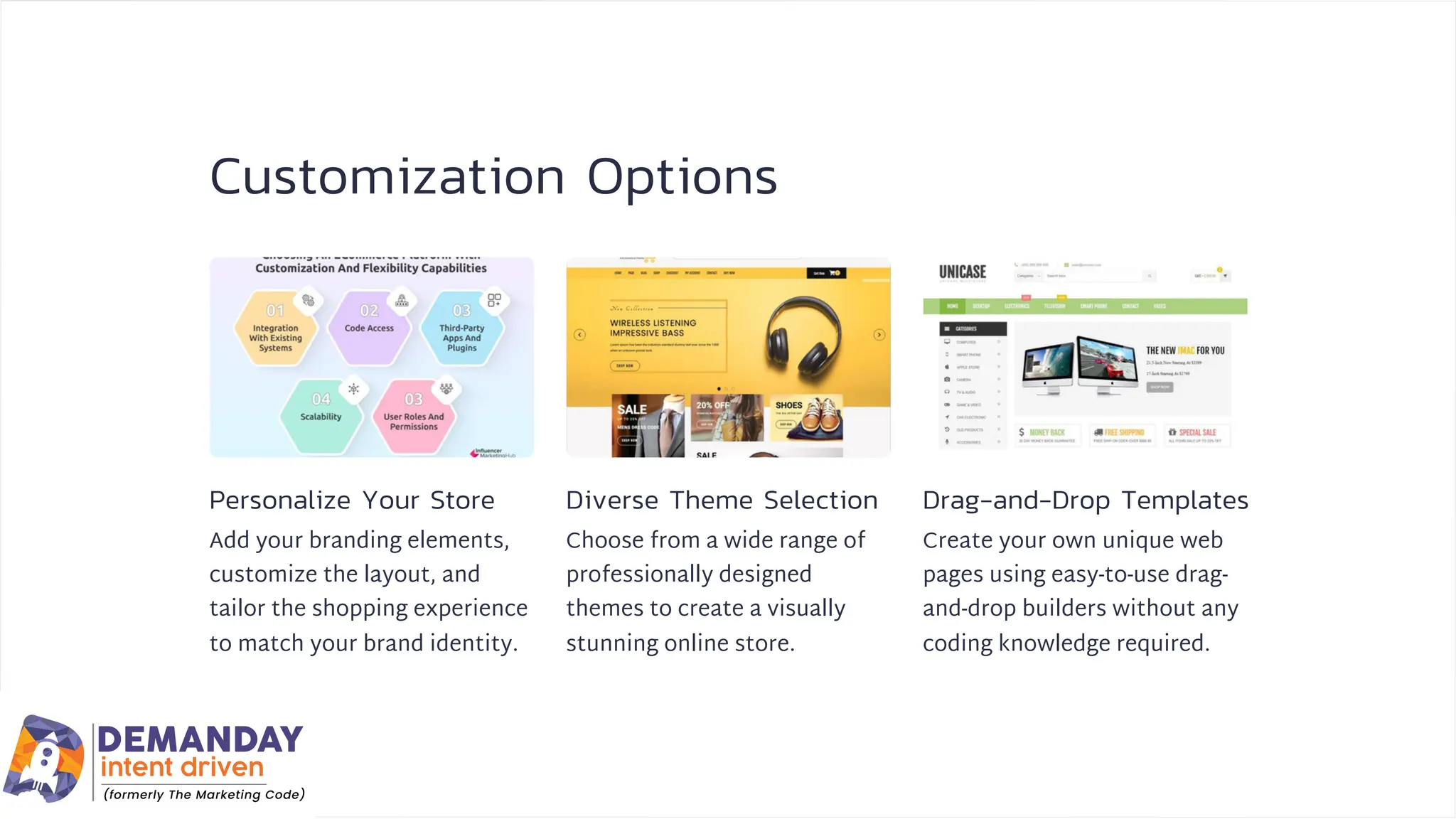
Personalize Your Store Diverse Theme Selection Drag-and-Drop Templates
Add your branding elements,
customize the layout, and
tailor the shopping experience
to match your brand identity.
Choose from a wide range of
professionally designed
themes to create a visually
stunning online store.
Create your own unique web
pages using easy-to-use drag-
and-drop builders without any
coding knowledge required.
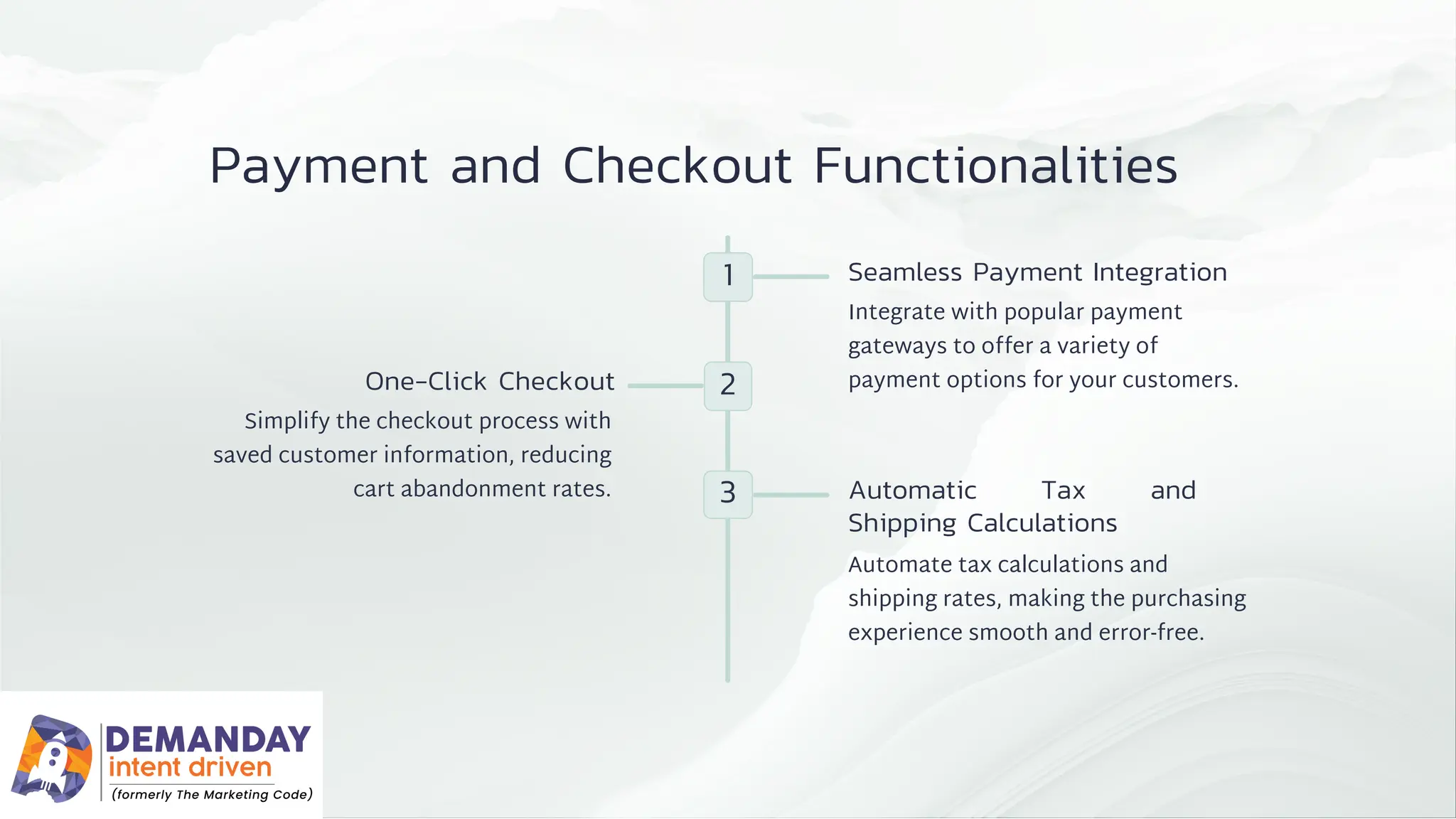
Payment and Checkout Functionalities
3
2
1
One-Click Checkout
Automatic Tax and
Shipping Calculations
Seamless Payment Integration
Simplify the checkout process with
saved customer information, reducing
cart abandonment rates.
Integrate with popular payment
gateways to offer a variety of
payment options for your customers.
Automate tax calculations and
shipping rates, making the purchasing
experience smooth and error-free.
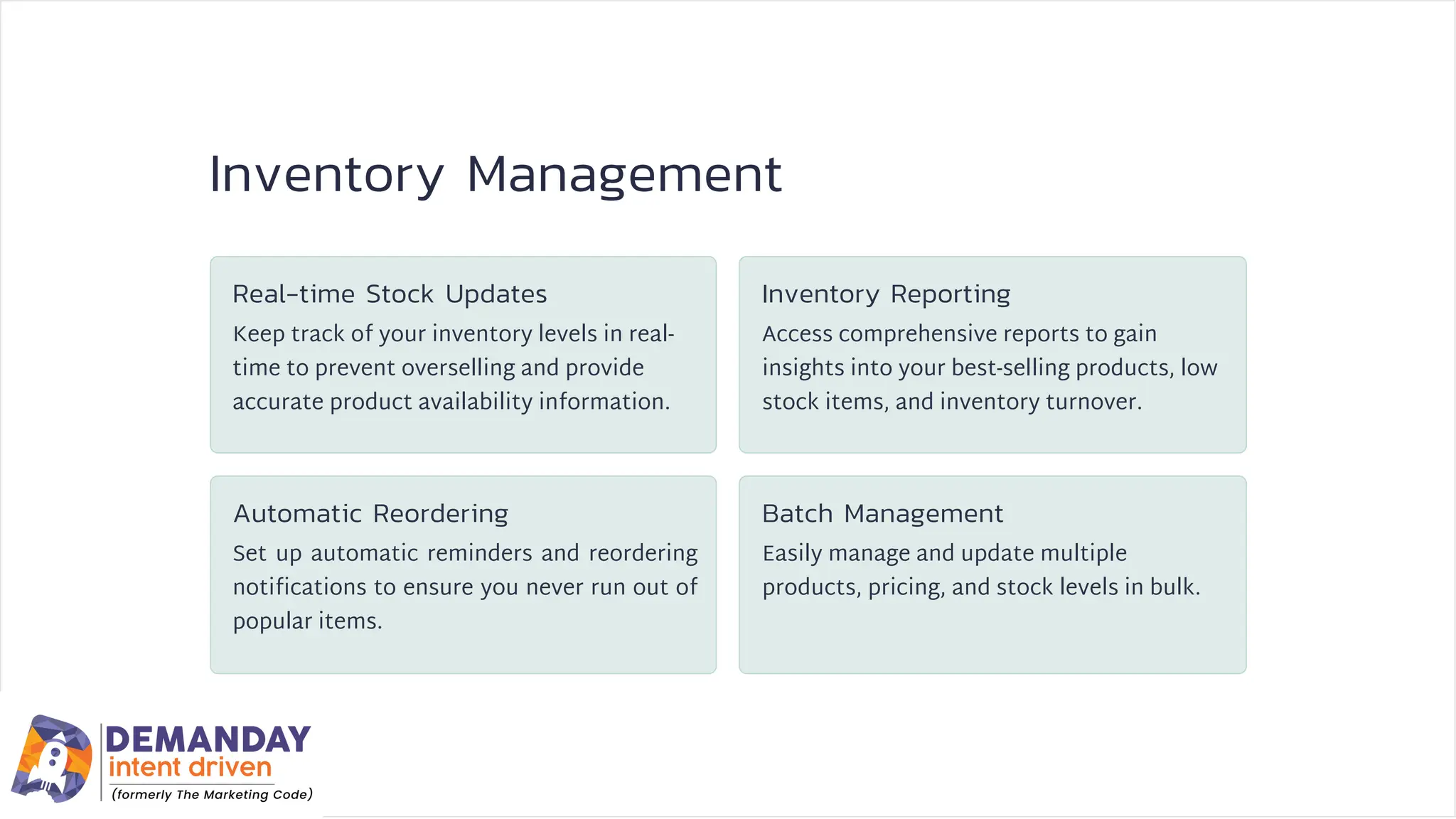
Inventory Management
Automatic Reordering
Real-time Stock Updates Inventory Reporting
Batch Management
Keep track of your inventory levels in real-
time to prevent overselling and provide
accurate product availability information.
Set up automatic reminders and reordering
notifications to ensure you never run out of
popular items.
Easily manage and update multiple
products, pricing, and stock levels in bulk.
Access comprehensive reports to gain
insights into your best-selling products, low
stock items, and inventory turnover.
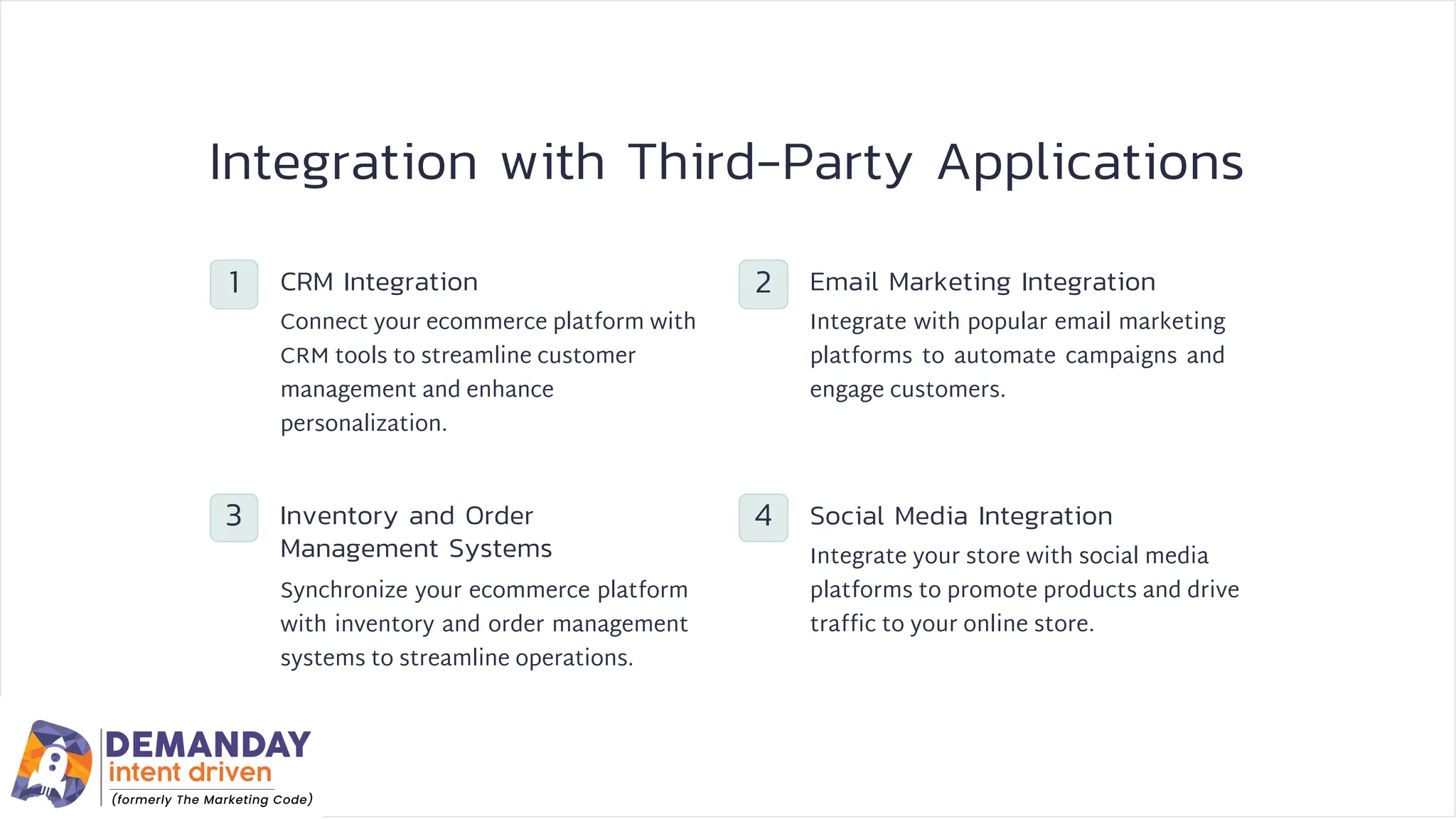
Integration with Third-Party Applications
3
1
4
2
CRM Integration
Inventory and Order
Management Systems
Social Media Integration
Email Marketing Integration
Synchronize your ecommerce platform
with inventory and order management
systems to streamline operations.
Connect your ecommerce platform with
CRM tools to streamline customer
management and enhance
personalization.
Integrate with popular email marketing
platforms to automate campaigns and
engage customers.
Integrate your store with social media
platforms to promote products and drive
traffic to your online store.
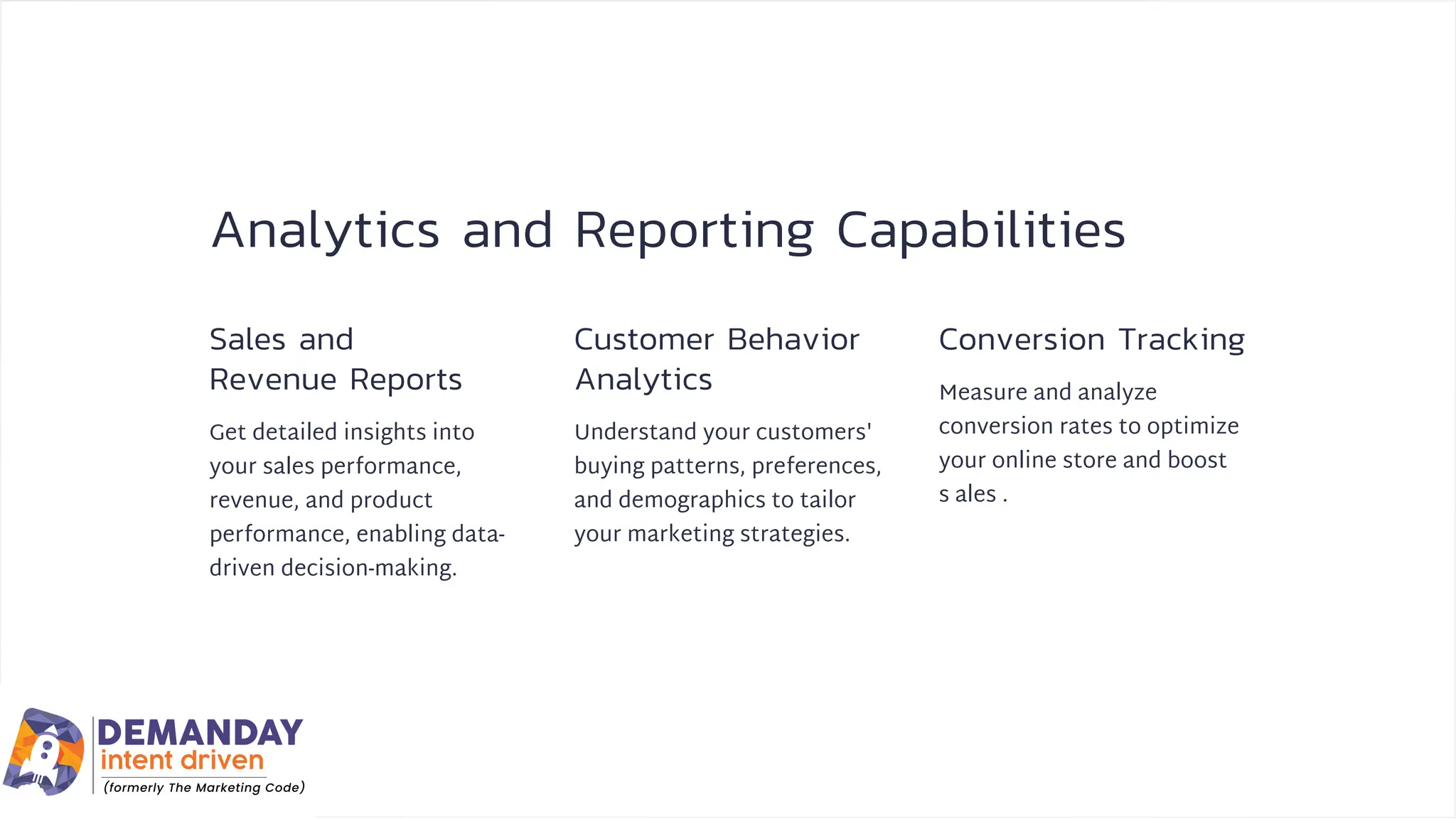
Analytics and Reporting Capabilities
Sales and
Revenue Reports
Customer Behavior
Analytics
Conversion Tracking
Get detailed insights into
your sales performance,
revenue, and product
performance, enabling data-
driven decision-making.
Understand your customers'
buying patterns, preferences,
and demographics to tailor
your marketing strategies.
Measure and analyze
conversion rates to optimize
your online store and boost
s ales .
Conclusion
Ecommerce platforms provide an array of benefits, such as global
reach, customizable design, powerful features, and seamless
integrations. With these platforms, businesses can thrive in the digital
age and meet the evolving needs of modern consumers.
by demanday

Exploring-the-Features-of-an-Ecommerce-Platform.pdf

  • 1.
    Exploring the Featuresof an E-commerce Platform Welcome to our presentation on ecommerce platforms! In this session, we will dive into the key features and benefits that make these platforms essential for online businesses.
  • 2.
    Benefits of EcommercePlatforms 3 1 4 2 Lower Costs Global Reach Easy Scalability 24/7 Availability 💰 🌍 ⏰ 📈 Compared to brick-and-mortar stores, ecommerce platforms have lower overhead costs and can offer more competitive pricing. Expand your customer base beyond local borders and reach a worldwide audience. As your business grows, an ecommerce platform can easily accommodate increased demand and support your expansion. With an ecommerce platform, your store is always open, allowing customers to shop at their convenience.
  • 3.
    Key Features ofEcommerce Platforms Product Catalog Management Secure Checkout process Marketing and Promotional Tools Easily create, organize, and manage your product listings with advanced catalog management tools. Provide a seamless and secure checkout experience for your customers, ensuring their payment information is protected. Utilize built-in marketing tools such as discounts, coupons, and email campaigns to attract and retain customers.
  • 4.
    Customization Options Personalize YourStore Diverse Theme Selection Drag-and-Drop Templates Add your branding elements, customize the layout, and tailor the shopping experience to match your brand identity. Choose from a wide range of professionally designed themes to create a visually stunning online store. Create your own unique web pages using easy-to-use drag- and-drop builders without any coding knowledge required.
  • 5.
    Payment and CheckoutFunctionalities 3 2 1 One-Click Checkout Automatic Tax and Shipping Calculations Seamless Payment Integration Simplify the checkout process with saved customer information, reducing cart abandonment rates. Integrate with popular payment gateways to offer a variety of payment options for your customers. Automate tax calculations and shipping rates, making the purchasing experience smooth and error-free.
  • 6.
    Inventory Management Automatic Reordering Real-timeStock Updates Inventory Reporting Batch Management Keep track of your inventory levels in real- time to prevent overselling and provide accurate product availability information. Set up automatic reminders and reordering notifications to ensure you never run out of popular items. Easily manage and update multiple products, pricing, and stock levels in bulk. Access comprehensive reports to gain insights into your best-selling products, low stock items, and inventory turnover.
  • 7.
    Integration with Third-PartyApplications 3 1 4 2 CRM Integration Inventory and Order Management Systems Social Media Integration Email Marketing Integration Synchronize your ecommerce platform with inventory and order management systems to streamline operations. Connect your ecommerce platform with CRM tools to streamline customer management and enhance personalization. Integrate with popular email marketing platforms to automate campaigns and engage customers. Integrate your store with social media platforms to promote products and drive traffic to your online store.
  • 8.
    Analytics and ReportingCapabilities Sales and Revenue Reports Customer Behavior Analytics Conversion Tracking Get detailed insights into your sales performance, revenue, and product performance, enabling data- driven decision-making. Understand your customers' buying patterns, preferences, and demographics to tailor your marketing strategies. Measure and analyze conversion rates to optimize your online store and boost s ales .
  • 9.
    Conclusion Ecommerce platforms providean array of benefits, such as global reach, customizable design, powerful features, and seamless integrations. With these platforms, businesses can thrive in the digital age and meet the evolving needs of modern consumers. by demanday