Exploring Sitespecific Art Issues Of Space And Internationalism Rugg
Exploring Sitespecific Art Issues Of Space And Internationalism Rugg
Exploring Sitespecific Art Issues Of Space And Internationalism Rugg
Exploring Sitespecific Art Issues Of Space And Internationalism Rugg
Exploring Sitespecific Art Issues Of Space And Internationalism Rugg
1.
Exploring Sitespecific ArtIssues Of Space And
Internationalism Rugg download
https://ebookbell.com/product/exploring-sitespecific-art-issues-
of-space-and-internationalism-rugg-5268596
Explore and download more ebooks at ebookbell.com
2.
Here are somerecommended products that we believe you will be
interested in. You can click the link to download.
Exploring Sitespecific Art Issues Of Space And Internationalism Judith
Rugg
https://ebookbell.com/product/exploring-sitespecific-art-issues-of-
space-and-internationalism-judith-rugg-50677874
Reconsidering Archaeological Fieldwork Exploring Onsite Relationships
Between Theory And Practice 1st Edition Hannah Cobb
https://ebookbell.com/product/reconsidering-archaeological-fieldwork-
exploring-onsite-relationships-between-theory-and-practice-1st-
edition-hannah-cobb-4392882
An International Spent Nuclear Fuel Storage Facility Exploring A
Russian Site As A Prototype Glenn E Schweitzer And A Chelsea Sharber
https://ebookbell.com/product/an-international-spent-nuclear-fuel-
storage-facility-exploring-a-russian-site-as-a-prototype-glenn-e-
schweitzer-and-a-chelsea-sharber-2163206
The Mystery Of The Moon Illusion Exploring Size Perception Helen E
Ross
https://ebookbell.com/product/the-mystery-of-the-moon-illusion-
exploring-size-perception-helen-e-ross-33794716
3.
Exploring The SizeOf The Proton 1st Ed Philipp Jrg
https://ebookbell.com/product/exploring-the-size-of-the-proton-1st-ed-
philipp-jrg-7150858
Stone By Stone Exploring Ancient Sites On The Canadian Plains Expanded
Edition Bryan
https://ebookbell.com/product/stone-by-stone-exploring-ancient-sites-
on-the-canadian-plains-expanded-edition-bryan-11364706
Oregons Dry Side Exploring East Of The Cascade Crest Alan D St John
https://ebookbell.com/product/oregons-dry-side-exploring-east-of-the-
cascade-crest-alan-d-st-john-1375564
Guide To Florida Pioneer Sites Exploring The Cracker Heritage Rodney
Carlisle Loretta Carlisle
https://ebookbell.com/product/guide-to-florida-pioneer-sites-
exploring-the-cracker-heritage-rodney-carlisle-loretta-
carlisle-51781790
Exploring Composition Studies Sites Issues Perspectives Kelly Ritter
https://ebookbell.com/product/exploring-composition-studies-sites-
issues-perspectives-kelly-ritter-7196908
CONTENTS
_________________
List of Illustrationsvii
Acknowledgements xi
Foreword xiii
Introduction 1
Chapter 1: Psychic Spaces 7
Chapter 2: Contingent Spaces 33
Chapter 3: Performance of Space 53
Chapter 4: The Garden 71
Chapter 5: Demographic Space 91
Chapter 6: Territory and Location 115
Chapter 7: The Viewer 139
Chapter 8: The Border 157
Conclusion 177
Bibliography 179
Index 195
11.
ILLUSTRATIONS
________________________
Chapter 1: PsychicSpaces
11. David Ward, Nocturne, St Michael Paternoster Royal, London (2006)
Photograph: Richard Davies.
12. Carl Michael von Hausswolff, Red Night, Our Lady of Guadalupe
Cemetery, Santa Fe (1999).
13. Melanie Counsell, 110 Euston Road, London (1996): film stills.
a4. Melanie Counsell, 110 Euston Road, London (1996): exterior view of
building. Photograph: Robin Klassnik
15. Anya Gallaccio, Couverture, Basel, Switzerland (1998).
Chapter 2: Contingent Spaces
a6. Lara Almarcegui, Wastelands: a guide to the empty sites of Amsterdam
(1999).
a7. Lara Almarcegui, Wastelands: a guide to the empty sites of Amsterdam
(1999).
a8. Alison Marchant, Trace, Neckinger Mill, London (2005): exterior
view. Image: Dean Pavitt, Loup Design.
a9. Alison Marchant, Trace, Neckinger Mill, London (2005): interior view.
Image: Dean Pavitt, Loup Design.
10. Monika Sosnowska, Dirty Fountain, Zamość, Poland (2006).
Chapter 3: Performance of Space
11. Mark Lewis, Rush Hour, Morning and Evening, Cheapside, EC2, Prudent
Passage, City of London (2006). Photograph: Richard Davies.
12. Germaine Kruip, Point of View, Independence Square, San Miguel de
Tucuman, Argentina (2002).
12.
IL L US T R AT I O N S
viii
13. Kutlug Ataman, Kűba, Sorting Office, New Oxford Street, London
(2005). Commissioned and produced by Artangel.
Chapter 4: The Garden
14. Steven Siegel, Bale, University of Virginia, USA (2002).
15. Marjetica Potrč, Urban Agriculture, Siena, Italy (2003). Arte all’Arte, 8
project. Courtesy the artist and Associazone Arte Contina, San
Gimignano, Italy. Photograph: Ela Bialkowska.
16. Choi Jeong Hwa, White Lotus, Venice (2005).
17. Kathryn Miller, The Grasslands Project, Melbourne (1995–97).
18. Kathryn Miller, The Grasslands Project, Melbourne (1995–97).
19. Kathryn Miller, The Grasslands Project, Melbourne (1995–97).
20. Anna Best and Paul Whitty, Vauxhall Pleasure, Vauxhall Cross,
London (2004).
21. Anna Best and Paul Whitty, Vauxhall Pleasure, Vauxhall Cross,
London (2004).
22. The Grand Walk, Vauxhall Pleasure Gardens, engraving, c.1750.
Guildhall Library, City of London.
Chapter 5: Demographic Space
23. Wong Hoy Cheong, Minaret, Guangzhou, China (2005).
24. Wong Hoy Cheong, Minaret, Guangzhou, China (2005).
25. Langlands and Bell, Plunged in a Stream, Coudenberg Palace, Brussels
(2005).
26. Langlands and Bell, Plunged in a Stream, Coudenberg Palace, Brussels
(2005).
27. Wendy Ewald, Towards a Promised Land, Margate (2005).
28. Wendy Ewald, Towards a Promised Land, Margate (2005).
Chapter 6: Territory and Location
29. Phyllida Barlow, Untitled: Demo, Studio 1-1 Gallery, Redchurch St,
London, E2 (2005).
30. Phyllida Barlow, Untitled: Demo, Studio 1-1 Gallery, Redchurch St,
London, E2 (2005).
31. Sejla Kameriç, Crossing the Line, Nicosia (2005).
32. Vong Phaophanit and Claire Oboussier, Bay Windows, Herne Bay
(2005). Image courtesy of InSite Arts.
13.
IL L US T R AT I O N S
ix
33. Vong Phaophanit and Claire Oboussier, Bay Windows, Herne Bay
(2005). Image courtesy of InSite Arts.
34. Layla Curtis, NewcastleGateshead, UK (2005).
Chapter 7: The Viewer
35. Carlotta Brunetti, Forêt Surprise, Fontenay-sur-Bois, France (2002).
36. Jill Magid, System Azure, Police Headquarters, Amsterdam (2002).
37. Susan Collins, Viewfinder, Minehead (2000). Installation view.
38. Susan Collins, Viewfinder, Minehead (2000). 3D video-still.
39. Susan Collins, Underglow, City of London (2006). Photograph:
Richard Davies.
40. Dominique Gonzalez-Foerster, Park – A Plan for Escape, Documenta
11, Kassel (2002). Image courtesy of Esther Schipper, Berlin.
Chapter 8: The Border
41. Jesus Palomino, Casa del Poble Nou, Barcelona (1998).
42. Doris Salcedo, Untitled, Installation for the 8th International Biennial,
Istanbul (2003), Copyright: the artist. Photograph: Sergio Clavijo.
Image courtesy of Alexander Bonin, New York and White Cube/
Jay Jopling, London.
43. Germaine Koh, Sleeping Rough, Canada (2003).
44. Christina Fernandez, Arrivals and Departures, Tijuana, Mexico/US
border crossing (1997): bus station.
45. Christina Fernandez, Arrivals and Departures, Tijuana, Mexico/US
border crossing (1997): telescope.
All images are reproduced by courtesy of the artists.
15.
ACKNOWLEDGEMENTS
___________________________________
I wish tothank the University for the Creative Arts for its support in providing
a research sabbatical and a number of travel awards to research and complete
this book. Thanks also to Susan Lawson for her belief and enthusiasm for the
project; Catherine Elwes for her advice and encouragement and Michèle
Sedgwick for her unending insight, wide-ranging scholarship and limitless
patience.
I thank all the artists for their generosity in supplying images of their works
and especially those who gave up their time to help me in the research of their
work.
Thanks also go to the following: Ellen de Bruijne, Helen Carr, Indira Carr,
Jason Cohen, Sarah Collicott, Barry Curtis, Paul Domela, Charlotte Edmunds,
Ceri Hand, David Hawkins, Matthew Hearn, Ursula Huws, Joanna Lowry,
Sarah MacDonald, Louis Nixon, Modus Operandi, Claire Pajaczkowska,
Thomas Dane Gallery, Lisa Tickner, Martin Shoesmith, Maria Vassilidou, Sam
Wilkinson, Wong Hoy Cheong, Rana Zincir.
17.
FOREWORD
__________________
The approach ofthis book is to foreground practices that evade the easy
recuperability of ‘public art’ and the congealing of significance to which it is
prone. Instead it focuses on the ephemeral and interventionist art of the event.
The temporal and spatial ‘cut’ of short-lived artworks is capable of complex
acts of dis-location and re-positioning. Judith Rugg conjures an acute aware-
ness of the many ways in which ephemeral and timely projects can function in
different contexts and with different intentions to dramatise existing
conditions; draw attention to the overlooked; or suggest expressive possibilities
that are latent in interactions between artists and environments.
The examples drawn on are a product of a number of factors. The context
of enabling art events and new strategies of disseminating information,
evaluation and response has produced a new international realm of awareness
of the potential of short-lived art works and their capacity to animate and
linger as catalysts for memory and debate. The artworks explored here demon-
strate a range of strategies and potentials that have been engaged to trouble the
familiar, sedimented configurations of public spaces. In some cases they are
signs, made visible, of psycho-geographical engagements. In others they are
evocations of the indwelling tensions and contradictions that are inherent in
scenarios of everyday life.
The key function of ‘sudden’ works is to realise and release the disruptive
and contradictory elements that constitute familiar landscapes. The author’s
generously wide-ranging enquiry provides the reader with a rich awareness of
the energies released by re-viewing instances of separation and confrontation,
focusing attention on how the elements of these emotional engagements are
made visible. She visits instances of loss and epiphany in contested zones, and
demonstrates how unspectacular and overlooked places can be brought to
states of engaging significance.
18.
F O RE W O R D
xiv
At a time when site-specific art is possible and capable of wide dissemi-
nation, this book provides a sensitive and systematic way of understanding
its unified characteristics and vital differences.
Barry Curtis
19.
1
INTRODUCTION
_______________________
The focus ofthis book is on the relationships between site-specific art and
space in the context of the international and considers how an
interdisciplinary spatial theory can inform the making, theorization,
commissioning, display and reception of contemporary art.1 Over the last
ten years research from a range of disciplines has been used to investigate
the significance of globalization in an emerging ‘space consciousness’ and a
changing emphasis on the significance of the spatial.2 Through a series of
artworks temporarily located in a diversity of spaces outside the context of
the gallery, this book probes the significance of the relationships between
space and contemporary art within globalizing contexts. By drawing on
urban and social theory, critical geography and feminist, postcolonial and
cultural theory, it investigates the psychoanalytic, cultural, political and
social dynamics at play within the international spatial contexts of site-
specific art.
The broadening interdisciplinary research within spatial theory has
paralleled a significant expansion in opportunities for artists to work on site-
specific projects internationally. The increase in international art biennials and
commissions that offer a diversity of spaces for the reception and making of
art beyond the gallery have provided new geographical and conceptual sites
for art and for thinking about its relationship to space within an international
framework. This book includes artworks sited in a variety of different
international locations. In addition to the United States and the UK, it
considers temporary site-specific artworks in: France, Barcelona, China,
Argentina, Brussels, Mexico, Poland, Melbourne, Italy, Panama, Germany,
Amsterdam, Switzerland, Canada and Istanbul. The chapter headings:
Psychic Spaces, The Viewer, The Garden, The Performance of Space,
20.
EX P LO R I N G SI T E -SP E C I F I C ART
2
Contingent Spaces, The Border, Demographic Space and Territory and
Location, provide sites of enquiry into a range of spatial issues pertinent to
our times, which include the environment, experiences of displacement,
migration, marginalization and exclusion, cultural identity and belonging
and the effects of redevelopment, regeneration, tourism and urbanization.
Final selection of the artworks for this book was informed by a series of
criteria: all were temporarily sited and conceived or presented in or for
particular geographic places. In a few cases, some have also been installed
or performed in other geographical sites. However, this book focuses on
the significance of individual artworks in particular places of presentation as
it is not my intention to investigate parallel and diverging issues of
presentation or reception in relation to concepts or definitions of site-
specificity.3 The fact that all these artworks were temporary – some existed
for days, some months, some years – makes them detached from
perceptions of permanent ‘public art’ and therefore allows room to explore
the relationships between contemporary art and site, which are distinct
from the debate on public space, art and architecture – issues that have
been discussed elsewhere.4 The temporary nature of these works has
enabled a focus on their dissonant qualities and a contestation of the
certainties of the mechanisms for the constructions of place and space
through the contemporary processes of modernity, which include tourism,
regeneration and urbanization. As has been shown, permanent public art
has a tendency to rely on its visibility to manufacture relationships of value
with architecture and urban space and the focus of this book is on the non-
spectacle of the transient, the short-lived and the site-specific.5
As both an artist and art theorist, I am interested in the potential of art
as a site of critical engagement, fleeting intensity and intervention that
reveals the relationships in play within the spatial. Temporarily sited
artworks resonate with the precarious nature of space against the enforced
coherences of regeneration, redevelopment, urban planning or tourism and
their implicit imposition and manufacture of hierarchical values. The
innovative qualities of the works in this book and their potential to
function as a ‘text’ informs its underlying questions: how can site-specific
contemporary art, in a range of international locations, be considered,
understood and informed in ways that take into account an interdisciplinary
theoretical framework and how is this imbricated within an international or
globalizing context? This book proposes that we think about the
relationships between contemporary artworks and space differently (as
21.
IN T ROD U C T I O N
3
artists, viewers or curators) by considering them as informed by wider
theoretical geographies that attend to a range of issues concerning the
spatial and its social, economic, political and cultural implications.
Chapter 1: Psychic Spaces considers the relationship between subjective,
interior spaces and exterior material spaces as a site of anxiety manifested in
psychic formations and projections.6 Through four site-specific installations in
London, Santa Fe and Basel, it explores how space can be the focus for
processes of identification where the nature of selfhood is dependent on
fantasies of belonging or threatened by the fear of loss and exclusion. In
the boundaries between the real and the imaginary, place becomes a site of
anguish and disquiet where uncertain thresholds have their destabilizing
effects on internal orientation and empowerment. This chapter considers how
the instabilities of place and identity are reflections on the alienating effects of
urbanization, colonialism or mental or material displacement and which are
disturbed or modified through religion, cultural ritual or architecture.
Chapter 2: Contingent Spaces looks at three site-specific artworks in
different urban peripheral spaces in Amsterdam, London and Poland. It
examines how marginalized space can be a site of dissonance and
disruption against the spatial hierarchies of the city, determined by
configurations of hegemonic ordering based on exclusion and denial. It
investigates how, outside the terms of commodification, the concept of the
contingent unsettles the constructed values of space and the spatial
coherences manufactured through redevelopment and tourism.
Chapter 3: Performance of Space argues that different forms of
belonging and exclusion are essentially spatially performed within the
contexts and frameworks of social and cultural power relations. It considers
four site-specific artworks in London, Argentina, Istanbul and Panama City
where the everyday is the stage for both conflict and identification
regulated through social and cultural structures that are dependent on the
political nature of the spatial. It discusses how the performance of space
and place is determined through variations of normalized codes of
behaviour in which forms of order are not only expressed and maintained
but are also the site of encounter, resistance and fracture.
Chapter 4: The Garden considers five site-specific artworks located in
the United States, Siena, Venice, Melbourne and London. These examine
the garden as a construction of idealized space and evoke it as a site that
provokes consideration of the wider issues of the environment. The garden
is not a form of utopia but a space of contestation where social and cultural
22.
EX P LO R I N G SI T E -SP E C I F I C ART
4
relationships are realigned. Through these artworks, forms of control,
disorder and appropriation are aspects of the garden, not as an enclave
distanced from the world but as an expression of a global crisis of place in
ecological contexts and infrastructures.
Chapter 5: Demographic Space considers three site-specific artworks in
China, Brussels and Margate in relation to the historical and contemporary
economic or political migrant movements of people. Through these
artworks the chapter investigates how concepts of demographic space must
be considered within the historical contexts of urbanization and
globalization and how their social and economic effects are inscribed within
the power relationships of place. It considers how the uncertainties of
space, formed through demographic processes of alignments, inclusions
and exclusions, lie behind the utopian project of the city and the power
structures inscribed within the spatial.
Chapter 6: Territory and Location proposes space as conditional on a
series of factors and considers how these concepts are discursively situated
and implicitly imbricated within it. Through the examination of a range of
site-specific artworks in the East End of London, Nicosia, Herne Bay and
Newcastle, it examines how cultural, social and political territories of
ethnicity, nationalism, class and gender are framed by history, tourism and
colonialism. It investigates how site-specific art can invite reflection on the
conceptual and geographic territories of space as inherently provisional,
contested and constructed – historically conflictive and located within the
everyday.
Chapter 7: The Viewer investigates how our perception of space is
mediated by variable cultural, political and environmental contexts that
frame the ways in which we view the world. Through close consideration of
five site-specific artworks in France, Amsterdam, Minehead, London and
Kassel, it centres on the overlooked and unspectacular as sites where the
hierarchical discourses of tourism, finance and ecology are made visible.
Chapter 8: The Border investigates the border as a material, geographic
and conceptual structure situating the social and political through four site-
specific artworks in Barcelona, Turkey, Canada and Tijuana. It considers
the border as a discursive site where power, conflict and transgression are
located within overlapping historical and spatial contexts. It reflects on the
border in relation to the exclusionary effects of urban redevelopment and
regeneration, as a surrogate space for the ‘disappeared’ and the
marginalized and as a threshold of regulation and aspiration.
23.
IN T ROD U C T I O N
5
Notes
1. Miwon Kwon proposed site-specificity as a critical practice framed by phenom-
enological, institutional and social contexts. Miwon Kwon, ‘One place after another:
notes of site-specificity’, October, vol. 80, Spring 1997, pp. 84–108. The concept of ‘site’
has been transformed from a physical, fixed, grounded place to a fluid, discursive field.
James Meyer, ‘The functional site; or, the transformation of site-specificity’, in Erika
Suderburg (ed.) Space, Site, Intervention: Situating Installation Art (Minneapolis: University
of Minnesota Press, 2000) pp. 23–37.
2. Arif Dirlik, ‘Place-based imagination: globalism and the politics of place’, Development,
vol. 41, no. 2, June 1998, pp. 7–14.
3. For the debate on the relevance of a geographical place to other issues of site-
specificity, see in particular Harriet F. Senie and Sally Webster (eds) Critical Issues in
Public Art: Content, Context and Controversy (New York: Icon Editions, 1992).
4. See for example, most recently, Jane Rendell, Art and Architecture: A Place Between
(London: I.B.Tauris, 2006).
5. Malcolm Miles, Art, Space and the City: Public Art and Urban Futures (London: Routledge,
1997) has questioned the relationships between certain kinds of ‘public art’ and
corporate agendas.
6. What Anthony Vidler, in Warped Space: Art, Architecture, and Anxiety in Modern Culture
(Cambridge, MA: MIT Press, 2000) has called the psychological disturbances of the
alienated subject.
25.
7
1.
PSYCHIC SPACES
_______________________
This chapterexplores how relationships between internal subjective space
and external material space are psychically formed and projected. An empty
office block and a church in central London, the cellar of an abandoned
house in Basel, Switzerland and a cemetery in Santa Fe, New Mexico, in the
United States are the loci where issues concerning the relationships
between the anxieties of the self and the precariousness of place are
discussed. Concepts of identity and selfhood and the illusory nature of
belonging are the psychic sites where the interrelationships of space are
considered. Located within the terms of religion, cultural ritual, colonialism
and consumption, subjectivities are aligned, constructed, fantasized and
disturbed; and processes of identification are assembled and threatened.
Fantasies of deprivation and longing were evoked in David Ward’s
Nocturne (November 2005–January 2006), an installation at the church of
St Michael Paternoster Royal at Royal and College Streets, London, EC4.
A digital projection of a section of the night sky with the ‘seven sisters’ of
the Pleiades constellation was projected onto the surface of the south wall
of the church. The circular window of the church tower was illuminated
from inside and appeared like a full moon hovering above the virtual
stars. The six, stone-carved singing angels on the façade were spot-lit and
became more intensely visible as darkness fell. In the adjacent
Whittington Gardens, white light illuminated the bushes and the surplus
light from the digital image projection spilled over onto the branches of
the trees, where a sound installation of birdsong animated the gardens like
a summer landscape.
26.
EX P LO R I N G SI T E -SP E C I F I C ART
8
Nocturne set up an immersive, dream-like and magical encounter where
various spatial and temporal paradoxes were collapsed. The night sky,
normally obliterated in the city by buildings and the reflected light pollution
of office blocks, cars and streetlights, became surreally visible; whilst the
sound of birds, evocative of summer woodland, resonated from the
artificial daylight lighting the leafless trees and shrubs of the night-time,
inner-city church garden. The viewer inhabited an enclosed, yet unbounded
space: bordered on one side by the illuminated gardens and on the other by
the glittering projection of a blue star-lit sky onto the church’s façade. The
installation created a hallucinatory space at odds with the known archi-
tectural world of the city and evoked a space of possibilities for the
imaginary.1 Sited in the city in the bleak winter cold, Nocturne conjured the
irrational state of a dream, where unconscious desires and fears are situated
within a series of sliding signifiers: a mysterious space where the stars come
out in the day, a wondrous woodland landscape reverberates amongst a
patch of dusty, grey scrub by a busy road and where summer magically
emerges in the midst of winter.
The cultural concept of a nocturne describes certain types of music or
painting that relate to evening or night. As a musical form, the nocturne has
historically fascinated composers and musicians and found expression
across a breadth of musical genres from jazz to classical music. The term
describes music that is suitable for playing during the evening or at night,
marking the transitional period when the light fades and different sounds
emerge. In several movements in Bartók’s ‘night music’, for example, the
piano imitates nocturnal creatures such as frogs, birds and insects. As a
musical form, the nocturne evokes an interstitial space between the twilight
of evening and the darkness of night: a period between waking and sleeping
and the border to a concealed world where nocturnal sounds and sights
‘perform’ normally unseen or unheard.
The church of St Michael Paternoster is home to the headquarters of the
Mission to Seafarers, an Anglican charity established in 1856 to support
mariners and sailors. It has offices in 230 ports worldwide that provide
resources and support for sailors and staff on ships to contact their
families. It also offers counselling to help with the psychological effects of
loneliness, fear, isolation and homesickness brought about by long periods
at sea. The symbolic dimension of Ward’s installation revealed a para-
doxical need for spatial orientation: whilst sailors yearn for land, city
dwellers may seek to escape.
27.
PS Y CH I C SPAC E S
9
Fig. 1. David Ward, Nocturne, St Michael Paternoster Royal, London (2006). Photograph by
Richard Davies.
28.
EX P LO R I N G SI T E -SP E C I F I C ART
10
Nocturne can be perceived as a projection for a shared desire and longing for
an imagined elsewhere – a tortured form of homesickness: always to be
where one is not, in a place that can never be occupied. For sailors, stars
have historically provided a way of navigation and orientation and the
Pleiades constellation can be considered as a visualization of a yearning for
a knowable, legible space within the seemingly infinite – the continually
threatening, apparently limitless chaos of the city and the immense
boundlessness of the sea. As such, Nocturne can be considered a
visualization of the unconscious craving that manifests both the inner
emptiness experienced through feelings of alienation and disorientation,
and the need to belong.
In the interstitial border site marked out by Ward’s installation, a dis-
ruption and collapse of time and space – seasonal, stellar, temporal and
pastoral – generated a space of transience where both the ‘here’ and ‘there’
reside. The angel, emblem of the seafarer’s mission and reflected in the six
stone-carved angels on the south wall of the church, has itself been
proposed as a threshold figure occupying the margin where the past and
future come together – a liminal form between space, time and conscious-
ness.2 Its ‘in-between’ status was reflected in Nocturne’s evocation of
indeterminate longing created by the virtual space of the stars and the
summer landscape. Longing, it has been said, is a refusal of the present and
inhabits the threshold of time; it is encapsulated by stasis and transcends
the materiality of place.3 This borderline condition was described by the
artwork’s evocation of deferred time (neither summer nor winter, day nor
night) in which an interplay between the internal and external worlds took
place: the site of anguish where longing can be said to be situated.
Longing has been defined as a secondary emotion associated with both
joy and sadness and the need for attachment and identification. Its dimen-
sions include the directional, relational and temporal. It could be argued
that sailors occupy a perpetual state of transience, where the irresolvable
destination of home continually inhabits both the past and the future and
the stability of which primarily resides within a fantasized sense of belong-
ing. Longing is bound up with loss and the need for fulfilment and for
feelings of completion and resolution and, as such, it can be focused
externally on an object or internally on the satisfaction of an inner life.4
Ward’s installation can be considered as a projection of the unconscious,
interior space associated with feelings of longing; as an expression of equiv-
alence and the visualization of fantasies of identification and escape. In
29.
PS Y CH I C SPAC E S
11
Freudian terms, the night sky and the landscape associations of the work
can be perceived as manifesting a form of wish fulfilment and a visualiz-
ation of a projected need – an expression of the unconscious into cognitive
forms.5 The incongruous slippage of sensations – of flickering stars, day-
light, summer, winter, landscape, urban space and woodland – was resonant
of a projection of an imaginary scene of a daydream or an unconscious
phantasy in which the internal world seeks satisfaction by illusion.6 Nocturne,
like its name suggested, can be considered as a focal point for a process of
transition between conscious, subliminal and unconscious feelings of
longing.
The night sky, summer birdsong and the collapse of spatial orientation
evoked contradictory sensations of proximity and distance and feelings of
longing associated with the sublime. The installation conjured a temporary
conflict of reason and imagination, a defining characteristic of the sublime
whose psychic meanings of timeless infinity, the dissolution of boundaries
and the collapse of rational space have been proposed as the expression of
human needs, desires and fears.7 The sensation of awe from the position of
the safety of the imagination and the transcendence of human reason over
nature are the core of the experience of the sublime. Kant conceptualized
the sublime as essentially about the mind, since it is in the mind where our
ability to comprehend the sublime resides.8 The night sky, seen from the
midst of an empty landscape or at sea can evoke ‘oceanic’ immersive feel-
ings and, transposed onto a church located close to St Paul’s Cathedral,
Ward’s installation collapsed the sublime with the spiritual, ‘filling’ the
surface of the church with the ‘emptiness’ of the infinite. The sublime, it
has been argued, is the main form that ‘God’ takes in the modern world
and, in Freudian terms, religion – essentially a belief system that encom-
passes desire beyond the rational and the scientific – is a fantasy structure
within whose psychic meanings, human needs, desires and conflicts are
expressed.9 Longing assumes a loss within whose terms it is bound up and
loss, it has been argued, is at the heart of Christianity, where the crucifixion
is its vicarious mechanism.10
The Mission to Seafarers’ drop-in centres in international ports are
located in the framework of colonialism and power, and operate sym-
bolically and historically as modes for the assertion of the authority of the
Anglican Church. In Trinidad, the Falkland Islands, Lagos, Cape Town,
Fremantle, Singapore, Bombay, Dublin, Wellington and Gibraltar, they
form points of reference in an historically defined map of empire where the
30.
EX P LO R I N G SI T E -SP E C I F I C ART
12
missionary movement, it has been argued, functioned as the agent for
cultural imperialism and Western religious belief.11 The mission’s offices
provide a structural network and potential ideological conduit for Chris-
tianity, where concerns about sailors’ homesickness, loneliness and isolation
can be exploited by its religious and parochial sub-textual agenda. This
paternal authority of the church is further revealed in the name of the
Seafarers’ headquarters – Paternoster. Colonialism and religion as its ubi-
quitous and pervasive supplement were part of the same global symbolic
order where, it is argued, the Church as an idealized ‘parent’ figure served
the repressive and symbolic function of the father and the rule of law.12
Anxiety at the centre of the construction of cultural identity was at the
core of Carl Michael von Hausswolff’s installation, Red Night (1999), which lit
up the abandoned cemetery of Our Lady of Guadalupe, Santa Fe, New
Mexico with 20,000 watts of red light during the night.13 Deploying several
techniques of the horror film, the installation evoked a deeply unsettling
disquiet, disturbing the boundary between reality and fiction. In Red Night the
cemetery became a psychical field and a stage for a collective projected
unease. Despite the cemetery not being used since the 1940s, after two nights
Von Hausswolff was required to remove his installation after complaints
from the members of the parish who were responsible for its upkeep.
The cemetery combined with the immersive qualities of the red light and
the reality effect of cinéma vérité, eroded the boundary between the real and
the imaginary. Marvellous and other-worldly, Red Night was an ‘eruption of
the inadmissible’ into the heart of the city – a reminder of the presence of
death in life via the collapse of the real with the cinematic. The horror film,
it has been argued is a cultural expression of what cannot be conceived: the
proximity of death in life.14 In the abandoned cemetery, with its
associations with the myth and symbol of the ‘Lady of Guadalupe’ and the
Day of the Dead, Red Night illuminated an anxiety about another form of
‘death’ – that of cultural identity.
For Mexicans, the cemetery is the site for performing what has come to
represent a key symbol of Mexican identity – the Day of the Dead, when
people ritualistically honour their dead relatives though various altar
displays and events. The adornment and decoration of graves with candles
and food and all-night cemetery vigils between 1 and 2 November (All
Saints and All Souls Days in the Catholic calendar) take place all over
Mexico and in the United States where its observance is considered a
marker of Mexican-American identity.15 The Day of the Dead has been
31.
PS Y CH I C SPAC E S
13
constructed as the site where Mexico’s cultural diversity comes together in a
unique, official and authentic ‘Mexicanness’ in which indigenous Indian
religious ritual is syncretized with European Roman Catholicism.16
Skulls, coffins and skeletons made from icing sugar and marzipan and
shaped breads and toys on the theme of death are on sale in thousands of
market stalls across Mexico during the Day of the Dead ‘festivities’.
Mexican and foreign tourists are transported by bus into Mexico City and
other towns especially designated by the Ministry of Tourism to witness the
celebrations and the carnivalesque atmosphere.17 The Day of the Dead,
with its variety and proliferation of sugar skulls, coffins and cadavers has
come to be perceived as a demonstration of a specifically Mexican attitude
to death and the primary cultural representation of its ‘national character
and distinctiveness’.18 The celebrations are linked to and offer an
opportunity for a collective expression of patriotism when Mexican
‘national qualities’ such as machismo, generosity and gaiety are promoted
and performed. The Day of the Dead, like other forms of popular cultural
expression reveal what Ernesto Laclau saw as the need for, and
impossibility of, a universal ground on which to base enactments of
identity.19 Von Hausswolff’s installation literally revealed this ‘ground’ as an
empty space based on fantasy and tenuously filled with ritual and belief.
Fig. 2. Carl Michael von Hausswolff, Red Night, Our Lady of Guadalupe Cemetery, Santa Fe
(1999).
32.
EX P LO R I N G SI T E -SP E C I F I C ART
14
The Day of the Dead (1985) was the title of the third film in George A.
Romero’s zombie trilogy (preceded by Night of the Living Dead and Dawn of
the Dead). Von Hausswolff’s installation caused offence perhaps because it
marked a site where dead (and seemingly resolved) things came alive – the
issue of Mexican distinctiveness and the ongoing struggle for its coherence.
The abandoned cemetery, floodlit for all to see, revealed the inherent
fragility behind the unstable superstructure that supports claims to fixed
concepts of national identity: tourism and popular forms of ritual and
religion. The disquiet von Hausswolff’s installation created revealed the
myth of a perceived, stable Mexican character perpetually haunted by the
anxiety of loss. It highlighted the return of the repressed fear of social,
economic, political and cultural death through marginalization and
exclusion: it represented the focus points around which concepts of
Mexican identity (and perhaps all forms of ‘identity’) have been formed.
Santa Fe’s and New Mexico’s uncertain history as part of Mexico and then
of the United States and its large Hispanic population underlines its own
historically precarious situation and the importance of its national sense of
belonging. In the forsaken cemetery, Red Night appeared to display the
apparent public abandonment of, or even disbelief in, the quest for an
enduring sense of cultural selfhood and identification by drawing attention
to the neglect of a crucial site where ritualistic enactments of identity are
performed, thus altering that site to one of discomforting unease.
Complaints about the work brought to light the pivotal place of ritual in the
perception of the self and the concept of identity. The ‘shame’ that von
Hausswolff’s installation revealed was the apparently collective abandon-
ment of faith in the rituals of cultural unity in whose repetition the
recuperation from loss takes place.
Our Lady of Guadalupe is a powerful Mexican national symbol relevant
to indigenous Creole, Spanish and (more recently) the Latin American and
Hispanic people of the United States. Like the Day of the Dead rituals, the
cult of Our Lady of Guadalupe has been exploited to syncretize Catholic
European and indigenous Indian cultures and is used as a vehicle through
which to legitimize claims to a specific ‘Mexican’ national distinctiveness.
The ‘appearance’ of the Virgin to the Indian Juan Diego in 1531, at the
shrine of Tepeyac (formerly an important site associated with a pre-
Columbian mother goddess), provided the foundation for a national
identity movement in the early nineteenth century.20 ‘Mexico’, it has been
asserted, was ‘born’ in 1649 after the account of the ‘miracle’ of her appear-
33.
PS Y CH I C SPAC E S
15
ance was first published and the nationalistic significance attached to it by
the author, Miguel Sánchez.21 Banners depicting Our Lady of Guadalupe’s
image were carried by the Spaniards during the Conquest and by Miguel
Hidalgo during the Mexican Revolution of 1846–48; portraits of her can be
found throughout Mexico. Her feast day, 12 December, is celebrated by
Mexican-Americans in the United States, to express their sense of
‘belonging’ to Mexican-American culture.
The importance of the cult of the Virgin of Guadalupe has been dis-
cussed in terms of ethnicity, trauma, loss and colonial domination.22 Place
of origin as a substitute mother figure is a powerful point of identification
in concepts of national identity (‘motherland’, ‘mother tongue’ and so on).
The Virgin of Guadalupe has a resonance with the pre-Conquest concept
of the Great Mother as dreadful and nurturing and related to both life and
death.23 As a conflation of the divine mother of European and Indian
religious beliefs, the Virgin of Guadalupe holds significance across Hispanic
America. Her historic association with death and rebirth make her an
authoritative symbol for Mexican cultural identity where, it has been pro-
posed, her image became a symbolic way for people of Creole, Indian and
mixed-race heritage to make sense of the violence of colonialism and to
break from the past into a new sense of nationhood.24 After the mass geno-
cide and destruction of the Conquest, the Virgin of Guadalupe represented
hope and rebirth in the Mexican consciousness.25 The mother, as both
place of origin and return, is literally reflected in the Our Lady of
Guadalupe cemetery. In Santa Fe it could be argued that she functions as a
metaphor to displace the effects of loss manifested in the city’s history, in
the US appropriation of Hispanic land and in New Mexico as an annexed
state in the nineteenth century. Thus, Mexico’s historical and geographical
position as borderline and precarious is reflected in the virgin’s ambiguous
symbolization as both apocalyptic and benign.26
The mother is the recipient of powerful feelings of hatred and love
directed by the child in Kleinian object relations theory. The child is torn
between the satisfaction, pleasure and security the mother’s attention gives,
and the feelings of anger and frustration when it is withdrawn. Fantasies of
violence are directed by the child to the part-objects of the ‘good breast’
and the ‘bad breast’, which are later fused into whole objects (the mother)
during the Kleinian ‘paranoid-schizoid position’. Later, the child fears that
his or her destructive fantasies have destroyed both the ‘good mother’ and
the ‘bad mother’ and the depressive position is reached. Guilt over these
34.
EX P LO R I N G SI T E -SP E C I F I C ART
16
destructive wishes is followed by a process of reparation in the restoration
of the ‘good mother’ within the child’s ego, the negotiation of which is
necessary in order to become capable of loving relationships with others.27
In Klein’s view the adult process of mourning reactivates the depressive
position and loss is exacerbated by the fear of the loss of the internal ‘good
objects’ and the consequences of this on the potential collapse of the inner
life. Von Hausswolff’s installation could be perceived to be a conflation of
the mother figure, death, abandonment and horror within the site of
cultural identity. As has been shown, Our Lady of Guadalupe offered a
symbol of comfort and resolution to the Indian population of Mexico and
was seen as a symbol of spiritual and cultural rebirth and renewal after the
trauma of colonialism.28 A maternal symbol associated with death, violence
and renewal, she can be perceived to be a cultural expression of Kleinian
processes of aggression and reparation.
The Day of the Dead celebrations represent a vernacular manifestation
of a ritualistic triumph over death, which in Kleinian terms is manifested in
the process of mourning as a defence against loss. It has been argued that
the huge amount of all sorts of sweets for sale during the festivities sets the
Day of the Dead apart as a specifically Mexican celebration, although it
stems from Spanish religious rituals.29 The consumption of sweets during
the Day of the Dead, like other acts of eating in death rituals, has been
considered as symbolically representing the incorporation, reconstitution
and re-establishment of the (dead) individual’s inner world into the body
and subjective space of the living. During the Day of the Dead, ofrenda
placed on the graves, including bread in the shape of bones as well as other
food and alcohol, is not eaten but the sweets (in the shape of skeletons,
bones, skulls) are dedicated and given as gifts to specific living people and
eaten during the festivities.30 In Kleinian terms the dead person
unconsciously represents a parental figure, especially the mother, and eating
is a form of restoration in unconscious fantasy of the mother’s body.31
Eating manifests the psychic process of the reconstitution of the mother’s
body as the primary love object, essential for the formation of the self.
Sweets, unlike other food, offer particular forms of oral pleasure that
involve sucking and biting and, as such, have associations with the breast.
Eating the sweets therefore may be considered as a form of incorporation
where oral sadism and pleasure, aggression and reparation towards the
mother are enacted in a performance of unconscious processes of fantasy.
Mastery of the knowledge of loss and the need to eradicate it through
35.
PS Y CH I C SPAC E S
17
feelings of oneness form the core of Lacan’s theory of the death drive.
Identification within a symbolic, cultural order is a form of compensation
for the effects of loss and separation that make up the ‘void of emptiness’
at the centre of being.32 According to Lacan, ‘being’ itself is defined via the
effects of loss, which themselves are constructed around ‘fantasies of
plenitude’ that offer opportunities for a fleeting sense of wholeness.33 The
figure of the Lady of Guadalupe and the Day of the Dead are important
points of identification in Mexican culture where ritual compensates for the
loss of the primary object of the mother. We aspire to a sense of unity and
fulfilment in the desire to eradicate loss, but can never fill the gap. As
suggested previously, the Virgin of Guadalupe served the purpose of filling
the deep sense of loss the indigenous population of Mexico felt after the
violence of the Conquest. The extravagance of the Day of the Dead rituals
in Mexico can be considered in Lacanian terms as compensations for the
fantasies of plenitude that shut out loss in an attempt to compensate for a
lack that undermines a sense of stability. According to Lacan, ritualistic per-
formance offers a ‘hallucinated satisfaction’ of the temporary eradication of
loss, which through repetition offers consistency and a way of filling up the
sense of nothingness.34 Ritual as a form of repetition of the known is a way
of guaranteeing sensations of jouissance and, in the face of danger, it
functions as a form of cultural empowerment, the consistency of which
provides protection against the threat of annihilation. Red Night perhaps
offended people because it exposed the neglect of the ritual of the Day of
the Dead (and, by extension, Mexican identity) where ritual represents a site
of potential to re-establish moral and social order and the inner subjective
world. By displaying the destitute cemetery, the floodlights of Red Night
revealed that the belief in ritual as a collective defence against the death of
identity had been abandoned.35
The irreverence of Red Night perhaps caused it to be perceived as a threat
to the psychological structures in which the perception of the self resides.
Like turning the lights on at a party, Von Hausswolff’s installation exposed
the inherent fantasy of identity, which is, like the ‘vision’ of the Virgin of
Guadalupe was to Juan Diego in 1531, no more than an apparition. In a site
of important cultural symbolism, Red Night revealed the potential horror of
realizing that the concept of cultural identity could be no more than an
illusion. Anxiety, based as it is on imaginary disaster scenarios, needs no
material object and is also an effective mechanism of the horror film. Red
Night was a reminder that a trick of light can sustain or expose belief
36.
EX P LO R I N G SI T E -SP E C I F I C ART
18
systems. The installation radically changed the way the cemetery was
perceived and played on the proximity of feelings of uncertainty in its
relation to significant points of identification – another device of the horror
film. The uncanny effects of the work lay in its insinuation of doubt in a
concept of a shared, secure Mexican identity for a Mexican-American
diaspora, which, in an age of globalization is dependent on and reducible to
a few myths. ‘Mexicanness’, like other concepts of fixed national identities,
is ultimately inherently dependent on unstable forms and rituals. In an
articulation of ‘I know, but nevertheless’, Red Night suggested that lies and
illusions drive and sustain the ‘living dead’ of national identity, which is
based on archaic symbols, beliefs and forms of repetition. Like other con-
trivances of phantasmagoria, such as apparitions and the cinema, the
installation manifested the spectre of the fear of loss – a mental image
come to life of the inherent knowledge and denial about the fragility of
belonging.36
Red Night and Nocturne alluded to issues of inclusion threatened by
anxieties of loss and longing in the boundaries between the real and the
imaginary. Spatial confusion and the intimidating presence of the void to
subjective orientation were differently expressed in Melanie Counsell’s 110
Euston Road, London (May 1996). In the basement of an empty office block
in the process of redevelopment in central London, the viewer was guided
by torchlight held by an assistant through the semi-darkness to the centre
of a vast, brick and rubble strewn floor towards a 16-millimetre film pro-
jector. After several seconds, an indeterminate black and white image was
projected onto one of the derelict walls. Blurred, abstract, pale grey shapes
suggested moving vehicles travelling between the white, broken lines of
Euston Road, taking place at street level, suggesting that the film was made
from the roof, 15 stories above. A sudden movement of sweeping, smeared
greys implied a view experienced when falling, in which all perspective,
order and orientation is dissolved by the engulfment of the void (in fact,
the camera had been dropped). In a swirling chaos resonant of double
vision, the clouded streaks of grey and black shapes of the flickering images
intimated the internal and external collapse of the eroded logic of the
suicide.
In the semi-darkness of the basement of 110 Euston Road, where the
dust hung in the chilly air, the felt presence of the building’s palpable
emptiness created a form of reversed altitude sickness. The simultaneous
awareness of the basement and the roofscape caused the unbearable
37.
PS Y CH I C SPAC E S
19
Fig. 3. Melanie Counsell, 110 Euston Road, London (1996): film stills.
38.
EX P LO R I N G SI T E -SP E C I F I C ART
20
weightiness of the knowledge of the 15 stories above to press down on the
consciousness of the viewer in a condensation of the installation’s spatial
contradictions. This sense of spatial excess generated threatening feelings of
claustrophobic panic in which the film’s disorientating collapse became a
visualization of vertigo’s compulsion toward spatial and temporal aban-
donment. This instability of proximity and distance evoked the anxiety at
the centre of the psychic space where agoraphobia and claustrophobia
meet. These spatial confusions condensed an unseen, imagined threatening
presence, articulating a defining feature of the agoraphobic – the imagined
possibility of the threat of external violence to the self.
It has been variously proposed that agoraphobia, as a movement and
psycho-spatial fear, is a symptom of environmental change and modern-
ization. 110 Euston Road was situated in the terra infirma of the redevelop-
ment area of King’s Cross and a block away from what was to become St
Pancras International Station. During several years of construction, the vast
zone around this site was levelled and all spatial orientation dissipated as
the area was swept of streets and buildings. Familiar routes, landmarks and
street names were eradicated in the reduction of a nineteenth-century urban
landscape to a tabula rasa for a twenty-first-century utopia – the progressive
elimination of time and distance. The slippery ground of urban redevelop-
ment and the disorientation evoked by Counsell’s installation, gave way to
an architectural edifice to high-speed travel. St Pancras International
replaced Waterloo station as the Eurostar train terminal and brought the
illusory need to be constantly moving on into the centre of the city. As the
new ‘gateway to Europe’, St Pancras asserts a central, monumental archi-
tectural authority and a phantasmagoric point of departure for the
imagined, fantasized utopias of European destinations.
It has been suggested that agoraphobia, as a fear of the ‘open space’ of
the marketplace, is the modern expression of the individual’s alienation
from capitalism’s pressure for consumption.37 Urban development, sup-
ported by an infrastructure that focuses on finding ever new outlets and
opportunities for consumption, has merged commercial, retail, corporate
and public space. Places formerly associated with functional necessity
have become sites of leisure and desire where fantasies of constructing
one’s identity via the consumption on offer in restaurants, bars, fashion
outlets and all kinds of shops can be played out without the distracting
sense of ‘place’. Contemporary places of transit, such as railway stations,
airports and ferry terminals, have long been more than the sum of their
39.
PS Y CH I C SPAC E S
21
Fig 4. Melanie Counsell, 110 Euston Road, London (1996): exterior view of building.
Photograph by Robin Klassnik.
40.
EX P LO R I N G SI T E -SP E C I F I C ART
22
functional parts. St Pancras International’s marketplace as architecture can
be perceived as a projection of the alienation suffered by the environmental
unconscious. Within what was formerly the site of the world’s largest
internal space, the agoraphobic’s anxiety about exclusion and fear of the
(social) void can now be temporarily relieved at the world’s longest cham-
pagne bar.38 Counsell’s installation, 110 Euston Road, collapsed fears of both
contiguity and exclusion associated with agoraphobia whose ‘double con-
dition’ is played out in the psychic space of St Pancras International as a
primary site for a twenty-first century ‘railway phobia’. In the agoraphobic’s
anxiety about rejection, the dread of both estrangement and immersion is
embodied by the moving crowd, the unpredictability of which represents a
threat to the perceived autonomy of the individual, for it is always going
somewhere and forever past you.
The commodification of time and space through high-speed train travel
plays on the fear of being left behind. Touch-screen LED screens display-
ing European destinations and arrivals – Paris, Brussels, Lille and
Disneyland – psychically paper over the abyss between ‘here’ and ‘there’
from the familiar to the fantasized other. Zygmunt Bauman has argued that
conditions of continual uncertainty that can never be satisfied, for they are
full of beginnings and endings and are always experienced in a state of
anguish, determine the precarious ‘liquidity’ of modern life.39 Modern
individuals who exist in a continual state of status anxiety in which various
external systems of commodification incessantly determine or undermine
the self, never achieve resolution. Unease about the potential oblivion of
the self through an inability to keep up with the pressures of consumption
and the loss of status this implies pose a repeating threat to identity and
present a danger to the potential disappearance of the ego.
The dominant rational forms of St Pancras can be seen as an archi-
tectural expression and projection of Britain’s fear of exclusion and
isolation from Europe. The station’s architectural authority provides the
stage for high-speed travel from the centre of the city, collapsing access-
ibility and distance and concealing the uncertain boundaries between
feelings of belonging and not belonging. The railway station, as the front
line to somewhere else is permeated with the anxiety of anticipation: a place
to ‘jump’ and the terra infirma equivalent to the fantasized vertigo of falling
in Counsell’s installation. In a parallel form of emptiness, St Pancras’
architectural ‘modernist void’ whose 18,000 glass-paned roof, multi-level
platforms and the shiny, sleek surfaces of its high-speed trains similarly
41.
PS Y CH I C SPAC E S
23
evoke the awe, desire, fear and vertigo of the agoraphobic. Siegfried
Kracauer has described the architecture of the railway station as a ‘gigantic
hotel atrium’ and the shell of the 1970s office block where Counsell’s
installation was sited eventually housed the Novotel Hotel, an equivalent
socially-dissolving spatial field in which the sense of place and time slips
away. An office block made empty for redevelopment, a hotel and a railway
station – all articulate the instabilities of the spatial in their proximity to
change. Both St Pancras and the Novotel Hotel are sites of terminus and
possibility: crossroads for comings and goings, arrivals, departures and dis-
appearances. The railway station and the hotel manifest the contemporary
alienating conditions of anonymity and transience and the fantasized
dimensions of limitless space, all of which reinforce the subject’s fear of
non-existence.40
The site of Counsell’s installation was thus framed by an architectural
reinvention of place in which the city’s own anxiety of oblivion is reflected
in its contentiously ongoing renewal and redevelopment. Between 110
Euston Road and St Pancras International lie the architecturally authoritative
spaces of the British Library, with its empty plaza and its multiple entry and
exit points, and the looming Gothic edifice of the Midland Hotel (also in a
long process of redevelopment). In addition, the King’s Cross area of
London is a major transport hub that has long felt at the edge of
somewhere else: a massive thoroughfare where hotels, taxi ranks, rows of
bus stops and traffic-choked roads, crossroads and traffic lights are
continually inhabited, vacated and reinhabited by people streaming towards
or away from its three main train and tube stations. Accumulations of
different kinds of traffic in transit negotiate a seemingly permanent, chaotic
site of restoration, redevelopment and building projects.
The labyrinthine journeys of the seething crowd, both above and below
ground, and the pedestrian’s difficult navigation between hovering, bewil-
dered recent arrivals, ensure that the shrinking perspective of the collective
focus and urgency to arrive at an imagined elsewhere always obliterate the
immediate horizon. King’s Cross is a place also associated with catastrophe
– of terrorist attacks and fire – the memories of which still linger in the
mind and which are marked by commemorative plaques inside and outside
the station. As such, the area is always perceived to hover at the brink of
potential danger for which the Eurostar may or may not provide a solution
or an antidote of escape. If Counsell’s installation anticipated the develop-
ment of St Pancras as an arrival and departure point for international travel,
42.
EX P LO R I N G SI T E -SP E C I F I C ART
24
it revealed the real fear of the agoraphobic whose desire it is to mingle with
the crowd but which is compacted by overriding fears of rejection and
exclusion.
The fear of spatial collapse, issues of accessibility and desire and the
threat of invasion of a different kind were all aspects of Anya Gallaccio’s
Couverture, a ‘chocolate room’ in a rarely visited, dank, underground cellar of
an abandoned house in Basel, Switzerland and sited there from March 1994
to May 1996.41 A wooden bench, placed in the centre of the cellar invited
the viewer to contemplate the decay of its chocolate-coated walls in an
environment of psychological unease. Initially sickly smelling, after several
weeks the chocolate became subject to a process of slow disintegration. At
first benign, the space became increasingly malevolent as the dampness
accelerated the process of ‘blooming’, creating patches of white, orange and
grey effervescent mould that bubbled under the chocolate surface, breaking
open and seeping moisture. The urge to remove oneself was countered by
the fascination of the incongruities inherent in the work. After four weeks,
the cellar was boarded up although people still continued to visit it
sporadically. Couverture was a play on opposites – luxury versus contami-
nation, consumption versus denial, desire versus repulsion. Through
associations with the abject and the uncanny, the work utilized cultural
associations with the feminine to turn the frivolous into the horrific.
Couverture reversed the sentimental and innocuous associations of chocolate
into a horror device of the grotesque. Through a range of formal
references, it set up oppositional fields of meaning that emphasized the
maternal, contesting the cultural associations of chocolate in constructions
of the feminine.
The chocolate spread onto the walls formed a psychic border between
the space of the cellar and the interior, subjective space of the viewer: not a
chocoholic’s dream but a nightmare of unobtainability. Excremental in
effect, the work produced a state of anxiety in its confusion between the
displacement of desire and a threat of dirt and contagion.42 The fear of
contamination and the possible consequences of death (or annihilation of
subjectivity) illustrate the terms of the abject, which Julia Kristeva identifies
as a ‘place where meaning collapses’. For Kristeva, the abject is an ambigu-
ous border that ties the subject to what threatens it and food loathing is the
most basic form of abjection when it represents a ‘border between two …
territories’.43 In Couverture the viewer was caught up in an interplay of
physical and sensual relationships: chocolate is associated with feelings of
43.
PS Y CH I C SPAC E S
25
pleasure, yet the association of the work with dirt positioned it against its
normal connotations. The connection of chocolate with swallowing – the
‘mouth feel’ that chocolate lovers describe because of its unique ability to
melt at blood temperature – its promise of oral gratification and the many
associations it has with nostalgia, security and the sensuous, all suggested a
threatening intimacy with the ‘inside’. The work set up an environment of
Fig 5. Anya Gallaccio, Couverture, Basel, Switzerland (1998).
44.
EX P LO R I N G SI T E -SP E C I F I C ART
26
conflict in evoking a desire for possession and a fear of destruction.44
Instead of incorporating the outside (the chocolate) with the inside (of the
body) through eating, the viewer of Couverture was caught up with
ambivalent feelings of anxiety and repulsion.45
The word ‘couverture’ (covering) contains an anagram of its opposite,
‘ouvre’ (opening) – an uncanny reference both to the mouth and to the
vagina and chocolate has an implied reference to the (female) body and is
significant in terms of gender within Western culture. Stereotyped cultural
representations of chocolate invariably infantilize women together with the
(false) assumption that women eat more of it than men. Through con-
structions of femininity, women’s sexual appetite is denied through the
often quoted myth that many women prefer eating chocolate (that is eating
sweets, an activity associated with childhood) to having sex. Chocolate
manifests a complicity between a desire for security, either through its
nostalgic association with childhood or its use as comfort food, and guilt
about eating it, especially among women.46
Couverture contested clichéd cultural associations between chocolate and
the feminine through proposing a relationship with the sinister and threat-
ening. The cellar’s uterine-like, enclosed, dark brown space was described
by Gallaccio as a ‘room at the end of a corridor: a secret, private space
where anything could happen’.47 As has been shown, in the horror film the
cellar can be perceived as a cultural sign where its ‘earthy dampness’ has
been used as a metaphor for the ‘monstrous womb’ associated with the
degenerate female and witch.48 Cave-like and dark, the cellar can be
perceived as being bodily associated with the primal elements of the
maternal,49 which, as Kristeva has argued, has a special relationship to the
abject and is culturally related to ‘polluting’ objects (excremental and
menstrual).50 For Kristeva, the maternal body is both ‘desiring and
terrifying’ as the site of the abject, which emphasizes the horror and the
attraction of the undifferentiated. The fear of the maternal represents the
threat of the debilitating effects of dissolution – the loss of subjectivity and
individuation.51 The leaking walls of Couverture suggested the secreting,
grotesque body of the maternal where, for Kristeva, childbirth and its
accompanying ‘traces of contamination’ represent the epitome of the
feminine abject.52
The cellar as a dark and hidden place is also a well-known cultural trope
where ‘dead’ things come alive and the unspeakable resurfaces.53 It is a
cultural site where the cosy and intimate meanings of the homely (heimlich)
45.
PS Y CH I C SPAC E S
27
are threatened by the unfamiliar and disturbing elements of the unhomely
(unheimlich). The cellar is associated with a place to store abandoned
household and childhood objects, which lie forgotten and on rediscovery
evoke a nostalgic and uncanny sense of the past. Chocolate, as a common
gift to mark birthdays and anniversaries, is linked to nostalgia in the
commemoration of past events as well as being connected with childhood.
In Freudian terms, feelings of the uncanny manifest the repressed thoughts
of certain infantile experiences, and nostalgia for a past ‘safely lost’ is a
manifestation of the relief of the unconscious and impossible longing to
return to the womb. Something familiar that has become alienated in the
mind through repression (and is inextricably linked to childhood) forms
one of Freud’s main categories for the uncanny – essentially a mental state
of projection that blurs the border between the real and the unreal,
provoking feelings of anxiety. Freud saw the uncanny as something that
‘should have remained hidden but which comes to light’ and the word
‘couverture’ is also part of a vocabulary of ‘covering’ terms associated with
chocolate.54
Couverture was made a mere 23 years after women in Switzerland were
granted the right to vote in federal elections and only four years after they
were granted full enfranchisement and hence eligibility to stand for parlia-
ment.55 Until relatively recently, women were widely considered in
Switzerland to be too emotional and irrational to work in government
either as elected or non-elected personnel.56 In Switzerland women have
been historically perceived to have a different kind of citizenship from men
that assumes their relationship to the home (until recently girls had
additional lessons in needlework and other ‘female’ skills and fewer lessons
in maths and science).57 For those opposed to women’s suffrage, mother-
hood established the acceptable and normalized status of dependence and,
even now, irregular school hours in Switzerland where all-day schools are
only available in certain towns, make it hard for women to combine family
life with work.58
The ‘paragon of clean countries’, Switzerland is associated with order.
Swiss hygiene standards and strict rules governing standards of cleanliness
in a home when it is vacated at the end of a lease illustrate vicarious forms
of policing and controlling women. Hygiene inspectors have been known
to scrutinize the inside of pipes, behind kitchen cupboards and radiators,
cisterns and ventilation shafts of homes and to draw up lists of areas that
need further cleaning – usually by women since women with children often
46.
EX P LO R I N G SI T E -SP E C I F I C ART
28
do not work.59 In a country where women can spend an average of two
hours every day on housework – largely as a result of Swiss women’s
conditions of social, political and economic dependency – Gallaccio’s
installation had particular resonance.
Psychic space is a way of reconsidering concepts of public and private,
inside and outside. These site-specific artworks situate displacement, loss
and defamiliarization as the psychic spaces in which the uncertain ground
of cultural identification and the projected anguish of the threat of
privation are positioned. In their allusions to fantasy, the horror film,
agoraphobia and claustrophobia, the ambivalent maternal figure and the
abject, they propose that space is culturally and psychically positioned. This
psychic space is where the destabilizing effects and uncertain thresholds of
the fear of dissolution are projected and produced and where death, con-
tamination, loss and longing continually inhabit the periphery of the
perception of the self.
Notes
1. The word ‘cosmopolitan’ expressed the Ancient Greek concept of thinking about the
relationship between nature and culture, where the cosmos and the polis provided a
frame of meaning and offered ways to consider the implications of being human in a
non-human world. Steve Pile and Nigel Thrift (eds) Patterned Ground: Entanglements of
Nature and Culture (London: Reaktion, 2005).
2. See Jane Rendell who argues that the angel was a key image for Walter Benjamin (in
considering Paul Klee’s painting, Angelus Novus) and a figure representing the point
where the ‘has been’ and the ‘not yet’ of critical thought come together. Jane Rendell,
‘When the thinking stops, time crystallises’, in Malcom Miles and Tim Hall (eds) Urban
Futures: Critical Commentaries on Shaping Cities (London: Routledge, 2003) pp. 13–26.
3. Susan Stewart, On Longing: Narratives of the Miniature, the Gigantic, the Souvenir, the Collection
(Baltimore: Johns Hopkins University Press, 1984).
4. Olle Holm, ‘Analysis of longing: origins, levels and dimensions’, Journal of Psychology,
vol. 133, no. 6, 1999, pp. 621–30.
5. Endurance has been identified as an aspect of longing and for Freud, ‘each of us
corrects an aspect of the world which is unbearable … by the construction of a wish
into reality’. Phil Mollon, Ideas in Psychoanalysis: The Unconscious (Cambridge: Icon Books,
2000).
6. Freud proposed such ‘fantasies’ as episodes that the subject creates in a waking state as
opposed to those that operate on an unconscious level. Jean La Planche and Jean-
Bertrand Pontalis, The Language of Psychoanalysis, translated by Donald Nicholson-Smith
(London: Karnac Books, 1996).
7. See Manya Goldman, ‘Borderline states’, in J. Rendell (ed.) Public Art Journal, vol. 1, no.
2, 1999, pp. 24–5.
8. See Kate Soper’s analysis of the sublime in Kate Soper, What is Nature? (Oxford:
Blackwell, 1995). Kant proposed that the power of human reason enables us to
47.
PS Y CH I C SPAC E S
29
experience the aesthetic of the sublime. The human imagination is more significant
than the infinite space of the stars, but ‘nature’s immensity challenges us to forgo our
own pettiness … and reveals to us those transcendent qualities in ourselves that make
it inappropriate to bow down before it’ (Soper, What is Nature?).
9. Forms of ‘postmodern theology’ recognize the expression of the sublime in modern
life and its various forms. Clayton Crockett, Interstices of the Sublime: Theology and
Psychoanalysis (New York: Fordham University Press, 2007).
10. Neil Leach, ‘9/11’, in Mark Crinson (ed.) Urban Memory: History and Amnesia in the
Modern City (London: Routledge, 2005), pp. 169–94.
11. Peter Van Der Veer, ‘Global conversions’, in Gareth Griffiths and Jamie Scott (eds)
Mixed Messages: Materiality, Textuality, Missions (New York: Palgrave Macmillan, 2004).
12. Laura E. Donaldson, Post Colonialism, Feminism and Religious Discourse (London:
Routledge, 2002).
13. The work was part of SITE, Santa Fe, New Mexico and was in situ for two nights.
14. Ken Gelder, The Horror Reader (London: Routledge, 2000).
15. In fact key elements of the celebrations on All Souls and All Saints Days are found all
over the Catholic world including Europe and Latin America (making offerings to the
dead, keeping vigil, and the construction of home alters). However, the name, Day of
the Dead and the variety of sweets and the gaiety of the celebrations have been
proposed as unique to Mexico. Stanley Brandes, ‘The day of the dead, halloween, and
the quest for Mexican national identity, Journal of American Folklore, vol. 111, no. 442,
1998, pp. 359–80.
16. See Brandes, ‘The day of the dead’, for an extensive discussion of how the Day of the
Dead is perceived to collapse indigenous, Indian heritage and Roman Catholicism in a
construction of Mexican cultural distinctiveness from the USA in its historical struggle
for autonomy, both from the USA and Spain.
17. In Tzintzuntun, posters, brochures, thousands of tourists and live television coverage
transformed what was formally a low-key event into a large-scale annual fair.
Tzintzuntun was one of 11 ‘targets for tourism’ where a Mexican cultural identity
could be constructed, but which was dependent on the presence of ‘authentic
indigenous ritual’. Stanley Brandes (‘The day of the dead’). For issues regarding a
perceived static, ‘indigenous authenticity’ in relation to Mexican cultural identity see
Louise Burkhart, The Slippery Earth (Tucson: University of Arizona Press, 1989).
18. Brandes cites several historic sources that propose that the Day of the Dead
celebrations demonstrate supposedly Mexican ‘inherent’ national qualities including an
‘obsession with death’ (Juan Lope Blanch, Vocabulario Mexicano Relative a la Muerte
Mexico, DF: Universidad Nacional Autónoma de México, Centro de Estudios
Literarios, 1963); ‘slight regard for human life’ (Miguel Covarrubias, Mexico South: The
Isthmus of Tehuantepec, New York: Knopf, 1947), ‘fondness for dying’ and ‘contempt for
death’ (Octavio Paz, The Labyrinth of Solitude: Life and Thought in Mexico, translated by
Lysender Kemp, New York: Grove, 1961). Stanley Brandes, ‘Sugar, colonialism and
death: on the origins of Mexico’s Day of the Dead’, Journal for the Society for Comparative
Study of Society and History, vol. 39, no 2, 1997, pp. 270–99.
19. Ernesto Laclau, ‘Subject of politics, politics of the subject’, Differences, vol. 7, no. 1,
1994, cited by Neil Harvey, The Chiapas Rebellion: The Struggle for Land and Democracy
(London: Duke University Press, 2005).
48.
EX P LO R I N G SI T E -SP E C I F I C ART
30
20. Stafford Poole, Our Lady of Guadalupe: The Origins of a Mexican National Symbol: 1531–
1797 (Tucson: University of Arizona Press, 1995).
21. In his account, Miguel Sánchez described the appearance of the Virgin Mary to Juan
Diego, announcing that a Catholic shrine to her be built on the site. Poole argues that
the publication was at a crucial time in the development of a Mexican (Creole)
consciousness and an ecclesiastical religious hierarchy.
22. See for example, Patricia Harrington, ‘Mother of death, mother of rebirth: the Mexican
Virgin of Guadalupe’, Journal of American Academy of Religion, vol. 56, no. 1, 1988, pp.
25–50; Jacques Lafaye, Quetzalcoatl and Guadalupe: The Formation of Mexican National
Consciousness (Chicago, University of Chicago Press, 1976); and Poole, Our Lady of
Guadalupe.
23. The Virgin of Guadalupe replaced the cultural and religious significance of the Aztec
mother goddess Coaticue as the central symbol of the Mexican nation and of the
‘dreadful and fascinating holy in feminine form’ (Harrington, ‘Mother of death’).
24. See, for example, Harrington, ‘Mother of death’; Lafaye, Quetzalcoatl and Guadalupe; and
Poole, Our Lady of Guadalupe.
25. The Indians lost everything – their civilization, culture, families, homes and all their
points of reference and its has been proposed that the figure of Our Lady of
Guadalupe was a way of subduing the trauma of loss that the indigenous population
suffered (Harrington, ‘Mother of death’).
26. The geography of New Mexico and its precise boundaries were uncertain from the
time the Spanish adventurers first colonized it in the sixteenth century until it
eventually became the United States of America’s fifty-seventh state.
27. Juliet Mitchell, The Selected Melanie Klein (Harmondsworth: Penguin, 1986).
28. Harrington, ‘Mother of death’.
29. Brandes, ‘Sugar, colonialism and death’.
30. Aztec mortuary rituals included bread shaped in human form being broken up and
eaten (Brandes, ‘Sugar, colonialism and death’).
31. Michele Stephen, ‘Consuming the dead: a Kleinian perspective on death rituals’,
International Journal of Psychoanalysis, vol. 79, 1998, pp. 1174–94.
32. Identification enables the individual to feel part of a symbolic order ‘outside of which
is alienation and anxiety’. On Lacan’s concept of the death drive, see Ellie Ragland,
Essays on the Pleasures of Death: From Freud to Lacan (London: Routledge, 1995).
33. Fleeting feelings of jouissance – ‘the essence that gives life its value … constructed as an
order of meaning to screen out loss and lack’. Jouissance and its ritualistic substitutions
such as smoking or watching television offer forms of imagined consistency. See
Ragland, Essays on the Pleasures of Death.
34. Ragland, Essays on the Pleasures of Death.
35. The cemetery was also cordoned off with tape, beyond which the public could not
pass, marking it off and separating it as a special site, separated from the world. The
eerie strangeness of von Hausswolff’s installation also suggested a form of witchcraft
or other form of sorcery had befallen the place and part of the objections to the work
may have been related to that.
36. In the eighteenth century, celebrations of death were seen as a potential threat of civil
disorder and the Day of the Dead subsequently became a form of resistance to
colonial rule (Poole, Our Lady of Guadalupe).
49.
PS Y CH I C SPAC E S
31
37. Paul Carter, Repressed Spaces: The Poetics of Agoraphobia (London: Reaktion Books, 2002).
38. Until the late nineteenth century St Pancras station housed the world’s biggest train
shed.
39. Zygmunt Bauman, Liquid Life (London: Polity Press, 2005).
40. Siegfried Kracauer, ‘Hotelhalle’, in Der Detektiv-Roman. Ein Philosophischer Trakat in
Schriften 1: Soziologie als Wissenschaft, Die Angestellten (Frankfurt: Suhrkamp, 1971) pp.
128–37, cited by Anthony Vidler, ‘Psychopathologies of urban space: metropolitan
fear from agoraphobia to estrangement’, in Michael S. Roth, Rediscovering History:
Culture, Politics and the Psyche (Stanford: Stanford University Press, 1994).
41. The siting of Gallaccio’s work in Basel suggested associations with the clichéd
meanings of place. Switzerland is associated with cleanliness and is seen as a centre for
the manufacture of elite luxury goods – primarily chocolate and watches – and where
rigid secrecy codes make Swiss bank accounts susceptible to money laundering.
42. Couverture defied the order imposed within the process of the representation of food as
a commodity. The marketing of food focuses on the ‘perfect present’ where the effects
of time are edited out and the chaos of decay is hidden. The disorder involved in its
consumption is similarly concealed: ‘mouth taboos’ such as slurping and sucking are
forbidden behaviour and ‘tongue’ and ‘teeth’ are substituted by ‘palate’ and ‘taste’.
M. M. Lovell, ‘Food photography and inverted narratives of desire’, Exposure, vol. 34,
nos 1/2, 2001, pp. 19–24.
43. Julia Kristeva, Powers of Horror: An Essay in Abjection (New York: Columbia University
Press, 1982).
44. During a gallery-based exhibition of Brown on White, another of Gallaccio’s works that
used chocolate, tongue and chin marks were found on the chocolate surface. In
another, Stroke, the chocolate walls had been picked away at the corners and the
chocolate surface had traces of graffiti carved into it (conversation between author and
Anya Gallaccio, March 2002).
45. ‘For me what was interesting was that in that space, you thought “mmm, I want to put
that in my mouth” and then your brain quickly … you knew you couldn’t because you
knew the space was dirty … but there was this initial desire to put it in your mouth
because the surface of it looked so beautiful’ (conversation between the author and
Anya Gallaccio, March 2002).
46. Since women are socialized to think that desire for the self is wrong in concepts of
femininity, which construct women as nurturers. Susan Bordo, Unbearable Weight:
Feminism, Western Culture and the Body (Los Angeles: University of California Press, 1993).
47. Anya Gallaccio in a conversation with the author about the work, March 2002.
48. Barbara Creed, The Monstrous Feminine: Film, Feminism, Psychoanalysis (London:
Routledge, 1993).
49. The ‘cave of abjection’ is the site of blood, vomit and excrement associated with the
maternal and expresses revulsion against the female body. Mary Russo, The Female
Grotesque: Risk, Excess and Modernity (London: Routledge, 1994).
50. Excrement, vomit and blood are considered threatening to the body and have to be
expelled to the other side of an imaginary border that separates the self from the
danger that threatens it (Kristeva, Powers of Horror).
51. Maternal authority is manifested in the ‘mapping of the self’s clean and proper body’
(Kristeva, Powers of Horror). As a country that is historically proud of its political
50.
EX P LO R I N G SI T E -SP E C I F I C ART
32
neutrality, Switzerland could be construed as a place without borders and where the
Geneva conventions on humanitarian law provide global legislative protection in war.
52. In a relationship between the fear of women and death, which are culturally
constructed as related (Creed, The Monstrous Feminine).
53. For example, in films such as It Lies Beneath and The House that Dripped Blood. The cellar
has been widely theorized as associated with alienation, fear and death. Victor Hugo
used the boarded up house as a horror motif. Marx identified the cellar as a hostile
environment as a symptom of class alienation and individual estrangement brought
about by the rent system that made images of home an illusion. Anthony Vidler, The
Architectural Uncanny: Essays in the Modern Unhomely (Cambridge, MA: MIT Press, 1992).
54. Such as terms like ‘enrobed’ found on descriptions of chocolate bars and boxes of
chocolates to make them appealing, desirable and enigmatic.
55. Federalism delayed the complete enfranchisement of women and it was not until 1990
that full female enfranchisement in Switzerland was granted. The agricultural district of
Appenzell Innerrhoden completed the process, despite years of struggle by political
movements and organizations for women’s suffrage. Lee Ann Banaszak, Why
Movements Succeed or Fail: Opportunity, Culture and the Struggle for Women’s Suffrage
(Princeton: Princeton University Press, 1996). Switzerland was the last European state
to announce women’s suffrage and among the first to concede universal male suffrage
in 1848.
56. Elisabetta Pagnossin Aligisaki, ‘The Current Status of Women in Political Life: Women
and politics in Switzerland since 1971’, in Joy Charnley and Malcolm Pender (eds) 25
Years of Emancipation? Women in Switzerland (1971–1996) (Berne: Peter Lang, 1998) pp.
161–76.
57. Rosemarie Simmen, ‘Women in Switzerland since 1971: major achievements – minor
changes?’ in Joy Charnley and Malcolm Pender (eds) 25 Years of Emancipation? Women in
Switzerland (1971–1996) (Berne: Peter Lang, 1998) pp. 13–24.
58. Charnley and Pender, 25 Years of Emancipation?
59. Imogen Foulkes ‘From our own correspondent’, BBC Radio 4, 5 March 2005.
51.
33
2.
CONTINGENT SPACES
_______________________________
In TheContradictions of Culture (2001) Elizabeth Wilson cites Iris Murdoch’s
Under the Net (1958), which reflects on the ‘contingent spaces’ of the city:
industrial estates, rubbish tips, suburbia, railway sidings, dead ends and
wastelands, as oppositional to the ‘necessary’ parts of the urban centre such
as the law courts, royal parks and sophisticated shopping malls.1 This
chapter will investigate a range of site-specific artworks through concepts
of ‘contingent spaces’ as dialectical sites, heterotypologies and interstitial
places that contest the spatial hierarchies of the ordered city. These art-
works locate ‘the contingent’ as spaces of anxiety – deviant, seemingly
peripheral and oppositional. Through the ephemeral, unseen, empty spaces
of inner-city wastelands in Amsterdam; the repressed histories behind
architectural space in Zamość in Poland; and the hidden international
labour and gender issues in a leather processing factory in London, it
explores how site-specific art can elicit insights into concepts of the
contingent as a way to reflect on the wider meanings of space.
Lara Almarcegui’s Wastelands: a guide to the empty sites of Amsterdam
(1999) repositioned the participant/viewer’s relationship to architectural
and urban space. The work was a publicly available, printed guide to 26
inner-city ‘wastelands’ across Amsterdam – seemingly derelict and aban-
doned spaces left by developers in the city centre; adjacent to domestic
gardens; near the railway tracks or situated by the edge of canals or by the
docks – spaces usually regarded as blights on the surface of the ordered
city. A detailed map of a section of Amsterdam marked where these spaces
could be found, together with textual descriptions and black and white
52.
EX P LO R I N G SI T E -SP E C I F I C ART
34
photographs of the sites. Surrounded by fences between buildings or
neighbouring partly demolished houses, some were more accessible than
others; one was only accessible by boat. Almarcegui’s guide invited people to
visit the sites independently, ideally several times and to spend time in
them, though none of them was officially ‘open’ to the public.
In Almarcegui’s work, these spaces were no longer ‘wastelands’, ignored
and neglected areas without form, but sites of fascination where attention
was drawn to the imperceptible as opposed to the spectacular. Reoriented
through its visual and performative texts, the city’s wastelands became
ready-made installations. Reconceptualized through language, far from
being empty, they were transformed into installations for time-based per-
formances of the overlooked, contesting the construction of the city as
spectacle primarily determined through the hegemonic ordering and
regulation of architecture and planning. Some became platforms on which
the buildings that once stood there had reverted back to the materials from
which they had been made, reorganized and redistributed across their
surfaces in the form of piles of bricks, concrete, sand and wood.
Nieuwe Kerksraat 35–67, for example, radically altered the viewer’s
spatial perspective of architecture as, ‘due to the practice of contractors
dumping wreckage in the cellar of buildings being demolished’, ‘the whole
of the house is under your feet’. The house became mixed with ‘everything
that it was meant to avoid: ground, water and waste’.2
Other sites became time-based installations where entropic possibilities
took place through various forms of evolutionary relationships. At
Entrepotdok, close to where the zoo is being expanded, everything was
being transformed by the comings and goings of machinery. At
Haarlemmerstraat 106, ‘tins, bottles, tickets and all kinds of wrappings …
get mixed with layers of rubble and wet sand’. At Generaal Vetterstraat 117,
the viewer walks on rubble, trees, grass and dry leaves that eventually ‘get
mixed and rot away’. Then, at Harbour Noord, the air ‘bouncing off the
walls’ mingles with the sound of pigeons and ‘some moving pieces of
concrete’, whereas at Cruquiuskade a section of missing fence allows
‘wasteland and garden to gradually blend together and resemble each other
more and more’; and at Westergasfabriek ‘sounds melt – whenever a sound
weakens, another gradually amplifies.’3 These ‘wastelands’, far from being
excluded, empty or ‘dead’ spaces contained similar conditions as those
found in the rest of the city where other, different kinds of ‘comings and
goings’ take place.
53.
CO N TI N G E N T SPAC E S
35
Urban wastelands are normally perceived as unfortunate interludes in the
unending linear progress of modernity. As undeveloped space, they are
considered by developers as aesthetically devoid of value or as suspended
commodities since they contain no architecture. Within the encoded space
of the city, unused remnants of land represent uncertain spaces of anxiety
associated with deviance, illness and danger. Spaces where architecture is
seen as temporarily absent gesture towards the impending chaos and
disruption of the noise, dust and traffic diversions of construction.4
However, wastelands are not truces between destinations signalling the
end of space but an important part of the perception and experience of the
city.5 In Almarcegui’s work they became sites for the performance of a
continual state of becoming, unbecoming and re-becoming, where time is
palpable and where topographical elements evidenced previous actions and
events. At Stads Rietlanden, sounds from the traffic in Amsterdam – trains,
aircraft, ships and cars, mix with those of construction: compressors,
pumps, pile drivers, cranes and bulldozers and are reminders of the
‘overwhelming pace of construction’ in the city. The sites, simultaneously
suspended in time, vacillate between the edges of radical change, between
architecture, demolition and construction, between nothingness and
spectacle and between different forms of value – architectural, economic
Fig. 6. Lara Almarcegui, Wastelands: a guide to the empty sites of Amsterdam (1999).
54.
EX P LO R I N G SI T E -SP E C I F I C ART
36
and cultural. At Keizergracht 268, where two houses collapsed, we are
informed that ‘roofs from the back buildings remained held up between the
neighbouring buildings’ and now ‘hang at third floor height, as a bridge’. At
Harbour Noord, the artist predicts that the wasteland will remain for an
‘indefinite period of time’, whereas at Nieuwe Kerksraat, ‘construction will
start at any moment’.
In Almarcegui’s guide a series of ‘provisional wastelands’ are situated at
busy points in the city such as Prinsengracht, which at certain times
stopped being streets, squares or pavements to become public work sites
and then resume as streets, squares and pavements during the weekday. The
holes and mud made by such excavations at apparently ‘motionless zones’
like Stads Rietlanden, ‘start an independent life’ after nightfall and at
weekends where ‘each develops its differences. … Water accumulates and
plants grow at their ease.’ At Vierwindenstraat 117, ‘the city’s pace has
indefinitely stopped’, and at Harbour Noord, the place has reverted back to
what it was in the 1920s when the buildings were being constructed, with
its materials separated into heaps. At Westergasfabriek, time is marked by
passing trains coming from different directions: ‘it is the passing train that
strikes the time, followed within a few seconds by a train coming in the
opposite direction.’ The guide displaces the orientation of urban wastelands
as various forms of podiums waiting to be completed with some form of
architectural apex (which will always, in any case be in the process of
becoming obsolete), to time-bound, provisional spaces subject to forms of
different contingencies.
Wastelands are sites that are perceived to lie outside the manufacture of
‘placeness’ in urban environments through a continual process of design or
the image constructions of tourism or ‘heritage’. Although outside the
coherence of space as defined by urban planners, they can be said to exist
within political, economic and social processes that determine relationships
between space and value. Without architecture and outside the smoothed
over space of the city, they are considered to be prohibited spaces where
dirt and potential death or injury represent a fear of contamination of the
precarious urban fabric and the image it presents to the world. Wastelands
are dangerous places because they represent the threat of obsolescence
within the terms of redevelopment where continual renewal is essential.
Almarcegui’s Wastelands: a guide to the empty sites of Amsterdam was an
invitation to consider the void, distinct from history and narrative and
reflect on new ways of envisaging urban space through the contemplation
179. The saylingfirr; this 'alludes to the ship's masts and spars
being made of fir.'—Bell. 'Apta fretis abies'; Claudian, De Raptu
Proserpinae, ii. 107. Spenser substitutes for it 'The sailing pine.' The
cipres; 'tumulos tectura cupressus,' in Claudian.
180. The sheter ew. 'The material of our [ancient] national weapon,
the bow, was yew. It is said that the old yews which are found in
country churchyards were planted in order to supply the yeomanry
with bows.'—Bell. Spenser has—'The eugh, obedient to the benders
will.'
'The asp is the aspen, or black poplar, of which shafts or arrows
were made.'—Bell. Spenser has—'The aspine good for staves'; and
'The birch for shaftes.' See Ascham's Toxophilus, ed. Arber, p. 126.
181. The olive is the emblem of peace; and the palm, of victory.
Boccaccio has—'e d'ogni vincitore Premio la palma'; Tes. xi. 24; from
Ovid—'uictoris praemia palmae'; Met. x. 102.
182. 'The laurel (used) for divination,' or 'to divine with.' 'Venturi
praescia laurus'; Claudian, de Raptu Proserpinae, ii. 109. It was
'sacred to Apollo; and its branches were the decoration of poets, and
of the flamens. The leaves, when eaten, were said to impart the
power of prophesying; Tibull. 2. 5. 63; Juvenal, 7. 19.'—Lewis and
Short's Lat. Dict., s.v. laurus.
183. In a note to Cant. Tales, l. 1920, Tyrwhitt says—'Chaucer has
[here] taken very little from Boccace, as he had already inserted a
very close imitation of this part of the Teseide in his Assemblee of
Foules, from verse 183 to verse 287.' In fact, eleven stanzas (183-
259) correspond to Boccaccio's Teseide, Canto vii. st. 51-60; the
next three stanzas (260-280) to the same, st. 63-66; and the next
two (281-294) to the same, st. 61, 62. See the whole extract from
Boccaccio, given and translated in the Introduction; see p. 68,
above.
57.
On the otherhand, this passage in Chaucer is imitated in the Kingis
Quair, st. 31-33, 152, 153; and ll. 680-9 are imitated in the same, st.
34.
The phrase 'blosmy bowes' occurs again in Troilus, ii. 821.
185. 'There where is always sufficient sweetness.'
214. According to Boccaccio, the name of Cupid's daughter was
Voluttade (Pleasure). In the Roman de la Rose, ll. 913, 927 (Eng.
version, 923, 939), Cupid has two bows and ten arrows.
216. Read: 'aft'r ás they shúld-e.' So Koch. Or read 'couch'd.'
217. See Ovid, Metam. i. 468-471.
218. This company answer to Boccaccio's Grace, Adornment,
Affability, Courtesy, Arts (plural), Vain Delight, and Gentleness.
Instead of Craft, Boccaccio speaks of 'the Arts that have power to
make others perforce do folly, in their aspect much disfigured.'
Hypocritical Cajolery seems to be intended. Cf. 'Charmes and Force';
Kn. Tale, 1069 (A 1927).
225. Ed. 1561 has with a nice atire, but wrongly; for compare
Boccaccio. Cf. Kn. Tale, 1067-9 (A 1925-7).
226. Cf. 'Jest and youthful Jollity'; L'Allegro, 26.
228. Messagerye and Mede represents the sending of messages and
giving of bribes. For this sense of Mede, see P. Plowman, C. iv. (or B.
iii.). The other three are Audacity (too forward Boldness), Glozings
(Flatteries), and Pimps; all of bad reputation, and therefore not
named. Boccaccio's words are—'il folle Ardire Con Lusinghe e
Ruffiani.'
231. Bras, brass. Boccaccio has rame, i. e. copper, the metal which
symbolised Venus; see Can. Yeom. Tale, G 829. In fact, this temple
58.
is the verytemple of Venus which Chaucer again describes in the
Knightes Tale, ll. 1060-1108 (A 1918); which see.
234. Faire, beautiful by nature; gay, adorned by art.
236. Office, duty; viz. to dance round.
237. These are the dowves flikeringe in Kn. Tale, 1104 (A 1962).
243. Sonde, sand. 'Her [Patience's] chief virtue is quiet endurance in
the most insecure and unhopeful circumstances'; Bell.
245. Answering to Boccaccio's 'Promesse ad arte,' i. e. 'artful
Promises.'
246. Cf. Kn. Tale, 1062-1066, 1070 (A 1920-4, 1928).
255. 'The allusion is to the adventure of Priapus, related by Ovid in
the Fasti, lib. i. 415'; Bell. The ass, by braying, put Priapus to
confusion.
261. But in Kn. Tale, 1082 (A 1940), the porter of Venus is Idleness,
as in the Rom. de la Rose, 636 (E. version, 643, at p. 120, above).
267. Gilte; cf. Leg. of Good Women, 230, 249, 1315.
272. Valence, explained by Urry as Valentia in Spain. But perhaps it
may refer to Valence, near Lyons, in France; as Lyons is especially
famous for the manufacture of silks, and there is a considerable
trade in silks at Valence also. Probably 'thin silk' is here meant.
Boccaccio merely speaks of 'texture so thin,' or, in the original 'Testa,
tanto sottil,' which accounts for Chaucer's 'subtil.' Coles's Dict.
(1684) gives: 'Valence,-tia, a town in Spain, France, and Milan.' In
the Unton Inventories, for the years 1596 and 1620, ed. J. G.
Nichols, I find: 'one covering for a fielde bedde of green and valens,'
p. 4; 'one standinge bedsteed with black velvett testern, black
vallance fringed and laced,' p. 21; 'one standinge bed with yellow
damaske testern and vallence,' p. 21; 'vallance frindged and laced,'
59.
p. 22; 'onebedsteed and testern, and valance of black velvett,' p.
22; 'one bedsteed ... with vallance imbroydered with ash couler,' p.
23; 'one bedsteed, with ... vallance of silke,' p. 29. It is the mod. E.
valance, and became a general term for part of the hangings of a
bed; Shakespeare has 'Valance of Venice gold,' spelt Vallens in old
editions, Tam. Shrew, ii. 1. 356. Spenser imitates this passage, F. Q.
ii. 12.77.
275. Compare the well-known proverb—'sine Cerere et Libero friget
Venus'; Terence, Eun. 2. 3. 4.
277. Read Cipryde, not Cupide; for in l. 279 we have hir twice, once
in the sense of 'their,' but secondly in the sense of 'her.' Boccaccio
also here speaks of Venus, and refers to the apple which she won
from Paris. Cipride is regularly formed from the accus. of Cypris
(gen. Cypridis), an epithet of Venus due to her worship in Cyprus.
Chaucer found the genitive Cypridis in Alanus de Planctu Naturæ
(ed. Wright, p. 438); see note to l. 298. Cf. 'He curseth Ceres, Bacus,
and Cipryde'; Troilus, v. 208.
281. The best way of scansion is perhaps to read despyt-e with final
e, preserved by cæsura, and to pronounce Diane as Dián'. So in Kn.
Tale, 1193 (A 2051), which runs parallel with it.
282. 'Trophies of the conquest of Venus'; Bell.
283. Maydens; of these Callisto was one (so says Boccaccio); and
this is Chaucer's Calixte (l. 286), and his Calístopee in the Kn. Tale, l.
1198 (A 2056). She was the daughter of the Arcadian king Lycaon,
and mother of Arcas by Jupiter; changed by Juno, on account of
jealousy, into a she-bear, and then raised to the heavens by Jupiter
in the form of the constellation Helice or Ursa Major; see Ovid, Fasti,
ii. 156; Metamorph. ii. 401; &c. (Lewis and Short).
286. Athalaunte, Atalanta. There were two of this name; the one
here meant (see Boccaccio) was the one who was conquered in a
foot-race by the lover who married her; see Ovid, Metam. x. 565.
60.
The other, whowas beloved by Meleager, and hunted the Calydonian
boar, is the one mentioned in the Kn. Tale, A 2070; see Ovid, Metam.
viii. 318. It is clear that Chaucer thought, at the time, that they were
one and the same.
287. I wante, I lack; i. e. I do not know. Boccaccio here mentions
the mother of Parthenopæus, whose name Chaucer did not know.
She was the other Atalanta, the wife of Meleager; and Boccaccio did
not name her, because he says 'that other proud one,' meaning the
other proud one of the same name. See the story in Dryden; tr. of
Ovid's Metamorphoses, bk. viii. Cf. Troilus, v. 1473.
288. Boccaccio only mentions 'the spouse of Ninus,' i. e. Semiramis,
the great queen of Assyria, Thisbe and Pyramus, 'Hercules in the lap
of Iole,' and Byblis. The rest Chaucer has added. Compare his lists in
Prol. to Leg. of Good Women, 250, and in Cant. Tales, Group B, 63;
see the note. See the Legend for the stories of Dido, Thisbe and
Pyramus, and Cleopatra. Paris, Achilles, Troilus, and Helen are all
mentioned in his Troilus; and Hercules in Cant. Ta., B 3285.
Candace is mentioned again at p. 410, above, l. 16. There was a
Candace, queen of Meroë, mentioned by Pliny, vi. 29; and there is
the Candace in the Acts of the Apostles, viii. 27. But the Candace of
fiction was an Indian queen, who contrived to get into her power no
less a person than the world's conqueror, Alexander the Great. See
King Alisaunder, ed. Weber, l. 7646, and the Wars of Alexander, ed.
Skeat, l. 5314. It is probable that Candace was sometimes confused
with the Canace of Ovid's Heroides, Epist. xi. (wholly translated by
Dryden). In fact, we have sufficient proof of this confusion; for one
MS. reads Candace in the Legend of Good Women, 265, where five
other MSS. have Canace or Canacee. Biblis is Byblis, who fell in love
with Caunus, and, being repulsed, was changed into a fountain;
Ovid, Metam. ix. 452.
Tristram and Isoude are the Tristran (or Tristan) and Ysolde (or
Ysolt) of French medieval romance; cf. Ho. Fame, 1796, and Balade
61.
to Rosemounde, l.20. Gower, in his Conf. Amantis, bk. 8 (ed. Pauli,
iii. 359) includes Tristram and Bele Isolde in his long list of lovers,
and gives an outline of the story in the same, bk. 6 (iii. 17). Ysolde
was the wife of King Mark of Cornwall, and the mistress of her
nephew Sir Tristram, of whom she became passionately enamoured
from having drunk a philter by mistake; see Wheeler, Noted Names
of Fiction, s. v. Isolde. The Romance of Sir Tristram was edited by Sir
W. Scott, and has been re-edited by Kölbing, and by G. P. McNeill
(for the Scottish Text Society). The name Ysoude constantly
misprinted Ysonde, even by the editors. Chaucer mentions her
again; see Leg. G. Women, 254; Ho. of Fame, 1796.
292. Silla, Scylla; daughter of Nisus, of Megara, who, for love of
Minos, cut off her father's hair, upon which his life depended, and
was transformed in consequence into the bird Ciris; see Ovid,
Metam. viii. 8. Another Scylla was changed by Circe into a sea-
monster; Ovid, Metam. xiv. 52. Their stories shew that the former is
meant; see Leg. of Good Women, 1910, and the note.
Moder of Romulus, Ilia (also called Rhæa Silvia), daughter of
Numitor, dedicated to Vesta, and buried alive for breaking her vows;
see Livy, bk. 1; Verg. Æn. i. 274.
The quotation from Boccaccio ends here.
296. Of spak, spake of; see l. 174.
298. This quene is the goddess Nature (l. 303). We now come to a
part of the poem where Chaucer makes considerable use of the work
which he mentions in l. 316, viz. the Planctus Naturæ (Complaint of
Nature) by Alanus de Insulis, or Alein Delille, a poet and divine of
the 12th century. This work is printed in vol. ii. of T. Wright's edition
of the Anglo-Latin Satirical Poets (Record Series), which also
contains the poem called Anticlaudianus, by the same author. The
description of the goddess is given at great length (pp. 431-456),
and at last she declares her name to be Natura (p. 456). This long
description of Nature and of her vesture is a very singular one;
62.
indeed, all thefowls of the air are supposed to be depicted upon her
wonderful garments (p. 437). Chaucer substitutes a brief description
of his own, and represents the birds as real live ones, gathering
around her; which is much more sensible. For the extracts from
Alanus, see the Introduction, p. 74. As Prof. Morley says (Eng.
Writers, v. 162)—'Alain describes Nature's changing robe as being in
one of its forms so ethereal that it is like air, and the pictures on it
seem to the eye a Council of Animals (Animalium Concilium). Upon
which, beginning, as Chaucer does, with the Eagle and the Falcon,
Alain proceeds with a long list of the birds painted on her
transparent robe, that surround Nature as in a council, and attaches
to each bird the most remarkable point in its character.' Professor
Hales, in The Academy, Nov. 19, 1881, quoted the passages from
Alanus which are here more or less imitated, and drew attention to
the remarkable passage in Spenser's F. Q. bk. vii. c. 7. st. 5-10,
where that poet quotes and copies Chaucer. Dunbar imitates
Chaucer in his Thrissill and Rois, and describes Dame Nature as
surrounded by beasts, birds, and flowers; see stanzas 10, 11, 18,
26, 27 of that poem.
The phrase 'Nature la déesse' occurs in Le Roman de la Rose, l.
16480.
309. Birds were supposed to choose their mates on St. Valentine's
day (Feb. 14); and lovers thought they must follow their example,
and then 'choose their loves.' Mr. Douce thinks the custom of
choosing valentines was a survival from the Roman feast of the
Lupercalia. See the articles in Brand, Pop. Antiq. i. 53; Chambers,
Book of Days, i. 255; Alban Butler, Lives of Saints, Feb. 14; &c. The
custom is alluded to by Lydgate, Shakespeare, Herrick, Pepys, and
Gay; and in the Paston Letters, ed. Gairdner, iii. 169, is a letter
written in Feb. 1477, where we find: 'And, cosyn, uppon Fryday is
Sent Volentynes Day, and every brydde chesyth hym a make.' See
also the Cuckoo and Nyghtingale, l. 80.
63.
316. Aleyn, Alanusde Insulis; Pleynt of Kynde, Complaint of Nature,
Lat. Planctus Naturæ; see note to l. 298. Chaucer refers us to
Aleyn's description on account of its unmerciful length; it was
hopeless to attempt even an epitome of it. Lydgate copies this
passage; see Political, Religious and Love Poems, ed. Furnivall, p.
45, l. 17; or his Minor Poems, ed. Halliwell, p. 47.
323. Foules of ravyne, birds of prey. Chaucer's division of birds into
birds of prey, birds that eat worms and insects, water-fowl, and birds
that eat seeds, can hardly be his own. In Vincent of Beauvais, lib.
xvi. c. 14, Aristotle is cited as to the food of birds:—'quædam
comedunt carnem, quædam grana, quædam utrumque; ... quædam
vero comedunt vermes, vt passer.... Vivunt et ex fructu quædam
aues, vt palumbi, et turtures. Quædam viuunt in ripis aquarum
lacuum, et cibantur ex eis.'
330. Royal; because he is often called the king of birds, as in
Dunbar's Thrissill and Rois, st. 18. Vincent of Beauvais, Spec. Nat.,
lib. xvi. c. 32, quotes from Iorath (sic):—'Aquila est auis magna
regalis.' And Philip de Thaun, Bestiary, 991 (in Wright's Pop.
Treatises, p. 109) says:—'Egle est rei de oisel.... En Latine raisun
clerveant le apellum, Ke le solail verat quant il plus cler serat.'
331. See the last note, where we learn that the eagle is called in
Latin 'clear-seeing,' because 'he will look at the sun when it will be
brightest.' This is explained at once by the remarkable etymology
given by Isidore (cited by Vincent, as above), viz.:—'Aqu-ila ab
acumine oculorum vocata est.'
332. Pliny, Nat. Hist. bk. x. c. 3, enumerates six kinds of eagles,
which Chaucer leaves us to find out; viz. Melænaetos, Pygargus,
Morphnos, which Homer (Il. xxiv. 316) calls perknos, Percnopterus,
Gnesios (the true or royal eagle), and Haliæetos (osprey). This
explains the allusion in l. 333.
334. Tyraunt. This epithet was probably suggested by the original
text in Alanus, viz.—'Illic ancipiter [accipiter], civitatis præfectus
64.
aeriæ, violenta tyrannidea subditis redditus exposcebat.' Sir Thopas
had a 'grey goshauk'; C. T., Group B, 1928.
337. See note on the faucon peregrin, Squi. Tale, 420 (F 428).
'Beautifully described as "distreining" the king's hand with its foot,
because carried by persons of the highest rank'; Bell. Read, 'with 's
feet.'
339. Merlion, merlin. 'The merlin is the smallest of the long-winged
hawks, and was generally carried by ladies'; Bell.
342. From Alanus (see p. 74):—'Illic olor, sui funeris præco, mellitæ
citherizationis organo vitæ prophetabat apocopam.' The same idea is
mentioned by Vincent of Beauvais, Spec. Nat. lib. xvi. c. 50; Pliny
says he believes the story to be false, Nat. Hist. lib. x. c. 23. See
Compl. of Anelida, l. 346. 'The wild swan's death-hymn'; Tennyson,
The Dying Swan. Cf. Ovid, Heroid. vii. 2.
343. From Alanus:—'Illic bubo, propheta miseriæ, psalmodias
funereæ lamentationis præcinebat.' So in the Rom. de la Rose,
5999:—
'Li chahuan ...
Prophetes de male aventure,
Hideus messagier de dolor.'
Cf. Vergil, Æn. iv. 462; Ovid, Metam. v. 550, whence Chaucer's
allusion in Troilus, v. 319; Shakespeare, Mid. Nt. D. v. 385.
344. Geaunt, giant. Alanus has:—'grus ... in giganteæ quantitatis
evadebat excessum.' Vincent (lib. xvi. c. 91) quotes from Isidore:
—'Grues nomen de propria voce sumpserunt, tali enim sono
susurrant.'
345. 'The chough, who is a thief.' From Alanus, who has:—'Illic
monedula, latrocinio laudabili reculas thesaurizans, innatæ avaritiæ
argumenta monstrabat.' 'It was an old belief in Cornwall, according
65.
to Camden (Britannia,tr. by Holland, 1610, p. 189) that the chough
was an incendiary, "and thievish besides; for oftentimes it secretly
conveieth fire-sticks, setting their houses a-fire, and as closely
filcheth and hideth little pieces of money."'—Prov. Names of Brit.
Birds, by C. Swainson, p. 75. So also in Pliny, lib. x. c. 29, choughs
are called thieves. Vincent of Beauvais quotes one of Isidore's
delicious etymologies:—'Monedula dicitur quasi mone-tula, quæ cum
aurum inuenit aufert et occultat'; i. e. from monetam tollere. 'The
Jackdaw tribe is notoriously given to pilfering'; Stanley, Hist. of Birds,
ed. 1880, p. 203.
Iangling, talkative; so Alanus:—'Illic pica... curam logices perennabat
insomnem.' So in Vincent—'pica loquax'—'pica garrula,' &c.; and in
Pliny, lib. x. c. 42.
346. Scorning, 'applied to the jay, probably, because it follows and
seems to mock at the owl, whenever the latter is so unfortunate as
to be caught abroad in the daylight; for this reason, a trap for jays is
always baited with a live owl'; Bell.
'The heron will stand for hours in the shallow water watching for
eels'; Bell. Vincent quotes from Isidore:—'Ciconeæ ... serpentium
hostes.' So also A. Neckam, De Naturis Rerum, lib. i. c. 64:
—'Ranarum et locustarum et serpentum hostis est.'
347. Trecherye, trickery, deceit. 'During the season of incubation, the
cock-bird tries to draw pursuers from the nest by wheeling round
them, crying and screaming, to divert their attention ... while the
female sits close on the nest till disturbed, when she runs off,
feigning lameness, or flaps about near the ground, as if she had a
broken wing; cf. Com. Errors, iv. 2. 27; Much Ado, iii. 1. 24;' Prov.
Names of Brit. Birds, by C. Swainson, p. 185. And cf. 'to seem the
lapwing and to jest, Tongue far from heart'; Meas. for Meas. i. 4. 32.
348. Stare, starling. As the starling can speak, there is probably 'an
allusion to some popular story like the Manciple's Tale, in which a
talking starling betrays a secret'; Bell. The same story is in Ovid,
66.
Metam. bk. ii.535; and in Gower, Conf. Amant. bk. iii. 'Germanicus
and Drusus had one stare, and sundry nightingales, taught to parle
Greeke and Latine'; Holland's Pliny, bk. x. c. 42. In the Seven Sages,
ed. Weber, p. 86, the bird who 'bewrays counsel' is a magpie.
349. Coward kyte. See Squi. Tale, F 624; and note. 'Miluus ...
fugatur a niso, quamuis in triplo sit maior illo'; Vincent of Beauvais,
lib. xvi. c. 108. 'A kite is ... a coward, and fearefull among great
birds'; Batman on Bartholomè, lib. xii. c. 26.
350. Alanus has:—'Illic gallus, tanquam vulgaris astrologus, suæ
vocis horologio horarum loquebatur discrimina.' Cf. Nonne Prestes
Tale, B 4044. We also see whence Chaucer derived his epithet of the
cock—'common astrologer'—in Troilus, iii. 1415. Tusser, in his
Husbandry, ed. Payne, § 74, says the cock crows—'At midnight, at
three, and an hower ere day.' Hence the expressions 'first cock' in K.
Lear, iii. 4. 121, and 'second cock' in Macbeth, ii. 3. 27.
351. The sparrow was sacred to Venus, from its amatory disposition
(Meas. for Meas. iii. 2. 185). In the well-known song from Lyly's
Alexander and Campaspe, Cupid 'stakes his quiver, bow, and arrows,
His Mother's doves, and team of sparrows; 'Songs from the
Dramatists, ed. R. Bell, p. 50.
352. Cf. Holland's Pliny, bk. x. c. 29—'The nightingale ... chaunteth
continually, namely, at that time as the trees begin to put out their
leaues thicke.'
353. 'Nocet autem apibus sola inter animalia carnem habentia et
carnem comedentia'; Vincent of Beauvais, De hyrundine; Spec. Nat.
lib. xvi. c. 17. 'Culicum et muscarum et apecularum infestatrix'; A.
Neckam, De Naturis Rerum (De Hirundine), lib. i. c. 52. 'Swallowes
make foule worke among them,' &c.; Holland's Pliny, bk. xi. c. 18. Cf.
Vergil, Georg. iv. 15; and Tennyson, The Poet's Song, l. 9.
Flyes, i. e. bees. This, the right reading (see footnote), occurs in two
MSS. only; the scribes altered it to foules or briddes!
67.
355. Alanus has:—'Illicturtur, suo viduata consorte, amorem
epilogare dedignans, in altero bigamiæ refutabat solatia.' 'Etiam
vulgo est notum turturem et amoris veri prærogativa nobilitari et
castitatis titulis donari'; A. Neckam, i. 59. Cf. An Old Eng. Miscellany,
ed. Morris, p. 22.
356. 'In many medieval paintings, the feathers of angels' wings are
represented as those of peacocks'; Bell. Cf. Dunbar, ed. Small, 174.
14: 'Qhois angell fedderis as the pacok schone.'
357. Perhaps Chaucer mixed up the description of the pheasant in
Alanus with that of the 'gallus silvestris, privatioris galli deridens
desidiam,' which occurs almost immediately below. Vincent (lib. xvi.
c. 72) says:—'Fasianus est gallus syluaticus.' Or he may allude to the
fact, vouched for in Stanley's Hist. of Birds, ed. 1880, p. 279, that
the Pheasant will breed with the common Hen.
358. 'The Goose likewise is very vigilant and watchfull: witnesse the
Capitoll of Rome, which by the means of Geese was defended and
saued'; Holland's Pliny, bk. x. c. 22.
'There is no noise at all
Of waking dog, nor gaggling goose more waker then
the hound.'
Golding, tr. of Ovid's Metam. bk. xi. fol. 139,
back.
Unkinde, unnatural; because of its behaviour to the hedge-sparrow;
K. Lear, i. 4. 235.
359. Delicasye, wantonness. 'Auis est luxuriosa nimium, bibitque
vinum'; Vincent (quoting from Liber de Naturis Rerum), lib. xvi. c.
135, De Psittaco; and again (quoting from Physiologus)—'cum vino
inebriatur.' So in Holland's Pliny, bk. x. c. 42—'She loueth wine well,
and when shee hath drunk freely, is very pleasant, plaifull, and
wanton.'
68.
360. 'The farmers'wives find the drake or mallard the greatest
enemy of their young ducks, whole broods of which he will destroy
unless removed.'—Bell. Chaucer perhaps follows the Liber de Naturis
Rerum, as quoted in Vincent, lib. xvi. c. 27 (De Anate):—'Mares
aliquando cum plures fuerint simul, tanta libidinis insania feruntur, vt
fœminam solam ... occidant.'
361. From A. Neckam, Liber de Naturis Rerum (ed. Wright, lib. i. c.
64); cited in Vincent, lib. xvi. c. 48. The story is, that a male stork,
having discovered that the female was unfaithful to him, went away;
and presently returning with a great many other storks, the
avengers tore the criminal to pieces. Another very different story
may also be cited. 'The stork is the Embleme of a grateful Man. In
which respect Ælian writeth of a storke, which bred on the house of
one who had a very beautiful wife, which in her husband's absence
used to commit adultry with one of her base servants: which the
storke observing, in gratitude to him who freely gave him house-
roome, flying in the villaines face, strucke out both his eyes.'—
Guillim, Display of Heraldry, sect. iii. c. 19.
In Thynne's Animadversions on Speght's Chaucer, ed. Furnivall, p. 68
(Chau. Soc.), we find:—'for Aristotle sayethe, and Bartholomeus de
proprietatibus rerum, li. 12. c. 8, with manye other auctors, that yf
the storke by any meanes perceve that his female hath brooked
spousehedde, he will no moore dwell with her, but strykethe and so
cruelly beateth her, that he will not surcease vntill he hathe killed her
yf he maye, to wreake and reuenge that adulterye.' Cf. Batman
vppon Bartholome, ed. 1582, leaf 181, col. 2; Stanley, Hist, of Birds,
6th ed. p. 322; and story no. 82 in Swan's translation of the Gesta
Romanorum. Many other references are given in Oesterley's notes to
the Gesta; and see the Exempla of Jacques de Vitry, ed. Crane
(Folklore Soc.), 1890, p. 230. Cf. Skelton's Phyllyp Sparowe, 469-477.
362. 'The voracity of the cormorant has become so proverbial, that a
greedy and voracious eater is often compared to this bird';
Swainson, Prov. Names of British Birds, p. 143. See Rich. II, ii. 1. 38.
69.
363. Wys; becauseit could predict; it was therefore consecrated to
Apollo; see Lewis and Short, s. v. corvus. Care, anxiety; hence, ill
luck. 'In folk-lore the crow always appears as a bird of the worst and
most sinister character, representing either death, or night, or
winter'; Prov. Names of British Birds, by C. Swainson, p. 84; which
see.
Chaucer here mistranslates Vergil precisely as Batman does (l. xii. c.
9). 'Nunc plena cornix pluuiam uocat improba uoce'; Georg. i. 388.
'That is to vnderstande, Nowe the Crowe calleth rayne with an
eleinge voyce'; Batman vppon Bartholome, as above.
364. Olde. I do not understand this epithet; it is usually the crow
who is credited with a long life. Frosty; i. e. that is seen in England
in the winter-time; called in Shropshire the snow-bird; Swainson's
Prov. Names of Brit. Birds, p. 6. The explanation of the phrase
'farewell feldefare,' occurring in Troil. iii. 861 and in Rom. Rose,
5510, and marked by Tyrwhitt as not understood, is easy enough. It
simply means—'good bye, and we are well rid of you'; when the
fieldfare goes, the warm weather comes.
371. Formel, perhaps 'regular' or 'suitable' companion; as F. formel
answers to Lat. formalis. Tyrwhitt's Gloss. says: 'formel is put for the
female of any fowl, more especially for a female eagle (ll. 445, 535
below).' It has, however, no connection with female (as he seems to
suppose), but answers rather, in sense, to make, i. e. match, fit
companion. Godefroy cites the expression 'faucon formel' from
L'Aviculaire des Oiseaux de proie (MS. Lyon 697, fol. 221 a). He
explains it by 'qui a d'amples formes,' meaning (as I suppose) simply
'large'; which does not seem to be right; though the tercel or male
hawk was so called because he was a third less than the female.
Ducange gives formelus, and thinks it means 'well trained.'
379. Vicaire, deputy. This term is taken from Alanus, De Planctu
Naturæ, as above, where it occurs at least thrice. Thus, at p. 469 of
Wright's edition, Nature says:—'Me igitur tanquam sui [Dei]
70.
vicariam'; at p.511—'Natura, Dei gratia mundanæ civitatis vicaria
procuratrix'; and at p. 516, Nature is addressed as—'O supracælestis
Principis fidelis vicaria!' M. Sandras supposes that Chaucer took the
term from the Rom. de la Rose, but it is more likely that Chaucer
and Jean de Meun alike took it from Alanus.
'Cis Diex meismes, par sa grace,...
Tant m'ennora, tant me tint chiere,
Qu'il m'establi sa chamberiere ...
Por chamberiere! certes vaire,
Por connestable, et por vicaire', &c.
Rom. de la Rose, 16970, &c.
Here Nature is supposed to be the speaker. Chaucer again uses
vicaire of Nature, Phis. Tale, D 20, which see; and he applies it to
the Virgin Mary in his A B C, l. 140. See also Lydgate, Compl. of
Black Knight, l. 491.
380. That l. 379 is copied from Alanus is clear from the fact that ll.
380-1 are from the same source. At p. 451 of Wright's edition, we
find Nature speaking of the concordant discord of the four elements
—'quatuor elementorum concors discordia'—which unites the
buildings of the palace of this world—'mundialis regiæ structuras
conciliat.' Similarly, she says, the four humours are united in the
human body: 'quæ qualitates inter elementa mediatrices conveniunt,
hæ eædem inter quatuor humores pacis sanciunt firmitatem'; &c.
Compare also Boethius, bk. iii. met. 9. 13, in Chaucer's translation.
'Thou bindest the elements by noumbres proporcionables, that the
colde thinges mowen acorden with the hote thinges, and the drye
thinges with the moiste thinges; that the fyr, that is purest, ne flee
nat over hye, ne that the hevinesse ne drawe nat adoun over-lowe
the erthes that ben plounged in the wateres. Thou knittest togider
the mene sowle of treble kinde, moeving alle thinges'; &c.
'Et froit, et chaut, et sec, et moiste';
71.
Rom. Rose, 17163.
'Forhot, cold, moist, and dry, four champions fierce,
Strive here for mastery.' Milton, P. L. ii. 898.
386. Seynt, &c.; i. e. on St. Valentine's day; as in l. 322.
388. 'Ye come to choose your mates, and (then) to flee (on) your
way.'
411. It appears that Chaucer and others frequently crush the two
words this is into the time of one word only (something like the
modern it's for it is). Hence I scan the line thus:—
This 's oúr | uság' | alwéy, | &c.
So again, in the Knight's Tale, 233 (A 1091):—
We mót | endúr' | it thís 's | the shórt | and pleýn.
And again, in the same, 885 (A 1743):—
And seíd | e thís 's | a shórt | conclú | sioun.
And frequently elsewhere. In the present case, both this and is are
unaccented, which is much harsher than when this bears an accent.
I find that Ten Brink has also noted this peculiarity, in his Chaucers
Sprache, § 271. He observes that, in C. T. Group E, 56, the
Ellesmere and Hengwrt MSS. actually substitute this for this is; see
footnote; and hence note that the correct reading is—'But this his
tale, which,' &c. See This in Schmidt, Shak. Lexicon. Cf. l. 620.
413. Com, came. The o is long; A.S. cóm, Goth. kwam.
417. 'I choose the formel to be my sovereign lady, not my mate.'
421. 'Beseeching her for mercy,' &c.
72.
435. Read lov'th;monosyllabic, as frequently.
464. 'Ye see what little leisure we have here.'
471. Read possíbl', just as in French.
476. Som; quite indefinite. 'Than another man.'
482. Hir-ës, hers; dissyllabic. Whether = whe'r. Cf. l. 7.
485. 'The dispute is here called a plee, or plea, or pleading; and in
the next stanza the terms of law, adopted into the Courts of Love,
are still more pointedly applied'; Bell.
499. Hye, loudly. Kek kek represents the goose's cackle; and quek is
mod. E. quack.
504. For, on behalf of; see next line.
507. For comune spede, for the common benefit.
508. 'For it is a great charity to set us free.'
510. 'If it be your wish for any one to speak, it would be as good for
him to be silent; it were better to be silent than to talk as you do.'
That is, the cuckoo only wants to listen to those who will talk
nonsense. A mild rebuke. The turtle explains (l. 514) that it is better
to be silent than to meddle with things which one does not
understand.
518. Lit. 'A duty assumed without direction often gives offence.' A
proverb which appears in other forms. In the Canon's Yeoman's Tale,
G 1066, it takes the form—'Profred servyse stinketh'; see note on
the line. Uncommitted is not delegated, not entrusted to one.
Cotgrave has: 'Commis, assigned, appointed, delegated.'
524. I Iuge, I decide. Folk, kind of birds; see note to l. 323.
73.
545. Oure, ours;it is the business of us who are the chosen
spokesmen. The Iuge is Nature.
556. Goler in the Fairfax MS. is doubtless merely miswritten for
golee, as in Ff.; Caxton turns it into golye, to keep it dissyllabic; the
reading gole (in O. and Gg.) also = golee. Godefroy has: 'Golee,
goulee, goullee, gulee, geulee, s. f. cri, parole'; and gives several
examples. Cotgrave has: 'Goulée, f. a throatfull, or mouthful of, &c.'
One of Godefroy's examples gives the phrase—'Et si dirai ge ma
goulee,' and so I shall say my say. Chaucer uses the word
sarcastically: his large golee = his tedious gabble. Allied to E. gullett,
gully.
564. Which a reson, what sort of a reason.
568. Cf. Cant. Tales, 5851, 5852 (D 269, 270). Lydgate copies this
line in his Hors, Shepe, and Goos, l. 155.
572. 'To have held thy peace, than (to have) shewed.'
574. A common proverb. In the Rom. de la Rose, l. 4750 (E. version,
l. 5265), it appears as: 'Nus fox ne scet sa langue taire,' i. e. No fool
knows how to hold his tongue. In the Proverbs of Hendyng, it is:
'Sottes bolt is sone shote,' l. 85. In later English, 'A fool's bolt is soon
shot'; cf. Henry V, iii. 7. 132, and As You Like It, v. 4. 67. Kemble
quotes from MS. Harl. fol. 4—'Ut dicunt multi, cito transit lancea
stulti.'
578. The sothe sadde, the sober truth.
595. Another proverb. We now say—'There's as good fish in the sea
as ever came out of it'; or, 'as ever was caught.'
599. See Chaucer's tr. of Boethius, bk. iv. pr. 4. l. 132.
603. 'Pushed himself forward in the crowd.'
74.
610. Said sarcastically—'Yes!when the glutton has filled his paunch
sufficiently, the rest of us are sure to be satisfied!'
Compare the following. 'Certain persones ... saiyng that Demades
had now given over to bee sache an haine [niggardly wretch] as he
had been in tymes past—"Yea, marie, quoth Demosthenes, for now
ye see him full paunched, as lyons are." For Demades was covetous
and gredie of money, and indeed the lyons are more gentle when
their bealyes are well filled.'—Udall, tr. of Apothegmes of Erasmus;
Anecdotes of Demosthenes. The merlin then addresses the cuckoo
directly.
612. Heysugge, hedge-sparrow; see note to l. 358.
613. Read rewtheles (reufulles in Gg); cf. Cant. Ta., B 863; and see
p. 361, l. 31. Rewtheles became reufulles, and then rewful.
614. 'Live thou unmated, thou destruction (destroyer) of worms.'
615. 'For it is no matter as to the lack of thy kind,' i. e. it would not
matter, even if the result was the loss of your entire race.
616. 'Go! and remain ignorant for ever.'
620, 1. Cf. note to l. 411. Read th'eleccioun; i. e. the choice.
623. Cheest, chooseth; spelt chyest, Ayenbite of Inwyt, p. 126; spelt
chest (with long e) in Shoreham's Poems, ed. Wright, p. 109, where
it rimes with lest = leseth, i. e. loseth; A. S. císt, Deut. xxviii. 9.
626. Accent favour on the second syllable; as in C. T., Group B, 3881
(Monkes Tale). So (perhaps) colóur-ed in l. 443.
630. 'I have no other (i. e. no wrongful) regard to any rank,' I am no
respecter of persons.
633. 'I would counsel you to take'; two infinitives.
75.
640. 'Under yourrod,' subject to your correction. So in the
Schipmannes Tale, C. T. 13027 (B 1287).
641. The first accent is on As.
653. Manér-e is trisyllabic; and of is understood after it.
657. For tarying, to prevent tarrying; see note to C. T. Group B,
2052.
664, 5. 'Whatever may happen afterwards, this intervening course is
ready prepared for all of you.'
670. They embraced each other with their wings and by intertwining
their necks.
675. Gower, Conf. Amant, bk. i. (ed. Pauli, i. 134) speaks of
'Roundel, balade, and virelay.' Johnson, following the Dict. de
Trevoux, gives a fair definition of the roundel; but I prefer to
translate that given by Littré, s. v. rondeau. '1. A short poem, also
called triolet, in which the first line or lines recur in the middle and at
the end of the piece. Such poems, by Froissart and Charles
d'Orleans, are still extant. 2. Another short poem peculiar to French
poetry, composed of thirteen lines broken by a pause after the fifth
and eighth lines, eight having one rime and five another. The first
word or words are repeated after the eighth line and after the last,
without forming part of the verse; it will readily be seen that this
rondeau is a modification of the foregoing; instead of repeating the
whole line, only the first words are repeated, often with a different
sense.' The word is here used in the former sense; and the remark
in Morley's Eng. Writers (v. 271), that the Roundel consists of
thirteen lines, eight having one rime, and five another, is not to the
point here, as it relates to the later French rondeau only. An
examination of Old French roundels shews us that Littré's definition
of the triolet is quite correct, and is purposely left somewhat
indefinite; but we can apply a somewhat more exact description to
76.
the form ofthe roundel as used by Machault, Deschamps, and
Chaucer.
The form adopted by these authors is the following. First come three
lines, rimed abb; next two more, rimed ab, and then the first refrain;
then three more lines, rimed abb, followed by the second refrain.
Now the first refrain consists of either one, or two, or three lines,
being the first line of the poem, or the first two, or the first three;
and the second refrain likewise consists of either one, or two, or
three lines, being the same lines as before, but not necessarily the
same number of them. Thus the whole poem consists of eight unlike
lines, three on one rime, and five on another, with refrains of from
two to six lines. Sometimes one of the refrains is actually omitted,
but this may be the scribe's fault. However, the least possible
number of lines is thus reduced to nine; and the greatest number is
fourteen. For example, Deschamps (ed. Tarbé) has roundels of nine
lines—second refrain omitted—(p. 125); of ten lines (p. 36); of
eleven lines (p. 38); of twelve lines (p. 3); and of fourteen lines (pp.
39, 43). But the prettiest example is that by Machault (ed. Tarbé, p.
52), which has thirteen lines, the first refrain being of two, and the
second of three lines. And, as thirteen lines came to be considered
as the normal length, I here follow this as a model, both here and in
'Merciless Beaute'; merely warning the reader that he may make
either of his refrains of a different length, if he pleases.
There is a slight art in writing a roundel, viz. in distributing the
pauses. There must be a full stop at the end of the third and fifth
lines; but the skilful poet takes care that complete sense can be
made by the first line taken alone, and also by the first two lines
taken alone. Chaucer has done this.
Todd, in his Illustrations of Chaucer, p. 372, gives a capital example
of a roundel by Occleve; this is of full length, both refrains being of
three lines, so that the whole poem is of fourteen lines. This is quite
sufficient to shew that the definition of a roundel in Johnson's
Dictionary (which is copied from the Dict. de Trevoux, and relates to
77.
the latter rondeauof thirteen lines) is quite useless as applied to
roundels written in Middle English.
677. The note, i. e. the tune. Chaucer adapts his words to a known
French tune. The words Qui bien aime, a tard[290] oublie (he who
loves well is slow to forget) probably refer to this tune; though it is
not quite clear to me how lines of five accents (normally) go to a
tune beginning with a line of four accents. In Furnivall's Trial
Forewords, p. 55, we find:—'Of the rondeau of which the first line is
cited in the Fairfax MS., &c., M. Sandras found the music and the
words in a MS. of Machault in the National Library, no. 7612, leaf
187. The verses form the opening lines of one of two pieces entitled
Le Lay de plour:—
78.
'Qui bieu aime,a tart oublie,
Et cuers, qui oublie a tart,
Ressemble le feu qui art,' &c.
M. Sandras also says (Étude, p. 72) that Eustache Deschamps
composed, on this burden slightly modified, a pretty ballad, inedited
till M. Sandras printed it at p. 287 of his Étude; and that, a long time
before Machault, Moniot de Paris began, by this same line, a hymn
to the Virgin that one can read in the Arsenal Library at Paris, in the
copy of a Vatican MS., B. L. no. 63, fol. 283:—
'Ki bien aime a tart oublie;
Mais ne le puis oublier
La douce vierge Marie.'
In MS. Gg. 4. 27 (Cambridge), there is a poem in 15 8-line stanzas.
The latter half of st. 14 ends with:—'Qui bien ayme, tard oublye.'
In fact, the phrase seems to have been a common proverb; see Le
Roux de Lincy, ii. 383, 496. It occurs again in Tristan, ed. Michel, ii.
123, l. 700; in Gower, Balade 25 (ed. Stengel, p. 10); in MS. Digby
53, fol. 15, back; MS. Corp. Chr. Camb. 450, p. 258, &c.
683. See note above, to l. 309.
693. This last stanza is imitated at the end of the Court of Love, and
of Dunbar's Thrissill and Rois.
VI. A Compleint to his Lady.
In the two MSS., this poem is written as if it were a continuation of
the Compleint unto Pity. The printed edition of 1651 has this heading
—'These verses next folowing were compiled by Geffray Chauser,
and in the writen copies foloweth at the ende of the complainte of
petee.' This implies that Stowe had seen more than one MS.
containing these lines.
79.
However, the poemhas nothing to do with the Complaint of Pity; for
which reason the lines are here numbered separately, and the title 'A
Compleint to his Lady' is supplied, for want of a better.
The poem is so badly spelt in Shirley's MS. (Harl. 78) as quite to
obscure its diction, which is that of the fourteenth century. I have
therefore re-spelt it throughout, so as to shew the right
pronunciation. The Phillipps MS. is merely a copy of the other, but
preserves the last stanza.
The printed copy resembles Shirley's MS. so closely, that both seem
to have been derived from a common source. But there is a strange
and unaccountable variation in l. 100. The MS. here has—'For I am
sette on yowe in suche manere'; whilst ed. 1561 has—'For I am set
so hy vpon your whele.' The latter reading does not suit the right
order of the rimes; but it points to a lost MS.
The poem evidently consists of several fragments, all upon the same
subject, of hopeless, but true love.
It should be compared with the Complaint of Pity, the first forty lines
of the Book of the Duchess, the Parliament of Foules (ll. 416-441),
and the Complaint of Anelida. Indeed, the last of these is more or
less founded upon it, and some of the expressions (including one
complete line) occur there again.
1. MSS. nightes. This will not scan, nor does it make good sense.
Read night; cf. l. 8, and Book of the Duchess, l. 22.
3. Cf. Compl. Pite, 81—'Allas! what herte may hit longe endure?'
7. Desespaired, full of despair. This, and not dispaired (as in ed.
1561), is the right form. Cf. desespeir, in Troil. i. 605.
8, 9. Cf. Anelida, 333, 334.
14, 15. I repeat this line, because we require a rime to fulfille, l. 17;
whilst at the same time l. 14 evidently ends a stanza.
80.
16. I omitthat, and insert eek, in order to make sense.
17. I supply he, meaning Love. Love is masculine in l. 42, precisely
as in the Parl. of Foules, l. 5.
19. I alter and yit to and fro, to make sense; the verb to arace
absolutely requires from or fro; see Clerkes Tale, E 1103, and
particularly l. 18 of sect. XXI, where we find the very phrase 'fro
your herte arace.' Cf. Troilus, v. 954.
24. I supply this line from Compl. Mars, 189, to rime with l. 22.
If Fragments II and III were ever joined together, we must suppose
that at least five lines have been lost, as I have already shewn in the
note to Dr. Furnivall's Trial Forewords, p. 96.
Thus, after l. 23, ending in asterte, we should require lines ending in
-ye, -erse, -ye, -erse, and -ede respectively, to fill the gap. However,
I have kept fragments II and III apart, and it is then sufficient to
supply three lines. Lines 25 and 26 are from the Compl. of Pite, 22,
17, and from Anelida, 307.
32. I suspect some corruption; MS. Sh. has The wyse eknytte, Ph.
has The wise I-knyt, and ed. 1561 has The Wise, eknit. As it stands,
it means—'Her surname moreover is the Fair Ruthless one, (or) the
Wise one, united with Good Fortune.' Fair Ruthless is a translation of
the French phrase La Belle Dame sans Merci, which occurs as the
title of a poem once attributed to Chaucer. The Wise one, &c.,
means that she is wise and fortunate, and will not impair her good
fortune by bestowing any thought upon her lover. Shirley often
writes e for initial y-.
35. Almost identical with Anelida, 222—'More then myself, an
hundred thousand sythe.'
36. Obviously corrupt; neither sound nor sense is good. Read:
—'Than al this worldes richest (or riche) creature.' Creature may
81.
mean 'created thing.'Or scan by reading world's richéss'.
39. Cf. Kn. Tale, l. 380 (A 1238)—'Wel hath Fortune y-turned thee
the dys.'
41. My swete fo. So in Anelida, l. 272; and cf. l. 64 below.
42, 43. Cf. Parl. of Foules, ll. 439, 440.
44. Ed. 1561 also reads In. Perhaps the original reading was Inwith.
Moreover, the copies omit eek in l. 45, which I supply.
47-49. This remarkable statement re-appears twice elsewhere; see
Parl. Foules, 90, 91, and note; and Compl. of Pite, ll. 99-104.
50. Repeated in Anelida, 237.
51, 52. Cf. Anelida, 181, 182; Compl. Pite, 110; Parl. Foules, 7.
55. Cf. Anelida, 214—'That turned is to quaking al my daunce.'
56. Here a line is missing, as again at l. 59. This appears from the
form of the stanza, in which the rimes are arranged in the order a a
b a a b c d d c. I supply the lines from Anelida, 181, 182.
63. Cf. the use of y-whet in Anelida, 212.
64, 65. Cf. Anelida, 272—'My swete fo, why do ye so for shame?'
73. For leest, ed. 1561 has best!
79. The MSS. have—'What so I wist that were to youre hyenesse';
where youre hyenesse is absurdly repeated from l. 76. Ed. 1561 has
the same error. It is obvious that the right final word is distresse, to
be preceded by yow or your; of which I prefer yow.
83. Ch. uses both wille and wil; the latter is, e. g., in Cant. Ta. A
1104. We must here read wil.
82.
Welcome to ourwebsite – the perfect destination for book lovers and
knowledge seekers. We believe that every book holds a new world,
offering opportunities for learning, discovery, and personal growth.
That’s why we are dedicated to bringing you a diverse collection of
books, ranging from classic literature and specialized publications to
self-development guides and children's books.
More than just a book-buying platform, we strive to be a bridge
connecting you with timeless cultural and intellectual values. With an
elegant, user-friendly interface and a smart search system, you can
quickly find the books that best suit your interests. Additionally,
our special promotions and home delivery services help you save time
and fully enjoy the joy of reading.
Join us on a journey of knowledge exploration, passion nurturing, and
personal growth every day!
ebookbell.com




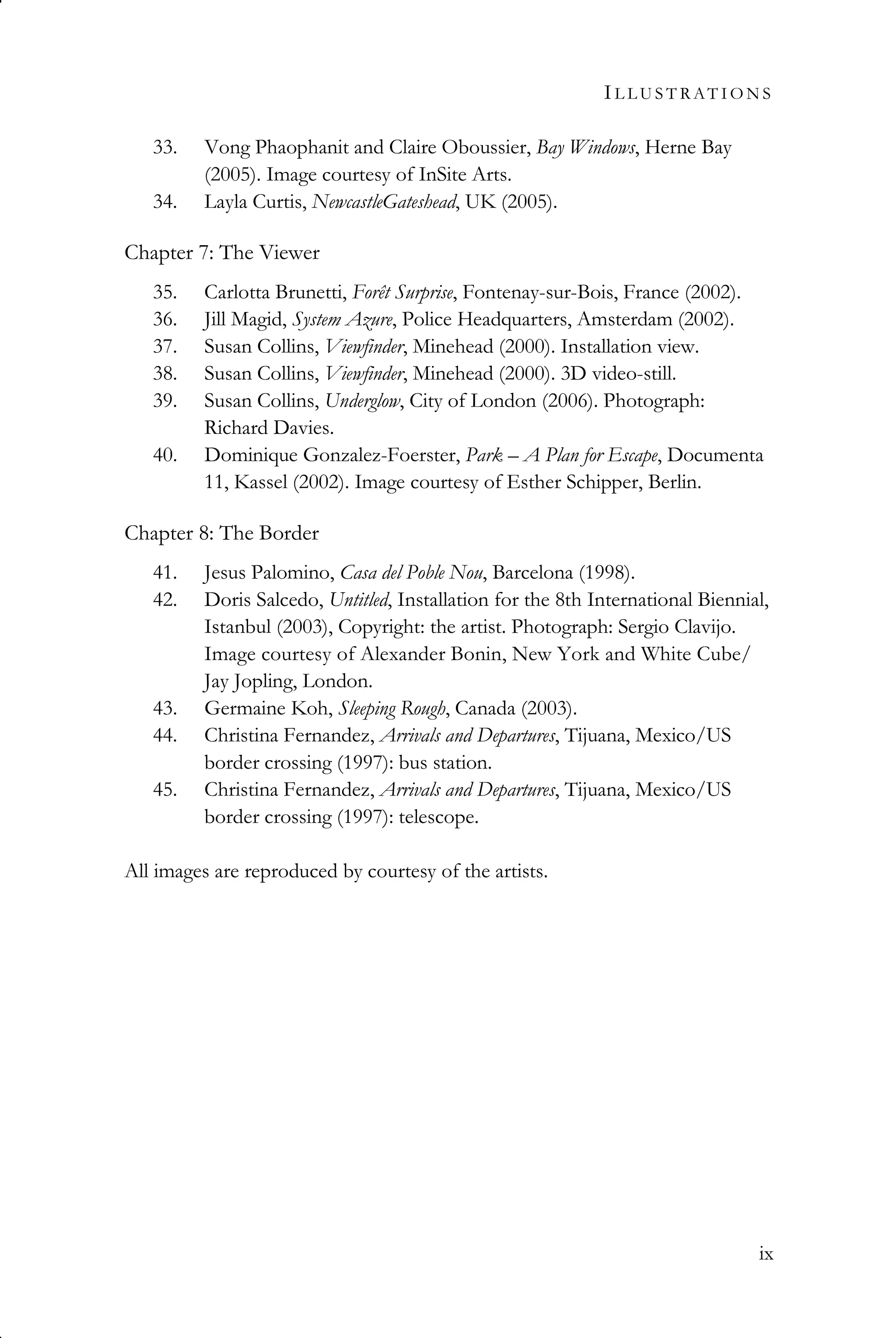






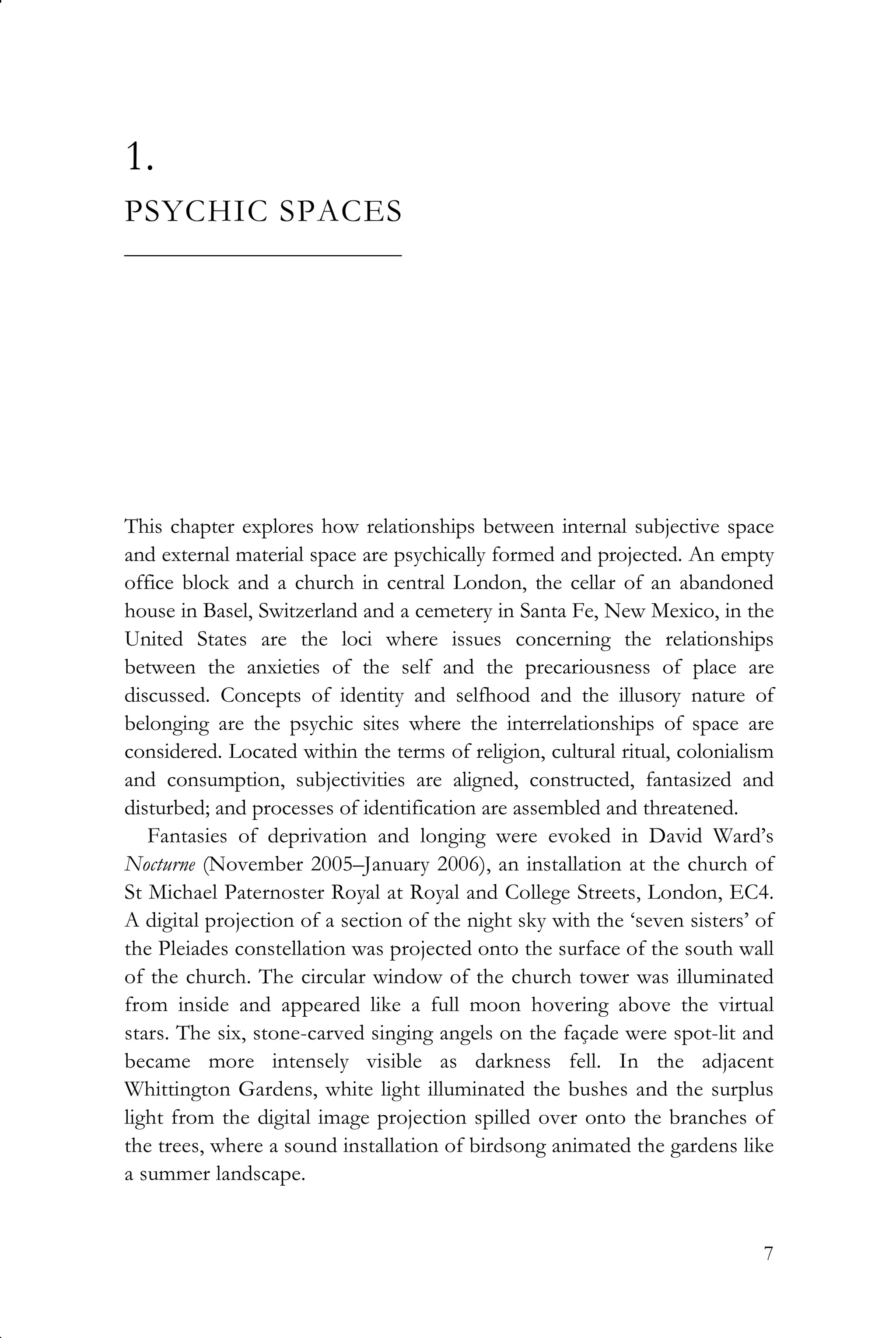

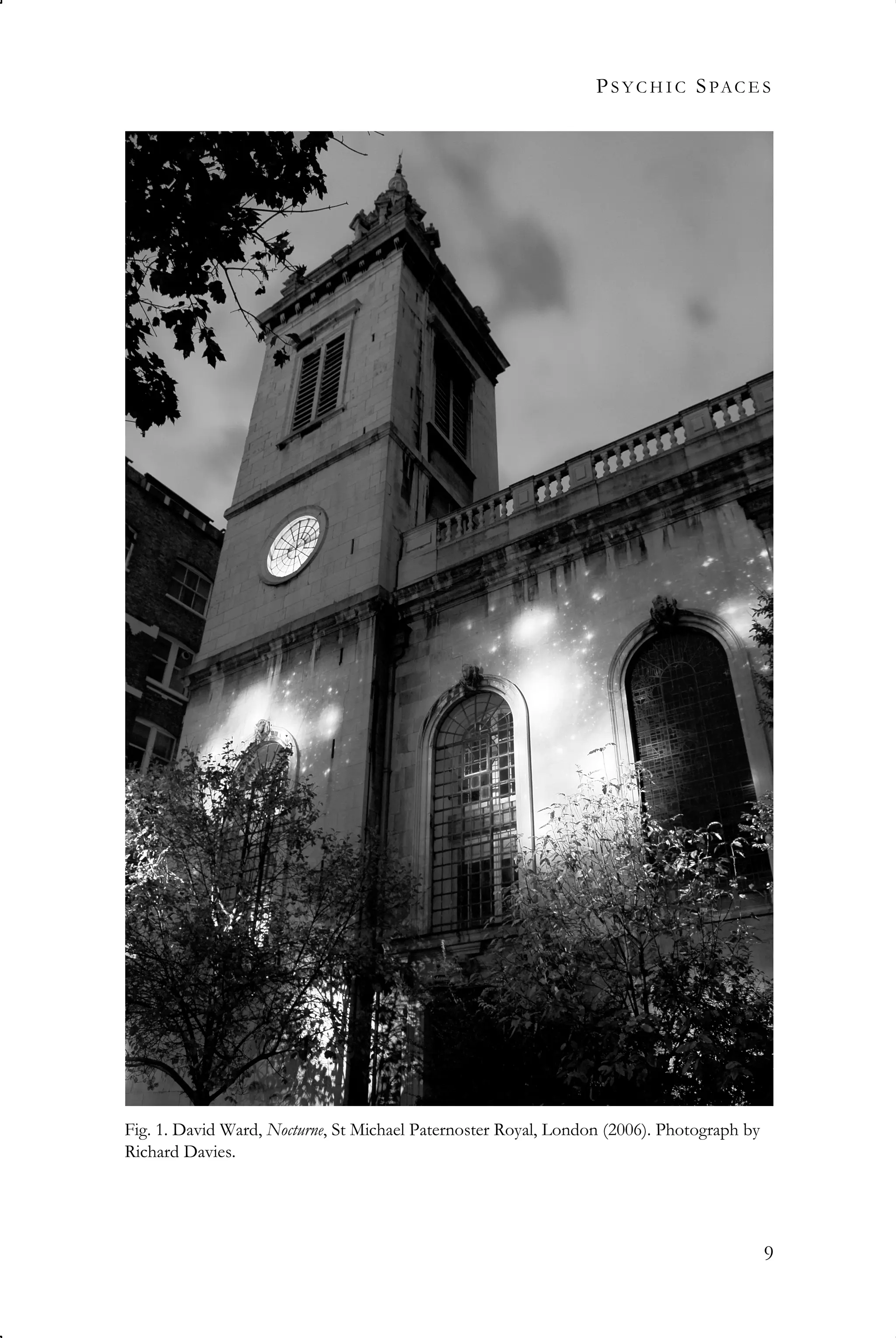

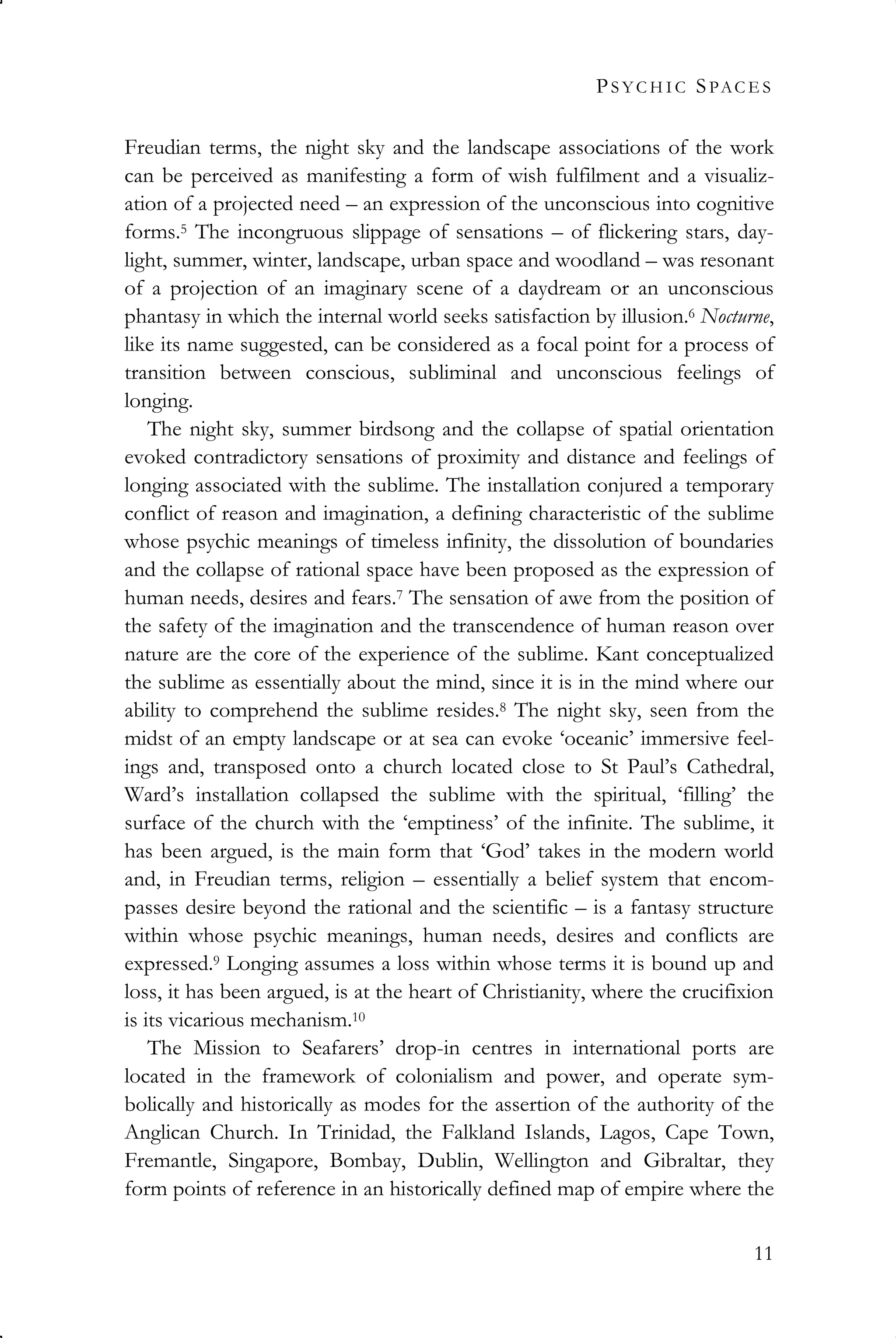

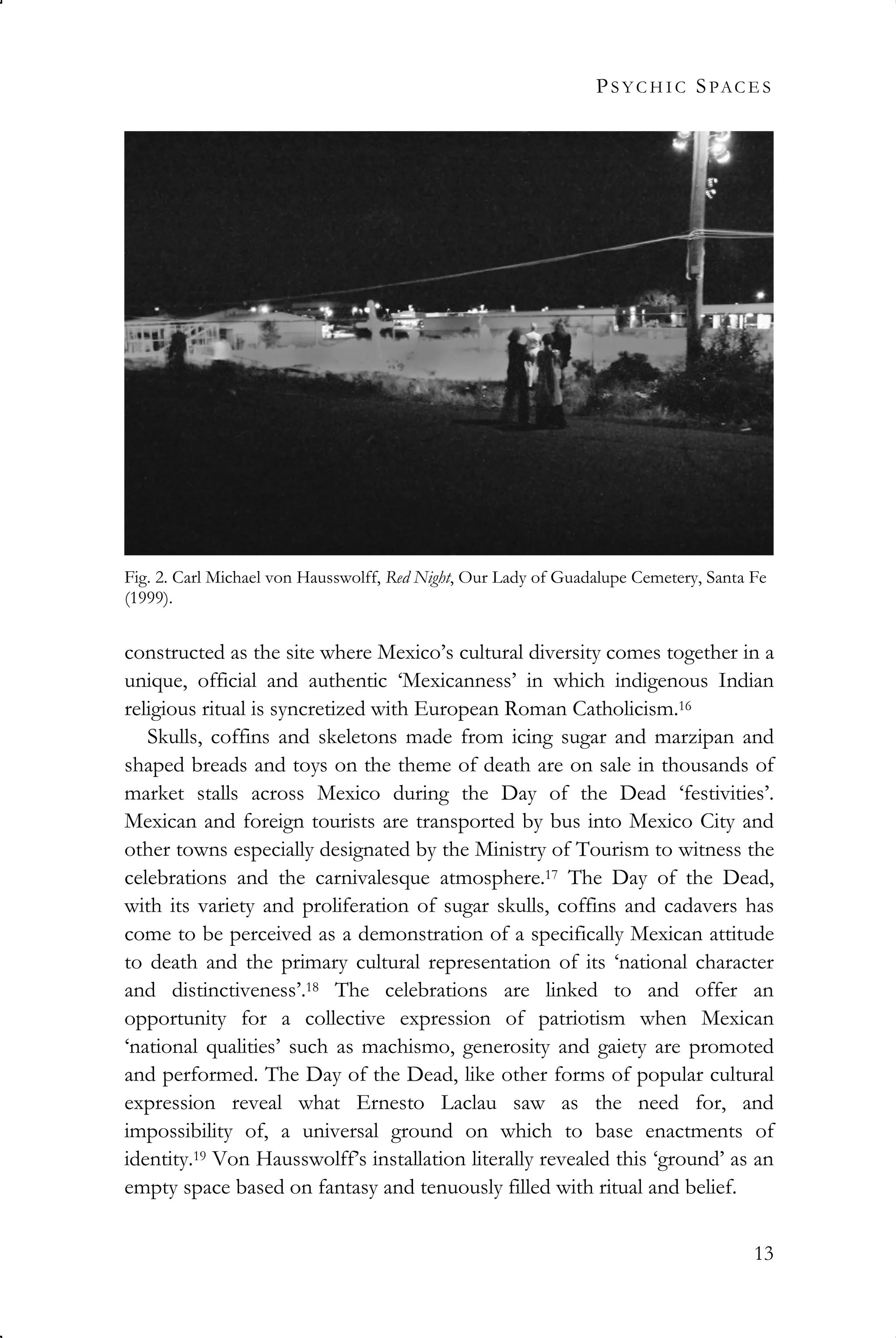











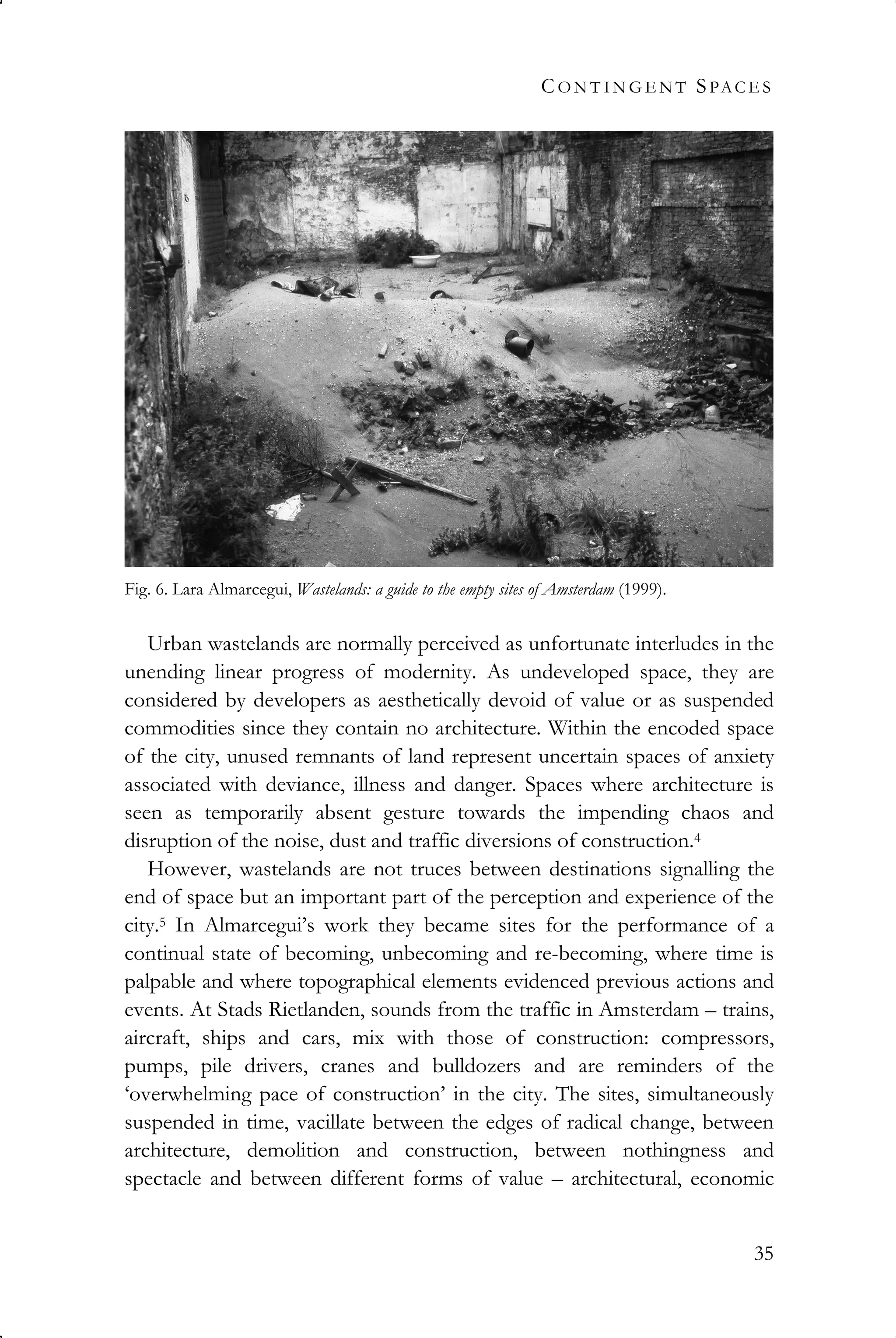

![179. The sayling firr; this 'alludes to the ship's masts and spars
being made of fir.'—Bell. 'Apta fretis abies'; Claudian, De Raptu
Proserpinae, ii. 107. Spenser substitutes for it 'The sailing pine.' The
cipres; 'tumulos tectura cupressus,' in Claudian.
180. The sheter ew. 'The material of our [ancient] national weapon,
the bow, was yew. It is said that the old yews which are found in
country churchyards were planted in order to supply the yeomanry
with bows.'—Bell. Spenser has—'The eugh, obedient to the benders
will.'
'The asp is the aspen, or black poplar, of which shafts or arrows
were made.'—Bell. Spenser has—'The aspine good for staves'; and
'The birch for shaftes.' See Ascham's Toxophilus, ed. Arber, p. 126.
181. The olive is the emblem of peace; and the palm, of victory.
Boccaccio has—'e d'ogni vincitore Premio la palma'; Tes. xi. 24; from
Ovid—'uictoris praemia palmae'; Met. x. 102.
182. 'The laurel (used) for divination,' or 'to divine with.' 'Venturi
praescia laurus'; Claudian, de Raptu Proserpinae, ii. 109. It was
'sacred to Apollo; and its branches were the decoration of poets, and
of the flamens. The leaves, when eaten, were said to impart the
power of prophesying; Tibull. 2. 5. 63; Juvenal, 7. 19.'—Lewis and
Short's Lat. Dict., s.v. laurus.
183. In a note to Cant. Tales, l. 1920, Tyrwhitt says—'Chaucer has
[here] taken very little from Boccace, as he had already inserted a
very close imitation of this part of the Teseide in his Assemblee of
Foules, from verse 183 to verse 287.' In fact, eleven stanzas (183-
259) correspond to Boccaccio's Teseide, Canto vii. st. 51-60; the
next three stanzas (260-280) to the same, st. 63-66; and the next
two (281-294) to the same, st. 61, 62. See the whole extract from
Boccaccio, given and translated in the Introduction; see p. 68,
above.](https://image.slidesharecdn.com/2634298-250613211137-934f7a83/75/Exploring-Sitespecific-Art-Issues-Of-Space-And-Internationalism-Rugg-56-2048.jpg)

![is the very temple of Venus which Chaucer again describes in the
Knightes Tale, ll. 1060-1108 (A 1918); which see.
234. Faire, beautiful by nature; gay, adorned by art.
236. Office, duty; viz. to dance round.
237. These are the dowves flikeringe in Kn. Tale, 1104 (A 1962).
243. Sonde, sand. 'Her [Patience's] chief virtue is quiet endurance in
the most insecure and unhopeful circumstances'; Bell.
245. Answering to Boccaccio's 'Promesse ad arte,' i. e. 'artful
Promises.'
246. Cf. Kn. Tale, 1062-1066, 1070 (A 1920-4, 1928).
255. 'The allusion is to the adventure of Priapus, related by Ovid in
the Fasti, lib. i. 415'; Bell. The ass, by braying, put Priapus to
confusion.
261. But in Kn. Tale, 1082 (A 1940), the porter of Venus is Idleness,
as in the Rom. de la Rose, 636 (E. version, 643, at p. 120, above).
267. Gilte; cf. Leg. of Good Women, 230, 249, 1315.
272. Valence, explained by Urry as Valentia in Spain. But perhaps it
may refer to Valence, near Lyons, in France; as Lyons is especially
famous for the manufacture of silks, and there is a considerable
trade in silks at Valence also. Probably 'thin silk' is here meant.
Boccaccio merely speaks of 'texture so thin,' or, in the original 'Testa,
tanto sottil,' which accounts for Chaucer's 'subtil.' Coles's Dict.
(1684) gives: 'Valence,-tia, a town in Spain, France, and Milan.' In
the Unton Inventories, for the years 1596 and 1620, ed. J. G.
Nichols, I find: 'one covering for a fielde bedde of green and valens,'
p. 4; 'one standinge bedsteed with black velvett testern, black
vallance fringed and laced,' p. 21; 'one standinge bed with yellow
damaske testern and vallence,' p. 21; 'vallance frindged and laced,'](https://image.slidesharecdn.com/2634298-250613211137-934f7a83/75/Exploring-Sitespecific-Art-Issues-Of-Space-And-Internationalism-Rugg-58-2048.jpg)


![316. Aleyn, Alanus de Insulis; Pleynt of Kynde, Complaint of Nature,
Lat. Planctus Naturæ; see note to l. 298. Chaucer refers us to
Aleyn's description on account of its unmerciful length; it was
hopeless to attempt even an epitome of it. Lydgate copies this
passage; see Political, Religious and Love Poems, ed. Furnivall, p.
45, l. 17; or his Minor Poems, ed. Halliwell, p. 47.
323. Foules of ravyne, birds of prey. Chaucer's division of birds into
birds of prey, birds that eat worms and insects, water-fowl, and birds
that eat seeds, can hardly be his own. In Vincent of Beauvais, lib.
xvi. c. 14, Aristotle is cited as to the food of birds:—'quædam
comedunt carnem, quædam grana, quædam utrumque; ... quædam
vero comedunt vermes, vt passer.... Vivunt et ex fructu quædam
aues, vt palumbi, et turtures. Quædam viuunt in ripis aquarum
lacuum, et cibantur ex eis.'
330. Royal; because he is often called the king of birds, as in
Dunbar's Thrissill and Rois, st. 18. Vincent of Beauvais, Spec. Nat.,
lib. xvi. c. 32, quotes from Iorath (sic):—'Aquila est auis magna
regalis.' And Philip de Thaun, Bestiary, 991 (in Wright's Pop.
Treatises, p. 109) says:—'Egle est rei de oisel.... En Latine raisun
clerveant le apellum, Ke le solail verat quant il plus cler serat.'
331. See the last note, where we learn that the eagle is called in
Latin 'clear-seeing,' because 'he will look at the sun when it will be
brightest.' This is explained at once by the remarkable etymology
given by Isidore (cited by Vincent, as above), viz.:—'Aqu-ila ab
acumine oculorum vocata est.'
332. Pliny, Nat. Hist. bk. x. c. 3, enumerates six kinds of eagles,
which Chaucer leaves us to find out; viz. Melænaetos, Pygargus,
Morphnos, which Homer (Il. xxiv. 316) calls perknos, Percnopterus,
Gnesios (the true or royal eagle), and Haliæetos (osprey). This
explains the allusion in l. 333.
334. Tyraunt. This epithet was probably suggested by the original
text in Alanus, viz.—'Illic ancipiter [accipiter], civitatis præfectus](https://image.slidesharecdn.com/2634298-250613211137-934f7a83/75/Exploring-Sitespecific-Art-Issues-Of-Space-And-Internationalism-Rugg-63-2048.jpg)


![363. Wys; because it could predict; it was therefore consecrated to
Apollo; see Lewis and Short, s. v. corvus. Care, anxiety; hence, ill
luck. 'In folk-lore the crow always appears as a bird of the worst and
most sinister character, representing either death, or night, or
winter'; Prov. Names of British Birds, by C. Swainson, p. 84; which
see.
Chaucer here mistranslates Vergil precisely as Batman does (l. xii. c.
9). 'Nunc plena cornix pluuiam uocat improba uoce'; Georg. i. 388.
'That is to vnderstande, Nowe the Crowe calleth rayne with an
eleinge voyce'; Batman vppon Bartholome, as above.
364. Olde. I do not understand this epithet; it is usually the crow
who is credited with a long life. Frosty; i. e. that is seen in England
in the winter-time; called in Shropshire the snow-bird; Swainson's
Prov. Names of Brit. Birds, p. 6. The explanation of the phrase
'farewell feldefare,' occurring in Troil. iii. 861 and in Rom. Rose,
5510, and marked by Tyrwhitt as not understood, is easy enough. It
simply means—'good bye, and we are well rid of you'; when the
fieldfare goes, the warm weather comes.
371. Formel, perhaps 'regular' or 'suitable' companion; as F. formel
answers to Lat. formalis. Tyrwhitt's Gloss. says: 'formel is put for the
female of any fowl, more especially for a female eagle (ll. 445, 535
below).' It has, however, no connection with female (as he seems to
suppose), but answers rather, in sense, to make, i. e. match, fit
companion. Godefroy cites the expression 'faucon formel' from
L'Aviculaire des Oiseaux de proie (MS. Lyon 697, fol. 221 a). He
explains it by 'qui a d'amples formes,' meaning (as I suppose) simply
'large'; which does not seem to be right; though the tercel or male
hawk was so called because he was a third less than the female.
Ducange gives formelus, and thinks it means 'well trained.'
379. Vicaire, deputy. This term is taken from Alanus, De Planctu
Naturæ, as above, where it occurs at least thrice. Thus, at p. 469 of
Wright's edition, Nature says:—'Me igitur tanquam sui [Dei]](https://image.slidesharecdn.com/2634298-250613211137-934f7a83/75/Exploring-Sitespecific-Art-Issues-Of-Space-And-Internationalism-Rugg-69-2048.jpg)


![610. Said sarcastically—'Yes! when the glutton has filled his paunch
sufficiently, the rest of us are sure to be satisfied!'
Compare the following. 'Certain persones ... saiyng that Demades
had now given over to bee sache an haine [niggardly wretch] as he
had been in tymes past—"Yea, marie, quoth Demosthenes, for now
ye see him full paunched, as lyons are." For Demades was covetous
and gredie of money, and indeed the lyons are more gentle when
their bealyes are well filled.'—Udall, tr. of Apothegmes of Erasmus;
Anecdotes of Demosthenes. The merlin then addresses the cuckoo
directly.
612. Heysugge, hedge-sparrow; see note to l. 358.
613. Read rewtheles (reufulles in Gg); cf. Cant. Ta., B 863; and see
p. 361, l. 31. Rewtheles became reufulles, and then rewful.
614. 'Live thou unmated, thou destruction (destroyer) of worms.'
615. 'For it is no matter as to the lack of thy kind,' i. e. it would not
matter, even if the result was the loss of your entire race.
616. 'Go! and remain ignorant for ever.'
620, 1. Cf. note to l. 411. Read th'eleccioun; i. e. the choice.
623. Cheest, chooseth; spelt chyest, Ayenbite of Inwyt, p. 126; spelt
chest (with long e) in Shoreham's Poems, ed. Wright, p. 109, where
it rimes with lest = leseth, i. e. loseth; A. S. císt, Deut. xxviii. 9.
626. Accent favour on the second syllable; as in C. T., Group B, 3881
(Monkes Tale). So (perhaps) colóur-ed in l. 443.
630. 'I have no other (i. e. no wrongful) regard to any rank,' I am no
respecter of persons.
633. 'I would counsel you to take'; two infinitives.](https://image.slidesharecdn.com/2634298-250613211137-934f7a83/75/Exploring-Sitespecific-Art-Issues-Of-Space-And-Internationalism-Rugg-74-2048.jpg)

![the latter rondeau of thirteen lines) is quite useless as applied to
roundels written in Middle English.
677. The note, i. e. the tune. Chaucer adapts his words to a known
French tune. The words Qui bien aime, a tard[290] oublie (he who
loves well is slow to forget) probably refer to this tune; though it is
not quite clear to me how lines of five accents (normally) go to a
tune beginning with a line of four accents. In Furnivall's Trial
Forewords, p. 55, we find:—'Of the rondeau of which the first line is
cited in the Fairfax MS., &c., M. Sandras found the music and the
words in a MS. of Machault in the National Library, no. 7612, leaf
187. The verses form the opening lines of one of two pieces entitled
Le Lay de plour:—](https://image.slidesharecdn.com/2634298-250613211137-934f7a83/75/Exploring-Sitespecific-Art-Issues-Of-Space-And-Internationalism-Rugg-77-2048.jpg)