DROUGHT
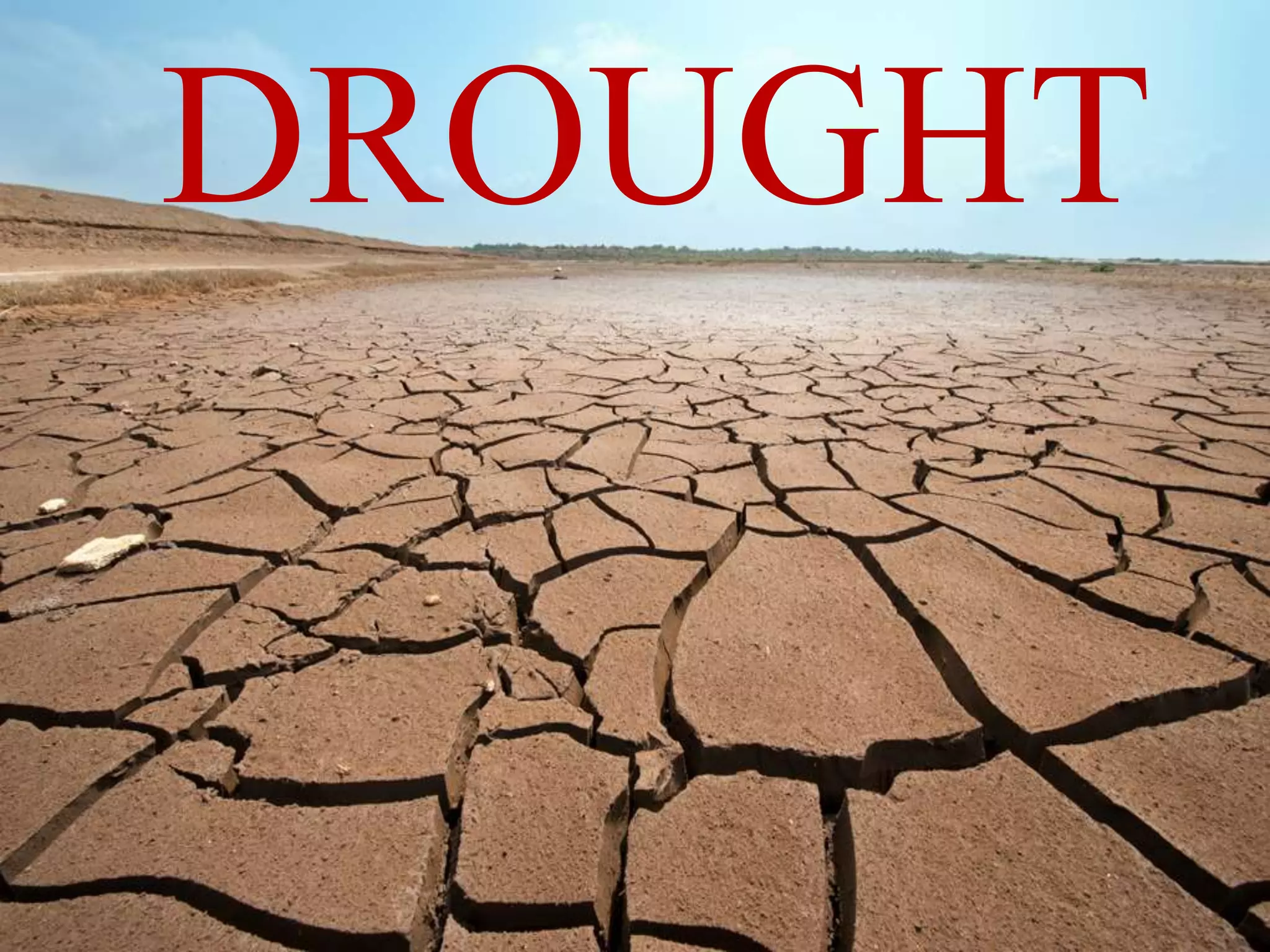
DROUGHT
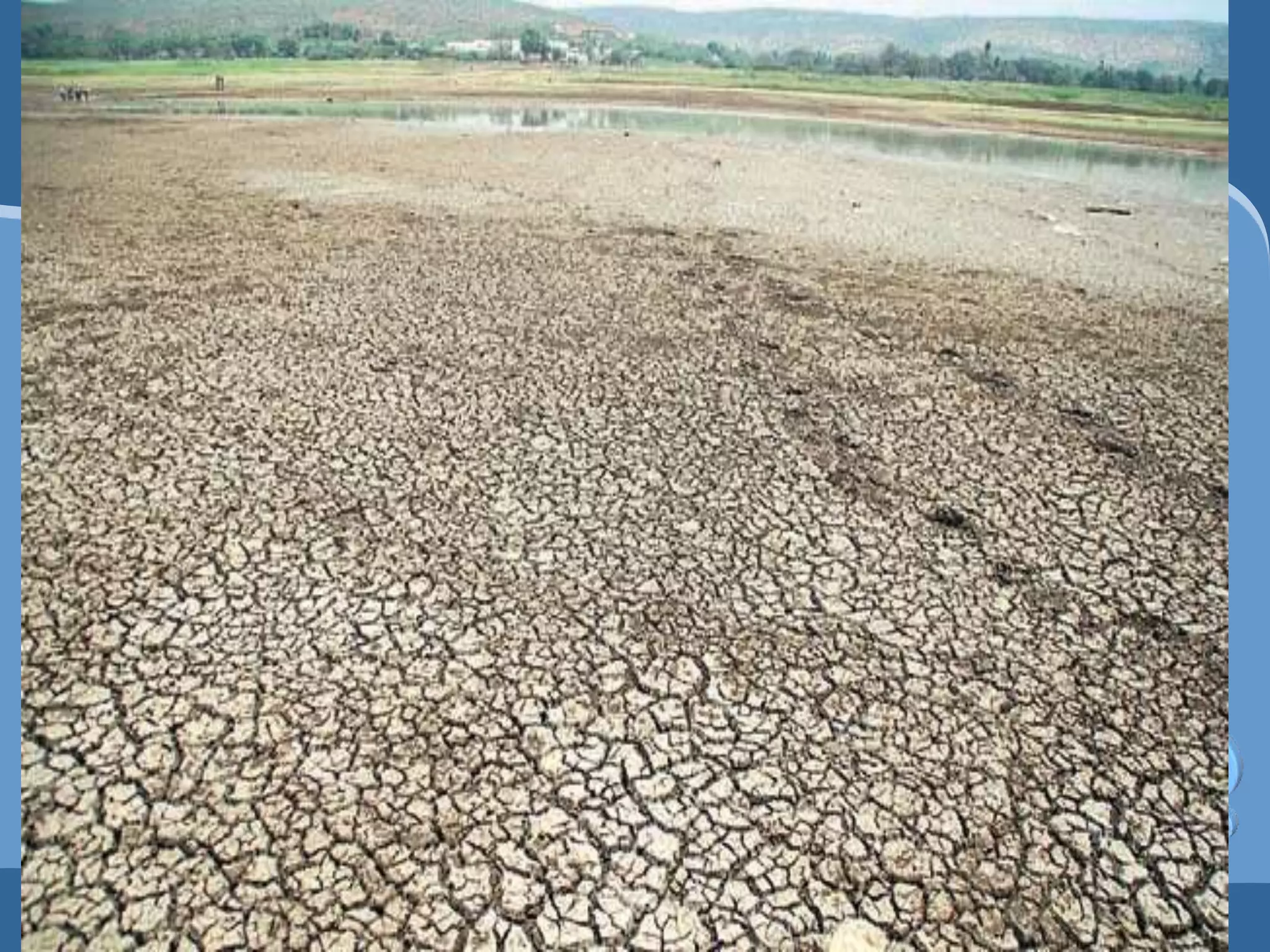
• A drought is a period of below-average
precipitation in a given region; resulting in
prolonged shortages in the water supply,
whether atmospheric, surface water or
ground water. A drought can last for months
or years, or may be declared after as few as
15 days.
DROUGHT
• It can have a substantial impact on the ecosystem
and agriculture of the affected region and harm to
the local economy. Annual dry seasons in the
tropics significantly increase the chances of a
drought developing and subsequent bush fires.
Periods of heat can significantly worsen drought
conditions by hastening evaporation of water
vapour.
CAUSES
OF
DROUGHT
Precipitation deficiency
• Droughts can occur when there is the lack of
‘expected’ precipitation (rain and snow).
Some regions can go for months without any
rain, and that would be ‘normal’ for them.
Farmers plant in anticipation of rains and so
when the rains do not come, and irrigation
infrastructure is absent, agricultural drought
occur.
Surface water flow
• Some regions are also well distributed with surface
water (streams and rivers) that have their sources
from far away mountains and watersheds. These
surface waters may dry out if the flow from their
sources upstream is affected. Hydro-electric dams
and irrigation systems are some of the economic
activities that can reduce the amount of water
flowing to other areas downstream.
Human factors
• Forests play a key role in the water cycle, as
they help reduce evaporation, store water
and also contribute to atmospheric moisture
in the form of transpiration. It will also
reduce the ability of the ground to hold
water and make it easier for desertification
to occur. It can set off drying conditions,
especially for smaller water bodies.
GLOBAL WARMING
• Even though some people do not accept that
the average temperature of the earth has
risen, it is on record that human actions have
contributed to more greenhouse gasses in the
atmosphere. As a result, there are warmer
temperatures, often resulting in more
dryness and bush fires. These conditions also
tend to speed up drought conditions.
TYPES
OF
DROUGHTS
Meteorological drought
• This kind is usually determined by the
general lack of moisture in the weather such
as lack of precipitation, and the play of other
weather conditions such as dry winds, high
temperatures and so on. It is expressed in
relation to the average conditions of the
region over a long period of time.
Agricultural drought
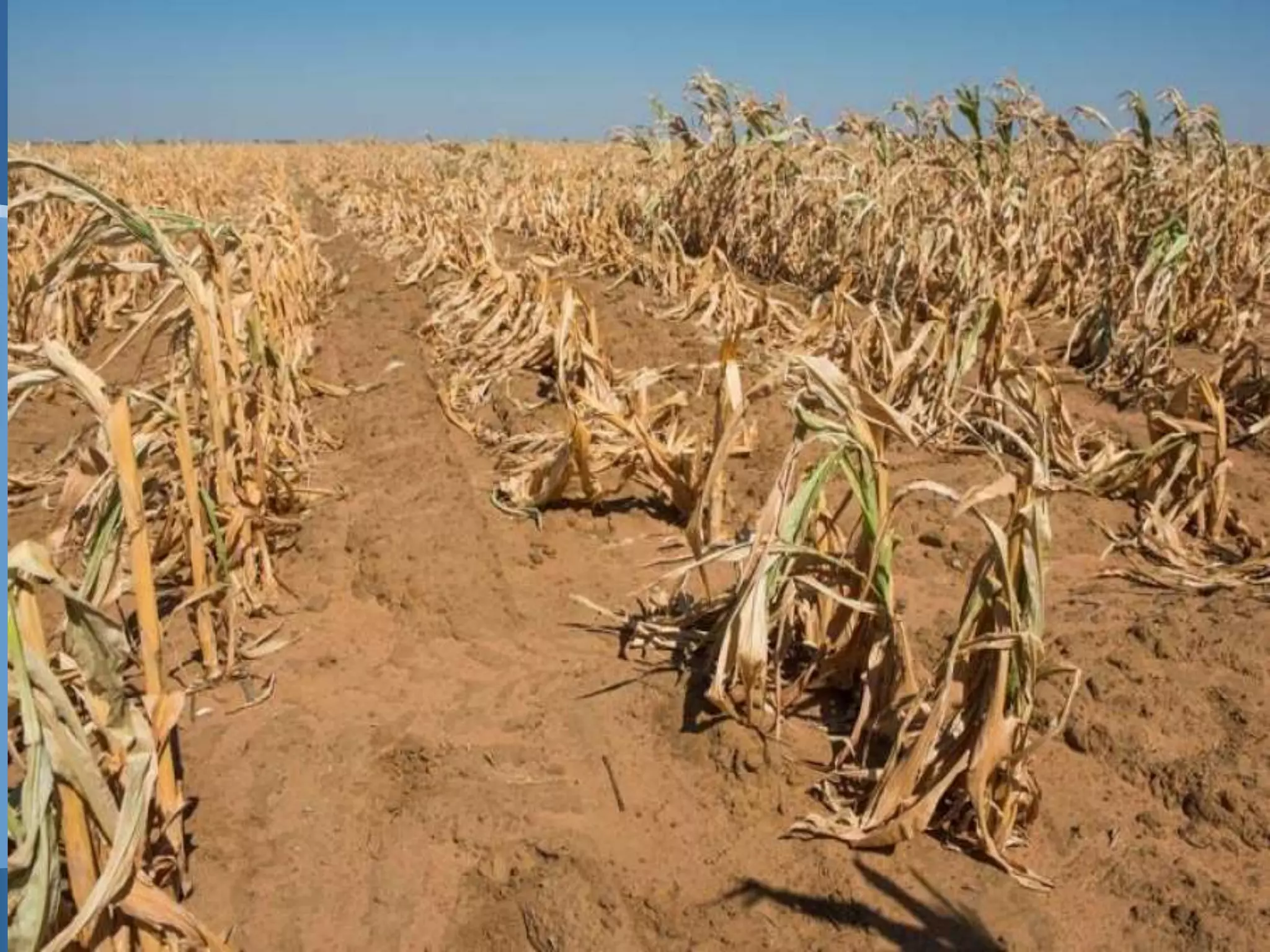
• This is when atmospheric moisture is
reduced to the extent that soil moisture is
affected. Here, crops and animals are
affected and evapo transpiration is also
affected. It is often the signs one sees when a
meteorological drought is at play, but not
before a hydrological drought.
Hydrological drought
• This is when there is a deficiency of surface water
and ground water supply in a region, often as a
result of less precipitation, excessive effect on
surface water for farming, energy and other needs.
Hydrological drought does not usually occur at the
same time as meteorological drought. In a way, this
decline in the quantity and quality of surface and
sub-surface water is the effect of meteorological
drought.
Socioeconomic drought
• This condition is when some supply of goods and
services such as energy, food and drinking water
are reduced or threatened by changes in
meteorological and hydrological conditions.
Sometimes it is even made worse by growing
populations and excessive demands of such goods,
to the point that it creates stress on the little water
available.
EFFECTS
OF
DROUGHT
EFFECTS OF DROUGHT
• The effects of drought are widespread and have
devastating effects on the environment and the
society as a whole. Water use is part of almost
every human activity as well as the life of plants
and animals. On this basis, extended deficiency of
water can affect the society in various ways both
directly and indirectly. The effects can therefore
generally be categorized as environmental,
economic, and social.
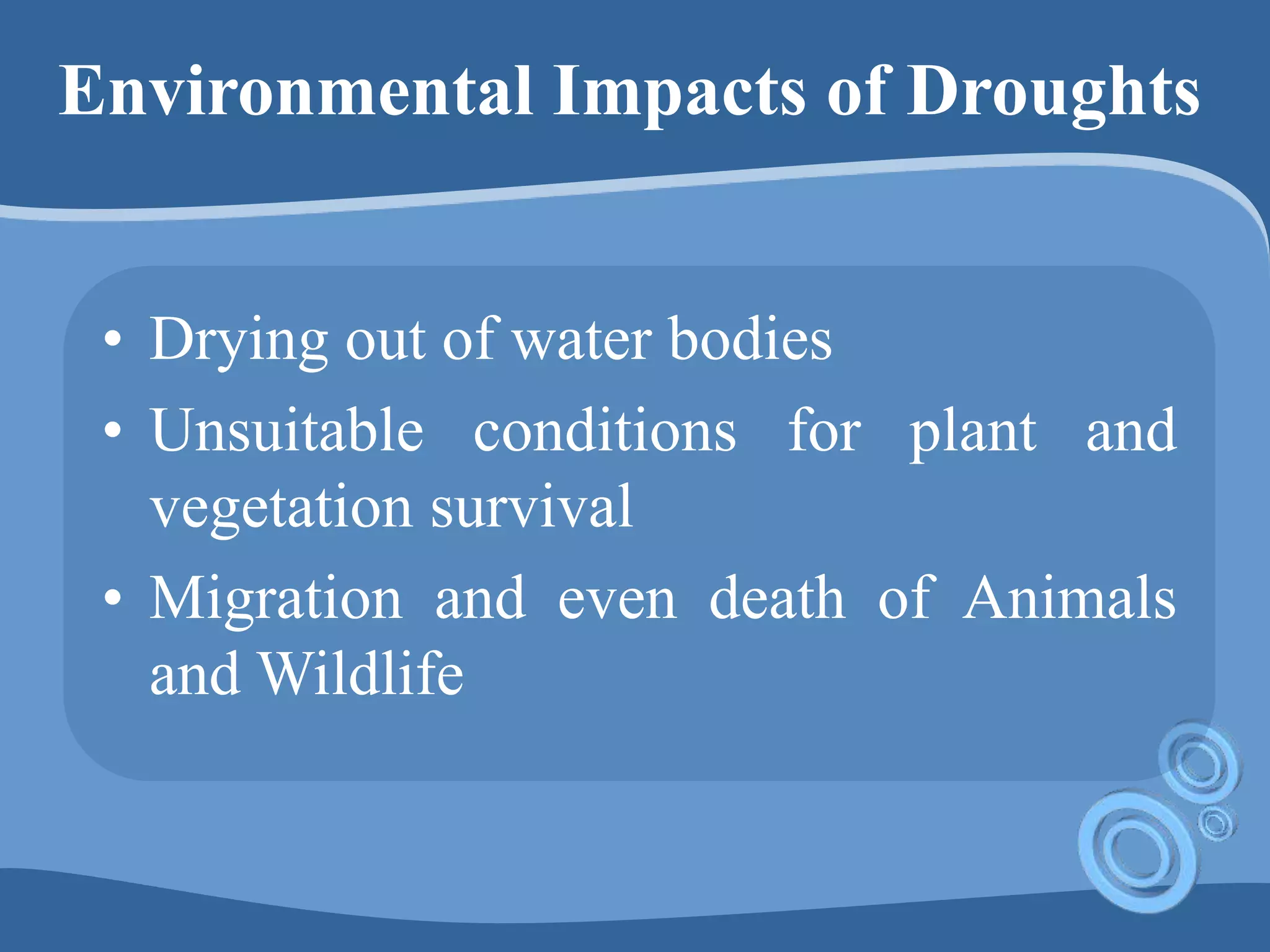
Environmental Impacts of Droughts
• Drying out of water bodies
• Unsuitable conditions for plant and
vegetation survival
• Migration and even death of Animals
and Wildlife
Economic Impacts of Droughts
• Increased budgetary spending by farmers
• Reduced crop yields
• Industrial and governmental losses
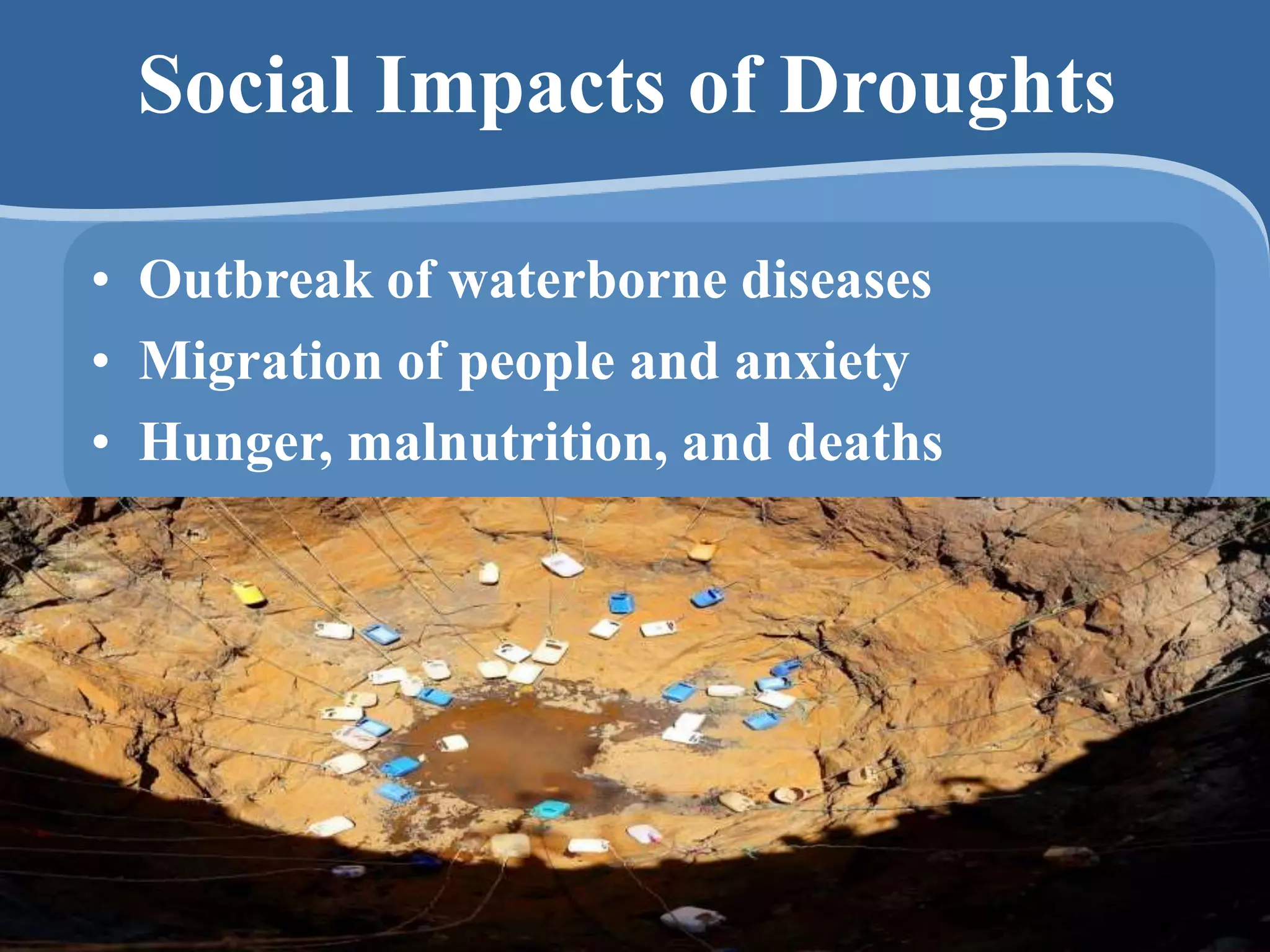
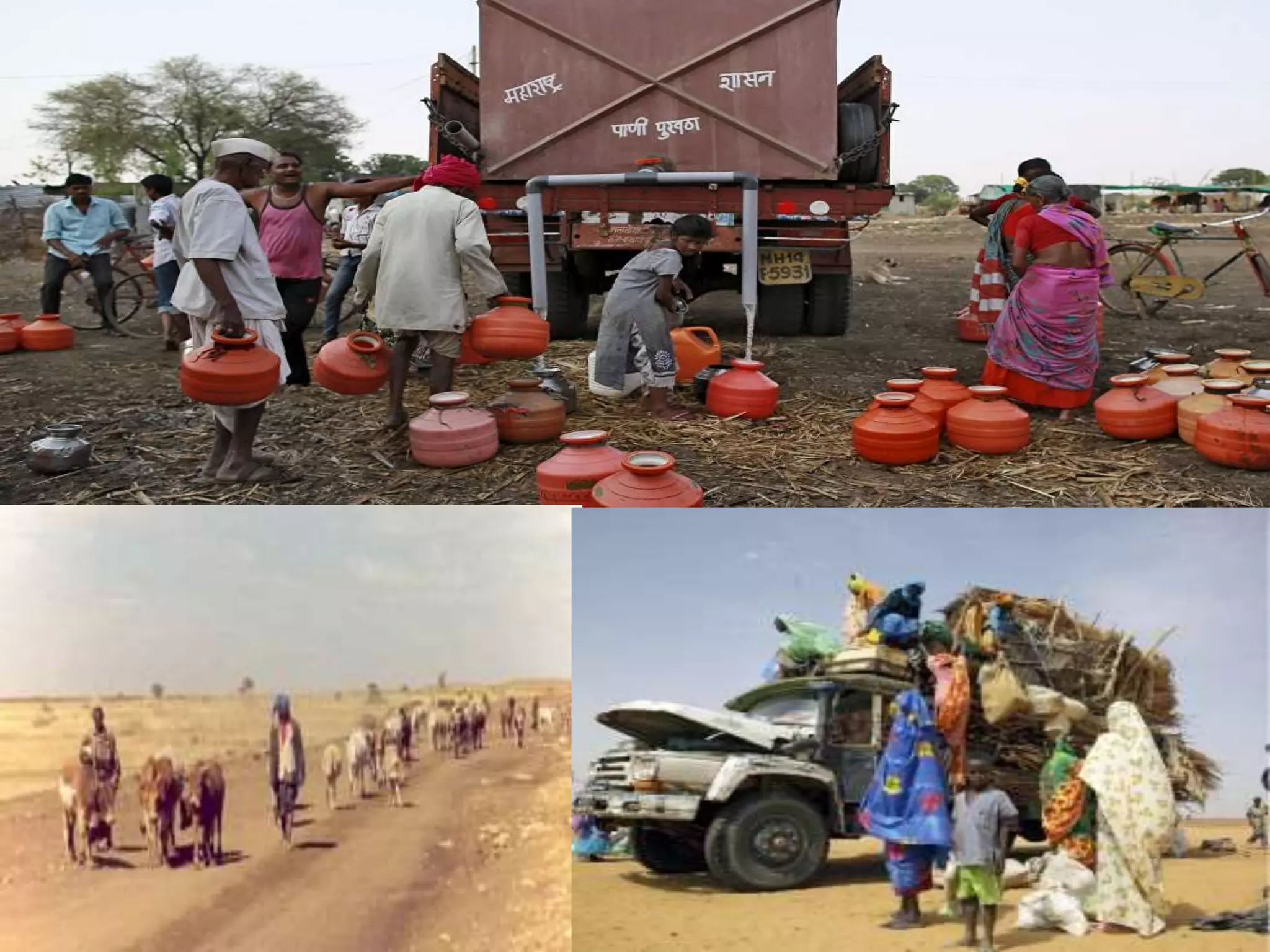
Social Impacts of Droughts
• Outbreak of waterborne diseases
• Migration of people and anxiety
• Hunger, malnutrition, and deaths
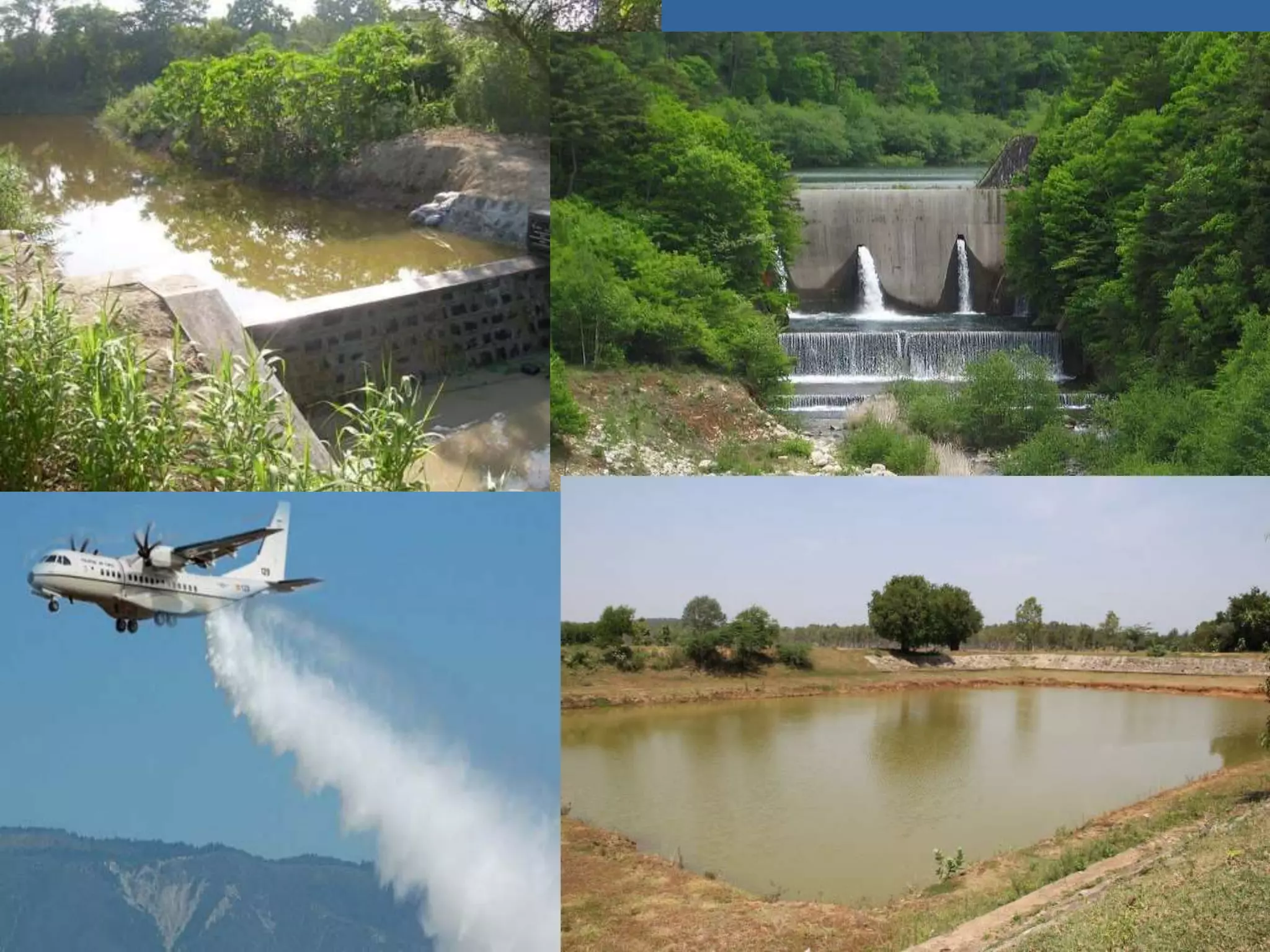
Protection, mitigation and relief
Strategies for drought protection, mitigation or
relief include:
• Dams – many dams and their associated reservoirs
supply additional water in times of drought.
• Cloud seeding – a form of intentional weather
modification to induce rainfall.
• Desalination – of sea water for irrigation or
consumption.
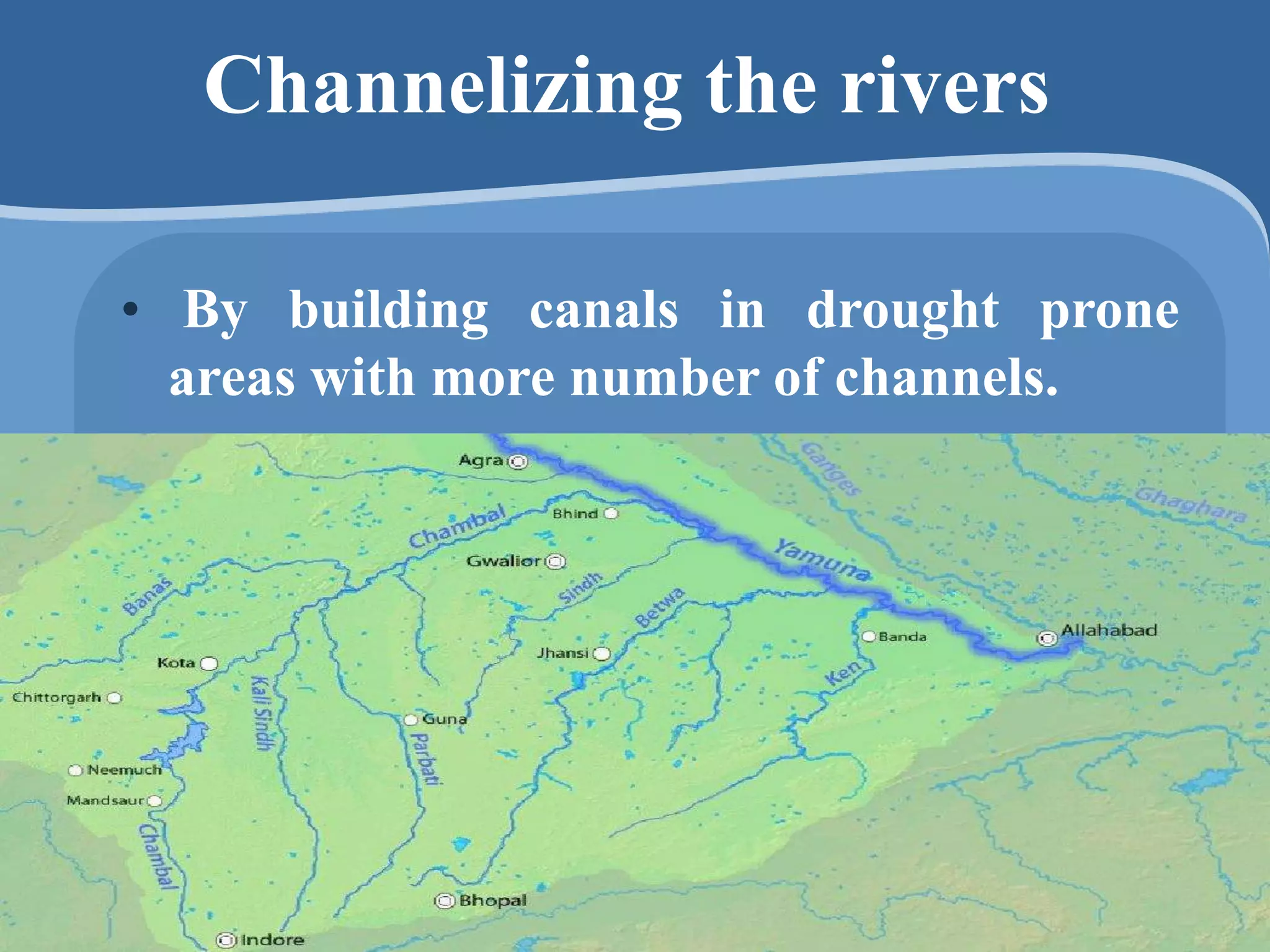
Channelizing the rivers
• By building canals in drought prone
areas with more number of channels.
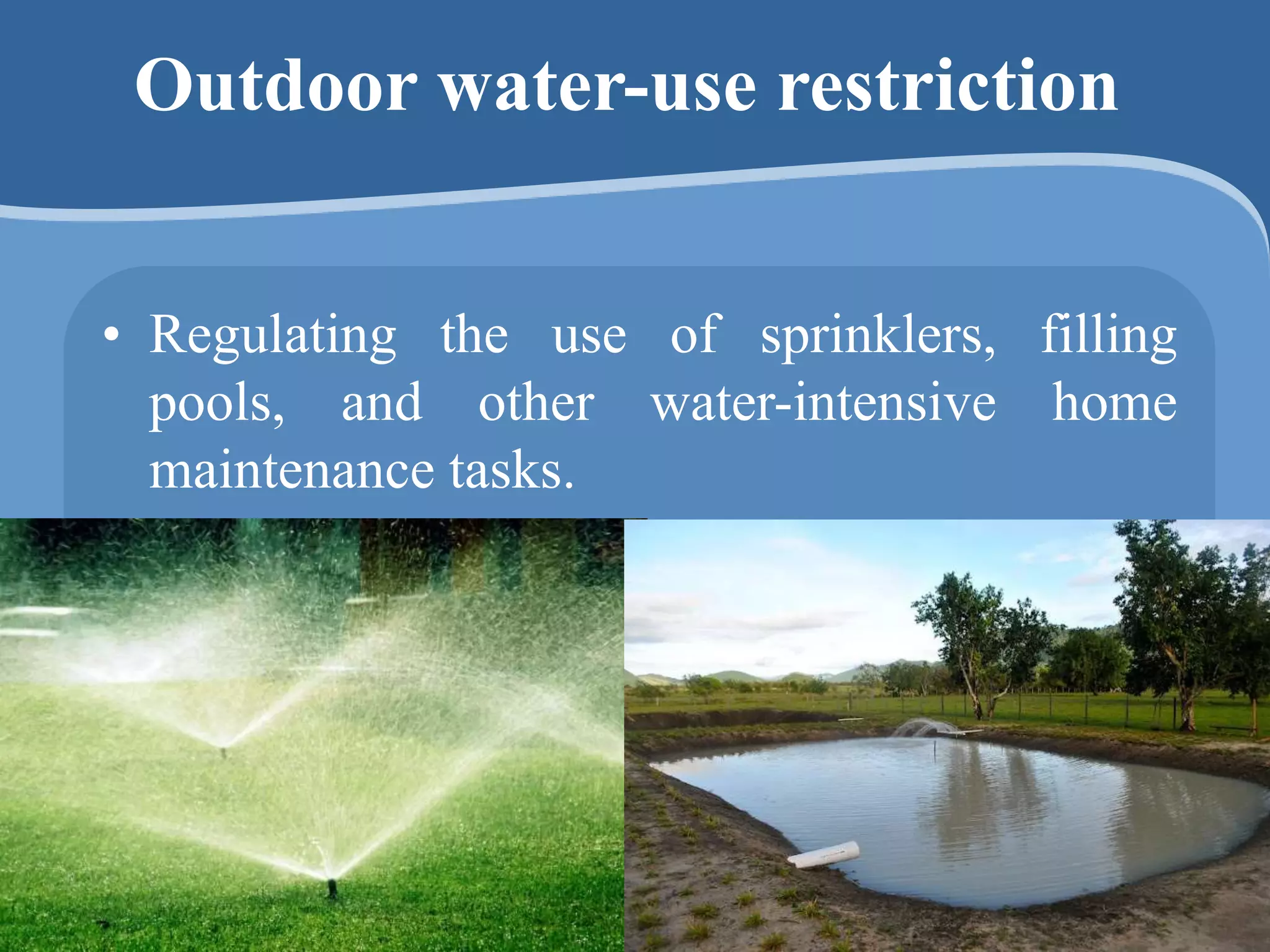
Outdoor water-use restriction
• Regulating the use of sprinklers, filling
pools, and other water-intensive home
maintenance tasks.
Contd…
• Rainwater harvesting – Collection and
storage of rainwater from roofs or other
suitable catchments.
• Recycle the water – Former wastewater
(sewage) that has been treated and purified
for reuse.
Contd…
• Risk management efforts by the government
– These include
• DPAP – Drought Prone Area Programme
• NWDPRA – National Watershed Development
Project for Rain – Fed Areas
• WDPSC – Watershed Development Programme
for Shifting Cultivation
• IWDP – Integrated Water Development project.
Exogenous disasters    drought

Exogenous disasters drought

  • 1.
  • 2.
    DROUGHT • A droughtis a period of below-average precipitation in a given region; resulting in prolonged shortages in the water supply, whether atmospheric, surface water or ground water. A drought can last for months or years, or may be declared after as few as 15 days.
  • 3.
    DROUGHT • It canhave a substantial impact on the ecosystem and agriculture of the affected region and harm to the local economy. Annual dry seasons in the tropics significantly increase the chances of a drought developing and subsequent bush fires. Periods of heat can significantly worsen drought conditions by hastening evaporation of water vapour.
  • 4.
  • 5.
    Precipitation deficiency • Droughtscan occur when there is the lack of ‘expected’ precipitation (rain and snow). Some regions can go for months without any rain, and that would be ‘normal’ for them. Farmers plant in anticipation of rains and so when the rains do not come, and irrigation infrastructure is absent, agricultural drought occur.
  • 6.
    Surface water flow •Some regions are also well distributed with surface water (streams and rivers) that have their sources from far away mountains and watersheds. These surface waters may dry out if the flow from their sources upstream is affected. Hydro-electric dams and irrigation systems are some of the economic activities that can reduce the amount of water flowing to other areas downstream.
  • 7.
    Human factors • Forestsplay a key role in the water cycle, as they help reduce evaporation, store water and also contribute to atmospheric moisture in the form of transpiration. It will also reduce the ability of the ground to hold water and make it easier for desertification to occur. It can set off drying conditions, especially for smaller water bodies.
  • 8.
    GLOBAL WARMING • Eventhough some people do not accept that the average temperature of the earth has risen, it is on record that human actions have contributed to more greenhouse gasses in the atmosphere. As a result, there are warmer temperatures, often resulting in more dryness and bush fires. These conditions also tend to speed up drought conditions.
  • 9.
  • 10.
    Meteorological drought • Thiskind is usually determined by the general lack of moisture in the weather such as lack of precipitation, and the play of other weather conditions such as dry winds, high temperatures and so on. It is expressed in relation to the average conditions of the region over a long period of time.
  • 12.
    Agricultural drought • Thisis when atmospheric moisture is reduced to the extent that soil moisture is affected. Here, crops and animals are affected and evapo transpiration is also affected. It is often the signs one sees when a meteorological drought is at play, but not before a hydrological drought.
  • 14.
    Hydrological drought • Thisis when there is a deficiency of surface water and ground water supply in a region, often as a result of less precipitation, excessive effect on surface water for farming, energy and other needs. Hydrological drought does not usually occur at the same time as meteorological drought. In a way, this decline in the quantity and quality of surface and sub-surface water is the effect of meteorological drought.
  • 16.
    Socioeconomic drought • Thiscondition is when some supply of goods and services such as energy, food and drinking water are reduced or threatened by changes in meteorological and hydrological conditions. Sometimes it is even made worse by growing populations and excessive demands of such goods, to the point that it creates stress on the little water available.
  • 18.
  • 19.
    EFFECTS OF DROUGHT •The effects of drought are widespread and have devastating effects on the environment and the society as a whole. Water use is part of almost every human activity as well as the life of plants and animals. On this basis, extended deficiency of water can affect the society in various ways both directly and indirectly. The effects can therefore generally be categorized as environmental, economic, and social.
  • 20.
    Environmental Impacts ofDroughts • Drying out of water bodies • Unsuitable conditions for plant and vegetation survival • Migration and even death of Animals and Wildlife
  • 22.
    Economic Impacts ofDroughts • Increased budgetary spending by farmers • Reduced crop yields • Industrial and governmental losses
  • 24.
    Social Impacts ofDroughts • Outbreak of waterborne diseases • Migration of people and anxiety • Hunger, malnutrition, and deaths
  • 26.
    Protection, mitigation andrelief Strategies for drought protection, mitigation or relief include: • Dams – many dams and their associated reservoirs supply additional water in times of drought. • Cloud seeding – a form of intentional weather modification to induce rainfall. • Desalination – of sea water for irrigation or consumption.
  • 28.
    Channelizing the rivers •By building canals in drought prone areas with more number of channels.
  • 29.
    Outdoor water-use restriction •Regulating the use of sprinklers, filling pools, and other water-intensive home maintenance tasks.
  • 30.
    Contd… • Rainwater harvesting– Collection and storage of rainwater from roofs or other suitable catchments. • Recycle the water – Former wastewater (sewage) that has been treated and purified for reuse.
  • 31.
    Contd… • Risk managementefforts by the government – These include • DPAP – Drought Prone Area Programme • NWDPRA – National Watershed Development Project for Rain – Fed Areas • WDPSC – Watershed Development Programme for Shifting Cultivation • IWDP – Integrated Water Development project.