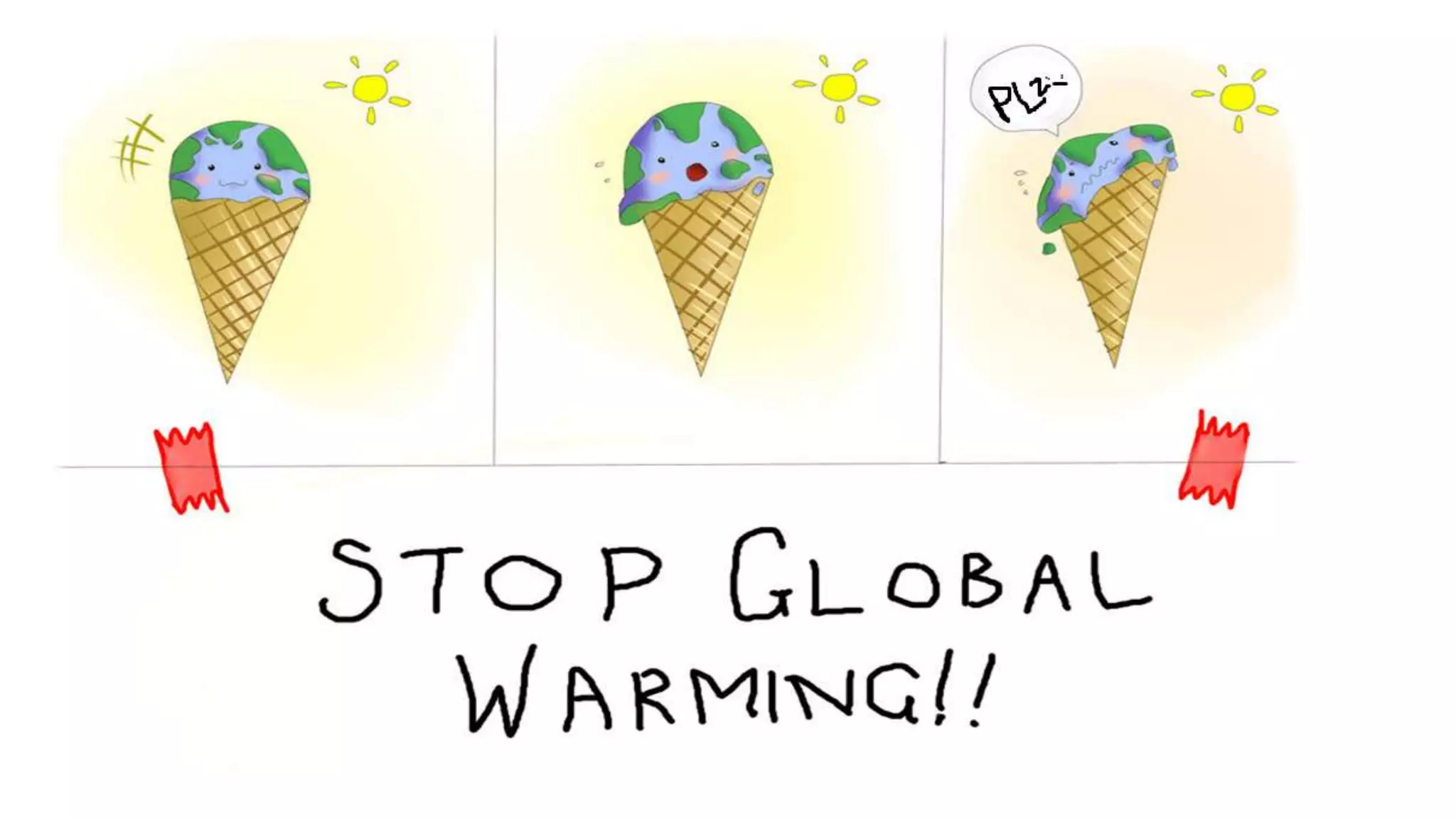
Drought, its effects
&
suggestions to prevent it.
Presented By:
Muhammad Anas Rasool
AGL-15-07
B.Sc. (Hons.) Agriculture
College of Agriculture
BZU Bahadur Sub Campus Layyah
TOPICS
• What is drought…?
• Causes of drought
• Effects of Drought
• How to prevent Drought…?
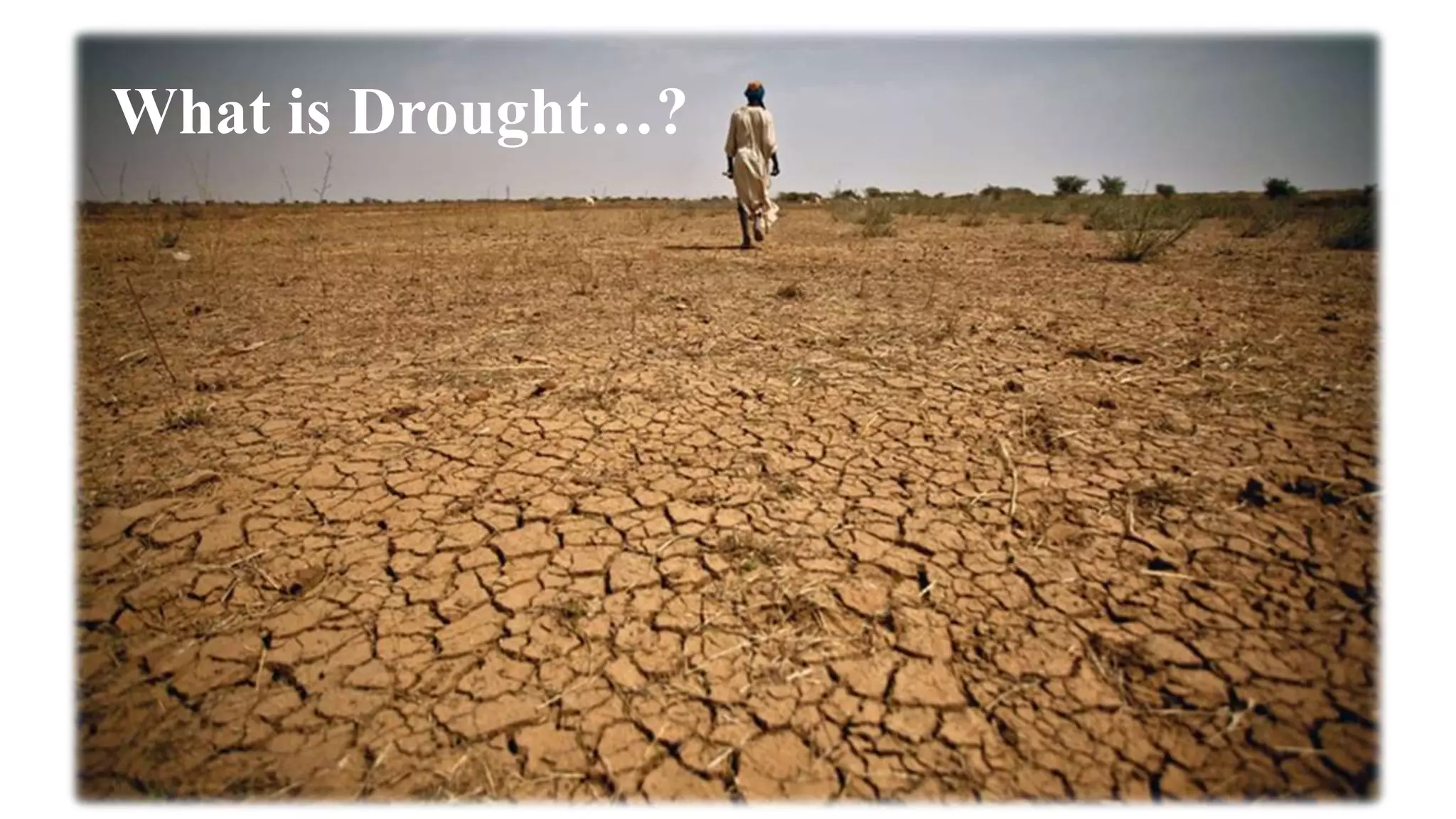
What is Drought…?
What is Drought….?
• A drought is a period of below-average precipitation in a given region,
resulting in prolonged shortages in the water supply, whether
atmospheric, surface water or ground water.
• Droughts is not when there's no rain at all. But actually, they can
happen when there's less rain than people thought there would be.
• Droughts occur when a long period of abnormally dry weather leads to
a severe water shortage.
Causes of Drought
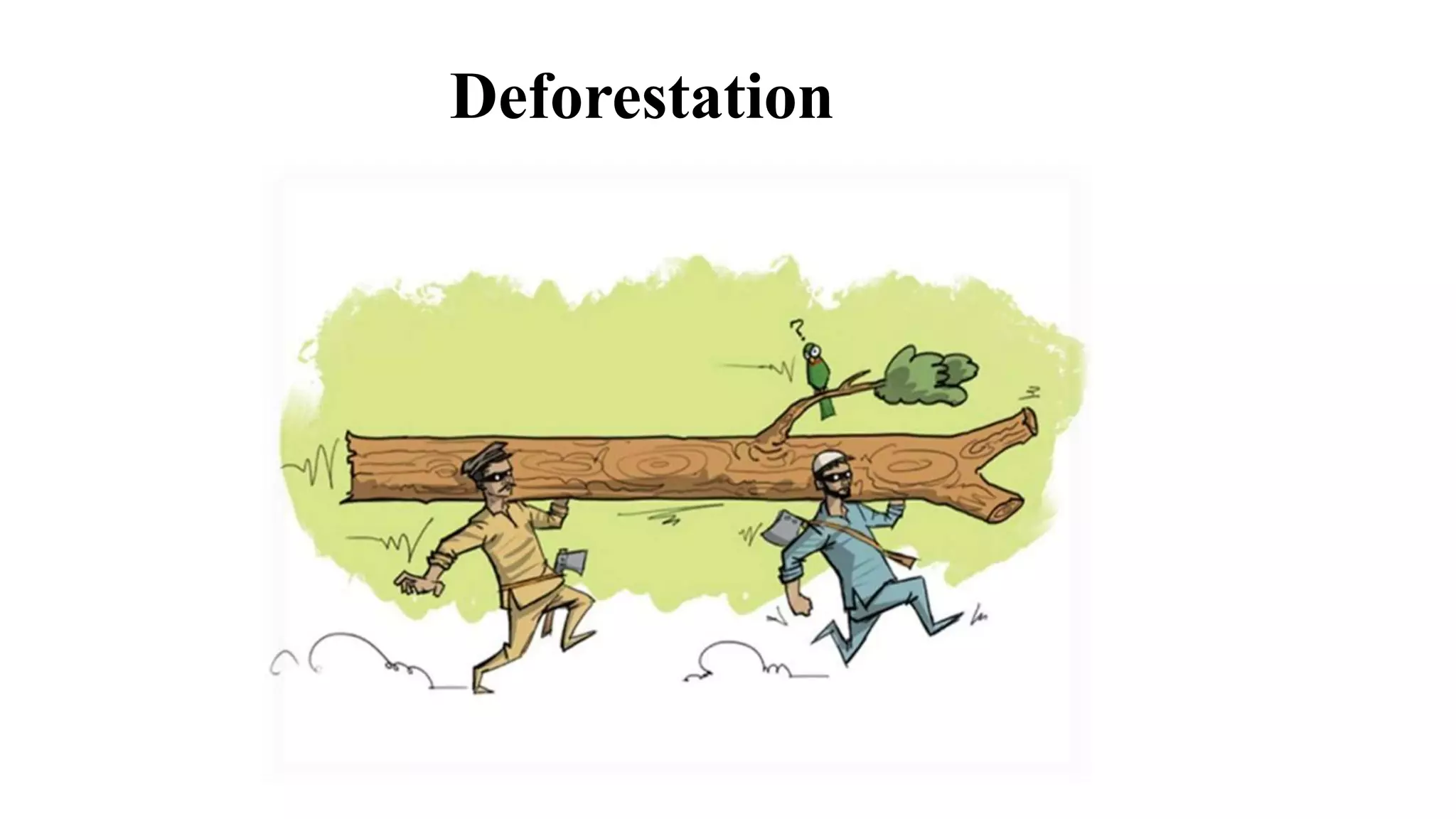
Deforestation
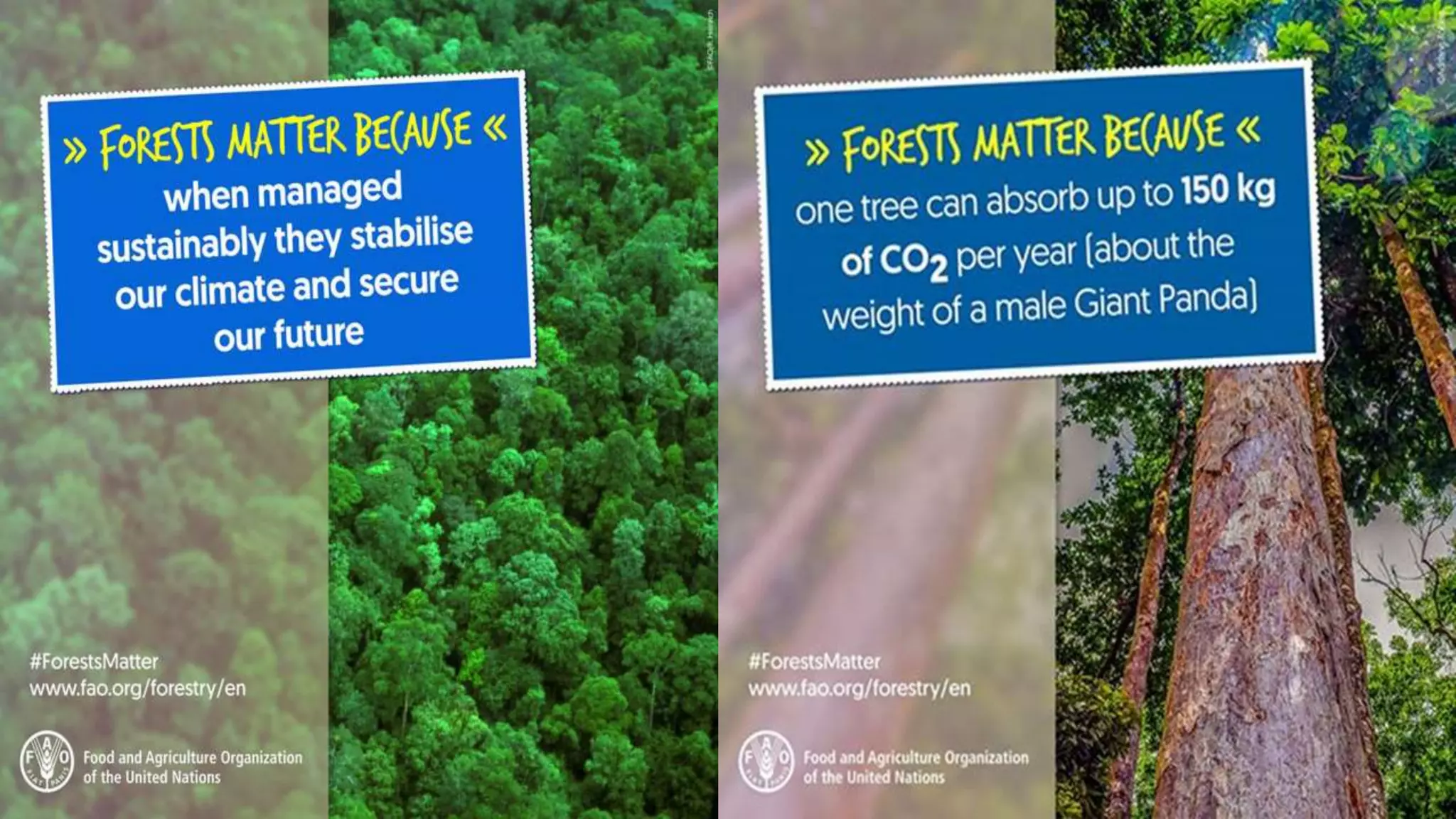
Global Warming
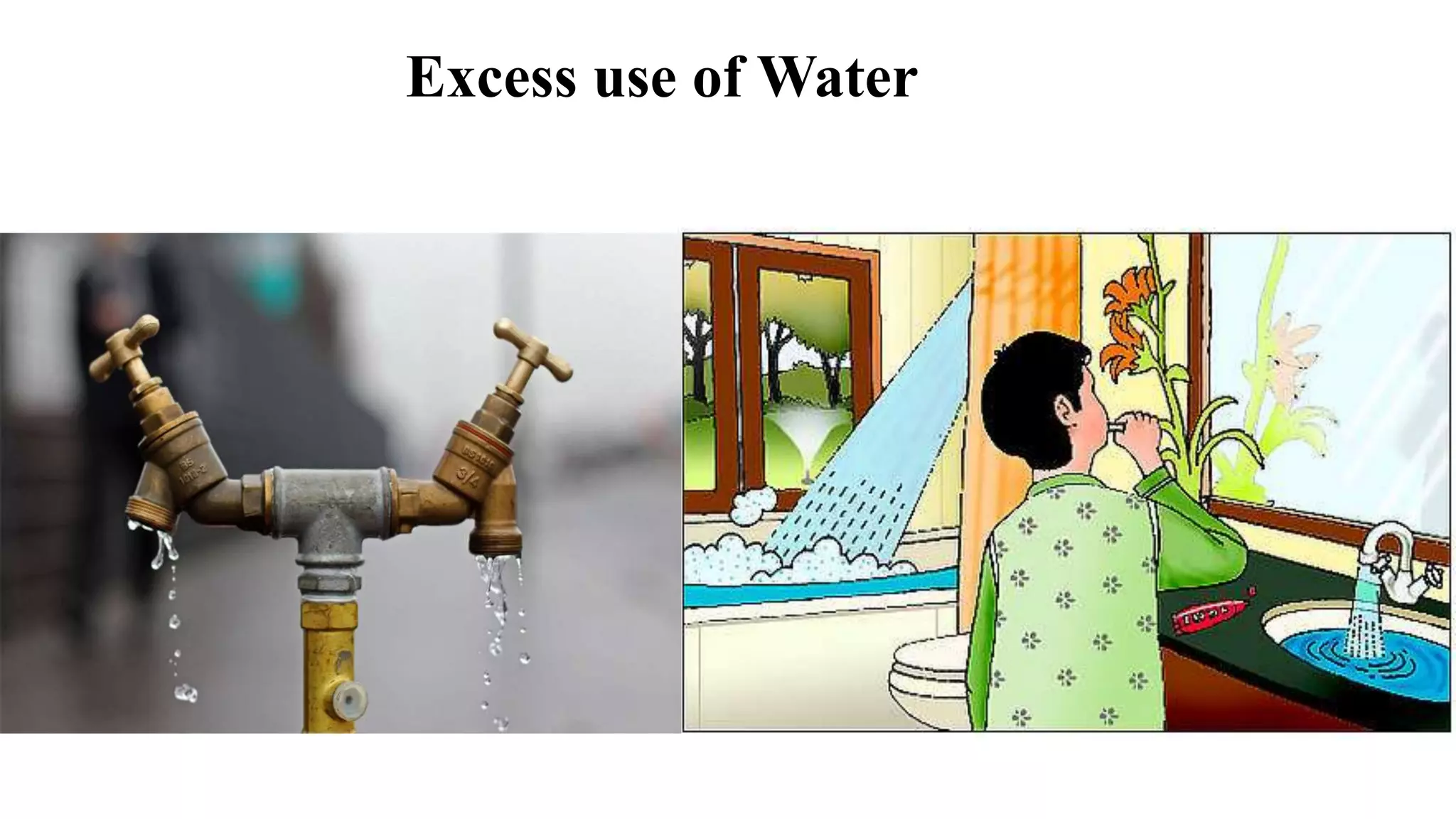
Excess use of Water
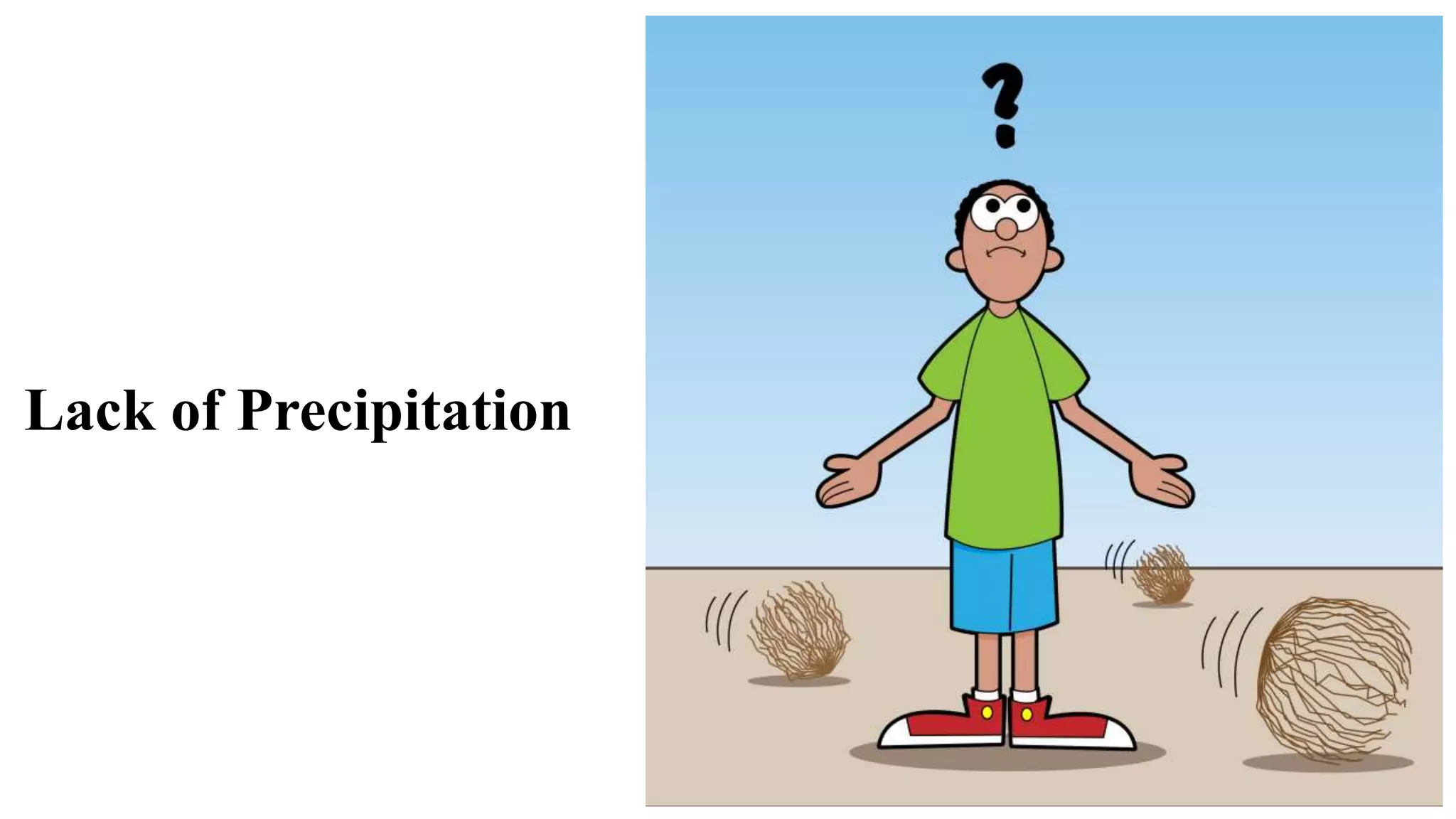
Lack of Precipitation
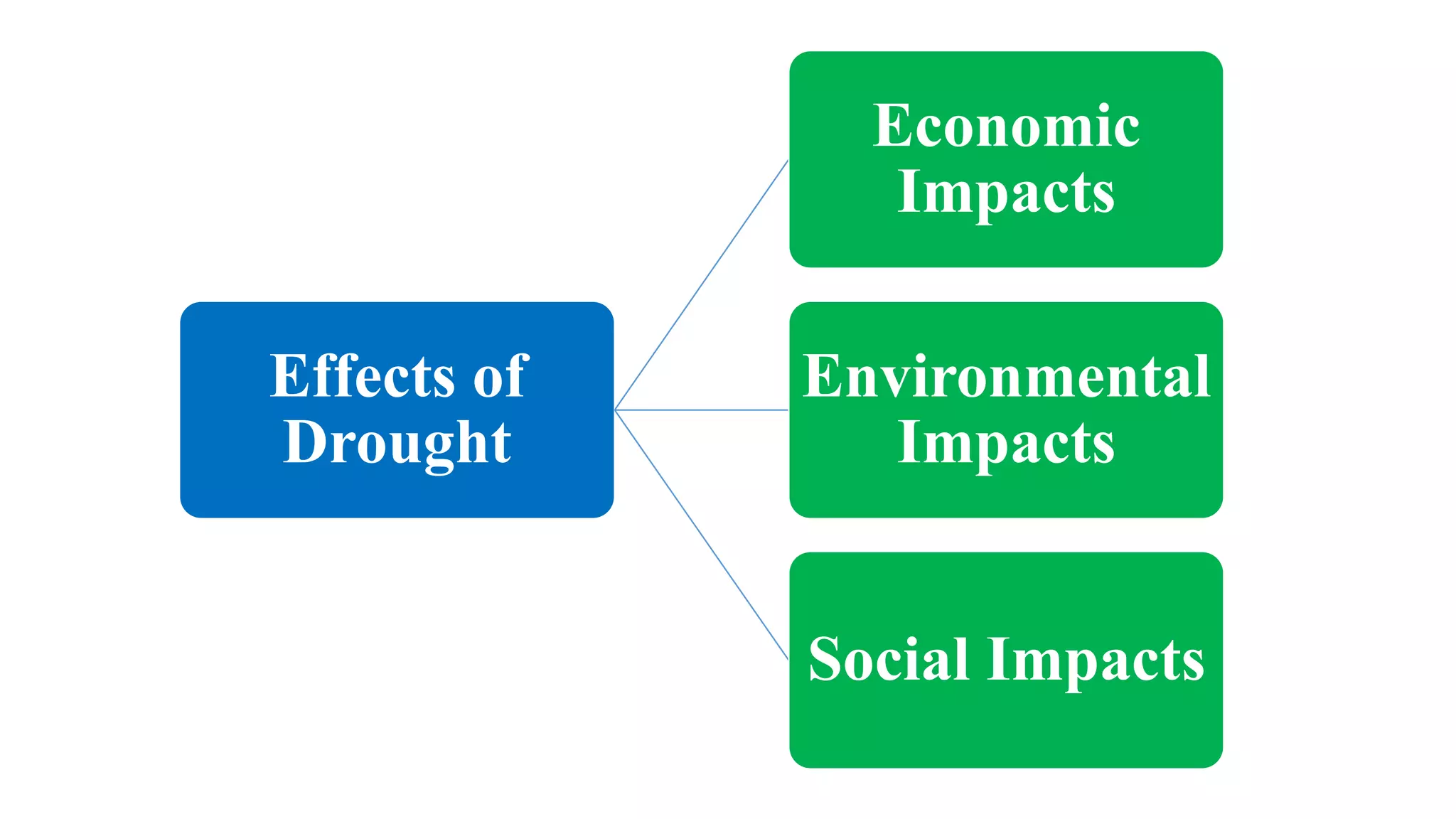
Effects of
Drought
Economic
Impacts
Environmental
Impacts
Social Impacts
Economic Impacts
• Farmers may lose money if a drought destroys their crops.
• More money needed for Irrigation, feed and water for their animals.
• Businesses that depend on farming (Industries).
• Businesses that sell boats and fishing equipment .
• Power companies that normally rely on hydroelectric power.
• The power companies' customers would also have to pay more.
• Water companies may have to spend money on new or additional
water supplies.
• People might have to pay more for food.
Environmental Impacts
• Losses or destruction of fish and wildlife habitat.
• Lack of food and drinking water for wild animals.
• Increase in disease in wild animals, because of reduced food and water
supplies.
• Migration of wildlife.
• Increased stress on endangered species or even extinction.
• Lower water levels in reservoirs, lakes, and ponds.
• More wildfires.
• Wind and water erosion of soils.
• Poor soil quality .
Social Impacts
• Anxiety or depression about economic losses caused by drought.
• Health problems related to poor water quality.
• Health problems related to dust.
• Malnutrition
• Loss of human life.
• Reduced incomes.
• People may have to move from farms into cities, or from one city to
another that may lead to war for food and shelter.
• Fewer recreational activities.
How to combat Drought…?
What should we do to cope with Drought…?
• Stop cutting trees and plant more
• Xeriscaping
• Reduce Pollution
• Save water
We can save a lot of water doing simple
tasks…!
• Turning off the water while you brush your teeth can save more than
100 gallons of water a month.
• Recycle Water: gray water (waste water that is treated and cleaned) to
water golf courses and city parks.
• Tossing extra water to plants not in vain
• Research has shown that drip tape uses 30-50% less water than
overhead irrigation.
• Lawns and gardens require only 5 millimeters of water per day during
warm weather. Less is needed during spring, fall, or cool weather
Turning off the water while you brush
your teeth and shaving can save more than
100 gallons (378 L.) of water a month.
Do the same while taking Bath…!
Cont....!
• Understand the water scheduling needs of your crops.
• Conservation tillage
• Conservation practices that reduce runoff and encourage infiltration
• Monitor soil moisture
• Plant species and varieties of crops that withstand dryness, hold water,
and reduce the need for irrigation.
• Mulching
• Water during the cool part of the day, in the morning or evening.
Cont....!
• Drought resistant varieties
• Advanced irrigation system to save water
• Planting trees that use less water
• Educating our Farmers to use all the techniques to save water
• Rain harvesting
Artificial Glaciers
The 'ice stupa' are artificial
glaciers built at lower
altitudes using pipes, gravity
and cold temperatures.
It was the idea of Sonam
Wangchuk, an engineer from
Ladakh, in the Jammu
region of north India.
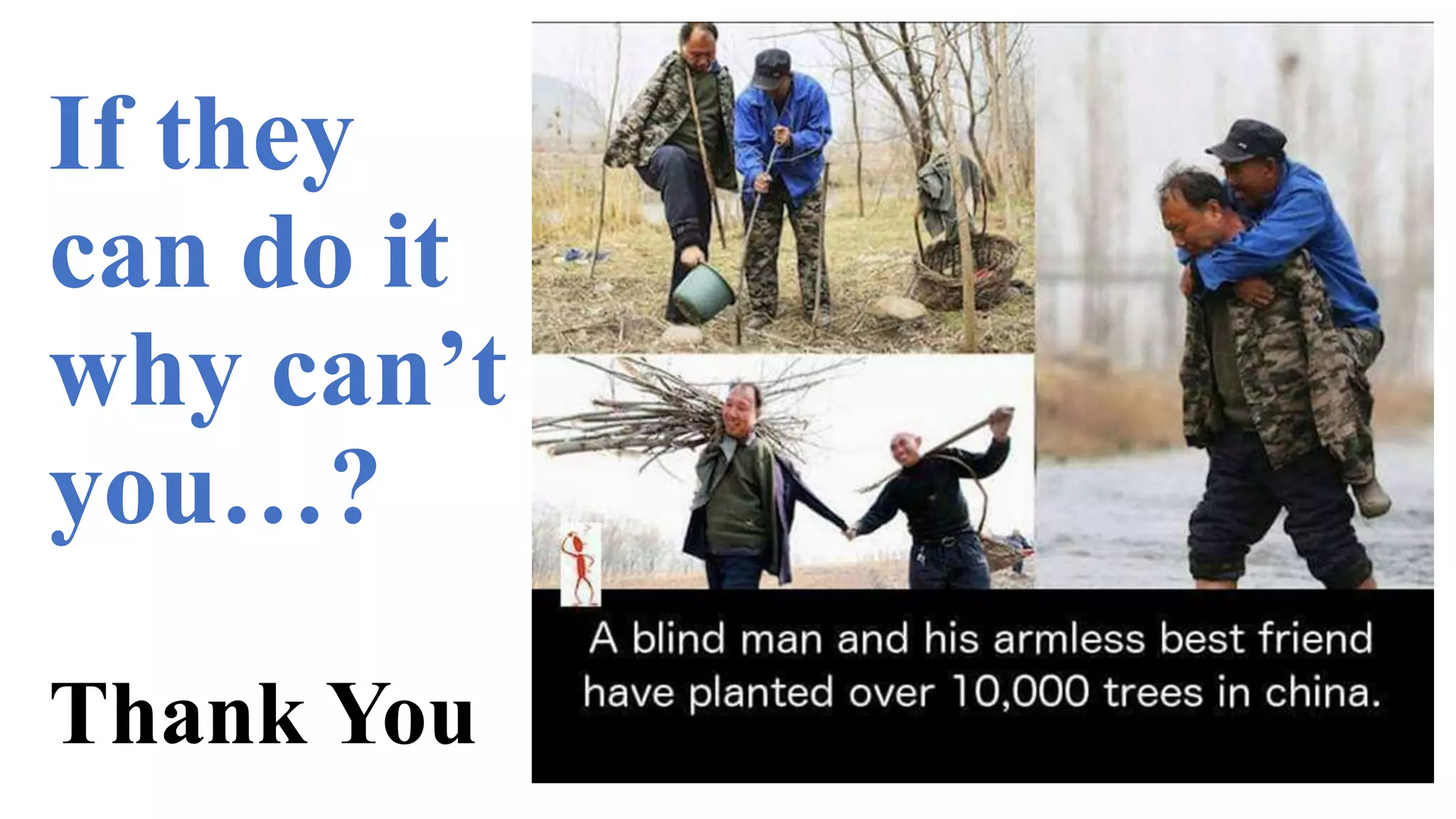
If they
can do it
why can’t
you…?
Thank You
References
• https://www.lowes.com/projects/repair-and-maintain/ways-
conserve-water/project
• https://tribune.com.pk/story/1430806/drought-tolerant-cotton-crop-
best-high-yield/
• https://www.jainsusa.com/blog/drought
• http://drought.unl.edu/DroughtBasics/PredictingDrought.aspx
• http://www.pollutionpollution.com/2014/03/causes-of-drought.html
• https://www.dawn.com/news/1208617

Drought, its Effects & Suggestions to Prevent it.

  • 2.
    Drought, its effects & suggestionsto prevent it. Presented By: Muhammad Anas Rasool AGL-15-07 B.Sc. (Hons.) Agriculture College of Agriculture BZU Bahadur Sub Campus Layyah
  • 3.
    TOPICS • What isdrought…? • Causes of drought • Effects of Drought • How to prevent Drought…?
  • 4.
  • 5.
    What is Drought….? •A drought is a period of below-average precipitation in a given region, resulting in prolonged shortages in the water supply, whether atmospheric, surface water or ground water. • Droughts is not when there's no rain at all. But actually, they can happen when there's less rain than people thought there would be. • Droughts occur when a long period of abnormally dry weather leads to a severe water shortage.
  • 6.
  • 7.
  • 9.
  • 10.
  • 11.
  • 12.
  • 13.
    Economic Impacts • Farmersmay lose money if a drought destroys their crops. • More money needed for Irrigation, feed and water for their animals. • Businesses that depend on farming (Industries). • Businesses that sell boats and fishing equipment . • Power companies that normally rely on hydroelectric power. • The power companies' customers would also have to pay more. • Water companies may have to spend money on new or additional water supplies. • People might have to pay more for food.
  • 14.
    Environmental Impacts • Lossesor destruction of fish and wildlife habitat. • Lack of food and drinking water for wild animals. • Increase in disease in wild animals, because of reduced food and water supplies. • Migration of wildlife. • Increased stress on endangered species or even extinction. • Lower water levels in reservoirs, lakes, and ponds. • More wildfires. • Wind and water erosion of soils. • Poor soil quality .
  • 15.
    Social Impacts • Anxietyor depression about economic losses caused by drought. • Health problems related to poor water quality. • Health problems related to dust. • Malnutrition • Loss of human life. • Reduced incomes. • People may have to move from farms into cities, or from one city to another that may lead to war for food and shelter. • Fewer recreational activities.
  • 16.
    How to combatDrought…?
  • 17.
    What should wedo to cope with Drought…? • Stop cutting trees and plant more • Xeriscaping • Reduce Pollution • Save water
  • 18.
    We can savea lot of water doing simple tasks…! • Turning off the water while you brush your teeth can save more than 100 gallons of water a month. • Recycle Water: gray water (waste water that is treated and cleaned) to water golf courses and city parks. • Tossing extra water to plants not in vain • Research has shown that drip tape uses 30-50% less water than overhead irrigation. • Lawns and gardens require only 5 millimeters of water per day during warm weather. Less is needed during spring, fall, or cool weather
  • 19.
    Turning off thewater while you brush your teeth and shaving can save more than 100 gallons (378 L.) of water a month. Do the same while taking Bath…!
  • 20.
    Cont....! • Understand thewater scheduling needs of your crops. • Conservation tillage • Conservation practices that reduce runoff and encourage infiltration • Monitor soil moisture • Plant species and varieties of crops that withstand dryness, hold water, and reduce the need for irrigation. • Mulching • Water during the cool part of the day, in the morning or evening.
  • 21.
    Cont....! • Drought resistantvarieties • Advanced irrigation system to save water • Planting trees that use less water • Educating our Farmers to use all the techniques to save water • Rain harvesting
  • 22.
    Artificial Glaciers The 'icestupa' are artificial glaciers built at lower altitudes using pipes, gravity and cold temperatures. It was the idea of Sonam Wangchuk, an engineer from Ladakh, in the Jammu region of north India.
  • 24.
    If they can doit why can’t you…? Thank You
  • 25.
    References • https://www.lowes.com/projects/repair-and-maintain/ways- conserve-water/project • https://tribune.com.pk/story/1430806/drought-tolerant-cotton-crop- best-high-yield/ •https://www.jainsusa.com/blog/drought • http://drought.unl.edu/DroughtBasics/PredictingDrought.aspx • http://www.pollutionpollution.com/2014/03/causes-of-drought.html • https://www.dawn.com/news/1208617