Downloaded 400 times


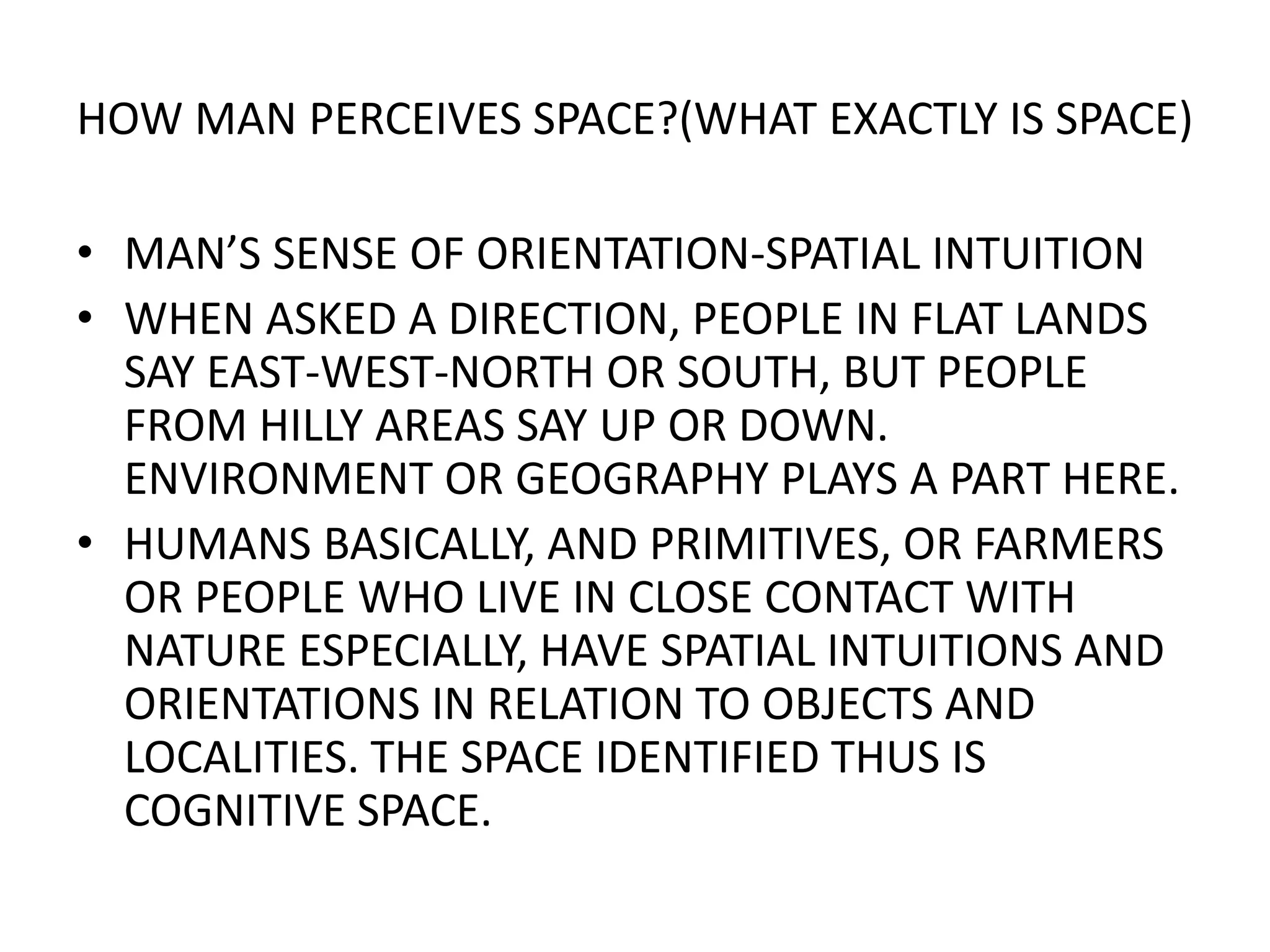
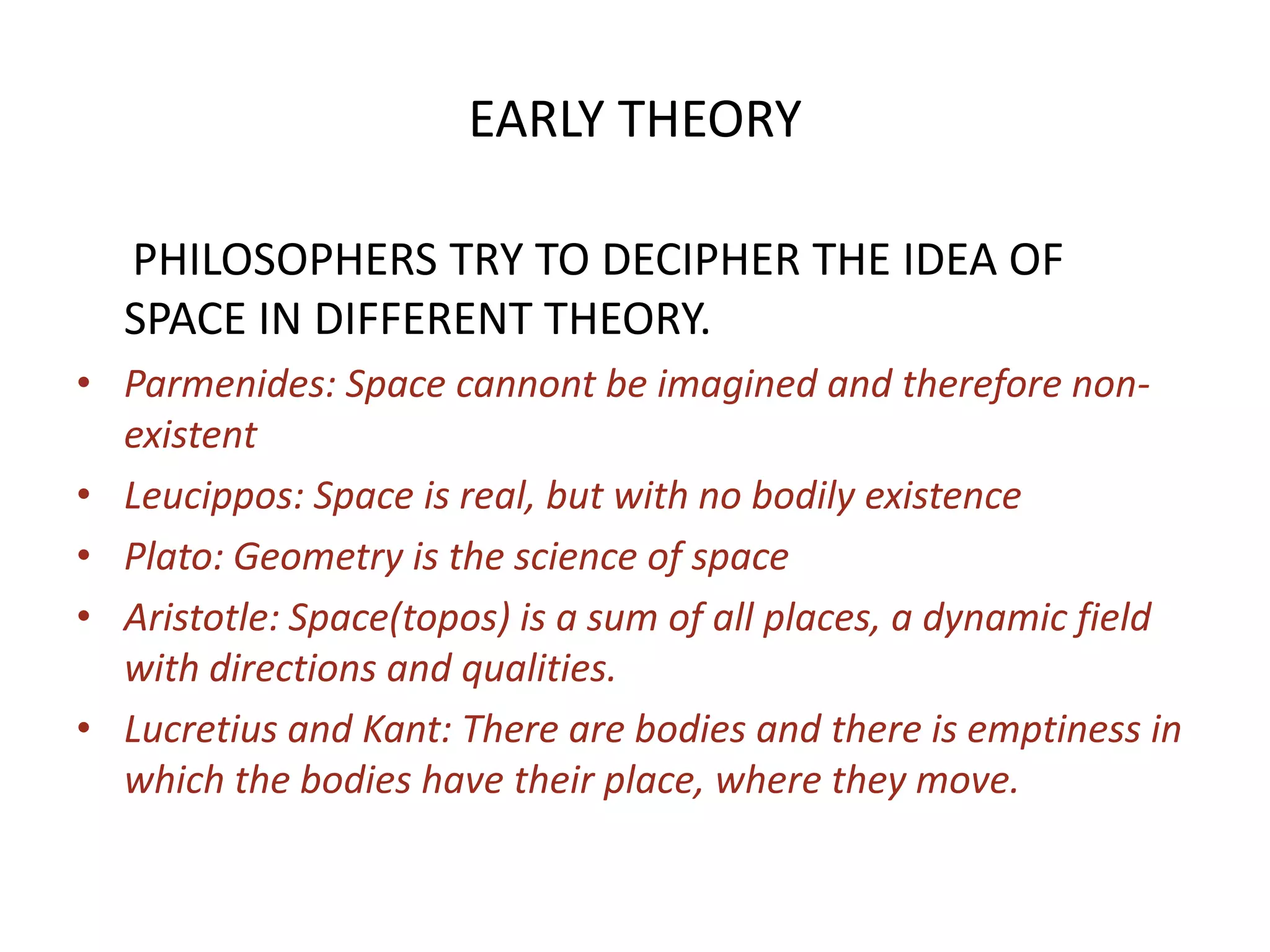
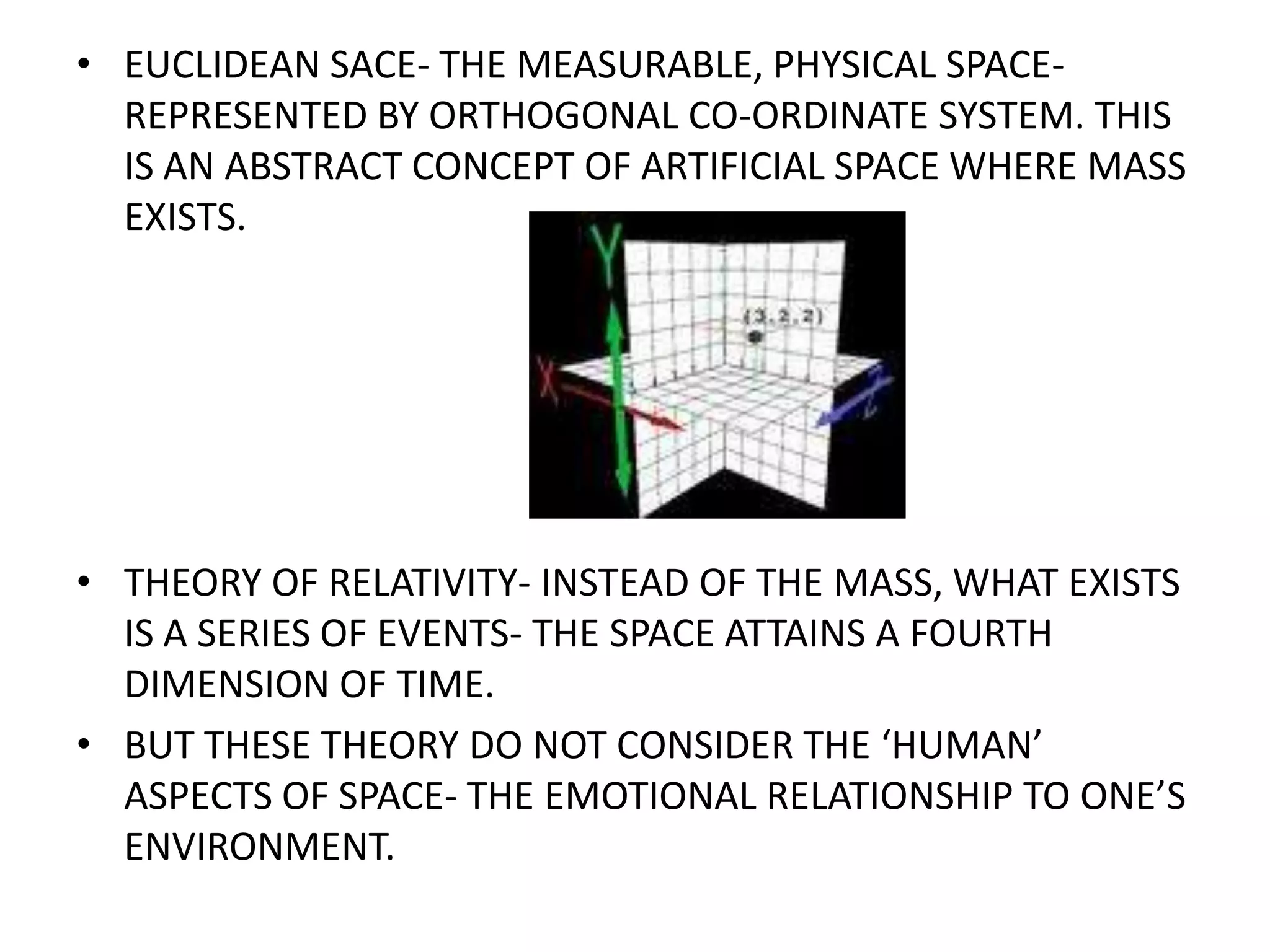
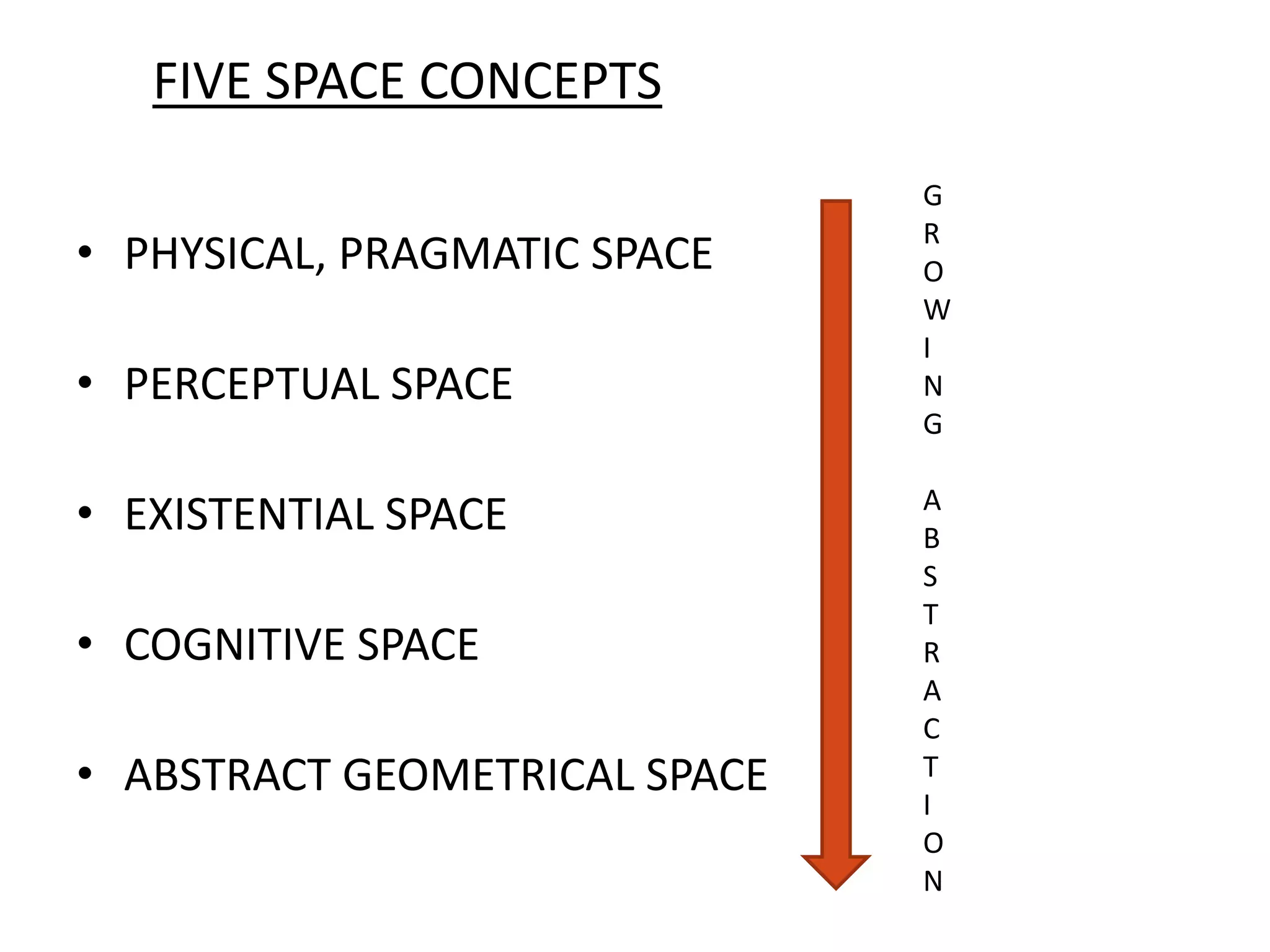













The document explores the concept of existential space as defined by Christian Norberg-Schulz, highlighting how human perception of space is influenced by cognitive and emotional experiences related to one's environment. It discusses various philosophical theories of space, the relationship between architecture and existential experiences, and how space is perceived through individual motivations and past experiences. The summary concludes by emphasizing the importance of understanding spatial interaction and the development of existential space in contemporary society.


![monograph_one[selected academic projects]](https://cdn.slidesharecdn.com/ss_thumbnails/monographoneearlyacademic-123843963408-phpapp01-thumbnail.jpg?width=640&height=640&fit=bounds)


