MANIFESTATIONS OF
                IN BUILT
      FORM


ISTANBUL, TURKEY
STRUCTURE OF PRESENTATION

• BRIEF HISTORY AND LOCATION

• METHODOLOGY FOR ANALYSING
  POWER IN BUILT FORM

• ANALYSIS
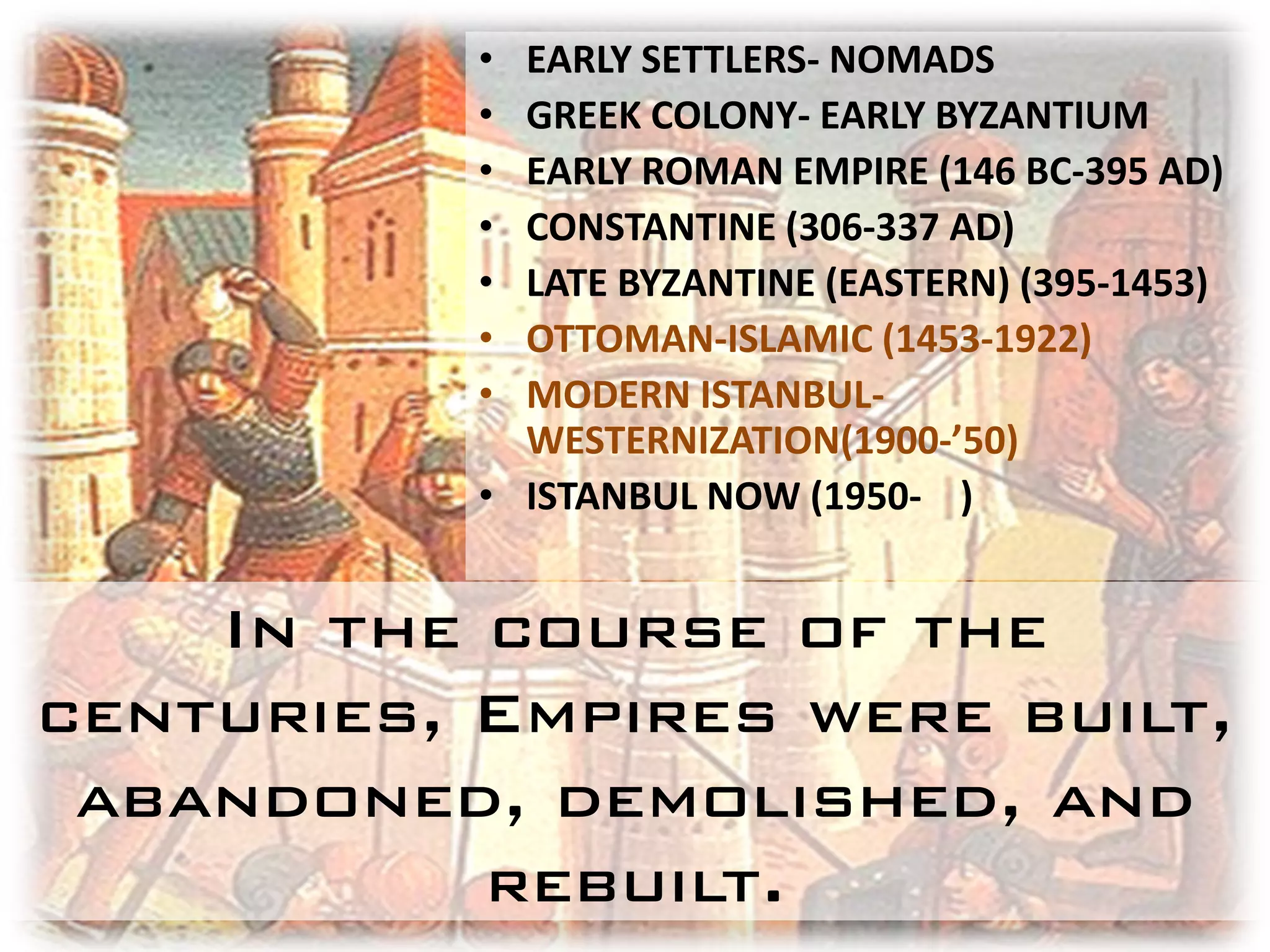
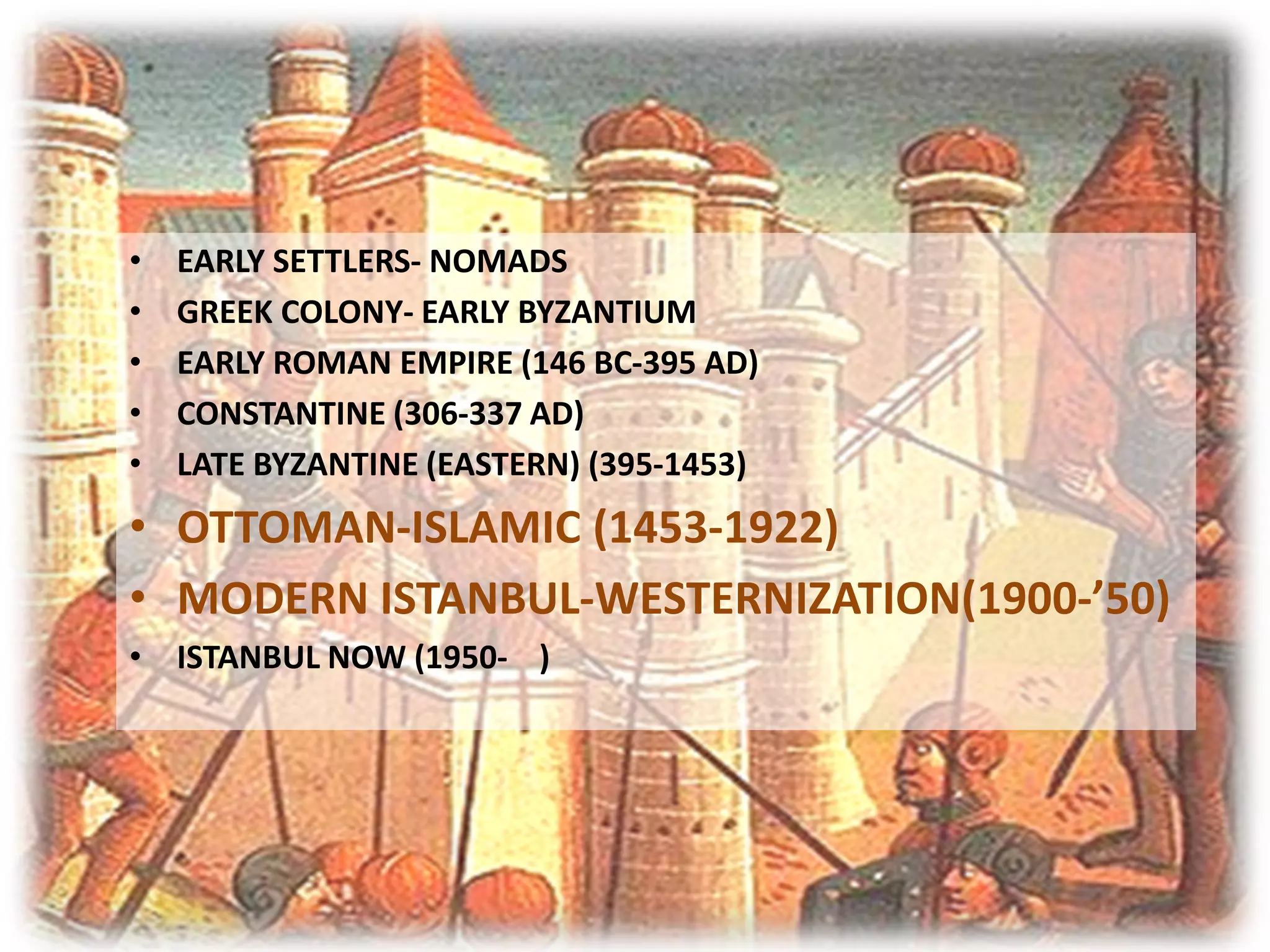
• EARLY SETTLERS- NOMADS
           • GREEK COLONY- EARLY BYZANTIUM
           • EARLY ROMAN EMPIRE (146 BC-395 AD)
           • CONSTANTINE (306-337 AD)
           • LATE BYZANTINE (EASTERN) (395-1453)
           • OTTOMAN-ISLAMIC (1453-1922)
           • MODERN ISTANBUL-
             WESTERNIZATION(1900-’50)
           • ISTANBUL NOW (1950- )


    In the course of the
centuries, Empires were built,
 abandoned, demolished, and
           rebuilt.
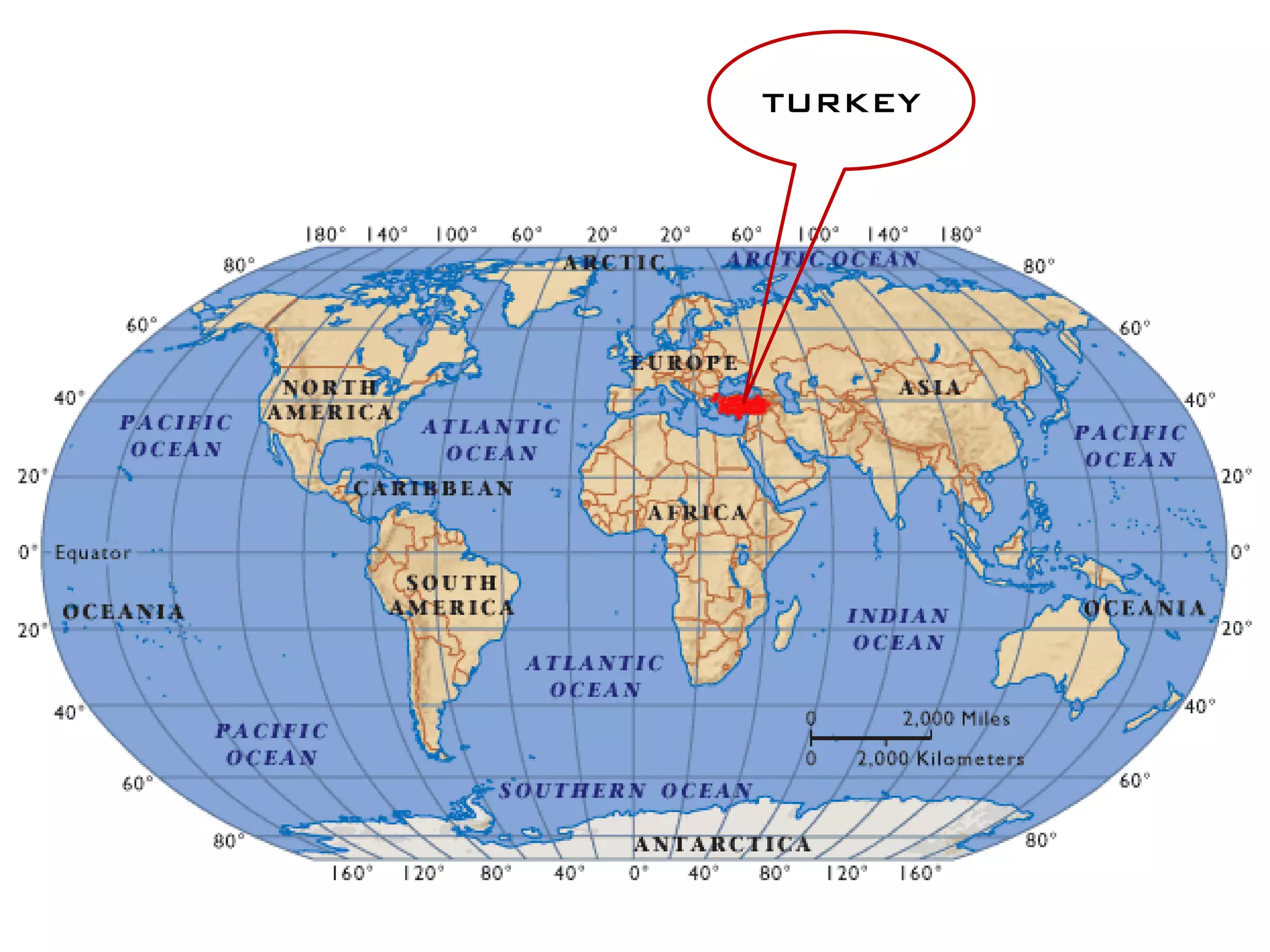
ISTANBUL?
TURKEY
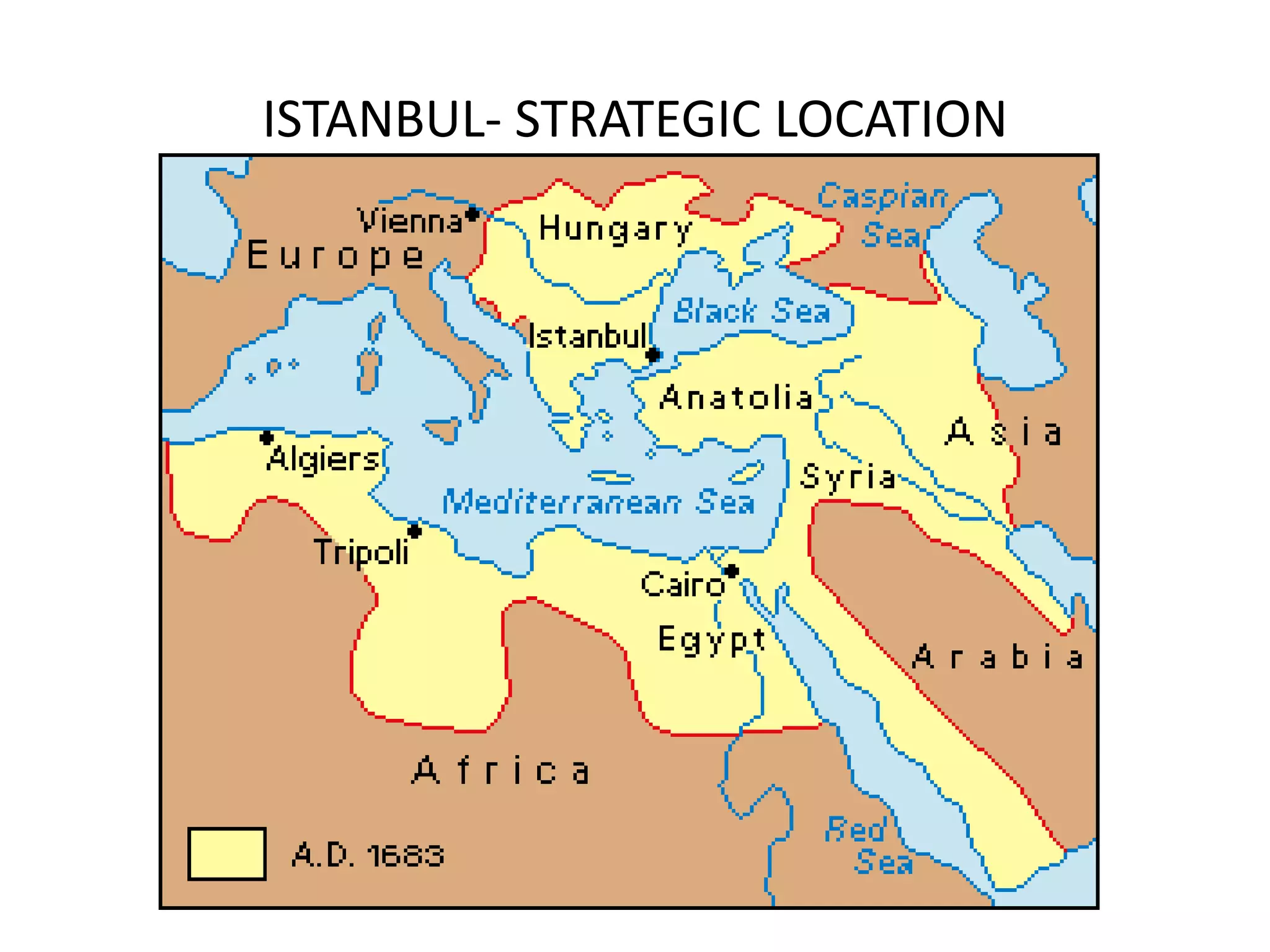
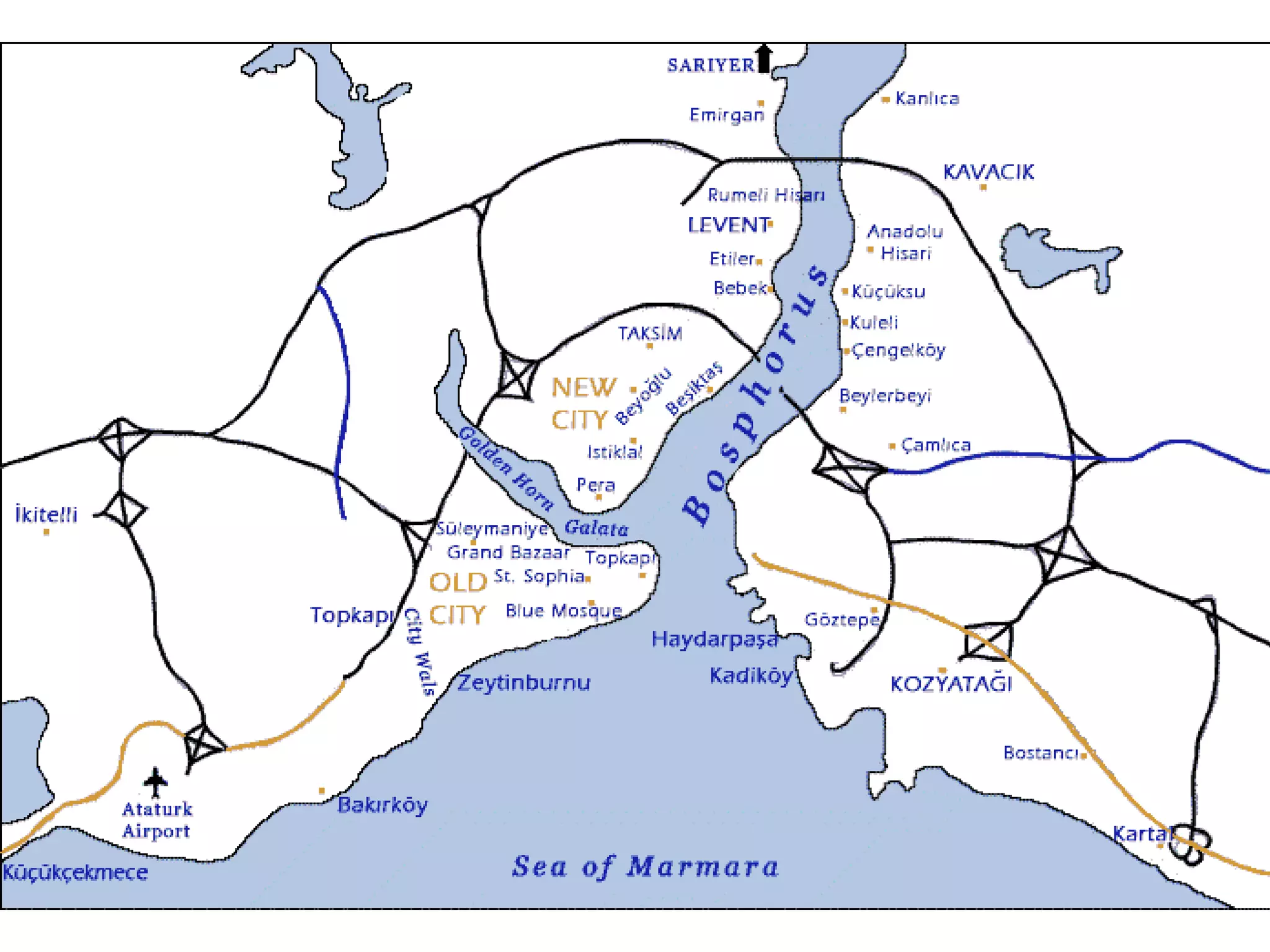
ISTANBUL- STRATEGIC LOCATION
KIM DOVEY WAY OF ANALYSIS
• DIRECT- OVERT FORCE
• COERCION-
  – DOMINATION/INTIMIDATION
  – MANIPULATION
  – SEDUCTION
• AUTHORITY

•   SYMBOLISING NATIONALISM-IDENTITY
•   POWER OVER BY TRANSFORMATION
•   POWER OVER BY NEGLECT
•   POWER DISPLAY BY DESTRUCTION
•   EARLY SETTLERS- NOMADS
•   GREEK COLONY- EARLY BYZANTIUM
•   EARLY ROMAN EMPIRE (146 BC-395 AD)
•   CONSTANTINE (306-337 AD)
•   LATE BYZANTINE (EASTERN) (395-1453)
• OTTOMAN-ISLAMIC (1453-1922)
• MODERN ISTANBUL-WESTERNIZATION(1900-’50)
• ISTANBUL NOW (1950- )
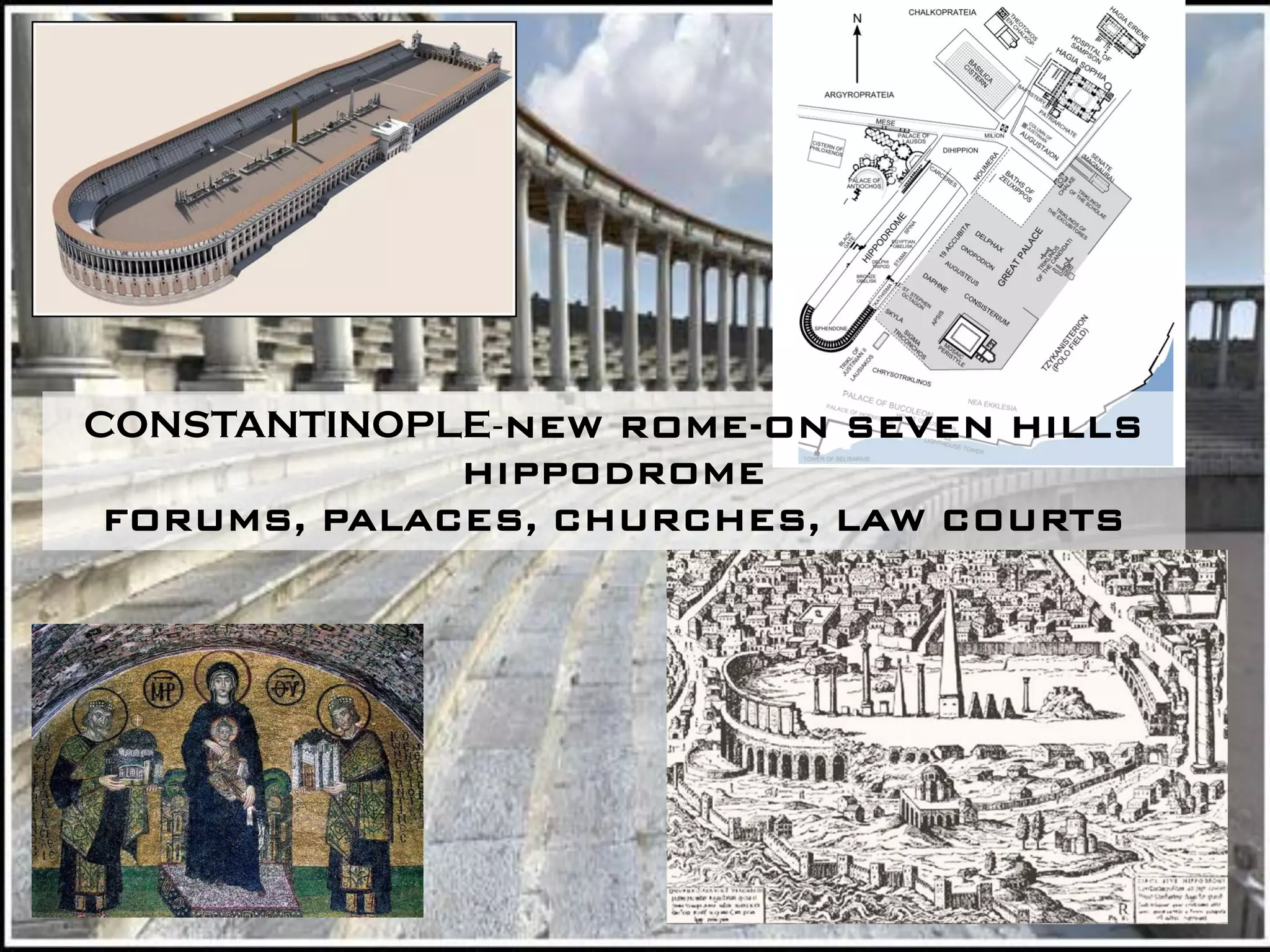
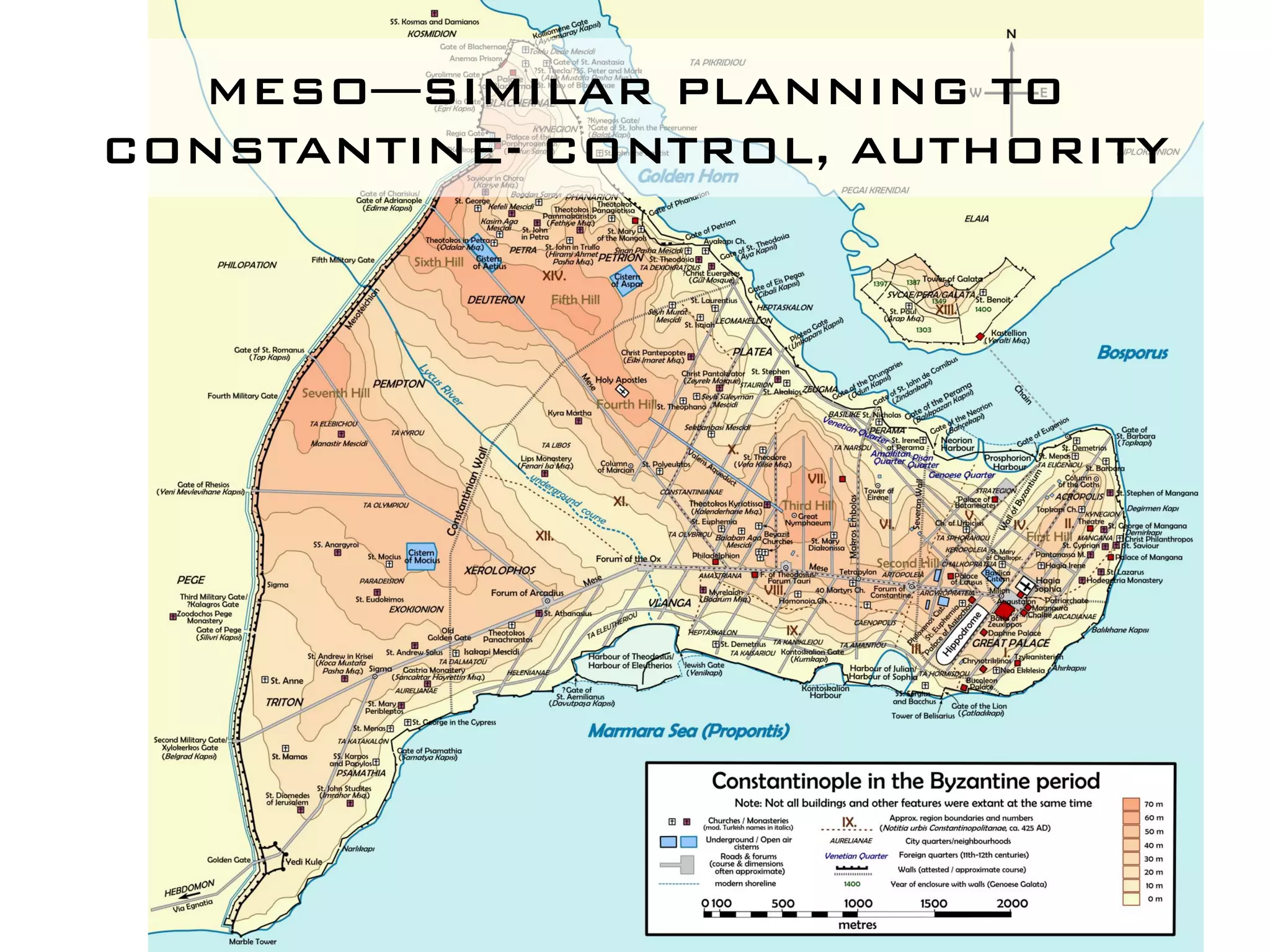
CONSTANTINOPLE-NEW ROME-ON SEVEN HILLS
              HIPPODROME
 FORUMS, PALACES, CHURCHES, LAW COURTS
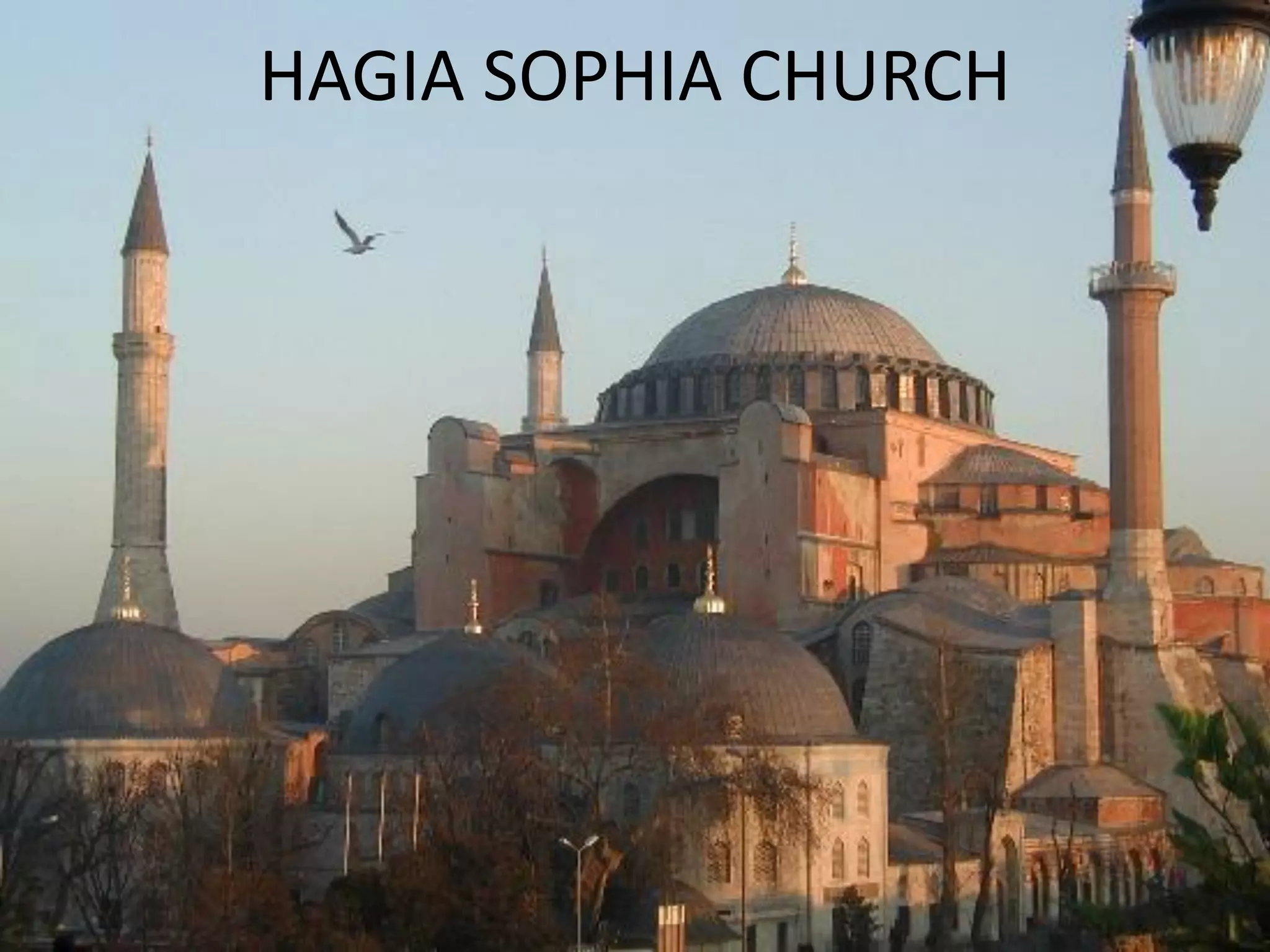
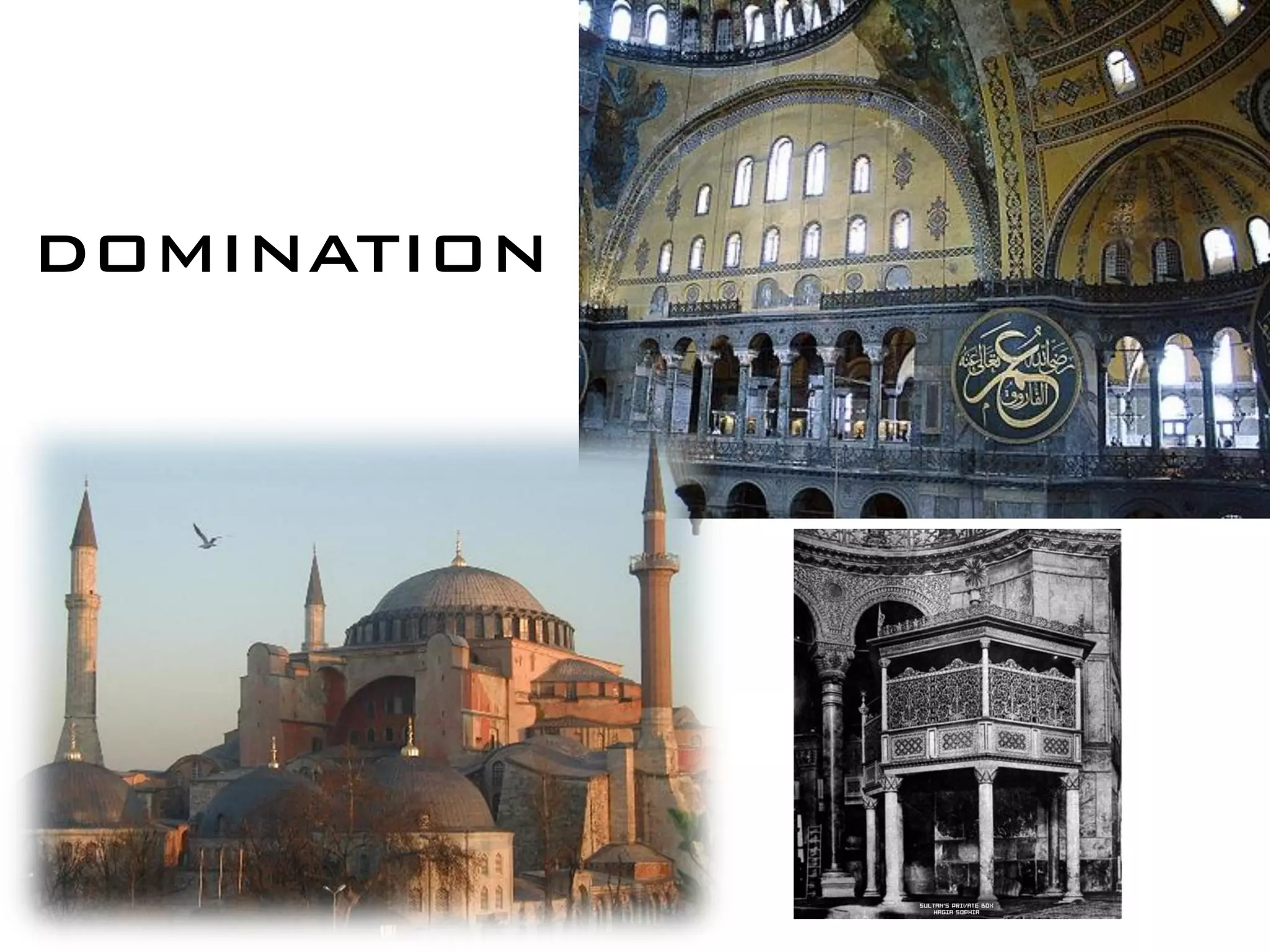
HAGIA SOPHIA CHURCH
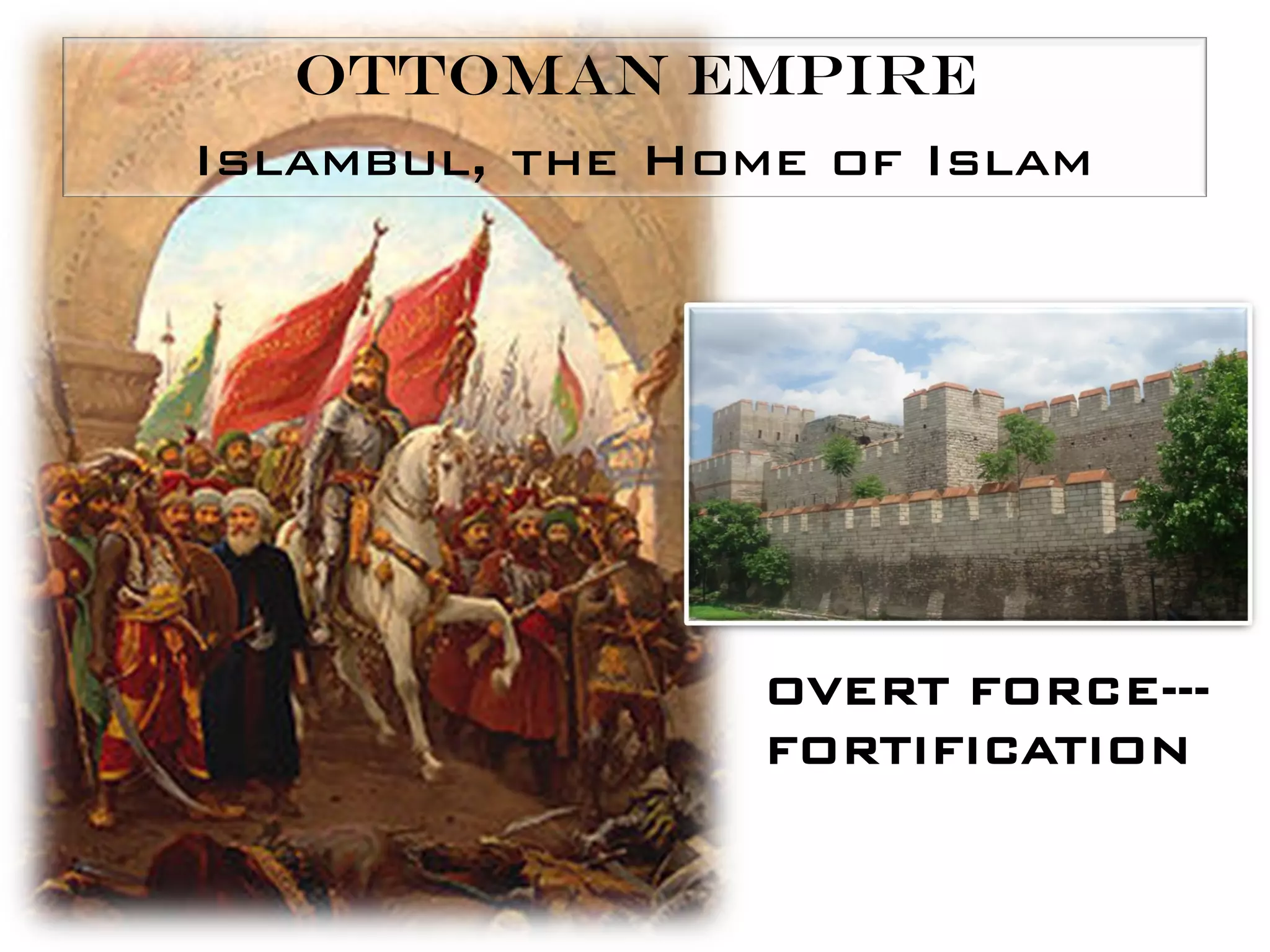
OTTOMAN EMPIRE
Islambul, the Home of Islam


                 OVERT FORCE---
                 FORTIFICATION
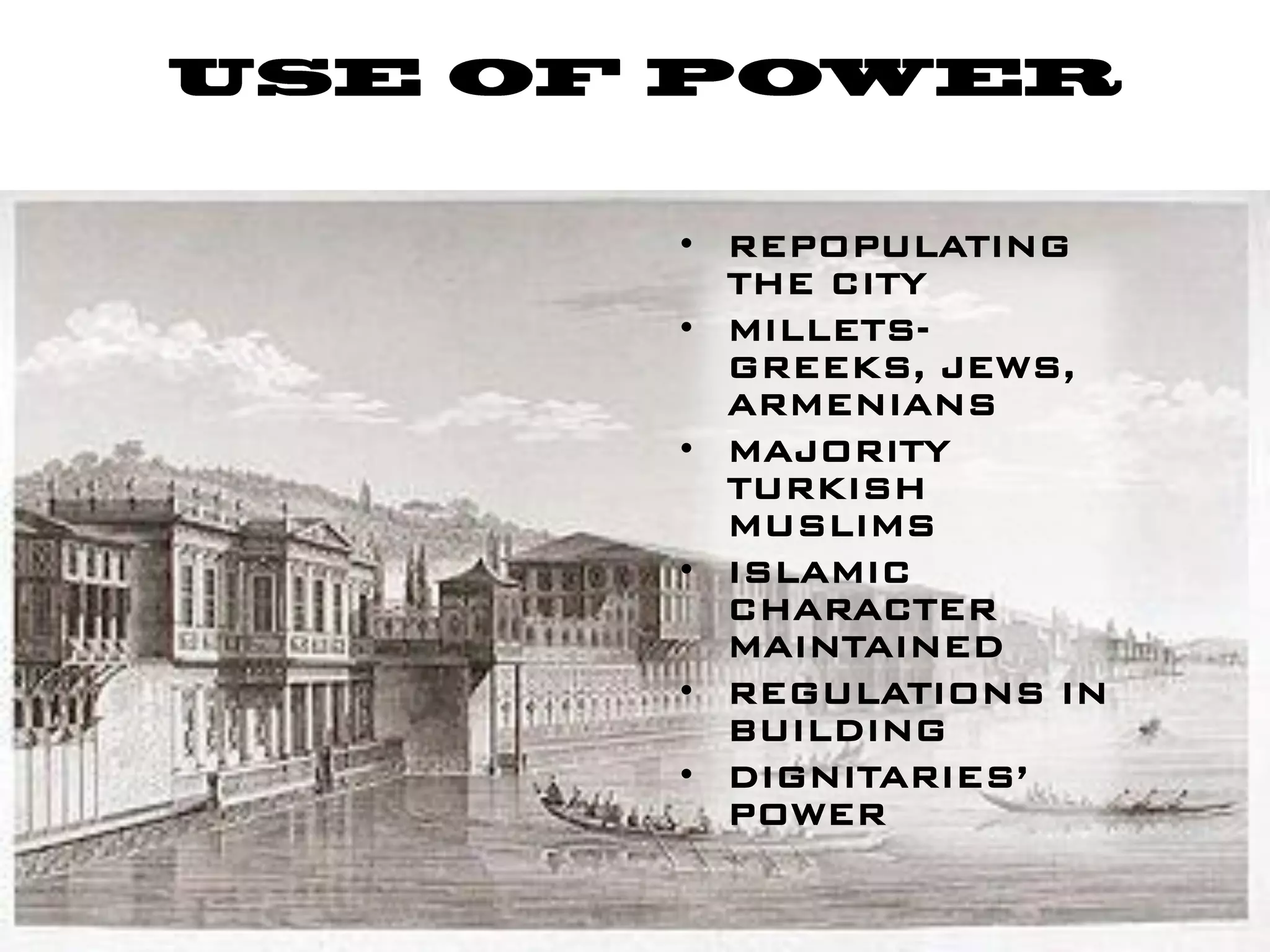
• REPOPULATING
  THE CITY
• MILLETS-
  GREEKS, JEWS,
  ARMENIANS
• MAJORITY
  TURKISH
  MUSLIMS
• ISLAMIC
  CHARACTER
  MAINTAINED
• REGULATIONS IN
  BUILDING
• DIGNITARIES’
  POWER
MESO—SIMILAR PLANNING TO
CONSTANTINE- CONTROL, AUTHORITY
DOMINATION
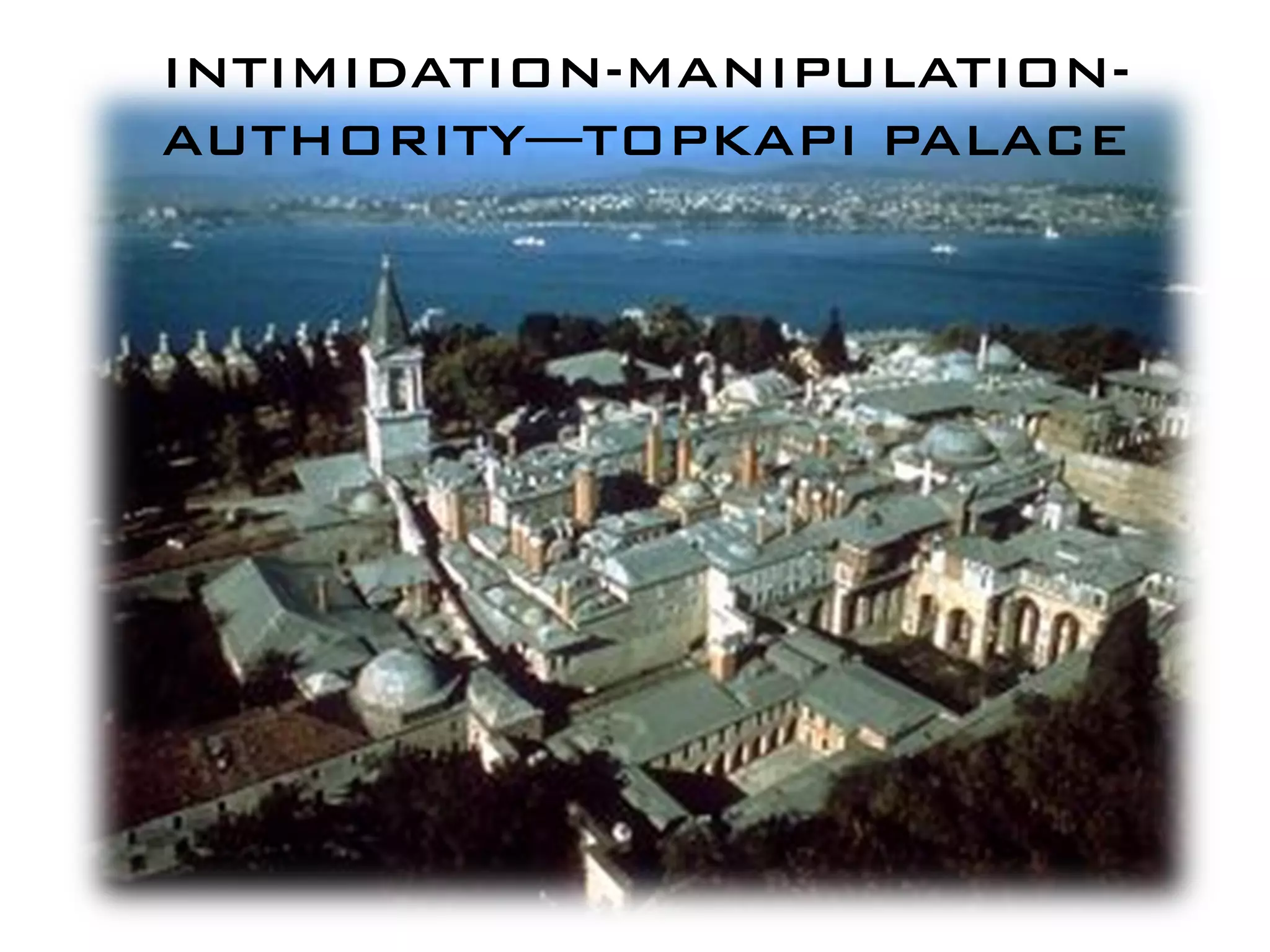
INTIMIDATION-MANIPULATION-
AUTHORITY—TOPKAPI PALACE
• Architect Sinan: Chief Ottoman architect

• His most famous work is the Suleiman Mosque .

• Sinan was also one of the first earthquake engineers in the world.

• In his autobiography he says that his masterpiece is the
  Suleymaniye Mosque in Edirne. While it was being built, the
  Christian architects saying "You can never build a dome
  larger than the dome of Hagia Sophia and
  specially as Muslims" was his main motivation while
  building that mosque.

• While when it was completed, Sinan claimed that it had the
  largest dome in the world leaving Hagia Sophia behind, the
  reality was that the dome height from the ground
  level was lower and the diameter almost
  identical to the millenium-older Hagia Sophia.
OSTENTATION (BOASTFUL SHOWINESS)-THE
   EXPRESSION OF POWER- ALWAYS PRESENT IN
                  ISLAMIC ARCHITECTURE

• However, it is a more symmetrical, rationalized and light-filled
  interpretation of earlier Ottoman precedents, as well as the
  Hagia Sophia.
• The design of the Süleymaniye also plays on Suleyman's self-
  conscious representation of himself as a 'second Solomon.' It
  references the Dome of the Rock, which was built on the site of
  the Temple of Solomon, as well as Justinian's boast upon the
  completion of the Hagia Sophia: "Solomon, I have surpassed
  thee!" The Süleymaniye, similar in magnificence to the
  preceding structures, asserts Suleyman's historical importance.
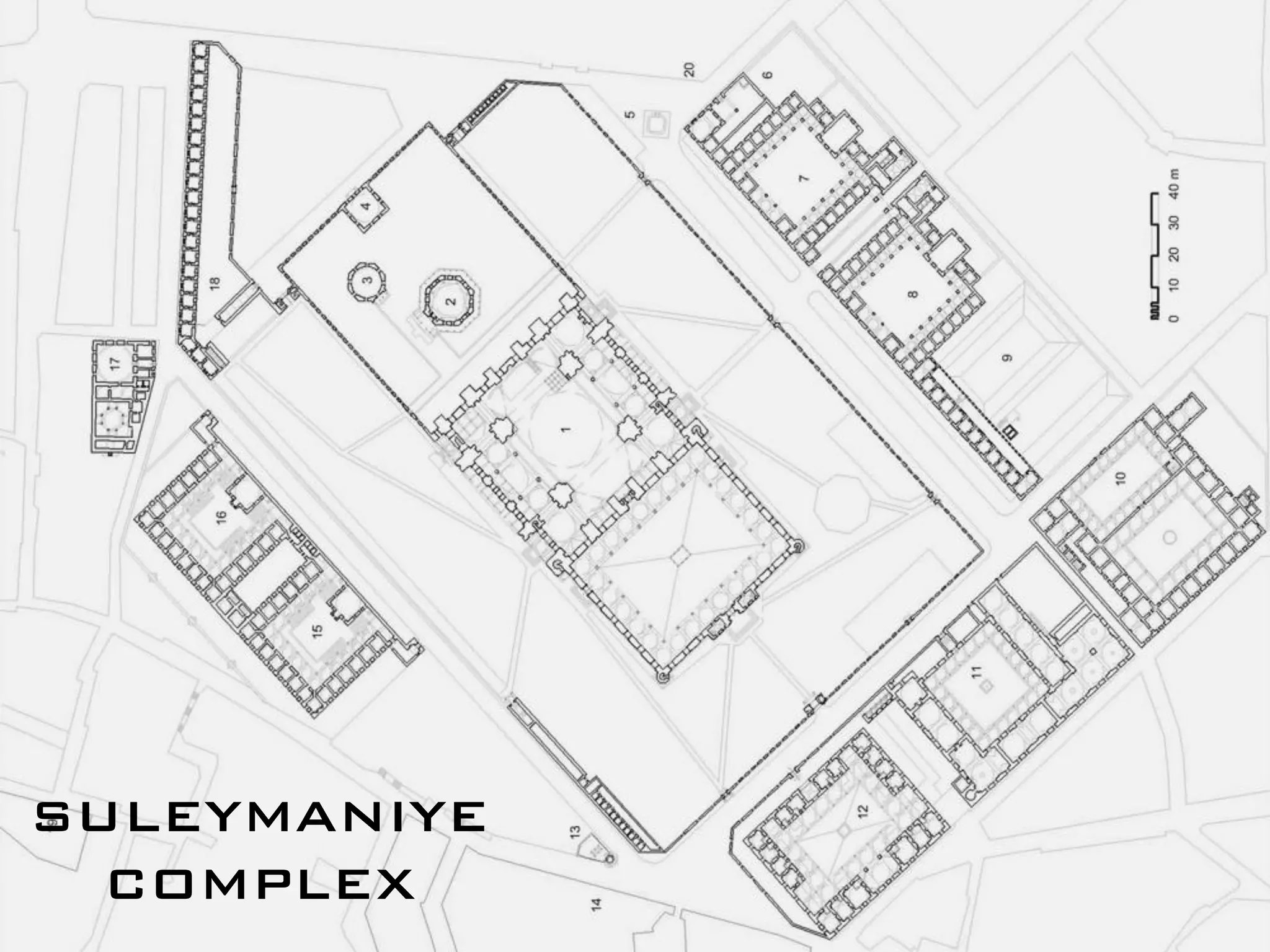
SULEYMANIYE
  COMPLEX
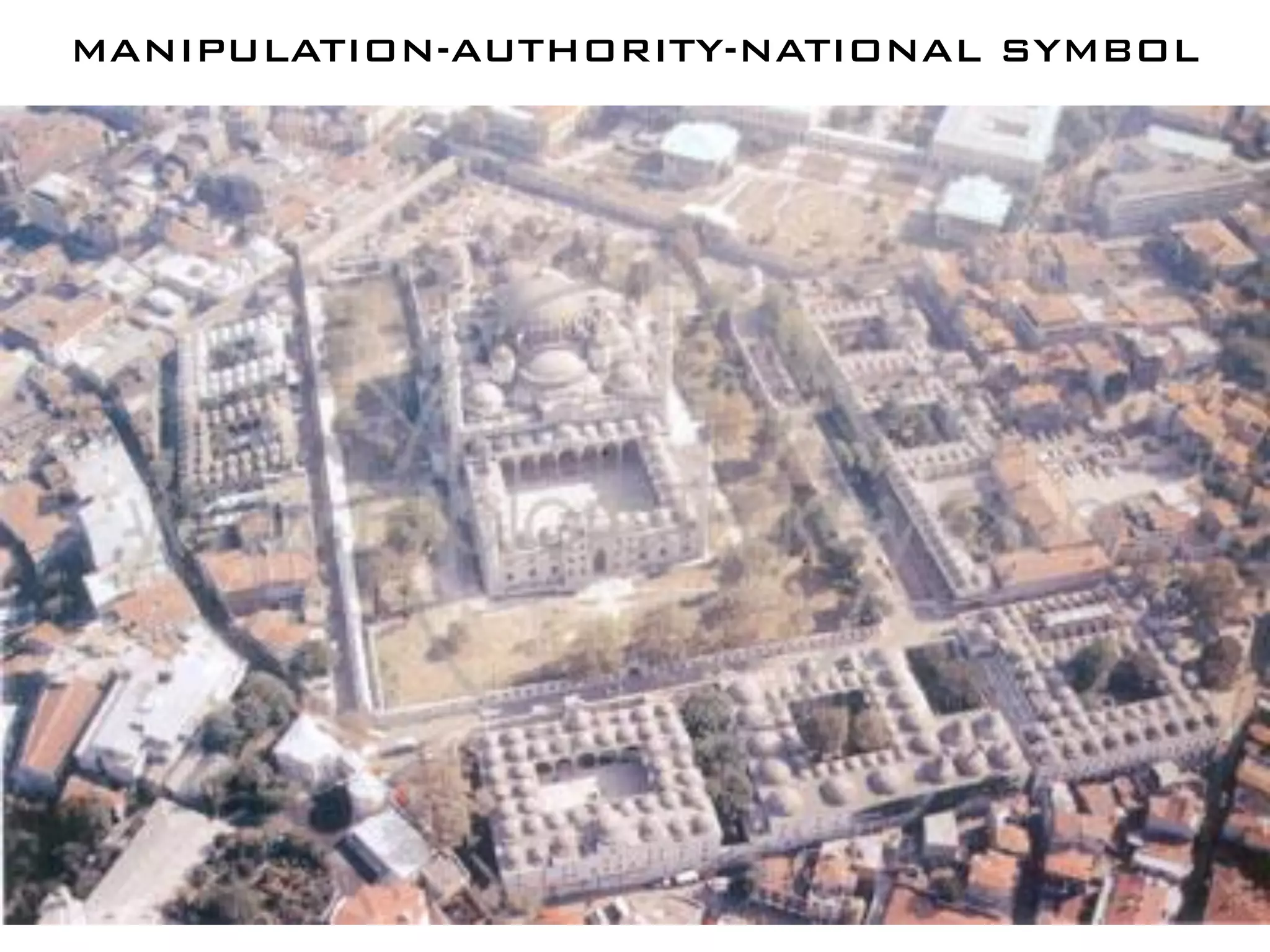
MANIPULATION-AUTHORITY-NATIONAL SYMBOL
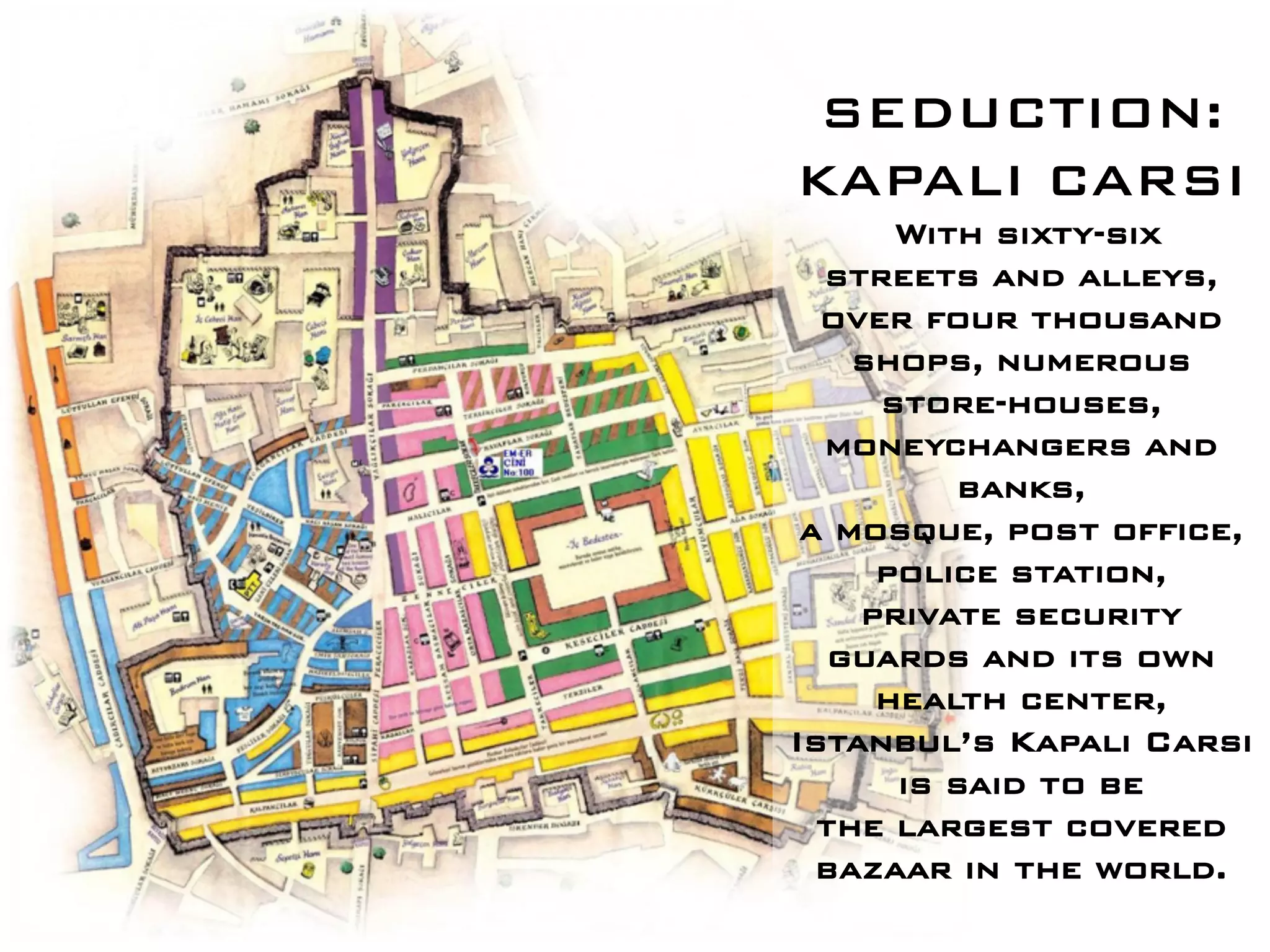
SEDUCTION:
KAPALI CARSI
      With sixty-six
  streets and alleys,
  over four thousand
    shops, numerous
     store-houses,
  moneychangers and
          banks,
 a mosque, post office,
     police station,
    private security
   guards and its own
     health center,
Istanbul’s Kapali Carsi
      is said to be
  the largest covered
  bazaar in the world.
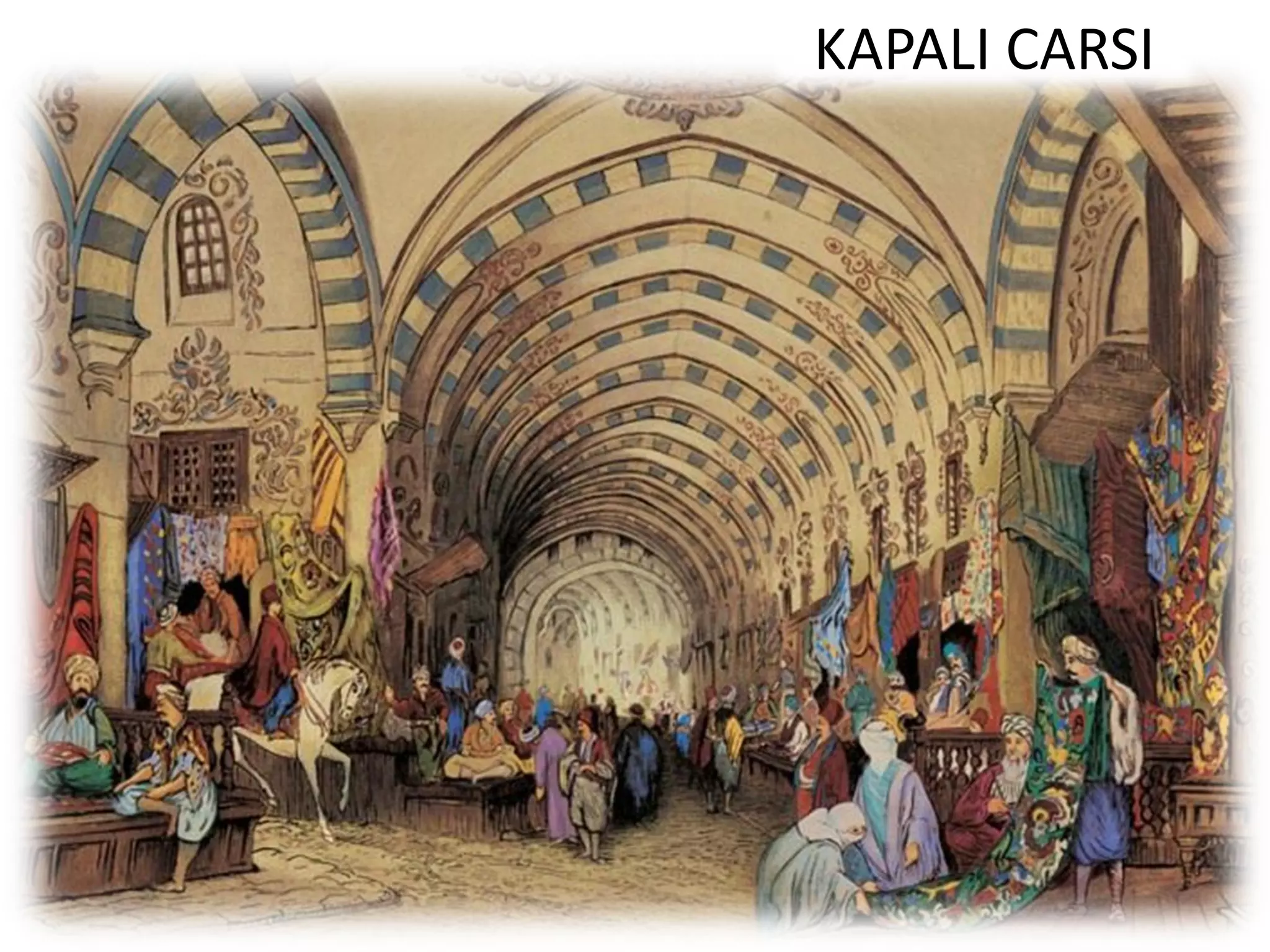
KAPALI CARSI
BUT THE GLORY GRADUALLY
       DECLINED..
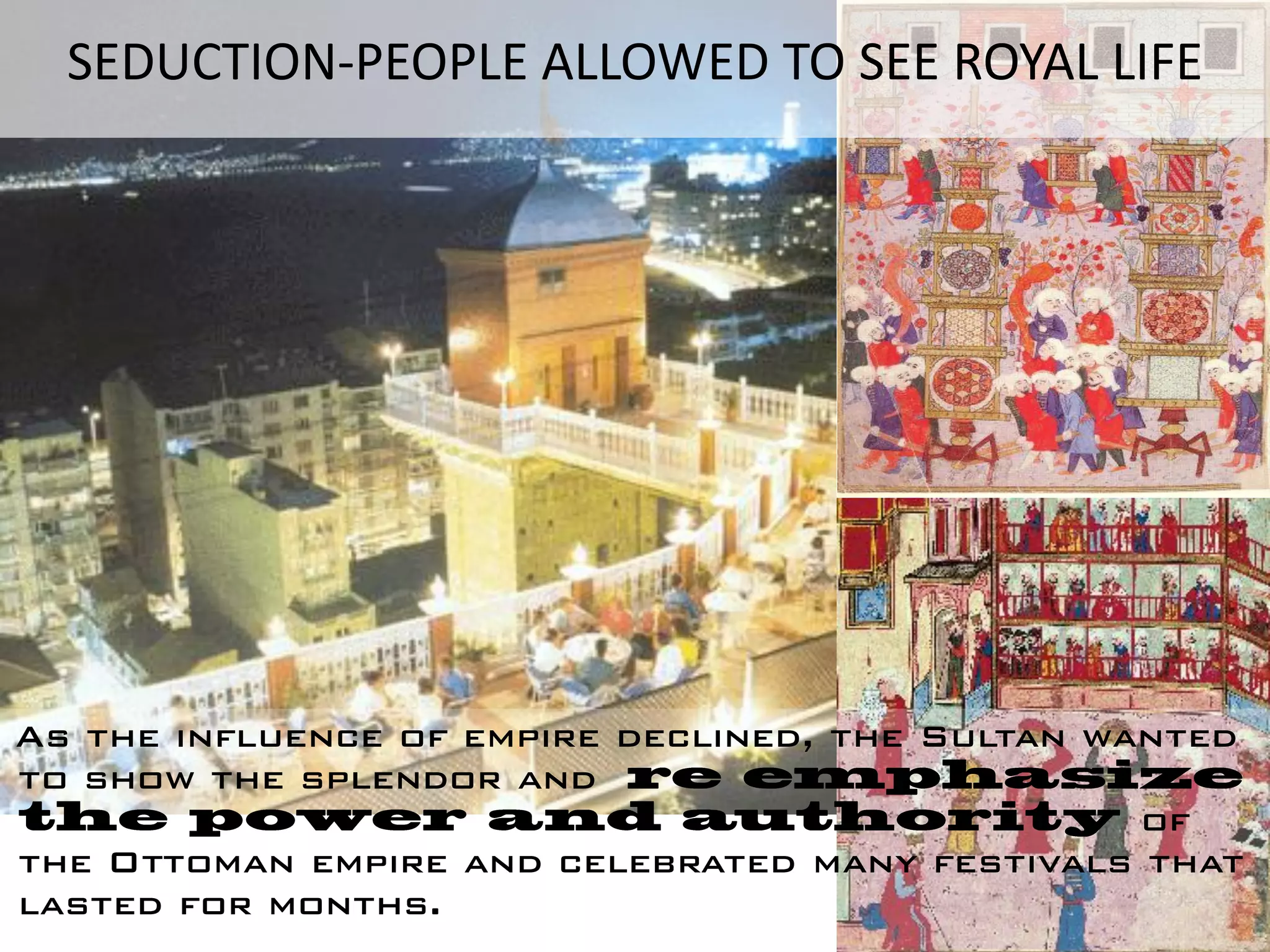
SEDUCTION-PEOPLE ALLOWED TO SEE ROYAL LIFE


As the influence of empire declined, the Sultan wanted
to show the splendor and
                                                  of
the Ottoman empire and celebrated many festivals that
lasted for months.
ISTANBUL
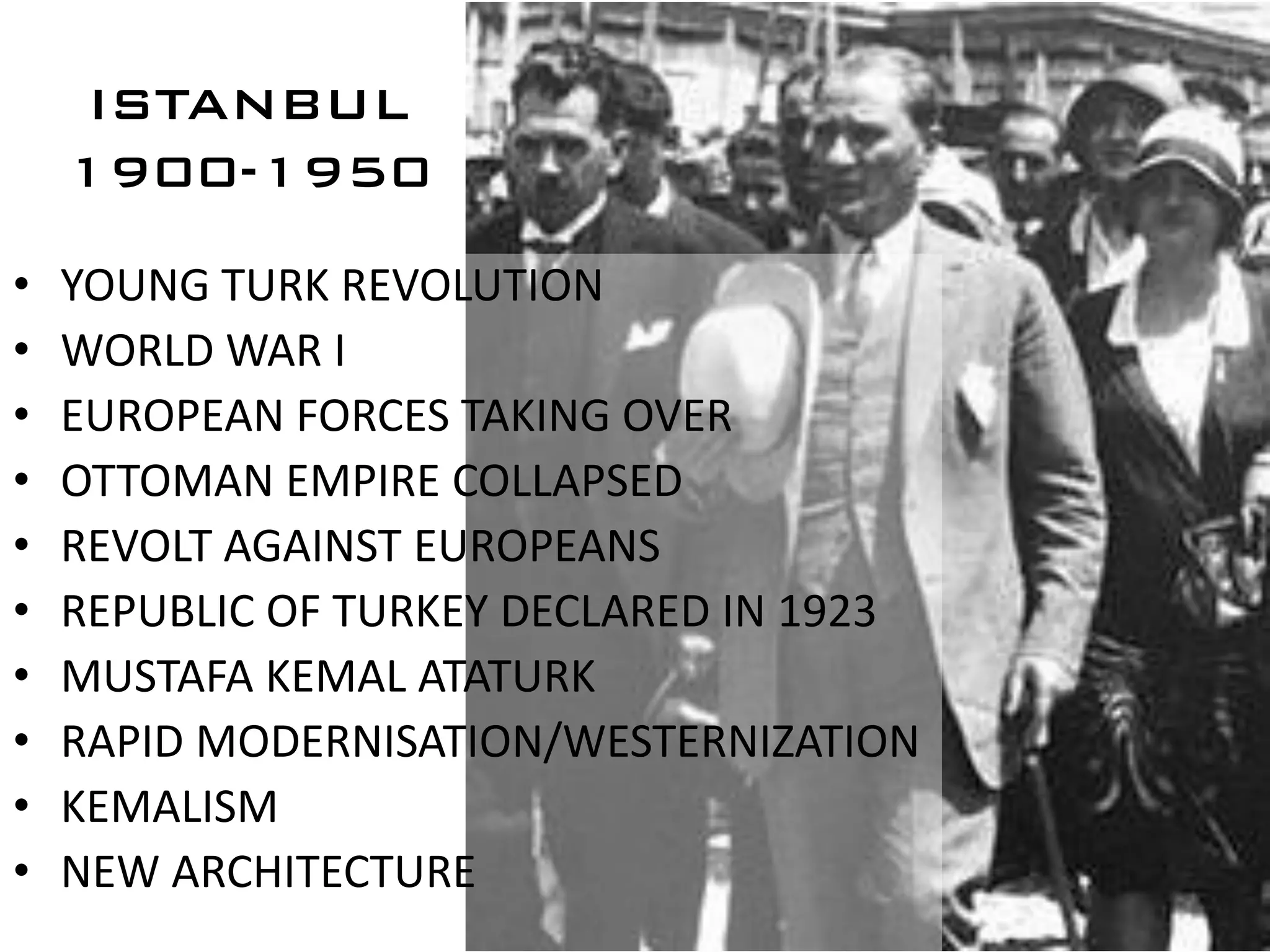
    1900-1950

•   YOUNG TURK REVOLUTION
•   WORLD WAR I
•   EUROPEAN FORCES TAKING OVER
•   OTTOMAN EMPIRE COLLAPSED
•   REVOLT AGAINST EUROPEANS
•   REPUBLIC OF TURKEY DECLARED IN 1923
•   MUSTAFA KEMAL ATATURK
•   RAPID MODERNISATION/WESTERNIZATION
•   KEMALISM
•   NEW ARCHITECTURE
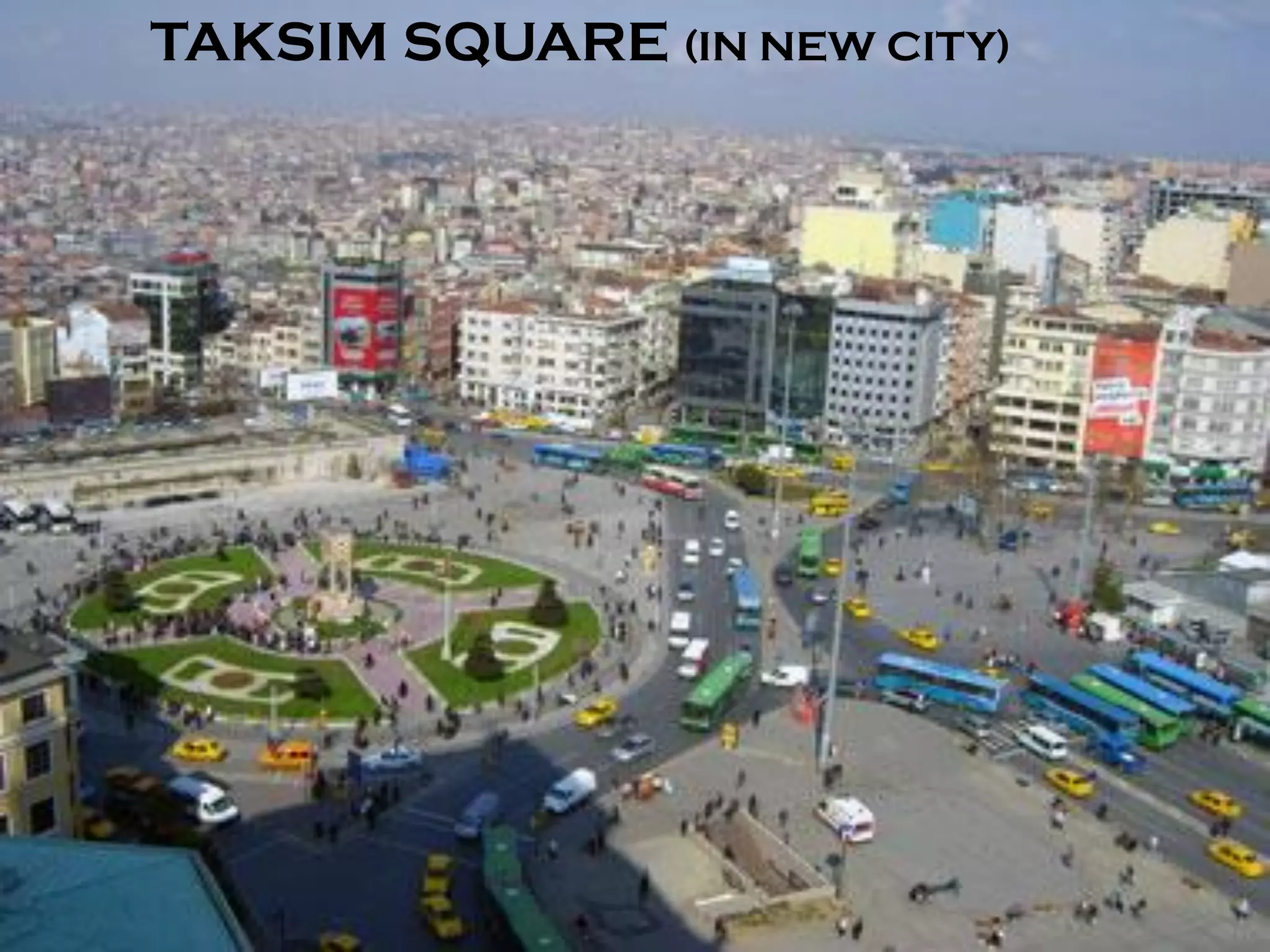
TAKSIM SQUARE (IN NEW CITY)
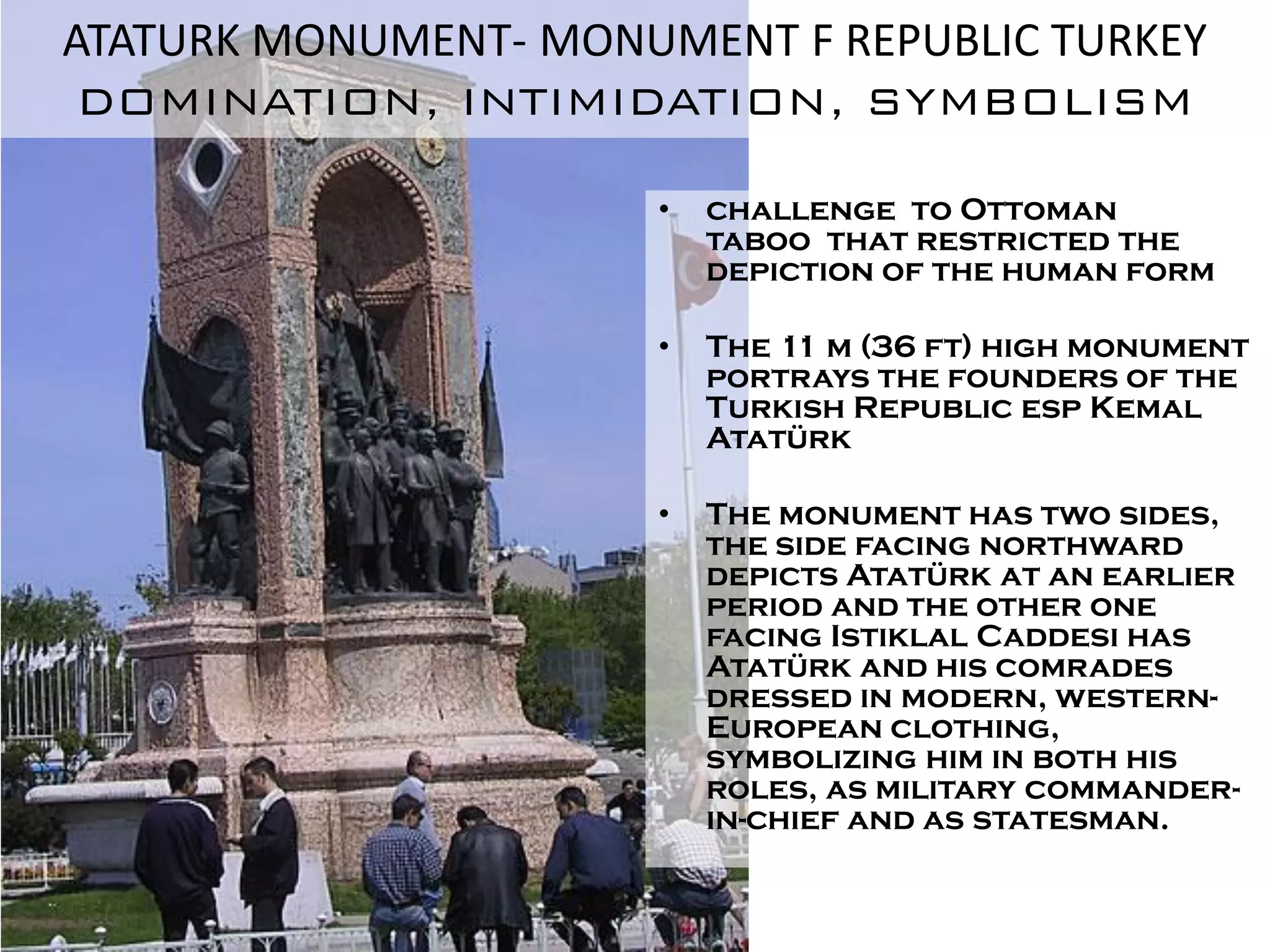
ATATURK MONUMENT- MONUMENT F REPUBLIC TURKEY
 DOMINATION, INTIMIDATION, SYMBOLISM

                      •   challenge to Ottoman
                          taboo that restricted the
                          depiction of the human form

                      •   The 11 m (36 ft) high monument
                          portrays the founders of the
                          Turkish Republic esp Kemal
                          Atatürk

                      •   The monument has two sides,
                          the side facing northward
                          depicts Atatürk at an earlier
                          period and the other one
                          facing Istiklal Caddesi has
                          Atatürk and his comrades
                          dressed in modern, western-
                          European clothing,
                          symbolizing him in both his
                          roles, as military commander-
                          in-chief and as statesman.
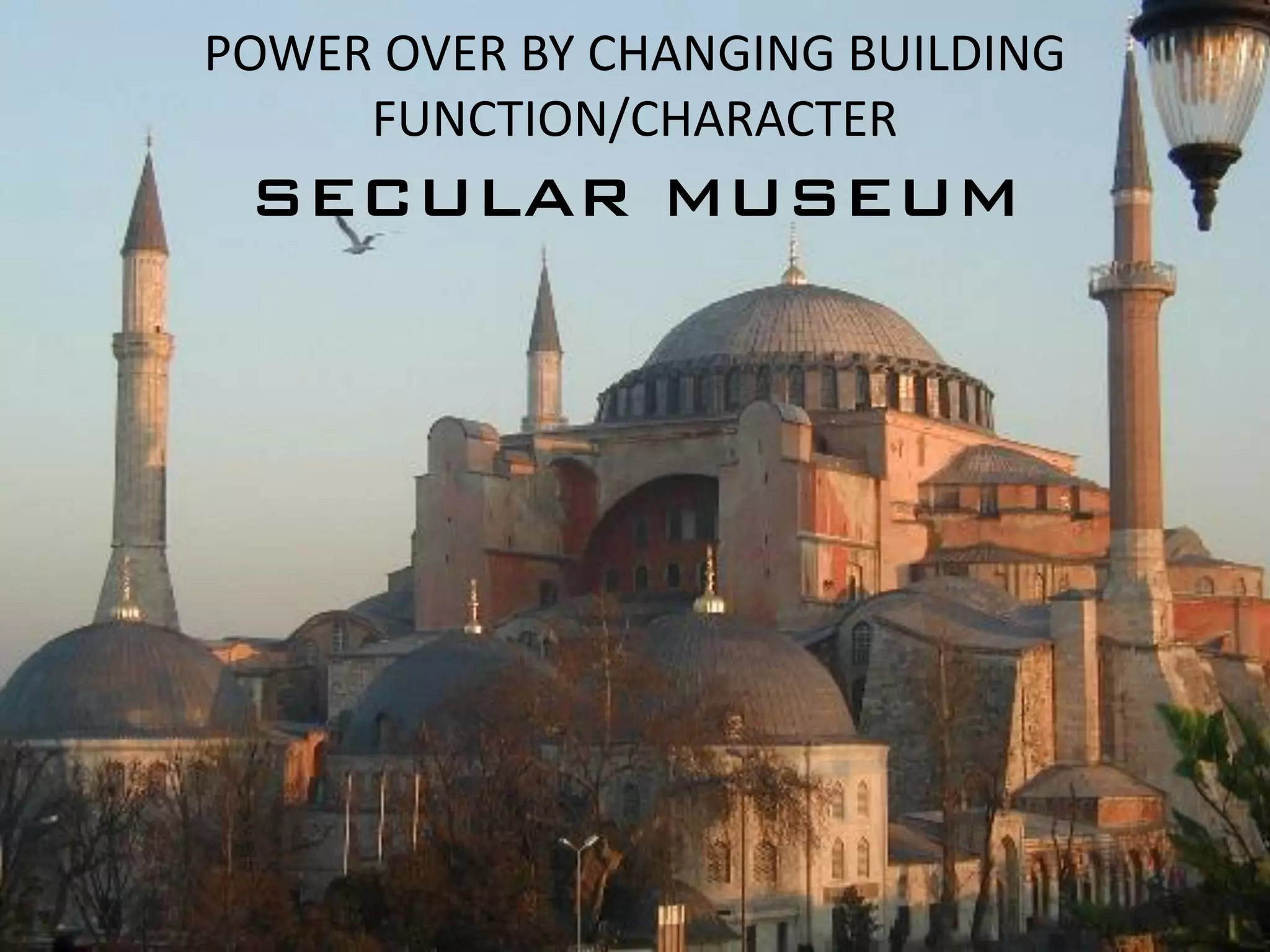
POWER OVER BY CHANGING BUILDING
     FUNCTION/CHARACTER
 SECULAR MUSEUM
NEGLECT—DESTRUCTURING POWER


 SHIFT OF CAPITAL---EMPIRE TO NATION STATE
HENRY PROST SCHEME
The grand avenues that crossed the historic
city and multiple secondary roads transformed
the introvert neighborhoods of the old Ottoman
city into an open structure.


"One of the biggest mistakes I made in my
life was the letter I wrote to Atatürk. If I
had not written this letter, I would have
been working on the plan of Istanbul in
place of my rival Prost. In this letter I
advised the greatest reformer of a nation
to conserve the city of Istanbul with its
centuries old dust. I realized the error I
had committed afterwords".
             (Le Corbusier quoted by S. Demiren, 1948)
HENRY PROST SCHEME
 The priority was given to the construction of
administrative buildings symbolizing the power of
the new regime, and to the educational, financial,
social and cultural buildings, which were intended
to support the institutional modernization as well as
a modern social life.

Preservation of the Byzantine fortifications that
surround the historical city. Labelled them as
monuments, a zone of non-aedificanti covering an
area of 500 m. outside and 50 m. inside the
terrestrial walls, to conserve the
walls in their integrity, and also to emphasize their
monumental total effect.
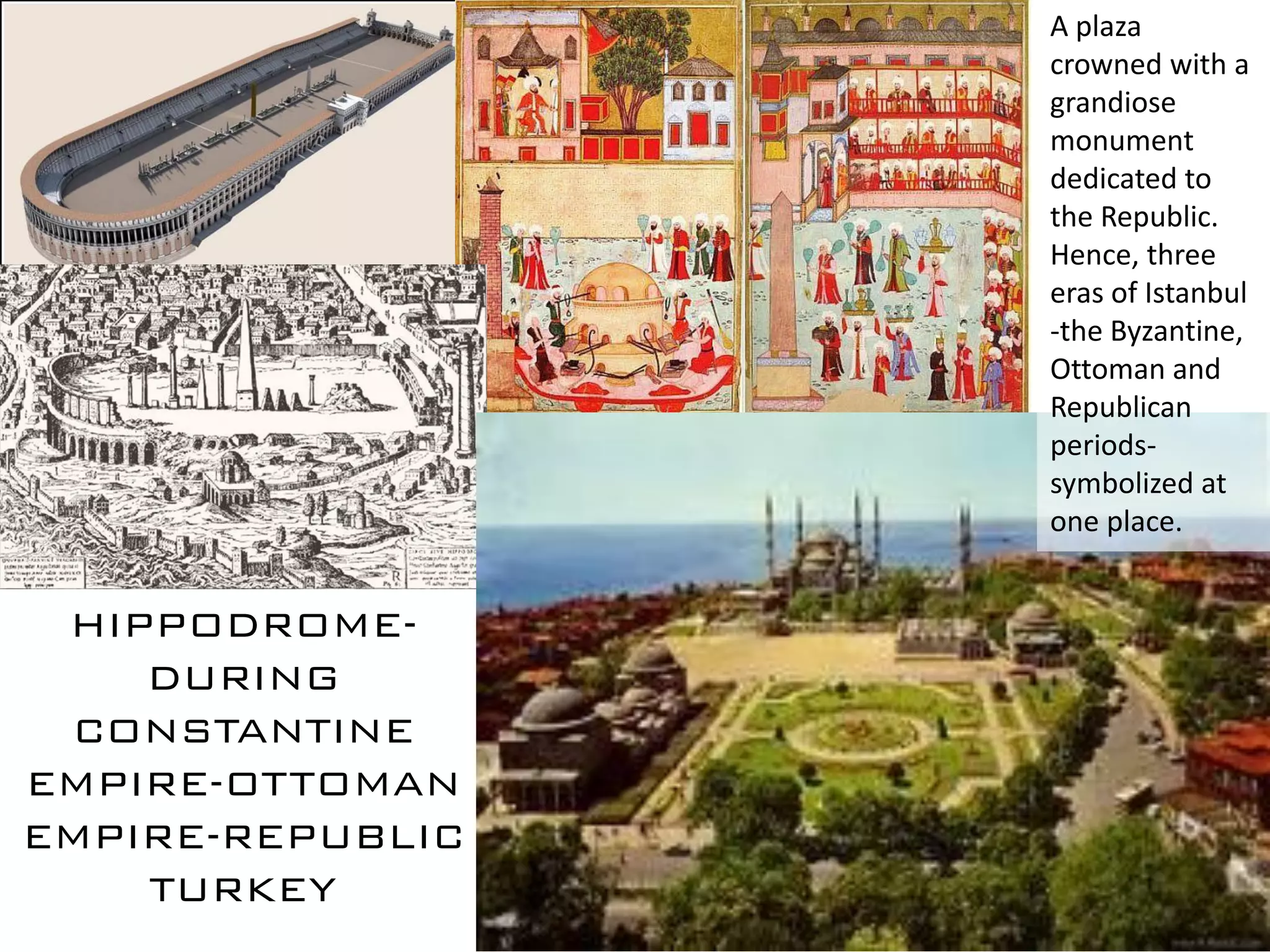
A plaza
                  crowned with a
                  grandiose
                  monument
                  dedicated to
                  the Republic.
                  Hence, three
                  eras of Istanbul
                  -the Byzantine,
                  Ottoman and
                  Republican
                  periods-
                  symbolized at
                  one place.


 HIPPODROME-
    DURING
 CONSTANTINE
EMPIRE-OTTOMAN
EMPIRE-REPUBLIC
    TURKEY
POWER OVER BY DESTRUCTION

MONUMENTAL ARCHITECTURE GATHERS,
FOCUSES, STORES AND TRANSFERS SOCIAL
RESOURCES AT A CONCEPTUAL OR
IDEOLOGICAL LEVEL. A MONUMENTAL
BUILDING, THUS, IS A PHYSICAL STRUCTURE
CAPABLE OF STRUCTURING NON
PHYSICAL ASPECTS OF A GIVEN
CULTURE. THEREFORE, THE DESTRUCTION
OF IT HAS A PROFOUND EFFECT NOT ONLY ON
THE PHYSICAL, BUT ON NON MATERIAL
ASPECT OF CULTURE. IT ALTERS BEHAVIORAL
PATTERN AND ITS UNDERLYING SOCIAL
GRAMMAR. MONUMENTS ARE DESTROYED
NOT FOR WHAT THEY COTAIN, BUT FOR WHAT
THEY REPRESENT.
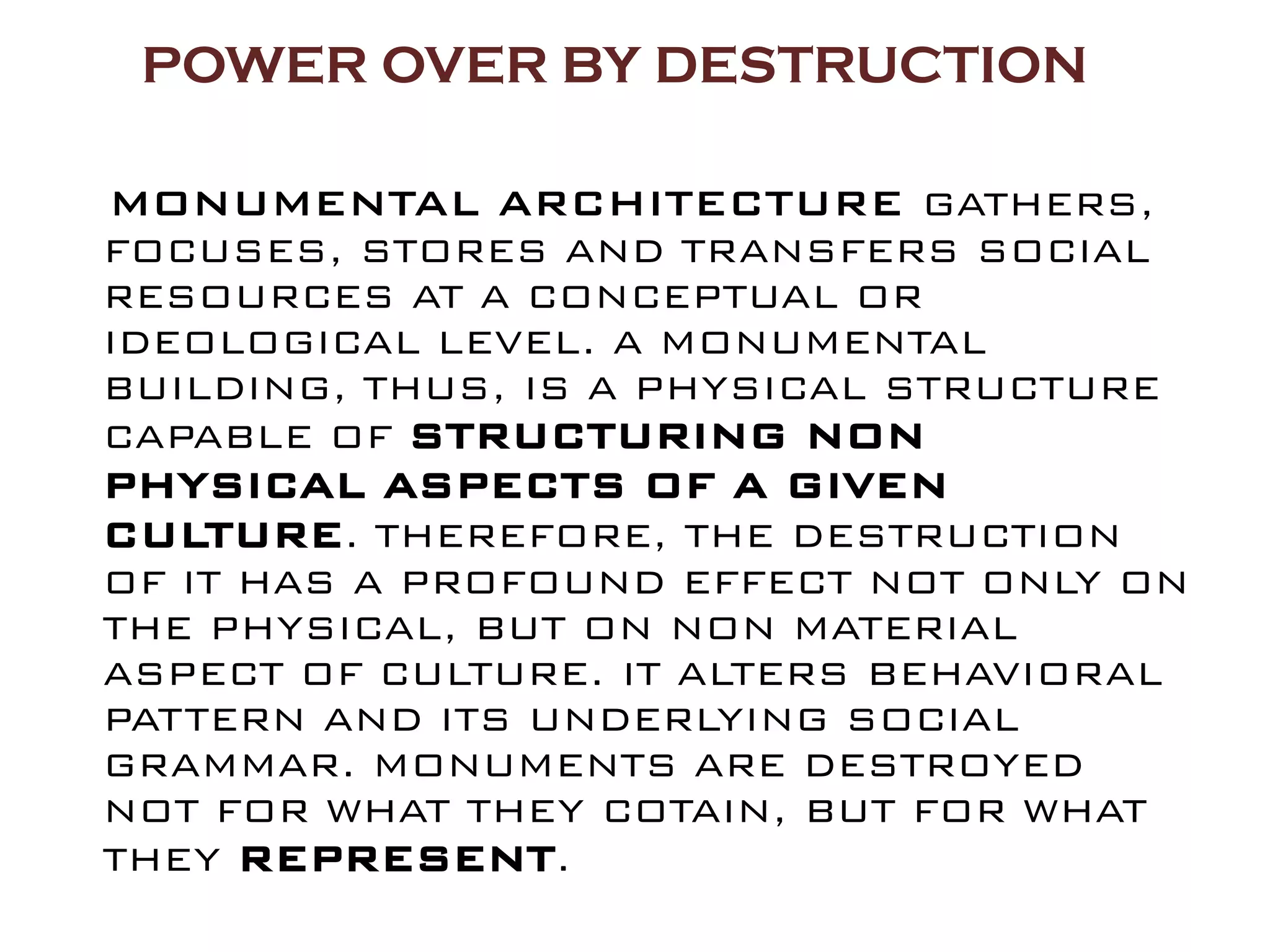
Many Historic
                             buildings from the
                            late Ottoman period
                             were demolished in
                              order to open the
                            perspective from the
                                plaza onto the
                            Marmara Sea, and to
                            make this grandiose
                           monument, located on
                            top of the colossal
                           retaining walls of the
                           Byzantine hippodrome,
                             visible far from the
                                      sea.


  GREAT REPUBLIC SQUARE-USED FOR OFFICIAL
FUNCTIONS AND MILITARY PARADES- AUTHORITY
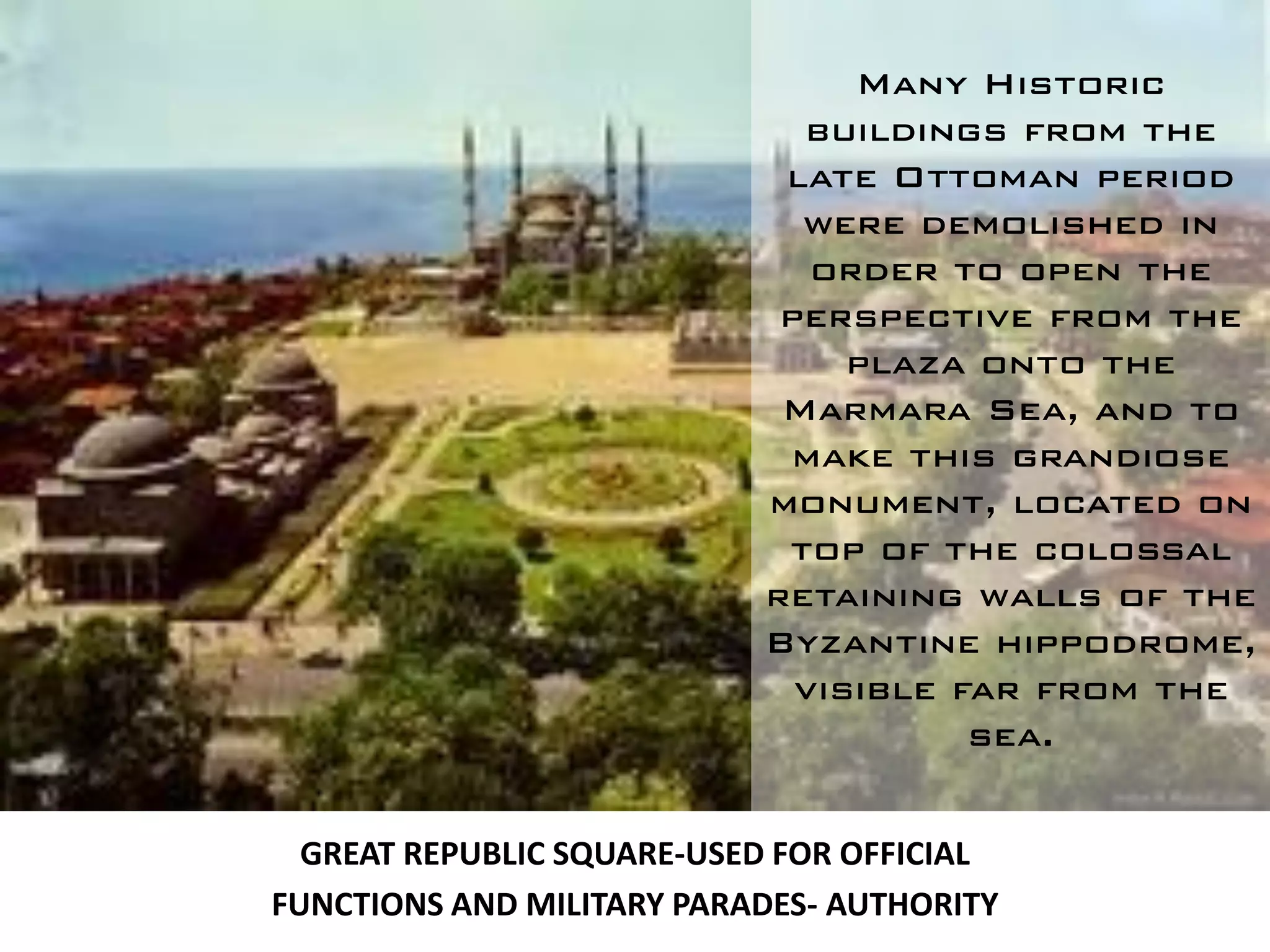
ALSO TO OPEN UP SPACES- FOR
PARKS, POOLS AND RECREATIONAL
   PUBLIC SPACES-SEDUCTION
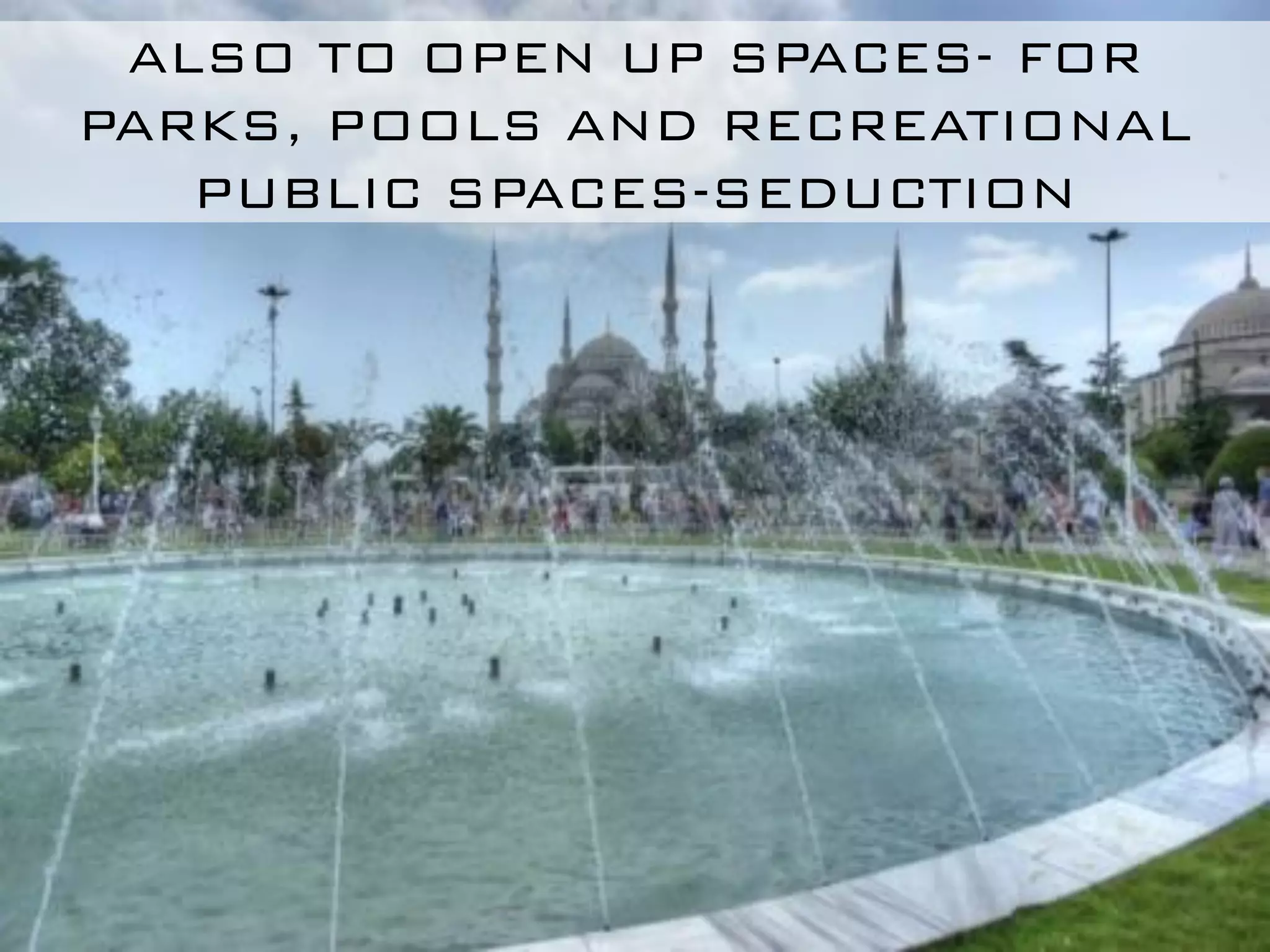
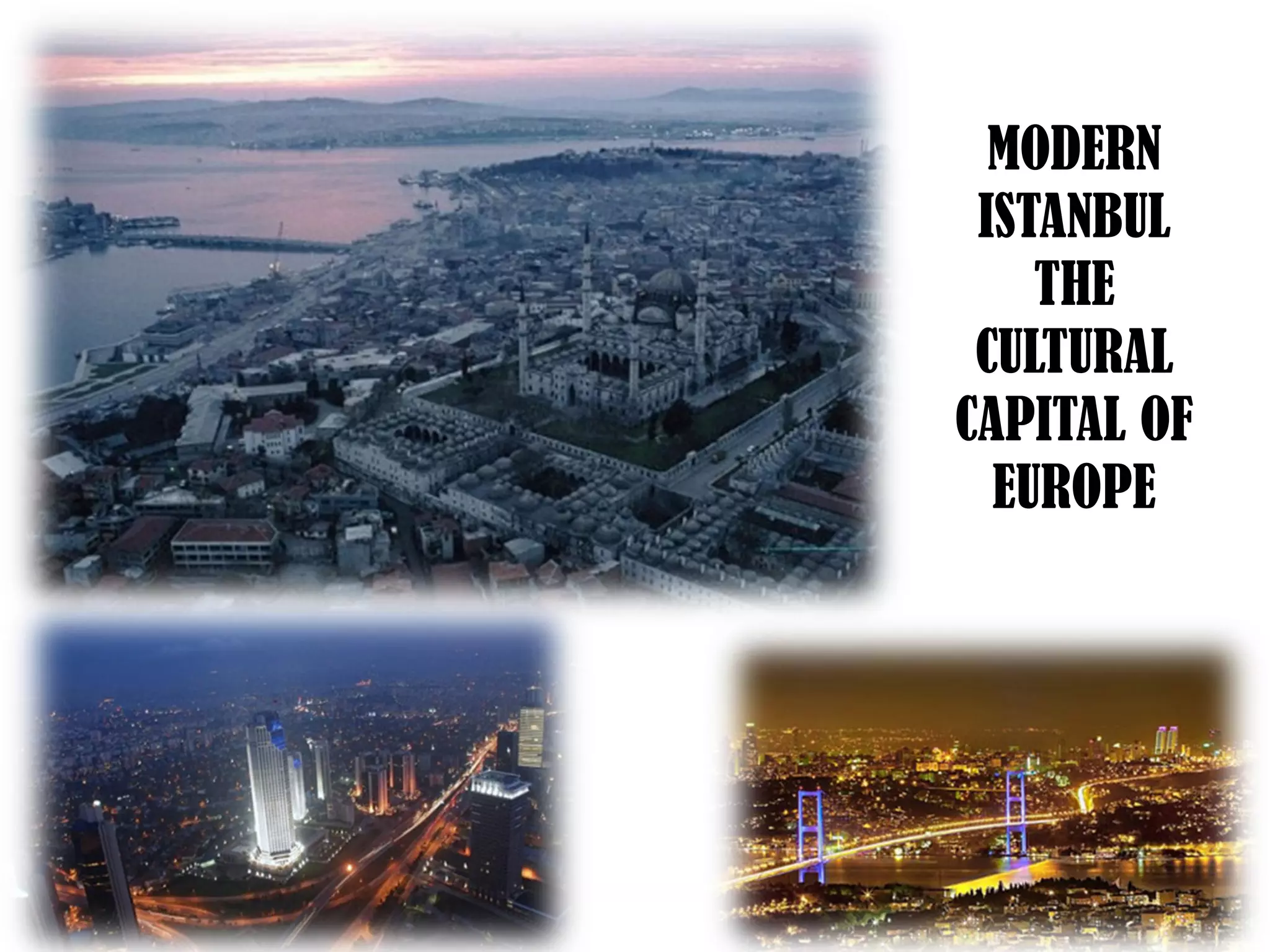
MODERN
 ISTANBUL
    THE
 CULTURAL
CAPITAL OF
  EUROPE

Istanbul Power in Architecture

  • 1.
    MANIFESTATIONS OF IN BUILT FORM ISTANBUL, TURKEY
  • 2.
    STRUCTURE OF PRESENTATION •BRIEF HISTORY AND LOCATION • METHODOLOGY FOR ANALYSING POWER IN BUILT FORM • ANALYSIS
  • 3.
    • EARLY SETTLERS-NOMADS • GREEK COLONY- EARLY BYZANTIUM • EARLY ROMAN EMPIRE (146 BC-395 AD) • CONSTANTINE (306-337 AD) • LATE BYZANTINE (EASTERN) (395-1453) • OTTOMAN-ISLAMIC (1453-1922) • MODERN ISTANBUL- WESTERNIZATION(1900-’50) • ISTANBUL NOW (1950- ) In the course of the centuries, Empires were built, abandoned, demolished, and rebuilt.
  • 4.
  • 5.
  • 6.
  • 8.
    KIM DOVEY WAYOF ANALYSIS • DIRECT- OVERT FORCE • COERCION- – DOMINATION/INTIMIDATION – MANIPULATION – SEDUCTION • AUTHORITY • SYMBOLISING NATIONALISM-IDENTITY • POWER OVER BY TRANSFORMATION • POWER OVER BY NEGLECT • POWER DISPLAY BY DESTRUCTION
  • 9.
    EARLY SETTLERS- NOMADS • GREEK COLONY- EARLY BYZANTIUM • EARLY ROMAN EMPIRE (146 BC-395 AD) • CONSTANTINE (306-337 AD) • LATE BYZANTINE (EASTERN) (395-1453) • OTTOMAN-ISLAMIC (1453-1922) • MODERN ISTANBUL-WESTERNIZATION(1900-’50) • ISTANBUL NOW (1950- )
  • 10.
    CONSTANTINOPLE-NEW ROME-ON SEVENHILLS HIPPODROME FORUMS, PALACES, CHURCHES, LAW COURTS
  • 11.
  • 12.
    OTTOMAN EMPIRE Islambul, theHome of Islam OVERT FORCE--- FORTIFICATION
  • 13.
    • REPOPULATING THE CITY • MILLETS- GREEKS, JEWS, ARMENIANS • MAJORITY TURKISH MUSLIMS • ISLAMIC CHARACTER MAINTAINED • REGULATIONS IN BUILDING • DIGNITARIES’ POWER
  • 14.
  • 15.
  • 16.
  • 17.
    • Architect Sinan:Chief Ottoman architect • His most famous work is the Suleiman Mosque . • Sinan was also one of the first earthquake engineers in the world. • In his autobiography he says that his masterpiece is the Suleymaniye Mosque in Edirne. While it was being built, the Christian architects saying "You can never build a dome larger than the dome of Hagia Sophia and specially as Muslims" was his main motivation while building that mosque. • While when it was completed, Sinan claimed that it had the largest dome in the world leaving Hagia Sophia behind, the reality was that the dome height from the ground level was lower and the diameter almost identical to the millenium-older Hagia Sophia.
  • 18.
    OSTENTATION (BOASTFUL SHOWINESS)-THE EXPRESSION OF POWER- ALWAYS PRESENT IN ISLAMIC ARCHITECTURE • However, it is a more symmetrical, rationalized and light-filled interpretation of earlier Ottoman precedents, as well as the Hagia Sophia. • The design of the Süleymaniye also plays on Suleyman's self- conscious representation of himself as a 'second Solomon.' It references the Dome of the Rock, which was built on the site of the Temple of Solomon, as well as Justinian's boast upon the completion of the Hagia Sophia: "Solomon, I have surpassed thee!" The Süleymaniye, similar in magnificence to the preceding structures, asserts Suleyman's historical importance.
  • 19.
  • 20.
  • 21.
    SEDUCTION: KAPALI CARSI With sixty-six streets and alleys, over four thousand shops, numerous store-houses, moneychangers and banks, a mosque, post office, police station, private security guards and its own health center, Istanbul’s Kapali Carsi is said to be the largest covered bazaar in the world.
  • 22.
  • 23.
    BUT THE GLORYGRADUALLY DECLINED..
  • 24.
    SEDUCTION-PEOPLE ALLOWED TOSEE ROYAL LIFE As the influence of empire declined, the Sultan wanted to show the splendor and of the Ottoman empire and celebrated many festivals that lasted for months.
  • 25.
    ISTANBUL 1900-1950 • YOUNG TURK REVOLUTION • WORLD WAR I • EUROPEAN FORCES TAKING OVER • OTTOMAN EMPIRE COLLAPSED • REVOLT AGAINST EUROPEANS • REPUBLIC OF TURKEY DECLARED IN 1923 • MUSTAFA KEMAL ATATURK • RAPID MODERNISATION/WESTERNIZATION • KEMALISM • NEW ARCHITECTURE
  • 26.
  • 27.
    ATATURK MONUMENT- MONUMENTF REPUBLIC TURKEY DOMINATION, INTIMIDATION, SYMBOLISM • challenge to Ottoman taboo that restricted the depiction of the human form • The 11 m (36 ft) high monument portrays the founders of the Turkish Republic esp Kemal Atatürk • The monument has two sides, the side facing northward depicts Atatürk at an earlier period and the other one facing Istiklal Caddesi has Atatürk and his comrades dressed in modern, western- European clothing, symbolizing him in both his roles, as military commander- in-chief and as statesman.
  • 28.
    POWER OVER BYCHANGING BUILDING FUNCTION/CHARACTER SECULAR MUSEUM
  • 29.
    NEGLECT—DESTRUCTURING POWER SHIFTOF CAPITAL---EMPIRE TO NATION STATE
  • 30.
    HENRY PROST SCHEME Thegrand avenues that crossed the historic city and multiple secondary roads transformed the introvert neighborhoods of the old Ottoman city into an open structure. "One of the biggest mistakes I made in my life was the letter I wrote to Atatürk. If I had not written this letter, I would have been working on the plan of Istanbul in place of my rival Prost. In this letter I advised the greatest reformer of a nation to conserve the city of Istanbul with its centuries old dust. I realized the error I had committed afterwords". (Le Corbusier quoted by S. Demiren, 1948)
  • 31.
    HENRY PROST SCHEME The priority was given to the construction of administrative buildings symbolizing the power of the new regime, and to the educational, financial, social and cultural buildings, which were intended to support the institutional modernization as well as a modern social life. Preservation of the Byzantine fortifications that surround the historical city. Labelled them as monuments, a zone of non-aedificanti covering an area of 500 m. outside and 50 m. inside the terrestrial walls, to conserve the walls in their integrity, and also to emphasize their monumental total effect.
  • 32.
    A plaza crowned with a grandiose monument dedicated to the Republic. Hence, three eras of Istanbul -the Byzantine, Ottoman and Republican periods- symbolized at one place. HIPPODROME- DURING CONSTANTINE EMPIRE-OTTOMAN EMPIRE-REPUBLIC TURKEY
  • 33.
    POWER OVER BYDESTRUCTION MONUMENTAL ARCHITECTURE GATHERS, FOCUSES, STORES AND TRANSFERS SOCIAL RESOURCES AT A CONCEPTUAL OR IDEOLOGICAL LEVEL. A MONUMENTAL BUILDING, THUS, IS A PHYSICAL STRUCTURE CAPABLE OF STRUCTURING NON PHYSICAL ASPECTS OF A GIVEN CULTURE. THEREFORE, THE DESTRUCTION OF IT HAS A PROFOUND EFFECT NOT ONLY ON THE PHYSICAL, BUT ON NON MATERIAL ASPECT OF CULTURE. IT ALTERS BEHAVIORAL PATTERN AND ITS UNDERLYING SOCIAL GRAMMAR. MONUMENTS ARE DESTROYED NOT FOR WHAT THEY COTAIN, BUT FOR WHAT THEY REPRESENT.
  • 34.
    Many Historic buildings from the late Ottoman period were demolished in order to open the perspective from the plaza onto the Marmara Sea, and to make this grandiose monument, located on top of the colossal retaining walls of the Byzantine hippodrome, visible far from the sea. GREAT REPUBLIC SQUARE-USED FOR OFFICIAL FUNCTIONS AND MILITARY PARADES- AUTHORITY
  • 35.
    ALSO TO OPENUP SPACES- FOR PARKS, POOLS AND RECREATIONAL PUBLIC SPACES-SEDUCTION
  • 36.
    MODERN ISTANBUL THE CULTURAL CAPITAL OF EUROPE