What is EthicalHacking?
• Ethical hacking involves legally breaking into
computers and devices to test defenses.
• Also known as penetration testing or white-
hat hacking.
• Helps identify vulnerabilities before malicious
hackers do.
3.
Importance of EthicalHacking
• Protects sensitive data from cyber threats.
• Identifies and fixes security vulnerabilities.
• Ensures compliance with regulations.
4.
Types of Hackers
•White Hat – Ethical Hackers
• Black Hat – Malicious Hackers
• Grey Hat – Hackers between white and black
hat
Maintaining Access &Clearing
Tracks
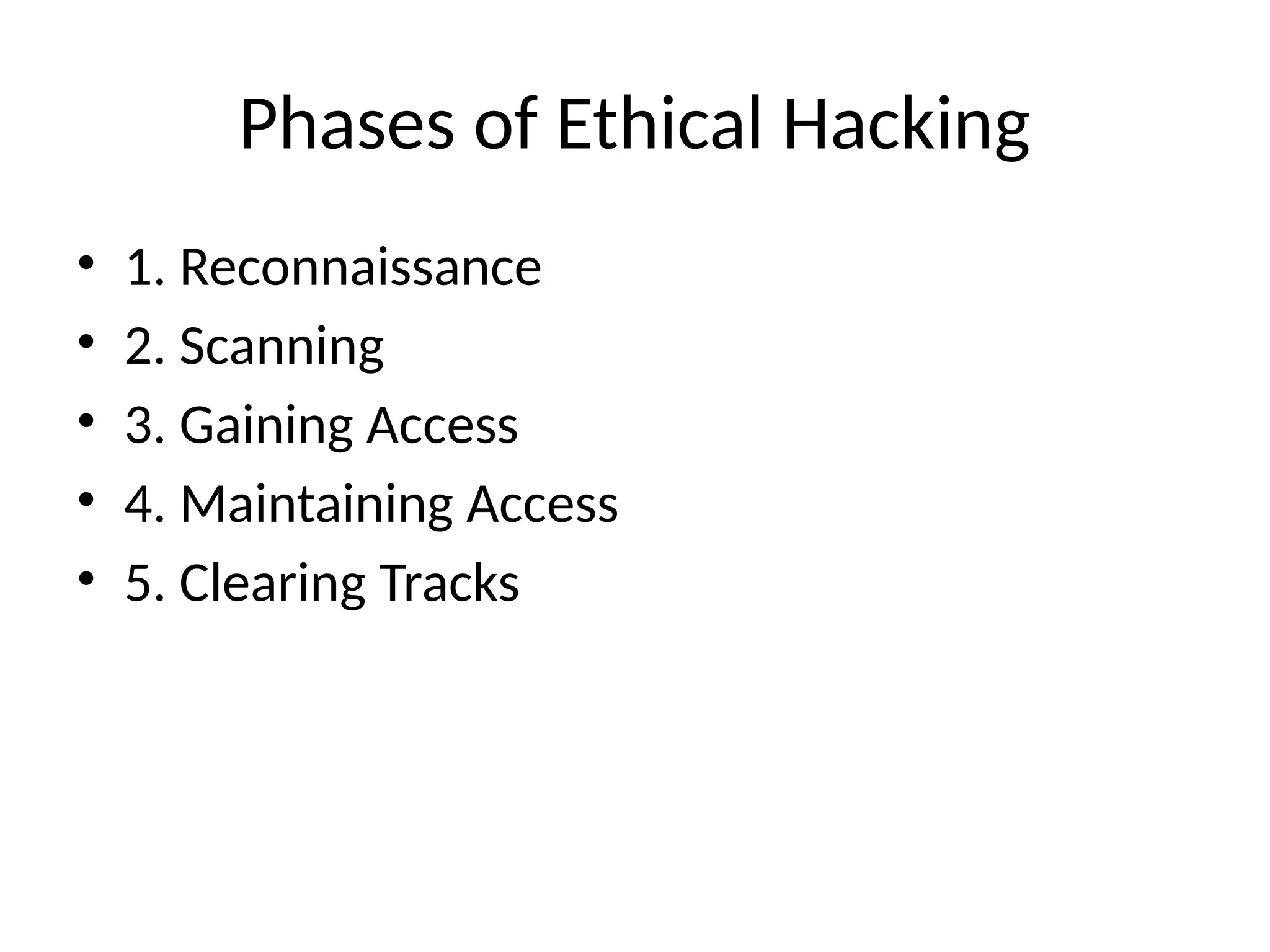
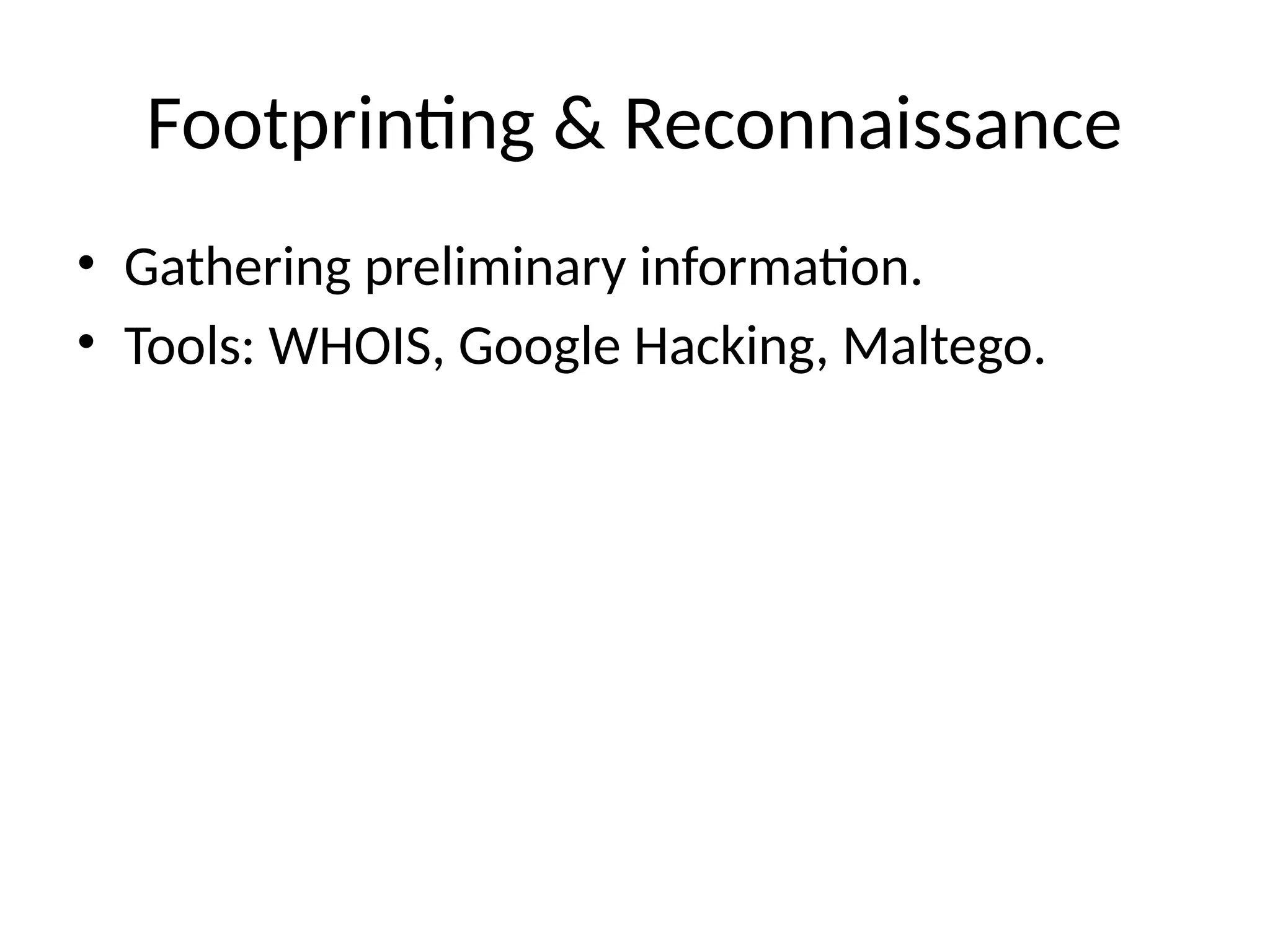
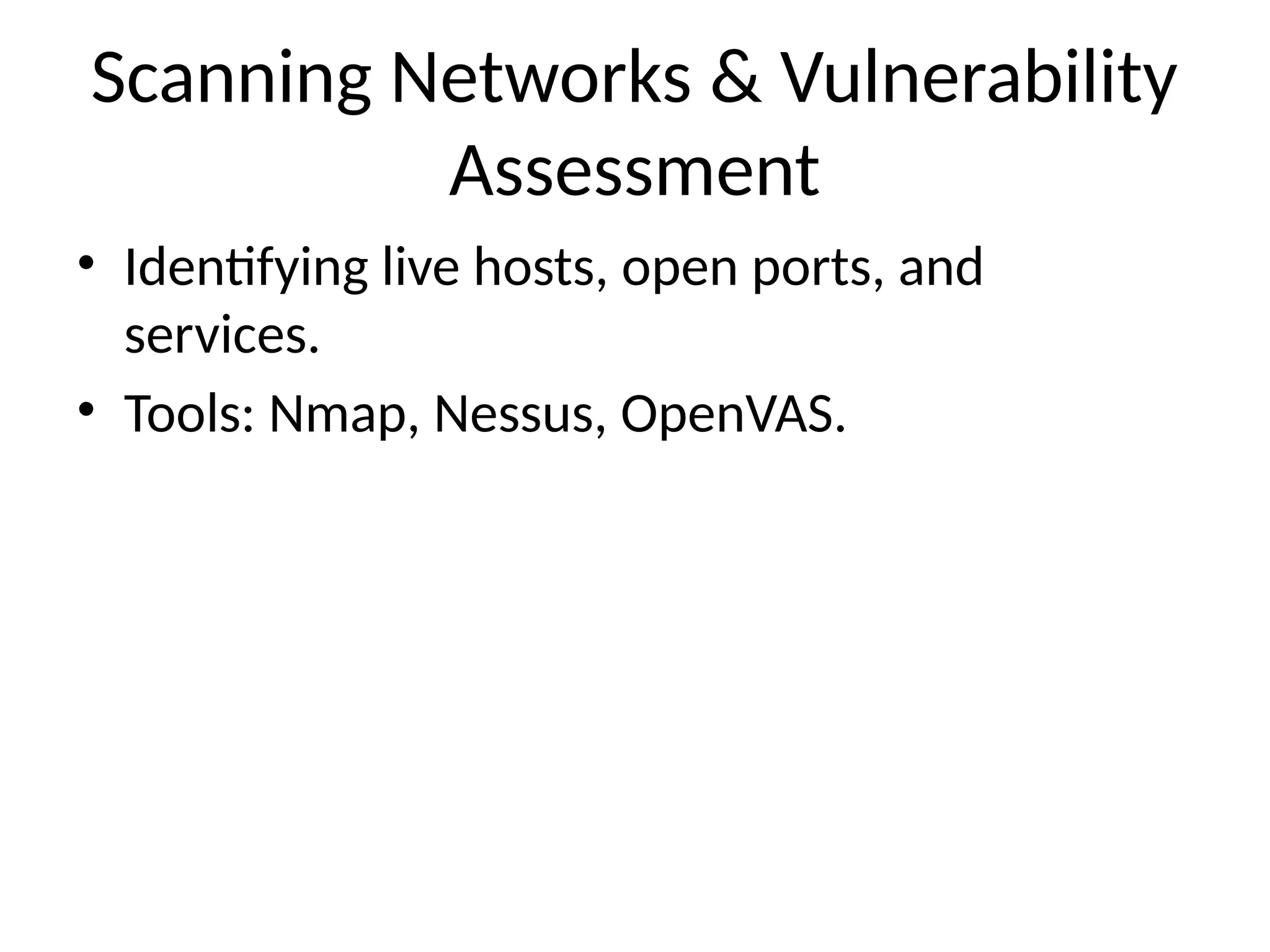
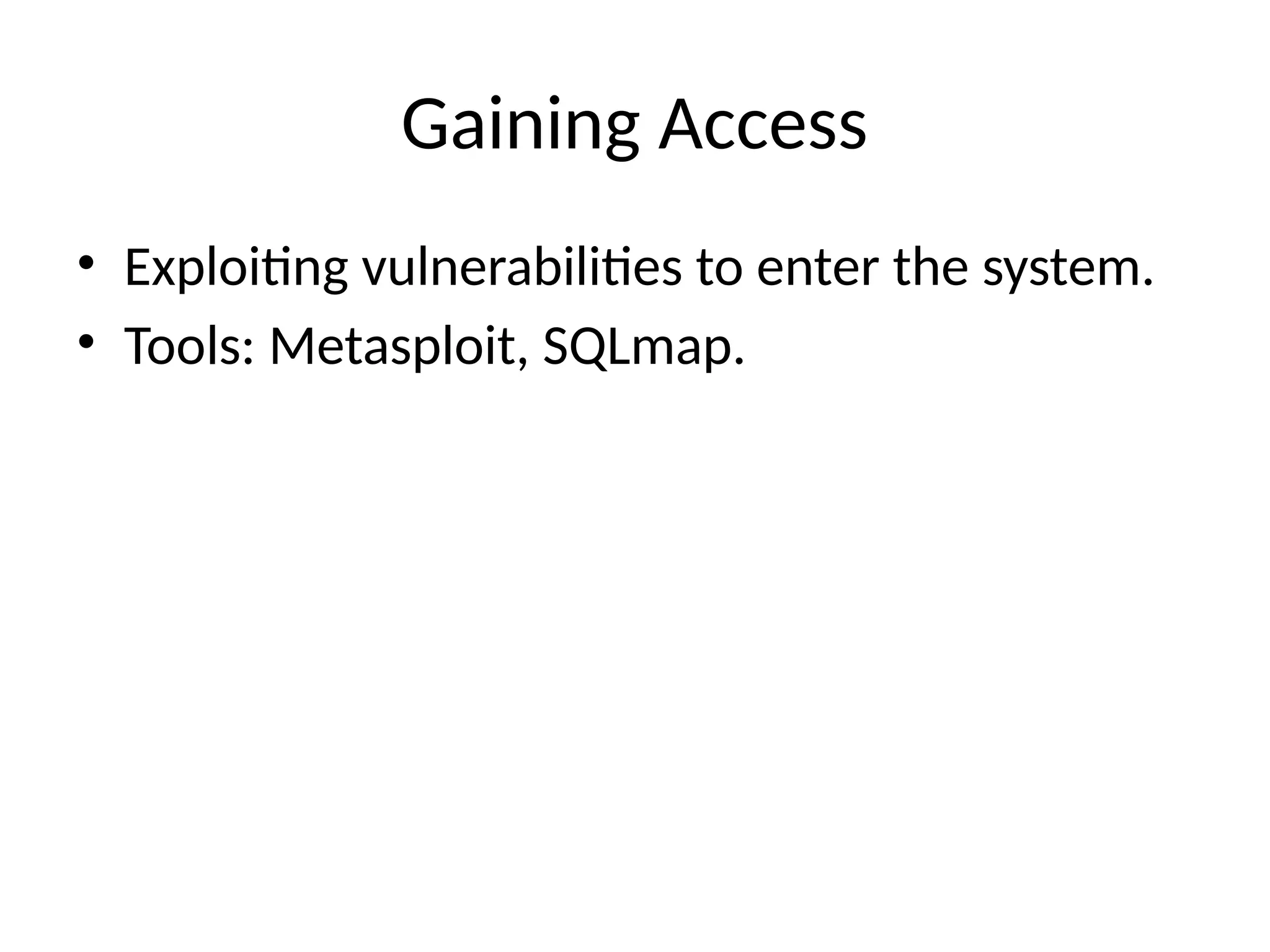
• Backdoors, rootkits to keep access.
• Clearing logs to avoid detection.
10.
Tools Used inEthical Hacking
• Kali Linux
• Metasploit
• Nmap
• Wireshark
• Burp Suite
11.
Certifications in EthicalHacking
• CEH – Certified Ethical Hacker
• OSCP – Offensive Security Certified
Professional
• CompTIA Security+
12.
Legal and EthicalAspects
• Requires proper authorization.
• Must follow laws and corporate policies.
• Non-compliance can lead to prosecution.
13.
Challenges in EthicalHacking
• Staying updated with evolving threats.
• Balancing ethics and effectiveness.
• Avoiding legal issues.
14.
Future of EthicalHacking
• Increased demand in cybersecurity.
• AI and automation in penetration testing.
• More advanced threat detection methods.
15.
Conclusion
• Ethical hackingis vital in today's digital world.
• Helps safeguard systems and data.
• A promising career for cybersecurity
professionals.


![Computer Networks 01[1 using all terms].pptx](https://cdn.slidesharecdn.com/ss_thumbnails/computernetworks011-251214040533-327dd9f8-thumbnail.jpg?width=640&height=640&fit=bounds)


