Introduction to Ethical
Hacking
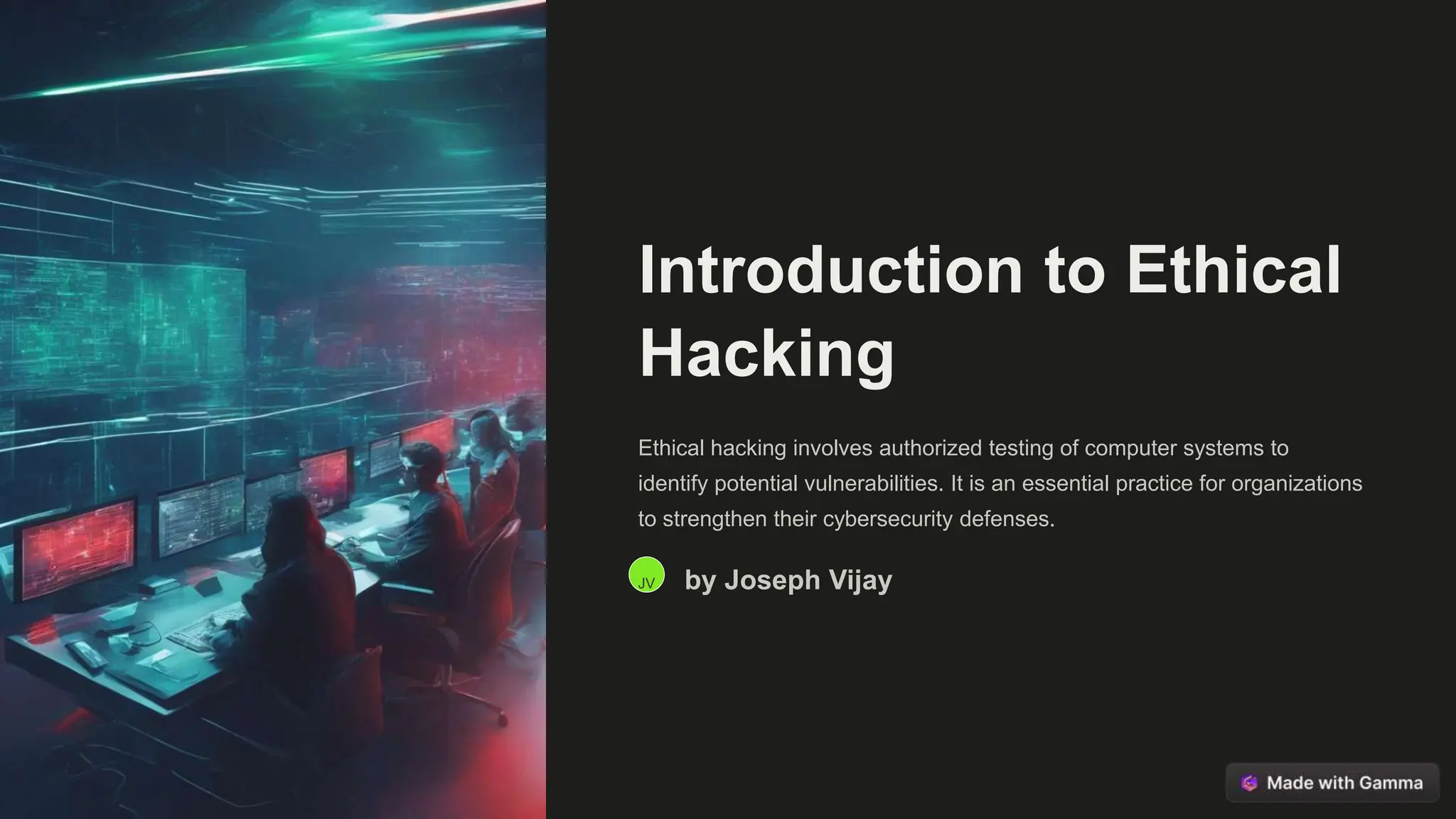
Ethical hacking involves authorized testing of computer systems to
identify potential vulnerabilities. It is an essential practice for organizations
to strengthen their cybersecurity defenses.
JV by Joseph Vijay
Understanding the Different Types of
Hackers
Black Hat Hackers
Unethical hackers who exploit
system vulnerabilities for
malicious purposes, such as
theft or sabotage.
White Hat Hackers
Ethical hackers who use their
skills to strengthen security
measures and protect against
cyber threats.
Grey Hat Hackers
Hackers who can act in either
an ethical or unethical
manner, depending on the
situation.
Legal and Ethical Considerations
Laws and Regulations
Understanding the legal boundaries and
compliance requirements for ethical hacking
operations.
Ethical Guidelines
Adhering to ethical standards and principles
to ensure responsible and lawful hacking
activities.
Steps in the Ethical Hacking
Process
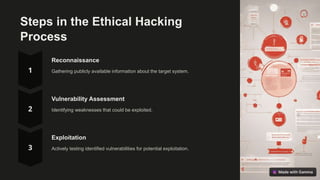
Reconnaissance
Gathering publicly available information about the target system.
Vulnerability Assessment
Identifying weaknesses that could be exploited.
Exploitation
Actively testing identified vulnerabilities for potential exploitation.
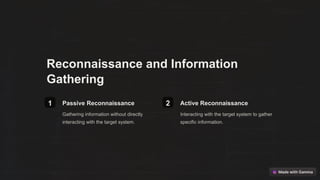
Reconnaissance and Information
Gathering
1 Passive Reconnaissance
Gathering information without directly
interacting with the target system.
2 Active Reconnaissance
Interacting with the target system to gather
specific information.
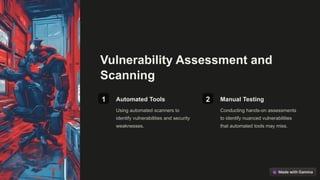
Vulnerability Assessment and
Scanning
1 Automated Tools
Using automated scanners to
identify vulnerabilities and security
weaknesses.
2 Manual Testing
Conducting hands-on assessments
to identify nuanced vulnerabilities
that automated tools may miss.
Exploitation and Gaining Access
Privilege Escalation
Exploiting vulnerabilities to gain elevated access
within the system.
Backdoor Entry
Creating hidden entry points for unauthorized
access to the system.
Maintaining Access and Covering
Tracks
Persistence
Maintaining long-term access to the
compromised system without detection.
Covering Tracks
Removing any evidence of
unauthorized system access or
tampering.
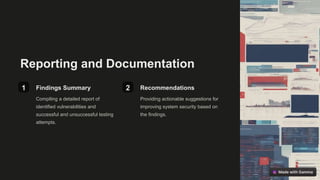
Reporting and Documentation
1 Findings Summary
Compiling a detailed report of
identified vulnerabilities and
successful and unsuccessful testing
attempts.
2 Recommendations
Providing actionable suggestions for
improving system security based on
the findings.
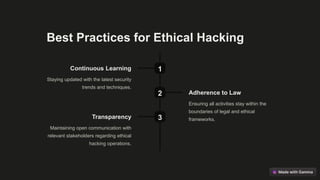
Best Practices for Ethical Hacking
1
Continuous Learning
Staying updated with the latest security
trends and techniques.
2 Adherence to Law
Ensuring all activities stay within the
boundaries of legal and ethical
frameworks.
3
Transparency
Maintaining open communication with
relevant stakeholders regarding ethical
hacking operations.

Untitled (3).pptx

  • 1.
    Introduction to Ethical Hacking Ethicalhacking involves authorized testing of computer systems to identify potential vulnerabilities. It is an essential practice for organizations to strengthen their cybersecurity defenses. JV by Joseph Vijay
  • 2.
    Understanding the DifferentTypes of Hackers Black Hat Hackers Unethical hackers who exploit system vulnerabilities for malicious purposes, such as theft or sabotage. White Hat Hackers Ethical hackers who use their skills to strengthen security measures and protect against cyber threats. Grey Hat Hackers Hackers who can act in either an ethical or unethical manner, depending on the situation.
  • 3.
    Legal and EthicalConsiderations Laws and Regulations Understanding the legal boundaries and compliance requirements for ethical hacking operations. Ethical Guidelines Adhering to ethical standards and principles to ensure responsible and lawful hacking activities.
  • 4.
    Steps in theEthical Hacking Process Reconnaissance Gathering publicly available information about the target system. Vulnerability Assessment Identifying weaknesses that could be exploited. Exploitation Actively testing identified vulnerabilities for potential exploitation.
  • 5.
    Reconnaissance and Information Gathering 1Passive Reconnaissance Gathering information without directly interacting with the target system. 2 Active Reconnaissance Interacting with the target system to gather specific information.
  • 6.
    Vulnerability Assessment and Scanning 1Automated Tools Using automated scanners to identify vulnerabilities and security weaknesses. 2 Manual Testing Conducting hands-on assessments to identify nuanced vulnerabilities that automated tools may miss.
  • 7.
    Exploitation and GainingAccess Privilege Escalation Exploiting vulnerabilities to gain elevated access within the system. Backdoor Entry Creating hidden entry points for unauthorized access to the system.
  • 8.
    Maintaining Access andCovering Tracks Persistence Maintaining long-term access to the compromised system without detection. Covering Tracks Removing any evidence of unauthorized system access or tampering.
  • 9.
    Reporting and Documentation 1Findings Summary Compiling a detailed report of identified vulnerabilities and successful and unsuccessful testing attempts. 2 Recommendations Providing actionable suggestions for improving system security based on the findings.
  • 10.
    Best Practices forEthical Hacking 1 Continuous Learning Staying updated with the latest security trends and techniques. 2 Adherence to Law Ensuring all activities stay within the boundaries of legal and ethical frameworks. 3 Transparency Maintaining open communication with relevant stakeholders regarding ethical hacking operations.