Essentials of MIS 12th Edition Laudon Solutions Manual
Essentials of MIS 12th Edition Laudon Solutions Manual
Essentials of MIS 12th Edition Laudon Solutions Manual
Essentials of MIS 12th Edition Laudon Solutions Manual
Essentials of MIS 12th Edition Laudon Solutions Manual
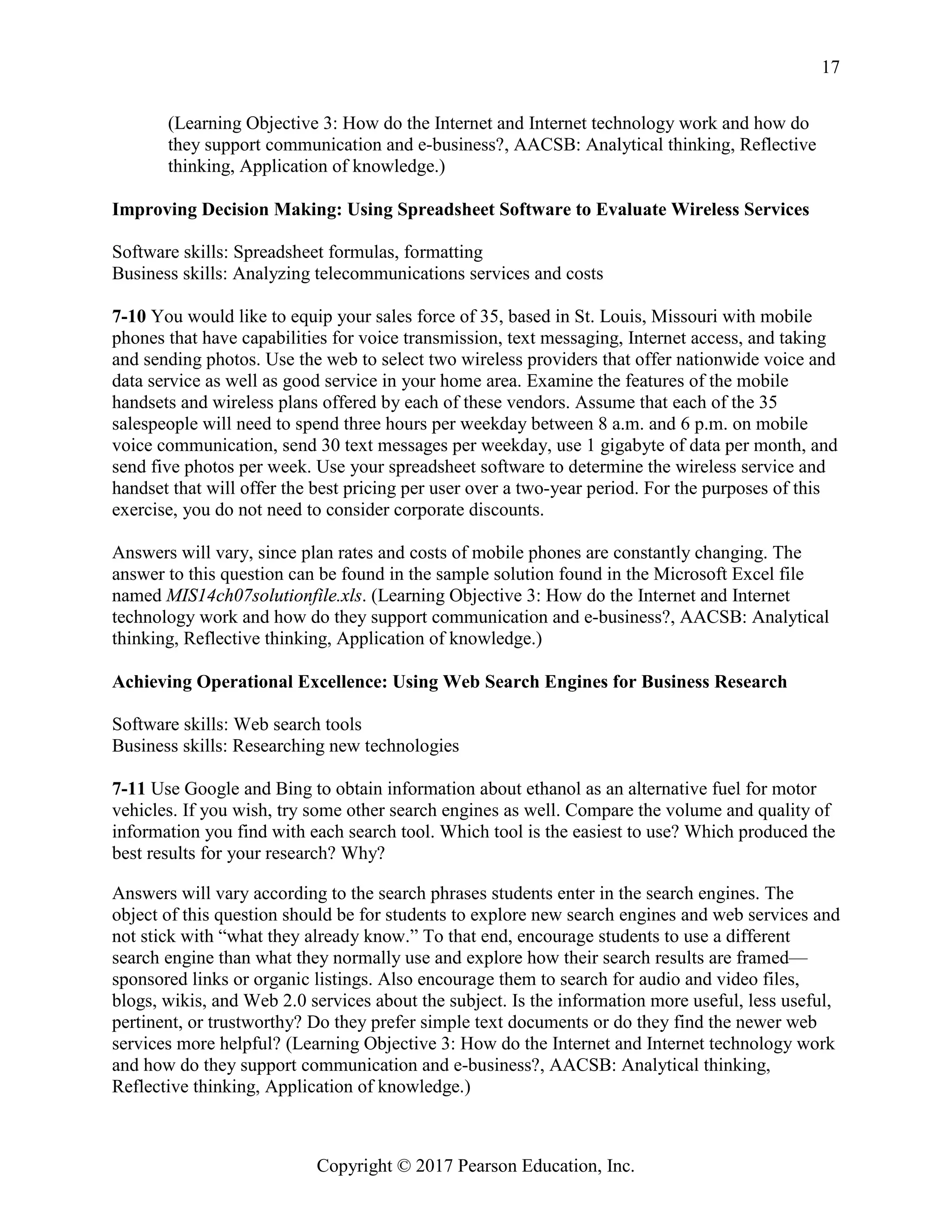
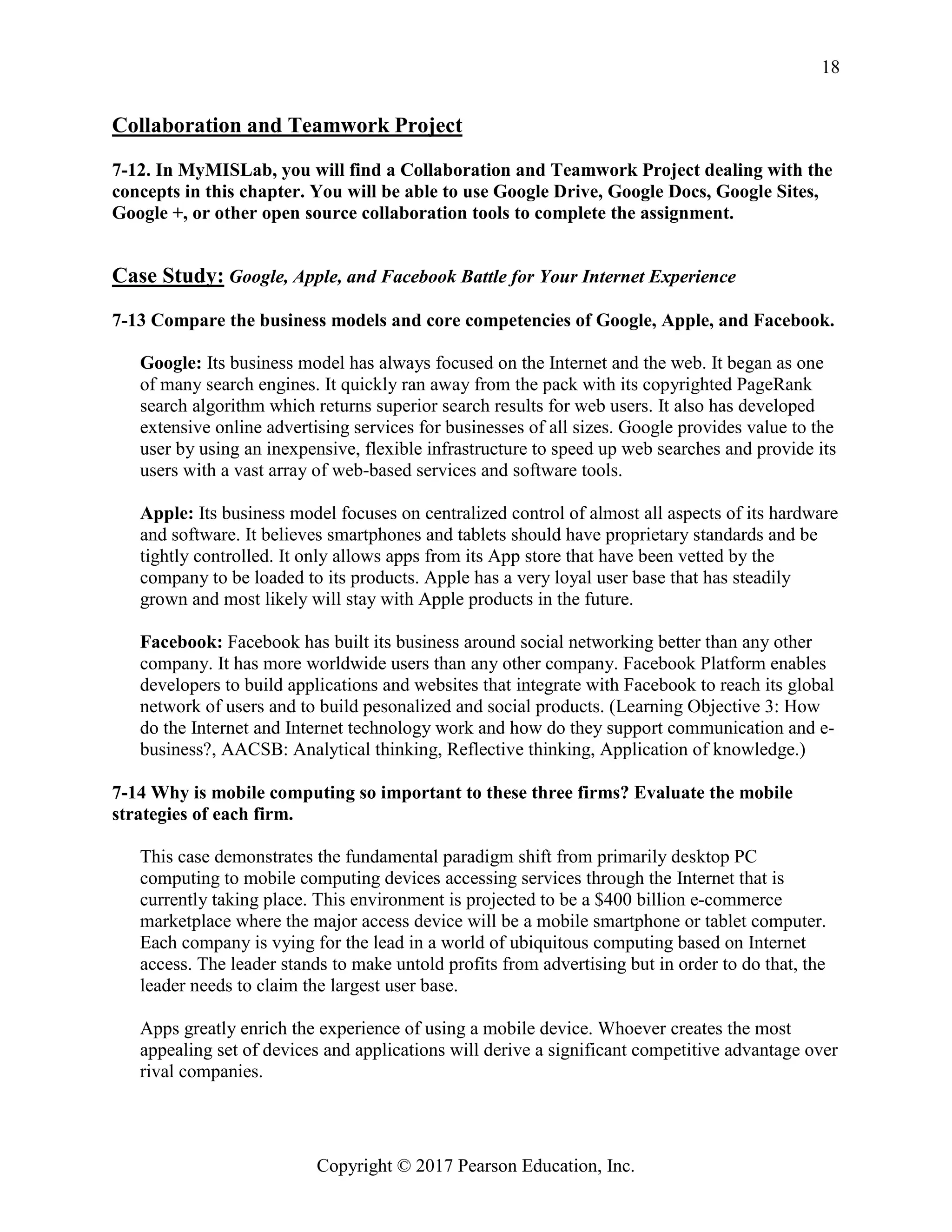
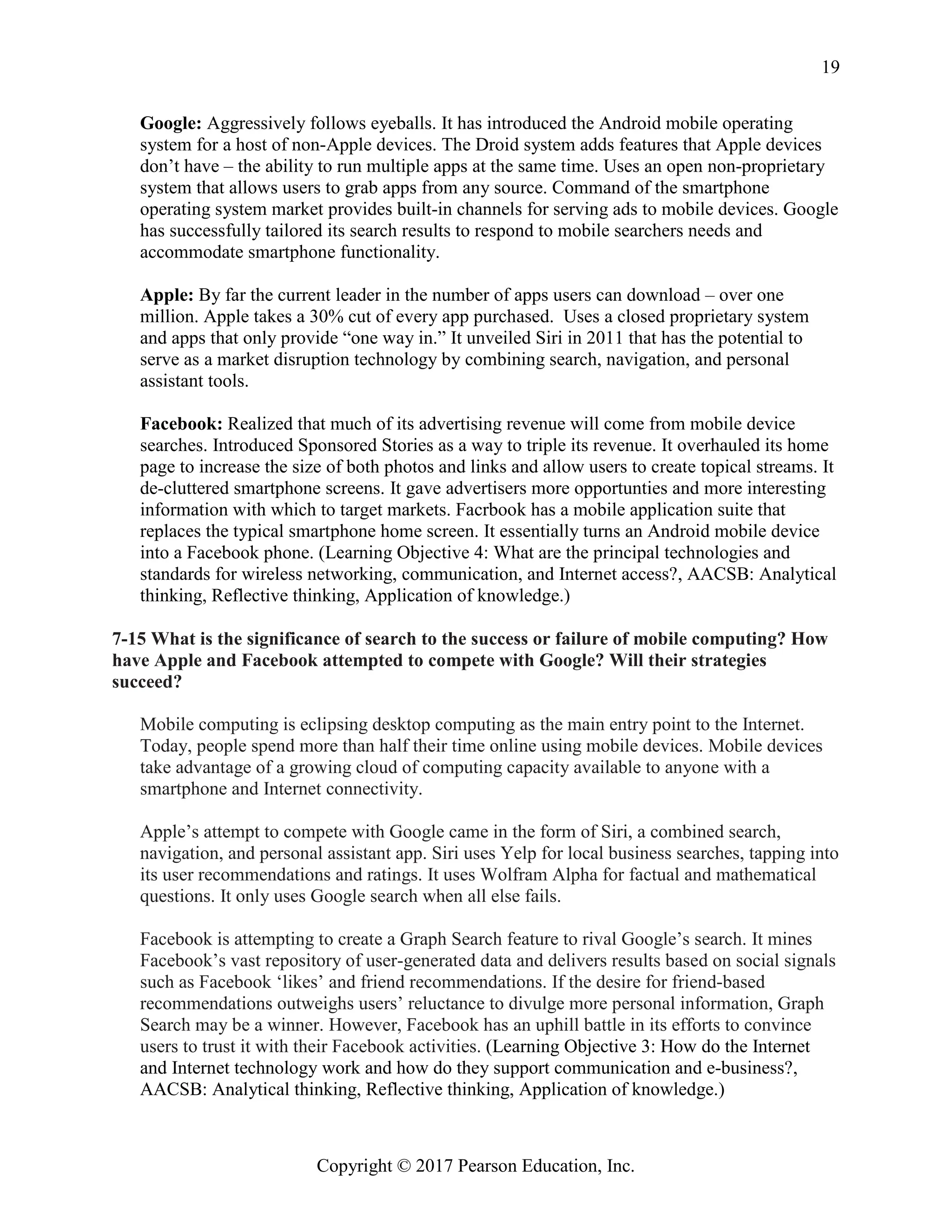
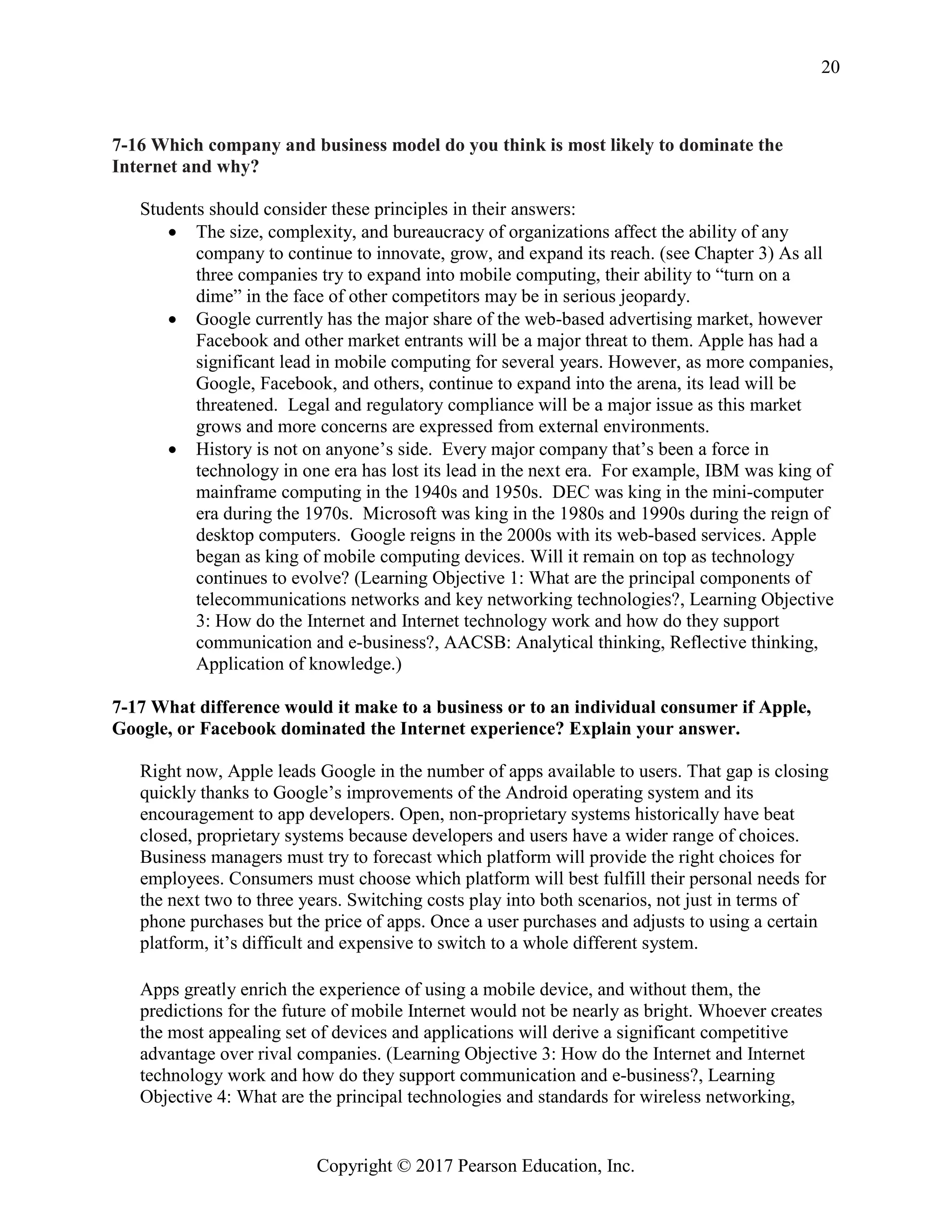
1.
Visit https://testbankdeal.com todownload the full version and
explore more testbank or solutions manual
Essentials of MIS 12th Edition Laudon Solutions
Manual
_____ Click the link below to download _____
https://testbankdeal.com/product/essentials-of-mis-12th-
edition-laudon-solutions-manual/
Explore and download more testbank or solutions manual at testbankdeal.com
2.
Here are somerecommended products that we believe you will be
interested in. You can click the link to download.
Essentials of MIS 12th Edition Laudon Test Bank
https://testbankdeal.com/product/essentials-of-mis-12th-edition-
laudon-test-bank/
Essentials of MIS 10th Edition Laudon Solutions Manual
https://testbankdeal.com/product/essentials-of-mis-10th-edition-
laudon-solutions-manual/
Essentials of MIS 13th Edition laudon Solutions Manual
https://testbankdeal.com/product/essentials-of-mis-13th-edition-
laudon-solutions-manual/
Business Driven Information Systems Canadian 4th Edition
Baltzan Solutions Manual
https://testbankdeal.com/product/business-driven-information-systems-
canadian-4th-edition-baltzan-solutions-manual/
3.
Anatomy And Physiology9th Edition Patton Solutions Manual
https://testbankdeal.com/product/anatomy-and-physiology-9th-edition-
patton-solutions-manual/
Management Canadian 12th Edition Robbins Solutions Manual
https://testbankdeal.com/product/management-canadian-12th-edition-
robbins-solutions-manual/
Educational Psychology 14th Edition Woolfolk Test Bank
https://testbankdeal.com/product/educational-psychology-14th-edition-
woolfolk-test-bank/
Created Equal A History of the United States Volume 1 5th
Edition Jones Test Bank
https://testbankdeal.com/product/created-equal-a-history-of-the-
united-states-volume-1-5th-edition-jones-test-bank/
Principles of Taxation for Business and Investment
Planning 16th Edition Jones Test Bank
https://testbankdeal.com/product/principles-of-taxation-for-business-
and-investment-planning-16th-edition-jones-test-bank/
4.
Marketing 4th EditionGrewal Test Bank
https://testbankdeal.com/product/marketing-4th-edition-grewal-test-
bank/
It was indeedremarkable. A blood-red sun was shouldering his way
in and out of a wide dull mass of gray cloud that was unrelieved by a
single fleck of color.
Rose looked at the sky, and Vesper looked at her, and thought of a
grieving Madonna. She had been so gay and cheerful lately. What
had happened to call that expression of divine tenderness and
sympathy to her face? He had never seen her so ethereal and so
spiritually beautiful, not even when she was bending over his sick-
bed. What a rest and a pleasure to weary eyes she was, in her black
artistic garments, and how pure was the oval of her face, how
becoming the touch of brownness on the fair skin. The silk
handkerchief knotted under her chin and pulled hood-wise over the
shock of flaxen hair combed up from the forehead, which two or
three little curls caressed daintily, gave the finishing touch of
quaintness and out-of-the-worldness to her appearance.
"You are feeling slightly blue this evening, are you not?" he asked.
"Blue,—that means one's thoughts are black?" said Rose, bringing
her glance back to him.
"Yes."
"Then I am a very little blue," she said, frankly. "This inn is like the
world to me. When those about me are sad, I, too, am sad.
Sometimes I grieve when strangers go,—for days in advance I have
a weight at heart. When they leave, I shut myself in my room. For
others I do not care."
"And are you melancholy this evening because you are thinking that
my mother and I must soon leave?"
Her eyes filled with tears. "No; I did not think of that, but I do now."
"Then what was wrong with you?"
"Nothing, since you are again cheerful," she said, in tones so doleful
that Vesper burst into one of his rare laughs, and Rose, laughing
27.
with him, brushedthe tears from her face.
"There was something running in my mind that made me feel
gloomy," he said, after a short silence. "It has been haunting me all
day."
Her eager glance was a prayer to him to share the cause of his
unhappiness with her, and he recited, in a low, penetrating voice,
the lines:
"Mon Dieu, pour fuir la mort n'est-il aucun
moyen?
Quoi? Dans un jour peut-être immobile et
glacé....
Aujourd'hui avenir, le monde, la pensée
Et puis, demain, ... plus rien."
Rose had never heard anything like this, and she was troubled, and
turned her blue eyes to the sky, where a trailing white cloud was
soaring above the dark cloud-bank below. "It is like a soul going up
to our Lord," she murmured, reverently.
Vesper would not shock her further with his heterodoxy. "Forget
what I said," he went on, lightly, "and let me beg you never to put
anything on your head but that handkerchief. You Acadien women
wear it with such an air."
"But it is because we know how to tie it. Look,—this is how the
Italian women in Boston carry those colored ones," and, pulling the
piece of silk from her head, she arranged it in severe lines about her
face.
"A decided difference," Vesper was saying, when Agapit came
around the corner of the house, driving Toochune, who was attached
to a shining dog-cart.
"Are you going with us?" he called out.
"I have not yet been asked."
28.
"Thou naughty Rose,"exclaimed Agapit; but she had already hurried
up-stairs to invite Mrs. Nimmo to accompany them. "Madame, your
mother, prefers to read," she said, when she came back, "therefore
Narcisse will come."
"Mount beside me," said Agapit to Vesper; "Rose and Narcisse will sit
in the background."
"No," said Vesper, and he calmly assisted Rose to the front seat,
then extended a hand to swing Narcisse up beside her. The child,
however, clung to him, and Vesper was obliged to take him in the
back seat, where he sat nodding his head and looking like a big
perfumed flower in his drooping hat and picturesque pink trousers.
"You smile," said Agapit, who had suddenly twisted his head around.
"I always do," said Vesper, "for the space of five minutes after
getting into this cart."
"But why?"
"Well—an amusing contrast presents itself to my mind."
"And the contrast, what is it?"
"I am driving with a modern Evangeline, who is not the owner of the
rough cart that I would have fancied her in, a few weeks ago, but of
a trap that would be an ornament to Commonwealth Avenue."
"Am I the modern Evangeline?" said Agapit, in his breakneck
fashion.
"To my mind she was embodied in the person of your cousin," and
Vesper bowed in a sidewise fashion towards his landlady.
Rose crimsoned with pleasure. "But do you think I am like
Evangeline,—she was so dark, so beautiful?"
"You are passable, Rose, passable," interjected Agapit, "but you lack
the passion, the fortitude of the heroine of Mr. Nimmo's immortal
29.
countryman, whom allAcadiens venerate. Alas! only the poets and
story-tellers have been true to Acadie. It is the historians who lie."
"Why do you think your cousin is lacking in passion and fortitude?"
asked Vesper, who had either lost his gloomy thoughts, or had
completely subdued them, and had become unusually vivacious.
"She has never loved,—she cannot. Rose, did you love your husband
as I did la belle Marguerite?"
"My husband was older,—he was as a father," stammered Rose.
"Certainly I did not tear my hair, I did not beat my foot on the
ground when he died, as you did when la belle married the miller."
"Have you ever loved any man?" pursued Agapit, unmercifully.
"Oh, shut up, Agapit," muttered Vesper; "don't bully a woman."
Agapit turned to stare at him,—not angrily, but rather as if he had
discovered something new and peculiar in the shape of young
manhood. "Hear what she always says when young men, and often
old men, drive up and say, 'Rose à Charlitte, will you marry me?' She
says, 'Love,—it is all nonsense. You make all that.' Is it not so,
Rose?"
"Yes," she replied, almost inaudibly; "I have said it."
"You make all that," repeated Agapit, triumphantly. "They can rave
and cry,—they can say, 'My heart is breaking;' and she responds,
'Love,—there is no such thing. You make all that.' And yet you call
her an Evangeline, a martyr of love who laid her life on its holy
altar."
Rose was goaded into a response, and turned a flushed and puzzled
face to her cousin. "Agapit, I will explain that lately I do not care to
say 'You make all that.' I comprehend—possibly because the
blacksmith talks so much to me of his wish towards my sister—that
one does not make love. It is something that grows slowly, in the
breast, like a flower. Therefore, do not say that I am of ice or stone."
30.
"But you donot care to marry,—you just come from telling me so."
"Yes; I am not for marriage," she said, modestly, "yet do not say
that I understand not. It is a beautiful thing to love."
"It is," said Agapit, "yet do not think of it, since thou dost not care
for a husband. Let thy thoughts run on thy cooking. Thou wert born
for that. I think that thou must have arrived in this world with a little
stew-pan in thy hand, a tasting fork hanging at thy girdle. Do not
wish to be an Evangeline or to read books. Figure to yourself, Mr.
Nimmo,"—and he turned his head to the back seat,—"that last night
she came to my room, she begged me for an English book,—she
who says often to Narcisse, 'I will shake thee, my little one, if thou
usest English words.' She says now that she wishes to learn,—she
finds herself forgetful of many things that she learned in the
convent. I said, 'Go to bed, thou silly fool. Thy eyes are burning and
have black rings around them the color of thy stove,' and she
whimpered like a baby."
"Your cousin is an egotist, Mrs. Rose," said Vesper, over his shoulder.
"I will lend you some books."
"Agapit is as a brother," she replied, simply.
"I have been a good brother to thee," he said, "and I will never
forget thee; not even when I go out into the world. Some day I will
send for thee to live with me and my wife."
"Perhaps thy wife will not let me," she said, demurely.
"Then she may leave me; I detest women who will not obey."
For some time the cousins chattered on and endeavored to snatch a
glimpse, in "time's long and dark prospective glass," of Agapit's
future wife, while Vesper listened to them with as much indulgence
as if they had been two children. He was just endeavoring to fathom
the rationale of their curious interchange of thou and you, when
Agapit said, "If it is agreeable to you, we will drive back in the
woods to the Concession. We have a cousin who is ill there,—see,
31.
here we passthe station," and he pointed his whip at the gabled
roof near them.
The wheels of the dog-cart rolled smoothly over the iron rails, and
they entered upon a road bordered by sturdy evergreens that
emitted a deliciously resinous odor and occasioned Mrs. Rose to
murmur, reverently, "It is like mass; for from trees like these the
altar boys get the gum for incense."
Wild gooseberry and raspberry bushes lined the roadside, and under
their fruit-laden branches grew many wild flowers. A man who
stopped Agapit to address a few remarks to him gathered a handful
of berries and a few sprays of wild roses and tossed them in
Narcisse's lap.
The child uttered a polite, "Merci, monsieur" (thank you, sir), then
silently spread the flowers and berries on the lap rug and allowed
tears from his beautiful eyes to drop on them.
Vesper took some of the berries in his hand, and carefully explained
to the sorrowing Narcisse that the sensitive shrubs did not shiver
when their clothes were stripped from them and their hats pulled off.
They were rather shaking their sides in laughter that they could give
pleasure to so good and gentle a boy. And the flowers that bowed so
meekly when one wished to behead them, were trembling with
delight to think that they should be carried, for even a short time, by
one who loved them so well.
Narcisse at last was comforted, and, drying his tears, he soberly ate
the berries, and presented the roses to his mother in a brilliant
nosegay, keeping only one that he lovingly fastened in his neck,
where it could brush against his cheek.
Soon they were among the clearings in the forest. Back of every
farm stood grim trees in serried rows, like soldiers about to close in
on the gaps made in their ranks by the diligent hands of the Acadien
farmers. The trees looked inexorable, but the farmers were more so.
32.
Here in thebackwoods so quiet and still, so favorable for farming,
the forest must go as it had gone near the shore.
About every farmhouse, men and women were engaged in driving in
cows, tying up horses, shutting up poultry, feeding pigs, and
performing the hundred and one duties that fall to the lot of a
farmer's family. Everywhere were children. Each farmer seemed to
have a quiver full of these quiet, well-behaved little creatures, who
gazed shyly and curiously at the dog-cart as it went driving by.
When they came to a brawling, noisy river, having on its banks a
saw-mill deserted for the night, Agapit exclaimed, "We are at last
arrived!"
Close to the mill was a low, old-fashioned house, situated in the
midst of an extensive apple orchard in which the fruit was already
taking on size and color.
"They picked four hundred barrels from it last year," said Agapit,
"our cousins, the Kessys, who live here. They are rich, but very
simple," and springing out, he tied Toochune's head to the gatepost.
"Now let us enter," he said, and he ushered Vesper into a small, dull
room where an old woman of gigantic stature sat smoking by an
open fireplace.
Another tall woman, with soft black eyes, and wearing on her breast
a medal of the congregation of St. Anne, took Rose away to the sick-
room, while Agapit led Vesper and Narcisse to the fireplace. "Cousin
grandmother, will you not tell this gentleman of the commencement
of the Bay?"
The old woman, who was nearly sightless, took her pipe from her
mouth, and turned her white head. "Does he speak French?"
"Yes, yes," said Agapit, joyfully.
A light came into her face,—a light that Vesper noticed always came
into the faces of Acadiens, no matter how fluent their English, if he
addressed them in their mother tongue.
33.
"I was bornen haut de la Baie" (up the Bay), she began, softly.
"Further than Sleeping Water,—towards Digby," said Agapit, in an
undertone.
"Near Bleury," she continued, "where there were only eight families.
In the morning my mother would look out at the neighbors'
chimneys; where she saw smoke she would send me, saying, 'Go,
child, and borrow fire.' Ah! those were hard days. We had no roads.
We walked over the beach fifteen miles to Pointe à l'Eglise to hear
mass sung by the good Abbé.
"There were plenty of fish, plenty of moose, but not so many boats
in those days. The hardships were great, so great that the weak
died. Now when my daughter sits and plays on the organ, I think of
it. David Kessy, my father, was very big. Once our wagon, loaded
with twenty bushels of potatoes, stuck in the mud. He put his
shoulder against it and lifted it. Nowadays we would rig a jack, but
my father was strong, so strong that he took insults, though he
trembled, for he knew a blow from his hand would kill a man."
The Acadienne paused, and fell into a gentle reverie, from which
Agapit, who was stepping nimbly in and out of the room with jelly
and other delicacies that he had brought for the invalid, soon roused
her.
"Tell him about the derangement, cousin grandmother," he
vociferated in her ear, "and the march from Annapolis."
CHAPTER XI
NEWS OF THE FIERY FRENCHMAN.
"Below me winds the river to the sea,
On whose brown slope stood wailing, homeless maids;
34.
Stood exiled sons;unsheltered hoary heads;
And sires and mothers dumb in agony.
The awful glare of burning homes, where free
And happy late they dwelt, breaks on the shades,
Encompassing the sailing fleet; then fades,
With tumbling roof, upon the night-bound sea.
How deep is hope in sorrow sunk! How harsh
The stranger voice; and loud the hopeless wail!
Then silence came to dwell; the tide fell low;
The embers died. On the deserted marsh,
Where grain and grass stirred only to the gale,
The moose unchased dare cross the Gaspereau."
J. F. Herbin.
An extraordinary change came over the aged woman at Agapit's
words. Some color crept to her withered cheeks. She straightened
herself, and, no longer leaning on her cane, said, in a loud, firm
voice, to Vesper, "The Acadiens were not all stolen from Annapolis at
the derangement. Did you think they were?"
"I don't know that I ever thought about it, madame," he said,
courteously; "but I should like to know."
"About fifty families ran to the wood," she said, with mournful
vivacity; "they spent the winter there; I have heard the old people
talk of it when I was young. They would sit by the fire and cry. I
would try not to cry, but the tears would come. They said their good
homes were burnt. Only at night could they revisit them, lest
soldiers would catch them. They dug their vegetables from the
ground. They also got one cow and carried her back. Ah, she was a
treasure! There was one man among them who was only half
French, and they feared him, so they watched. One day he went out
of the woods,—the men took their guns and followed. Soon he
returned, fifty soldiers marching behind him. 'Halt!' cried the
Acadiens. They fired, they killed, and the rest of the soldiers ran.
'Discharge me! discharge me!' cried the man, whom they had
35.
caught. 'Yes, wewill discharge you,' they said, and they put his back
against a tree, and once more they fired, but very sadly. At the end
of the winter some families went away in ships, but the Comeaus,
Thibaudeaus, and Melançons said, 'We cannot leave Acadie; we will
find a quiet place.' So they began a march, and one could trace
them by the graves they dug. I will not tell you all, for why should
you be sad? I will say that the Indians were good, but sometimes
the food went, and they had to boil their moccasins. One woman,
who had a young baby, got very weak. They lifted her up, they
shook the pea-straw stuffing from the sack she lay on, and found
her a handful of peas, which they boiled, and she got better.
"They went on and on, they crossed streams, and carried the little
ones, until they came here to the Bay,—to Grosses Coques,—where
they found big clams, and the tired women said, 'Here is food; let us
stay.'
"The men cut a big pine and hollowed a boat, in which they went to
the head of the Bay for the cow they had left there. They threw her
down, tied her legs, and brought her to Grosses Coques. Little by
little they carried also other things to the Bay, and made themselves
homes.
"Then the families grew, and now they cover all the Bay. Do you
understand now about the march from Annapolis?"
"Thank you, yes," said Vesper, much moved by the sight of tears
trickling down her faded face.
"What reason did the old people give for this expulsion from their
homes?"
"Always the same, always, always," said Madame Kessy, with energy.
"They would not take the oath, because the English would not put in
it that they need not fight against the French."
"But now you are happy under English rule?"
36.
"Yes, now,—but thepast? What can make up for the weeping of the
old people?"
Nothing could, and Vesper hastened to introduce a new subject of
conversation. "I have heard much about the good Abbé that you
speak of. Did you ever see him?"
"See him,—ah, sir, he was an angel of God, on this Bay, and he a
gentleman out of France. We were all his children, even the poor
Indians, whom he gathered around him and taught our holy religion,
till their fine voices would ring over the Bay, in hymns to the ever
blessed Virgin. He denied himself, he paid our doctors' bills, even to
twenty pounds at a time,—ah, there was mourning when he died.
When my bans were published in church the good Abbé rode no
more on horseback along the Bay. He lay a corpse, and I could
scarcely hold up my head to be married."
"In speaking of those old days," said Vesper, "can you call to mind
ever hearing of a LeNoir of Grand Pré called the Fiery Frenchman?"
"Of Etex LeNoir," cried the old woman, in trumpet tones, "of the
martyr who shamed an Englishman, and was murdered by him?"
"Yes, that is the man."
"I have heard of him often, often. The old ones spoke of it to me.
His heart was broken,—the captain, who was more cruel than
Winslow, called him a papist dog, and struck him down, and the
sailors threw him into the sea. He laid a curse on the wicked captain,
but I cannot remember his name."
"Did you ever hear anything of the wife and child of Etex LeNoir?"
"No," she said, absently, "there was only the husband Etex that I
had heard of. Would not his wife come back to the Bay? I do not
know," and she relapsed into the dullness from which her temporary
excitement had roused her.
37.
"He was calledthe Fiery Frenchman," she muttered, presently, but
so low that Vesper had to lean forward to hear her. "The old ones
said that there was a mark like flame on his forehead, and he was
like fire himself."
"Agapit, is it not time that we embark?" said Rose, gliding from an
inner room. "It will soon be dark."
Agapit sprang up. Vesper shook hands with Madame Kessy and her
daughter, and politely assured them, in answer to their urgent
request, that he would be sure to call again, then took his seat in
the dog-cart, where in company with his new friends he was soon
bowling quickly over a bit of smooth and newly repaired road.
Away ahead, under the trees, they soon heard snatches of a lively
song, and presently two young men staggered into view supporting
each other, and having much difficulty in keeping to their side of the
road.
Agapit, with angry mutterings, drove furiously by the young men,
with his head well in the air, although they saluted him as their dear
cousin from the Bay.
Rose did not speak, but she hung her head, and Vesper knew that
she was blushing to the tips of the white ears inside her black
handkerchief.
No one ventured a remark until they reached a place where four
roads met, when Agapit ejaculated, desperately, "The devil is also
here!"
Vesper turned around. The sun had gone down, the twilight was
nearly over, but he possessed keen sight and could plainly discover
against the dull blue evening sky the figures of a number of men
and boys, some of whom were balancing themselves on the top of a
zigzag fence, while others stood with hands in their pockets,—all
vociferously laughing and jeering at a man who staggered to and fro
38.
in their midstwith clenched fists, and light shirt-sleeves spotted with
red.
"This is abominable," said Agapit, in a rage, and he was about to lay
his whip on Toochune's back when Vesper suggested mildly that he
was in danger of running down some of his countrymen.
Agapit pulled up the horse with a jerk, and Rose immediately sprang
to the road and ran up to the young man, who had plainly been
fighting and was about to fight again.
Vesper slipped from his seat and stood by the wheel.
"Do not follow her," exclaimed Agapit; "they will not hurt her. They
would beat you."
"I know it."
"She is my cousin, thou impatient one," pursued Agapit, irritably. "I
would not allow her to be insulted."
"I know that, too," said Vesper, calmly, and he watched the young
men springing off the fences and hurrying up to Rose, who had
taken the pugilist by the hand.
"Isidore," she said, sorrowfully, and as unaffectedly as if they had
been alone, "hast thou been fighting again?"
"It is her second cousin," growled Agapit; "that is why she
interferes."
"Écoute-moi, écoute-moi, Rose" (listen to me), stammered the
young man in the blood-stained shirt. "They all set upon me. I was
about to be massacred. I struck out but a little, and I got some taps
here and there. I was drunk at first, but I am not very drunk now."
"Poor Isidore, I will take thee home; come with me."
The crowd of men and boys set up a roar. They were quarrelsome
and mischievous, and had not yet got their fill of rowdyism.
39.
"Va-t'ang, va-t'ang" (goaway), "Rose à Charlitte. We want no
women here. Go home about thy business. If Big Fists wishes to
fight, we will fight."
Among all the noisy, discordant voices this was the only insulting
one, and Rose turned and fixed her mild gaze on the offender, who
was one of the oldest men present, and the chief mischief-maker of
the neighborhood. "But it is not well for all to fight one man," she
said, gently.
"We fight one by one. Isidore is big,—he has never enough. Go
away, or there will yet be a bigger row," and he added a sentence of
gross abuse.
Vesper made a step forward, but Isidore, the young bully, who was
of immense height and breadth, and a son of the old Acadienne that
they had just quitted, was before him.
"You wish to fight, my friends," he said, jocularly; "here, take this,"
and, lifting his big foot, he quickly upset the offender, and kicked
him towards some men in the crowd who were also relatives of
Rose.
One of them sprang forward, and, with his dark face alight with glee
at the chance to avenge the affront offered to his kinswoman, at
once proceeded to beat the offender calmly and systematically, and
to roll him under the fence.
Rose, in great distress, attempted to go to his rescue, but the young
giant threw his arm around her. "This is only fun, my cousin. Thou
must not spoil everything. Come, I will return with thee."
"Nâni" (no), cried Agapit, furiously, "thou wilt not. Fit company art
thou for strangers!"
Isidore stared confusedly at him, while Vesper settled the question
by inviting him in the back seat and installing Rose beside him. Then
he held out his arms to Narcisse, who had been watching the
40.
disturbance with drowsyinterest, fearful only that the Englishman
from Boston might leave him to take a hand in it.
As soon as Vesper mounted the seat beside him, Agapit jerked the
reins, and set off at a rapid pace; so rapid that Vesper at first caught
only snatches of the dialogue carried on behind him, that was tearful
on the part of Rose, and meek on that of Isidore.
Soon Agapit sobered down, and Rose's words could be
distinguished. "My cousin, how canst thou? Think only of thy mother
and thy wife; and the good priest,—suppose he had come!"
"Then thou wouldst have seen running like that of foxes," replied
Isidore, in good-natured, semi-interested tones.
"Thou wast not born a drunkard. When sober thou art good, but
there could not be a worse man when drunk. Such a pile of cursing
words to go up to the sky,—and such a volley of fisting. Ah, how
thou wast wounding Christ!"
Isidore held on tightly, for Agapit was still driving fast, and uttered
an inaudible reply.
"Tell me where thou didst get that liquor," said Rose.
"It was a stolen cask, my cousin."
"Isidore!"
"But I did not steal it. It came from thy charming Bay. Thou didst not
know that, shortly ago, a captain sailed to Sleeping Water with five
casks of rum. He hired a man from the Concession to help him hide
them, but the man stole one cask. Imagine the rage of the captain,
but he could not prosecute, for it was smuggled. Since then we have
fun occasionally."
"Who is that bad man? If I knew where was his cask, I would take a
little nail and make a hole in it."
"Rose, couldst thou expect me to tell thee?"
41.
"Yes," she said,warmly. Then, remembering that she had been
talking English to his French, she suddenly relapsed into low, swift
sentences in her own tongue, which Vesper could not understand.
He caught their import, however. She was still inveighing against the
sin of drunkenness and was begging him to reform, and her voice
did not flag until they reached his home, where his wife—a young
woman with magnificent eyes and a straight, queenly figure—stood
by the gate.
"Bon soir (good evening), Claudine," called out Agapit. "We have
brought home Isidore, who, hearing that a distinguished stranger
was about to pass through the Concession, thoughtfully put himself
on exhibition at the four roads. You had better keep him at home
until La Guerrière goes back to Saint Pierre."
"It was La Guerrière that brought the liquor," said Rose, suddenly, to
Isidore.
He did not contradict her, and she said, firmly, "Never shall that
captain darken my doors again."
The young Acadien beauty gave Vesper a fleeting glance, then she
said, bitterly, "It should rather be Saint Judas, for from there the evil
one sends stuff to torture us women—Here enter," and half
scornfully, half affectionately, she extended a hand to her huge
husband, who was making a wavering effort to reach the gateway.
He clung to her as if she had been an anchor, and when she asked
him what had happened to his shirt he stuttered, regretfully, "Torn,
Claudine,—torn again."
"How many times should one mend a shirt?" she asked, turning her
big blazing eyes on Rose.
"Charlitte never became drunk," said Rose, in a plaintive voice, "but
I have mended the shirts of my brothers at least a hundred times."
"Then I have but one more time," said the youthful Madame Kessy.
"After that I shall throw it in the fire. Go into the house, my
42.
husband. I wasa fool to have married thee," she added, under her
breath.
Isidore stood tottering on his feet, and regarded her with tipsy
gravity. "And thou shalt come with me, my pretty one, and make me
a hot supper and sing me a song."
"I will not do that. Thou canst eat cold bread, and I will sing thee a
song with my tongue that will not please thee."
"The priest married us," said Isidore, doggedly, and in momentary
sobriety he stalked to the place where she stood, picked her up,
and, putting her under his arm, carried her into the house, she
meanwhile protesting and laughing hysterically while she shrieked
out something to Rose about the loan of a sleeve pattern.
"Yes, yes, I understand," called Rose, "the big sleeve, with many
folds; I will send it. Make thy husband his supper and come soon to
see me."
"Rose," said Agapit, severely, as they drove away, "is it a good thing
to make light of that curse of curses?"
"To make light of it! Mon Dieu, you do not understand. It is men
who make women laugh even when their hearts are breaking."
Agapit did not reply, and, as they were about to enter a thick wood,
he passed the reins to Vesper and got out to light the lamps.
While he was fidgeting with them, Rose moved around so that she
could look into the front seat.
"Your child is all right," said Vesper, gazing down at the head laid
confidingly against his arm. "He is sound asleep,—not a bit alarmed
by that fuss."
"It does not frighten him when human beings cry out. He only
sorrows for things that have no voices, and he is always right when
with you. It is not that; I wish to ask you—to ask you to forgive me."
43.
"For what?"
"But youknow—I told you what was not true."
"Do not speak of it. It was a mere bagatelle."
"It is not a bagatelle to make untruths," she said, wearily, "but I
often do it,—most readily when I am frightened. But you did not
frighten me."
Vesper did not reply except by a reassuring glance, which in her
preoccupation she lost, and, catching her breath, she went on, "I
think so often of a sentence from an Englishman that the sisters of a
convent used to say to us,—it is about the little lies as well as the
big ones that come from the pit."
"Do you mean Ruskin?" said Vesper, curiously, "when he speaks of
'one falsity as harmless, and another as slight, and another as
unintended,—cast them all aside; they may be light and accidental,
but they are ugly soot from the smoke of the pit for all that?'"
"Yes, yes, it is that,—will you write it for me?—and remember," she
continued, hurriedly, as she saw Agapit preparing to reënter the cart,
"that I did not say what I did to make a fine tale, but for my people
whom I love. You were a stranger, and I supposed you would linger
but a day and then proceed, and it is hard for me to say that the
Acadiens are no better than the English,—that they will get drunk
and fight. I did not imagine that you would see them, yet I should
not have told the story," and with her flaxen head drooping on her
breast she turned away from him.
"When is lying justifiable?" asked Vesper of Agapit.
The young Acadien plunged into a long argument that lasted until
they reached the top of the hill overlooking Sleeping Water. Then he
paused, and as he once more saw above him the wide expanse of
sky to which he was accustomed, and knew that before him lay the
Bay, wide, open, and free, he drew a long breath.
44.
"Ah, but Iam glad to arrive home. When I go to the woods it is as if
a large window through which I had been taking in the whole world
had been closed."
No one replied to him, and he soon swung them around the corner
and up to the inn door. Rose led her sleepy boy into the kitchen,
where bright lights were burning, and where the maid Célina
seemed to be entertaining callers. Vesper took the lantern and
followed Agapit to the stable.
"Is it a habit of yours to give your hotel guests drives?" he asked,
hanging the lantern on a hook and assisting Agapit in unbuckling
straps.
"Yes, whenever it pleases us. Many, also, hire our horse and pony.
You see that we have no common horse in Toochune."
"Yes, I know he is a thoroughbred."
"Rose, of course, could not buy such an animal. He was a gift from
her uncle in Louisiana. He also sent her this dog-cart and her organ.
He is rich, very rich. He went South as a boy, and was adopted by an
old farmer; Rose is the daughter of his favorite sister, and I tell her
that she will inherit from him, for his wife is dead and he is alone,
but she says not to count on what one does not know."
Vesper had already been favored with these items of information by
his mother, so he said nothing, and assisted Agapit in his task of
making long-legged Toochune comfortable for the night. Having
finished, and being rewarded by a grateful glance from the animal's
lustrous eyes, they both went to the pump outside and washed their
hands.
"It is too fine for the house," said Agapit. "Are you too fatigued to
walk? If agreeable I will take you to Sleeping Water River, where you
have not yet been, and tell you how it accumulated its name. There
is no one inside," he continued, as Vesper cast a glance at the
45.
kitchen windows, "butthe miller and his wife, in whom I no longer
take pleasure, and the mail-driver who tells so long stories."
"So long that you have no chance."
"Exactly," said Agapit, fumbling in his pocket. "See what I bought to-
day of a travelling merchant. Four cigars for ten cents. Two for you,
and two for me. Shall we smoke them?"
Vesper took the cigars, slipped them in his pocket, and brought out
one of his own, then with Agapit took the road leading back from
the village to the river.
CHAPTER XII.
AN UNHAPPY RIVER.
"Pools and shadows merge
Beneath the branches, where the rushes lean
And stumble prone; and sad along the verge
The marsh-hen totters. Strange the branches
play
Above the snake-roots in the dark and wet,
Adown the hueless trunks, this summer day.
Strange things the willows whisper."
J. F. H.
"There is a story among the old people," said Agapit, "that a band of
Acadiens, who evaded the English at the time of the expulsion,
sailed into this Bay in a schooner. They anchored opposite Sleeping
Water, and some of the men came ashore in a boat. Not knowing
that an English ship lay up yonder, hidden by a point of land, they
pressed back into the woods towards Sleeping Water Lake. Some of
the English, also, were on their way to this lake, for it is historic. The
46.
Acadiens found tracesof them and turned towards the shore, but
the English pursued over the marshes by the river, which at last the
Acadiens must cross. They threw aside their guns and jumped in,
and, as one head rose after another, the English, standing on the
bank, shot until all but one were killed. This one was a Le Blanc, a
descendant of René Le Blanc, that one reads of in 'Evangeline.'
Rising up on the bank, he found himself alone. Figure the anguish of
his heart,—his brothers and friends were dead. He would never see
them again, and he turned and stretched out a hand in a supreme
adieu. The English, who would not trouble to swim, fired at him, and
called, 'Go to sleep with your comrades in the river.'
"'They sleep,' he cried, 'but they will rise again in their children,' and,
quite untouched by their fire, he ran to his boat, and, reaching the
ship, set sail to New Brunswick; and in later years his children and
the children of the murdered ones came back to the Bay, and began
to call the river Sleeping Water, and, in time, the lake, which was
Queen Anne's Lake, was also changed to Sleeping Water Lake."
"And the soldiers?"
"Ah! you look for vengeance, but does vengeance always come?
Remember the Persian distich:
"'They came, conquered, and burned,
Pillaged, murdered, and went.'"
"I do not understand this question thoroughly," said Vesper, with
irritation, "yet from your conversation it seems not so barbarous a
thing that the Acadiens should have been transported as that those
who remained should have been so persecuted."
"Now is your time to read 'Richard.' I have long been waiting for
your health to be restored, for it is exciting."
"That is the Acadien historian you have spoken of?"
"Yes; and when you read him you will understand my joy at the
venerable letter you showed me. You will see why we blame the
47.
Welcome to ourwebsite – the ideal destination for book lovers and
knowledge seekers. With a mission to inspire endlessly, we offer a
vast collection of books, ranging from classic literary works to
specialized publications, self-development books, and children's
literature. Each book is a new journey of discovery, expanding
knowledge and enriching the soul of the reade
Our website is not just a platform for buying books, but a bridge
connecting readers to the timeless values of culture and wisdom. With
an elegant, user-friendly interface and an intelligent search system,
we are committed to providing a quick and convenient shopping
experience. Additionally, our special promotions and home delivery
services ensure that you save time and fully enjoy the joy of reading.
Let us accompany you on the journey of exploring knowledge and
personal growth!
testbankdeal.com




![Copyright © 2017 Pearson Education, Inc.
16
decisions that have to be made in determining whether to adopt this technology? Use the
web, if necessary, to find out more about unified communications and its costs.
Because the costs of purchasing and implementing a unified communication system will vary
based on the chosen system, so too will student answers.
(The following information was copied from www.networkworld.com, Nov 2010)
From a broad perspective, Verizon Business suggests that organizations need to evaluate and
measure how UC&C will benefit their organizations, determine whether the enterprise has
adequate in-house technical resources, personnel and network capacity; and define how to
integrate UC&C into business processes to align the deployment with critical business
initiatives.
At a more detailed level, Verizon Business suggested that in preparation for UC&C,
enterprises should:
• Invest in advanced IP networks because “UC&C starts with a capabilities-rich IP
infrastructure. . . [and] flexible and expansive IP networks serve as the foundation of
a successful UC&C deployment.”
• Inventory technology and personnel resources to better understand the technological
scope of UC&C deployments and “help identify potential network, equipment, and
application gaps.” Verizon Business also recommends a skills-assessment of technical
staff “to identify possible new hires and individuals requiring additional training.”
• Align technology with business objectives to “make purchasing decisions with a
focus on meeting specific business goals.” Any deployment should be designed to
maximize the impact of UC&C on business processes. The enterprise should also
establish benchmarks for success to better understand its ultimate objectives.
• Create a comprehensive roadmap that is “far reaching and covers areas such as
technology and finances, as well as detailed deployment and implementation plans.”
• Tackle security at the onset, with a design that integrates “seamlessly with a business’
current network and leverage existing technology investments.”
• Determine capabilities for ongoing management and decide “whether in-house staff
has the skills and time required to effectively manage and troubleshoot performance
issues.” As needed, enterprise should “select a managed services provider with the
people, tools, and processes to help provide consistent performance of UC&C
applications.”
• Develop support systems and processes so that the corporate IT staff is prepared to
address end-user performance issues and questions.
• Train and educate end users “to help users adopt and embrace these new tools so they
can work more efficiently and productively.”
• Measure and modify, with built-in milestones planned that “go beyond reliability and
availability measurements to assess the impact of UC&C from a financial, customer
service, business process, and end-user satisfaction perspective.”](https://image.slidesharecdn.com/14057-250303043547-5b8d6844/75/Essentials-of-MIS-12th-Edition-Laudon-Solutions-Manual-20-2048.jpg)