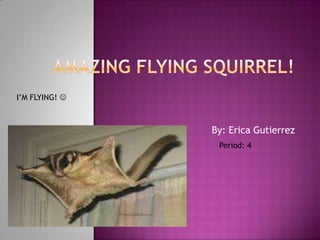
I’M FLYING! 


                By: Erica Gutierrez
                 Period: 4
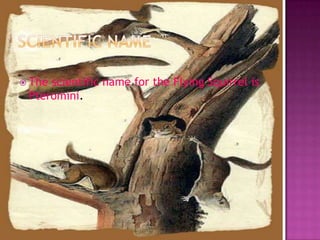
 Thescientific name for the Flying Squirrel is
 Pteromini.
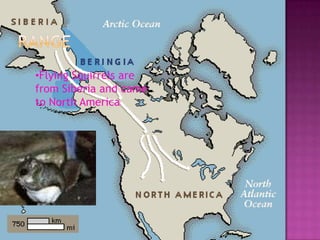
•Flying Squirrels are
from Siberia and came
to North America
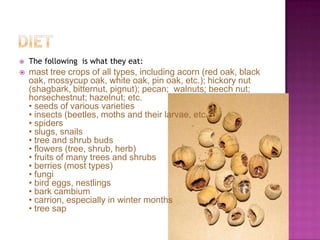
   The following is what they eat:
   mast tree crops of all types, including acorn (red oak, black
    oak, mossycup oak, white oak, pin oak, etc.); hickory nut
    (shagbark, bitternut, pignut); pecan; walnuts; beech nut;
    horsechestnut; hazelnut; etc.
    • seeds of various varieties
    • insects (beetles, moths and their larvae, etc.)
    • spiders
    • slugs, snails
    • tree and shrub buds
    • flowers (tree, shrub, herb)
    • fruits of many trees and shrubs
    • berries (most types)
    • fungi
    • bird eggs, nestlings
    • bark cambium
    • carrion, especially in winter months
    • tree sap
A     Flying Squirrel is 12 inches long

 Weight    is Five ounces

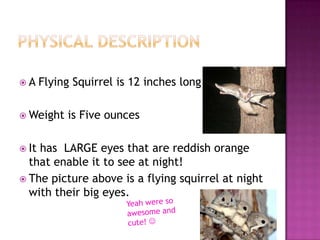
 Ithas LARGE eyes that are reddish orange
  that enable it to see at night!
 The picture above is a flying squirrel at night
  with their big eyes.
 FlyingSquirrels can breed in
 April, May, August, and again in September.

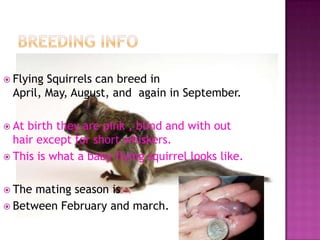
 At birth they are pink , blind and with out
  hair except for short whiskers.
 This is what a baby flying squirrel looks like.


 The mating season is
 Between February and march.
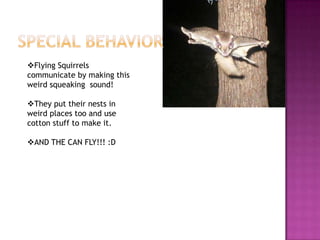
Flying Squirrels
communicate by making this
weird squeaking sound!

They put their nests in
weird places too and use
cotton stuff to make it.

AND THE CAN FLY!!! :D
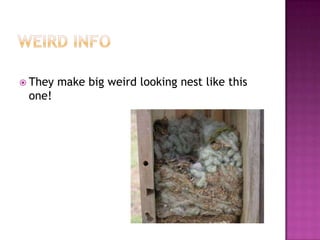
 They   make big weird looking nest like this
 one!
 Theconclusion is that Flying Squirrels are
 super cute really tiny! 

                  THE END!!

Erica's amazing flying squirrel! power point

  • 1.
    I’M FLYING!  By: Erica Gutierrez Period: 4
  • 3.
     Thescientific namefor the Flying Squirrel is Pteromini.
  • 4.
    •Flying Squirrels are fromSiberia and came to North America
  • 5.
    The following is what they eat:  mast tree crops of all types, including acorn (red oak, black oak, mossycup oak, white oak, pin oak, etc.); hickory nut (shagbark, bitternut, pignut); pecan; walnuts; beech nut; horsechestnut; hazelnut; etc. • seeds of various varieties • insects (beetles, moths and their larvae, etc.) • spiders • slugs, snails • tree and shrub buds • flowers (tree, shrub, herb) • fruits of many trees and shrubs • berries (most types) • fungi • bird eggs, nestlings • bark cambium • carrion, especially in winter months • tree sap
  • 6.
    A Flying Squirrel is 12 inches long  Weight is Five ounces  Ithas LARGE eyes that are reddish orange that enable it to see at night!  The picture above is a flying squirrel at night with their big eyes.
  • 7.
     FlyingSquirrels canbreed in April, May, August, and again in September.  At birth they are pink , blind and with out hair except for short whiskers.  This is what a baby flying squirrel looks like.  The mating season is  Between February and march.
  • 8.
    Flying Squirrels communicate bymaking this weird squeaking sound! They put their nests in weird places too and use cotton stuff to make it. AND THE CAN FLY!!! :D
  • 9.
     They make big weird looking nest like this one!
  • 11.
     Theconclusion isthat Flying Squirrels are super cute really tiny!  THE END!!