MESC 503 Environmental
Planning and Management
Unit II: Environmental Planning vs.
Environmental Management
Definition & Basics
INSTR.: R.M. Bajracharya
Environmental planning
Field of study that since the 1970s has been concerned with a given
society's collective stewardship over its resources that ultimately
includes those of the entire planet.
The aims of environmental planning are to integrate the public sector
urban planning with the concerns of environmentalism to ensure
sustainable development, notably of air, water, soil and rock resources.
Planning seeks to include into consideration for future growth of society
factors other than those urban planners have traditionally factored in
economic development, such as transportation, sanitation, and other
services in legislator decisions, by working with environmental planners
to add sustainable (social, ecological & equity) outcomes as important
factors in the decision-making process.
Elements of environmental planning
The primary concern of environmental planning is expressed in
the assessment of three spheres of environmental impact by
human economic activity and technological output:
–Biophysical environment
–Socio-economic environment
–Built environment
The environmental planning assessments encompass areas such
as land use, socio-economics, transportation, economic and
housing characteristics, air pollution, noise pollution, the
wetlands, habitat of the endangered species, flood zones
susceptibility, coastal zones erosion, and visual studies among
others, and is referred to as an
Integrated environmental planning assessment.
Defining the “environment”
• What exactly constitutes the "environment",
however, is somewhat open to debate among these
practitioners, as is the exact scope of the intended
environmental benefits.
• Main concerns among environmental planners
include the encouragement of
sustainable development, equity, environmental
justice, green building technologies, and the
preservation of environmentally sensitive areas.
http://en.wikipedia.org/wiki/Environmental_planning
Environmental planning process
An objective view of the environmental planning process is
often framed in perspectives offered by the integration of
assessments of the natural resources, the environment as a
system, the scientific perspective, and the social science
perspective.
As with other forms of planning, the processes in
environmental planning include distinct facets of organizational
activity such as:
–Legislative planning framework
–Administrative planning framework
–Environmental resource management planning
–Landscape ecological planning
–Ecological urban planning
–Environmental planning information dissemination
–Decision making in environmental planning
Environmental management
It is not, as the phrase might suggest, the management of the
environment as such, but rather the management of interaction by the
modern human societies with, and impacts upon the environment.
The three main issues that affect managers are those involving politics
(networking), programs (projects), and resources (money, facilities,
etc.). The need for environmental management can be viewed from a
variety of perspectives. A more common philosophy and impetus
behind environmental management is the concept of carrying capacity.
Simply put, carrying capacity refers to the maximum number of
organisms a particular resource can sustain. The concept of carrying
capacity, whilst understood by many cultures over history, has its roots
in Malthusian theory. Environmental management is, therefore, not
the conservation of the environment solely for the environment's sake,
but rather the conservation of the environment for humankind's sake.
Environmental Management, Cont’d.
• Environmental management involves the management
of all components of the bio-physical environment,
both living (biotic) and non-living (abiotic).
• This is due to the interconnected and network of
relationships amongst all living species and their
habitats.
• The environment also involves the relationships of the
human environment, such as the social, cultural and
economic environment with the bio-physical
environment.
http://en.wikipedia.org/wiki/Environmental_management
Environmental Management, Cont’d.
• As with all management functions, effective
management tools, standards and systems are required.
• An environmental management standard or system or
protocol attempts to reduce environmental impact as
measured by some objective criteria.
• The ISO 14001 standard is the most widely used
standard for environmental risk management and is
closely aligned to the European
Eco-Management and Audit Scheme (EMAS). As a
common auditing standard, the ISO 19011 standard
explains how to combine this with quality management.
Environmental management systems
• The Natural Step focuses on basic sustainability criteria and
helps focus engineering on reducing use of materials or
energy use that is unsustainable in the long term
• Natural Capitalism advises using accounting reform and a
general bio-mimicry and industrial ecology approach to do
the same thing
• US Environmental Protection Agency has many further
terms and standards that it defines as appropriate to large-
scale EMS.
• The UN and World Bank has encouraged adopting a "
natural capital" measurement and management framework.
• The European Union
Eco-Management and Audit Scheme (EMAS)
Environmental management systems cont’d.
• Other strategies exist that rely on making simple distinctions
rather than building top-down management "systems" using
performance audits and full cost accounting.
• E.g., Ecological Intelligent Design divides products into
consumables, service products or durables and unsaleables -
toxic products that no one should buy, or in many cases, do
not realize they are buying. By eliminating the unsaleables
from the comprehensive outcome of any purchase, better
environmental management is achieved without "systems".
• Recent successful cases have put forward the notion of
"Integrated Management". It shares a wider approach and
stresses the importance of interdisciplinary assessment. It is
an interesting notion that might not be adaptable to all cases
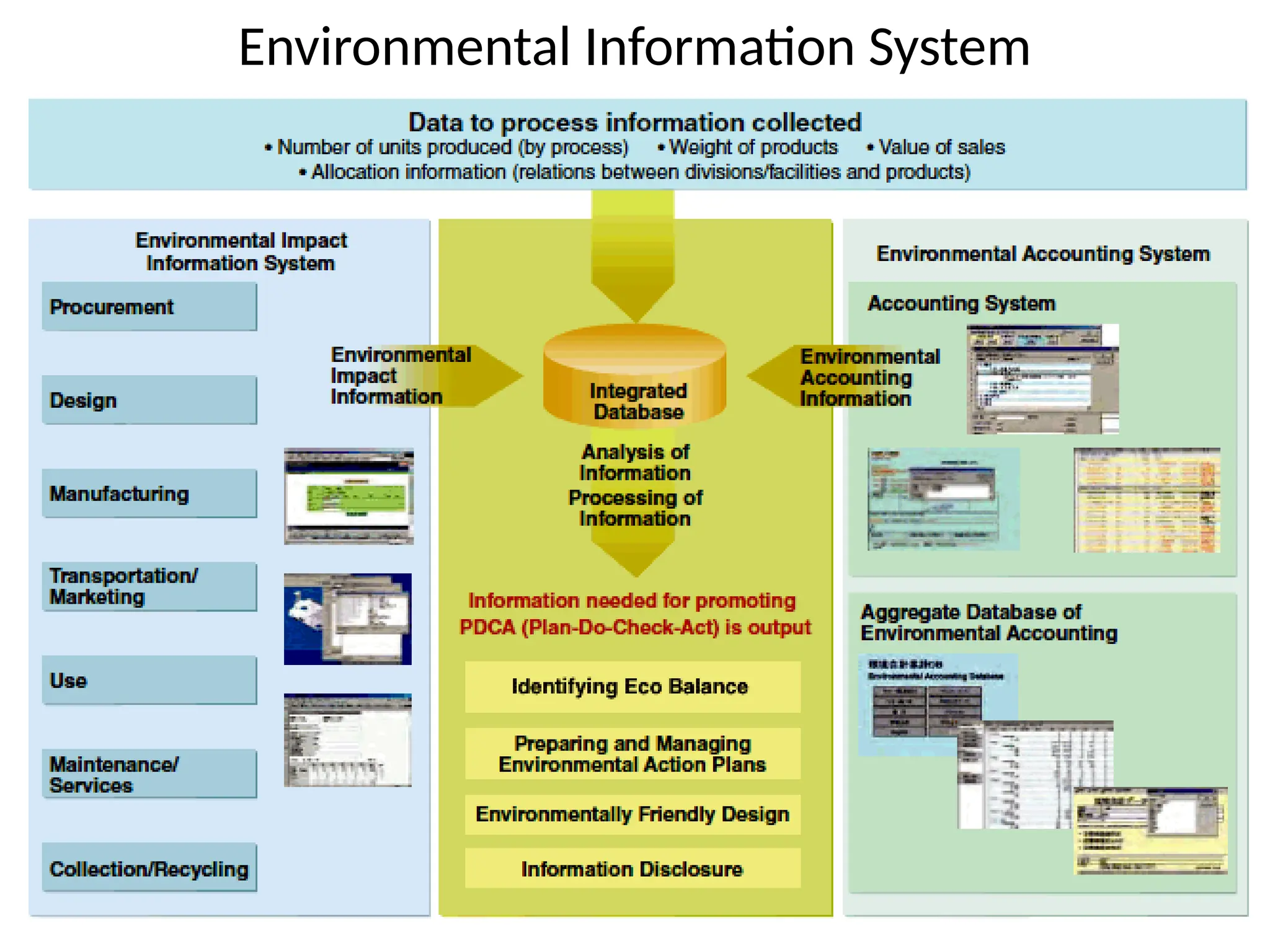
Environmental Information System

ENVS502_UnitII.pptx planning and management

  • 1.
    MESC 503 Environmental Planningand Management Unit II: Environmental Planning vs. Environmental Management Definition & Basics INSTR.: R.M. Bajracharya
  • 2.
    Environmental planning Field ofstudy that since the 1970s has been concerned with a given society's collective stewardship over its resources that ultimately includes those of the entire planet. The aims of environmental planning are to integrate the public sector urban planning with the concerns of environmentalism to ensure sustainable development, notably of air, water, soil and rock resources. Planning seeks to include into consideration for future growth of society factors other than those urban planners have traditionally factored in economic development, such as transportation, sanitation, and other services in legislator decisions, by working with environmental planners to add sustainable (social, ecological & equity) outcomes as important factors in the decision-making process.
  • 3.
    Elements of environmentalplanning The primary concern of environmental planning is expressed in the assessment of three spheres of environmental impact by human economic activity and technological output: –Biophysical environment –Socio-economic environment –Built environment The environmental planning assessments encompass areas such as land use, socio-economics, transportation, economic and housing characteristics, air pollution, noise pollution, the wetlands, habitat of the endangered species, flood zones susceptibility, coastal zones erosion, and visual studies among others, and is referred to as an Integrated environmental planning assessment.
  • 4.
    Defining the “environment” •What exactly constitutes the "environment", however, is somewhat open to debate among these practitioners, as is the exact scope of the intended environmental benefits. • Main concerns among environmental planners include the encouragement of sustainable development, equity, environmental justice, green building technologies, and the preservation of environmentally sensitive areas. http://en.wikipedia.org/wiki/Environmental_planning
  • 5.
    Environmental planning process Anobjective view of the environmental planning process is often framed in perspectives offered by the integration of assessments of the natural resources, the environment as a system, the scientific perspective, and the social science perspective. As with other forms of planning, the processes in environmental planning include distinct facets of organizational activity such as: –Legislative planning framework –Administrative planning framework –Environmental resource management planning –Landscape ecological planning –Ecological urban planning –Environmental planning information dissemination –Decision making in environmental planning
  • 6.
    Environmental management It isnot, as the phrase might suggest, the management of the environment as such, but rather the management of interaction by the modern human societies with, and impacts upon the environment. The three main issues that affect managers are those involving politics (networking), programs (projects), and resources (money, facilities, etc.). The need for environmental management can be viewed from a variety of perspectives. A more common philosophy and impetus behind environmental management is the concept of carrying capacity. Simply put, carrying capacity refers to the maximum number of organisms a particular resource can sustain. The concept of carrying capacity, whilst understood by many cultures over history, has its roots in Malthusian theory. Environmental management is, therefore, not the conservation of the environment solely for the environment's sake, but rather the conservation of the environment for humankind's sake.
  • 7.
    Environmental Management, Cont’d. •Environmental management involves the management of all components of the bio-physical environment, both living (biotic) and non-living (abiotic). • This is due to the interconnected and network of relationships amongst all living species and their habitats. • The environment also involves the relationships of the human environment, such as the social, cultural and economic environment with the bio-physical environment. http://en.wikipedia.org/wiki/Environmental_management
  • 8.
    Environmental Management, Cont’d. •As with all management functions, effective management tools, standards and systems are required. • An environmental management standard or system or protocol attempts to reduce environmental impact as measured by some objective criteria. • The ISO 14001 standard is the most widely used standard for environmental risk management and is closely aligned to the European Eco-Management and Audit Scheme (EMAS). As a common auditing standard, the ISO 19011 standard explains how to combine this with quality management.
  • 9.
    Environmental management systems •The Natural Step focuses on basic sustainability criteria and helps focus engineering on reducing use of materials or energy use that is unsustainable in the long term • Natural Capitalism advises using accounting reform and a general bio-mimicry and industrial ecology approach to do the same thing • US Environmental Protection Agency has many further terms and standards that it defines as appropriate to large- scale EMS. • The UN and World Bank has encouraged adopting a " natural capital" measurement and management framework. • The European Union Eco-Management and Audit Scheme (EMAS)
  • 10.
    Environmental management systemscont’d. • Other strategies exist that rely on making simple distinctions rather than building top-down management "systems" using performance audits and full cost accounting. • E.g., Ecological Intelligent Design divides products into consumables, service products or durables and unsaleables - toxic products that no one should buy, or in many cases, do not realize they are buying. By eliminating the unsaleables from the comprehensive outcome of any purchase, better environmental management is achieved without "systems". • Recent successful cases have put forward the notion of "Integrated Management". It shares a wider approach and stresses the importance of interdisciplinary assessment. It is an interesting notion that might not be adaptable to all cases
  • 11.