ROAD MAP
Define
air
pollution
Identify
some air
pollutant
s
Cite human
activities
that pollute
the air
Compositio
n about
clean air
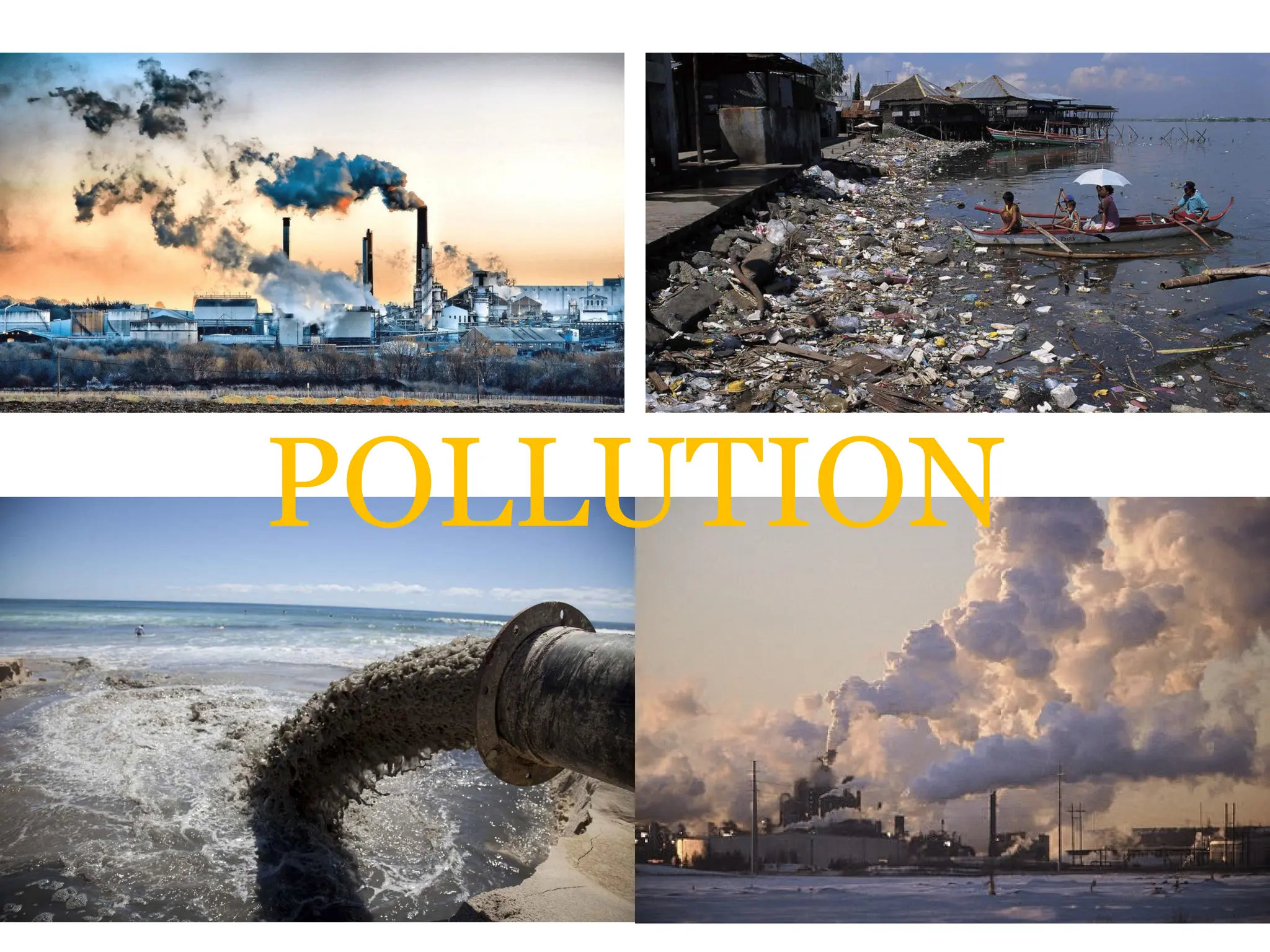
AIR
POLLUTION
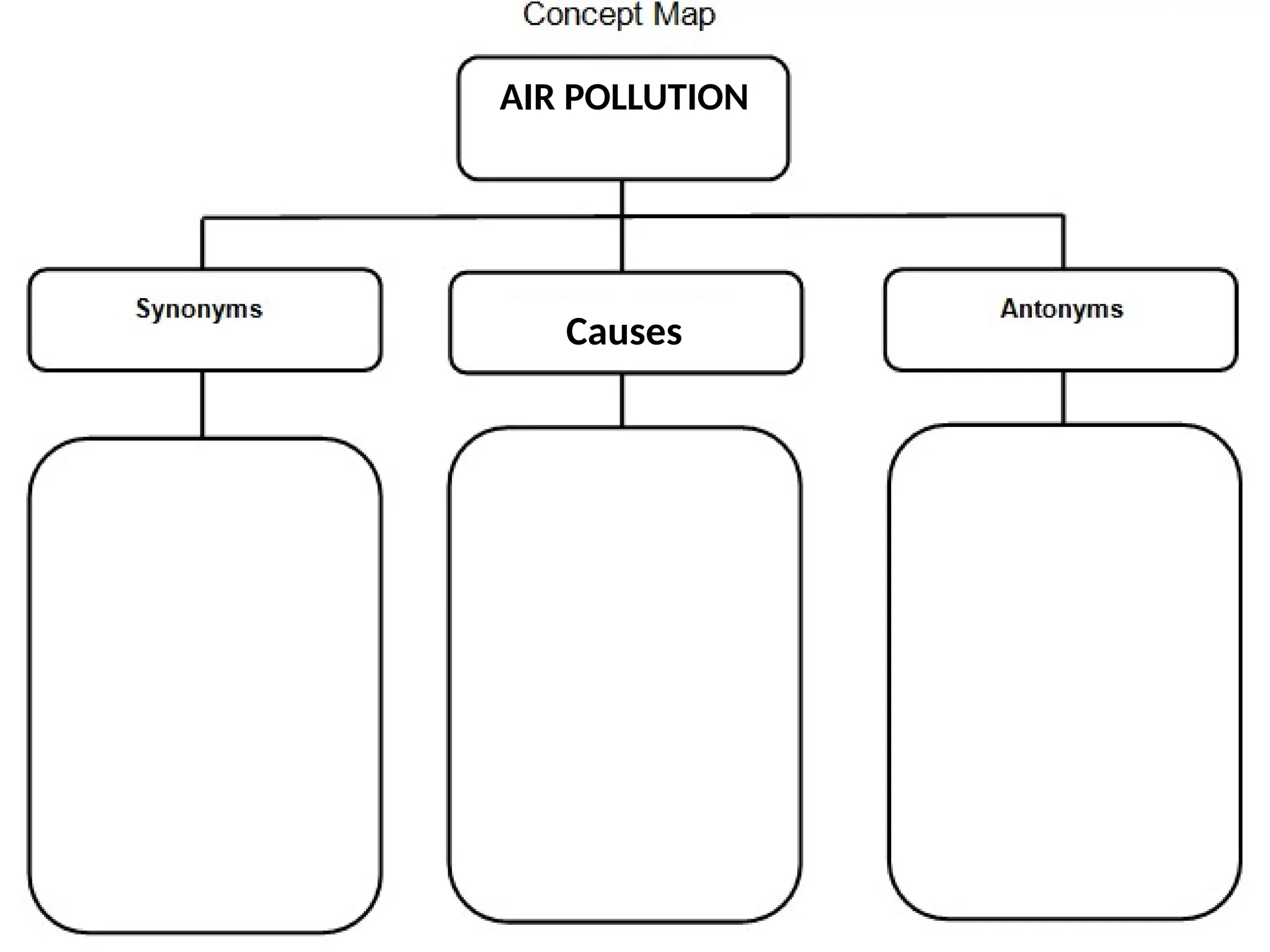
AIR POLLUTION
Causes
What is air pollution?
Air pollution occurs when gases, dust
particles, fumes (or smoke) or odor are
introduced into the atmosphere in a way that
makes it harmful to humans, animals and
plant. This is because the air becomes dirty
(contaminated or unclean).
video
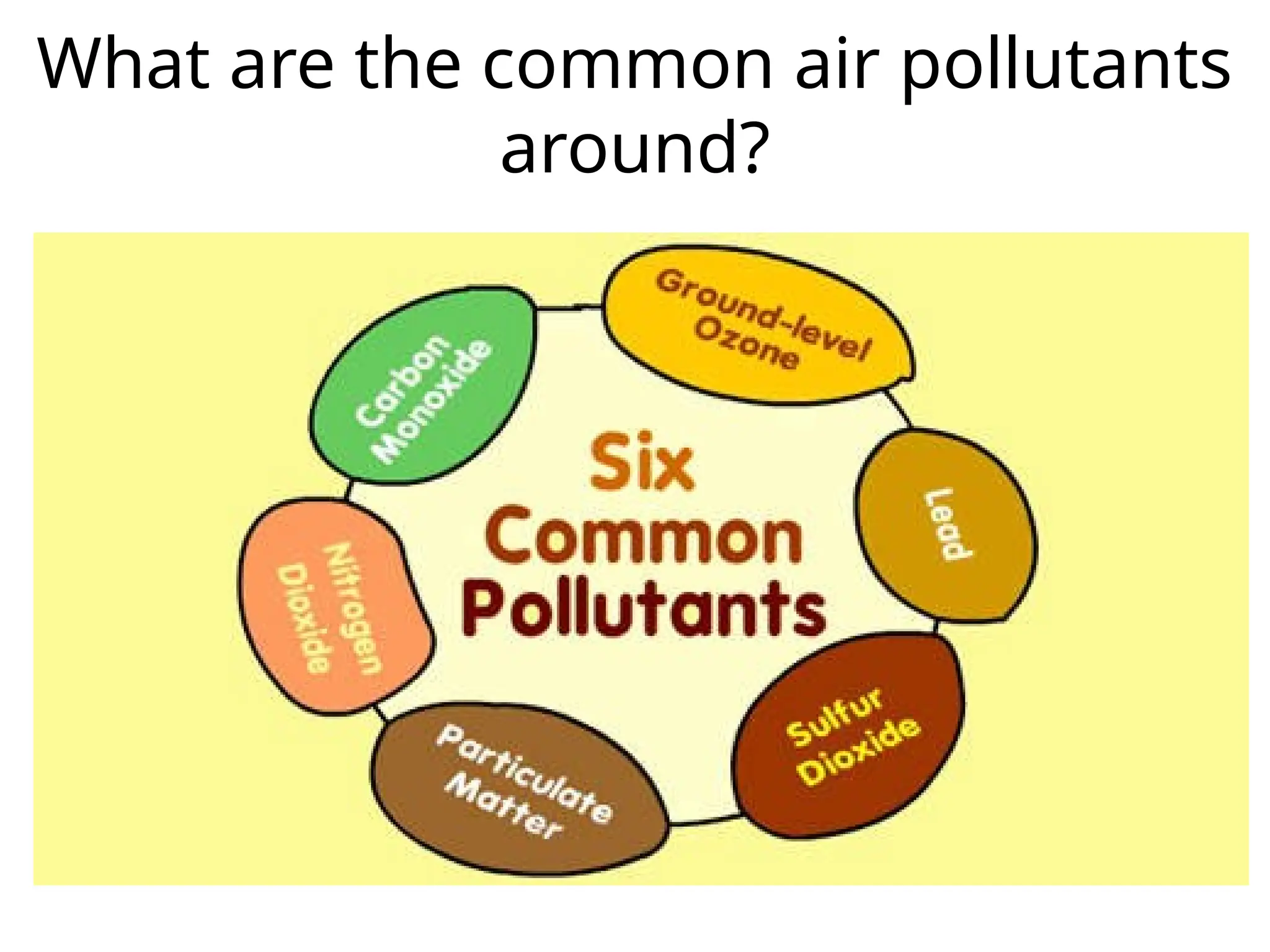
What are the common air pollutants
around?
Carbon Monoxide (CO)
Fuel combustion from vehicles and engines.
Reduces the amount of oxygen reaching the
body’s organs and tissues; aggravates heart
disease, resulting in chest pain and other
symptoms.
Ground-level Ozone (O3)
Secondary pollutant formed by chemical
reaction of volatile organic compounds (VOCs)
and NOx in the presence of sunlight.
Decreases lung function and causes
respiratory symptoms, such as coughing and
shortness of breath, and also makes asthma
and other lung diseases get worse.
Lead (Pb)
Smelters (metal refineries) and other metal
industries; combustion of leaded gasoline in
piston engine aircraft; waste incinerators
(waste burners), and battery manufacturing.
Damages the developing nervous system,
resulting in IQ loss and impacts on learning,
memory, and behavior in children.
Cardiovascular and renal effects in adults and
early effects related to anaemia.
Nitrogen Dioxide (NO2)
Fuel combustion (electric utilities, big
industrial boilers, vehicles) and wood burning.
Worsens lung diseases leading to respiratory
symptoms, increased susceptibility to
respiratory infection.
Particulate Matter (PM)
This is formed through chemical reactions,
fuel combustion (e.g., burning coal, wood,
diesel), industrial processes, farming (plowing,
field burning), and unpaved roads or during
road constructions.
Short-term exposures can worsen heart or
lung diseases and cause respiratory problems.
Long-term exposures can cause heart or lung
disease and sometimes premature deaths.
Sulfur Dioxide (SO2)
SO2 come from fuel combustion (especially
high-sulfur coal); electric utilities and industrial
processes as well as and natural occurrences
like volcanoes.
Aggravates asthma and makes breathing
difficult. It also contributes to particle
formation with associated health effects.
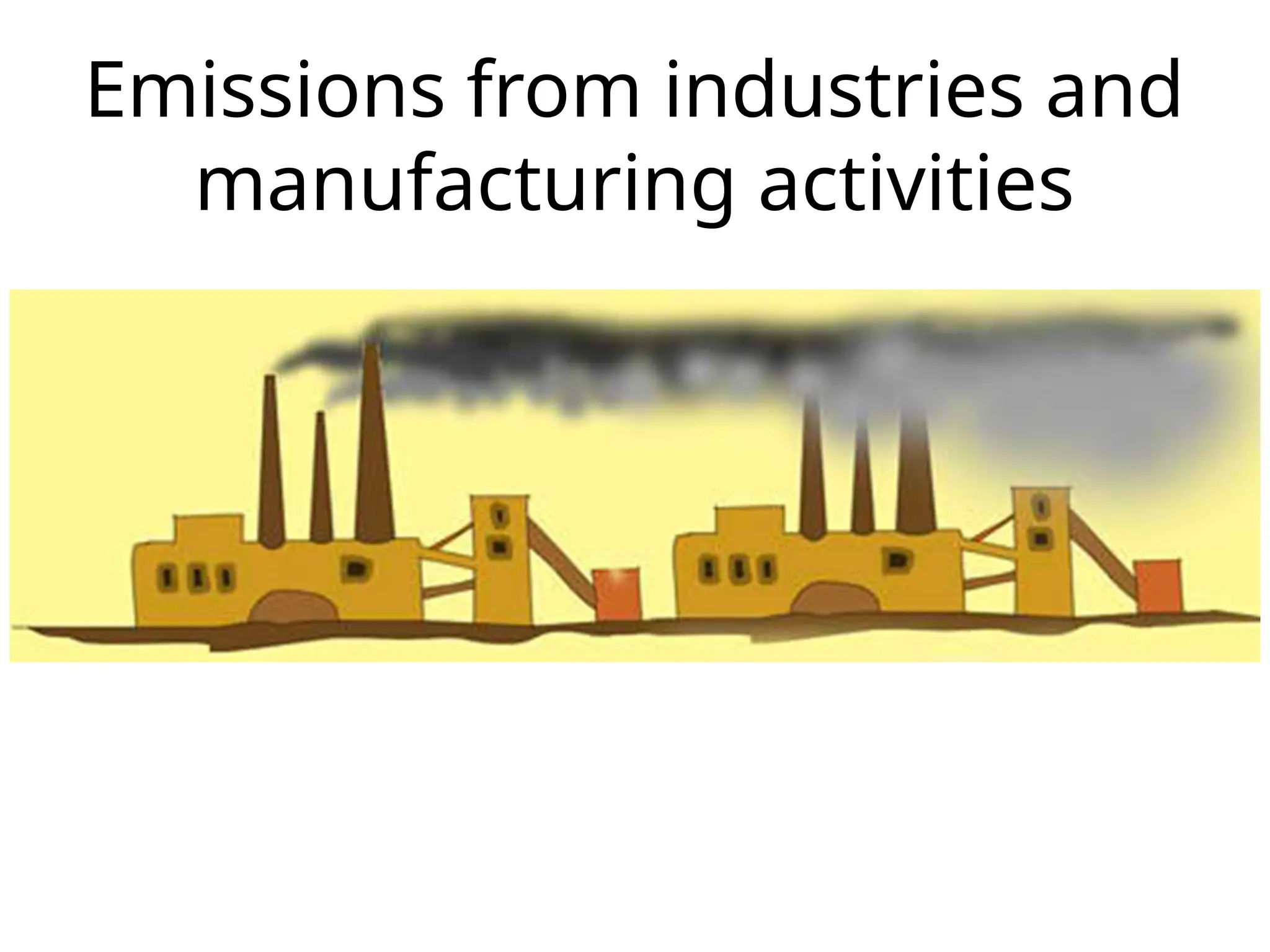
Emissions from industries and
manufacturing activities
Burning Fossil Fuels
Household and Farming Chemicals
Cutting of trees
Burning of wood

environmental science - air pollution new.pptx

  • 1.
    ROAD MAP Define air pollution Identify some air pollutant s Citehuman activities that pollute the air Compositio n about clean air
  • 2.
  • 3.
  • 4.
  • 5.
    What is airpollution? Air pollution occurs when gases, dust particles, fumes (or smoke) or odor are introduced into the atmosphere in a way that makes it harmful to humans, animals and plant. This is because the air becomes dirty (contaminated or unclean).
  • 6.
  • 7.
    What are thecommon air pollutants around?
  • 8.
    Carbon Monoxide (CO) Fuelcombustion from vehicles and engines. Reduces the amount of oxygen reaching the body’s organs and tissues; aggravates heart disease, resulting in chest pain and other symptoms.
  • 9.
    Ground-level Ozone (O3) Secondarypollutant formed by chemical reaction of volatile organic compounds (VOCs) and NOx in the presence of sunlight. Decreases lung function and causes respiratory symptoms, such as coughing and shortness of breath, and also makes asthma and other lung diseases get worse.
  • 10.
    Lead (Pb) Smelters (metalrefineries) and other metal industries; combustion of leaded gasoline in piston engine aircraft; waste incinerators (waste burners), and battery manufacturing. Damages the developing nervous system, resulting in IQ loss and impacts on learning, memory, and behavior in children. Cardiovascular and renal effects in adults and early effects related to anaemia.
  • 11.
    Nitrogen Dioxide (NO2) Fuelcombustion (electric utilities, big industrial boilers, vehicles) and wood burning. Worsens lung diseases leading to respiratory symptoms, increased susceptibility to respiratory infection.
  • 12.
    Particulate Matter (PM) Thisis formed through chemical reactions, fuel combustion (e.g., burning coal, wood, diesel), industrial processes, farming (plowing, field burning), and unpaved roads or during road constructions. Short-term exposures can worsen heart or lung diseases and cause respiratory problems. Long-term exposures can cause heart or lung disease and sometimes premature deaths.
  • 13.
    Sulfur Dioxide (SO2) SO2come from fuel combustion (especially high-sulfur coal); electric utilities and industrial processes as well as and natural occurrences like volcanoes. Aggravates asthma and makes breathing difficult. It also contributes to particle formation with associated health effects.
  • 14.
    Emissions from industriesand manufacturing activities
  • 15.
  • 16.
  • 17.
  • 18.