FORENSIC
           ACCOUNTING


PROJECT PREPARED BY

VISHITA SHETTY
JAMES FERNANDES
JIGNESH BHATIA
VISHWANATH JADHAV
AVINASH MATHIAS   MMM 21
   RAPID CHANGES IN THE ACCOUNTING
    PROFESSION
     > Operations of Day to day task of
    debiting and crediting.

    > Reports on internets (Technology)

     > Demand of Global Economy and
    International market.
   Forensic accounting have been around for nearly 200 years
   Found in 1824
   First institutions to use the services IRS (International Financial
    Statistics)
   GAAP ( General Accepted Accounting Principles) and tax laws
    became widespread and mandatory.
   Companies that manipulated accounting rules to boost their
    earnings in a stock market gone wild.
   The year    2002 the annals of accounting history as
                     the    Year of Truth
     when companies disclosed billions of dollars of financial
    fraud.
    SEC issued earnings restatements between the years 1997 and
    2002.
   The FASB (Financial Accounting Standard Board) and the
    SEC(Security and Exchange Commission) scrambled to find
    solutions to the problem of such ubiquitous financial fraud.
   Forensic accounting is hardly a new field in
    accountancy.
   Forensic accountants as preventative measures
    as the demand for trustworthy financial
    statements increases in the wake of the recent
    accounting scandals.

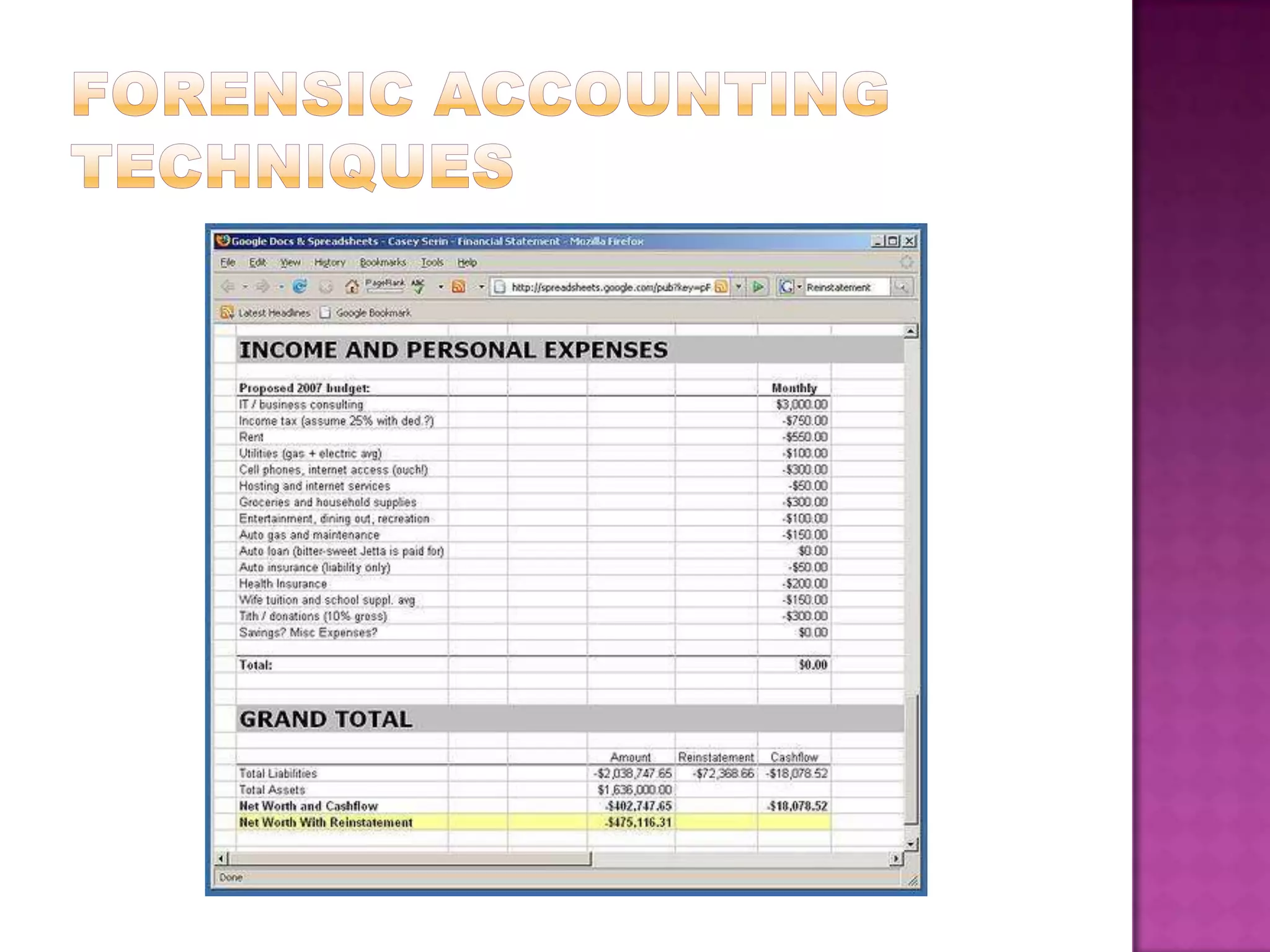
Forensic  accounting", provides an accounting
analysis that is suitable to the court which will
form the basis for discussion, debate and
ultimately dispute resolution.
Forensic Accounting encompasses both Litigation
Support and Investigative Accounting
   Litigation Support           Investigation Support
   It deals primarily with      “Investigative
    issues related to the         accounting", is often
    quantification of             associated with
    economic damages. A           investigations of
    typical litigation            criminal matters. A
    support assignment            typical investigative
    would be calculating          accounting assignment
    the economic loss             would be an
    resulting from a breach       investigation of
    of contract.                  employee theft. Other
                                  examples include
                                  securities fraud,
                                  insurance fraud, and
                                  proceeds of crime
                                  investigations.”
 The expert witness –        Fraud  Detection –
  preparation of formal        assisting clients in
  reports for filing in        detecting financial
  Court and giving             fraud by employees
  evidence as an Expert        and others and
                               tracing
                               misappropriated
•Computer Forensics       –    funds. This section
assisting in electronic        provides
data recovery and              information for
enforcement                    fraud-related
                               engagements
of IP rights etc.
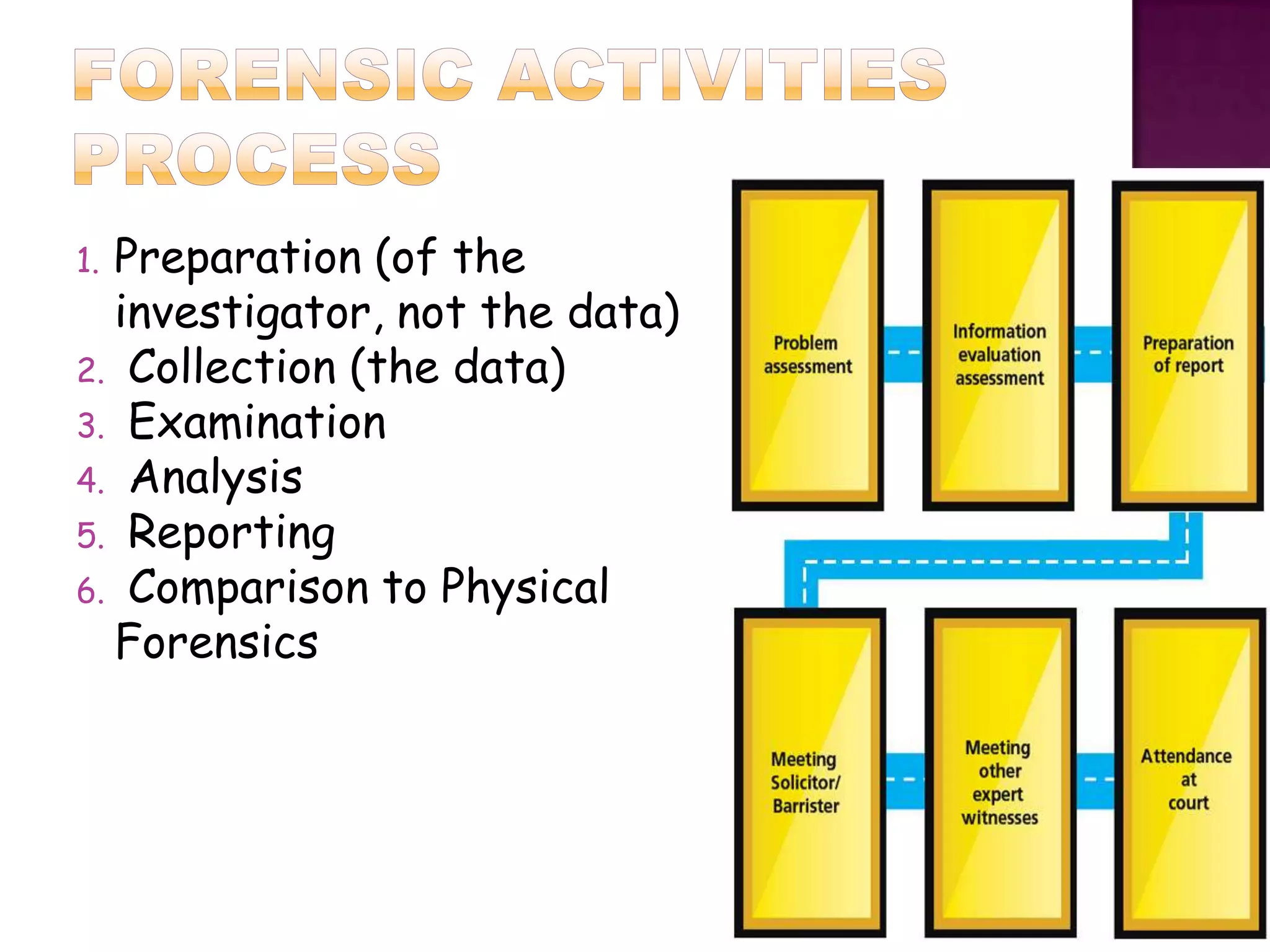
1.Preparation (of the
  investigator, not the data)
2. Collection (the data)
3. Examination
4. Analysis
5. Reporting
6. Comparison to Physical
  Forensics
Shareholder/partnership    disputes
•Personal injury claims/accidents
•Business interruption/insurance claims
•Employee fraud
•Divorce/bankruptcy
•Professional negligence
•Financial statement fraud
•Retained by lawyers, law enforcement,
 banks and companies
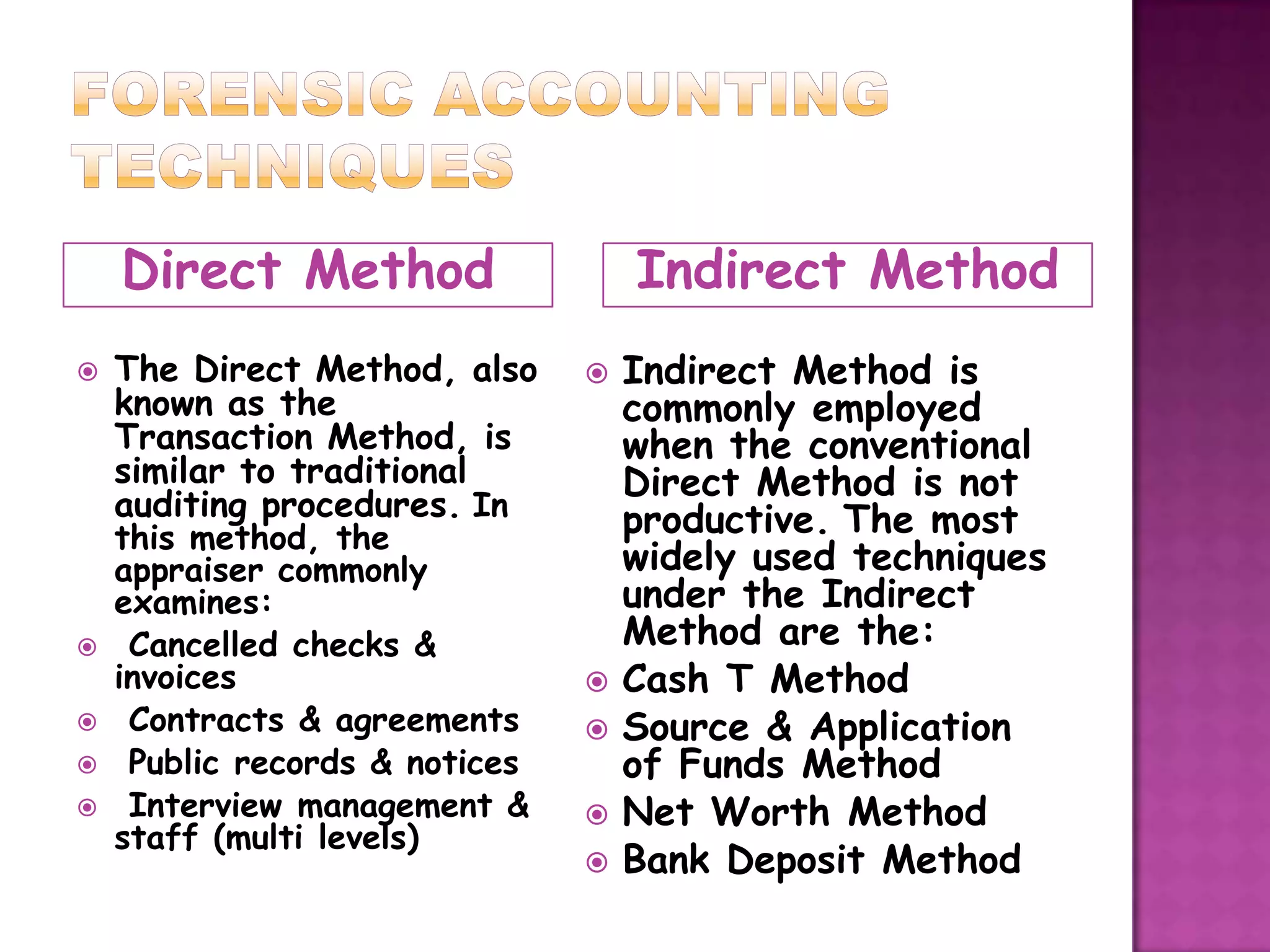
Direct Method                   Indirect Method
   The Direct Method, also        Indirect Method is
    known as the                    commonly employed
    Transaction Method, is          when the conventional
    similar to traditional          Direct Method is not
    auditing procedures. In         productive. The most
    this method, the
    appraiser commonly              widely used techniques
    examines:                       under the Indirect
    Cancelled checks &             Method are the:
    invoices                       Cash T Method
    Contracts & agreements        Source & Application
    Public records & notices       of Funds Method
    Interview management &        Net Worth Method
    staff (multi levels)
                                   Bank Deposit Method
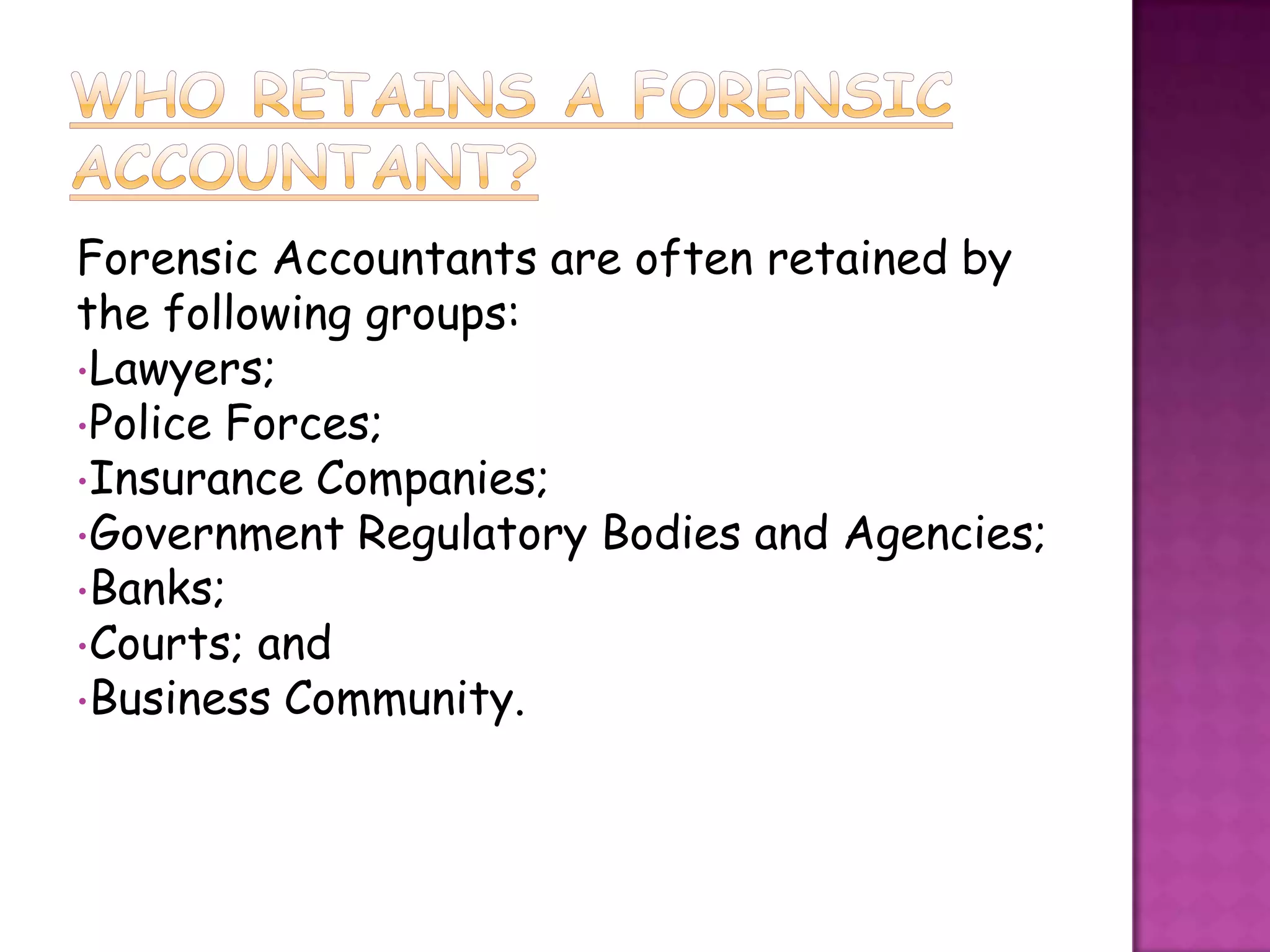
Forensic Accountants are often retained by
the following groups:
•Lawyers;
•Police Forces;
•Insurance Companies;
•Government Regulatory Bodies and Agencies;
•Banks;
•Courts; and
•Business Community.
“Auditor should be watchdog ”.
It’s a good quote that every
auditor should know. This quote
makes the definition of Forensic
accountants even more simple.”
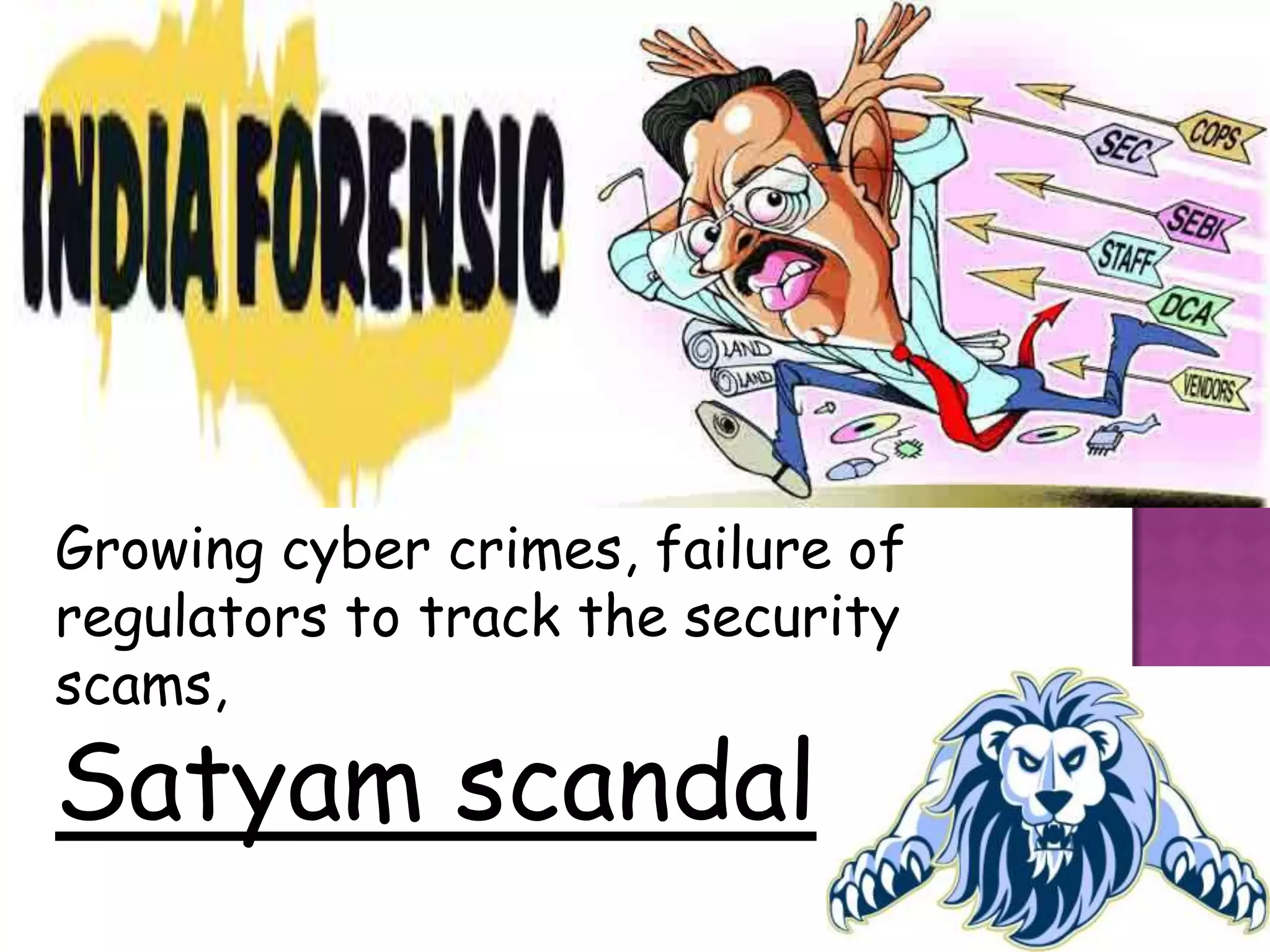
Growing cyber crimes, failure of
regulators to track the security
scams,

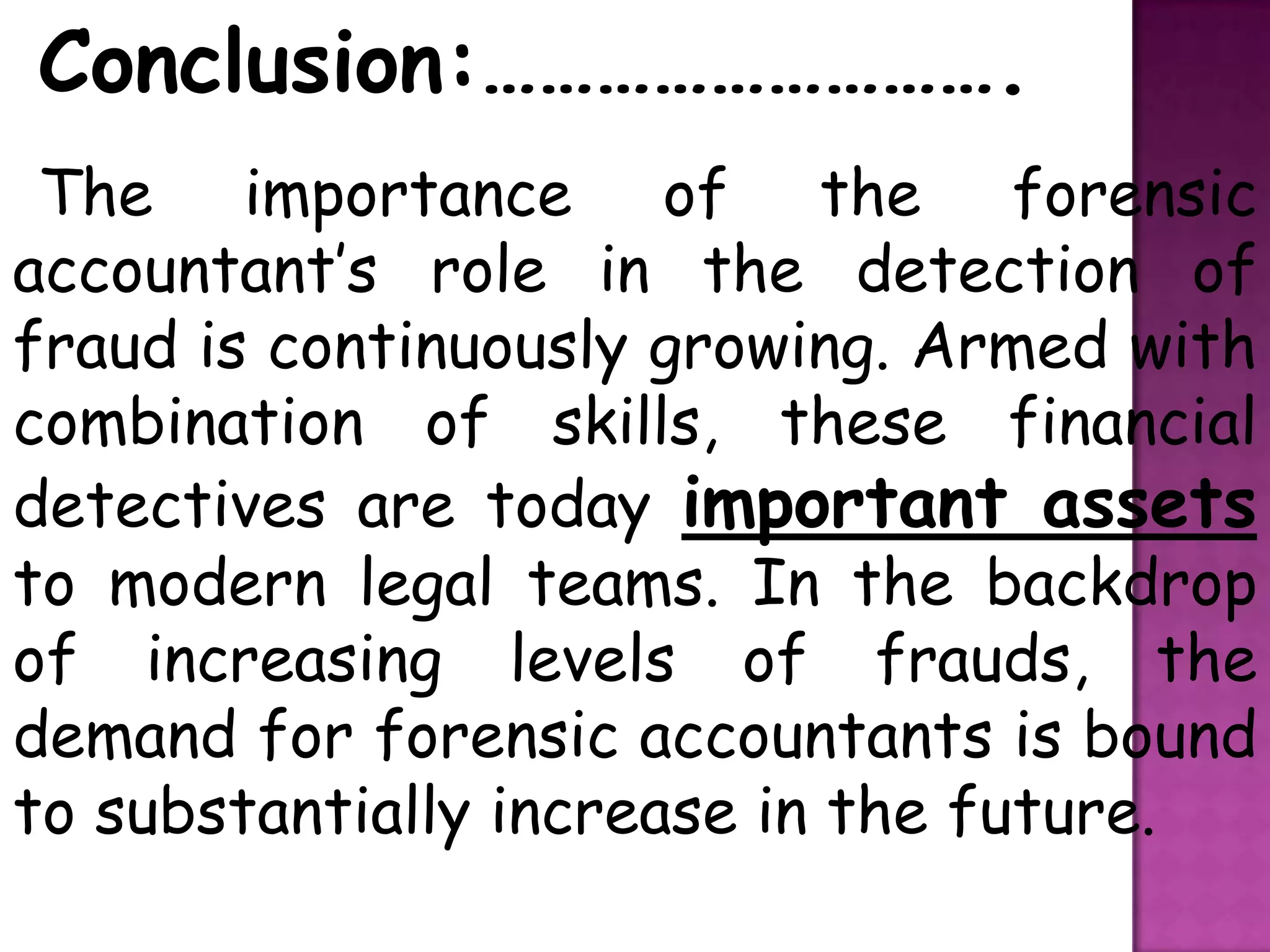
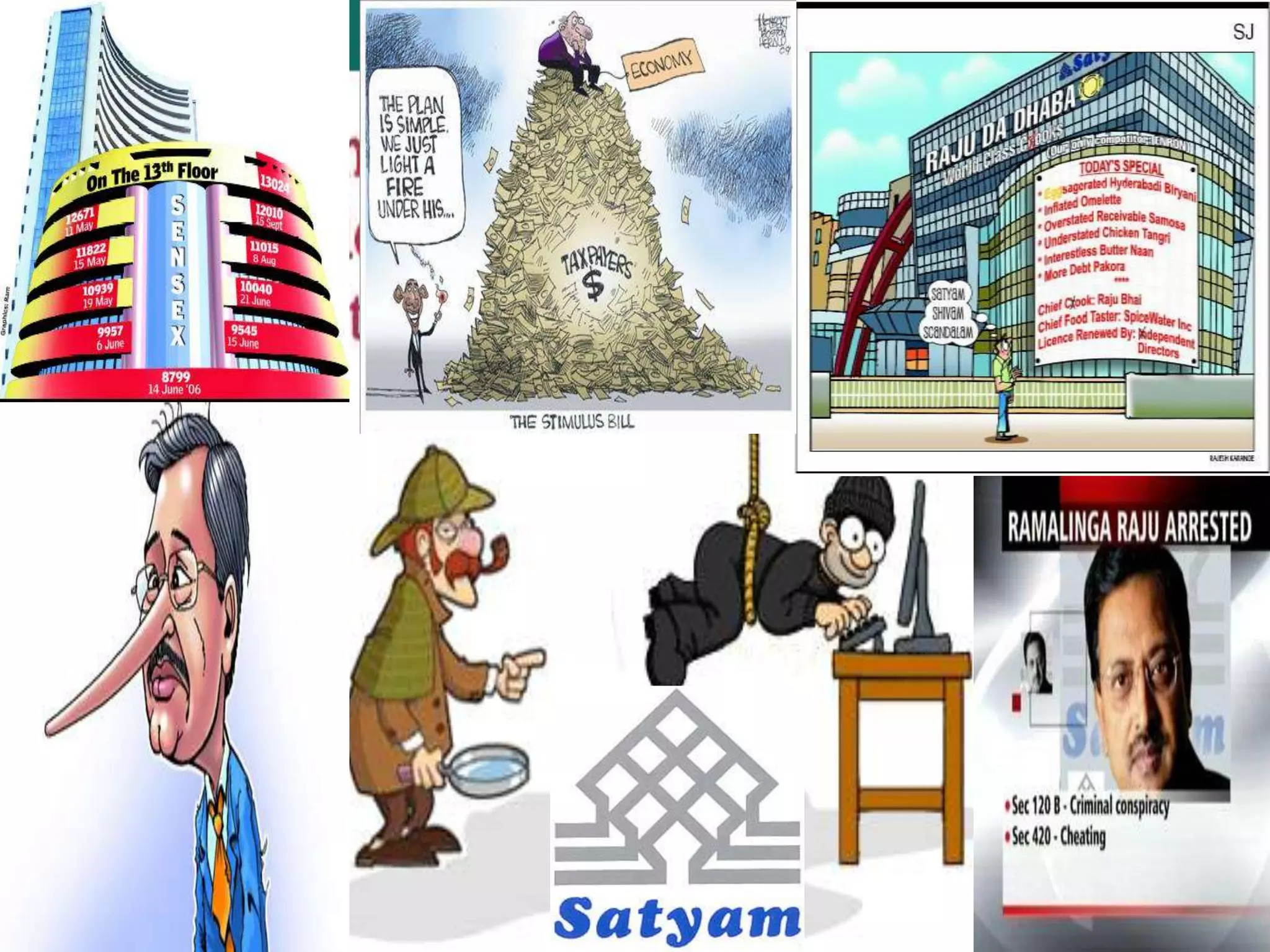
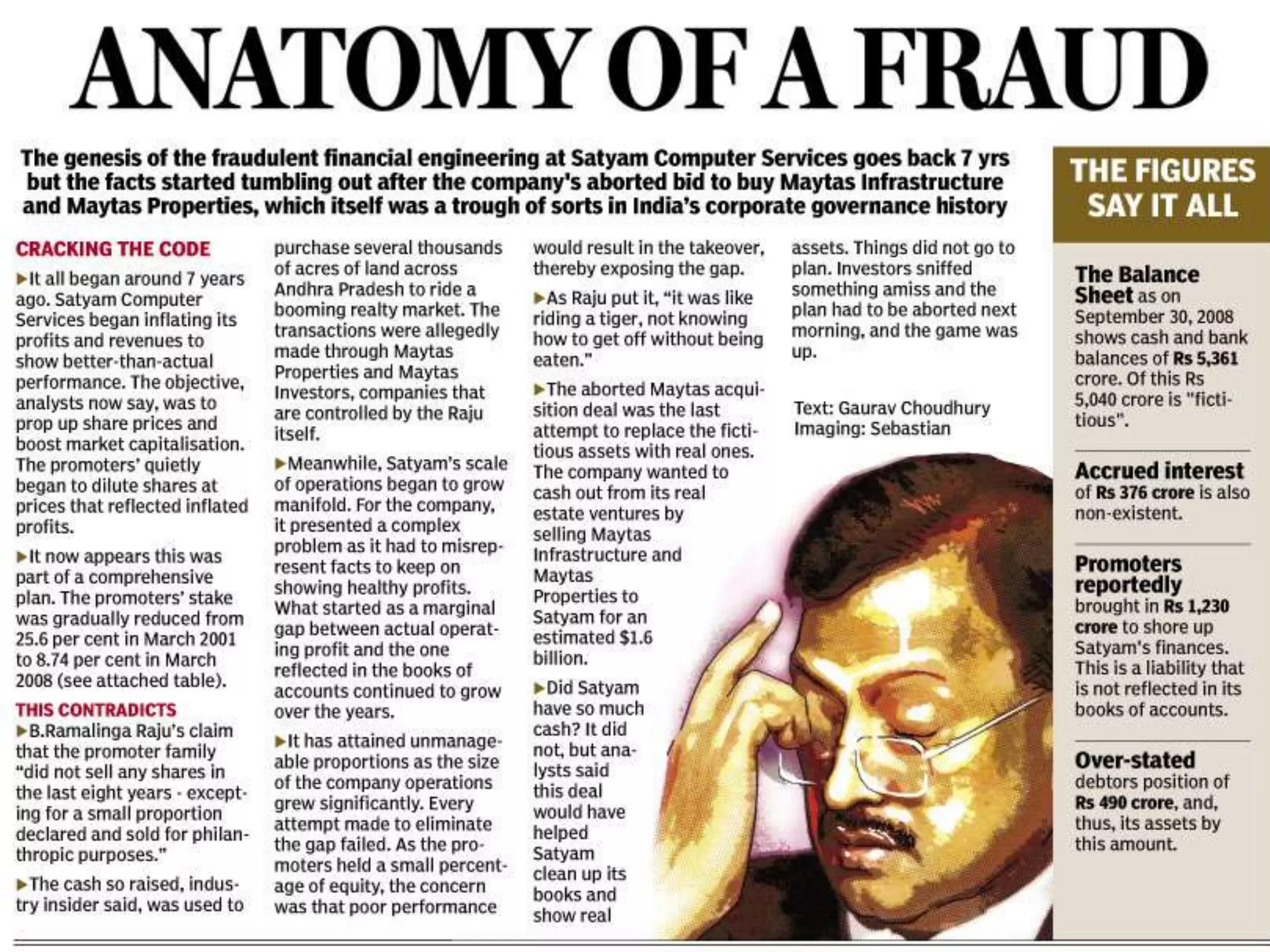
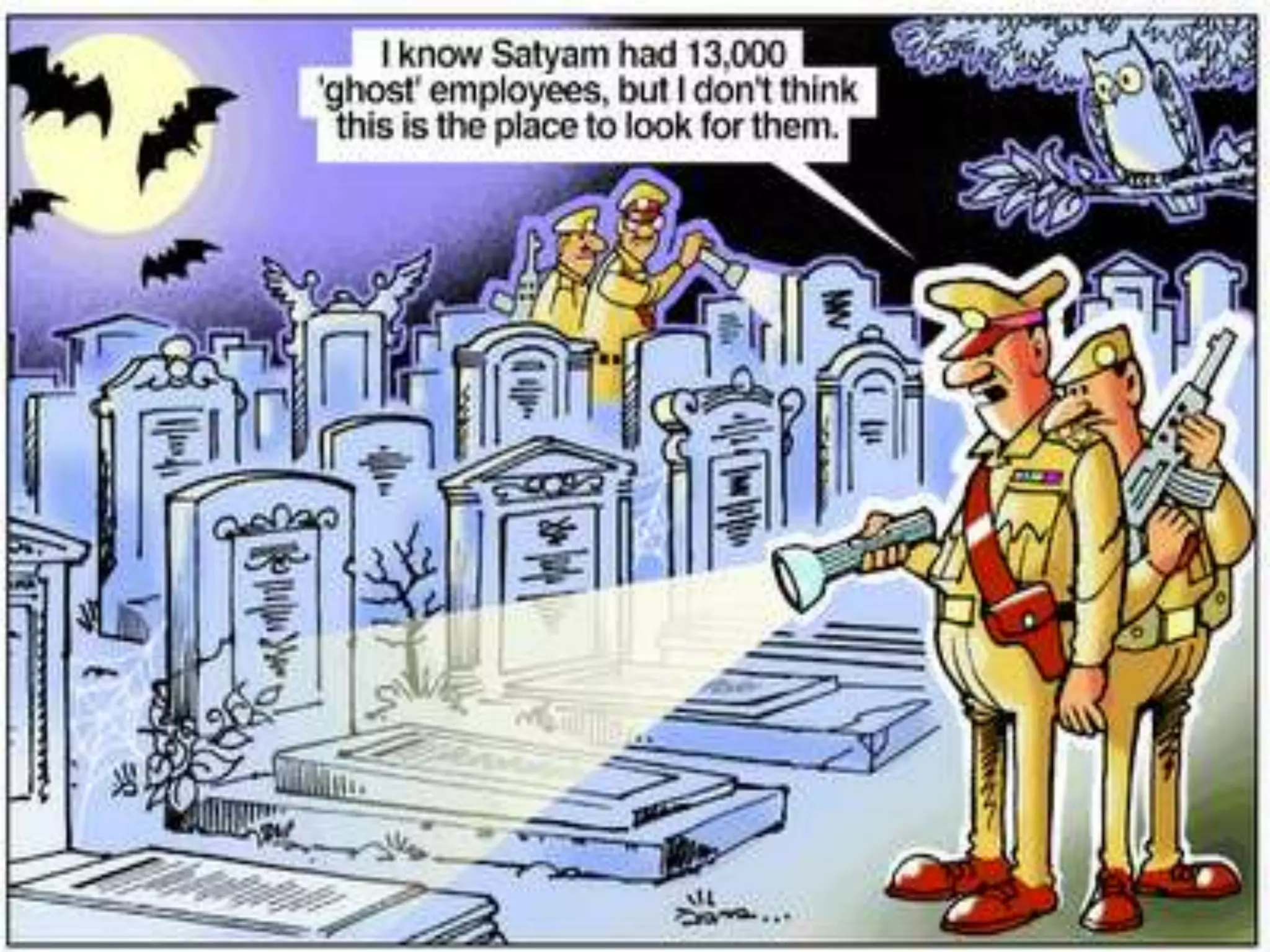
Satyam scandal
Conclusion:……………………….
 The importance of the forensic
accountant’s role in the detection of
fraud is continuously growing. Armed with
combination of skills, these financial
detectives are today important assets
to modern legal teams. In the backdrop
of increasing levels of frauds, the
demand for forensic accountants is bound
to substantially increase in the future.
End End of
     Satyam Empire
    of Satyam Empire


?
Entire forensic accounting project

Entire forensic accounting project

  • 1.
    FORENSIC ACCOUNTING PROJECT PREPARED BY VISHITA SHETTY JAMES FERNANDES JIGNESH BHATIA VISHWANATH JADHAV AVINASH MATHIAS MMM 21
  • 2.
    RAPID CHANGES IN THE ACCOUNTING PROFESSION > Operations of Day to day task of debiting and crediting. > Reports on internets (Technology) > Demand of Global Economy and International market.
  • 3.
    Forensic accounting have been around for nearly 200 years  Found in 1824  First institutions to use the services IRS (International Financial Statistics)  GAAP ( General Accepted Accounting Principles) and tax laws became widespread and mandatory.  Companies that manipulated accounting rules to boost their earnings in a stock market gone wild.  The year 2002 the annals of accounting history as  the Year of Truth  when companies disclosed billions of dollars of financial fraud.  SEC issued earnings restatements between the years 1997 and 2002.  The FASB (Financial Accounting Standard Board) and the SEC(Security and Exchange Commission) scrambled to find solutions to the problem of such ubiquitous financial fraud.
  • 4.
    Forensic accounting is hardly a new field in accountancy.  Forensic accountants as preventative measures as the demand for trustworthy financial statements increases in the wake of the recent accounting scandals. Forensic accounting", provides an accounting analysis that is suitable to the court which will form the basis for discussion, debate and ultimately dispute resolution. Forensic Accounting encompasses both Litigation Support and Investigative Accounting
  • 5.
    Litigation Support  Investigation Support  It deals primarily with  “Investigative issues related to the accounting", is often quantification of associated with economic damages. A investigations of typical litigation criminal matters. A support assignment typical investigative would be calculating accounting assignment the economic loss would be an resulting from a breach investigation of of contract. employee theft. Other examples include securities fraud, insurance fraud, and proceeds of crime investigations.”
  • 6.
     The expertwitness –  Fraud Detection – preparation of formal assisting clients in reports for filing in detecting financial Court and giving fraud by employees evidence as an Expert and others and tracing misappropriated •Computer Forensics – funds. This section assisting in electronic provides data recovery and information for enforcement fraud-related engagements of IP rights etc.
  • 7.
    1.Preparation (of the investigator, not the data) 2. Collection (the data) 3. Examination 4. Analysis 5. Reporting 6. Comparison to Physical Forensics
  • 8.
    Shareholder/partnership disputes •Personal injury claims/accidents •Business interruption/insurance claims •Employee fraud •Divorce/bankruptcy •Professional negligence •Financial statement fraud •Retained by lawyers, law enforcement, banks and companies
  • 10.
    Direct Method Indirect Method  The Direct Method, also  Indirect Method is known as the commonly employed Transaction Method, is when the conventional similar to traditional Direct Method is not auditing procedures. In productive. The most this method, the appraiser commonly widely used techniques examines: under the Indirect  Cancelled checks & Method are the: invoices  Cash T Method  Contracts & agreements  Source & Application  Public records & notices of Funds Method  Interview management &  Net Worth Method staff (multi levels)  Bank Deposit Method
  • 11.
    Forensic Accountants areoften retained by the following groups: •Lawyers; •Police Forces; •Insurance Companies; •Government Regulatory Bodies and Agencies; •Banks; •Courts; and •Business Community.
  • 12.
    “Auditor should bewatchdog ”. It’s a good quote that every auditor should know. This quote makes the definition of Forensic accountants even more simple.”
  • 13.
    Growing cyber crimes,failure of regulators to track the security scams, Satyam scandal
  • 14.
    Conclusion:………………………. The importanceof the forensic accountant’s role in the detection of fraud is continuously growing. Armed with combination of skills, these financial detectives are today important assets to modern legal teams. In the backdrop of increasing levels of frauds, the demand for forensic accountants is bound to substantially increase in the future.
  • 17.
    End End of Satyam Empire of Satyam Empire ?