POPULAR ENGLISH NOVEL
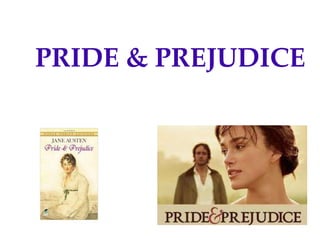
PRIDE & PREJUDICE
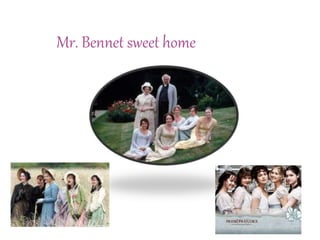
Mr. Bennet sweet home
ABOUT NOVEL……
First published in 1813.
Pride and Prejudice has consistently
been Jane Austen's most popular novel.
The original version of the novel was written
in 1796-1797 under the title First Impressions,
and was probably in the form of an exchange of
letters.
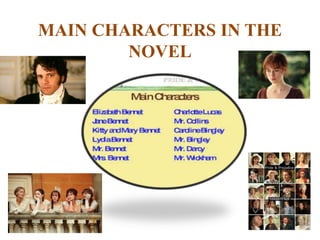
MAIN CHARACTERS IN THE
NOVEL
SETTING OF THE NOVEL
 Set in England in the early 19th century.
 Pride and Prejudice tells the story of Mr and Mrs
Bennet's five unmarried daughters after the rich and
eligible Mr Bingley and his status-conscious friend, Mr
Darcy, have moved into their neighbourhood.
 While Bingley takes an immediate liking to the
eldest Bennet daughter, Jane, Darcy has difficulty
adapting to local society and repeatedly clashes with the
second-eldest Bennet daughter, Elizabeth.
STYLE
Pride and Prejudice, like most of Austen's works,
employs the narrative technique of free indirect speech.
This has been defined as "the free representation of a
character's speech, by which one means, not words actually
spoken by a character, but the words that typify the
character's thoughts, or the way the character would think
or speak, if she thought or spoke".
By using narrative that adopts the tone and vocabulary
of a particular character (in this case, that of Elizabeth),
Austen invites the reader to follow events from Elizabeth's
viewpoint, sharing her prejudices and misapprehensions. "
THEMES OF THE NOVEL
A major theme in much of
Austen's work is the importance of
environment and upbringing on the
development of young people's
character and morality.
OTHER THEMES ARE………
LOVE
REPUTATION
MARRIAGE
CLASS
WEALTH
SELF KNOWLEDGE
The title Pride and Prejudice refers (among
other things) to the ways in
which Elizabeth and Darcy first view each other.
The initial misunderstandings and later mutual
enlightenment between Elizabeth Bennet (whose liveliness and
quick wit have often attracted readers) and the haughty Darcy.
"The whole of this unfortunate business," said Dr.
Lyster, "has been the result of PRIDE and PREJUDICE. ... Yet
this, however, remember: if to PRIDE and PREJUDICE you
owe your miseries, so wonderfully is good and evil
balanced, that to PRIDE and PREJUDICE you will also owe
their termination ..."
THE
CLIMAX OF
THE
NOVEL
So many feels in this climax. Darcy finally proposes to
Elizabeth, and Elizabeth essentially tells him that she wouldn't
marry him if he was the last man on earth.
But! That's not the end of the climax!
Darcy gives Elizabeth a letter that exonerates him from all the
charges she leveled against him.
Both of our heroes start to question themselves: can
Elizabeth really be such a good judge of character if she was
fooled by Darcy and Wickham's exterior masks?
This is the climax of the novel because the greatest
attitude shifts come here. It's smoother (not quite smooth)
sailing from here on out for our two main characters.
English Novel
English Novel
English Novel
English Novel

English Novel

  • 2.
  • 3.
  • 4.
  • 5.
    ABOUT NOVEL…… First publishedin 1813. Pride and Prejudice has consistently been Jane Austen's most popular novel. The original version of the novel was written in 1796-1797 under the title First Impressions, and was probably in the form of an exchange of letters.
  • 6.
  • 7.
    SETTING OF THENOVEL  Set in England in the early 19th century.  Pride and Prejudice tells the story of Mr and Mrs Bennet's five unmarried daughters after the rich and eligible Mr Bingley and his status-conscious friend, Mr Darcy, have moved into their neighbourhood.  While Bingley takes an immediate liking to the eldest Bennet daughter, Jane, Darcy has difficulty adapting to local society and repeatedly clashes with the second-eldest Bennet daughter, Elizabeth.
  • 8.
    STYLE Pride and Prejudice,like most of Austen's works, employs the narrative technique of free indirect speech. This has been defined as "the free representation of a character's speech, by which one means, not words actually spoken by a character, but the words that typify the character's thoughts, or the way the character would think or speak, if she thought or spoke". By using narrative that adopts the tone and vocabulary of a particular character (in this case, that of Elizabeth), Austen invites the reader to follow events from Elizabeth's viewpoint, sharing her prejudices and misapprehensions. "
  • 9.
    THEMES OF THENOVEL A major theme in much of Austen's work is the importance of environment and upbringing on the development of young people's character and morality.
  • 10.
  • 11.
    The title Prideand Prejudice refers (among other things) to the ways in which Elizabeth and Darcy first view each other. The initial misunderstandings and later mutual enlightenment between Elizabeth Bennet (whose liveliness and quick wit have often attracted readers) and the haughty Darcy. "The whole of this unfortunate business," said Dr. Lyster, "has been the result of PRIDE and PREJUDICE. ... Yet this, however, remember: if to PRIDE and PREJUDICE you owe your miseries, so wonderfully is good and evil balanced, that to PRIDE and PREJUDICE you will also owe their termination ..."
  • 12.
  • 13.
    So many feelsin this climax. Darcy finally proposes to Elizabeth, and Elizabeth essentially tells him that she wouldn't marry him if he was the last man on earth. But! That's not the end of the climax! Darcy gives Elizabeth a letter that exonerates him from all the charges she leveled against him. Both of our heroes start to question themselves: can Elizabeth really be such a good judge of character if she was fooled by Darcy and Wickham's exterior masks? This is the climax of the novel because the greatest attitude shifts come here. It's smoother (not quite smooth) sailing from here on out for our two main characters.