SPELL ME!
 DOUBT
 DISEASE
 DEBUT
 DAUGHTER
 DOUGH
 DESERT
 DESSERT
 DILEMMA
 DANGER
 DAUNTLESS
MODAL NOUNS
What is a NOUN?
Is a word that names something, such as a
person, thing, or idea.
EXAMPLES: cat, bicycle, Sarah Geronimo,
Philippines, love.
Example in sentence:
The dog run very fast.
Do you live in Inabanga?
Anna is beautiful.
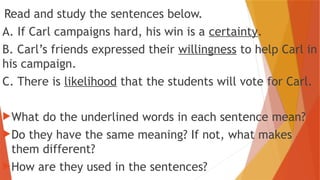
Read and study the sentences below.
A. If Carl campaigns hard, his win is a certainty.
B. Carl’s friends expressed their willingness to help Carl in
his campaign.
C. There is likelihood that the students will vote for Carl.
What do the underlined words in each sentence mean?
Do they have the same meaning? If not, what makes
them different?
How are they used in the sentences?
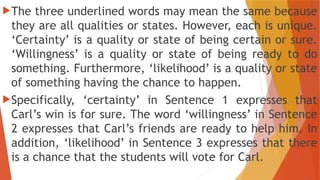
The three underlined words may mean the same because
they are all qualities or states. However, each is unique.
‘Certainty’ is a quality or state of being certain or sure.
‘Willingness’ is a quality or state of being ready to do
something. Furthermore, ‘likelihood’ is a quality or state
of something having the chance to happen.
Specifically, ‘certainty’ in Sentence 1 expresses that
Carl’s win is for sure. The word ‘willingness’ in Sentence
2 expresses that Carl’s friends are ready to help him. In
addition, ‘likelihood’ in Sentence 3 expresses that there
is a chance that the students will vote for Carl.
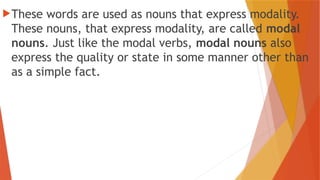
These words are used as nouns that express modality.
These nouns, that express modality, are called modal
nouns. Just like the modal verbs, modal nouns also
express the quality or state in some manner other than
as a simple fact.
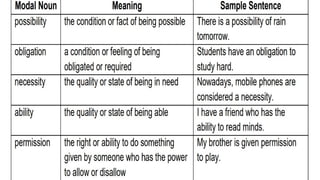
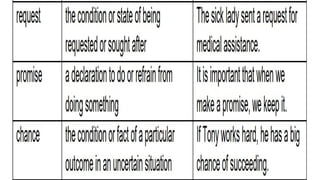
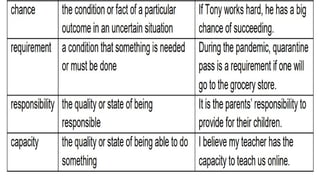
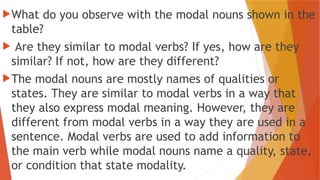
What do you observe with the modal nouns shown in the
table?
 Are they similar to modal verbs? If yes, how are they
similar? If not, how are they different?
The modal nouns are mostly names of qualities or
states. They are similar to modal verbs in a way that
they also express modal meaning. However, they are
different from modal verbs in a way they are used in a
sentence. Modal verbs are used to add information to
the main verb while modal nouns name a quality, state,
or condition that state modality.
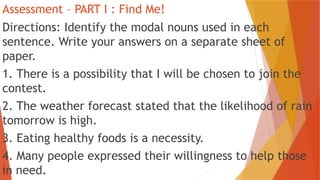
Assessment – PART I : Find Me!
Directions: Identify the modal nouns used in each
sentence. Write your answers on a separate sheet of
paper.
1. There is a possibility that I will be chosen to join the
contest.
2. The weather forecast stated that the likelihood of rain
tomorrow is high.
3. Eating healthy foods is a necessity.
4. Many people expressed their willingness to help those
in need.
5. My father made a promise that he would buy me a
laptop.
6. We have an obligation to take care of the environment.
7. The construction workers made a request to allow them
to go back to work.
8. Our classroom has the capacity to accommodate 30
students.
9. I met the basic requirements for me to enroll in an
online class.
10. Many families were given the chance to bond during
the lockdown.
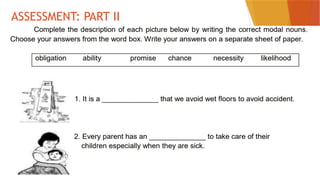
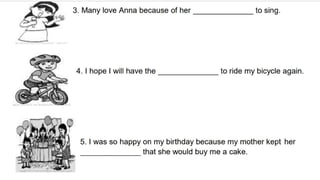
ASSESSMENT: PART II
d

ENGLISH 8- Lesson 5.pptx for discussions

  • 2.
    SPELL ME!  DOUBT DISEASE  DEBUT  DAUGHTER  DOUGH  DESERT  DESSERT  DILEMMA  DANGER  DAUNTLESS
  • 3.
  • 4.
    What is aNOUN? Is a word that names something, such as a person, thing, or idea. EXAMPLES: cat, bicycle, Sarah Geronimo, Philippines, love.
  • 5.
    Example in sentence: Thedog run very fast. Do you live in Inabanga? Anna is beautiful.
  • 6.
    Read and studythe sentences below. A. If Carl campaigns hard, his win is a certainty. B. Carl’s friends expressed their willingness to help Carl in his campaign. C. There is likelihood that the students will vote for Carl. What do the underlined words in each sentence mean? Do they have the same meaning? If not, what makes them different? How are they used in the sentences?
  • 7.
    The three underlinedwords may mean the same because they are all qualities or states. However, each is unique. ‘Certainty’ is a quality or state of being certain or sure. ‘Willingness’ is a quality or state of being ready to do something. Furthermore, ‘likelihood’ is a quality or state of something having the chance to happen. Specifically, ‘certainty’ in Sentence 1 expresses that Carl’s win is for sure. The word ‘willingness’ in Sentence 2 expresses that Carl’s friends are ready to help him. In addition, ‘likelihood’ in Sentence 3 expresses that there is a chance that the students will vote for Carl.
  • 8.
    These words areused as nouns that express modality. These nouns, that express modality, are called modal nouns. Just like the modal verbs, modal nouns also express the quality or state in some manner other than as a simple fact.
  • 12.
    What do youobserve with the modal nouns shown in the table?  Are they similar to modal verbs? If yes, how are they similar? If not, how are they different? The modal nouns are mostly names of qualities or states. They are similar to modal verbs in a way that they also express modal meaning. However, they are different from modal verbs in a way they are used in a sentence. Modal verbs are used to add information to the main verb while modal nouns name a quality, state, or condition that state modality.
  • 13.
    Assessment – PARTI : Find Me! Directions: Identify the modal nouns used in each sentence. Write your answers on a separate sheet of paper. 1. There is a possibility that I will be chosen to join the contest. 2. The weather forecast stated that the likelihood of rain tomorrow is high. 3. Eating healthy foods is a necessity. 4. Many people expressed their willingness to help those in need.
  • 14.
    5. My fathermade a promise that he would buy me a laptop. 6. We have an obligation to take care of the environment. 7. The construction workers made a request to allow them to go back to work. 8. Our classroom has the capacity to accommodate 30 students. 9. I met the basic requirements for me to enroll in an online class. 10. Many families were given the chance to bond during the lockdown.
  • 15.
  • 16.