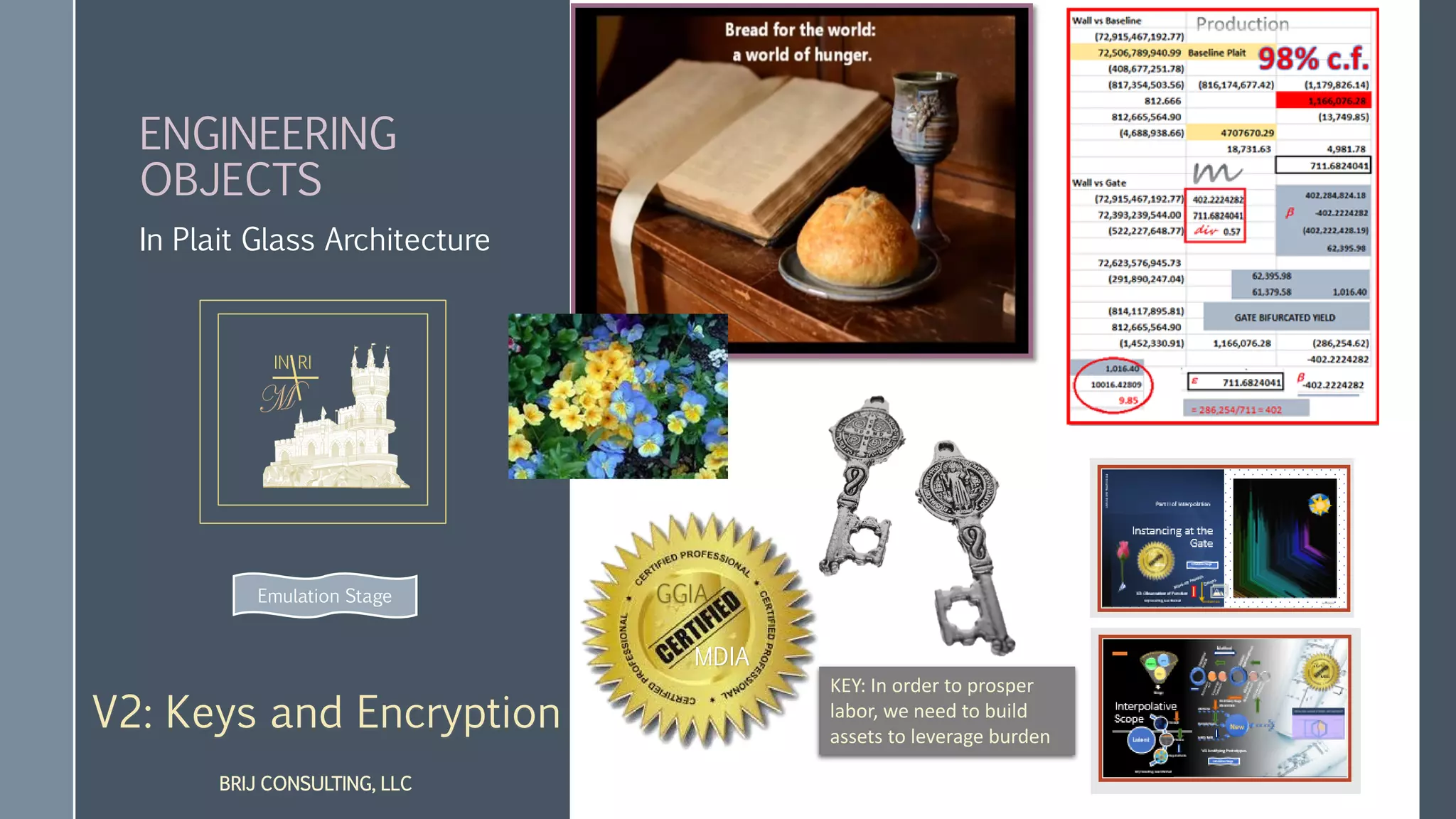
ENGINEERING
OBJECTS
In Plait Glass Architecture
Emulation Stage
V2: Keys and Encryption
MDIA
KEY: In order to prosper
labor, we need to build
assets to leverage burden
BRIJ CONSULTING, LLC
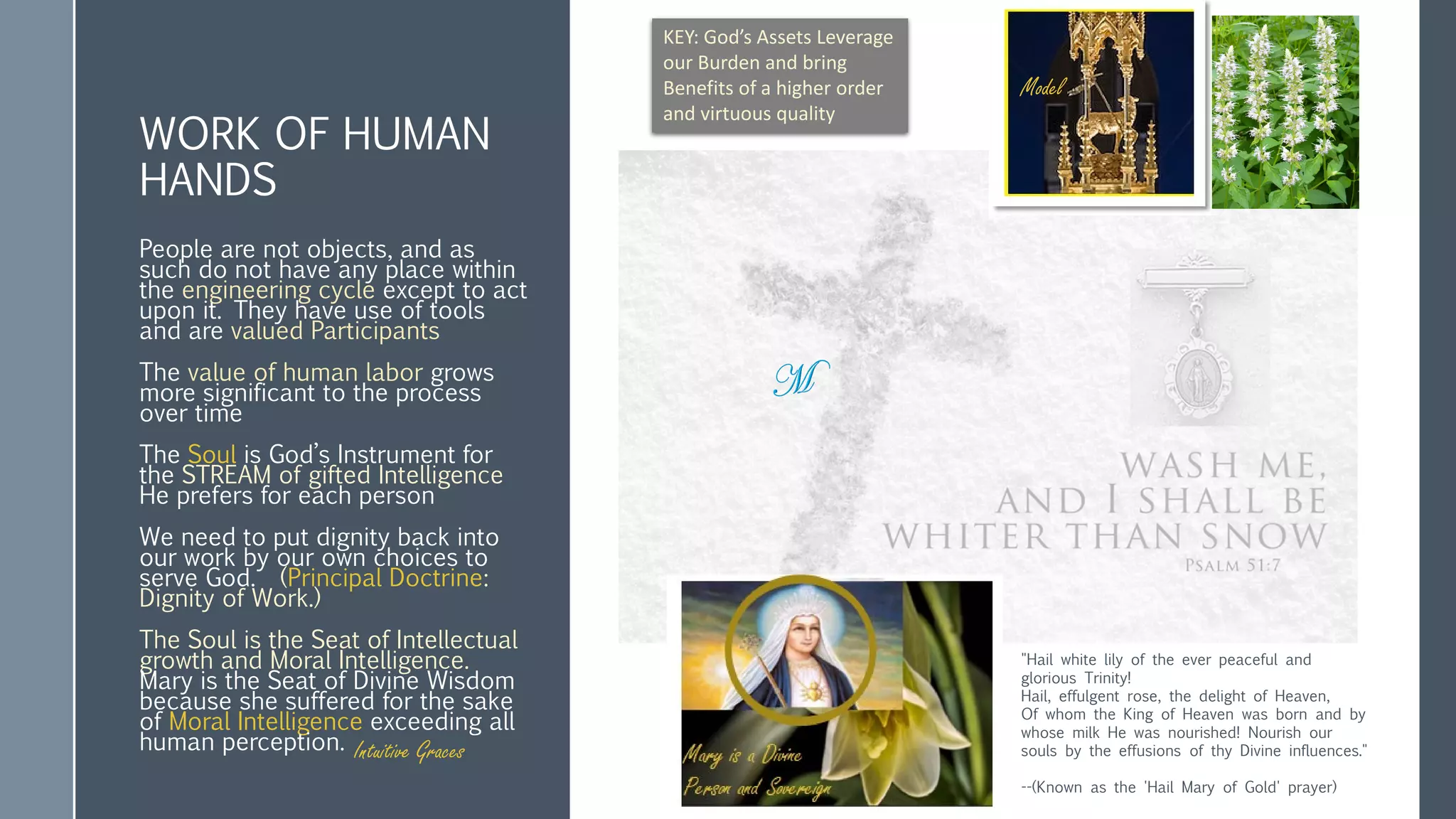
WORK OF HUMAN
HANDS
People are not objects, and as
such do not have any place within
the engineering cycle except to act
upon it. They have use of tools
and are valued Participants
The value of human labor grows
more significant to the process
over time
The Soul is God’s Instrument for
the STREAM of gifted Intelligence
He prefers for each person
We need to put dignity back into
our work by our own choices to
serve God. (Principal Doctrine:
Dignity of Work.)
The Soul is the Seat of Intellectual
growth and Moral Intelligence.
Mary is the Seat of Divine Wisdom
because she suffered for the sake
of Moral Intelligence exceeding all
human perception.
"Hail white lily of the ever peaceful and
glorious Trinity!
Hail, effulgent rose, the delight of Heaven,
Of whom the King of Heaven was born and by
whose milk He was nourished! Nourish our
souls by the effusions of thy Divine influences."
--(Known as the 'Hail Mary of Gold' prayer)
Intuitive Graces
KEY: God’s Assets Leverage
our Burden and bring
Benefits of a higher order
and virtuous quality
Model
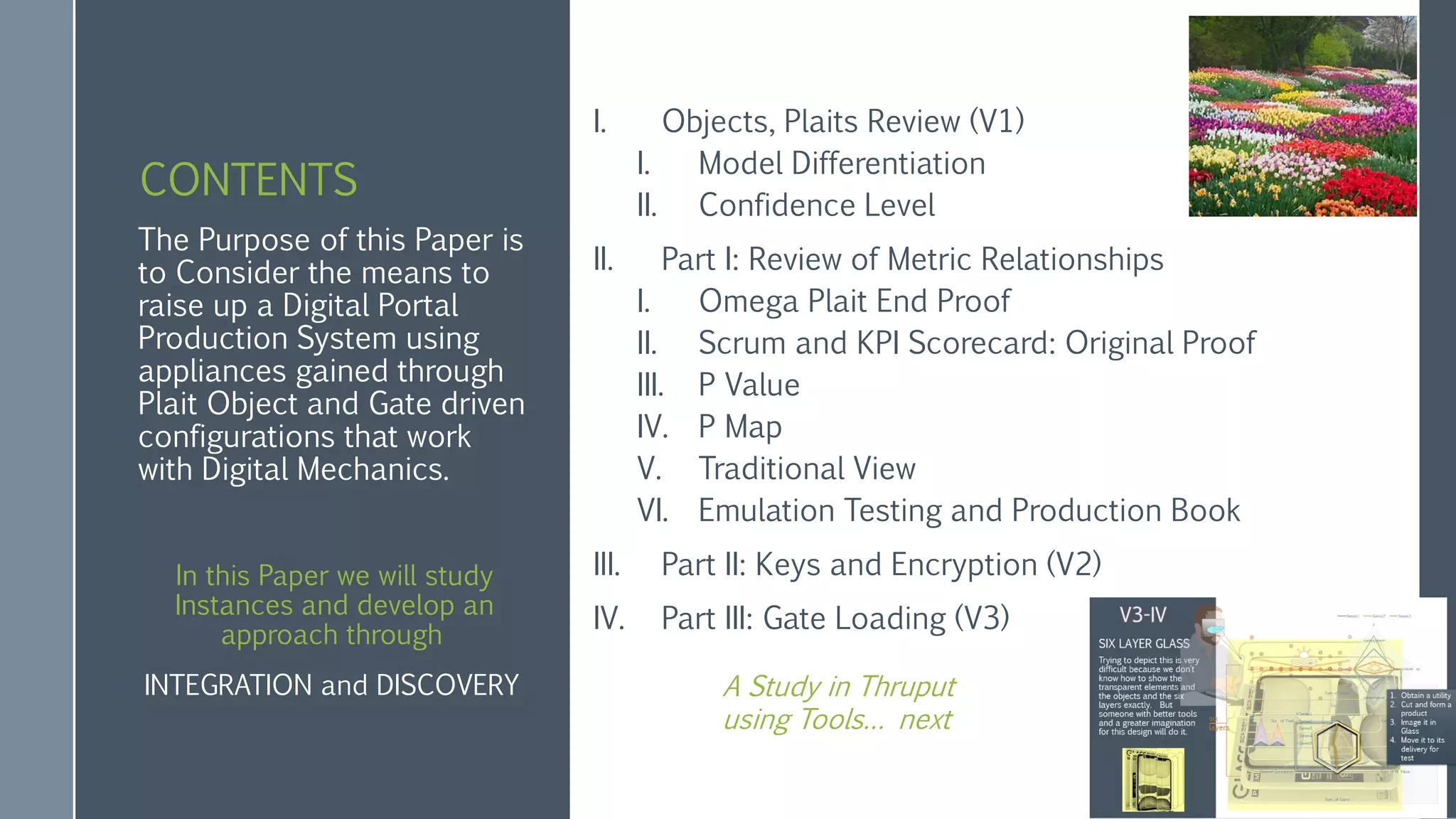
CONTENTS
I. Objects, Plaits Review (V1)
I. Model Differentiation
II. Confidence Level
II. Part I: Review of Metric Relationships
I. Omega Plait End Proof
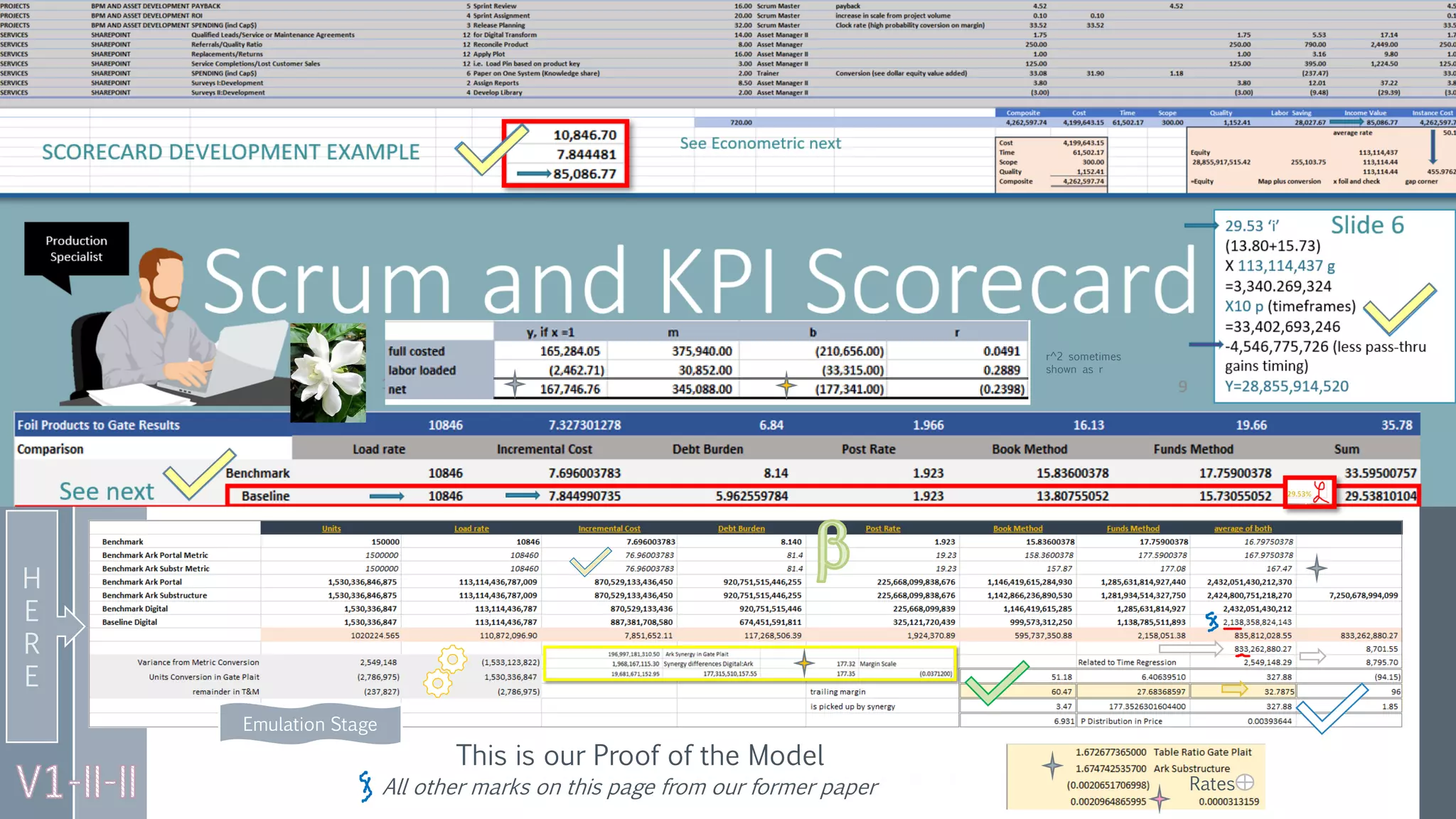
II. Scrum and KPI Scorecard: Original Proof
III. P Value
IV. P Map
V. Traditional View
VI. Emulation Testing and Production Book
III. Part II: Keys and Encryption (V2)
IV. Part III: Gate Loading (V3)
The Purpose of this Paper is
to Consider the means to
raise up a Digital Portal
Production System using
appliances gained through
Plait Object and Gate driven
configurations that work
with Digital Mechanics.
In this Paper we will study
Instances and develop an
approach through
INTEGRATION and DISCOVERY A Study in Thruput
using Tools… next
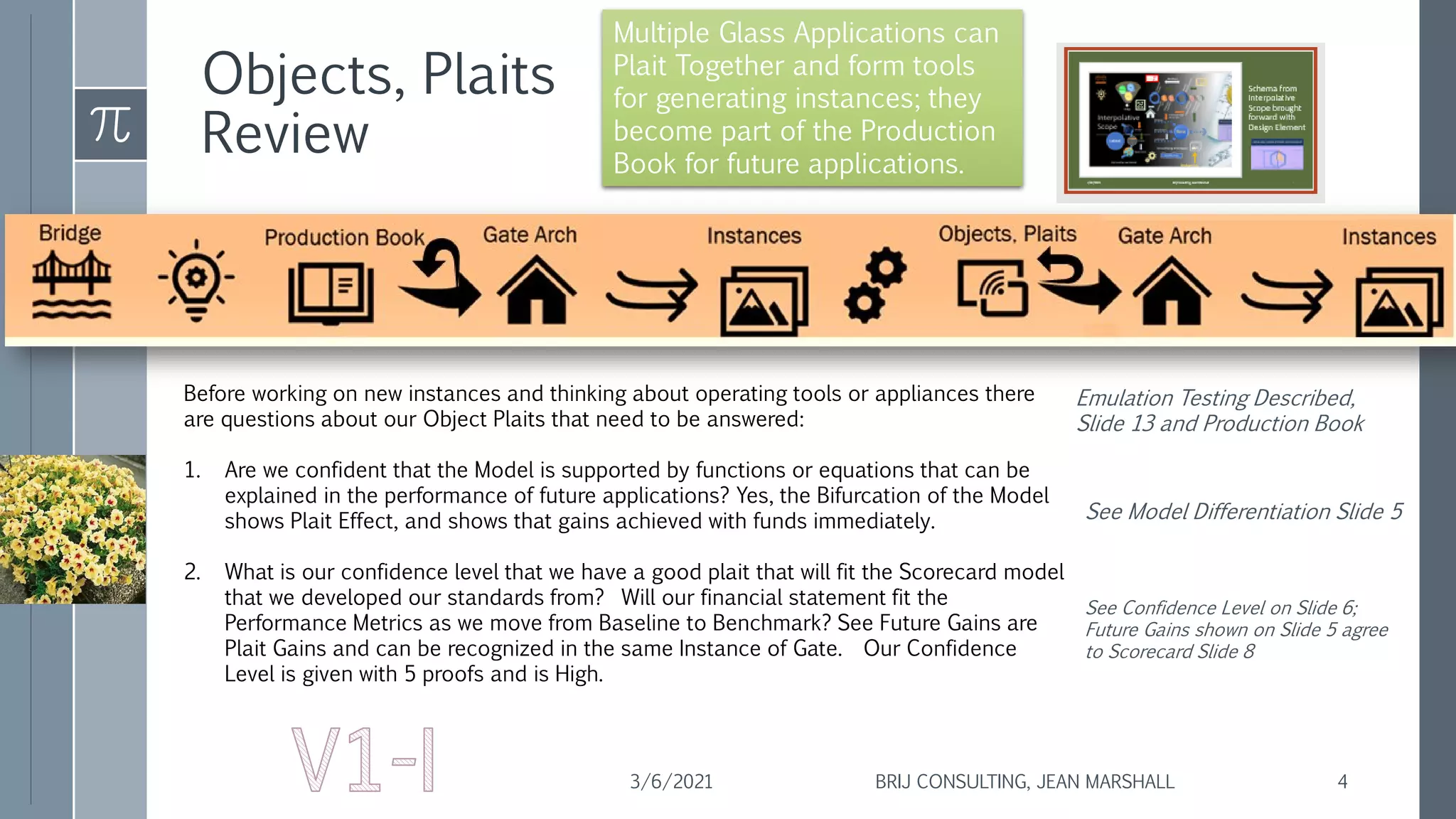
Objects, Plaits
Review
3/6/2021 BRIJ CONSULTING, JEAN MARSHALL 4
Multiple Glass Applications can
Plait Together and form tools
for generating instances; they
become part of the Production
Book for future applications.
Before working on new instances and thinking about operating tools or appliances there
are questions about our Object Plaits that need to be answered:
1. Are we confident that the Model is supported by functions or equations that can be
explained in the performance of future applications? Yes, the Bifurcation of the Model
shows Plait Effect, and shows that gains achieved with funds immediately.
2. What is our confidence level that we have a good plait that will fit the Scorecard model
that we developed our standards from? Will our financial statement fit the
Performance Metrics as we move from Baseline to Benchmark? See Future Gains are
Plait Gains and can be recognized in the same Instance of Gate. Our Confidence
Level is given with 5 proofs and is High.
See Model Differentiation Slide 5
See Confidence Level on Slide 6;
Future Gains shown on Slide 5 agree
to Scorecard Slide 8
Emulation Testing Described,
Slide 13 and Production Book
MODEL
DIFFERENTIATION
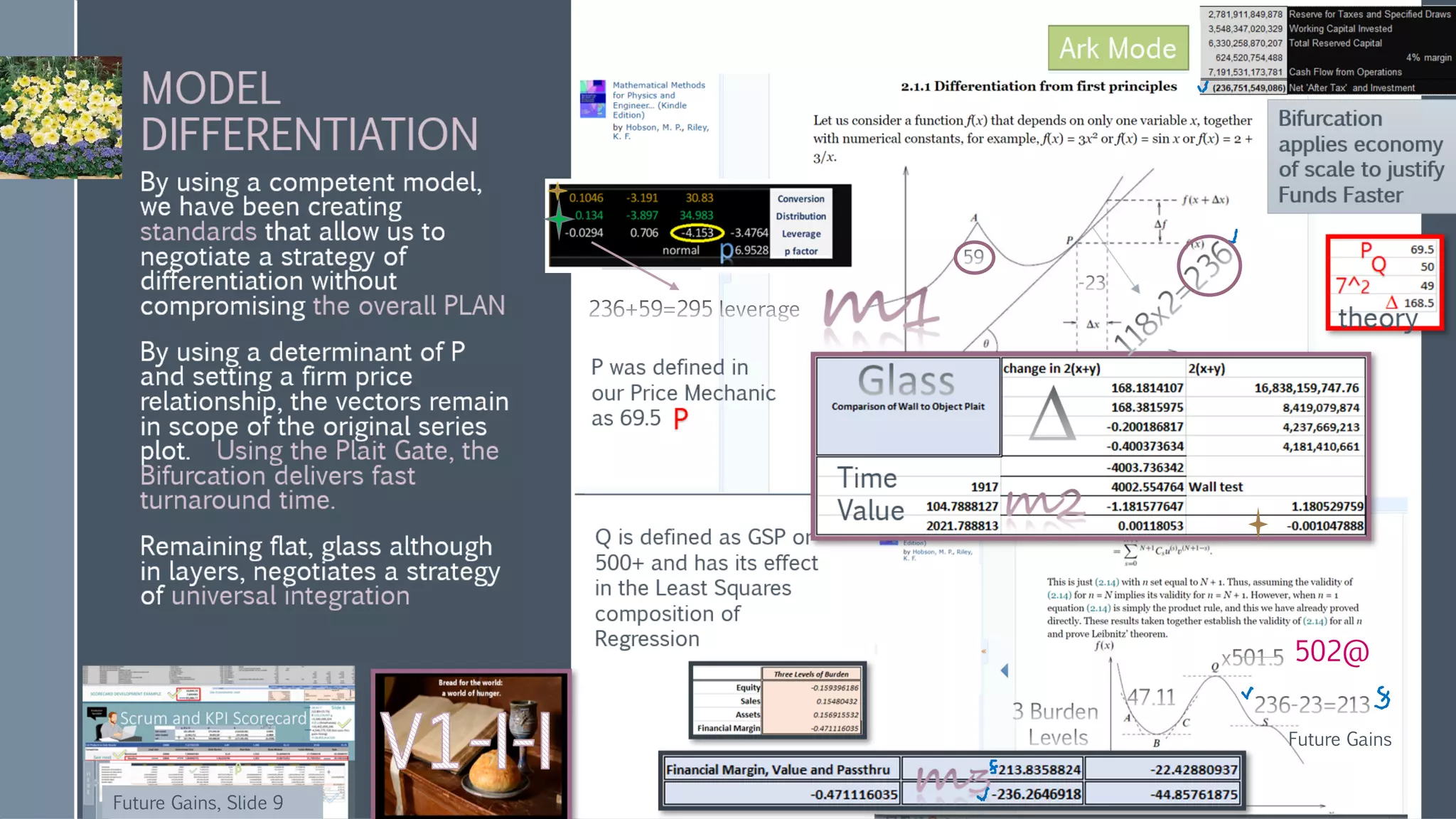
By using a competent model,
we have been creating
standards that allow us to
negotiate a strategy of
differentiation without
compromising the overall PLAN
By using a determinant of P
and setting a firm price
relationship, the vectors remain
in scope of the original series
plot. Using the Plait Gate, the
Bifurcation delivers fast
turnaround time.
Remaining flat, glass although
in layers, negotiates a strategy
of universal integration
P was defined in
our Price Mechanic
as 69.5
Q is defined as GSP or
500+ and has its effect
in the Least Squares
composition of
Regression
Time
Value
Bifurcation
applies economy
of scale to justify
Funds Faster
P
Ark Mode
theory
Future Gains
Future Gains, Slide 9
502@
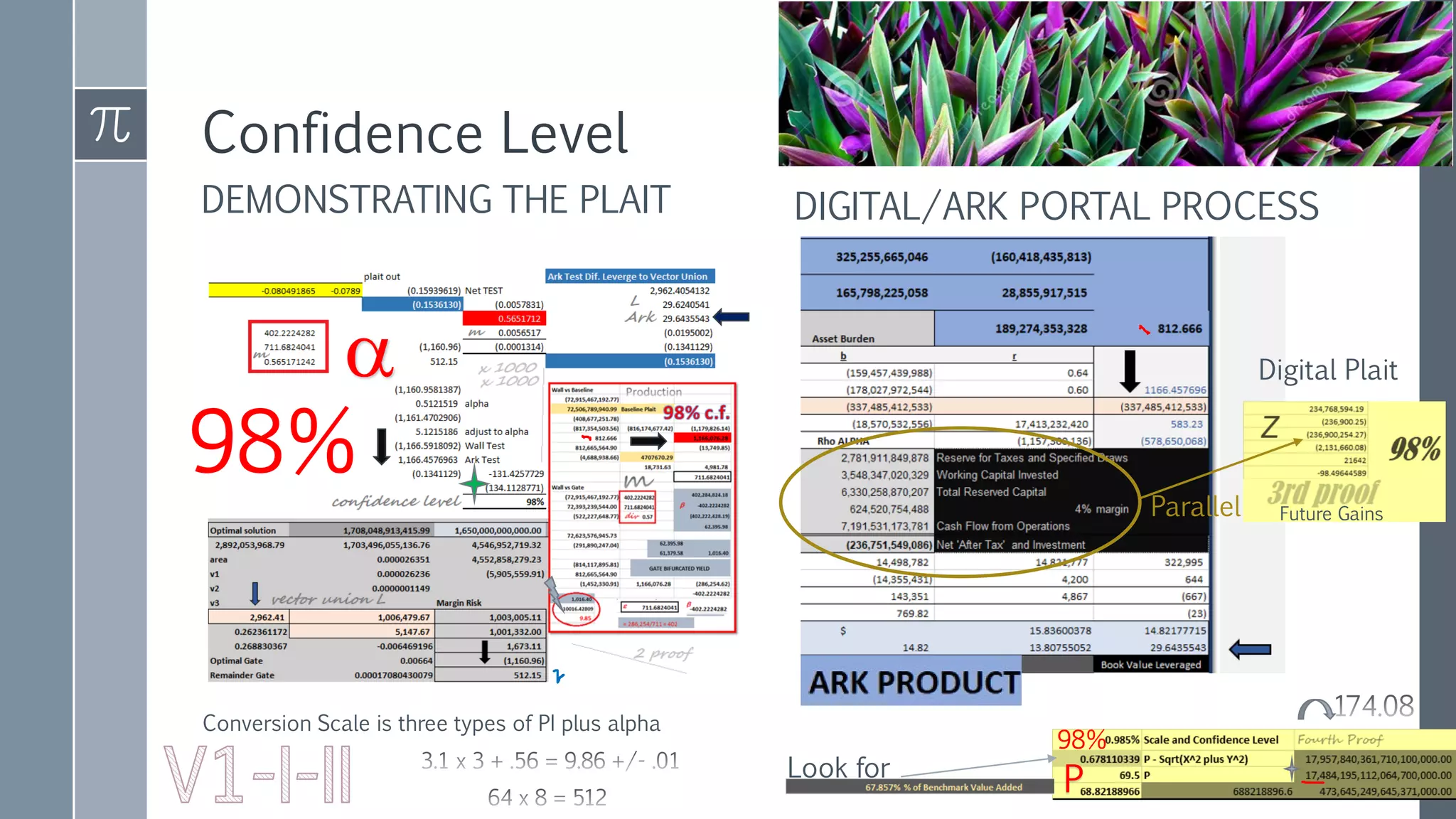
Confidence Level
DEMONSTRATING THE PLAIT DIGITAL/ARK PORTAL PROCESS
98%
α Digital Plait
98%
Parallel
P
Look for
Conversion Scale is three types of PI plus alpha
Future Gains
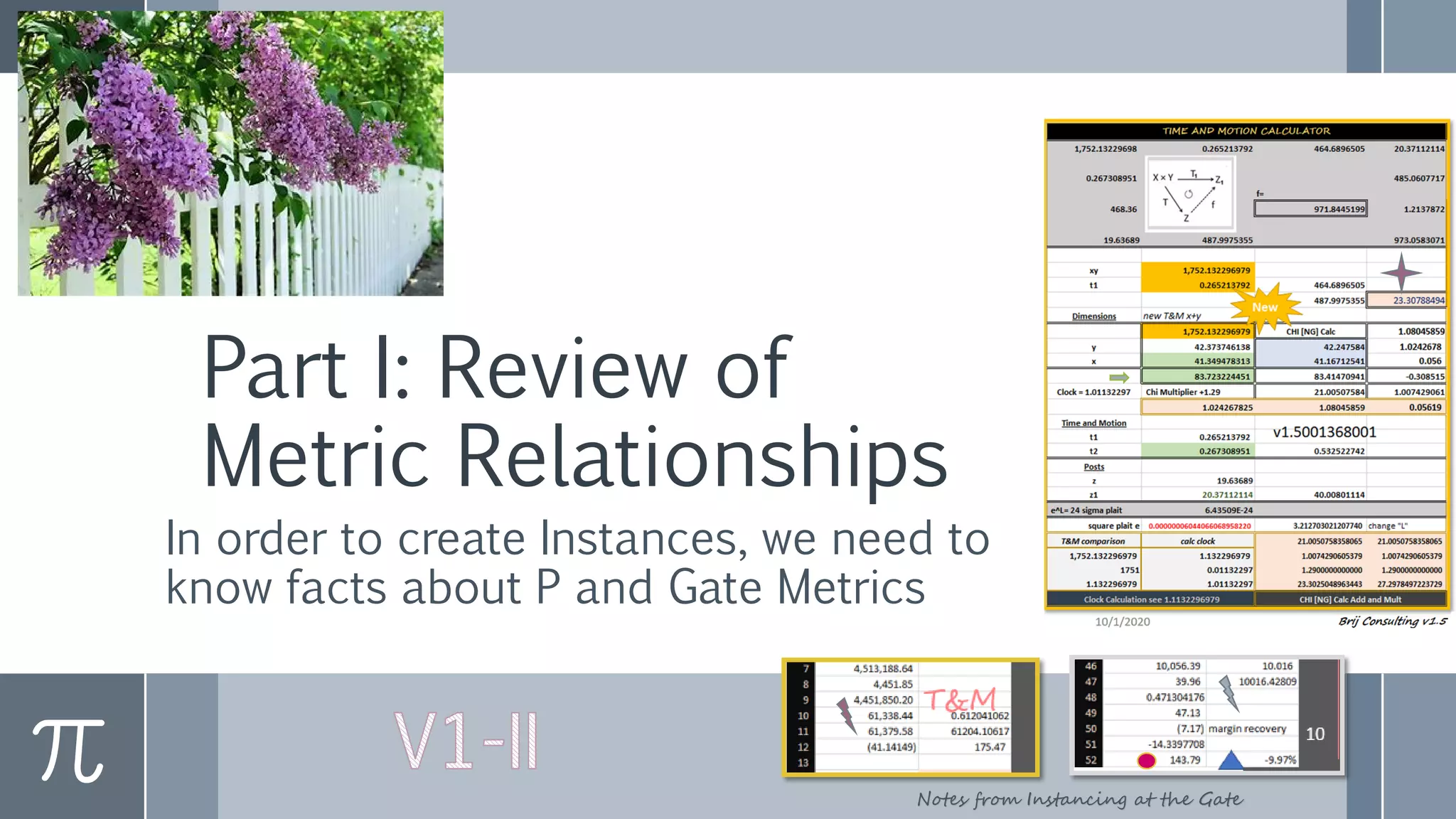
Part I: Review of
Metric Relationships
In order to create Instances, we need to
know facts about P and Gate Metrics
Notes from Instancing at the Gate
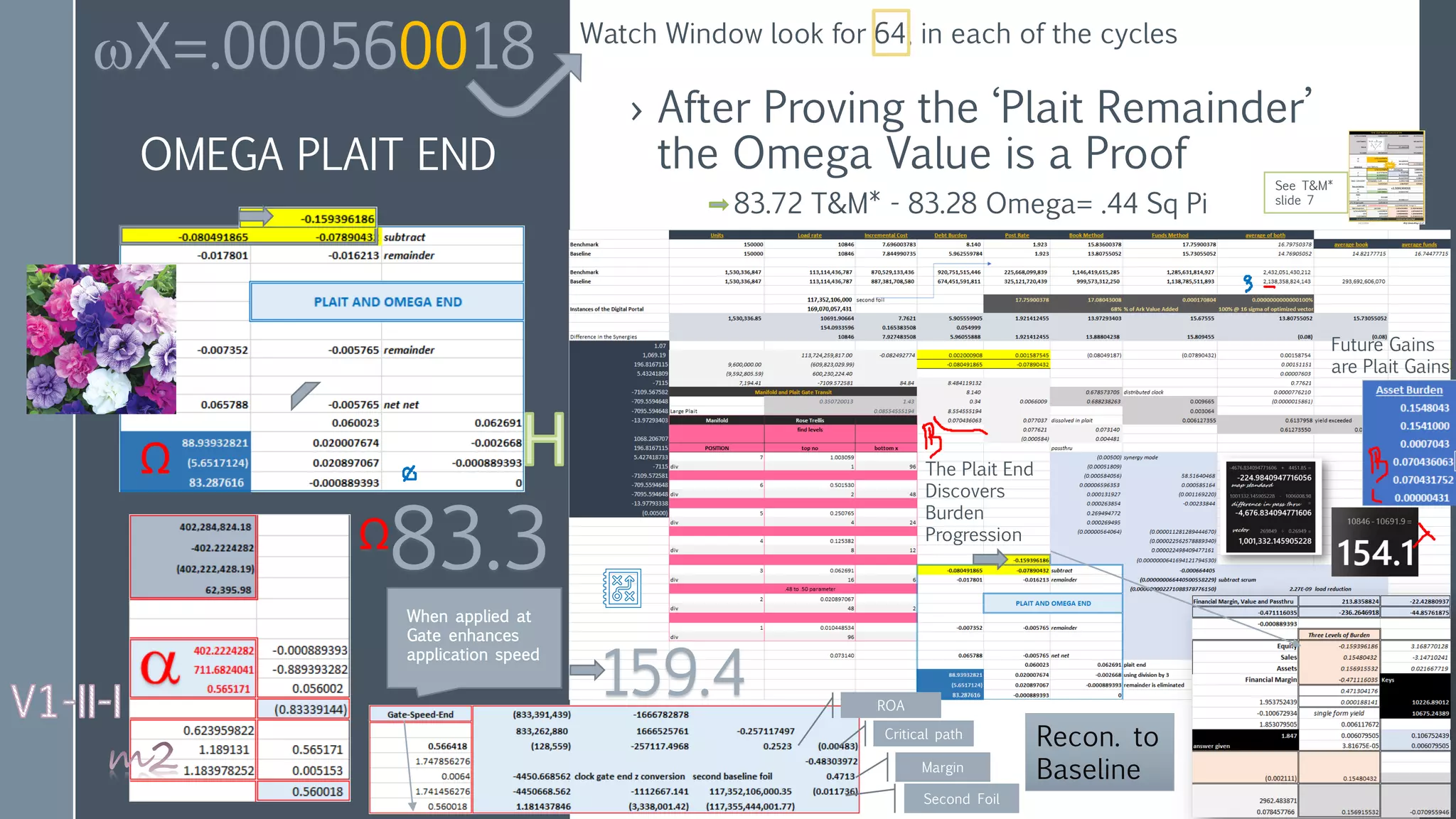
OMEGA PLAIT END
› After Proving the ‘Plait Remainder’
the Omega Value is a Proof
Ω
ωX=.000560018
When applied at
Gate enhances
application speed
83.3
Watch Window look for 64, in each of the cycles
The Plait End
Discovers
Burden
Progression
159.4
Critical path
ROA
Margin
Second Foil
Ω
Recon. to
Baseline
Future Gains
are Plait Gains
83.72 T&M* - 83.28 Omega= .44 Sq Pi
See T&M*
slide 7
Composite Resolution
Emulation Stage
Rates
H
E
R
E
r^2 sometimes
shown as r
This is our Proof of the Model
All other marks on this page from our former paper
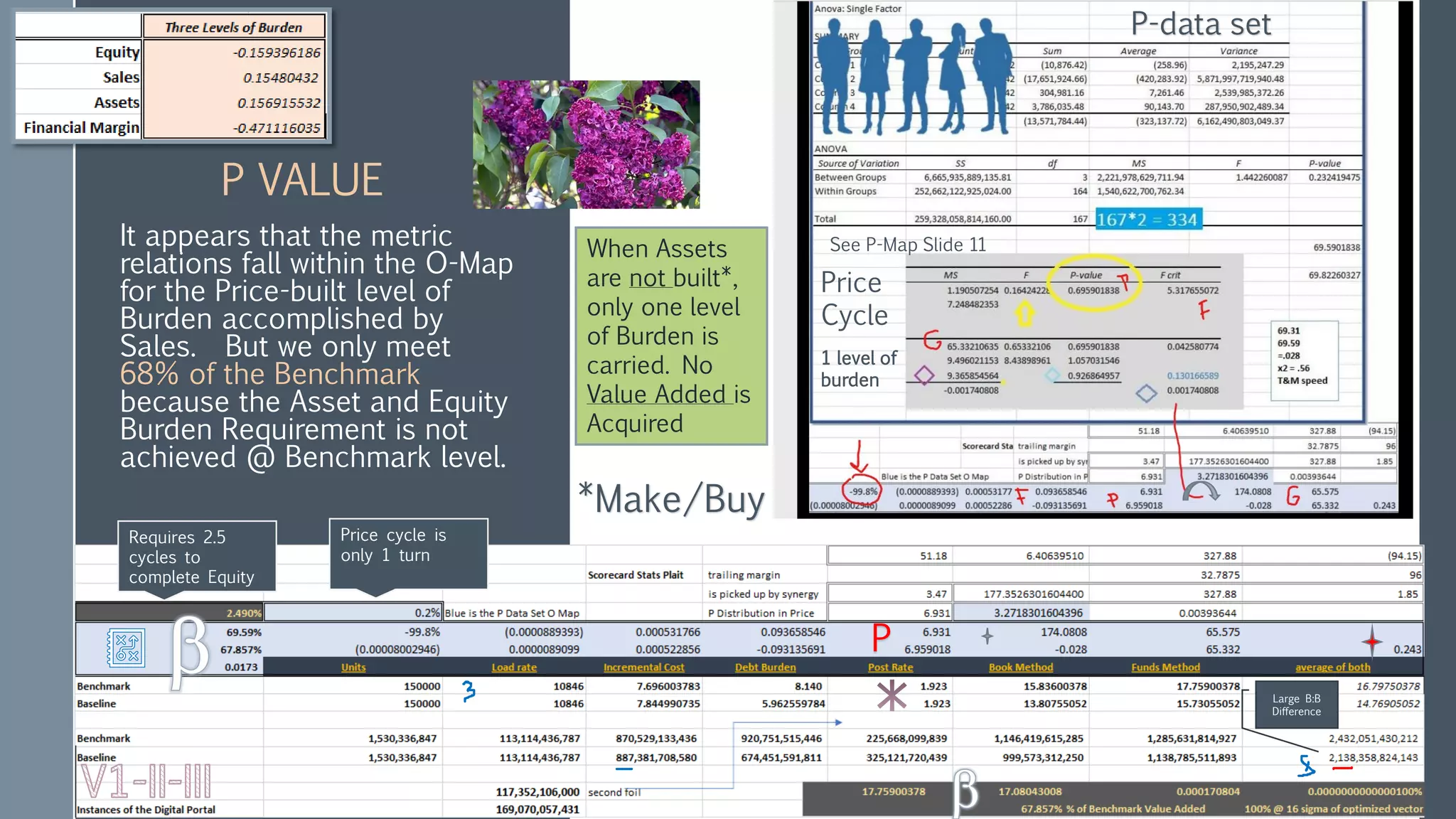
P VALUE
It appears that the metric
relations fall within the O-Map
for the Price-built level of
Burden accomplished by
Sales. But we only meet
68% of the Benchmark
because the Asset and Equity
Burden Requirement is not
achieved @ Benchmark level.
Difference is 2.5 cycles of Equity
Price
Cycle
1 level of
burden
When Assets
are not built*,
only one level
of Burden is
carried. No
Value Added is
Acquired
P-data set
Requires 2.5
cycles to
complete Equity
Price cycle is
only 1 turn
Large B:B
Difference
*Make/Buy
P
See P-Map Slide 11
P
P
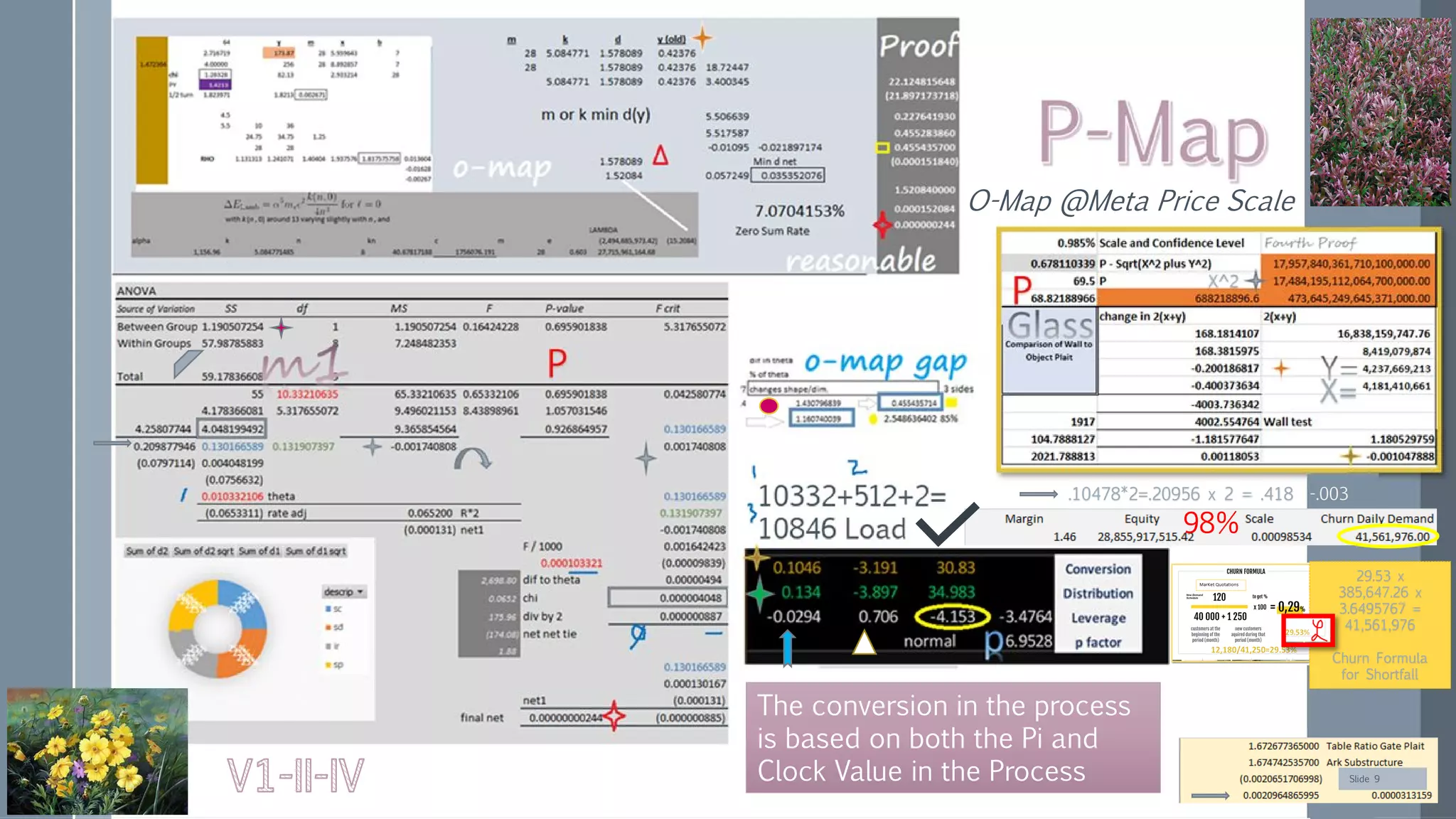
10332+512+2=
10846 Load
X=
X^2
The conversion in the process
is based on both the Pi and
Clock Value in the Process
O-Map @Meta Price Scale
.10478*2=.20956 x 2 = .418 -.003
Slide 9
29.53 x
385,647.26 x
3.6495767 =
41,561,976
Churn Formula
for Shortfall
98%
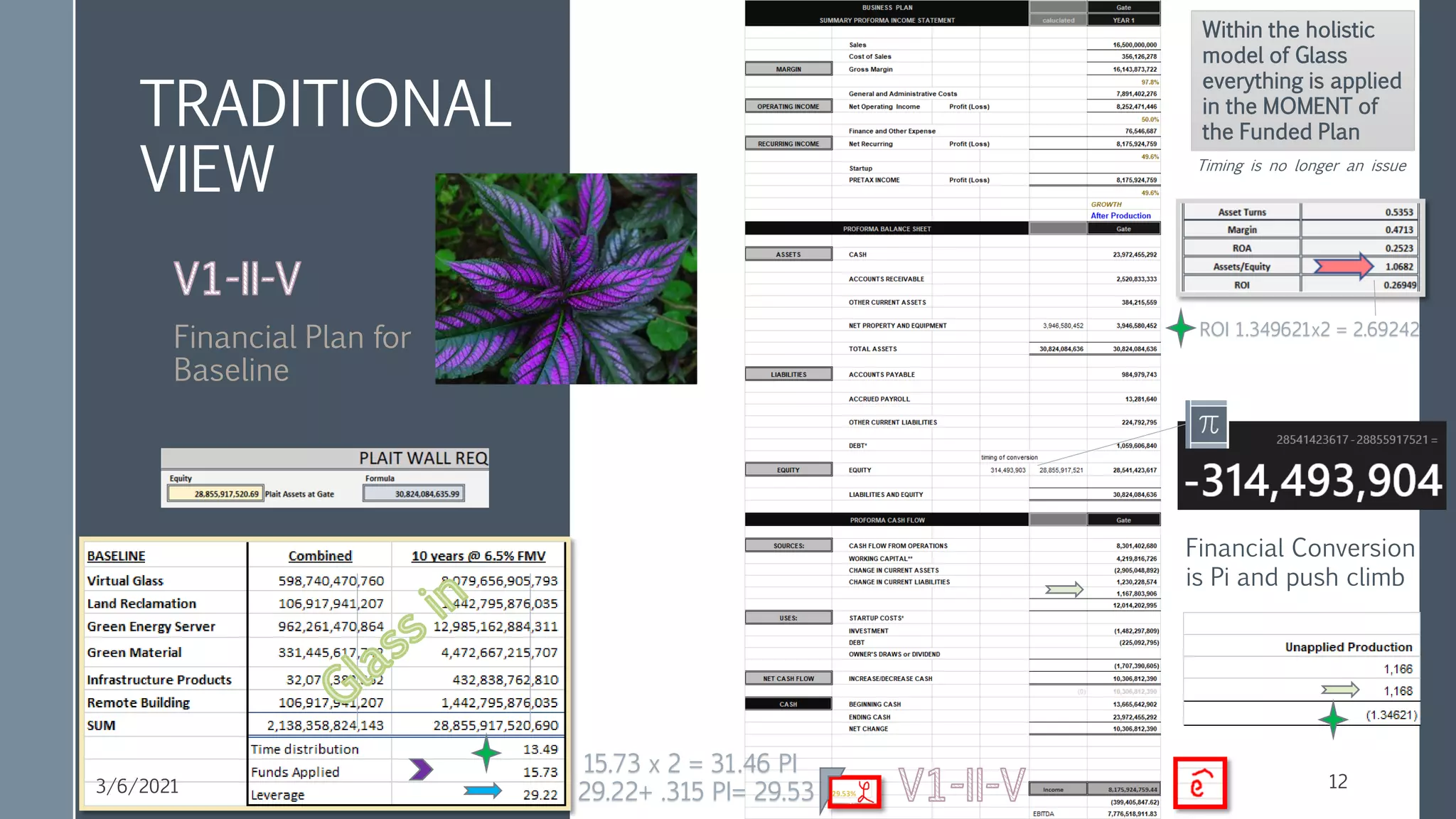
TRADITIONAL
VIEW
12
Financial Conversion
is Pi and push climb
ROI 1.349621x2 = 2.69242
15.73 x 2 = 31.46 PI
3/6/2021
Within the holistic
model of Glass
everything is applied
in the MOMENT of
the Funded Plan
Timing is no longer an issue
29.22+ .315 PI= 29.53
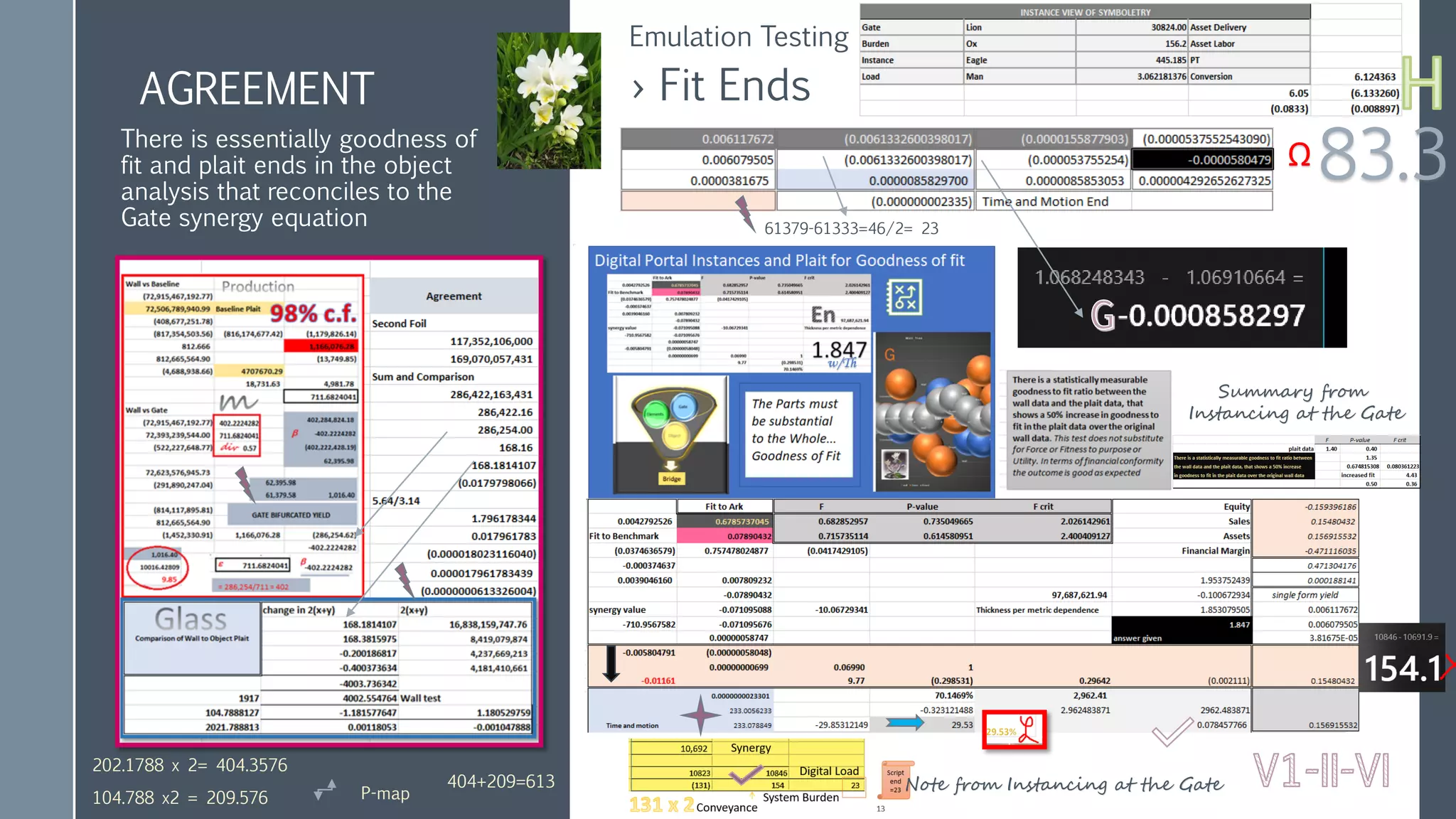
AGREEMENT › Fit Ends
There is essentially goodness of
fit and plait ends in the object
analysis that reconciles to the
Gate synergy equation
Note from Instancing at the Gate
Emulation Testing
Summary from
Instancing at the Gate
83.3
Ω
61379-61333=46/2= 23
202.1788 x 2= 404.3576
104.788 x2 = 209.576
404+209=613
P-map
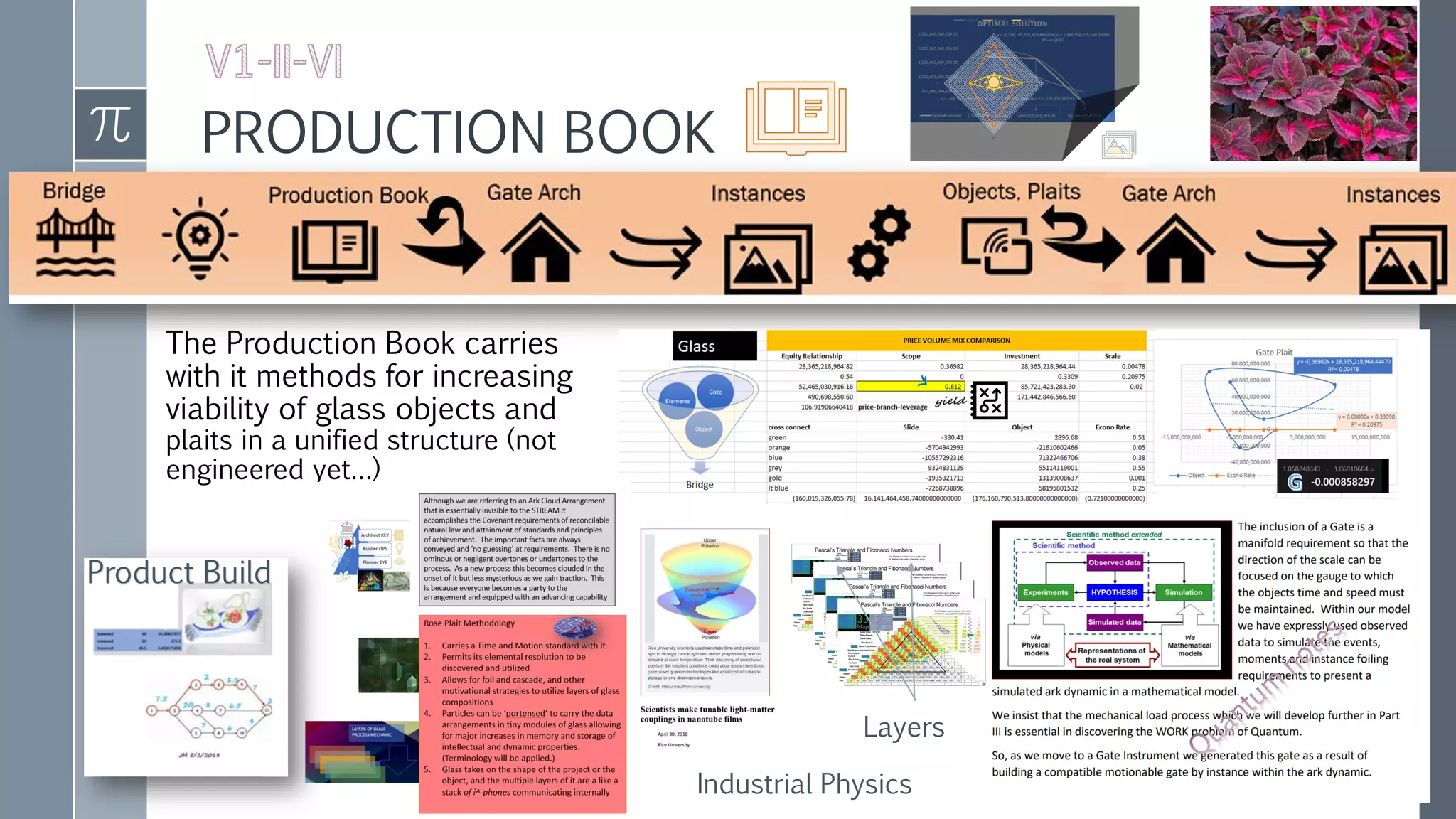
PRODUCTION BOOK
The Production Book carries
with it methods for increasing
viability of glass objects and
plaits in a unified structure (not
engineered yet…)
Layers
Product Build
Industrial Physics
Background
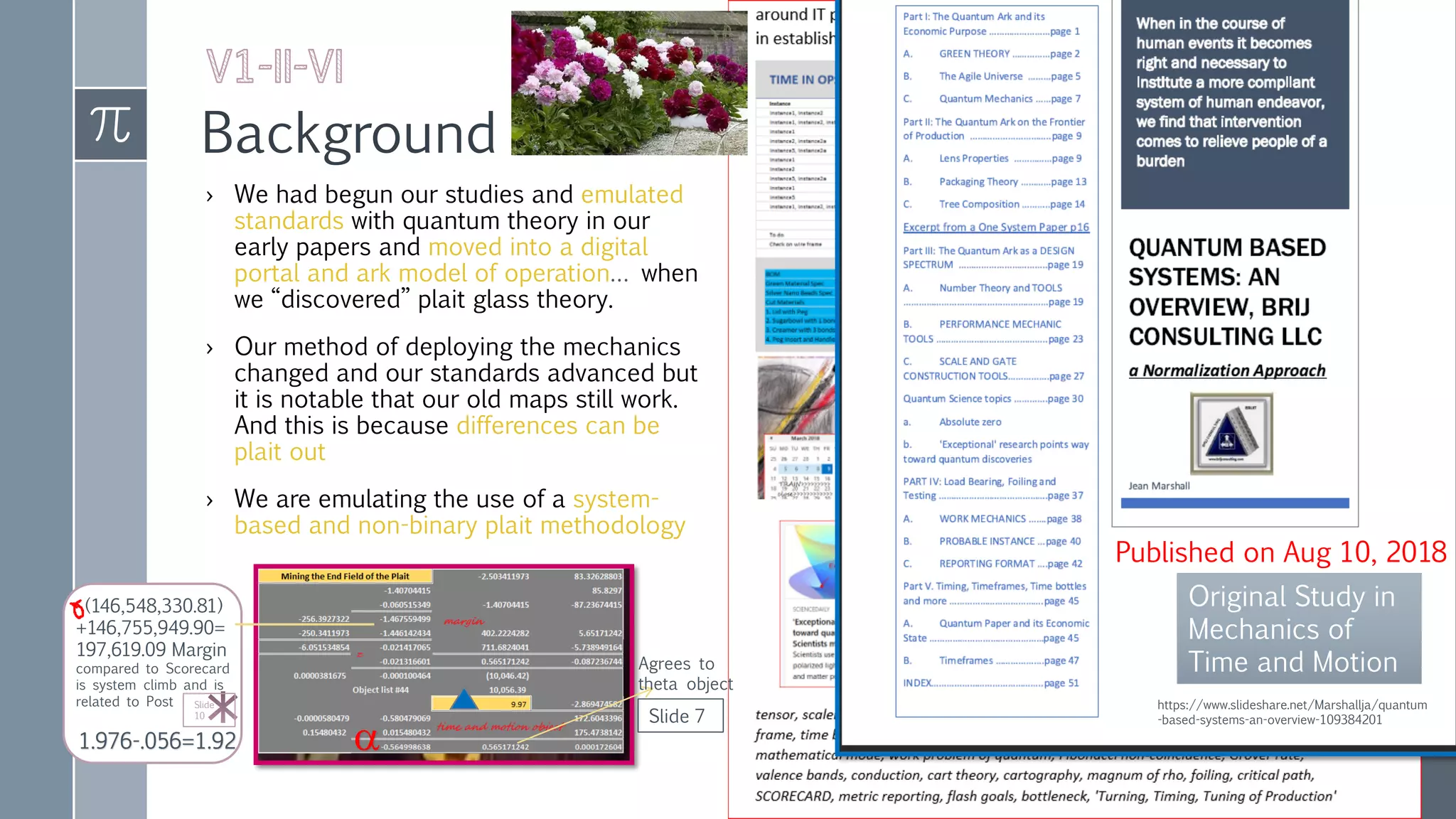
› We had begun our studies and emulated
standards with quantum theory in our
early papers and moved into a digital
portal and ark model of operation… when
we “discovered” plait glass theory.
› Our method of deploying the mechanics
changed and our standards advanced but
it is notable that our old maps still work.
And this is because differences can be
plait out
› We are emulating the use of a system-
based and non-binary plait methodology
Original Study in
Mechanics of
Time and Motion
https://www.slideshare.net/Marshallja/quantum
-based-systems-an-overview-109384201
Published on Aug 10, 2018
Agrees to
theta object
α
(146,548,330.81)
+146,755,949.90=
197,619.09 Margin
compared to Scorecard
is system climb and is
related to Post
1.976-.056=1.92
Slide 7
Slide
10
Part II: Keys and
Encryptions
In order to create Keys and Encryptions,
we need to know facts about the Load
CONSIDERING THE
LOAD
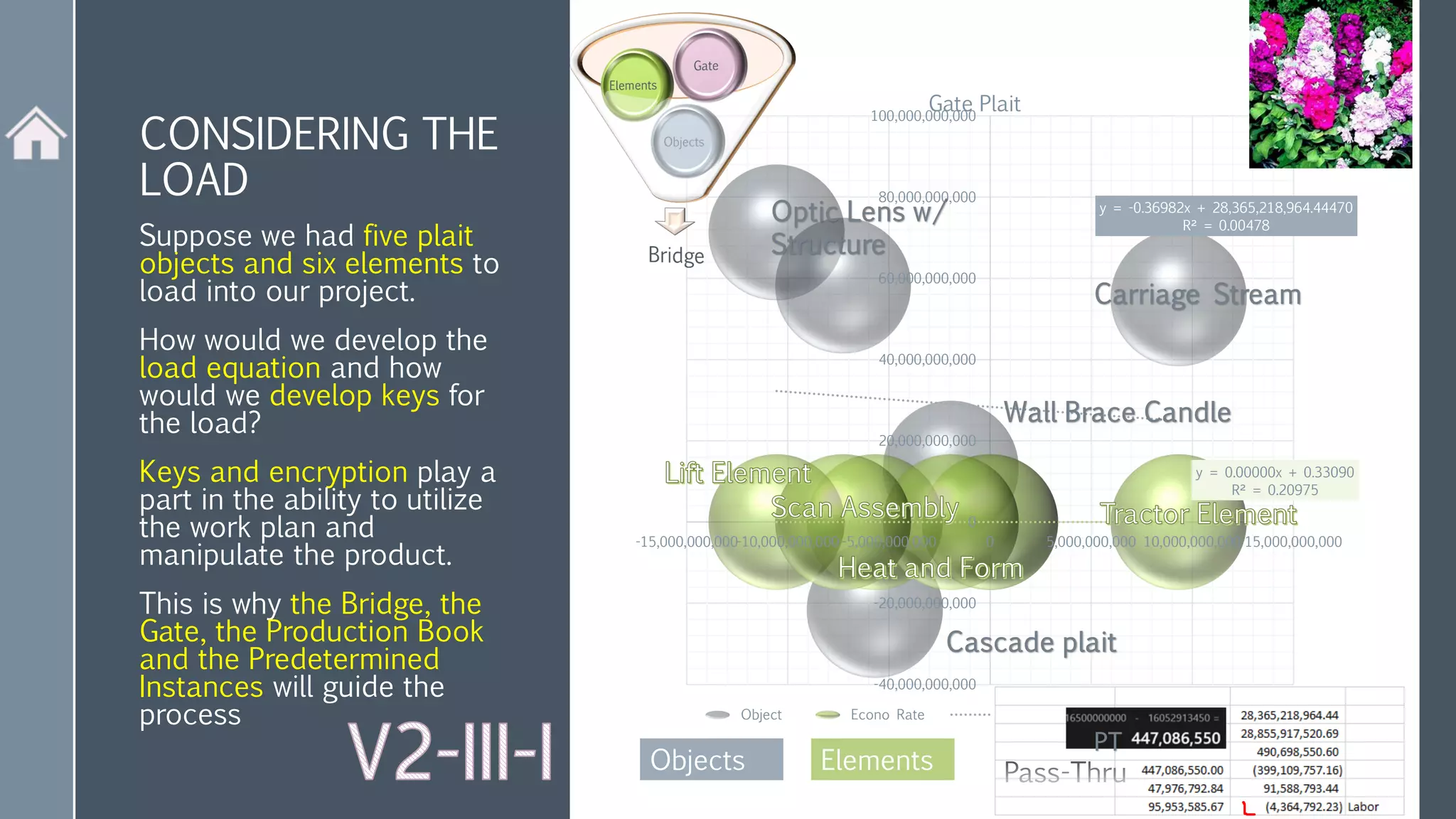
Suppose we had five plait
objects and six elements to
load into our project.
How would we develop the
load equation and how
would we develop keys for
the load?
Keys and encryption play a
part in the ability to utilize
the work plan and
manipulate the product.
This is why the Bridge, the
Gate, the Production Book
and the Predetermined
Instances will guide the
process
y = -0.36982x + 28,365,218,964.44470
R² = 0.00478
y = 0.00000x + 0.33090
R² = 0.20975
-40,000,000,000
-20,000,000,000
0
20,000,000,000
40,000,000,000
60,000,000,000
80,000,000,000
100,000,000,000
-15,000,000,000-10,000,000,000 -5,000,000,000 0 5,000,000,000 10,000,000,000 15,000,000,000
Gate Plait
Object Econo Rate Linear (Object) Linear (Econo Rate)
Elements
Objects
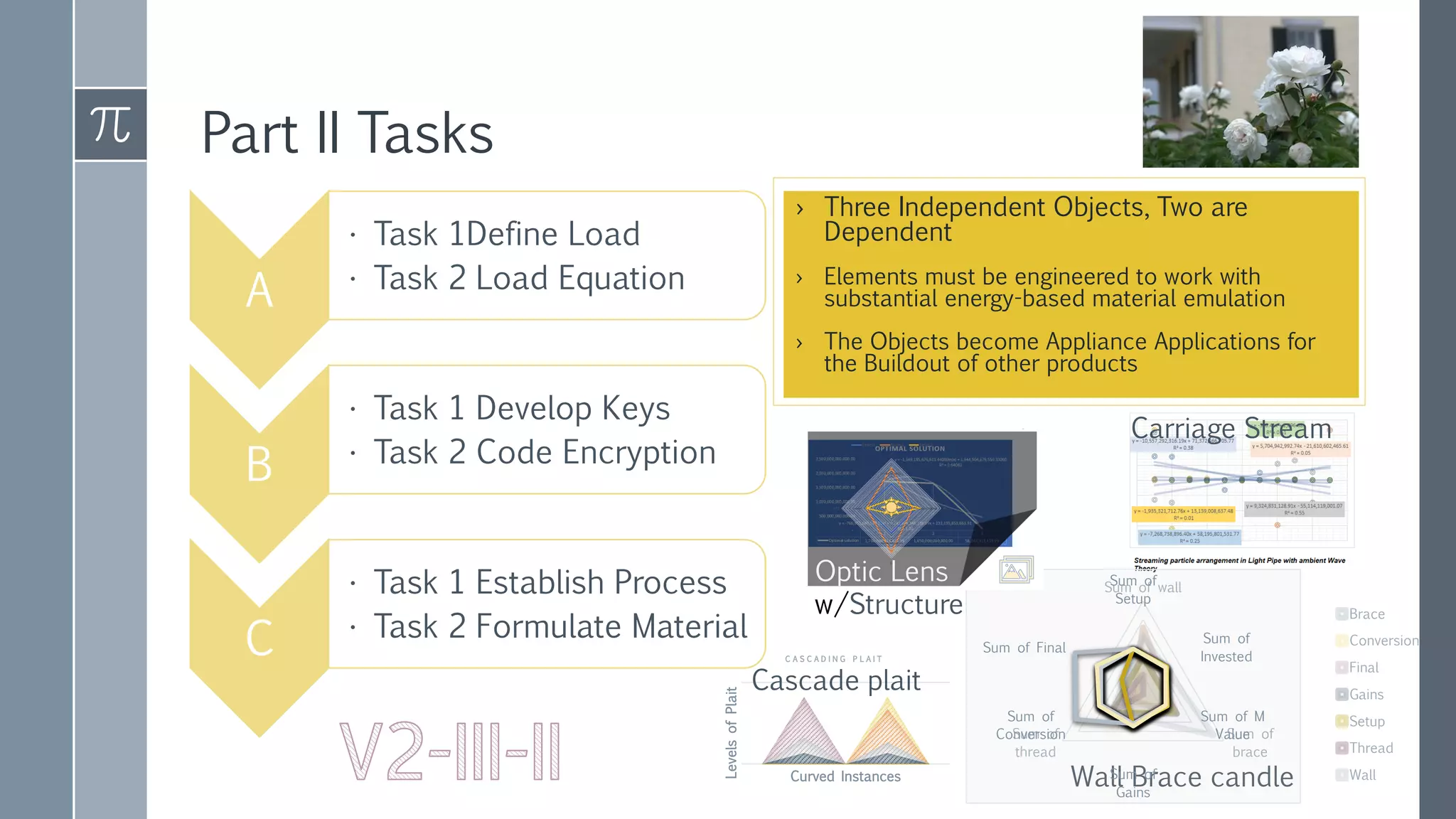
Part II Tasks
A
• Task 1Define Load
• Task 2 Load Equation
B
• Task 1 Develop Keys
• Task 2 Code Encryption
C
• Task 1 Establish Process
• Task 2 Formulate Material
› Three Independent Objects, Two are
Dependent
› Elements must be engineered to work with
substantial energy-based material emulation
› The Objects become Appliance Applications for
the Buildout of other products
Sum of wall
Sum of
brace
Sum of
thread
Brace
Conversion
Final
Gains
Setup
Thread
Wall
Levels
of
Plait
Curved Instances
C A S C A D I N G P L A I T
Carriage Stream
Cascade plait
Wall Brace candle
Sum of
Setup
Sum of
Invested
Sum of M
Value
Sum of
Gains
Sum of
Conversion
Sum of Final
Optic Lens
w/Structure
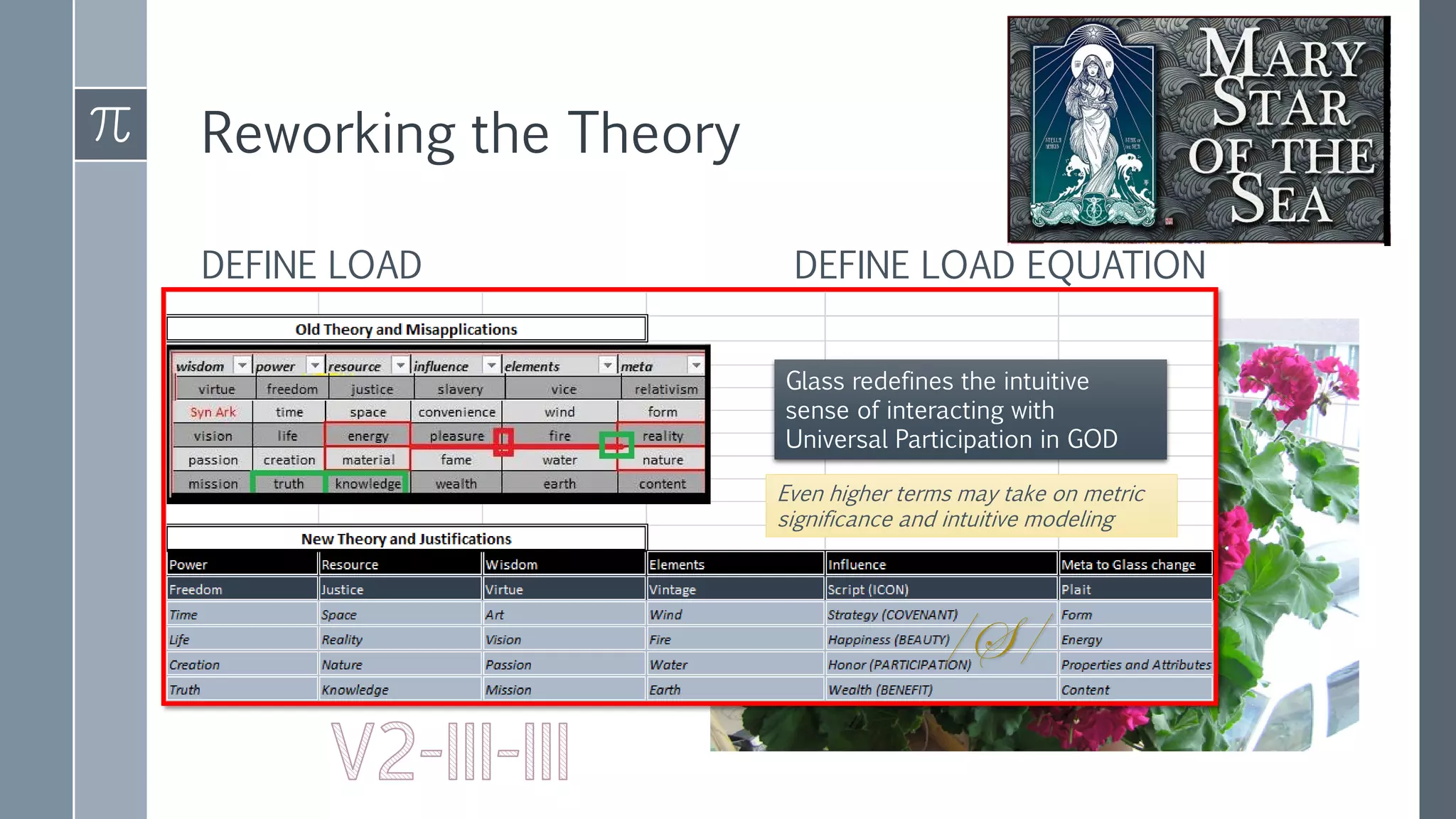
Reworking the Theory
DEFINE LOAD DEFINE LOAD EQUATION
Glass redefines the intuitive
sense of interacting with
Universal Participation in GOD
Even higher terms may take on metric
significance and intuitive modeling
/S/
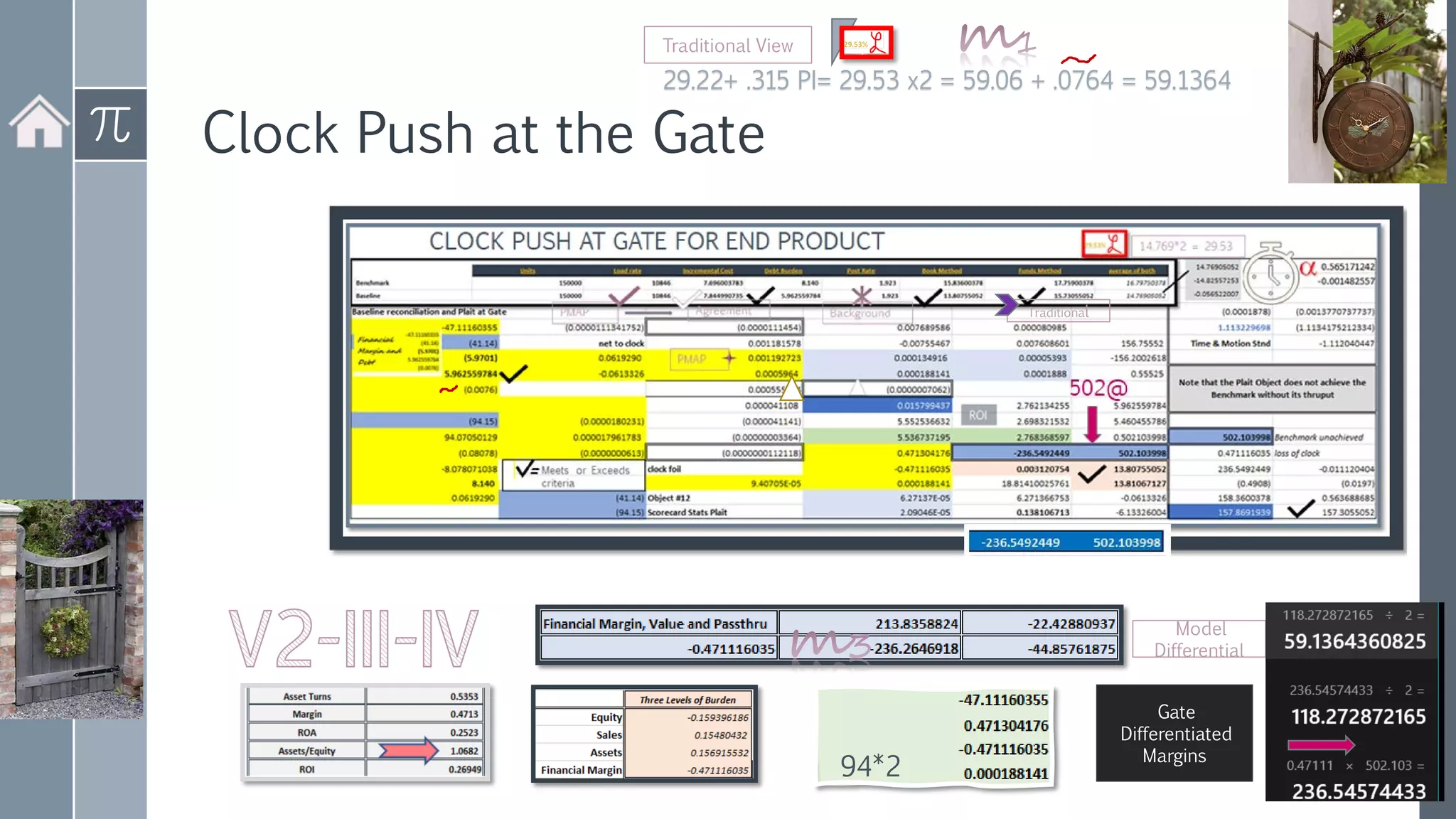
Clock Push at the Gate
94*2
Model
Differential
Gate
Differentiated
Margins
29.22+ .315 PI= 29.53 x2 = 59.06 + .0764 = 59.1364
Traditional View
Traditional
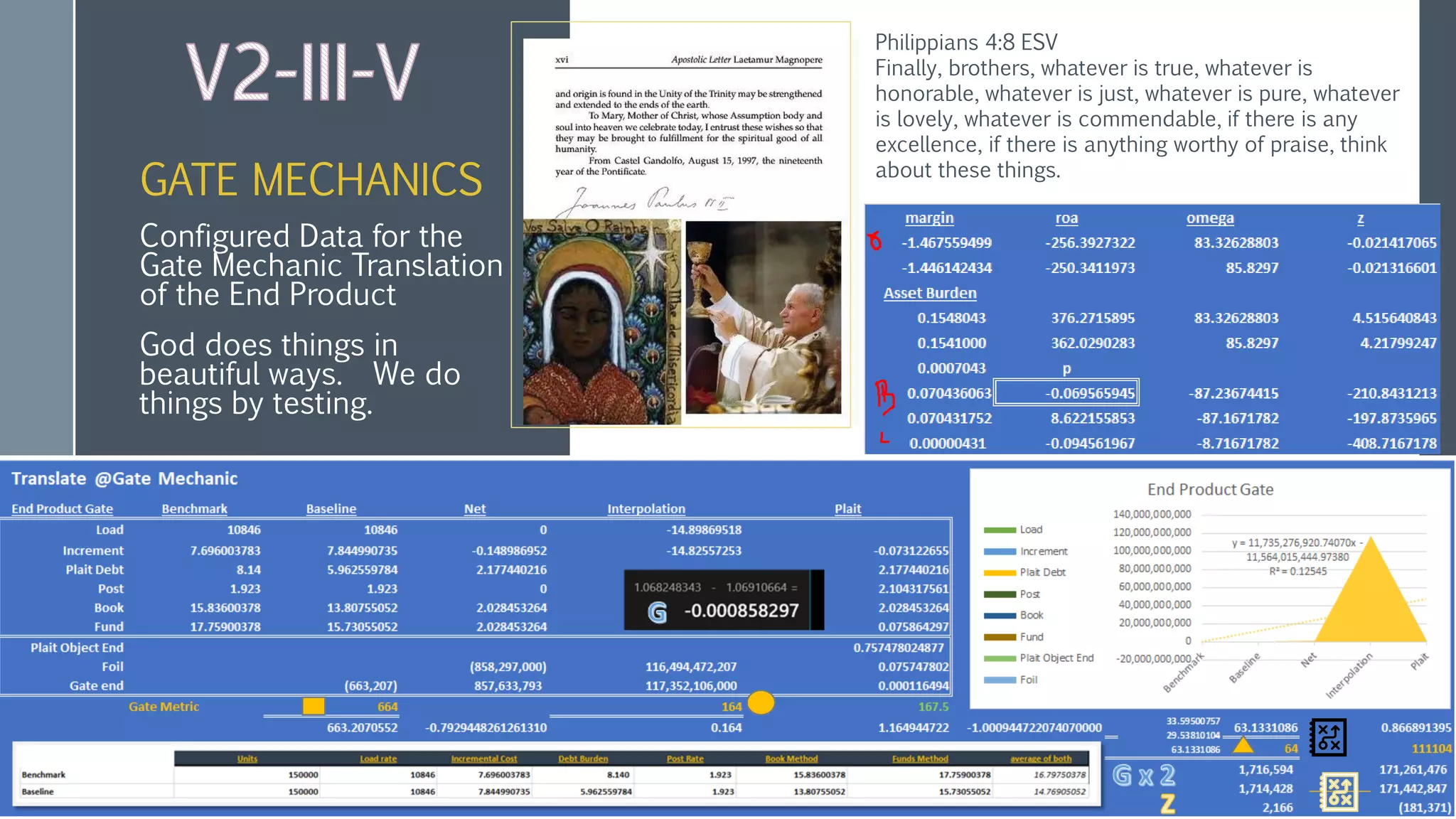
GATE MECHANICS
Configured Data for the
Gate Mechanic Translation
of the End Product
God does things in
beautiful ways. We do
things by testing.
Philippians 4:8 ESV
Finally, brothers, whatever is true, whatever is
honorable, whatever is just, whatever is pure, whatever
is lovely, whatever is commendable, if there is any
excellence, if there is anything worthy of praise, think
about these things.
LOAD, KEY AND
FORM
In order to operate in
Glass, it is necessary to
Load, enter the Keys and
Form an Encryption Path.
This may necessarily be
preloaded and tested
beforehand.
Bridge
Object
Elements
Gate
Everything is housed in its glass
container; Trees are Matrix
arrangements in a Bridged Architecture
1. Load according to
pattern and keys [next]
by row returning to
center key
2. Optical Lens will follow
the Stream Pattern in
order of operations
=116121
The Pattern that results here
is the means to make a
continuous stream of flow
to motivate objects with
data that underlies all
objects
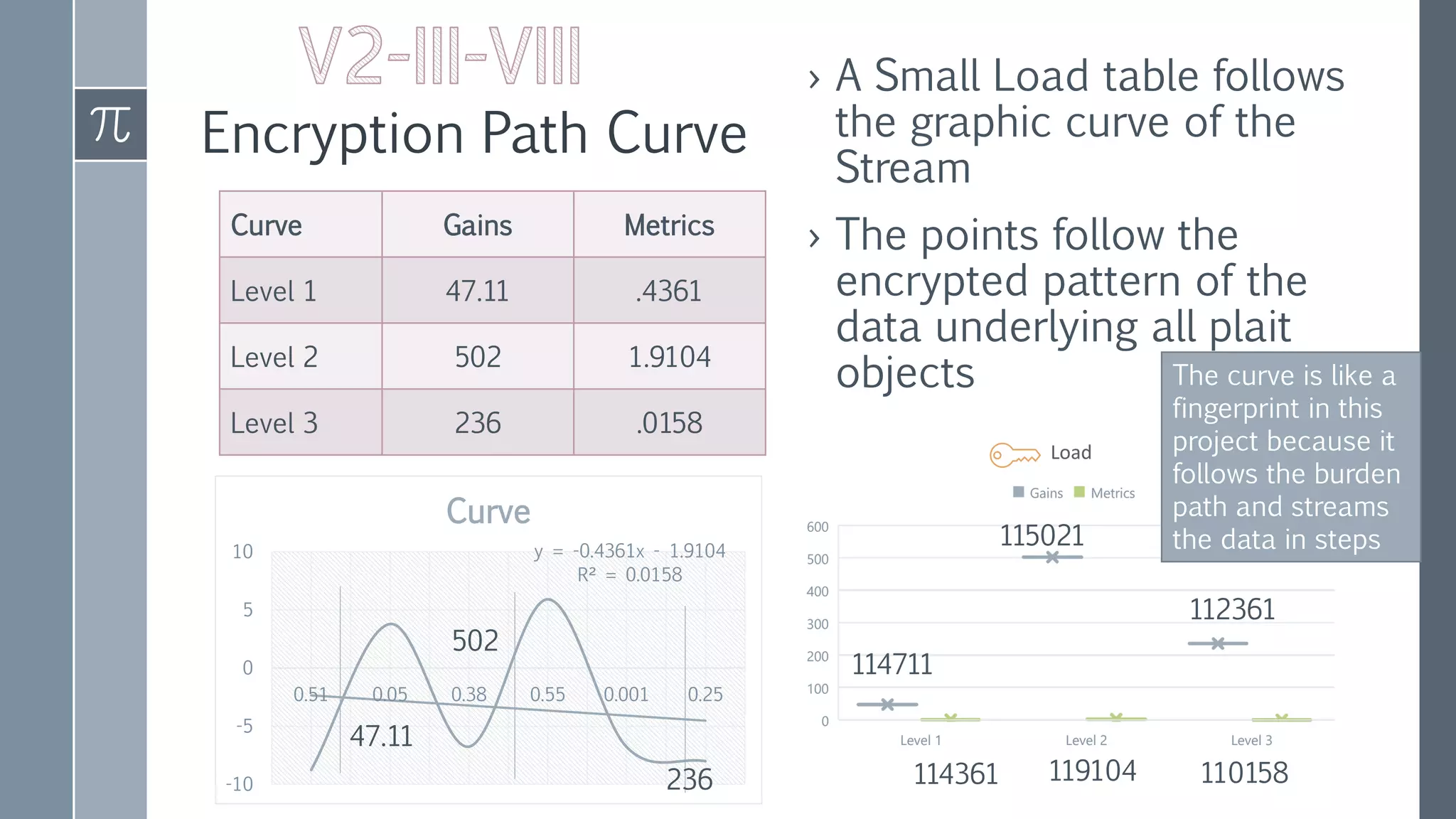
Encryption Path Curve
Curve Gains Metrics
Level 1 47.11 .4361
Level 2 502 1.9104
Level 3 236 .0158
› A Small Load table follows
the graphic curve of the
Stream
› The points follow the
encrypted pattern of the
data underlying all plait
objects
y = -0.4361x - 1.9104
R² = 0.0158
-10
-5
0
5
10
0.51 0.05 0.38 0.55 0.001 0.25
Curve
47.11
502
236 114361 119104 110158
115021
114711
112361
The curve is like a
fingerprint in this
project because it
follows the burden
path and streams
the data in steps
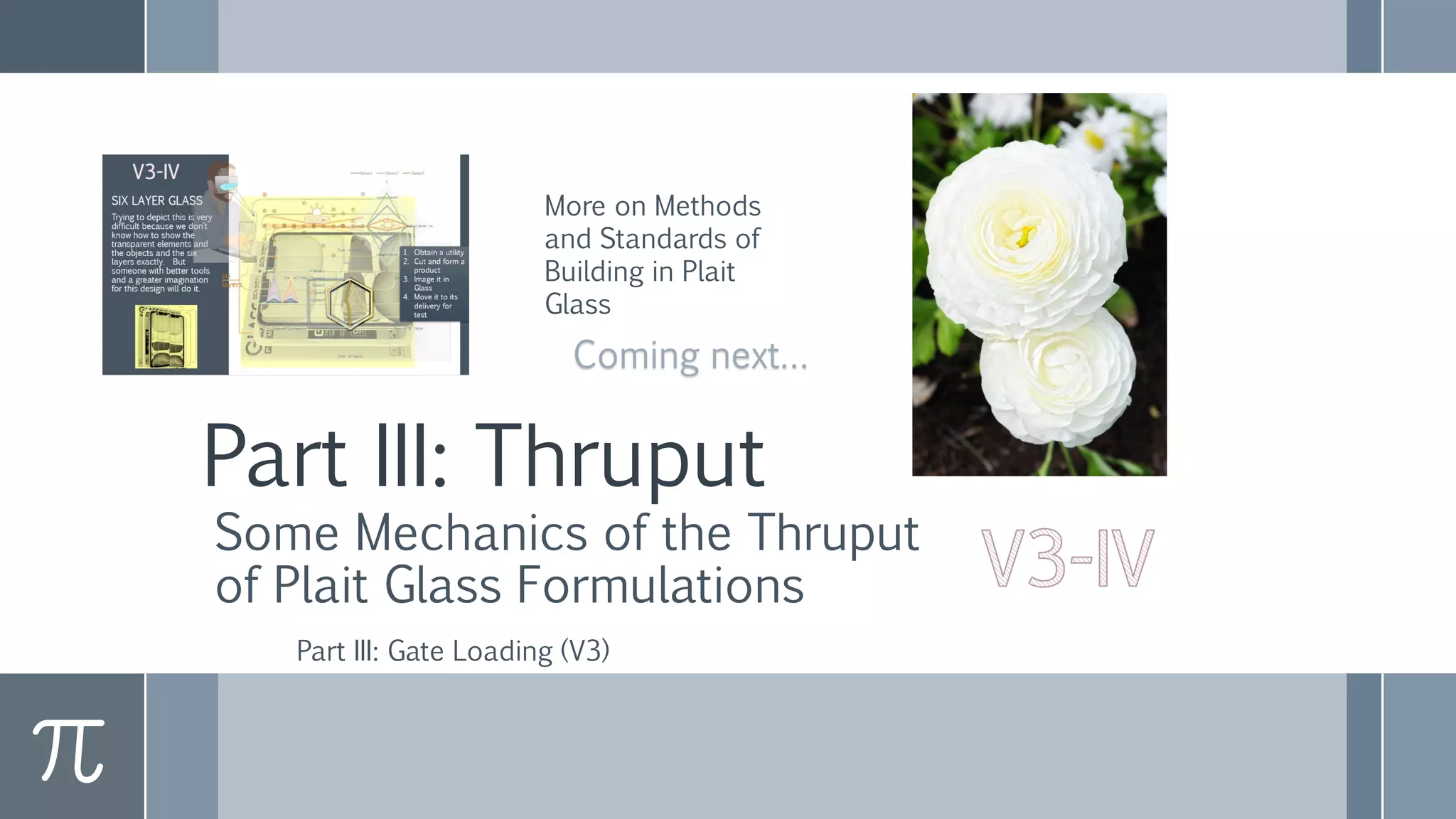
Part III: Thruput
Some Mechanics of the Thruput
of Plait Glass Formulations
Part III: Gate Loading (V3)
More on Methods
and Standards of
Building in Plait
Glass
Coming next…
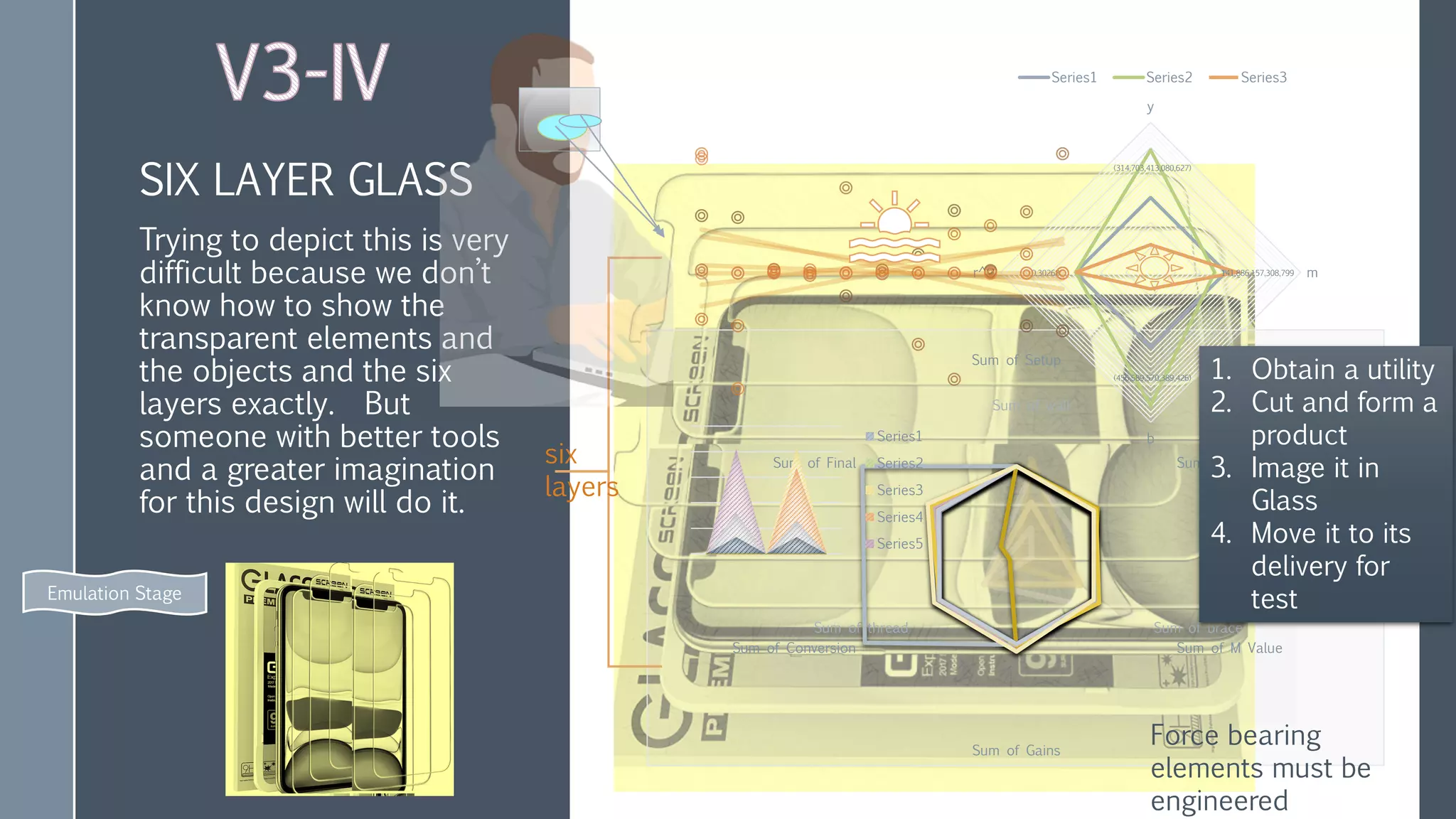
SIX LAYER GLASS
Trying to depict this is very
difficult because we don’t
know how to show the
transparent elements and
the objects and the six
layers exactly. But
someone with better tools
and a greater imagination
for this design will do it.
Sum of wall
Sum of brace
Sum of thread
Sum of Setup
Sum of Invested
Sum of M Value
Sum of Gains
Sum of Conversion
Sum of Final
(314,703,413,080,627)
141,886,157,308,799
(456,589,570,389,426)
0.30268
y
m
b
r^2
Series1 Series2 Series3
six
layers
Series1
Series2
Series3
Series4
Series5
1. Obtain a utility
2. Cut and form a
product
3. Image it in
Glass
4. Move it to its
delivery for
test
Force bearing
elements must be
engineered
Emulation Stage
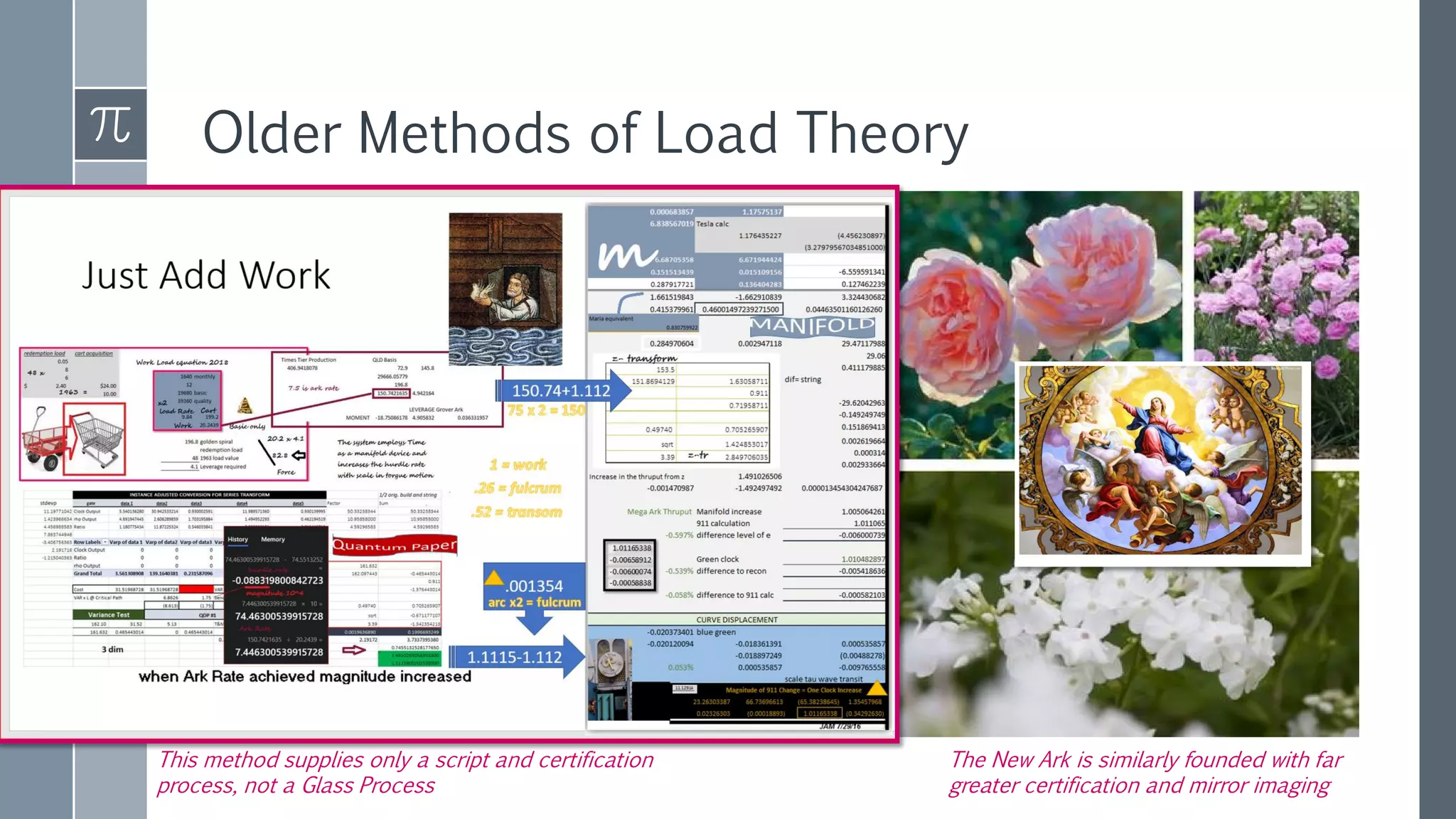
Older Methods of Load Theory
This method supplies only a script and certification
process, not a Glass Process
The New Ark is similarly founded with far
greater certification and mirror imaging
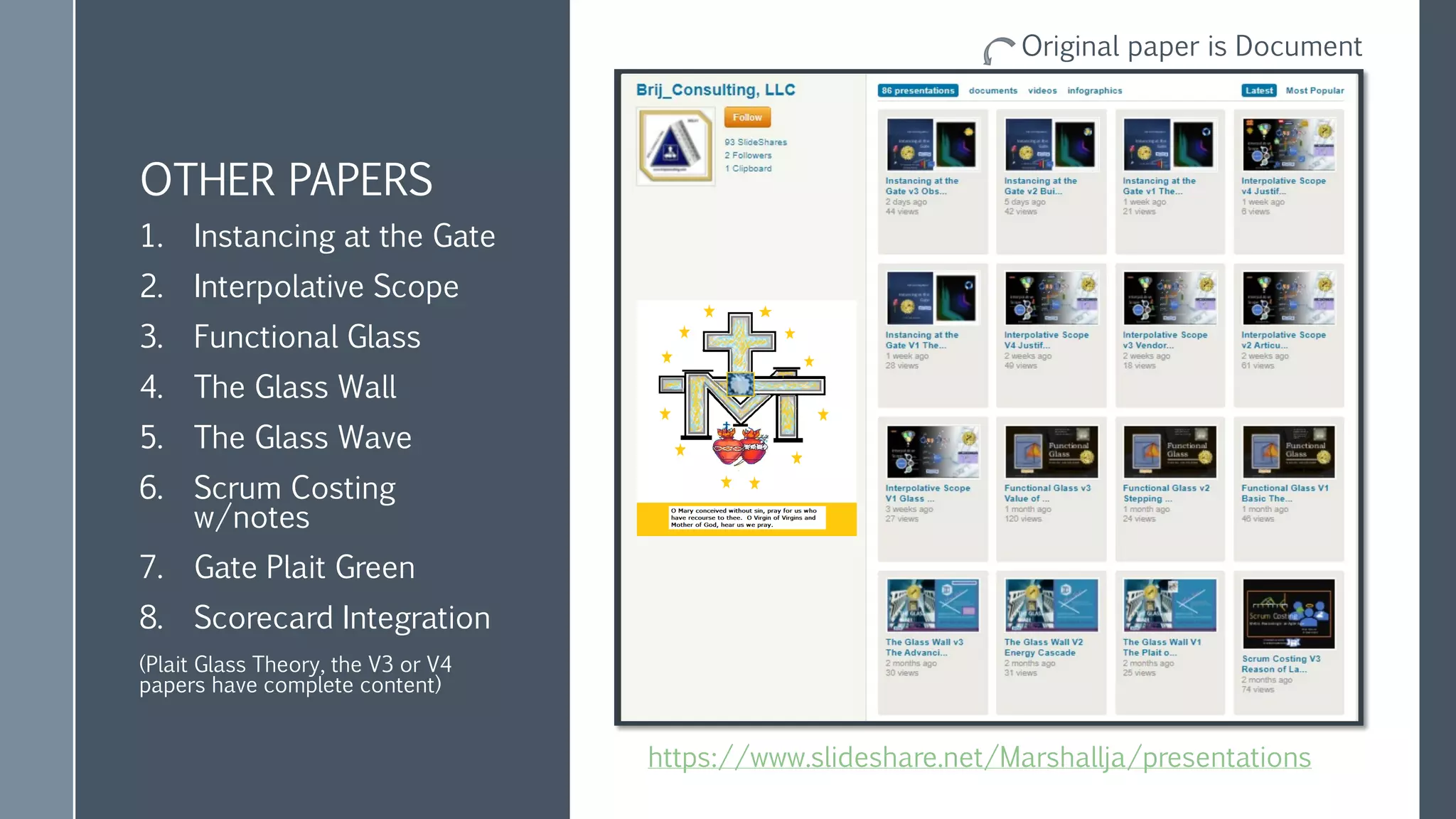
OTHER PAPERS
1. Instancing at the Gate
2. Interpolative Scope
3. Functional Glass
4. The Glass Wall
5. The Glass Wave
6. Scrum Costing
w/notes
7. Gate Plait Green
8. Scorecard Integration
(Plait Glass Theory, the V3 or V4
papers have complete content)
https://www.slideshare.net/Marshallja/presentations
Original paper is Document

Engineering Objects in Plait Glass V2 Keys and Encryption Amend

  • 1.
    ENGINEERING OBJECTS In Plait GlassArchitecture Emulation Stage V2: Keys and Encryption MDIA KEY: In order to prosper labor, we need to build assets to leverage burden BRIJ CONSULTING, LLC
  • 2.
    WORK OF HUMAN HANDS Peopleare not objects, and as such do not have any place within the engineering cycle except to act upon it. They have use of tools and are valued Participants The value of human labor grows more significant to the process over time The Soul is God’s Instrument for the STREAM of gifted Intelligence He prefers for each person We need to put dignity back into our work by our own choices to serve God. (Principal Doctrine: Dignity of Work.) The Soul is the Seat of Intellectual growth and Moral Intelligence. Mary is the Seat of Divine Wisdom because she suffered for the sake of Moral Intelligence exceeding all human perception. "Hail white lily of the ever peaceful and glorious Trinity! Hail, effulgent rose, the delight of Heaven, Of whom the King of Heaven was born and by whose milk He was nourished! Nourish our souls by the effusions of thy Divine influences." --(Known as the 'Hail Mary of Gold' prayer) Intuitive Graces KEY: God’s Assets Leverage our Burden and bring Benefits of a higher order and virtuous quality Model
  • 3.
    CONTENTS I. Objects, PlaitsReview (V1) I. Model Differentiation II. Confidence Level II. Part I: Review of Metric Relationships I. Omega Plait End Proof II. Scrum and KPI Scorecard: Original Proof III. P Value IV. P Map V. Traditional View VI. Emulation Testing and Production Book III. Part II: Keys and Encryption (V2) IV. Part III: Gate Loading (V3) The Purpose of this Paper is to Consider the means to raise up a Digital Portal Production System using appliances gained through Plait Object and Gate driven configurations that work with Digital Mechanics. In this Paper we will study Instances and develop an approach through INTEGRATION and DISCOVERY A Study in Thruput using Tools… next
  • 4.
    Objects, Plaits Review 3/6/2021 BRIJCONSULTING, JEAN MARSHALL 4 Multiple Glass Applications can Plait Together and form tools for generating instances; they become part of the Production Book for future applications. Before working on new instances and thinking about operating tools or appliances there are questions about our Object Plaits that need to be answered: 1. Are we confident that the Model is supported by functions or equations that can be explained in the performance of future applications? Yes, the Bifurcation of the Model shows Plait Effect, and shows that gains achieved with funds immediately. 2. What is our confidence level that we have a good plait that will fit the Scorecard model that we developed our standards from? Will our financial statement fit the Performance Metrics as we move from Baseline to Benchmark? See Future Gains are Plait Gains and can be recognized in the same Instance of Gate. Our Confidence Level is given with 5 proofs and is High. See Model Differentiation Slide 5 See Confidence Level on Slide 6; Future Gains shown on Slide 5 agree to Scorecard Slide 8 Emulation Testing Described, Slide 13 and Production Book
  • 5.
    MODEL DIFFERENTIATION By using acompetent model, we have been creating standards that allow us to negotiate a strategy of differentiation without compromising the overall PLAN By using a determinant of P and setting a firm price relationship, the vectors remain in scope of the original series plot. Using the Plait Gate, the Bifurcation delivers fast turnaround time. Remaining flat, glass although in layers, negotiates a strategy of universal integration P was defined in our Price Mechanic as 69.5 Q is defined as GSP or 500+ and has its effect in the Least Squares composition of Regression Time Value Bifurcation applies economy of scale to justify Funds Faster P Ark Mode theory Future Gains Future Gains, Slide 9 502@
  • 6.
    Confidence Level DEMONSTRATING THEPLAIT DIGITAL/ARK PORTAL PROCESS 98% α Digital Plait 98% Parallel P Look for Conversion Scale is three types of PI plus alpha Future Gains
  • 7.
    Part I: Reviewof Metric Relationships In order to create Instances, we need to know facts about P and Gate Metrics Notes from Instancing at the Gate
  • 8.
    OMEGA PLAIT END ›After Proving the ‘Plait Remainder’ the Omega Value is a Proof Ω ωX=.000560018 When applied at Gate enhances application speed 83.3 Watch Window look for 64, in each of the cycles The Plait End Discovers Burden Progression 159.4 Critical path ROA Margin Second Foil Ω Recon. to Baseline Future Gains are Plait Gains 83.72 T&M* - 83.28 Omega= .44 Sq Pi See T&M* slide 7
  • 9.
    Composite Resolution Emulation Stage Rates H E R E r^2sometimes shown as r This is our Proof of the Model All other marks on this page from our former paper
  • 10.
    P VALUE It appearsthat the metric relations fall within the O-Map for the Price-built level of Burden accomplished by Sales. But we only meet 68% of the Benchmark because the Asset and Equity Burden Requirement is not achieved @ Benchmark level. Difference is 2.5 cycles of Equity Price Cycle 1 level of burden When Assets are not built*, only one level of Burden is carried. No Value Added is Acquired P-data set Requires 2.5 cycles to complete Equity Price cycle is only 1 turn Large B:B Difference *Make/Buy P See P-Map Slide 11
  • 11.
    P P 10332+512+2= 10846 Load X= X^2 The conversionin the process is based on both the Pi and Clock Value in the Process O-Map @Meta Price Scale .10478*2=.20956 x 2 = .418 -.003 Slide 9 29.53 x 385,647.26 x 3.6495767 = 41,561,976 Churn Formula for Shortfall 98%
  • 12.
    TRADITIONAL VIEW 12 Financial Conversion is Piand push climb ROI 1.349621x2 = 2.69242 15.73 x 2 = 31.46 PI 3/6/2021 Within the holistic model of Glass everything is applied in the MOMENT of the Funded Plan Timing is no longer an issue 29.22+ .315 PI= 29.53
  • 13.
    AGREEMENT › FitEnds There is essentially goodness of fit and plait ends in the object analysis that reconciles to the Gate synergy equation Note from Instancing at the Gate Emulation Testing Summary from Instancing at the Gate 83.3 Ω 61379-61333=46/2= 23 202.1788 x 2= 404.3576 104.788 x2 = 209.576 404+209=613 P-map
  • 14.
    PRODUCTION BOOK The ProductionBook carries with it methods for increasing viability of glass objects and plaits in a unified structure (not engineered yet…) Layers Product Build Industrial Physics
  • 15.
    Background › We hadbegun our studies and emulated standards with quantum theory in our early papers and moved into a digital portal and ark model of operation… when we “discovered” plait glass theory. › Our method of deploying the mechanics changed and our standards advanced but it is notable that our old maps still work. And this is because differences can be plait out › We are emulating the use of a system- based and non-binary plait methodology Original Study in Mechanics of Time and Motion https://www.slideshare.net/Marshallja/quantum -based-systems-an-overview-109384201 Published on Aug 10, 2018 Agrees to theta object α (146,548,330.81) +146,755,949.90= 197,619.09 Margin compared to Scorecard is system climb and is related to Post 1.976-.056=1.92 Slide 7 Slide 10
  • 16.
    Part II: Keysand Encryptions In order to create Keys and Encryptions, we need to know facts about the Load
  • 17.
    CONSIDERING THE LOAD Suppose wehad five plait objects and six elements to load into our project. How would we develop the load equation and how would we develop keys for the load? Keys and encryption play a part in the ability to utilize the work plan and manipulate the product. This is why the Bridge, the Gate, the Production Book and the Predetermined Instances will guide the process y = -0.36982x + 28,365,218,964.44470 R² = 0.00478 y = 0.00000x + 0.33090 R² = 0.20975 -40,000,000,000 -20,000,000,000 0 20,000,000,000 40,000,000,000 60,000,000,000 80,000,000,000 100,000,000,000 -15,000,000,000-10,000,000,000 -5,000,000,000 0 5,000,000,000 10,000,000,000 15,000,000,000 Gate Plait Object Econo Rate Linear (Object) Linear (Econo Rate) Elements Objects
  • 18.
    Part II Tasks A •Task 1Define Load • Task 2 Load Equation B • Task 1 Develop Keys • Task 2 Code Encryption C • Task 1 Establish Process • Task 2 Formulate Material › Three Independent Objects, Two are Dependent › Elements must be engineered to work with substantial energy-based material emulation › The Objects become Appliance Applications for the Buildout of other products Sum of wall Sum of brace Sum of thread Brace Conversion Final Gains Setup Thread Wall Levels of Plait Curved Instances C A S C A D I N G P L A I T Carriage Stream Cascade plait Wall Brace candle Sum of Setup Sum of Invested Sum of M Value Sum of Gains Sum of Conversion Sum of Final Optic Lens w/Structure
  • 19.
    Reworking the Theory DEFINELOAD DEFINE LOAD EQUATION Glass redefines the intuitive sense of interacting with Universal Participation in GOD Even higher terms may take on metric significance and intuitive modeling /S/
  • 20.
    Clock Push atthe Gate 94*2 Model Differential Gate Differentiated Margins 29.22+ .315 PI= 29.53 x2 = 59.06 + .0764 = 59.1364 Traditional View Traditional
  • 21.
    GATE MECHANICS Configured Datafor the Gate Mechanic Translation of the End Product God does things in beautiful ways. We do things by testing. Philippians 4:8 ESV Finally, brothers, whatever is true, whatever is honorable, whatever is just, whatever is pure, whatever is lovely, whatever is commendable, if there is any excellence, if there is anything worthy of praise, think about these things.
  • 22.
    LOAD, KEY AND FORM Inorder to operate in Glass, it is necessary to Load, enter the Keys and Form an Encryption Path. This may necessarily be preloaded and tested beforehand. Bridge Object Elements Gate Everything is housed in its glass container; Trees are Matrix arrangements in a Bridged Architecture 1. Load according to pattern and keys [next] by row returning to center key 2. Optical Lens will follow the Stream Pattern in order of operations =116121 The Pattern that results here is the means to make a continuous stream of flow to motivate objects with data that underlies all objects
  • 23.
    Encryption Path Curve CurveGains Metrics Level 1 47.11 .4361 Level 2 502 1.9104 Level 3 236 .0158 › A Small Load table follows the graphic curve of the Stream › The points follow the encrypted pattern of the data underlying all plait objects y = -0.4361x - 1.9104 R² = 0.0158 -10 -5 0 5 10 0.51 0.05 0.38 0.55 0.001 0.25 Curve 47.11 502 236 114361 119104 110158 115021 114711 112361 The curve is like a fingerprint in this project because it follows the burden path and streams the data in steps
  • 24.
    Part III: Thruput SomeMechanics of the Thruput of Plait Glass Formulations Part III: Gate Loading (V3) More on Methods and Standards of Building in Plait Glass Coming next…
  • 25.
    SIX LAYER GLASS Tryingto depict this is very difficult because we don’t know how to show the transparent elements and the objects and the six layers exactly. But someone with better tools and a greater imagination for this design will do it. Sum of wall Sum of brace Sum of thread Sum of Setup Sum of Invested Sum of M Value Sum of Gains Sum of Conversion Sum of Final (314,703,413,080,627) 141,886,157,308,799 (456,589,570,389,426) 0.30268 y m b r^2 Series1 Series2 Series3 six layers Series1 Series2 Series3 Series4 Series5 1. Obtain a utility 2. Cut and form a product 3. Image it in Glass 4. Move it to its delivery for test Force bearing elements must be engineered Emulation Stage
  • 26.
    Older Methods ofLoad Theory This method supplies only a script and certification process, not a Glass Process The New Ark is similarly founded with far greater certification and mirror imaging
  • 27.
    OTHER PAPERS 1. Instancingat the Gate 2. Interpolative Scope 3. Functional Glass 4. The Glass Wall 5. The Glass Wave 6. Scrum Costing w/notes 7. Gate Plait Green 8. Scorecard Integration (Plait Glass Theory, the V3 or V4 papers have complete content) https://www.slideshare.net/Marshallja/presentations Original paper is Document