Engaging Lessons for 2014
GED® Test Prep Instruction
Objectives
 Mix and match GED® Test
assessment targets
 Brainstorm sources for quality
content
Our activities connect with the following
Research-Based Best Practices for Adult Literacy:
 Participate in and facilitate supportive
learning environments.
 Use authentic instructional materials.
 Promote learner persistence.
Source: A Framework for Program Improvements in Adult Literacy
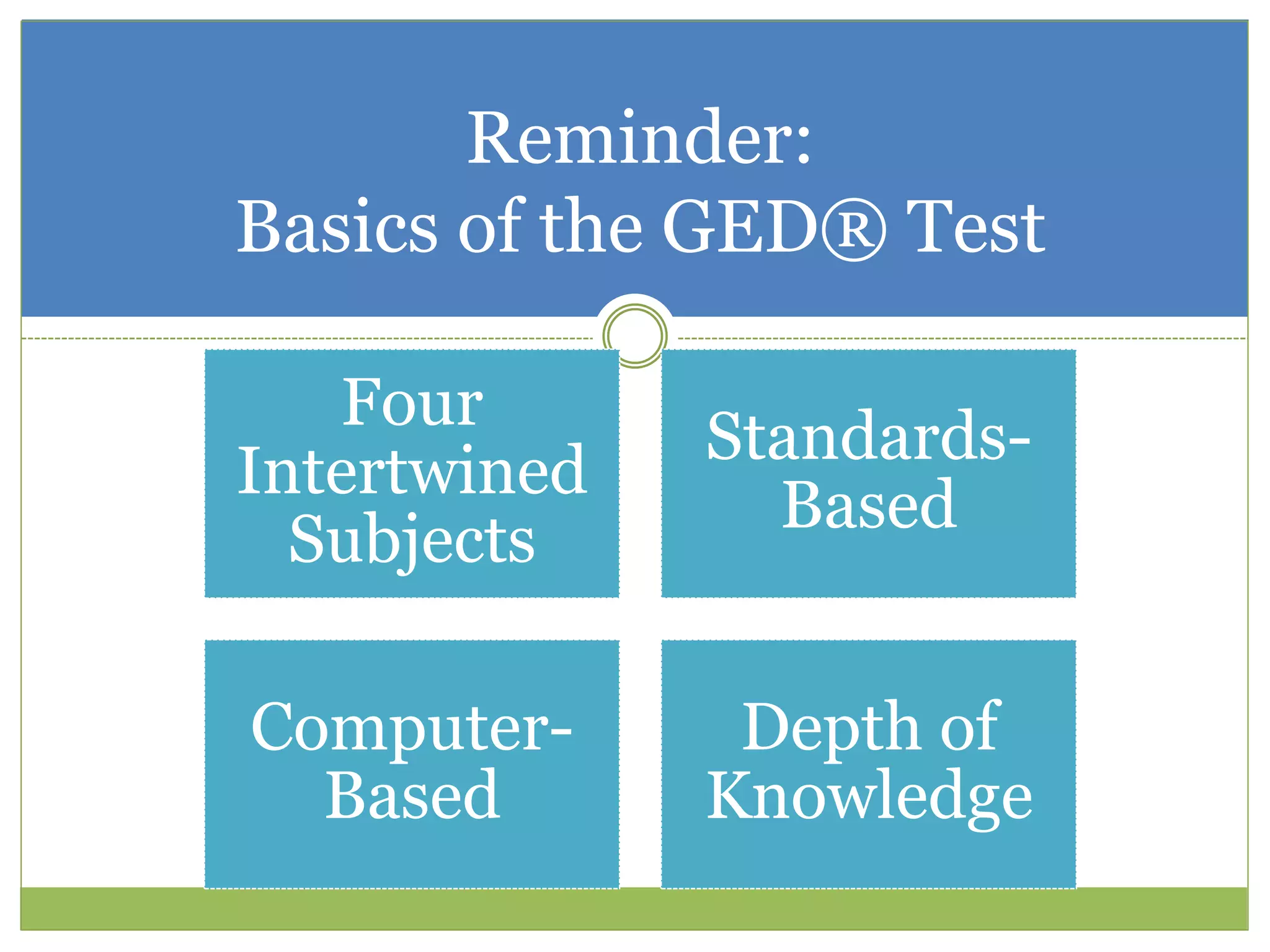
Reminder:
Basics of the GED® Test
Four
Intertwined
Subjects
Standards-
Based
Computer-
Based
Depth of
Knowledge
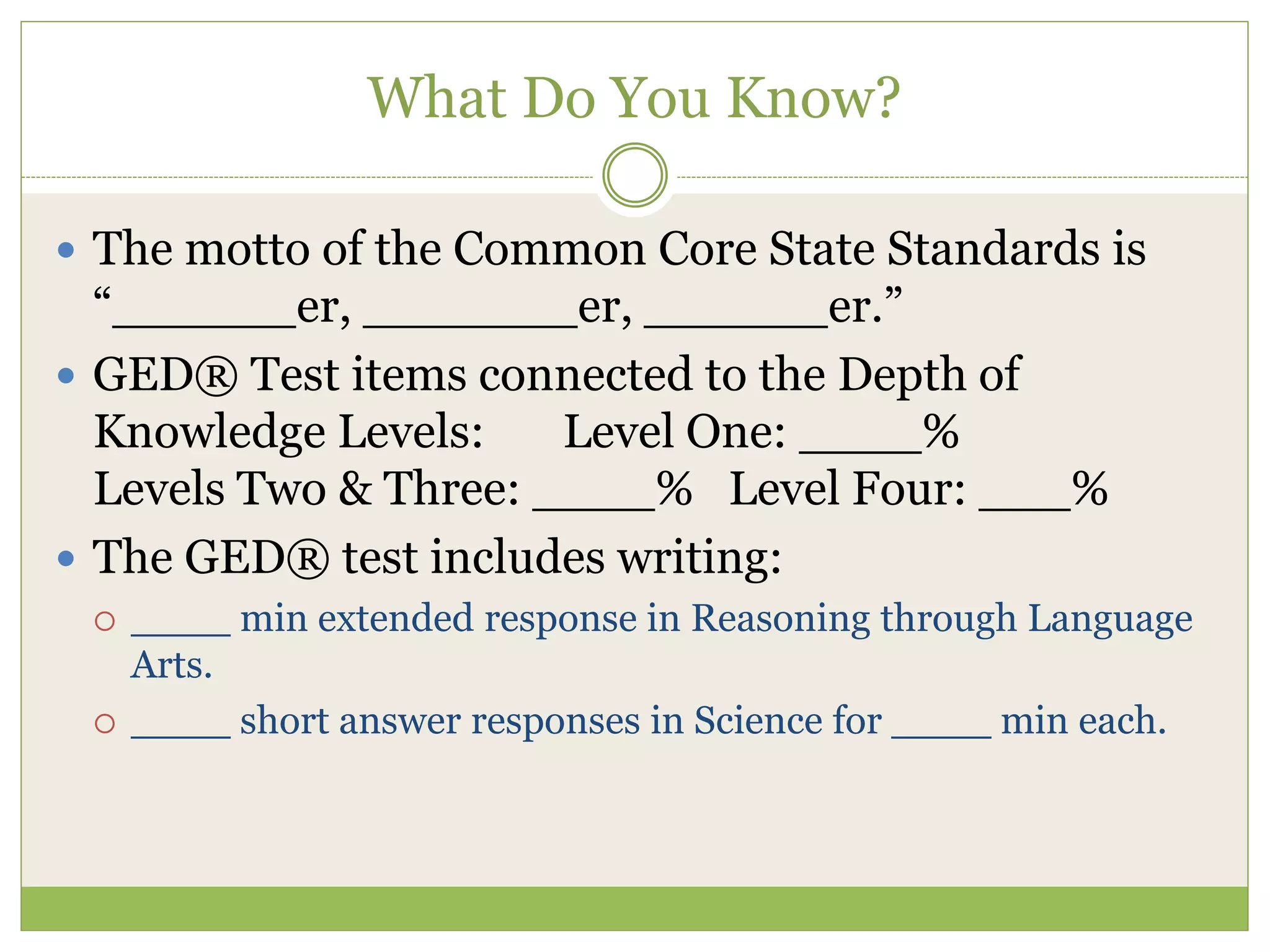
What Do You Know?
 The motto of the Common Core State Standards is
“______er, _______er, ______er.”
 GED® Test items connected to the Depth of
Knowledge Levels: Level One: ____%
Levels Two & Three: ____% Level Four: ___%
 The GED® test includes writing:
 ____ min extended response in Reasoning through Language
Arts.
 ____ short answer responses in Science for ____ min each.
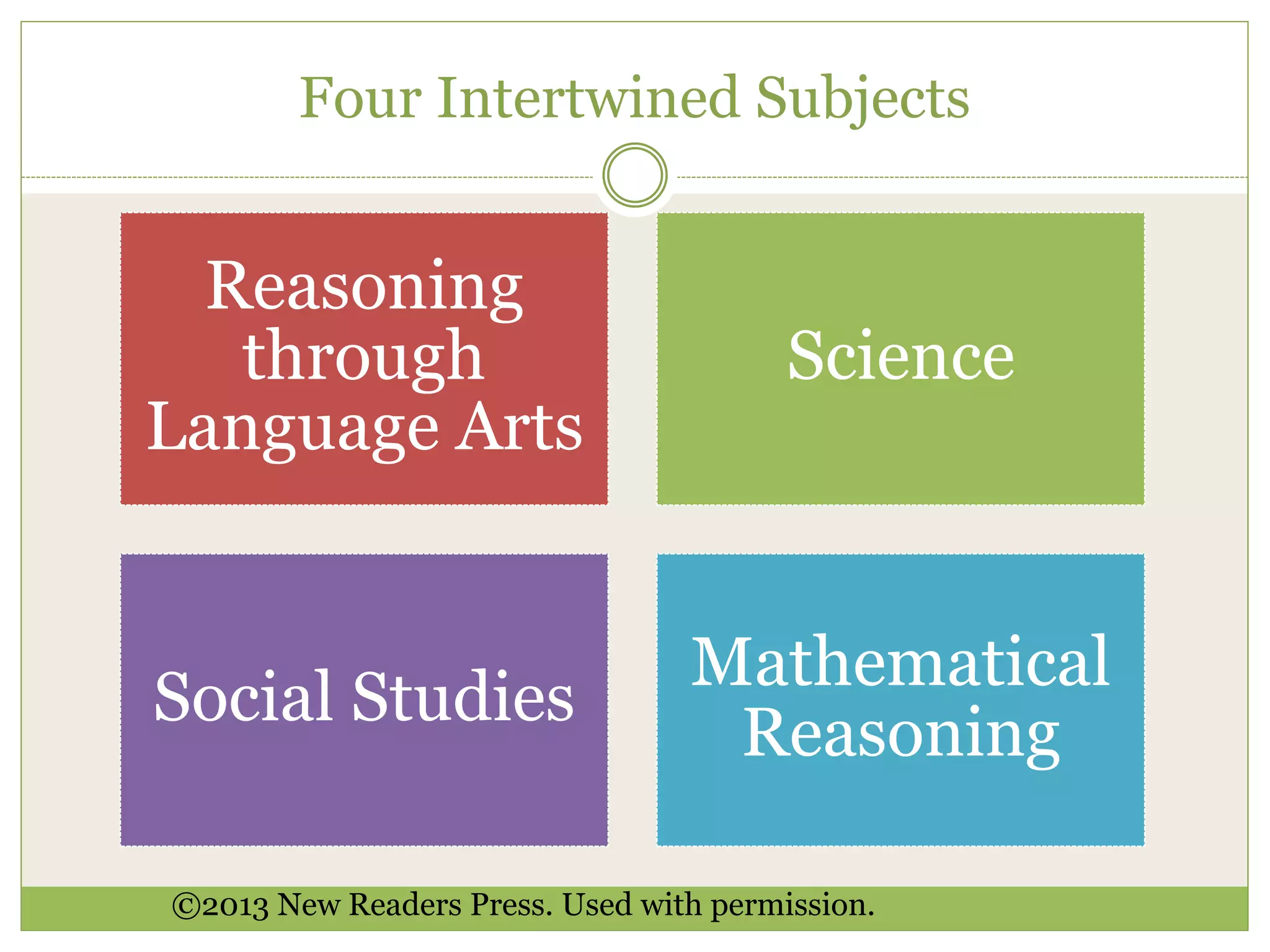
Four Intertwined Subjects
Reasoning
through
Language Arts
Science
Social Studies
Mathematical
Reasoning
©2013 New Readers Press. Used with permission.
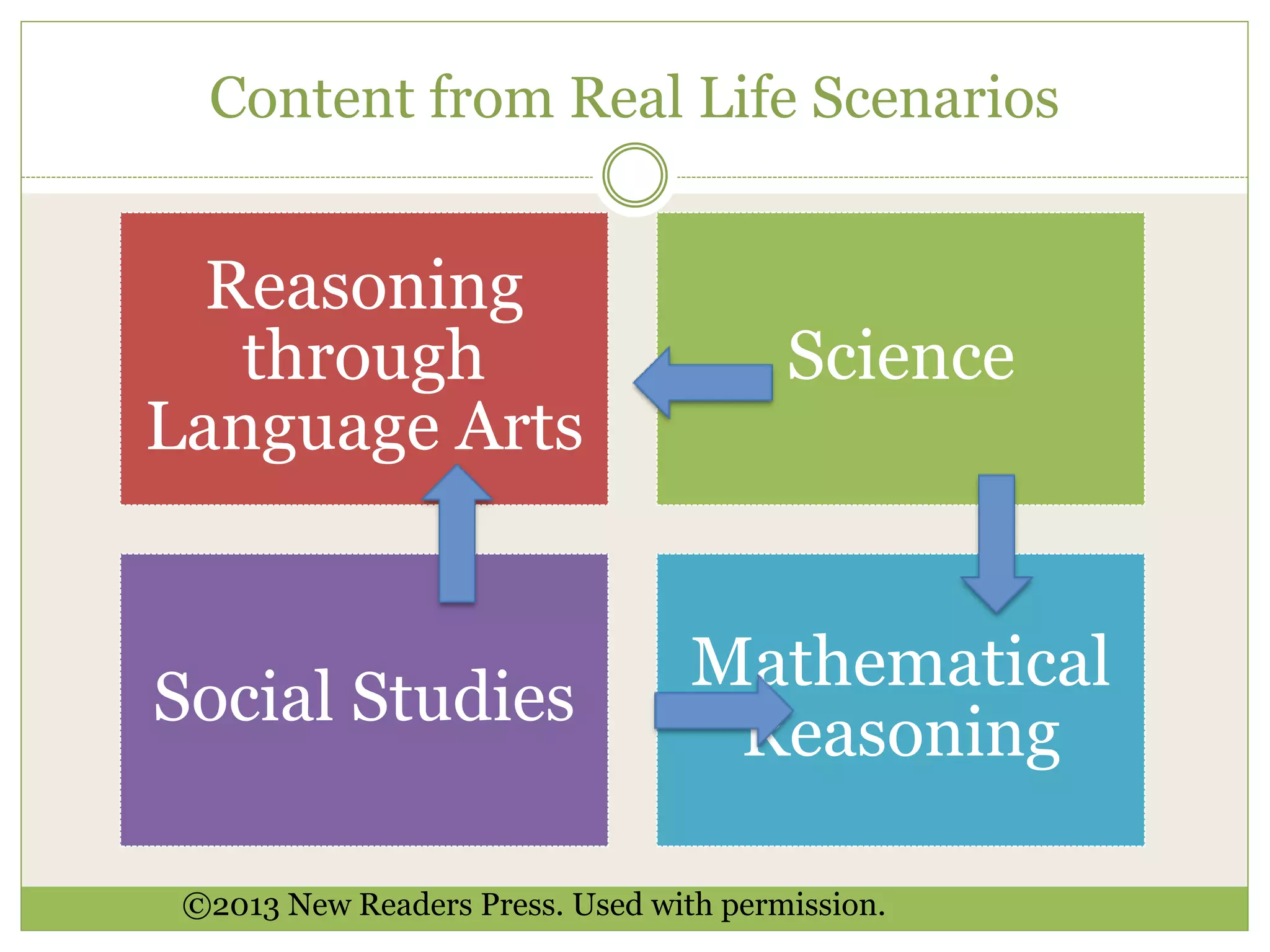
Content from Real Life Scenarios
Reasoning
through
Language Arts
Science
Social Studies
Mathematical
Reasoning
©2013 New Readers Press. Used with permission.
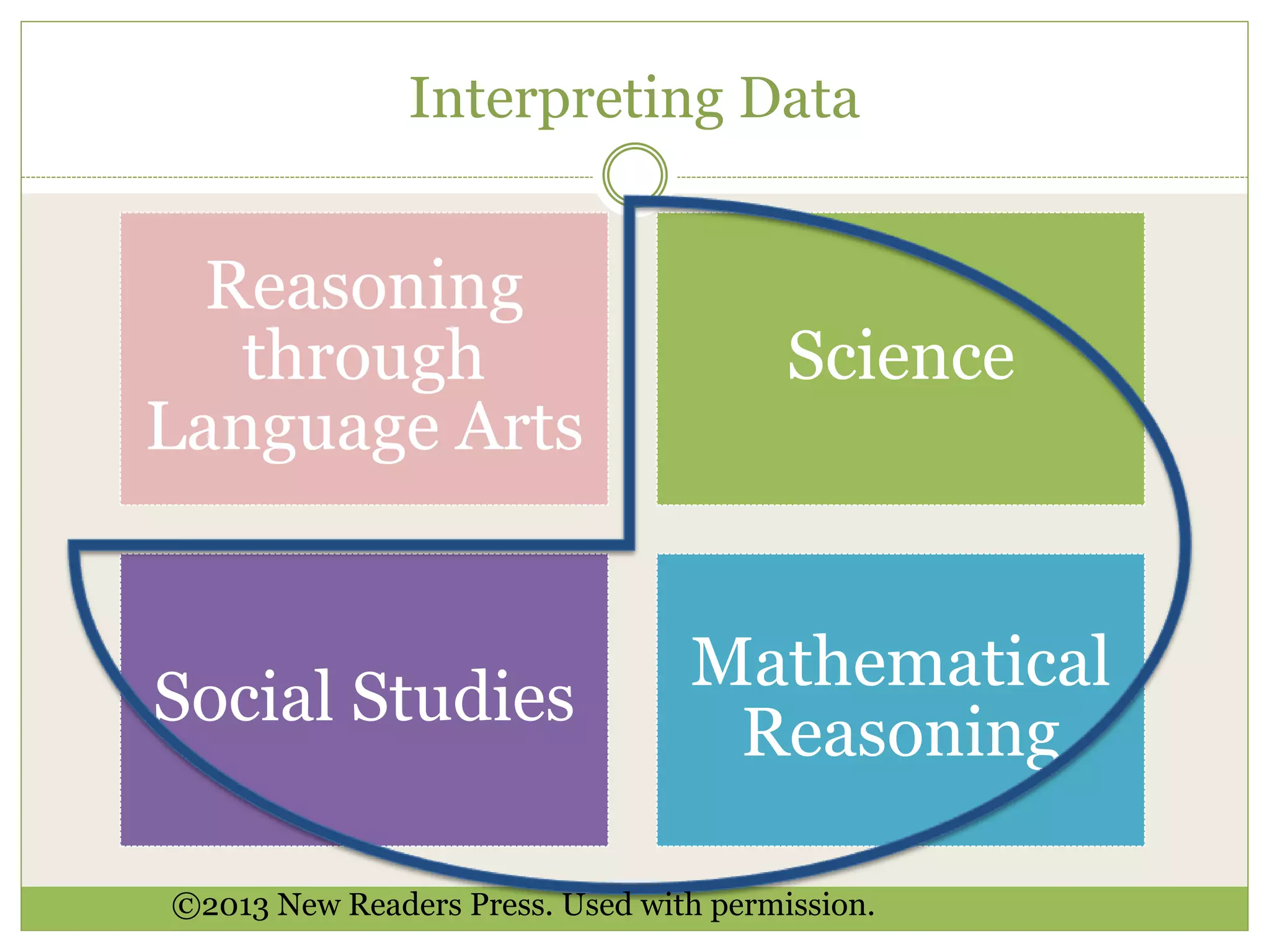
Interpreting Data
Reasoning
through
Language Arts
Science
Social Studies
Mathematical
Reasoning
©2013 New Readers Press. Used with permission.
Standards Based:
(Sound Smart at a Cocktail Party)
STANDARDS
 A list of what students need to know and be able to do.
COMMON CORE STATE STANDARDS (CCSS)
 Skills standards in English Language Arts & Mathematics
used by 47 states and territories.
 Motto: “Fewer, clearer, higher”
CONTENT STANDARDS
 Information students need to know in Sci & SS.
GED® TEST ASSESSMENT TARGETS
 Selection of CCSS and national content standards that are
measured on the test.
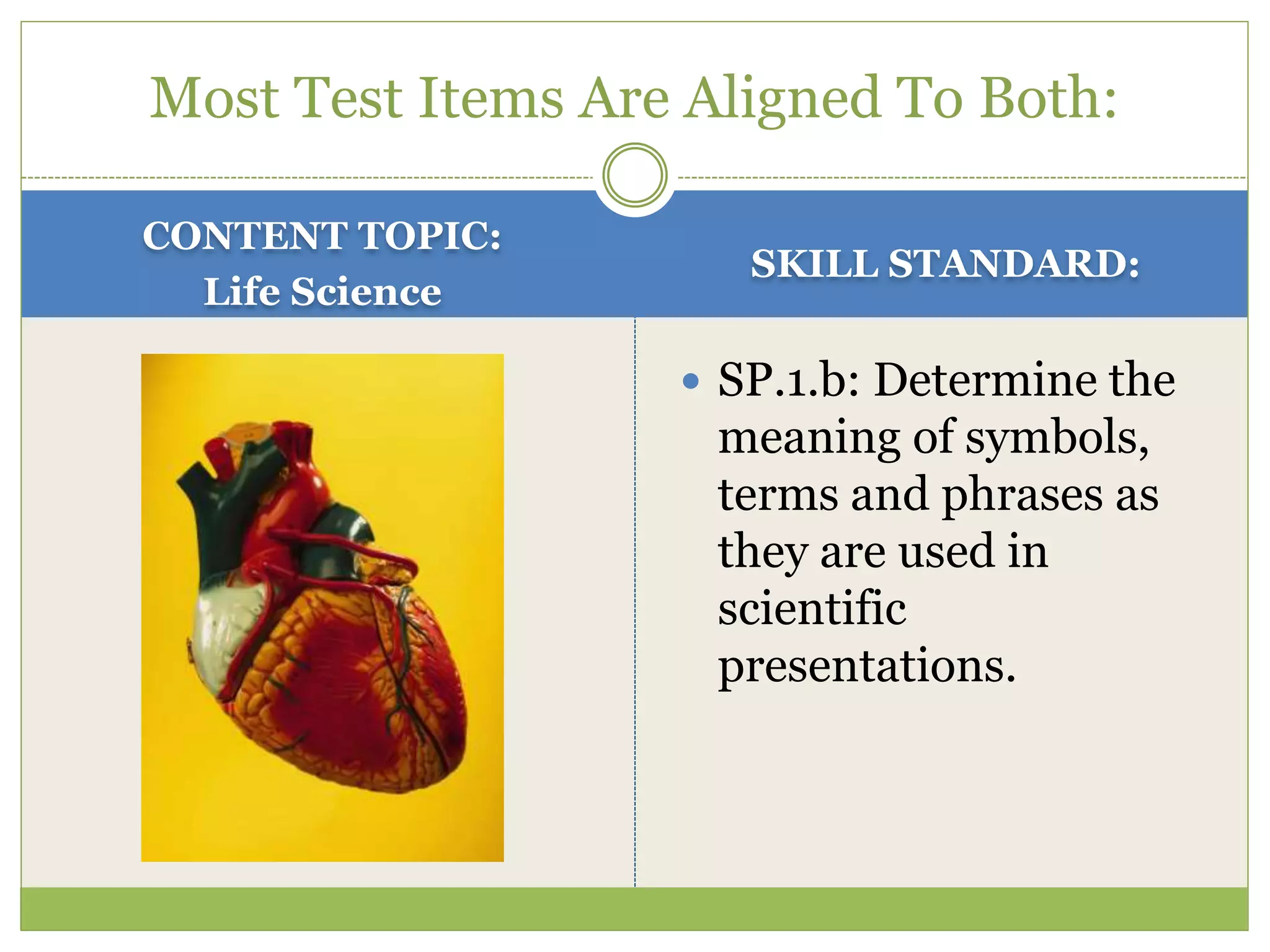
CONTENT TOPIC:
Life Science
SKILL STANDARD:
 SP.1.b: Determine the
meaning of symbols,
terms and phrases as
they are used in
scientific
presentations.
Most Test Items Are Aligned To Both:
Computer-Based Testing Taking Skills
In addition to using a mouse, test-takers must:
 Scroll down a page
 Navigate between tabs to read pages
 Select answers from drop-down menus
 Drag-and-drop answers to a graph, chart or graphic
organizer
 Use a virtual calculator (TI-30XS)
 Type two short answers and two extended responses
 Use basic word processing tools (cut, copy, paste,
undo, redo)
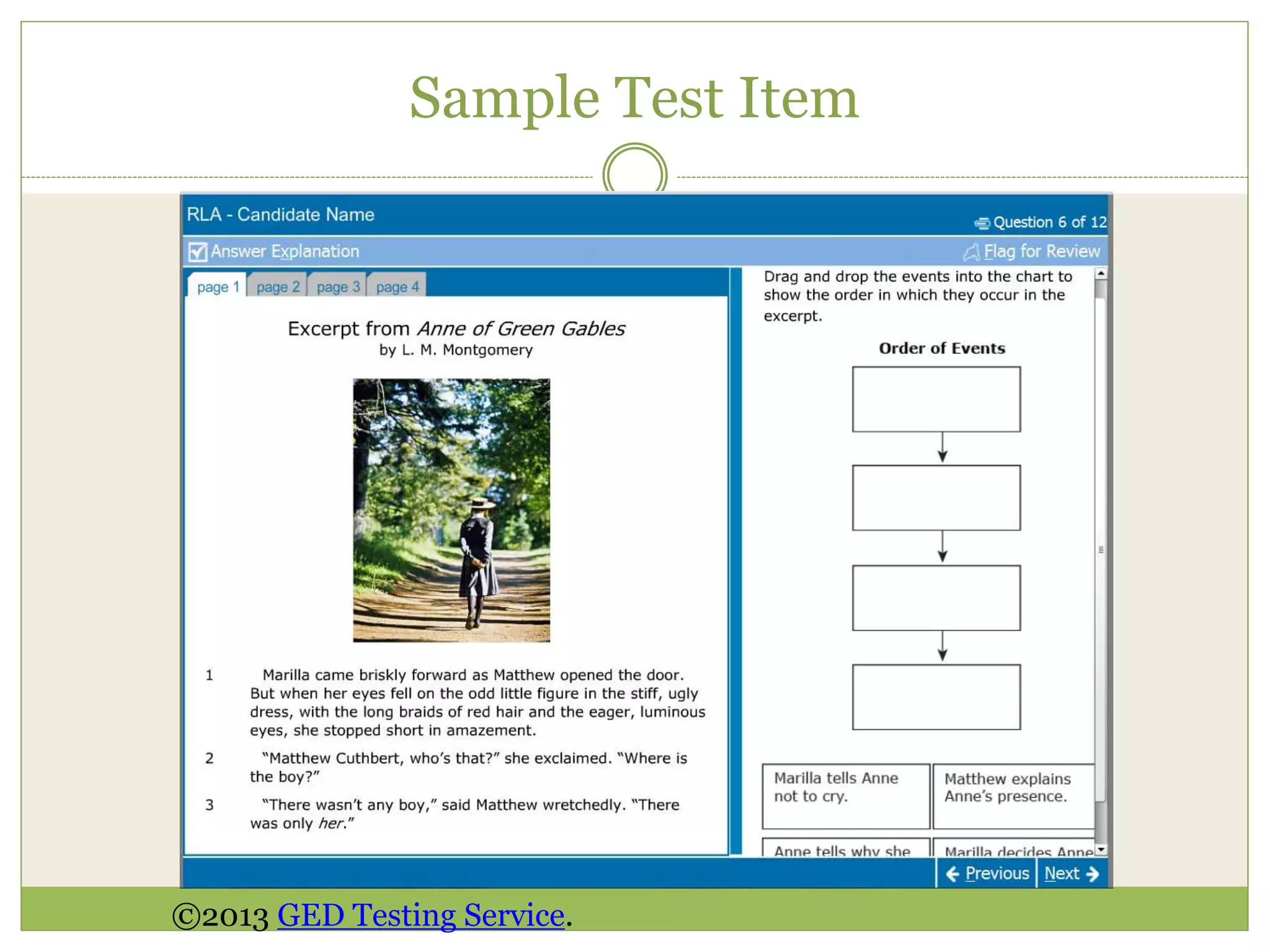
Sample Test Item
©2013 GED Testing Service.
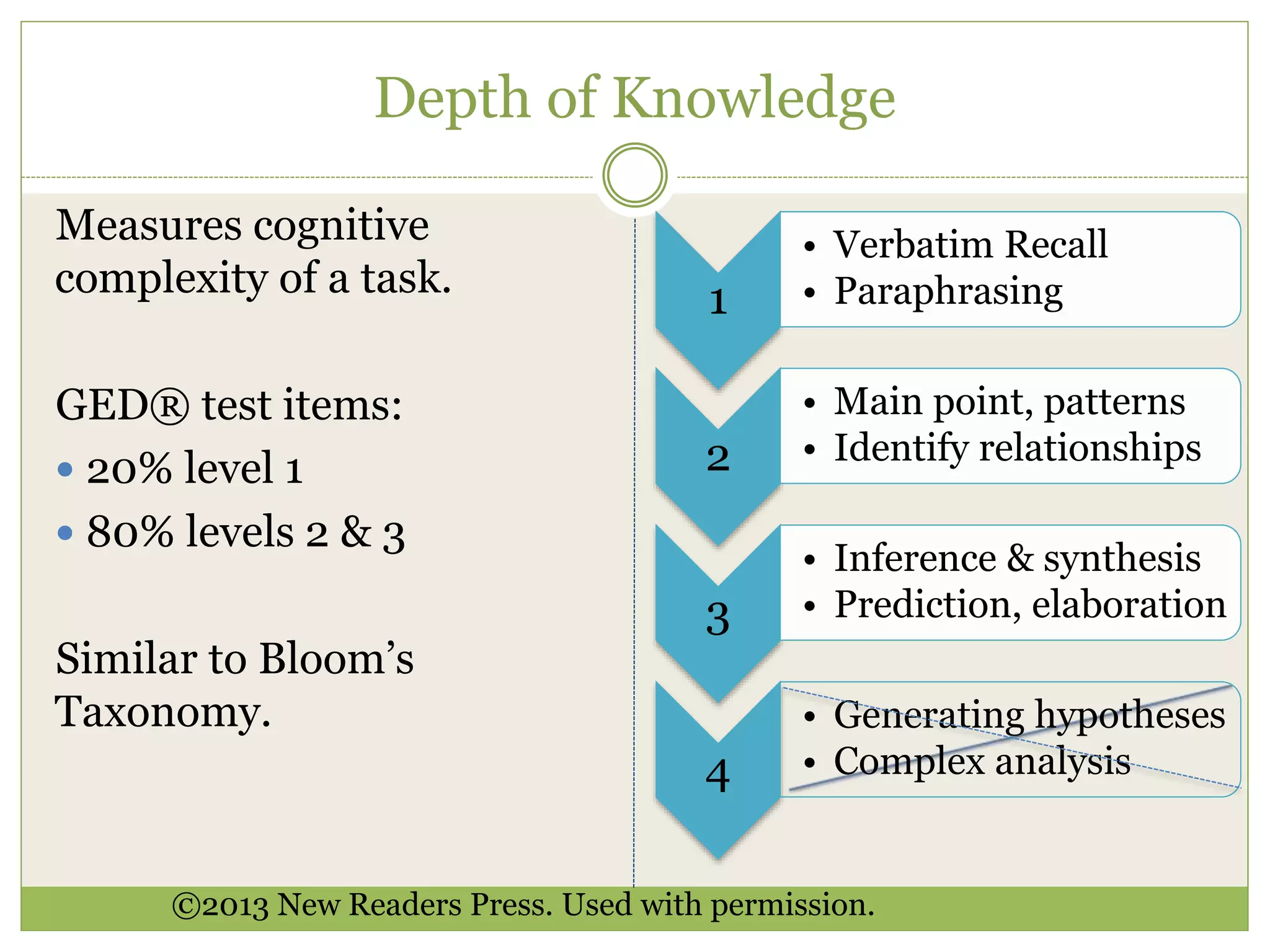
Depth of Knowledge
Measures cognitive
complexity of a task.
GED® test items:
 20% level 1
 80% levels 2 & 3
Similar to Bloom’s
Taxonomy.
1
• Verbatim Recall
• Paraphrasing
2
• Main point, patterns
• Identify relationships
3
• Inference & synthesis
• Prediction, elaboration
4
• Generating hypotheses
• Complex analysis
©2013 New Readers Press. Used with permission.
Questions?
MIX & MATCH
ASSESSMENT TARGETS
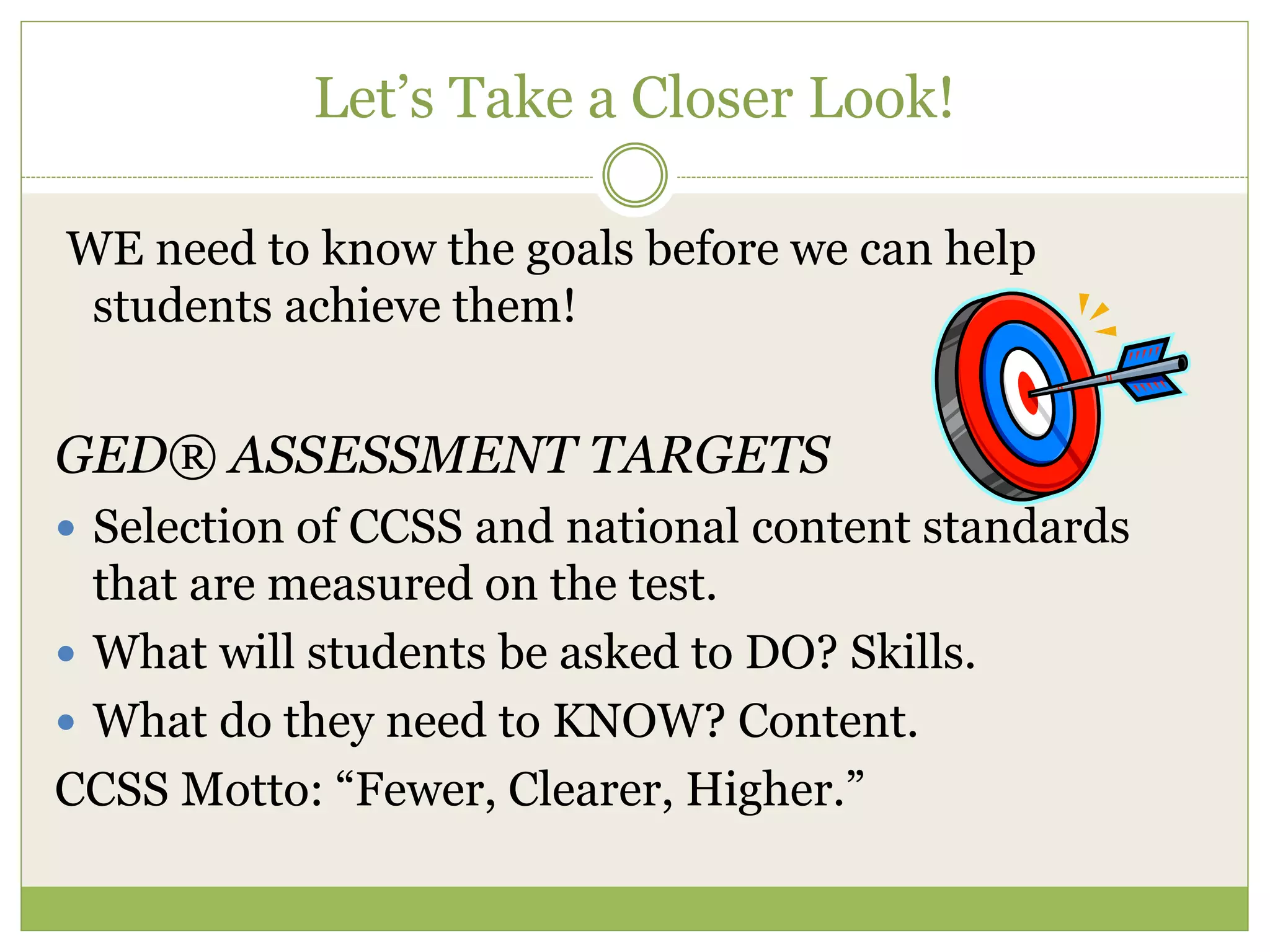
Let’s Take a Closer Look!
WE need to know the goals before we can help
students achieve them!
GED® ASSESSMENT TARGETS
 Selection of CCSS and national content standards
that are measured on the test.
 What will students be asked to DO? Skills.
 What do they need to KNOW? Content.
CCSS Motto: “Fewer, Clearer, Higher.”
CONTENT TOPIC: SKILL STANDARD:
 SP.1.b: Determine the
meaning of symbols,
terms and phrases as
they are used in
scientific
presentations.
Remember, Most Test Items Are Aligned To:
Life Science, Human Body & Health
Activity: Mix & Match
1. Select a subject area (groups will
rotate).
2. Take some time to skim the major
categories in each subject.
3. Select one content target AND
one skill target that your students
need to know. Note in your book.
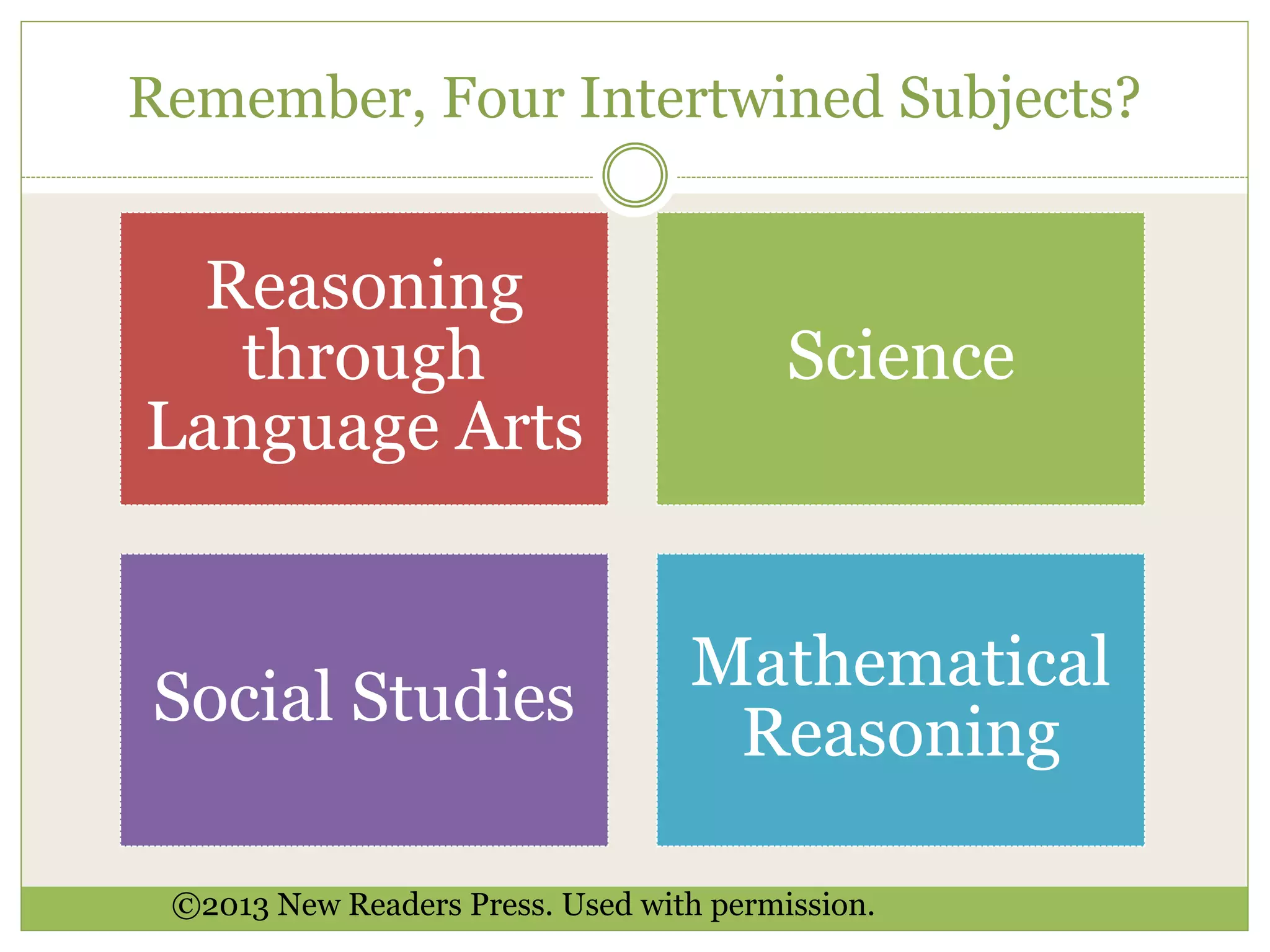
Remember, Four Intertwined Subjects?
Reasoning
through
Language Arts
Science
Social Studies
Mathematical
Reasoning
©2013 New Readers Press. Used with permission.
Responses? Questions?
G O T O K A H O O T . I T
QUIZ TIME!!!
Beyond the Textbook
 Where can I find free,
quality non-fiction
stimulus texts and
visuals as the basis for
lesson plans and
assignments?
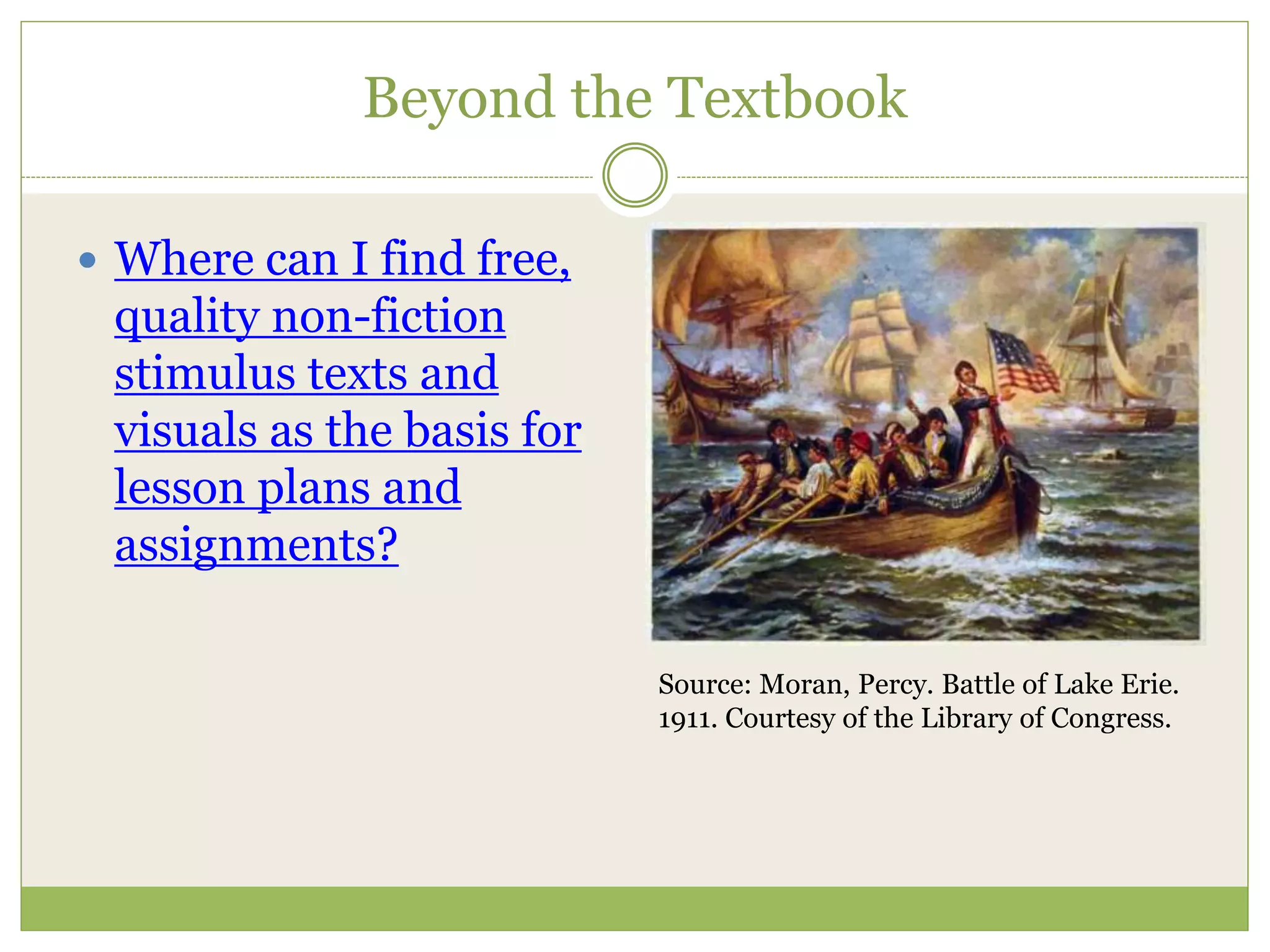
Source: Moran, Percy. Battle of Lake Erie.
1911. Courtesy of the Library of Congress.
Thank You!
 This workshop was developed with the support of
OSSE Adult and Family Education.
GED® is a registered trademark of the American Council on Education and
may not be used without permission. The GED® and GED Testing Service®
brands are administered by GED Testing Service LLC under license.

Engaging Lessons for GED Test Prep: Start with Standards

  • 1.
    Engaging Lessons for2014 GED® Test Prep Instruction
  • 2.
    Objectives  Mix andmatch GED® Test assessment targets  Brainstorm sources for quality content
  • 3.
    Our activities connectwith the following Research-Based Best Practices for Adult Literacy:  Participate in and facilitate supportive learning environments.  Use authentic instructional materials.  Promote learner persistence. Source: A Framework for Program Improvements in Adult Literacy
  • 4.
    Reminder: Basics of theGED® Test Four Intertwined Subjects Standards- Based Computer- Based Depth of Knowledge
  • 5.
    What Do YouKnow?  The motto of the Common Core State Standards is “______er, _______er, ______er.”  GED® Test items connected to the Depth of Knowledge Levels: Level One: ____% Levels Two & Three: ____% Level Four: ___%  The GED® test includes writing:  ____ min extended response in Reasoning through Language Arts.  ____ short answer responses in Science for ____ min each.
  • 6.
    Four Intertwined Subjects Reasoning through LanguageArts Science Social Studies Mathematical Reasoning ©2013 New Readers Press. Used with permission.
  • 7.
    Content from RealLife Scenarios Reasoning through Language Arts Science Social Studies Mathematical Reasoning ©2013 New Readers Press. Used with permission.
  • 8.
    Interpreting Data Reasoning through Language Arts Science SocialStudies Mathematical Reasoning ©2013 New Readers Press. Used with permission.
  • 9.
    Standards Based: (Sound Smartat a Cocktail Party) STANDARDS  A list of what students need to know and be able to do. COMMON CORE STATE STANDARDS (CCSS)  Skills standards in English Language Arts & Mathematics used by 47 states and territories.  Motto: “Fewer, clearer, higher” CONTENT STANDARDS  Information students need to know in Sci & SS. GED® TEST ASSESSMENT TARGETS  Selection of CCSS and national content standards that are measured on the test.
  • 10.
    CONTENT TOPIC: Life Science SKILLSTANDARD:  SP.1.b: Determine the meaning of symbols, terms and phrases as they are used in scientific presentations. Most Test Items Are Aligned To Both:
  • 11.
    Computer-Based Testing TakingSkills In addition to using a mouse, test-takers must:  Scroll down a page  Navigate between tabs to read pages  Select answers from drop-down menus  Drag-and-drop answers to a graph, chart or graphic organizer  Use a virtual calculator (TI-30XS)  Type two short answers and two extended responses  Use basic word processing tools (cut, copy, paste, undo, redo)
  • 12.
    Sample Test Item ©2013GED Testing Service.
  • 13.
    Depth of Knowledge Measurescognitive complexity of a task. GED® test items:  20% level 1  80% levels 2 & 3 Similar to Bloom’s Taxonomy. 1 • Verbatim Recall • Paraphrasing 2 • Main point, patterns • Identify relationships 3 • Inference & synthesis • Prediction, elaboration 4 • Generating hypotheses • Complex analysis ©2013 New Readers Press. Used with permission.
  • 14.
  • 15.
  • 16.
    Let’s Take aCloser Look! WE need to know the goals before we can help students achieve them! GED® ASSESSMENT TARGETS  Selection of CCSS and national content standards that are measured on the test.  What will students be asked to DO? Skills.  What do they need to KNOW? Content. CCSS Motto: “Fewer, Clearer, Higher.”
  • 17.
    CONTENT TOPIC: SKILLSTANDARD:  SP.1.b: Determine the meaning of symbols, terms and phrases as they are used in scientific presentations. Remember, Most Test Items Are Aligned To: Life Science, Human Body & Health
  • 18.
    Activity: Mix &Match 1. Select a subject area (groups will rotate). 2. Take some time to skim the major categories in each subject. 3. Select one content target AND one skill target that your students need to know. Note in your book.
  • 19.
    Remember, Four IntertwinedSubjects? Reasoning through Language Arts Science Social Studies Mathematical Reasoning ©2013 New Readers Press. Used with permission.
  • 20.
  • 21.
    G O TO K A H O O T . I T QUIZ TIME!!!
  • 22.
    Beyond the Textbook Where can I find free, quality non-fiction stimulus texts and visuals as the basis for lesson plans and assignments? Source: Moran, Percy. Battle of Lake Erie. 1911. Courtesy of the Library of Congress.
  • 23.
    Thank You!  Thisworkshop was developed with the support of OSSE Adult and Family Education. GED® is a registered trademark of the American Council on Education and may not be used without permission. The GED® and GED Testing Service® brands are administered by GED Testing Service LLC under license.

Editor's Notes

  • #6 The motto of the Common Core State Standards is “FEWer, CLEARer, HIGHer.” GED Test items connected to the Depth of Knowledge Levels: Level One: 20% Levels Two & Three: 80% Level Four: 0% For the 2002 GED Math Test, the first time passing rate is 30% for paper-based and 83% for computer-based testing.
  • #12 Ask audience to guess: What is the overall change in % of passing rates of of CBT vs. paper-based in 2012? What about math? Show rates. Why? Usability study recommended 500 changes, including grouping questions by the answer type and providing tutorials on using the system.
  • #13 Example: $125 in Ohio.