Energy Efficient Lighting

                            By

                            Mohammed Mohasin Shaik
                            www.shaikmohasin.wordpress.com
Presentation Agenda
• History of Light and Lighting

• Lighting Technology

• Energy Efficient Lighting

• Compact Florescent Light

• Induction Lighting

• LED Lighting

• Energy Efficiency
Light , Lighting and Energy Efficient Lighting
• Light - The natural or artificial agent that stimulates sight and makes
 things visible
• Lighting - The process of igniting

• Energy Efficient Lighting - Producing the maximum amount of light
 while minimizing energy input.
History
• In the beginning it was dark and cold . There was no sun , no light ,
  no solar system . There was nothing , just the empty void of space.
The Sun – greater light for day
• Then slowly , a huge cloud of gas and dust was formed. Eventually this cloud
 contracted and grew into a central molten mass that became our Sun.
• Sun Light travels to the Earth in approximately 8 minutes from 93,000,000 miles
 away at 186,282 miles per second.
• The illumination on the earth's surface by the sun may exceed 100,000 lux in mid
 summer.
The Moon – lesser light for night
• Light up the night

• The moon orbits the earth roughly once a month causing regular
 phases in a 29½ day cycle. So calendars could be made, so people
 could plant their crops at the best time of the year
Image of the Earth at night


Early Life without light , there would be no life.. Life has dependant on Light ..
The Evaluation : Artificial Light
• No Light – Mysteries Caves


• Dark – Household
The Evaluation : Artificial Light
• Danger - Night Travel


• After Dark – No Work
Fire , Flame and Torch
• Homo erectus probably discovered fire by accident when a bolt of lightning struck a
  tree or a bush, suddenly starting it on fire.
• The flaming touch and the campfire probably constituted early man's first use of
  'artificial' lighting.
• The torch was the first portable lamp. One of the earliest developments was the
  discovery that a bundle of sticks tied together made a blazing torch, producing a
  brighter and longer lasting light.
Primitive Lamps
  Prehistoric man, used primitive
lamps to illuminate his cave. These
    lamps, made from naturally
 occurring materials, such as rocks,
shells, horns and stones, were filled
  with grease and had a fiber wick.
  Lamps typically used animal or
        vegetable fats as fuel.
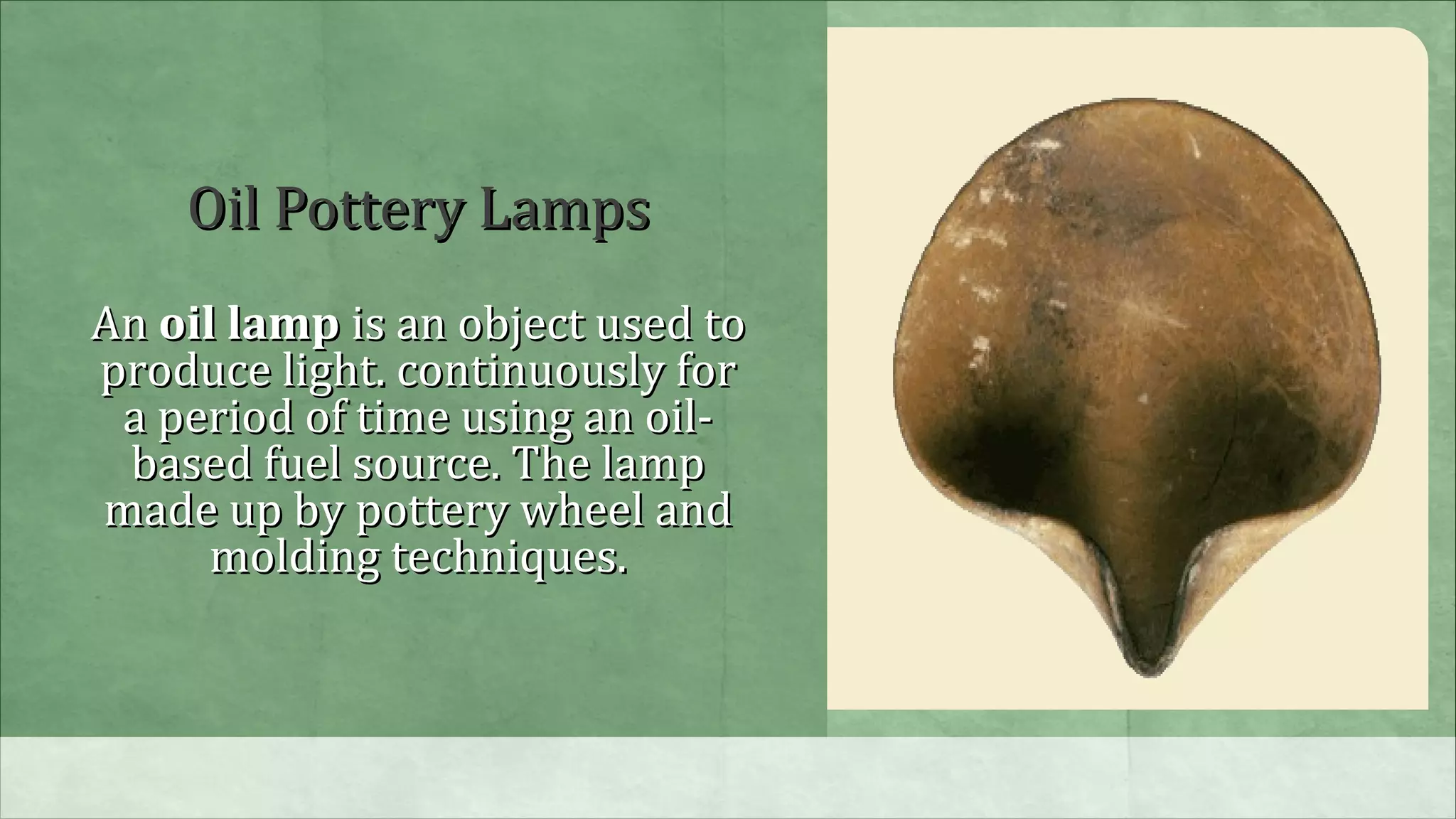
Oil Pottery Lamps
An oil lamp is an object used to
produce light. continuously for
 a period of time using an oil-
 based fuel source. The lamp
made up by pottery wheel and
      molding techniques.
Candle
A candle is a solid block of wax
with an embedded wick, which
  is ignited to provide light.
Kerosene Lamp
The kerosene lamp is a type of
   lighting device that uses
      kerosene as a fuel.
Invention of the Light Bulb
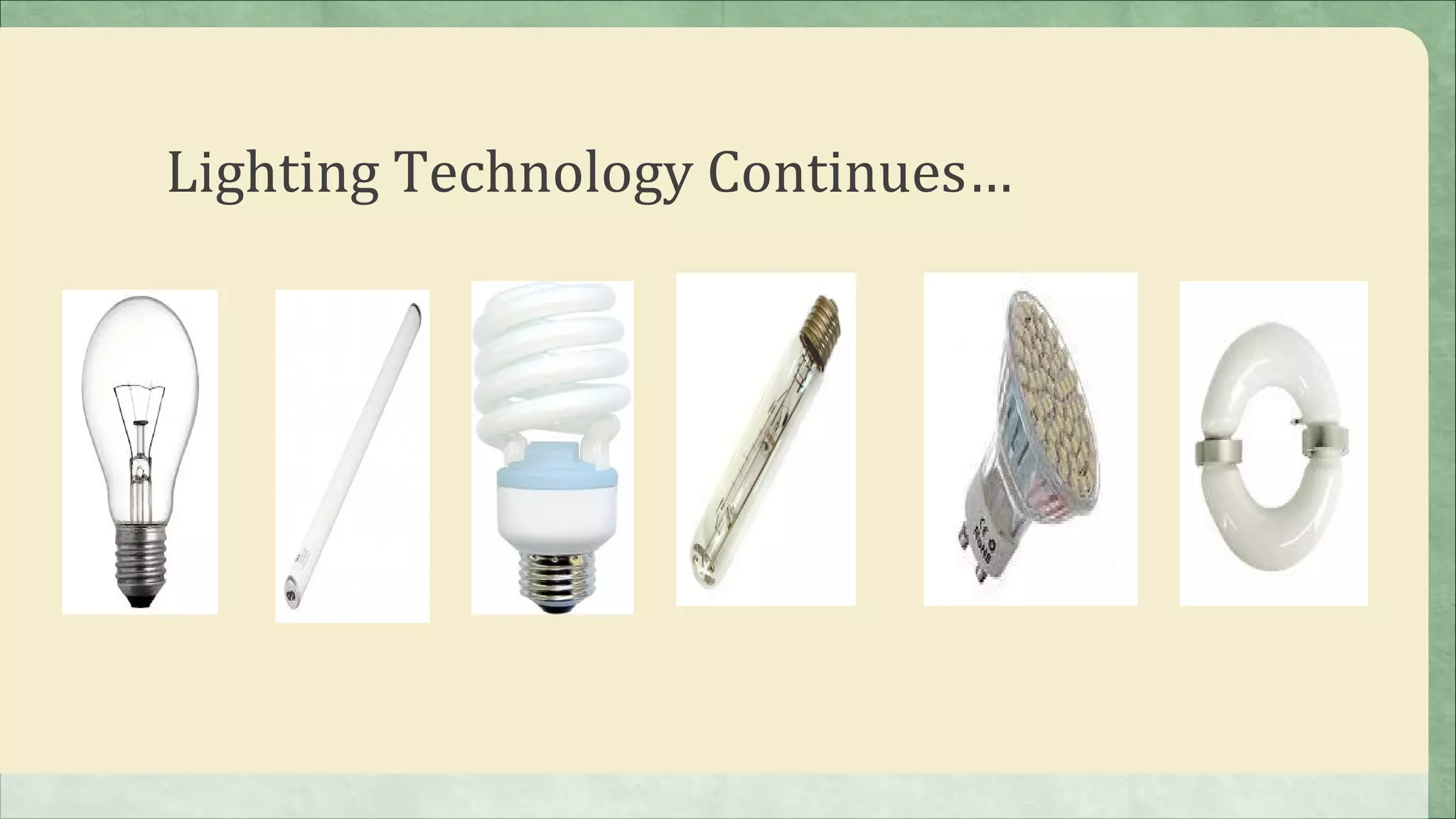
Lighting Technology Continues…
Why Energy Efficient Lighting ?
• High Energy Bills

• Significant growth in Energy Demand

• Environmental Problems

• Lighting is a most visible form of Electricity Consumption

• Exhaustion of Electricity Generation Sources

• Lighting energy consumption
    •   20-45% in commercial buildings
    •   3-10% in industrial plants

• More Light from Less Power
Compact Fluorescent Lamp (CFL)
• CFL is a compact variant of the fluorescent lamp.

• The overall length is shortened & luminous efficacy is about four times
 higher than that of incandescent lamps.
• It is possible to save energy and costs in lighting by replacing
 incandescent lamps with CFLs.
Energy Efficient Lighting
Induction Lighting         LED Lighting

• Disbursed Light          • Highly Directional Light

• Energy Saving 40 – 60%   • Energy Saving 40 – 60 %

• Life – 100,000           • Life – 50,000

Applications               Applications
• Indoor Lighting          • Indoor / Outdoor Lighting

• Outdoor Lighting         • Signage

• Tunnel Lighting          • Specialized Applications
Induction Lighting – Benefits & Features
• Longer Life Span

• High Energy Conservation

• High Power Factor

• Low Maintenance Problems

• Minimum Lumen Depreciation

• Instant On and Off

• Environmental Friendly
Induction Lighting – Applications
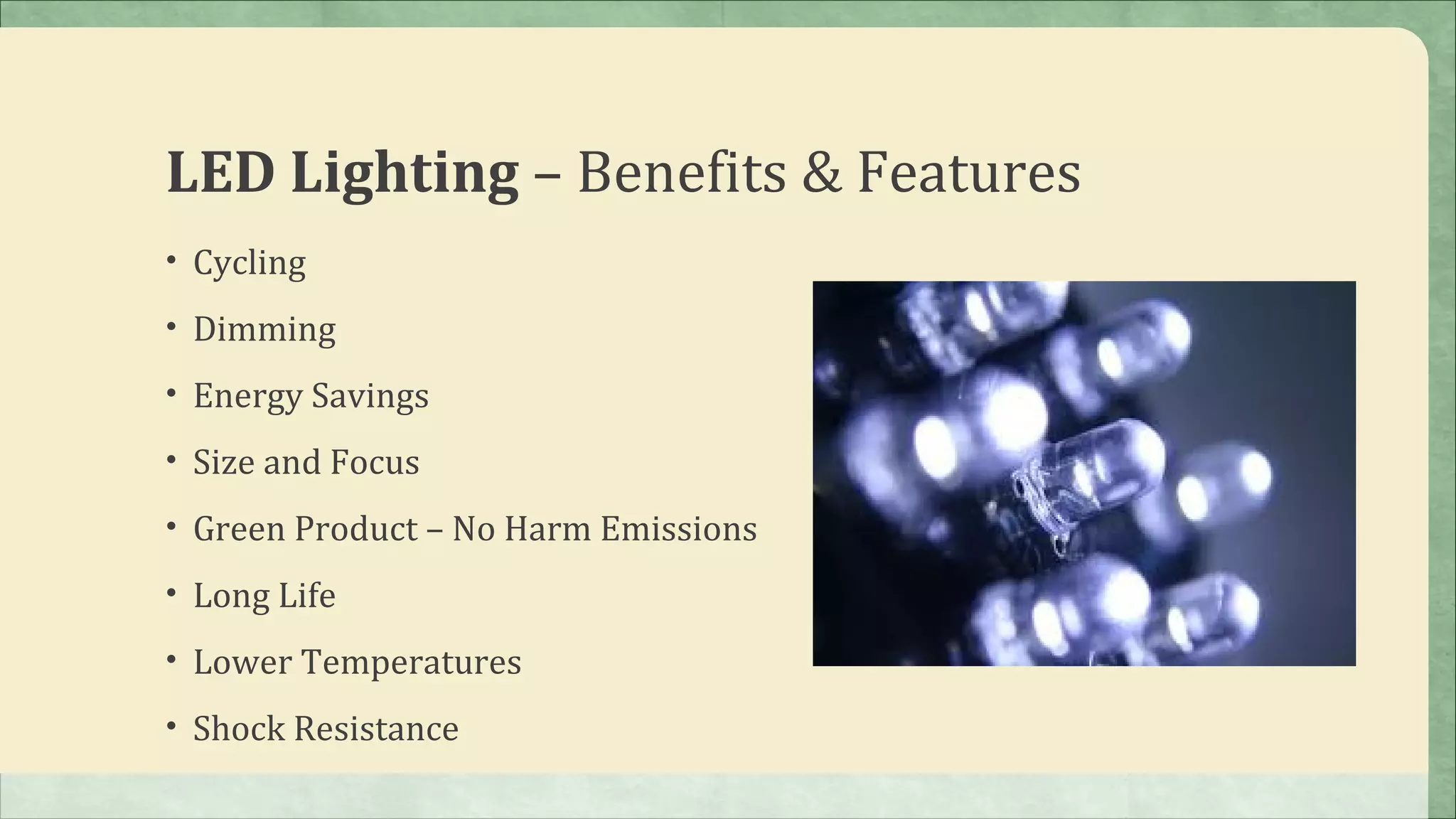
LED Lighting – Benefits & Features
• Cycling

• Dimming

• Energy Savings

• Size and Focus

• Green Product – No Harm Emissions

• Long Life

• Lower Temperatures

• Shock Resistance
LED Applications
Case Study
Induction Lighting
Case Study
Induction Street Lighting
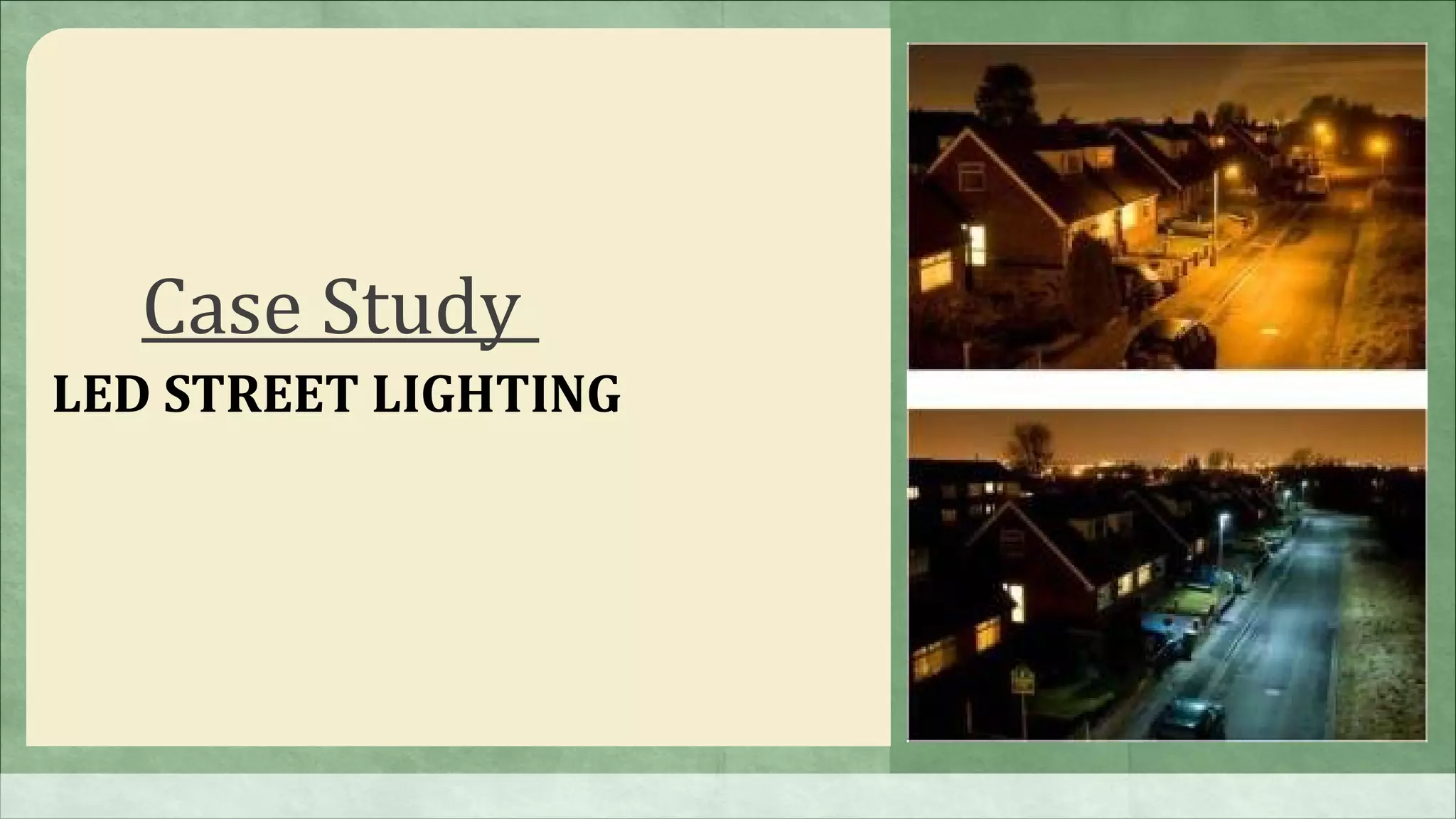
Case Study
LED STREET LIGHTING
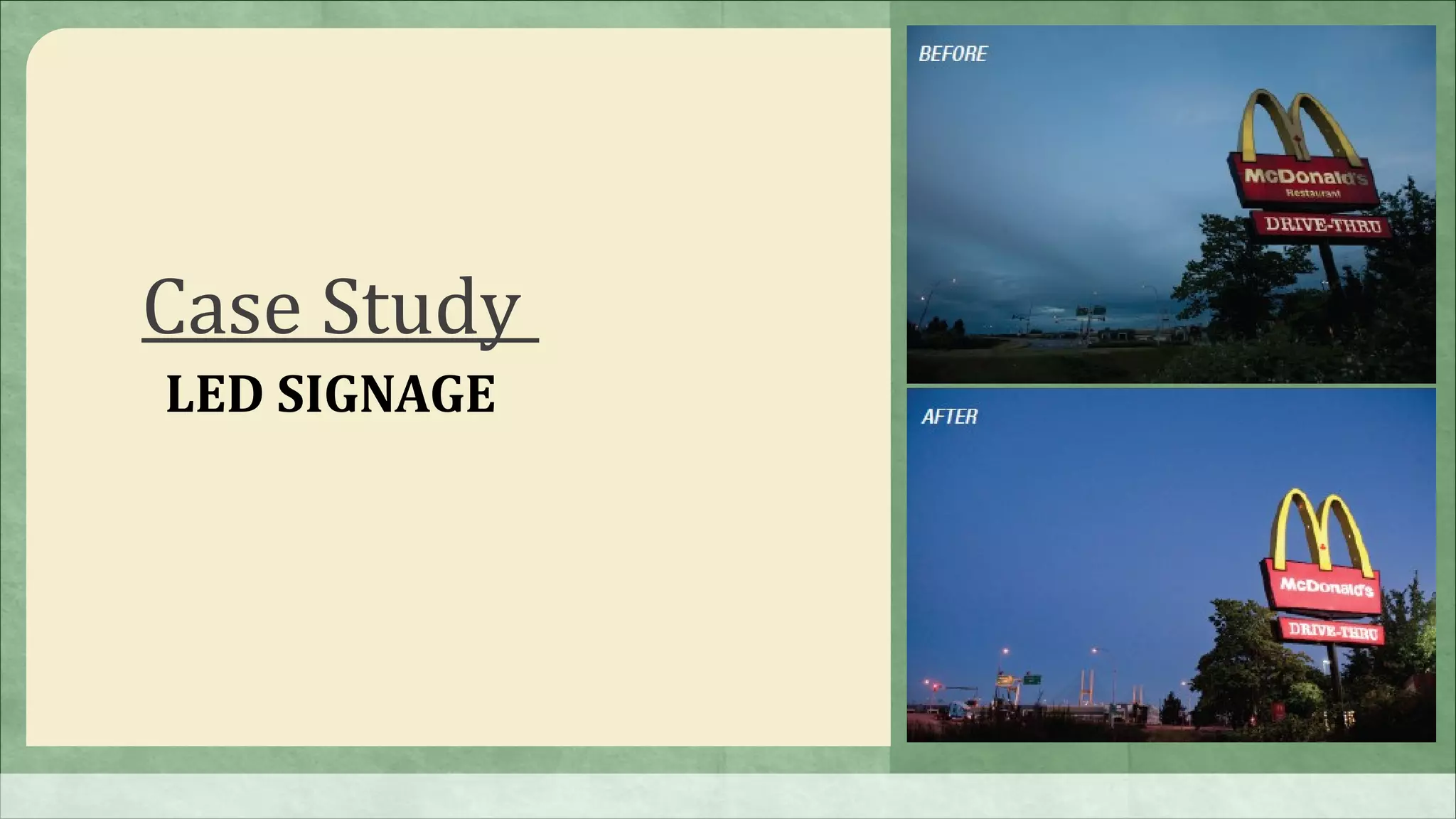
Case Study
LED SIGNAGE
Simple ways to Conserve through lighting
• Turn off lights – No Use

• Clean equipment

• Use dimmers , timers and occupancy sensors

• Controlling system – GSM / SCADA

• Use task lighting

• Buy Energy Star lighting products

• Save Energy - Save Money
Energy Saving Opportunities
• Install energy efficient fluorescent lamp T-5 in place of conventional fluorescent
  lamp T-12 / T -8
• Install Energy Star Compact Fluorescent Lamps (CFLs) in place of Incandescent
  Lamps
• Install LED Lamps in place of CFLs Install Electronic Ballast instead of
  Electromagnetic Ballast
• Install Induction / LED in place of High Pressure Sodium or Mercury / Metal Halide

• Use of high efficacy light sources for reducing the energy consumption for lighting

• Solar Powered – LED Lighting Systems
Change a light ,
Change the World..


 Thank You ALL

Energy Efficient Lighting

  • 1.
    Energy Efficient Lighting By Mohammed Mohasin Shaik www.shaikmohasin.wordpress.com
  • 2.
    Presentation Agenda • Historyof Light and Lighting • Lighting Technology • Energy Efficient Lighting • Compact Florescent Light • Induction Lighting • LED Lighting • Energy Efficiency
  • 3.
    Light , Lightingand Energy Efficient Lighting • Light - The natural or artificial agent that stimulates sight and makes things visible • Lighting - The process of igniting • Energy Efficient Lighting - Producing the maximum amount of light while minimizing energy input.
  • 4.
    History • In thebeginning it was dark and cold . There was no sun , no light , no solar system . There was nothing , just the empty void of space.
  • 5.
    The Sun –greater light for day • Then slowly , a huge cloud of gas and dust was formed. Eventually this cloud contracted and grew into a central molten mass that became our Sun. • Sun Light travels to the Earth in approximately 8 minutes from 93,000,000 miles away at 186,282 miles per second. • The illumination on the earth's surface by the sun may exceed 100,000 lux in mid summer.
  • 6.
    The Moon –lesser light for night • Light up the night • The moon orbits the earth roughly once a month causing regular phases in a 29½ day cycle. So calendars could be made, so people could plant their crops at the best time of the year
  • 7.
    Image of theEarth at night Early Life without light , there would be no life.. Life has dependant on Light ..
  • 8.
    The Evaluation :Artificial Light • No Light – Mysteries Caves • Dark – Household
  • 9.
    The Evaluation :Artificial Light • Danger - Night Travel • After Dark – No Work
  • 10.
    Fire , Flameand Torch • Homo erectus probably discovered fire by accident when a bolt of lightning struck a tree or a bush, suddenly starting it on fire. • The flaming touch and the campfire probably constituted early man's first use of 'artificial' lighting. • The torch was the first portable lamp. One of the earliest developments was the discovery that a bundle of sticks tied together made a blazing torch, producing a brighter and longer lasting light.
  • 11.
    Primitive Lamps Prehistoric man, used primitive lamps to illuminate his cave. These lamps, made from naturally occurring materials, such as rocks, shells, horns and stones, were filled with grease and had a fiber wick. Lamps typically used animal or vegetable fats as fuel.
  • 12.
    Oil Pottery Lamps Anoil lamp is an object used to produce light. continuously for a period of time using an oil- based fuel source. The lamp made up by pottery wheel and molding techniques.
  • 13.
    Candle A candle isa solid block of wax with an embedded wick, which is ignited to provide light.
  • 14.
    Kerosene Lamp The kerosenelamp is a type of lighting device that uses kerosene as a fuel.
  • 15.
    Invention of theLight Bulb
  • 16.
  • 17.
    Why Energy EfficientLighting ? • High Energy Bills • Significant growth in Energy Demand • Environmental Problems • Lighting is a most visible form of Electricity Consumption • Exhaustion of Electricity Generation Sources • Lighting energy consumption • 20-45% in commercial buildings • 3-10% in industrial plants • More Light from Less Power
  • 18.
    Compact Fluorescent Lamp(CFL) • CFL is a compact variant of the fluorescent lamp. • The overall length is shortened & luminous efficacy is about four times higher than that of incandescent lamps. • It is possible to save energy and costs in lighting by replacing incandescent lamps with CFLs.
  • 19.
    Energy Efficient Lighting InductionLighting LED Lighting • Disbursed Light • Highly Directional Light • Energy Saving 40 – 60% • Energy Saving 40 – 60 % • Life – 100,000 • Life – 50,000 Applications Applications • Indoor Lighting • Indoor / Outdoor Lighting • Outdoor Lighting • Signage • Tunnel Lighting • Specialized Applications
  • 20.
    Induction Lighting –Benefits & Features • Longer Life Span • High Energy Conservation • High Power Factor • Low Maintenance Problems • Minimum Lumen Depreciation • Instant On and Off • Environmental Friendly
  • 21.
  • 22.
    LED Lighting –Benefits & Features • Cycling • Dimming • Energy Savings • Size and Focus • Green Product – No Harm Emissions • Long Life • Lower Temperatures • Shock Resistance
  • 23.
  • 24.
  • 25.
  • 26.
  • 27.
  • 28.
    Simple ways toConserve through lighting • Turn off lights – No Use • Clean equipment • Use dimmers , timers and occupancy sensors • Controlling system – GSM / SCADA • Use task lighting • Buy Energy Star lighting products • Save Energy - Save Money
  • 29.
    Energy Saving Opportunities •Install energy efficient fluorescent lamp T-5 in place of conventional fluorescent lamp T-12 / T -8 • Install Energy Star Compact Fluorescent Lamps (CFLs) in place of Incandescent Lamps • Install LED Lamps in place of CFLs Install Electronic Ballast instead of Electromagnetic Ballast • Install Induction / LED in place of High Pressure Sodium or Mercury / Metal Halide • Use of high efficacy light sources for reducing the energy consumption for lighting • Solar Powered – LED Lighting Systems
  • 30.
    Change a light, Change the World.. Thank You ALL