Ben CarterBridget ConradShannon DurkinMike Daugherty
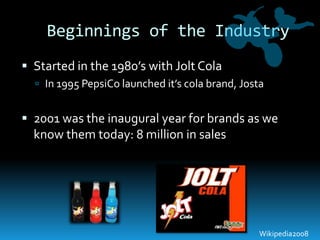
Beginnings of the IndustryStarted in the 1980’s with Jolt ColaIn 1995 PepsiCo launched it’s cola brand, Josta2001 was the inaugural year for brands as we know them today: 8 million in salesWikipedia2008
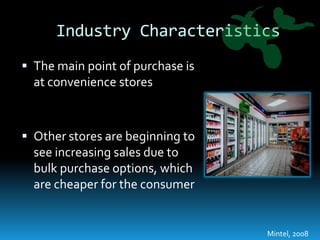
Industry CharacteristicsThe main point of purchase is at convenience storesOther stores are beginning to see increasing sales due to bulk purchase options, which are cheaper for the consumerMintel, 2008
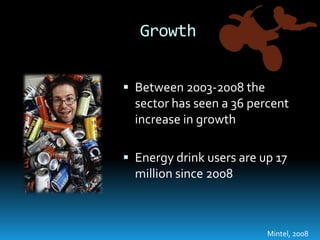
GrowthBetween 2003-2008 the sector has seen a 36 percent increase in growthEnergy drink users are up 17 million since 2008Mintel, 2008
TrendsNew business, hence no new trendsHeaviest trend is in the public concern over the heavy usage of energy drinks by teenagersMintel, 2008
BrandsThe business is mostly dominated by smaller companiesCoke and Pepsi have not been able to over take (or even catch up to) the market leadersShocking considering Coca-Cola and Pepsi’s strengths as companiesMintel, 2008
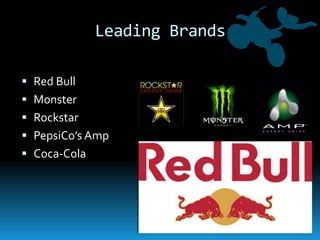
Leading BrandsRed BullMonsterRockstarPepsiCo’s AmpCoca-Cola
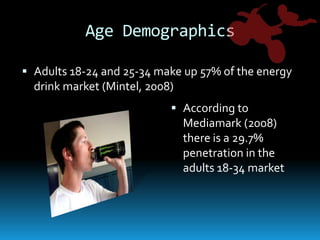
Age DemographicsAdults 18-24 and 25-34 make up 57% of the energy drink market (Mintel, 2008)According to Mediamark (2008) there is a 29.7% penetration in the adults 18-34 market
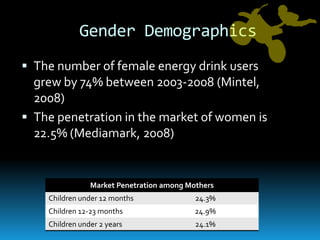
Gender DemographicsThe number of female energy drink users grew by 74% between 2003-2008 (Mintel, 2008)The penetration in the market of women is 22.5% (Mediamark, 2008)
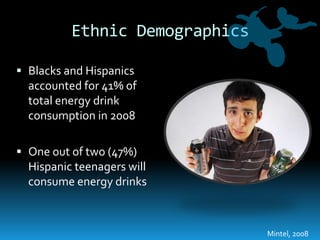
Ethnic DemographicsBlacks and Hispanics accounted for 41% of total energy drink consumption in 2008One out of two (47%) Hispanic teenagers will consume energy drinksMintel, 2008
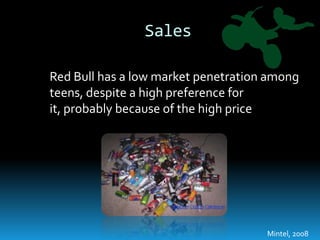
Sales	Red Bull has a low market penetration among teens, despite a high preference for it, probably because of the high priceMintel, 2008
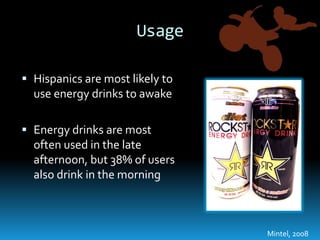
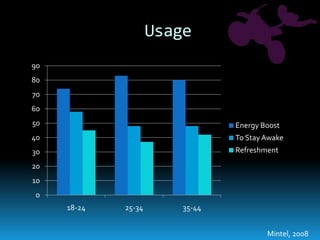
UsageHispanics are most likely to use energy drinks to awakeEnergy drinks are most often used in the late afternoon, but 38% of users also drink in the morningMintel, 2008
UsageMintel, 2008
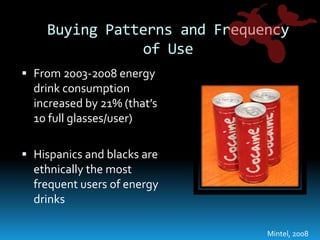
Buying Patterns and Frequency of UseFrom 2003-2008 energy drink consumption increased by 21% (that’s 10 full glasses/user)Hispanics and blacks are ethnically the most frequent users of energy drinksMintel, 2008
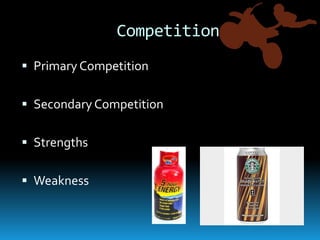
CompetitionPrimary CompetitionSecondary CompetitionStrengthsWeakness
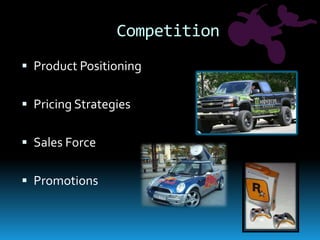
CompetitionProduct PositioningPricing StrategiesSales ForcePromotions
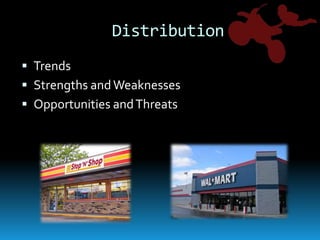
DistributionTrendsStrengths and WeaknessesOpportunities and Threats
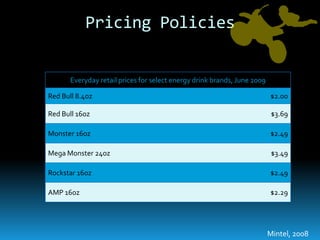
Pricing PoliciesMintel, 2008
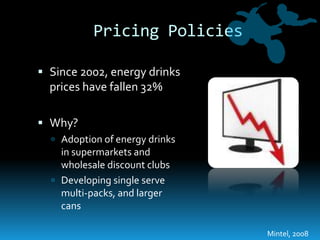
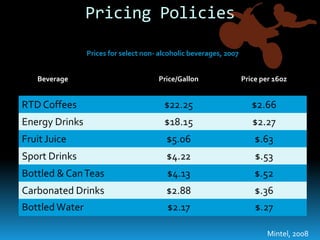
Pricing PoliciesSince 2002, energy drinks prices have fallen 32%Why?Adoption of energy drinks in supermarkets and wholesale discount clubsDeveloping single serve multi-packs, and larger cansMintel, 2008
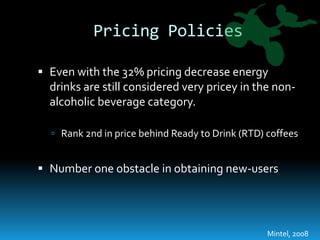
Pricing PoliciesEven with the 32% pricing decrease energy drinks are still considered very pricey in the non-alcoholic beverage category.Rank 2nd in price behind Ready to Drink (RTD) coffeesNumber one obstacle in obtaining new-usersMintel, 2008
Pricing PoliciesMintel, 2008
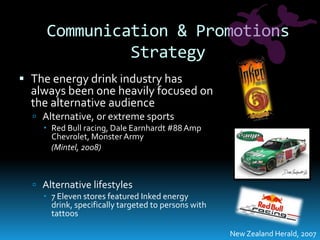
Communication & Promotions StrategyThe energy drink industry has always been one heavily focused on the alternative audienceAlternative, or extreme sportsRed Bull racing, Dale Earnhardt #88 Amp Chevrolet, Monster Army	(Mintel, 2008)Alternative lifestyles7 Eleven stores featured Inked energy drink, specifically targeted to persons with tattoosNew Zealand Herald, 2007
Communications & Promotions StrategyYou won’t find energy drink companies producing spots for the super bowlThe big competitors choose to steer clear of the “corporate” normsPrefer fast and original, a reflection of their key usersRacy slogans and campaigns, and an association with extreme sport Mintel, 2008
Communication & Promotions StrategyEnergy drinks are heavily centered and associated with the action and extreme sports industrySponsor numerous 	extreme athletes, teams, 	and eventsRed Bull New Years Eve, No Limits- 12.31.2008
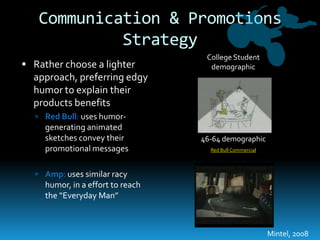
Communication & Promotions StrategyRather choose a lighter approach, preferring edgy humor to explain their products benefitsRed Bull: uses humor-generating animated sketches convey their promotional messagesAmp: uses similar racy humor, in a effort to reach the “Everyday Man”College Student demographic46-64 demographicRed Bull CommercialMintel, 2008
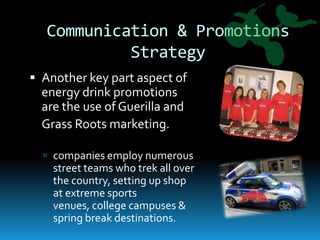
Communication & Promotions StrategyAnother key part aspect of energy drink promotions are the use of Guerilla and 	Grass Roots marketing.companies employ numerous street teams who trek all over the country, setting up shop at extreme sports venues, college campuses & spring break destinations.
Environmental and Social FactorsA primary issue facing the energy drink industry is the concerns about health risks associated with the extremely high levels of caffeine found in themIt is easily available to highly impressionable children, who are not educated about the potential dangers of energy drinks
Environmental and Social FactorsEnergy drinks give their “boost” from the extreme amounts of caffeine contained in themA standard Red Bull(8.4oz), for example, contains 80mg of caffeine, three times the amount of a 12 oz Classic Coca-ColaOthers contain considerably higher levels
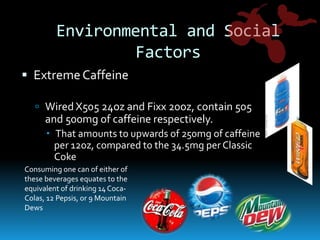
Environmental and Social FactorsExtreme CaffeineWired X505 24oz and Fixx 20oz, contain 505 and 500mg of caffeine respectively. That amounts to upwards of 250mg of caffeine per 12oz, compared to the 34.5mg per Classic Coke Consuming one can of either of these beverages equates to the equivalent of drinking 14 Coca-Colas, 12 Pepsis, or 9 Mountain Dews
Environmental and Social FactorsIn October, 2008, 100 scientists and physicians sent a letter to the FDA asking for additional regulation in the energy drink industry, on the basis that it puts its young consumers at risk of caffeine intoxicationThey requested that energy drinks list their caffeine contents on the can, set a limit to the amount of stimulant found in the drink, and require warning labels USA Today, 2008
Environmental and Social FactorsCase in Point: Prince Edward Island, September, 2008The island lifted a 25-year ban on canned beverages and found that without the ban young students began bringing energy drinks to school.  Teachers reported problems with students becoming suddenly hyperactive, followed by a lethargic crash, commonly known as the caffeine high and crash.Banned at Souris Regional HighDoctors and physicians share the opinions of the 	teachers and administratorsCalled for a restriction of sales at grocery stores to youths under the age of 18.  They equate energy drinks to the likes of tobacco and cigarettesThere is also concern that the long-term effects of energy drinks have not been thoroughly researched.The Toronto Sun, 2008
SWOTSTRENGTH: Energy drinks provide a energy boost without the crashWEAKNESS: They are too expensiveOPPORTUNITY: Juice flavored energy drinks would appeal to both Hispanic users, and morning usersTHREAT: Heavy and irresponsible use by teenagers may lead to laws restricting their sales to anyone under 18
Questions?

Xtreme Energy

  • 1.
  • 2.
    Beginnings of theIndustryStarted in the 1980’s with Jolt ColaIn 1995 PepsiCo launched it’s cola brand, Josta2001 was the inaugural year for brands as we know them today: 8 million in salesWikipedia2008
  • 3.
    Industry CharacteristicsThe mainpoint of purchase is at convenience storesOther stores are beginning to see increasing sales due to bulk purchase options, which are cheaper for the consumerMintel, 2008
  • 4.
    GrowthBetween 2003-2008 thesector has seen a 36 percent increase in growthEnergy drink users are up 17 million since 2008Mintel, 2008
  • 5.
    TrendsNew business, henceno new trendsHeaviest trend is in the public concern over the heavy usage of energy drinks by teenagersMintel, 2008
  • 6.
    BrandsThe business ismostly dominated by smaller companiesCoke and Pepsi have not been able to over take (or even catch up to) the market leadersShocking considering Coca-Cola and Pepsi’s strengths as companiesMintel, 2008
  • 7.
  • 8.
    Age DemographicsAdults 18-24and 25-34 make up 57% of the energy drink market (Mintel, 2008)According to Mediamark (2008) there is a 29.7% penetration in the adults 18-34 market
  • 9.
    Gender DemographicsThe numberof female energy drink users grew by 74% between 2003-2008 (Mintel, 2008)The penetration in the market of women is 22.5% (Mediamark, 2008)
  • 10.
    Ethnic DemographicsBlacks andHispanics accounted for 41% of total energy drink consumption in 2008One out of two (47%) Hispanic teenagers will consume energy drinksMintel, 2008
  • 11.
    Sales Red Bull hasa low market penetration among teens, despite a high preference for it, probably because of the high priceMintel, 2008
  • 12.
    UsageHispanics are mostlikely to use energy drinks to awakeEnergy drinks are most often used in the late afternoon, but 38% of users also drink in the morningMintel, 2008
  • 13.
  • 14.
    Buying Patterns andFrequency of UseFrom 2003-2008 energy drink consumption increased by 21% (that’s 10 full glasses/user)Hispanics and blacks are ethnically the most frequent users of energy drinksMintel, 2008
  • 15.
  • 16.
  • 17.
  • 18.
  • 19.
    Pricing PoliciesSince 2002,energy drinks prices have fallen 32%Why?Adoption of energy drinks in supermarkets and wholesale discount clubsDeveloping single serve multi-packs, and larger cansMintel, 2008
  • 20.
    Pricing PoliciesEven withthe 32% pricing decrease energy drinks are still considered very pricey in the non-alcoholic beverage category.Rank 2nd in price behind Ready to Drink (RTD) coffeesNumber one obstacle in obtaining new-usersMintel, 2008
  • 21.
  • 22.
    Communication & PromotionsStrategyThe energy drink industry has always been one heavily focused on the alternative audienceAlternative, or extreme sportsRed Bull racing, Dale Earnhardt #88 Amp Chevrolet, Monster Army (Mintel, 2008)Alternative lifestyles7 Eleven stores featured Inked energy drink, specifically targeted to persons with tattoosNew Zealand Herald, 2007
  • 23.
    Communications & PromotionsStrategyYou won’t find energy drink companies producing spots for the super bowlThe big competitors choose to steer clear of the “corporate” normsPrefer fast and original, a reflection of their key usersRacy slogans and campaigns, and an association with extreme sport Mintel, 2008
  • 24.
    Communication & PromotionsStrategyEnergy drinks are heavily centered and associated with the action and extreme sports industrySponsor numerous extreme athletes, teams, and eventsRed Bull New Years Eve, No Limits- 12.31.2008
  • 25.
    Communication & PromotionsStrategyRather choose a lighter approach, preferring edgy humor to explain their products benefitsRed Bull: uses humor-generating animated sketches convey their promotional messagesAmp: uses similar racy humor, in a effort to reach the “Everyday Man”College Student demographic46-64 demographicRed Bull CommercialMintel, 2008
  • 26.
    Communication & PromotionsStrategyAnother key part aspect of energy drink promotions are the use of Guerilla and Grass Roots marketing.companies employ numerous street teams who trek all over the country, setting up shop at extreme sports venues, college campuses & spring break destinations.
  • 27.
    Environmental and SocialFactorsA primary issue facing the energy drink industry is the concerns about health risks associated with the extremely high levels of caffeine found in themIt is easily available to highly impressionable children, who are not educated about the potential dangers of energy drinks
  • 28.
    Environmental and SocialFactorsEnergy drinks give their “boost” from the extreme amounts of caffeine contained in themA standard Red Bull(8.4oz), for example, contains 80mg of caffeine, three times the amount of a 12 oz Classic Coca-ColaOthers contain considerably higher levels
  • 29.
    Environmental and SocialFactorsExtreme CaffeineWired X505 24oz and Fixx 20oz, contain 505 and 500mg of caffeine respectively. That amounts to upwards of 250mg of caffeine per 12oz, compared to the 34.5mg per Classic Coke Consuming one can of either of these beverages equates to the equivalent of drinking 14 Coca-Colas, 12 Pepsis, or 9 Mountain Dews
  • 30.
    Environmental and SocialFactorsIn October, 2008, 100 scientists and physicians sent a letter to the FDA asking for additional regulation in the energy drink industry, on the basis that it puts its young consumers at risk of caffeine intoxicationThey requested that energy drinks list their caffeine contents on the can, set a limit to the amount of stimulant found in the drink, and require warning labels USA Today, 2008
  • 31.
    Environmental and SocialFactorsCase in Point: Prince Edward Island, September, 2008The island lifted a 25-year ban on canned beverages and found that without the ban young students began bringing energy drinks to school. Teachers reported problems with students becoming suddenly hyperactive, followed by a lethargic crash, commonly known as the caffeine high and crash.Banned at Souris Regional HighDoctors and physicians share the opinions of the teachers and administratorsCalled for a restriction of sales at grocery stores to youths under the age of 18. They equate energy drinks to the likes of tobacco and cigarettesThere is also concern that the long-term effects of energy drinks have not been thoroughly researched.The Toronto Sun, 2008
  • 32.
    SWOTSTRENGTH: Energy drinksprovide a energy boost without the crashWEAKNESS: They are too expensiveOPPORTUNITY: Juice flavored energy drinks would appeal to both Hispanic users, and morning usersTHREAT: Heavy and irresponsible use by teenagers may lead to laws restricting their sales to anyone under 18
  • 33.