The Endocrine System
• Pituitary gland
• Thyroid gland
• Parathyroid glands
• Endocrine Pancreas
• Adrenal glands
• Pineal gland
this lecture's
main focus
Pituitary gland
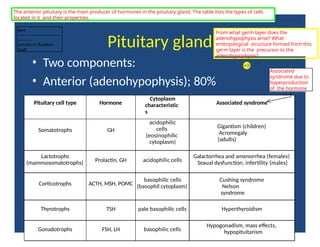
• Two components:
• Anterior (adenohypophysis); 80%
Pituitary cell type Hormone
Cytoplasm
characteristic
s
Associated syndrome
Somatotrophs GH
acidophilic
cells
(eosinophilic
cytoplasm)
Gigantism (children)
Acromegaly
(adults)
Lactotrophs
(mammosomatotrophs) Prolactin, GH acidophilic cells
Galactorrhea and amenorrhea (females)
Sexual dysfunction, infertility (males)
Corticotrophs ACTH, MSH, POMC
basophilic cells
(basophil cytoplasm)
Cushing syndrome
Nelson
syndrome
Thyrotrophs TSH pale basophilic cells Hyperthyroidism
Gonadotrophs FSH, LH basophilic cells
Hypogonadism, mass effects,
hypopituitarism
The anterior pituitary is the main producer of hormones in the pituitary gland. The table lists the types of cells
located in it and their properties.
From what germ layer does the
adenohypophysis arise? What
embryological structure formed from this
germ layer is the precursor to the
adenohypophysis?
Associated
syndrome due to
hyperproduction
of the hormone
tcl12
---------------------------------
-----------
ectoderm; Rathke's
pouch
Pituitary gland
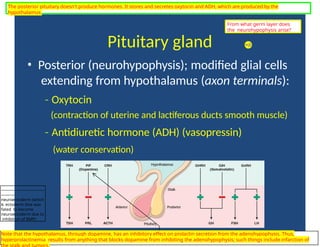
• Posterior (neurohypophysis); modified glial cells
extending from hypothalamus (axon terminals):
‐ Oxytocin
(contraction of uterine and lactiferous ducts smooth muscle)
‐ Antidiuretic hormone (ADH) (vasopressin)
(water conservation)
The posterior pituitary doesn't produce hormones. It stores and secretes oxytocin and ADH, which are produced by the
hypothalamus.
Note that the hypothalamus, through dopamine, has an inhibitory effect on prolactin secretion from the adenohypophysis. Thus,
hyperprolactinemia results from anything that blocks dopamine from inhibiting the adenohypophysis; such things include infarction of
the stalk and tumors.
From what germ layer does
the neurohypophysis arise?
---------------------------------
-----------
neuroectoderm (which
is ectoderm that was
fated to become
neuroectoderm due to
inhibition of BMP)
Clinical manifestations of pituitary
gland disease
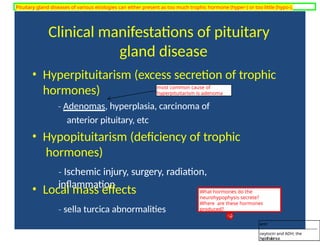
• Hyperpituitarism (excess secretion of trophic
hormones)
‐ Adenomas, hyperplasia, carcinoma of
anterior pituitary, etc
• Hypopituitarism (deficiency of trophic
hormones)
‐ Ischemic injury, surgery, radiation,
inflammation
• Local mass effects
‐ sella turcica abnormalities
most common cause of
hyperpituitarism is adenoma
Pituitary gland diseases of various etiologies can either present as too much trophic hormone (hyper-) or too little (hypo-).
What hormones do the
neurohypophysis secrete?
Where are these hormones
produced?
tcl12
--------------------------------------------
oxytocin and ADH; the
hypothalamus
Case 1
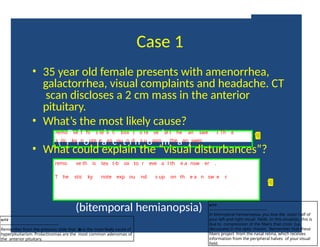
• 35 year old female presents with amenorrhea,
galactorrhea, visual complaints and headache. CT
scan discloses a 2 cm mass in the anterior
pituitary.
• What’s the most likely cause?
remo
Pve
it
thi
us te
ix
tt-
abox
rt
yo re
ave
dal t
ehe
nan
oswe
mr. Th
ae
s
(tic
Pky
rn
oote
le
axp
cou
tn
id
ns u
opon
mthe
aan
)swer.
• What could explain the “visual disturbances”?
remoMve thais stexst-beox ftofreevecatl thoe afnswaerd.
Tehensticokymnoteaexpcouondms upponrthee asnsswienr. g
decussating fibers of optic chiasm
(bitemporal hemianopsia)
tcl12
--------------------------------------------
Remember from the previous slide that a
d
e
n
o
m
a is the most likely cause of
hyperpituitarism. Prolactinomas are the most common adenomas of
the anterior pituitary.
tcl12
--------------------------------------------
In bitemporal hemianopsia, you lose the outer half of
your left and right visual fields. In this situation, this is
due to compression of the fibers that cross (i.e.
decussate) in the optic chiasm. Remember that these
fibers project from the nasal retina, which receives
information from the peripheral halves of your visual
field.
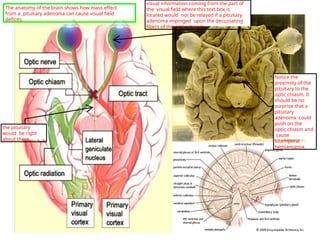
visual information coming from the part of
the visual field where this text box is
located would not be relayed if a pituitary
adenoma impinged upon the decussating
fibers of the optic chiasm
Notice the
proximity of the
pituitary to the
optic chiasm. It
should be no
surprise that a
pituitary
adenoma could
push on the
optic chiasm and
cause
bitemporal
hemianopsia.
The anatomy of the brain shows how mass effect
from a pituitary adenoma can cause visual field
deficits.
the pituitary
would be right
about there
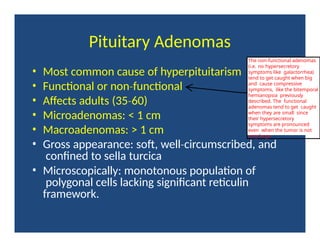
Pituitary Adenomas
• Most common cause of hyperpituitarism
• Functional or non functional
‐
• Affects adults (35 60)
‐
• Microadenomas: < 1 cm
• Macroadenomas: > 1 cm
• Gross appearance: soft, well circumscribed,
‐ and
confined to sella turcica
• Microscopically: monotonous population of
polygonal cells lacking significant reticulin
framework.
The non-functional adenomas
(i.e. no hypersecretory
symptoms like galactorrhea)
tend to get caught when big
and cause compressive
symptoms, like the bitemporal
hemianopsia previously
described. The functional
adenomas tend to get caught
when they are small since
their hypersecretory
symptoms are pronounced
even when the tumor is not
very large.
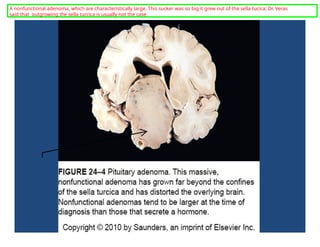
A nonfunctional adenoma, which are characteristically large. This sucker was so big it grew out of the sella tucica; Dr. Veras
said that outgrowing the sella turcica is usually not the case.
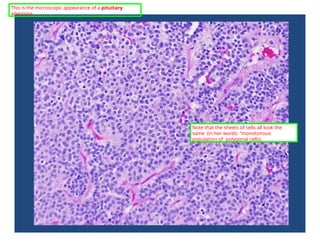
This is the microscopic appearance of a pituitary
adenoma.
Note that the sheets of cells all look the
same (in her words: "monotonous
population of polygonal cells).
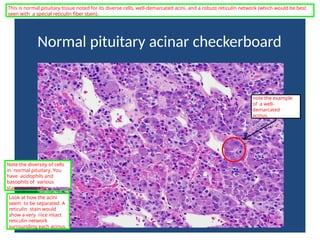
Normal pituitary acinar checkerboard
This is normal pituitary tissue noted for its diverse cells, well-demarcated acini, and a robust reticulin network (which would be best
seen with a special reticulin fiber stain).
Note the diversity of cells
in normal pituitary. You
have acidophils and
basophils of various
staining intensity.
note the example
of a well-
demarcated
acinus
Look at how the acini
seem to be separated. A
reticulin stain would
show a very nice intact
reticulin network
surrounding each acinus.
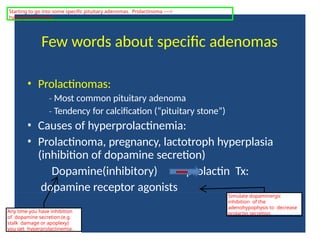
Few words about specific adenomas
• Prolactinomas:
‐ Most common pituitary adenoma
‐ Tendency for calcification (“pituitary stone”)
• Causes of hyperprolactinemia:
• Prolactinoma, pregnancy, lactotroph hyperplasia
(inhibition of dopamine secretion)
Dopamine(inhibitory) prolactin Tx:
dopamine receptor agonists
Any time you have inhibition
of dopamine secretion (e.g.
stalk damage or apoplexy)
you get hyperprolactinemia.
Simulate dopaminergic
inhibition of the
adenohypophysis to decrease
prolactin secretion.
Starting to go into some specific pituitary adenomas. Prolactinoma ---->
hyperprolactinemia
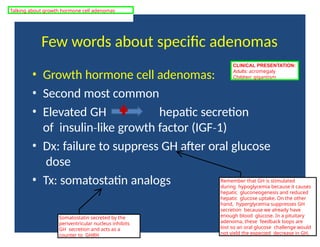
Few words about specific adenomas
• Growth hormone cell adenomas:
• Second most common
• Elevated GH hepatic secretion
of insulin like
‐ growth factor (IGF 1)
‐
• Dx: failure to suppress GH after oral glucose
dose
• Tx: somatostatin analogs
CLINICAL PRESENTATION:
Adults: acromegaly
Children: gigantism
Remember that GH is stimulated
during hypoglycemia because it causes
hepatic gluconeogenesis and reduced
hepatic glucose uptake. On the other
hand, hyperglycemia suppresses GH
secretion because we already have
enough blood glucose. In a pituitary
adenoma, these feedback loops are
lost so an oral glucose challenge would
not yield the expected decrease in GH.
Somatostatin secreted by the
periventricular nucleus inhibits
GH secretion and acts as a
counter to GHRH
Talking about growth hormone cell adenomas
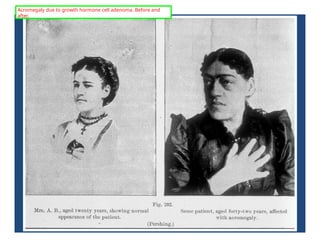
Acromegaly due to growth hormone cell adenoma. Before and
after.
Few words about specific adenomas
• ACTH cell adenomas:
• ACTH cortisol
(adrenal)
Cushing’s dz
• Removal of adrenals in Cushing’s sd
large adenomas Nelson syndrome
• Pituitary carcinomas:
‐ rare
‐ functional (ACTH or prolactin)
Cushing's disease is pituitary in origin,
and is defined as excess ACTH secretion
from the pituitary.
Cushing's syndrome is simply a result
of excess glucocorticoid whether it is
pituitary or adrenal in origin.
Thus, Cushing's disease is one cause
of Cushing's syndrome but not vice
versa.
Nelson syndrome: Removal of the
adrenal glands leads to no more cortisol
to inhibit ACTH production by negative
feedback.
Thus, ACTH cell adenomas grow
unchecked. This presents as muscle
weakness due to excess ACTH and skin
hyperpigmentation due to excess
melanocyte stimulating hormone,
released from
the adrenal
cortex, hence,
CORTisol
Talking about ACTH cell adenomas
Hypopituitarism
• Causes:
‐ Tumors, mass lesions, brain injury,
subarachnoid hemorrhage
‐ Pituitary surgery or radiation
‐ Pituitary apoplexy (neurosurgical
emergency)
‐ Ischemic necrosis of pituitary and Sheehan sd:
postpartum necrosis of anterior pituitary
‐ Rathke cleft cyst
‐ Empty sella syndrome (primary vs. secondary)
‐ Hypothalamic lesions
‐ Inflammatory disorders
This is usually a postpartum
complication after extensive
bleeding. It results in
necrosis of the anterior
pituitary and deficiency of
all the hormones secreted
by the adenophypophysis
What is the most common
pituitary adenoma? What is the
second most common?
These are some causes of hypopituitarism.
tcl12
2011-06-07 03:00:02
--------------------------------------------
prolactinoma; growth hormone
cell adenoma
Posterior Pituitary syndromes
• Diabetes insipidus: ADH deficiency
‐ Central (hypothalamic) vs. Nephrogenic (renal
tubular unresponsiveness to ADH)
‐ Polyuria and increased thirst
‐ Dilute urine with low specific gravity
‐ High serum sodium and osmolality
• Syndrome of inappropriate secretion of ADH (SIADH)
‐ Hyponatremia
‐ Small cell carcinoma of lung (ectopic ADH secretion)
Nothing wrong with secretion
of ADH, the pituitary, or
hypothalamus. The kidney is
the problem in that it has
tubular damage,
nonfunctional ADH receptors,
or nonfunctional
You retain too much water! This essentially dilutes
your sodium concentration.
What other endocrine paraneoplastic
syndrome is associated with small cell
carcinoma of the lung?
Problems in the posterior pituitary concern ADH (either deficency or excess)
Problem with
inadequate
ADH
production or
secretion
tcl12
--------------------------------------------
Cushing's Syndrome due to ectopic ACTH secretion
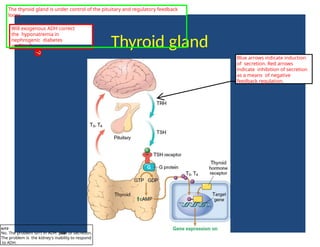
Thyroid gland
Will exogenous ADH correct
the hyponatremia in
nephrogenic diabetes
mellitus?
Blue arrows indicate induction
of secretion. Red arrows
indicate inhibition of secretion
as a means of negative
feedback regulation.
The thyroid gland is under control of the pituitary and regulatory feedback
loops.
tcl12
No. The problem isn't in ADH p
r
o
d
u
c
t
i
o
n or secretion.
The problem is the kidney's inability to respond
to ADH.
Thyroid gland
• Thyroid follicular cells: convert thyroglobulin
into T4 (thyroxine) and triiodothyronine
(T3)
• Parafollicular cells (C cells): calcitonin
(absorption of calcium by skeletal system and
prevent resorption of bone by osteoclasts)
T3 is much more metabolically
active than T4. The main effect
of T3 is to raise the basal
metabolic rate of the body.
Calcitonin conserves
calcium in bone. It
has the opposite
effect of parathyroid
hormone.
The thyroid's primary metabolically active hormonal secretions are T3 and calcitonin.
Hyperthyroidism (thyrotoxicosis)
• Elevated free T3 and T4
• Causes:
‐ Diffuse hyperplasia of thyroid due to Graves
(85%)
‐ Hyperfunctional multinodular goiter
‐ Hyperfunctional adenoma
Multinodular goiter
doesn't always
produce
hyperthyroidism. It
can produce a
euthyroid state or
hypothyroidism.
Grave's disease is an autoimmune disease in which autoantibodies against the thyroid
stimulating hormone receptor (TSHR) of the thyroid follicular cells ACTIVATE the
receptor. This causes an increase in the production and secretion of T3 and T4
independent of TSH. In fact, the high levels T3 and T4 would downregulate TRH and
TSH secretion. Thus, Grave's disease is noted for paradoxically high T3 and T4 with low
TRH and TSH.
Long story
short...
Grave's Disease:
T3 and T4: high
TRH: Low
TSH: Low
Hyperthyroidism: Too much T3, the metabolically active thyroid
hormone.
Clinical symptoms and lab diagnosis
• Increased basal metabolic rate
• Warm and flushed skin
• Heat intolerance, sweating
• Weight loss, increased apetite
• Cardiac manifestations (tachycardia, arrhythmias,
heart failure)
• Ocular changes (thyroid ophthalmopathy)
• Decreased TSH; increased free T4 or T3
• Radioiodine uptake (etiology)
Most of the subsequent
symptoms are due to the
increase in basal metabolic
rate and adrenergic
stimulation (one of the
initial treatments for
Grave's is beta blockers)
highl
y
characteristi
c
of
Graves
due to
negative
feedback
This helps differentiate between factitious hyperthyroidism, which is due to
exogenous thyroid hormone medication and does not cause increase uptake of
radioiodine for T3 and T4 synthesis, and true hyperthyroidism, which would
cause increased uptake of radioiodine due to increase endogenous production
of T3 and T4.
Hyperthyroidism's symptomology, especially increased basal metabolic rate, is due to elevated T3 and T4.
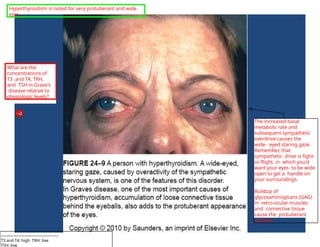
The increased basal
metabolic rate and
subsequent sympathetic
overdrive causes the
wide- eyed staring gaze.
Remember, that
sympathetic drive is fight-
or-flight, in which you'd
want your eyes to be wide
open to get a handle on
your surroundings.
Buildup of
glycosaminoglcans (GAG)
in retro-ocular muscles
and connective tissue
cause the protuberant
eyeballs.
What are the
concentrations of
T3 and T4, TRH,
and TSH in Grave's
disease relative to
physiologic levels?
Hyperthyroidism is noted for very protuberant and wide
eyes.
--------------------------------------------
T3 and T4: high TRH: low
TSH: low
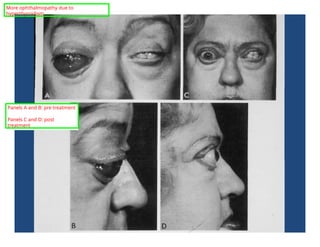
Panels A and B: pre treatment
Panels C and D: post
treatment
More ophthalmopathy due to
hyperthyroidism.
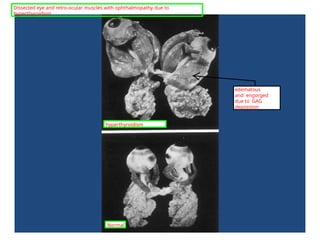
edematous
and engorged
due to GAG
deposition
Dissected eye and retro-ocular muscles with ophthalmopathy due to
hyperthyroidism.
Normal
hyperthyroidism
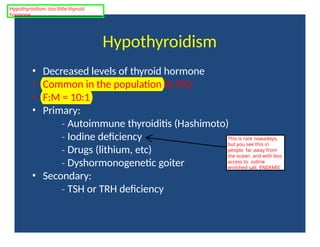
Hypothyroidism
• Decreased levels of thyroid hormone
• Common in the population (0.3%)
• F:M = 10:1
• Primary:
‐ Autoimmune thyroiditis (Hashimoto)
‐ Iodine deficiency
‐ Drugs (lithium, etc)
‐ Dyshormonogenetic goiter
• Secondary:
‐ TSH or TRH deficiency
This is rare nowadays,
but you see this in
people far away from
the ocean and with less
access to iodine
enriched salt. ENDEMIC
Hypothyroidism: too little thyroid
hormone
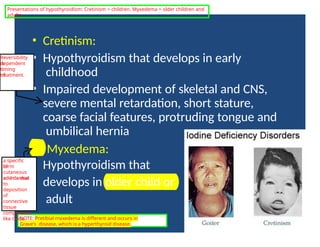
• Cretinism:
• Hypothyroidism that develops in early
childhood
• Impaired development of skeletal and CNS,
severe mental retardation, short stature,
coarse facial features, protruding tongue and
umbilical hernia
• Myxedema:
• Hypothyroidism that
develops in older child or
adult
Reversibility
is
dependent
on
timing
of
treatment.
NOTE: Pretibial myxedema is different and occurs in
Grave's disease, which is a hyperthyroid disease.
Presentations of hypothyroidism: Cretinism = children. Myxedema = older children and
adults
a specific
form
of
cutaneous
and dermal
edema due
to
deposition
of
connective
tissue
components
like GAGs
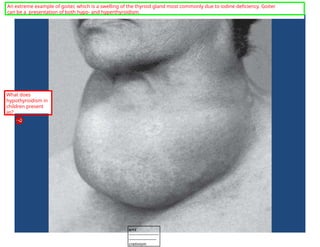
An extreme example of goiter, which is a swelling of the thyroid gland most commonly due to iodine deficiency. Goiter
can be a presentation of both hypo- and hyperthyroidism.
What does
hypothyroidism in
children present
as?
tcl12
-----------------------
---------------------
cretinism
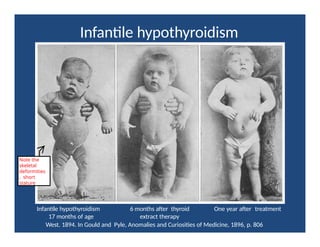
Infantile hypothyroidism
Infantile hypothyroidism 6 months after thyroid One year after treatment
17 months of age extract therapy
West. 1894. In Gould and Pyle, Anomalies and Curiosities of Medicine, 1896, p. 806
Note the
skeletal
deformities
, short
stature
Hashimoto thyroiditis
• Most common cause of hypothyroidism (normal
iodine level areas)
• Autoimmune destruction of gland
• Painless symmetric enlargement of gland
• Older women are more affected (10:1 to 20:1 / F:M)
• Genetic predisposition
• Increased risk for other autoimmune disorders and B‐
cell non Hodgkin
‐ lymphomas
• Pathogenesis: progressive depletion of thyroid
epithelial cells and replacement by mononuclear cells.
helpful
for
diagnosis
because
other kinds
of
thyroiditis
are
painfu
l
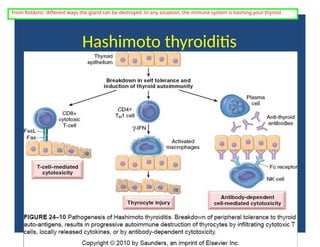
Hashimoto thyroiditis
From Robbins: different ways the gland can be destroyed. In any situation, the immune system is bashing your thyroid
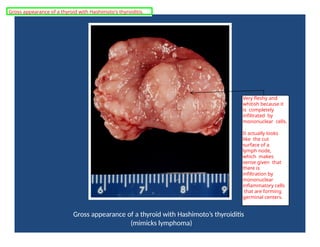
Gross appearance of a thyroid with Hashimoto’s thyroiditis
(mimicks lymphoma)
Very fleshy and
whitish because it
is completely
infiltrated by
mononuclear cells.
It actually looks
like the cut
surface of a
lymph node,
which makes
sense given that
there is
infiltration by
mononuclear
inflammatory cells
that are forming
germinal centers.
Gross appearance of a thyroid with Hashimoto's thyroiditis.
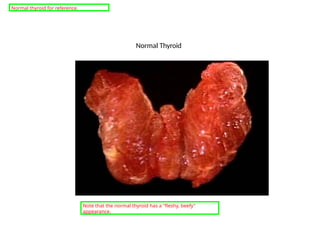
Normal Thyroid
Note that the normal thyroid has a "fleshy, beefy"
appearance.
Normal thyroid for reference.
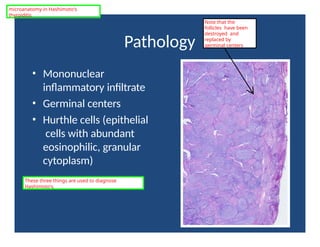
Pathology
• Mononuclear
inflammatory infiltrate
• Germinal centers
• Hurthle cells (epithelial
cells with abundant
eosinophilic, granular
cytoplasm)
microanatomy in Hashimoto's
thyroiditis
Note that the
follicles have been
destroyed and
replaced by
germinal centers
These three things are used to diagnose
Hashimoto's.
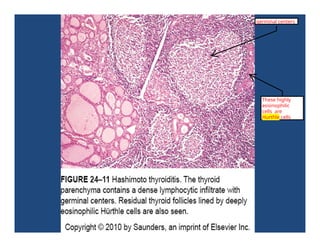
These highly
eosinophilic
cells are
Hurthle cells
germinal centers
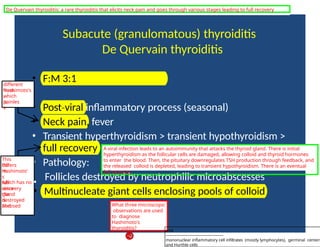
Subacute (granulomatous) thyroiditis
De Quervain thyroiditis
• F:M 3:1
• Post viral
‐ inflammatory process (seasonal)
• Neck pain, fever
• Transient hyperthyroidism > transient hypothyroidism >
full recovery
• Pathology:
Follicles destroyed by neutrophilic microabscesses
• Multinucleate giant cells enclosing pools of colloid
different
from
Hashimoto's
,
which
is
painles
s
A viral infection leads to an autoimmunity that attacks the thyroid gland. There is initial
hyperthyroidism as the follicular cells are damaged, allowing colloid and thyroid hormones
to enter the blood. Then, the pituitary downregulates TSH production through feedback, and
the released colloid is depleted, leading to transient hypothyroidism. There is an eventual
full recovery.
What three microscopic
observations are used
to diagnose
Hashimoto's
thyroiditis?
This
differs
fro
m
Hashimoto'
s
which has no •
full
recovery
since
the
gland
is
destroyed
and
fibrosed
.
De Quervain thyroiditis: a rare thyroiditis that elicits neck pain and goes through various stages leading to full recovery
tcl12
--------------------------------------------
mononuclear inflammatory cell infiltrates (mostly lymphocytes), germinal centers
and Hurthle cells
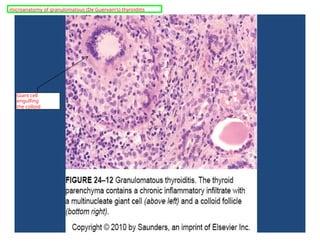
Giant cell
engulfing
the colloid
microanatomy of granulomatous (De Guervain's) thyroiditis
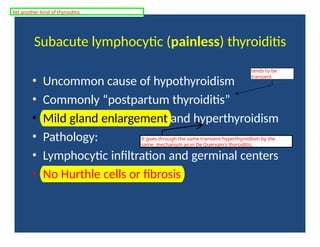
Subacute lymphocytic (painless) thyroiditis
• Uncommon cause of hypothyroidism
• Commonly “postpartum thyroiditis”
• Mild gland enlargement and hyperthyroidism
• Pathology:
• Lymphocytic infiltration and germinal centers
• No Hurthle cells or fibrosis
tends to be
transient
It goes through the same transient hyperthyroidism by the
same mechanism as in De Quervain's thyroiditis.
Yet another kind of thyroiditis
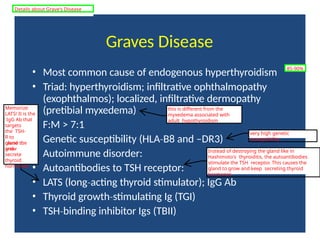
Graves Disease
• Most common cause of endogenous hyperthyroidism
• Triad: hyperthyroidism; infiltrative ophthalmopathy
(exophthalmos); localized, infiltrative dermopathy
(pretibial myxedema)
• F:M > 7:1
• Genetic susceptibility (HLA B8
‐ and –DR3)
• Autoimmune disorder:
• Autoantibodies to TSH receptor:
• LATS (long acting
‐ thyroid stimulator); IgG Ab
• Thyroid growth stimulating
‐ Ig (TGI)
• TSH binding
‐ inhibitor Igs (TBII)
85-90%
this is different from the
myxedema associated with
adult hypothyroidism
very high genetic
susceptibility
Instead of destroying the gland like in
Hashimoto's thyroiditis, the autoantibodies
stimulate the TSH receptor. This causes the
gland to grow and keep secreting thyroid
hormones.
Memorize
LATS! It is the
IgG Ab that
targets
the TSH-
R to
cause the
gland to
grow
and
secrete
thyroid
hormones.
Details about Grave's Disease
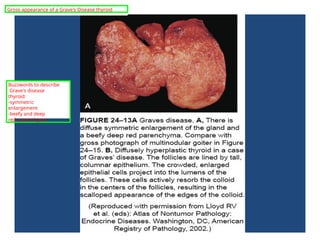
Gross appearance of a Grave's Disease thyroid
Buzzwords to describe
Grave's disease
thyroid:
-symmetric
enlargement
-beefy and deep
red parenchyma
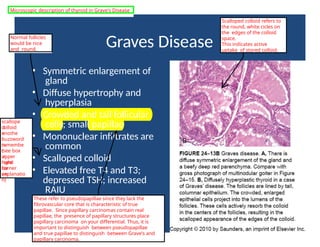
Graves Disease
• Symmetric enlargement of
gland
• Diffuse hypertrophy and
hyperplasia
• Crowded and tall follicular
cells; small papillae
• Mononuclear infiltrates are
common
• Scalloped colloid
• Elevated free T4 and T3;
depressed TSH; increased
RAIU
Normal follicles
would be nice
and round.
These refer to pseudopapillae since they lack the
fibrovascular core that is characteristic of true
papillae. Since papillary carcinomas contain real
papillae, the presence of papillary structures place
papillary carcinoma on your differential. Thus, it is
important to distinguish between pseudopapillae
and true papillae to distinguish between Grave's and
papillary carcinoma.
Scalloped colloid refers to
the round, white cicles on
the edges of the colloid
space.
This indicates active
uptake of stored colloid.
scallope
d
colloid
=
anothe
r
buzzword
to
remembe
r
(see box
in
upper
right
hand
corner
for
an
explanatio
n)
Microscopic description of thyroid in Grave's Disease
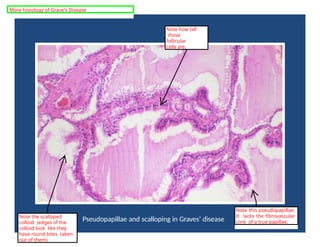
Pseudopapillae and scalloping in Graves’ disease
Note this pseudopapillae.
It lacks the fibrovascular
core of a true papillae.
Note the scalloped
colloid (edges of the
colloid look like they
have round bites taken
out of them)
Note how tall
those
follicular
cells are.
More histology of Grave's Disease
Diffuse and Multinodular Goiters
• Dietary iodine deficiency → impaired
synthesis of thyroid hormone
(goiter)
• Increased TSH → compensatory in gland
functional mass → euthyroid state
• Diffuse nontoxic (simple) goiter
• Multinodular goiter
To compensate for the
impaired thyroid
hormone synthesis, the
pituitary pumps out
more TSH via
increased synthetic
rate. This leads to a
euthyroid state. If this
compensation is in
excess, you end up
with hyperthyroidism
due to
hyperfunctional,
multinodular goiters. If
the compensation is
insufficient, then you
can end up with
hypothyroidism. Thus,
goiter can present as
eu-, hypo-, or
Iodine deficiency is the usual
cause (90% according to
Wiki).
In Grave's disease,
how do you describe
the colloid?
--------------------------------------------
scalloped
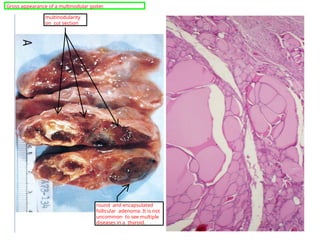
multinodularity
on cut section
round and encapsulated
follicular adenoma. It is not
uncommon to see multiple
diseases in a thyroid.
Gross appearance of a multinodular goiter.
Thyroid neoplasms
• Follicular adenomas (well encapsulated
‐ ; cold
nodules; sometimes “toxic”)
‐ 20% have point mutations in RAS
• Carcinomas:
• 1.5% of all cancers
• Female predominance
• Papillary (75 85%)
‐
• Follicular (10 20%)
‐
• Medullary (5%)
• Anaplastic (<5%)
pretty common
"cold"
means
nonfunction
al
Luckily, the papillary carcinomas have a good
prognosis
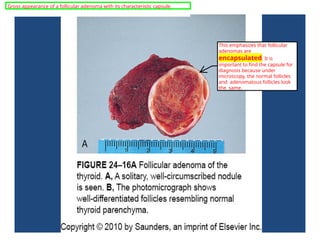
This emphasizes that follicular
adenomas are
encapsulated. It is
important to find the capsule for
diagnosis because under
microscopy, the normal follicles
and adenomatous follicles look
the same.
Gross appearance of a follicular adenoma with its characteristic capsule.
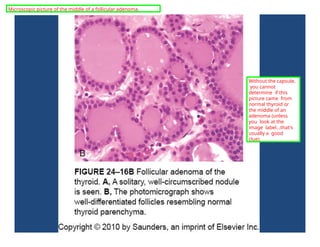
Without the capsule,
you cannot
determine if this
picture came from
normal thyroid or
the middle of an
adenoma (unless
you look at the
image label...that's
usually a good
clue).
Microscopic picture of the middle of a follicular adenoma.
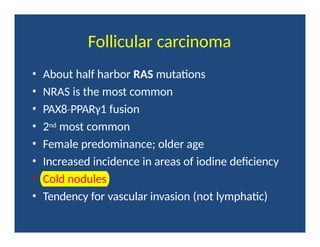
Follicular carcinoma
• About half harbor RAS mutations
• NRAS is the most common
• PAX8 PPARγ1
‐ fusion
• 2nd most common
• Female predominance; older age
• Increased incidence in areas of iodine deficiency
• Cold nodules
• Tendency for vascular invasion (not lymphatic)
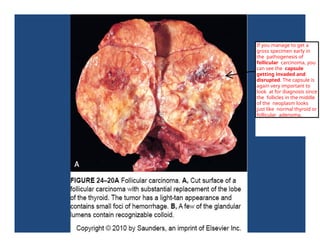
If you manage to get a
gross specimen early in
the pathogenesis of
follicular carcinoma, you
can see the capsule
getting invaded and
disrupted. The capsule is
again very important to
look at for diagnosis since
the follicles in the middle
of the neoplasm looks
just like normal thyroid or
follicular adenoma.
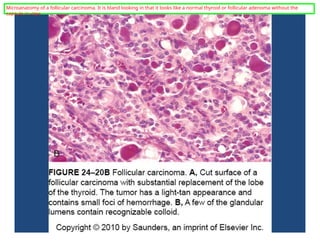
Microanatomy of a follicular carcinoma. It is bland looking in that it looks like a normal thyroid or follicular adenoma without the
capsule in view.
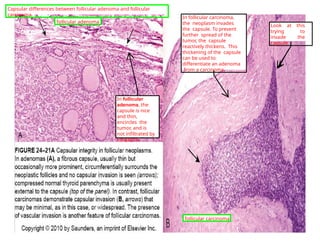
In follicular
adenoma, the
capsule is nice
and thin,
encircles the
tumor, and is
not infiltrated by
neoplasm.
In follicular carcinoma,
the neoplasm invades
the capsule. To prevent
further spread of the
tumor, the capsule
reactively thickens. This
thickening of the capsule
can be used to
differentiate an adenoma
from a carcinoma.
Look at this
trying to
invade the
capsule
follicular adenoma
follicular carcinoma
Capsular differences between follicular adenoma and follicular
carcinoma.
Papillary carcinoma
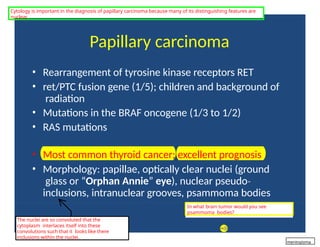
• Rearrangement of tyrosine kinase receptors RET
• ret/PTC fusion gene (1/5); children and background of
radiation
• Mutations in the BRAF oncogene (1/3 to 1/2)
• RAS mutations
• Most common thyroid cancer; excellent prognosis
• Morphology: papillae, optically clear nuclei (ground
glass or “Orphan Annie” eye), nuclear pseudo‐
inclusions, intranuclear grooves, psammoma bodies
The nuclei are so convoluted that the
cytoplasm interlaces itself into these
convolutions such that it looks like there
inclusions within the nuclei.
In what brain tumor would you see
psammoma bodies?
Cytology is important in the diagnosis of papillary carcinoma because many of its distinguishing features are
nuclear.
meningioma
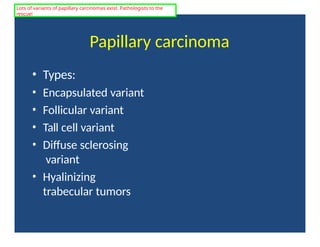
Papillary carcinoma
• Types:
• Encapsulated variant
• Follicular variant
• Tall cell variant
• Diffuse sclerosing
variant
• Hyalinizing
trabecular tumors
Lots of variants of papillary carcinomas exist. Pathologists to the
rescue!
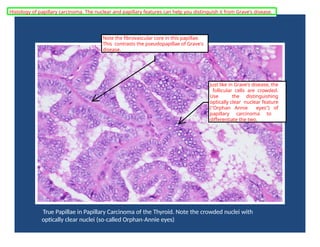
True Papillae in Papillary Carcinoma of the Thyroid. Note the crowded nuclei with
optically clear nuclei (so called
‐ Orphan Annie
‐ eyes)
Note the fibrovascular core in this papillae.
This contrasts the pseudopapillae of Grave's
disease.
Just like in Grave's disease, the
follicular cells are crowded.
Use the distinguishing
optically clear nuclear feature
("Orphan Annie eyes") of
papillary carcinoma to
differentiate the two.
Histology of papillary carcinoma. The nuclear and papillary features can help you distinguish it from Grave's disease.
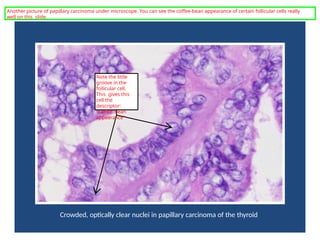
Crowded, optically clear nuclei in papillary carcinoma of the thyroid
Note the little
groove in the
follicular cell.
This gives this
cell the
descriptor:
"coffee bean
appearance"
Another picture of papillary carcinoma under microscope. You can see the coffee-bean appearance of certain follicular cells really
well on this slide.
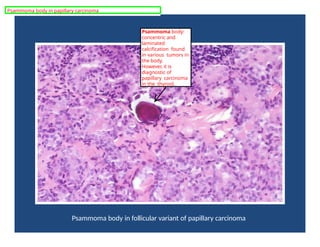
Psammoma body in follicular variant of papillary carcinoma
Psammoma body:
concentric and
laminated
calcification found
in various tumors in
the body.
However, it is
diagnostic of
papillary carcinoma
in the thyroid.
Psammoma body in papillary carcinoma
Medullary Carcinoma
• Parafollicular C cells (neuroendocrine neoplasm)
→ calcitonin secretion
• Sporadic: 80% of cases
• Familial forms: MEN 2
‐ (RET protooncogene point
mutation)
• Solitary of multiple nodules
• Polygonal or spindle shaped
‐ cells
• Nests, trabeculae or follicles
• Amyloid deposits
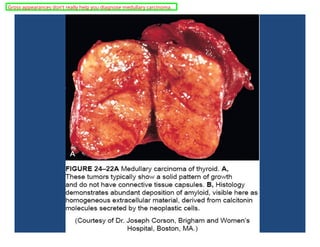
Gross appearances don't really help you diagnose medullary carcinoma.
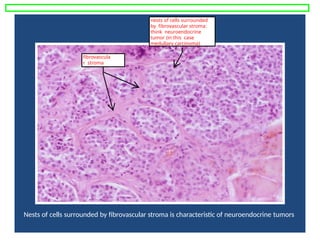
Nests of cells surrounded by fibrovascular stroma is characteristic of neuroendocrine tumors
nests of cells surrounded
by fibrovascular stroma:
think neuroendocrine
tumor (in this case
medullary carcinoma)
fibrovascula
r stroma
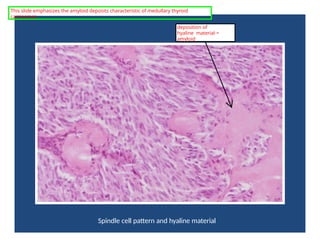
Spindle cell pattern and hyaline material
deposition of
hyaline material =
amyloid
This slide emphasizes the amyloid deposits characteristic of medullary thyroid
carcinomas.
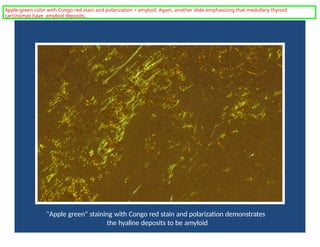
"Apple green" staining with Congo red stain and polarization demonstrates
the hyaline deposits to be amyloid
Apple-green color with Congo red stain and polarization = amyloid. Again, another slide emphasizing that medullary thyroid
carcinomas have amyloid deposits.
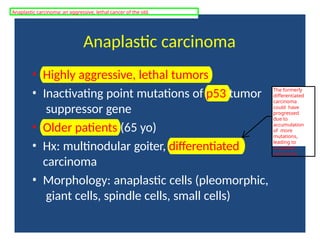
Anaplastic carcinoma
• Highly aggressive, lethal tumors
• Inactivating point mutations of p53 tumor
suppressor gene
• Older patients (65 yo)
• Hx: multinodular goiter, differentiated
carcinoma
• Morphology: anaplastic cells (pleomorphic,
giant cells, spindle cells, small cells)
The formerly
differentiated
carcinoma
could have
progressed
due to
accumulation
of more
mutations,
leading to
anaplastic
carcinoma.
Anaplastic carcinoma: an aggressive, lethal cancer of the old.
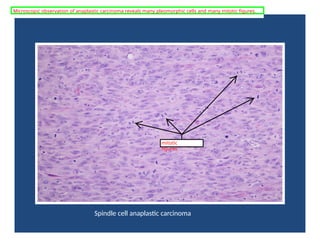
Spindle cell anaplastic carcinoma
Microscopic observation of anaplastic carcinoma reveals many pleomorphic cells and many mitotic figures.
mitotic
figures
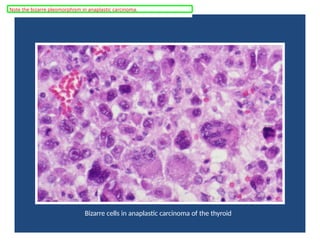
Bizarre cells in anaplastic carcinoma of the thyroid
Note the bizarre pleomorphism in anaplastic carcinoma.
Adrenal medulla
• Distinct from adrenal cortex
• Neural crest (neuroendocrine or chromaffin
cells)
• Sustentacular cells
• Produce catecholamines (epinephrine and
norepinephrine)
• Adrenal medulla: part of paraganglion
system
these cells wrap
around the
chromaffin cells to
provide structural
support
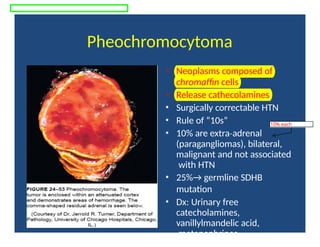
Pheochromocytoma
• Neoplasms composed of
chromaffin cells
• Release cathecolamines
• Surgically correctable HTN
• Rule of “10s”
• 10% are extra adrenal
‐
(paragangliomas), bilateral,
malignant and not associated
with HTN
• 25%→ germline SDHB
mutation
• Dx: Urinary free
catecholamines,
vanillylmandelic acid,
metanephrines
10% each
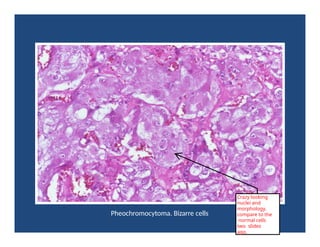
Pheochromocytoma. Bizarre cells
Crazy looking
nuclei and
morphology.
compare to the
normal cells
two slides
ago.
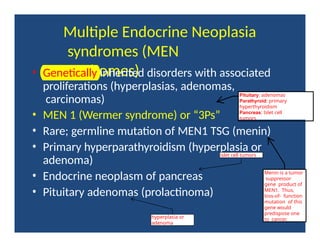
Multiple Endocrine Neoplasia
syndromes (MEN
syndromes)
• Genetically inherited disorders with associated
proliferations (hyperplasias, adenomas,
carcinomas)
• MEN 1 (Wermer syndrome) or “3Ps”
• Rare; germline mutation of MEN1 TSG (menin)
• Primary hyperparathyroidism (hyperplasia or
adenoma)
• Endocrine neoplasm of pancreas
• Pituitary adenomas (prolactinoma)
Pituitary: adenomas
Parathyroid: primary
hyperthyroidism
Pancreas: Islet cell
tumors
islet cell tumors
hyperplasia or
adenoma
Menin is a tumor
suppressor
gene product of
MEN1. Thus,
loss-of- function
mutation of this
gene would
predispose one
to cancer.
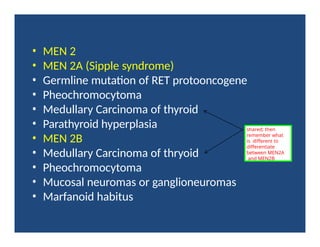
• MEN 2
• MEN 2A (Sipple syndrome)
• Germline mutation of RET protooncogene
• Pheochromocytoma
• Medullary Carcinoma of thyroid
• Parathyroid hyperplasia
• MEN 2B
• Medullary Carcinoma of thryoid
• Pheochromocytoma
• Mucosal neuromas or ganglioneuromas
• Marfanoid habitus
shared; then
remember what
is different to
differentiate
between MEN2A
and MEN2B
Endocrine PATHO disorders symptoms pathophysiology.pptx

  • 1.
  • 2.
    The Endocrine System •Pituitary gland • Thyroid gland • Parathyroid glands • Endocrine Pancreas • Adrenal glands • Pineal gland this lecture's main focus
  • 3.
    Pituitary gland • Twocomponents: • Anterior (adenohypophysis); 80% Pituitary cell type Hormone Cytoplasm characteristic s Associated syndrome Somatotrophs GH acidophilic cells (eosinophilic cytoplasm) Gigantism (children) Acromegaly (adults) Lactotrophs (mammosomatotrophs) Prolactin, GH acidophilic cells Galactorrhea and amenorrhea (females) Sexual dysfunction, infertility (males) Corticotrophs ACTH, MSH, POMC basophilic cells (basophil cytoplasm) Cushing syndrome Nelson syndrome Thyrotrophs TSH pale basophilic cells Hyperthyroidism Gonadotrophs FSH, LH basophilic cells Hypogonadism, mass effects, hypopituitarism The anterior pituitary is the main producer of hormones in the pituitary gland. The table lists the types of cells located in it and their properties. From what germ layer does the adenohypophysis arise? What embryological structure formed from this germ layer is the precursor to the adenohypophysis? Associated syndrome due to hyperproduction of the hormone tcl12 --------------------------------- ----------- ectoderm; Rathke's pouch
  • 4.
    Pituitary gland • Posterior(neurohypophysis); modified glial cells extending from hypothalamus (axon terminals): ‐ Oxytocin (contraction of uterine and lactiferous ducts smooth muscle) ‐ Antidiuretic hormone (ADH) (vasopressin) (water conservation) The posterior pituitary doesn't produce hormones. It stores and secretes oxytocin and ADH, which are produced by the hypothalamus. Note that the hypothalamus, through dopamine, has an inhibitory effect on prolactin secretion from the adenohypophysis. Thus, hyperprolactinemia results from anything that blocks dopamine from inhibiting the adenohypophysis; such things include infarction of the stalk and tumors. From what germ layer does the neurohypophysis arise? --------------------------------- ----------- neuroectoderm (which is ectoderm that was fated to become neuroectoderm due to inhibition of BMP)
  • 5.
    Clinical manifestations ofpituitary gland disease • Hyperpituitarism (excess secretion of trophic hormones) ‐ Adenomas, hyperplasia, carcinoma of anterior pituitary, etc • Hypopituitarism (deficiency of trophic hormones) ‐ Ischemic injury, surgery, radiation, inflammation • Local mass effects ‐ sella turcica abnormalities most common cause of hyperpituitarism is adenoma Pituitary gland diseases of various etiologies can either present as too much trophic hormone (hyper-) or too little (hypo-). What hormones do the neurohypophysis secrete? Where are these hormones produced? tcl12 -------------------------------------------- oxytocin and ADH; the hypothalamus
  • 6.
    Case 1 • 35year old female presents with amenorrhea, galactorrhea, visual complaints and headache. CT scan discloses a 2 cm mass in the anterior pituitary. • What’s the most likely cause? remo Pve it thi us te ix tt- abox rt yo re ave dal t ehe nan oswe mr. Th ae s (tic Pky rn oote le axp cou tn id ns u opon mthe aan )swer. • What could explain the “visual disturbances”? remoMve thais stexst-beox ftofreevecatl thoe afnswaerd. Tehensticokymnoteaexpcouondms upponrthee asnsswienr. g decussating fibers of optic chiasm (bitemporal hemianopsia) tcl12 -------------------------------------------- Remember from the previous slide that a d e n o m a is the most likely cause of hyperpituitarism. Prolactinomas are the most common adenomas of the anterior pituitary. tcl12 -------------------------------------------- In bitemporal hemianopsia, you lose the outer half of your left and right visual fields. In this situation, this is due to compression of the fibers that cross (i.e. decussate) in the optic chiasm. Remember that these fibers project from the nasal retina, which receives information from the peripheral halves of your visual field.
  • 7.
    visual information comingfrom the part of the visual field where this text box is located would not be relayed if a pituitary adenoma impinged upon the decussating fibers of the optic chiasm Notice the proximity of the pituitary to the optic chiasm. It should be no surprise that a pituitary adenoma could push on the optic chiasm and cause bitemporal hemianopsia. The anatomy of the brain shows how mass effect from a pituitary adenoma can cause visual field deficits. the pituitary would be right about there
  • 8.
    Pituitary Adenomas • Mostcommon cause of hyperpituitarism • Functional or non functional ‐ • Affects adults (35 60) ‐ • Microadenomas: < 1 cm • Macroadenomas: > 1 cm • Gross appearance: soft, well circumscribed, ‐ and confined to sella turcica • Microscopically: monotonous population of polygonal cells lacking significant reticulin framework. The non-functional adenomas (i.e. no hypersecretory symptoms like galactorrhea) tend to get caught when big and cause compressive symptoms, like the bitemporal hemianopsia previously described. The functional adenomas tend to get caught when they are small since their hypersecretory symptoms are pronounced even when the tumor is not very large.
  • 9.
    A nonfunctional adenoma,which are characteristically large. This sucker was so big it grew out of the sella tucica; Dr. Veras said that outgrowing the sella turcica is usually not the case.
  • 10.
    This is themicroscopic appearance of a pituitary adenoma. Note that the sheets of cells all look the same (in her words: "monotonous population of polygonal cells).
  • 11.
    Normal pituitary acinarcheckerboard This is normal pituitary tissue noted for its diverse cells, well-demarcated acini, and a robust reticulin network (which would be best seen with a special reticulin fiber stain). Note the diversity of cells in normal pituitary. You have acidophils and basophils of various staining intensity. note the example of a well- demarcated acinus Look at how the acini seem to be separated. A reticulin stain would show a very nice intact reticulin network surrounding each acinus.
  • 12.
    Few words aboutspecific adenomas • Prolactinomas: ‐ Most common pituitary adenoma ‐ Tendency for calcification (“pituitary stone”) • Causes of hyperprolactinemia: • Prolactinoma, pregnancy, lactotroph hyperplasia (inhibition of dopamine secretion) Dopamine(inhibitory) prolactin Tx: dopamine receptor agonists Any time you have inhibition of dopamine secretion (e.g. stalk damage or apoplexy) you get hyperprolactinemia. Simulate dopaminergic inhibition of the adenohypophysis to decrease prolactin secretion. Starting to go into some specific pituitary adenomas. Prolactinoma ----> hyperprolactinemia
  • 13.
    Few words aboutspecific adenomas • Growth hormone cell adenomas: • Second most common • Elevated GH hepatic secretion of insulin like ‐ growth factor (IGF 1) ‐ • Dx: failure to suppress GH after oral glucose dose • Tx: somatostatin analogs CLINICAL PRESENTATION: Adults: acromegaly Children: gigantism Remember that GH is stimulated during hypoglycemia because it causes hepatic gluconeogenesis and reduced hepatic glucose uptake. On the other hand, hyperglycemia suppresses GH secretion because we already have enough blood glucose. In a pituitary adenoma, these feedback loops are lost so an oral glucose challenge would not yield the expected decrease in GH. Somatostatin secreted by the periventricular nucleus inhibits GH secretion and acts as a counter to GHRH Talking about growth hormone cell adenomas
  • 14.
    Acromegaly due togrowth hormone cell adenoma. Before and after.
  • 15.
    Few words aboutspecific adenomas • ACTH cell adenomas: • ACTH cortisol (adrenal) Cushing’s dz • Removal of adrenals in Cushing’s sd large adenomas Nelson syndrome • Pituitary carcinomas: ‐ rare ‐ functional (ACTH or prolactin) Cushing's disease is pituitary in origin, and is defined as excess ACTH secretion from the pituitary. Cushing's syndrome is simply a result of excess glucocorticoid whether it is pituitary or adrenal in origin. Thus, Cushing's disease is one cause of Cushing's syndrome but not vice versa. Nelson syndrome: Removal of the adrenal glands leads to no more cortisol to inhibit ACTH production by negative feedback. Thus, ACTH cell adenomas grow unchecked. This presents as muscle weakness due to excess ACTH and skin hyperpigmentation due to excess melanocyte stimulating hormone, released from the adrenal cortex, hence, CORTisol Talking about ACTH cell adenomas
  • 16.
    Hypopituitarism • Causes: ‐ Tumors,mass lesions, brain injury, subarachnoid hemorrhage ‐ Pituitary surgery or radiation ‐ Pituitary apoplexy (neurosurgical emergency) ‐ Ischemic necrosis of pituitary and Sheehan sd: postpartum necrosis of anterior pituitary ‐ Rathke cleft cyst ‐ Empty sella syndrome (primary vs. secondary) ‐ Hypothalamic lesions ‐ Inflammatory disorders This is usually a postpartum complication after extensive bleeding. It results in necrosis of the anterior pituitary and deficiency of all the hormones secreted by the adenophypophysis What is the most common pituitary adenoma? What is the second most common? These are some causes of hypopituitarism. tcl12 2011-06-07 03:00:02 -------------------------------------------- prolactinoma; growth hormone cell adenoma
  • 17.
    Posterior Pituitary syndromes •Diabetes insipidus: ADH deficiency ‐ Central (hypothalamic) vs. Nephrogenic (renal tubular unresponsiveness to ADH) ‐ Polyuria and increased thirst ‐ Dilute urine with low specific gravity ‐ High serum sodium and osmolality • Syndrome of inappropriate secretion of ADH (SIADH) ‐ Hyponatremia ‐ Small cell carcinoma of lung (ectopic ADH secretion) Nothing wrong with secretion of ADH, the pituitary, or hypothalamus. The kidney is the problem in that it has tubular damage, nonfunctional ADH receptors, or nonfunctional You retain too much water! This essentially dilutes your sodium concentration. What other endocrine paraneoplastic syndrome is associated with small cell carcinoma of the lung? Problems in the posterior pituitary concern ADH (either deficency or excess) Problem with inadequate ADH production or secretion tcl12 -------------------------------------------- Cushing's Syndrome due to ectopic ACTH secretion
  • 18.
    Thyroid gland Will exogenousADH correct the hyponatremia in nephrogenic diabetes mellitus? Blue arrows indicate induction of secretion. Red arrows indicate inhibition of secretion as a means of negative feedback regulation. The thyroid gland is under control of the pituitary and regulatory feedback loops. tcl12 No. The problem isn't in ADH p r o d u c t i o n or secretion. The problem is the kidney's inability to respond to ADH.
  • 19.
    Thyroid gland • Thyroidfollicular cells: convert thyroglobulin into T4 (thyroxine) and triiodothyronine (T3) • Parafollicular cells (C cells): calcitonin (absorption of calcium by skeletal system and prevent resorption of bone by osteoclasts) T3 is much more metabolically active than T4. The main effect of T3 is to raise the basal metabolic rate of the body. Calcitonin conserves calcium in bone. It has the opposite effect of parathyroid hormone. The thyroid's primary metabolically active hormonal secretions are T3 and calcitonin.
  • 20.
    Hyperthyroidism (thyrotoxicosis) • Elevatedfree T3 and T4 • Causes: ‐ Diffuse hyperplasia of thyroid due to Graves (85%) ‐ Hyperfunctional multinodular goiter ‐ Hyperfunctional adenoma Multinodular goiter doesn't always produce hyperthyroidism. It can produce a euthyroid state or hypothyroidism. Grave's disease is an autoimmune disease in which autoantibodies against the thyroid stimulating hormone receptor (TSHR) of the thyroid follicular cells ACTIVATE the receptor. This causes an increase in the production and secretion of T3 and T4 independent of TSH. In fact, the high levels T3 and T4 would downregulate TRH and TSH secretion. Thus, Grave's disease is noted for paradoxically high T3 and T4 with low TRH and TSH. Long story short... Grave's Disease: T3 and T4: high TRH: Low TSH: Low Hyperthyroidism: Too much T3, the metabolically active thyroid hormone.
  • 21.
    Clinical symptoms andlab diagnosis • Increased basal metabolic rate • Warm and flushed skin • Heat intolerance, sweating • Weight loss, increased apetite • Cardiac manifestations (tachycardia, arrhythmias, heart failure) • Ocular changes (thyroid ophthalmopathy) • Decreased TSH; increased free T4 or T3 • Radioiodine uptake (etiology) Most of the subsequent symptoms are due to the increase in basal metabolic rate and adrenergic stimulation (one of the initial treatments for Grave's is beta blockers) highl y characteristi c of Graves due to negative feedback This helps differentiate between factitious hyperthyroidism, which is due to exogenous thyroid hormone medication and does not cause increase uptake of radioiodine for T3 and T4 synthesis, and true hyperthyroidism, which would cause increased uptake of radioiodine due to increase endogenous production of T3 and T4. Hyperthyroidism's symptomology, especially increased basal metabolic rate, is due to elevated T3 and T4.
  • 22.
    The increased basal metabolicrate and subsequent sympathetic overdrive causes the wide- eyed staring gaze. Remember, that sympathetic drive is fight- or-flight, in which you'd want your eyes to be wide open to get a handle on your surroundings. Buildup of glycosaminoglcans (GAG) in retro-ocular muscles and connective tissue cause the protuberant eyeballs. What are the concentrations of T3 and T4, TRH, and TSH in Grave's disease relative to physiologic levels? Hyperthyroidism is noted for very protuberant and wide eyes. -------------------------------------------- T3 and T4: high TRH: low TSH: low
  • 23.
    Panels A andB: pre treatment Panels C and D: post treatment More ophthalmopathy due to hyperthyroidism.
  • 24.
    edematous and engorged due toGAG deposition Dissected eye and retro-ocular muscles with ophthalmopathy due to hyperthyroidism. Normal hyperthyroidism
  • 25.
    Hypothyroidism • Decreased levelsof thyroid hormone • Common in the population (0.3%) • F:M = 10:1 • Primary: ‐ Autoimmune thyroiditis (Hashimoto) ‐ Iodine deficiency ‐ Drugs (lithium, etc) ‐ Dyshormonogenetic goiter • Secondary: ‐ TSH or TRH deficiency This is rare nowadays, but you see this in people far away from the ocean and with less access to iodine enriched salt. ENDEMIC Hypothyroidism: too little thyroid hormone
  • 26.
    • Cretinism: • Hypothyroidismthat develops in early childhood • Impaired development of skeletal and CNS, severe mental retardation, short stature, coarse facial features, protruding tongue and umbilical hernia • Myxedema: • Hypothyroidism that develops in older child or adult Reversibility is dependent on timing of treatment. NOTE: Pretibial myxedema is different and occurs in Grave's disease, which is a hyperthyroid disease. Presentations of hypothyroidism: Cretinism = children. Myxedema = older children and adults a specific form of cutaneous and dermal edema due to deposition of connective tissue components like GAGs
  • 27.
    An extreme exampleof goiter, which is a swelling of the thyroid gland most commonly due to iodine deficiency. Goiter can be a presentation of both hypo- and hyperthyroidism. What does hypothyroidism in children present as? tcl12 ----------------------- --------------------- cretinism
  • 28.
    Infantile hypothyroidism Infantile hypothyroidism6 months after thyroid One year after treatment 17 months of age extract therapy West. 1894. In Gould and Pyle, Anomalies and Curiosities of Medicine, 1896, p. 806 Note the skeletal deformities , short stature
  • 29.
    Hashimoto thyroiditis • Mostcommon cause of hypothyroidism (normal iodine level areas) • Autoimmune destruction of gland • Painless symmetric enlargement of gland • Older women are more affected (10:1 to 20:1 / F:M) • Genetic predisposition • Increased risk for other autoimmune disorders and B‐ cell non Hodgkin ‐ lymphomas • Pathogenesis: progressive depletion of thyroid epithelial cells and replacement by mononuclear cells. helpful for diagnosis because other kinds of thyroiditis are painfu l
  • 30.
    Hashimoto thyroiditis From Robbins:different ways the gland can be destroyed. In any situation, the immune system is bashing your thyroid
  • 31.
    Gross appearance ofa thyroid with Hashimoto’s thyroiditis (mimicks lymphoma) Very fleshy and whitish because it is completely infiltrated by mononuclear cells. It actually looks like the cut surface of a lymph node, which makes sense given that there is infiltration by mononuclear inflammatory cells that are forming germinal centers. Gross appearance of a thyroid with Hashimoto's thyroiditis.
  • 32.
    Normal Thyroid Note thatthe normal thyroid has a "fleshy, beefy" appearance. Normal thyroid for reference.
  • 33.
    Pathology • Mononuclear inflammatory infiltrate •Germinal centers • Hurthle cells (epithelial cells with abundant eosinophilic, granular cytoplasm) microanatomy in Hashimoto's thyroiditis Note that the follicles have been destroyed and replaced by germinal centers These three things are used to diagnose Hashimoto's.
  • 34.
  • 35.
    Subacute (granulomatous) thyroiditis DeQuervain thyroiditis • F:M 3:1 • Post viral ‐ inflammatory process (seasonal) • Neck pain, fever • Transient hyperthyroidism > transient hypothyroidism > full recovery • Pathology: Follicles destroyed by neutrophilic microabscesses • Multinucleate giant cells enclosing pools of colloid different from Hashimoto's , which is painles s A viral infection leads to an autoimmunity that attacks the thyroid gland. There is initial hyperthyroidism as the follicular cells are damaged, allowing colloid and thyroid hormones to enter the blood. Then, the pituitary downregulates TSH production through feedback, and the released colloid is depleted, leading to transient hypothyroidism. There is an eventual full recovery. What three microscopic observations are used to diagnose Hashimoto's thyroiditis? This differs fro m Hashimoto' s which has no • full recovery since the gland is destroyed and fibrosed . De Quervain thyroiditis: a rare thyroiditis that elicits neck pain and goes through various stages leading to full recovery tcl12 -------------------------------------------- mononuclear inflammatory cell infiltrates (mostly lymphocytes), germinal centers and Hurthle cells
  • 36.
    Giant cell engulfing the colloid microanatomyof granulomatous (De Guervain's) thyroiditis
  • 37.
    Subacute lymphocytic (painless)thyroiditis • Uncommon cause of hypothyroidism • Commonly “postpartum thyroiditis” • Mild gland enlargement and hyperthyroidism • Pathology: • Lymphocytic infiltration and germinal centers • No Hurthle cells or fibrosis tends to be transient It goes through the same transient hyperthyroidism by the same mechanism as in De Quervain's thyroiditis. Yet another kind of thyroiditis
  • 38.
    Graves Disease • Mostcommon cause of endogenous hyperthyroidism • Triad: hyperthyroidism; infiltrative ophthalmopathy (exophthalmos); localized, infiltrative dermopathy (pretibial myxedema) • F:M > 7:1 • Genetic susceptibility (HLA B8 ‐ and –DR3) • Autoimmune disorder: • Autoantibodies to TSH receptor: • LATS (long acting ‐ thyroid stimulator); IgG Ab • Thyroid growth stimulating ‐ Ig (TGI) • TSH binding ‐ inhibitor Igs (TBII) 85-90% this is different from the myxedema associated with adult hypothyroidism very high genetic susceptibility Instead of destroying the gland like in Hashimoto's thyroiditis, the autoantibodies stimulate the TSH receptor. This causes the gland to grow and keep secreting thyroid hormones. Memorize LATS! It is the IgG Ab that targets the TSH- R to cause the gland to grow and secrete thyroid hormones. Details about Grave's Disease
  • 39.
    Gross appearance ofa Grave's Disease thyroid Buzzwords to describe Grave's disease thyroid: -symmetric enlargement -beefy and deep red parenchyma
  • 40.
    Graves Disease • Symmetricenlargement of gland • Diffuse hypertrophy and hyperplasia • Crowded and tall follicular cells; small papillae • Mononuclear infiltrates are common • Scalloped colloid • Elevated free T4 and T3; depressed TSH; increased RAIU Normal follicles would be nice and round. These refer to pseudopapillae since they lack the fibrovascular core that is characteristic of true papillae. Since papillary carcinomas contain real papillae, the presence of papillary structures place papillary carcinoma on your differential. Thus, it is important to distinguish between pseudopapillae and true papillae to distinguish between Grave's and papillary carcinoma. Scalloped colloid refers to the round, white cicles on the edges of the colloid space. This indicates active uptake of stored colloid. scallope d colloid = anothe r buzzword to remembe r (see box in upper right hand corner for an explanatio n) Microscopic description of thyroid in Grave's Disease
  • 41.
    Pseudopapillae and scallopingin Graves’ disease Note this pseudopapillae. It lacks the fibrovascular core of a true papillae. Note the scalloped colloid (edges of the colloid look like they have round bites taken out of them) Note how tall those follicular cells are. More histology of Grave's Disease
  • 42.
    Diffuse and MultinodularGoiters • Dietary iodine deficiency → impaired synthesis of thyroid hormone (goiter) • Increased TSH → compensatory in gland functional mass → euthyroid state • Diffuse nontoxic (simple) goiter • Multinodular goiter To compensate for the impaired thyroid hormone synthesis, the pituitary pumps out more TSH via increased synthetic rate. This leads to a euthyroid state. If this compensation is in excess, you end up with hyperthyroidism due to hyperfunctional, multinodular goiters. If the compensation is insufficient, then you can end up with hypothyroidism. Thus, goiter can present as eu-, hypo-, or Iodine deficiency is the usual cause (90% according to Wiki). In Grave's disease, how do you describe the colloid? -------------------------------------------- scalloped
  • 43.
    multinodularity on cut section roundand encapsulated follicular adenoma. It is not uncommon to see multiple diseases in a thyroid. Gross appearance of a multinodular goiter.
  • 44.
    Thyroid neoplasms • Follicularadenomas (well encapsulated ‐ ; cold nodules; sometimes “toxic”) ‐ 20% have point mutations in RAS • Carcinomas: • 1.5% of all cancers • Female predominance • Papillary (75 85%) ‐ • Follicular (10 20%) ‐ • Medullary (5%) • Anaplastic (<5%) pretty common "cold" means nonfunction al Luckily, the papillary carcinomas have a good prognosis
  • 45.
    This emphasizes thatfollicular adenomas are encapsulated. It is important to find the capsule for diagnosis because under microscopy, the normal follicles and adenomatous follicles look the same. Gross appearance of a follicular adenoma with its characteristic capsule.
  • 46.
    Without the capsule, youcannot determine if this picture came from normal thyroid or the middle of an adenoma (unless you look at the image label...that's usually a good clue). Microscopic picture of the middle of a follicular adenoma.
  • 47.
    Follicular carcinoma • Abouthalf harbor RAS mutations • NRAS is the most common • PAX8 PPARγ1 ‐ fusion • 2nd most common • Female predominance; older age • Increased incidence in areas of iodine deficiency • Cold nodules • Tendency for vascular invasion (not lymphatic)
  • 48.
    If you manageto get a gross specimen early in the pathogenesis of follicular carcinoma, you can see the capsule getting invaded and disrupted. The capsule is again very important to look at for diagnosis since the follicles in the middle of the neoplasm looks just like normal thyroid or follicular adenoma.
  • 49.
    Microanatomy of afollicular carcinoma. It is bland looking in that it looks like a normal thyroid or follicular adenoma without the capsule in view.
  • 50.
    In follicular adenoma, the capsuleis nice and thin, encircles the tumor, and is not infiltrated by neoplasm. In follicular carcinoma, the neoplasm invades the capsule. To prevent further spread of the tumor, the capsule reactively thickens. This thickening of the capsule can be used to differentiate an adenoma from a carcinoma. Look at this trying to invade the capsule follicular adenoma follicular carcinoma Capsular differences between follicular adenoma and follicular carcinoma.
  • 51.
    Papillary carcinoma • Rearrangementof tyrosine kinase receptors RET • ret/PTC fusion gene (1/5); children and background of radiation • Mutations in the BRAF oncogene (1/3 to 1/2) • RAS mutations • Most common thyroid cancer; excellent prognosis • Morphology: papillae, optically clear nuclei (ground glass or “Orphan Annie” eye), nuclear pseudo‐ inclusions, intranuclear grooves, psammoma bodies The nuclei are so convoluted that the cytoplasm interlaces itself into these convolutions such that it looks like there inclusions within the nuclei. In what brain tumor would you see psammoma bodies? Cytology is important in the diagnosis of papillary carcinoma because many of its distinguishing features are nuclear. meningioma
  • 52.
    Papillary carcinoma • Types: •Encapsulated variant • Follicular variant • Tall cell variant • Diffuse sclerosing variant • Hyalinizing trabecular tumors Lots of variants of papillary carcinomas exist. Pathologists to the rescue!
  • 53.
    True Papillae inPapillary Carcinoma of the Thyroid. Note the crowded nuclei with optically clear nuclei (so called ‐ Orphan Annie ‐ eyes) Note the fibrovascular core in this papillae. This contrasts the pseudopapillae of Grave's disease. Just like in Grave's disease, the follicular cells are crowded. Use the distinguishing optically clear nuclear feature ("Orphan Annie eyes") of papillary carcinoma to differentiate the two. Histology of papillary carcinoma. The nuclear and papillary features can help you distinguish it from Grave's disease.
  • 54.
    Crowded, optically clearnuclei in papillary carcinoma of the thyroid Note the little groove in the follicular cell. This gives this cell the descriptor: "coffee bean appearance" Another picture of papillary carcinoma under microscope. You can see the coffee-bean appearance of certain follicular cells really well on this slide.
  • 55.
    Psammoma body infollicular variant of papillary carcinoma Psammoma body: concentric and laminated calcification found in various tumors in the body. However, it is diagnostic of papillary carcinoma in the thyroid. Psammoma body in papillary carcinoma
  • 56.
    Medullary Carcinoma • ParafollicularC cells (neuroendocrine neoplasm) → calcitonin secretion • Sporadic: 80% of cases • Familial forms: MEN 2 ‐ (RET protooncogene point mutation) • Solitary of multiple nodules • Polygonal or spindle shaped ‐ cells • Nests, trabeculae or follicles • Amyloid deposits
  • 57.
    Gross appearances don'treally help you diagnose medullary carcinoma.
  • 58.
    Nests of cellssurrounded by fibrovascular stroma is characteristic of neuroendocrine tumors nests of cells surrounded by fibrovascular stroma: think neuroendocrine tumor (in this case medullary carcinoma) fibrovascula r stroma
  • 59.
    Spindle cell patternand hyaline material deposition of hyaline material = amyloid This slide emphasizes the amyloid deposits characteristic of medullary thyroid carcinomas.
  • 60.
    "Apple green" stainingwith Congo red stain and polarization demonstrates the hyaline deposits to be amyloid Apple-green color with Congo red stain and polarization = amyloid. Again, another slide emphasizing that medullary thyroid carcinomas have amyloid deposits.
  • 61.
    Anaplastic carcinoma • Highlyaggressive, lethal tumors • Inactivating point mutations of p53 tumor suppressor gene • Older patients (65 yo) • Hx: multinodular goiter, differentiated carcinoma • Morphology: anaplastic cells (pleomorphic, giant cells, spindle cells, small cells) The formerly differentiated carcinoma could have progressed due to accumulation of more mutations, leading to anaplastic carcinoma. Anaplastic carcinoma: an aggressive, lethal cancer of the old.
  • 62.
    Spindle cell anaplasticcarcinoma Microscopic observation of anaplastic carcinoma reveals many pleomorphic cells and many mitotic figures. mitotic figures
  • 63.
    Bizarre cells inanaplastic carcinoma of the thyroid Note the bizarre pleomorphism in anaplastic carcinoma.
  • 64.
    Adrenal medulla • Distinctfrom adrenal cortex • Neural crest (neuroendocrine or chromaffin cells) • Sustentacular cells • Produce catecholamines (epinephrine and norepinephrine) • Adrenal medulla: part of paraganglion system these cells wrap around the chromaffin cells to provide structural support
  • 65.
    Pheochromocytoma • Neoplasms composedof chromaffin cells • Release cathecolamines • Surgically correctable HTN • Rule of “10s” • 10% are extra adrenal ‐ (paragangliomas), bilateral, malignant and not associated with HTN • 25%→ germline SDHB mutation • Dx: Urinary free catecholamines, vanillylmandelic acid, metanephrines 10% each
  • 66.
    Pheochromocytoma. Bizarre cells Crazylooking nuclei and morphology. compare to the normal cells two slides ago.
  • 67.
    Multiple Endocrine Neoplasia syndromes(MEN syndromes) • Genetically inherited disorders with associated proliferations (hyperplasias, adenomas, carcinomas) • MEN 1 (Wermer syndrome) or “3Ps” • Rare; germline mutation of MEN1 TSG (menin) • Primary hyperparathyroidism (hyperplasia or adenoma) • Endocrine neoplasm of pancreas • Pituitary adenomas (prolactinoma) Pituitary: adenomas Parathyroid: primary hyperthyroidism Pancreas: Islet cell tumors islet cell tumors hyperplasia or adenoma Menin is a tumor suppressor gene product of MEN1. Thus, loss-of- function mutation of this gene would predispose one to cancer.
  • 68.
    • MEN 2 •MEN 2A (Sipple syndrome) • Germline mutation of RET protooncogene • Pheochromocytoma • Medullary Carcinoma of thyroid • Parathyroid hyperplasia • MEN 2B • Medullary Carcinoma of thryoid • Pheochromocytoma • Mucosal neuromas or ganglioneuromas • Marfanoid habitus shared; then remember what is different to differentiate between MEN2A and MEN2B