.
2
Speech Emotion RecognitionUsing Deep Learning
Enrollment number:106
Team Members:
2103A52029 – P . Tejaswi
2103A52006 – B . Harini Sri
2103A52007 – B . Anvitha
2103A52012 – D . Bala Varshitha
2103A52023 – M . Vyshnavi
Supervised by:
Dr . P. Chandra Shaker Reddy
Professor Dept. of CS&AI
SR University
3.
.
CONTENTS
S.NO TITLE PG.NO
1.Abstract 04
2. Motivation 05
3. Objectives 06
4. Introduction 07
5. Literature Survey 08
6. Limitations 18
7. Problem statement 20
8. Architectural Design 21
9. Process Flow 22
10. Implementation and results 24
11. Conclusion and future scope 28
3
4.
.
ABSTRACT
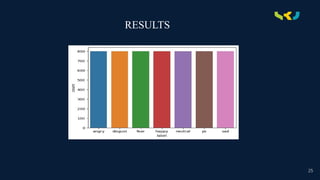
This research presentsa unique and meticulously organized dataset comprising 2800 audio recordings in WAV format,
featuring two actresses aged 26 and 64 years. The dataset is structured to investigate the expression of seven distinct
emotions (anger, disgust, fear, happiness, pleasant surprise, sadness, and neutral) across 200 target words. The audio
files, embedded within their respective emotion and actress folders, provide a rich resource for training and evaluating
models in Speech Emotion Recognition (SER). Researchers and practitioners in the fields of artificial intelligence,
affective computing, and emotion analysis can leverage this dataset for developing and testing robust SER systems.The
utilization of the WAV format ensures high-quality audio data, allowing for precise analysis of subtle acoustic features
related to emotional expression.
4
5.
MOTIVATION
Speech emotion recognitionhas several applications in modern technology.
• Human-Computer Interaction (HCI): Computers can understand not just words, but also emotions behind
them, leading to more effective interactions.
• Internet of Things (IoT): Voice assistants like Alexa rely on understanding emotions in voice commands for
better user experience. Studies predict 12% of all IoT applications will be voice-controlled by 2022.
• AI and NLP applications: Recognizing emotions in voice commands is crucial for complex systems like
self-driving cars . In emergencies, user emotions can help activate safety features even if commands are
unclear.
• Call centers: Automated calls can be efficiently routed to human agents based on the caller's emotional state.
5
6.
OBJECTIVES
● In aSpeech Emotion Recognition project leveraging deep learning with LSTM models, several objectives are
paramount. Firstly, the system should accurately classify the emotional content of spoken utterances into
predefined categories such as happiness, sadness, anger, etc. Secondly, it should exhibit robustness across
various speakers, languages, and recording conditions to ensure its practical applicability in real-world
scenarios.
● LSTM models require substantial computational resources for training and inference, which can be a barrier
for real-time applications. Additionally, the model should strive for efficiency in both computational
resources and inference time, enabling its deployment in resource-constrained environments like mobile
devices or embedded systems.
● LSTMs, while effective at capturing temporal dependencies in speech, can struggle with complex, nonlinear
emotional nuances that are embedded in the prosodic features like tone, pitch, and rhythm. This results in
challenges with generalizing across different speakers, accents, and languages due to variations in speech
patterns and also scarcity and imbalance of labeled emotion datasets.
6
7.
INTRODUCTION
Speech Emotion Recognitionwith Deep Learning: Key Points
• Human Voice Reveals Emotions: We convey emotions not just through words, but also through variations in
tone, pitch, and rhythm .
• Speech Emotion Recognition (SER): This technology aims to decode these hidden emotional messages in
spoken language.
• Deep Learning Revolutionizes SER: Deep learning excels at analyzing vast amounts of data, enabling it to
capture complex emotional patterns in speech .
• Beyond Traditional Methods: Deep learning goes beyond limitations of traditional methods, focusing on
intricate nuances of human expression.
• Wide-ranging Applications: Speech emotion recognition with deep learning has potential applications in
various fields; Healthcare & Education: Personalized responses based on emotional state (calming voice for
stress, enthusiastic tone for excitement) and Customer Service: Bots that empathize with customer
frustrations and offer solutions.
7
8.
.
LITERATURE SURVEY
1.Comparison ofMultiple Classifiers for Audio-Visual Speaker Recognition System.
This paper was published by Prachi Shrivastava in the year 2023. In this paper, the focus is on Audio-Visual
Automatic Speaker Recognition (AV-ASR), an emerging field aimed at enhancing person authentication by
integrating both audio and visual modalities. Recognizing the susceptibility of solely relying on audio or video
features to interference, the study introduces a novel set of hybrid visual features, comprising texture-based,
appearance-based, and shape-based features. Appearance-based features utilize Discrete Cosine Transform (DCT),
while shape-based features employ Active Appearance Model (AAM). Through experimental classification
approaches, the proposed AV-ASR model achieves an impressive recognition accuracy of 80.0%, surpassing results
obtained by various classifiers. This highlights the effectiveness of integrating hybrid visual features in AV-ASR
systems for improved accuracy in person authentication tasks.
8
9.
.
2. Speech EmotionRecognition through Hybrid Features and Convolutional Neural Network
This paper was published by Alluhaidan in the year 2023.This paper focuses on enhancing Speech Emotion
Recognition (SER) systems by combining Mel frequency cepstral coefficients (MFCCs) with time-domain
features (MFCCT) and leveraging convolutional neural networks (CNNs). Traditional SER approaches often rely
solely on MFCCs, but this study proposes that incorporating time-domain features alongside MFCCs can improve
emotion representation accuracy. By feeding the hybrid MFCCT features into a CNN model, the researchers
achieved remarkable results, outperforming both MFCCs and time-domain features on multiple datasets, including
Emo-DB, SAVEE, and RAVDESS, with accuracies of 97%, 93%, and 92% respectively. Moreover, the CNN
model exhibited superior performance compared to conventional machine learning classifiers commonly used in
SER. The findings suggest that the proposed hybrid features, combined with CNN architecture, hold significant
promise for enhancing emotion recognition accuracy across diverse SER datasets, showcasing their potential for
widespread adoption in various applications across psychology, medicine, education, and entertainment.
9
10.
.
3. Automatic SpeechEmotion Recognition Using Machine Learning.
This paper was published by Leila Kerkeni, in the year 2019. This paper presents a comprehensive investigation
into Speech Emotion Recognition (SER) systems, focusing on theoretical definitions, affective state
categorization, and emotion expression modalities. The study develops an SER system utilizing various classifiers
and feature extraction methods, particularly Mel-frequency cepstrum coefficients (MFCC) and modulation
spectral (MS) features. Feature selection techniques are employed to identify the most relevant feature subset, and
several machine learning paradigms, including recurrent neural networks (RNN), multivariate linear regression
(MLR), and support vector machines (SVM), are utilized for emotion classification. Evaluations conducted on
Berlin and Spanish databases reveal significant insights, with all classifiers achieving an 83% accuracy for the
Berlin dataset when speaker normalization and feature selection are applied. Notably, the RNN classifier achieves
the highest accuracy of 94% for the Spanish dataset without speaker normalization and with feature selection.
These findings underscore the effectiveness of different classifiers and feature extraction methods in SER, offering
valuable insights into optimizing emotion recognition systems for diverse linguistic contexts and datasets.
10
11.
.
4. Automatic speechemotion detection using hybrid of gray wolf optimizer and naïve Bayes.
This paper was published by Gomathi in the year 2023.The paper provides the past decade, automatic speech
emotion detection has presented a significant challenge in the realm of human-computer interaction. This study
addresses this challenge by focusing on detecting seven primary emotions – neutrality, happiness, sadness, fear,
surprise, disgust, and anger – through speech signals. Unlike previous approaches that utilized separate databases,
this study merges the SAVEE and TESS datasets to create a comprehensive database for emotion identification.
The main objective is to characterize emotions using this robust dataset. To achieve this, the study proposes a
novel machine learning algorithm combining Mel-frequency cepstral coefficients for feature extraction with a
hybrid of gray wolf optimizer and naïve Bayes for classification. The results demonstrate that the proposed
classification algorithm outperforms existing machine learning methods, showcasing its potential for enhancing
speech emotion recognition accuracy.
11
12.
.
5. A ComprehensiveSurvey of Convolutions in Deep Learning: Applications, Challenges, and Future Trends
This was published by Mohsen Ansari in the year 2024. The paper focuses ,in today's digital landscape,
Convolutional Neural Networks (CNNs) stand at the forefront of Deep Learning (DL), serving as invaluable tools
for a wide array of computer vision tasks. This survey paper delves into the diverse spectrum of CNN
architectures, ranging from 1D to 3D CNNs, as well as specialized variants like dilated, grouped, and attention-
based convolutions. By providing a comparative analysis of these CNN types, the paper elucidates their unique
structures, strengths, weaknesses, and practical applications across different domains. Furthermore, it explores
emerging research fields such as 6D vision, generative models, and meta-learning, shedding light on the evolving
landscape of CNN research and development. Ultimately, this comprehensive examination aims to offer insights
into the performance, limitations, and future trends of CNN architectures, guiding researchers and practitioners
towards novel advancements in the field of computer vision.
12
13.
.
6. Design ofEfficient Speech Emotion Recognition Based on Multi Task Learning
This paper was published by Z.Kexin in the year 2023. This paper addresses the challenges of reduced efficiency
in speech emotion recognition (SER) caused by noise interference and gender differences. To tackle this issue, the
authors propose two multi-task learning models based on adversarial multi-task learning (ASP-MTL). The first
model treats emotion recognition as the main task and noise recognition as the auxiliary task, removing identified
noise to enhance recognition accuracy. Subsequently, the second model focuses on emotion recognition as the
main task and gender classification as the auxiliary task. By leveraging shared information and identifying
specific tasks, these models improve recognition performance. The study utilizes the Audio/Visual Emotion
Challenge (AVEC) database and AFEW6.0 database recorded in real-world settings, addressing data imbalance
through preprocessing. Results demonstrate a significant increase of approximately 10% in accuracy and F1 score
compared to recent works, showcasing notable progress in SER achieved by this approach.
13
14.
.
7. Speech emotionrecognition: Emotional models, databases, features, preprocessing methods, supporting
modalities, and classifiers.
This paper was published by Mehmet Berkehan in the year 2020.This paper underscores the significance of
speech emotion recognition (SER) systems in extending human-like communication to computer applications.
Despite its longstanding history spanning over two decades, SER has experienced a resurgence of interest due to
recent advancements in computing and technology. The authors highlight the necessity for an updated
understanding of SER methodologies and techniques, given the evolving landscape of research in this field.
Through a detailed survey of current literature, the paper delineates distinct areas of SER, offering insights into
ongoing research endeavors and listing current challenges. By synthesizing a comprehensive overview, the paper
serves as a valuable resource for researchers and practitioners seeking to navigate the complexities of SER and
contribute to its continued advancement.
14
15.
.
8. Speech EmotionRecognition and Deep Learning: An Extensive Validation Using Convolutional Neural
Networks.
The paper was published by Francesco Ardan Dal Rí in the year 2023. This paper delves into the realm of Speech
Emotion Recognition (SER) leveraging the advancements of deep learning, particularly focusing on
Convolutional Neural Network (CNN) models enhanced with Convolutional Attention Blocks. Addressing the
challenges within SER, such as the lack of standardized practices and high-quality datasets, the study implements
and evaluates the proposed model across four prominent English datasets: RAVDESS, TESS, CREMA-D, and
IEMOCAP. Through rigorous experimentation, the pipeline achieves notable accuracies across individual datasets,
with means ranging from 63% to 100%. Furthermore, extensive cross-validation elucidates the generalization
capabilities of the extracted features across emotional classes, shedding light on the potential applicability of the
model in real-world scenarios.
15
16.
.
9. An EngineeringView on Emotions and Speech: From Analysis and Predictive Models to Responsible
Human-Centered Applications.
The paper was published by Chi-Chun Lee, in the year 2023. This paper highlights the burgeoning interest in
Speech Emotion Recognition (SER) technologies driven by the proliferation of Internet-of-Things (IoT) and
smartphone devices. However, it underscores the myriad challenges hindering widespread adoption, spanning
conceptual, technical, and societal domains. These challenges are particularly pronounced in "in-the-wild"
scenarios due to the complex nature of human emotion, labeling difficulties, and contextual variability. Moreover,
societal and ethical concerns regarding privacy, fairness, and explainability pose additional barriers to acceptance.
The article provides a historical perspective on affective speech processing, surveys current state-of-the-art SER
approaches, and advocates for algorithmic solutions that prioritize accessibility, maximized benefits, and
responsible human-centered computing applications.
16
17.
.
10. An AdversarialTraining Based Speech Emotion Classifier With Isolated Gaussian Regularization
This paper was proposed by Changzeng Fu in the year 2023. This paper addresses the challenge of speaker
individual bias in Speech Emotion Recognition (SER), which can lead to irregular clusters of emotion-related
features and overfitting of in-domain datasets. To mitigate this issue, the authors propose an adversarial training-
based classifier that regularizes the distribution of latent representations, smoothing boundaries among different
emotion categories. This regularization involves mapping representations into Gaussian distributions in an
unsupervised manner, with a novel adoption of a mixture of isolated Gaussian distributions. Additionally, the use
of multi-instance learning aids in capturing the most salient parts of emotion presentation by segmenting speech
into bags of segments. The model's performance is evaluated on the IEMOCAP and MELD datasets with in-
corpus speaker-independent settings, and cross-corpus settings to simulate speaker-independent and channel-
variant scenarios. Experimental results demonstrate the competitiveness of the proposed model against baseline
models, both within-corpus and across-corpus validations.
17
18.
.
LIMITATIONS
● Limited comparisonof feature extraction techniques: While the study compares Mel-Frequency Cepstral
Coefficients (MFCC) and Linear Predictive Coding (LPC) for feature selection, it may overlook other
potentially effective feature extraction methods. Exploring a wider range of techniques could provide a more
comprehensive understanding of their efficacy in speech emotion recognition.
● Lack of diversity in datasets: The study primarily focuses on datasets recorded in noiseless environments by
professional actors. This limited scope may not fully capture the variability present in real-world scenarios,
where speech samples can exhibit diverse acoustic characteristics due to factors like environmental noise,
speaker variability, and emotional intensity.
● Potential overfitting: The study may be susceptible to overfitting, particularly if the model is trained and
evaluated on the same dataset without sufficient cross-validation or testing on independent datasets.
Overfitting could lead to inflated performance metrics and limited generalizability of the results to unseen
data.
18
19.
.
● Lack ofreal-world application validation: While the study proposes implementing the system in a voice mail
application to manage calls based on emotions, it does not provide empirical validation or user feedback from
real-world deployments. Validation in practical settings is essential to assess the system's usability,
effectiveness, and user acceptance.
● Computational Complexity: The proposed methods, such as Hidden Markov Models (HMM) and Support
Vector Machines (SVM), may involve significant computational overhead, particularly when dealing with
large datasets or real-time applications. Scalability and efficiency considerations are essential for deploying
the system in resource-constrained environments.
● Feature Generalization: The paper employs an extensive set of 39 candidate instantaneous features for
emotion recognition. While this approach may yield high accuracy on the DES database, the generalizability
of these features to other datasets or real-world applications remains uncertain. Additional research is needed
to validate the effectiveness of the feature set across different contexts
19
20.
.
PROBLEM STATEMENT
Speech emotionrecognition (SER) deciphers emotional cues in spoken language, revolutionizing human-
computer
interaction. Deep learning, adept at extracting intricate patterns, empowers SER by capturing nuances in tone and
pitch from raw audio data. This advancement transcends traditional methods, offering diverse applications in
healthcare, education, customer service, and entertainment.
20
PROCESS FLOW
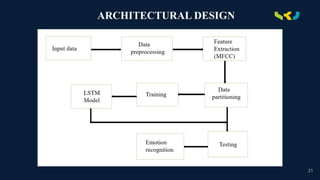
Input data:The input speech refers to the audio data received by the system for processing. This could be any
spoken words, phrases, or sentences captured by a microphone or any audio input device.
Data preprocessing : Data preprocessing involves cleaning, transforming, and organizing raw data to prepare it
for analysis or modeling. This includes handling missing values, scaling numerical features, encoding categorical
variables, and detecting outliers. Effective preprocessing can improve model performance and accuracy by
ensuring that the data is suitable for the chosen machine learning algorithm.
Feature Extraction : Feature extraction involves identifying and extracting relevant attributes or characteristics
from the input speech data. Common features include spectral features like MFCCs (Mel-Frequency Cepstral
Coefficients), and other acoustic properties that are essential for speech recognition and analysis.
Data partitioning : Data partitioning involves dividing a dataset into subsets for training, validation, and testing
purposes. Typically, the majority of the data is used for training the model, a smaller portion for validation to tune
hyperparameters, and a separate portion for testing to evaluate model performance on unseen data. Proper data
partitioning helps assess model generalization and prevents overfitting.
22
23.
.
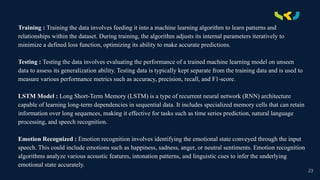
Training : Trainingthe data involves feeding it into a machine learning algorithm to learn patterns and
relationships within the dataset. During training, the algorithm adjusts its internal parameters iteratively to
minimize a defined loss function, optimizing its ability to make accurate predictions.
Testing : Testing the data involves evaluating the performance of a trained machine learning model on unseen
data to assess its generalization ability. Testing data is typically kept separate from the training data and is used to
measure various performance metrics such as accuracy, precision, recall, and F1-score.
LSTM Model : Long Short-Term Memory (LSTM) is a type of recurrent neural network (RNN) architecture
capable of learning long-term dependencies in sequential data. It includes specialized memory cells that can retain
information over long sequences, making it effective for tasks such as time series prediction, natural language
processing, and speech recognition.
Emotion Recognized : Emotion recognition involves identifying the emotional state conveyed through the input
speech. This could include emotions such as happiness, sadness, anger, or neutral sentiments. Emotion recognition
algorithms analyze various acoustic features, intonation patterns, and linguistic cues to infer the underlying
emotional state accurately.
23
24.
IMPLEMENTATION
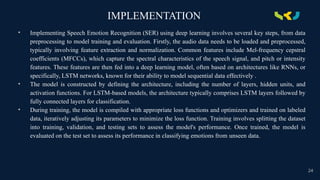
• Implementing SpeechEmotion Recognition (SER) using deep learning involves several key steps, from data
preprocessing to model training and evaluation. Firstly, the audio data needs to be loaded and preprocessed,
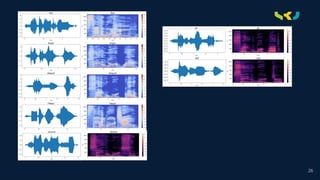
typically involving feature extraction and normalization. Common features include Mel-frequency cepstral
coefficients (MFCCs), which capture the spectral characteristics of the speech signal, and pitch or intensity
features. These features are then fed into a deep learning model, often based on architectures like RNNs, or
specifically, LSTM networks, known for their ability to model sequential data effectively .
• The model is constructed by defining the architecture, including the number of layers, hidden units, and
activation functions. For LSTM-based models, the architecture typically comprises LSTM layers followed by
fully connected layers for classification.
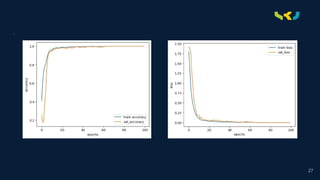
• During training, the model is compiled with appropriate loss functions and optimizers and trained on labeled
data, iteratively adjusting its parameters to minimize the loss function. Training involves splitting the dataset
into training, validation, and testing sets to assess the model's performance. Once trained, the model is
evaluated on the test set to assess its performance in classifying emotions from unseen data.
24
CONCLUSION
In conclusion, speechemotion recognition represents a significant advancement in human-computer interaction
and emotional intelligence applications. Through the extraction of acoustic features and the utilization of
sophisticated machine learning or deep learning models, we can effectively classify and understand the emotional
content conveyed in speech signals. As technology continues to evolve, the integration of speech emotion
recognition systems into various domains, including virtual assistants, healthcare, and entertainment, holds
immense potential to enhance user experiences and enable more empathetic interactions. However, ongoing
research and development are necessary to improve the accuracy, robustness, and real-time capabilities of these
systems, ultimately bringing us closer to a future where machines can comprehend and respond to human
emotions with nuance and sensitivity.
28
29.
FUTURE SCOPE
The futurescope for speech emotion recognition, considering its current limitations, offers several avenues for
improvement and innovation. Addressing the challenge of cross-cultural and multilingual adaptation will be
crucial to developing more inclusive and globally applicable emotion recognition systems. Additionally,
advancements in real-time processing capabilities and the integration of contextual understanding can enhance the
responsiveness and accuracy of these systems, enabling more natural and nuanced interactions. Moreover,
research efforts focused on mitigating bias and ensuring fairness in emotion recognition algorithms will be
essential to building trustworthy and ethically sound systems. By overcoming these limitations, the future of
speech emotion recognition holds the potential to revolutionize human-computer interaction, ushering in an era of
more empathetic and personalized technology experiences.
29