S.S JAIN SUBODH MANAGEMENT
INSTITUTE, JAIPUR
Presentation
On
Emerging Technologies in Banking Sector
Submitted by: Submitted to:
Parul Kaushik Mrs. Kaneenika Jain
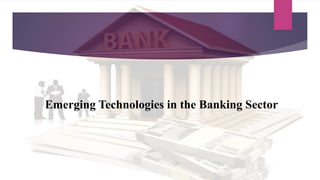
Emerging Technologies in the Banking Sector
Introduction
 Welcome to the presentation on "Emerging Technologies in the
Banking Sector."
 The banking industry is undergoing a transformative phase due to
rapid technological advancements.
 This presentation explores key emerging technologies reshaping the
banking landscape.
Blockchain and Cryptocurrencies
 Blockchain technology offers secure and transparent transactions.
 Cryptocurrencies like Bitcoin and Ethereum are gaining traction as
digital assets.
 Benefits: Improved security, reduced fraud, and decentralized
financial systems.
Artificial Intelligence (AI) and Machine
Learning (ML)
 AI and ML enhance customer experiences and operational
efficiency.
 Chatbots provide real-time customer support and assistance.
 Personalized recommendations, fraud detection, and risk
assessment are powered by AI.
Biometric Authentication
 Biometrics such as fingerprints, facial recognition, and voiceprints
enhance security.
 Safer and more convenient authentication methods for customers.
 Reduces identity theft and unauthorized access.
Robotic Process Automation (RPA)
 RPA automates repetitive tasks and workflows.
 Streamlines back-office operations, leading to cost savings.
 Allows human employees to focus on more complex tasks.
Digital Payment Innovations
 Contactless payments, mobile wallets, and QR code payments are
on the rise.
 Improved convenience and reduced dependency on physical cash.
 Enhanced financial inclusion, especially in underserved regions.
Internet of Things (IoT) in Banking
 IoT devices enable real-time data collection and analysis.
 Examples include wearable devices for transaction authorization
and smart ATMs.
 Enhances customer insights and enables data-driven decision-
making.
Big Data and Analytics
 Banking generates vast amounts of data, which can be harnessed
for insights.
 Predictive analytics for customer behavior, risk assessment, and
fraud prevention.
 Data-driven strategies improve product offerings and customer
experiences.
Cybersecurity and Threat Detection
 With increased digitalization, cybersecurity becomes paramount.
 Advanced threat detection using AI algorithms to identify unusual
patterns.
 Protects sensitive customer information and prevents data breaches.
Cloud Computing in Banking
 Cloud technology offers scalability, flexibility, and cost efficiency.
 Enables seamless integration of services and applications.
 Reduces infrastructure costs and enhances collaboration.
Regulatory Technology (RegTech)
 Regulatory compliance is a crucial aspect of the banking industry.
 RegTech solutions automate compliance processes and reduce
errors.
 Ensures adherence to changing regulations and prevents penalties.
Types of Banks and Their Functions
 Commercial Banks: Commercial banks are the most common type
of banks, offering a wide range of financial services to individuals,
businesses, and governments. They engage in deposit-taking,
lending, and other banking activities.
 Retail Banks: Retail banks primarily focus on serving individual
customers. They provide services such as personal loans,
mortgages, checking accounts, and other retail banking products.
 Investment Banks: Investment banks specialize in providing
financial services to corporations, governments, and other
institutional clients.
 Their activities include underwriting securities, mergers and
acquisitions, and advising on capital raising.
 Central Banks: Central banks are the apex regulatory authorities
for the banking sector in their respective countries. They have the
responsibility of formulating and implementing monetary policies,
maintaining financial stability, and acting as lenders of last resort.
 Cooperative Banks: Cooperative banks are owned and operated by
their customers or members. They serve specific communities or
sectors and often prioritize local development and community
welfare.
Introduction of top 6 nationalised and
private banks
 State Bank of India (SBI)
 Punjab National Bank (PNB)
 Bank of Baroda (BOB)
 HDFC Bank
 ICICI Bank
 Axis Bank
Future Outlook
 The banking sector will continue to evolve with technological
advancements.
 Collaboration between banks and tech companies will drive
innovation.
 Embracing emerging technologies is key to staying competitive and
relevant.
Conclusion
 Emerging technologies are revolutionizing the banking industry.
 Improved customer experiences, enhanced security, and operational
efficiency are among the benefits.
 Adapting to these changes is essential for banks to thrive in the
digital age.
Thank You

Emerging Technologies in the Banking Sector.pptx

  • 1.
    S.S JAIN SUBODHMANAGEMENT INSTITUTE, JAIPUR Presentation On Emerging Technologies in Banking Sector Submitted by: Submitted to: Parul Kaushik Mrs. Kaneenika Jain
  • 2.
    Emerging Technologies inthe Banking Sector
  • 3.
    Introduction  Welcome tothe presentation on "Emerging Technologies in the Banking Sector."  The banking industry is undergoing a transformative phase due to rapid technological advancements.  This presentation explores key emerging technologies reshaping the banking landscape.
  • 4.
    Blockchain and Cryptocurrencies Blockchain technology offers secure and transparent transactions.  Cryptocurrencies like Bitcoin and Ethereum are gaining traction as digital assets.  Benefits: Improved security, reduced fraud, and decentralized financial systems.
  • 5.
    Artificial Intelligence (AI)and Machine Learning (ML)  AI and ML enhance customer experiences and operational efficiency.  Chatbots provide real-time customer support and assistance.  Personalized recommendations, fraud detection, and risk assessment are powered by AI.
  • 6.
    Biometric Authentication  Biometricssuch as fingerprints, facial recognition, and voiceprints enhance security.  Safer and more convenient authentication methods for customers.  Reduces identity theft and unauthorized access.
  • 7.
    Robotic Process Automation(RPA)  RPA automates repetitive tasks and workflows.  Streamlines back-office operations, leading to cost savings.  Allows human employees to focus on more complex tasks.
  • 8.
    Digital Payment Innovations Contactless payments, mobile wallets, and QR code payments are on the rise.  Improved convenience and reduced dependency on physical cash.  Enhanced financial inclusion, especially in underserved regions.
  • 9.
    Internet of Things(IoT) in Banking  IoT devices enable real-time data collection and analysis.  Examples include wearable devices for transaction authorization and smart ATMs.  Enhances customer insights and enables data-driven decision- making.
  • 10.
    Big Data andAnalytics  Banking generates vast amounts of data, which can be harnessed for insights.  Predictive analytics for customer behavior, risk assessment, and fraud prevention.  Data-driven strategies improve product offerings and customer experiences.
  • 11.
    Cybersecurity and ThreatDetection  With increased digitalization, cybersecurity becomes paramount.  Advanced threat detection using AI algorithms to identify unusual patterns.  Protects sensitive customer information and prevents data breaches.
  • 12.
    Cloud Computing inBanking  Cloud technology offers scalability, flexibility, and cost efficiency.  Enables seamless integration of services and applications.  Reduces infrastructure costs and enhances collaboration.
  • 13.
    Regulatory Technology (RegTech) Regulatory compliance is a crucial aspect of the banking industry.  RegTech solutions automate compliance processes and reduce errors.  Ensures adherence to changing regulations and prevents penalties.
  • 14.
    Types of Banksand Their Functions  Commercial Banks: Commercial banks are the most common type of banks, offering a wide range of financial services to individuals, businesses, and governments. They engage in deposit-taking, lending, and other banking activities.  Retail Banks: Retail banks primarily focus on serving individual customers. They provide services such as personal loans, mortgages, checking accounts, and other retail banking products.  Investment Banks: Investment banks specialize in providing financial services to corporations, governments, and other institutional clients.
  • 15.
     Their activitiesinclude underwriting securities, mergers and acquisitions, and advising on capital raising.  Central Banks: Central banks are the apex regulatory authorities for the banking sector in their respective countries. They have the responsibility of formulating and implementing monetary policies, maintaining financial stability, and acting as lenders of last resort.  Cooperative Banks: Cooperative banks are owned and operated by their customers or members. They serve specific communities or sectors and often prioritize local development and community welfare.
  • 16.
    Introduction of top6 nationalised and private banks  State Bank of India (SBI)  Punjab National Bank (PNB)  Bank of Baroda (BOB)  HDFC Bank  ICICI Bank  Axis Bank
  • 17.
    Future Outlook  Thebanking sector will continue to evolve with technological advancements.  Collaboration between banks and tech companies will drive innovation.  Embracing emerging technologies is key to staying competitive and relevant.
  • 18.
    Conclusion  Emerging technologiesare revolutionizing the banking industry.  Improved customer experiences, enhanced security, and operational efficiency are among the benefits.  Adapting to these changes is essential for banks to thrive in the digital age.
  • 19.